|
|
This topic comprises 2 pages: 1 2
|
|
Author
|
Topic: What's the best way to determine the quality and stability of your AC power?
|
|
|
|
|
Oscar Neundorfer
Master Film Handler

Posts: 275
From: Senoia, GA
Registered: May 2000
|
 posted 01-16-2005 07:20 AM


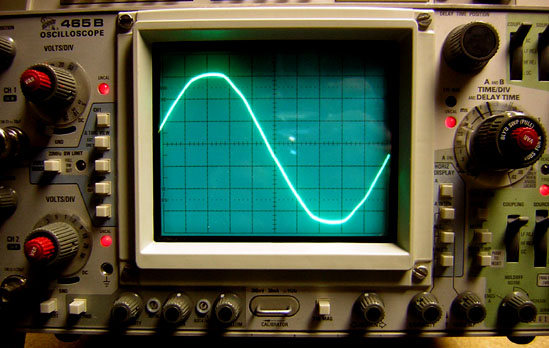
I am going to STRONGLY recommend that if you don't know EXACTLY what you are doing, DON'T connect your scope to the AC line. At best, you may fry your scope, and at worst you may fry YOU.
Most scopes I have seen have the ground side of the probe connected to scope chassis ground which in turn is connected to AC ground. Accidentally connecting this to AC hot will result in lots of smoke and flames and a huge repair bill. And DON'T lift the AC ground of your scope either. You could have your scope chassis floating at 120 VAC which could hurt you bad if you got between it and ground.
Even though you may see some noises on a scope looking at the VOLTAGE waveform, it is not all that informative anyway. If, on the other hand, you can look at the current waveform through some type of AC current probe, it is amazing to see the huge spikes and distortions that occur. The source of these problems is numerous, with switching-type power supplies and industrial motor drive controllers being big culprits.
In some large buildings, three-phase transformers have burned up due to excessive currents in the neutral leg caused by too many harmonics which upset phase relationships and increased the neutral current way beyond specification.
Power companies have reaaly been looking hard at the amount of distortion and noise acceptable on power lines and are establishing standards for this. A lot of more modern power supplies are striving for a power factor approaching 1 to limit the reactive loads presented to the distribution system.
Noise, transient events, and distortion are not good for electronic equipment. But transient events such as large spikes are probably the most damaging to the equipment in your booth.
With todays microprocessor-based equipment in the booth (processors, automations, etc.) it is always good practice to install some type of line conditioner to prevent errors in the digital circuits which can result in strange and unexplainable behavior such as a processor shutting down or losing its settings or an automation doing something strange. Unfortunately, this is an extra cost item, and this is protection that many are not willing to purchase.
Surge protection such as Mark G. describes is a very good idea. Also, contact your power company too see what whole building protection might be available. It seems to me there are some non-degrading types of surge protectors available for whole building protection. I believe they are called gas-discharge types, but not sure.
| IP: Logged
|
|
|
|
|
|
Phil Hill
I love my cootie bug

Posts: 7595
From: Hollywood, CA USA
Registered: Mar 2000
|
posted 01-16-2005 02:49 PM
quote: Michael Schaffer
It turned out that he "thought they belonged to another screen". Why he thought so even though they are clearly labeled...
That's why you should ALWAYS use lock-out tags or at least put tape across the breakers and a note giving your name, location, and saying not to energize...people are working... etc.
Also, It is extremely dangerous to connect a scope directly to the AC line. Even if you make sure the neutral is on the "grounded" side of the scope input, there is a substantial risk of blowing it up anyway. There is a significant possibility of a low voltage/high current difference between the neutral and ground...especially in large distribution systems as in malls and complexes.
I once saw a guy lose a hand when his wrench disintegrated when it accidentally hit the ground bus while he was tightening a neutral connection on a disconnected "dead" 1200 Amp standing section.
DANGER! DANGER, WILL ROBINSON!
Again, I STRONGLY warn against it, but IF you *MUST* connect a scope in that way, make sure you use a ground lifting adaptor on the scope's AC plug and put the scope on an insulated surface and DO NOT touch it...or leave it unattended. Make sure the neutral side is connected to the "ground" side of the scope.
And, just because your scope is "rated" for 400vac, that really doesn't mean much as many times there are kV spikes on the line that will fry your scope.
There are plenty of commercial recorders, loggers, and chart recorders available to buy or rent made specifically for monitoring the AC line. Get one!
| IP: Logged
|
|
|
|
|
|
All times are Central (GMT -6:00)
|
This topic comprises 2 pages: 1 2
|
Powered by Infopop Corporation
UBB.classicTM
6.3.1.2
The Film-Tech Forums are designed for various members related to the cinema industry to express their opinions, viewpoints and testimonials on various products, services and events based upon speculation, personal knowledge and factual information through use, therefore all views represented here allow no liability upon the publishers of this web site and the owners of said views assume no liability for any ill will resulting from these postings. The posts made here are for educational as well as entertainment purposes and as such anyone viewing this portion of the website must accept these views as statements of the author of that opinion
and agrees to release the authors from any and all liability.
|

 Home
Home





![[Eek!]](eek.gif)



 Printer-friendly view of this topic