|
|
This topic comprises 3 pages: 1 2 3
|
|
Author
|
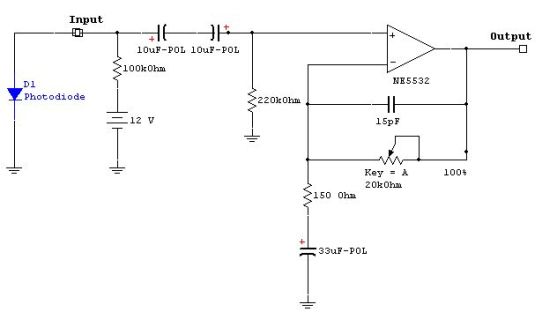
Topic: Solar Cell Preamplifier Design Problem
|
Mark Gulbrandsen
Resident Trollmaster

Posts: 16657
From: Music City
Registered: Jun 99
|
 posted 12-09-2005 08:34 AM


quote: Phil Hill
Mark, get off your high-horse. It's an insult to MANY FT members that YOU think there are BETTER "qualified" people (electrical engineers, techs, etc) elsewhere just points to insulting the talent here.
Phil,
Sorry bud but that is the truth. Smart F-T members already know that. If its audio design Marin wants to learn this is DEFINATELY NOT the place to learn it!
There is only one degreed electrical engineer around here that I am aware of that really knows his stuff... and is sometimes willing to share his knowledge with us. There are more than I can count over there and many with decades of experience in every facet of audio design. Several of the audio industries top engineers hang out over there... people like Erno Borbley, John Curl, Nelson Pass, Jan Didden, and a bunch of others, yes these guys also design your beloved "commercial" stuff as well. If you wouldn't want your questions answered and your designs tweeked by these guys fine, I guess you know more than they do.... but for the rest of us that know who these guys are it's a priveledge to have contact with them.
Mark
| IP: Logged
|
|
|
|
|
|
|
|
|
|
|
|
John Pytlak
Film God

Posts: 9987
From: Rochester, NY 14650-1922
Registered: Jan 2000
|
posted 12-15-2005 11:42 AM

A film latent image is formed by electron transfer:
http://wwwcaen.kodak.com/US/en/motion/products/v2/2electron.shtml
quote:
In Kodak’s two-electron sensitization scheme, an appropriately designed electron donor molecule, X–Y is added to the photographic dispersion. This molecule transfers an electron to the oxidized dye to give a radical cation, X–Y•+. The radical cation then undergoes a fragmentation reaction to give a radical X•, and a stable cation, Y+.
The radical X• can inject an electron into the silver halide conduction band. In this way, the oxidized dye, which is a strong oxidant, is replaced by the radical, X•, which is a strong reductant. Thus, the two-electron transfer scheme has the potential of doubling the photographic speed because two electrons are injected per absorbed photon.
Film has many similarities to solid state electronics. But it makes better images. ![[Wink]](wink.gif)
| IP: Logged
|
|
|
|
|
|
|
|
|
|
|
|
|
|
|
|
All times are Central (GMT -6:00)
|
This topic comprises 3 pages: 1 2 3
|
Powered by Infopop Corporation
UBB.classicTM
6.3.1.2
The Film-Tech Forums are designed for various members related to the cinema industry to express their opinions, viewpoints and testimonials on various products, services and events based upon speculation, personal knowledge and factual information through use, therefore all views represented here allow no liability upon the publishers of this web site and the owners of said views assume no liability for any ill will resulting from these postings. The posts made here are for educational as well as entertainment purposes and as such anyone viewing this portion of the website must accept these views as statements of the author of that opinion
and agrees to release the authors from any and all liability.
|

 Home
Home








 Printer-friendly view of this topic