|
|
This topic comprises 5 pages: 1 2 3 4 5
|
|
Author
|
Topic: Film is nitrate... now what?
|
|
|
|
|
Stephen Furley
Film God

Posts: 3059
From: Coulsdon, Croydon, England
Registered: May 2002
|
 posted 07-19-2006 11:28 AM


quote: Mitchell Dvoskin
Many years ago, we ran a nitrate print of Hitchcock's Foreign Corrispondant on a platter. We did not know any better at the time.
Do you mean that you didn't know that it was nitrate, or that you knew, but didn't understand the risk of showing it?
This does seem to back up what I said before about training. If Mitchell could do this years ago there must be a much greater chance that a projectionist would do so today. I suspect that the majority of projectionists today, if you were to hand them a nitrate print would run it without knowing what it was, or understanding the danger involved. Most of them have probably never seen a nitrate print, and a fair number have probably never heard of such a thing. Even with the surviving nitrate prints now being rather old and probably brittle, 99 times out of 100 it would run through ok, and nobody would know about it, but I fear that one day there will be a serious accident.
| IP: Logged
|
|
John Pytlak
Film God

Posts: 9987
From: Rochester, NY 14650-1922
Registered: Jan 2000
|
posted 07-19-2006 11:30 AM

Here is the Kodak publication about safe handling, storage, transportation, and disposal of cellulose nitrate film:
http://www.kodak.com/US/en/motion/hse/nitrate/index2.jhtml
http://www.kodak.com/US/plugins/acrobat/en/motion/hse/H-182.pdf
quote:
This publication will help you understand the requirements to safely handle, store, transport, and destroy cellulose nitrate-based films
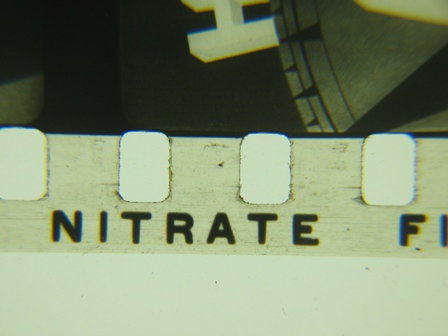
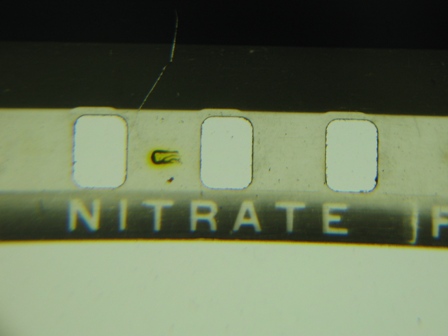
As mentioned, if the "NITRATE" edgeprint on a print is black letters against a clear background, it is most likely nitrate film. White letters against a dark background indicate the negative was nitrate, and the print may be either nitrate or safety film. A "burn test" of a small sliver of the film (outdoors and with good ventilation) can be used to verify --- hold a clip about the size of a frame in a pair of needle-nose pliers, and carefully light the corner with a flame --- nitrate will burn very quickly, with a bright orange flame. Be sure the film sample you test is representative of the film --- many times safety film was intercut with nitrate (e.g., leaders).
For now, store the film in a COOL DRY place that is NOT inhabited. NEVER try to project the film in a projection room that is not certified for nitrate projection. A film archive MIGHT be interested in preserving the film, depending on its condition and whether other (better) copies are available.
Like it or not, you are now in possession of a material that is legally considered very hazardous, and covered by stringent regulations for storage, shipping and disposal. Follow the guidelines in the Kodak H-182 publication.
| IP: Logged
|
|
|
|
|
|
|
|
|
|
|
|
Stephen Furley
Film God
Posts: 3059
From: Coulsdon, Croydon, England
Registered: May 2002
|
posted 07-19-2006 04:36 PM
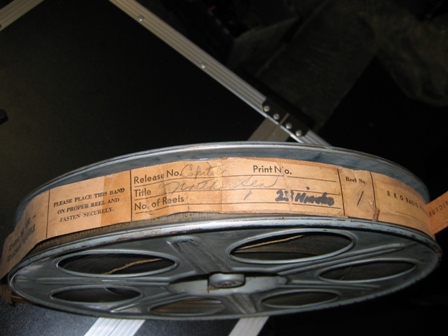
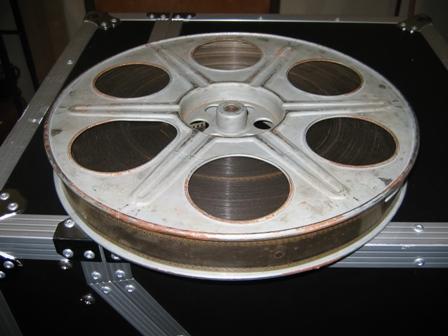
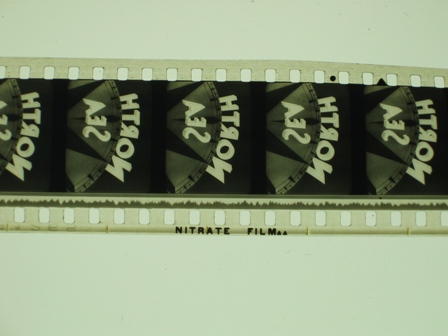
Philip still doesn't know whether this print is nitrate or safety; he really does need to find out for sure. Until positivly identified as safety this print really should be assumed to be nitrate, and handled and stored accordingly. Several of us have give pointers to clues as to the type of stock, but to positivly identify it really does need somebody to actually examine the print. Unlike most feature films, 'North Sea' did not have a release and then disappear; it is still shown from time to time, and is quite likely to have been re-printed at various times in its life. At this point we cannot rule out either the possibility of this being an original nitrate print, or a later safety re-print. If it is original, and is in good condition, it may well be a very good print; it would probably have been made from the original negative, and only a relatively small number of prints would have been made, so the negative should have been in good condition. It's a pity that it's now almost impossible to screen a nitrate print.
I think those who posted the pictures of the aftermaths of the nitrate fires were right to do so. A nitrate fire, even a small one involving just a single reel, is a serious matter, and the suggestion which was made to project it with a 900W lamp, or using a portable projector, was clearly unwise.
The pictures of the fire at the JFK Centre are interesting. Assuming that ignition occurred in the gate, the fire trap in the upper spool box was ineffective, as the fire has spread to the reel in that box. However, the spool box does seem to have done it's job; there's little sign of damage outside the projector and the spool box, the extract ducting and the front wall of the projection room, for example, appear to be largely undamaged. Even though the fire spread to the reel, it was almost certainly conained there, and would not have spread to the other machine, or other reels of film. It is unlikely that the projectionits would have had any great difficulty in safely escaping from the fire, (I certainly hope that was the case) unless the projection room was very badly designed, in which case it should never have been given a nitrate licence. In the first picture it looks like the fire shutter has dropped into position, and so the danger to the audience would have been just about nil. This would clearly not be the case in many modern cinemas, where the effects of a fire would have been much more serious, and clearly shows the importance of not running nitrate in venues not designed, equipped, maintained and licenced to do so. However, I do not believe that there should be a total ban on screening nitrate. I think a few venues, suitably equipped, and with appropriatly trained staff, should still be able to do so.
I think the ccomparison which I made with petrol was a valid one. Both are clearly hazardous substances; I could have posted a picture of a burned-out car, where the fuel tank had caught fire, and the results would have been even more devastating than the small nitrate fires shown here. We do not ban cars, nor the use of petrol to power them, though petrol is probably more dangerous than nitrate, and certainly more volatile. We ae not promoting safer fuels or use in cars, Diesel, for example, nor installing fire supression systems in them. What we do with petrol is to take sensible precautions; we don't smoke while filling vehicle tanks, we don't give it to children to play with, we don't store in in unsuitable containers, or keep it inside houses.
I think in some ways the almost total removal of nitrate film is a bad thing. It's not neen wiped of the face of the Earth, so there's still a chance that a nitrate print could find its way into a cinema, yet it's now become so uncommon that most projectionists have probably never handled it, wouldn't recognise it if it did turn up, and might well screen it in inappropriate venues, with possibly disasterous results.
I know that it is the policy of several major archives here to retain original nitrate elements which have been copied, for as long as they remain printable. This is a good policy, though no doubt not a cheap one. There have certainly been cases where safety dups have proved to be of poor quality, or have deteriorated faster than the nitrate originals.
| IP: Logged
|
|
|
|
|
|
|
|
Leo Enticknap
Film God

Posts: 7474
From: Loma Linda, CA
Registered: Jul 2000
|
posted 07-19-2006 05:46 PM
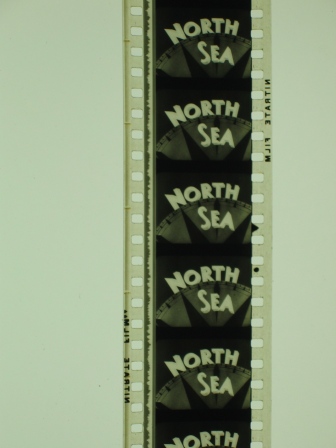
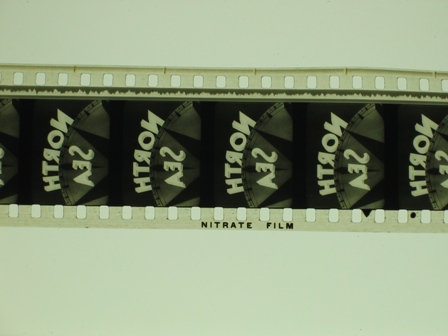
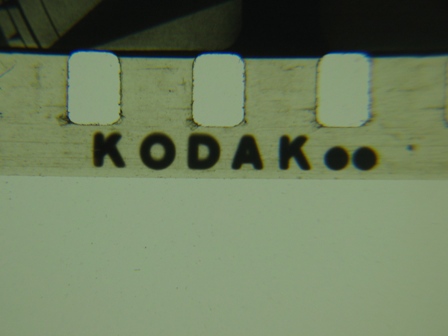
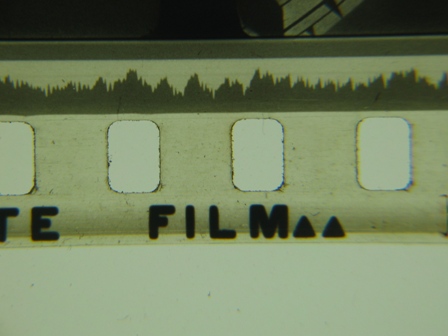
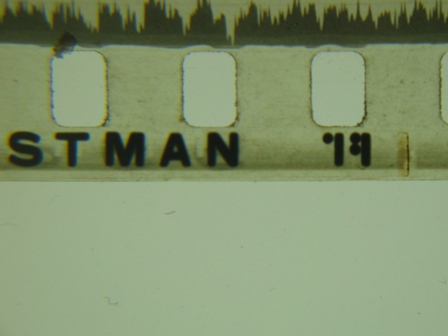
Philip: the symbols on the edge marking are a code which identifies the year in which the film stock is manufactured. Here is an identification chart. Two triangles indicates the year of manufacture as being 1941 - interesting, given that the film was made in 1938. It must have been reprinted for a subsequent (theatrical, given that the gauge is 35mm) release, I guess.
As for the safety issue, I tend to agree with Stephen that we happily drive around with enough fuel in our cars to blow us into orbit, and so there is a certain amount of paranoia around. However, if it does ignite when you don't want it to, it is very dangerous, as the nitric acid fumes are highly poisonous (they cause inflammation of the lungs, which can lead to suffocation) and the fire cannot be extinguished with water, because the combustion process generates its own oxygen.
There is no common agreement among archivists as to whether spontaneous ignition is possible or not, but this paper strongly suggests that it is, if subjected to constantly high temperatures of 100 degrees F or more for a period of several weeks. Given the weather we're having at the moment, it's something to think about, I guess.
quote: Dustin Mitchell
It might not be nitrate. The nitrate edge markings ccould just be from the negatives.
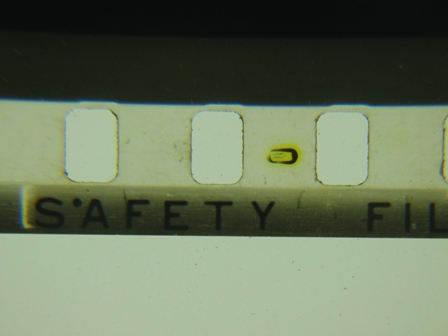
Agreed, but in that case you should be seeing a 'safety' legend along the edge as well as the 'nitrate' one. This is most likely to happen on prints made during the conversion period, i.e. Summer 1948 to mid-1950s: lots of 'mix and match' printing went on while existing inventories of unexposed nitrate stock were cleared. The two other ways to identify nitrate are thickness - it's significantly thicker than triacetate and a lot thicker than polyester - and the characteristic 'musty' or mothball type smell of nitrate, which is quite different from that of fresh or VS-affected acetate.
| IP: Logged
|
|
Stephen Furley
Film God
Posts: 3059
From: Coulsdon, Croydon, England
Registered: May 2002
|
posted 07-19-2006 07:04 PM
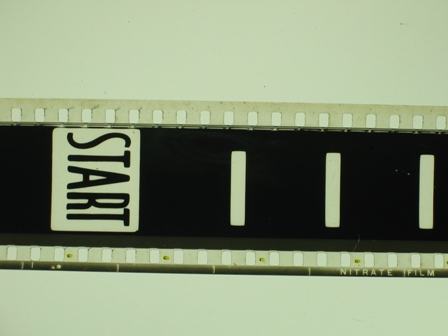
There are a few of odd things about those edge markings. The 'NITRATE FILM' markings appear on both edges of the print, and those on the non track edge appear to be somewhat sharper than those on the track edge, also, these markings are reversed left to right. Could this print have been made from a dup negative made for international release, and we're seeing another set of positive markings from a fine grain positive as well. There don't seem to be any markings from the negative on the print itself.
There also seem to be two different date codes, circles and triangles.
Lastly, there's normally a small symbol next to the words 'NITRATE FILM', looks a bit like a star, I think it's actually a square or rectangle, with lines radiating from it. This doesn't seem to appear on this print.
I can never remember which way the 'tick' marks between the perforotions go, but the negative ones on the leader are horizontal, and we know that this was printed from a nitrate negative, so I assume that it's horizontal for nitrate. There are horizontal tick marks on the print, but they're rather feint; could they also possibly have been printed from a fine grain positive stage?
If I had the print in my hands I could probably say for certain, which I cannot do from just looking at these pictures, but I think it is likely that this is a nitrate print, and you should certainly handle and store it on that basis, unless confirmed otherwise. That means not keeping it at home. Sealing up a print in an airtight container is not normally a good idea, as it does not allow any gasses evolved to escape, but in this case I would put the print in a waterproof container to keep any rain off, if that means sealing it up in a plastic bag, then so be it, it won't hurt for a short period. don't keep the print in the house, put it outside, somewhere that it won't be seen by anybody who might take it, and in a cool place, out of the sun. Contact somebody as soon as possible for positive identification, and advice on what to do with this print; you may be able to find somebody with a proper nitrate vault who could store it for you, but you are unlikely to be able to find anywhere to project it, unless positivly identified to be safety after all.
It does look look like a good print, and, as far as I can see from the pictures, in good condition. I can't see any deterioration of the film base.
| IP: Logged
|
|
|
|
All times are Central (GMT -6:00)
|
This topic comprises 5 pages: 1 2 3 4 5
|
Powered by Infopop Corporation
UBB.classicTM
6.3.1.2
The Film-Tech Forums are designed for various members related to the cinema industry to express their opinions, viewpoints and testimonials on various products, services and events based upon speculation, personal knowledge and factual information through use, therefore all views represented here allow no liability upon the publishers of this web site and the owners of said views assume no liability for any ill will resulting from these postings. The posts made here are for educational as well as entertainment purposes and as such anyone viewing this portion of the website must accept these views as statements of the author of that opinion
and agrees to release the authors from any and all liability.
|

 Home
Home










 Printer-friendly view of this topic