|
|
This topic comprises 4 pages: 1 2 3 4
|
|
Author
|
Topic: Lamp Question
|
Tristan Lane
Master Film Handler
Posts: 444
From: Nampa, Idaho
Registered: Feb 2002
|
 posted 04-27-2007 01:20 AM


Monte's pictures provide a good example of the darkening that occurs on a Helios bulb after full warranty hours.
I used to think this was a quality issue related to the tungsten used in the lamp. I changed my thinking after pulling an Osram 4200 watt helios style lamp @ warranty hours and it had exactly the same type of darkening directly above the gap. The darkening appears on the LTI 4200 helios as well. The Osram lamp was operated well within specifications, with adequate exhaust.
The darkened envelope is probably due to how much closer the quartz is to the arc when compared to a traditional lamp. I'm willing to overlook this due to the increased light these lamps provide.
My experience with Helios lamps has been great. I began using them shortly after they were introduced. I don't recall any major issues, or catastrophic failures. The occasional flicker happened on a few, but only after warranty hours were used. Company policy was to run lamps to a certain percentage over warranty, and then change the lamp. The lamps were changed regardless of whether they were still in good shape.
Some of the houses I installed them in (which Monte is very familiar with) yielded light increases up to 30% on screen, and never dropped below the light level provided by the previously used lamps. This proved to be very economical in 5 houses where CXL-60 lamps were replaced with LTI 4200 lamps, with an increased light output, and more warranty-hours. The LTI lamp also costs considerably less than the CXL-60. In roughly 60 other screens that I serviced, we replaced the CXL-40/45 lamps with 3000 watt helios lamps with similar results.
I suppose the opinion of the lamp depends on the user's expectations and needs. If you are looking for a lamp that will perform well long after warranty is up, stick with Christie. Their track record is hard to dispute. But the Helios lamps have their advantages, and LTI's quality and and track record has improved greatly in the past few years.
| IP: Logged
|
|
|
|
|
|
|
|
Dan Reiter
Film Handler

Posts: 74
From: Easton PA
Registered: Jul 2002
|
posted 04-30-2007 12:42 PM
We at SUPERIOR QUARTZ have been following this thread with a lot of interest, and wanted to interject our thoughts.
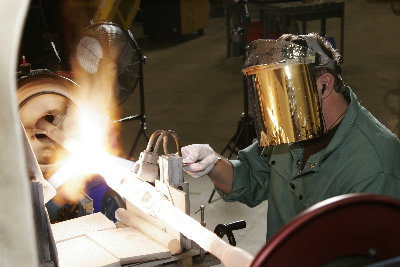
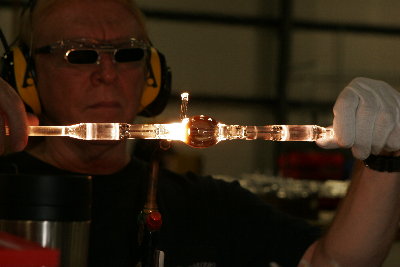
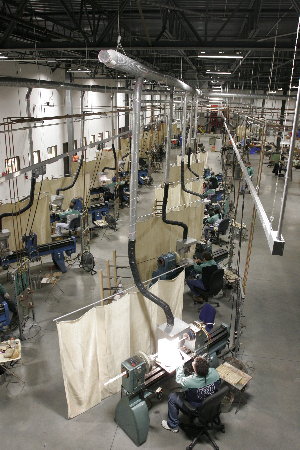
First, Bulb Construction – The internal vessel pressures and arc length are the determining factors in the power level of any bulb. When changing the size and volume of the envelope, the pressure ratio of gas:volume must be maintained to meet lamp performance goals. Thickness of the envelope wall is a construction factors to ensure vessel strength. Seal designs, electrode design, seal placement, and so many design issues get mixed in. Tungsten quality was mentioned a few times. Gordon is accurate in the source and quality issues with Tungsten. There are very few reputable sources. We at SQP make sure we only use the highest quality Tungsten and Xenon available, and then use the most stringent processing methods to remove all contamination. In addition, our use of the foil seals, and our individual attention to every bulb makes ours the most labor-intensive bulbs available, yet we keep our prices competitive. This alone is one of the most critical factors in bulb life and performance, and is in reality very hard to replicate thousands of times, as each bulb burns in it’s own unique way. In addition, basic lamp construction techniques can affect the purity during the process. Internal quality control during the manufacturing process, as well as stringent QC methods is another critical factor in manufacturing good bulbs. And then throw in types of seals, electrode design, electrode support, material purity, and a billion other factors, and you can see how hard it is to make a bulb. There is a LOT more going on with construction than just how the bulb appears to the user.
The other HUGE factor in bulb life is the equipment the bulb is in. Probably the most important. All aspects of the lamp section come into play. Cooling, as touched on previously, is critical. Is the blower clogged with dirt? Is there good airflow though the lamphouse, so you do not get a “hot Box”? Where the bulb is in the reflector even comes into play. Bulb mounting fixtures and stresses while in operation can come into play. Does the douser re-focus back on the bulb when it is closed? That’s a major bulb-killer. Then you look at the electrical side of things. Power supplies are a big factor. Magnetic or electronic, how much ripple is present. Is there a shorted or open diode the operator does not know about? Magnetic stabilization – Is there any, and is it still effective? DC cabling connections – is there a bad point? That will change the current and meter readings. Are the lamphouse meters accurate, so the operator is not either over-driving, or under-driving the bulb? Igniter – Is the spark-gap still within spec, so the ignition pulse is not destructive?
Then you toss in the theater operators themselves. Do they rotate and/or maintain the bulbs? Do they allow auto-strike, or do they manually strike the bulb with long ignition periods? How many shows a day?
There are so many factors involved with this, the best way to make ANY bulb last is to have a properly functioning system. Many opinions on this thread have shown that, and there are some very old bulbs still running.
We formally invite all to visit our facility, and see how our bulbs are made.
Thank You.
If we can help in any way at SQP, please contact us.
| IP: Logged
|
|
|
|
|
|
|
|
|
|
|
|
|
|
|
|
|
|
Jack Ondracek
Film God

Posts: 2348
From: Port Orchard, WA, USA
Registered: Oct 2002
|
posted 05-02-2007 11:01 AM

quote: Justin West
Is rotating the bulb necessary, today?
That's sure a good question, Justin.
Opinions on this board are all over the place. My experience out here is that these bulbs seem to work best if you just keep them clean, check the connections once in awhile, and leave them alone. These things almost always go unstable on me if I rotate them. After that, it's just a matter of a short time before I get tired of looking at them & just put in new ones.
"Your results may vary", but I seem to get the best life by leaving them in-place until I change them out.
4,000 to 7,000 watt bulbs... Christie, Superior Quartz, Osram... it doesn't seem to matter. In the past 5 years, I've installed new lamphouses, power supplies and blowers, with no change in performance from the bulbs. My screens look a lot better, though! ![[beer]](graemlins/beer.gif)
| IP: Logged
|
|
Dan Reiter
Film Handler
Posts: 74
From: Easton PA
Registered: Jul 2002
|
posted 05-02-2007 01:02 PM
Arc stability seems to be much more of an issue of the equipment the bulb is operating in. If the arc is steady and straight throughout the bulbs' lifetime, it will burn straight, and not damage or dis-figure the electrodes, and provide long, trouble-free life. If the magnetic stabilization is incorrect, the equipment is operating at enough of an angle to induce off-centered flame travel, there are excessive heating/cooling issues, or the DC curent is not smooth, the electrodes will suffer. Once an irregularity forms on the Annode & Cathode, then bulb roating is the only method available to try to "force" the arc to re-establish a straight path again, form a uniform pattern on the annode, and then regular maintenance, checking, and rotations become needed for the rest of that particular bulb's service life in order to obtain best and even light.
Jack is also correct in his notes about the electrical connections. As soon as a major DC connection loosens up, it will both burn the DC cable at the point of the problem, and induce a problem with the lamp's performance.
We at SQP have seen the specrum of lamp probems, and they can usually be traced to lamphouse issues.
| IP: Logged
|
|
|
|
All times are Central (GMT -6:00)
|
This topic comprises 4 pages: 1 2 3 4
|
Powered by Infopop Corporation
UBB.classicTM
6.3.1.2
The Film-Tech Forums are designed for various members related to the cinema industry to express their opinions, viewpoints and testimonials on various products, services and events based upon speculation, personal knowledge and factual information through use, therefore all views represented here allow no liability upon the publishers of this web site and the owners of said views assume no liability for any ill will resulting from these postings. The posts made here are for educational as well as entertainment purposes and as such anyone viewing this portion of the website must accept these views as statements of the author of that opinion
and agrees to release the authors from any and all liability.
|

 Home
Home







![[Smile]](smile.gif)
![[Big Grin]](biggrin.gif) Okay, that IS the anode.
Okay, that IS the anode. ![[Wink]](wink.gif)

![[Confused]](confused.gif)


 Printer-friendly view of this topic