|
|
This topic comprises 3 pages: 1 2 3
|
|
Author
|
Topic: Edge coding machine?
|
|
|
|
|
Tim Reed
Better Projection Pays

Posts: 5246
From: Northampton, PA
Registered: Sep 1999
|
 posted 12-17-2007 11:27 PM


All of my stuff IS 35mm, it was just MADE digitally! Further, since the source images are already in the digital domain, making product for Digital Cinema is a mere file transfer away.
When you factor-in all the additonal work and expense of using second-hand film equipment, you still don't have everything you need to do that one shot or effect (even if you process and print it yourself - and there's heavy QC issues with that). With all the extra time lost, and the limits to what you can do on the screen - even simple opticals, fades or titles involve considerable work photographically - you severely limit yourself in a competitive marketplace.
I do all my stuff digitally, yet I can routinely offer product - say a :30 merchant ad - for $100 LESS than any other trailer producer. Yet mine will have much higher production value, and are in Dolby Stereo, while the old-school guys might offer a few lines of hand-set type against a stationary photo.
My trailers are dynamic, because I have the creative freedom and flexibility that a digital production workflow offers. I also use top Hollywood labs like Technicolor and Deluxe, so quality is never compromised.
And, this isn't just me talking... it's my customers. I've been making these films, as a hobby, since 2001.
| IP: Logged
|
|
|
|
|
|
Scott Norwood
Film God
Posts: 8146
From: Boston, MA. USA (1774.21 miles northeast of Dallas)
Registered: Jun 99
|
posted 12-18-2007 08:52 AM

Does it really save any money to own your own lab equipment? I could see why it works for NFL Films, which processes a huge quantity of film every week, but I guess I don't understand how you would save anything when you're only processing a small amount of film at a time (don't you want to view dailies after each day of shooting?), yet still need to maintain the equipment and talented employees to operate it. Doesn't this just kill your production insurance budget? Can you even insure against lab issues if you aren't using an established lab?
If you're doing this for reasons of quality or need of special services like cross-processing, extreme push/pull, bleach-bypass, special chemistry, etc., then I completely understand why it might make artistic, if not economic, sense.
In any case, good luck with your film and please tell us how we can see it when it is finished.
Oh, BTW, the usual way to edit digitally is to do a cheap one-light transfer (with timecode and keycode burn-in) and edit and then to scan only the shots that are actually used in the rough edit at a high resolution. These then get conformed to the video "workprint" and a colorist works his magic on the final production. You probably would still want a film workprint for you DP to view, although it seems that smaller productions sometimes only print the camera tests and the first few days' worth of footage.
If you haven't seen Tim's stuff, please do--it's top quality.
(I'm presently working on a 16mm short which I am editing on a Steenbeck, but that's mostly because I can do this for free and am comfortable with the process.)
| IP: Logged
|
|
|
|
|
|
Steve Beverly
Film Handler
Posts: 83
From: El Paso, Tx.,
Registered: Nov 2007
|
posted 12-18-2007 11:06 PM
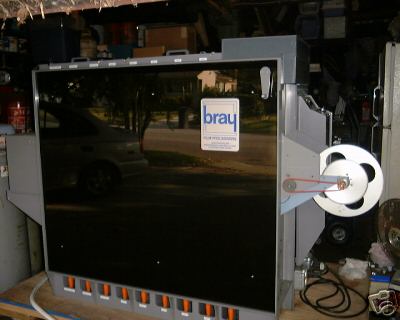
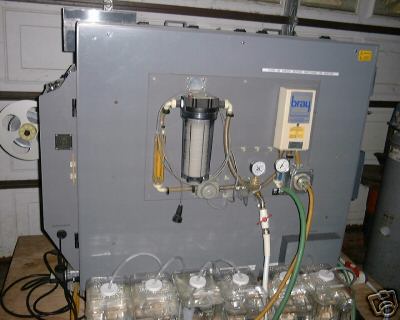
Yes Thank you for the information Scott, I am aware of how digital editing works, but it's always good to keep the information fresh and availible. I am also aware of the requirements associated with processing, but as we will not be processing in nearly the same quantities as a commercial lab, disposal of the spent chemicals will be much less problematic. The Brey is designed for short film run processing and the amount of chemicals used is actually quite small basically not much more than the home darkroom of a guy who takes a lot of pictures. When I bought the machine, a ton of chemicals came with it, literally enough to process a dozen features. They are for the most part in dry form and will indeed need to be mixed up, It also came with all the equipment needed to do that INCLUDING highly detailed instructions. As for now, the only specialty processing we will be doing is a 1 stop push on probably 5218 UNLESS we get lucky and can make a smokin' deal on the newly released 5219 (I would prefer 5219 for the smaller grain properties and better color saturation when pushed than 5218 but cost will be the deciding factor).
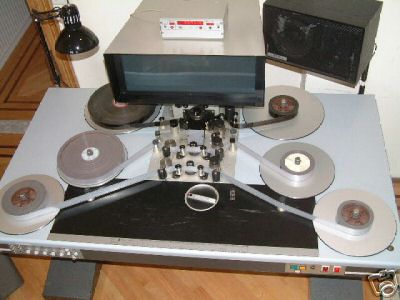
We will also be processing and printing one light, best light work prints to be cut on KEM flatbeds (I own 2 of them with all three heads, Academy, wide screen and 'scope), and synced on a Moviola and a synchronizer (which I have yet to pick up but they're not to hard to find) If need be, we will employ a part or full time chemist, probably a collage grad student who's interested in film processing, for the run of the production and as far into post as necessary, The one GOOD thing about living in this god forsaken shithole is that you can get things done cheap, REAL cheap, we may even be able to bring a an experienced lab tech in from Mexico for about a third of what someone with the same experience here would cost, we will almost certainly bring in a cameraman my DoP has worked with because he is already familiar with Russian equipment and I'll lay you money he knows someone who can process film. But I actually doubt it will be necessary, this is chemistry not brain surgery, it's basically taking the proper precautions, measuring exactly and keeping the baths at the exact correct temp and doing all this very consistently. The lab in not in my home BTW, the lab is in my studio which is in an industrial area about a 1/2 mile from me. We are in the process of sealing it and working on a system to bring in fresh, cool filtered air while exhausting fumes out though additional filters to make the working environment as healthy as possible while I and the people I'm working with are in there.
Although I'm sure there will be a learning process (which is why we will be shooting MOS, second unit stuff first so if we screw it up, although inconvenient and a little pricey, it's not a disaster), I have no doubt what so ever once we have gone through that that period, our processing will be equivalent if not superior to a commercial lab, in any case, I am not worried about the film being uninsurable as it will be self financed to begin with and sense we are very unlikely to attract a major star to the project with our budget, it will be cheaper to reshoot rather than pay the insurance fees in the EVENT we actually do screw up a roll of film during processing. The only insurance we should need is liability, personal injury and equipment replacement insurance.
Look, I've had these discussions over the last year and a half with people like Dominic Case, David Mullen and the late and truly, truly great John Pytlak over at Cinematography.com, I was given a lot of good advice and help from guys who have been doing this a long time. I've picked up Dominic's books on processing and lab work. I have thought about this for quite a while now and weighed all the options. My decision is made. What I'm asking for here is advice on some of the stuff I still need to learn about, projection being one of them. I will need a edge coding machine so that's why I started this thread. I'm not dismissing what you say, just letting you know this was well thought out and considered and it is what we will be doing. If you have any helpful input or advice to achieve in-house processing and old school editing, it would be greatly appreciated.
Oh and here's my cameras:
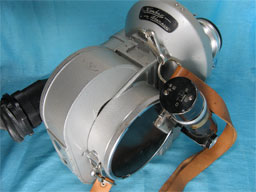
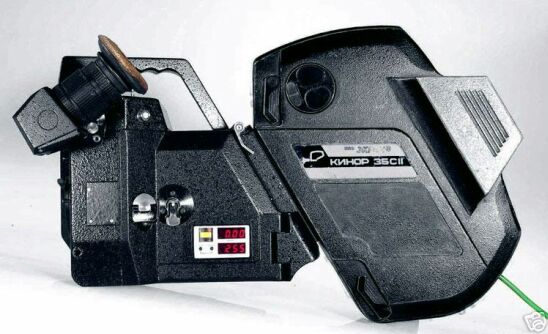
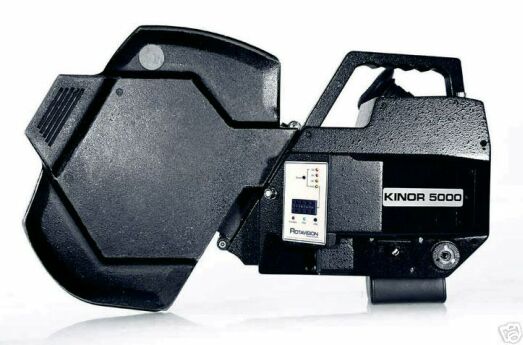
Both camera has a small set of anamorphics each (35mm, 50mm and 75mm) the Kinor has a color PAL video tap and a full set of sphericals from 18mm to 300mm including a small set of fast lenses. (35, 50 and 75) The cameras each have an O'connor 100 fluid head and set of sticks, both have full matteboxes and several mags. We also have a Vinten 10 ft. hydraulic camera crane w/ a cameraman's seat that allows the operator a 365 deg pan radius to put these cameras on.
Because we're staying old school with editing we're also staying old school with sound acquisition using a Nagra 4L with a sync box and several mics 14in shotgun lavs, omi-directional. The sound package also has a beautiful boom and shock mount.
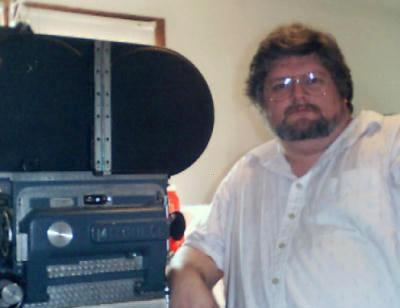
This is the Brey processor:
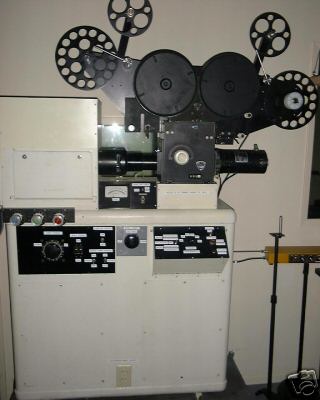
This is the Mitchell step printer:
One of the KEMs:
And my Studio with my camera truck out front:
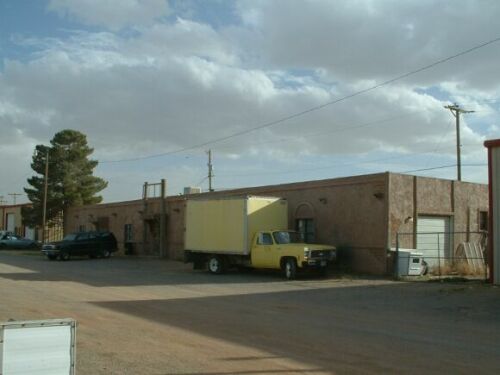
Lighting wise I have my own lighting package, about 20 Fresnels a dozen or so ellipsoidals, pars, scoops, some specialty lighting, Disco stuff, a few stands, flags and net diffusion, gels ect. but the big stuff which I don't own but have unlimited access to is on the 10 ton grip and lighting truck parked at the studio, not my little camera truck, the one in back. We also have a I wanna say 250K diesel genny available as well as a smaller 10K. I own a 25K ex-military genny as well. I've spent a ton of money on equipment and dedicated a lot to make this film happen just to let you know where I'm at.
[ 12-19-2007, 02:50 AM: Message edited by: Steve Beverly ]
| IP: Logged
|
|
|
|
|
|
Tim Reed
Better Projection Pays
Posts: 5246
From: Northampton, PA
Registered: Sep 1999
|
posted 12-19-2007 07:37 PM
OMG, I wish I were you! And it was 1982 again...
You certainly don't have to justify yourself on my account, but what continues to puzzle me is the notion of having all this money tied up that could otherwise be put directly into your film - without carrying the overhead.
For instance, I've made a bunch of quality stuff over the past few years, very affordably, and I'm more than proud to say THIS is my studio:
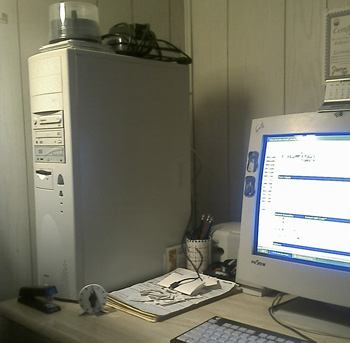
It's my animation, compositing/rendering, editorial, and sound mixing facility. Nearly every dime spent on a film directly translates to the screen. I like making that combination work; the highest quality for the least amount invested.
The only other overhead is the music libraries, the Mitchell and its support gear, and some fresnels with a couple of 10K's. Anything else could be rented, although we have talked about getting a Red One to shoot a feature.
You wanna buy a Mitchell BNCR? ![[Wink]](wink.gif)
Oh, we wanted to build a lab, too, but none other than John Pytlak talked me out of it by driving home the realities of that work. That, and the capital expenditure. (All but a handful of trailer companies have their own labs, anyway, so I was okay with dropping it.)
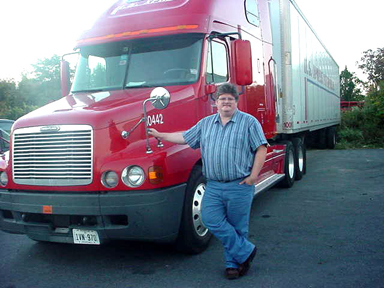
And, here's my truck: ![[Razz]](tongue.gif)
| IP: Logged
|
|
Steve Beverly
Film Handler
Posts: 83
From: El Paso, Tx.,
Registered: Nov 2007
|
posted 12-20-2007 01:06 AM
Oh you think I don't have, use or am familiar with animation and digital composition! That explains it. No I was talking about digital film making IE standard ans High definition cameras and editing. We were working prior to this latest project on a film called The Black Sky. It is loaded with animation. I actually had an animation team of 4 guys plus myself at one time working voluntarily for months to get the project off the ground. We did tons of camera and screen tests, floor FX screen tests, animation tests, conceptual art, model building, set construction and even conceptual sculpture in clay. The work they did was with all due modesty, extraordinary give the equipment we were working with at the beginning.
I have a JVC GY-500 SD camera as well as the 35mm cameras. We decided to back burner The Black Sky when it became apparent I would need a large full time animation team to complete the project. So it was put on hold until I could establish a track record and raise funding to complete the project. I had also began to realize that the only way to have a reasonable chance of selling a film was to shoot 35mm and I wanted a simple horror story with a small cast that could unitize the area's natural terrain as locations that way I could use unknowns, shooting in the desert and have huge production value at virtually no cost while still being able to make my own artistic statement, which led to Blood Moon Rising.
But getting back to Black Sky, I needed to learn about and understand CGI to do the off beat sci/fi action adventure set entirely aboard a starship so I did, from that venture I now also have or more correctly had previously to and still retain an editing and animation computer with Premiere 6 on it along with Lightwave 6.0 and 5.5, Maya 4.0, After Effects, Combustion, Matchmover, Sticher, Retimer. Sound Forge, Cool Edit, Photoshop, Illustrator, Coral Draw, Back Trax, a sound FX library, 100 disk set of stock footage and background, Hell, I fo get what else in on there, color a couple of correction programs, Ultimate, Gimp, a bunch of other stuff. I DID have an experimental SGI machine but it failed and replacement parts weren't available for it. I also have Studio 8, Nero...I'll have to fire it up to see what else is there. I was planning on shooting Black Sky digitally so integrating animation and Match moving into life action would be simpler. Our biggest problem was the animation was so complex that render times were insane (We were doing a LOT of particle effects and raydiosty lighting with complex textures and movement to create photo-realistic images) so we were in the planning stages of building a render farm when I realized the project could not be made as I had envisioned it with the funding I would have any chance of raising and that as I learned more about the business end of film making, I decided I needed to learn 35mm. That's why I know what this shit costs and how quickly it becomes obsolete. So have NO DOUBTS sir, I am quite aware of the possibilities of CGI. What are you working in Lightwave, 3D Max, Maya?
OH and I just remembered I also have the program I started learning animation with, Blender, the free program you just download and is DAMN near as powerful as most of the stuff you pay big bucks for. (Though it does have a HUGE learning curve!) As for why I've put potential production cash into equipment instead, there are several reasons, FIRST for what I could rent a 35mm Panavision or Arri camera package for over a 3 to 4 week shoot, I was able to BUY for less a 35mm Kinor with updated electronics that had FAR more accessories and lenses. These were the modern feature motion picture cameras in the Soviet Union up till it's collapse in the mid 90s. They are Soviet copies of Moviecam SuperAmerica with a modified copy of a Mitchell movement. They don't have some of the bells and whisles like the shutter for example is a fixed 180 degs. They are however as quiet, (when the mags are serviced properly) as an Arri BL-3. As fpr the rest of the equipment, I already told you, I don't buy anything unless it's a smokin' deal and in good condition. The one exception was that AVE because I DON'T know projection and It was the ONLY single unit portable interlocked system I had ever seen on Ebay and there were a TON of bidders. I was fortunately able to rectify my mistake.
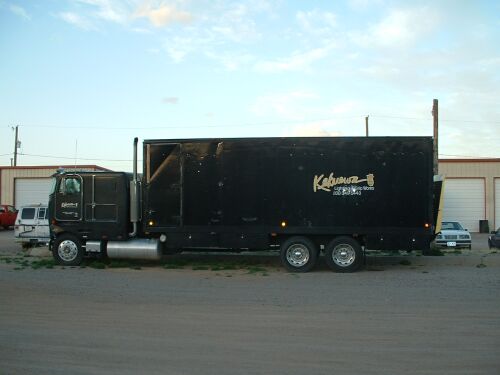
The other stuff I got was got at the right price. Let's just say the amount of cash, WHICH it STILL a lot for me, wouldn't have financed "Clerks". SECOND I'm in this for the long haul. I don't just plan to make one movie, I've got a whole SLATE of scripts to be produced and this equipment will be used, upraded, maintianed and utilized over and over again. THIRD, I have never liked the idea that someone can tell me whether or not I can make a movie. IIII'm the guy that gives me the greenlight and losses or wins the prize in the end. FOURTHLY I live in EL PASO, There ain't nothin IN EL PASO as far as support facilities for film making, video a few, but film, 35mm film....no There are maybe 2 or 3 movies that come into town every year but the best you ca do there is be a grip and although I know HOW to do grip work, I HATE doing grip work. So I had to build a studio, learn every aspect of the film making process or move. Well, my family is here and I can't move because they need me, also because of many factors, I've been able to accomplish more here than all the time I spent in LA. I opened an acting school for a while, Built my own theater, wrote and produced plays, did grip work, have shot commercials, events and music videos and was able to get nearly everything I need to produce feature films. FIFTHLY, I like the idea of feeling no completion, like in LA where EVERYONE'S trying to get the same jobs in the film industry, I like being completely independent, relying on no one but my-self and the people I pick. I compete only with myself, take my own chances, do my own thing an there is a power in that. I am getting some support however, Here's Mel's 10 ton Grip truck:
I've ALWAY wanted a BNCR every sense I read al article on how Kubrick made Barry Lyndon (he used a BNC but I wanted a reflex camera. I've actually looked at a few Mitchell/Fries conversions. But remember, I only buy things at a SMOKIN' deal price! ![[Big Grin]](biggrin.gif) So how much ya want for it? Actually, I've got a line on another SuperSimplex so that'll probably be my next purchase but I can keep it in mind for later or pass it along to someone who's looking to buy. So how much ya want for it? Actually, I've got a line on another SuperSimplex so that'll probably be my next purchase but I can keep it in mind for later or pass it along to someone who's looking to buy.
As for the Soviet equipment, I think it's wonderful. The one thing the Soviets could do was make equipment that was tough and reliable. The Konvas is a TERRIFIC little camera, small, light weight, I plan on using in on my Steadicam rig...oh yeah I forgot to tell you I also have a Hollywood Lite steadicam rig, it was designed for video cameras so the arm won't take too much weight but it is the heaviest duty one they made and has seen almost no use what so ever so it's basically brand new and will work fine with the Konvas and a 200 ft. load... but getting back to the subject, The Konvas is the easiest camera in the world to change mags on, you slip and seat the mag into the slot, lock the latch and you're done. It's also the toughest 35mm camera in the world. I've heard stories of people dropping them on concrete, picking them up ad continuing to shoot, try that with an Arri IIC! They were designed as news and propaganda cameras then adopted by feature film makers because they were so light and versatile (The 1957 Cannes Golden Palm winning classic, The Cranes Are Flying was shot on Konvas')and were built with minor changes from 1953 to 1995 over 10,000 where made. As for the picture, it's stunning, as good as anything shot today. The newer ones (late 60s on) had stabilized motors then crystal sync motors, they can even be converted to a PL mount. The negative part is they are LOUD, 55 dbs, the Soviets looped nearly every picture they made which is why the Knovas was so loud but still had a sync motor on it. Mine is an older, KSR-1 but in nearly mint condition. It has an un-stabilized 6 volt rheostat motor BUT it also was the one that came with a hand crank and an animation crank the latter of which I plan to put to good use in my opening credits and during some transformation sequences.The older OCT-18 mount Lomo lenses that fit this camera are very good lenses, (The Russians took their propoganda very seriously) better than most Western lenses of the same era. The 2 piece square front animorphics are a work of art and excellent. They have the OCT-18 mount but were made in the mid 80s for the Konvas 1m.
The Kinor is a dream. it is as good as anything you've ever used. The round front Lomos are almost as good as modern Hawks, wonderful lenses. The Kinor 35C which is what I have is the studio model as opposed to the 35H which is the later location model, the designs are very similar. The C is much heavier but also quieter, on close interior shots many people will use a Barney on the H just in case. For hand held work, the C is a little heavy but still very doable, but if I was shooting hand held for extended periods of time, I'd opt for the H. More and more people around the world are dicovering these cameras and the Lomo lenses so prices have gone up a little but they're still the best bargain in 35mm motion picture cameras there is.
[ 12-21-2007, 02:16 AM: Message edited by: Steve Beverly ]
| IP: Logged
|
|
Scott Norwood
Film God
Posts: 8146
From: Boston, MA. USA (1774.21 miles northeast of Dallas)
Registered: Jun 99
|
posted 12-20-2007 07:55 AM
Wow. You have some nice equipment. You should consider renting it out and providing lab services. If your market doesn't have any of this now, you might be able to do very well and maybe finance your next film.
I guess we're lucky in the Boston market--there's one place that rents film cameras, several who rent video and sound equipment, a lab (nearby), a couple of video transfer facilities, several places to rent editing equipment (film and video), a couple of places to rent lighting and grip stuff, and close proximity to NYC. Most of the production work here seems to be PBS television stuff and commercials, as well as low-budget features. The occasional big-budget feature that shoots here will typically bring in its own equipment from NYC, LA, or Canada.
| IP: Logged
|
|
Steve Beverly
Film Handler
Posts: 83
From: El Paso, Tx.,
Registered: Nov 2007
|
posted 12-20-2007 09:53 PM
I thought about it of course we'd have to do a bit of our our processing first before taking responsibility for someone else's film. I've considered it. It would probably be basic processing for select clients to start with, the insurance may be outrageous though, I'll have to check I'd also consider renting my camera equipment to a production if the DoP was qualified (ASC or foreign equivalent)though I'd just as soon they hire me with my equipment and would push for that. If nothing else it may offset our processing and film stock costs.
I'm not surprised Boston has the infrastructure to handle film production, I'm a little suprised there are not more films shot there. I suppose everybody's headed for Canada to save money. I like the idea of using the good old USA to FILM the good old USA though. We should support our own country first, unless they just start gouging us, which is what seen to be happening.
So Tim, what animation programs do you work in mainly? I like Lightwave. The rest of the guys use 7.5 and 8, I, personally am still working in 6.0. As I said I have Maya 4.0 but don't like it as much as Lightwave. I'm not a great animator though, luckily, my guys, especially the 2 Steves and extra-especially Mike are BRILLIANT with this crap.
| IP: Logged
|
|
|
|
All times are Central (GMT -6:00)
|
This topic comprises 3 pages: 1 2 3
|
Powered by Infopop Corporation
UBB.classicTM
6.3.1.2
The Film-Tech Forums are designed for various members related to the cinema industry to express their opinions, viewpoints and testimonials on various products, services and events based upon speculation, personal knowledge and factual information through use, therefore all views represented here allow no liability upon the publishers of this web site and the owners of said views assume no liability for any ill will resulting from these postings. The posts made here are for educational as well as entertainment purposes and as such anyone viewing this portion of the website must accept these views as statements of the author of that opinion
and agrees to release the authors from any and all liability.
|

 Home
Home



![[Cool]](cool.gif)
![[Roll Eyes]](rolleyes.gif)
![[thumbsup]](graemlins/thumbsup.gif)


 Printer-friendly view of this topic