|
|
This topic comprises 3 pages: 1 2 3
|
|
Author
|
Topic: Lamphouses
|
Steve Kraus
Film God

Posts: 4094
From: Chicago, IL, USA
Registered: May 2000
|
 posted 09-07-2002 12:18 PM


Ah, that explains why they called it "1000" because it sure cannot be driven at those current levels without tripping.The ORC 1000 uses a regulator circuit that controls the phase/timing of the AC--just like a common light dimmer--being passed to the transformer, which one presumes is designed to handle the funky waveform. There is a small circuit card with electronics and a second one with either a pair of SCR's or a single TRIAC mounted on small heatsink(s). An adjustment pot at the back of the unit is used to set current. I often contemplated removing the electronics and having the pot work the TRIAC or SCR's directly just like a light dimmer, given that most rectifiers are unregulated and work just fine. The 1600 (separate supply) is also regulated but the regulation is done on the DC output. There is a large bank of transistors with current dividing resistors mounted on a large heatsink as you can imagine. Unlike when you rapidly switch current between fully on and fully off in a switching type supply, when you regulate DC directly Ohm's law still applies and the voltage drop across them times the current equals Watts of heat to dissipate. IIRC, these transistors are germanium and obtaining replacements is a problem. You may well find these units where all the transistors have blown but it keeps chugging away "wide open" with no problem at all.
| IP: Logged
|
|
|
|
|
|
Gordon McLeod
Film God

Posts: 9532
From: Toronto Ontario Canada
Registered: Jun 99
|
posted 09-08-2002 05:51 PM

The problem with using a Par type lamp is the reflector doesn't cause convergence after the apperture. Remember that the Lamphouse is part of the optical system and the lens performance is linked to the light sourceYou will at least have to put a condensor lens in the front to focus it down to the apperture spot and converge beyond it You would be better with a ellipsoidal reflector from a stage light Also the Par is a non symetrical beam angle
| IP: Logged
|
|
|
|
|
|
|
|
Sam Hunter
Jedi Master Film Handler

Posts: 779
From: West Monroe, LA, USA
Registered: Jan 2002
|
posted 09-08-2002 09:55 PM
Looks like this subject is already covered in another topic that Mathew started.
What is a baby christie? Thats a Xenon right?
According to the specs the color temp on an FFP is 3200K as compared to an ELC which has 3400K.
Whats the possibilty of scooping up a mirror from an junked out xenon or something of that source and using it with a bulb?
Just for grins and giggles I found the working distance (1.238")on a ELC bulb from the osram site and measured my eiki and found it to be exact. I passed up a slide projector on ebay the other day that had a xenon bulb system. I think it went for 60 dollars.------------------
Samual Hunter Sr. KC5ZSL
| IP: Logged
|
|
John Pytlak
Film God

Posts: 9987
From: Rochester, NY 14650-1922
Registered: Jan 2000
|
posted 09-09-2002 07:32 AM

In simple terms, the optical system used with most arc lamps is an eliptical reflector, with one focus at the arc plasma, and the other near the aperture, illuminating the film evenly. If you are trying to light a small screen "on the cheap", your best choice might be one of the tungsten halogen lamps with integral reflectors used in slide projectors, although I don't know if the optimal lamp-to-film distance would be too short to allow the shutter blade. Possible lamps are:
EXR 82 V/35 h/300 W
FHS 82 V/70 h/300 W
EXY 82 V/200 h/250 W Of course, any unfiltered tungsten-halogen lamp will have a much lower color temperature (about 3200K) than the 5400K aim specified by standard SMPTE 196M for motion pictures. I've also heard of some people using a slide projector and relay optics as a light source for a 35mm film projector. That $60 xenon slide projector could have worked well. ------------------
John P. Pytlak, Senior Technical Specialist
Worldwide Technical Services, Entertainment Imaging
Research Labs, Building 69, Room 7525A
Rochester, New York, 14650-1922 USA
Tel: +1 585 477 5325 Cell: +1 585 781 4036 Fax: +1 585 722 7243
e-mail: john.pytlak@kodak.com
Web site: http://www.kodak.com/go/motion
| IP: Logged
|
|
|
|
|
|
|
|
|
|
|
|
|
|
|
|
All times are Central (GMT -6:00)
|
This topic comprises 3 pages: 1 2 3
|
Powered by Infopop Corporation
UBB.classicTM
6.3.1.2
The Film-Tech Forums are designed for various members related to the cinema industry to express their opinions, viewpoints and testimonials on various products, services and events based upon speculation, personal knowledge and factual information through use, therefore all views represented here allow no liability upon the publishers of this web site and the owners of said views assume no liability for any ill will resulting from these postings. The posts made here are for educational as well as entertainment purposes and as such anyone viewing this portion of the website must accept these views as statements of the author of that opinion
and agrees to release the authors from any and all liability.
|

 Home
Home



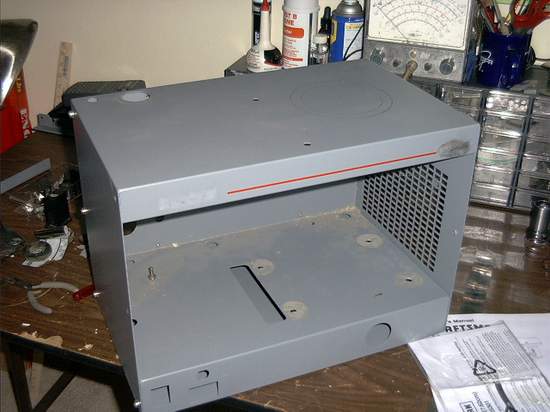
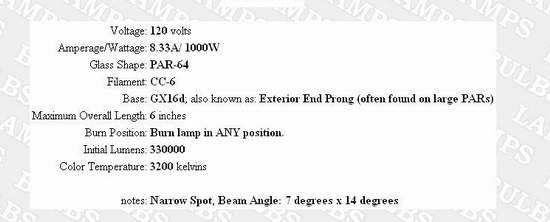
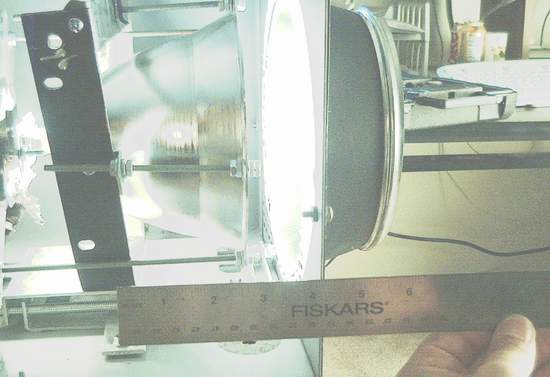
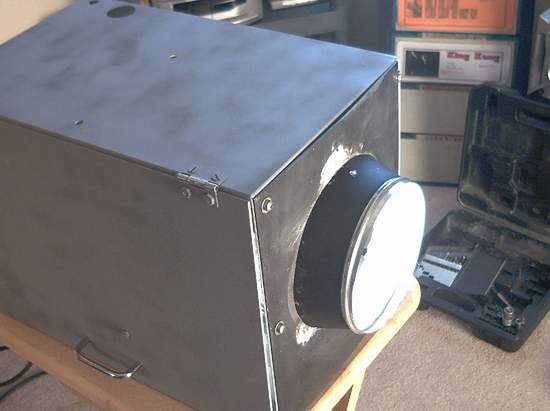
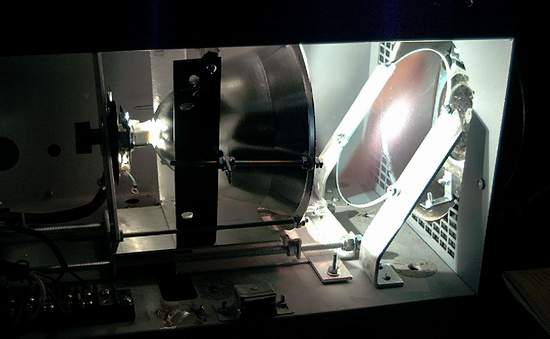
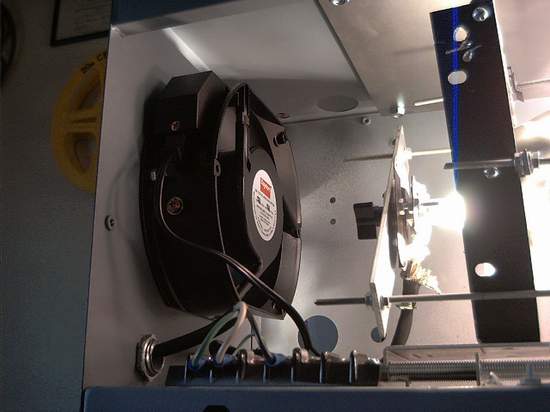
 I have cancelled the order for the PAR 64 bulb and instead found a nice clean new Leko stage light.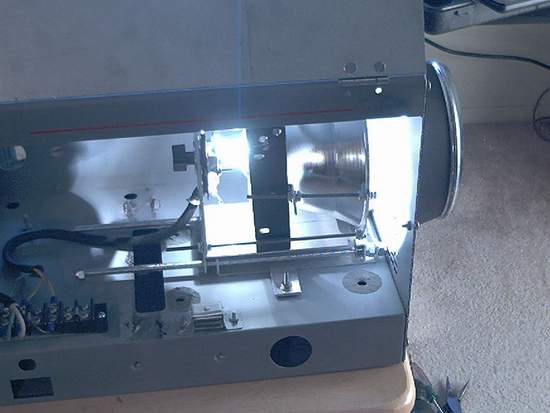




 Printer-friendly view of this topic