|
|
This topic comprises 3 pages: 1 2 3
|
|
Author
|
Topic: The King and I restored from 55mm neg screening
|
|
|
Christian Appelt
Jedi Master Film Handler
Posts: 505
From: Frankfurt, Germany
Registered: Dec 2001
|
 posted 08-17-2004 06:39 PM


quote: Manny Knowles
I vote for restorations that can actually be released in today's theatres alongside current product.
So do I. But I also dislike the attitude that some technicians and film historians have, it goes like this:
Back then it was all so primitive, like the hissing mag tracks or limited Academy optical sound. Today, we are so lucky that there are superior formats like Dolby Digital to capture all the information that exists in old soundtracks. It's so much better now in theatres, speakers used to be so primitive and inefficient...
That's not my experience. I have heard new versions of old 4-track films in digital, and they didn't sound better, they sounded worse. Not because digital is bad, which it is certainly not, but because the people using digital tools thought they were just transferring something primitive to a higher level.
Even in Academy optical sound, I am often surprised how good and full some films can sound in a theatre. Why? The people who did those recordings and mixes knew the limits of their tools and worked around it. In fact I consider many digital mixes of new films primitive, because they do nothing but create two hours of noise on 6 or 7 channels.
The two greatest film sound experiences in my life were a 35mm mag screening of RIVER OF NO RETURN and a 70mm screening of RYAN'S DAUGHTER (closely followed by WEST SIDE STORY), and in no other medium the sound had that overwhelming quality.
To sum it up, I welcome rereleases in compatible formats because it gets some classics to the big screen again, and there are valid reasons for using today's sound formats. Just don't tell people it's the same - it isn't. ![[Wink]](wink.gif)
| IP: Logged
|
|
|
|
|
|
Steve Guttag
We forgot the crackers Gromit!!!

Posts: 12814
From: Annapolis, MD
Registered: Dec 1999
|
posted 08-17-2004 10:12 PM
I know one distinct problem of the older tracks in "modern hands" is the modern people's lack of understanding on how the older tracks were mixed.
The older tracks were mixed to older theatres. That is, the older theatres did not have any subtantial equalization and the film was not afforded any sort of noise reduction as is available today.
If you take an older track, do a direct transfer to a digital (or even modern magnetic) medium and play it back with a modern sound system, it will sound quite hissy and harsh. This is not how it sounded originally but how it sounds when you record a track with a preemphasis for the old theatre and then play it back in a theatre with modern tunings.
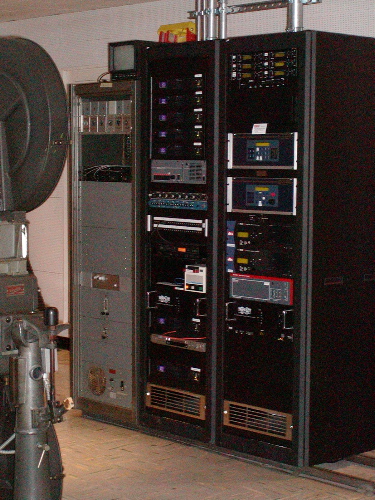
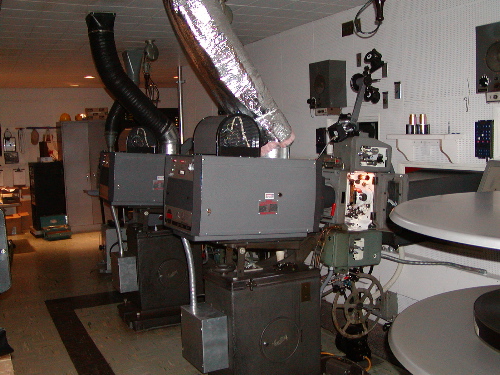
My most recent experience with this is at Colonial Williamsburg where we updated their old sound system (Altec/Century) to a modern Panastereo 70mm system. This system has been in place since 1957 or so. It is about as close as you can get to going back in time and hearing an original film played back in the theatre it was created for using old technology.
There are two theatres at this facility that are identical. We upgraded one theatre at a time. Upon changing out sound system in one theatre we were able to make comparisions to the orignal sound and the new sound. When the Panastereo processor was tuned to ANSI/SMPTE specs...the sound was VERY harsh and quite hissy. The only change at this point is the processor, amps and tuning. The 70mm magnetic prints have always been sans noise reduction since their sound system never had it. With the assistance of Ray Derrick, we were able to modify the new magnetic preamps to provide an equalization curve that would apply a response similar to the old system. It turns out that the roll off needed (in the preamp stage) to match the old system was rather similar to the X-curve. At that point, the sound was no longer harsh or hissy (even with no NR). In fact, it now had more detail than the old system with a pleasing and natural sound. Again, this is a situation where one could A-B the two rooms.
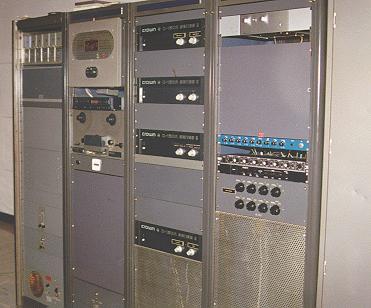
The second room was then upgraded as well. Their theatres now support not only old 70mm but with up to 6-track SR, DTS-70 and Dolby Digital 35mm (and yes John P....they are red-reader compliant!). They feature the Panastereo CSP1200/4600 combination, Dolby DA-20, DTS-XD10, QSC amps, RANE crossovers and still have Altec A-4 stage speakers with new JBL 2360 horns mated to new Altec 399 Pascalite drivers. Their signature film The Story of a Patriot has been on 70mm-magnetic with new prints now with DTS sound. The DTS-XD10s not only allows a digital (which has to be better because it is digital ) but foreign language translations on all shows plus "Rear Window" support for the hearing imapred and descriptive service for the blind. The DTS tracks have been tweeked to have them sound as good as possible in the Patriot theatres.
Steve
PS Sorry for the plug
| IP: Logged
|
|
|
|
|
|
|
|
|
|
|
|
Christian Appelt
Jedi Master Film Handler
Posts: 505
From: Frankfurt, Germany
Registered: Dec 2001
|
posted 08-19-2004 05:11 PM
quote: Manny Knowles
Is your counterclaim that "the analog tracks sound better than the digital ones"
That's not what I said. In my opinion, digital sound formats arefine for today's style (some call it philosophy) of sound design/sound mixing.
Old films were mixed for different auditoriums, different speakers and within certain technical limitations. Now when you transfer an old sound track to a modern system like Dolby Digital and play it back through modern speakers in one of today's theatres with rather dry acoustics, you are distorting the artistic work of people who knew very well how to get the most out of recordings systems like optical sound or 4-track mag.
If you transfer an old record to a modern 20-bit-digital recording without making adjustments for the difference in listening/playback technology, then your new recording will be an aesthetical distortion of the original work.
quote: Manny Knowles
Also, were you conducting A/B listening tests (of the same program reproduced via the same system) or did you arrive at your conclusion based on a memory of what the analog tracks sounded like?
I am neither musician nor sound engineer. Therefore I speak of my personal, totally subjective impressions. In very few cases did I have the opportunity to compare different versions of a single film in the same surrounding, but I am not comparing experience from 20 years ago with those of today because memory can play tricks on us. Sme time ago, I saw the 70mm versions of 2001 and SPARTACUS (restored version) in 70mm mag, and having heard both films in their DVD versions on a number of high end audio systems, I prefer the mag experience because the musical score sounds entirely different, more pleasing to my ears. Subjective again, not scientifical work.
Why did RIVER OF NO RETURN impress me so much? Because the sound was truly directional, you were pulled into the film acoustically when Robert Mitchum comes to town, they recorded it with three stereo mikes over the scene and panned with the camera.
There are reasons why this way of doing things changed, some having to do with analog Dolby's limitations, some being more in the creative zone. Some films in discrete digital stereo use directional dialog and ambience like they did it in the 1950s and 1960s, and I happen to like that style (RAPA NUI was the first Dolby Digital film that gave me this sound experience again).
We are not talking about the tools themselves, but of the artistic way in which they are handled.
So no, I don't think analog sound is in any respect "better" than digital, but that in transferring analog to digital, too often artistic and technical aspects are ignored by people who think they are just lifting something primitive to a higher level or that they have to adjust it to fit modern aesthetic preferences.
| IP: Logged
|
|
|
|
|
|
|
|
|
|
|
|
All times are Central (GMT -6:00)
|
This topic comprises 3 pages: 1 2 3
|
Powered by Infopop Corporation
UBB.classicTM
6.3.1.2
The Film-Tech Forums are designed for various members related to the cinema industry to express their opinions, viewpoints and testimonials on various products, services and events based upon speculation, personal knowledge and factual information through use, therefore all views represented here allow no liability upon the publishers of this web site and the owners of said views assume no liability for any ill will resulting from these postings. The posts made here are for educational as well as entertainment purposes and as such anyone viewing this portion of the website must accept these views as statements of the author of that opinion
and agrees to release the authors from any and all liability.
|

 Home
Home













 Printer-friendly view of this topic