|
|
This topic comprises 2 pages: 1 2
|
|
Author
|
Topic: "Waning Art of the Projectionist" Photos
|
|
|
|
|
Brad Miller
Administrator

Posts: 17775
From: Plano, TX (36.2 miles NW of Rockwall)
Registered: May 99
|
 posted 12-14-2012 11:08 PM


quote: Robert E. Allen
You are probably right Brad. But projectionists today who are not doing film do little more than push buttons. Film projectionists had to clean the equipment daily, service it weekly, thread the projectors about every 20 minutes, check focus as the carbon arcs heated the lenses, stand by for and make changeovers, splice trailers, cartoons and newsreels (remember those?) together with daters, replace worn parts (sprockets, shoes, pressure pads, etc.). And, of course, maintain the booth. On weekends we often worked 12 hour shifts. At least that's what this I.A. operator did. Technically today's full-time projectionists are probably more knowledgeable in digital booths but I don't think they have as much to do as film projectionists even those working platter systems.
Running platters does not disqualify someone as a projectionist. That's ridiculous. How about you run a single screen on 20 minute reels vs. a 16 plex on platters? Think about it.
| IP: Logged
|
|
Scott Norwood
Film God
Posts: 8146
From: Boston, MA. USA (1774.21 miles northeast of Dallas)
Registered: Jun 99
|
posted 12-15-2012 09:02 AM

Pretty much what Brad said, but I would add this: the job of the projectionist has never required more knowledge than it does today.
Fifty years ago, anyone who knew how to operate arc lamps and make changeovers (neither of which is especially challenging) could walk into nearly any projection booth and put on a good show. Now, in addition to that knowledge (which is still needed), a good operator needs to also know how to run platters, automation systems, various video formats (each of which has several different types of decks), D-cinema (which includes several different types of servers and projectors), and a multitude of sound formats. And he needs to know how to do basic maintenance and troubleshooting on all of this equipment.
What I am getting at is that all of the "old" knowledge is still needed, but the total amount of knowledge required to be good at this job has increased significantly in the last couple of decades. Although, weirdly, platters will likely become obsolete before anything else listed here does.
The same, of course, applies to the technicians who install and service all of this equipment--the required knowledge has increased dramatically with improved sound systems, video, D-cinema, etc. I don't know if it would fit into the original poster's project, but the motion-picture service industry would be interesting to explore as well. There are some very good people in that business (many of whom have been in the industry for decades), yet the general public barely knows that they exist.
| IP: Logged
|
|
|
|
|
|
|
|
All times are Central (GMT -6:00)
|
This topic comprises 2 pages: 1 2
|
Powered by Infopop Corporation
UBB.classicTM
6.3.1.2
The Film-Tech Forums are designed for various members related to the cinema industry to express their opinions, viewpoints and testimonials on various products, services and events based upon speculation, personal knowledge and factual information through use, therefore all views represented here allow no liability upon the publishers of this web site and the owners of said views assume no liability for any ill will resulting from these postings. The posts made here are for educational as well as entertainment purposes and as such anyone viewing this portion of the website must accept these views as statements of the author of that opinion
and agrees to release the authors from any and all liability.
|

 Home
Home



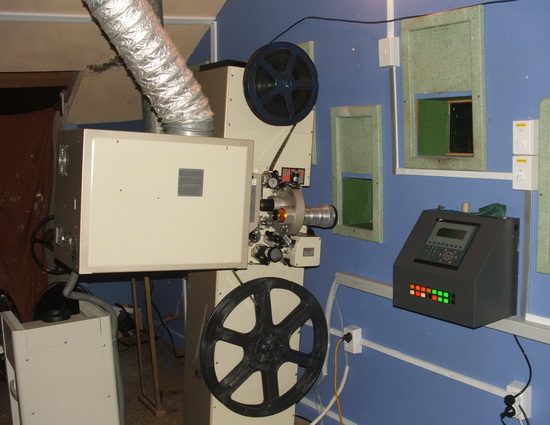
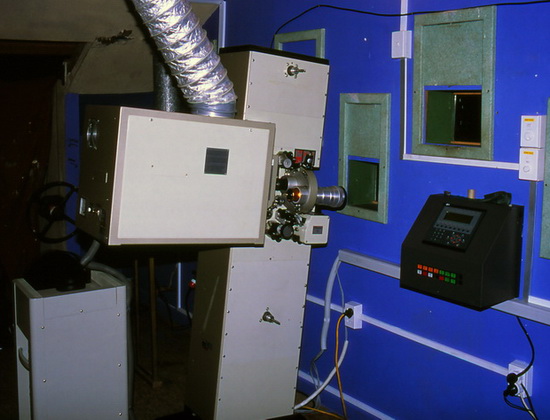
![[Roll Eyes]](rolleyes.gif) I also took Super8 film as well
I also took Super8 film as well ![[Cool]](cool.gif) "lots of extra light for that one" just before the cinema closed last year.
"lots of extra light for that one" just before the cinema closed last year. 



 Printer-friendly view of this topic