|
|
This topic comprises 3 pages: 1 2 3
|
|
Author
|
Topic: light switch orientation
|
Stephen Furley
Film God

Posts: 3059
From: Coulsdon, Croydon, England
Registered: May 2002
|
 posted 08-28-2015 04:05 PM


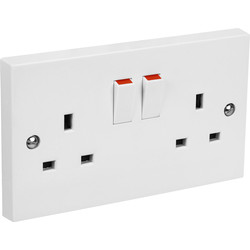
But Scott, you're looking at two different types of switches. In the UK the two toggle switches would be off, and the single rocker switch would be on. I'm not sure about light switches, but in mainland Europe toggle switches on appliances seem to be up for on, but down for on in the UK.
Larger switches,anything from the lighting 'main' switch in a house to industrial switches rated at hundreds of Amperes, always seem to be up for on wherever in the world they are. really big knife switches are generally up for on, and large circuit breakers are down whether set or tripped. To set them you lift the handle, which does nothing, and then pull it down, which closes the contacts. To trip them manually you lift the handle sharply, which trips the breaker, and then allow it to drop back down which does nothing. I've stood next to a 20,000 A d.c. one, made in the first decade of the 20th century, and definitely not conforming to modern health and safety standards; a really frightening thing, and it was in service until about twenty years ago.
As to NEMA receptacles, I'm told that the standards do not specify a preferred orientation, and I've seen plenty both ways, and a few duplex receptacles which have one outlet each way. Ground down seems to be generally standard on older installations, while both are common in newer ones. Larger 30 and 50 A ones generally seem to be ground up. The argument I've heard for ground up is that if something is dropped, and falls onto a partly inserted plug in is more likely to land on the ground pin than a live blade. this sounds like a pretty unlikely scenario, and wouldn't happen in most other countries, where receptacles and/or plugs are designed so that a partially inserted live pin is never exposed.
There's an interesting situation in Europe where most countries have plugs where live and neutral pins are round, and spaced 19 mm apart. There are several different eathing arrangements; German and Italian plugs are non-polarised, but Swiss and French are polarised, in the sense that the plug will only fit one way, but the French standard does not specify which pin is live, and which neutral, so the 'polarised' design is meaningless. You can even buy double adapters in France where one socket it earth down and the other earth up, but both are wired with live on the same side, left or right, so that the two sockets have opposite polarity, unlike Duplex NEMA one I've seen, where the grounds are towards the centre, so the two outlets are opposite ways round, but the internal connections cross over, so that both outlets are connected correctly.
With toggle switches up for on, as in the US and most of Europe, seems more logical, though I don't really know why. With rocker switches, top sticking out for on, as in the UK, seems more logical because these switches are normally mounted below eye level, so you look down on them, and can see the top of them when they're in this position. Here, the top is often coloured red to indicate that they're on when in this position. when turned off this red is not visible.
| IP: Logged
|
|
Carsten Kurz
Film God
Posts: 4340
From: Cologne, NRW, Germany
Registered: Aug 2009
|
posted 08-28-2015 05:34 PM
It could go very far back where switches should never activate on their own by gravity as a safety measure. That way, the switch mechanics should only travel into the 'ON' position against gravity. When the whole electricity thing started, they only had few (if not only one) type of switch, and these may have had that tendency to 'fall' into the downward position.
As far as I know, there is no regulation in germany about this, and boy, we DO have a lot of regulations and standards on electrical installation. But we have so many choices of switches around here.
That said, a lot of simple domestic switches used to have red lines on the protruding part that would serve as an On/Off indicator. I guess most people do not really care, since these switches are mostly used to switch on lights, and in these cases, the indicator is the result of the switch action in itself ;-)
When machines, etc. are operated, there are usually other switch types.
We do have regulations for sockets and switches in bath-rooms as well, and very often switches are positioned outside of these rooms. As then very often you can't see the light when the door is closed, we typically install indicator switches with a small light on them.
Our automatic circuit-breakers here are ALL on in the UP position, with no exception. My personal preference which I implemented on all switches in my home is to push on the upper part for On. That said, we do have a lot of very large flat switches here where the difference in visible profile between On and Off is very small.
- Carsten
| IP: Logged
|
|
|
|
|
|
|
|
|
|
Carsten Kurz
Film God
Posts: 4340
From: Cologne, NRW, Germany
Registered: Aug 2009
|
posted 08-29-2015 05:04 AM
No, but I noticed this as well when I started traveling to Ireland. Basically they seem to have the same product in all the houses there. Two sockets, two switches, the same design everywhere. And these switches show red indicator color for 'On'.
When you go to a D.I.Y. store in germany, there are dozends of different designs of switches, plugs, sockets, frames,covers,1,2,3,4,5 in a row, different colors, shapes etc. Also most of our stuff here is flush-mounted.
Also, in Ireland and the UK they have equipment fuses in the wall-plugs. In germany, fuses are in the device itself. But our standard mains-plugs are too small for fuses anyway, especially the two-pin euro plugs.
- Carsten
| IP: Logged
|
|
Stephen Furley
Film God
Posts: 3059
From: Coulsdon, Croydon, England
Registered: May 2002
|
posted 08-29-2015 09:06 AM
Louis, there are two diameters of pins in Europe, Italian and Swiss ones are 4 mm, and French, German, Danish, ones are larger, 4.7 mm I think.
The live and neutral pins are all spaced at 19 mm, and the dreadful two pin 'Euro' plug is designed to be able to ( badly) fit all of them. It has two 4mm pins which are angled inwards slightly towards the tips, so they will still make contact in 4.7 mm sockets.
Even worse are the so called 'universal' travel adapters, which are designed to take almost all plugs worldwide, except for the 15 A South African one, but which fit most of them badly, often do not provide an Earth connection, and have large, odd-shaped holes into which children could easily insert various objects.
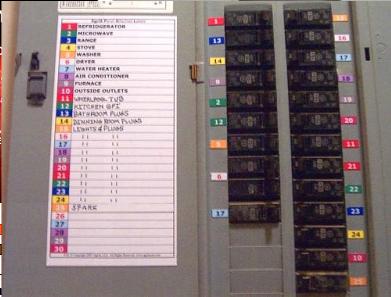
Scott, that panel looks very much like the one in the projection room where I am now. breakers are horizontal, and 'out' for on. Labels are red, yellow and blue, the old phase colours before these were changed to brown, black and grey.
Vertical breakers seem to be more common in small, domestic, panels.
| IP: Logged
|
|
|
|
|
|
|
|
|
|
|
|
|
|
|
|
|
|
All times are Central (GMT -6:00)
|
This topic comprises 3 pages: 1 2 3
|
Powered by Infopop Corporation
UBB.classicTM
6.3.1.2
The Film-Tech Forums are designed for various members related to the cinema industry to express their opinions, viewpoints and testimonials on various products, services and events based upon speculation, personal knowledge and factual information through use, therefore all views represented here allow no liability upon the publishers of this web site and the owners of said views assume no liability for any ill will resulting from these postings. The posts made here are for educational as well as entertainment purposes and as such anyone viewing this portion of the website must accept these views as statements of the author of that opinion
and agrees to release the authors from any and all liability.
|

 Home
Home














 Printer-friendly view of this topic