This is topic Brenkert History - Robert Sprague in forum Film Handlers' Forum at Film-Tech Forum ARCHIVE.


To visit this topic, use this URL:
https://ft-forum.com/ft/cgi-bin/ubb/ultimatebb.cgi?ubb=get_topic;f=1;t=003655

Posted by Jeff Stricker (Member # 224) on 06-30-2002, 12:09 PM:
 
Those of you who have been receiving monthly issues of Robert Sprague’s “News and Views” – historical information on the Brenkert Light Projection Company of Detroit are aware that he is considering abandoning his project due to apparent lack of interest. Robert has indeed done a tremendous amount of research on the Brenkert Company, and I must say, has a wonderful collection of company literature.

One of the problems with continuing his project is the postal increase. Robert doesn’t have a computer, and thus everything goes via snail-mail. I just sent Robert a sheet of 37 cent stamps to help cover my share of his mailings. Might I suggest others who have enjoyed and benefited from his efforts do the same? Also, I’m sure he would appreciate any notes of encouragement.

If you need Robert’s mailing address, please e-mail me.


Posted by Josh Jones (Member # 447) on 06-30-2002, 01:00 PM:
 
Cool Idea.
 
Posted by Paul G. Thompson (Member # 655) on 06-30-2002, 01:28 PM:
 
Cool, indeed. Josh or Jeff, please send me that address.


Posted by Mark Gulbrandsen (Member # 72) on 06-30-2002, 03:12 PM:
 
I would really like to see all of Robert's work posted in a special section here on Film-Tech at some point. It would be wonderful if it were made available to all who visit this excellent site.
Mark @ GTS
 
Posted by Brad Miller (Member # 2) on 06-30-2002, 05:08 PM:
 
Jeff, explain the website to him next time you speak with him and I will gladly make a section for his publishings in the manual section if he gives permission. All I would need is single sided photocopies of his work and I'll scan them into pdf files for the world to be able to access.
 
Posted by Ken Layton (Member # 133) on 06-30-2002, 05:26 PM:
 
Brad:

That's an excellent idea! I would definitely love to see a section of film-tech devoted to the details of the Brenkert company.


Posted by Steve Kraus (Member # 476) on 06-30-2002, 06:26 PM:
 
Definitely online is the way to go.
 
Posted by John Eickhof (Member # 323) on 07-15-2002, 11:59 AM:
 
If you can, Please send me Robert's address also! I would like to get the newsletter!! Thanks!!

------------------
John Eickhof President, Chief Slave
Northwest Theatre Equipment Co., Inc.
P.O.Box 258
Wendell, ID. 83355-0258
208-536-5489
email: jeickhof@nteequip.com


Posted by System Notices (Member # 2357) on 08-07-2014, 07:00 PM:
 

It has been 4406 days since the last post.

 
Posted by Will Kutler (Member # 770) on 08-07-2014, 07:00 PM:
 
I enjoy collecting vintage projector advertisements. I just picked up the agenda for the 1946 RCA/Brenkert Annual Sales Meeting Nov 5th -10th in Toledo, Ohio. I'll see if I can scan and post.
 
Posted by Steve Matz (Member # 1890) on 08-10-2014, 01:27 PM:
 
Speaking of Brenkert; 35mm Telecine Projectors are kind of rare unless you've worked in TV Stations. I have only seen one 35mm Telecine Projector in person and that was a version of a SIMPLEX XL which I saw decades ago in Los Angeles; Station KTLA

Doing a little research on BRENKERT and I find that they Mfgerd a 35mm Telecine model back in 1947 called the BX90.Has anyone ever seen one of these or used one. I don't remember anyone in TV Ever mentioning Brenkert as far as Telecine Projectors go. These would have to be pretty rare and probably short run Production Units...
 
Posted by Gordon McLeod (Member # 33) on 08-10-2014, 02:23 PM:
 
Up here most major markets had a 35 and 16mm telecine chain the popular was the Eastman825 for 16mm and the XL for 35
There were several that had phillips fp20 with modified movements
later many got the RCA "electronic projector"
 
Posted by Steve Matz (Member # 1890) on 08-10-2014, 03:42 PM:
 
Gordon; I think you meant Eastman 285. It has the same 8 Star Geneva Intermittent that my Model 30 has. 5 Blade Shutter,Lens, and Cabintry differ from the 30/40. I have 2 Brandnew Service Manuals(still in Kodak box) for the 285 if anyone happens to be looking for one...

 -
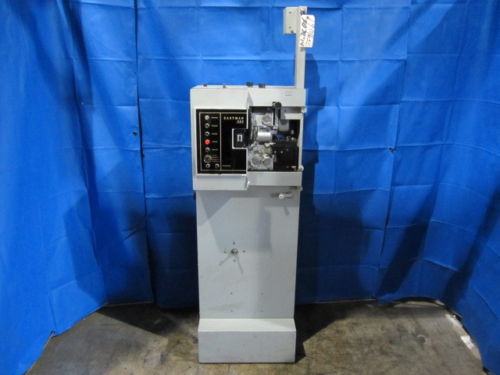
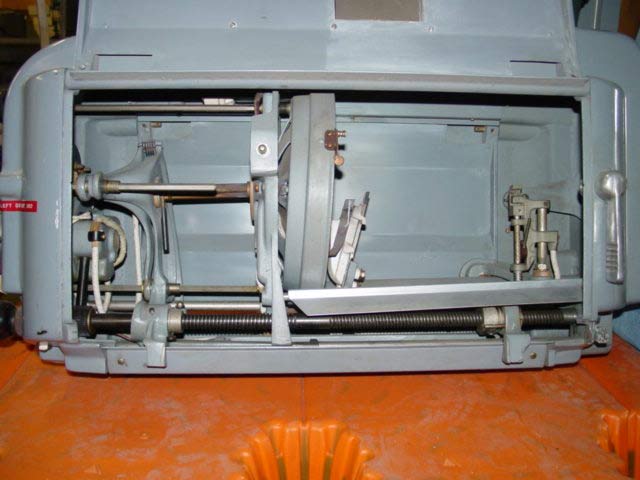
Eastman 285 16mm Telecine Projector
 
Posted by Mark Gulbrandsen (Member # 72) on 08-13-2014, 12:46 PM:
 
The sad thing about the telecine Eastman's is they can not be converted at all for regular screening use. They are only good for the film path parts and that's about it.

The Eastman 25 still rules as the king of 16mm projectors though.

Mark
 
Posted by John Eickhof (Member # 323) on 08-13-2014, 01:23 PM:
 
I have a brenkert telecine they were prevalent and were sold with many RCA broadcast packages. Its a modified BX-80 (with sych motor controlled shutter and special intermittent)on a modified MI-9030 (3 phase synch motor and gearbox)Using a dual incandescent lamp and 6000ft reel capacity. Has the 1940's style custom base with chrome 'RCA Television'logos too!
 
Posted by Steve Matz (Member # 1890) on 08-13-2014, 09:45 PM:
 
quote: Mark Gulbrandsen
The sad thing about the telecine Eastman's is they can not be converted at all for regular screening use. They are only good for the film path parts and that's about it.

The Eastman 25 still rules as the king of 16mm projectors though
Not True Mark;My good friend Greg who also ran a 16mm Film Library converted a 1958 275 to Tungsten Use. He replaced the shutter with a 2 blade from a 25C along with the Ektanon 2"F/1.5 Lens,a DGS 1000Watt Lamp.The Intermittent Pulleys/Gilmer Belt from a Model 30/40.I've watched Films projected off of it at least a dozen Times;Image is a Rock Steady Picture just like my 30...

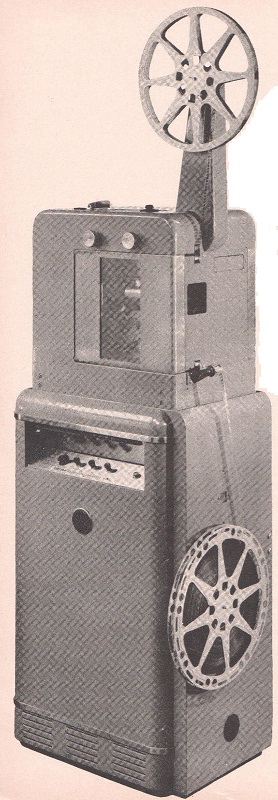
The 275 Cabintry is the same as the 25A,B,C and 250 Telecine. They Changed the Upper Reel Arm and added a Takeup Motor in the Lower Cabinet to handle 5000 Ft. Reels. That was the drawback of the 25/250 Series Projectors;Limited to 2000Ft Reels. The Projector Mech/Transport is pretty much the same in all the Models.The 30/40 Intermittent had a faster pulldown Ratio and could throw a little more light on the Screen than the 25.If you maintain these Projectors they will outlast you and maybe your Kids.I've had mine since 1968 and it has worked Flawlessly all these years(same intermittent)

 -
Eastman Model 275 16mm Telecine
 
Posted by Gordon McLeod (Member # 33) on 08-14-2014, 08:03 AM:
 
Who was Hopkins and Woods in a old article they were listed as the manufacturer of the Carbon Arc Lamphouse used on them
 
Posted by Mark Gulbrandsen (Member # 72) on 08-14-2014, 08:55 AM:
 
Steve Matz,

Glimmer belts and pulleys... Where? Every Eastman projector I have ever seen is directly driven via two synchronous motors that lock together during start up with synchromesh gears. Internally they are all geared. There is so much work involved that one may as well just seek out a complete projector in the first place and if it was at all feesable to do there wouldn't be so many Eastman telecine projectors going to the scrap heap. They can't be given away. I have serviced quite a few of them over the years and I still service one every year that's at BYU. There isn't a belt in the entire projector. Even the take up is motor driven.
 
Posted by Steve Matz (Member # 1890) on 08-14-2014, 09:46 AM:
 
Well apparently Mark you have never serviced a Model 30/40 or 285 because they eliminated the star like syncromesh gears in the 60's. I know Eastman projectors, I have dealt with them for 50+ years. If you had worked on these as you claim you would have known that they went to a cogged belt System with aluminum/alloy pulleys on the intermittent and Motor;Just the way mine is that I bought in 1968. If you doubt my word we can make a Money bet and I will post a photo of the intermittent side of my Projector...
 
Posted by Steve Matz (Member # 1890) on 08-14-2014, 11:26 AM:
 
quote: Gordon McLeod
Who was Hopkins and Woods in a old article they were listed as the manufacturer of the Carbon Arc Lamphouse used on them
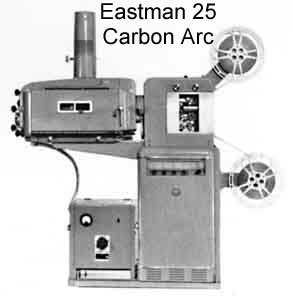
Not sure about that Company; When you ordered a 25 arc Model
this is the Lamphouse you Got. It was made by Strong but had
Kodak Badges on it and a Kodak P.N. It's a Big Tank but I will keep it for Nostaglia Purposes. Kodak didn't sell that many Arc Systems back in the early 50's compared to Tungsten Models...

 -
Eastman 25A Lamphouse built by Strong for Kodak

 -
 
Posted by Charles A. Petty (Member # 3458) on 08-14-2014, 02:11 PM:
 
We need an ash receiver and supplemental magnet assembly for our Strong Utility lamphouse that we are running with our Eastman 25 16mm projector. We acquired this unit last year and it works well, but is missing these parts.
 
Posted by Mark Gulbrandsen (Member # 72) on 08-15-2014, 04:42 PM:
 
Steve Matz,

No... I have never seen an Eastman with timing belt drive. Every model 25 and 30 I've ever serviced had the synchro-mesh gearing with direct drive motors. The Model 30 is exactly the same as the Model 25 in every respect. All they did was modernize the cabinet. I would probably pass on any Eastman projector I ran across with timing belts in it.
Hopkins & Woods...? They are a large machine shop in Martinsville, IN and they are still in business (started in 1942, 1.5 million revenue average). Eastman Kodak used a lot of outside vendors to make some of the complex mechanical products they sold to their specs. The Eastman 16mm film cameras are one example. It is also likely the big 16mm projectors were also not made at Kodak but merely QC'd there and shipped from their warehouse.

Mark
 
Posted by Steve Matz (Member # 1890) on 08-15-2014, 06:11 PM:
 
quote: Mark Gulbrandsen
The Model 30 is exactly the same as the Model 25 in every respect. All they did was modernize the cabinet. I would probably pass on any Eastman projector I ran across with timing belts in it.
That Statement There tells me you have never serviced a 30/40 or 285 Projector.They did more than just Cabintry Changes. The Intermittent was changed to a faster Pull down and the Kodak P.N is different than the 25 models.That was one of the improvements over a 25 to get more light on a Screen.The Gilmer(not Glimmer)Belt Pulley system has been on every 30/40 and 285 Mfgerd since Day one; not just my Projector...(still with the original belt from 1968)

If you were to pass on the Projector because of this Cogged Belt timing System than you should pass on any Automoble/Truck that incorporates SOHC/DOHC Valve Train; because they all use a similar type system and Timing stays Accurate longer than most people
own the Vehicle...

 -
 
Posted by Mark Gulbrandsen (Member # 72) on 08-16-2014, 09:47 AM:
 
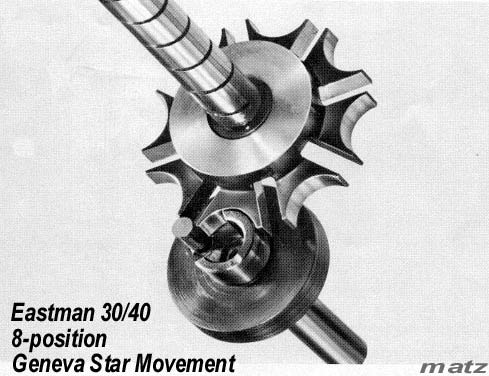
Steve, I have actually installed a Model 30! It too had synchro mesh gears. It sounds more like they made a change somewhere during production to me, the synchro mesh gears would of course have been the more expensive route. A projector with no belts is always preferred. If yours has belts in it I'm sorry.

Hortson used an almost identical 8 sided star in their intermittent.

Mark
 
Posted by Steve Matz (Member # 1890) on 08-18-2014, 06:48 PM:
 
quote:
Steve, I have actually installed a Model 30! It too had synchro mesh gears. It sounds more like they made a change somewhere during production to me, the synchro mesh gears would of course have been the more expensive route. A projector with no belts is always preferred. If yours has belts in it I'm sorry.

Mark

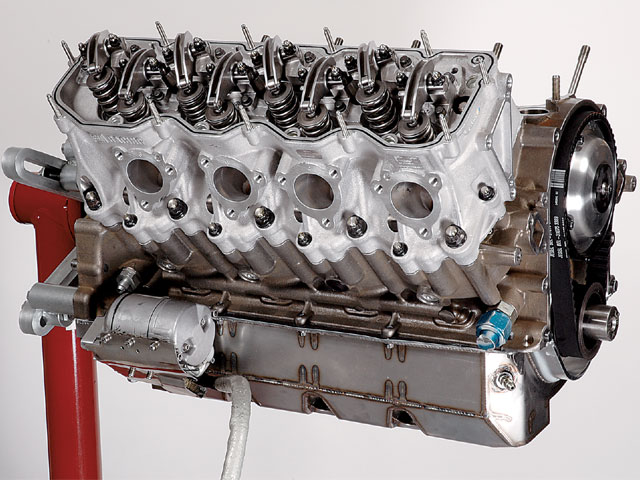
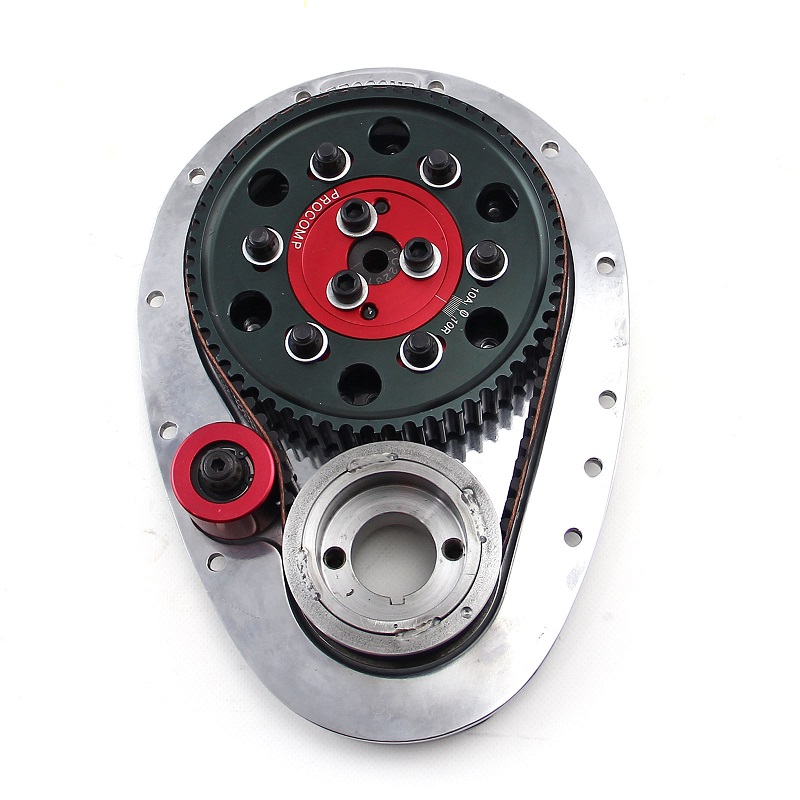
Mark;Why would you feel sorry for me running a Gilmer Belt controlled intermittent that turns 1440rpm.This replaced the antiquated Syncromesh Star Gears and just like this Chevy Nascar R07 Engine Below it uses a Modern Style Gilmer cogged Belt.These Engines turn just shy of 10,000rpm and go 500race miles with no timing issues. You don't need to feel sorry for me because my Projector along with every other Eastman 30/40 and 285 uses this Belt System. It was a tried and tested Revision improvement that Kodak Engineers knew was reliable and accurate... [beer]

 -
Chevy Nascar RO7 Racing Engine w/ Gilmer Style cogged Timing Belt
 
Posted by Mark Gulbrandsen (Member # 72) on 08-19-2014, 10:53 AM:
 
Steve, If you actually worked as a tech in this industry as long as I have then you would know about a thousand reasons not to use glimmer belts. Simplex, Christie, Shakeamecanicca, et ell. Even in an engine they have a finite life span. Today they are used because they are cheap. Note that Motiograph and Century among others used timing chain drive on their sound repro. to projector drive. Century switched to timing belts in the 1960's at some point. But Century was pretty much ruined by then anyway. The earlier Eastmans with direct drive is the only way to go. They never ever wear out or break down. What is so antiquated about the synchro gearing. It's only in play while the motors start up to keep the intermittent and shutter phase locked. Then the gears don't even make contact with each other. It's simple and elegant with nothing to break down ever.

The best example of not to use Gilmer belts is the Christie P-35GPS projector. What an f$$king mess those made inside the projector! It was not until near the end of projector manufacturing at Christie that the projector finally ran correctly after replacement of the entire belt system with a different belt and pulley system. For the forth or fifth time. They made one projector right from the beginning... The Cine-X35. It only ran well because it's belt and pulley system was eventually the one adapted to the P-35.

Simplex... 5-Star pulleys that constantly wear out, if new pulleys are not installed at a certain point the new belts have a very short life span. Same in the P-35!

In the end the thing that saved all these projectors were metric round tooth timing belts. All the bull shitting around all those years and theaters that bothered to update actually got a couple years of trouble free service out of them all,the while theaters that has Simplex four star hardly ever had breakdowns.

Direct drive with gearing is always better. Even real race engines used all geared cam shaft systems... They make that pleasant whining sound.

 -

Mark
 
Posted by Steve Matz (Member # 1890) on 08-19-2014, 12:17 PM:
 
Nobody in Racing uses that PETE JACKSON Gear drive anymore and they weren't Quiet. You could hear those things turning with your Stereo turned up. You needed the 2 idler gears(more friction and drag) to keep Clockwise Distributor Rotation. If you Ran a Single Cam Gear to crank gear(chevy truck engines) than you need a reverse rotation distributor, Those Jackson Drives are old School, I would have stuck with just a double Cloyes setup like most of the Racers did...Now it's belts and nobody is worse off...

When was the last time you built a real Race Engine?
 
Posted by Mark Gulbrandsen (Member # 72) on 08-19-2014, 02:38 PM:
 
I don't have much interest in engines Steve... But Friends of mine do and they have a dragster they built that I do go watch run from time to time. You can argue till your blue in the face in support of gilmer belts. Not many tech's on here that have ended up with black crud all over their hands and clothes are going to support that though. In the case of projectors gilmer belts are absolutely the cheaper way to go. I used one to drive my VistaVision projector. If they are more efficient or not depends on the actual use and the downsides of them far outweigh any efficiency gains there may be in projectors.

 -
 
Posted by Steve Matz (Member # 1890) on 08-19-2014, 05:44 PM:
 
Mark;If they weren't reliable and virtually trouble free;Than Industries wouldn't bother using them.Who wants to have to do Warranty Work which only comes back on the MFGer in Costs.My Projector has the Original Belt installed back in 1968. The Belt shows no signs of Deterioration and the Transport still projects a Rock Steady Image just like the day it was New. 46 Years with the same Belt; I would say that's pretty reliable. I doubt Kodak was worrying about saving a few bucks;Those Projectors were Expensive to begin with and only Select Institutions,Theaters,Film Libraries,etc. even considering buying them.

In fact what I paid for this Thing back then;I could have bought for several hundred dollars more 2 Corvette Stingrays. Now that I know what you can get for a 68 Vette these Days I should have Gone the Car Route and Forgotten about the Projector Completely because even as cherry & pristine as it is,nobody is going to Pay that kind of Money for past technology superceded by what we have Today...

 -
What both Street and Racing Engine Now Use for Timing
 
Posted by James Westbrook (Member # 3690) on 08-19-2014, 10:33 PM:
 
This thread was driven off course as quick as those race cars launch when the light turns green...
 
Posted by Mark Gulbrandsen (Member # 72) on 08-20-2014, 12:32 PM:
 
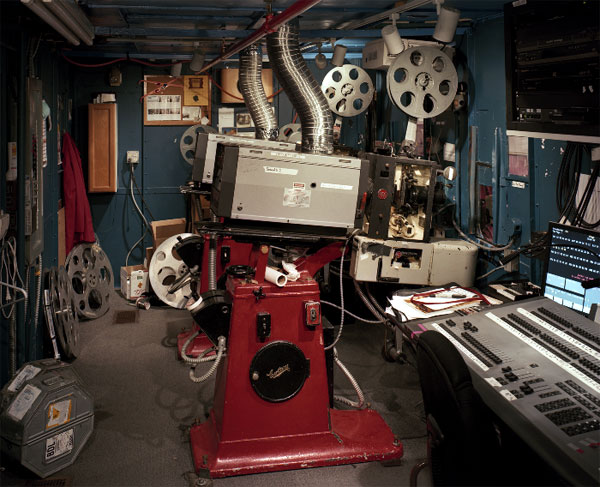
Steve... Yes... I agree that timing belt system would be fine if you're rebuilding a Chevy Chevette or a Kia Sportage. There is no timing belt drive in the drag car I posted above. It is all geared and my friend Don said it will always be geared and so are all the other engines in the other drag cars they race. Enjoy your timing belts my friend!

Mark
 
Posted by Steve Matz (Member # 1890) on 08-20-2014, 02:15 PM:
 
quote: James Westbrook
This thread was driven off course as quick as those race cars launch when the light turns green...
I agree; so were going to bring this Thread back to BRENKERT
and talk about their well engineered Intermittent...
(Mark will go to his Grave hating Gilmer Belt Systems)

THE BRENKERT BX SERIES INTERMITTENT

The precision intermittent in the Brenkert BX80,BX60,BX40 and BX100(RCA)is the most vital part of any projector mechanism and is commonly and correctly termed "The heart of the mechanism" The accuracy of engineering and design,and the precision of MFG of this unit govern the original quality of projection,length of service,and up-keep costs.The importance of good engineering in it's design and the adherence to close tolerances in it's MFG
can be realized quickly when one considers the function performed by this unit ...

The intermittent must move the film a distance of one frame,or approximately 3/4 inch in 1/96th of a second.this means that the film moved by the intermittent has an average speed of 360FPM compared with a film speed of 90FPM in other parts of the mechanism.However,the intermittent must start moving the film from complete rest and return it to a state of complete rest
after it has been moved a distance of one frame.To accomplish this in 1/96th of a second,the film speed must reach a maximum velocity of almost 900FPM in 1/200th of a second...

Each succeeding frame in the film moved by the intermittent must occupy exactly the same relative position in the film aperature. Any variation in the location of succeeding frames will show up as unsteady projection on the Screen. As an example,a variation of just .001 thousandth of an inch in the location of succeeding frames in the film aperature with a projected picture width of 20Feet Wide will result in the picture jumping or weaving approximately 1/4 inch. High quality projection over a long period of time therefore depends on a high degree of precision and accuracy in MFG of the parts making up this unit, and the design must be such that this accuracy is constantly maintained...

The Brenkert Starwheel,Cam and Cam Pin are of Large Diameter with long Bronze bearing surfaces; The use of large parts facilitates greater accuracy in MFG and provides larger wearing surfaces,which in turn result in greater accuracy of operation and longer wear...

The intermittent cam is driven by an external gear fitted to its mating gear with absolutely no backlash; the index pin on the cam is fitted with a hardened steel roller so as to eliminate the possibility of wear and development of flat spots. Each moving part in the intermittent is made of hardened
steel, ground and fitted together so precisely that Specially-Designed factory guages are neccessary for making measurements and checking the microscopic tolerances adhered to ...

The Star Wheel Shaft in the Brenkert intermittent is 6 and 5/8" long and 7/16" in diameter. It is supported by 2 long Bronze Bushings,one close to the Star Wheel and the other close to the Film Sprocket. The sprocket and star wheel, there-fore, are both held rigidly and accurately in position, resulting in perfect
Film Motion and Quiet Operation.Because of the large dimensions of this Shaft and it's 2 Bronze Bushings, wear is negligible and the original accuracy built into this unit is maintained over an extremely long period of time ...

Bronze Bushings can be MFGerd much more accurately and will last
considerably longer than a cast iron bearing of the same length and bore.The brilliant engineering used in the design of the BX Series Projector mechanism lends itself to the use of Bronze Bearings in the intermittent unit,because of the abundance of filtered oil flowing continously over all it's parts,
thoroughly lubricating them and maintaining them at a low temperature.With out this type of lubrication, Bronze Bushings are not practical in an intermittent because the heat generated and held by the oil confined in the intermittent case would result in uneven expansion between the Bronze Bushings and Steel Shafts,which in-turn would result in rapid wear and probable bindups ...

An exclusive feature of this intermittent is the method used for attaching the intermittent sprocket. The sprocket can be removed for Reversal or Replacement in less than one minute. It is not neccessary to remove the intermittent unit from the projector or dismantle it to replace the Sprocket.This means quick,safe, and inexpensive(?) Sprocket Replacement for maintaining the High-Quality Projection Standards inherent in this Projector
Mechanism. The complete Intermittent Mechanism(P.N. X-3107C) can be removed and replaced as a complete unit easily,quickly and safely in lesstime than is required for the running of an average reel of Film ...(Remember this was engineered in the 1930's)
 
Posted by Steve Matz (Member # 1890) on 08-21-2014, 05:21 PM:
 
The RCA 100(BX-100) Head looks almost out of place with the More modern SH and Lamphouse. I don't remember ever seeing a Century Pedestal being that Color...

 -
 
Posted by Mark Gulbrandsen (Member # 72) on 08-21-2014, 06:50 PM:
 
Actually it was the RCA 9030 or the 9050 that was typically sold with any Brenkert. It is one or the other that is in your picture. Those were the only two sound reproducers RCA manufactured during that time period. The 1040 and later 1050 were long out of production by then. The 9050 had the advantage of driving the projector mechanism from the lower sound head sprocket rather than the upper. This reduced flutter somewhat as Brenkert's were a fairly heavy load on the gear box.

Mark
 
Posted by Gordon McLeod (Member # 33) on 08-22-2014, 02:08 PM:
 
The eight point star was also found on the PrevostP16/Favorite16B
 
Posted by Richard Fowler (Member # 893) on 08-23-2014, 07:21 AM:
 
Horston projector...


Powered by Infopop Corporation
UBB.classicTM 6.3.1.2