
"No posting. Come back 1 month."
But here's the delemma: this was a VistaVision picture, correct? even though it wasn't Paramount but MGM. So that should mean that the 35mm standard print would be a hard-matted to 1.85, correct? Well, this print was a full frame, Academy aperture. So how do they get a 1.37 Academy image from a VistaVision original negative? Are they cropping the sides? And if that is the case, then I should have run it in 1.37, otherwise I would be cropping a portion of the original image, top and bottom resulting in not only loosing what was cropped from the width but cropping the top/bottom as well -- talk about looking through a keyhole! What am I missing here? Why would they print this as a 1.37 Academy frame? I ran it in 1.66 and it looked OK, but at times the heads were being shaved by the top of the frame. Then there was one scene where Cary Grant and two other guys are sitting in the back seat of a car and both guys on either side of him were only half visible the frame edge cutting them right in half; I can't believe the shot was purposely composed that way. Seems to me all three would have been fully visible in the VV version.
We lost power to the booth during the show. A breaker tripped either because of the humidity or the heat or both, or it was just faulty --it certainly wasn't because of anything in the booth -- it is a 20A circuit feeds only a powerstrip with a 15a breaker in it and the 15A didn't trip. I though I was going to loose the bulb because naturally the fan stopped also. But they had a guy sitting right by the breaker and he threw it within a minute; the lamp's auto-strike lit it as soon as the power came back on. I had a stage hand sit next to the breaker box for the rest of the show. It tripped a second time, but he had it back on in 10 seconds. This makes me think it might be wise to put an aux fan in the lamphouse smokestack powered by a separate circuit so that if the lamphouse breaker trips, the bulb will still get air-flow.
The Brooklyn audience was very good about it (they can be very vocal if they choose). No cat-calls or whistling, even though the second break was in the last reel's fairly suspenseful part. I must say, just another reason why the park is a great venue to work.
Frank
The 35mm print you ran appears to be like the one the Film Forum ran in the mid-90s.
BTW, the only two plastic split reels among the bent metal shipping reels in NBN, *both* arrived in pieces.
Frank
The Vista Vision print you have is made to show in 1:66. Look closely at the first 15 seconds of each reel. In the upper right corner you will see a funny F icon. This is the FRAMING CUE which was printed there to assist the projectionist in framing the image properly.
If you show these in 1:37 you will probably see some microphones.
Look at the print of VERTIGO and see what Alfred did during each changeover. I covered the port window except for the very right top corner. Two can play at that game.
KEN
I have a diagram somewhere. Let me see if I can dig it up.
Ahh.... Here is is: I put in in my public_html directory for y'all:
VistaVision Diagram GIF Image
Note: This image is rather large in size (1536x1322), but is only 56KB in size, since it's only 2-color. Also, I don't know where I got the image. If anyone recognizes it, let me know where it came from.
------------------
Evans A Criswell
Huntsville-Decatur Movie Theatre Information Site
Jim
I'm getting senile! Time scale from mid 'fifties for heyday of VV including the two films mentioned which I screened about 1956.
Jim
--jhawk
p.s.: Brad, I know it's over 550 pixels, it looked terrible any
smaller. Let me know if I should have used a link instead of an inline image...
And Evans and John, thanks for the diagram. Unfortunately, it has ratcheted my awe of VistaVision down a few notches. They did an aweful lot of designing and twiddling mostly out of pride so they didn't have to license CinemaScope from Zanuck. I still love the name, though -- and the cool animated graphics with the big V and the center wipe of the rest of the logo. They just should have saved it for something a little more dramatic than 1.66. And even though they could crop VV to to get a 1.85 screen image, hey, theatres didn't need VistaVision to play the cropping game.
And I agree, NORTH BY NORTHWEST would have been claustraphobic in 1.85. 1.66 looked fine.
Now the next question is, do you think the NBN print still had the Perspectasound cues in the soundtrack?
Since most of the procenium arched theatres of the day actually had to lower the top for scope VV at 1.85 filled most of the proceniums nicely with far less grain than scope did and the early anamorphs flaws were absent as well
In this day of stadium seating and fixed side masking horizontal VV projection would present a much better image
Please read that section of the FAQ before you post again.
Secondly, the projector aperture is just about centered vertically, on both the film, and the camera aperature. This I find surprising; space would be needed above the image for the track on an 8 perf print, but why loose an almost equal amount from the lower edge on the printer? I thought the intention was that Vista could be used at anything from 1.66 to 2.0. Again, I cannot read the dimensions, but it looks as if 1.66 would exceed the height of the printed frame.
On top, bottom and left edges, there is little overlap between the printed and projected frames, but much more between the camera and printer. Why not print a slightly larger frame, and give a bit more margin for error, in filing the plates, and framing the print in the projector?
Well, that's a bit disillusional -- so even in a horizontal presentation of VV, they were not getting anything near CinemaScope's original 2.55:1. I mean, it's nice to get good resolution via larger negative geography, but the resulting 1.66 could hardly be considered a scope-like wide screen and no competition for Fox's system. And Perspectasound directional mono was no competiton for 4trk mag true stereo. Certainly not worth all that trouble of turning a Century projector side-ways!
And Evans and John, thanks for the diagram. Unfortunately, it has ratcheted my awe of VistaVision down a few notches. They did an aweful lot of designing and twiddling mostly out of pride so they didn't have to license CinemaScope from Zanuck. I still love the name, though -- and the cool animated graphics with the big V and the center wipe of the rest of the logo. They just should have saved it for something a little more dramatic than 1.66. And even though they could crop VV to to get a 1.85 screen image, hey, theatres didn't need VistaVision to play the cropping game.
I have to disagree with you on this. Vista at between 1.66 and 2.0 is certainly a less wide ratio than Cinemascope at between 2.35 and 2.66, depending on the version. Whether this is a disadvantage is a matter of opinion. There are some films which are suited to a very wide ratio, but I feel that they are a minority. The 1.37 Academy ratio does look somewhat square, my prefference for most films would be somewhere between 1.5 and 1.66. This falls at the lower end of the Vistavision range.
Vista used a much larger negative area than Cinemascope, and the difference shows, even on a 4 perf reduction print.
Vista avoids the use of anamorphic camera lenses, early versions of which had disadvantages, the 'mumps' effect, for example, and generally lower image quality. I feel that Vista gives visably better image quality than scope, on a 4 perf print, other things being equal.
In projection, Scope does have a somewhat larger frame area than a Vista 4 perf reduction; how much depends on which version of Scope (Sep-mag, mag stripe only or optical, with or without mag), and the ratio at which the Vista is being shown. This avantage is however offset by the use of an anamorphic projection lens, with reduced image quality, and loss of light. Modern anamorphics are rather better than those in use the the time when Scope was introduced, but this was a significant disadvantage at the time.
To show Vista in its reduced form, a cinema needed new aperture plates, lenses, and wide screen, at relatively low cost, and would see a significant improvement in picture quality. To show Scope, in its original form, a cinema needed new aperture plates, new sprockets, new anamorphic lenses, dreaded 'miracle mirror' screen, magnetic penthouses, mag pre-amps, new amplifiers and speakers. In many cases new arcs were needed to achieve an acceptable screen brightness. All this was expensive. The sound qualiity at its best, could be much better than the mono optical from Vista. To install Perspecta, the cost was not a great deal less than mag, no penthouses, mag pre-amps or surround speakers, but everything else required for a stereo system still needed, plus an integrator and power supply, at close to $1000 I think. There is no doubt that Cinemascope had the better sound system, but at much higher print cost. After a few years most people heard Scope with mono optical sound; most also heard Vista the same way.
I have a Perspecta card which fits in a Dolby processor, and have heard various films through it. I also heard 'Forbidden Planet' at the Loews Jersey Theater in April, using the original integrator installed there. While there is no doubt that Cinemascope's stereo sound was better, Perspecta can sound surprisingly good. It can also sound absolutely dreadful if done badly, which it seems it often was. For those lucky enough to hear magnetic presentations, Scope wins on the sound.
I have seen two large format presentations of Vista, 'Vertigo' in 70mm, and a few badly faded minutes of an original 8 perf print of 'Battle of the River Plate. The quality, apart from the fading of the original print, and a few scenes in 'Vertigo' where there had been restoration problems due to the condition of the original elements, was superb. Frank, if you haven't seen a large format presentation of a Vista film on a large screen you are missing something, try to do so.
I am a fan of Vista, in my view, it was a better format than Scope, and I regret that it didn't last longer, and that more flms weren't made in it.
Indeed, Brad has changed the FAQ recently, adding new rules prohibitting PNG images, lowering the max inline image width from 575 to 550, and discouraging inline images via IMG tags (as opposed to those submitted via email). Wow, it's disconcerting when the rules change, especially when penalties are specified (!).
Sorry about that, all!
--jhawk
Here I go again having to explain myself to you because of your attitude. Please read carefully.
This is my site and my rules. I fund it 100% and you do not. As such, I have every right in the world to change things and/or modify any policy on this site as I see fit.
The png things was added today because I am tired of having to convert your png files to gif or jpg format. All other policies have been in place for some time now. Even at that, you still gave complete disregard to the restrictions and posted an image that was WELL OVER the previous restriction of 575 pixels. (That was changed to 550 pixels when the website switched over to a left column frame design.) I am very tired of your smart assed emails to me and cracks made on the forum. The fact that you can not address any concerns via email and instead post them on the forum is not acceptable. By your posting such things here, it forces me to reply to you here. We have been over this before and I have been more than accommodating despite your attitude that in some way you are better than everyone else. You have had this sort of attitude since you became a member and it will stop now if you want to continue to participate. I know other members reading this won't fully understand what I am talking about in regards to your attitude because they are not privy to private emails, but again this does not matter in the decision.
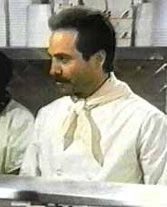
I will now play the Soup Nazi for the second time with you.
"No posting. Come back 1 month."
You may send me a friendly reminder in 30 days if I forget to turn you back on. If you choose to send me yet another insulting email or continue to post with this sort of attitude in regards to the rules of this website when you return, there will not be a third "Soup Nazi warning". Save your fingers. I do not want to hear from you for the next 30 days in any form.
I think the thing that is a little unnerving to me about VV is the fact that it allows such latitude in projection. Either a film was shot to be projected at 1.85 or it wasn't. Either it was 1.5 or it wasn't. I am the anal retentive type that wants to project any film at the precise AR that it was composed in, whether or not there may be more image in the frame than is on the screen. Although I must admit that I find I am forever being tempted (most times I resist) to play 1.85 films at 1.66, only because I am so attracted to the idea of less magnification, less grain and more light (the way prints are high-speed printed today, every little bit helps). But this idea that a VV film could be played with any aspect ratio from 1.5:1 to 2:1 seems to fly right in the face of being true to the filmmaker's composition. I mean, on all those unmatted 1.85 prints that we get that have image out to full frame, seems it would be just as haphazard to say, oh, just run it in whatever you have handy....1.66, 1.75, 1.85 or 2.1. These all can't be right. Yes, they did suggest a "preferred" projection ratio (I remember seeing this on the reel bands years ago -- a minimum, a maximum and a preferred AR was given), but that just seems to me to be a little to imprecise; they shouldn't be suggesting anything -- they should be saying, this print should be projected at 1.85:1, period. What does it matter if there was an open camera aperture in the filming? The director and cinematography had only one frame size in mind when they composed their shots; why give the theatres a choice of three or four? I mean, I understand that when shooting a film the VV format allows the director to choose a variety of aspect ratios -- very nice; they can use VV if they want a 1.66 film or a 1.85 film, but when they go to strike prints, there should be no equivocation about what aspect ratio it needs to be projected it in. See what I mean? To let the theatre decide seems too undisciplined.
Frank
PS -- Suppossedly I have a B&L CinemaScope 55 anamorphic. It has a very large rear element and it was supposed to be used on Century and Simplex wide barrel lenses for CS 55 prints. And even though this is an old lens, it focuses like nothing else, including my ISCOs and Schneiders. There is no racking back and forth trying to see which is on the money....you just turn the focus knob and all of a sudden it is IN. No mistaking that precise point. Plus they have very good contrast, although maybe not quite as good as the newer ones, but only by a hair. I love these lenses. Yes, we have all heard about the problems with early CS shooting and projection anamorphics, but this lens proves to me that whatever the first generation problems were, they resolved them pretty quickly.
>Alfred Hitchkock hated projectionists.<>Look at the print of VERTIGO and see what Alfred did during each changeover. I covered the port window except for the very right top corner. Two can play at that game.<
I will have to check that out. But tonight I ran OUR SONG which had this at a change-over:
Reel 2 about to end....you see the Sync Start cues (some folks call them motor cues), then the screen goes totally BLACK. Then picture is back on the screen for a shot that lasts perhaps 2 second and then Change-over cues.
So, you see the first cue and boom, you've got a black screen. First instinct -- "holy geez, I missed the first cue." And you slam down the dowser and hit MUTE. Naw, you didn't miss anything; the editor was just playing with you, or he was wasted when he cut that reel's change-over point.
It so happened that the director was in the house for this screening and I wanted to make bring this to his attention, because this picture probably won't be playing many platter houses. Best way to bring it to his attention was to actually slam that dowser down, but professionalism is a hard thing to fight. So I just left a big note in the can for the poor slob who gets this print 15 minutes before it has to go on the screen and doesn't have time to prep it.
quote:
No, Stephen, unfortunately I haven't seen a real VV presentation, much to my regret. I missed the 70mm restoration of VERTIGO. And naturally I would be totally gung-ho in favor of the use of larger film negative for shooting, any time any where, such as VV and when Fox was headed in the same direction with CS 55. And I have always been a fan of that "still germinating idea" of ISCOvision (or was it ISCOscope) which allows a much larger negative area and print area to produce 1.85.
I thought of CS 55, and almost mentioned it, when I made my post yesterday. I decided not to, as the post was getting rather long, I do have a fault of rambling on longer than I should, and I am trying to keep my posts shorter. CS 55 has certain similarities with Vista, it used a large negative area, with a widescreen ratio, and was intended mainly to be presented as a normal 35mm 4 perf reduction. Of course, I never got to see the proposed 55.625 6 perf print format, but I have seen both titles as 35mm prints, and they looked very good. The CS 55 neg was very large, about 1.4 times the area of a 65mm 5 perf frame, I think, and not far short of a 8-70 special venue frame. CS 55 had the advantage of a larger frame and a better sound system than Vista, but the disadvantage of needing special stock, slitters, perforators, processors, splicers and other equipment. The wider aspect ratio of Scope is a matter of personal preference, therefore neither has an absolute advantage over the other. There were too many formats around in the '50s, and clearly not all were going to survive; unfortunately, we now have no large format system in use for 'normal' i.e. not special venue cinema. There has been no 65mm since 'Hamlet', and no sign of any more to come. Did you see 'Hamlet' in either 35 or 70? I am not a great fan of Shakespeare, and left at the end of the show still unsure what some of it was about, but, visually, it was quite stunning, even in 35mm, as was the 35mm re-release of "West Side Story" a few years ago. I wish somebody would fish some of the large format films out of the vaults, make good 35mm prints, and get them into the best cinemas with the best presentation, with possibly a few 70mm prints being made for the largest screens.
With modeern stocks, even the tiny neg areas of flat 1.85 and Super 35 can look good, but lage format origination looks better.
quote:
they should be saying, this print should be projected at 1.85:1, period. What does it matter if there was an open camera aperture in the filming? The director and cinematography had only one frame size in mind when they composed their shots; why give the theatres a choice of three or four? I mean, I understand that when shooting a film the VV format allows the director to choose a variety of aspect ratios -- very nice; they can use VV if they want a 1.66 film or a 1.85 film, but when they go to strike prints, there should be no equivocation about what aspect ratio it needs to be projected it in. See what I mean? To let the theatre decide seems too undisciplined.
I agree. I think all films should have clear instructions as to how they are to be projected, and cinemas should keep to those instructions. I am not too worried about keeping it precise to the last decimal place, but it should be fairly close. showing a 1.85 film full screen on 1.78 (16:9) television is, I think, acceptable; Projecting a 1.66 film at 1.85 is not. Nor am I in favour of printing films in modified form, such as the Disney Academy ratio within 1.85 height prints. If a cinema is unable to show a film as was intended, or more often cannot be bothered to, they shouldn't show it.
I once ran a 16mm film at a private screening, with the director in the audience. He handed me two reels each of print and track, and asked me what ratio we would be showing it in. He seemed quite shocked when I replied "well, it's your film, what ratio do you want it shown in"
quote:
Nor am I in favour of printing films in modified form, such as the Disney Academy ratio within 1.85 height prints. If a cinema is unable to show a film as was intended, or more often cannot be bothered to, they shouldn't show it.
With respect, it's easy to say that living in London where you have easy access to a large number of rep cinemas which show a wide range of archive and re-release titles in technically ideal circumstances. I have lived in several provincial towns where the only cinema on offer is a high street fleapit or a ring-road multiplex, and if they ever got a 1.38 title at all it was a rare and welcome event. In these circumstances, which is the lesser of two evils - an Academy frame compressed into the 1:1.85 height, or the film shown with severe vertical cropping? You are not going to covince the likes of Warners or UCI to put Academy lenses in all their several hundred screens for the benefit of one or two films a year (if that).
quote:
With respect, it's easy to say that living in London where you have easy access to a large number of rep cinemas which show a wide range of archive and re-release titles in technically ideal circumstances. I have lived in several provincial towns where the only cinema on offer is a high street fleapit or a ring-road multiplex, and if they ever got a 1.38 title at all it was a rare and welcome event. In these circumstances, which is the lesser of two evils - an Academy frame compressed into the 1:1.85 height, or the film shown with severe vertical cropping? You are not going to covince the likes of Warners or UCI to put Academy lenses in all their several hundred screens for the benefit of one or two films a year (if that).
Leo, sorry if I caused offence, I didn't mean to. I know of several cases where managers and projection staff of cinemas, both multiplexes and "high street fleapits", not equipped to run Academy films have gone to considerable trouble to obtain the necessary parts to show these films correctly, often by borrowing from another cinema, or using their own personal equipment. I had a 'phone call last year from a manager who had been given my number by someone who thought I might be able to lend him a lens. When I looked in my stock, I had a lens fo the required length, and was happy to lend it for the show. This is by no means limited to cinemas in the major citys, it really does seem to have much more to do with people than with location, or type of venue.
My critisism was aimed at those cinemas who genuinely cannot be bothered, those who even have the required lens in the cupboard, but who feel that it is too much trouble to mount it on a machine for one show, and would rather just show the film cropped to 1.85. Quite often the same cinema will do it correctly if a different manager and/or projectionist happens to be on duty that day. Some managers seem to object to projectionists wasting their time doing something 'unusual' like changing a lens.
Yes, yes, I agree. It all video's fault! But seriously, I agree, the DOP has to keep all those viewfinder lines in mind, but still, there is ONE way he envisions as correct. You wouldn't suggest that I could run everything at 1.66 just because I know every DOP will keep that all clear for the European market and he'll even keep it clear out to the TV safe area. So in theory I could play every recent release in 1.66. But would it be correct for the theatrical release at a New York premiere? If the director were sitting in the audience, would he be happy seeing his film in 1.66 rather than 1.85? When he come up to the booth to chew me out, would he accept my argument that, hey man, you kept it safe for 1.66 in Europe. In all likelihood, he would tell me to go to Europe to ply my craft. My point being, there is a difference between what is clear so mics and set gack don't show and what the DOP and director compose for theatrical presentation.
Stephen, you don't have to apologize to ME for long posts! 
>You said: My criticism was aimed at those cinemas who genuinely cannot be bothered, those who even have the required lens in the cupboard, but who feel that it is too much trouble to mount it on a machine for one show, and would rather just show the film cropped to 1.85.<
OK, that's the worst scenario and there is nothing much you can do about incompetence and indifference like that, other than wait for them to go out of business, which they surely will. But there are theatres that do only have flat 1.85 and scope lenses and legitimately WANT to run a 1.37 classic film correctly; the ironic thing is, unless they are using one of those "all-in-one" prime/anamorphic combo lenses, they DO have the proper lens to project 1.37 -- it's their anamorphic prime lens -- sitting right there in their turret.
Just unscrew the anamorphot and you've got a lens that, although it will be a tad longer focal length than "perfect" -- there might be a very slight visible frameline on top and bottom of the picture -- it will be a far better solution than projecting a 1.37 print at 1.85. If the print has, as most prints do, black frame-lines, then they don't even need to cut new aperture plates. If they get one of those odd prints (mostly IBTec, I think) that have transparent framelines, or if they were cropping their scope picture, then, yes, they will need to buy new 1.37 plates, all of $18 each. But that's it -- perfect 1.37 without scrounging around for another lens.
And you are absolutely correct; for those theatres that don't have enough interest in presentation to get the proper equipment to show a film the way it was intended, then the studios shouldn't book a classic picture into such a theatre. It would be like a museum saying, well, we do want to exhibit this Monet painting because we know there is an audience that will pay to see it, but, gee, we don't have a frame the proper size -- we'll just mount it in one that's handy -- no one will miss the three feet on the top and bottom of the original painting.
When distribs cater to that mentality by providing lesser versions for "lesser" theatres, then it is just another step down that road to mediocrity -- nothing matters, anything goes, as long as we get the money out of the consumer's pocket -- standards are out the window and quality, well, that's just word that sounds nice....perhaps it can be worked into the display ad.
Now I am not so naive to think that you can only show a film in one format. Films are knocked down to 16mm, to video, to scan & pan TV, to ANYTHING that will show a movie image and produce sound, but when a film is shown in a THEATRE, there is the expectation by the public that this is the "ultimate" experience -- this isn't non-theatrical....this isn't home theatre....it isn't broadcast TV. This is The Movies, dame it, and you should be seeing exactly what the filmmaker intended. Or perhaps I am jousting at windmills -- perhaps that concept is dead and the culture will come to see that their home theatre experience is better than the theatres. In that case, I'll retire and leave the driving to someone else. And he'd probably got a DLP.
Frank
any way flixfix takes care of all those problems
Even back to the silent days, there were problems with how large you could magnify or crop 35mm due to film grain. With the advent of the move to wider aspect ratios, some films were simply cropping the Academy aperture to get a wider projection aspect ratio: 1:1.85 is an example. VistaVision approached *that* problem with a higher negative area, reducing grain in both horizontal projection prints & reduced to regular 35mm projection prints. It's excellent: we ran King & I and White Christmas, both VistaVision titles, both projected from standard 35mm film, & they were sharp, sharp, sharp; the best looking 35mm we had on that screen.
You should really think in terms of the flexibility in projection aspect ratios as working for you, not against you. The ability to meet different projection needs was part of its design! For a given title, since all VistaVision movies are rep titles now, you could do a little research & see which particular aspect ratio the DP & director wanted. This is just the kind of meat you want for program notes & newspaper blurbs. Barring that you can do the standard forensic psychology/statistical analysis bit of how people tend to put design into practice: When something must be acceptable over a range, generally people shoot for the middle & try to just keep the extremes under control. So you should take something around the middle a/r of the range.
And when it gets to *your* needs, remember that the flexible projection a/r means that you can get what works best for you out. If you're running it in a proscenium theater, it's likely the biggest screen area & best looking screen will be about 1:1.66, so take it, it will be the best-looking 1.66 from 35mm film you've put up. If your outdoor screen is 2:1 & can't be masked like a drive-in screen, & you've had to crop all 1:1.37 to fit it because of complaints when it doesn't go the edge, a VistaVision print plopped up there will also be the best-looking 1:1.37 cropped to 2:1 you've had.
quote:
we ran King & I and White Christmas, both VistaVision titles, both projected from standard 35mm film, & they were sharp, sharp, sharp; the best looking 35mm we had on that screen.
'The King and I' was Cinemascope 55, not Vistavision, but
the same applies; bigger negative equals better looking print, other things being equal, even from a standard 35mm print.
quote:
'The King and I' was Cinemascope 55, not Vistavision
quote:
But there are theatres that do only have flat 1.85 and scope lenses and legitimately WANT to run a 1.37 classic film correctly; the ironic thing is, unless they are using one of those "all-in-one" prime/anamorphic combo lenses, they DO have the proper lens to project 1.37 -- it's their anamorphic prime lens -- sitting right there in their turret.
This won't give you a perfect Academy frame, because the 'scope frame uses quite a bit more height. Assuming you cut a plate to Academy specifications and used a 'scope prime lens of the right focal length to fill the height of the screen, then you would see some blank space top and bottom. But this is certainly preferable to showing an Academy film in 1:1.85.
What 'scope primes can be used for very successfully is showing full-gate silent or the 'early sound ratio' (i.e. full height but not anamorphic) which was used briefly during the late '20s & early '30s. The difference in frame dimensions is negligable. Of course you need to offset the optical centre of the frame when showing silent.
Some original 1950's prints were hard matted at either 1.85 or 1.66, some were not. This seems to be a product of how wide the original horizontal frame was. They clearly wanted the full horizontal width transfered to the vertical prints. Original prints of North By North West were not matted, however, if you run it 1.37, you will get mikes and stage lights in the picture. Obviously, it was not intended to run that way. Although the DVD is hard matted to 1.85, I think NBNW looks best at 1.66 or 1.75.
/Mitchell
quote:
Although the DVD is hard matted to 1.85, I think NBNW looks best at 1.66 or 1.75.
Actually, the "North By Northwest" DVD is framed in a 1.78:1 aspect ratio. Similarly, all of Paramount's DVD versions of VistaVision-originated movies are also in 1.78:1 ratios ("The Ten Commandments," "White Christmas," etc.).
quote:
The leaders on this particuar print of NBN had 1.66, hand written on the internegative next to the title and clearly visible in the identification section of the all leaders, that's why I was confident in running it at that AR.
But how could you be sure that whoever wrote that on the neg was correct? It's an indication, but can you rely on it. This is always going to be a problem where the same print format can be used by films intended for several different exhibition formats. I think the best we could do would be for the director of each film to clearly state how the film is intended to be exhibited, this information should be on the leader of each reel, preferably not just hand written, and should also be recorded in a central database somewhere, which can be consulted by the projectionist if the original leaders are missing, or have been replaced. The problem with this is that it could only be done with new films, while the main problem is with older ones. I don't know the answer to that one; we can only use our judgement, and do the best that we can, if we are not given adequate information.
------------------
John P. Pytlak, Senior Technical Specialist
Worldwide Technical Services, Entertainment Imaging
Research Labs, Building 69, Room 7525A
Rochester, New York, 14650-1922 USA
Tel: +1 585 477 5325 Cell: +1 585 781 4036 Fax: +1 585 722 7243
e-mail: john.pytlak@kodak.com
Web site: http://www.kodak.com/go/motion
The Rank Organisation produced a few Anamorphic VistaVision pictures. Perhaps there were also some Paramount pictures released in the same format, as many Odeon and Gaumont cinemas were equipped with Gaumont Kalee Varamorphs!
See the American Wide Screen Museum on the Rank Organisation & Anamorphic VistaVision.
Edit: www.widescreenmuseum.com/widescreen/wingvv1.htm (on page 2)
quote:
But how could you be sure that whoever wrote that on the neg was correct?
There's often erroneous info on leaders. Obviously most blatant is the frequent 1.33 on 1:1.37 pictures.
Martin also have excellent coverage here.
------------------
Cheers, Thomas
www.in70mm.com
www.dp70.com
www.70mm.dk
It does appear that Anamorphic VistaVision was only used in the UK by the Rank Organisation. From the list in the American Widescreen Musuem, I can tell you most of the British made films in Vistavision, but unfortunately there is no record of the anamorphic prints released in the UK.
Looking up the American Widescreen Museum, There was also a Super VistaVision print of "The Ten Commandments" which was 70mm.
quote:
Looking up the American Widescreen Museum, There was also a Super VistaVision print of "The Ten Commandments" which was 70mm.
In fact, the term "Super VistaVision" was created for the 1989 re-release of The Ten Commandments.
Searching through Google archives of rec.arts.movies.tech, I once found quite a bit of info on this. Can't seem to find much now, but here's a summary.
Apparently, the heraldic borders on the opening credits were composed for CinemaScope ratio. When people at Paramount saw this, they looked at the rest of the film cropped to 2.39 and noticed that, for the most part, it didn't look horrible. de Mille left a lot of headroom since VistaVision was new and the aspect ratio hadn't been standardized. When I look at most of the scenes in a proper 1.66/1.85 print/transfer, I can easily imagine it cropped to 2.39 without looking bad -- it even looks roomy in this age of Super 35 chopped foreheads.
However, like wrongly-done Super 35, some scenes which were not composed for CinemaScope ratio got overcropped. In the scene where King Rameses drops the urn of water and blood splashes out, the impact on the ground was completely cropped out. Some people saw a 70mm print at the Cinerama Dome, and there was speculation that it was made worse by the overscanning that troubled the Dome. There was also speculation that the 70mm print was made by cropping 2.39 to 2.2, which is worse than cropping VistaVision ON to 2.2.
Anyway, this is all second or third-hand info, but rather than have people mention bits and pieces of it, I thought it might be useful to gather it all together in one place.
Now Vertigo -- that was a properly done Super VistaVision transfer.
-Claude
Sounds like the 1.5X Anamorphic Print concept of IscoVision that Glenn Berggren demonstrated in 1982, and that I presented and demonstrated again at SMPTE recently. But even better quality, since it starts with the large VistaVision 8-perf negative.
1.5 times the light for the "flat" format, with just a change of lens and aperture plate. Would really help get better screen luminance on large screens.
http://www.kodak.com/US/en/motion/newsletters/pytlak/feb97P.shtml#p
------------------
John P. Pytlak, Senior Technical Specialist
Worldwide Technical Services, Entertainment Imaging
Research Labs, Building 69, Room 7525A
Rochester, New York, 14650-1922 USA
Tel: +1 585 477 5325 Cell: +1 585 781 4036 Fax: +1 585 722 7243
e-mail: john.pytlak@kodak.com
Web site: http://www.kodak.com/go/motion
At least THE TEN COMMANDMENTS played at the Dome for *only* a single week which, fortunately, prevented more people from viewing the film in the less-than-desirable conditions it was presented in.
quote:
At least THE TEN COMMANDMENTS played at the Dome for *only* a single week which, fortunately, prevented more people from viewing the film in the less-than-desirable conditions it was presented in.
Except for unlucky people like me who saw it in the 70mm move-over at the Bruin Theatre in Westwood and seemed to project a bit wider (scope width) than even the already badly cropped 70mm print. Ugly image, vastly inferior to the IB Technicolor print a saw as a high school student. And what WAS up with that intro? I'm sure that was originally shown in the same AR the feature was.
quote:
I cannot imagine having this image cropped during projection because it is fine the way it is.
Paramount's instructions to exhibitors was to project THE TEN COMMANDMENTS at 1.85.
-Claude
Well, Ten Commandments is one of my all-time favorite movies, and I wasn't about to miss the chance to see it in 70mm. I couldn't get anyone to go with me, so I went by myself, drove 60 miles each way (El Toro to LA). Got to the theater, had to pay for parking, found out the next show was already sold out. I wasn't going to turn around and leave, so I bought a ticket for the following show, killed about 4 hours, finally got in, then was thoroughly disappointed at the image quality, and to top it off, the film broke. I left at that point -- didn't even wait for them to get it running again.
quote:
Except for unlucky people like me who saw it in the 70mm move-over at the Bruin Theatre in Westwood
That's true, but at least the Bruin didn't have a deeply curved screen, a too-high (IMO) projection angle, or need to use a bowtie aperture plate, which all exacerbated the presentation deficiencies.
I'm sure the Bruin experience was disappointing like you mentioned, but I bet it was far worse at the Dome. If I recall correctly, it played at the Bruin for three weeks. Then, the print moved on to the San Francisco bay area....
Coincidently, there's an IB tech print of exactly that extended trailer being offered right now on efilmbid!
http://efilmbid.com/cgi-bin/auction.cgi?35&1029369993
I thought the DeMille trailer was an incredible find -- a 10 min IBTech promo for this classic film. Incredible, that is, until I brought it to the theatre and played it. 10 min of this old geezer babbling on and on about his movie, and NO CLIPS. What a disappointment. I planned to run it for the two weeks prior to the engagement, but after the first day, hearing the audiences moan and groan during its first screening, I pulled it -- my hard-earned $200 down the drain. You won't find a better example of why the marketing department should never let the director try to market the picture. And why collectors should always heed the First Rule of Print Acquisition: be thoroughly familiar with the content of any print you plan on acquiring, like make sure it isn't some old geezer babbling about his movie.
By the way, because Hawaii had only one print in circulation during it's road show at the now defunct Kuhio Theatre and the initial popular price engagement about a year later, the print was an IB/ DYE Transfer and I remember how gorgeous it was. The IB strip of film from the movie I have attest to that fact.
-Claude
The sound bounces around the Dome's curved walls and there is a great deal of very obvious parallax distortion on the highly curved screen at the Dome.
I love the Zegfield, but it has to get negative points for not having a curved screen or stadium seating. There isn't much they can do about the seating, but I have never forgiven them for not having a curved screen as per original scope specs.
The new AMC Empire on forty dousch street (Manhattan) and the UA at Sheephead Bay (Brooklyn) both have stadium seating and large, well lit screens with mild curves; the come-back of the original CinemaScope mild curve screen is a very welcome development. Besides the optical advantages of better light distribution, a curved screen just imparts the image with a sense of expansiveness and grandure and the audience with a feeling of being enveloped by the image that just cannot be obtained on a flat screen. The stadium seating also provides many more sweet-spot seats putting more people closer to the screen and hence more patrons are able to get the image within the periferal vision range -- a 50 foot screen will look relatively larger to more people with stadium seating because the seating scheme can keep more seats closer to the screen. In the Zegfield, people sitting even in the rear orchestra are presented with a diminutive looking screen due to distance. For the people in the mezzinine, the sence of a "large" screen is all but lost.
I did once attend a SMPTE meeting which had a demonstration of DLP on that same screen and the sound was fine, so it's not a B-chain problem.
I think I've only been to the Sheepshead Bay once and it's currently under renovation anyway (they're adding screens.)
Aside from the Ziegfeld, I think my favorite NYC theatre is the Loews Lincoln Square, even though that doesn't have stadium seating either. But the curved screen in the "Loew's" (which is the only THX certified theatre in the complex) tends to have distorted images or soft focus on the edges.
IMHO, best place to sit at the Ziegfeld is aligned with the first set of surrounds.
Here's an excellent article on how the D-150 process worked.
http://hjem.get2net.dk/in70mm/magazine/backissues/1996/47/d150/come_back_d150.htm
BTW, the Ziegfeld did once install a deep curve streen temporarily for the 70mm re-release of THIS IS CINERAMA. According to the review in the NY Times, it was a prety underwhelming experience. It was noted that instead of using real curtains, a SLIDE of curtains was projected between shows.
Is her name Susan?
------------------
John P. Pytlak, Senior Technical Specialist
Worldwide Technical Services, Entertainment Imaging
Research Labs, Building 69, Room 7525A
Rochester, New York, 14650-1922 USA
Tel: +1 585 477 5325 Cell: +1 585 781 4036 Fax: +1 585 722 7243
e-mail: john.pytlak@kodak.com
Web site: http://www.kodak.com/go/motion
Systems like 3-Strip Cinerama and D-150 were specifically DESIGNED for projection on a deeply curved screen, to give a "wrap around" effect, especially for people sitting near the "sweet spot". Projecting normally shot films on these screens can lead to problems with controlling geometric distortion, especially if keystone distortion is present due to a high projection angle.
When a gain screen is installed, it should be curved per SMPTE Recommended Practice RP95 "Installation of Gain Screens". The purpose of this curvature is primarily to have the highly reflective gain screen reflect more light to the seating area of the theatre and improve uniformity of screen luminance. Ideally, the curvature should be determined by ray tracing, although a curvature radius of (projection throw distance + distance between the screen and audience center) / 2 is often used. The screen may also be tilted to reflect maximum light toward the center of the audience. This curve is usually "milder" than a deeply curved screen, and geometric distortion is less of a factor.
------------------
John P. Pytlak, Senior Technical Specialist
Worldwide Technical Services, Entertainment Imaging
Research Labs, Building 69, Room 7525A
Rochester, New York, 14650-1922 USA
Tel: +1 585 477 5325 Cell: +1 585 781 4036 Fax: +1 585 722 7243
e-mail: john.pytlak@kodak.com
Web site: http://www.kodak.com/go/motion
Susan, the editor I've talked to, would have probably been of the same opinion. ------------------
John P. Pytlak, Senior Technical Specialist
Worldwide Technical Services, Entertainment Imaging
Research Labs, Building 69, Room 7525A
Rochester, New York, 14650-1922 USA
Tel: +1 585 477 5325 Cell: +1 585 781 4036 Fax: +1 585 722 7243
e-mail: john.pytlak@kodak.com
Web site: http://www.kodak.com/go/motion
How times have changed: that there actually was a time when the idea of curtains in a theatre was so commensurate with quality presentation that if a theatre for one reason or another could not have a curtain, they would go so far as to put a slide of a curtain up on the screen instead. Unfortunately the slide projector idea stuck, only now it projects obnoxious screen ads. 
I really haven't figured out the lack of curtain use today. I understand theatres are getting extra revenue from whatever source they can, but in Los Angeles, anyway, the Landmark Thetares don't even project slides on the screen, yet have stopped using the curtains that they already have. Do they really save that much money from opening and closing? Mann theatres in LA is still the only chain that does it right. They not only use curtains, but still close them between previews and the main attraction.
Yes, Paul, that is the mystery. In the days of single screens, even the local neighborhood sub-runs adhered to the fairly standardized protocol of curtains opening the show, closing after the attractions/shorts and opening for the main feature -- this with the appropriate use of dimming curtain warmers. With the advent of the Dark Era of multiplexing, it probably did become an economic issue -- curtain motors, curtain tracks and the curtains themselves did add a substantial cost factor when an exhibitor decided chop up a single screen into 10. And let's face it, in the early chop jobs, where a single screen, usually with attractive interior design, was tortured into a multitude of small, misshapen "theatres," interior design and aesthetics was not what anyone was terribly concerned about -- they were lucky if they could find a place to put the screen (up over the exit doors? guess that will have to do), let alone outfit each room with pleasing lighting and curtains.
So it just became accepted that in these abominations of presentation and good taste, there just wouldn't be any curtains -- you would be lucky if the seats actually faced the screen and not some imaginary position where the original screen was located....like a person who's lost a leg but still feels an itch where his foot used to be.
As theatres began being built from scratch as multiplexes, the classic theatre styles of the old single screen were abandoned for a much more utilitarian approach. Why spend money on "style" when 90% of the time that patron is sitting in the room, the lights are turned off? The idea of a curtain to cover the "naked screen" as they used to call it (a major no-no in the golden era of the movie palaces) seemed "extravagant" in a design that heavily focused on huge, gleaming chrome and glass concession malls and very little on the smallish rooms beyond them down the hall. Any attractive design consideration was going to be saved for the concession area, not the cinemas. And in fairness to the exhibitor, adding a curtain, track, motors and controls, depending on the size screen, can add a nice chunk of change to the cost of each room. Multiply that times the number of screens in a new complex and you are talking about a substantial savings for something no one cares about any more. The exhibitor is much more inclined to purchase more concessions equipment or trailer monitors for his lobby than spend money on screen curtains. In today's exhibition climate, the value of aesthetics is about the par equivalent of that of a warthog.