This is topic ORC Rectifier only putting out 40Amps in forum Film Handlers' Forum at Film-Tech Forum ARCHIVE.
To visit this topic, use this URL:
https://ft-forum.com/ft/cgi-bin/ubb/ultimatebb.cgi?ubb=get_topic;f=1;t=007358
Posted by Frank Angel (Member # 248) on 07-28-2005, 05:34 PM:
HELP! Ok, we rented an ORC Model RPS-X60. The rental house claims they had it hooked up in the shop and they could dial anywhere between 80A and 140A. When we got it on site and wired it up to our ORC lamphouse with a 4500 bulb, the most I could get out of this unit was 42Amps. The control only varies the amperage by a few amps. Our XeTron rectifier powers both lamphouse at 130A. The ORC powers both lamphouses at only 40A-42A. All three legs going into the ORC read 204v, 202v, 201v and 110vac on each leg to ground. The output reads 22vdc.
Can there be an incompatibility between bulbs (or lamphouses) that great that it would not draw the proper amperage from the rectifier? The bulb number that the guy at the rental house was feeding and getting good amperage was had no M in the model number -- is that major difference?
Is there some magic thing that we are not doing? Oh, there are jumpers above each input leg. I assume these are to match incoming voltage. They are not marked in any way. I don't like to assume and I don't want to "try" switching them in the hopes that this will make any difference. Any information on the jumper lugs? The rental guys have all gone home and only one left isn't familiar with the jumpers.
Any help would be appreciated as we need to get this operational for THE SOUND OF MUSIC tomorrow night. The only alternative would be to see if we can rent an Eprad mutt to run on one projector, or barring that, mount everything on 6000 reels and have lots of intermissions which is not a pretty thing.
Posted by Louis Bornwasser (Member # 3063) on 07-28-2005, 06:09 PM:
I am answering without benefit of any text. I do not think you have done anything wrong. The bulb lights and amperage is not too high. Your input voltage is a little low, but this is obviously not a problem lighting the bulb (no-load voltage). Translating this to "low-amps" would mean 120 rather than 135 amps. No more than that.
Some of these old rectifiers had a toggle switch on the front near the current setting control labelled "low" or something like that. When in this position there is a radical reduction in operating current. Try that.
Internal "straps": You have nothing to lose by trying the other posisiton. Remember these were made for 208-240 volt input. Again, you are toward the bottom of the range so changing the straps will either lower it some more or will raise it slightly.
There is, of course, the possibility that something is not right, dislodged during transit.
Good luck to you on this.
Louis
Posted by Mark Gulbrandsen (Member # 72) on 07-28-2005, 07:28 PM:
Are these the units that have Alumnium windings in the trannys? I can't remember which model rectumfryer that one was but the symptom was always low current. Tip: Use plenty of anti-oxide compound when repairing those alumnium to copper joints!!
Dam those NYC rental houses..... They ALWAYS manage to dredge up some piece of crap to send out to you..... Thats about the same luck I've had with them years back ![[Roll Eyes]](rolleyes.gif) .
.
Mark
Posted by Monte L Fullmer (Member # 2797) on 07-28-2005, 10:59 PM:
...course, 22vdc on a load IS quite low for a 4.5k bulb. So, if we do the P=IxE (the "pie") formula, you're only pushin 990w out of that bulb.
Now...correct me here, but you're powering BOTH lamphouses from one rectifier?
Ain't that just a bit too much to where as each lamphouse needs its own rectifier? I thought that each lamphouse needs it own rectifier. I though that there was no such thing in having two lamphouses sharing a rectifier - in which I can see the big problem with splitting the current between both lamphouses, whereas this rectifier is probably useable for only one lamphouse. With splitting the output,
I can see why you are only getting 22vdc out, whereas one lamphouse would be the recommended 42vdc usage for such a bulb.
INTERESTING...to say the least...
-Monte
Posted by Frank Angel (Member # 248) on 07-28-2005, 11:03 PM:
Actually these guys are bending over backwards to help, if they ONLY knew what the problem is.
This may help:
Lamphouse: ORCON - XH-45C
Rental Rectifier: ORC - RPS X60
Bulb: XM4500HS
There is no reason under the sun why these would be inherently incompatible, eh?
I am leaning to the idea that something crapped out in transit and the unit is just, as Mark so delicately put it, a dredged up piece of crap. ![[Big Grin]](biggrin.gif) ....although to tell you the truth, I am not laughing much at the moment.
....although to tell you the truth, I am not laughing much at the moment.
Have no idea if this has aluminum windings, but I am not about to rip this thing apart to make it work. They will have to send us another one tomorrow. Note: The Xetron is getting the same voltage as the rental ORC, so that tells me that our voltage should be ok. BUT the Xetron has 08AWG size cable feeding each leg where as the ORC has 12AGW/30Amp twist lock. This seems like a bottle-neck.
Posted by Monte L Fullmer (Member # 2797) on 07-29-2005, 12:45 AM:
12-Gauge...ouch! That'sa bit too small, to say the least. Serious bit of resistance and causing the drop in voltage, I'd say.
Even 2k Strong "switchers" receives 208vac feed through 8-Gauge wire with 40 amp breakers in the panels.
-Monte
Posted by Tim Reed (Member # 137) on 07-29-2005, 04:04 AM:
quote:
Use plenty of anti-oxide compound when repairing those alumnium to copper joints!!
I used to fix 'em with a special split bolt connector. I forget what it was made of (nickel?), but it was compatible with both al. and cu. conductors, and kept them mechanically separated so they wouldn't react. No more troubles. ![[Smile]](smile.gif)
Posted by Mark Gulbrandsen (Member # 72) on 07-29-2005, 08:40 AM:
Tim,
Thanks for the tip on that one. I wasn't aware and apparently nopne of the "counter boys" at many electric supplies are either..... I think there is one pair of those running someplace in the Mountain states......
Mark
Posted by Gordon McLeod (Member # 33) on 07-29-2005, 11:01 AM:
Not seeing the unit and the connections in front of me I think there might be an issue with the control of the rectifier
On some versions of that powersupply and lamphouse combo there was an option for it to run in standbye/simmer mode between reels and my hunch is the rectifier is sitting in standby mode with out being there that is a shot in the dark If a phase was missing there would be strobing
Posted by Tim Reed (Member # 137) on 07-29-2005, 12:25 PM:
Mark, if Louis B. sees this maybe he remembers what they were called. He told me about those connectors years ago. ![[Wink]](wink.gif)
Posted by Frank Angel (Member # 248) on 07-30-2005, 01:11 PM:
Final result: We got to the point-of-no-return when the rental house ran out of patience when the producer asked them to send another rectifier since the one they sent didn't work. They said, the one they sent worked fine when it left the shop, so our people had to have "damaged" it in transit or when we hooked it up.
That's when we went with plan B -- long play reels instead of 12 change-overs (SOUND OF MUSIC). I was able to get it all on 3 reels -- it was estar base; got the entire last 5 reels from Intermission on, on one 7000ft-er so stopping didn't even look like a mistake.
I had them put splitters on the DC lines from the one good Xetron rectifer so that I could use both projectors. At the reel change, I just killed the rectifier, swapped the positive cables of the lamphouses, powered the rectifier back up and struck the other lamp. That took only maybe 15 seconds. I waited another 15 for the lamp and then rolled the next reel. It wasn't terrible. Fortunately the audience (4000 +) was with us the whole time the one change-over with that short black screen didn't seem to bother them at all. They were singing along, applauding wildly at almost everything, even the baron kissing Maria the nun got ooohs and aaaahs. It's a really fun venue, even with the technical shortcomings.
However, here is a wrinkle that has come up with our one good rectifier Xetron, and it happened twice in the past, where the lamp will extinguish for a fraction of a second and then re-ignite immediately. It's so fast that I don't think the audience even notices it, but of course I did and looked to the most obvious -- the safety switches, especially the exhause vane switch because I had trouble with it before on that lamphouse that is feed from the Xetron. I cleaned and oiled the hinge and then last week it happened again. With all the drama around the IREM rectifer failure, I didn't get a chance to revisit that instantanious interruption problem.
But low and behold, it happened again last night, twice but on both lamphouses which of course tells me the power interruption, however brief, is not a lamphouse issue, but a rectifier one. So, now I am worried. We have a film next week and only ONE rectifier. Last night over the course of a 3 hour film, the interruption, albeit brief, happened two times. Should I be worried? Or should I be VERY worried? Any ideas as to why a rectifier should or could have a spike (dip, actually) like that and recover without any other ill-effects?
Oh -- interesting side note surrounding the IREM failure that I didn't mention: all while the first reel of the film was running, of a sudden a lighting instrument came up on stage to full - shining right on the screen. I asked what was going on --the lighting guy thought he had hit a fader on the lighting console with his arm. He didn't. A few seconds later the IREM started smoking and sparking. So, either we are looking at something the IREM did that caused the lighting console to freak, or it could be that Con Ed might have had a surge in the entire power system -- they were playing with the system all day because of the near-capacity power demand. I think they said they were doing rolling brownouts in various areas. Anyway, it I just thought I'd mention the thing with the lighting console because it adds mystery. Interesting to say the lest, eh?
But any ideas on why a rectifier will cause the lamp to extinguish completely for a less than a second and then restore? To me loose connections seem to random to cause these momentary drops -- they are always the same duration -- a fraction of a second; loose or failing connections wouldn't be the same duration each time, or as absolute -- totally off for .2 seconds, the totally back on without flicker or evidence that something is intermittent.
Posted by Mark Gulbrandsen (Member # 72) on 07-30-2005, 03:39 PM:
Frank,
It sounds to me like you should consider calling James Bond at Full Aperature Suystems in Chicago the next time you try to pull off a show..... I think your equipment is beyond ready to be retired.
Mark
Posted by Louis Bornwasser (Member # 3063) on 07-30-2005, 04:21 PM:
1. Any power source problem (power company, etc.)
2. Internal to the IREM (Xetron): any large cable; any connection, large, also look very closely at the contactor. Sometimes prefailure, there is discoloration on the small plastic moving tabs that stick out of the top of the relay. You might tighten all terminals on this contactor as well. Good luck.
Louis
Posted by Gordon McLeod (Member # 33) on 07-30-2005, 04:58 PM:
frank said "Final result: We got to the point-of-no-return when the rental house ran out of patience when the producer asked them to send another rectifier since the one they sent didn't work. They said, the one they sent worked fine when it left the shop, so our people had to have "damaged" it in transit or when we hooked it up."
Why did you not have them come out and check it on site
Posted by Richard Fowler (Member # 893) on 07-30-2005, 05:37 PM:
Another weak point on the IREM are the transformer winding to flexible cable connection which can burn or arc due to crimp connector failure...sometimes not obvious due to heat shrink covering the connection point. I am a great beliver of dual machine set ups for festivals which are becoming a rare feature in the fests in Miami...due to "costs" and other "perceived" hassles
Posted by John Walsh (Member # 168) on 07-30-2005, 06:51 PM:
Hi, Frank! When the lamp when out/ relit, did you hear the contactor in the IREM drop out/ pull in?
Or, did the lamp sort of just go out and then relit?
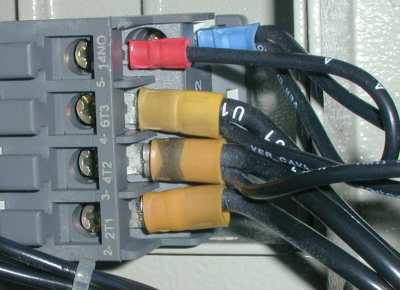
I agree very much with Louis: check the terminals ("A, B, C, D", 3 phase, etc.) and tighten if needed. Also, you can often see the yellow-colored spade lugs on the contactor discolor.
Posted by Frank Angel (Member # 248) on 07-31-2005, 12:35 AM:
quote: Mark Gulbrandsen
sounds to me like you should consider calling James Bond at Full Aperature Suystems in Chicago the next time you try to pull off a show..... I think your equipment is beyond ready to be retired.
Mark, I am surprised at you. Where's your sence of the thrill of the hunt? These problems are most fascinating and they certainly up the anti when you are running a film for 4000 plus people and the lamp goes out for a second.....even for that fraction of a second, your brain has already asked, "will it come back? will it blow up? It's better than going on a thrill ride at Great Adventure.
Besides, a rectifier is a pretty basic design -- transformer, diodes, relays, caps. It's not like there are too many things that can go wrong. Short of the transformer winding shorting, any of that other stuff could be replaced fairly cheaply and you;ve got a unit that's as good as new.
The guys opened up both units today to have a look-see and the down unit looks like all the damage occurred at the relay with the all of the wires on the transformer side quite charred and toasty. No damage to the big trany windings that can be seen. There is a molex type blade connector (4 or 5 lugs that it connects to on the circuit board under the relay) that was completely disconnected. I'll take pictures. Not quite sure how that came disconnected (vibration), but the electrican said it was disconnected when he opened the unit. I can't imagine that had anything to do with the failure -- who would design a piece of electrical equipment where if a cable gets vibrated loose, the unit blows up?
So Xetron and IREM are one and the same? They sure look like the same units inside and out.
Welp, it's been a fun weekend....but I am glad I get Sunday off.
Posted by Mark Gulbrandsen (Member # 72) on 07-31-2005, 12:41 AM:
quote: Frank Angel
Mark, I am surprised at you. Where's your sence of the thrill of the hunt?
Donno, I've done ALOT of that sort of work and never had any problems except for rain(and NYC rental houses). Take a look at the Cinema Borealis photos on the pictures page..... no problems there except the rain. I guess my projection life has been boring to say the least and I suppose thats why I became a tech.
Mark
Posted by Tim Reed (Member # 137) on 07-31-2005, 12:52 AM:
quote:
the lamp will extinguish for a fraction of a second and then re-ignite immediately. ...low and behold, it happened again last night, twice but on both lamphouses
You may be getting down drafts in the exhaust duct that are momentarily interrupting the direction of airflow, and causing the switches to flop open. I'm not clear, but it sounds like you are running two lamphouses from one rectifier(?), if so, then one of those lamphouses is controlling the safety interlock circuit of the rectifier, and that air switch might be bad. You said you oiled the switch? That is not a fix. When Microswitches/Cherry switches/etc. go bad, there is little of anything you can do to make them last longer. The contact points deteriorate and/or the toggle mechanism fails. You have to replace them with new, or short past them until you can get new.
In fact, just for grins, why not go ahead and replace (or temporarily short past) the airflow switches and see if the problem goes away. And check the outside exhaust system to make sure you're not getting downdrafts.
Posted by Frank Angel (Member # 248) on 07-31-2005, 07:38 AM:
Thanks for the pics, John. We using Craig ProGold contact cleaner on all those connections --ProGold not only cleans but also improves electrical conductivity.
As for the relay in the rectifier popping in and out when this occurs, I can't answer that because I am up on the top floor of the booth and the rectifiers are down at ground level. I can't hear them, although that is not the case with the lighting and sound guys who say they hear the two of them humming very loudly. The lighting/electrician did say he hard a noise from the rectifier at the same time that he heard the lamphouse restrike, which is what I would expect as the lamphouse itself is pretty much ruled out as the culprit.
And yes, Monte, each lamphouse normally has its own rectifier. It just now that we lost the one, I am running both projectors from the one. And when I say running both lamphouses off the one good unit, I don't mean both at the same time. I mean, I got them to put pigtail tees off the good rectifier's DC output and at the change-over, I have the an assistant kill the rectifier, switch the DC pigtails from one lamphouse to the other (actually we just switch the plus pigtail -- we leave both minuses connected) and when the pigtails are properly switch, they fire up the rectifier again and strike the second lamphouse. It just makes the reel changes go that much quicker -- down to about 15 - 20 seconds instead of running on one projector and rethreading each time on the single machine. I mean, I am fast, but not THAT fast.
Tim, I thought the vain switch was the culprit because I had had trouble with it before. But now that I am running BOTH lamphouses on the one rectifier, the problem still ocurrs, it rules out any of the lamphouse safety switches.
Now that we've opened and cleaned all the contacts, we'll see if the problem is fixed.
It also crossed my mind that the relay in this unit may be old and may not have the same pull as the other unit. If there is a momentary drop in the voltage, it may cause the weak relay to momentarily drop out and then pull back. Whereas the second rectifier relay may be holding stronger. The only thing that nixes this theory is that during that glitch, I never see any of the other lights in the booth (we have string lights all tied to this PD box and everything is fed from the same street transformer. You would think a dip big enough to cause a relay to drop out would be big enough to be visible in the existing lighting.
Last bit of info -- these units are laying on their sides. They have been that way from day one, which is five years ago without any malidies, until now. Vents are all kept clear, but we are running in very high ambient temp and humidity -- the week the one went ablaze the temps were in the 90s and equally high humidity.
Posted by Mark Gulbrandsen (Member # 72) on 07-31-2005, 08:37 AM:
quote: Frank Angel
We using Craig ProGold contact cleaner on all those connections
It is the best stuff available and I've been using it since my TV station days. It got rid of alot of intermittents in the old TK-45's that I used to have to put up with.
Mark
Posted by Ron Yost (Member # 1850) on 07-31-2005, 11:58 AM:
Just for the record, it's Caig, not Craig.
Here's their webpage, from which you can order their products:
Caig Labs
Remember .. a little ProGold goes a long way!
Ron Yost .. no connection (sic) with Caig .. unfortunately.
Posted by Tim Reed (Member # 137) on 07-31-2005, 12:50 PM:
quote: Frank Angel
But now that I am running BOTH lamphouses on the one rectifier, the problem still ocurrs, it rules out any of the lamphouse safety switches.
You have that circuit bypassed at the rectifier, then?
Posted by Frank Angel (Member # 248) on 08-10-2005, 11:32 AM:
Tim, the bypass circuit happens to be me and my trusty assistant. With the second projector ready to go, outgoing reel shows change-over cue, I kill the rectifier power and stop the running projector, with the rectifier down, he unplugs the DC + to the one lamphouse and plugs it into the second lamphouse, and I start the incoming machine. This allows us to use both projectors and cuts the blank screen time to about 15 seconds.
As far as the dropping out -- we pull the rectifier apart, clean everything, especially the contact points and used the ProGold contact cleaner on all. No dropouts at all last weekend.
The flamed rectifier is going to be repaired -- looks like it is mainly the relay that has all the damage.
Thanks for all your help and suggestions, guys.
Posted by Tim Reed (Member # 137) on 08-11-2005, 09:51 AM:
Okay, cool. ![[Cool]](cool.gif)
Powered by Infopop Corporation
UBB.classicTM
6.3.1.2