This is topic Dolby Clones in forum Film Handlers' Forum at Film-Tech Forum ARCHIVE.


To visit this topic, use this URL:
https://ft-forum.com/ft/cgi-bin/ubb/ultimatebb.cgi?ubb=get_topic;f=1;t=007909

Posted by Michael Coate (Member # 757) on 04-08-2006, 06:10 PM:
 
Who is familiar with "Dolby compatible" cinema processors from Ultra Stereo? How 'bout Kintek, Eprad, Smart, etc?

When did these companies begin offering these products?

Did any of these or other processors capable of playing matrix-encoded Lt-Rt optical tracks exist before Dolby came on the scene?

Anyone work at a theater with non-Dolby-brand equipment...but advertised "Dolby Stereo" presentations anyway?
 
Posted by Steve Guttag (Member # 268) on 04-08-2006, 10:01 PM:
 
I like most of the techs that have been in the business for some time now have worked with most if not all of those products you listed.

To properly answer your question, one has to remember that Dolby came in the Cinema market based on their noise reduction technology, not the surround sound thing. The Dolby 364/E2 system allowed MONO films to have noise reduction with wide bandwidth reproduction with equalized soundheads and speakers.

The next processor, the CP100 really was aimed at 70mm venues...again applying noise reduction technology. Surround Sound technology was an OPTION for the CP100.

The first step to the "SVA" process was just the three stage channels, not the surround sound technology. There were 5 surround adapters for the CP100 (named SA1-SA5). The SA4 was the final one for just 35mm SVA...the SA5 being only needed for 70mm Stereo Surround.

The CP50 was the encono processor that was really Dolby's first entrance into just 35mm optical stereo and again the surround sound technology was not there at first. Ever noticed that the terminal blocks that state "output to surround adapter" and "input from surround adapter"?

Dolby's first incarnation of the SVA process not only was just 3-channel but it did some minimal ducking and raising of the center channel (as well as Left/Right) to try a primitive steering of the audio for dialog. But if you play a film with one of these original stereo decoders (Cat 110 for the CP50, Something like the Cat 82 or 84 for the CP100..I forget) and all three stage channels will be playing all of the time.

When surround sound came in, it was in the form of the Cat 116 which used the Sansui QS decoder chip. However, the Cat 116 did not communicate with the Cat 110 there were two completely different processes going on here. Dolby did have a delay on the Cat 116 to mask the mistracking of the surround decoding.

EPRAD mimicked this model of the system with their StarScope line of products.
Early StarScopes even used Cat 22 Dolby cards for the noise reduction. I'm not aware of any steering on the stage channels since they had you set up the Center hotter, particularly in the dialog region with the EQs. Eprad not only forgot the delay on the surrounds but also the volume control for them! Thus, you could turn your volume down to zero the surrounds will STILL be playing! Later units with a triple ganged pot fader to address that problem but it was a LONG time before they added a delay to the surrounds.

Eprad's surround decoder also had a nasty on/off gate that when it mistracked (quite often) with have the surrounds cut-in/out on you...it wouldn't have been as bad if they had the delay.

In those early years, EPRAD was really the only competitor to Dolby. In fact, a little piece of trivia, the World Premier of Star Trek the Motion Picture played on an EPRAD Starscope at the K-B MacArthur. When Star Trek II: The Wrath of Kahn opened at the K-B MacArthur, a brand new CP200 was installed for the 70mm presentation (70mm up until that point was still using the old Simplex XL system at that theatre).

One of the reasons EPRAD got some positions in our area is that Dolby could not supply CP50s in time for some releases, EPRAD could. It was not just a cost thing.

Back then Dolby also had their people scan the newspaper listings for people advertising Dolby Stereo when they did not in fact have Dolby Cinema equipment. Dolby has always been protective of their brand name. One way exhibitors cheated on this is to purchase some Dolby equipment so in a multiplex of say 6 screens, there might be one or two Dolby CP50s and the rest were off brand so Dolby would have to prove that the film was not being shown on the Dolby screens.

The company I worked for, K-B Theatres, had a mixture of CP50s and EPRADS and all were mounted in mobile racks that had everything you needed, monitor, amplifiers and processor. Those theatres that were 4-track mag capabile (most of them) had an interface installed so these racks could be patched in. If a Dolby film were to open at one of those theatres, the service company was dispatched to move one of those racks from one theatre to the other (now remember, this was back when Singles were the majority of the theatres and those booths were WAY up there and no elevators...just stairs). It was policy to leave the last reel prepped and ready for the technician to verify the sound system was working properly after the move. Think about it, a tech would go into theatre A after midnight, snatch the Dolby or Eprad rack, schlep it down 3 or more flights of stairs, load it into the van, move it to theatre B, schlep it up 3 or so flights of stairs, hook it up, perform an A and B chain, then run the last reel of the film to verify everything was good.

Remember, this was in a time where the Dolby Stereo releases were on the order of 10-20% of all releases...not that many. Rack movement happened mostly during the summer and winter times.

I believe Jack Cashin (Ultra Stereo Labs) came from Dolby so they came after.

Norm Schneider of SMART was the JBL rep in the 70s but they were there pretty early in the Dolby Stereo times too.

Kintek came on the scene around 1980. They were not in the stereo business, they were in the psudostereo business. Remember, 80-90% of all films were mono back then. Thus the sales pitch is that you can use your expensive stereo/surround system 100% of the time, not just 10-20%.

Kintek was an outgrowth of dbx. If you look at the original Kintek "3-box" systems (that horrid yellow color), the KT-21 had more than a passing resemblance to the dbx 3BX dynamic range expander. Same package, same knobs, same display. It was refined in its range of expansion and applied the same priciples to films as it did for records (what the 3BX was known for). In fact, this box is still nice thing for running older mono films to provide a bit of single-ended noise reduction and a bit more fuller sound in a modern cinema.

The KT22, the stereophonyiser was nothing more than a better than average comb filter box to give the left and right speakers something to do...it did have a connector to have it provide steering between left/right and Center, if you had the KT-24.

The KT24 was the surround and Sub Bass unit. This unit was also the best of its kind. This box looked at the signal, determined if it was seeing dialog or music/effects and based on that would turn the surrounds on/off and also tell the KT22 to raise/lower Left/Right to keep the dialog hard center.

When the 3-box set up is done well, it does better than it should and far better than other synths that were made by SMART and USL.

Kintek didn't have an SVA system until the KT-700 which came out around 1984/85. That did not have the KT750 module available at first either. The KT700 was still a means for a theatre to have 100% use of their sound system. However by 1985 the percentage of stereo films were on the rise. When the KT750 module came out, then I saw them (KT700) going in as stand alone units.

So I think I've address most of your questions...Dolby was really first in what we think of as the modern SVA process, the competitors did come out and there were false advertising by some.
 
Posted by Louis Bornwasser (Member # 3063) on 04-08-2006, 10:10 PM:
 
FYI: I sold Norm Schneider (3) CP-50's back in the day. Louis
 
Posted by Tim Reed (Member # 137) on 04-09-2006, 02:35 AM:
 
Steve pretty much encapsulated the entire history. I sure can't think of anything to add.

You have a good memory.
 
Posted by Aaron Sisemore (Member # 145) on 04-09-2006, 03:06 AM:
 
quote: Tim Reed
Steve pretty much encapsulated the entire history. I sure can't think of anything to add.
...besides that fact that Dolby, Eprad, Ultra*Stereo, and Smart are still in business, and Kintek is just a memory...

-Aaron
 
Posted by Mark Gulbrandsen (Member # 72) on 04-09-2006, 07:49 AM:
 
quote: Aaron Sisemore
...and Kintek is just a memory...


We can all thank god that Kintek was not around in the "Digital era" as their memory would never have worked correctly.... [Big Grin]
 
Posted by Steve Guttag (Member # 268) on 04-09-2006, 11:10 AM:
 
Actually, Kintek was around for the first digital audio presentations...at the Avalon theatre in Washington DC, they used a KT-700 hooked up to a Panasonic PCM digital recorder (used VHS type tapes) to play in sync (via shaft encoder) with the film (Fantasia) with digital audio. This particular system had external 1/3 octave EQs in the rack though covered up to hide them from plain view...since Kintek never claimed anyone needed EQs with their products (back in the KT700 era). I want to say this was around 1986.
 
Posted by Gordon McLeod (Member # 33) on 04-09-2006, 12:56 PM:
 
Eprad got there foot in the door with A Star is Born since Dolby could not supply enough CP50s for the SVA rollout and Eprad used the cat 22 nr card and later there own pin compatable version
There first surround crds also used the sanusi chips
They also had a stereo card for that version that had the same +/-3db gain riding that the cat 110 did (we had two of them in ontario)
We modified them with a ganged pot so all the channels tracked
In them they also had 30 band 1/3 octave parametric eq

Later ones went to a combined format surround card and a combined 3 band NR and one octave parametric eq (the format card was available later with a synth surround and a delay line and to the end a full gain riding matrix system
There last processor was an interesting system called the DSS and was actually very good sounding with both a type and SR NR two digital inputs 1/3 octave EQ and built in crossovers and monitor and excitor/led reader powersupply) all in a massive surface mount card
Christie also built a processor that used the Dolby cat 22 card and the matrix used the SQ chipset that Tate was using
Rank in the UK had two different processors one had 3 large horizontal cards and a unique patented 2 band NR system
There was also a processor made in spain by Wassman and one other in california called the opu360
Also in the eastern block there was a processor as well
I believe Ultra started making mag preamp systems for dubbing theatre and branched into processors with the CS line (the one that got the oscar [Smile] )
I beleive that Jack Cashin had worked at Ampex on the 2" quad tape development at the same time Ray Dolby was there
The other US processor was the RGM that used the Burwin DNR system and had 1/2 octave EQ and used descrete opamps to do phase shifting to create there matrix It was often sold as a L/R surround system
It was unique as the cards stood vertically and unplugged from the top of the unit
 
Posted by Louis Bornwasser (Member # 3063) on 04-09-2006, 02:22 PM:
 
I had successfully repressed the knowledge of the RGM processors up until now........removed 7 of them. Louis
 
Posted by Richard Fowler (Member # 893) on 04-09-2006, 02:27 PM:
 
I installed scores of RGM systems, both L/R/ surround and four channel. RGM also in the 1970's / 80's built all the Simplex mono systems...we later converted most of these to Ultra Stereo units when RGM left the cinema market. The factory did every thing in house...sheet metal, painting, board fabrication and stuffing. RGM is now producing for the luxury boating market with patented products.
Cine Services of Belgium made a processor and so did Kelonic - KCS - of Spain. In Latin America there where knock offs of Eprad and Dolby equipment manufactured in Venezuela and Brazil....the most blatant one left the original Eprad copywrite notice when they duplicated the audio boards [Roll Eyes]
India has one manufacturer who makes a processor to minic a CP65 and the Chinese had a couple of analog stereo processors.
Rank had a processor which after the liquidation of that company, was contracted to Smart by the company that purchased their assets...International Cinema Equipment of Miami. The Rank design ( horizontal main circuit boards ) evolved into other products which Smart is now producing. [Cool]
 
Posted by Tim Reed (Member # 137) on 04-09-2006, 02:37 PM:
 
quote: Richard Fowler
RGM is now producing for the luxury boating market
That should instill plenty of confidence on the high seas! [Razz] [Wink]
 
Posted by Mark Gulbrandsen (Member # 72) on 04-09-2006, 02:38 PM:
 
quote: Steve Guttag
Actually, Kintek was around for the first digital audio presentations...
I was thinking more in terms of a fully digital processor or a digital sound on film system [Eek!] .
 
Posted by Richard Fowler (Member # 893) on 04-09-2006, 02:59 PM:
 
What RGM produces for the luxury and commercial boating market is light years away from cinema equipment....a smaller niche with a high margin of profit [Razz]
We did a demo of Kintek equipment in the late 1970's near Orlando for Florida cinema owners which sounded great... during set-up, Engineer Mike Suttkus demostrated that alterating Kintek settings we could see with not knowledgeable usage, could reproduce soundtracks that would sound like [bs]
It was also a problem that BSR, the parent of Kintek, marketed the product for the luxury home audio market with different colored face plates and greatly different selling prices [Roll Eyes]
 
Posted by Martin McCaffery (Member # 37) on 04-09-2006, 03:04 PM:
 
quote:
Actually, Kintek was around for the first digital audio presentations...at the Avalon theatre in Washington DC, they used a KT-700 hooked up to a Panasonic PCM digital recorder... I want to say this was around 1986.

It would have to be a little before that. I was a relief at the Avalon when Fantasia played (I remember being told I was not allowed to take pictures of the equipment, not that I had plans to). I left DC in Nov 1985
 
Posted by Bernard Tonks (Member # 809) on 04-10-2006, 10:08 AM:
 
Here in the UK, a projectionist / engineer developed a SVA system which was called Orbital Stereo with Pyramid speakers, marketed through Cinesales a company established for over 30 years at that time.

I went to a trade demonstration held at the Cromwell Cinema in Huntington (home of the Quad amplifiers also used in cinemas). It did work satisfactory but seemed to lack complete NR. It was during the days of Dolby ‘A’ only, and might have been improved by using JPL speakers. Apart from four cinemas, I don’t know if there were many other Orbital Stereo installations.

Also went to a trade demonstration of Kintek ‘SR’ with JPL speakers, at the Regent Cinema in Christchurch. The general opinion was, that it was as good as a Dolby system. The installation was done by a well respected retired Westrex engineer. The big mistake was to demo the psudostereo format of a mono James Bond film which was absolutely awful and played far too loud anyway.

The above cinemas have since changed to Dolby.
 
Posted by Gordon McLeod (Member # 33) on 04-10-2006, 10:15 AM:
 
Kintek also made the KT800 serries of processors and the infamous front surround system with the digimate amp
 
Posted by System Notices (Member # 2357) on 01-05-2008, 07:09 PM:
 

It has been 635 days since the last post.


Posted by Michael Coate (Member # 757) on 01-05-2008, 07:09 PM:
 
Thanks, Steve for the lengthy and informative post. You provided a lot of the "how," "where" and "why," but I'm still seeking the "when"!

To my frustration, a recent attempt to obtain installation records for these early Eprad Starscopes has failed. The reply: "Our records were lost in a company move."

Should I believe it? Or are people just so uninterested in the past that they are too lazy to look for this stuff? Or do certain folks not want history preserved or accurately accounted for?

quote: Gordon McLeod
Eprad got there foot in the door with A Star is Born since Dolby could not supply enough CP50s for the SVA rollout
Really? I recall reading a trade piece that claimed there was only a single optical SVA presentation in the U.S. of "A Star Is Born" (in the Portland area, at the WESTGATE). All other stereo presentations of the film presumably would have been magnetic.

Is it possible this Eprad rollout happened later (1977? 78?) for a different feature(s)?
 
Posted by Gordon McLeod (Member # 33) on 01-05-2008, 09:12 PM:
 
Eprad has had several changes of ownership and locations since Al's days so I doubt many records exist it is amazing they actually can find drawings for many of there old products
Up here there was a mix of mag and optical sva prints for star is born
 
Posted by Steve Guttag (Member # 268) on 01-05-2008, 11:39 PM:
 
Michael,

The older Starscope manual in the manual's section refers to StarWars so one would think it was post 1977. I know a later Eprad manual I have refers to Close Encounters of the 3rd Kind and the "mother ship"...etc.

Looking at the older manual, some of the schematics (like the "stereo" board) date back to 1975 but it seems like rest of the boards are dated in the 1977/1978 region.

It is tough to go by people's memory...I know I've messed up a few times with remembering an exact year or specific format that played. Normally, I use what film I was playing as a reference to a year or season.

About all one can do sometimes is look at the printed literature out there to get accurate information...I doubt that the drawings or copyright dates would be deliberately post/pre-dated unless they were trying to falsify patent applications.
 
Posted by Michael Coate (Member # 757) on 01-14-2008, 01:33 AM:
 
I looked over the manual you mentioned, Steve, and noticed a 1978 date on one of the pages, so Eprad certainly was in existence by then. Coincidentally, I recently located some trade press referencing a "bulletin" dated June 15, 1978 that Dolby Labs, Inc. sent to exhibitors informing them they "could not advertise a Dolby-processed print if their sound equipment was not made by Dolby."

Apparently, Eprad (and others) flipped out over the notice and kicked off years of bad blood.

Anyway, one of the reasons I'm bringing this up is because while doing some research, I've noted 103 promoted Dolby Stereo presentations of "Star Wars" during its original release, 102 of the venues of which could be cross-checked with Dolby's installation records. I'm trying to determine if the lone engagement not identified in Dolby's records may have been one of the early Eprad units, or if it was merely a record-keeping oversight.

(The booking and theater in question, if anyone is curious, was the PATTERSON TWIN in Baltimore.)
 
Posted by Tim Reed (Member # 137) on 01-14-2008, 02:55 AM:
 
FWIW, Eprad was in existence in the 60s, making drive-in equipment. They had one of the best in-car speakers available.

I hear the Margaret Herrick library has every issue of BOXOFFICE. You could just find when the first Starscope ads hit and go from there.
 
Posted by Michael Coate (Member # 757) on 01-14-2008, 03:18 AM:
 
Excellent suggestion, Tim. Except I've already done just that...and didn't see anything in Boxoffice (or any other trades from the era) to help me answer my question.

A related question regarding "Tommy" (1975) and "Quintaphonic Sound"...

What was required (sound processing-wise) of a theater to play "Tommy" in said format? A Dolby CP-100? A CP-100 + an add-on of some sort? A Sansui something-rather? Other? And were these devices returned to their owners upon the termination of the "Tommy" engagement?
 
Posted by Mark Gulbrandsen (Member # 72) on 01-14-2008, 07:39 AM:
 
FWIW: When I was at DTS last summer they showed me an Indian Clone of the DTS 6. In its steel chassis it weighed in at three times the weight of a real 6D. Inside it had a permanent floppy drive to serve as a boot loader. The front panel looked identical... the audio board was a real DTS replacement part. Everything else inside was Indian manufactured.
 
Posted by Gordon McLeod (Member # 33) on 01-14-2008, 08:54 AM:
 
There is an excellent article in a SMPTE journal on quintaphonic by John Mosley
It use the LCR mag tracks with DBX nr and a sansui qs matrix on L and R to give a P and Q channel
It was if memory serves a 3 unit high card cage
 
Posted by Bill Gabel (Member # 1105) on 01-14-2008, 11:08 AM:
 
quote: Michael Coate
What was required (sound processing-wise) of a theater to play "Tommy" in said format.
The Fox Wilshire Theatre engagement had a Dolby CP-100, Dolby MPU-1 and the unit Gordon mentioned above, for playback of the film. A friend of mine has the the Fox Wilshire's Quintaphonic unit plus a 35mm mag print in Los Angeles.
 
Posted by Tim Reed (Member # 137) on 01-14-2008, 11:08 AM:
 
quote: Michael Coate
Excellent suggestion, Tim. Except I've already done just that.
Wow, Eprad used to run ads (I remember 1/4 page display ads for the Starlet processor in particular). At the very least, there should've been mentions under "new products" or Show-A-Rama trade show reports.
 
Posted by Michael Coate (Member # 757) on 01-14-2008, 11:23 AM:
 
Tim...I'll take another peek next time I'm at the Herrick Library.
 
Posted by Dick Prather (Member # 1136) on 01-15-2008, 06:00 PM:
 
The oldest Eprad processor I used was called "STAR" not "STARSCOPE". Probably sometime in 1977. It did have Cat 22's for NR. The EQ cards were Eprad 1 octive but had 1/3 octive boards with empty holes for the added components. Both NR and EQ slots were the same as Dolby and cards would interchange.

Matrix card was too close to Dolby's so they sued Eprad. It sounded just like a CP-50 when set up properly. Later matrix cards were much different and they used their own NR cards but were still a seperate card. Early manuals told theatre owners not to use Dolby Stereo in advertising. Later versions with the combined NR cards wern't very good.
Dick
 
Posted by Louis Bornwasser (Member # 3063) on 01-15-2008, 07:52 PM:
 
Dick is right. I was there (Eprad) for a dealer meeting when they were designing that unit. A very young engineer was working behind a cardboard office on a "secret" project: the Star. They had a CP-50 manual, but not a unit. I offered to loan them one!

It was just OK; remember though this was in the era before the 150 dolby card, so even the cp-50 was just OK. Louis
 
Posted by Michael Coate (Member # 757) on 01-17-2008, 01:03 AM:
 
quote: Gordon McLeod
...and a sansui qs matrix...
Could this Sansui device be used in lieu of installing a Dolby CP-50 (or 100) to reproduce optical Stereo Variable Area soundtracks?
 
Posted by Steve Guttag (Member # 268) on 01-17-2008, 06:05 AM:
 
The Sansui QS decoder was only ever used for the surround channel in cinemas. So no, you could not skip the CP50/CP100 for a full 4-channel system as cinemas would use them.

Steve
 
Posted by Gordon McLeod (Member # 33) on 01-17-2008, 10:35 AM:
 
Interesting side note is that christie went with the motorola 3 chip SQ matrix decoder chip set to do all 4 channels in their processor I believe that was the same chipset that Tate made that Dolby later used on the early 150 boards
 
Posted by Michael Coate (Member # 757) on 01-17-2008, 12:29 PM:
 
quote: Bill Gabel
The Fox Wilshire Theatre engagement had a Dolby CP-100, Dolby MPU-1 and the unit Gordon mentioned above, for playback of ["Tommy"].
Was it possible for a theater to play "Tommy" in Quintaphonic without having a Dolby CP-100? I ask because I know of at least four theaters that ran "Tommy" in Quintaphonic, yet ca. early-to-mid '77 (two years after "Tommy"), none of the theaters in question appear on Dolby's installation lists. What the hell? Were the units rented or loaned just for "Tommy" then returned following the engagement? Or was something other than the CP-100 used instead?

(The four venues I'm referring to are the Fox Wilshire in Los Angeles, Ziegfeld in New York, Parkway in Las Vegas, and Cinedome in Orange.)

Where I'm going with all of these questions is that I'm trying to account for all possible manners in which a theater could have played a stereo optical film in stereo ca. 1976-77-78 if such a theater did not have: (1) a Dolby CP-50 or 100, (2) "Dolby clones" such as Eprad Starscope were either not yet on the market or were not installed, and (3) no magnetic prints were available. What am I overlooking?

quote: Steve Guttag
The Sansui QS decoder was only ever used for the surround channel in cinemas. So no, you could not skip the CP50/CP100 for a full 4-channel system as cinemas would use them.
Thanks. I was testing a theory (not mine) that perhaps these Sansui whatevers could have been used to decode a stereo optical print.
 
Posted by Steve Guttag (Member # 268) on 01-17-2008, 05:36 PM:
 
The QS system was developed for quadraphonic records/tapes. That is by using two channels and having phase differentials cause channel stearing.

Cinema, with SVA...only fooled with phase for the mono rear channel. The front channels were always a function of level relationships. The early SVA process only shifted the channels about 3dB up or down to crudely stear the sound stage. It wasn't until the Cat 150 for Dolby (around 1979/80) that a true 4-channel stearing was done. The EPRAD system copied the original Dolby one and it was a long time before they tried to emulate the form that most of us know today.

To drive the point home, the surround channel resided on a separate board before the Cat 150 and there was no interraction between it and the card that derived the three stage channels.

Unlike quadraphonic, Cinema had a established history with 4-channel sound and an even longer one with the center channel. As such, any long-lasting format was going to include a center channel. The use of the three stage channels had also been established for quite some time...any optical sound recreation would be of the form to try and replicate that (4-track magnetic). In fact, CP50s were really designed to go into existing 4-track systems. As such, the upper button (Non-Sync/Mag) would bypass the CP50 entirely so that the existing 4-track system could take over without change. The CP50 merely replaced the optical sound portions of the system.
 
Posted by Gordon McLeod (Member # 33) on 01-17-2008, 05:59 PM:
 
quote "Was it possible for a theater to play "Tommy" in Quintaphonic without having a Dolby CP-100"

yes
since the quint box was inserted after the cinema mag system a processor other than the quintaphonic box was redundant
 
Posted by Louis Bornwasser (Member # 3063) on 01-17-2008, 07:46 PM:
 
The Quintofonic box had nothing to do with Dolby or SVA; just an enhancement of L-C-R of magnetic 4 track systems.

For SVA: Dolby did it all in the early days.The CP-50 was delivered before Eprad delivered. The CP-100 was first.

BTW: The Cine Capri (Phoenix) had a Quintophonic box installed when I did the Warner studio tests there pitting Dolby against 4 track and mono optical. The picture was "A Star is Born." About 2 weeks before release date. The Dolby tech was Phil Boole. Louis
 
Posted by Monte L Fullmer (Member # 2797) on 01-17-2008, 09:28 PM:
 
April of 1975, the Century 2001 in SLC played "Tommy" in Quint sound for I saw it there at this theatre and heard that it was this mag config to create that 5th channel.
 
Posted by Michael Coate (Member # 757) on 01-20-2008, 10:17 PM:
 
quote: Louis Bornwasser
The Cine Capri (Phoenix) had a Quintophonic box installed when I did the Warner studio tests there pitting Dolby against 4 track and mono optical. The picture was "A Star is Born."
What was the purpose of the test? To prove the viability of optical stereo? (In the end, Warner Bros. released "A Star Is Born" in all of the formats you cited.)

Louis, were you invoved in the tests for Fox's "Mr. Billion" in Tucson around the same timeframe as "A Star Is Born" (late 1976/early 1977)? They used Dolby in that situation as well, and, apparently, it worked so poorly that it blew out the sound system! I believe the venue was the El Dorado.
 
Posted by Louis Bornwasser (Member # 3063) on 01-20-2008, 10:19 PM:
 
No, this was just ahead of SVA. Only Dolby mag was tested.

Not out in AZ for any other work or theatre. Louis
 
Posted by Michael Coate (Member # 757) on 01-21-2008, 12:04 AM:
 
quote: Louis Bornwasser
No, this was just ahead of SVA.
How so? SVA was used on "A Star Is Born."

quote: Tim Reed
Eprad used to run ads (I remember 1/4 page display ads for the Starlet processor in particular). At the very least, there should've been mentions under "new products" or Show-A-Rama trade show reports.
Earliest thing I found for the Starscope line in Boxoffice was an ad from October 1977.

A summer 1978 trade piece mentioned about 60-70 Eprad processors sold and installed. Now if I can just secure a list of where those were installed, then many of my questions will be answered.
 
Posted by Steve Guttag (Member # 268) on 01-21-2008, 02:14 AM:
 
Michael. Check out the Washington Post ads for the K-B Cinema on Close Encounters of the Third Kind. I know the Cinema had a Starscope up until the point that the Cinema received its CP200 for Empire in 1980. The K-B MacArthur ran the world premier of Star Trek The Motion Picture on an Eprad Starscope but that was clearly after the time frame you are interested in. The MacArthur ran on that Starscope until the release of Star Trek: The Wrath of Kahn in 1982, when it had a CP200 installed.

If you look at the K-B ads, they would state that the film was in "stereo" if it was an EPRAD processor or "Dolby Stereo" if a Dolby processor was used. There was also the more humerous "Kintek-dbx" tags if there was a Kintek system installed...most notably at the Cinema and Langley. K-B put most of their stereo processors in mobile racks that had the processor, amps and monitor...they would move about as needed during those early days to maximize the benefits of the expense. Only big-gun theatres like the Cinema had the units permanently mounted in the K-B chain.
 
Posted by Michael Coate (Member # 757) on 01-21-2008, 03:01 AM:
 
quote: Steve Guttag
Check out the Washington Post ads for the K-B Cinema on Close Encounters of the Third Kind. I know the Cinema had a Starscope up until the point that the Cinema received its CP200 for Empire in 1980.
The Washington Post display ad for "CE3K" during its initial weeks includes five area theaters. The K-B Cinema was the only one to include an asterisk. The legend for the asterisk reads: "IN DOLBY SYSTEM."

Steve, your recollection of the K-B Cinema not having a Dolby processor until 1980 appears to be correct as this theater does not appear on any of the Dolby install lists that I have for the 1977-79 time period, and it does appear on the 1980 and forward listings.
 
Posted by Gordon McLeod (Member # 33) on 01-21-2008, 07:18 AM:
 
There was an article in a old boxoffice about KB and there mobile racks and there was a picture of two racks one with a starscope the other with a cp50
 
Posted by Scott Norwood (Member # 30) on 01-21-2008, 08:35 PM:
 
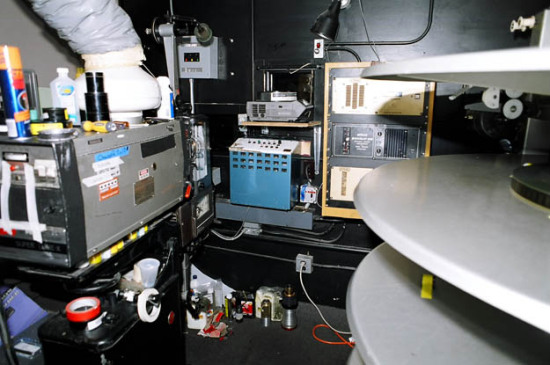
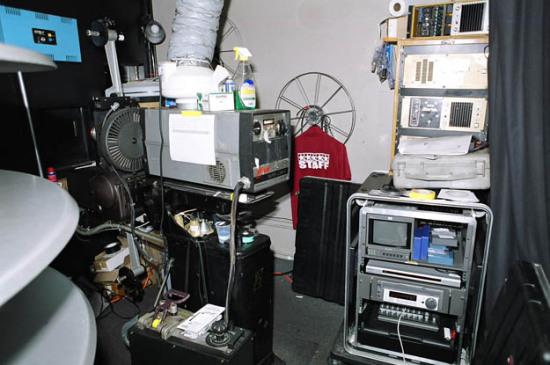
For those who care, the Opera House cinema in Newport, RI has not one but two Eprad units still in operation. At least they did as of last summer and I doubt that anything has changed since then. I believe that one is a Starscope and the other is a Starlet, but maybe someone else can identify them from these pictures:

 -

This one looks slightly different, but the rack is identical:

 -

These houses are (were?) both mono/surround only.
 
Posted by Steve Guttag (Member # 268) on 01-21-2008, 08:56 PM:
 
The Cinema had an early Starscope which did indeed have Dolby Cat 22 modules which bore the logo of "Dolby System" was the name of the Dolby Noise reductions (see any cassette deck of that era or such films as American Graffiti.

I remember the article that Gordon mentions...probably around April 1982 or so. It shows a picture of the K-B Congressional sound system. That comprised of a tall wall mounted rack that had Bogen amplifiers used as house sound systems (mono). There were 7 such amps in the rack...one for each theatre with two that could be switched into any of the five theatres via push-button. It was a custom Cardinal Sound design control panel. The three largest theatres (1, 4, and 5) had patch panels on the rack so a mobile stereo rack could be installed in any or all of those theatres by merely moving two switches.

In its day, it was relatively cost effective though it would be considered odd by today's standards in that all of the sound systems were contained in one rack rather than separate racks by each theatre. Believe it or not, I think the fact that two spare amps could be switched into any theatre in a matter of a single push button is what was behind the idea. At K-B we NEVER lost shows or there was a lot of explaining to do. That was particularly true if the film had already started. The rule was, destroy the projector/sound getting through a current show rather than cancel a show that had started...it was better to tell someone that had not be issued a ticket that the show was unavailable than to have a person no see their film in its entirety.

Ah...those were the days.

Steve
 
Posted by Sebastian Binz (Member # 4567) on 01-22-2008, 01:45 AM:
 
Good Morning,
let me take a quick look to the right...ehm, yepp, theres an Eprad Starscope just below this computer screen.
This Eprad Starscope system is still in operation and powered by an Eprad StarPowerFour amp. Since the channel seperation is very poor, it will be replaced by a JSD-80D with DA20 and DTS-6 within the next couple of weeks.
I can take some pictures if anyone is interested.

best regards

Basti
 
Posted by Michael Coate (Member # 757) on 01-22-2008, 04:39 AM:
 
quote: Steve Guttag
"Dolby System" was the name of the Dolby Noise reductions (see any cassette deck of that era or such films as American Graffiti).

For cinema, I believe that "Dolby System" logo was an umbrella term for any or all of the various Dolby processes, not specifically a reference to the use of noise reduction.
 
Posted by John Walsh (Member # 168) on 01-22-2008, 07:32 AM:
 
Didn't the Starscope have a gated 'feature' where the surrounds would come on if the other channels were loud enough, even if there wasn't supposed to be any surrounds at that time?
 
Posted by Michael Coate (Member # 757) on 01-22-2008, 09:05 PM:
 
quote: Steve Guttag
"Dolby System" was the name of the Dolby Noise reductions (see such films as American Graffiti).
The Dolby logo that appears in the end credits of "American Graffiti" was added to the 1978 re-issue version. These prints also ran two minutes longer than the '73 original.
 
Posted by Steve Guttag (Member # 268) on 01-22-2008, 09:25 PM:
 
John...yes but for the opposite affect. They used a gate to determine if the out of phase information was great enough to turn on the surrounds rather than have slightly out of phase info false trigger them. In addition to that was an adjustment for "rate"...if you get these two set right, it normally worked but with a sudden turn on or off.

Michael...Yes I was referring to the reissue, not the orignal release...which would not have used Dolby anything.

Steve
 
Posted by Michael Coate (Member # 757) on 01-23-2008, 03:02 AM:
 
Steve...I was surprised you cited "American Graffiti" since it was (1) one of over 40 titles to use that logo, and (2) was one of the last to use it before the company introduced the "Recorded in Dolby Stereo" logo.
 
Posted by Louis Bornwasser (Member # 3063) on 01-23-2008, 02:07 PM:
 
Remember early Dolby encoded films were mag only; hence "Dolby System." Later with SVA, a differentiator was needed, so "Dolby Stereo" was launched. Certainly there were actually quite a few Dolby SVA that went out as Dolby System. Marketing had not yet caught up. (Dolby System....Bell System?)
 
Posted by Gordon McLeod (Member # 33) on 01-23-2008, 02:57 PM:
 
Also there were many Dolby Mono Optical prints in circulation that were marketed as Dolby System
 
Posted by Tim Reed (Member # 137) on 01-23-2008, 04:47 PM:
 
FWIW, I remember two of my favorites, "Logan's Run" and "Grease," were also Dolby System pictures... [Wink]
 
Posted by Michael Coate (Member # 757) on 01-30-2008, 09:22 PM:
 
quote: Louis Bornwasser
Remember early Dolby encoded films were mag only
Not true; most were optical.
 
Posted by David Stambaugh (Member # 1102) on 01-30-2008, 09:42 PM:
 
quote: John Walsh
Didn't the Starscope have a gated 'feature' where the surrounds would come on if the other channels were loud enough, even if there wasn't supposed to be any surrounds at that time?

Nerd Alert: Edwards used something like that in #4 at the El Toro 5 (now gone). It was awful! The effect was very distracting, not natural at all.

"Dolby System" was used on at least a few optical releases.
 
Posted by Ron Funderburg (Member # 4561) on 01-30-2008, 10:14 PM:
 
I remember in 81 or 82 at a convention one of the Dolby Clone companies (not sure which) came out with the fake stereo! They also were talking about a new digital system that would have the sound track embedded on the picture in an infra-red format! The sound of the frame would contained on the actual frame of film and read just before it got there. They wanted to make it where you lost the optical sound track and had more room for picture, which meant everyone would have to go their sound track if they had sound. I don't think it was Smart but it could have been.

you have to remember that it was a good 7 or 8 years before Dolby actually came out with Digital sound. I sort of thought that the light from the projector would make the infra-red 1 and 0's visible and you see them on the screen. It never ever came about so not sure what happened to best laid plan of mice and men!
 
Posted by Michael Coate (Member # 757) on 01-30-2008, 11:55 PM:
 
quote: David Stambaugh
"Dolby System" was used on at least a few optical releases.
Forty-three of them...but who's counting? [Wink]

quote: Ron Funderburg
you have to remember that it was a good 7 or 8 years before Dolby actually came out with Digital sound.
Seven or eight, eh? How 'bout eighteen!
 
Posted by Frank Angel (Member # 248) on 01-31-2008, 11:04 AM:
 
quote: Steve Guttag
They used a gate to determine if the out of phase information was great enough to turn on the surrounds rather than have slightly out of phase info false trigger them. In addition to that was an adjustment for "rate"...if you get these two set right, it normally worked but with a sudden turn on or off.

Very early on I felt like David....I hated that sound of the the surrounds kicking ON or OFF with a primitive relay on mag prints (12khz trigger tone circuit). So I stole a piece of equipment from the recording studio -- a Fairchild component called a "ducker." This thing would "hear" the presense of audio on the surround track, either in the form of the 12kHz tone or, in the case of the later mag prints that mercifully eliminate that 12kHz debacle, it would hear track audio itself. Once audio of sufficient level was present (you could set this threshold), it would allow the signal to pass to the surround amps.

The really nice thing about it was that you could also set the attack and decay times. I'd set the attack time as nearly instantanious, but I set the decay for a very long few seconds, so it gave a nice, smooth fade-way, thus avoiding David's lament...."The effect was very distracting, not natural at all." With this unit, instead of that stupid either ON or OFF relay, the surrounds behaved and didn't call attention to themselves other than hearing the track you when you were supposed to.

For a time I even left it in the circuit when playing optical stereo. The quieting of the surrounds when they weren't supposed to be on was a plus. Once red readers went in, it was no longer needed (much less bleed in the surrounds), but in its hayday, that Fairchild unit did wonders for mag playback and we keep it able to be switched in for the occasional mag track print that we still play on occasion.
 
Posted by Steve Guttag (Member # 268) on 01-31-2008, 11:31 AM:
 
I don't know of anyone that "liked" the sudden on/off nature of the StarScope surrounds BUT....it really announced to the patrons that the SURROUNDS ARE NOW ON! Thus killing the subtlety of the Dolby form of surround decoding...which garners, to this day, complaints of the "surrounds are not working."

A VOX system would have a similar turn-on effect...note, we do this with our customer's preshow material. They sell preshow stuff with and without sound. If there is no sound to the preshow segment, the normal intermission music plays via CD...if the client pays for a custom audio track to go with the picture, a VOX circuit cuts in their audio instantly and at the conclusion will revert back to the CD music.

Steve
 
Posted by Ron Funderburg (Member # 4561) on 02-01-2008, 01:21 PM:
 
quote:
quote: Ron Funderburgyou have to remember that it was a good 7 or 8 years before Dolby actually came out with Digital sound.

Seven or eight, eh? How 'bout eighteen!


No not eighteen doesn't Dolby Digital predate DTS and the first DTS picture was Jurassic Park 1993. Batman Returns is the first feature film listed to use Dolby Digital so lets say 10 years before Dolby Digital!
 
Posted by Steve Guttag (Member # 268) on 02-01-2008, 06:24 PM:
 
Ron,

I think the confusion here is when you heard about some new fangled digital on film format until Dolby did it with a different technology and what most people are reading...which is when Dolby Stereo first appears on film (analog) and when Dolby first appears on film digitally...hence the 18+ years depending on when you consider the analog form to represent Dolby's presence (mono, early stereo, current stereo...not taking into account the NR change).

Note, it would be CDS (ORC and Kodak) that gets the first in on-film digital audio for the masses credit, not Dolby (or Sony).

Steve
 
Posted by Michael Coate (Member # 757) on 02-01-2008, 09:20 PM:
 
quote: Ron Funderburg
No not eighteen doesn't Dolby Digital predate DTS and the first DTS picture was Jurassic Park 1993. Batman Returns is the first feature film listed to use Dolby Digital so lets say 10 years before Dolby Digital!
Like Steve just commented, I based my claim of 18 years on 1974 being the year in which the first official Dolby film was released ("Callan") and 1992 being the year of Dolby's first official digital release ("Batman Returns"). But...I suspect I may have misinterpreted your "7 or 8 years before Dolby actually came out with Digital sound" comment.

Did you mean to say that Dolby (the company) came out with digital sound seven or eight years after going into business? Or did you mean that company x proposed a digital format seven or eight years before Dolby introduced their digital format?

Timeframe-wise, it sounds like (no pun intended) you're referring to ISCOVISION. But if your recollection of the timeframe of the convention is not correct, then it's possible you could be thinking of any of the following: HIGH DEFINITION FILM SYSTEM, COLORTEK, COMTRAK, KARASYNC, LC CONCEPT, VISTASONIC.

[ 02-02-2008, 12:56 AM: Message edited by: Michael Coate ]
 
Posted by Cameron Glendinning (Member # 3516) on 02-02-2008, 05:17 PM:
 
quote:
I remember in 81 or 82 at a convention one of the Dolby Clone companies (not sure which) came out with the fake stereo!
Probably Ultra Stereo? Its the only processor that I have used that featured a comb filter style fake stereo. I dont remember Starlets, Starscopes or Smart having this feature.
 
Posted by Michael Coate (Member # 757) on 02-02-2008, 06:03 PM:
 
Yes, it could've been ULTRA STEREO...or something from KINTEK. But, Ron goes on to describe how the format in question would have removed the optical track and have it replaced with a larger image...implying that it could not have been ULTRA or KINTEK or any other "Dolby Clone" because those all worked within the established print standard. Which is why I suggested it may have been that ISCOVISION thing.

EDIT: Once again, I may be misinterpreting Funderburg's post. I now have to wonder if Ron's first sentence (where he mentions in '81 or '82 a fake stereo Dolby Clone being introduced) and his subsequent sentences (where he describes a format utilizing a larger aperture and a lack of an optical track) are unrelated. If they are in fact unrelated, then I think he should have begun a new paragraph!

Ron, can you P-L-E-A-S-E put forth a tiny bit of effort toward being a more effective communicator?
 
Posted by Gordon McLeod (Member # 33) on 02-02-2008, 06:24 PM:
 
there was colortek as well as the National film board of canada proposal
as for synth eprad offered that as a starscope option in the early 80's as did smart and ultra
 
Posted by Ron Funderburg (Member # 4561) on 02-02-2008, 06:25 PM:
 
I meant to say (and thought I did) that the clone compnay was working on a Digital format 8 to 7 years before Dolby came out with there Digital format. The format imprinted the digital information on the frame of film that the sound was for and was infra-red so that it wouldn't show up on the screen. It didn't work or did work and the 1's and 0's were also visible in the picture or they just couldn't get it to work!

My point was that the idea for Digital was around and being experimented on 10 years prior to the first practical use of digital sound for theaters!
 
Posted by Michael Coate (Member # 757) on 02-02-2008, 06:46 PM:
 
quote: Ron Funderburg
I meant to say (and thought I did)...
It's apparent you do not read your own postings.
 
Posted by Ron Funderburg (Member # 4561) on 02-02-2008, 07:04 PM:
 
What is aparent to me is you didn't read the posting sir!

quote: Ron Funderburg
I remember in 81 or 82 at a convention one of the Dolby Clone companies (not sure which) came out with the fake stereo! They also were talking about a new digital system that would have the sound track embedded on the picture in an infra-red format! The sound of the frame would contained on the actual frame of film and read just before it got there. They wanted to make it where you lost the optical sound track and had more room for picture, which meant everyone would have to go their sound track if they had sound. I don't think it was Smart but it could have been.
As is stated in this it happened in 1981 or 82 and was not a post about Dolby it is a post about the company that made clones. Therefore when Dolby came in to being is not in my discussion.

quote:
you have to remember that it was a good 7 or 8 years before Dolby actually came out with Digital sound. I sort of thought that the light from the projector would make the infra-red 1 and 0's visible and you see them on the screen. It never ever came about so not sure what happened to best laid plan of mice and men!
Again it to me this is still about the company that was making clones and had a plan to put a digital format on the film! So it still isn't about Dolby and it is obvious to me that that it is in the time frame of company in 1981 or 82 and their efforts not Dolby except that their efforts predated Dolby's entry!

So what is apparent to me is you didn't read it you just made a response to what you thought I said. I may not write as clear as you like but the post is very obviously about the efforts of a non Dolby company to get a Digital format on the market and prior to Dolby's entry in the Digital field!
 
Posted by Michael Coate (Member # 757) on 02-02-2008, 07:07 PM:
 
It is my own fault. I should have ignored your post since I had already determined you're a lousy communicator. Face it, you've posted here 147 times...and 147 of them have "effective communication" issues.
 
Posted by Ron Funderburg (Member # 4561) on 02-02-2008, 07:25 PM:
 
Well thank you for you oh so kind comment. I'm sure you no best!

I know that I am not very good at writing and often I do post to quickly with out proper review. On the other hand you simply didn't read the post and make any effort to see what was there.

In 1982 at a trade show one of the many company's engaged in cloning Dolby technology began to tout their upcoming digital format that they hopped would be the next big deal in theaters. It was a digital sound format supporting 5.1 channels of sound. It would imprinted on the picture portion of the film and the relevant sound for that frame would contained on that frame. It would placed on the picture via infra-red imprint and would be read by an infra-red reader about 10 frames ahead of the picture being placed on the screen held in memory until the proper time and then played in the auditorium.

Nothing every came from it but this company was on to the format of the future and had the idea 10 or 11 years prior to Dolby's release of Dolby Digital Sound. This is not to say they predate Dolby in the research only that they were talking about it before I heard, or read of anyone else doing the same research. For all I know they became Digital Theater Sound or Sony Dynamic Digital Sound or is it Sony Digital Dynamic Sound?

Sorry for any earlier post that caused such confusion on the reader.

May all have a pleasant night I have other pressing issues

Please note the other pressing issues are not in any way connected to the forum, Dolby Laboratories nor Digital Theater Sound commonly referred to as DTS.

I do have a theater to actually run!
 
Posted by Tim Reed (Member # 137) on 02-02-2008, 07:27 PM:
 
quote: Ron Funderburg
The format imprinted the digital information on the frame of film that the sound was for and was infra-red
It was fluorescent, not IR.
 
Posted by Ron Funderburg (Member # 4561) on 02-02-2008, 07:29 PM:
 
Well it was 26 years and 5 months ago or 27 years and 5 months ago sorry I don't remember every word!
 
Posted by Michael Coate (Member # 757) on 02-02-2008, 07:52 PM:
 
quote: Ron Funderburg
I know that I am not very good at writing and often I do post to[o] quickly without proper review.
Then don't post.
 
Posted by Ron Funderburg (Member # 4561) on 02-02-2008, 08:00 PM:
 
I'm sorry for your miss-understanding. Whether you are good at English or not you are not God and I do not take orders from you! So if you have an opinion state it as an opinion and not an order! You opinion was noted and I rewrote the thing! But as you aren't the owner of the site don't tell me not to post! You may be good at English you but are manner deprived!
 
Posted by Richard Fowler (Member # 893) on 02-02-2008, 08:48 PM:
 
I hosted an early demo of Kintek "fake" stereo in Central Florida (with the help of Mike Suttkis) and a demo of Smart "fake" stereo at a cinema in Miami for a cinema owners convention, both in the early 1980's. I saw the Colortek demo at the Century Cinemas in Los Angeles for S.M.P.T.E. using a stereo mix of Brannigan with John Wayne. I viewed the installation of the hardware in the Century soundhead This system did not catch on since it required higher QC at the film laboratory level.....this was either late 1970's or early 80's.

The Flourescent system by Kodak was to allow other things other than audio to happen, such as footage / frame location; usage failed to capture industry interest. Kodak introduced optically readable Datacode which allows automation in handling of negative material.

Iscovision, in various forms, has been a mild squeeze anamorphic process for images...I used the amateur version for a museum show in the 1990's.

LC concepts was a system used in France that worked on the same concept as a DTS player but used floppy disks. DTS bought them out since they where in the market when Jurrasic Park was rolling out.

This tit for tat cat(word) fight between George Bernard Shaw and Studs Terkel is not in spirit of what is going on; different styles but still communication... [beer]
 
Posted by Cameron Glendinning (Member # 3516) on 02-02-2008, 09:00 PM:
 
Iscovision thingy info
 
Posted by Steve Guttag (Member # 268) on 02-02-2008, 09:15 PM:
 
Note...as to fake-stereo...it was all the rage in the early '80s when stereo films were on the order of 20% of all releases. SMART, USL and Kintek were big into it. Kintek being born of psudostereo and, in my opinion, by far the best. USL had their "Jsyn-05" module that worked in many JS series processors and SMART had a multibox approach to surround generation as well as stereo generation.

Strong had a non-lived form of multichannel audio via laserdisc they were briefly promoting...."DS6", I think it was.

If one were to download the Eprad Starscope manual and read Al's commentary...it makes the humerous remarks that "you can't hear digital" since they are merely bits of 1s and 0s. As such one should invenst in the SVA technology...now this was back before 1980 the "threat" of digital was upon us for sound.

Steve
 
Posted by Richard Fowler (Member # 893) on 02-02-2008, 09:29 PM:
 
Kinoton also had a disk system during the same period of the Strong system.
 
Posted by Tim Reed (Member # 137) on 02-03-2008, 04:57 AM:
 
quote: Ron Funderburg
Well it was 26 years and 5 months ago or 27 years and 5 months ago sorry I don't remember every word!
Relax. No need to get defensive.
 
Posted by Ron Funderburg (Member # 4561) on 02-03-2008, 10:40 AM:
 
Tim thanks I'm wouldn't have been! It was an interesting concept and if I recall correctly the system could be used to trigger in theater special effects. Then again both Dolby and DTS have touted that with out ever doing it. I'm not sure that fog in the theater or lightening off the back wall is all that important.
 
Posted by Steve Guttag (Member # 268) on 02-03-2008, 11:00 AM:
 
DTS did indeed to the lightning off the back wall trick. The TRAILER for the Jurassic Park II movie could trigger a so equipped theatre to flash strobes in a "lightning" like effect. We set up about a half-dozen theatres for this promo. I believe Boston Light and Sound were responsible for the set ups nationwide.

Steve
 
Posted by Jeffry L. Johnson (Member # 453) on 02-03-2008, 11:51 AM:
 
quote: Richard Fowler
LC concepts was a system used in France that worked on the same concept as a DTS player but used floppy disks.
LC Concept used magneto-optical (MO) discs.

LC Concept wikipedia entry

LC Concept
 
Posted by Michael Coate (Member # 757) on 02-03-2008, 11:32 PM:
 
quote: Ron Funderburg
So if you have an opinion state it as an opinion and not an order!
I wasn't giving you an order. I was simply stating that those who cannot meet even a minimum level of competency in their communication would be better off not posting. Otherwise, you're wasting your time and the time of those reading your posts. As well, you undermine your credibility if you are unable to effectively convey your thoughts and ideas.

quote: Ron Funderburg
You may be good at English you but are manner deprived!

Why? Because I dare to be critical? Because I believe quality and attention to detail matter? Because I value my time and the time of others?

It is you, Ron, who is disrespecting every one of us who expend time and energy reading your postings. No one should have to struggle through someone's postings or be misled by unclear comments.

In addition, I cannot believe you have the balls to state you are aware that you have a writing deficiency and post quickly and without review, and yet you choose to do nothing to rectify the problem. I realize some people will never be good at punctuating or correctly using there, their & they're or its & it's, or dealing with issues of stylization and form that require some thought. I also realize the casual, conversational tone of these forums and, contrary to what you may think, I do not believe postings need be of publishing quality. But, dude, at least run a spell check!

EDIT to bring back on-topic... So have we come to a consensus on what this early '80s mystery process may have been?

[ 02-04-2008, 02:40 AM: Message edited by: Michael Coate ]
 
Posted by Ron Funderburg (Member # 4561) on 02-06-2008, 11:31 AM:
 
Michael, you certainly are not opposed to waisting time and energy pontificating about my short comings. Give it a rest boy go back to being critical of writers, actors and directors which at least you can get paid for. I am not important enough for you to put so much effort in to this nor am I concerned enough with your opinion for it to matter.

And back to the subject or at least one of the subjects, I do believe the processes was a clone company working with Kodak but again it was to long ago for me to remember exactly.
 
Posted by John Walsh (Member # 168) on 02-06-2008, 12:20 PM:
 
It's interesting ... the LC Concepts seems very close to DTS and does seem to pre-date it.

I saw the Jurrasic Park trailer at the Zig, with the lighting strobe effect, but I thought it was just triggered by a cue on the film or something. I didn't know the DTS player did it. At the time, DTS was just providing the Rt-Lt, so I didn't even think about it 'ouputting' a cuing signal.
 
Posted by Mark Gulbrandsen (Member # 72) on 02-06-2008, 02:51 PM:
 
I just found the original brochure for the Strong Digital System here at work today. I'll scan it and post it here tonight....

Mark


Powered by Infopop Corporation
UBB.classicTM 6.3.1.2