![[Big Grin]](biggrin.gif) The DP70 brings about lots of problems, so just to irk Mark I will list a few.
The DP70 brings about lots of problems, so just to irk Mark I will list a few.![[Roll Eyes]](rolleyes.gif)
quote: Brad MillerActually I love its size...makes everything easy to work on. It is easy to keep clean. But as to its weight...it is nice and stable too. Ever set a JJ right on the ground...the damn thing falls right over at the slightest tap. Remember, the AA2 is doing what a Console does today, minus the place for the automation. Its weight goes a long way to its stability.
First, it is HUGE. Seriously, there is no reason for that damn thing to be so big and heavy.
quote: Brad MillerThe AA2 analog soundhead was the best for me...always set up perfect and with clean optics, always worked wonderful for me. I'm sorry you had such problems...I never did on any of the ones I worked with. As for modern readers. There are a choice...BACP offers TWO...Kinoton offers both just a red light solution and a soundhead replacement that makes it up to Kinoton basement reader standards (the best, that is).
Second, be prepared to spend some bucks in a BACP analog reader, because the standard optics are CRAP due to an overly wide slit.
quote: Brad MillerYes, that is certainly possible. Then again, it was designed in an era of exciterlamp changeovers. But going beyond that, Norelco addressed that issue nearly 1/2 a Century ago! Back in 1960, they issued TSI #3 to address this very issue.
While we're talking about that, if you ever wanted to blister a print, just leave the exciter on while the projector is stopped.
quote: Brad MillerGood...I prefer 2000' reels (your preferences may vary).
You will be forever stuck without being able to run 6000' reels. You can run those 5500' reels, but not true 6000' reels.
quote: Brad MillerAgain good...the operator should be present at all times, particularly in a screening room. However, nowadays...one could equip it with a modern reflex type IR sensor like the ones used in modern Kinoton projectors.
Mounting a failsafe isn't impossible, but quite the pain to rig it into the front right corner.
quote: Brad MillerYou win on that one. Then again, normally all one needs to open the door for is to adjust the tension bands and that does not require it to be fully opened. But a pain with this machine is that the lens is recessed so far back...it restricts the type of lenses that may be used for short focal lengths.
You can't open the door while the machine is running without blocking the picture on screen with most lenses a screening room would be using.
quote: Brad MillerThey are not particularly hard to file...remove the gate and tension bands. They are a little thicker than some but they don't tear you hands up they way some do by constantly inserting and removing the plate. They are way easier than a turreted double or triple plate.
The aperture is a pain to file.
quote:About the only parts one requires are tension bands and the occasional sprocket. If you like the velvet tension bands then they last forever too.
Parts are expensive!!!
quote: Brad MillerBrad, I am quite familiar with what you thought was a DP-70. In relaity it was more the remnants of a DP-70. Your machine which unfortunately was obviously poorly maintained by it previous owners and which you eventually sold off to one of our customers was in too bad of condition to put back into service. It was simply stripped for what ever parts were still servicable and those parts have never been used they are are still sitting on a shelf backstage at the America Theater in Casper. I won't go much past what Steve has already summed up very well except to say that 32mm focal length lenses are about as short as one can go with the DP-70, thats darn short.
I could go on, but suffice to say I had a DP70 in my screening room for about a year and hated that damn thing.
quote: Brad MillerMany locations run without the door since these projectors run so quietly.
You can't open the door while the machine is running without blocking the picture on screen with most lenses a screening room would be using.
![[Razz]](tongue.gif)
quote: Dave RitchieOne strong suggestion is to visit a cinema, or cinemas, if possible, in NZ or elsewhere that contains these units and see for yourself on their operation.
I'm very tempted to do the upgrade and move up to to 70mm.
|
quote: Brad MillerNow, this could bring up an interesting question:
The projected picture was simply unacceptable to me.
quote:yea, like locations that love to spill film on the floor, unattended. Dealing with theatre M/O's who act like 12 yr olds and have staff that doesn't even know what a projector is, let alone fixing what they muffed up. .. et.al...
Its tormenting to work where I do!
quote: Mark GulbrandsenI'd forgotton about those things; I haven't seen any of them for years.
The latter require 35mm reels with 70mm hubs on them and unless there happens to be a bunch in the booth they can be hard to locate.
![[thumbsup]](graemlins/thumbsup.gif)
quote: Ben WalesBen,
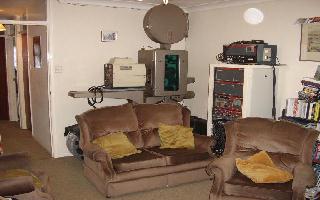
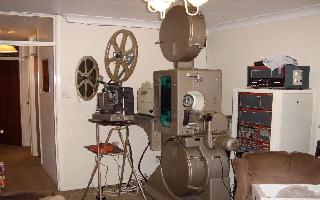
You just about move it mounted on wheels and I can stow it away when not in use.
! "Stow it away".... sounds as easy as stowing some life preservers under the deck of a boat. I just keep thinking of the word inertia... and once you actually get it moving is it actually going to stop or continue on through to the neighbors flat..... ![[Eek!]](eek.gif)
quote: David KilderryDave,
I would recommend DP 70's for just about any use except perhaps an automated multiplex.
![[beer]](graemlins/beer.gif)
quote: Andrew LeeWell, there's your problem!
ORC Model 2500 lamphouses
It has been 573 days since the last post.
quote:Thought I transfer this discussion to this Topic matter.
Actually Emiel and me each have one DP70 from MIDI, Tilburg in the Netherlands.
They have ser. nr. 1657 and 1658. The theatre closed december 2007.
On Youtube you can see 1657 but both are identical. The soundhead is great.
We are installing a CP200 but a Philips OMA 4 is also a possibility.
There are 6 DP70s in Geldrop.
.![[Cool]](cool.gif)
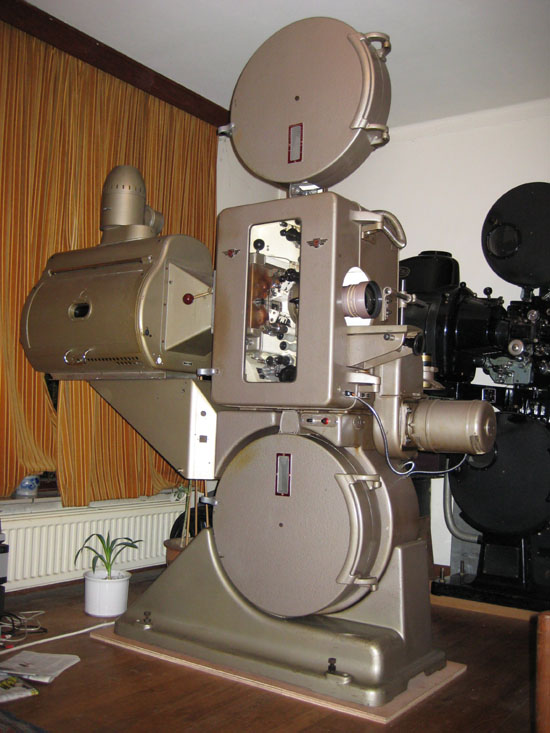
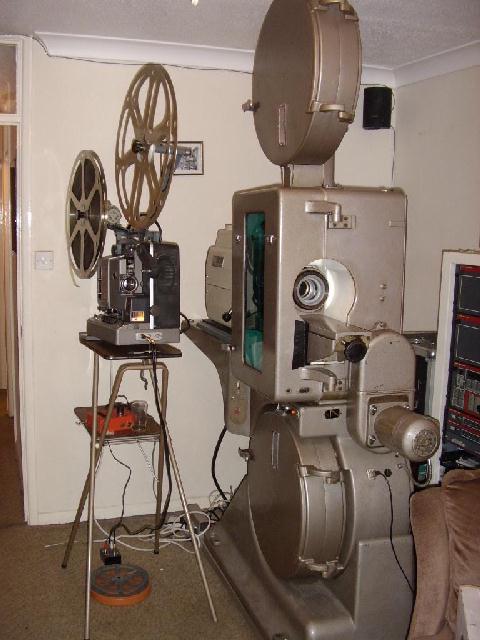
quote: Ben WalesI still think that's quite the kick in seeing this: "Goliath in David's room."
The DP70 is mounted on Wheels
quote: Louis BornwasserYEP! The first ones were made by American Ooptical and the later ones by Ballantyne... before they were sucked up by Wrong International.
The lamphouse table and machine base were U.S. made on most American machines.
quote:I currently use the old Orcon 1000B 700w Zenon and (just) about get away with a Beam Spreader and defocus the Lamp for a 70mm screen, my screen is only about 8ft at home.
Do you have to do some sort of beam spreading techniques from that little lamphouse to fill that 70mm aperture with your unit there?
quote: Damien TaylorYes they are, I have two of them and use quite a lot in the Winter for 16mm Race Nights, both had new Worm Gears when I bought them.
have a TQ1 with a broken worm, and another similar vintage B&H with a good worm I was going to canabilise. Veering the topic to something thats probably been covered a bazillion times before, but is a working TQ1 a good projector?
quote: Scott NorwoodThat was made in the UK by Bell & Howell for the TQ1 (656) Projector range.
Tell us about the large-reel system for the 16mm projector.
![[Smile]](smile.gif) I think I'll have to try it out first and see what the results are before I decide if I need different hardware. Thanks for the advice.
I think I'll have to try it out first and see what the results are before I decide if I need different hardware. Thanks for the advice.
It has been 427 days since the last post.
quote:Ok, it is almost a year past and I wondered has there been any changes or perhaps there are more DP70's in Peoples homes?.
Actually Emiel and me each have one DP70 from MIDI, Tilburg in the Netherlands.
They have ser. nr. 1657 and 1658. The theatre closed december 2007.
On Youtube you can see 1657 but both are identical. The soundhead is great.
We are installing a CP200 but a Philips OMA 4 is also a possibility.
There are 6 DP70s in Geldrop.
.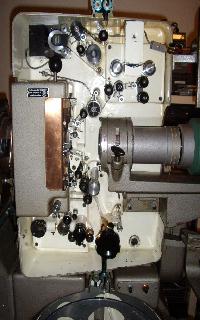 Louis
Louis
quote: Ben WalesNot from a lack of trying
Ok, it is almost a year past and I wondered has there been any changes or perhaps there are more DP70's in Peoples homes?.
![[Frown]](frown.gif)
quote: Rick RaskinExactly Rick!
Other than having to set the intermittent in order to open the gate, what's not to know.
quote: Dave RitchieWell I have finally made a YouTube Video of my Home Cinema Set and yes you can mount a DP70 Projector on wheels and screen 70mm in a small Living Room
I have been given the opportunity to buy a DP70 but it wont fit into the screening room that i am in the middle of building- is it worth changing everything around now when it will be mainly dedicated to 35mm