This is topic Williams Sound SoundPlus Infrared Transmitter in forum Film Handlers' Forum at Film-Tech Forum ARCHIVE.
To visit this topic, use this URL:
https://ft-forum.com/ft/cgi-bin/ubb/ultimatebb.cgi?ubb=get_topic;f=1;t=008944
Posted by Cody Martin (Member # 2523) on 10-08-2007, 06:03 PM:
Hello,
Hope someone can help me with this. I have a few of these units that are receiving music(sound led is flashing), but nothing is being picked up by the receivers. I was wondering how likely is it that the infrared leds are burned out? If this is the problem, anyone know what type of infrared are needed to replace them?
Any help would be appreciated.
Thanks,
Cody
Posted by Ken Lackner (Member # 1002) on 10-08-2007, 07:38 PM:
First off, I assume you have tried multiple receivers, and said receivers do work with some transmitters. Just making sure the problem is in fact the transmitter, not the receiver.
The transmitters are made up of an array of many (hundreds?) of IR LED's. They will go out over time. Not all at once, of course, but a few here, a few there. It is quite possible for the unit to continue to function with X number of bad LED's. But once you cross that threshold of bad LED's, you will get lots of static, if anything at all. You cannot replace the individual LED's yourself. You must exchange the transmitter panel with Williams Sound for a rebuilt one. To do so, they will need the serial number and date code off the back of the unit.
Posted by John Walsh (Member # 168) on 10-08-2007, 07:58 PM:
I used them for a theater in Chicago, in an unusual configuration... the people there were very helpful. So I suggest you give thm a call if swapping (or other simple things) don't work.
Posted by Louis Bornwasser (Member # 3063) on 10-08-2007, 08:53 PM:
The Williams sound units really had high output; others less so using the exact same components. Unfortunately, the burn out rate is high. The LED's are in a string where the more that fail, the higher current flows on the remaining LED's. Then more fail until at last they are dead completely.
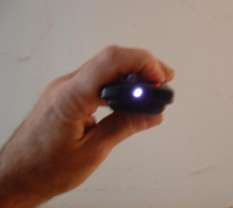
You can visually inspect any unit for output with ANY form of TV camera which can SEE the I.R. LED's. (video or still image)
Depending upon the model you have, Williams does not support all old units for repair. Newer styles from them are significantly more reliable so they are still a good bet. Louis
Posted by Cody Martin (Member # 2523) on 10-09-2007, 04:37 PM:
Hello,
I've called Williams and was told they can't do the exchange/repair on our transmitters. So, I'm down to trying to figure a way to at least get one going for the time being. I check it out, and it looks like there may be a blown transistor on the board. I'm going to try to replace it and see if it works. I counted 120 leds on the board, and though I could replace...I'd rather not. How would I go about finding what voltage etc. these are?
Thanks,
Cody
Posted by Daryl Dankert (Member # 4512) on 10-15-2007, 12:08 PM:
Hi Cody,
My is Daryl Dankert and I am the Service Manager at Williams Sound. I am sorry it has taken this long to post a reply, but I had to register and get approved. I am not sure who you spoke with but we do repair those units and replace if needed. If the units are less than 5 years old, they are covered under our warranty. If they are more than 5 years old, we have several options that I can discuss with you over the phone or in this forum. If you call us at 1-800-328-6190 you can ask for me and I will cover a few option with you including our new Infrared emitter WIR TX90.
Thank You,
Daryl Dankert
Product Service Manager
Williams Sound Corp.
10321 West 70th Street
Eden Prairie, MN. 55344-3459
1-800-328-6190
Posted by Alan Gilbertson (Member # 242) on 10-15-2007, 02:50 PM:
We took over an 18 screen in 2001 and replaced all of the Williams Sound pannel, (they were new in 1999). as they had failed or were failing. Williams replaced them at no charge. In 2003 they started to fail again and when I called Williams they told me the samething that they no longer repair those units and we would have to buy new ones..... So we did, we went to USL
Posted by Louis Bornwasser (Member # 3063) on 10-16-2007, 08:56 AM:
USL vs. Williams. In my experience they have nearly identical components. USL does well enough in a small room, but the Williams has more output and sounds better to boot!. With the main issue being LED fade/failure you can then make your choice.
The older Williams had TOO MUCH output, but they would cover a 1000 seat auditorium with only one unit. Louis
Posted by Andres Briano (Member # 4621) on 02-24-2008, 05:07 PM:
We have one Williams unit in every auditorium (bought all of them from Louis). This far out of the civilized world, spare infrared replacement LEDs cannot be found.
This is what I have done (am doing actually) to return all of them to life after years of neglect.
As you know, the 120 LEDs model consist of 4 arrays of 30 LEDs each. I am using the camcorder method to detect the arrays that are off. And then with one jumper, I detect the faulty LED. Since they are connected in series, it is usually just one that is bad.
Like I mentioned before, no spares here, so I put passive diodes (3 to be exact) across the faulty one to match the voltage drop and make sure the rest of the LEDs in the array get only the right amount of current.
Another stupid comment: all the emitters went bad just by sitting there getting close to no use. Right now my procedure is to have all the PSUs unplugged until a patron requests a set of headphones. Managers warn the booth staff to plug the emitter PSU in.
By the way, I have contacted Williams to inquire about spare LEDs and have discussed with them my approach to fix them, and, needless to say, they do not endorse my practice.
Hope this info helps someone.
Andrés
Posted by Jim Cassedy (Member # 4115) on 02-25-2008, 10:14 AM:
quote: Louis Bornwasser
You can visually inspect any unit for output with ANY form of TV camera which can SEE the I.R. LED's. (video or still image)
I've used this trick many times to troublehoot IR audio panels, remote controls and IR computer links, etc. I use a cheap digital still camera. It works great.
In the photo below, for example, you can clearly see the normally invisible output from the IR LED on a TV remote.
Powered by Infopop Corporation
UBB.classicTM
6.3.1.2