This is topic Tips for training new projectionists...??? in forum Film Handlers' Forum at Film-Tech Forum ARCHIVE.
To visit this topic, use this URL:
https://ft-forum.com/ft/cgi-bin/ubb/ultimatebb.cgi?ubb=get_topic;f=1;t=009256
Posted by Justin Hamaker (Member # 2165) on 04-28-2008, 02:06 PM:
I know most old school projectionists cringe at the idea of having novices handle film unsupervised. However, I run a 5 plex and I struggle to find people competent to use as assistant managers let alone fully train to be good projectionists. As a result I'm forced to train teenagers to thread and run projectors. Otherwise I would be doing it myself 7 days a week.
But I do spend time making sure that the people I train not only know how to thread the projector, but understand the basics of how it works as well as how to fix common problems associated with threading.
I drill it into their head from the beginning that being in frame and having the soundtrack in the right orientation are absolutely critical every time. When possible, I usually start by having them spend 2-3 hours threading 5 minute trailer reels over and over. And until they show they can thread with out errors every time, I'm checking their work every time.
Recently I've started having them pull through just enough leader to thread the projector and then motoring through to the start point so they can check for errors well before the show start.
I'm curious to know if anyone has any thoughts and/or pointers I can use to help my novice projectionist get even better.
For what it's worth, I only teach a small handful how to tear down film and even fewer how to build up. I do take pride in a quality presentation and I try to teach that to everyone I'm training in the booth. And I am proud that almost every print we ship is free of scratches and mostly dust free - even after 4-5 weeks.
Posted by Fred Tucker (Member # 4482) on 04-28-2008, 03:59 PM:
SOunds like your doing good so far. I have the same problem, the retention rate at my theater is horrid. One thing to think about though, the more you start & stop the motor the harder it is on the the motor... especially the capacitor. I do like your idea of threading trailer packs over and over though. I run a 24 plex so my employees get plenty of practice that way.
Posted by Brad Miller (Member # 2) on 04-28-2008, 04:08 PM:
Just keep beating it into their heads running 5 minute movies over and over. I've done that a lot and it works well. Just make them go away from the booth for a week and THEN bring them back and have them thread up cold to see how much they retained. Just because after a few hours they are doing the job consistently doesn't mean it isn't just being learned in their short term memory.
quote: Justin Hamaker
And I am proud that almost every print we ship is free of scratches and mostly dust free - even after 4-5 weeks.
hahaha, only 4-5 weeks. I remember running the same film print for up to a year!
Posted by Chris Slycord (Member # 4239) on 04-28-2008, 04:22 PM:
And I'm a firm believer in having one person do the training. I've seen people get trained by a good, competent worker then have them work alongside someone else who could barely thread the next day. Pretty much defeated the purpose of training.
Posted by Justin Hamaker (Member # 2165) on 04-28-2008, 04:49 PM:
quote:
hahaha, only 4-5 weeks. I remember running the same film print for up to a year!
The longest run I've had since I have worked in theatres is 16 weeks for My Big Fat Greek Wedding. After that it's 12 weeks each for The Sixth Sense and Star Wars Episode 1. For most movies, we're lucky if it can run 3 weeks. And we might get 3-4 movies a year that go 5 weeks. Granted, I'm in a fairly small community where there is almost never a problem seeing a movie the first weekend.
Posted by Brad Miller (Member # 2) on 04-28-2008, 07:14 PM:
That's nothing. I ran Phat Ass Greek Wedding for over a year at one theater. I also remember running titles like Beauty and the Beast playing for 9 months straight, 6 shows a day.
Posted by Darryl Spicer (Member # 711) on 04-28-2008, 07:21 PM:
Ahhhh the good ol days.
Posted by Tim Reed (Member # 137) on 04-28-2008, 07:40 PM:
quote: Justin Hamaker
I'm curious to know if anyone has any thoughts and/or pointers I can use to help my novice projectionist get even better.
In the old days, people seemed to learn faster...
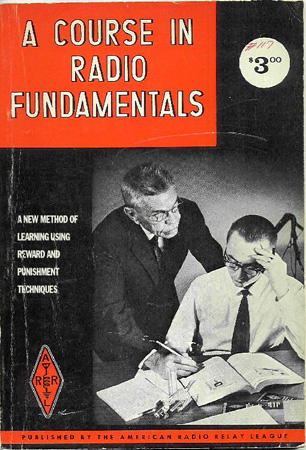
Posted by Andy Muirhead (Member # 712) on 04-28-2008, 08:28 PM:
5 Minute packs are a good idea. Further to that, build them in 60 second blocks, ie leader-60sec trailer-end leader-start leader-60scec trailer-end leader, etc. So they get to load, then practice start ups, lens changes etc (and get them doing it without automation). This way they will get a few start ups in per load. If you don't do it this way, then just make your training pack 60 seconds long. There's no point getting your trainee to sit for 5 minutes waiting for the pack to finish when they could be practicing loading.
On another note, I have a 'learning to drive' theory on training projectionists'. The theory being, don't teach them to drive and fix the car. Teach them to drive it first. The fixing can come later.
Posted by Justin Hamaker (Member # 2165) on 04-28-2008, 09:36 PM:
Andy
The reason I do 5 minute packs is so the film has enough girth to allow them to take out the centering ring without the film flopping around. So they get plenty of chances, what I do is set up two projectors and they just bounce back and forth. Generally it winds up that they are just finishing one when the other ends.
I agree with the idea about lens and masking changes, but all of ours are manual to begin with.
I like your learning to drive approach. Until they become very proficient, I don't ever teach them anything complicated. What I teach them is how things like the split fingers, fail safes, frame knob, and take-up arms work so they understand why they have to do things a certain way and what happens if you do it wrong. Just like learning to drive, you have to know what to do if you stall or put it in the wrong gear.
Further, I teach them how to deal with things like when the pay-out platter starts to wrap or if you're out of frame by 2 perf. But I can assure you they are not learning how to fix anything other than their own mistakes until I know they can handle threading correctly.
Posted by Stu Jamieson (Member # 4626) on 04-29-2008, 07:28 AM:
"A New Method Of Learning Using Reward And Punishment Techniques"!
 Haha, that sounds great! Where can I get a copy of that?
Posted by Andy Frodsham (Member # 4061) on 04-30-2008, 11:52 PM:
What was the punishment?
Posted by Chris Slycord (Member # 4239) on 05-01-2008, 11:13 AM:
quote: Brad Miller
That's nothing. I ran Phat Ass Greek Wedding for over a year at one theater. I also remember running titles like Beauty and the Beast playing for 9 months straight, 6 shows a day.
When I lived in NC as a kid, I swear the dollar theater in the neighborhood had Lean on Me for even longer than that. Eventually, they had decided to get rid of it but due to popular demand it was brought back something like 2 weeks later (and it had been over 6 months at that point).
Not all that surprising, though, that it was uber-popular since my parents' apartment was next to a black neighborhood.
Posted by Marc Jensen (Member # 3561) on 05-02-2008, 08:28 AM:
I have an old 'training reel' sitting around that's always useful to throw at a newbie towards the end of training.
- First up, it's just a basic leader and cue pulse to get a basic start up and 'show' running.
- An old trailer hits the screen and everything's fine until an upside down censor tag hits the screen.
- Trailer #2 pops up and it's out of frame. Trainee gets introduced to Kinoton's framing knobs right there.
- The third trailer goes back to the previous framing, the trainee reacts and then soon discovers what "soundtrack backwards" looks like after a splice mid-trailer. They learn to stop and flip the film around the other way at that point. The automation beeps a film break alarm through the re-thread and I sometimes say things about impatient audiences if I feel I need to ramp the tension up a bit.
![[evil]](graemlins/evil.gif)
- Another splice surprises the trainee with a change from flat to scope and they get the manual lens and masking changes down real quick.
- Then the upside down trailer. They have trouble wrapping their heads around that one and I usually have to dissuade them from ideas of "stopping it and turning it around."
- Then there's a bit on the end without any designed faults just to bring the reel to a close.
The whole thing runs for about 10 minutes. I've been known to shut down the lamp and sound and have a trainee just thread it for threading sake early in training, but mostly it serves as a late stage problem identification and correction training tool.
Posted by Jarrad Salmon (Member # 3818) on 05-03-2008, 12:29 AM:
If you want to leave them to run your booth, I suggest a bit of problem solving to be randomly placed into training...
Things like:
Wrong lense and aperture identification
Bypassing automation and running manual (if applicable)
Circuit breakers and fuses can be throw or removed to replicate a problem. (Nothing worse than being called in to a panicing projectionist with "a major technical problem" and only have to turn the breaker on).
Repairing brain wraps (using old trailers of course)
Basically if your site has a gremlin or glitch that comes in once every blue moon make sure they know how to repair it.
Personally I find that the right attitude and repetition will make a good trainee and eventually a fine projectionist.
Posted by Justin Hamaker (Member # 2165) on 05-03-2008, 05:07 AM:
Jarrad and Marc, I love your suggestions and I may have to put some of them to use. I especially like the training reel with the out of frame splices and backwards/upside down film.
The aspect ratio changes are a bit more difficult because we have to manually change masking in the auditorium.
I will say that once they get threading down, I teach them how to tell the difference between a flat and scope picture, how to identify a flat and scope lens (scope is a longer word and uses a longer lens), and I teach them how to identify the correct aperture plate (the aperture of the flat plate looks flat compared to the scope). As you can see, I'm big on memory tricks.
One of my biggest concerns is brain wraps cause by pulling the film through too fast when threading, but having them thread and then motor through to the start point seems to have eliminated that problem - as well as the scratches in the first 10'-15' for the first trailer.
Posted by Chris Slycord (Member # 4239) on 05-03-2008, 09:34 AM:
quote: Justin Hamaker
(scope is a longer word and uses a longer lens)
Our flat lenses are way longer than our scope. Threw me off on my first shift at this location since I was trying to make sure before showtime that the lens was right only to switch to flat.
So the CORRECT way to tell a scope lens is it is the one that says "anamorphic" on it or on our turrets they have flat and scope labels right underneath the appropriate lenses.
Posted by Brad Miller (Member # 2) on 05-03-2008, 12:36 PM:
There is no way your flat lenses are longer than your flat lenses. Go look at the numbers printed on them.
Posted by Kenneth Wuepper (Member # 1174) on 05-03-2008, 04:35 PM:
Hey There!
I think we are confusing overall physical length of the lens assembly with the Focal Length of the lens.
Unless you are dealing with an integrated anamorphic lens, the "prime lens plus Anamorphic adapter" will be physically longer than the flat lens.
In some instances there may be a single prime lens with an anamorphic adapter and a "Magnacom" variable adapter to make the flat image properly sized on the screen. In this instance the flat imaging combination may well be physically longer than the "scope" lenses.
KEN
![[thumbsup]](graemlins/thumbsup.gif)
Posted by Joe Redifer (Member # 3) on 05-03-2008, 06:02 PM:
quote: Brad Miller
There is no way your flat lenses are longer than your flat lenses.
VERY true. It should be the exact same size as itself, no more no less.
Posted by Gordon McLeod (Member # 33) on 05-03-2008, 06:07 PM:
To be fair often with turrets one has to use a magnacom on the flat to prevent shadowing
Posted by Mark Gulbrandsen (Member # 72) on 05-03-2008, 06:20 PM:
quote: Gordon McLeod
To be fair often with turrets one has to use a magnacom on the flat to prevent shadowing
Perhaps if you're using old "Coke Bottle" lenses... Seriously, I have not installed a magnacom in over a decade. They suck in many ways other than the large amount of either barrel or pincushion distortion they provide the end user with. There is also a drastic lowering of the contrast ratio because as Dwight Lindsay puts it "There are no light baffles in them to prevent internal reflections from happening". With modern "Red Isco" lenses some of which are already somewhat "long barreled" and a proper projector like a P35GPS, Wrong International Millennium Falcon, or a Kinoton you never need a magnacom and generally have extremely even coverage.
Mark
Posted by Joshua Waaland (Member # 287) on 05-03-2008, 07:13 PM:
My first booth was in a newly built theater with old junk equipment. The theater chain was too cheap to send us any parts and at the time I hated the job because there were constant headaches. Looking back it was the best training I ever had. I had to be creative in fixing things and there were no other projectionists around to ask when I had a problem. The manager knew nothing either so I was on my own and was forced to learn the hard way.
This doesn't always work for everyone. As long as you find someone that is mechanically inclined and hungry to learn they will work out fine. We tried training a few people in the booth who just couldn't get it no matter how long we trained them. Looking back they were not very mechanically minded people in the first place.
Posted by Brad Miller (Member # 2) on 05-03-2008, 07:15 PM:
quote: Gordon McLeod
To be fair often with turrets one has to use a magnacom on the flat to prevent shadowing
I have only ever seen that with a Simplex turret and old school super fat ISCO anamorphics.
Posted by Chris Slycord (Member # 4239) on 05-03-2008, 07:45 PM:
Well at least the part "outside" of the turret appears longer. And some of that is probably just the casing of the lens making it seem longer than the actual lens inside.
Posted by Gordon McLeod (Member # 33) on 05-03-2008, 09:11 PM:
Mark I seriously think you need some valium
there are many turret in the field that lens combinations are an issue It may be all well and good to condemn them to projector purgatory but the competent engineer in the field will attempt to do the best with what his client supplies.
Maybe your love afair with christie and d cinema has put blinders on you but there are far more cinemas and venues that will have long memories of the engineers that choose to condemn them to oblivion
get off that pedastal not every one will or can justify the cost of that red isco and makes do with a blue one
nor is that vic 5 or 8 or prevost p55 turret going to the bin because you don't approve
Also I know of several machines of which many still operate daily use a magancom/ anamorphic changer on a fixed backup
Posted by Tim Reed (Member # 137) on 05-03-2008, 10:36 PM:
quote: Andy Frodsham
What was the punishment?
Look over the student's left shoulder. ![[Razz]](tongue.gif)
Posted by John Hawkinson (Member # 1135) on 05-04-2008, 07:31 AM:
If you want to tell if a lens is anamorphic, just look through it. If the elements appear oval-shaped, you have an anamorphic.
--jhawk
Posted by Joe Redifer (Member # 3) on 06-29-2008, 04:09 AM:
quote: Brad Miller
That's nothing. I ran Phat Ass Greek Wedding for over a year at one theater. I also remember running titles like Beauty and the Beast playing for 9 months straight, 6 shows a day.
You may think you're great, but you're not. I ran My Big Phat Greek Wedding for 11 years, 16 months and 76 days... 18 shows a day interlocked not only through every projector in the complex (yes, even including the Large Giant Screen) but across the street to the multiplex over there and through all of their projectors as well. It left the theater looking better than it did live on the set when it was being shot. Hell I'm still running that movie now!
Anyway, I kind of do hate training projectionists. Not because of the trainee themselves, but because I am basically a loner when I am in the booth. I get very bored and sometimes it is awkward just standing there waiting for the next chance to instruct. There is also nothing for me to thread.
I did train one guy without even knowing it, though. He was a new assistant manager who was being trained in the booth by another assistant. The managers at this theater like to thread the projector with soundtrack facing the wall (in order to run on the base side) as well as threading the gate/intermittent first, then the lower portion of the projector and finally the top parts including the digital penthouse reader. He was probably in his 1st or 2nd week of training this way just whenever the other managers got the chance to have him do it (no 5 minute trailer reels). I came in one night to break down a film or something and he happened to be in the booth. I threaded up the one show that was down really fast, explaining what and why I did it as I did it. I basically told him about the soundtrack direction, threading bottom up and where to park the framelines, etc. I didn't think he'd catch on and I certainly wasn't instructing him. A month or so later I watch him thread and he does exactly like I do and nearly as quickly. Framelines are at 10:00 on the bottom sprocket and 12:00 on the lower constant feed sprocket for perfect loop sizes when the intermittent has just stopped its motion. Everything was perfect. I was amazed at that. Still kind of am.
Posted by Monte L Fullmer (Member # 2797) on 06-29-2008, 11:17 PM:
In the 30 plus years in the booth, my training techniques has always been on the simple side: let them know that when they're doing booth, it's THEIR booth and to be proud of what they're doing.
I always try my best to make them feel that this is just not a job, but a fun, yet very important section of the operation since this is the main reason why the customers come to patronize our theatres - to be satisfied in what they came here for.
True, during training sessions, it's rather drawl that I can't do anything while the trainees are doing your work for you, but if patience, dilligence and simple teaching can be your assets during these training times, it's amazing how the trainees catch on rather quickly and always remember what has been taught to them since half of them are interested in this section of the operation anywhos.
-Monte
Posted by Louis Bornwasser (Member # 3063) on 06-30-2008, 05:10 AM:
I divide the training thusly:
1. Makeup/teardown/splicing/cueing
2. Threading & lens selection
3. Control settings and lubrication
Later (30 days?) I go back and show them the finer points (threading in frame & other tricks. Louis
Posted by Kenneth Wuepper (Member # 1174) on 06-30-2008, 05:28 AM:
Perhaps we should look at the learner for a minute.
People do not all learn in the same way. Some are visual, some are auditory while some are tactile learners. There are even some who learn through a combination of these senses. Thus it is the challenge of the instructor to see that all of these senses are properly utilized in instructing the learner.
As an example, use a drawing of the machine to be loaded. Have the student draw where the film goes as it passes through the machine. First the instructor explains the size, location and purpose for each of the loops and then the student adds these notes to the drawing. Then the drawing and a piece of film are taken to the machine where the instructor demonstrates the process of loading the film into the machine. The size and reason for each loop is described by the instructor as the machine is being loaded with film. Finally the student loads the machine while referring to the drawing and telling the instructor what is being done each step of the way.
Although this seems elaborate to some, I can assure you that it will be effective in teaching trainees to understand and do any operation quickly and well.
KEN
Posted by Brad Miller (Member # 2) on 06-30-2008, 10:41 AM:
Louis,
How do you teach people to thread up and then a month later show them how to thread in frame? When someone racks the framing, that throws off the loops and then the projectionist no longer pays close attention to the loop sizes (and may be scratching film in the process).
I do just the opposite. I don't explain what the framing control is and instead if they thread out of frame make them shut down the entire show to fix it. That embarrassment usually happens about one time and they never thread out of frame again and are extra careful about their loop sizes from day one.
Posted by Louis Bornwasser (Member # 3063) on 06-30-2008, 11:40 AM:
I like your idea better. Louis
Posted by Chad M Calpito (Member # 3736) on 06-30-2008, 12:26 PM:
I like Brad's approach as well. That is how I teach in my booth. I also always insist that even before starting a movie, that the trainee always (and I emphasize Always) double check their threading at all points: From Platter to Projector and From Projector to Platter every step of the way.
I have one guy who is ready to be certified, is sooooooo passionate about Film and doing Film Done Right. It certainly makes me feel better that he genuinely cares about running booth and I have seen it in action as well.
Posted by Justin Hamaker (Member # 2165) on 06-30-2008, 03:48 PM:
Does anyone else find that sometimes it's difficult to teach someone completely new because you have to stop and think about things that you normally do without even thinking. When I thread, virtually every movement is muscle memory and it actually is more difficult when I have to stop and think about what I'm doing - especially when actually threading the projector.
Posted by Monte L Fullmer (Member # 2797) on 06-30-2008, 03:53 PM:
quote: Justin Hamaker
because you have to stop and think
..when you've done it as long as some of us here has, it is an easy thing to happen...
Posted by Laurie Higgins (Member # 4843) on 06-30-2008, 04:16 PM:
I'm training somebody new right now. I'm starting with the basics of threading, framing and starting the movies. That and the differences and glitches of our projectors and platters and their various sound systems.
Our stuff at this particular theater is very old and cobbled together. So he is getting a baptism by fire. I figure when I'm done with him, he will be able to go to one of our other theaters with relatively new equipment and it will be a cake walk for him. ![[Smile]](smile.gif)
Posted by Joe Redifer (Member # 3) on 06-30-2008, 05:52 PM:
Unfortunately I have no choice to teach about the framing knob for two reasons:
#1 - We need to adjust the framing slightly on some theaters between Scope and Flat due to the way the auditoriums/masking were constructed in combination with the way the apertures were filed.
#2 - We sometimes show films with subtitles from countries that have absolutely no business making movies, and they put their damn titles too low. I would like to nuke those countries.
[ 06-30-2008, 10:09 PM: Message edited by: Joe Redifer ]
Posted by Tim Reed (Member # 137) on 06-30-2008, 09:44 PM:
At one of my drive-in "hobby jobs" several years ago, I had some hayseed as my relief guy who only threaded in frame by chance (c/o's with 60-min. reels). I figured he never was taught properly, but later learned he just didn't care.
So, I took the framing knobs off and forced him to do it right!
Posted by Darryl Spicer (Member # 711) on 07-01-2008, 02:23 AM:
quote:
So, I took the framing knobs off and forced him to do it right!
Sometimes you gotta do what ya gotta do...
Posted by Brad Miller (Member # 2) on 07-01-2008, 02:59 AM:
Odd, the last time this discussion came up it was with Joe and I talking about how we would just lock down the knobs on the Christie projectors, and we got flamed for it.
I do feel your pain Joe. There is just no excuse for an installation to be out of frame at a lens change.
Posted by Martin McCaffery (Member # 37) on 07-01-2008, 09:28 AM:
quote: Tim Reed
At one of my drive-in "hobby jobs" several years ago, I had some hayseed as my relief guy who only threaded in frame by chance (c/o's with 60-min. reels). I figured he never was taught properly, but later learned he just didn't care.
I had a projectionist who "learned" at Carmike to just thread up and then frame on screen. He at least knew something was wrong about that, but was never told about setting the intermittent and threading in frame. Fortuneately, he came to work here because he loved movies and wanted to do it right.
Posted by Patrick Dunn (Member # 3333) on 07-01-2008, 11:09 PM:
Fortunately the projectionist currently working with me understand the importance of threading in frame.
Although I much rather see a movie start out of frame and see it reframed instantly as opposed to a movie starting out of frame and than shutting down so the person could rethread, I would not return to that theater afterwards. Just explain to them the importance of threading in frame and if they don't care kick them out of the booth.
Posted by Andy Frodsham (Member # 4061) on 07-02-2008, 05:11 AM:
I have generally found that people learn best when they know why they are doing something. For example, showing someone a length of scrap film and emphasising the fact that each frame is four perforations high. I tell them that the projector is 'stupid' (it doesn't know where the frameline is, so we need to show it). Once we have 'shown' it, the machine will happily keep pulling down those four perforations on each cycle. Whether or not the frameline continues to co-incide with that cycle also, of course, depends on other things like 'in rack splices' (which you can raise at this point too)!
Generally, I find that if you show them why you need to do it, they 'internalise' the information more readily.
Posted by Damien Taylor (Member # 4255) on 07-02-2008, 07:57 AM:
quote: Andy Frodsham
people learn best when they know why they are doing something
Couldn't agree more. It is much better learning why we need to do something, rather than just hearing "Just do it this way, because I said so." The why factor also ties in with my belief that if someone wants to be a good projectionist, they should have at least a basic understanding of how the equipment they use works.
The hardest thing to do, is to not teach 'green' projectionists bad old habits by accident.
Posted by Andy Frodsham (Member # 4061) on 07-02-2008, 12:18 PM:
I also think you have to judge the individual. It is all too easy to 'overteach' an enthusiastic trainee before they've had chance to absorb the last chunk of information.
Try to teach them information when (or just before) they need to know it, then re-enforce it afterwards. Sometimes you 'don't realise what you don't know' because you haven't had the opportunity to see the full picture!!
Oh, and start with what may seem obvious. Get them, to look at a length of film. What can they tell you about it? Do they know where the soundtracks are located? Can they spot anything unusual about an image produced by ab anamorphic lens? How fast do they think it might move through a projector (frames per second and linear speed). Use all this as a topic for discussion. It makes the difference between a 'monkey' and a 'master'!
Posted by Owen Shave (Member # 1156) on 07-05-2008, 03:30 PM:
When training newbies I like to take my cues from Glengarry Glen Ross..
"A-B-C. A-Always, B-Be, C-Closing. Always be closing, always be closing. "
My ABCs of projection are "Always Be Cleaning" and "Always Be Checking".
Owen
Powered by Infopop Corporation
UBB.classicTM
6.3.1.2