Yes, we're incompetent
![[Smile]](smile.gif)
quote: Joe RediferTrue, that has to be the WORST splicer ever conceived - the SP35 from the "Wrong International Company." Where did they slip up on not having a roller to mount the tape on? Don't they know that it's pure hell to pull the tape across when the side goo from the roll of tape loves to adhere itself to those springey side supports of the tape holder??
But you really shouldn't use a Strong of splicer since it is inferior (this is fact, not opinion).
quote: Joe RediferThat's "Splicemark" tape - made in Gr.Britian. It really does the job well when splicing film used for Dolby Digital. Yet, sadly a lot of booth monkeys are not trained correctly on how to use the "Splicemark" tape - where the thin edge should be used soundtrack side, covering over the SDDS track, but not covering the Dolby information.
There is also some weird kind of red striped tape
![[Confused]](confused.gif) thought Carmike went all digital - they still have "film" cinemas?
thought Carmike went all digital - they still have "film" cinemas?
quote: Bill EnosBullshit. That "yellow tint" has the same refractory index of the film. It is NOT visible on screen. I have also NEVER seen a properly made Neumade splice break.
Will never use Neumade again, had some splices come apart with the stuff a few years ago, it has a yellow tint, very visible on the screen, crap.
![[bs]](graemlins/bs.gif) It was clear non perf.
It was clear non perf.
quote: Joe RediferI'm many cases I'm sure that it's because a lot of good projectionists are forced to work with people who are incompetent.
So why do you guys use marked tape for reel splices? Are you incompetent?
![[Roll Eyes]](rolleyes.gif) ) and it was not uncommon to get reels where head & tail ends of each reel were marked with white instant shoe polish to make them easy to find when breaking down.
) and it was not uncommon to get reels where head & tail ends of each reel were marked with white instant shoe polish to make them easy to find when breaking down. quote: Joe RediferNo...if I used clear tape to splice reels together, my festival projectionist colleagues would want my head on a platter (the restaurant kind, not AW-3s). Yes, I use Neumade Zebra, positioning the clear section across the frame so only the edges are marked and scope prints aren't defiled.
So why do you guys use marked tape for reel splices? Are you incompetent?
![[evil]](graemlins/evil.gif)
quote: Joe RediferYes, we're incompetent
So why do you guys use marked tape for reel splices? Are you incompetent?
quote: Marco GiustiniUntil your mad skillz are demonstrated, I am forced to agree.
Yes, we're incompetent
![[Moon]](graemlins/moon.gif)
quote: Mike Blakesleycuz it's called "work" to hunt for splices on breakdown since they only have one thing in mind that time of night and that is "to get the hell outta there!" - the simple and only reason along being the easiest method of putting a film together.
and they can't understand why clear is better.
quote: Justin HitmakerThat's why you mark how full the reel is during build-up. Also, I doubt the two adjoining frames of a reel change are similar to the point of being nearly exactly the same.
I prefer the yellow zebra for several reasons.
• As someone else mentioned, it helps differentiate between a reel change and a mid-reel splice. I remove all lab glue splices and re-splice with clear tape.
quote: JustinAnd clear is an even better alternative, especially since it leaves less goo behind when peeled off in my experience.
• The zebra tape is much better than the alternative of solid yellow or solid white that I've seen used.
quote: JustinIt really wouldn't make it any easier unless you are poorly trained. I don't even tell my trainees about zebra tape except that theaters with no booth skill use it so we may get a print with that type of tape applied. But we haven't had a print that wasn't new in a loooong time, fortunately.
• While anyone with experience should be able to find a splice without much difficulty, why not make it a little easier when possible. Especially given that most break-down takes place in a dimly lit booth and platter work lights don't usually help much.
![[Cool]](cool.gif)
quote: Joe RediferPlease remember that in Italy (and I think in Europe) prints are shipped in a different way.
You can tell them I said that! Just use a piece of masking tape to mark how full the reel is on the inside of the reel itself during build-up
quote: Brad MillerDang...and that's pretty sad in itself-doing someone elses work and they get to slide by...
A number of times I ended up going to the theater and breaking it down for them. Idiots.
quote: Paul J. NeuhausI've seen many prints where the edge color changes mid-reel, like if there had been a lab splice there.
The reels when looked at are slightly differnt colors.
quote: Mike BlakesleyI was just pointing out that blindly following the "color change = reel change" doesn't always work.
True, but a quick visual of that splice will usually show that it's (a) a lab splice and (b) in the middle of a scene, and thus not likely a reel change.
quote: Mike CroaroYes, I have been using the Rivas style splicer in all my booths over the years.
Does anyone still use the old splicer unites that use the pre-punched tape?
![[thumbsup]](graemlins/thumbsup.gif)
quote:What causes this exactly?
The reels when looked at are slightly different colors.
quote: Mike Blakesley...not over here in this part of the country. You oughta see the chaos in some of the rolls of film per each print that I get...major "ring city" at times with it laying there on the platter.
they're rare enough in most cases that there's no need for any kinds of marks on the tape.
quote: Carey BarberAFAIK, it's just that each roll of stock used is given a different color on the edge and they try to stagger the colors to help people building the movies.
What causes this exactly?
It is certainly convenient, and I have always been curious as to why each reel would have a slightly different look to it.
quote: Mike CroaroI've got one of these and use it as my "personal" splicer.
Does anyone still use the old splicer unites that use the pre-punched tape?
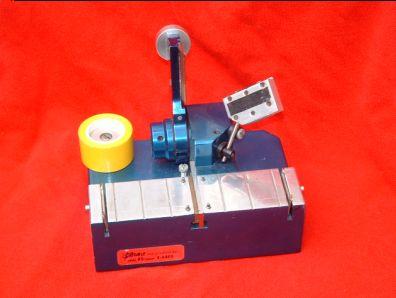
![[Razz]](tongue.gif)
quote: Joe Redifer...unless you mainly deal with prints on cores (or in some cases, no cores at all
And for the third or fourth time, that's why you mark how full each reel is.
![[Mad]](mad.gif) ), in which case there are no reels to mark.
), in which case there are no reels to mark.
quote:Unfortuntaely it looks like Kodak's 2007 web site reorg killed that URL and I can't find an equivalent (similar items are now under a flash video...), but you can find the old picture and explanation at archive.org
The difference in sidewall "shine" you see between reels is due to subtle differences in the slitter knives. Kodak slits 38 35mm strips out of one wide roll of print film, so the chances of two adjacent reels coming from the same slit are only 1 in 38:
http://www.kodak.com/US/en/motion/support/h1/sizesP.shtml#p
The key to seeing the shine difference is good lighting --- a small spotlight or bright flashlight at a grazing angle makes the difference easier to see.
quote: Joe RediferIgnoring the condescension implicit in your question, Joe, I'll try to answer you seriously.
So why do you guys use marked tape for reel splices? Are you incompetent? Can you not feel for the splice as you are breaking down, or are there just sooo many other splices in the film from bad handling?
quote:WoW!- Thanks for confirming what I always suspected, but was never able to find any definate information on.
The difference in sidewall "shine" you see between reels is due to subtle differences in the slitter knives.
quote: Gordon McLeodThank you Gordon. Can we all say AMEN!
I have never had issues with dealing with Indian Prints other than it requires work which is what they are paying me to do.
![[Wink]](wink.gif)
quote: Frank AngelIn 2000 I got of print of Raiders of the Lost Ark that had so many torn perforations that it probably took me 3 hours to build up. But I'm proud to say the film left my theatre in better shape than it arrived. If I had known about Film Guard at the time, it might have been even better.
personal satisfaction in making a near unplayable print practically as good as new when it leaves the booth
quote: Frank AngelYes! Haven't we all had to deal with this at one time or another?
some of us can actually get a sense of, dare I say it, personal satisfaction in making a near unplayable print practically as good as new when it leaves the booth
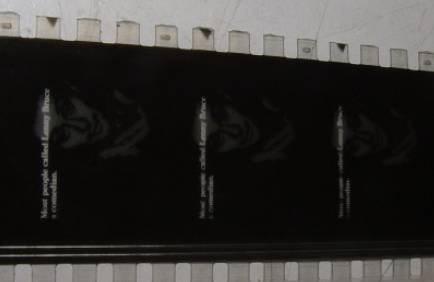 Once it runs out, I'll go to clear.
quote: charles greenleeEDITED to add: Sorry for the duplicate info, I didn't see jhawk's post till after I posted this...
Well, I didn't consider the difference in appearance from reel to reel as a difference in "color", liked like a difference in shine. The film really doesn't appear a different color to me. I wonder if the edges of the film are polished in a way?
It has been 1027 days since the last post.
![[thumbsdown]](graemlins/thumbsdown.gif)
quote: Mark Gulbrandsen...for a quick fix: makes good shipping and packaging sealing tape.
used in D-Cinema for some other application?
quote: Mark GulbrandsenI didn't think anyone on here was still using it.
quote: Mark GulbrandsenOh come on Mark, give it a rest. Any idea how many reels of film are residing in libraries all over the country, not to mention the world and are still run in hundreds of art and retrospective houses and museums and, uh, The Library of freakin Congress? When those millions of feet of runable film become unusable or when all of those titles get transferred to digital prints (fat chance) or even available on BluRay, people all over the planet will still be running film long after you and have both gone to that great big projection booth in the sky. And not for nuthin, they will need splicing tape, quaint as it is.
Splicing tape... that is quaint. I didn't think anyone on here was still using it.