This is topic Bulb ignition issues in forum Film Handlers' Forum at Film-Tech Forum ARCHIVE.
To visit this topic, use this URL:
https://ft-forum.com/ft/cgi-bin/ubb/ultimatebb.cgi?ubb=get_topic;f=1;t=010268
Posted by Paul Looker (Member # 5420) on 01-11-2010, 02:29 PM:
Hello all, here is what I'm working with.
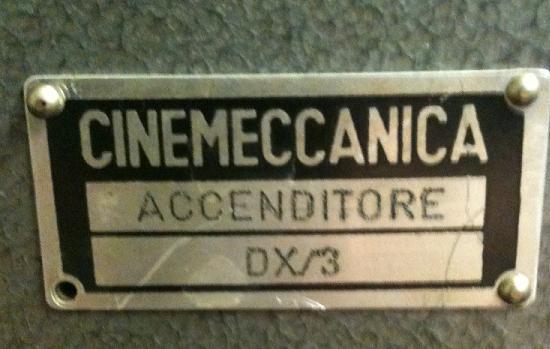
Cinemeccanica Igniter
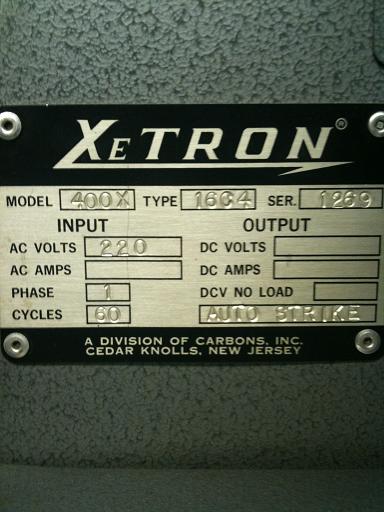
Xetron Lamp house
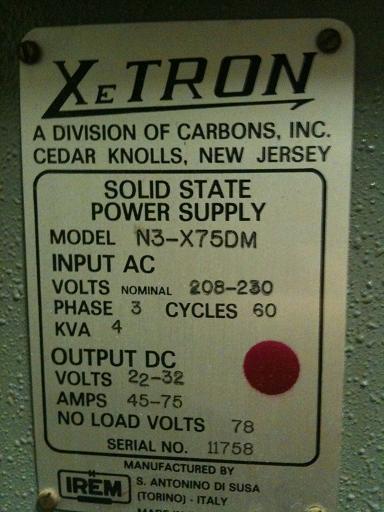
And Power Supply
Bulbs are not even trying to ignite on their own. No click. No noticeable attempt of any kind. The panic button, I'm sure it has a proper name but I've never heard it referred to otherwise, will start the bulb right up. Instantaneous, doesn't even take a second.
Is this an igniter problem? Power supply? Something in the lamp house? If it is the igniter are they even serviced any more? Our regular service tech one time suggested that they were not. How long will using the panic button work? I've also heard people talking in the past saying that eventually it too will burn out or stop working or cause some kind of damage.
Any insight would be appreciated. Thanks
Posted by Gordon McLeod (Member # 33) on 01-11-2010, 02:36 PM:
the autostrike relay or the zenier diode that feeds it are the two probable culprits
Posted by Demetris Thoupis (Member # 833) on 01-11-2010, 02:51 PM:
The Panic button as you call it, the red push button simply sends power to the DX3 transformer creating a spark gap between the + and the - of the lamp and and with proper voltage the lamp will start. If using the button starts the lamp then there are some things you need to check. First check whether you have two wires from the auto ignite board going parallel to the red pushbutton contacts which will give a small time contact to ignite the lamp (this can also be going on the terminal board of the DX3). Then you should check whether your start relay is working and that might need a change. When you start the rectifier, the first switch on should create a contact between pins which correspond on the push button which on DX3 terminal. This can be easily checked with a continuity tester. Have in mind that if this was working before, then the problem is on the auto ignition board and not on the actual igniter since the pushbutton ignites the lamp. How far experienced are you with electronics?
Demetris
Posted by Paul Looker (Member # 5420) on 01-11-2010, 03:00 PM:
Unfortunately not terribly experienced with electronics at all.
Posted by Demetris Thoupis (Member # 833) on 01-11-2010, 03:24 PM:
For the time being use he red button to ignite it and call your service technician for a visit and explain the problem. Inform him that the lamp DOES ignite from the red button but not automaticaly so he will know what parts he will probably need.
Demetris
Posted by Monte L Fullmer (Member # 2797) on 01-11-2010, 05:12 PM:
Ya..seen plenty of autostrike relays go bad...a simple "plug and play" setup.
-Monte
Posted by Frank Angel (Member # 248) on 01-12-2010, 12:52 AM:
So, what exactly is the advantage of having an auto-ignite circuit, given that you are standing right there and have to push the power switch anyway? The operator can easily just push a manual igniter switch to have the lamp light. Seems like an auto-igniter is a lot of circuitry for not much advantage and more stuff that can go wrong.
It's a matter of how long the duration of the pulse (longer than what's necessary could shorten the life of the bulb perhaps?), so an auto-igniter can make the pulse exactly the same duration every time. But then there are mechanical spring loaded switches that could be employed which once pushed, would make a quick connection and then break regardless of how long the switch was held down by the operator -- again a simple thing that wouldn't require a more complicated circuit with parts that can fail.
Posted by Ian Parfrey (Member # 5122) on 01-12-2010, 01:20 AM:
Frank
I'd say the auto-ignition has it's main advantage as a re-striker in the event of a power glitch or for whatever reason and the operator is not by the lamphouse when this happens.
This happened to me often at a drive in I worked at in the 80's. In that situation, the autostrike on the Strong X-60C's was a godsend- but I agree they are not an absolute necessity.
Cheers
Ian
Posted by Monte L Fullmer (Member # 2797) on 01-12-2010, 04:07 AM:
Autostrikes units were mainly used on AC igniters.
STRONG X-90 consoles (the early ones) units uses an AC igniter that depends on the autostrike to control the igniter when the START relay in the automation latches to strike the bulb when the "RUN" button was pushed.
It's when that relay fails out is when you then have to manually ignite the bulb when the lamp rocker switch was pressed since the autostrike assembly lost contact with the automation.
Later consoles went to an absurd DC Piezoelectric ignition igniter that loves to fail unnoticed.
Piezoelectric design is like those hand held gas BBQ grill starters - when you hear that click is when the device inside the starter compressing the material in which current is the result by the compressing creates the spark across a given gap and ignites the propane.
-Monte
Posted by Louis Bornwasser (Member # 3063) on 01-12-2010, 03:45 PM:
I have never seen a 400x lamphouse that came with an autostrike. Every one I saw had a homemade autostriker relay added. Simple really, one zener diode, one relay and socket.
Tell your technician that the igniter is good; the red button does work, just as the factory intended. Louis
Powered by Infopop Corporation
UBB.classicTM
6.3.1.2