This is topic Kodak May Not Survive 2012 in forum Film Handlers' Forum at Film-Tech Forum ARCHIVE.
To visit this topic, use this URL:
https://ft-forum.com/ft/cgi-bin/ubb/ultimatebb.cgi?ubb=get_topic;f=1;t=011121
Posted by Robert E. Allen (Member # 1351) on 12-30-2011, 10:09 PM:
Kodak is struggling to survive. Article here:
Kodak
Posted by Tony Bandiera Jr (Member # 2365) on 12-30-2011, 11:01 PM:
Article Quoted here as Yahoo! is famous for dropping links in a few days...
quote:
(Reuters) - The third director in a week has resigned from Eastman Kodak Co as the former film giant struggles to survive the dominance of digital photography.
Laura Tyson, a professor and White House advisor, told Kodak on Thursday she was resigning from its board, the company said on Friday in a Securities and Exchange filing.
Kodak, which was once synonymous with photography, is looking to sell patents to shore up its shrinking cash position and stay in business after failing to turn an annual profit since 1997.
Last month, the Rochester, New York-based company warned that unless it could raise $500 million in new debt or sell some patents in its portfolio, it might not survive 2012.
Tyson, who did not immediately respond to a request for comment, is a professor at the Walter A. Haas School of Business at the University of California, Berkeley.
She has also served as a member of President Barack Obama's Economic Recovery Advisory Board and in the 1990s advised the Clinton administration on the economy.
Earlier this week, Kodak said directors Adam Clammer and Herald Chen had resigned.
Clammer and Chen were representatives of private equity firm KKR & Co and had joined Kodak's board in 2009, after KKR bought $300 million of Kodak's senior secured notes and warrants to buy 40 million of the company's shares.
Kodak's shares edged lower in extended trade to 63 cents after closing marginally down at 65 cents.
(Reporting by Noel Randewich in San Francisco; Additional reporting by Sinead Carew in New York; Editing by Gary Hill and Gunna Dickson)
Posted by Tom Sauter (Member # 616) on 01-01-2012, 03:00 PM:
They are obviously quite starved for cash and business. It hasn't been reported widely, even in the local media, but they have already abandoned much of Kodak Park, which was at one time one of the largest industrial complexes in the world. They have also drastically reduced health benefits to tens of thousands of retirees and are cuttin even more next year.
Posted by Mark Gulbrandsen (Member # 72) on 01-05-2012, 10:01 AM:
Kodak's entire problem is mis-guided management. It must be run by Republikins! You can't run a company with 20K employees on the basis of just selling printers. Kodak is holding an auction soon to sell off some of it's patents which are valued at close to 1.5 billion. If that doesn't work then Kodak will file chapter 11. It ain't over yet folks ![[Cool]](cool.gif) . Now's the time to buy Kodak Stock! ~.42 a share!!
. Now's the time to buy Kodak Stock! ~.42 a share!!
Posted by Mike Blakesley (Member # 26) on 01-05-2012, 11:07 AM:
No, their problem is they're trying to sell PRINTERS. Hardly anybody prints pictures anymore, don't they realize that? It's not like everyone's going to wake up one day and say "OMG, I've got to buy a Kodak printer so I can print out those 20,000 pictures I uploaded to Facebook!"
And, other companies are better known for printers. I would just instinctively shop for an HP or a Canon printer before I even thought about a Kodak.
Here's an idea: They could come out with a REALLY REALLY GOOD printer where the ink didn't cost over $3,000 an ounce. Just make one really really good printer and promote the crap out of it. That I might buy.
Posted by Sam Graham (Member # 2889) on 01-05-2012, 11:32 AM:
They also sell point-and-shoot digital cameras (mine is a Kodak V1253) and typical accessories (digital frames, memory cards, batteries), but people are even moving away from those as camera phone technology improves to the point of producing images of acceptable quality to the masses.
I disagree about this being a management issue. I think it's simply a matter of Kodak being synonymous with dying product lines. I don't think Kodak would survive even if they produced the absolute best of their chosen products.
I'll always have fond memories of the brand, though.
(PS...This conversation probably belongs in Film-Yak...)
Posted by Steve Guttag (Member # 268) on 01-05-2012, 12:23 PM:
Mike,
Oddly enough...that IS Kodak's selling point on their printers...they have cheap ink as compared to others.
As to the point-n-shoot cameras...it isn't the same with digital as with film. Everybody is in that camera market, including most cell phones (and they are getting pretty good at quickie pictures). In the film biz, Kodak's P-N-S cameras were cheap and easy for one reason...to SELL FILM AND PROCESSING! With digital, that is all gone...the camera has to stand on its own.
Their handling of film and film accessories has been horrible...they knew this time was coming and their only solution has been to discontinue things. They should have been downsizing but in a smart way. Don't make film harder to use/process, make it easier...keep the varieties up and move their system from mass-produce to niche market...produce what you need of a product based on annual projection, whatever that may be and keep it available and promote it.
At the end of the day though...they are the biggest player in a pond that is all but dried up. They can't be what they were. In the other industries they have tried to be in, they are but a player. That is not the same as what they were in film.
Posted by Mark Gulbrandsen (Member # 72) on 01-05-2012, 12:30 PM:
Am aware of the cheap Kodak ink and their printers are actually very good. However that's a large part of their sustainability problem. Non the less a guy I saw from Kodak that was interviewed said you can't support 20K employees on just printers and ink and this is their major product at the moment. Look at HP and how expensive their ink is... Again just the printer and ink sales at HP wouldn't sustain them, they are also the largest manufactuirer of servers in the world among other things. They spun off the the test equipment division but they still distribute some of it. Used to be that way for Kodak in the filum days where printers were just a side line and not the main stay product.
The issue with point and shoot cameras are that they are being obsoleted by the Smart Phone. Some Smart Phone cameras are actually much better than the seperate point and shoot cameras are. The camera in my Samsung Infuse is amazing. Point and Shoot cameras were one of the list of 25 things that will completely vanish within the next 5 years... along with the CD and DVD.
At any rate now is the time to buy Kodak stock if you don't mind a little risk. I think they will actually be around for quite some time.
Mark
Posted by Sam D. Chavez (Member # 1841) on 01-05-2012, 12:38 PM:
Someone very wise said "all business failures are management failures". This as it should be considering what management of US companies are paying themselves these days.
Steve is correct, they failed to adjust. Still, it's very sad, a unique American industry on the rocks.
Posted by Jonathan Goeldner (Member # 4854) on 01-05-2012, 01:14 PM:
so what does this mean in regards to the Kodak/IMAX deal?
Posted by Gordon McLeod (Member # 33) on 01-05-2012, 03:07 PM:
Well fuji and gevart still make print film and funny but ferrania in italy has gone back to making it smaller companies probably will flourish in niche markets
Posted by Phil Ranucci (Member # 3820) on 01-05-2012, 11:30 PM:
Six or so years ago we installed a Kodak server with a Barco. They should have OWNED digital cinema. If Sony thinks that "Sony 4K' gets people excited, "Kodak Digital" on the marquee would've been a winner. Sad, also about Strong. I was there in August 2010 and there was very little activity in the machine shop, but they had lots of parts on shelves.
Posted by Ian Parfrey (Member # 5122) on 01-06-2012, 03:31 AM:
In addition to those mentioned by Gordon, there is 'Filmotek GmbH' in Germany who is in current production. Not too sure about SVEMA, ORWO or Tasma.
Posted by Mark Hajducki (Member # 1732) on 01-06-2012, 07:45 AM:
I wonder if Kodak (or their successor) will end up as a brand licensing company, selling their name to be used on other companies products.
They already do this to some extent with batteries which do not compare with the quality brands. In the UK these are only found at Poundland a discount store (although they also sell Agfa batteries at a lower price and Sony slightly higher).
Posted by Randy Stankey (Member # 64) on 01-06-2012, 08:05 AM:
quote: Mark Hajducki
I wonder if Kodak (or their successor) will end up as a brand licensing company, selling their name to be used on other companies products.
This is what I think Kodak's problem might be already. Kodak actually manufactures very few of the products they sell.
They sold off their film chemistry business in 2006. If you buy a package of D-76 or Kodafix it isn't made by Kodak. It's made by Chamion Chemical. They just recently sold their gelatin making business. So, even if you buy Kodak film it's not made entirely by Kodak anymore.
Even if you look at their digital products, very little of it is made by Kodak. Kodak inkjet photo paper is made in Germany. I'm pretty certain that their inkjet printers and EasyShare cameras are all made overseas, too.
There are times when this makes sense. I don't think Kodak has a lot of electronics manufacturing capability. In that case, it's better to farm the job out. Still, they need to manufacture some products on their own home turf.
If the management at Kodak isn't careful they are going to end up like Polaroid and Agfa-Gevaert. They are both holding companies which make no products and only license their names to others. (Agfa spun off their film business in the early 2000's and it went bankrupt a short time later.)
Posted by Scott Norwood (Member # 30) on 01-06-2012, 08:08 AM:
quote: Mark Hajducki
I wonder if Kodak (or their successor) will end up as a brand licensing company, selling their name to be used on other companies products.
Sadly, that is largely what has happened with Polaroid. After two bankruptcies, they no longer manufacture anything. It seems as if they are now selling digital cameras with built-in printers which are no doubt manufactured in China. For a while, they were selling Polaroid-brand television sets and other cheaply made consumer electronics items. My office (for my day job) is right down the street from the old Polaroid pack film manufacturing plant, which has been "under renovation" (into retail and/or office space, I believe) for several years and which looks terrible.
Kodak is at least big enough that it can be somewhat broken up into smaller companies. Someone (Fuji?) could buy the motion-picture division, for example, without buying the money-losing divisions.
Something that I still do not understand is why digital photography became so popular with the public in such a short time. Just a decade ago, no one took the concept seriously, and people were largely happy with drug-store minilabs for processing and prints. Now, it is difficult to find a new 35mm still camera available for sale at a reasonable price. What happened? My own photographic work is exclusively film-based, but I seem to be in a very small minority now. As much as anything, I am concerned about the long-term storage issues of digital files, and I also prefer the film look. Are there really so few people who care about such things?
Posted by Martin McCaffery (Member # 37) on 01-06-2012, 08:29 AM:
quote: Scott Norwood
My own photographic work is exclusively film-based, but I seem to be in a very small minority now. As much as anything, I am concerned about the long-term storage issues of digital files, and I also prefer the film look. Are there really so few people who care about such things?
My 35mm broke over the holidays and I'm not sure I can get it fixed. I've talked to several professional photographers over the years about digital storage and archive issues and the general response is a sigh and a shrug. I really fear for the history of photography.
Posted by Louis Bornwasser (Member # 3063) on 01-06-2012, 08:54 AM:
A little known fact is that Kodak NEVER (or at least not since WW II) made camers; neither did Polaroid. All was subcontracted out in the Rochester area.
I have personally used a machine shop in Rochester that originally made and packed small 35mm Kodak camers (like Pony 135). Louis
Posted by Bobby Henderson (Member # 840) on 01-06-2012, 12:10 PM:
quote: Mark Gulbrandsen
The camera in my Samsung Infuse is amazing. Point and Shoot cameras were one of the list of 25 things that will completely vanish within the next 5 years... along with the CD and DVD.
There's a lot of point and shoot cameras that shouldn't even exist right now in terms of their limited function (limited zoom, low image quality, slow performance, etc.). I can certainly see smart phone cameras eliminating that segment of the market.
However, the fact remains that smart phone cameras aren't very good either. They're slow, the image quality really isn't very good at all (even the iPhone sucks) and there's little if any real zoom capability. Phone cameras will probably get better, but there's only so much you can cram into a mobile phone slab to improve them. The best point and shoot cameras, particularly the ones with super-zoom capabilities are always going to stay ahead. I don't know how the new market segment of point and shoot sized camera bodies with interchangeable lenses is going to perform over the long haul. DSLR cameras obviously are the king of the hill.
Kodak could have done better in the digital camera segment if they had been more aggressive in improving their camera lines. They did nothing to compete with Canon and Nikon in the DSLR space despite the fact they developed a lot of high resolution digital imagers for use in high end cameras and digital backs. Kodak just played everything way too slow and too conservative. It was as if they were trying to spend as much time as they could milking all the money they could from an old product design before introducing something quite a bit better.
I can't really dog Kodak too much about the printers market, other than dogging them for being in the market without being fully skilled at handling it. It's a very competitive and fast changing market, especially in the higher end areas like large format printing. Epson was ruling the large format market for awhile, then HP took over and now lately Roland has been dominating. I don't think Kodak ever really tried pursuing the large format printing space even though they could have taken advantage of a couple built-in angles of experience to exploit it.
Major parts of the printing market are in deep decline. Offices are trying to "go green" and produce less paper. Consumers have had it with ink costs. And then look at all the space all that printed paper consumes. Whether people are taking pictures using their phones or using big honking DSLRs they're taking a ton of pictures, often way too many to print. It's easier to just look at all that stuff on a computer screen, tablet or cell phone display. When they need a wall sized print of that one special image they can call someone like me.
I hope Kodak is able to survive 2012, at least in terms of being able to provide film stock to movie productions and people using high end film-based still cameras.
quote: Scott Norwood
Something that I still do not understand is why digital photography became so popular with the public in such a short time. Just a decade ago, no one took the concept seriously, and people were largely happy with drug-store minilabs for processing and prints.
I think I can sum it up pretty easily: digital cameras let you erase and then re-take the photo.
Most people take pictures of other people, like their friends or family members. It sucks to burn up a roll of film, take it to the lab, wait and then only after you picked up your prints you see someone had their eyes closed or the focus was off on one shot or some other problem.
The early cameras had pathetically low resolution and terrible image quality. The first digital camera our shop had was a Sony that recorded images onto a 1.44MB floppy disc. It shot only 640 X 480 resolution images and you could fit only so many onto a floppy disc. At least it had a 14X optical zoom lens (with Sony Handicam style optical image stabilization). We also had a Canon Rebel X 35mm film camera fitted with a Tamron zoom lens. It produced much better quality images. Yet convenience won out and we used the hell out of that Sony camera until one of my coworkers lost it.
Posted by Mark Gulbrandsen (Member # 72) on 01-06-2012, 12:27 PM:
I diasgree with you Bobby... The camera in my Infuse has a 6 gb imager and a great flash, decent zoom. Thing is here is that phone cameras are jjust going to keep on getting better and better eventually eliminating that point and shoo market all together. Considering that 90% of the free workd owns a phone of some type this happenning is inevitable.
Mark
Posted by Bobby Henderson (Member # 840) on 01-06-2012, 02:26 PM:
I looked up a few reviews on the Samsung Infuse 4G. The reviews state it does better than a lot of other phones in terms of image quality. However, like all other smart phones, it runs into trouble in lower light settings -particularly its auto focus performance. Like some other recent Android phones it has a 8 megapixel primary camera and a 1.3 megapixel front facing camera. Nothing is mentioned about it having any optical-based zoom capability. If it does zoom, it probably only fakes it through digital blow-up.
My 18 month old HTC Evo 4G has a fairly decent 8 megapixel camera (and front facing 1.3 megapixel camera). However it doesn't zoom at all. Its 720 HD video recording will often drop to just 10 frames per second (and often record garbled, noisy audio). Its flash functions are terrible; the color goes all over the place. The camera is good for some basic snap shots where quality isn't a concern. If I want the shots to look good at all I simply have to use a different camera.
Panasonic and Canon have point and shoot models with image stabilized optical zoom lenses that do 32X and 35X respectively. 20X or better is the starting point for P.A.S. cameras with super zoom lenses. Lots of standard P.A.S. cameras can at least do 10X zoom. The cameras have larger lenses and image sensors than what is used in phones.
If the performance bar for camera phones is raised in terms of optics and imager quality/speed even greater improvements will be taking place in the bigger cameras.
Posted by Randy Stankey (Member # 64) on 01-06-2012, 02:55 PM:
Scott,
You can still get brand new 35mm cameras.
Nikon still sells them. About $500-$600 for a manual camera body. About $1,500 for a fully auto.
Those aren't bad prices. A good digital camera body costs that much. In neither case do you get a lens at those prices, digicam nor film. You still have to add on the price of the lens.
Furthermore, you can still get some great cameras on the used/second-hand market. You can probably get a Pentax K-1000 in the $100-$200 range if you look. One in mint condition, including the lens and case would probably only cost around $300. Cheaper if you shop wisely.
I bought a Pentax ME-Super for $20 at a yard sale, including an ƒ-1.2 lens. The thing needed some cleaning on the exterior but the film compartment and optical path were nearly pristine.
Posted by Sean Weitzel (Member # 244) on 01-06-2012, 03:54 PM:
Another reason the drugstore film cameras got wiped out in favor of digital: Social Networking on the internet. What's the number one reason people use cameras for? sharing pictures of their experiences with other people. Now that's practically all what facebook is for. It costs zero to snap a pic where you are and share it with friends and family.
Kodak could have tried to figure out a way to integrate itself into that market.... why have Yahoo Flickr to manage your photos when you could have had Kodak Photo Stream or something like that.
Posted by Leo Enticknap (Member # 534) on 01-06-2012, 03:56 PM:
quote: Sam D. Chavez
Someone very wise said "all business failures are management failures". This as it should be considering what management of US companies are paying themselves these days.
Steve is correct, they failed to adjust. Still, it's very sad, a unique American industry on the rocks.
Maybe it's sometimes the case that a particular brand is so synonymous with a particular technology that when it is superseded, then the general rule (to which there are some, but not many exceptions) is that the brand itself is life-limited.
Other examples I can think of are His Master's Voice (OK, still used as the name of a small chain of high street music stores in Britain, but as a mass brand identity did not survive the analogue phonograph it symbolised), RCA (heyday was in vacuum tube technology, struggled and declined afterwards), IBM (ditto Hollerith's electromechanical data processing technology) etc.
Posted by Brian Guckian (Member # 1678) on 01-06-2012, 04:39 PM:
quote: Randy Stankey
You can still get brand new 35mm cameras.
Additionally Vivitar offer the 3800-50 SLR:
Vivitar 3800-50
Funnily enough I just bought today a used Canon EOS 1000FN with 35-80mm zoom for just €50...pwo with 6-month guarantee. The dealer I bought it from had plenty Kodak, Fuji and Ilford on sale too.
Posted by Randy Stankey (Member # 64) on 01-06-2012, 05:58 PM:
Yep! Just bought 30 rolls of film for my Rolleiflex.
(10 rolls of Ilford. 10 rolls of Fuji. 10 rolls of Kodak.)
I'm going on vacation next week and I'm taking my cameras with me and none of them are digital. I don't want to be caught in the middle of a trip and run out of film so I'm stocking up.
Even if this was 20 years ago, I would probably still stock up. The Rolleiflex uses 120 format film which is usually only available at a camera store, even back then.
If I roll up 40 frames of 35mm (from the bulk loader) and shoot it in my Pentax with the motor drive, I get virtually the same user experience as you would get with a high end digicam. Just ensure that focus is sharp, press the button and "Ka-Zip!" you can machine gun off a bunch of pictures in just a second or two.
If I was shooting in ful-res camera RAW, I would probably only get 30 to 50 frames on a memory card. Then I would have to download and edit the pictures before printing them out or sharing them. To download, edit and share 50 pictures probably takes me about an hour at the computer. I can develop and contact two rolls of film in the darkroom in about an hour, as well.
So, if I'm trying to shoot good photos, the time, convenience and user experience ends up being just about a wash.
The only time I really shoot digital is when I intend to share pictures via the internet (even though I often scan my film) or when I want to use the digipics as preview shots. (Much the same way pro photographers used to use Polaroids to preview their setups.)
Posted by Kenneth Wuepper (Member # 1174) on 01-07-2012, 07:09 AM:
Kodak has some very valuable patents that are not film or image related. They have many patents in the plastic industry as well.
The Kodak ink cost is less because you are only buying the liquid in a plastic container. The print head electronic ink spraying mechanism is a separate unit. Other brands make you replace the print head as a part of each new ink cartridge. That expensive print mechanism is durable enough to allow those cartridges to be refilled one or more times before the unit fails and must be discarded. Just a very smart patent and customer benefit.
Posted by Christian Appelt (Member # 1067) on 01-07-2012, 07:59 AM:
Just for the record - there are two companies making and selling Agfa photographic films:
AgfaPhoto Holding GmbH of Leverkusen, Germany, for the consumer market
AgfaPhoto Products (english version)
while motion picture stock is handled by the Specialty Products division of Agfa-Gevaert NV at Mortsel, Belgium. Agfa gave up on negative films many years ago, but to this day color relase print film and b/w sound recording film is made and widely used.
Agfa Motion Picture Product
Posted by Randy Stankey (Member # 64) on 01-07-2012, 09:10 AM:
Yes, Agfa is still a company but they don't make film. They license their name to others:
quote:
© AGFAPHOTO is used under license of Agfa-Gevaert NV & Co. KG or Agfa-Gevaert NV.
Agfa-Gevaert does not manufacture these products or provide any product warranty or support. For service, support and warranty information contact the distributor or the manufacturer.
It is my understanding that Agfa's former factory was bought out by a company from Croatia called "Fotokemika" which manufactures a brand of film called "Efke."
I also understand that Agfa makes very few consumer products. They majority of their products are sold business-to-business and any of the consumer products that do carry the Agfa brand are simply licensing Agfa's name.
This is probably what's going to happen to Kodak. They'll be bought up, sold off and turned into nothing more than a label that gets stuck on packages.
Posted by Bobby Henderson (Member # 840) on 01-07-2012, 09:40 AM:
quote: Randy Stankey
If I was shooting in ful-res camera RAW, I would probably only get 30 to 50 frames on a memory card.
An 8GB Compact Flash card will hold just over 300 images shot in Camera RAW from my Canon EOS 5D Mark II. Those images are 5616 X 3744 pixels, 26.5MB each. They get bigger once they're converted over into a format like TIFF (60MB for 8-bit per channel color and 120MB for 16-bit).
quote: Randy Stankey
To download, edit and share 50 pictures probably takes me about an hour at the computer. I can develop and contact two rolls of film in the darkroom in about an hour, as well.
You're not including any of the edit time that might be included with the film images, like burning and dodging parts of an image when you're making a print from the negative using an enlarger. For computer based editing of film images you have to figure in scan time and the possible editing needed of the scanned images.
If I don't have to edit any of the images I took with a digital camera I can batch process them very quickly through Adobe Bridge or Photoshop to resize them for sites like Facebook. I can use Photoshop actions to apply changes to an entire folder of images.
Film isn't faster or more convenient than digital. But it still can yield higher quality results than digital, especially if you're shooting in a large format process.
Posted by Randy Stankey (Member # 64) on 01-07-2012, 10:38 AM:
You are right, Bobby, but I don't have 8 GB cards. The biggest one I have is 2 GB. I suppose I could buy a bigger one but I don't really "need" one. For the amount of use I get out of them, the ones I already own work well enough.
Yes, I use Adobe Bridge, too. Saves a lot of time and trouble when working on batches. Making a contact sheet is fairly similar to batching photos with Bridge.
Once I have seen the contacts, I can sort out which images I want to proceed with and which ones get filed in notebooks. At that point they can be scanned and preview printed with the inkjet or printed on the enlarger. After that, I decide which ones need to be worked up into final prints. Adobe Bridge or Lightroom, et. al., make this process easier on the computer but I often skip the contacts when I'm using film and just look at the negatives with a loupe.
Yes, I do dodge photographs but not often. I was brought up from an early age having the idea being beat into my head that you need to get your exposure right on the film to get your best print. (And, yes, sometimes it was actually beaten!) Am I perfect? No! The point is that I try to avoid it from the start. When working with digipics, I try to do the same. Auto-exposure often helps but I sometimes find myself adjusting the curves and layer-masking digital images too. In the darkroom, dodging isn't much of a problem when I need to do it. I've already seen the contact, the digital scan or directly viewed the negative. I, pretty much, know where dodging needs to be done, already. When I make the test print, I confirm whether it needs to be dodged. When I make the final print, I often just use my hands to cover part of the image but I have a dodging stick hanging up on the pegboard if I need it.
I never meant to give the impression that I thought film was faster than digital. For small jobs or for publication, digital is definitely faster. For fine work or for large jobs, digital's speed advantage fades.
It is at these times when the workflow and experience from the user's point of view are similar and the amount of time the photographer spends working on the project becomes similar.
My main point is that, when you change from film to digital, many times, you are only trading one set of working conditions and problems for another. A good photographer will probably work just as hard on his project, regardless of the format.
BTW: At this point, I probably use 120 format film for about half my photos and 35mm for the other half. Going from a 24x36mm format to a 60x60mm format in still-frame is analogous to going from 35mm to 70mm on a movie projector.
I have a Graflex Super-D and a Speed Graphic in my collection that I have yet to get out and use. Maybe next summer. 4x5 in. negatives could make all the other stuff I have done look like toys. ![[Wink]](wink.gif)
Posted by Scott Norwood (Member # 30) on 01-07-2012, 11:56 AM:
quote: Randy Stankey
I have a Graflex Super-D and a Speed Graphic in my collection that I have yet to get out and use. Maybe next summer. 4x5 in. negatives could make all the other stuff I have done look like toys.
It will!
The difference from 35mm and 120 is readily apparently even in 8x10 prints. And, once you see the difference that camera movements can make (even the limited movements of the Speed Graphic), you will be annoyed whenever you see architectural photographs where vertical lines are not perfectly parallel.
Posted by Paul H. Rayton (Member # 1817) on 01-07-2012, 12:15 PM:
FWIW, about 2 weeks ago, I attended a reading+show by renown photographer Annie Liebowitz, known esp. for her portraits of contemporary personalities. In the Q&A after the presentation, one of the questions posed had to do with her working methods and camera(s) utilized. She was entirely sold on "digital", saying words to the effect that digital had allowed her to concentrate more on the content, and not the technology, at the time of image capture.
I was going to ask what kind of camera she was using these days, but didn't, mostly because I agree with the essence of her thoughts: that the specific "make" of camera isn't as important as the evolution -- the thought -- that goes into the concept and framing of the photograph at the moment the shutter is snapped. But she did admit to actually using a cell phone camera, at least at some times!
The artistic choices can certainly vary, and I'm happy for that. Me, I'd never make it as a painter!
Posted by Randy Stankey (Member # 64) on 01-07-2012, 12:55 PM:
Anybody who says that is basically saying, "I'm too lazy."
If you're Annie Liebowitz, you can pay other people to develop film for you. Many famous professionals do. Since you're a famous professional photographer like Annie Liebowitz, you probably already do pay people to do things for you.
Regardless of what kind of camera you use, if you don't know how to use lighting and cameras to get the image you want, you don't deserve to be a photographer. Again, you're just too lazy to even think about it. Annie Liebowitz could pay people to do stuff like that for her if she wanted to.
A photographer's job is to look at a scene, break it down into its component parts and reconstruct it into a photo that people want to look at. Whether you use a digicam or a real camera is irrelevant. You still have to deconstruct the scene and use your equipment to translate that scene into a photograph. You still have to use the qualities of the light to do that.
Anybody who says that film hinders their ability to do that is basically saying that they are just too lazy.
Posted by Stephen Furley (Member # 1277) on 01-07-2012, 01:38 PM:
quote:
I have a Graflex Super-D and a Speed Graphic in my collection that I have yet to get out and use. Maybe next summer. 4x5 in. negatives could make all the other stuff I have done look like toys. [Wink]
If you have large amounts of money there would be nothing to stop you putting a modern digital back on 95% of 5x4 Speed Graphics. Any camera with a Graflok back will take them, and a Graphic back can be made to take them without much effort. The Super-D will have a Graflex back, which needs special holders, and will not take standard holders and accessories.
Posted by Randy Stankey (Member # 64) on 01-07-2012, 03:16 PM:
I've got more than 100 cameras. (Inherited them last year.)
I just don't have any good reason to spend the money to change to digicams then spend even more money every year or two upgrading the stuff I already bought.
The equipment I have works fine. I enjoy using it and it's not THAT much more effort to use than a professional quality digicam.
Let me make it clear, here: I LIKE digital cameras and computers and stuff. I use them every day. I just prefer traditional photography better.
Which would you rather have? A frozen dinner that you take out of the freezer and heat in the microwave oven or a home cooked meal from the stove? There are good reasons for either but, if they had the chance, most people would prefer a good, home cooked meal any time.
That's the way I really see it.
The rhetorical/hypothetical idea that people should throw away their traditional camera gear and start using digicams just because it's "The Future" seems just as wrong to me as if I said to you, "Get rid of your stove and just cook your meals in the microwave."
If I had the money to spend I might consider getting a digital back for the Graflex.
Then, again, I'm giving serious consideration to learning how to make my emulsion and coat my own film. There is a guy who I know from the internet who is a retired engineer from Kodak who teaches people how to make their own photographic material.
Posted by Bobby Henderson (Member # 840) on 01-07-2012, 08:26 PM:
quote: Randy Stankey
I was brought up from an early age having the idea being beat into my head that you need to get your exposure right on the film to get your best print. (And, yes, sometimes it was actually beaten!) Am I perfect? No! The point is that I try to avoid it from the start. When working with digipics, I try to do the same.
Yeah, I try to get the exposure right in the camera as well. It saves a lot of time. Even if Photoshop or Lightroom can bail you out in post production it still costs time. The digital tools are good for removing bad things from a photograph, like red eye, hair blowing around the wrong way on the girlfriend, or removing some people from Kim Jung Il's funeral procession.
quote: Scott Norwood
The difference from 35mm and 120 is readily apparently even in 8x10 prints. And, once you see the difference that camera movements can make (even the limited movements of the Speed Graphic), you will be annoyed whenever you see architectural photographs where vertical lines are not perfectly parallel.
A good tilt-shift lens really comes in handy for that. However, Photoshop's "lens correction" module can help with shots from a lot of standard lenses.
quote: Paul H. Rayton
I attended a reading+show by renown photographer Annie Liebowitz, known esp. for her portraits of contemporary personalities. In the Q&A after the presentation, one of the questions posed had to do with her working methods and camera(s) utilized. She was entirely sold on "digital", saying words to the effect that digital had allowed her to concentrate more on the content, and not the technology, at the time of image capture.
The newest digital cameras let you cheat more. And I'll readily admit to doing that.
My Canon EOS 5D Mark II has an active histogram display in its live view on the LCD. That works so much better at setting a proper exposure than using the crude light meter in the view finder. Zoom in on a certain area with the live histogram and it's like using a hand-held spot meter. I can push the highlights to have more of the picture's dynamic range into the higher bandwidth zones of the camera sensor. In a studio situation you can shoot "tethered" with a laptop or desktop computer controlling the camera and see a much bigger view of the image being photographed.
quote: Randy Stankey
The equipment I have works fine. I enjoy using it and it's not THAT much more effort to use than a professional quality digicam.
Given the kind of film equipment you have a desktop drum scanner might be a good investment.
Posted by Randy Stankey (Member # 64) on 01-07-2012, 09:29 PM:
If I ever get an extra $13K burning a hole in my pocket, I'd be getting a Hasselblad Flextight scanner. ![[Big Grin]](biggrin.gif)
Posted by Bobby Henderson (Member # 840) on 01-07-2012, 10:10 PM:
If you're willing to job out some film scanning services it might help pay for the investment! More than a few people are willing to job out film scans to avoid in house problems like Newton rings from a flatbed scanner.
Posted by Tom Petrov (Member # 1534) on 01-08-2012, 09:54 AM:
So sad, but what can you do, companies close all the time. Kodak reminds me of Blockbuster, still hanging on, but clearly no future.
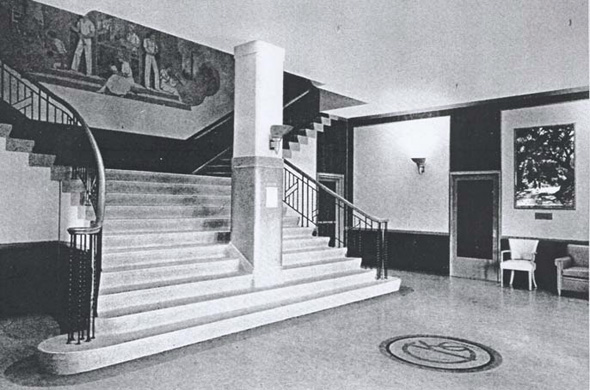
We used to have Eastman Kodak in Toronto called Kodak Heights which was 50 acres and 9 buildings. They had a roadway named after Eastman Kodak. Kodak was a big part of Toronto for 80 years.


Posted by Leo Enticknap (Member # 534) on 01-08-2012, 10:59 AM:
quote: Randy Stankey
Anybody who says that [that they prefer digital cameras for their immediacy] is basically saying, "I'm too lazy."
If you're Annie Liebowitz, you can pay other people to develop film for you. Many famous professionals do. Since you're a famous professional photographer like Annie Liebowitz, you probably already do pay people to do things for you.
I think it's more a case of what you're trying to take photos of and what they're trying to say to the viewer. For example, I'd speculate that Henri Cartier-Bresson, Robert Capa and Diane Arbus would have loved digital cameras, whereas Ansel Adams and Francesca Woodman (whose work was significantly about exploring the look of the film medium itself) wouldn't have been seen dead with one.
Posted by Kenneth Wuepper (Member # 1174) on 01-08-2012, 03:21 PM:
Leo,
In regard to Ansel Adams: his book "Singular Images" was done with Polaroid materials. He was not interested in the speed of the process as much as in how it might be manipulated. The Adams approach is in using the medium to the fullest by recognizing the scale of tones it can produce and then "placing" tones of the scene into a precise "zone" of contrast level in the finished print.
I have several autographed books by Adams. He was becoming distressed by the manufacture of newer emulsions that did not yield to his manipulation. He was especially saddened by the new thin emulsion layers of TRI-X films.
KEN
Posted by Mark Ogden (Member # 43) on 01-08-2012, 03:23 PM:
Ken posted the same point while I was typing, but I have to very strongly disagree with you about Ansel Adams, Leo. I think he would have had a great time with a digital camera and Photoshop. Adams was, after all, all about the print, of which he was a master manipulator. His most famous quote about the relationship between negative and print was: “The negative is the score, but the print is the performance". He dodged, burned, flagged, shaded and pushed all of his prints, and experimented with chemicals, development times and washes. Whenever Kodak came out with new papers and chemicals, he ran to his lab and broke out his negatives to experiment. He set up a metronome in has lab, and with the negative shining on the paper he took a flag and with very precise timed movements selectively darkened areas of exposure. Almost all of his most famous prints involve some sort of exposure manipulation in the darkroom.
Of course, we’ll never know for sure, but it’s not too hard to believe that someone who placed that much emphasis on the finished product would have welcomed the ability for image manipulation that digital brings. Really, all those who have followed in his footsteps in the Sierras (folks like Michael Frye, Phil Hawkins, Keith Walklet, Elizabeth Carmel) are all digital. In fact, Frye teaches how to adapt the Adams Zone System for digital every year thru the Adams Gallery in Yosemite.
Posted by Scott Norwood (Member # 30) on 01-08-2012, 04:52 PM:
quote: Kenneth Wuepper
He was especially saddened by the new thin emulsion layers of TRI-X films.
Did you mean T-max? Tri-X is a conventional thick-emulsion film that dates back to the 1950s (but was reformulated around 2001 or so). T-max is a newer thin-emulsion film.
Posted by Kenneth Wuepper (Member # 1174) on 01-08-2012, 09:16 PM:
Yes, the thin emulsion film that was introduced just before his death. He also disliked the Tri-X reformulation.
I guess the question of how Adams would respond to digital images is like asking how Bach would like a synthesizer. We will never know!
KEN
Posted by Tom Petrov (Member # 1534) on 01-15-2012, 12:52 AM:
Was in Rochester, what a sad state if Kodak was to go out of business. It truly is amazing how spread out over Downtown Rochester Kodak really s. Only 7000 employees remain in the area and the size of the Kodak building makes one wonder how many empty floors there on it.
Posted by Frank Angel (Member # 248) on 01-15-2012, 10:30 AM:
I wonder how that will affect Eastman House and the school. It would really be shameful if all that is negatively impacted.
Posted by Paul Mayer (Member # 355) on 01-15-2012, 01:16 PM:
From this morning's Japan Times Business section:
quote:
Kokak sues Fujifilm as stock slumps
Jan. 15, 2012 - 06:45AM JST ( 7 )
ROCHESTER, New York —
Even as the specter of bankruptcy protection looms, Eastman Kodak Co is intensifying its efforts to defend its intellectual property.
In a lawsuit it filed here Friday against Fujifilm Corp, Kodak claimed some of its Japanese rival’s cameras infringe its digital-imaging technology. At the beginning of the week, Kodak sued Apple Inc and HTC Corp, claiming some of their smartphones, tablets and other devices infringe Kodak patents related to transmitting images.
The ailing photography pioneer has relied on patent licensing fees and lawsuits to collect $1.9 billion since 2008.
Kodak’s stock slumped Friday amid renewed fears that the 132-year-old business icon is preparing to seek bankruptcy court protection from its creditors.
Based in Rochester, New York, Kodak has amassed more than 1,000 digital-imaging patents, and almost all of today’s digital cameras rely on its technology. Mining its rich array of inventions—through both licensing deals and lawsuits—has become an indispensable tool in its long and painful digital overhaul.
Kodak claims Fujifilm is infringing five separate patents related to various aspects of capturing, storing, previewing and transmitting images. It said it has licensed the same technology to more than 30 companies, including mobile-device makers such as Motorola Inc and Nokia Corp.
Years of negotiations ended with Tokyo-based Fujifilm suing Kodak in October for patent infringement, a claim Kodak’s chief intellectual property officer, Timothy Lynch, called “a thinly veiled attempt to redirect attention from their continued use of Kodak patented technology.”
Calls to Fujifilm were not immediately returned.
Kodak is pursuing a third dispute before the U.S. International Trade Commission in Washington, against Apple and BlackBerry maker Research in Motion Ltd over image-preview technology. Kodak has said it hopes to get $1 billion from a resolution of the two-year-old claim. But the commission, a U.S. arbiter for trade disputes, recently put off its decision until September.
Citigroup and Kodak both declined to comment on a Bloomberg report that Citigroup is in talks to provide Kodak bankruptcy financing.
Bloomberg said three anonymous people familiar with the negotiations said Kodak may seek protection from creditors within weeks and then auction its digital-imaging patents, which analysts estimate could fetch at least $2 billion. Kodak put them up for sale in July, but has seen little interest.
Worries about a bankruptcy protection filing surfaced in September after Kodak hired major restructuring law firm Jones Day as an adviser.
Posted by Tom Sauter (Member # 616) on 01-17-2012, 07:05 PM:
quote: Frank Angel
I wonder how that will affect Eastman House and the school. It would really be shameful if all that is negatively impacted.
Eastman House isn't owned by Kodak, they're an independent non-profit (though they may receive some funding from Kodak, they receive a lot of support from filmmakers and studios). Eastman School of Music is also a totally separate entity (University of Rochester). George Eastman's name is borne upon many edifices there, who was the drive behind the entire campus built in the 1930s.
Posted by Frank Angel (Member # 248) on 01-17-2012, 08:19 PM:
Thanks Tom; that's really good to know.
Posted by Mark Hajducki (Member # 1732) on 01-19-2012, 02:17 AM:
quote:
Eastman Kodak, the company that invented the hand-held camera, has filed for bankruptcy protection.
Kodak said in a statement that its business would keep going as normal for customers.
The company has recently moved away from cameras to refocus on making printers in an attempt to stem falling profits.
The 132-year-old firm has struggled to keep up with competitors who were quicker to adapt to the digital era.
Announcing the move to seek bankruptcy protection, Antonio M. Perez, Kodak's chairman and chief executive, said: "The board of directors and the entire senior management team unanimously believe that this is a necessary step and the right thing to do for the future of Kodak."
The company said it had already arranged a $950m (£615m) credit facility from Citigroup.
Source- BBC
Posted by Mark Ogden (Member # 43) on 01-19-2012, 09:44 AM:
It's a god-damned shame. Kodak has been a part of America as long as I can remember, and long before that as well. But they smugly stuck with an out-going technology even when it was clear that film was dying, all of their "film is stronger than ever" marketing bullshit over the last ten years notwithstanding. Actually, they had long lost the quality edge that brought them to the table in the first place. I have been shooting landscapes and nature on a semi-pro basis for a long time, and I haven't opened a yellow box in probably thirty years. Look at magazines like Outdoor Photographer, books from other landscape shooters. For the very, very few that are still shooting film, it's all Fuji Astia, Reala, Velvia.
I wish then luck in their reorganization, but I don't hold out much hope for them. You can't sue your way back to profitability.
Posted by Brent Francis (Member # 5008) on 01-19-2012, 10:21 AM:
They've been around so long there's a reference to them in one of the Gilbert & Sullivan operettas.
Posted by Randy Stankey (Member # 64) on 01-19-2012, 09:50 PM:
First, I don't think Kodak's bankruptcy has very much to do with film. As I understand it, film manufacture is the only part of their business that is turning any profit. If they could cut off the non-film parts of the company, Kodak would not be in bankruptcy right now. It is the REST of the business, which is being poorly managed, that is sinking the company.
I also don't think the idea that Kodak wasn't prepared for the growth of digital photography is the main reason they are bankrupt, either. I think there is a fundamental shift in the way people think about and use imagery which is at the root of Kodak's problems. This isn't about "digital pictures." This is about "what people do with pictures once they have them."
Where, once, we developed and enlarged photos then stored them in photo albums, people now send them by e-mail, look at them a few times then delete them. Maybe they'd project slides or movies on a screen, in the past. Now, they put them on FaceBook.
Imagery has become transient. Pictures are something that are thrown away, almost as soon as they are taken.
Kodak sells film, cameras, printers, ink, paper; all "permanent" forms of image making. Kodak needs to stop concentrating on physical forms of imagery, regardless of the originating format or process, and concentrate on MANIPULATING imagery. I think manipulating images is where the future lies.
I don't care how you created the picture in the first place. You could use film, a digital camera or some future technology that hasn't been invented yet. I don't even care if you paint it with a brush. The thing that Kodak should be doing is to concentrate on scanning those images; importing them into a computer; storing them; editing them; transmitting them; displaying them (electronically or physically) and sharing them.
I think Kodak has lost focus of their mission statement. They were never about technology. They have always been about the social aspects of image making. In fact, the technology that put them on the map in the first place wasn't necessarily the most advanced or the highest quality. What put them on the map was the idea that anybody could easily make and share photographs.
"You pull the string. We'll do the rest."
Nobody really cared what was inside the original Brownie box camera. All people cared about was that they could have pictures to share with other people. For all that they cared, there could have been little fairies inside the box, drawing the picture.
What Kodak needs to do is go back to that original mission statement. Forget about the camera, the "thing." Concentrate on the "what," the socializing, the sharing and the fun that comes AFTER you take the picture.
Kodak should have created some kind of computer program for photo editing that would make Adobe Photoshop look like "Pixel Paint."
Kodak should have made scanners that quickly and easily scan film and photo prints.
Kodak should have been the ones to invent "iPhoto."
Again, they should concentrate on the social aspects of photography that happen AFTER the shutter goes "click!".
I think they still have time to do it if they get their shit together, right now. They'll be ass-out if they don't.
Posted by Sean Weitzel (Member # 244) on 01-19-2012, 11:23 PM:
Very very well said Randy. Very poignant
Posted by Louis Bornwasser (Member # 3063) on 01-20-2012, 01:14 AM:
Randy: you should be CEO of Kodak, not that I would wish that on you! Louis
Posted by Simon Wyss (Member # 6218) on 01-20-2012, 01:25 AM:
Gordon, where did you get the information from that Ferrania would manufacture movie color positive film?
Posted by Gordon McLeod (Member # 33) on 01-20-2012, 08:36 AM:
I wasnt very clear in that post ferrania is making consumer print film again
Posted by Randy Stankey (Member # 64) on 01-20-2012, 09:03 AM:
Louis, I'm looking for a job. I don't think anything could be worse than what I'm doing now. I'd make the jump in a heartbeat if it was possible. What's Kodak's phone number?
It is very easy to get hung up on the technological aspect of photography. I use a 1953 vintage Rolleiflex Automat. Somebody else uses a Nikon digital. We both get the same result.
The thing to remember is that the result is not a picture. The result is an IDEA. Photography is not about digital cameras, film, inkjet printers or darkrooms. It is not about negatives and digital computer files. Photography is about transmitting an IDEA from my brain to yours.

"My wife and I went to Gaffney, South Carolina."

"We saw the water tower that's shaped like a giant peach."
^^^ THAT ^^^ IS ^^^ PHOTOGRAPHY ^^^

^^^ THAT ^^^ IS *** NOT *** PHOTOGRAPHY. ^^^ THAT is a piece of film.
(Okay, it's a digital scan of a piece of film. Work with me, here, will ya'? )
I don't care how well you can use a camera or develop film. I don't care how skilled you are at using Photoshop. I don't care if you own 100 cameras. You are not a photographer until you get this idea through your thick skull!
Go listen to the song "Kodachrome" by Paul Simon.
Go ahead. Do it right now. I'll wait for you.......
Listen to the WORDS of that song. How many of the lyrics talk about cameras or film?
Answer: ONE LINE -- "I've got a Nikon camera. Love to take a photograph."
That's IT! The rest of the song talks about IDEAS and IMAGERY.
"Nice, bright colors" "The Green of Summer" "Makes you think all the world's a sunny day."
Photography hasn't got a fucking thing to do with film!
It's about thoughts and feelings. It's about mental imagery. It's about sharing memories. It's about transmitting those memories from one person's mind into another's.
Paul Simon figured it out in the 1970's. Why does Kodak forget this in the year 2012?
The reason Kodak is bankrupt is because they forgot.
If somebody could pound this idea through their thick skulls, they might be able to get their mojo back.
If they don't Kodak will become little more than a name that somebody sticks on a box.
Posted by Simon Wyss (Member # 6218) on 01-21-2012, 01:54 AM:
Ferrania was closed in 2010. Some 40 former employees are hoping to get a rest of their money paid from social insurance. The successor company is in mining (Carrara marble).
Posted by Bobby Henderson (Member # 840) on 01-21-2012, 10:24 AM:
It's probably around 20 years too late for Kodak to jump into the digital image editing software arena.
Adobe Photoshop is, by far, the dominant application for professional use. Photoshop has many patents. It has tight integration with other graphics industry leading applications, such as Adobe Illustrator and Adobe After Effects. The user interface is very familiar. Competitors like Apple and Corel have tried marketing various "Photoshop killers" and gone nowhere.
Kodak would have to enter the product space with some entirely new, ground breaking, paradigm shifting application. Taking a conventional approach would be a guarantee for failure. Photoshop, Photoshop Elements and Lightroom are all dominant in their market spaces. Rival apps like iPhoto or Corel Painter either serve certain captive markets or specialized image editing niches.
I don't know what kind of technology patents Kodak has regarding light field photography. Or if they still have any such patents; the company is in the process of selling off a lot of technology patents for operational cash. The idea of light field photography takes the whole "camera RAW" thing much farther. The focus of the image can be changed at different depths throughout the image after the photo is shot. The camera is capturing all the light rays from every direction seen in an image. Such images might be much more malleable than standard 2D RAW images. The images would provide much more creative control. I think light field cameras will be much more popular a few years from now. It's a good bet Adobe has already been working on this kind of stuff.
Posted by Brian Guckian (Member # 1678) on 01-21-2012, 11:11 AM:
Here are some links to Lytro's Light Field Camera -
Lytro Camera Overview
Image Gallery
Posted by Bill Gabel (Member # 1105) on 02-22-2012, 03:45 PM:
The Academy of Motion Picture Arts and Sciences and the ABC TV network will refer to the venue for this year's Oscars as the Hollywood and Highland Center. A judge granted that Kodak could remove it name from the theatre.
Posted by Jeff Taylor (Member # 443) on 02-22-2012, 05:25 PM:
I haven't been to Rochester in a couple of years, but even then it looked like about half of the enormous row of factory buildings had been leveled, and there was little to no activity at the rest. Truly sad.
Posted by Sean Weitzel (Member # 244) on 03-01-2012, 07:26 PM:
Hot off the presses: Kodak discontinuing Ektachrome
http://www.democratandchronicle.com/article/20120301/BUSINESS/303010043
Posted by Jock Blakley (Member # 6552) on 03-01-2012, 09:14 PM:
Although at present the discontinuation DOESN'T affect Eastman EKTACHROME 100D 5285 / 7285 (the motion picture analogue to EKTACHROME E100VS 5085 / 6085).
Posted by Brian Guckian (Member # 1678) on 03-02-2012, 07:55 PM:
As it happens I was at an illustrated lecture just last week where the presenter was showing 35mm slides - originals - taken in the early 1960s. There was some colour fading, but most of the slides were in remarkably good shape.
Let's hope the market bounces back once people fully awake to the fragility and impermanence of all those ones and zeros.
Posted by Bill Enos (Member # 440) on 03-03-2012, 01:48 PM:
Kodak on line photo service & gallery sold to Shutterfly yesterday (3/2/2012.
Posted by Jonathan M. Crist (Member # 413) on 04-10-2012, 12:15 PM:
Despite being in bankruptcy, Kodak has applied to the US District Court in NY for permission to pay 13.5 Million Dollars in bonuses to 300 management employees supposedly to keep them on board.
This pay-to-stay practice was outlawed by the 2005 changes to the bankruptcy laws enacted after Polaroid eliminated all severance and insurance payments but then gave its executives $4.5 Million dollars in bonuses. Kodak argues it should be given an exemption from this law since many of its upper level managers compensation was paid in stock and this stock is now worthless.
Evidently realizing how this bonus application looked, Kodak simultaneously withdrew its attempts to cut off retirees health benefits.
Just think ... you run the company into the ground .... and you still get a bonus. Is this a great country or what?
Bonus Desperation
Posted by Brent Francis (Member # 5008) on 04-12-2012, 09:59 AM:
That's "Free" Enterprise... good for ya, boy.
Powered by Infopop Corporation
UBB.classicTM
6.3.1.2