This is topic cinamascope advance notice??? in forum Film Handlers' Forum at Film-Tech Forum ARCHIVE.
To visit this topic, use this URL:
https://ft-forum.com/ft/cgi-bin/ubb/ultimatebb.cgi?ubb=get_topic;f=1;t=011551
Posted by Steve Matz (Member # 1890) on 11-11-2013, 10:11 PM:
Any oldtimers or youngsters know how much advance notice FOX gave its theater chain owners the word that a revolutionary projector lense was going to change the way 1953 movie goers would see films from now on. Also Baush & Lomb was probably in the mode not knowing if this was going to be a short term flash in the pan or something that was going to be the future of motion picture films.I'm sure after this wonderful new concept{not really new, wide screen had been done as far back as the 20's} their was probably a waiting period for some theater owners to get their lenses being skeptical that this was for real.I also wondered what those lenses cost back in 53.
Supposedly the Cinemascope Corporation had a clause in the first few years that any cinemascope picture made had to be in color.that must have ended by around 56-57 because I remember scope pictures in B&W....
Posted by Mark Lensenmayer (Member # 134) on 11-12-2013, 06:47 AM:
I would suggest looking at some of the early 50's issues of Box Office Magazine. You will find a lot of information there about the implementation of Cinemascoope and other processes.
It takes awhile to get through the issues as all pages are separate pdf files and are not searchable.
Posted by Richard P. May (Member # 3598) on 11-12-2013, 09:39 AM:
Also take a look at widescreenmuseum.com. This site has extensive information about not only CinemaScope, but other processes.
Posted by Adam Fraser (Member # 1074) on 11-12-2013, 10:55 AM:
I know from old records that we were closed for a month or two in 1954 to retrofit the theatre with new projectors, and remodel the front of the auditorium. The original E7s were replaced with a pair of Simplex XLs.
There were some major structural changes that had to be made to the auditorium due to the old 1.37 screen being framed by massive structural logs, along with making the backstage area larger.
Posted by Mike Blakesley (Member # 26) on 11-12-2013, 11:45 AM:
We got our Cinemascope lenses in October of 1953. I remember them being large gray box-shaped lenses with an adjusting crank on the top that made the picture wider or narrower. We purchased a new lens when we installed our platter system and new projector in 1980. I remember tossing the old ones at the time because of the horrible picture they produced -- hard to focus, and they ate up a lot of light. (Plus I think they were full of dust, probably).
Posted by Leo Enticknap (Member # 534) on 11-12-2013, 01:12 PM:
quote: Steve Matz
Supposedly the Cinemascope Corporation had a clause in the first few years that any cinemascope picture made had to be in color.that must have ended by around 56-57 because I remember scope pictures in B&W....
Plus the fact that by the late '50s, knockoff anamorphic systems (Dyaliscope etc.) were coming onto the market as well. And because the b/w stocks at the time were faster and less grainy than Eastmancolor, cinematographers were keen to use b/w 'scope, hence pics such as Forty Guns, On the Beach, etc.
Posted by Mike Blakesley (Member # 26) on 11-12-2013, 02:53 PM:
Doing a little googling, I remember now that our lenses were "Superscope" lenses. There is a topic on here about them, but in that topic it says they were VERY heavy and required some bracing underneath or from above to hold them up. The ones we had were not that heavy, probably weighed 6 or 7 pounds and were attached to a regular flat lens, so we could easily swap out for format changes.
Posted by Martin McCaffery (Member # 37) on 11-12-2013, 03:42 PM:
I was just in a booth that closed in the 1970's. They had Super Panatar lenses. They are very heavy and do have bracing on the top and bottom.
Posted by Steve Matz (Member # 1890) on 11-12-2013, 10:49 PM:
Speaking of cinemascope,most non-film people think "THE ROBE" was the first filmed scope picture of 1953; when in fact it was "HOW TO MARRY A MILLIONAIRE". They must of had post production issues because "THE ROBE" ended up being premiered sept.16,1953 and "HOW TO MARRY A MILLIONAIRE" didn't get released until november 4,1953. That may have been intentional on the Studio's part as they wanted a film that was destined to be a classic to debut the new revolutionary wide screen format. Even though Millionaire had the likes of Marilyn Monroe and Betty Grable, it was still a far cry from being anything classic. I have watched THE ROBE probably 30 times or more over the years and I still enjoy it. I think I've seen HOW TO MARRY A MILLIONAIRE maybe twice and that was once more too many. Anyway FOX made the right choice in the end....s.m. ![[thumbsup]](graemlins/thumbsup.gif)
Posted by Michael Coate (Member # 757) on 11-14-2013, 04:45 PM:
I guess the time is right for me to share an article I put together recently for The Digital Bits for the 60th anniversary of the launch of CinemaScope. While this does not specifically answer the original question, I believe it is related enough to give one a sense of the initial roll-out and implementation of CinemaScope.
The second half of the article is a Q&A with some historians that, again, doesn't specifically address the original question, but is related enough that I think anyone with an interest in the subject might enjoy reading.
Looking Back At CinemaScope
quote: Michael Coate
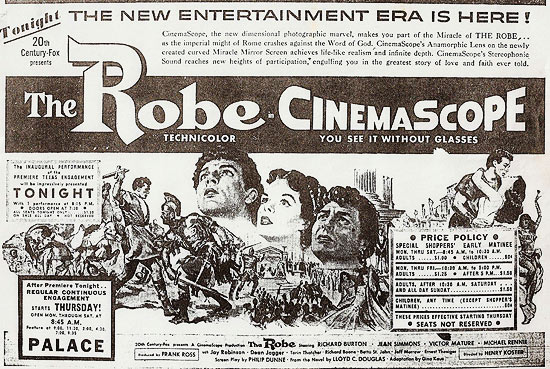
LOOKING BACK AT CINEMASCOPE
By Michael Coate
“The Modern Miracle You See Without Glasses!”
The Digital Bits is pleased to present this retrospective commemorating the 60th anniversary of the release of The Robe, the first motion picture produced in CinemaScope. In addition to a detailed history of the film’s original theatrical release, the article features a roundtable interview with three authorities on widescreen history.
THE ORIGINAL ENGAGEMENTS OF “THE ROBE”
Presented here is a chronological listing of the original first-run theatrical engagements of The Robe for the major and selected secondary markets in the United States and Canada. The number of weeks the film played has been provided for some of the entries.
1953-09-16 … New York, NY – Roxy [13 weeks]
1953-09-23 … Chicago, IL – State-Lake [16 weeks]
1953-09-24 … Los Angeles, CA – Chinese [13 weeks]
1953-09-24 … Philadelphia, PA – Fox [13 weeks]
1953-09-29 … Kansas City, MO – Orpheum [13 weeks]
1953-09-29 … Pittsburgh, PA – Harris [12 weeks]
1953-09-29 … San Francisco, CA – Fox [9 weeks]
1953-09-30 … Dallas, TX – Palace [5 weeks]
1953-09-30 … Seattle, WA – 5th Avenue [9 weeks]
1953-10-01 … Atlanta, GA – Fox [4 weeks]
1953-10-01 … Detroit, MI – Fox [13 weeks]
1953-10-01 … Washington, DC – Capitol [8 weeks]
1953-10-02 … Buffalo, NY – Buffalo [8 weeks]
1953-10-02 … Salt Lake City, UT – Lyric [4 weeks]
1953-10-02 … Salt Lake City, UT – Villa [8 weeks]
1953-10-06 … Boston, MA – Memorial [12 weeks]
1953-10-07 … Indianapolis, IN – Indiana [8 weeks]
1953-10-07 … Memphis, TN – Malco [5 weeks]
1953-10-07 … New Orleans, LA – Saenger [4 weeks]
1953-10-07 … San Antonio, TX – Majestic [4 weeks]
1953-10-08 … Cleveland, OH – Hippodrome [11 weeks]
1953-10-08 … Houston, TX – Metropolitan [5 weeks]
1953-10-08 … Minneapolis, MN – Radio City [7 weeks]
1953-10-08 … Oklahoma City, OK – Criterion [5 weeks]
1953-10-08 … Portland, OR – Orpheum [8 weeks]
1953-10-13 … Syracuse, NY – Paramount [5 weeks]
1953-10-14 … Fort Worth, TX – Worth
1953-10-15 … Birmingham, AL – Alabama
1953-10-15 … Cincinnati, OH – Albee [8 weeks]
1953-10-15 … Denver, CO – Denver [6 weeks]
1953-10-15 … Nashville, TN – Paramount [3 weeks]
1953-10-16 … Jacksonville, FL – Florida [3 weeks]
1953-10-20 … Baltimore, MD – New [11 weeks]
1953-10-21 … Rochester, NY – Palace [6 weeks]
1953-10-21 … San Diego, CA – California [6 weeks]
1953-10-22 … Beaumont, TX – Liberty [3 weeks]
1953-10-22 … Spokane, WA – Fox [5 weeks]
1953-10-22 … Toronto, ON – Imperial [8 weeks]
1953-10-23 … St. Louis, MO – St. Louis [10 weeks]
1953-10-27 … Richmond, VA – Byrd [7 weeks]
1953-10-28 … Albany, NY – Palace [3 weeks]
1953-10-28 … Ogden, UT – Egyptian [3 weeks]
1953-10-28 … Omaha, NE – Orpheum [4 weeks]
1953-10-28 … Phoenix, AZ – Fox [5 weeks]
1953-10-28 … Sacramento, CA – Senator [5 weeks]
1953-10-28 … Wichita, KS – Miller [4 weeks]
1953-10-29 … Charlotte, NC – Carolina [4 weeks]
1953-10-29 … Dayton, OH – Keith’s
1953-10-29 … Des Moines, IA – Des Moines
1953-10-29 … Knoxville, TN – Tennessee [2 weeks]
1953-10-29 … Milwaukee, WI – Wisconsin [8 weeks]
1953-10-29 … Montreal, QC – Palace [7 weeks]
1953-10-29 … Vancouver, BC – Capitol [5 weeks]
1953-10-29 … Winnipeg, MB – Capitol [4 weeks]
1953-10-30 … Oakland, CA – Paramount [5 weeks]
1953-10-30 … Tucson, AZ – Fox [3 weeks]
1953-11-03 … Norfolk, VA – Norva
1953-11-03 … Providence, RI – Majestic [7 weeks]
1953-11-04 … Akron, OH – Colonial
1953-11-04 … Fresno, CA – Crest
1953-11-04 … Springfield, IL – Lincoln
1953-11-04 … Tulsa, OK – Orpheum
1953-11-04 … Scranton, PA – Comerford
1953-11-04 … Wilkes-Barre, PA – Paramount
1953-11-05 … Augusta, GA – Miller [3 weeks]
1953-11-05 … Billings, MT – Fox [3 weeks]
1953-11-05 … Charleston, WV – Kearse [3 weeks]
1953-11-05 … Eugene, OR – McDonald [3 weeks]
1953-11-05 … Louisville, KY – Rialto
1953-11-05 … Montgomery, AL – Paramount
1953-11-05 … Pocatello, ID – Chief
1953-11-06 … Bakersfield, CA – Fox [3 weeks]
1953-11-06 … Harrisburg, PA – State
1953-11-06 … San Jose, CA – California
1953-11-06 … Springfield, MO – Gillioz
1953-11-10 … Erie, PA – Shea’s
1953-11-10 … Missoula, MT – Fox [2 weeks]
1953-11-10 … Portland, ME – Strand [4 weeks]
1953-11-10 … Reno, NV – Crest [3 weeks]
1953-11-10 … Youngstown, OH – Paramount [4 weeks]
1953-11-11 … Canton, OH – Palace [3 weeks]
1953-11-11 … Columbus, OH – Broad [5 weeks]
1953-11-11 … Evansville, IN – Majestic [4 weeks]
1953-11-11 … Fort Wayne, IN – Paramount
1953-11-11 … Long Beach, CA – West Coast [6 weeks]
1953-11-11 … New Haven, CT – Poli [4 weeks]
1953-11-11 … Reading, PA – Embassy [3 weeks]
1953-11-11 … Roanoke, VA – Grandin
1953-11-11 … St. Paul, MN – World
1953-11-11 … Springfield, MA – Poli [3 weeks]
1953-11-11 … Toledo, OH – Paramount [5 weeks]
1953-11-12 … Columbus, GA – Georgia
1953-11-12 … Ottawa, ON – Capitol [3 weeks]
1953-11-12 … Savannah, GA – Weis
1953-11-12 … Worcester, MA – Poli [4 weeks]
1953-11-13 … Grand Rapids, MI – Keith’s
1953-11-13 … Stockton, CA – California [3 weeks]
1953-11-13 … Joplin, MO – Fox
1953-11-16 … Greenville, SC – Plaza [4 weeks]
1953-11-17 … Miami, FL – Miami [3 weeks]
1953-11-17 … Miami (Coral Gables), FL – Miracle [3 weeks]
1953-11-17 … Miami (Miami Beach), FL – Carib [3 weeks]
1953-11-18 … Allentown, PA – Boyd
1953-11-18 … Calgary, AB – Capitol [3 weeks]
1953-11-18 … Davenport, IA – Capitol
1953-11-18 … Durham, NC – Center [2 weeks]
1953-11-18 … Lexington, KY – Ben Ali
1953-11-18 … Lincoln, NE – Stuart [4 weeks]
1953-11-18 … Peoria, IL – Rialto
1953-11-19 … Cedar Rapids, IA – Iowa [3 weeks]
1953-11-19 … Columbia, SC – Palmetto
1953-11-19 … Duluth, MN – Norshor
1953-11-19 … Hartford, CT – Poli [3 weeks]
1953-11-19 … Raleigh, NC – Ambassador [2 weeks]
1953-11-20 … Edmonton, AB – Paramount [4 weeks]
1953-11-20 … Rockford, IL – Coronado [3 weeks]
1953-11-22 … Quebec City, QC – Capitol [3 weeks]
1953-11-23 … Colorado Springs, CO – Ute
1953-11-24 … Tampa, FL – Palace [3 weeks]
1953-11-25 … Atlantic City, NJ – Warner
1953-11-25 … Boise, ID – Rialto
1953-11-25 … Flint, MI – Capitol
1953-11-18 … Fort Smith, AR – Malco
1953-11-25 … Kalamazoo, MI – State
1953-11-25 … Lansing, MI – Michigan
1953-11-25 … Racine, WI – Venetian [2 weeks]
1953-11-26 … Ann Arbor, MI – State
1953-11-27 … London, ON – Capitol [3 weeks]
1953-11-28 … Columbia, MO – Missouri
1953-12-02 … Albuquerque, NM – Sunshine [3 weeks]
1953-12-02 … Eau Claire, WI – Hollywood [2 weeks]
1953-12-02 … Frederick, MD – Opera House [2 weeks]
1953-12-02 … Hutchinson, KS – Fox [2 weeks]
1953-12-02 … Jackson, MS – Paramount
1953-12-02 … Manchester, NH – State
1953-12-02 … Monterey, CA – State [3 weeks]
1953-12-02 … Provo, UT – Academy [2 weeks]
1953-12-02 … Saginaw, MI – Temple
1953-12-02 … Tacoma, WA – Music Box [4 weeks]
1953-12-02 … Winston-Salem, NC – Winston [2 weeks]
1953-12-03 … St. Petersburg, FL – Florida [3 weeks]
1953-12-03 … Salina, KS – Watson [2 weeks]
1953-12-03 … Sioux Falls, SD – State
1953-12-05 … Cheyenne, WY – Lincoln
1953-12-06 … Biloxi, MS – Saenger [2 weeks]
1953-12-09 … Lawrence, KS – Granada [1 week]
1953-12-10 … Greensboro, NC – Carolina [2 weeks]
1953-12-23 … Madison, WI – Orpheum [3 weeks]
1953-12-24 … Corpus Christi, TX – Centre [3 weeks]
1953-12-24 … Little Rock, AR – Capitol
1953-12-25 … Baton Rouge, LA – Paramount [2 weeks]
1953-12-25 … Cape Girardeau, MO – Broadway [2 weeks]
1953-12-25 … Halifax, NS – Capitol
1953-12-25 … Hamilton, ON – Tivoli [4 weeks]
1953-12-25 … Lawton, OK – Vaska [3 weeks]
1953-12-25 … St. Joseph, MO – Missouri [3 weeks]
1953-12-25 … Santa Fe, NM – Lensic [2 weeks]
1953-12-25 … Springfield, OH – Regent
1954-01-07 … Orlando, FL – Beacham [2 weeks]
1954-01-12 … Las Vegas, NV – El Portal [2 weeks]
1954-01-13 … Odessa, TX – Ector [2 weeks]
1953-01-13 … Shreveport, LA – Don
1954-01-14 … Bismarck, ND – Dakota [1 week]
1954-01-14 … Lubbock, TX – Lindsey [3 weeks]
1954-01-15 … Burlington, VT – Flynn
1954-01-15 … Charleston, SC – Gloria [3 weeks]
1954-01-15 … Galveston, TX – State [2 weeks]
1954-01-15 … Regina, SK – Capitol [3 weeks]
1954-01-20 … Saskatoon, SK – Capitol [2 weeks]
1954-01-23 … El Paso, TX – Plaza [2 weeks]
1954-01-26 … Modesto, CA – State
1954-01-27 … Hattiesburg, MS – Saenger [1 week]
1954-01-27 … Tallahassee, FL – Florida
1954-01-28 … Abilene, TX – Paramount [2 weeks]
1954-01-28 … Amarillo, TX – Paramount [2 weeks]
1954-01-28 … Wichita Falls, TX – Wichita [2 weeks]
1954-02-13 … Austin, TX – Paramount [2 weeks]
1954-02-26 … Brownsville, TX – Majestic [1 week]
1954-03-03 … Fayetteville, NC – Colony [2 weeks]
1954-03-12 … Honolulu, HI – Kuhio [5 weeks]
1954-04-15 … Las Cruces, NM – Rio Grande [1 week]
1954-04-18 … Fairbanks, AK – Empress [1 week]
The above is by no means a complete list of domestic theatrical bookings of The Robe. Instead, it provides a snapshot of the crucial first few months of the debut of CinemaScope. Ultimately, there were thousands of engagements by the time the film played all of the neighborhood, second-run, and small-town theaters. Most significantly, every one of the theaters cited purchased a new screen and projection lens, and (most) installed a new sound system.
The first CinemaScope presentations of The Robe held outside the United States and Canada were in the United Kingdom beginning November 1953. The first foreign-language presentations took place in France beginning December 1953. By September 1954, after one year, theaters in nearly every country in the world had converted to CinemaScope.
THE INTERVIEW
This portion of the article features an interview with three authorities on all things widescreen. The participants are film historians John Belton, Sheldon Hall and Martin Hart. (The interviews were conducted separately and edited into a roundtable format.)
John Belton is a professor of English and Film at Rutgers University and is the author Widescreen Cinema (1992) and co-editor (with Sheldon Hall and Steve Neale) of Widescreen Worldwide (2010).
Sheldon Hall is a senior lecturer in film studies at Sheffield Hallam University, UK. He is the author of Zulu: With Some Guts Behind It – The Making of the Epic Movie (2006), co-author (with Steve Neale) of Epics, Spectacles, and Blockbusters: A Hollywood History (2010), and co-editor (with John Belton and Steve Neale) of Widescreen Worldwide (2010).
Martin Hart is the curator of the American Widescreen Museum (www.widescreenmuseum.com).
Michael Coate (The Digital Bits): What is the significance of the 60th anniversary of the introduction of CinemaScope?
John Belton: From the vantage point of 2013, CinemaScope seems like a relatively minor moment in the history of the cinema. The process was phenomenally successful for three or four years in the mid-1950s, only to be replaced or supplanted by other processes (Todd-AO, Panavision). It was, however, the agent of change, initiating the widescreen era, which continues to this day. Given today's smaller display platforms (cellphones, notebooks), CinemaScope has nostalgic value as a reminder of a period when big screen entertainment was at its height.
Sheldon Hall: That it's been sixty years since the introduction of CinemaScope. In itself, the anniversary is unimportant.
Martin Hart: CinemaScope was the international film industry's first notable alteration to the shape of the screen and improvement in sound. Clearly CinemaScope was itself inspired by Cinerama, but the three strip mosaic screen system took ten years to finally produce a story film, while Fox was demonstrating CinemaScope to exhibitors and press within six months of the premiere of Cinerama.
Coate: Was The Robe a good choice to launch CinemaScope?
Belton: With the advantage of hindsight, we can see that The Robe worked. It was a film that most exhibitors wanted to show and that desire forced those exhibitors to convert their theaters fully or partially to CinemaScope. Compare it to The Phantom Menace, which was Lucas' weapon to get exhibitors to convert to digital projection. Only a handful of theaters converted. Cameron had a very effective lure with Avatar in 3-D. It jump-started the stalled digital revolution, encouraging thousands of theaters to go digital.
Hall: Yes, in the sense that the subject and the settings allowed the scenic possibilities of the format to be amply demonstrated. A more visually imaginative director than Henry Koster would have helped, but clearly the film's commercial success was the best advertisement CinemaScope could have received.
Hart: The Robe was unquestionably the proper vehicle to introduce the CinemaScope system. CinemaScope was wonderful in epic films and The Robe had been a very popular book for many years. While it might be said that How to Marry a Millionaire is more entertaining, it's doubtful that the comedy would have inspired the audiences and competing studios to join the wide screen revolution, either by adopting CinemaScope for their biggest attractions or to develop their own system.
Coate: What is a good definition of “widescreen”?
Belton: Widescreen is an aspect ratio of 1.66:1 or greater.
Hall: Wider than the pre-1953 standard of 1.37/1.33:1. Of course, all motion-picture processes other than images recorded by mobile phones are wider than they are high, including Academy.
Hart: The long accepted definition of "wide screen" is any screen ratio greater than the long established 1.33:1 or 1.37:1. I have trouble defining 1.85:1 as wide screen since it is accomplished only by cutting off the top and bottom of the full Academy Aperture. And Paramount's 1953 ballyhoo about 1.66:1 being wide screen is rather laughable. There was no doubt that Cinerama and CinemaScope were decidedly wide.
Coate: Would CinemaScope have had the impact it did upon its introduction had stereo sound not been included?
Belton: Without stereo sound, CinemaScope would not have been able to compete with Cinerama. But, given that the majority of exhibitors chose to show CinemaScope with mono sound, one could argue that stereo had little impact. For the most part, it was reserved for a handful of first-run theaters.
Hall: No, because stereo allowed the sound-stage to be as wide as the visual aspect. The association of stereo sound with Cinerama also made it necessary to develop a comparable sound process for CinemaScope so as not to attract adverse criticism. The simplicity of four-track mag sound-on-film was one of Fox's triumphs.
Hart: I find it difficult to attribute a lot of credit to the new four-track magnetic sound as being a major contributor to the wide acceptance of CinemaScope. While stereophonic sound seemed to be very important initially, exhibitors and other studios resisted it. And it may be said that, for the most part, audiences didn't actually notice it. Exhibitors complained loudly about the high cost of installing a completely new sound system and within two years Fox was the only studio to offer stereo sound on all its CinemaScope product. It might be claimed that the dropping of the magnetic mandate was what really let CinemaScope spread far and wide.
Coate: Were the four channels of audio (left, center, right, surround) used on CinemaScope just right, too many or not enough?
Belton: Hindsight suggests that six channels of sound provided filmmakers and audiences with a more effective soundscape. At the least, the surrounds need to be split.
Hall: Just right at the time, but it's difficult to see what more could have been done with the technology available and with the economic constraints of theater installations.
Hart: Considering the size of the average theatre in the early 1950s, a four-track stereo system was more than adequate. A large percentage of stereo films did not use the surround channel at all; just the opposite of what was the norm after the introduction of Dolby Matrix Stereo in the late 1970s.
Coate: Did the introduction and success of CinemaScope and other processes affect the industry in a positive or negative way?
Belton: Aside from the permanent shift to a widescreen format, the effect was minimal. Widescreen lured audiences back to the movie theater for a brief period but did not stem the long-term decline in movie attendance.
Hall: At the time there were both positive and negative consequences, financially and aesthetically, as with the introduction of any new technology. Long-term, the effects were positive.
Hart: CinemaScope and competing systems, along with greatly increased use of color, definitely had a positive effect on the film industry. Anyone living in the 1950s will recall that CinemaScope, VistaVision, and other processes were much in the minds of audiences and virtually all existing media joined in the interest in the new processes.
Coate: Would CinemaScope (and other widescreen/wide gauge formats) have had the same impact had it been introduced in a different era?
Belton: Efforts were made to introduce widescreen formats in earlier eras (the 1890s, 1929) and failed. Demand for participatory entertainment in the 1950s gave CinemaScope an economic footing it would not have had in earlier or later eras.
Hall: Any answer to this could only be speculative, but the precedent of the abortive introduction of widescreen formats in 1929-31 suggests that the time was right in 1953.
Hart: Attempts by the major studios to widen the screen date back into the late 1920s but all methods ultimately failed. Disney produced Fantasia with a dramatic quasi-stereophonic sound system in 1940 and that film didn't break even until the 1970s. The wide screen era happened at precisely the right time in the U.S. Its adoption in Europe and other parts of the world was not quite as dramatic because television had not eaten away over half of the film going audience.
Coate: In what way was CinemaScope superior and/or inferior to the Academy format?
Belton: Each format has its own value. However, one must admire the design of the CinemaScope frame which took standard 35mm film and "re-thought" it to provide more image area as well as four-track sound.
Hall: Any format is ultimately only as good as the talents of the filmmakers using it, so the opportunities 'Scope offered for different types of composition depended on directors and DPs recognizing them and rising to the challenge – which many did. Technically, 'Scope was inferior (for a while at least) because of the increased grain structure, poorer definition and optical distortions caused by the early lenses.
Hart: CinemaScope mandated the installation of much larger screens than had been common up to that point. Even though CinemaScope initially seemed to tax the available light from arc lamps it came to offer a brighter image than the 1.85:1 format which blew the image up to a greater degree. The demands of CinemaScope, and virtually all 35mm "wide" systems forced Technicolor to further refine their dye transfer imbibition print to remove misregistered colors which were much more visible, and annoying, on the new larger screens. Basically CinemaScope and its competitors forced improvements in virtually all aspects of film production and exhibition. If the Academy Aperture had remained the standard there would have been technical stagnation in the industry.
Coate: Was CinemaScope superior in its original 2.55:1 presentations or in its later, more common, 2.35:1 (2.39:1/2.40:1) version?
Belton: Few of us have seen 2.55:1 theatrical presentations to be able to make this comparison. From the five or six 2.55:1 presentations that I have seen, I think that format was superior to 2.35:1. I would not base this comparison on DVD or Blu-ray – only on 35mm theatrical presentations.
Hall: It makes little real difference.
Hart: The difference between the screen shapes of 2.55:1 and 2.35:1 are barely noticeable. The slightly narrower screen ratio allows for slightly larger screen images in addition to providing space for an optical soundtrack on the film. If magnetic stereophonic sound had been adopted to the extent that Dolby Stereo or digital projection have had, we might still be seeing 2.55:1 screen images. Neither aspect ratio is inherently better than the other.
Coate: In the crucial first few years of CinemaScope, which filmmakers do you think used the format most effectively?
Belton: The usual suspects: Nicholas Ray, Otto Preminger, Vincente Minnelli, Anthony Mann.
Hall: Among others (in no particular order): Otto Preminger, Nicholas Ray, Elia Kazan, Howard Hawks.
Hart: Being a film historian rather than a film critic, I'm not really all that attuned to who did it best. While it may have taken a bit of getting used to, to a great extent the change from 1.37 to 2.55 really resulted in a decrease in the upper and lower edges of the image. Sets could be built without having to be two stories high, etc. Once you get beyond the hardware part of it there's very little difference between directing for CinemaScope and standard Academy. I have never seen an early CinemaScope film and said to myself, “That's just terrible, the director's a putz.” Nor have I said, “That's just brilliant, the director's a genius.” Now Cinerama was a different animal entirely. It was truly wide in all respects, whereas CinemaScope's width was mostly a change in the shape of the image, not necessarily a great increase in the width of the soundstage.
Coate: Name a few of the standout films that effectively illustrate the virtues of CinemaScope?
Belton: Rebel Without a Cause, Bigger than Life, River of No Return, Advise and Consent, Some Came Running, Home from the Hill, Two Weeks in Another Town, Forty Guns, Lola Montes.
Hall: Carmen Jones, Rebel Without a Cause, Bigger than Life, East of Eden, Land of the Pharaohs.
Hart: One of my early favorite CinemaScope films was Disney's 20,000 Leagues under the Sea. The shape of the Nautilus and the steam sloops were natural for the wide aspect ratio, and by virtue of being in color and CinemaScope it retains its look of being a contemporary film. Disney always embraced new technologies with great zest and his underwater classic from 1954 is still a marvel to watch.
Coate: Some filmmakers spent much of their career working exclusively or nearly exclusively in ’Scope (Blake Edwards… John Carpenter… Richard Fleischer…). Why do you suppose some filmmakers prefer to work in the same format, film after film, whereas most filmmakers tend to select a format on a title-by-title, project-by-project basis?
Belton: The answer would vary with each filmmaker.
Hall: I'm sure the answer would vary from filmmaker to filmmaker, even just the ones you've mentioned. It could be that it suited their way of working; that they liked it; or that they were good at using it.
Hart: After a very few years all the things that made up CinemaScope improved substantially. Film became faster and with much finer grain. Lenses were improving, both for photography and projection, and improvements in lamphouse design allowed a bigger, brighter, more grain free image to be projected. CinemaScope and its competitors like Panavision, etc. actually displayed a better screen image than cropped Academy ersatz wide screen. Going over the films made in the past 60 years you'll find every conceivable type of film being made in anamorphic wide screen. It wasn't just spectacles. CinemaScope worked as well for intimate dramas as it did for epics and westerns. So the question comes down to why choices were made not to shoot anamorphic.
Coate: Do you think the Academy format (1.37:1) should have been retained by the industry instead of being abandoned for the most part in favor of masked widescreen formats (i.e. 1.66:1, 1.75:1, 1.85:1) becoming the alternative to scope?
Belton: Not instead of but in addition to. Until the early 1960s, the Japanese had only two formats – 1.37:1 and anamorphic. One can look at that period and appreciate the purity and distinctness of those extremes while lamenting the relative similarity of 1.66:1 to 1.85:1.
Hall: Ideally it should have been more widely (sic!) retained, but on occasion filmmakers have returned to it, e.g. Godard, the Dogme 95 group, Lynn Ramsay. Digital makes this easier.
Hart: I might be a cult of one on this question but I actually do wish that the Academy ratio of 1.37:1 had been retained alongside genuine wide screen systems, but that was not possible because the industry saw the effect that Cinerama and CinemaScope had on audiences and both studios and theatres quickly started cropping films made in 1.37 down to 1.66, 1.75, and 1.85. Once the horse is out of the barn it's not coming back in, especially since the theatrical motion picture barn was smoking badly at that time.
Coate: What are your thoughts on High Definition and Super-35 origination formats where extra top/bottom imagery is captured and the ’Scope version is created in post-production rather than in the camera?
Belton: With Super-35, camera negative has improved sufficiently that a satisfactory 2.40 image can be extracted from the larger frame. I do not know enough about High Definition to comment on that.
Hall: Obviously they offer the advantages for the filmmaker of increased flexibility and more choices at different stages of production and postproduction. The disadvantage is that they can lead to very “loose” composition to allow for that flexibility and those choices.
Hart: I am, and always have been, contemptuous of any system that yields a 2.35 screen ratio as a result of throwing out precious image carrying capability. That includes today's 16:9 HD acquisition all the way back to Superscope in 1954. That's why the anamorphic lens was developed. My opinion of digital acquisition and projection has improved markedly over the past half dozen years but I still hate to see wasted bandwidth.
Coate: In the last decade there has been a spike in ’Scope releases. There hasn’t been this many ’Scope productions (all origination types: anamorphic. Super-35, HD) being produced since the heyday of CinemaScope in the 1950s. To what do you attribute this spike?
Belton: Don't know.
Hall: Possibly to the fact that filmmakers may tend to think of 'Scope as a more “cinematic” ratio than Academy or non-anamorphic widescreen (especially now that television screens are in the ratio 1.77:1). Whether or not they know how to exploit its possibilities is another matter...
Hart: Probably 90 percent of the movies seen by today's filmmakers were seen on televisions. The 'Scope (I hate that term) frame is vastly more cinematic than what initially inspired young people to get into film production and that may be at least part of the draw. There is an ebb and flow with 2.35 production over time. It may well be that those choosing 2.35 are trying to produce films that are different and perhaps more impressive than the shape available on HD home television.
Coate: A significant percentage of modern megaplex movie theaters have installed wall-to-wall, common-width screens, necessitating aspect ratio changes in the vertical plane rather than in the horizontal plane, resulting in ’Scope presentations being smaller than spherical 1.85:1 presentations. Do you believe this practice diminishes or enhances the experience?
Belton: All projected images should be the same height (with different widths). The presentation you describe diminishes the experience.
Hall: Yes, it diminishes the experience for obvious reasons. It is, however, worth noting that this practice seems far more common in the US than in the UK and Europe, where it is now usual to have a 'Scope-shaped screen with no movable masking at all.
Hart: Common-width projection is just stupid. I'm sorry that’s the only comment you'll get out of me other than an expression of my disgust over the total lack of showmanship in theaters today. And there's a great lack of showmanship on the part of filmmakers as well, though they don't realize it.
Coate: Should ’Scope films continue to be letterboxed for their ancillary-market releases? Is a 16:9 pan-and-scan acceptable?
Belton: Letterboxing of 'Scope films for display in non-theatrical venues is necessary to preserve the aesthetic intent of the original.
Hall: Yes, to the first question; no, to the second question.
Hart: A 16:9 pan-and-scan version of 2.35:1 films can be perfectly enjoyable depending on the composition of the original film, but I do not favor it much more than a standard 1.33:1 TV pan and scan. I like to see what the producer of a film thought was best for the all-important original theatrical release. Letterboxing isn't the best way to do it but it's the most practical at this time. What I don't understand is why 1.85:1 films are often letterboxed within the 16:9 (1.78:1) HD TV frame. That's just senseless.
Coate: While the CinemaScope tradename is no longer used, the ’Scope process (i.e. 2x anamorphic squeeze during photography and unsqueeze during projection) is still with us today. Why do you think ’Scope outlasted all of the other processes, including some that offered imagery of superior quality?
Belton: It enabled producers and exhibitors to get a widescreen image using 35mm film, which remained an industry standard (as opposed to 70mm, which was more expensive).
Hall: Economy, flexibility, standardization.
Hart: The shape that came down from the development of CinemaScope (2.66, 2.55, 2.35-2.39) is a very good ratio and with 35mm film it utilizes the maximum amount of emulsion possible, potentially yielding the best possible screen image without going to large format negative systems such as VistaVision, Technirama, Todd-AO, Super Panavision and Ultra Panavision. Vast improvements in film emulsion technology have substantially negated the need for the larger formats to create a good reduction to 35mm. And the CinemaScope format makes for a more dramatic look to about any film. It's the movies, it's supposed to be fun and not brain surgery. Brain surgery can be adequately documented with the Academy format.
SOURCES/REFERENCES:
The information contained in this article was principally referenced from regional newspaper promotion and various issues of Boxoffice, Motion Picture Herald, and Variety.
SPECIAL THANKS:
Jerry Alexander, Jim Barg, John Belton, Raymond Caple, Nick DiMaggio, Mike Durrett, Sheldon Hall, Martin Hart, Bill Kretzel, Paul Linfesty, Stan Malone, Gabriel Neeb, Jim Perry, John Stewart, Allen Swords, Joel Weide, Keith Wondra, Vince Young, and to all of the librarians who helped with the research for this project.
Posted by Steve Kraus (Member # 476) on 11-14-2013, 06:46 PM:
Some competitors to the B&L CinemaScope lens:
Panavision Super Panatar. I believe this is what Panavision originally went into business to make.
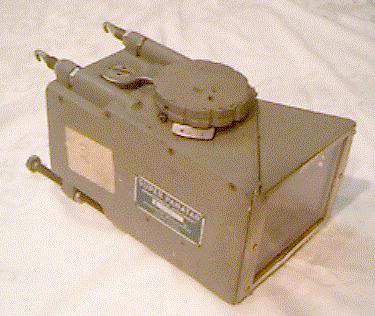
Panavision Ultra Panatar (not to be confused with Ultra Panavision)

SuperSCOPE Optics
Photos courtesy of Jeff Joseph. Yes, there was also a Super 35-like shooting format to produce anamorphic films from flat negatives.
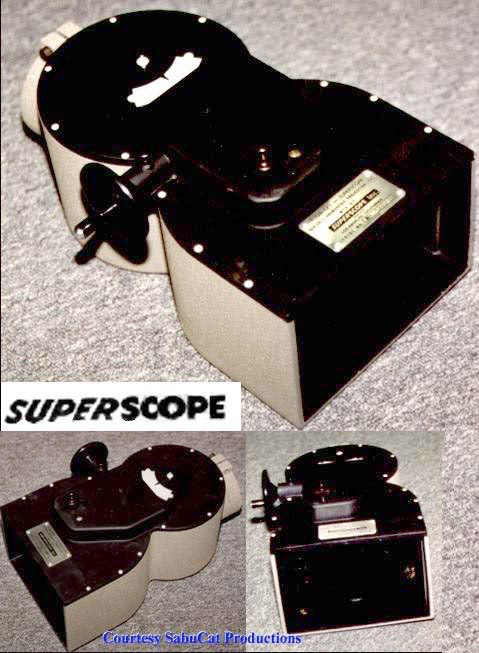
And yes, these were the same people who later were importers of Sony tape recorders under the Sony SuperSCOPE name.
Delrama (curved mirrors)

Same people (Delft) who made the camera prismatic Delrama for Technirama (1.5X with 8-perf horizontal motion)
These photos are from my original web page, circa 1995, which is why they are small and dial-up friendly.
Posted by Steve Matz (Member # 1890) on 11-14-2013, 09:17 PM:
Wow! it took less than 2 months to hit Billings. This theater had the premiere of "WARPATH" 1951...Which was filmed here.PollyBergen's first film.
They all showed up, Forrest Tucker,Edmund O'Brien,Bergen,Dean Jagger,etc. My Mother said they built a big platform in front of the FOX. Said she took me down to the premiere. Don't seem to remember that;maybe because I was only 2 yrs old....s.m.
1953-11-03 … Norfolk, VA – Norva
1953-11-03 … Providence, RI – Majestic [7 weeks]
1953-11-04 … Akron, OH – Colonial
1953-11-04 … Fresno, CA – Crest
1953-11-04 … Springfield, IL – Lincoln
1953-11-04 … Tulsa, OK – Orpheum
1953-11-04 … Scranton, PA – Comerford
1953-11-04 … Wilkes-Barre, PA – Paramount
1953-11-05 … Augusta, GA – Miller [3 weeks]
1953-11-05 … Billings, MT – Fox [3 weeks](now alberta Bair theat
1953-11-05 … Charleston, WV – Kearse [3 weeks]
1953-11-05 … Eugene, OR – McDonald [3 weeks]
1953-11-05 … Louisville, KY – Rialto
Posted by Leo Enticknap (Member # 534) on 11-14-2013, 10:29 PM:
quote: Michael Coate
Coate: Should ’Scope films continue to be letterboxed for their ancillary-market releases? Is a 16:9 pan-and-scan acceptable?
Belton: Letterboxing of 'Scope films for display in non-theatrical venues is necessary to preserve the aesthetic intent of the original.
Hall: Yes, to the first question; no, to the second question.
Do these two not realise that in the case of most Hollywood 'scope features made from the mid-1960s onwards, the 4:3 panned-and-scanned version was 'original', in that productions were planned in a 'scope version for theatrical release and a 4:3 version for TV (and later, home video) from the outset? The pans and scans weren't an afterthought, done by some intern in a transfer house: widescreen and 4:3 setups were often filmed as separate takes, and in most cases the 4:3 version was overseen by the director and the DoP in post-production (this book covers the process comprehensively).
So in many cases, letterboxing 'scope films for non-theatrical viewing is not preserving the aesthetic intent of the original, because the filmmakers fully understood and planned for them being shown non-theatrically in 4:3 versions, which they themselves prepared. In other words, viewing the 'scope version non-theatrically in a letterboxed video was not intended by the original filmmakers during the period in which Hollywood's distribution business model integrated both theatrical releases and TV broadcasts. Rather, it was a marketing ploy invented by niche market, premium price VHS and laserdisc publishers (Criterion and Kino in the US, Connoisseur and Artificial Eye in Britain, etc.), mainly of arthouse titles, in the mid-1980s, and which gathered steam as "home cinema" and then 16:9 TV came on the scene a decade later.
Posted by Jack Theakston (Member # 4484) on 11-16-2013, 03:00 PM:
Regarding the original topic, many theaters had already converted to widescreen before CinemaScope—flat widescreen was introduced in March 1953, and lots of venues (including my own) had installed by May. Also, since Fox had a CS-only policy, they started the Panoramic Pictures banner to do flat films (1.66-1).
Regarding B&W CinemaScope—Fox started producing 'B' product under the RegalScope banner in 1956. The original contract for CinemaScope stated that you HAD to run the 3-channel mag (surround track was optional per venue). In Spring 1953, Walter Reade Jr. started running his CS films mixed down to Mono (more about that here http://centraltheater.blogspot.com/2007/01/stereophonic-sound-or-bust.html). Fox put up a stink, but since he was the head of TOA, they dropped the stereo sound idea, hence single-track mag and later MagOp.
Incidentally, I've found that many of the B&W 'scope films from the '50s and '60s shot by other studios than Fox were extractions from flat negatives.
Although I know Marty Hart doesn't think much of it, I think it's silly to overlook flat widescreen, particularly since it predated CinemaScope (and the idea was conceived far in advance of Cinerama) and affected the way films are shown even today. Bob Furmanek has an excellent article cataloging the transitional period: http://www.3dfilmarchive.com/home/widescreen-documentation
Posted by Michael Coate (Member # 757) on 01-02-2014, 04:17 PM:
quote: Leo Enticknap
widescreen and 4:3 setups were often filmed as separate takes
You're not serious, are you? Care to cite some examples (other than the handful of well-documented early CinemaScope productions)?
quote: Leo Enticknap
Do these two not realise that in the case of most Hollywood 'scope features made from the mid-1960s onwards, the 4:3 panned-and-scanned version was 'original', in that productions were planned in a 'scope version for theatrical release and a 4:3 version for TV (and later, home video) from the outset? The pans and scans weren't an afterthought, done by some intern in a transfer house: widescreen and 4:3 setups were often filmed as separate takes, and in most cases the 4:3 version was overseen by the director and the DoP in post-production (this book covers the process comprehensively). So in many cases, letterboxing 'scope films for non-theatrical viewing is not preserving the aesthetic intent of the original, because the filmmakers fully understood and planned for them being shown non-theatrically in 4:3 versions, which they themselves prepared. In other words, viewing the 'scope version non-theatrically in a letterboxed video was not intended by the original filmmakers during the period in which Hollywood's distribution business model integrated both theatrical releases and TV broadcasts. Rather, it was a marketing ploy invented by niche market, premium price VHS and laserdisc publishers (Criterion and Kino in the US, Connoisseur and Artificial Eye in Britain, etc.), mainly of arthouse titles, in the mid-1980s, and which gathered steam as "home cinema" and then 16:9 TV came on the scene a decade later.
Given the number of widescreen enthusiasts who are members of this forum, I'm surprised the above comment has gone unchallenged.
Posted by Leo Enticknap (Member # 534) on 01-02-2014, 05:56 PM:
Can you cite me any examples of widescreen feature films having been broadcast or published on VHS in letterboxed versions (i.e. not panned and scanned) on any significant scale before the late '80s / early '90s?
Sure, you will find people who made films from the '60s to the '90s lining up to endorse "directors' cuts" on 16:9 consumer digital media now, and more often than not claiming to have been bitterly opposed to panned and scanned broadcast/VHS when their work was originally released. But even megastars like Spielberg clearly didn't feel strongly enough about it at the time to veto the practice, or even voice prominent opposition. About the only one I know of who did was Sydney Pollack, who fought a Danish TV station through the courts to stop them from broadcasting a panned-and-scanned version of Three Days of the Condor.
From the mid-60s onwards most major Hollywood features had at least some TV money involved in their financing, and everyone involved in making them knew that broadcasts (and later rental VHS) in 4:3 would form a major part of the revenue they earned. Production of the 4:3 version was an integral part of the production process. At the very least, the "shoot and protect" method was used on set (this is covered at length in virtually every cinematography manual published from the '70s to the '90s: there is also a comprehensive article by Walter Lassally about it in Image Technology in the mid-90s), and in the case of some more complex shots, separate shots for the 4:3 version were taken.
The practice of condemning panned and scanned versions as going against the filmmaker's personal vision, inauthentic and otherwise "bad" essentially began as marketing hype by arthouse video publishers selling letterboxed VHS and laserdisc editions (Criterion and Artificial Eye being two who were pushing this line hard in the 1990s). I'm not trying to suggest that panning and scanning is ideal or best practice, but I am suggesting that simply buying the advertising hype for letterboxed videos uncritically is not something that serious historians should be doing.
Posted by Michael Coate (Member # 757) on 01-02-2014, 06:46 PM:
Leo...with all due respect, I think you are confusing willing compromise with artistic intent.
Posted by Leo Enticknap (Member # 534) on 01-02-2014, 09:26 PM:
No; I'm suggesting that artistic intent is not always the sole determinant of originality. To revisit my original quote from your article:
quote: Michael Coate
Coate: Should ’Scope films continue to be letterboxed for their ancillary-market releases? Is a 16:9 pan-and-scan acceptable?
Belton: Letterboxing of 'Scope films for display in non-theatrical venues is necessary to preserve the aesthetic intent of the original.
Hall: Yes, to the first question; no, to the second question.
I've got no problem with someone expressing the view, as a private individual, that they prefer to see a movie that was created and initially distributed in any given aspect ratio in that aspect ratio, without reformatting to fit another exhibition medium (not least because it's one I hold myself). I do have a problem with a professional academic claiming that unless this is done, the movie lacks originality - at least, without defining what they mean by original.
Widescreen was at least in part a product differentiation response to TV. This is ironic, because at the time the technology went mainstream, Hollywood was in decline and its production arm needed major investment from the TV industry. The reformatting (panning and scanning) of major Hollywood movies for broadcasting from the 1960s onwards wasn't, in most cases, an afterthought, done without the knowledge of the people who made the film and by people unconnected with the original production. It was a planned part of the movie's distribution and release cycle. One obvious early example is the Laurence Olivier VistaVision Richard III - the money to make it was largely raised by an advance sale for broadcast to NBC. 30-40 million people saw that broadcast: many times more than ever saw it projected in a theatre. I am not aware of Olivier, Korda, Otto Heller or anyone connected with that film voicing any significant opposition or regret at it having reached such a big audience on TV.
If I were to see a panned and scanned, 4:3 version of that movie, and in b/w, by what criterion am I seeing something unoriginal? I am not seeing what the theatrical audience saw, but I'm seeing a closer approximation of how another audience - and a much larger one than saw it theatrically - will have experienced it. One is not "better" than the other - they are both evidence of how different audiences have experienced the movie in different ways during its history.
The privileging of artistic intent goes back to the French critics of the '40s and '50s, who slapped the label "auteur" on the work of certain directors they liked, and claimed that the work of a director with what they regarded as a strong personal vision is more culturally valuable than other kinds of filmmaking. Half a century later, that label has been appropriated by studios, video labels and arthouse distributors who are looking for ways to make new money out of old movies. Aspect ratio fetishism is simply one way in which they're trying to do this. Professional film historians, however, should be able to see through this and analyse the phenomenon objectively, whereas in the case of your interviewees, they appear to be parroting the fanboy rhetoric without any pause for objective critical thought.
One final thought: I find it interesting that no-one that I am aware of has gone into print criticising the growing practice of panning and scanning Academy ratio material vertically to fit widescreen TVs. A couple of years ago there was a BD rerelease of The World at War, a pioneering historical documentary series from the '70s, and the first to integrate archive footage with commentary and interview on such a large scale. It had all been panned and scanned into 16:9, complete with claims on the box and in advertising that this was in some way enhancing it. To me it was unwatchable - heads cut off at the nose, you name it. I couldn't find any reviews criticising it for this. However, I suspect strongly that if this had been an early Hitchcock film, or a Fritz Lang silent epic, or even a famous early TV drama by someone who became a big name director later, that the critics would have been screaming blue murder. But it was "just" newsreel, military and amateur footage mainly, and so no-one cared.
Posted by Edward Havens (Member # 4715) on 01-02-2014, 11:46 PM:
quote: Leo Enticknap
Can you cite me any examples of widescreen feature films having been broadcast or published on VHS in letterboxed versions (i.e. not panned and scanned) on any significant scale before the late '80s / early '90s?
The one that comes to my mind was Woody Allen's Manhattan, which was the first letterboxed movie on VHS when it was released in 1985.
Posted by Christian Appelt (Member # 1067) on 01-03-2014, 04:56 PM:
quote: Leo Enticknap
Can you cite me any examples of widescreen feature films having been broadcast or published on VHS in letterboxed versions (i.e. not panned and scanned) on any significant scale before the late '80s / early '90s?
In the early 1980s, 20th Century Fox released home video versions of many classic films under the label of "Magnetic Video" which became Fox Home Video later IIRC.
Every single Scope film was cropped or pan-scanned.
Some titles (from memory, as I have no machine to run the old Betamax* tapes even if I dug them out):
Planet of the Apes (1968)
The Omen (1976)
The Sand Pebbles (1965)
Our Man Flint (1966)
The Boston Strangler (1968)
M*A*S*H (1970)
I recall a shot from The Omen with Gregory Peck sitting on a park bench, waiting for somebody. He is on the right of the scope frame, on the left there is just out of focus blur with a person approaching until he finally comes into focus.
In the Magnetic Video version, it's all cropped to 4:3 and the original shot is cut up into two separate shots showing one large head (Peck) and a completely blurred formerly left half of the scope image.
The pan-scanning looks very similiar to those 18-minute Super 8 "digest" prints of the Fox titles, so I suppose they may have come from the same 16mm P-S preprint.
Until the mid-1990s, many pan-scanned masters were delivered to European TV stations all the time, I recall musicals like The Unsinkable Molly Brown or Funny Girl cropped and scanned with very mechanical, unnatural looking pan movement.
* BTW, the Magnetic Video tapes were also available in VHS, but they first appeared on Betamax.
Posted by Leo Enticknap (Member # 534) on 01-04-2014, 12:15 PM:
Interesting. So the bottom line is that there was a period of around four decades during which 4:3 was the industry standard for TV and 1:1.66 or wider was for the theatre. For three of those four decades, panning and scanning (or in some cases even cruder - just static cropping) was a routine and totally uncontroversial practice. It wasn't like, say, colourisation, opposition to which on artistic grounds started to be expressed the moment it started to be done. It wasn't until 1985 that anyone was really interested in recreating theatrical aspect ratios for non-theatrical screenings.
I'd guess that a number of factors then came together: the launch of a spate of video labels specialising in arthouse and archive titles in the late '80s and early '90s, the continuing growth of film studies at university (creating an educated audience who would want to buy these things), the attempted relaunch of the laserdisc as a premium quality alternative to VHS around 1990 (plus the music industry trying to muscle in on the initiative by rebranding it "CD Video"), the emergence of big screen, CRT back projection TVs in the early '90s, hifi stereo on VHS becoming a more standard feature as the decade wore on, and finally the DVD's launch in 1997 and the gradual change to widescreen broadcast TV.
Posted by Manny Knowles (Member # 1171) on 01-08-2014, 12:46 PM:
quote: Leo Enticknap
But even megastars like Spielberg clearly didn't feel strongly enough about it at the time to veto the practice, or even voice prominent opposition.
I dunno.
At Spielberg's insistence, THE COLOR PURPLE was released ONLY in letterboxed format on home-video. This is explained at the start of the tape, with an example of pan-and-scan "zooming out" to the letterbox version, and some explanatory text.
Also, he appears in a supplemental video on the laserdisc of CLOSE ENCOUNTERS OF THE THIRD KIND, to explain what letterboxing is and why he opposes pan-and-scan.
Posted by Leo Enticknap (Member # 534) on 01-08-2014, 01:51 PM:
Thanks. Results of some brief Googling:
Several sources claim that Amarcord, in January 1984, was the first consumer video publication of any description to have been letterboxed, with Manhattan and The Color Purple following closely afterwards. There are also various accounts online to the effect that Woody Allen insisted successfully on a "no panning and scanning" clause in his contract with the production company for Manhattan (e.g. here, post #9). As a result of this, broadcasters refused to show the film for many years, and its initial letterboxed video publication was on a niche, high quality and expensive format (CED).
The reason I singled Spielberg out in my earlier post was reading an account (in this book) of the release and promotion of Jaws, which states that a major TV ad campaign was created, under Spielberg's supervision, both for the theatrical release and the first TV broadcasts of the movie; and that this set a precedent for studios taking an integrated approach to the theatrical > home video > broadcast release cycle. Nowhere is any opposition to panning and scanning mentioned, and the technical literature describing post-production during that period also suggests that panning and scanning was routine, uncontroversial and an integral part of the post-production process.
It was not like colorization, which provoked a storm of protest the moment Ted Turner started to do it, and was ultimately rejected by audiences. Quite the opposite in this case: it was letterboxing that audiences initially resisted (I seem to remember reading somewhere that early broadcasts and VHS releases of letterboxed movies caused people to call up TV repair men suspecting that their sets were faulty - can't remember where, though), hence Manhattan not making any TV sales because of Allen's insistence on preserving the 'scope ratio.
What seems to be emerging from this thread is that things started to change around the mid-80s (and interestingly, the first letterboxed titles were all arthouse ones, including Spielberg's first movie as director to which that label could be applied), but it wasn't until the early '90s that letterboxing became firmly linked to the ideas of authenticity and authorial/artistic intent, largely thanks to the start-up of several arthouse video labels that pushed the idea proactively. In Britain at least, it wasn't until the DVD came along that you were more likely to see a widescreen movie in a non-theatrical setting letterboxed than panned-and-scanned. Even the 16mm prints distributed to film societies, universities etc. were frequently panned and scanned (though for many titles, anamorphic prints were available as well).
Posted by Manny Knowles (Member # 1171) on 01-08-2014, 02:37 PM:
My memory (which could be wrong) is that laserdiscs successfully introduced letterboxing to home-video here in the U.S., which then "carried over" into DVD and beyond.
As far as directors complying with pan-and-scan for television, it would be interesting to learn whether "average television size" was a factor -- OK, it probably was not "the" factor, but I wonder if it was "a" factor at all.
For example, our living room TV was only 19" around the time when JAWS and SUPERMAN aired. I don't think we would have enjoyed squinting at a letterboxed image. My TV was 30" when I switched to laserdiscs and presently I have a 40-something" with Bluray. The "small" TV in the bedroom is 36".
Posted by Aaron Garman (Member # 1653) on 01-08-2014, 03:29 PM:
I used to dread letterbox until I found out what it was. In fact the Star Wars broadcast on CBS I grew up with was panned and scanned differently than my first VHS tape, and thus I thought there was new footage in the film. Turns out, I'd just never seen the entire frame before!
My first letterboxed video was Jurassic Park. Then I got into LaserDiscs. Seeing Star Wars in scope for the first time was great.
And like Manny, I too had a 19" TV. I just sat a LOT closer.
AJG
Posted by Sean Weitzel (Member # 244) on 01-08-2014, 04:34 PM:
Try watching "Ben Hur" letterboxed on a 19" TV. You'll want to shoot yourself.
Posted by Leo Enticknap (Member # 534) on 01-08-2014, 05:01 PM:
Agreed with Manny that a combination of laserdiscs and TVs getting bigger helped to kick start "home cinema/theater", and letterboxing along with it. To that I'd add hifi stereo on VHS becoming more common as the '90s wore on. As a sidebar, I find it interesting that S-VHS never went mainstream as a consumer format. I'd guess that at the time it was introduced, consumers who were interested in better than VHS went for laserdisc (more titles out there, players were cheaper and they did not regard the ability to record off-air as important).
As Sean points out, 'scope movies letterboxed on VHS on an average sized TV for around 1990 were not a viewer-friendly experience. I was living in a PAL country at the time and so got a few more lines of resolution than NTSC; but basically, when I wanted to see a scope movie in scope, I went to the theatre, period.
Posted by Michael Coate (Member # 757) on 01-09-2014, 02:48 PM:
quote: Leo Enticknap
As Sean points out, 'scope movies letterboxed on VHS on an average sized TV for around 1990 were not a viewer-friendly experience. I was living in a PAL country at the time and so got a few more lines of resolution than NTSC; but basically, when I wanted to see a scope movie in scope, I went to the theatre, period.
Why not instead watch the alternatively-shot 4:3 version? ![[Roll Eyes]](rolleyes.gif)
Posted by Sheldon Hall (Member # 8060) on 01-16-2014, 02:22 PM:
The fanboy parrot speaks!
I’d like to address the points made by Leo Enticknap regarding answers given by John Belton and myself to interview questions posed by Michael Coate, reproduced above. Please accept my apologies in advance for the length of this response, but Leo raises a number of issues that need to be addressed individually. I’m speaking here on my own behalf but I think I can defend John’s position too, especially as he was the particular target for criticism. It seems to have been assumed that we spoke in unison with our answers, but as Mike’s introduction to the discussion makes clear, the ‘roundtable’ was a virtual one: we answered questions separately via email and only when I saw the published version did it become clear that there was a remarkable degree of concurrence. For the record, I broadly endorse John’s view that letterboxed versions of films on home video and TV are ‘necessary to preserve the aesthetic intent of the original’, though I now regret having not elaborated on my own reasons for answering as I did; I had assumed that they were obvious, which was clearly not the case!
Leo makes an interesting but contradictory argument. First, he states that prepared-for-TV versions of theatrical films (at least those made since the mid-1960s) do in fact represent the director’s ‘original artistic intent’ and so should not be a cause for concern. But later he goes on to state that the very idea of artistic intent is dubious anyway, its influence being all the fault of the French and accepted with equal alacrity by gullible academics and by Hollywood and elite video distributors, which saw a way to make a buck out of it. This implies that the real source of ‘originality’ is not the filmmaker but the industry, which demands certain kinds of product to satisfy a given market. Historians, Leo implies, should be wise to this and should not offer a naively auteurist (or merely fannish) preference for one kind of product over another, but should instead recognise the legitimacy of these other products as historical artefacts which carry the imprimatur, at least in some cases, of filmmakers themselves as well as having been seen by past audiences. (I trust I am not misrepresenting his case.)
Neither John nor I are ignorant of the participation of filmmakers in the preparation of alternative versions of films for non-theatrical markets. Indeed, we have both written about it. I contributed a chapter entitled ‘Alternative Versions in the Early Years of CinemaScope’ to the book John and I co-edited with Steve Neale, Widescreen Worldwide (2010). John wrote about the history of both panning-and-scanning and letterboxing in his monograph Widescreen Cinema (1992) and also in an article for Sight and Sound (Winter 1987-88) entitled ‘The Shape of Money’.
The book that Leo so helpfully cites (Film into Video, 2nd edition, 2000) is not, as he implies, a ‘comprehensive’ account of the way in which filmmakers prepare TV versions of theatrical films during production, but is instead a how-to manual for telecine operators. Its historical content is negligible, the production process is omitted almost entirely, and no actual films are listed in the index let alone analysed, but it does contain the following observation: ‘Although the pan and scan process is subjective and alters the director’s original picture composition, it does deliver the full-screen image desired by television networks and [video] rental distribution organizations.’ (p. 45)
For anyone seeking both historical context and practical analysis, I can however recommend Steve Neale’s chapter ‘Widescreen Composition in the Age of Television’ in his collection Contemporary Hollywood Cinema (co-edited with Murray Smith, 1998). Steve examines in detail scenes from several post-1970 films staged and composed with TV at least partly in mind. I am currently writing a book – apologies again for the plug! – entitled Armchair Cinema: Feature Films on British Television, which will discuss, among other topics, the presentation of films on TV in the UK, which often differed from that in the US and elsewhere (letterboxing, incidentally, was commonplace in European broadcasting long before it caught on in Anglophone countries).
Both Steve and John make a number of the points that Leo makes about economic forces shaping technology and aesthetics and about the involvement of filmmakers in creating versions of films acceptable for TV broadcast and, later, home video distribution. However, in his Sight and Sound article (admittedly written after the fashion for letterboxed videos was underway – a fashion in no way discredited by the fact that it was a form of high-end product differentiation) John also quotes or cites a number of filmmakers objecting to panning-and-scanning for aesthetic reasons; they include Elliott Silverstein (representing the DGA Creative Rights Committee), Milos Forman, Martin Scorsese and cinematographers Nestor Almendros and Joseph Biroc. All of these were concerned about the artistic compromises entailed in converting or composing theatrical films for subsequent TV viewing. Indeed, Scorsese gave this as the reason why he had made no anamorphic ’scope films to that point. John also quotes former editor Ralph Martin, employed by Warner Bros. to supervise panning-and-scanning, as saying that the process was often done quickly, in virtually real-time conditions, by a camera operator rather than by a film’s director or DP.
Mike Coate asked Leo to provide concrete examples of cinema films composed with television broadcast in mind, and the only one he offered was Laurence Olivier’s Richard III. I am surprised by the claim that it was partly financed by an advance sale to NBC; contemporary reports in Variety state that the sale was made after the film was completed. The film was broadcast nationally on the afternoon of the same day that it opened commercially in New York, raising concerns about the effect word of mouth about a technically inferior version would have on the theatrical box office. Variety noted Olivier’s dissatisfaction with the colour hues (it was broadcast in colour for viewers suitably equipped), saying it was ‘not quite [the colour] we had tried to achieve on the screen; naturally, when I made the picture I made it for a very large screen.’ (14 March 1956, p. 18). Later, in a newspaper interview reported by Variety, Olivier is said to have ‘pointed out that the long shots and close shots [were] largely lost on the small video screen’ (21 March 1956, p. 2). He also objected to the film’s frequent interruption for commercials and its being re-edited to remove shots of blood and violence. All of these were part of the film’s ‘original’ exhibition on US television; but is this the version that anyone today would like to see preserved on video? It might be interesting as an exercise, perhaps, albeit mainly to a cultural historian; but as the standard for home presentation?
Of course, Richard III is an unrepresentative case, not only because it is a relatively early example of a major feature film shown on network television, but because (as Leo notes) it was filmed in VistaVision. Despite Olivier’s objections, VistaVision was a much less problematic medium than, say, CinemaScope for conversion to TV standards. With a negative aspect ratio of about 1.5:1, it involved cropping relatively little picture information even if TV transmission was based on a print hard-matted to 1.85:1 or 1.66:1, though in fact many prints were open-matte. The difference between TV and theatrical presentation is largely one of scale and resolution rather than of composition.
Anamorphic ’scope presents a different set of problems. If concerted efforts to oppose the panning-and-scanning of anamorphic films had not been made by filmmakers before the mid-1980s, it is most likely because they accepted it as a fait accompli – much as they did, however reluctantly, commercial breaks, the conversion of colour to black and white, and the broadcast of films in 16mm prints when they had been photographed in 35mm (British television companies seem to have been unique in demanding 35mm prints, which often had to be struck especially for them). The pressure to compose within a ‘safe action area’ undoubtedly meant that post-1970 ’scope movies lose less of significance than earlier ones when cropped (Steve Neale’s chapter, cited above, covers this very well), but the loss is not negligible – at least, not in the better films.
Leo says that he knows of only one instance of a director trying to prevent the broadcast of a ’scope film in a cropped version; more to the point, how many examples can he find of directors stating that this was their preferred way of presenting a film, or the version they would rather have available for purchase on video? I know of only one: James Cameron, most of whose films released theatrically in anamorphic prints were photographed in Super 35, which has a negative aspect ratio of 4:3 to facilitate cropping to a range of different sizes and shapes depending on the exhibition window. Thus, flexibility is built in far more than with anamorphic Panavision. I believe the reason behind Cameron’s preference for the 4:3 version on video was the reduction in size and impact of film images when seen on a domestic TV monitor by comparison with a cinema screen. Certainly this, and the low resolution of NTSC in particular, helps to explain why both networks and viewers have traditionally resisted the letterboxing of films on broadcast TV and videotape. But the advent of HD, widescreen and large-screen televisions along with relatively high-res media such as laserdiscs, DVDs and Blu-rays has changed this market preference considerably.
Theoretically, any number of different versions of a film could be released on DVD, any or all of which might have historical veracity as artefacts that have in the past been consumed by different audiences in different markets, and any or all of which might have had the involvement or met the approval of the director. This includes, for example, versions with censorable scenes and dialogue removed or replaced by more acceptable alternatives required by TV networks and airlines. I have personally sat in a dubbing studio to watch the recording of dialogue to replace profanities with inoffensive but nonsensical alternatives designed to match the actors’ onscreen lip movements. This was done during postproduction of the film’s theatrical version, by the original actors and with the director supervising. In one sense, then, it represented ‘original artistic intent’. In another sense it did not, in that it represented a concession that the director was obliged by contract to make in order to satisfy market requirements. It was nevertheless a legitimate alternative version, one that was director-approved, so perhaps this is something we should have on DVD too?
This brings us back to the question that John Belton and I were asked to begin with: “Should ’Scope films continue to be letterboxed for their ancillary-market releases? Is a 16:9 pan-and-scan acceptable?” The question was specifically about the form in which films should be made available today. Even assuming all variant versions were recoverable (most panned-and-scanned 16mm TV reduction prints of widescreen films must surely have been junked by now), would there be any point in providing them other than for the edification of cultural historians and technophiles? The market – to which we must always return – would surely not support it, even if it were desirable. Yet Leo seems happy to endorse the market forces which brought about panned-and-scanned versions for TV, but not those which led to the production of letterboxed versions for (initially) a minority of consumers, who are now most likely in the majority.
So if I were asked – as indeed I was – which should be the preferred version of a film for video release or TV broadcast, my choice (as a critic as well as a historian) would necessarily be what I still regard as ‘the original’ one: the version that was usually seen in theatres before it was shown on television, to which the filmmakers (not just the director) gave priority during production, and which they would have preferred if given the option. In the case of films made in widescreen formats, that means a letterboxed version in the optimum aspect ratio of its original (first) exhibition.
There is however one point on which Leo and I can certainly agree: the abominable conversion of 4:3 television productions to a 16:9 format for video. If film historians have not objected to this practice in print (I have been doing so verbally for more than a decade, even when only extracts from pre-16:9 TV programmes and films, including documentary and newsreel footage, are cropped for use in modern TV shows) it is perhaps because they expect TV historians to take over the voice of protest, having been exhausted by their victory in the campaign against panning-and-scanning.
Finally, for the record, a correction: On the Beach was not an anamorphic production.
Posted by Leo Enticknap (Member # 534) on 01-16-2014, 04:29 PM:
quote: Sheldon Hall
First, he states that prepared-for-TV versions of theatrical films (at least those made since the mid-1960s) do in fact represent the director’s ‘original artistic intent’ and so should not be a cause for concern.
No: I stated that in many cases, directors were involved in the creation of prepared-for-TV versions, and that furthermore the director is only one of many creative forces involved in the production of a film. In many cases, any objective look at a production and distribution history would establish that the director was clearly not the most important or influential creative force. For those two reasons, applying a blanket assumption that the version of a given film that carries the director's seal of approval (which in any case can change over time) can be considered "original" in a way that other versions cannot would not survive objective historial analysis in many (but not all) cases. But thanks to half a century of auteur fetishism, that assumption is frequently and indiscriminately made.
quote: Sheldon Hall
Leo says that he knows of only one instance of a director trying to prevent the broadcast of a ’scope film in a cropped version; more to the point, how many examples can he find of directors stating that this was their preferred way of presenting a film, or the version they would rather have available for purchase on video? I know of only one: James Cameron...
William Friedkin and Sorcerer is another. But once again, that's not the essential point I was trying to make, which is that claiming originality in respect of one version or another of any film (or any other artefact of historical evidence, for that matter) is highly problematic, without developing and applying objective criteria with which to test that claim.
quote: Sheldon Hall
Certainly this [small TV screens], and the low resolution of NTSC in particular, helps to explain why both networks and viewers have traditionally resisted the letterboxing of films on broadcast TV and videotape.
What explains it primarily is the fact that audiences hated it.
quote: Sheldon Hall
The market – to which we must always return – would surely not support it, even if it were desirable. Yet Leo seems happy to endorse the market forces which brought about panned-and-scanned versions for TV, but not those which led to the production of letterboxed versions for (initially) a minority of consumers, who are now most likely in the majority.
I wasn't endorsing or condemning them - just noting that they existed. However, I think it would be stretching things to suggest that your average consumer who settles down to watch Lone Survivor on Netflix prefers to see it in 16:9 because that's the most faithful way of reproducing Peter Berg's artistic genius; and that (s)he feels that way thanks to the campaigning of visionary filmmakers and video publishers during the '80s and '90s. Rather, it's for the same reason you pointed out in relation to letterboxing, but in reverse: almost all consumer display technology is now 16:9, and people don't like to see black bits on their screen. Which brings me to your final point:
quote: Sheldon Hall
There is however one point on which Leo and I can certainly agree: the abominable conversion of 4:3 television productions to a 16:9 format for video. If film historians have not objected to this practice in print (I have been doing so verbally for more than a decade, even when only extracts from pre-16:9 TV programmes and films, including documentary and newsreel footage, are cropped for use in modern TV shows) it is perhaps because they expect TV historians to take over the voice of protest, having been exhausted by their victory in the campaign against panning-and-scanning.
Film historians have not objected to this practice in print for two reasons.
1 - Most of the vertical panning and scanning that has been done has been in documentaries that combine Academy ratio and widescreen footage in the same production (e.g. the latest Laurence Rees pontificating about nasty Nazis on the BBC type thing), and in which the Academy footage is government, newsreel, industrial or amateur footage: in other words, not "artistic" fictional narrative feature films with actors in them which has had the cultural baggage of auteurism, and the commercial exploitation thereof thereafter, attached. Even colourising this sort of stuff is largely uncontroversial. Indeed, The First World War in Colour (which, apart from about 30 seconds of Kinemacolor, was actually The First World War in Adobe After Effects) was actually praised for the quality of the colourisation in all the mainstream press reviews I saw, not one of which questioned the ethics of doing it in the first place. But if you tried to publish a BD of Citizen Kane panned and scanned to 16:9, I guarantee that it would be condemned, at least by the usual suspect highbrow mags (Sight and Sound, etc.).
2 - Most film historians are almost completely ignorant when it comes to technology (yourself, John Belton and Barry Salt being among a small group of very rare exceptions), as evidenced by the stream of BS (by which I mean peppered with major, fundamental factual errors and conclusions deriving therefrom) that has been published by humanities academics over the last decade, an expose of which can be found in the opening chapter of my new book, Film Restoration: The Culture and Science of Audiovisual Heritage. Some of this stuff is almost into Alan Sokal territory, but without the intent to deceive! I have projected 35mm prints of Academy and silent titles in the wrong ratio and at the wrong speed at conferences full of 200-300 film historians (because the venue did not have the lenses, plates, shutters and/or variable speed motors needed to present them properly, and the conference organisers were not willing to pay for them) and not one person complained.
Posted by Michael Coate (Member # 757) on 01-16-2014, 05:44 PM:
quote: Leo Enticknap
William Friedkin and Sorcerer is another.
Sorcerer wasn't 'Scope, Leo. It seems that every example you've given in this thread has not been a 'Scope movie, thus negating your point (or counter-point). My original interview question that prompted your participation here was specifically in reference to 'Scope films (i.e. movies shot with anamorphic lenses).
Posted by Leo Enticknap (Member # 534) on 01-16-2014, 06:16 PM:
Point taken. Are you therefore arguing that panning and scanning spherical widescreen is acceptable, but that panning and scanning anamorphic is not?
Posted by Sheldon Hall (Member # 8060) on 01-16-2014, 07:05 PM:
Leo, you’re missing my point that your arguments were at odds with themselves. You took John Belton’s point about ‘original artistic intent’ to mean the director’s – even though John didn’t mention directors – and used it to berate the auteurist influence and a bunch of other things that get your goat, while then arguing that as the director was involved in TV versions anyway, auteurists shouldn’t complain. But John’s point would remain valid if it were the cinematographer’s, the production designer’s, the camera operator’s or the laboratory worker’s ‘artistic intent’ that was involved. The point is that a film is designed, staged, lit, framed and edited primarily for a particular ratio; and while filmmakers (directors and others) have been willing to go along with the necessary compromises involved in envisioning what will be done with their film when it reaches another medium, it is best served aesthetically – today, in the era of large-screen, hi-def TVs – by being presented in the ratio for which it was primarily designed, etc.
As for ‘originality’, we can take ‘original’ here (the word that John actually used) to mean the first version of the work, the one that was exhibited first (or designed to be exhibited first) in theatres, rather than the compromised version designed to be seen subsequently on TV. Your use of ‘originality’ is ambiguous in that it appears to be suggesting that a particular artistic quality is at issue – the quality of freshness or innovativeness – when that is not really the point at all.
You are of course right that most TV viewers hated letterboxing in the past. Whether the ‘average consumer’ nowadays still hates it is a moot point. Certainly the size and shape of a viewer’s TV (and living room) will exercise an influence on their preference, just as it always has – hence also the demand for compromised 16:9 versions of 4:3 programmes today. But if you object to the present-day consumer preference for these, why do you not also object to their acceptance of 4:3 bastardisations of 21:9 films in the past? If you are as anti-auteurist as you say you are, the director’s involvement in preparing them should make no difference – it’s the integrity of the original work (see definition above) that is at issue, a concern which you obviously share.
As I said, I do agree with you that 16:9 corruptions of 4:3 film footage – of whatever kind, documentary or fictional, film or TV – are heinous (in complaining that others don’t you cite only ‘mainstream press’ reviews, which are hardly representative of academic opinion). Clearly the advent of widescreen TVs is just as much responsible for these as it is for the wider (sic) acceptance of letterboxing. But you give away the real source of your irritation in your concluding paragraph, which explains your overreaction to my and John’s uncontroversial (to most people) points. You’re quite right that most academics are technically ignorant and it obviously, and understandably, bugs you that your peers – you are, after all, an academic too – are more interested in theory than in technology. I’m looking forward to reading your forthcoming book, but I do hope that you don’t simply reverse the polarity by dismissing ideas altogether!
A query, if I may: you claim that alternate footage was specially shot for TV versions of ’Scope films. What is your source for this, please, and what examples can you give? As I pointed out, this information is not in the book that you cited in support of your arguments.
Posted by Leo Enticknap (Member # 534) on 01-17-2014, 12:33 AM:
quote: Sheldon Hall
Leo, you’re missing my point that your arguments were at odds with themselves.
And you're missing mine, which is that attaching subjective value judgments to a given version of a film is fundamentally unhelpful if you're trying to understand its significance as historical source and evidence. I'm not trying to suggest that panned and scanned is "better" than preserving a widescreen aspect ratio in non-theatrical presentation, or vice-versa: in fact, I'm suggesting that we should get away from those labels.
quote: Sheldon Hall
You took John Belton’s point about ‘original artistic intent’ to mean the director’s – even though John didn’t mention directors – and used it to berate the auteurist influence and a bunch of other things that get your goat, while then arguing that as the director was involved in TV versions anyway, auteurists shouldn’t complain.
No - I made the point very carefully that the privileging of artistic intent (i.e. attaching the "better" judgment) in the analysis of film essentially has its origins in auteurism, and that over 3-4 decades thereafter, that cultural success of that idea has resulted in its largely uncritical acceptance, even by people who are supposed to be professionally critical (in the academic sense of the word). The marketing of home video versions that attempt to communicate theatrical aspect ratios, often packaged as the "director's cut" or by some similar slogan, is just one of many manifestations of that.
You are suggesting that my arguments are at odds with themselves, I suspect, because you're not seeing that I'm rejecting that entire belief system as a way of understanding the significance of a film as historical evidence.
quote: Sheldon Hall
As for ‘originality’, we can take ‘original’ here (the word that John actually used) to mean the first version of the work, the one that was exhibited first (or designed to be exhibited first) in theatres, rather than the compromised version designed to be seen subsequently on TV. Your use of ‘originality’ is ambiguous in that it appears to be suggesting that a particular artistic quality is at issue – the quality of freshness or innovativeness – when that is not really the point at all.
Any use of "original" or "originality" is ambiguous when it comes to movies. The entire medium depends on the ability to make multiple copies of a single source for its existence. Apart, arguably, from the projection of a home movie shot on reversal stock, no audience ever sees the original artefact, as any historian trained in the analysis of provenance (e.g. Garaghan's six inquiries) would define it. Indeed, the manipulation of images and sounds during the post-production process is part and parcel of moviemaking. There simply is no "original" of a film in the same sense that there is of, say, a handwritten document or an oil painting. Therefore, you have to define originality on a case-by-case basis, based on the object of your inquiry.
For example, a theatrical screening of a 'scope print of Jaws will give the viewer an impression of what audiences at the theatrical run saw. An offair VHS of a broadcast of the film two decades later (including the ads, which would provide an interesting perspective on what sort of the viewer the broadcaster thought would be viewing the movie) would give the viewer an impression of how it was typically seen by the following generation. One is not "better" than the other, and if the object of your historical inquiry was audiences for televised feature films in the 1990s, a case could be made for regarding the the Jaws tape as original (or at least, authentic). On the other hand, if you're interested in the craft of cinematography as it existed in the 1970s, it clearly isn't.
quote: Sheldon Hall
As I said, I do agree with you that 16:9 corruptions of 4:3 film footage – of whatever kind, documentary or fictional, film or TV – are heinous (in complaining that others don’t you cite only ‘mainstream press’ reviews, which are hardly representative of academic opinion).
As far as I'm aware, there is no academic opinion - at least, not in print. Even among the journals that do occasionally carry technically knowledgable articles, I haven't seen a single essay or DVD/BD review which discusses the practice at all. As I say, I suspect that a big part of the reason for this is precisely the tendency to "artistic intent" value judgment identified above. Newsreels, government, industrial and other non-fiction films are not regarded by the intelligentsia as works of art (apart from a tiny number of pretentious documentaries), and therefore hacking the image about (and colourising it) doesn't matter. But if you tried to pan and scan Casablanca to 16:9, or colourise M ... well, you'd attract less criticism (in the non-academic sense of the word) for sodomising your first born child!
quote: Sheldon Hall
A query, if I may: you claim that alternate footage was specially shot for TV versions of ’Scope films. What is your source for this, please, and what examples can you give? As I pointed out, this information is not in the book that you cited in support of your arguments.
I would have to go back over notes made over a decade ago (when researching Moving Image Technology, and which are currently in transatlantic shipping to give you the chapter and verse (and furthermore, I don't feel the need to follow academic citation conventions on an informal Internet chat board: if I'm going to go to the hassle of assembling those, it'll be for a REF-able publication); but from memory, I came across an SMPTE Journal piece from the '70s recounting how several shots in Chinatown were done in two versions, because Polanski wanted to show Jack Nicholson and John Huston exchange dialogue without a cut, and this couldn't be done in the 'scope setup without obvious and repeated pans across the frame between the two actors (in fact, the film was shot in 'scope against Polanski's wishes: due to a dispute with the producer, a cinematogapher was imposed on Polanski who he didn't want, and who insisted on shooting in 'scope. And just to prove that I'm not a total philistine when it comes to artistic intent, I agree with Polanski: that film has a wonderful script and some amazing acting, but is marred by consistently awkward framing and visuals). And while this was a spherical widescreen rather than a 'scope example, one of the shots in the Psycho shower scene was done in two versions, because Janet Leigh's cleavage would have been visible in the full frame with the shot as storyboarded framed for 1.85 (described in Rebello's book, if I recall correctly).
Posted by Sheldon Hall (Member # 8060) on 01-21-2014, 05:02 PM:
Of course I agree, as a historian, that the value of an artefact for research purposes is directly related to the object of one's enquiry; in such investigations, expressions of personal preference are irrelevant. So for my current research into films on TV, an off-air VHS recording of JAWS, panned and scanned and with the commercial breaks intact, would be of more use than a letterboxed DVD. But the use-value of artefacts for research purposes was not the subject of the questions John and I were asked. You may have forgotten them in all this excitement, so let's go back to them:
Should ’Scope films continue to be letterboxed for their ancillary-market releases? Is a 16:9 pan-and-scan acceptable?
The questions clearly ask for a value judgement or statement of preference, though they do not state on what basis they should be made; neither, in our naivete, did John and I spell this out in our answers. Therein lies our mistake! So to spell it out: I cannot, in the age of HD, widescreen and large-screen televisions, see any good reason why a film should be released for general consumption on home video formats in a version other than the one for which it was primarily designed (cinema or TV, fiction or non-). A case could be made for saying that, if there is a market for one, a 4:3 or 16:9 transfer of a 21:9 feature film (or, conversely, a 16:9 transfer of a 4:3 film or TV show; or a colourised version of a monochrome film or TV show) would be acceptable; where a market has been established, such items have indeed been provided. If we are studying the market as historians or economists then clearly the existence of them is of interest and they may be studied accordingly, irrespective of our personal preferences. But John and I were asked to state a preference, and that is what we did.
Re. the request for the source of info, I wasn't expecting a list of footnotes, but simply a clue as to where you came by the information. It interests me and I'd like to check it out for myself. I can certainly recall credits sequences being prepared differently for the 4:3 versions of 'scope theatrical films (i.e. remade, not just squeezed or scanned), but I can't name any specific titles for the moment. For the PSYCHO example, however, I can tell you that the shots of Janet Leigh au naturel (or more likely with appropriate covering) were not shot twice. They were the only shots in the film photographed with hard-matte masking in the camera to crop off the bottom of the frame. The rest of the film was shot open-matte. I have confirmed this with both 16mm prints screened in classes and a 35mm print seen in a cinema, projected in Academy ratio instead of the 1.85:1 ratio it was designed for (because the projectionist assumed that the mainly open-matte print was meant to be shown that way). This was about 20 years ago. I should have protested or walked out, but I did neither - fortunately, as staying allowed me to make this observation.
On the other hand, I did walk out only last Sunday from a screening of a 1952 Academy-ratio film (THE BAD AND THE BEAUTIFUL) which a professional arthouse cinema was projecting in 1.85:1. And yes, I would have done so even if it had been a war documentary, not just a film by Minnelli!
Posted by Gordon McLeod (Member # 33) on 01-21-2014, 06:39 PM:
I believe in the concept that the original AR should be preserved now in the case of some titles shot in the 50's that is a bit questionable as to what was the intended AR for projection
Universal used to letter box the credit sections of many movies in the 60's for TV with a tacky scrolled curly cue design on the red border top and bottom and I believe Columbia did as well (i remember Cat Balloo and The Ghost and Mr CHicken as an example
Posted by Jack Theakston (Member # 4484) on 01-22-2014, 11:12 AM:
quote: Leo Enticknap
but from memory, I came across an SMPTE Journal piece from the '70s recounting how several shots in Chinatown were done in two versions, because Polanski wanted to show Jack Nicholson and John Huston exchange dialogue without a cut, and this couldn't be done in the 'scope setup without obvious and repeated pans across the frame between the two actors (in fact, the film was shot in 'scope against Polanski's wishes: due to a dispute with the producer, a cinematogapher was imposed on Polanski who he didn't want, and who insisted on shooting in 'scope. And just to prove that I'm not a total philistine when it comes to artistic intent, I agree with Polanski: that film has a wonderful script and some amazing acting, but is marred by consistently awkward framing and visuals).
This wasn't what happened. In "ROMAN by Polanski," Polanski specifically says he wanted Panavision and color from the start. They hired Stanley Cortez, who hadn't worked in a few years, and was not giving them what they wanted—he was taking forever to light sets and set-ups were taking far too long. Ten days into it, POLANSKI fired Cortez and brought in John Alonzo.
quote: Leo Enticknap
And while this was a spherical widescreen rather than a 'scope example, one of the shots in the Psycho shower scene was done in two versions, because Janet Leigh's cleavage would have been visible in the full frame with the shot as storyboarded framed for 1.85 (described in Rebello's book, if I recall correctly).
To quote Simon Oakland: not exactly. The hard matte was added optically AFTER the fact "just in case" (I have the actual memo from Paramount when this happened.) It was shot once, and the 16mm prints were extracted from the hard-matted optical.
Posted by James Westbrook (Member # 3690) on 01-22-2014, 11:15 PM:
I don't want to inadvertently derail the conversation, but I just now noticed after all this time that "Cinemascope" is misspelled on the thread title...
Posted by Robert Furmanek (Member # 7026) on 05-06-2014, 11:16 AM:
You might find our new article of interest. It deals with every widescreen feature (and most live-action shorts) that were filmed in 1953.
http://www.3dfilmarchive.com/the-first-year-of-widescreen
Also, THE ROBE began filming on February 24 and HOW TO MARRY A MILLIONAIRE began on March 9, 1953.
Powered by Infopop Corporation
UBB.classicTM
6.3.1.2