This is topic Replacement drive shaft for DP70 in forum Film Handlers' Forum at Film-Tech Forum ARCHIVE.
To visit this topic, use this URL:
https://ft-forum.com/ft/cgi-bin/ubb/ultimatebb.cgi?ubb=get_topic;f=1;t=011610
Posted by Markus Ito (Member # 6207) on 02-17-2014, 11:43 AM:
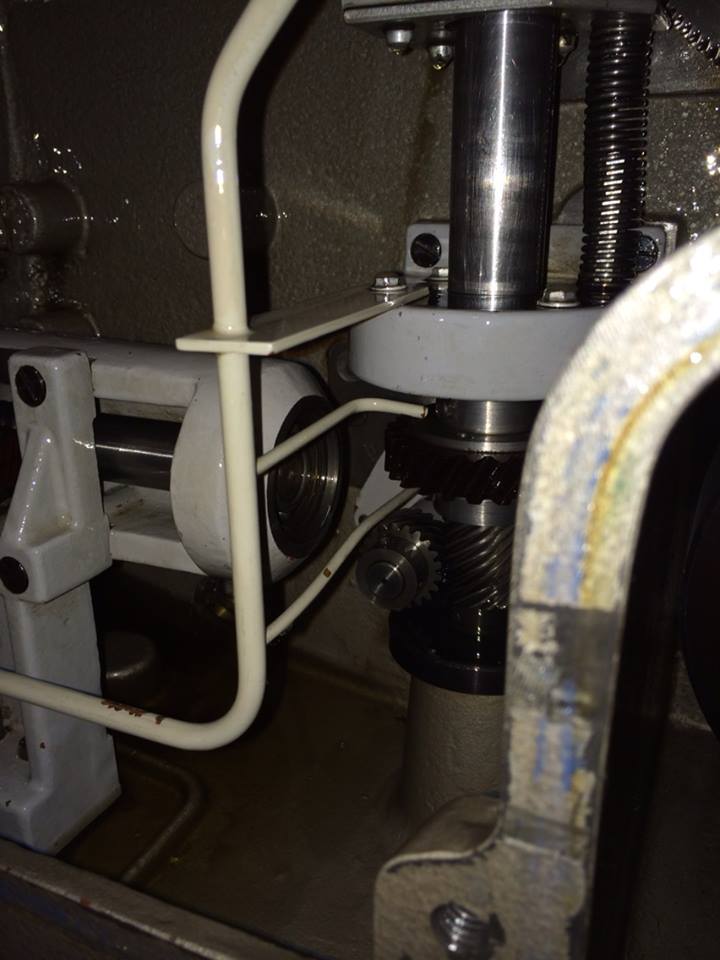
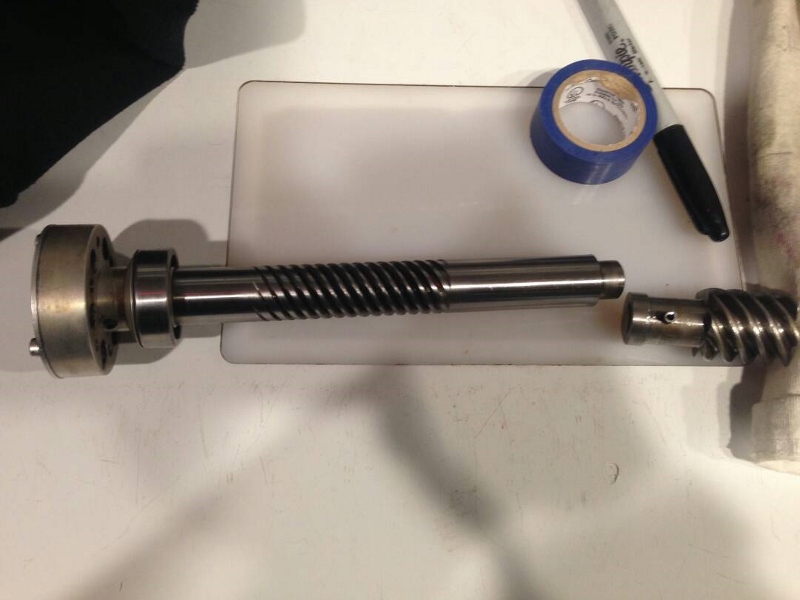
During the credits of our last movie (incidentally the last movie we will ever show on 35mm), the main drive shaft on one of our DP70s failed. It appears that the shaft sheared at the point where it slides into the helical drive gear. Fortunately for us future movies will be on our digital projector, but since we run a changeover booth, we need to get this projector working again if we are to ever show 35mm again. Are replacement parts for this projector available? I would also be interested to hear any theories on how this happened.

Posted by Pete Naples (Member # 761) on 02-17-2014, 12:09 PM:
Wow! You don't often see a DP70 that broken.
Some parts are available, get your local Kinoton dealer to check stock with the factory. Be warned that a; there's not much left and b; parts are EXPENSIVE.
I'd also be looking at why the mech is putting enough load on that shaft to shear it. Ruling out issues of metallurgy of the shaft itself, or the bearing binding, overheating. Doesn't look like it from the pictures but it's hard to diagnose without the evidence in hand.
The photo doesn't shoe classic shear failure of the shaft, ie it doesn't look like it failed with a twisting motion. Typically the broken ends look 'swirled'.
My dad used to have a pet metallurgist on his staff, he was immensely informative with things like this as he'd look at it, tell you how it failed and why it failed. I often wish those guys were still around ![[Frown]](frown.gif)
Posted by Mark Gulbrandsen (Member # 72) on 02-17-2014, 12:17 PM:
Kinoton still has new parts available for mucho $$$$. I've worked on gobs of DP-70 but have never seen that happen. It is hard to tell from the picture if it has ever been replaced before. Even more odd are the fact that those shafts are not hardened and so won't generally have a tendency to just snap off. They are soft steel just like the parts in a Brenkert are. Be aware when you replace it that the whole drive shaft assembly has to be removed from the projector to do the job properly. You will have to press the gear back on the new shaft, drill the correct # size hole for the (new, don't re-use the old one) split pin and then press the pin into place. Where most techs make a big mistake is doing all this with the drive casting in place. With the shaft being soft steel tapping on the split pin to get it back in will likely very slightly bend the end of the shaft where the gear sits.
There are a lot of DP-70 sitting in Wyoming that Film-Tech member Randy Pryde owns. You might consider contacting him and grabbng an entire machine from him so you have spare parts for all eternity. Many of those are DP-70 that I have rebuilt.
There are other dealers that may still have used parts but be weary and get a money back guarantee on any used item you buy!! I have seen drive shafts in DP-70 with as many as four holes drilled through them for various gears refits.
Mark
Posted by Dick Vaughan (Member # 540) on 02-18-2014, 06:04 AM:
Pete as a metallurgist in a former life , haven't actively done any fracture analysis on a regular basis for 30 years, I have to say that does look wierd! ![[Confused]](confused.gif)
You're right a straight forward torsional falure would have a twisting , swirl type surface.
This almost looks like a fatigue failure with progressive " tide marks" . It's a bit difficult to tell from this picture.
The confusing bits is that it seems to be bi-directional with an origin point at the centre.
The fact that the two series of curves meet opposite the grub screw holding the collar/gear is interesting as well.
If I'm talking complete rubbish please excuse me it's been a while ! ![[Roll Eyes]](rolleyes.gif)
Posted by Pete Naples (Member # 761) on 02-18-2014, 06:28 AM:
You know more about the subject than I do Dick. I just go on what I learned from my dad and his cohorts when I were a lad.
It just doesn't look like a classic shear failure, does it?
Which lends weight to Mark's point about servicing that shaft in place.
Posted by Mark Gulbrandsen (Member # 72) on 02-18-2014, 04:47 PM:
You also need a V block behind the gear when the new split pin is pressed or tapped into place. The V Block should be made of oak or equivelent hard wood. Needs to be softer than the metal you;re backint it with.
Posted by Markus Ito (Member # 6207) on 02-18-2014, 08:21 PM:
Thanks for all the great advice. I think I will try and contact Randy and see if he would be willing to sell us a projector. Having a few spare parts would definitely be handy. We priced out a new shaft from the company that services our projectors and they quoted us $1700 for the shaft only, not including the helical end gear or installation cost. We might be able to salvage the gear from the old shaft but since it is pressed on, it looks like getting it off will be tough with nothing to grip on to.
Posted by Pete Naples (Member # 761) on 02-19-2014, 10:04 AM:
Markus, knowing the cost of DP70 parts from the factory as I do, that price doesn't sound unreasonable to me.
A couple of years ago we supplied a pair of factory fresh intermittent units to customer, co-incidentally the last ones Kinoton had.
I've bought a nearly new car for less than the bill for 2xDP70 intermittents!
Posted by Sam D. Chavez (Member # 1841) on 02-19-2014, 10:39 AM:
I have 2 new in the box DP70 intermittents found in various UA/Regal cinemas I pillaged a few years ago.
No shafts though. Randy will help you out I'm sure, but it's a long way to Wyoming.
Posted by Mark Gulbrandsen (Member # 72) on 02-19-2014, 01:01 PM:
You can absolutely salvage and re-use the old drive gear and you should. Just take it to a competent machine shop. They'll press out the pin and then press the broken shaft piece out of the gear. BTW: Those drive gears are ONLY sold in matched sets. They are also well over a grand for the set.
All of this is really a job for a qualified machinist rather then the every day projector service guy. Few service people ever come into contact with these projectors. If I lived closer I'd do it for free... just because!
Mark
Posted by Markus Ito (Member # 6207) on 02-22-2014, 01:58 PM:
I contacted Randy and he offered to sell us a projector head. The cost including shipping ended up being less than the cost of the shaft so this ends up being a great deal and assures us of replacements parts for a while.
Mark, you recommend reusing the old gear over the one that comes with the replacement? Is this because the gear and the fiber gear it meshes with are matched and won't work with a new one?
Posted by Louis Bornwasser (Member # 3063) on 02-22-2014, 07:26 PM:
I have 2 vertical shafts (23 inches?) new for AAII. Louis
Posted by Steve Matz (Member # 1890) on 02-22-2014, 07:30 PM:
That's pretty pathetic that a company would have to charge $1700.00 for a piece like that. If you can find a competent machine shop that has say a HURCO 5 AXIS CNC MACHINE. They
could reproduce that piece and easily be inside 1/10,000s
tolerance or 1/100,000 if need be for a few hundred dollars.
their speed and tolerance control is something you have to see in person to believe..Amazing ![[thumbsup]](graemlins/thumbsup.gif)
Posted by Mark Gulbrandsen (Member # 72) on 02-23-2014, 11:32 AM:
And by the time you pay someone do do an autocad drawing, purchase and set up any special tooling needed, set up the machine and then operate it... for one part? Steve it would cost way more for that first part. If you were going to produce multiple parts like Wolk or LaVezzi did then it's a good idea. This is a part that virtually never ever wears out.
Yes, re-use the old gear. You may find a completely different gear pair in the projector you are buying. There were fine pitch gears which was discontinued and the coarse pitch that you have. The gears have been running together and also have established a wear pattern between them where they make contact. So re-use the old one.
Mark
Posted by Steve Matz (Member # 1890) on 02-23-2014, 06:18 PM:
[quote]And by the time you pay someone do do an autocad drawing, purchase and set up any special tooling needed, set up the machine and then operate it... for one part? Steve it would cost way more for that first part. If you were going to produce multiple parts like Wolk or LaVezzi did then it's a good idea. This is a part that virtually never.[quote]
Mark; you must be talking older CNC Machines; These Machines today have 3D Scanning Properties in them and could program a setup for that shaft in less than 5 minutes. All that's needed is what piece of billet Stock your using. Whether its say a piece of 4340 Carbon Steel,or what ever Kinoton originally used.
That shaft would be a piece of Cake;in fact even at 200 dollars
an hour That piece would probably take maybe 20 minutes tops to
produce. Even an older Bridgeport Vertical could handle that pretty easily. I think German pride is coming here. There is no way a piece like that should be costing 1700 dollars. Reminds me of what the Automotive Paint Mfgers started doing in the later 80's. Jacking up Catalized Acrylic Enamel that sold on an Average of 30 dollars a gallon to the Paint/Body shops to over 300+ dollars. It gets even worse every year. CALLED GREED!
Posted by Leo Enticknap (Member # 534) on 02-23-2014, 07:39 PM:
quote: Steve Matz
I think German pride is coming here. There is no way a piece like that should be costing 1700 dollars.
I'm not totally sure that this gouging. Most of my time in the biz was spent either in Cinemeccanica or Kinoton booths. The essentialy difference between the two was that Cinemeccanica = spare parts were cheap, things did wear out and break but pretty much every repair you were likely to need to do could be done with a basic toolkit and some common sense. Kinoton = bombproof machines, needed very little maintenance apart from intermittent oil changes and plastic gate components replaced ... but when they did go wrong, the parts were expensive and the repair needed advanced engineering skills and often specialist tools. I remember once paying £300ish (about $450) for an FP20 intermittent shaft - a little milled piece of steel about half the size of a pencil.
As Pete points out, this drive shaft is a part that is designed to last the life of the projector (and furthermore a 50-year old projector of which there are probably only around a couple of hundred left in regular use worldwide, if that), not to need regular replacement. So there would never have been many spares sitting around in dealers' stocks in the first place, and the factory would not have been making new ones regularly for at least 30-40 years. Furthermore, it's a precision engineered part that takes a significant amount of highly skilled labor to make.
Add to that you've got the forex, shipping and customs overheads that come with importing anything from overseas (in fact, given the USD/EUR exchange rate, that part would probably have cost $2k if you'd bought it a year and a half ago)
There may be new materials and production techniques (e.g. 3D printing) that could enable an existing one to be scanned and reproduced without the economy of scale disadvantage that comes with bespoke (rather than mass) production. But if there aren't, and knowing the Kinoton design/manufacture philosophy, $1,700 doesn't sound totally outrageous to me.
Posted by Mark Gulbrandsen (Member # 72) on 02-23-2014, 08:18 PM:
You also have to take into consideration that they've stored these parts in warehouse(s) for in excess of 50 years! That also costs money and that is always factored into the parts cost. It is also highly likely the new shafts thay have were actually made by Phillips in Holland.
Steve... I used to own a complete machine shop when I lived in Chicago. I had verticle mills, several size lathes and surface grinders among the normal machine tools in the shop. I couldn't have made that part. No way, no how. The O.D. of that shaft is precision ground as is the worm that drives the oil pump ground into it. The bearing O.D.'s whch are both different are also presision ground. There are holes precision located that are drilled and reamed for the gear and hub split pins. I could have roughed that shaft out on the Hardinge but then it would have had to go to a place that does OD grinding between centers. to do the finish and then to a gear hobbing shop to have the worm roughed in and then ground.
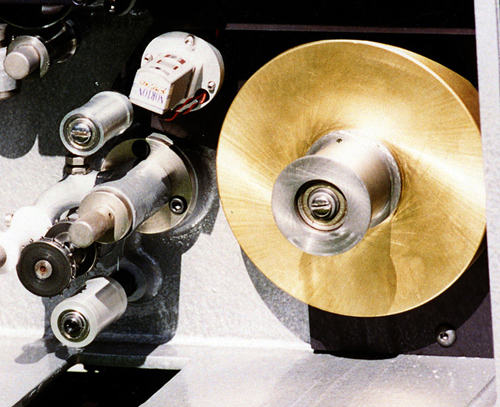
You can see in the picture the brass flywheel and the stainless steel (non magnetic) hub in this dailies projector I used to manufacture. Even on a precision Hardinge I could only hold .02 run out. Not good enough for a flywheel! I held that tolerance and then had the entire O.D. ground in one pass by a friend that owned another machine shop. He was able to hold .0009' on runout with Abec 7 bearings in place and that was more than acceptable. The grinding was done on the actual bearings that the flywheel would run on and the entire grinding operation was done in one single pass front to back. I also manufactured hardened steel shutter shafts for Century projectors to match up with LaVezzi's hardened verticle shaft. That entailed a roughing operation which I did, two seperate heat treatment operations which took the shafts to Rockwell 60 hardness, and the final O.D. done on a centerless grindng machine by a company in New York. There is so little tolerance on the O.D. of shafts used in a century because of the type of ball bearings used.
Anyway,
No existing CNC is gonna give you a ground finish tolerance on heat treated steel like that! I've been to LaVezzi many times seen how they make the parts, same for Wolk.
Mark
Posted by Steve Matz (Member # 1890) on 02-23-2014, 09:02 PM:
Well I've seen these Machines work in person and nothing is going to change my mind of what I just said. They make precision parts that have to turn 10 times the speed that a Projector Shaft has to Turn and last 500 race miles. I think if you saw that Hurco in action you
would be a believer, After all this shaft was originally produced by
past Machinery that didn't have the accuracy of today's high end
CNC's or even Computerized Verical Mills.If a part that's turning 1440rpm still snaps off like that just turning a projector mechanism that doesn't say too much about Rockwell hardness...
Posted by Mark Gulbrandsen (Member # 72) on 02-24-2014, 10:42 AM:
The shafts in the DP-70 are not hardened shafts! If you had read all the previous posts you'd know that. And there is a huge difference between precision machined and precision ground and precision machining generally precedes precision grinding but apparently my last post didn't get that across. If the CNC was accurate enough then grinders would be disappearing quickly which is simply not the case. If you visit LaVezzi Precision you're going to see a lot more grinders there than CNC machines! And yes I have seen the Hurco machine. Strong used one to machine their main projector castings. Would you like to see pictures of it?
Posted by Pete Naples (Member # 761) on 02-24-2014, 11:25 AM:
I think the German machinists who made these parts might be somewhat offended to be told they "didn't have the accuracy of today's high end CNC's".!
They most certainly did.
Posted by Mark Gulbrandsen (Member # 72) on 02-24-2014, 12:13 PM:
You're right Pete! They actually worked to even tighter tolerances with hand operated machinery than modern CNC machines can deliver. Micron tolerances on the intermittents I know for sure. While machined surfaces and so-so tolerances may be ok for motorcycles they generally don't contribute to long lasting movie projectors.
Mark
Posted by Pete Naples (Member # 761) on 02-24-2014, 12:53 PM:
I've been in the factory, and seen how they work. As someone who grew up around machines and machinists, (think gunsmithing and watchmaking). I was impressed.
Posted by Steve Matz (Member # 1890) on 02-24-2014, 04:42 PM:
No one was knocking the German's on their ability to produce superior Products in a Variety of Fields.I'm just Telling you you aren't going to find any higher Accuracy than what these Machines have today and at the speed they can maintain that accuracy. I have plenty of Machine Shop Experience going back to the 70's so I'm not just some Layman bragging up someone's Product.I have run every type of Machine that was ever in any type Automotive Engine Shop and maintaining 1/10 thousands accuracy is old Hat. Even DEVRY'S 1940 advertising of their 12000 series intermittents claims that same Tolerance. When you start discussing 1/100 thousands consist accuracy then your in a whole new ball game. If you were familiar with modern CNC's than you would know that they have Grinder attachments for doing work on Billet Tool Steel Material which a Carbide Cutter is incapable of machining... Enough Said on my Part of this Issue.
We all have our own Opinions but I will put up my Machine Shop Skills up against anybody who thinks they know everything about being a Machinist....
Posted by Leo Enticknap (Member # 534) on 02-24-2014, 07:10 PM:
Regardless of the machine tool specifics of creating a replacement drive shaft, the fact that the DP70s in existence are all between around 40 to 60 years old, but yet a significant number of them remain in daily, revenue earning service, and parts are still available from the OEM strikes me as a testament to Philips/Kinoton engineering and after-sales support. I mean, if you walked into your local Ford dealership and asked for a replacement gearbox for a 1959 Skyliner, or called up Lockheed wanting a new wing spar for a Constellation (both of these were in production at the same time as the DP70), you'd get a rather surprised response!
Posted by Sam D. Chavez (Member # 1841) on 02-24-2014, 07:19 PM:
Steve,
You're the only one here making this topic about you instead of the relative accuracy back in the day vs. today.
This is more about accuracy at what cost, relative to the past. My cousin ran an a high volume aerospace machine shop in the early '60's, for customers such as Lockheed before CNC was happening. Tolerances requirements were just as demanding then as they are now for similar industries.
Nobody is challenging your skills as a machinist, nobody really cares. It's more about getting the job done to whatever accuracy is required either by people power vs. an automated machine.
Our little industry never really scales up to needing large quantities. There are only 110,000 cinemas in the entire world after all. Supply and demand is why a shaft ends up costing $1,700 in a cottage industry.
Posted by Steve Guttag (Member # 268) on 02-25-2014, 06:06 AM:
quote:
if you walked into your local Ford dealership and asked for a replacement gearbox for a 1959 Skyliner, or called up Lockheed wanting a new wing spar for a Constellation (both of these were in production at the same time as the DP70), you'd get a rather surprised response!
In a prior life, I used to work on a Model-A Ford (1930, in particular). Oddly enough, if you needed a replacement carburetor, Ford still supplied a suitable replacement in the "Motorcraft" brand box by Tillotson (model-X). I just checked and one can STILL get the thing new. While that was not the original carb...I was always amazed at how well supported the Model-A was (and apparently still is).
I think the DP70 was well supported because of what it was, where it was located and the fact, it didn't consume much in the way of parts.
Posted by Leo Enticknap (Member # 534) on 02-26-2014, 01:24 AM:
[apologies for going slightly OT]
My cousin's first car was a 1967 Morris Minor, which he got in the late '90s. Along with learning to drive on it, he virtually "D-checked" the thing himself, in the process of which he discovered that new replacements of almost every single component part are still being made. Either they are parts that are still used in more recent vehicles (e.g. the spark plugs), or ones made for other vehicles that can be adapted pretty easily to go in a Minor, or like-for-like replacements made by an aftermarket manufacturer that specializes in selling to classic car enthusiasts. From the owners' club magazines and catalogs he showed me (this was just before you'd go online to get this sort of stuff), I formed the impression that you could probably build a whole new Minor out of the bits you could buy from various places.
But [trying to return to topic] around one and a half million of these things were made, and so the economies of scale involved mean that there is still probably a market of tens of thousands of customers for parts to keep the remaining ones alive. As Sam points out, the number of DP70s still running is a tiny fraction of that, which makes it all the more impressive that the OEM can still supply a replacement part, that was never intended to be a life-limited one at all, for a model that has been out of production for so long.
Posted by Sam D. Chavez (Member # 1841) on 02-26-2014, 10:46 AM:
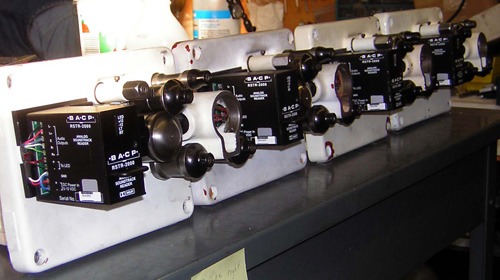
I made hand built readers for the DP70 as a trade show piece thinking I would sell maybe 25 sets tops or I would have gone the CNC route. To my surprise, I sold over 10 times that amount because people did not want to give them up. Still have a few in stock.
Now back to your regularly scheduled program in progress...
Posted by Mark Gulbrandsen (Member # 72) on 02-26-2014, 01:52 PM:
And those castings were so old the cast iron was incredibly difficult to machine off. Cast iron hardens with age and all I can say is DAYUM! I finally resorted to using a band saw to cut most of it off and even that was time consuming. Then a solid carbide end mill to do the finish work. The carbide end mills would only last for four or five castings. The slot in the sound drums had to be opened wider by plunge grinding. The drums were hardened at the factory to RC65!
Posted by Pete Naples (Member # 761) on 02-26-2014, 02:05 PM:
There's a pair of your finest in Edinburgh Sam ![[Smile]](smile.gif)
Now semi-retired of course, but still in use when required.
Posted by Sam D. Chavez (Member # 1841) on 02-26-2014, 05:50 PM:
quote: Pete Naples
Now semi-retired of course, but still in use when required.
Kind of like me. ![[Wink]](wink.gif)
Posted by Louis Bornwasser (Member # 3063) on 02-27-2014, 02:34 PM:
You're not the Lone Ranger! I feel like the steam locomotive overhaul facility that is no longer needed! Louis
Posted by Gordon McLeod (Member # 33) on 02-27-2014, 03:04 PM:
Is BIG BOY going to your shop for restoration ?
Posted by Mark Gulbrandsen (Member # 72) on 02-28-2014, 10:41 AM:
It's actually coming here!
Before it heads here...
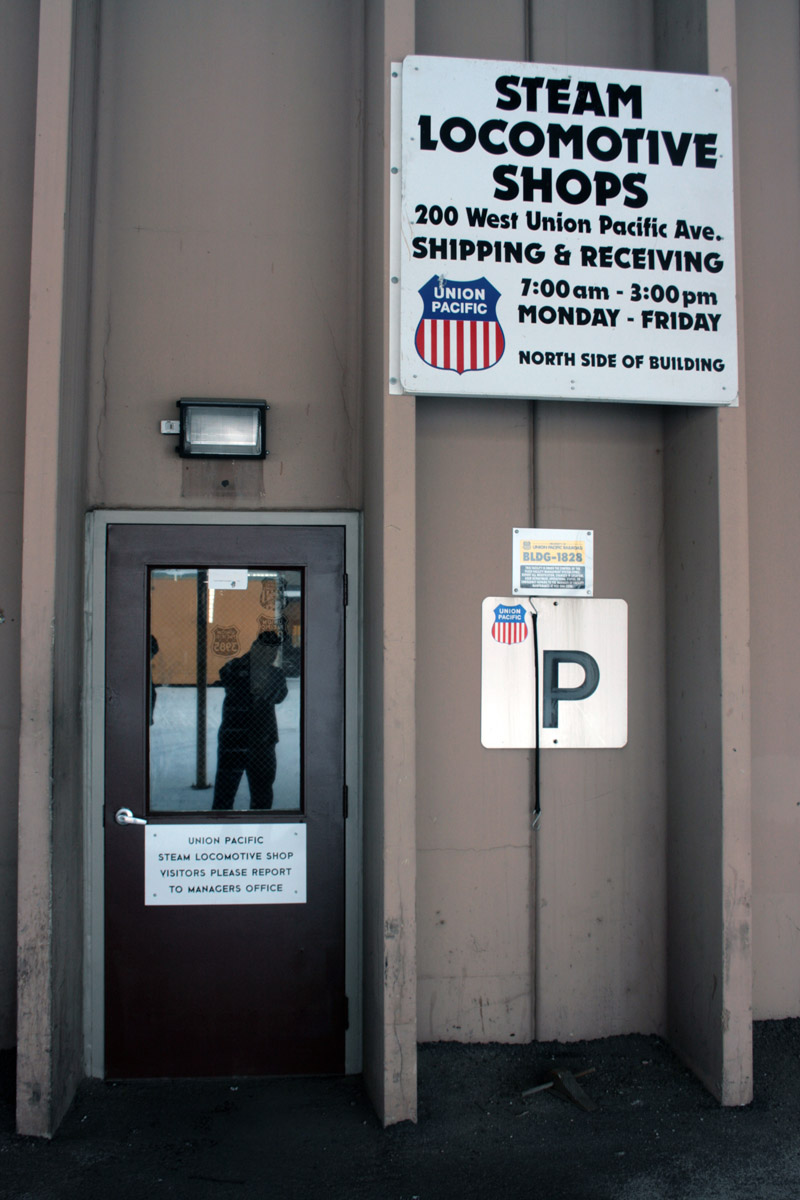
To sit in this very spot for rebuilding...
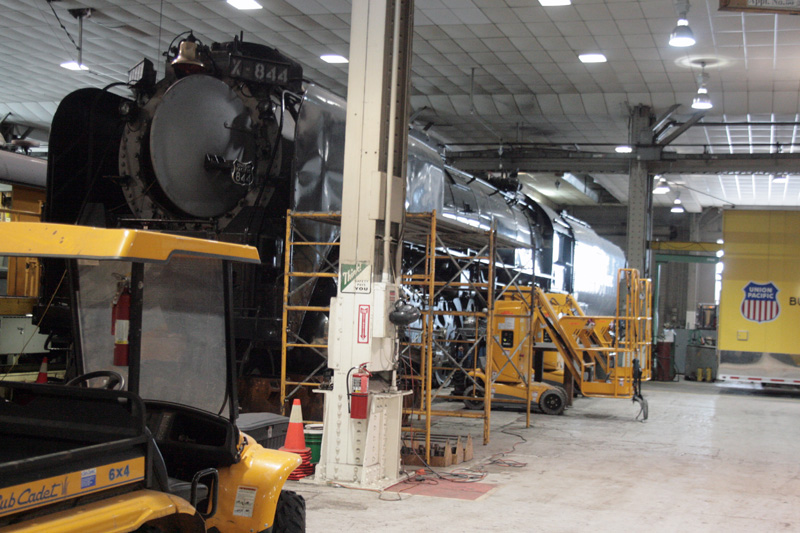
So you feel like what Steam Locomotive facility that's no longer needed Louis?
Posted by Louis Bornwasser (Member # 3063) on 03-01-2014, 04:02 PM:
Probably all of them except one.
Posted by Mark Gulbrandsen (Member # 72) on 03-02-2014, 09:49 AM:
I could cite at least half dozen Steam Shops still in continuous use today.
Powered by Infopop Corporation
UBB.classicTM
6.3.1.2