This is topic Simplex E-7 Collectors in forum Film Handlers' Forum at Film-Tech Forum ARCHIVE.


To visit this topic, use this URL:
https://ft-forum.com/ft/cgi-bin/ubb/ultimatebb.cgi?ubb=get_topic;f=1;t=011692

Posted by Will Kutler (Member # 770) on 08-07-2014, 07:06 PM:
 
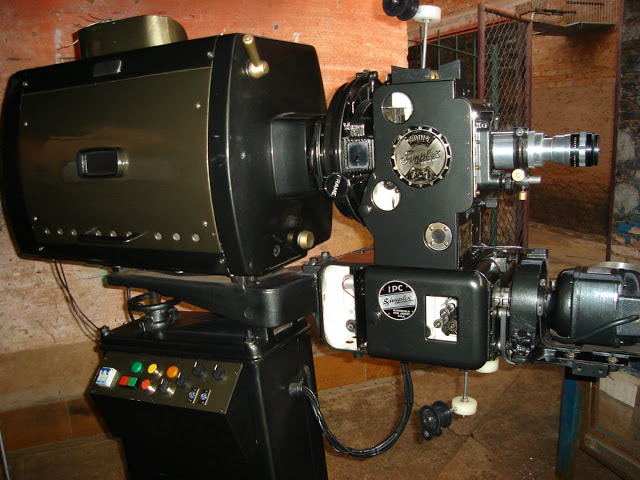
I was just interested in starting a new thread for E-7 collectors. Who is still collecting/restoring/operating and if there are still any untapped sources for spare parts.

E-7 topics have been covered extensively in other threads...but maybe we can collate here.
 
Posted by Steve Matz (Member # 1890) on 08-07-2014, 07:57 PM:
 
I love these old E7's;It was the first 35mm Projector I ever saw when I went into my first projection booth at 6 years old.All four Downtown theaters here in the 50's had E7's that were installed right at the beginning of WWII.When the XL came along in 48 None of the theaters upgraded and continued with their E7's until they Closed up or changed Venues. Let's see if these Digital Projectors have the Longevity these Great Old Projectors
had... [thumbsup]

 -
 
Posted by Scott Norwood (Member # 30) on 08-07-2014, 08:39 PM:
 
What is so great about the E-7? For historical value, there are probably more Super Simplexes still in use, while the X-L is a much better design and very innovative for its time.

The photograph is interesting: that is a nice-looking projector, but the soundhead needs a door for the exciter-lamp compartment. Also, what is that lamphouse, and is that an anamorphic lens that was designed for 16mm projectors? Is that a home-built automation system?
 
Posted by Steve Matz (Member # 1890) on 08-07-2014, 09:07 PM:
 
The reason there are probably more Supers around is they were made almost 10 years before(1928) the E7 main Production started(1938), As far as comparison; E7 out classes a Super all over.It had revised features that made it a Superior Unit. Front and Rear Syncronized Shutters on the same shaft. Each Shutter acting on a Half Beam giving a Disolve effect and producing more Light(12.5%) Used a One shot oiling system that sent oil to every Part that need lubrication with the push of your Thumb. Used Hunting Tooth Gearing where the gears revolved on stationary shafts;no revolving in Bushing in the Main Frame.Pretty nice projector for 30's technology!

As far as the XL goes. The Idea when you introduce a new model is it's supposed to be a better unit. But the reliability of the E7 kept 100's of theaters from updating to them; and as I said previously all 4 Theaters here used them way past when the XL came along(48/49) and continued until the theaters closed...

I'm not knocking a Super, they were good units but updated Technology related to the E7 makes them a better Projector IMHO...
 
Posted by Monte L Fullmer (Member # 2797) on 08-08-2014, 03:05 AM:
 
A former company I used to work for took over a single palace house that was closed up for years.

Booth had E-7's, Simplex Mag penthouses and Enarc lamphouses. My task was to convert the booth to be ready for xenon and platter. Thus, I took out the No.2 machine for the platter and No.1 machine to be cleaned up and converted to LED reverse scan.

Both projectors had noisy intermittents, yet found parts in the location to do one rebuild.

Being the old taper pin starwheel shafts, I dismantled the assembly and cleaned out all the goo that resided in the case. The starwheel was in bad shape due to a bad cam pin. Replaced both with the new found parts along with reversing the sprocket to use the other side.

I fine tuned in the assembly to where one can feel the pin enter into the starwheel at the right moment, tightened it all up, filled it with oil and let it run in for a while. Ran film through that thing and it was ghostly quiet for film to pass through an E-7 after that rebuild.

Owner was impressed along with the manager on how quiet that machine ran - quieter than a PR-1050 at the other locations..

Two weeks later, a high school booth clown made his loops too small causing a splice break which the upper sprocket took the break en to wrap it good around the upper sprocket to stop it and to shred out the oblique gear .. and had to rebuild that E-7 again with parts that were still on location.

He was told on how the loops supposed to look like, but he didn't care - he lost his job that same day.

-Monte
 
Posted by Jim Henk (Member # 3628) on 08-08-2014, 04:12 AM:
 
Steve, I think that E-7 looks great! I think it's actually a Dalek about to EXTERMINATE!
 
Posted by Mark Gulbrandsen (Member # 72) on 08-08-2014, 11:03 AM:
 
I have an oblique shaft E-7 that's never ever run film. It's going in the dumpster next month when I clean out the warehouse. Come haul it away if you want it. I am keeping the three Supers and all the Phillips stuff I have though. They are much better projectors than the E-7! Put a set of Posi-Trol,sprockets on a Super and the things will blow away any other projector on the planet. They are nearly bullet proof and ran great on platters with a once a day oiling. I pulled countless Supers that NEVER broke down.

Monte... E-7's never ever had taper pin star shaft's! Always screw and nut.

Steve Matz... There is nothing that's really superior in an E-7 over a Super. The double shutters had to be abandoned for CinemaScope and the one shot oilers tubing plugged up over the years causing some projectors to bind up. The shutter efficiency is exactly the same as a Super and the E-7 is a big pain in the ass to disassemble. You can rebuild two Supers for every E-7. The E-7 introduced studio guides (some call them dirt holders) to projection but they really did not improve lateral steadiness at all. The one thing it had that was nice were easily removable gate and trap. The oblique gearing was very failure prone and most were converted to a vertical shaft configuration which was only marginally stronger. The gearing on both was too tiny for the job! By the way The theater in Big Timber ran an E-7 until about an year ago. Far as I know it was the last one on the planet.

Simplex X-L's varied in overall quality since the day they were introduced. The older main castings are awful pot metal that is very porous. Later main castings improved as they began heat treating them. The rest of the covers were also pot metal and almost all covers warped. This projector design was bought and sold at least five times during it's production life. Some that had high power arcs behind them warped in place. Strong fixed many of the cover issues and also produced very good main castings. But by then intermittent parts quality became inconsistent and the simplex bounce appeared on screens all over the world. Strong jazzed up the intermittent ruining it at the same time and the case halves were no longer interchangeable. So the best X-L's might be defined as having a main casting and covers made by strong with original Simplex gearing and intermittent in it. They all leaked oil to varying degrees. The conical,shutter approached 50% efficiency. I think Singer produced the best ones.

Mark
 
Posted by Steve Matz (Member # 1890) on 08-08-2014, 11:39 AM:
 
Well Mark we can agree to disagree. If I was a Theater Owner in 1939 I probably would have bought CENTURY P's over the Simplex's to begin with....
 
Posted by Jim Cassedy (Member # 4115) on 08-08-2014, 11:59 AM:
 
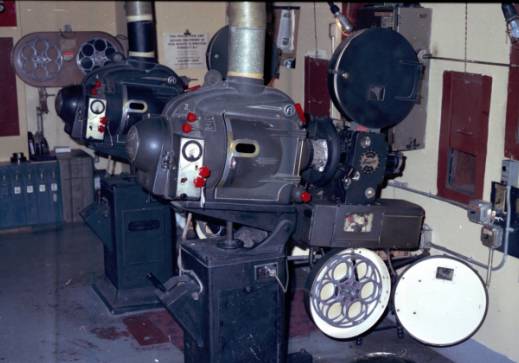
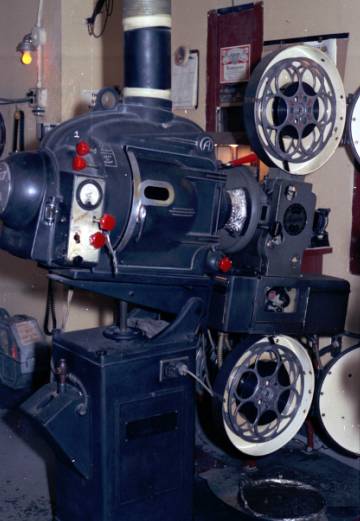
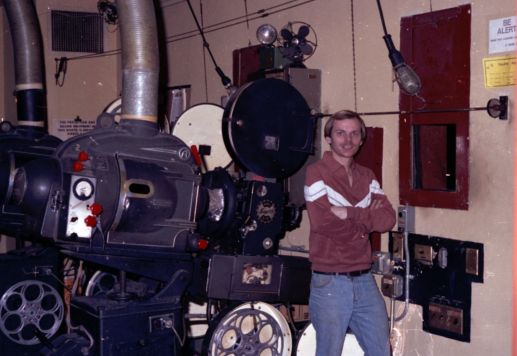
Nice Pair Of E-7's At The UA Farmingdale (NY) [1978]
 -

I ran these machines for almost 9years
and never had any problems. These were
the original projectors installed when the
theater opened in 1939. I just kept them
clean & lubricated & they ran great!
 -

(Note the 'modern' air & emergency lighting systems!)
 -
!
 
Posted by Mark Gulbrandsen (Member # 72) on 08-08-2014, 01:19 PM:
 
Interesting combination of equipment there. That had to be the last set of those Ashcraft lamps operating on the planet even in 1978!

Steve Matz... Although you no doubt have nearly 40 years experience servicing and rebuilding projectors I will say that the 1939-1940 Century's were the best ones period. The Model C was cast iron in those days. I rebuilt a number of the cast iron Centuries in the 1990's and the casting was hard as diamond. I installed Kelmar turrets on them and normally one just uses a sawzall to cut out the front for the turret. Not on these, four blades later I was about an inch into the casting. Had to have them plasma cut! Not even sure water jet cutting wolda worked.

Mark
 
Posted by Tony Ratcliff (Member # 1196) on 08-08-2014, 01:24 PM:
 
I'm still running an E-7 in my theatre right now.
Other than oblique gear and very leaky on oil, they have been rock solid.

Mark, I'd love to have that E-7 if you are just going to toss it.
I am in Indiana, though, so it would have to be shipped.
PM me if you want to work out something.
 
Posted by Mark Gulbrandsen (Member # 72) on 08-08-2014, 01:26 PM:
 
Tony,

It's yours. Just pay the packing and shipping. I can drop it off at Navis Pack And Ship here in town. It may have to be crated because of it's weight. I just shipped an X-L and they quoited me 125 to build the crate. It could probably go Fed-Ex Ground even in the crate. I think they do up to 150 pounds.

Mark
 
Posted by Will Kutler (Member # 770) on 08-08-2014, 02:38 PM:
 
Tony beat me to it! Mark, what else are you sending to the dump? Please email or p.m. me your phone number so we can talk tonight or over the weekend.

Cheers

K
 
Posted by Tony Bandiera Jr (Member # 2365) on 08-08-2014, 02:38 PM:
 
Mark, send me a message when you are going to clean the warehouse out...I'd like to help and maybe intercept some stuff headed to the dumpster. [Smile]

I have to sched a doc's appt in Ogden early next month, will let you know what day and time.
 
Posted by Gordon McLeod (Member # 33) on 08-08-2014, 02:44 PM:
 
The E7 had a adjustable gate tension unlike the early supers they had far less issues with abrading the perf area than the supers they had by far a better image than the super or the Xl
Until it had a mishap the oblique shaft was far more quiet than the vertical that was more robust
never heard of a oiler plugging up and the E7 was the most common head till the change to Vic8 and VIc 5 occured up here
they were a rock solid machine overall
Steve what is that lamphouse
 
Posted by Louis Bornwasser (Member # 3063) on 08-08-2014, 03:05 PM:
 
Actually I always thought of the Super as the "reference" projector. It could easily have a sharp bright steady picture. Many many projectors after that did not (V4, Ballantyne, etc.) While many of these could be fixed; they certainly did not arrive that way from the factory. The only possibility of improving anything was with the curved gate machines which had the possibility of not puckering. Even the AA2 puckered until you remachined the gate.
 
Posted by Rick Raskin (Member # 1561) on 08-08-2014, 04:27 PM:
 
In 1975 the Kennedy Center had E7s in the booth of the Eisenhower Theater. I have no idea if they are still there.
 
Posted by Mark Gulbrandsen (Member # 72) on 08-08-2014, 04:30 PM:
 
A good friend of mine developed a compound curved gate runner for the DP-70. It worked really well and was available as an off the shelf part from Wolk. While at Claco we had Wolk manufacture 35mm gate bands. They did a really good job on those. Also had 35mm vkf sprockets made by LaVezzi for theaters running just 35mm.

Mark
 
Posted by Steve Matz (Member # 1890) on 08-08-2014, 05:04 PM:
 
Old Beater E7 that has seen better Days...


https://www.youtube.com/watch?v=ZUcLnD1fXNQ
 
Posted by Scott Norwood (Member # 30) on 08-08-2014, 09:17 PM:
 
Mark--The now-closed Ioka Theatre in Exeter, NH had those little Ashcraft lamphouses and was using them daily in the 90s. At some point, they converted one machine to platter operation, but the other one is still there with one of those lamphouses, as far as I know.

I think that I have seen those in at least one other venue, too, but don't remember where.

Steve--I have actually been to that theatre-turned gift shop in Jerome, AZ. Jerome is an interesting town that is worth a visit, though the staff at that particular location was kind of rude about not letting me look around the building.

As for E-7s, the only ones that I know of in this area were in use at the Museum of Fine Arts into the mid-2000s, when they were replaced with Kinotons. There is a very rusted pair in the long-defunct booth at the Strand Theatre in Dorchester, too.
 
Posted by Kenneth Wuepper (Member # 1174) on 08-09-2014, 07:39 AM:
 
The last I knew of this, the Broadway Theatre in Mount Pleasant, Michigan had their old upstairs booth with lots of old seats and the two E7 Simplex machines and carbon lamps.

The machines were abandoned when they went to platter and Xenon behind the concession stand.
 
Posted by Will Kutler (Member # 770) on 08-09-2014, 11:29 AM:
 
Mark mentioned potential problems with potential Bijur lubrication failure.

Both the oblique and vertical shaft books list the Bijur drip/check valve part numbers. These parts are still available from Bijur and are listed on their web-site. This includes mechanical dwgs as well as technical information.

FJD = Meter Units: F=Inch Threads, JD= made from 5/16 hex bar for closer hole spacing w/ 1/4-28 outlet thread to accommodate 5/16 hex compression nut B3610.

Early Bijur pump reservoir was cast iron. Later ones were die-cast.

There were also several E-7 mechanical design changes over the years, including:

F-182-G Front Ball Bearing Flange. Both vertical and oblique shaft versions share the same part number, but there is about a 1 1/2 inch difference in length.

The early front shutter spider S-1400 and was made of cast iron. Casting pattern was later revised to S-1400-D and cast from a much lighter aluminum.

The Spot Sight Box castings B-434 were revised and thinned/lightened in weight.

Shutter shafts were different depending on who made them...Wolk's did not have oil galleys as depicted on E-7 book. I discussed this in another thread.

Beware! As John Eickhof pointed out to me, oblique shaft and vertical shaft shutter gears are different with different part numbers. Even though they look identical, the pressure angles are different.

Even though the ball bearing jam nuts have different part numbers...they are interchangeable.

Some of the gate-trap parts were used on X-L
 
Posted by Steve Matz (Member # 1890) on 08-09-2014, 12:00 PM:
 
Well; all I have to say is the number of old school projectionists that I have talked with in a 50+YR time span. I would say that over 90+ percent of them had only good things to say about an E7. The ones that Knock the projector were usually incompetents that shouldn't of been in a projection booth running anything. Brenkerts leaked as much or more oil tham Simplex's. If these Projectors were so bad how come 100's of theaters kept them after the XL came along...

 -
J.Frank Reynolds -1950's Projectionist Loved his E7's
 
Posted by Mark Gulbrandsen (Member # 72) on 08-09-2014, 12:39 PM:
 
Sure Steve... They were fine to operate. They sucked to tear down to repair. As Steve Guttag says "the longer these run the more time it takes to repair them". This is truely the one and only projector THAT line applys to.

Mark
 
Posted by Steve Guttag (Member # 268) on 08-09-2014, 03:17 PM:
 
That isn't really a paraphrase, let alone a quote. The older they get, the more likely you'll need to repair them is more like it.
 
Posted by Gordon McLeod (Member # 33) on 08-09-2014, 03:24 PM:
 
And that is true of any projector
 
Posted by Will Kutler (Member # 770) on 08-09-2014, 03:33 PM:
 
My intent with this thread was to provide a space for E-7 people to come together for restoration info and advice, potential parts sources and tech info...not a place for people to start fighting with and insulting each other.......

Does anyone know the LaVezzi VKF part numbers for E-7 intermittent, feed and hold back sprockets? I was told that E-7 Intermittent sprocket is same as Century?

Does anyone have favorite sprocket styles for use on E-7s?
 
Posted by Steve Matz (Member # 1890) on 08-09-2014, 05:09 PM:
 
Observe on my Photo above, the Front Shutter on the Left Projector. Good indication this was taken before Cinemascope 1953/54.Some diehard Theaters that thought Scope was going to be a Flash in the Pan and ran E7's. Didn't order B&L Lens,Didn't convert their Screens,etc. got put on long waiting lists,even when they finally realized this Innovation was for Real....
 
Posted by Dick Prather (Member # 1136) on 08-09-2014, 06:12 PM:
 
Will, E-7 intermittent sprocket uses one edge for starwheel end play adjustment so it uses the 416TL31B-LA vkf sprocket. Standard, Super, & century C use the same sprocket when updating from tapor pins. Upper & lower feed sprockets use a 416GL31B.

People I knew loved oh hated the E-7. There was no in between.

Portland did not have any vertical shaft machines that I know of and we had no problems with the oblique gear versions. We did make sure the gear mesh was correct (shims) and put some oil on the oblique gear along with the one shot oiler.

E-7's were vary stable in picture quality because of film trap and upper sprocket shoe design. NOS upper sprocket shoes are very hard to find.

They only made around 8000 from 1938 to 1950. The small number was because of WWll. After the war the X-L was in design.

I have E-7 #E108 a gloss black version with front shutter. Some day I hope to rebuild it.
Dick
 
Posted by Will Kutler (Member # 770) on 08-10-2014, 12:36 AM:
 
Hi Dick

Wolk did have the upper shoes until the end. They were charging $120.00 for those darn things and refused to cut a deal and opted to dump everything for the tax write-off.

I have several used shoes that have moderate to severe erosion. I suppose they could be hard chromed and reground, but I don't have access to a machine shop where I can do this work.
 
Posted by Gordon McLeod (Member # 33) on 08-10-2014, 09:27 AM:
 
The front shutter was a option on the Super Simplex as well on the brenkert BX60 I once saw the front shutter left in place with the anamorphic in front of it
Also the width of the shutter blade had to be set for the focal length of the lens for it to work properly
 
Posted by Dick Prather (Member # 1136) on 08-10-2014, 09:38 PM:
 
Hi Gordon, Simplex Standard also had a front shutter add on. I have the front one piece plate to attach the shutter guard bracket to. The front shutter blades I saw were adjustable with no cooling fins.

When I was using old style front shutter Standards I had shelves on the front wall with Super Panatars set in alignment bars on the shelves. Not the best lens but it worked.
Dick
 
Posted by Jim Henk (Member # 3628) on 08-11-2014, 03:01 AM:
 
quote: Dick Prather
People I knew loved oh hated the E-7. There was no in between.
I don't think that's fair. The Rialto in South Pasadena had a pair in the booth. I loved #1, and hated #2, because #2 ate it's own oblique shutter drive gear about every six months, and had to [Mad] be replaced. (which took three to four hours, at least) However, projector #1 was a perfect little gentleman, and never ever complained. The tech swore up and down that the shaft on #2 was not warped, by the way...
 
Posted by Tony Ratcliff (Member # 1196) on 08-11-2014, 10:01 AM:
 
At my theatre, the E-7 in one house ate up the oblique gear about every 3-4 years. The other house never had a problem.
My theory is that the angle of the projector caused it.
The one that had no issues is at an pretty good down angle, so the that oblique shaft is about straight up and down.
The projector that eats them is horizontal, so the gear shaft is at an angle.
 
Posted by Mark Gulbrandsen (Member # 72) on 08-11-2014, 12:38 PM:
 
quote:
and hated #2, because #2 ate it's own oblique shutter drive gear about every six months, and had to [Mad] be replaced. (which took three to four hours, at least)
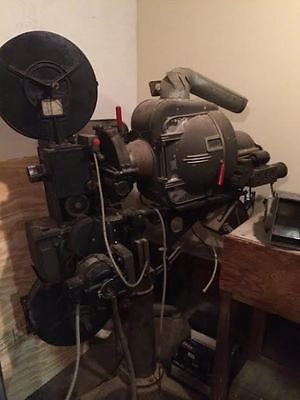
Exactly! I bet the oblique shaft oil tubes were at least partially plugged up and not getting enough lube. Or the bore was scored or there was just not quite the correct oil clearance. Even the slightest drag will cause early gear failure at that point. The horizontal version was just marginally better. The only weak spot in a Super was the G-87 double bevel gear. Easy to replace in under an hour.

Dick - Gordon... What projector didn't have a front shutter add on in those days? They all pretty much did either by original manufacturer or after market parts.

Mark
 
Posted by Charles A. Petty (Member # 3458) on 08-11-2014, 01:57 PM:
 
Not an E-7, but here is one of those little Ashcraft lamps for sale on ebay.
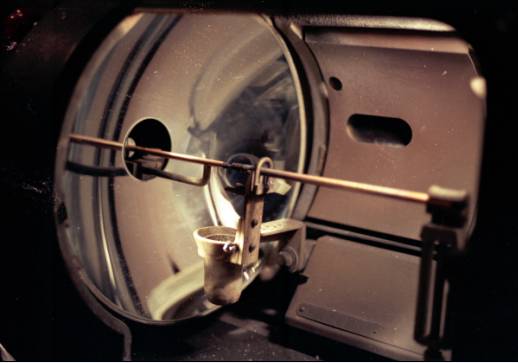
Search for "Antique Motiograph - Simplex 35mm Cinema Projector"
 -
 
Posted by Rick Raskin (Member # 1561) on 08-11-2014, 05:16 PM:
 
Only $1999.99 What a bargain. Consider that we have folks here dumpstering the same stuff. I have a Motiograph K that I'd sell for $1999.98 but you gotta pay the shipping. [evil]
 
Posted by Robert Koch (Member # 3728) on 08-11-2014, 08:10 PM:
 
The E7 wAS a great design in many ways, the intermittent movement especially. I used to love working on them. The cam end play adjustment gave you a real tool to make them real quiet, provided there was no slop between the cam pin and star wheel.Great movement. Then the profane oblique gear driving the shutter shaft. If you didnt plACE the framer position every few days you would soon run into an intolerable situation. The vertical shaft modication wasnt much better. Who can say anything bad about a Super, Steve, I enjoyed your picture, and I thought I was old enough[92] to have seen everything, but I dont recognize the lamp.
 
Posted by Steve Matz (Member # 1890) on 08-12-2014, 12:08 AM:
 
People have to remember that this model projector 1st appeared 77yrs ago. The amount of Hours they ran Daily/7 Days a Week back in the late 30s,40s,& 50s was staggering compared to what Movie House Projection later became. Remember back in the day they had a Cartoon,NewsReel,Serial,2 Reelers and at least 2 Features. These
Projectors in venues where they showed Matinees and Evening Shows 7days a week might see 12hr days/Nights for these units.

The Modern Film Projectors that showed one single feature maybe twice Nightly were probably running a 1/3rd of what the Old School was Running Back then.I think the reliability of the Projectors played a big part with the Projectionist. If you had the same caring competent Projectionist in your theater for years than Chances are the projectors will have significantly less problems than the theater that changed Projectionists Frequently and one may have maintained the Equipment better than the Replacement or you got the complete incompetent that was too lazy to do anything but collect his paycheck.Did Simplex make a perfect Projector? HELL NO! Nobody did; But to see some of these Old Relics still churning away with Minimal Replacements Parts available any longer is still a Credit to their Durability.

I think it is quite amazing that the Products (not just projection Equipment) made back in the 30's,40's and even 50's was certainly built with a different work philosophy then anything you see made today. Before Corporations became Greedy Money Monsters; The Things you bought back in the day were meant to last decades or even for Life. Now your lucky to get a 90 day Warranty on anything.

I would bet the Quality Control (although primitive) back then
still had less Failures/Recalls,etc. than what you have today even with the Highest Tech Equipment out there.Although American Worth Ethic has always thought 9 to 5 going back decades.People who were dedicated to their Jobs turned out Quality Products because they were instilled with Work Ethics that have pretty much disappeared from Mfgering. Does a Robot have a Work Ethic?

BTW: XENON LAMP is Japanese NIVICO HX...I believe a Division of FUGI at one time...
 
Posted by Gordon McLeod (Member # 33) on 08-12-2014, 10:41 AM:
 
the only issue that modern theatres a single machine runs the entire print with no duty cycle between reels
I never liked the super the E7 projectors just ran and ran
When I first joined the union in Toronto the majority of independents were E7 and they caused very little grief
 
Posted by Dave Macaulay (Member # 813) on 08-12-2014, 01:32 PM:
 
I agree the E7 was an excellent machine, but when platters came in the oiling issue kinda killed them. Too easy to just start it and forget, it and never pump the oil.
Tossed out a young ton of E7, Super, lamphouse, platter, etc. parts a couple of years ago.
 
Posted by Rick Raskin (Member # 1561) on 08-12-2014, 03:10 PM:
 
I always liked running Supers. Lots of the old houses in DC had them. XLs were popular too. Most E7s were in Virginia houses owned by Neighborhood Theaters. IIRC.
 
Posted by Jim Cassedy (Member # 4115) on 08-12-2014, 03:48 PM:
 
quote: Charles A. Petty
here is one of those little Ashcraft lamps for sale on ebay.
Well, just for clarification, the "little Ashcraft" lamp pictured in the e-bay listing
is not the same type as in the pictures I posted.

The lamphouse in my photos were Ashcraft "C7"'s and were perhaps just a
bit smaller than a Peerless Magnarc. I don't recall the amperage I ran those
lamps at, but I believe we trimmed the lamphouse with 7 & 8mm carbons.

WoW ~ Actual Photo!
 -

The lamphouse in the e-bay listing is an ashcraft "Cyclex" - - a much smaller lamphouse
which operated at 19volts/55amps >> AC << at a frequency of 96hz, which was
supplied by a small rotary converter usually mounted in the booth near the projector.

Interestingly, the Cyclex lamphouses did not use a "negative" carbon, but instead
used a pair of two 7mm "positive" carbons.

(For those unfamiliar with running carbon arcs, the tips of "Positive" carbons were
manufactured with a 'point' on the end, sort of like a pencil. "Negative" carbon
ends were flat, like a stick of new chalk. It was common in "AC" arcs, to use two
pointed "positive" carbons in the lamphouse, since the flat end of the 'negative'
carbon would only eventually burn to point anyway when used in in an AC lamp)

The Cyclex was discussed in another Film Tech thread here recently.

BONUS PHOTO:
A CYCLEX Lamphouse & 96hz Rotary Converter
 -
 
Posted by Scott Norwood (Member # 30) on 08-12-2014, 04:11 PM:
 
So, with the AC lamp, do both positive carbons burn as fast as they do in a DC lamphouse (4" per reel or thereabouts for 8mm positives)? Or does each one burn at half the normal rate?

If they both burn quickly, the carbon costs would probably kill most theatres....
 
Posted by Jim Cassedy (Member # 4115) on 08-12-2014, 04:45 PM:
 
Scott, I'm going to guess they burned at half (or less) the normal rate.

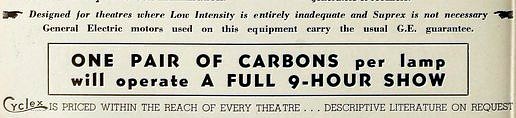
Ashcraft advertised these lamphouses as being very economical
to operate, as you can see from this 1939 advertisement.
 -

A chart in the same ad claims the operating cost as being 10cents/hr, as
opposed to 24cents & 18cents/hr for hi & low intensity type arcs respectivly
 
Posted by Monte L Fullmer (Member # 2797) on 08-13-2014, 12:01 AM:
 
Even AC low intensity condenser arcs lamphouses used two positive rods.

Due to AC, the rods have to be the same size since current is "alternating" between the two rods and not in the straight path as with DC.

Just that DC usage along with high amperage really punched the light out.
 
Posted by Louis Bornwasser (Member # 3063) on 08-13-2014, 07:03 AM:
 
Regarding work ethic and projector cost. Equipment was very expensive back in the 1930s compared to now if adjusted for inflation. If they had "kept up" an XL plus soun dhead would have gone for 30K+ instead of 10k+.
 
Posted by Gordon McLeod (Member # 33) on 08-13-2014, 10:05 AM:
 
That was a C70 not a C7 it was the replacement for the Ashcraft type D It was rated for up to 70amps and was a little more efficient reflector than the Peerless one or the Enarcs
 
Posted by Will Kutler (Member # 770) on 08-17-2014, 09:57 AM:
 
I am currently restoring 4 E-7s that I'll probably keep as trailer queens. I was lucky to come into a stash of new E-7 parts and have enough to build 4 machines (2 obliques and 2 verticals). If I want to use them, I'll probably swap new parts out for old.

The biggest pain has been paint. I have been unable to get a powder coater or custom rod shop to refinish for me. A few F.T. members recommended Premium Décor black appliance epoxy...excellent stuff and matches original black, perfectly! If you spend the time to rub it out, it will replicate the early gloss finish perfectly. A real pain is white, as most whites today will yellow/brown with exposure to heat and chemicals. I am now experimenting with high temp auto engine enamels, which I previously had difficulty with.

The only parts that I have not located is the 1265 upper film shoe that tripped the fire shutter when film breakage occurred. E-7 and X-L have different part numbers and I suspect the geometries to be different.

For those of you with worn gate parts and upper film shoe, there is the possibility of hard plating and regrinding.....

Not sure who manufactured the parts, but either Wolk or LaVezzi did manufacture (or experiment with) Nylon and Delrin gears. Good idea, as Delrin is a self-lubricating material.
 
Posted by Steve Matz (Member # 1890) on 08-17-2014, 11:25 AM:
 
Will; Why not do the Powder Coating Treatment yourself. Companies like EASTWOOD have the Kits and Colors. You go buy an old Electric Stove/oven from GOODWILL,SALVATION ARMY,ETC. Don't use your Wife's Stove or she will divorce you. Most powder coats bake at 350 to 400 degrees F, My brother just recently restored an old NORTON COMMANDO and powdecoated many of the Chassis parts.
It looks better than when it was OEM. I Think he got the Oven he used for Free from ST. VINCENT DEPAUL....

http://www.eastwood.co m/paints/hotcoat-powder-coating.html?SRCCODE=GA200100&device=c&matchtype=e&network=g&creative=47084483820&gclid=CjwKEAjwpcGfBRDni__JqrTIqx4SJAB9BpSOET_meRC_7eRh_6I8Skr8fbpQYf0kT7dbqJ-5jg5mCxoCRiHw_wcB

http://www.eastwood.com/paints/hotcoat-powder-coating/powders.html
 
Posted by Jim Cassedy (Member # 4115) on 08-17-2014, 11:42 AM:
 
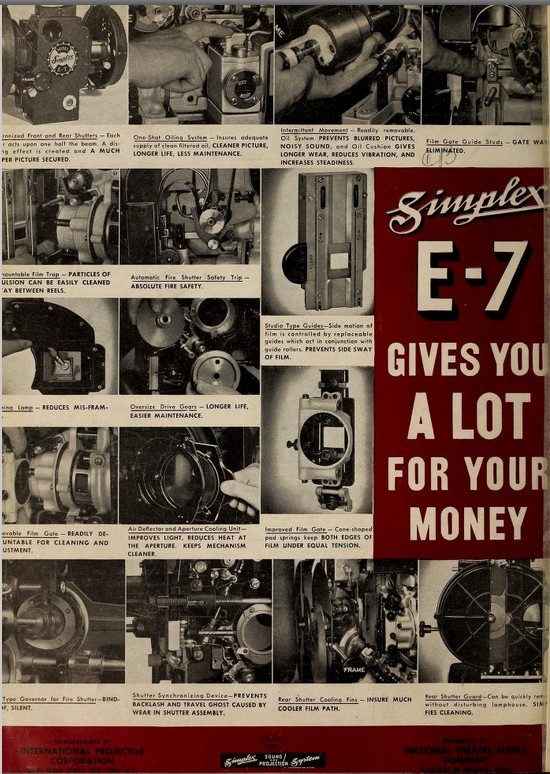
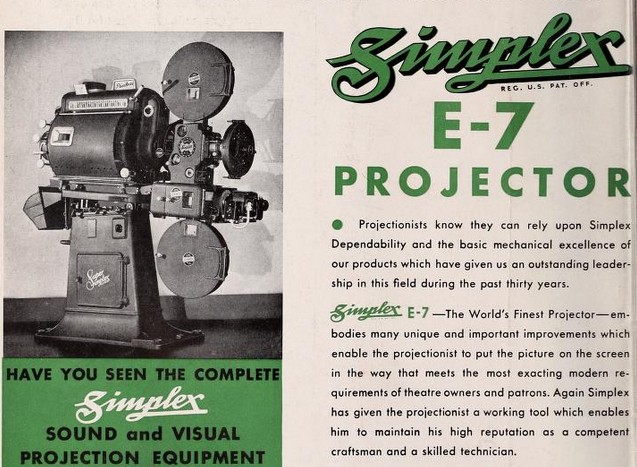
A Couple Of E-7 Advertisements From 1939:

 -

...and

 -
 
Posted by Will Kutler (Member # 770) on 08-17-2014, 12:16 PM:
 
Steve

I am very interested in do-it-yourself. My problem is I live in a medium-sized apartment, so I need to be careful and am limited on work-space.

Powder coating these parts takes a lot of work due to outgassing problems with both die-castings and iron sand-castings.

Essentially, the parts need to be masked and media stripped. Masking is then removed, and the parts baked overnight to burn off entrapped oil, etc. Once complete, the parts are then washed with phosphoric acid metal prep. Parts are re-masked with high-temp powder coating tape. Parts are then heated for several hours to around 400-600 degrees for out-gassing, then powder coated and baked. Once complete, there is still no guarantee against out-gassing problems. If there are any, then the parts need to be stripped and the entire process repeated.

Jim,

I love collecting these old projector advertisements. I have never seen the two you have posted, and am interesting in obtaining the first. I have the E-7 orange, black and white wartime advertisement that I had professionally framed.
 
Posted by Steve Matz (Member # 1890) on 08-17-2014, 04:03 PM:
 
I love old vintage advertising and just like today "TRUTH IN ADVERTISING" still walks a Fine line. In 1939 Every Projector Mfg
made the Finest Projector in the World;If you don't believe it just ask them...LOL!

 -

1939 CENTURY P......FINEST PROJECTOR IN THE WORLD!

1939 BENKERT BX-80..FINEST PROJECTOR IN THE WORLD!

1939 MOTIOGRAPH.....FINEST PROJECTOR IN THE WORLD!

1939 DEVRY..........FINEST PROJECTOR IN THE WORLD!

BTW: Interesting history from "ROBERT SPRAGUE" long time BRENKERT Employee.. He says MOTIOGRAPH in the 1930's was in a deal to MFG Projector Heads for BRENKERT but the deal fell through around 1937. BRENKERT than rush designed the BX-80 in May 1939...The Oil Spray Lubrication System on the SIMPLEX XL is basically a Copy of BRENKERT'S 1939 BX-80 Oil System design.XL's weren't around til 1948 and in service til 1949...

Now it's unheard of that any Projector Mfger would ever Copy features from another Mfger [Roll Eyes] [puke]

Also up until 1939 when CENTURY Designed the P(which is their own design} almost every Mfger was basically Cloning the "SIMPLEX STANDARD"(E7aside) In fact everyone's parts interchanged. Century changed the Framing Design that was used by almost everyone up til then by rotating the intermittent while the Projector is running to a Rack & Pinion Style that moved the intermittent in an up and down motion which IMHO is a better idea.

Also Century's idea of separating the intermittent Sprocket Shoes from the Film Gate was a good innovation. Even though it
required 2 Actions it permitted Adjustable tension to be applied to the Intermittent Sprocket & Picture Aperature separate and independently.

These 2 innovative Features for their 1939 Model would have probably made me Pick this Model Projector over any other if I was purchasing New Projection Equipment in 1939. Even though new features in their inaugural year don't always have the success they did during R&D; This proved to work as good as Designed and why CENTURY is still one of the Best Designed Projectors there ever was...
 
Posted by Sam D. Chavez (Member # 1841) on 08-17-2014, 06:00 PM:
 
quote: Steve Matz
Also Century's idea of separating the intermittent Sprocket Shoes from the Film Gate was a good innovation. Even though it
required 2 Actions it permitted Adjustable tension to be applied to the Intermittent Sprocket & Picture Aperature separate and independently.

Separating these functions seems like a good idea but can result in a little more picture jump depending on where the int. is in its travel. Also relies on the sprocket and gate to be in perfect lateral alignment and this was never very good on later Century castings. This is one reason why Century's were never seen in US studios, also harder to run in reverse because of the gap between the gate and int sprocket.
 
Posted by Steve Matz (Member # 1890) on 08-17-2014, 06:16 PM:
 
SAM: Were not supposed to have to run our Projectors in Reverse;it annoys the Audience [Wink] And Just like in Life's Struggles we are to move Forward... [Big Grin]
 
Posted by Sam D. Chavez (Member # 1841) on 08-17-2014, 08:17 PM:
 
The power of a comma. Day to day cinemas do not run backwards, but dubbing studios and dailies projectors did it from the beginning of film to perhaps 10 to 20 years ago.

Happy now bitch? [Big Grin]
 
Posted by Brad Miller (Member # 2) on 08-17-2014, 09:36 PM:
 
I'm just waiting for Guttag to post a correction to the both of you. [Big Grin]
 
Posted by Sam D. Chavez (Member # 1841) on 08-17-2014, 10:56 PM:
 
I kinda figured Steve would be along. Did I step on a Century projector lover's toe?
 
Posted by Steve Guttag (Member # 268) on 08-18-2014, 06:22 AM:
 
What? I'm still trying to figure this statement out:

quote: Sam D. Chavez
Also relies on the sprocket and gate to be in perfect lateral alignment and this was never very good on later Century castings.
Which implies that earlier castings were machined well. They weren't. Century couldn't machine castings consistently in any era. My favorite are things like sound guidance arms (penthouses and soundheads) where the lateral position depends on how far up/down the arm is.

I'm sure Steve Matz was pleased (or will be pleased) to know that for the Simplex Millennium, Strong put the actual Century intermittent pad shoe and separate action in.
 
Posted by Gordon McLeod (Member # 33) on 08-18-2014, 07:24 AM:
 
Brenkert copied the mid 30's ernamann design for the oil spray
Oil spray was common in europe for a long time
 
Posted by Jim Henk (Member # 3628) on 08-18-2014, 01:56 PM:
 
quote:
Day to day cinemas do not run backwards,
There was a theatre in Glendora, CA years ago that designed their own automation system, and it did exactly that. While one projector (they were XLs) was running forward to show the feature, the other just reversed, and ran backward at standard speed through the projector to rewind the other feature. And they did it without damage to the print. Saw it myself. It worked.

Talking with the owner, apparently they tried to sell the idea to some companies with no luck. Guys would come out, look at the system running, declare that what they were seeing in front of their eyes could not be done, and leave.
 
Posted by Mark Lensenmayer (Member # 134) on 08-18-2014, 02:04 PM:
 
That forward-backward automation sounds like an Eprad Sword.

A two-screener (Cinema North) was equipped with those in Columbus and they worked very well.
 
Posted by Steve Matz (Member # 1890) on 08-18-2014, 02:57 PM:
 
SAM only brought up the Reverse issue because he wanted to "BITCH SLAP" me for no reason [Eek!] [Big Grin]

 -
"lAST PERSON WHO DISAGREED WITH ME ON REVERSE OPERATION"
 
Posted by Mark Gulbrandsen (Member # 72) on 08-18-2014, 04:27 PM:
 
quote: Steve Guttag
Which implies that earlier castings were machined well. They weren't. Century couldn't machine castings consistently in any era.
Um, wrong! The pre WW-2 Century C's were frickin awesome projectors, with everything machined perfectly. These are the only ones to go after if you want a really good Century. The main castings were some sort of ultra hard alloy too, not just cast iron or pot metal aluminum. The fronts of them are all but impossible to cut to fit a Kelmar turret and the surfaces are all extremely accurate. You have to have the fronts plasma cut if you want to fit a turret. I rebuilt a few dozen of these era Century's and never had to go back to repair one of them. The customer who was in Wisconsin claimed they were the best most reliable projectors they had ever bought.

Mark
 
Posted by Steve Matz (Member # 1890) on 08-18-2014, 05:04 PM:
 
CAST IRON has minimal expansion properties compared to Aluminum/Alloy and other Metals;but it does shift.The ideal Cast iron Engine Block for building a Race Engine or Street/Strip application is one that has a minimum of 50,000+ miles on it.At this point 99% of the Coreshift is gone and Cylinder Bores will retain concentricity. If you don't think there is some massive Core Shift in a Cast Iron Engine Block than ask any Automotive Machine Shop Tech that has worked with BB Mopar Engines(i.e.383,426wedge,etc.) Try and remove the Camshaft out of these Blocks when they have over 50,000 miles. You will break it before you can extract it...

Now these are blocks that are most of the time never reaching Temperatures of more than 220 Degrees. I don't know what Temperatures A CENTURY or any other Cast iron housed Projector obtain with say a 2 or 4k Lamp but I would assume the Projector head still gets extremely warm.I can see why there could possibly be an oil Leakage/warpage issue with Projectors using extremely Intense Lamps if this intense heat is transferred to the Head...
 
Posted by Will Kutler (Member # 770) on 08-18-2014, 07:11 PM:
 
Mark...maybe you were dealing with a high (chrome/white) alloy.

Steve...agreed with what you said regarding older engine blocks. I also heard over the years that Detroit would throw new castings in the Great Lakes or in an open field for a few years in order to artificially age the material.

Looking at machine tools like Atlas lathes...some people might think that they are cheap due to the die-cast gears and other parts. This engineering was intentional. If the machine was to "jam", the gears would shatter, thereby preventing chain-reaction catastrophic damage.
 
Posted by Sam D. Chavez (Member # 1841) on 08-18-2014, 08:25 PM:
 
quote:
SAM only brought up the Reverse issue because he wanted to "BITCH SLAP" me for no reason [Eek!] [Big Grin]
Steve posted a snarky response to my straight up post so he got snark in response. I apologize if this did not sit well as evidenced by your shout out to me in another topic. I get you like visuals.

As to the posted picture; it's maybe beyond appropriate. This seems to show a Hispanic prisoner, beaten pretty severely by someone for reasons unknown.

In case you have not noted my family name, you might want to reflect on this. I don't take myself very seriously, but with race relations at an all time low, a little sensitivity might be in order.
 
Posted by Mark Gulbrandsen (Member # 72) on 08-18-2014, 09:09 PM:
 
Will... I think so. I have machined a lot of different alloys over the years, gobs of cast iron both new and old and this was literally like machining titanium. Pretty amazing stuff for 1938 era. I seriously doubt it was any sort of cast iron when I stop to think about it. Three or four sawzall blade's later I was perhaps a half inch into the stuff. They were also extremely heavy.

I am about to toss that E-7 so if you want it all you have to do is pay packing & shipping from SLC. IM me your email and I can send you pictures. It's going to the dump this Saturday otherwise.

Mark
 
Posted by Steve Guttag (Member # 268) on 08-18-2014, 10:01 PM:
 
Okay, okay...

If you really want proper "Rock-n-roll" projectors...there is but one...Kinoton. The rest are just imitations. The AFI/Silver has been running that way since day one. Backing up through the machine at up to 100fps is no big deal and zero film damage...and quiet too.

They use the EMK-1 automation (same as the CA21 of Pennywise fame) for their automated changeover/reverse shows.
 
Posted by Steve Matz (Member # 1890) on 08-18-2014, 10:19 PM:
 
quote: Sam D. Chavez
As to the posted picture; it's maybe beyond appropriate. This seems to show a Hispanic prisoner, beaten pretty severely by someone for reasons unknown.
SAM; I am far from a Racist;in fact one of my best friends is married to a Spanish Girl whose maiden name was CHAVEZ and I think the World of her [beer]

As far as the Photo goes I never even gave a thought to what Race the Person was(Afro-American) I was just looking for a quick photo of someone that took some punches so no disrespect was ever intended...

If you read the Real Story behind that Photo; he's lucky to be alive as far as I'm concerned; if I was involved he would look worse than he does... This Young Man was Sexually Molesting a young Boy that he was supposed to be Babysitting while the Father had some errands to Run. Well the Father returned Early and found this SCUM Molesting his Son and proceeded to do what you see in the Photo. The Father was not Charged with Anything;This Mutt is charged with Sexual Battery upon a Child and a bunch of other Charges. I have no use for Child Molesters and if it had been me in place of this Father; he wouldn't of had to worry about ever coming to Trial no matter what Race he was!
 
Posted by Will Kutler (Member # 770) on 08-18-2014, 10:37 PM:
 
Hi Mark

definitely interested and e-mailed you at your Cinerama e-mail and also p.m.'ed you. Thanks! Have you ever tried to machine Naval brass? [Big Grin] [Big Grin] ! I love machining cast iron...there is one problem with machining sand castings, though. The casting surface often has a "skin" that contains casting sand...and that can wreck havoc on your cutters!

Steve and Sam...I am anything but politically correct...I am not a moderator, but I think for the harmony of the forum, please edit/delete the latest posts and that picture.

Cheers

Kutler
 
Posted by Sam D. Chavez (Member # 1841) on 08-18-2014, 10:49 PM:
 
Oy! Some of my friends are, fill in the blank....

I am good and know Steve did not mean offense. If Steve will keep posting eye candy of big block Chevy's and Eastman projectors and not actual human beings beaten to a pulp we'll all be better off.
 
Posted by Steve Matz (Member # 1890) on 08-18-2014, 11:07 PM:
 
Time Limit is up! BRAD will have to Remove the Post/Picture

OK SAM: Only EYE CANDY from now on! [Wink]
 
Posted by Monte L Fullmer (Member # 2797) on 08-19-2014, 12:28 AM:
 
Like the Super, the E-7 had an inner mainframe of steel being surrounded with aluminum ends and doors.

Tore one down completely to give it a total cleaning and rebuild.

Made it look good again..and ran very smooth.

... just that oblique gear setup - not made for polyester film.

-Monte
 
Posted by Gordon McLeod (Member # 33) on 08-19-2014, 10:08 AM:
 
For reverse operation remember the Victoria 8R that ran the reel backwards through the gate at 2x speed so a automated theatre required no rethreading
 
Posted by Will Kutler (Member # 770) on 08-21-2014, 01:34 AM:
 
Mark Gulbrandsen....

I e-mailed and p.m.ed you regarding your E-7 and have not heard back....still waiting for pictures. Please do not trash it this weekend!

Cheers

Will Kutler
 
Posted by Rick Raskin (Member # 1561) on 08-21-2014, 10:11 AM:
 
I agree, that picture really doesn't have anything to do with the topic on hand and as such doesn't belong here.
 
Posted by Mark Gulbrandsen (Member # 72) on 08-21-2014, 01:01 PM:
 
Email heading your way Will... I thought I had sent it...

Mark
 
Posted by Will Kutler (Member # 770) on 08-21-2014, 08:15 PM:
 
Hi Mark

Thanks! I just replied to your message...let me know if you got it!

K
 
Posted by Mark Gulbrandsen (Member # 72) on 08-22-2014, 10:10 AM:
 
Yep!
 
Posted by Will Kutler (Member # 770) on 08-31-2014, 12:11 PM:
 
Has anyone ever seen or know of special E-7 modifications made for special venues or purposes...possibly done by Wolk. I was recently told about a 4 inch lens conversion completed by either Simplex or Wolk.

Mark...I sent you a new message regarding your E-7. I need your contact info so I can make shipping arrangements.

Cheers

Kutler
 
Posted by Dick Prather (Member # 1136) on 08-31-2014, 09:58 PM:
 
Will, I have seen 4" conversions on E-7's but do not remember who made them. Could have been Wolk or Wenzel.

Alse General Electric used the E-7 in early TV stations. One of the Cameron's books shows this in detail. I have also seen one of the special Power's like intermittent made for the TV version. Mark and I found it at Abbot Theatre Supply in Chicago with "WGN spare" on the box. Dick
 
Posted by Mark Gulbrandsen (Member # 72) on 09-01-2014, 09:31 AM:
 
Seems to me the Powers had a 5 to 1 ratio as it was originally designed.
 
Posted by Gordon McLeod (Member # 33) on 09-01-2014, 12:24 PM:
 
I saw a powers being used as a telecine with a ballanyne 6 soundhead in montreal back in the 70's
I gather the best telecine projector was the Machau
 
Posted by Mark Gulbrandsen (Member # 72) on 09-01-2014, 10:31 PM:
 
Hard to say about the Mechau being the best. It had an awful lot of mirrors to have to keep clean. Any dirt in the optical path anywhere and you'd be likely to see it much as you do in the reflex system of a film camera. The Europeans used continuous flying spot scanners for film from day one, as did the Australians. Flying spot also has much better dynamic range than the typical vidicon based telecine cameras did. They also had no lag. TK-27 and TK-28 telecne cameras actually performed. When I worked in broadcast tv in the late 70's early 80's I was amazed at how poorly the TK-27 and TK-28's actually performed. Lots of lag and loads of noise in the blue channel. Granted the blue channel only accounts for like 13% of the color bandwidth in NTSC. The TK-27 performed slightly better as it was a 4 tube camera and had a 1.5" luminance channel vidicon and three 1" vidicons for color. You switched the camera into monochrome mode and it looked really good off the larger tube.

Mark
 
Posted by Will Kutler (Member # 770) on 09-05-2014, 01:49 AM:
 
Mark G.

Please send me your address and phone number so I can make E-7 shipping arrangements.
 
Posted by Robert John Hodge (Member # 2444) on 09-15-2014, 03:57 PM:
 
About the E7 being used in a General Electric television film chain.

GE developed a system called a "Syncrolight" that eliminated the need for a shutter in a 16 mm Bell and Howell head and a Kodak head. It used a flash tube triggered by a thyratron tube.
Syracuse University used to have a Bell and Howell/ General Electric Syncrolight machine in the old monochrome Carnegie Library TV studio. I still have some of the paperwork and tubes from the machine. The "lamp house" was separate from the projector mechanism, so mounting a different head would have been possible. The base resembled a light duty Simplex base if I remember correctly.

Any idea if that method found it's way into 35?
 
Posted by Alastair Bowlie-Evans (Member # 8327) on 09-16-2014, 12:42 PM:
 
That 'syncholight' was (possibly) a rip-off of the FP-20-S Philips Pulse-Lamp system, where a tiny 800W High-Pressure water-cooled mercury vapour lamp was driven by a 'rectifier' running 6 large thyratron valves synchronised to the int-movement by a taco-generator made out of a magnetic tape-head.....

The rectifier also contained much other electronics--all Tube/Valves, chokes transformers, caps etc, to amplify/process the pulses from the taco-generator--And also contained-- 4 car type Spark-Plugs!

Int flywheel had three cut-outs, so the lamp was fired three times per frame giving a flicker-free image--like a three blade shutter would.
--This system was available from Philips in the Late 50's and early 60's.
A local cinema here used a pair of FP-20-S, the Pulse-lamp machines until the mid 70's....

The FP-20 had no shutter, just the (pair) of lamps in a movable turret assembly, water-cooled, the water forming the 'earth' return path for the power to the lamp....
 
Posted by Sam D. Chavez (Member # 1841) on 09-16-2014, 03:16 PM:
 
Those pulse light units were interesting but the light was awful and blue. We had a couple here in the bay area but they were converted back to shutter blades in fairly short order.
 
Posted by Jim Cassedy (Member # 4115) on 09-17-2014, 11:22 AM:
 
quote: Alastair Bowlie-Evans
That 'syncholight' was (possibly) a rip-off of the FP-20-S Philips Pulse-Lamp system, where a tiny 800W High-Pressure water-cooled mercury vapour lamp was driven by a 'rectifier' running 6 large thyratron valves synchronised to the int-movement by a taco-generator made out of a magnetic tape-head
Looking through very old SME and other cinema-related technical journals, I've
noticed that there seemed to be a fascination, almost bordering on
obsession, with inventing a "continiuous motion" projector, which seemed
to peak in the period between appx 1919-1939. The quest was fueled by
the somewhat accurate belief that it was the film trap & intermittent
movement that caused the most wear and damage on film prints.

There are dozens of articles detailing numerous designs that were proposed
and/or actually built & tried, using various combinations of either stobe
lamps or moving mirrors or lenses to achieve the end result.

None of them were really practical. Machines using moving mirrors or
lenses were mechanically complex and difficult to keep optically aligned.

In addition, all the extra optics reduced light through-put substantially
(remember, this was in the days before coated optics) and also introduced
optical distortion to the image which was quite noticeable on all but the
smallest of screens.

Stroboscopic lamps of the time were just not capable of putting out
enough light for anything larger than a small screening room size screen,
and the electronics of that period were large, expensive, and not
reliable enough for theatrical use. (Movies were 'big business' back then)

Stroboscopic lamps for television projectors, on the other hand, seemed to be
somewhat more practical, since they don't have to project onto a large screen.

In fact, a patent search I did turned up a number of patents for stroboscopic
television-film projectors designed by RCA and television pioneer Alan Dumont
going as far back as the mid 1930's.
 
Posted by Robert John Hodge (Member # 2444) on 09-18-2014, 03:03 PM:
 
The General Electric Syncrolight system dated from the late 1940's. It was used in conjunction with an iconoscope television camera.

R. Hodge
 
Posted by Louis Bornwasser (Member # 3063) on 09-19-2014, 08:54 PM:
 
I've seen a 16mm B&H converted by GE to pulse strobes. Interestingly enough, mounted on a Simplex heavy base. Stored at WHAS TV 11 back in the ntsc days.
 
Posted by Jeff Taylor (Member # 443) on 09-20-2014, 12:29 PM:
 
I seem to recall an article about a Signal Corps project adapting JAN's with a pulse xenon--Osram if I recall correctly. Not sure it ever went anywhere beyond some test units.
 
Posted by Robert Koch (Member # 3728) on 09-21-2014, 07:18 PM:
 
Had the "pleasure"of instslling the first norelco fp 20 pulse light in the US, or so I was told, in Fort Bragg Ca for a stubborn owner, one of those who would never take any advice and he was going to be the first in the US to tell National Carbon Co where they could put their carbons' This was a new theatre so, as soon as it was ready, to replace an older theatre with Simplex E 7`s and Peerless Magnarcs drawing about 65 amps that had an excellent picture and an RCA PG 91 sound set with excellent sound. [how could you miss with a stadium house with an Altec A4X. backstage],The result was disastrous with a picture, as Sam described,that was awful and Blue,Blue and more Blue and the local patrons used to the other theatre soon stopped attending. Took quite awhile but this stubborn remotely located owner, finally bought Christie xenons which were much better, but still not as good as the Magnrcs in my very biased opinion.
The only good thing for me was Fred Pheiff,of Norelco, coming all they way out from New "Yawk to see how I was doing.
Great Guy
 
Posted by System Notices (Member # 2357) on 06-12-2017, 07:53 AM:
 

It has been 994 days since the last post.


Posted by James Lee Guy (Member # 9880) on 06-12-2017, 07:53 AM:
 
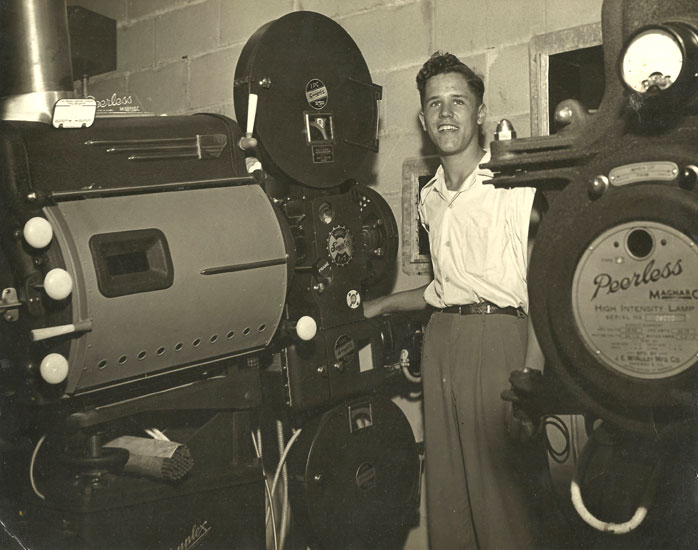
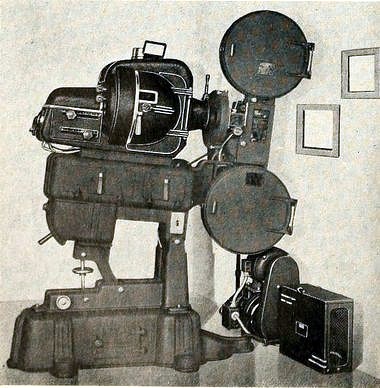
I'm a newbie to film-tech, but been involved in the film industry for over 20 years. I do have a passion to preserve the history of film and film projection. Just recently I acquired a pair of E7's with Peerless High Intensity lamp houses. I've been detailing them for a few months time willing. I'd like to find out the date of manufacture if anyone can help me decode the serial numbers, and share any historical knowledge you may have. I love this pair so much I put them in the living room but my wife is nagging me to move them to the basement. I will once I finish transforming it into my exhibit room, as long as she doesn't kill me.
 
Posted by John Eickhof (Member # 323) on 06-12-2017, 07:57 PM:
 
post the serial numbers oe message to me i have a chart from ipc and will date them for you.
 
Posted by Will Kutler (Member # 770) on 06-14-2017, 06:28 PM:
 
Hi James

Please e-mail or I.M. me for questions regarding E-7 restoration and operation.
 
Posted by James Lee Guy (Member # 9880) on 06-26-2017, 04:18 AM:
 
Thanks guys! I emailed the numbers to both of you. I'll need to reduce the resolution of the pics then post them here.

I was quite lucky to find this pair. The gentleman that owned these really cherished them. He bought them from a drive-in before I was born, then he had set up a private cinema on the second and third floors of an old building he owned and would show movies to the community free of charge. This was his hobby after retirement. He even taught his sons and grandsons how to operate them. He long passed away before I met his sons. He would have been a great mentor for me.

It may sound crazy, but I enjoyed the four days to break these down so I could carry the parts to my vehicle, and then reassemble in US home. I'll never forget when his son removed the tarps that covering them. I felt as if I was as if I was Indiana Jones witnessing the unveiling of the Lost Arc.

So I guess you can understand my appreciation for them. I would like to make a proper exhibit for them. So any assistance you all can provide I would greatly appreciate them.


Powered by Infopop Corporation
UBB.classicTM 6.3.1.2