This is topic RealD's Ultimate Screen in forum Film Handlers' Forum at Film-Tech Forum ARCHIVE.


To visit this topic, use this URL:
https://ft-forum.com/ft/cgi-bin/ubb/ultimatebb.cgi?ubb=get_topic;f=1;t=012078

Posted by Frank Angel (Member # 248) on 10-25-2016, 06:44 PM:
 
Evidently RealD has produced a matte screen that is 2D/3D-compatible with very little of the hated hotspotting that plague standard silver screens but which still retain polarization BETTER than silver screens and with MUCH higher gain 2.8; they claim 85% more light than silver....yah, you heard right 85%!!, and with a much wider effective viewing angle to boot.

They have laser-cut, micro-micro perfs (150 micros) and claim it eliminates moire problems which seems to imply that the perfs are randomly made and not patterned. It also has a surface that can be WASHED!!

While this seems like manna from heaven for quality 3D -- the extra brightness alone would be a boon, if their claim about very substantial reduction in hotspotting if true, then 2D presentation would certainly benefit on this screen which till now has been significantly compromised by silver screens.

They also claim that because the surface is so much smoother than silver screens, it actually produces a sharper image in both 2D and 3D.

I mean, if you were selling your soul to the devil so you could have anything you wanted in a screen, what else could you possibly ask for? Well ok, I'd want it to be able to allow viewing 3D without glasses to silence those who find wearing glasses that are lighter than sunglasses to be akin to sitting on broken glass for two hours, and yah, I'd want it cheaper than silver screens, but you know even the devil can't do that!

Here is where you can hear the RealD rep explain the Ultimate Screen. Interesting is his take on screen vibrators that they use to get rid of speckle, evidently a problem with laser light engines. Any of you guy ever use a vibrator....on your screens?
RealD rep explaining their new Ultimate Screen
 
Posted by Terry Monohan (Member # 8285) on 10-25-2016, 09:35 PM:
 
Thanks Frank for the info. I get so tired of theatres that run their bulbs at 60% to save the bulb life. Maybe this new screen will help with a brighter image for 3-D or 2-D.
 
Posted by Ron Funderburg (Member # 4561) on 10-29-2016, 06:25 PM:
 
Frank isn't the fact that 3D is still around proof someone sold their soul to the Devil? I still feel like the contribution to the quality of the experience is minimal. But then again I get terrible headaches just checking the focus on 3D.
 
Posted by Carsten Kurz (Member # 5396) on 10-29-2016, 06:28 PM:
 
There are other manufacturers will similar technologies, see this presentation from 2015:

http://mkpe.com/publications/d-cinema/presentations/2015-Apr-Screen-Technology-Karagosian-TSC.pdf

The trouble with the RealD 'branded' screen - you only get it if you sign up for a RealD 3D system contract.

- Carsten
 
Posted by Brad Miller (Member # 2) on 10-29-2016, 09:03 PM:
 
quote: Terry Monohan
I get so tired of theatres that run their bulbs at 60% to save the bulb life. Maybe this new screen will help with a brighter image for 3-D or 2-D.
Nothing will change except the theaters will now buy another size smaller bulb and still run at 60%. The center of the image may still be as bright as it is currently, but now the edges will be even worse.

RealD relies on silver screens for their technology to work. The mere silver screen surface itself is against all DCI specs because the corners (curved or not) are noticeably darker than the center...and I also assure you they are setting the light level based upon dead center.
 
Posted by Steve Guttag (Member # 268) on 10-30-2016, 07:35 AM:
 
Point of fact, Real-D (as well as Master Image) rely on retaining polarization. Silver screens are the traditional way of doing that. However, there are now some special "white" screens that will retain polarization. They are called the "High White" and available in 1.4 as well as 2.0 gains.

http://strongmdi.com/products/highwhite/

I don't know how much stock I put in their charts on fall-off (they claim 40-degrees and 30-degrees for 1/2-gain). That seems to be in the realm of believable. Though their curve on the 1.4 seems "artist conception" based on my past experience with gain screens.

As for lamp life and percentage of power. No theatre uses lamp power to lower the light output to save lamp life. That is, they may size the lamp such that at minimum power they hit the proper light level and then as the lamp ages, increase lamp power to maintain that life. What the low-light theatres do is just undersize the lamp altogether.

What is worse, you are going to really see undersized lamps with laser. Lasers sound great but one has to take into account their decay over time. With xenon, yes they decay but you are constantly changing them so if sized right, you can maintain the proper light level over their life and even if you are cheap and undersized, at each lamp change you are back up to your maximum level. With lasers, they are rated based on 1/2 their lumen output. So if you size your laser right for when the projector is new, by definition, at 20,000-30,000 hours, you are at 1/2 brightness (7-fL or a "bright" 3D level and your 3D levels will be in the 2.5fL range). Since the minimum spec for cinemas is 11fL, you will be out of spec closer to 15,000 hours and perhaps as low as 10-12K hours. And, unlike xenon, it isn't a cheap proposition to change that laser (at this time) so that laser system is going to stay in until failure or until complaints reach a loud point. You are stuck with low-light for the last half of its "useful life." The key to lasers are to buy 1-size higher.

A key to lasers that one does not have with xenon is the ability to run the laser at a lower levels. So run the laser at 30% when it is new and as it decays gradually bring it up. You'll push that 20,000-30,000 mark to 50,000 to 80,000 hours or likely have the laser last the life of the projector and possibly the cinema. However, your costs are all up-front.
 
Posted by Marco Giustini (Member # 4544) on 10-30-2016, 11:15 AM:
 
quote: Steve Guttag
With lasers, they are rated based on 1/2 their lumen output.
At all the demos I've been Barco claimed 80% at 30.000 hours. Have they changed that figure now?
 
Posted by Steve Guttag (Member # 268) on 10-30-2016, 01:51 PM:
 
Ask your questions carefully to them. Ask what the output would be at 30,000 hours if you ran the laser at 100% the whole time (and, to be clear, I'm referring to the laser/phosphor systems).

Again, people are specing projectors based on what the output is when NEW so if they were using a 15C projector for xenon and hitting 14fL on a new 3KW lamp.
 
Posted by Frank Angel (Member # 248) on 10-30-2016, 02:05 PM:
 
quote: Steve Guttag
Point of fact, Real-D (as well as Master Image) rely on retaining polarization. Silver screens are the traditional way of doing that. However, there are now some special "white" screens that will retain polarization. They are called the "High White" and available in 1.4 as well as 2.0 gains.
Thing is, yes, ReadD is claiming their 3030 Ultimate Screen has a gain of 2.1/38° but they say their 2040 version has a gain of 2.8, 32° and that on a white surface. Not only white, but a much a smoother surface than is obtainable with sprayed silver screens. This smoother surface supposedly gives a "sharper" image (whatever that means given they state no resolution spec).

On the surface (no pun intended) this sounds like a real improvement over what is generally now the norm in the majority of theatres that have been outfitted for 3D have installed silver screens. If this RealD screen does what they are claiming, at the very least will improve 2D presentation which the silver screens have degraded all across the country. That seems like more than a slight improvement, but more like a significant C change, no?

Question -- is their micro-micro perf spec of 150 microns smaller than other manufacture's micro perfs. The spokesman seems to imply these are smaller than the current micro perf screens on the market.

Has anyone seen this product first hand?
 
Posted by Carsten Kurz (Member # 5396) on 10-30-2016, 05:26 PM:
 
The September issue of cinema technology magazine has an in-depth article on the new PWS screens. What they don't cover is the conditions under which cinemas are able to get these screens. Ordinary RealD contracts do not cover screens, only the polarization modulators. I would be interested to know wether these new screens are granted on a rental basis as well (unlikely, because manufactured to custom size), will cinemas decide to source their own screen or get the special RealD screen for an upfront premium as an alternative. Or will these screens be sold to anyone, even without a RealD 3D system contract?

3P/6P laser projektion suffers a lot from speckle, and especially on silver screens (drives me nuts in IMAX Laser auditoriums). The new RealD PWS screen is said to reduce that effect as well.
Then again, why should these locations invest into a special RealD silver screen if the majority of these locations use color separation 3D? Laser IMAX would do better if they'd install gain 1.0/matte white screens instead of keeping their previous silver screens...

They also claim a much improved stereo separation with the new surface. That's an interesting point, as the screen is usually the weakest point in polarization 3D.

- Carsten
 
Posted by Frank Angel (Member # 248) on 10-31-2016, 09:54 AM:
 
The trick they use to reduce speckle, if I understand him correctly, is to put vibrators on the back of the screen that cause the surface to vibrate slightly? Seems to me that vibrating the screen would denigrate any of that additional sharpness they claim the surface produces. I look at the rear-view mirror in my car and when I play music at a good hefty level, the mirror vibrates enough to make the image blur slightly. I can't imagine that same principle would apply to a vibrating image on the screen and what that would do to apparent resolution.
 
Posted by Carsten Kurz (Member # 5396) on 10-31-2016, 02:21 PM:
 
Actually, the need for screen vibrators as the final means for speckle reduction is the dark secret of all current 3P/6P laser installations (not Phosphor conversion lasers).

RealD actually says that with their new PWS screen you need LESS actuators than with conventional silver screens. Maybe that is their argument for increased sharpness as well. The CTM article quotes some demo installations in the US (AMC & Regal), Europe and far east. You may need to call RealD to find out excatly where in the US they are installed. I guess with screen surfaces like this, you really have to see it yourself. As I said, I am very disappointed by the two Laser IMAX installations I have seen because they left in the previous silver screens and while everything else about the projection is great there, the screen twinkle and speckle in bright scenes is nothing but bad.


- Carsten
 
Posted by Marco Giustini (Member # 4544) on 11-05-2016, 05:38 AM:
 
quote: Steve Guttag
(and, to be clear, I'm referring to the laser/phosphor systems).
I was referring to the 6P lasers. Anyway I belive they also refused to guarantee that lasers would last 30K hours and would only be down to 80% by then! [Smile]

quote: Steve Guttag
Again, people are specing projectors based on what the output is when NEW so if they were using a 15C projector for xenon and hitting 14fL on a new 3KW lamp.
That's true and unfortunate. Sometimes this is budget driven but once you have the wrong machine and you have 5fL on screen (in 2D) there is nothing you can do.
 
Posted by Mark Gulbrandsen (Member # 72) on 11-05-2016, 02:59 PM:
 
Steve is right in saying the cost for laser is all up front. Indeed I asked NEC about the cost to replace the lasers in it's model NC-1100 and they couldn't give me a part number or even a dollar figure. And I seriously doubt their lasers are going to last the life of the projector by any means. So anyone that puts in lasers beware that you are at the forefront of mostly a whole unch of unkowns.

Mark
 
Posted by Carsten Kurz (Member # 5396) on 11-05-2016, 03:21 PM:
 
As far as I know, they spec the 1100L laser engine for 20.000 hours, but the warranty is only valid for 10.000 hours. The NC1100L has a power consumption of around 1600Watts. The NC900C, while delivering more or less the same brightness, has a power consumption of around 1000Watts. The cost difference between the NC900C and NC1100L is higher than the cost of the NC900C's UHP replacement lamps for the same amount of runtime (20.000 hours). Go figure...
The 1100L follow-up NC1201L seems to be a bit more efficient, as it's their second-generation phosphor conversion laser.

Now what if that laser engine needs to be replaced after 12.000 hrs...?

It's still a nice buy if your business model is based on boasting 'Now brand new laser projection' to your audience when your local competition doesn't...

- Carsten
 
Posted by Mark Gulbrandsen (Member # 72) on 11-05-2016, 05:16 PM:
 
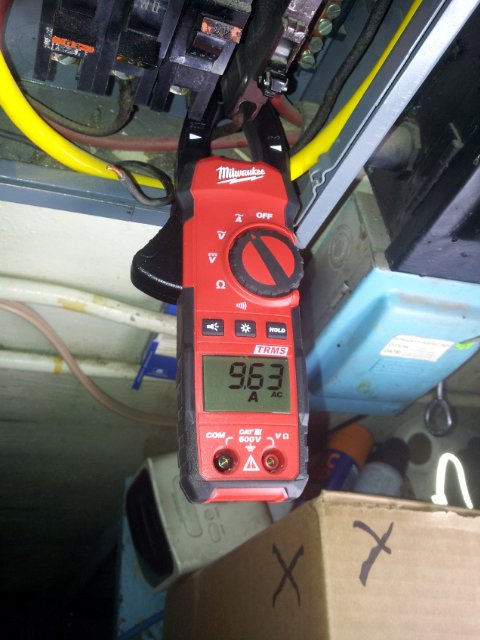
The main use for the laser unit would be in inaccessible locations like ceiling mount in the auditorium and if the projector was mounted in a closet at the back of the auditorium. To be honest I really doubt that 20K stated life span at rated power. That would probably occur at a lower power level though and which is why they only guarantee it for 10K hours. I have measured an NC-900 running on 120 volts and both lamps at maximum and the current draw was about 9.6 amps. At 220 volts it was right around half that.

 -
 
Posted by System Notices (Member # 2357) on 01-23-2018, 03:00 AM:
 

It has been 443 days since the last post.


Posted by Guang Tang (Member # 10344) on 01-23-2018, 03:00 AM:
 
Hello

Could anyone who has seen the RealD Ultimate screen, write a short comparision with other screens?
For example: is the Ultimate screen on par with a Harkness XC 220 or something similar?

New in the forum, so forgive me if this have already been asked. I can however not find any topics where it is covered and thought this thread could be the right place to ask.
 
Posted by Anders Nordentoft-Madsen (Member # 3334) on 01-23-2018, 03:48 AM:
 
We have this screen at Colosseum Oslo, 23m wide on a Barco DP4K-60L. Screen is installed with screenshakkers so speckle is almost completely gone. Light Uniformity is fantastic and ghosting is reduced to a point where it's almost not detectable, with normal 3D content (and subtitles mind you). All in all a fantastic screen, but it comes at a price..


Powered by Infopop Corporation
UBB.classicTM 6.3.1.2