This is topic Dolby CP 65 Sound Processor advice please. in forum Film Handlers' Forum at Film-Tech Forum ARCHIVE.
To visit this topic, use this URL:
https://ft-forum.com/ft/cgi-bin/ubb/ultimatebb.cgi?ubb=get_topic;f=1;t=012282
Posted by Neil Spreadbury (Member # 10401) on 03-18-2018, 11:09 AM:
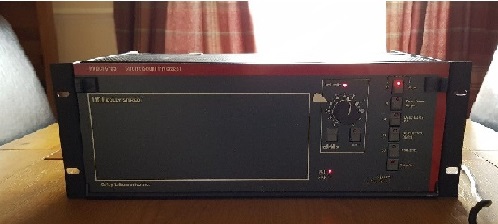
hi all are these any good for my V5 ?
all opinion welcome.
thanks.
Posted by Leo Enticknap (Member # 534) on 03-18-2018, 11:17 AM:
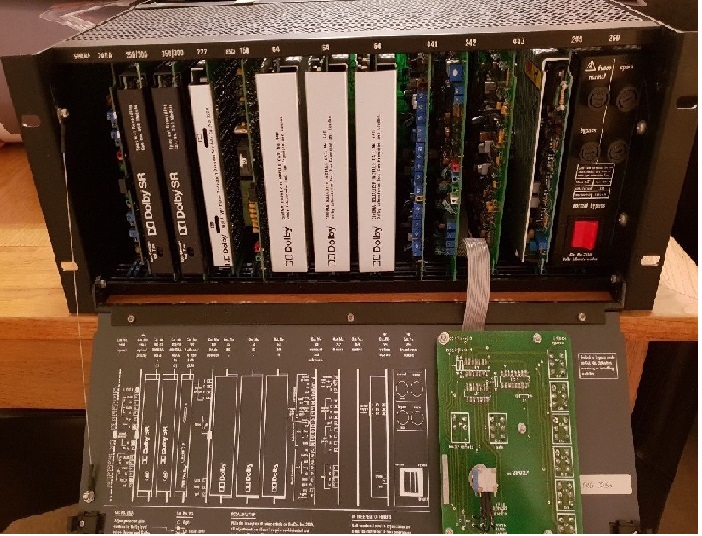
Assuming that it still works, it's good for any SVA film projector audio. You have SR cards in it as well, and so could play A-type and SR audio.
You'll need power amps and speakers for the output channels, though. If this is for a home installation that includes the playback of other audio sources, you may want to consider sending the four channels (left, center, right and mono surround) of decoded line level output EQ-ed flat to another processor - a home theater receiver, for example - and tuning everything there. In such a setup, you'd only be using the CP65 for optical film audio.
Posted by Neil Spreadbury (Member # 10401) on 03-18-2018, 11:31 AM:
hi Leo, that's very helpful. i been offered one for £75 in full working order.
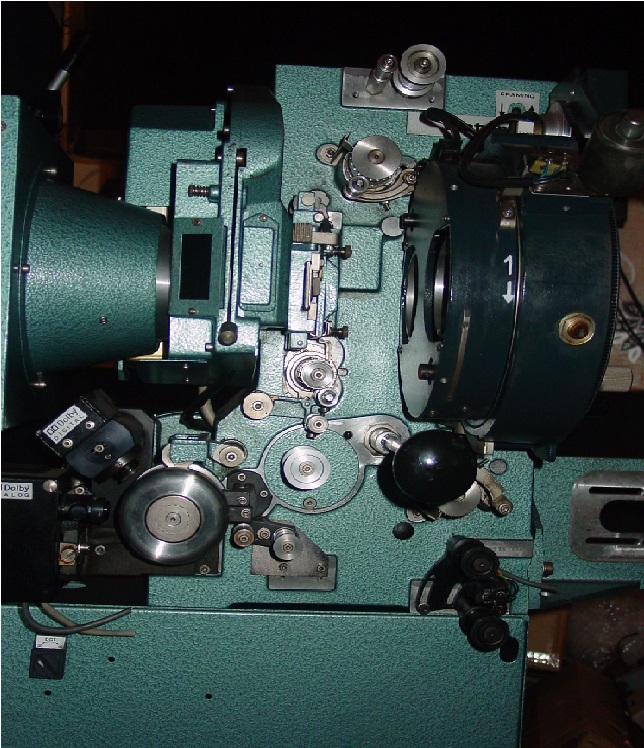
so what would i need for digital reader on my V5 ?.
thanks for advice.
Neil.
Posted by Carsten Kurz (Member # 5396) on 03-18-2018, 11:48 AM:
The CP65 only works for analog audio and will do with the typical analog solar cells. In order to play digital sound, you need to add a DA20 and a DolbyDigital reader, e.g. a CAT700, or other choices for the V5 (I'm not familiar with those). If that picture is your machine, it seems there is a digital reader installed already. In that case, I guess a DA20 would be enough to play digital, but again, I have no experience with these readers.
As Leo said, if you can buy a fully fitted and working CP65 for that price, get it.
- Carsten
Posted by Neil Spreadbury (Member # 10401) on 03-18-2018, 12:13 PM:
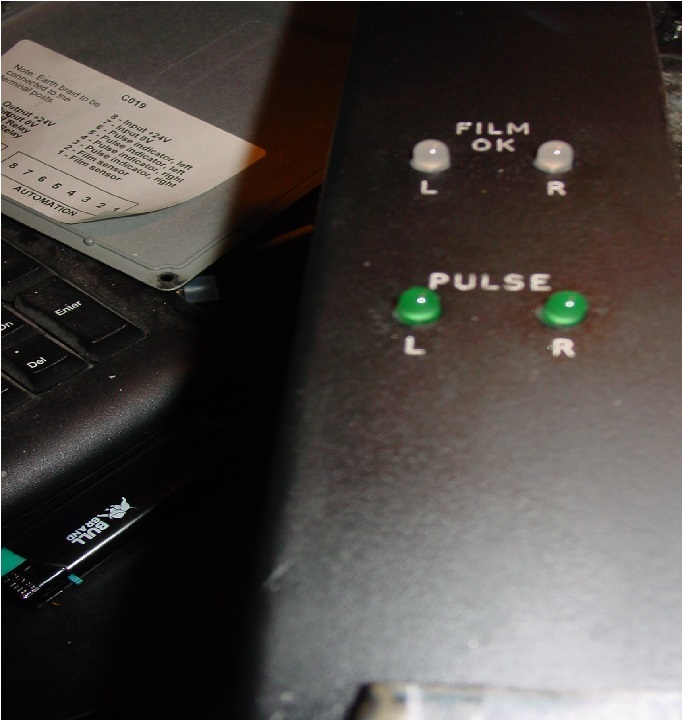
hi carsten, thank you for your advice I just telephoned the guy with cp65. and its now mine. yes the picture of v5 is mine. do you know what this is below. all so I have a dts reader to on a big metal plate. got the lot for £300. its my first 35mm projector and its took me 30 yrs to get this far. it my pride
and joy. got some films and had them for 17 yrs.
so very thankful to kind people like you giving help and advice.
Neil.
Posted by Dave Macaulay (Member # 813) on 03-18-2018, 12:21 PM:
You just need to add a DA20 and its cables for 35mm Dolby digital sound. The DTS reader is for DTS (no surprise?) and you would need a DTS unit and cables... plus the sound CD for any movie you can get: those will be the big problem I think.
Posted by Neil Spreadbury (Member # 10401) on 03-18-2018, 12:33 PM:
thank you Dave. is the DTS reader worth selling ?.
as my v5 is just for home use and my passion for cinema.
as for the film scanner do you know what it is. as can't find anything on internet about it. very grateful to you all for help.
Posted by Carsten Kurz (Member # 5396) on 03-18-2018, 01:12 PM:
If all you have currently is the V5, the CP65 is a great addition, and will already deliver a great analog SurroundSound with suitable prints. You may look out for a DA20, but, for a hobbyist, is not mandatory to go digital in my opinion. Yes, you may sell the DTS reader, however, it will not earn much.
While DTS has it's own place in film history, only hardcore fans keep analog, Dolby Digital AND DTS running on their private setups. The mad ones even SDDS.
All you need to add for now is some amps and speakers. And possibly someone with some experience on how to set it up. I think the V5 and CP65 have been THE standard equipment in the UK, so it should be easy to find knowledgeable people.
The film-tech warehouse has free operating and setup manuals for the CP65 (and DA20) to download.
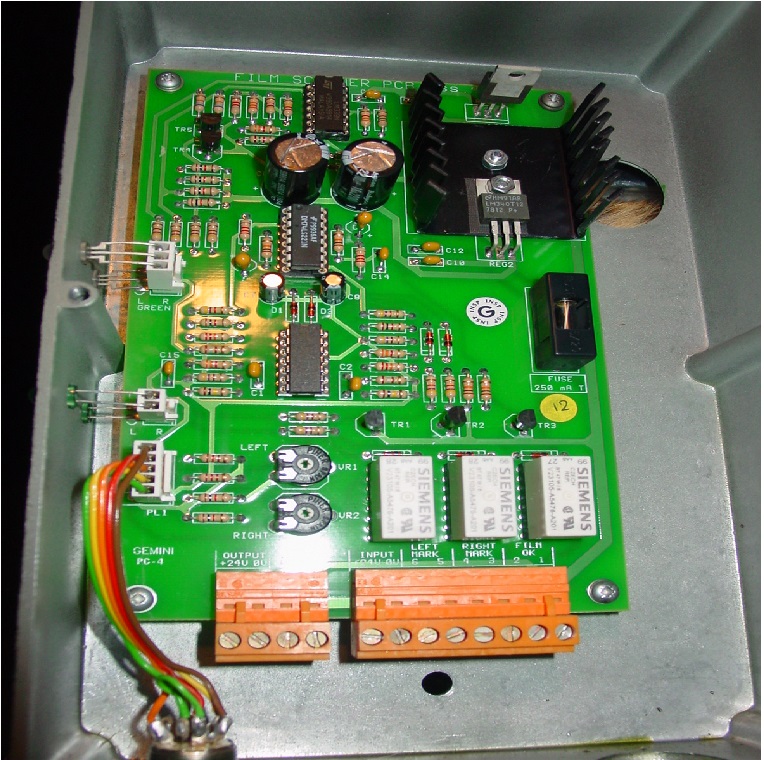
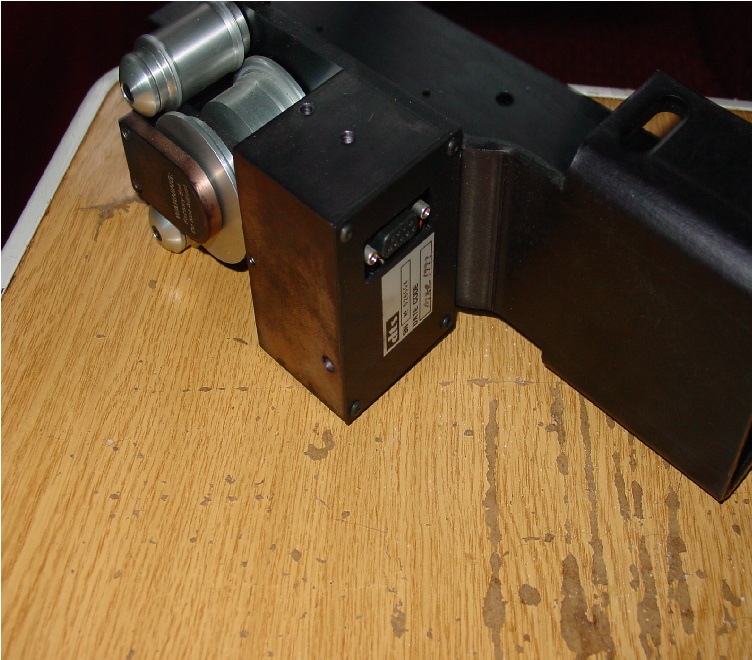
That 'Film Scanner' I don't know. It looks like one of the many proprietary enhancements that turned up in the last two decades of film based cinema, e.g. to help with automation, like film sensors to start format switching, house lights up/down, etc. based on markers that you stick to the film. It looks as if there is a round 'DIN' style connector that would be connected to a type of sensor mounted somewhere in the film path. I am quite sure it is not necessary to get the V5 working. You may place it aside for a while.
On your photo, below the combo analog/digital sound head, I can see two cables that have been cut. I am sure, one carries the analog audio from the analog head, the other will carry the signal from the digital head. The digital cable will most probably have more wires, that should make it easy to identify. You may extend the analog cable (should be just two/three wires with/without shield) towards the CP65 optical inputs. With some few connections, and even without proper alignment, you should be able to hear sound, and then go from there.
I hear you UK have that great 'Projected Picture Trust', http://www.ppttrust.org - these guys would a great starting point for advice, if you don't find someone nearby to help you with your setup.
- Carsten
Posted by Dave Macaulay (Member # 813) on 03-18-2018, 05:07 PM:
The scanner thing is to control a platter automation system. There are two "film ok" film break sensors, one one each side - some breaks will cause the film to tear right down the centre, so a simple drop roller break sensor would say all is well while half the print (the long way...) piles up on the floor. The "sensor" is some sort of cue sensor... there are a few different types but this clearly has two cue locations, one on each edge. What they mean is dependent on the automation system.
Posted by Leo Enticknap (Member # 534) on 03-18-2018, 06:09 PM:
quote: Neil Spreadbury
is the DTS reader worth selling ?
The last I looked on eBay, DTS D600 (35mm) readers were going for around the GBP200 mark; but that was some time ago.
The LEDs in them don't last forever, so the few remaining places that do still play 35mm DTS might be in the market for spare readers, either as complete backup units, or to part them out.
70mm readers go for serious money, because very few were made and without one (or two, if you use a changeover pair), you cannot play any 70mm print made since the late 1990s. But there are other audio options for 35mm, and getting hold of the discs for the movie you want to play is often a problem, so the 35mm readers are less sought after.
Posted by Geoff Newitt (Member # 6663) on 03-18-2018, 07:30 PM:
The film scanner is/was part of a Cinemation branded Automation/Failsafe system manufactured by Technical Lamp Supplies Ltd up in Slough (they took over Cinemation when Bernard Bentley retired). It's not essential to the operation of the projector (indeed, late Cinemations used Component Engineering scanners).
That looks a lot like one of the machines from Odeon Southampton - certainly the scanner and its mount on the projector date to the mid/late 90s. Around the time I was living in Southampton and working for Odeon in Salisbury...
I'm not far away in South Oxfordshire (about 11 miles from Swindon), and more than happy to assist if you need help.
Posted by Victor Liorentas (Member # 5272) on 03-18-2018, 09:12 PM:
My philosophy on d.t.s is to absolutely have it because of the easy to achieve sound quality that will last way off into the future. As long as you have good d.t.s units and spare parts. I recommend the XD10 which plays off it's own hard drive.
If you have or aquire prints with d.t.s time code,it's easy peasey lemon squeezey to find the discs or files. Join the 35mm collector forum and make requests. I've never been unable to find d.t.s audio files.
Dolby Digital is great but your basement reader and worn prints are likely to give you audio drop outs when playing them. Getting a Dolby cat 700,701 or 702 reader will help but I have so far found d.t.s easier to maintain. Analogue sound is great as well but it's awesome to use digital on a print that has it. Just my opinion.
Posted by Randy Stankey (Member # 64) on 03-18-2018, 09:47 PM:
Neil;
Nice score on that CP65! Tune it well and it will not disappoint.
quote: Victor Liorentas
Analogue sound is great as well but it's awesome to use digital on a print that has it. Just my opinion.
DTS and Dolby Digital are great but I also love to see the look on a person's face after they hear a well-tuned SR installation and I tell them, "That's not digital." ![[Wink]](wink.gif)
Posted by Victor Liorentas (Member # 5272) on 03-18-2018, 10:52 PM:
Yes that's very true Randy!
Posted by Neil Spreadbury (Member # 10401) on 03-19-2018, 05:44 AM:
I would just like to thank you all for the advice and help you all above have given me.
and for the warm welcome to the forum.
so thank you,means a lot to me.
Posted by Gordon McLeod (Member # 33) on 03-19-2018, 09:25 AM:
The cp 65 is a rock stable processor your Vic 5 already has a dolby digital reader so you would need to aquire a DA20 to decode dolby digital
Posted by Leo Enticknap (Member # 534) on 03-19-2018, 10:43 AM:
quote: Randy Stankey
Nice score on that CP65! Tune it well and it will not disappoint.
If the CP65 is the only audio processor in the system (i.e. the outputs from it go straight to the power amps), then maybe. At the last theater I worked that used a pre-CP650 processor (the Egyptian, which used a 200), we had the EQ cards flat, and the tuning done in the processor its output went to (an AP20). The advantage of that route was that only one processor had to be tuned for all the different input sources. Also, on our CP200, some of the potentiometers for the individual bands crackled like mad when they were turned, which was another reason why we were advised by a Dolby tech (don't feel comfortable naming him, but he's forgotten more about CP200s than I ever knew) to leave it flat and do the EQ downstream from it. I know that there is a lot of nostalgia on this forum for CP55s/65s/200s, and I agree that they were very well designed and built machines, but the fact remains that the surviving examples are all now 20-30 years old, with all the maintenance issues that an electronic appliance that old involves.
Agreed completely, though, that analog SVA set up with care and empathy can sound very, very nice.
quote: Victor Liorentas
Dolby Digital is great but your basement reader and worn prints are likely to give you audio drop outs when playing them.
I have only ever had that problem on a pair of readers with old and worn-out LEDs. The CP650 setup utility was showing a very low voltage. Once they were replaced, I was getting error rates of 2-4, even with rough old prints. In my experience, SR-D is remarkably resilient for print wear and damage. SDDS, however, absolutely is not.
I've also found that as a general rule, platter systems give lower SR-D error rates than reel-to-reel, especially with penthouse readers. The explanation I've heard is that because the feed from a platter is powered (the feed plate is being rotated by a motor), the flow of film is smoother than when it's being pulled by the feed sprocket and relying on inertia for the consistency of the film transport feed. I don't know if that's true or not, but my experience certainly supports this theory.
Posted by Victor Liorentas (Member # 5272) on 03-19-2018, 10:56 AM:
Yes! It's true that a well timed platter can help with error rates. I've even studied a difference from feeding off the bottom platter as compared to the top platter. That slight difference in tension can sometimes change how the reader performs. I've also added tension momentarily by hand and seen the error rate change.
Meaning I hold my fingers on the side of the film while watching the error rate instantly change.
Powered by Infopop Corporation
UBB.classicTM
6.3.1.2