This is topic Nitrate handlers in forum Film Handlers' Forum at Film-Tech Forum ARCHIVE.
To visit this topic, use this URL:
https://ft-forum.com/ft/cgi-bin/ubb/ultimatebb.cgi?ubb=get_topic;f=1;t=012376
Posted by Richard May (Member # 2627) on 11-20-2018, 12:34 PM:
Hey guys. I will be carefully going through some old film here. I know there is nitrate here also. Any idea who to contact to get rid of it after I have it ready?
Posted by Leo Enticknap (Member # 534) on 11-20-2018, 01:14 PM:
In NYC, the Museum of Modern Art's film archive deals with nitrate regularly - (212) 708-9602 or fsc [at] moma.org. The Library of Congress archive in Culpeper, VA, would be another possibility, but is a little further away from you.
Posted by Carl Martin (Member # 1146) on 11-20-2018, 01:58 PM:
about equidistant to culpeper there's eastman house in rochester, if you're worried about transporting explosives across state lines. and there's ucla, but that is definitely "a little further away from you".
Posted by Richard May (Member # 2627) on 11-20-2018, 02:08 PM:
I'm hoping they will come and get it. Lol.
Posted by Rick Raskin (Member # 1561) on 11-20-2018, 05:04 PM:
LOC Culpeper would probably pay to have it shipped if they see value for their collection. My niece works there so contact me if you chose to go that route.
Posted by Randy Stankey (Member # 64) on 11-20-2018, 05:50 PM:
Rick hints at this... Is there anything in this collection that could have any historic or archival value at all?
We're not talking about lost reels from "Greed," are we? ![[Wink]](wink.gif)
That's the first thing to do. Determine whether there is anything valuable. After that, the question comes down to what should be disposed of any how to dispose of it.
Posted by Scott Norwood (Member # 30) on 11-20-2018, 06:29 PM:
I can say good things about the Eastman House museum. I donated a film to them (not nitrate). and they were good to deal with. Rochester is worth a visit, and they have an impressive film series as part of their regular programming.
If the film turns out to be junk, there are "silver recovery" companies that may pay you to take it. Otherwise, I'm not sure how one would dispose of it, aside from having a big bonfire.
Posted by Richard May (Member # 2627) on 11-20-2018, 07:55 PM:
I will look at it this week. It's in a safe at Radio City Music Hall.
Posted by Jesse Crooks (Member # 9389) on 11-28-2018, 02:16 PM:
MoMA's nitrate storage facility is in Hamlin, PA, but perhaps they'd accept a donation in NYC and transport it themselves. I believe Katie Trainor would be the one to contact.
The LOC will pick up nitrate, but these days the budget requisition process means that they probably wouldn't be able to make the trip unless there's quite a bit or it's something very special. If you're interested in donating it to them you should get in touch with George Willeman, the nitrate vault manager. I drove a car load of nitrate there and got a wonderful tour of the vaults, so it was well worth the trip.
Deborah Stoiber would be the one to contact at the Eastman Museum.
You can also find someone who's certified to ship nitrate. With the specific nitrate hazmat certification you can FedEx it. Any archive you donate it to would likely be able to connect you with someone in NYC that can ship it for you.
Posted by Richard May (Member # 2627) on 11-30-2018, 12:44 PM:
BTW, how would you put out a nitrate fire in the event that it did ignite?
Posted by Leo Enticknap (Member # 534) on 11-30-2018, 05:18 PM:
There are only two ways.
1 - Reduce the ambient temperature to below the point at which nitrate can combust (flash point is 39F / 4.4C, so this is a tall order!).
2 - Exhaust the supply of fuel (i.e. let the fire burn itself out).
Remember the "fire triangle" you were taught in middle school science lessons: fuel, oxygen, and a source of ignition. Remove any one of those three, and no fire can start. Nitrate is especially dangerous, because the fuel actually contains the oxygen.
Because oxygen is created as a by-product of the combustion process (very chemistry-geeky explanation here), you cannot put it out by depriving it of oxygen. If you throw a fire blanket over it (for example), it will continue to burn. There are videos of nitrate burning inside a container of water kicking around on the net.
The most widespread way of extinguishing a fire - pouring water over it - does so by two simultaneous actions: lowering the temperature, and depriving the fire of oxygen. Neither action is effective in the case of nitrate, which is one of the two reasons why the emphasis on nitrate safety is on preventing the stuff from going up in the first place, and providing quick and safe exit routes if it does. The bottom line is that if it ignites, then basically, you're buggered (or at the very least, the film is). The second is that as well as oxygen, burning nitrate releases nitric acid fumes. A room full of those would make the San Quentin gas chamber seem positively pleasant. When nitrate was in mainstream use, the main causes of deaths and injuries resulting from nitrate fires were inhaling the VERY poisonous fumes, and stampeding for the exit. There were hardly any actual burn injuries.
Posted by Phillip Grace (Member # 2262) on 11-30-2018, 05:18 PM:
I believe the only way to extinguish a nitrate fire is to cool it with an enormous quantity of water. Some nitrate vaults are built with dump tanks above them to operate automatically in the event of a fire. The smart approach is to take every precaution to prevent it igniting in the first place, and to ensure the immediate environment will prevent the fire spreading if it does. The fumes produced in a fire are so toxic that you don't want to be hanging around trying to put it out.
Posted by Richard May (Member # 2627) on 12-01-2018, 09:34 AM:
I opened the cabinet and started going through the film. There is a bunch of test film, trailers, reels of mag track, etc.. Most of it is indeed nitrate. Most are in cans. Some loose film. The smell is horrible. It's worse than any other old film smell I've ever dealt with. Also, the fumes were so bad that it actually hurt my eyes. I'm not sure any archive would even take it. I think we may be better just having it removed and disposed of the proper way.
Posted by Leo Enticknap (Member # 534) on 12-01-2018, 02:59 PM:
quote: Phillip Grace
Some nitrate vaults are built with dump tanks above them to operate automatically in the event of a fire.
I guess that's feasible: if there is a known quantity of nitrate in a totally enclosed space, then it's possible to figure out how much water, and at what temperature that water would need to be, would be needed to reduce the temperature far enough below that flash point to extinguish the fire, if you dumped it all out into the vault space at once. Also, as the film elements in the vaults would be in individual cans, not all of it would ignite at once, and so if the water was dumped early enough, you'd likely save a lot of the film, too. Water-damaged film might be able to be saved, but burned film is guaranteed not to be.
quote: Richard May
There is a bunch of test film, trailers, reels of mag track, etc.. Most of it is indeed nitrate. Most are in cans. Some loose film. The smell is horrible. It's worse than any other old film smell I've ever dealt with. Also, the fumes were so bad that it actually hurt my eyes.
The mag track is unlikely to be nitrate. It started to be used on a significant scale at the same time that nitrate started to go away (late '40s / early '50s).
I've never experienced nitric acid fumes that were strong enough to make my eyes sting, but I sure have been hit with acetic acid (vinegar syndrome) fumes from early cellulose triacetate that were. Is this collection mixed late nitrate and early acetate? If so, that's the worst possible combo for decomposition.
Paradoxically, late nitrate is the fastest decomposing (all other factors being equal), because when the war broke out, film base manufacturing plants took to using cheap, nasty, and highly acidic wood pulp to make the cellulose pulp for the feedstock: the stuff that was NFG for making aircraft fuselages and all the other war stuff that needed wood. That continued right up until nitrate was phased out. So from an archivist's point of view, 1940s nitrate is generally the worst.
As others have pointed out, it's the content and its condition that will determine whether any archives are interested. A lot of trailers might not survive, or if they do, the elements held by archives may not be in as good a condition as yours is. It's a lot of work, but if you're interested in saving the stuff worth saving, a basic list of what each element is and what sort of physical condition it's in would enable an acquisitions officer to make a decision as to whether it would be worth footing the bill for shipping to take it off your hands.
Otherwise, it's looking increasingly like a bonfire in an empty parking lot in the middle of the night. If you only burn small quantities at a time (I would suggest no more than 1,500 to 2,000 feet), completely in the open air, and well away (as in, at least 100 feet) from anything else combustible, then IMHO, that's the cheapest and safest way to get rid of it. Unroll 20-30 feet from one of the rolls in the pile, so that you are well away from where the main fire will be when you put the match to it, wear a face mask, and ensure that you are upwind from the fire, and that no-one is immediately downwind. I should stress however, that doing this is entirely at your own risk, and I accept no responsibility for the consequences of anyone reading this and trying.
Posted by Randy Stankey (Member # 64) on 12-01-2018, 07:53 PM:
quote: Richard May
The smell is horrible. It's worse than any other old film smell I've ever dealt with.
Very sharp and bitter smell?
Probably nitric acid and/or nitric oxide. The stuff is pretty toxic. I wouldn't breathe it if I was you.
Standard respirators don't work. The stuff is a gas. Respirators only work for particulates or vapors. (Assuming you have the correct type of filter cartridge.)
The only way to protect against a gas is an air-supplied face mask.
I work in a shop where I deal with nitric acid on a virtual daily basis. It's not very much fun when you accidentally get a snootfull of the stuff!
quote: Richard May
Also, the fumes were so bad that it actually hurt my eyes.
Take your film outdoors or to a well ventilated room the next time you open it up.
A pair of fully-enclosed goggles will help keep your eyes from burning. (Whether indoors or outdoors.)
If your eyes do sting from acid fumes, some saline eye drops will help soothe them.
quote: Richard May
I'm not sure any archive would even take it. I think we may be better just having it removed and disposed of the proper way.
I'm with Leo. Just take it outdoors where there's nobody and nothing around and burn it.
Posted by Richard May (Member # 2627) on 12-01-2018, 09:30 PM:
Lol. Thanks guys but I think I will have it taken away by someone to dispose of it. If I took it outside here, in the middle of NYC, you would probably see it on the news.
Posted by Leo Enticknap (Member # 534) on 12-01-2018, 10:13 PM:
Interesting. I've never encountered a nitrate element that was offgassing badly enough to make my eyes water. In fact, the only time I encountered one that was even sticky was as a student in film archiving school in 1995-96. I guess the reason is that I've never been in a job that brought me into contact with them. The little archive I ran from 2001-07 had a collection that was almost completely 1950s to 1990s.
It had about 50 nitrate elements, all of them in good shape, and all the nitrate prints I've projected have been in excellent (chemically, at least) condition: if they hadn't been, the archives that owned them wouldn't have let them into my booth.
However, it doesn't take much vinegar syndrome to make an acetate print set my eyes off. Once they've reached the autocatalytic point, a few weeks in a sealed can is all it takes, and boy do you smell, and feel it when you take the lid off! Many's the time that one gnarly print has stunk the booth out for days. For that reason, I tend to be instinctively more frightened of old acetate elements than of nitrate ones, which is pretty illogical, given that the nitrate could potentially be lethal (if it ignites), but not the acetate.
quote: Richard May
If I took it outside here, in the middle of NYC, you would probably see it on the news.
Giggle. Here on the border with San Bernardino, I could probably set off a big rig full of the stuff, and people would just take a brief glance at it and mutter, "Oh well, there goes another meth lab..."
Posted by Randy Stankey (Member # 64) on 12-01-2018, 10:45 PM:
quote:
However, it doesn't take much vinegar syndrome to make an acetate print set my eyes off. Once they've reached the autocatalytic point, a few weeks in a sealed can is all it takes, and boy do you smell, and feel it when you take the lid off!
We've got glacial acetic acid by the drumfull. Pretty pungent stuff!
We've got a recipe for this stuff that's made up from 70% acetic acid, 15% nitric acid and 15% water. It's used to remove smut from copper and aluminum. I make it up 100 gallons at a time. A goodly whiff of the fumes that come off that stuff will knock you over backward. You have to wear full protective gear whenever you get near it.
Although I'm not as much of an expert as Leo, I've worked with nitrate film on a couple of occasions. It can get nasty but not as nasty as some of the witch's brew that I work with now.
If the film isn't valuable, if it's degrading and you just don't want it, don't bother to keep it around. It's too much of a hazard. Just get rid of it.
The easiest and, probably, the best way to dispose of it is to burn it. That's likely what a disposal company will do. They'll just charge you an arm and a leg to do it.
You can do it in small batches, a reel/roll at a time.
I'd say that, under outdoor conditions, nitrate film burns similar to a road flare.
Posted by Richard May (Member # 2627) on 12-02-2018, 06:03 AM:
It may very well be vinegar syndrome smell from the non nitrate film that's in there as well.
Posted by Phillip Grace (Member # 2262) on 12-02-2018, 05:39 PM:
Hi Richard. At least give a Film Archive the option to examine the films on site, before dumping them. Certainly old film can be very unpleasant to handle, but decomposition, particularly vinegar syndrome, which seems to be the main issue here, can be very advanced before the film itself becomes useless. This material is located at the Radio City Music Hall, a unique theatre and the long-term venue of many special events. There is a better than even chance that you have something special among the collection there. I am a firm believer in the notion that one should never throw anything away without knowing exactly what it is. In this case you can probably attract the interest of a collecting institution, with the added benefit of not having to get rid of it yourself. I understand that Eastman House is not far from there, likewise the Museum of Modern Art; Maybe give them a call. Cheers.
Posted by Dave Macaulay (Member # 813) on 12-03-2018, 10:32 AM:
"Standard respirators don't work. The stuff is a gas. Respirators only work for particulates or vapors."
Nope.
Filters only work against particulates.
Respirators absorb specific gases (a vapor is a gas). You would need to know what the problem gas is and get a cartridge designed for that gas. The typical ones available are designed for solvents, not much else.
Generally air with a bit of acid vapor can be handled for a short time by breathing through a wet cloth but I would avoid that except in an emergency.
Posted by Randy Stankey (Member # 64) on 12-03-2018, 06:41 PM:
quote: Dave Macaulay
You would need to know what the problem gas is and get a cartridge designed for that gas.
You're right. If you don't have the right cartridge for the vapor in question, a respirator won't work. In fact, it is possible for a respirator to concentrate harmful vapors inside the mask.
At the place where I work, there can be chlorine and/or ammonia in the air. We do have cartridges to guard against those but they only last for a short time. They are, pretty much, a one-shot deal.
Yes, I have occasionally resorted to breathing through my shirt when confronted with an unexpected cloud of acid vapor. It's enough to get a breath or two so that you can back out and regroup.
Posted by Gary Wachter (Member # 5833) on 12-12-2018, 07:09 PM:
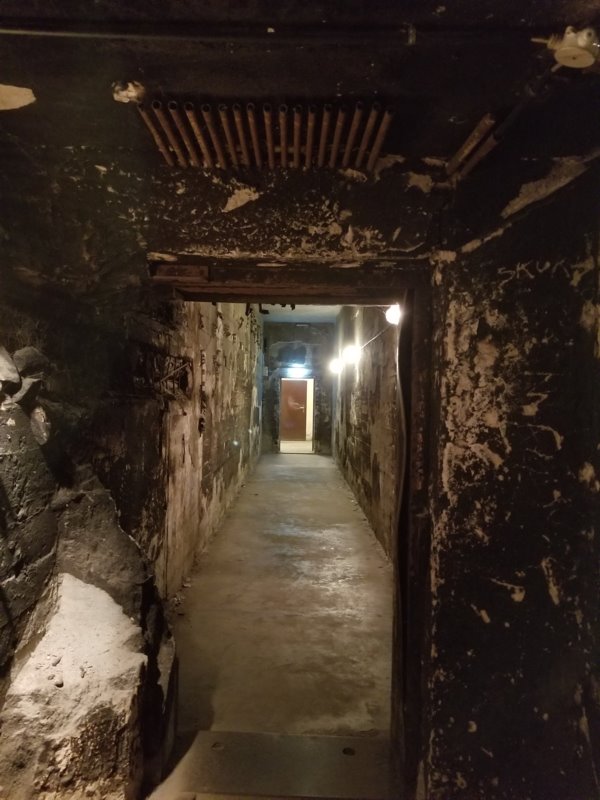
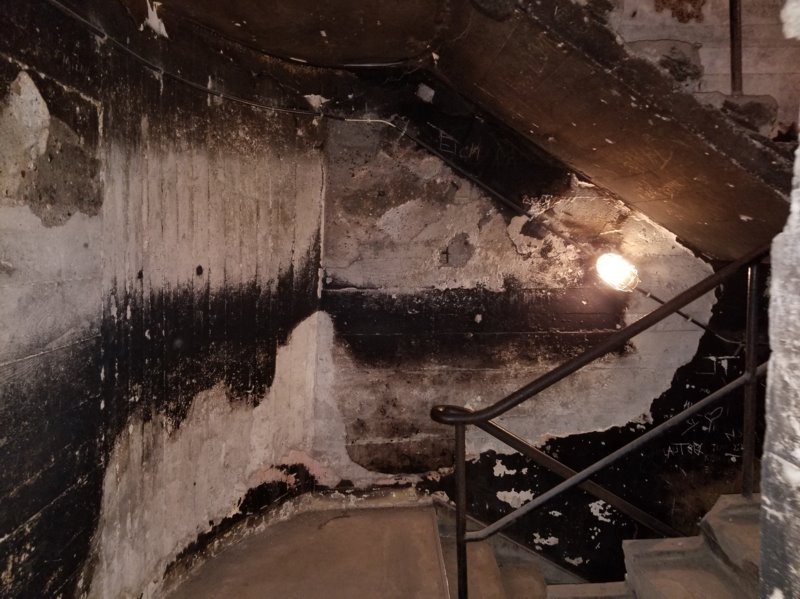
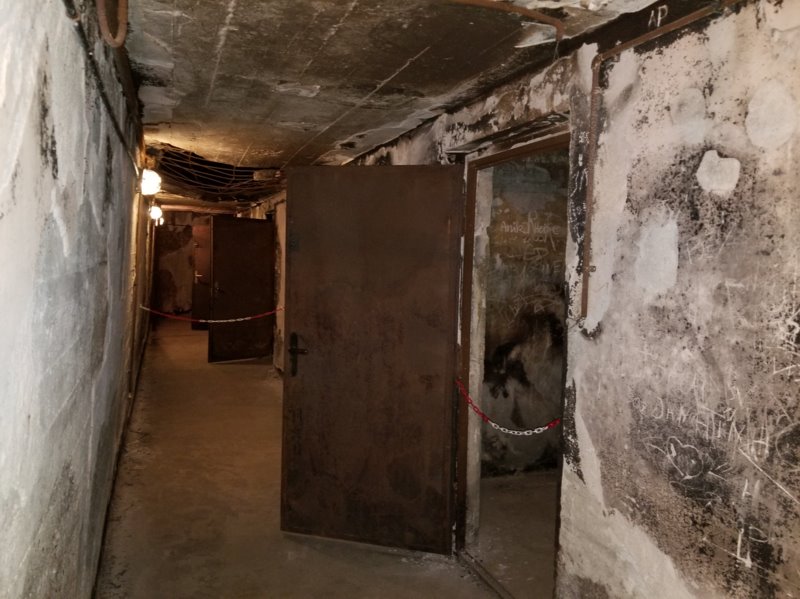
I had an opportunity to visit the nitrate bunker complex deep under Templehof Airport in Berlin last week. Millions of feet of film incinerated during the closing days of WWII. Source of ignition was never identified.
Powered by Infopop Corporation
UBB.classicTM
6.3.1.2