 I did once at training school, the spools weighed a ton. I rather liked the 1” open reel VTs, to me they were a joy to operate with all the logics.
 The Betamax VCR: 1975-2002
"(August 28, 2002) Tokyo -- Sony Corp. has announced that it will make only 2,000 more consumer Betamax videotape recorders before discontinuing its 27-year old format later this year...
The company listed new digital recording formats as the official killer of Beta, stating that the likes of recordable DVD have precipitated a final decline in demand, making it "difficult to secure parts" for Betamax machines...
Sony reported shipments of 2,800 machines in its 2001 fiscal year, which ended in March; the total number of recorders produced over the format's lifetime will top 18 million..."
Link to full story:
http://www.medialinenews.com/issues/2002/august/news0828_3.shtml
------------------
John P. Pytlak, Senior Technical Specialist
Worldwide Technical Services, Entertainment Imaging
Research Labs, Building 69, Room 7525A
Rochester, New York, 14650-1922 USA
Tel: +1 585 477 5325 Cell: +1 585 781 4036 Fax: +1 585 722 7243
e-mail: john.pytlak@kodak.com
Web site: http://www.kodak.com/go/motion
After all, you can still buy turntables for playing LPs and 78s, decades after those formats went out of widespread use.
I must admit to being astonished that Betamax machines are still being produced (just about). With those tiny quantities I can only guess that a lot of the mechanical components (e.g. in the tape transport system) are identical to the ones used in Beta SP and Digibeta decks for the broadcast industry, therefore the usual prohibitive economies of scale involved in producing small numbers of complicated machines do not apply in this case.
The transition took about a year before all the record stores up in this area discontinued stocking the black vinyl analog disk. Good quality turntables are very expensive today, although they still can be obtained. They are practially a specialty item.
=TMP=
Anyone care to comment on that?

I have VHS tapes that are 20 years old that still play well, and tapes that are 20 years old that won't play well at all. The correlation? Scotch/3M tapes have held up, others have not. Also the tapes at SP speed play much better than the SLP/EP speed (which is obvious as to the reason why). Fortunately for me 99% of my tape collection is on 3M stock and most of it plays fine. However my early HiFi recordings do seem to have "issues". The tapes I made on my Panasonic PV-1730 machines at SP still track perfectly, but HiFi tapes made on any other machine are littered with noise in the audio.
Bottom line: buy quality equipment and quality tapes if you want your recordings to last.
Paul & Thomas: Retail sales of prerecorded VHS tapes are dropping here, too. But I still believe that VHS as a format will take a lot longer to become totally obsolete than any previous consumer audio or video format, simply because of the huge amount of software already out there. Perhaps a better comparison than vinyl/shellac would be audio cassettes. Despite the growth of recordable CD technology sales of both hardware and software are still strong. Recordable DVD technology will also have to deal with certain issues before it gains widespread market acceptance. Many people who aren't technically minded find the concept of a medium which you can only record on once and then the recording is 'set in stone' to be too complicated for their liking. On CD-RWs the slightest scratch can make the disc unplayable, and I'm sure similar issues relate to DVD-RWs. People have got used to tapes as a linear format (i.e. you have to rewind them) and can deal with that. Optical discs work differently. There is a culture change that needs to happen as well as a technological one before VHS gets totally sidelined.
I presume they were getting confused between BetaMAX and BetaCAM.
Of course, 35mm camera stock, print stock, and lab services will likely be available long after VHS is dead and buried.
Brad--sadly, 3M hasn't been in the magnetic tape/disk business since the mid-'90s....
Anyone operated a 2 inch VTR machine ? I did once at training school, the spools weighed a ton. I rather liked the 1” open reel VTs, to me they were a joy to operate with all the logics.
The physical cassettes were identical to Betacam, Betacam SP and Digibeta cassettes of the smaller of the two sizes (i.e. the ones which hold up to 30 minutes on a PAL Beta SP). However, the tape ran a lot more slowly, with the result that you can get a lot more running time on each tape.
I still have a Sony Betamax VCR. A friend in a regional TV studio gave me a consignment of about 150 Betacam (not SP) 30-minute blanks when they upgraded to SP and would otherwise have put the tapes in a skip. On a 30 minute Betacam tape you can record 3 hours 15 minutes of Betamax. I still get the machine out every now and again, to transfer material recorded on it to MPEG - usually irreplacable stuff recorded off-air.
Played through a Trinitron monitor, I'd say from just looking at it that the picture quality is almost as good as S-VHS - certainly much better than normal composite VHS.
We have around 300 reels of 1" C format in our collection, but, thank goodness, no 2" quadruplex. The BBC central archives in Brentford have, I am told, over 30,000 reels of 2".
You can still get records of pretty much anything, you just have to order. When I was in Germany in '92, their record collection at their music stores was bigger than their tape and CD collection combined, and this was not a specialty music store (okay, I'll give you that it was 10 years ago). The reason the vinyl industry has survived and, like Leo said, you can get turntables still, is because of the hard core audiophiles that believe records sound better than CD's. Nobody likes tapes better, so they're almost dead. Nobody likes VHS better than DVD, so they'll die within 5 years too. DVD players are getting so cheap, you can't build a VCR cheap enough to make people want them. Tivo and PVR's are slowly overtaking the home-recording market.
The interesting thing is, if Sony hadn't been so selfish with Beta, VHS would of lost that war, and everyone would have had Beta in their living room rather than VHS.
------------------
"Asleep at the switch? I wasn't asleep, I was drunk!" - Homer Simpson
quote:
Magnetic media (and specifically videotape) preservation is an issue that regularly crops up on the AMIA listserv. The SMPTE, AMIA and FIAT (International Federation of Television Archives) all publish temperature and humidity recommendations for different kinds of element. I agree with Brad: using good quality tape stock to start with helps. But if you're faced with trying to preserve a 20 year-old tape that just happened to be recorded on cheap stuff, you've got to work with what you've got.
I don't know if videotape has the same problems as audiotape, but the more expensive, backcoated audio tapes of the 1970's are a disaster because the oxide sheds. Generally, you have to "bake" the tapes in a convection oven to get them to play one last time (while converting them to a digital medium for preservation.)
Tapes which are problematic include AGFA 468, 3M 250 and Ampex 406, 407 and 456. These were the top-quality tapes of their day. It has been reported in some trades that Ampex tapes from the mid-70's through the late-80's are the worse and that 3M had formulations simliar to Ampex's through most of the 80's.
Although it wasn't known at the time, it turns out that over time, the glue that binded the oxide to the plastic absorbed moisture, if the binders were manufactured with mostly chemically short molecules. When this happens, the binder breaks down. Once discovered, the formulations were changed to use medium sized molecules.
"I don't know if videotape has the same problems as audiotape, but the more expensive, backcoated audio tapes of the 1970's are a disaster because the oxide sheds. Generally, you have to "bake" the tapes in a convection oven to get them to play one last time (while converting them to a digital medium for preservation.)"
*********************************************************************
I agree with Martin on this one. I have a ton of them at the radio station - they are all practically useless. Luckly, the what was recorded on them is not worth saving anyway.
Yes, Chad - I know vinyl is still available to a degree, but I won't take the time or hassle to order them. I have a row of 33's about 10 to 12 feet long, all archived. I have two high-quality professional turntables to play them on. I have no intention to add to the collection, as it takes up too much space as it is.
They made a machine with a bunch of razor blades to slit the tape into 1/4 inch widths so they could use it on their freshly bought Sonys, Akai's, Teac's, and others overseas. I never found out if those tapes worked for audio recording. It seems to me tape bias would be a severe issue to deal with, not to mention the precision of the slits over a long run.
I thought the idea of doing making 1/4-inch tapes from the 2-inch stuff was stupid. 3M magnetic tapes were so cheap in those days. Why those guys wanted to fiddle around with the unknown making their own to save a buck is beyond me.....most of the tapes they tried it with were no longer acceptable for the PLAT system anyway. They were stuff that was ready to be thrown over the side.

Betacam is a professional component video tape format with true component recording on the tape using separate alternating helical tracks for luminance and the two time-compressed color-difference signals--no need for a subcarrier, color-under or otherwise, on the tape.
And now back to the Betamax memorial thread already in progress... 
Sony may have finally conceded defeat on the consumer tape battlefield (I too was surprised to hear they were still making the stuff), but that's OK. Analog tape is dead anyway--it just doesn't know it yet. But in the professional production world Sony cameras, video recorders, and match monitors are some of the best there is.
Paul
Betamax is dead--long live Betamax!
See Cowboy Bebop Session 18 Speak Like a Child for an anime spoof/tribute to the Betamax...
quote:
"Brad--sadly, 3M hasn't been in the magnetic tape/disk business since the mid-'90s...."
Yes I remember hearing they were getting out of the tape biz around 10 years ago. I quickly went and bought cases of their tapes! I am happy to say I have never actually paid for any videotape (except some MiniDV and 8mm tapes) of any other brand than Scotch/3M...and don't ever plan to.
quote:
"Never saw a Betamax, but what I understand, is that the picture quality was far superior to VHS."
Not "far superior", but better. It wasn't by a huge amount though unless you planned on duping the tapes. Making copies is where Beta really excelled over VHS. S-VHS was still better in overall quality.
quote:
"I don't know if videotape has the same problems as audiotape, but the more expensive, backcoated audio tapes of the 1970's are a disaster because the oxide sheds."
I am familiar with the phenomenon on old reel to reel tapes of mine. I remember they were Ampex, but I don't recall the number. I've never seen any problems with 3M videotape.
By the way, has anyone else found that Sony VHS tapes are evil, coming straight from the bowels of hell? Every and I do mean EVERY time I recorded on a Sony VHS tape for a friend my heads got clogged and I had to take the machine apart and clean them. I always joked that Sony was intentionally making bad VHS tapes to make Betamax seem superior. After about a dozen different Sony tapes, I made it a firm rule that if someone gave me a Sony tape I would shove it right back in their face, which I to this day always have.
I have a working Sony SL-5000 Betamax from 1976. It weighs a ton.
I play its recordings on a Sony SL-HF900 Beta from 1986. Other than occasional cleanings, by me, NEITHER machine has had any repair service done.
I ran 2" RCA, and Ampex VTR's back in the '70's. Lots of adjustments, banding problems, and other things made me glad when 1" came along.
I'm sorry that Beta is gone. I always thought that the format was better, and it was easier on the tape using the "U" tape wrap, vs. the "M" wrap used by VHS. The Beta format was scaled down from the 3/4" U-Matic VCR that Sony introduced around 1972.
I have a VO-1600 U-Matic recorder that will still play tape if I help it to thread the tape around the heads. Not bad for a 30 year old piece of equipment.
When the local tape rental stores dropped Beta in the late '80's, I bought most of them for a fraction of their original cost. I still have most of them, too, because unlike the VHS rental copies, these Betas were near mint.
I HATED 3M VHS tape, too, and have had troubles with Sony VHS blanks. No problems (yet) with the Beta tapes, and I have 20 unopened beta L750 cassettes that are just waiting to be used.
The audio tape shedding issue hit home for me. All the recordings that I made with my grandparents in the early 1970's were lost due to sticky-shed problems with Ampex 406, and "Grand Master" 456 tape. My 3M "Scotch" recording tapes, mostly 206, and 207 series, bought during the same time period, plays well to this day. I spent more for the Ampex tape because I wanted a tape that would last. The 206/207 was just for music recording. Guess I messed up...
I, too have VHS, and Beta recordings from the 70's that play just fine. I also have 3/4" recordings of 2" quad tapes. In the quiet parts of the 3/4" dub, I can faintly hear the high-pitched whine of the 2" video heads recorded on the audio tracks. Brings back memories of the olden days in a weird sort-of way...
Bruce
Boy, RCA NEVER, and I mean NEVER, made a decent quad machine! In fact, I remember in the mid 70s, the TV station I worked at uncrated the first two Ampex AVR-1s to come off their line (these were the big quads with the vaccume transports). The day after we put them on the air, RCA called from N.J. and offered us FOUR brand new TR-60s if we would crate up the Ampex machines and send them to them. I guess they wanted to pick them apart. Needless to say, we declined.
A lot of the stuff you see on the History Channel comes out of the old quad tapes from the CBS News archives. They have tape cleaning machines in the basement of the building in NYC, basically they run the tape over the same kind of dryweb media cleaner used in projection. The stuff is about 2.25 inches wide and is held against the tape by a plexiglass edge which sort of scrapes the loose oxide off. Once that's done they run it off of an Ampex VR2000 that they still keep maintained. Most of the tapes are old Scotch and Memorex stock, and they run pretty well. For those who have the Game Show Channel, this is how some of the classic shows were transferred, as well.
Here's a fun site if you're into old tape formats:
http://www.lionlmb.org/quadpark.html
The picture on the home page is the AVR-1 I mentioned above.
BetaMax definitely had a better picture than standard VHS. The biggest difference I noticed was Beta had less color-smearing. Later VHS-HQ almost achieved Beta quality. S-VHS was of course a big improvement. But VHS always seems to have color smearing, even now.
quote:
It takes an extremely high bias level to record on video tape. The audio quaklity on video tape always sufered a bit in favor of picture quality
Getting slightly off topic...
I heard that MFSL released a few albums on "Audio VHS" or something like that. No picture, just the audio for the album. How exactly did this work? It would have been interesting if they used the full surface of the videotape for audio, but then you would need a special VCR to read it. Was the audio quality on these Audio VHS tapes really superior to other formats?
Getting back on topic...
Did they ever release any audio recordings on Betamax?
=TMP=
Given the lethargic nature many TV stations have in modernizing their equipment, I would expect BetacamSP decks to still be in use for at least a few more years. However, digital tape formats like MiniDV, DV, DVC-Pro and Digital Betacam have already replaced all the analog decks in many stations across the country. Aggressive pricing is one reason why this is happening. Still, things like native 16:9 taping and HD production formats are a very high end thing. Sony will likely kill off any support for the analog BetacamSP format soon and not even have a press release about it.
The days of analog VHS are numbered. Stand-alone DVD players outsell VHS decks by a 3:1 margin, and this does not include the sales of Playstation 2 and X-Box consoles or DVD-ROM drives for computers. Pre-recorded VHS movies are selling very poorly now and many retailers are eliminating such product to make more room for DVD and video game product.
DVD recorders are still pretty expensive and D-VHS "D-Theater" decks are a very high end niche item. But add your TiVO decks, standalone MiniDV decks and MiniDV cameras to the total and you have another large bite being taken out of VHS. There are even MiniDV format camcorders on the market now that record direct to DVD-R/RW discs.
Once recordable DVD decks and D-VHS players hit price levels below $300, you'll be hard pressed to find a regular VHS deck for sale anywhere.
The alternative to PCM was Delta Modulation which could also be recorded on VHS, Beta, or U-Matic tape and was much more forgiving to edit since DM didn't use framing pulses. Editing was as accurate as whatever edit controller one was using. Tascam, Fostex, and Otari made DM machines.
Paul
Back in Orange and Long Beach for the weekend, making sushi...
Interestingly, the HDCAM format of which Mr. Lucas is so fond uses the same tape shells as Betacam SP and Digibeta, of which the smaller one is the same as for the consumer Betamax. The running time for an HDCAM tape is different depending on the frame rate (it can be shot at 24p or 60i).
So what format is used to distribute movies to TV stations these days? Is it one of the standard tape formats or something different? Do TV stations even get physical tapes of the movies that they broadcast or is it all on a satellite feed now? Obviously all of this would originate on film, but I can't believe that most TV stations in the US have broadcast anything off a film chain since the early '80s.
Here's a link to MFSL VHS & Beta Audio Tapes
"...They cost twice as much to make than their retail, so we made them for the hell of it, for the quality connection..." Find a company nowadays that can make that statement.
=TMP=
I bought a case of new T-120 HG tape and did not immediately use it. Actually it sat on the shelf for a year. When I finally opened each tape and made a recording, I found, after playback, that all I had for an image was snow. The oxide was allover the video, and ctl heads. The recording was irreplaceable. My cousins wedding. Too bad. Yes, I bought the tape because all the vid magazines were raving over the stuff.
My dealer didn't want to help me, since it had been a bit over a year since my purchase. 3M offered to replace or refund my money. I took the refund. This was the one time that I was really counting on the product, and it failed miserably. This all happened in 1987.
Perhaps "Hate" is a bit strong. Dislike is more like it.
It can happen the other way, too - when I got my current car everyone warned me that Fiats are rust-prone and unreliable, yet my 9 year-old Tempra which has done 173,000 miles, has no rust and does 400 miles a week commuting without any complaints.
In my opinion VHS as a format has suffered some quality issues over the past 5 or so years it seems. JVC VCRs, which used to be nothing short of outstanding, are now a pile of steaming  at their very best. Fortunately Mitsubishi still makes quality VCRs, and they are the only makers of SVHS I will buy.
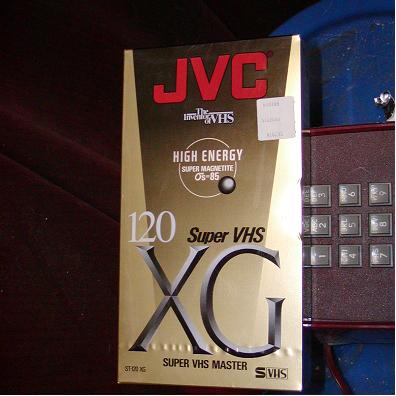
I have two JVC Hi-Fi HR-S4700U VCR's. They are equipped with flying erase heads and do a beautiful job of editing, right down to the gnat's butt. These machines are close to 11 years old now, and I certainly don't want to stuff any peanut butter-jelly sandwiches in them.
3M Tapes are good, but just like any other brand, you have to get the top-of-the line tape. The rest are .
There was how many different ones...I can't remember. Let's see...EX, HGX Gold, XL-HiFi, RX-Pro, XR-S, SX, XR, EHG, PRO-HiFi, S-XG, S-XZ,
SG, SHG, Poop, More Poop, - where does it stop? Of course, you have the Radio Shack stuff that flys apart and plugs up the heads, and some stuff that just won't run.
My favorites:
JVC S-XZ
JVC S-XG
Fugi Super VHS Pro
Maxell XRS
Maxell RX-Pro120
3M 120SHG (This is not a SVHS Tape, but I like it for general recording.)
It has been 4818 days since the last post.
quote:
Sony to stop selling Betamax video cassette tapes in March
Sony announced on Tuesday that after four decades, it will stop shipping Betamax (or Beta) and MicroMV video cassette tapes next March. The company explained that it is ending sales in these formats in light of the changing marketplace, due to the end of analog television broadcasts in Japan in 2012, the decreased demand, and other factors.
The Betamax video cassette is a format of recordable magnetic tape media that Sony developed for home video use. The company started manufacturing the players and tapes in 1975. Sony had already stopped producing Betamax video cassette tape recorders in 2002. The format eventually sold 18 million recorders, and cassette sales peaked in 1984 with an annual total of about 50 million.
The MicroMV video cassette is a separate format of recordable magnetic tape media for digital video cameras. Sony also stopped producing MicroMV video cameras in 2005.
Cowboy Bebop, a Sunrise science-fiction television anime set in the year 2071, made an obsolete Betamax cassette a pivotal element in its 18th episode, “Speak Like a Child."
![[beer]](graemlins/beer.gif)