This is topic 1080P screens in forum The Afterlife at Film-Tech Forum ARCHIVE.
To visit this topic, use this URL:
https://ft-forum.com/ft/cgi-bin/ubb/ultimatebb.cgi?ubb=get_topic;f=12;t=000446
Posted by Greg Mueller (Member # 17) on 11-22-2005, 06:48 PM:
Last weekend the wife and I went to the local Magnolia HiFi, which is a very expensive store, but they have all the latest stuff so you can see it in person.
In one room they had several 1080P DLP rear projection screens by Mitsubishi and Samsung and a couple others. They all had 720P programming on them, upscaled to 1080P, until the salesman came in and we started talking about 1080P availability and "the future". He ran a demo off a hard drive that was true 1080P on a 1080P screen and it was really impressive. We were sitting maybe 6-7 feet from the screen (about a 70") and could see no pixels or artifacts. In fact I had to get up and put on my reading glasses and walk over to the screen before I could see the tiny little squares. This was at about 1'.
Too bad this store is about 25-35% over internet prices.
I've got to admit these DLP screens look pretty darn good, but I'm still questioning whether there's going to be stuck micro mirrors and such. That would be a real heart breaker. I'd like to see a plasma screen in this rez at about 50-56". I like the flat panel aspect. The only problem is that we are going to retire to NM at high altitude (7300') someday and I hear the plasma displays have an altitude limit or limitations.
If you get the chance and want some cheap entertainment, drop by your local high end video store and check out the new crop of screens. Pretty amazing
Posted by Bobby Henderson (Member # 840) on 11-22-2005, 07:44 PM:
One thing which will double a 1080P screen's value is the ability to run it both as a HDTV and a computer monitor.
There may not be any 1080P broadcasts right now. But computer monitors can do 1080P. Future video formats, video game systems and more will support 1080P and resolutions even higher than that.
Apple's 30" Studio Cinema Display monitor has a native resolutionn of 2560 X 1600 pixels. I think resolutions of that level and higher will be featured on future HDTVs to support multi-purpose use.
Already I've made computer monitor connections a must have item for when I buy a HDTV monitor. That and a minimum of 1920 X 1080 native resolution are mandatory to get me to part with my dollars.
Posted by Joe Redifer (Member # 3) on 11-22-2005, 10:51 PM:
I don't like any form of upscaling. If I watch the Batman Begins trailer on my computer screen at its native 1280x544 pixels, it looks extremely sharp and downright awesome every single frame. If I watch if full screen on my monitor at 1680x714 it still looks pretty good, but it loses much of the "WOW" factor it had at its native resolution, and even though I can see all of the same details, it didn't look anywhere near as sharp.
They need to invent better technology to show everything at its native resolution all the way from the 240p and 480i of a typical analog TV set all the way up to 1080p and above. Or they need to pick one resolution and stick to it, and not bother with the 720p/1080i nonsense.
Posted by Mark Gulbrandsen (Member # 72) on 11-24-2005, 08:28 PM:
Actually 1080P is the ultimate destination for DTV. But I've heard that its a couple of decades away from happening in everyday broadcasting......
Greg, Re: the DLP screens.. watch out for the single panel rear projection sets. Those produce some of the wierdest digital and color artifacts you will ever see!
Mark
Posted by Joe Redifer (Member # 3) on 11-24-2005, 09:22 PM:
quote: Mark Gulbrandsen
Actually 1080P is the ultimate destination for DTV.
Bullshit. Try 7680 x 4320, or 4320p. Hell yeah. 1080p sucks ass.
quote: Source
Corporation (NHK) has demonstrated a live relay of a 4x x 8k resolution Super Hi-Vision program connecting a 260-km distance by a fiberoptic network.
NHK's next-generation broadcasting system can convey the sensation of reality to viewers. Super Hi-Vision is the provisional format for that purpose, achieving 7680 x 4320 pixels.
It already demonstrated the images of Super Hi-Vision at the 2005 World Exposition, Aichi, Japan, held from March to September in Aichi this year using a preliminary prepared video footage.
NHK developed a Super Hi-Vision camera equipped with 8 megapixel CCD image sensors that can take 4k x 8k images. In the field test, it sent the two cameras to a sea park and sent baseband signals without image compression using an fiberoptic network formed by multiple network companies.
The signal of the total 24 gigabits per second was divided into 161.5 Gbps HD-SDI signals to sent using the DWDM (dense wavelength division multiplex) method.
"Super Hi-Vision has huge information and was difficult to transmit. Using 16 waves on optic fiber, we succeeded a live relay over a long distance. This means that Super Hi-Vision proved the possibility of being a future TV broadcasting technology," said Mikio Maeda, senior research engineer of the laboratory.
Posted by David Stambaugh (Member # 1102) on 11-24-2005, 10:26 PM:
There's an article in the current issue of The Perfect Vision about how many HDTVs actually display half their claimed resolution. Something to do with whether the TV's video processor uses "bob" or "weave" with the interlaced signal (I know, this thread is about 1080p). Anyhoo, "weave" means taking the 2 alternating frames from the interlaced image and making a single progressive frame out of them. Nothing is thrown away. That's the correct way to do it. Unfortunately, it seems that a lot of HDTVs (including all of Samsung's 720P DLP models) use "bob". That means it takes a single interlaced frame (representing half the total image information) and upscales it, while throwing away the other half of the same frame.
The whole HDTV thing is a scam I tells ya! Seriously, I think consumers have been suckered into buying so-called HDTV sets that were never really HDTV to begin with and never met their claimed resolution specs. ![[thumbsdown]](graemlins/thumbsdown.gif) Not to mention the broadcasters are cheating on the bandwidth, bigtime.
Not to mention the broadcasters are cheating on the bandwidth, bigtime.
The new Sony SXRD 1080p sets do the weave thing correctly though. I saw one (at Sears of all places, and on sale) and it was noticeably better than anything else in the store.
Posted by Joe Redifer (Member # 3) on 11-25-2005, 02:39 AM:
If it is using an interlaced signal, it is not 1080p. "P" stands for progressive. There is absolutely nothing interlaced about it. Not one damned thing. Otherwise it is simply "i". My TV does 1080i, and only one field is shown at any given moment in time, just like with 480i. It would simply be wrong to show two fields at the same time in a progressive fashion. There would be combing artifacts like you wouldn't believe. If I get close during a broadcast or other 1080i source being played through my TV, I can see it flickering back and forth as it interlaces. That's what interlacing does. Interlace. When my TV displays 480p, there is no flicker. It displays 480p as a true progressive signal. Progressive, no flicker beyond the normal 60Hz nonsense (and they have 100Hz TVs in Europe, those assholes, I want 120Hz TVs here NOW). If anyone is claiming 1080p and actually using 1080i to achieve their results, then they suck much ass. 720p also is not interlaced. The Perfect Vision must be a shitty magazine. They sound quite flawed and I highly recommend urinating on the magazine in a supermarket parking lot, preferably Albertson's.
Posted by David Stambaugh (Member # 1102) on 11-25-2005, 10:24 AM:
I said "frames" when I should have said "fields". 2 fields = 1 frame. Their claim is that some HDTVs take 1 interlaced field and uprez it to make a frame out of it, rather than combining 2 complete fields to make a frame. They ran their findings by the TV makers whose sets supposedly do this and they confirmed it (all LG sets do it for example). Supposedly there's a definitive test and it's easy to demonstrate. I never heard of it before I read this article though. I'll see if I can dig up the magazine and quote it more accurately.
EDIT: OK, here's some of what they say. The Perfect Vision, December 2005, Issue #64, Page 14, "HDTV Insider News", author is Gary Merson. I'm paraphrasing, accurately, but condensing it.
HDTV's 1080i signals are sent out interlaced with 540 odd-numbered lines and 540 even-numbered lines needed to complete the full 1080-line frame. Many TV makers opt to upconvert one 540-line field to the TV's native resolution, 720, 768, or 1080. The other field is discarded. This is called "bobbing". Using both fields to make a full frame is called "weaving". "Bobbing" throws away half the 1080 lines in a 1080i HDTV broadcast.
Farouda/Genesis chipsets prior to the current version use "bobbing". None of the 2004 or earlier TVs using their chipsets use "weaving".
All Samsung LCD and plasma sets were found to "weave". All Samsung DLP sets were found to "bob".
Out of 53 sets tested, 23 "weaved" (passed) and 30 "bobbed" (failed).
Manufacturers were contacted and all concurred with the methodology and findings, even companies whose own sets failed.
Posted by Greg Mueller (Member # 17) on 11-25-2005, 11:51 AM:
Thanks David, do they have an actual list of passers and failers. That would be a valuable list, if you were in the market
Posted by Paul Mayer (Member # 355) on 11-25-2005, 12:43 PM:
The same issue occurs with 480p DVD players. Some players use the flags imbedded within the data stream to tell whether to bob or weave when putting the progressive signal together. The problem is many authoring houses don't bother to set the flags correctly. What's worse, sometimes individual titles are digitized scene-by-scene or reel-by-reel, sometimes interlaced and sometimes progressive. Add that to incorrectly set flags and you get the occasional rough transistions between scenes and horizontal flagging and tearing of moving objects within scenes. This is something that currently plagues all of the cheaper 480p DVD players since it is cheaper to simply read the data flags when setting up for bob or weave. They are vulnerable to authoring house screw ups.
The more expensive players use scan cadence reading to make the bob vs. weave decision. This is a more expensive process since it reads every frame and decides on a frame-by-frame basis which technique to use.
I imagine similar issues will crop up as we transision to the new HD discs.
BTW, this month the senate voted to set the DTV transision date to 7 April 2009. The house voted to set the date to 31 December 2008. They will now hammer out the final date in conference committee. So, the date will soon become law, no longer merely a suggestion by the FCC. Broadcast of NTSC will cease on that date, freeing up the present VHF and UHF spectrum to be auctioned off and thus raise more money for federal use. Because of the amount of money involved I wouldn't count on seeing this date slip too many more times.
Also, just this week the FCC has set 1 April 2007, 16 months from now, for all new TV sets to have built-in ATSC tuners. This also applies to any other device that receives OTA signals. The only exemption is for monitors that don't have any tuning capability at all.
Of course there will be lots of old analog sets still out there, but hopefully the new set-top digital converter boxes won't be too expensive. Progress.
Posted by David Stambaugh (Member # 1102) on 11-25-2005, 07:36 PM:
Greg, the article includes a table listing the test results, but it doesn't specify the exact model numbers of the sets. For example, for Panasonic it says 5 plasma and LCD flat-panel sets passed and 3 LCD rear projector models failed. No specific model numbers.
All the tested JVC, Hitachi, Pioneer, and Toshiba branded sets passed. One Dell set was tested and it passed.
Sony, Panasonic and Samsung results were mixed (Sony's newest LCD flat panels and SXRD rear-projection sets pass though).
All sets made by Sharp and LG failed.
Posted by Joe Redifer (Member # 3) on 11-25-2005, 08:00 PM:
Well since I can tell the diffrence between 30 images a second and 60 images a second, I'm sure that my HDTV does whatever it is supposed to do correctly since I clearly see 60 images per second with my naked eye. I can totally tell when watching the news (which is in HDTV 1080i) or even a 480i source which is upscaled to 960i for no reason whatsoever by the TV.
PS - I always author my DVDs with the correct flags, and you NEVER see any combing artifacts on my 24p DVDs when viewed in progressive no matter the player. I kick ass. The studios are full of amateurs. Seriously. If they can't get the flags right, they have no business authoring DVDs and are not skilled enough and/or are using inferior tools for the job. What a bunch of losers. Their family deserves herpes in the mouth.
Posted by Bobby Henderson (Member # 840) on 11-25-2005, 08:07 PM:
The bob and weave issue described may be another factor that threatens traditional broadcast standards.
Some 1080P rated HDTV displays can double as computer monitors and show a native 1920 X 1080 computing desktop. If you have a computer powerful enough (and a display to match) you can already download true 1080P HD content today. Apple's movie trailer site is one such example. Computers have been able to display much higher resolution rates than TV for a long time now.
The superior resolution standards of computer displays matched with a wider broadband pipe, anything above 30Mb/s to 40Mb/s, will allow the Internet to drop kick standard broadcasting methods viciously in the chest.
quote: Mark Gulbrandsen
Actually 1080P is the ultimate destination for DTV. But I've heard that its a couple of decades away from happening in everyday broadcasting......
I have strong doubts the powers that be will ever manage fitting a 1080P signal within a 6MHz range of broadcast spectrum. It's only going to take a few years before lots of people patch a 1080P video stream from the Internet into their HDTV monitors.
Posted by David Stambaugh (Member # 1102) on 11-25-2005, 10:08 PM:
I don't think they're claiming the TVs don't display 60 images per second. They're saying that half the available image info is thrown away in the process of generating those 60 images.
Posted by Joe Redifer (Member # 3) on 11-25-2005, 10:21 PM:
Sorry David, but if they're thowing away half of the frame (every other field) then they are throwing away half of the motion as well. I would most definitely notice.
Posted by David Stambaugh (Member # 1102) on 11-25-2005, 10:51 PM:
Which of the following statements are true:
A) The author of the bobbing/weaving article is full of shit.
B) Joe is pulling my chain.
C) Joe's HDTV is a weaver.
D) Joe's HDTV is a bobber but Joe is in denial about it.
![[Razz]](tongue.gif)
Posted by Joe Redifer (Member # 3) on 11-25-2005, 11:26 PM:
Seriously, I suggest you understand how interlaced video works. 30 frames per second = 60 fields per second. Each field of video contains a unique image, a separate moment in time (if the source was shot on 60i video). I'm sure my TV does whatever is correct, as I can see the 60 different images per second. I can also see the interlace flicker even on 1080i. Only one field is ever on the screen at any given time, and that is EXACTLY how it should be. Period.
Also, if you studied up on how interlaced video works, you would discover that throwing away every other field would also throw away every other moment in time for 60i video. The resulting motion would be extremely stuttery for all 60i video and would look completely unnatural. Any manufacturer who does this deserves diarrhea in their stocking this Christmas.
My TV, by the way, is the Sony 34XBR960 or some bullshit like that.
The ATSC standard calls for 1080p to be broadcast at either 30 or 24 frames per second. The standard cannot handle 60 frames per second like it can with 720p. But 1080p can do a full 60 frames per second if you have a source like a Playstation 3 hooked up to the TV. There are no fields in 480p, 720p or 1080p. Yup, 60 frames per second!
Posted by David Stambaugh (Member # 1102) on 11-26-2005, 11:11 AM:
I merely reported what the writer said in his article. I don't claim to be an expert on this. But if the author is wrong, why are the TV manufacturers saying he's right? He flat-out states that some HDTVs claiming to be 1080p are in fact delivering half that resolution (540p) because they bob instead of weave [edit: when scaling an interlaced 1080i broadcast to the set's native 1080p resolution].
Take your complaints here. Maybe you can get Gary Merson to explain it better.
[ 11-26-2005, 03:38 PM: Message edited by: David Stambaugh ]
Posted by Joe Redifer (Member # 3) on 11-26-2005, 05:05 PM:
quote: David Stambaugh
when scaling an interlaced 1080i broadcast to the set's native 1080p resolution
Well you didn't say THAT! You made it sound as if 540p was the highest resolution the set could achieve and it was scaling that to 1080i. And like I said before, if any manufacturers are doing that to achieve 1080p, then they suck. But still, only one field should be visable at a time. They should scale the 540p up to 1080p 60 times in one second. That way half of the information is NOT thrown away, and you don't get combing artifacts. It is hard to get rid of combing artifacts when dealing with interlaced material. That's why interlacing in any form sucks ass and should be illegal.
Posted by Michel Hafner (Member # 3492) on 12-06-2005, 05:23 AM:
Fortunately the difference between a 1080p source and a 1080i source is not that big if the source is correctly mastered film at 24 fps. The 2:3 pulldown is reversable and you retrieve the original film frames. The main difference is that vertical filtering is applied to reduce line twitter when watched as 1080i direct and the 2:3 motion judder in 60Hz displays is not film like. That's avoidable though when the frames are output at 24 Hz or a multiple of it, which is still rarely done because 2:3 cadence errors are difficult to handle and most displays are married to the TV standards of 60 Hz and 50 Hz.
Posted by Steve Guttag (Member # 268) on 12-06-2005, 07:26 AM:
One of the output rates Extron scalers offer (many of them, at least) is a 72Hz rate just to deal with jutter. However...most projectors either can't deal with 72Hz or turn the 72Hz output back to 60Hz making for an even worse picture.
That being said...if you have a CRT projector/monitor...the 72Hz rate eliminates the jutter associated with the 3:2 pull-down conversion as each frame is now shown 3 times.
Posted by Martin Brooks (Member # 1269) on 12-08-2005, 09:30 PM:
I believe I read recently that CBS requires all program producers to provide HDTV material in 1080p and that CBS does intend to broadcast in 1080p at some point in the future. Now that doesn't mean that all CBS affiliates or cable/satellite services will broadcast in 1080p, but it's a start.
And my understanding is that the HD-DVD formats are going to be 1080p. I suppose the players will have some kind of downscaling mechanism for sets that can't handle 1080p.
Those who say that the current lineup of HDTV sets that are being sold is a scam are absolutely correct. Most are 720p vertical at best. Some of the sets actually do look okay with HD material, but they look like absolute CRAP with analog material and with most DVDs. I'm stickin' with my 20 year old Sony CRT until someone comes out with inexpensive and good looking 1080p.
Anyone know what's going on with Panasonic? Their plasma sets are out of stock everywhere and have been for months.
Posted by Joe Redifer (Member # 3) on 12-08-2005, 11:13 PM:
Hmmm... I wonder if my Sony CRT HDTV can do anything besides 60Hz?
Posted by Mark Gulbrandsen (Member # 72) on 12-10-2005, 11:36 AM:
quote: Joe Redifer
Bullshit. Try 7680 x 4320, or 4320p. Hell yeah. 1080p sucks ass.
Joe,
Those other resolutions may be possible perhaps from some other source than "off air" but the "consortium" claims it will be at least another 15 to 20 years before they can actually transmit the 1080P signal over the air. Most present HD transmitters strain just to do what they are doing today.
quote: Martin Brooks
Anyone know what's going on with Panasonic? Their plasma sets are out of stock everywhere and have been for months.
Now come on Martin... if you're sticking with your gold ole CRT set how would you know that ![[Wink]](wink.gif) ?
?
Mark
Posted by Joe Redifer (Member # 3) on 12-10-2005, 03:34 PM:
15 to 20 years is bullshit. Look where we were 15 years ago. 1990-ish. We couldn't even fathom something like MPEG-2. We were way too stupid. Codecs are developing at a substantial speed, and it's only a matter of time. The problem with the TV industry is that everyone who works in it is a retard. They are thinking 40mbps MPEG2 for their 1080p broadcasts. Damn 'tards.
Posted by Bobby Henderson (Member # 840) on 12-10-2005, 04:43 PM:
There are physical limitations with how many bits of data you can fit in a 6MHz space of broadcast spectrum. Ultimately, over the air broadcast is doomed because of those limitations.
I believe 1080p HD material will become more widespread over the Internet than through broadcast. Currently the Internet offers the only way that 1080p can be remotely transmitted. In less than 10 years Internet connections of around 100Mb/sec will be commonplace and will easily handle 1080p material and resolutions of video higher than that.
10 years from now many computer monitors (also doubling as TV sets) will feature native resolutions far above the 1080P standard. Even now things are changing. Apple's 30 inch Studio Cinema Display features a 2560 X 1600 native resolution. Dell is about to release a similar 30 inch display with the same resolution (along with a 9 in 1 flash memory card reader and 4 port USB hub). The Dell monitor will likely cost well under $2000 (several hundred less than the current $2500 price of the Apple display). That's the current picture on high end monitors.
By 2008, Intel will be releasing mainstream desktop processors that sport 8 cores. AMD will likely do the same. Graphics card performance will be even more astounding by then. The point of stating that is computer technology will be extremely capable of handling video streams of 4K resolution. The only bottleneck in the equation is hard discs. But even they're getting faster and will start incorporating flash memory to speed up I/O performance further.
What can broadcast methods do to improve? Not much. 6MHz is always going to be 6MHz. Unless some big network folks can persuade the FCC to allot 12MHz or 18MHz wide channel bandwidths any formats above 1080p are going to be all but impossible to deliver over the airwaves. Sure, people can come up with new data compression codecs for video, but you're only going to be able to compress the data only so much. I don't think the codec writers are going to be able to keep up with what is capable via the Internet versus what can be crammed into a tight space for broadcast.
Posted by Martin Brooks (Member # 1269) on 12-10-2005, 05:06 PM:
quote:
quote: Martin Brooks
Anyone know what's going on with Panasonic? Their plasma sets are out of stock everywhere and have been for months.
Now come on Martin... if you're sticking with your gold ole CRT set how would you know that ?
Every once in a while I pop into my local HDTV dealer to see if anything looks good. Sometimes I have a weak moment and think I might buy something, even though the HDTV only goods good if you stay really far back and anything analog on the HDTV looks really incredibly bad. Then I realize I'm about to spend $3K so I can watch 3 hours a week of TV shows that I hardly care about in the first place and that doesn't include the fees to increase my cable capability to HDTV and I walk out. Someday I'll give in, but it will probably be after the HD-DVD formats are released and only if they're successful.
Posted by Lyle Romer (Member # 1266) on 12-15-2005, 12:31 PM:
Bobby,
The issue long term isn't what hardware is capable of, it's what the providers will give us. It's been almost 15 years since they put out HDTV standards. There is plenty of hardware available to recieve HDTV but not enough content provided in HD. I mean, all NFL football games (which the networks pay huge bucks to broadcast) aren't even avialable in HD. Hardly any college football is available in HD.
Look at movies. 35mm film is capable of displaying better than 4k resolution but when it comes to digital effects or digital intermediates, they are being produced at 2k to save money. If they won't master movies at 4k now (when there is "hardware" to display it), why would they bother mastering 4k so that a small percentage of people (tech geeks) can watch it over the internet in 4k when the vast majority of the viewers have, at best, a 1080p display.
I also have reservations about 100 Mb/sec being "commonplace." Look how many people are on dial-up today when there are reasonably priced high speed options. That 100 Mb/sec connection is certainly going to cost $50-$100 per month not including the content. I don't think they will make the mistake that JDS Uniphase (sp?) made and overbuild bandwidth capacity so as to make it so cheap that it's worthless.
Heck, it'll probably take 10-15 years before 1080i displays are commonplace. Look at all the people getting suckered into buying 720p monitors now that think they have upgraded to HD.
Posted by Greg Mueller (Member # 17) on 12-15-2005, 01:35 PM:
I read on some bulletin board (can't remember which) that Direct TV claims they are going to have 150-170 channels of "HD" (I think they mean 720P) by 2007. They do have a few now, but my ED screen is working fine so I won't be upgrading anytime soon.
Another thing I ran across in reading about screens and such, is a review of plasma screens. Turns out that the early estimations of plasma screen life expectancy didn't turn out to be as bad as feared. I've had my Panasonic ED plasma screen since they first came out and have seen no loss of brightness, which was supposed (as far as I know) to be an indicator of dissipating gas.
Posted by Brad Miller (Member # 2) on 12-15-2005, 05:17 PM:
I walked through the back of Fry's Electronics last week and just perused the line of 1080P 36-60" DLP sets (and I think there were some CRT 1080P units in there). What I found amazing was the vast difference in basic quality between the sets...yet NONE of them really looked good. Now in general all of them looked better than the plasma displays and the 720P units, but where is this supposed great quality I keep hearing about?
Posted by Greg Mueller (Member # 17) on 12-15-2005, 05:39 PM:
Probably they were feeding 720P into them and upscaling the picture. It doesn't look very good. If you can get a salesman to hook up a true 1080P feed off a hard drive (I think it's the only source of 1080P right now) you'll see quite a difference. I felt the same way until the guy hooked up the hard drive.
Posted by Mark Gulbrandsen (Member # 72) on 12-15-2005, 07:41 PM:
quote: Brad Miller
yet NONE of them really looked good.
None of them looked good compared to what? iThey should have all looked better than any NTSC stuff you saw. If it didn't then the store is doing something really wrong. The Fry's store in Vegas usually has off air hd, a 1080p, and NTSC stuff all running within a stones throw of each other. Makes me wonder what they were running at the store you visited.
When I bought my LCD set I looked at everything and the Samsung looked the best, seemingly had the best resolution, colorimetry and least amount of lag of all the LCD setes that were displayed. Its been a really good set.
Mark
Posted by Bobby Henderson (Member # 840) on 12-15-2005, 07:42 PM:
Even worse, many electronics stores are just playing standard DVDs on those HDTV sets. One would figure if those dolts were going to do that they would at least attach a good DVD player that upsamples the image to 1080 format and sends it out of a HDMI output.
Perhaps whenever HD-DVD and/or Blu-Ray can see the light of day then the real image detail potential of 1080P TV sets can be realized.
Given one can already watch 1080P HD content on the Internet (though in pretty limited form) I see it as being one way how the broadcasters are falling behind.
quote: Lyle Romer
I also have reservations about 100 Mb/sec being "commonplace." Look how many people are on dial-up today when there are reasonably priced high speed options.
Many people who are on dial up, and not living out in the sticks, are using those slower connections by choice. 10 years ago, my Internet connection was transitioning from 28k to 56k. Today I can download at up to 3 million bits per second. Although it sounds pretty extreme today, my guess of 30Mb/s to 100Mb/s connection speeds being pretty commonplace by 2015 is indeed conservative.
Sure, lots of people living in rural areas are definitely hurting in Internet connection speed. My parents still use dial-up. WiMAX and other competing technologies will start impacting that. I think that competition will also force the hard wired service providers to get more aggressive with laying down more infrastructure.
In the end, by 2015 it is going to be very difficult to find any populated corner of the United States not covered by very fast Internet connections. These wide bandwidth connections may turn into the delivery pipe of choice for entertainment providers. I really think traditional over the air, cable and satellite providers will be in trouble --that is unless they position themselves early. We're already seeing some of that just in regards to stuff like iPod downloads.
quote: Lyle Romer
Heck, it'll probably take 10-15 years before 1080i displays are commonplace. Look at all the people getting suckered into buying 720p monitors now that think they have upgraded to HD.
I don't agree with that either.
HDTV monitors with "1080P" native resolution or greater (like 2560 X 1600) will be very common even before the end of this decade. A 1080P monitor with the proper connections can pull double duty as both a television and computer monitor. The same cannot be said for a TV with only native 720P resolution.
I've been wanting a 1920 X 1080 HDTV for years. But one of the key features I want in addition to that high native resolution is the ability for it to work as a computer monitor.
Posted by Joe Redifer (Member # 3) on 12-15-2005, 11:37 PM:
1080p CRT TVs do not exist. But boy oh boy do I sure wish they did! Nothing is as sharp as CRT, it seems.
quote: Lyle Romer
Look at all the people getting suckered into buying 720p monitors now that think they have upgraded to HD.
720p is one form of HD.
Posted by Mark Gulbrandsen (Member # 72) on 12-16-2005, 08:58 AM:
Joe,
Hate to tell ya but over the next 10 years you will pretty much see thhe CRT disappear completely. There are too many nastys inside of a crt. Many countries already have in place strict controls governing the manufacturing and disposal of them.
Mark
Posted by David Stambaugh (Member # 1102) on 12-16-2005, 10:56 PM:
What Mark said. If you like the "look" of direct-view CRT sets, buy one now, cuz they won't be around much longer, at least not good ones. The Sony KD-34XBR960 34" widescreen HDTV is one of the best consumer sets ever made and the last of a dying breed of TV. Sony is shutting down its remaining CRT manufacturing facilities very fast (and laying off thousands of workers). I'd be very surprised if there's a CRT-based set in Sony's lineup 1 year from now.
Posted by Joe Redifer (Member # 3) on 12-16-2005, 11:31 PM:
Dave, that's the one I have. Supposedly it's the sharpest picture anywhere in terms of HDTV. The "all signals displayed at 1080i or 480p" is wrong, though. It can do 960i as well. Unfortunately that means 240p signals which run in progressive scan on any regular analog TV in the world are upscaled to 960i on this TV and as a result looks super blocky in that mode.
Mark, I know, but I disagree with your reasons. CRT is fading out ONLY because they are extremely massive in depth, heavy, and don't get much bigger than 36 inches. If CRTs sold better, they'd continue to make them, trust me. People want shit they can hang on their walls and they want huge screens. CRT provides neither. I just wish they could come up with a technology that wasn't fixed-pixel dependant and could have all of the thinness/gigantor advantages of plasma and LCD. Displaying shit at its native resolution is the best way to go for any format. Up/downscaling sucks ass. I think they could do it if they wanted to, they just don't want to spend $$$ on R&D.
Posted by Paul Trimboli (Member # 1509) on 12-20-2005, 08:09 AM:
I have a Philips HD CRT and love it. I am not really a fan of plasma or LCD, sure they look nice but not as good as CRT. I did like the look of a rear pro HD-ILA JVC I saw on the weekend, a really fantastic picture. Do HD broadcasts suffer from any compression artifacts in the US? I have noticed that HD is alot more compressed in AU because for some stupid reason they only allowed the bandwidth that normal analogue TV had, SD is fine but HD is to compressed.
Posted by Bobby Henderson (Member # 840) on 12-20-2005, 09:42 AM:
Yes, HD broadcasts in the United States do suffer from compression artifacts. Some may be difficult to spot, but others, particularly in areas involving graphics and type, do stand out rather horribly.
I was checking out a Sony VEGA "SXRD" 1080P LCD rear projection TV yesterday at Sears. Overall the picture quality was very good. But then the HD promo they were running went into displaying some type along with a "in HD" logo thingie in the lower left corner. All sorts of mosquito noise and blocking appeared along the edges of letters. It looked really bad.
This is another issue where Internet-based 720p and 1080p broadcasts will eventually have an unbeatable advantage. Right now bandwidth is badly limited for most people. But several years from now that won't be the case. Video on demand over IP will have a higher bandwidths and better capability to display video with graphics that aren't all screwed up.
Posted by David Stambaugh (Member # 1102) on 12-20-2005, 11:26 AM:
Minor correction: The Sony SXRD 1080p set isn't LCD, it's, well, SXRD (Sony's version of LCoS?). The picture quality is pretty damn good. The thing I noticed right away is no screen door effect like the DLP and LCD sets have.
I've watched that HD demo loop at Sears and noticed the same issue with mosquito noise around the HD logo. All the sets seemed to have that artifact, so it must be in the source. Their HD demo material is very variable in quality, ranging from not all that great, to, uh, pretty great.
Most of the time broadcast HD looks nothing like HD. I'm highly suspicious of the original material actually being in HD. Someone's cheating or lying to us. I was watching something a few days ago and an HD commercial came on for that new Kevin Costner movie. The picture quality for that commercial was 500% better than the actual show. It reminded me of how good my set can be but usually isn't because the source material is so lacking in quality.
Posted by Joe Redifer (Member # 3) on 12-20-2005, 01:07 PM:
There is only something like 19.3 megabits per second allotted for a digital tv broadcast stream. Some, like CBS, dedicate the whole thing to HDTV. When fast moving graphics come on, the screen can momentarily have a resolution of about 64x36 due to all of the blocky compression artifacts. But it usually subsides really quick. Others like the evil NBC dedicate part of that 19.3 megabits to a 480i all-weather channel that is completely unnecessary. That steals bandwidth away from the HDTV stream so whenever anything moves on NBC it looks pretty bad. Dissolves look awful and take awhile to settle back to normal resolution because of this. MPEG 2 is extremely inefficient.
Posted by Greg Mueller (Member # 17) on 12-20-2005, 06:06 PM:
So how are the satellite HD channels (720P I think) Any better or not worth it?
Posted by Mark Gulbrandsen (Member # 72) on 12-21-2005, 06:30 AM:
You will see less artifcts on a 720P broadcast than you will on a 1080i. The artifacts are most noticable on fast moving objects, mainly on live or taped broadcasts. Less noticable on film originations. Watch a football game in 1080i sometime.....
Mark
Posted by David Stambaugh (Member # 1102) on 01-05-2006, 10:11 AM:
HP has introduced a line of 1080p DLP sets that will actually accept a 1080p input signal. Most 1080p sets, like the Sony SXRD, don't accept a 1080p input.
HP 1080p TV
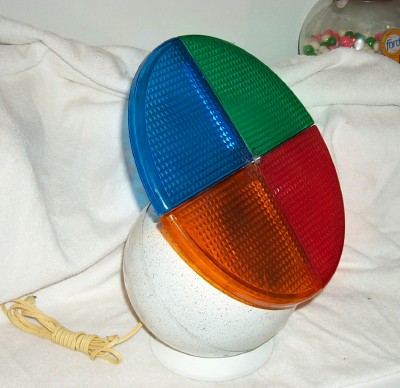
Unfortunately I don't think I could ever convince myself to spend $4k-$5k on a TV that uses a "color wheel". ![[Big Grin]](biggrin.gif)
Posted by Lyle Romer (Member # 1266) on 01-05-2006, 01:00 PM:
Bobby,
Since you brought up 1080p over ip, how do you think this will work? Will people need to pay for the super broadband connection (I would assume at least 50 Mbps to support 4 TVs) and then pay for the content on top of this?
I ask because it sounds like it can get pretty expensive. Existing cable/satellite systems don't need a dedicated "pipe" for each customer. I mean, most people (who don't notice most artifacts anyway) would rather pay what they are paying now for cable/satellite service and deal with some compression artifacts then pay twice as much for a pristine picture.
Although this bandwidth will be available, it doesn't mean it will be affordable for the masses.
Personally, I think we might see a pseudo-VOD in the relatively near future. Using existing speed (and price) broadband to download content to a DVR for somewhat delayed (but more convenient than going to a video store) viewing.
Posted by Bobby Henderson (Member # 840) on 01-05-2006, 03:15 PM:
How would 1080p over IP work? It could happen through at least a couple different methods.
The most obvious method is by way using the HDTV as a computer monitor. Call up a certain website, click on the show you want to watch and have it run in any number of different media players that can operate full screen (such as Quicktime 7 for example).
Another method is "IPTV", which is kind of like cable TV service but based on the same principal as VOIP. There are IPTV services already in existence within parts of Europe and Asia.
quote: Lyle Romer
I ask because it sounds like it can get pretty expensive. Existing cable/satellite systems don't need a dedicated "pipe" for each customer.
Perhaps something I've already said bears repeating: 100Mb/s and faster broadband speeds will be common several years in the future. They're not available right now, but they will be. And certainly by 2015 the prices for 100Mb/s connections will be affordable. Probably by then we'll see higher end pipes doing 200Mb/s or even full gigabit speeds.
The ever-widening data pipes will cause a lot of consolidation in TV programming and Internet services. Eventually most people will get their cable TV service, Internet service, phone service and more over IP. The shifts will happen when the IP-based alternatives offer better quality than their traditional counterparts.
Just at the telecom industry is worrisome about VOIP, especially free versions of it, the movie industry and television broadcast industries should be worried about what high bandwidth Internet pipes will bring in new competition.
One reason why movies have been so derivatively awful on average is that it costs a profane fortune to make a movie and a shrinking number of corporations are controlling more and more of the distribution channels. A really good independent feature has a hard time gaining any screens. In the future, and at least in terms of video on demands downloads via IP, independent filmmakers and filmmakers outside the U.S. will have an easier time getting their product showcased. I can see major film festivals offering up high bandwidth "seats" online to check out new movies. Sure, this kind of thing won't kill a major distribution company. But the innovative movies can get a few of those old executives working in those major distribution companies fired. That's the real purpose in all that corporate consolidation. It's all about a few executives trying as best as they can to protect their turf.
Powered by Infopop Corporation
UBB.classicTM
6.3.1.2