This is topic ATMOS comes home... in forum The Afterlife at Film-Tech Forum ARCHIVE.
To visit this topic, use this URL:
https://ft-forum.com/ft/cgi-bin/ubb/ultimatebb.cgi?ubb=get_topic;f=12;t=001057
Posted by Mike Olpin (Member # 1115) on 07-04-2014, 10:18 AM:
Surprised there isn't a thread here already. Details are a little bit vague, but it appears a home version of Dolby Atmos is being cooked up and should be available this fall.
The good
- Scalable configuration allows for as many or as few speakers as the room may need. (Minimum 5.1.2)**
- Some (but not all) receivers can support up to 32 discrete channels.
- Seems to maintain the idea of sound "objects" placed in 360 space via DSP, just like the theatrical version.
The bad
- Special speakers can be purchased which will "throw" sound at the ceiling using phasing tricks and other such gimmickry for those who are unable to or unwilling to instal overhead speakers.
- Cheapens theatrical branding.
** Dolby's numbering scheme for describing Atmos home setups. In a 5.1.2 set up, you have the traditional 5.1 plus 2 ceiling speakers. I calculate that for my home theatre I will need 13.1.6. 5 stage channels, 2 rear surrounds, 6 side surrounds, and 6 ceiling speakers.
Posted by Mike Blakesley (Member # 26) on 07-04-2014, 12:41 PM:
Lots of chatter about this in the "Dolbys new sound system" thread. Might be a good idea to merge it here.
Posted by Tony Bandiera Jr (Member # 2365) on 07-04-2014, 12:44 PM:
Add to the bad list:
I'd say 95% or more of the average "home" tv rooms (I refuse to dignify them with the appellation of screening rooms) are too small or have such horribly bad acoustic properties, which will make ANY ATMOS-Lite installations worthless, or as Joe would say, they will sound like ass.
Sadly, the living room area in my new house here is horrible as well..so to do a proper screening room of any kind I will have to build it in my outbuilding (after it is completely demolished and rebuilt...in other words, probably never.)
Posted by Mike Olpin (Member # 1115) on 07-04-2014, 01:28 PM:
Just read that thread and I'm a bit irritated about how much "probably" there is being thrown around.
"It PROBABLY won't support 5 screen channels, so I hate it"
"It PROBABLY will not be object based"
"It PROBABLY wont have low end management for surrounds"
Comments like that should link to articles that back them up. Lets remember this is not publicly available yet. Can we reserver judgement until we get some ears on them please? I understand the phase trickery being sucky, but as far as I can tell, it's optional. People are already doing shitty phase tricks with soundbars.
To me, the revolutionary thing about Atmos is that object oriented sound design. The idea that, while there's a core 5.1 or 7.1 mix that exists, there is also the ability to fire off instance-based audio objects, and pan them around the room in 360 space, and have that object accurately track regardless of room size, or number of speakers. There is no longer a need to have the largest number of channels, only a need to have enough channels to provide accurate imaging for the room you're in. When set up correctly with the correct number of speakers for the size of the room, individual channels disappear, and you're left with what I can only describe as a very "open" sound stage.
I go way more into detail in my review of theatrical Atmos here:
http://www.film-tech.com/cgi-bin/ubb/f16/t001090/p12.html
Here is the article I've seen, which seems to support that object based sound will be making it into the home version.
http://ww w.highdefdigest.com/news/show/Dolby_Atmos/dawn-of-the-planet-of-the-apes/Surround_Sound/home-theatre/Onkyo/Pioneer/Denon/Marantz/dolby-atmos-dawn-of-the-planet-of-the-apes-quick-look-and-updates-about-home-implementation/16236
Excerpt:
quote:
Atmos is scalable, focusing on individual objects rather than channels.
In cinemas, Atmos works in any configuration from 9.1 to 64.4, but is often somewhere in the middle. However, the home version is slightly different. For starters, Dolby is working to recalibrate the way we think of our home theatre setups.
For example, the minium Atmos setup is described as "5.1.2", which translates into five standard surround sound speakers at ear level (left, center, right, surrround right, surround left), one subwoofer, and two height channels. In this configuration, you will need an AV reciever (or amplification) for seven channels plus a powered subwoofer. Depending on budget, Atmos in the home is capable of 24.1.10 (twenty-four surrounds, one sub, ten overhead), though at present, the most powerful Atmos AV Reciever will have 32-channels.
The key to all of this is that, as home theatre enthusiasts, we have to think in "channels" mainly for logical pruposes -- running wire, amplification, etc. -- but content producers won't be producing different mixes for the guy with "5.1.2" versus "24.1.10" because Atmos-enabled tracks adapt to your home theatre environement. Pretty impressive.
Posted by Bobby Henderson (Member # 840) on 07-07-2014, 11:15 PM:
Mike, since much of your response is directed mostly at my critical remarks about home Atmos, I have these comments.
IMHO, my "probably" statements are pretty accurate guesses with not having seen the actual spec before making those guesses. The home version of Atmos may have a top end spec supporting 32 channels of amplification. Unfortunately most consumer electronics companies are going to sell "ATMOS" in 8, 10 and 12 channel setups and nowhere near 32 channels. Yet all the dummies in consumer land will think their home "ATMOS" thingie will be equal to the theatrical counterpart, based entirely on the ATMOS brand name.
The other bottleneck is data capacity on Blu-ray discs. The consumer electronics hardware is going to be limited to some degree. The discs may be limited the same way from the very simple fact one can fit only so many discrete audio objects into a finite space. Movie streaming via services like Netflix won't be much of an option since the United States has such a laughably pathetic average level of Internet download bandwith. It's really pretty embarrasing and may only improve when the sluggish, conservative, greedy bullshit starts putting American big business at a very serious disadvantage against European and Asian counterparts.
Ultimately, I feel this consumer version of Atmos is a big slap in the face of movie theater operators who actually invested in the technology. For them to do Atmos correctly they need to spend upwards of $75,000 or more on new speakers, amplifiers, Dolby tech services, etc. The average consumer hooking up Dolby Atmos in his home will not have to spend remotely near as much money on Atmos.
I also feel correct in my guess this move will stall a lot of would have been pending Atmos installations. It might speed up Auro 11.1 installations instead, despite the fact Auro is a lesser audio format. It also might give the IMAX guys plenty of breathing room to do something about their bullshit sound system and get something vastly improved into place.
IMHO, this premature move to push Atmos into the consumer space has a strong chance of backfiring on Dolby. Commercial movie theater operators are their prestige, halo level customers. They're the ones who define what is the legit movie theater experience. If they turn around and endorse Auro 11.1, DTS' OpenMDA and whatever IMAX develops that's going to leave Atmos the odd format out even though it is a better format.
Posted by Joe Redifer (Member # 3) on 07-07-2014, 11:33 PM:
quote: Mike Olpin from older thread
up to 128 channels of audio across 64 locations
This does not make any sense. From the way this is worded, it sounds like the right and left channels, for example, would be right next to each other in the "same location" which would render them ineffective. It would be a pointless waste to have two channels in the same exact location.
What I think you probably mean is up 64 traditional auditorium channels with up to 128 independent sounds playing at any one time which can be placed anywhere independently in the auditorium layout.
Posted by Mark Gulbrandsen (Member # 72) on 07-08-2014, 12:39 PM:
Keep an eye out for the third gestation of this poop for your home PC or Mac!
Posted by Carsten Kurz (Member # 5396) on 07-08-2014, 02:14 PM:
Yeah, if there'd be a notebook or tablet with Dolby Atmos, I'd buy it right away.
- Carsten
Posted by Mark Gulbrandsen (Member # 72) on 07-08-2014, 02:15 PM:
^ LOL!
Posted by Mike Blakesley (Member # 26) on 07-08-2014, 05:59 PM:
I hear Atmos will be in the next iPhone OS. The only difference will be, it'll be "manual Atmos" -- you'll need to hold your phone above your head to get the overhead sounds.
Posted by Jonathan Goeldner (Member # 4854) on 07-10-2014, 10:06 PM:
so I guess we'll finally see a rerelease bluray edition of 'Gravity' with the original core 7.1 mix ![[Wink]](wink.gif)
Posted by Bobby Henderson (Member # 840) on 07-10-2014, 10:45 PM:
Yeah, that would correct that 5.1 only mix from the previous Blu-ray. But a 7.1 base is not a guarantee. WB could limit the mix to 5.1.2 or 5.1.4 just to annoy us.
![[uhoh]](graemlins/uhoh.gif)
Posted by Jonathan Goeldner (Member # 4854) on 07-10-2014, 11:12 PM:
sorry to ask a dumb question but what is the .2 and .4 indicating? is that height channels?
Posted by Mike Olpin (Member # 1115) on 07-12-2014, 05:32 PM:
quote: Jonathan Goeldner
what is the .2 and .4 indicating? is that height channels?
Yes.
quote: Joe Redifer
What I think you probably mean is up 64 traditional auditorium channels with up to 128 independent sounds playing at any one time which can be placed anywhere independently in the auditorium layout.
Yes.
quote: Bobby Henderson
The home version of Atmos may have a top end spec supporting 32 channels of amplification. Unfortunately most consumer electronics companies are going to sell "ATMOS" in 8, 10 and 12 channel setups and nowhere near 32 channels.
No argument there, the first generation of announced products seems to support this. I'm sure there will be a top-spec available eventually though. Home theater junkies like speakers, and speaker manufactures like selling them.
quote: Bobby Henderson
The other bottleneck is data capacity on Blu-ray discs.
To me it seems like a mix based on individual audio objects should take up less space. No need for long stretches of silence between effects on the surrounds for instance. Also, many studios aren't even filling up half of the disc at this point anyway.
quote: Bobby Henderson
the United States has such a laughably pathetic average level of Internet download bandwith
You aren't kidding there.
quote: Bobby Henderson
Ultimately, I feel this consumer version of Atmos is a big slap in the face of movie theater operators who actually invested in the technology.
I agree that we should have been given more "lead" time - but I've learned this lesson a few times now. Never invest in technology for your theater based on the idea that you will have exclusivity of the technology from the home.
When digital 3D came out, theater owners were told to invest in it - it would be something the home users could never be able to do as well. A few years later, and home 3D is widely available. Now 4k UHDTVs are starting to pop up. Of course any technology that makes a splash in theaters will find itself in home theaters eventually.
Instead, theatre owners should invest in technology for the reason that it improves the presentation or puts buts in seats.
quote: Bobby Henderson
I also feel correct in my guess this move will stall a lot of would have been pending Atmos installations.
I'm not sure about this. Increased brand awareness for Atmos should increase demand for it at theatres.
quote: Bobby Henderson
It also might give the IMAX guys plenty of breathing room to do something about their bullshit sound system and get something vastly improved into place.
I'd like for this to happen. When choosing XD/RPX/ETX vs IMAX right now, I choose XD for Auro/Atmos. IMAX needs to get serious about sound again.
quote: Bobby Henderson
Commercial movie theater operators are their prestige, halo level customers.
Not sure that's true anymore. Dolby is a huge company with their toes in a lot of different markets. I think Atmos was developed as a way for them to try to stay relevant in the cinema sound at all.
Posted by Sam Graham (Member # 2889) on 07-13-2014, 06:33 PM:
My two surround speakers freak my cats out enough. Just imagine.
Not the mention the increase in divorce cases after the wife comes home and sees what hubby spent the day doing to the living room ceiling on his day off.
Posted by Frank Angel (Member # 248) on 07-21-2014, 09:02 PM:
quote: Mike Olpin
A few years later, and home 3D is widely available. Now 4k UHDTVs are starting to pop up. Of course any technology that makes a splash in theaters will find itself in home theaters eventually.
The problem with this of course is that the same thing that motivates studios to get woodies at the thought of shortening the theatrical window, unfortunately, also motivates Dolby -- make LOTS more money if you sell to the home theatre market...and as QUICKLY as possible. 3D took all of three years, Atmos even less. I bet the Dolby marketing hot-shots would love the equivalent of Day-and-Date, same as the studios.
quote: Mike Olpin
Instead, theatre owners should invest in technology for the reason that it improves the presentation or puts buts in seats.
Yah, that's good in theory, but unfortunately if you can't trust your "partner" (studios and equipment manufactures) to not put that technology into the consumers' hands (and home theatres) tomorrow, then those butts just get sucked right out of your seats along with their money.
I do remember thinking when I heard the first launch of the Panasonic 3DTV -- "Welp, I guess those guys who invested those hundreds of thousands to convert to 3D-enabled digital projection because, as you rightly pointed out, Mike, the studios SOLD digital to those exhibitors who were dragging their feet with the promise of a technology that could never, EVER be duplicated in the home! (Like Disney saying the would never EVER release FANTASIA to video...heh heh...my face laughs). How much you want to bet they knew all along that 3DTV and BluRay 3D were already in the works when those words were coming out of their forked-tongued mouths? But by then it was too late -- the digital projectors were already installed and mortgaged, and there was that poor exhibitor finally realizing that the studios were not even using any lubricant.
Posted by Jonathan Goeldner (Member # 4854) on 09-08-2014, 07:43 PM:
Cnet.com today announced the first bluray to be encoded in Dolby Atmos... [drum roll]
"Transformers: Age of Extinction"
http://www.cnet.com/news/transformers-4-will-be-first-dolby-atmos-blu-ray/
personally I thought the Atmos mix was pretty butt kickin'
Posted by Terry Lynn-Stevens (Member # 7349) on 09-13-2014, 11:58 AM:
I read the announcement, I think Atmos at home is dead on arrival before they have even released the movies and hardware.
Posted by Frank B. McLaughlin (Member # 6683) on 09-14-2014, 06:56 AM:
Went to CEDIA EXPRO this past week. Heard ATMOS via a Denon receiver with about four speaker in the ceiling of a small room (about $2400 now) - WOW. Saw Epson's laser projector which takes a 4k input and downscales to 1080 - WOW. Home theater is much better than the cinema. This is all here and now. Ordered an Epson 5030 which has new firmware which will restore the sharp detail to the picture the studios take out trying to make digital look like 35mm. Tonto looks much better this way.
Posted by Lyle Romer (Member # 1266) on 09-14-2014, 01:33 PM:
quote: Frank B. McLaughlin
Home theater is much better than the cinema
"Much better?" So Atmos with LESS speakers is much better than Atmos with MORE speakers? 4k down sampled to 2k is much better than the same thing?
I have a friend that has always been on the forefront of home theater setups. Even in his purpose built room, I have never had the same experience that I have in a good movie theater.
It really just comes down to screen size. Even a huge home theater screen isn't anywhere near the size of even a small movie theater screen.
You can wax poetic all you want about how it is viewing angle that matter and not size. That isn't true because of other visual size cues in the room including your own body. I normally sit in a location to get the same viewing angle no matter the size of the screen but it is a much different experience on a 65 foot screen vs. a 35 foot screen.
Posted by Bobby Henderson (Member # 840) on 09-14-2014, 05:41 PM:
Dolby may have bigger problems than the already huge challenge of getting consumers to upgrade out of existing 5.1 or 7.1 channel-based surround systems. The Blu-ray 4K format currently in development faces the same really serious problem. Blu-ray 3D has already been struggling, but the situation now seems dire for it.
Movie studios are increasingly taking a giant shit on physical media. And they're doing this in an arguably suicidal way -at least in terms of their home video sales figures.
I was reading about some of this stuff at other web sites (the Digital Bits being one of them). Apparently the movie studios have been gutting their home video departments, letting go a whole lot of staff in an aim to cut payroll and grow profit. The problem is they've fired off a lot of people who really knew how to author and market DVDs and Blu-ray discs. They've replaced those guys with others with little if any experience in retail channels.
Newer Blu-ray discs from major studios are more frequently using canned menu layouts, lacking unique features and often selling off content fans of a movie want as "exclusives" for retailers like Walmart and Target. They're even releasing some movies with glitches in the audio or video and not fixing it. They just don't appear to give much of a shit about physical media anymore since they don't see it generating an extreme level of profit for them in a extreme short term amount of time. The practice is turning off a lot of home theater customers, the same customers who were early adopters to get the DVD and Blu-ray formats off the ground. I've already been NOT buying a lot of movies on Blu-ray since so many have been so forgettable, much less worthy of repeat viewing.
Studios are increasingly giving more emphasis to online virtual movie sales, what they call "digital HD." They're releasing this less than Blu-ray quality content up to a month earlier than the Blu-ray release. They're doing so in the belief they'll generate more sales and profit.
I think movie studios are going to ultimately screw themselves with this strategy. Maybe I'm getting old or something, but I prefer the much higher quality of video as it is delivered on Blu-ray. I can't see myself buying any movie via download until both my Internet connection is running much much faster than it is now and the movie downloads are of much higher quality. Until then, if I miss a movie in theaters and don't buy/rent it on Blu-ray, I'm only going to watch it on TV channels like HBO or low cost streaming sites like Amazon Prime or Netflix. I will not blow $20-$30 on a virtual movie download, movie only and cable TV quality. Screw all that.
Online digital HD movie downloads and various movie streaming sites like Netflix don't even support current high end sound formats like Dolby TrueHD and DTS-HD Master Audio. At best, these sites give some cursory support to Dolby Digital Plus and lossy DTS-HD High Res (but not much at all). I don't see Dolby Atmos (or Auro for that matter) gaining any kind of foothold at all for a long time, not while American residential Internet infrastructure remains to be so pathetically slow.
I recently bought a new 65" 240Hz LED-based, 3D capable HDTV set. This monitor clearly shows the quality differences between all sorts of HD or would-be HD based content. At this size it's easy to tell the difference between 720p and 1080p content. The higher bit rate of OTA broadcast HD clearly makes "free" channels look better than the 1440x1080 "HD Lite" stuff from digital satellite TV. I'm going to need a much better Internet connection to make HD content from Amazon Prime look anywhere near as good as Blu-ray. If you have a really big TV screen nothing comes close to Blu-ray in terms of picture and sound quality.
Online movie streaming is ALL about cutting costs. My girlfriend got Netflix and a good amplified antenna and then got rid of cable. Most people I know who have Netflix aren't buying "digital HD" movies online. They're just waiting until the movies show up on Netflix, or they'll just rent the specific movie rather than buying it.
Anyway, getting back to consumer Dolby Atmos, this choice to move Atmos into the consumer space appears even more ill advised now than ever before. Judging by what I've seen on Dolby's theater installations map, they might have turned off the movie theater industry with this move. There has been little if any activity at all in terms of new Dolby Atmos installations over the past few months. I would have expected to see at least a few dozen more Atmos installations in North America in support of movies like Guardians of the Galaxy. Nothing is happening at all. It looks like any new Atmos installations are going into the theaters overseas. I don't even see a lot of Atmos mixed movies in the Fall line up of movie releases.
I'll put it like this: the movie industry can't expect to make just as much or even more money in the home video industry by not giving a shit about quality, and physical media in particular. If they're not going to give a shit about it why should I give a shit about it either? It's just as easy for me to binge watch some TV show on a streaming site for little to no money with the same flagrant, short sighted attitude. If the movie industry doesn't care about my interests as a paying customer then why should I care about the future of the movie industry? TV is actually more interesting lately anyway.
Posted by Mike Blakesley (Member # 26) on 09-14-2014, 09:32 PM:
We have a 55" 3-D capable TV at home, and have yet to watch any 3-D content on it. In fact the 3-D glasses are still wrapped in their factory packaging. I put them in a drawer after unpacking the TV and there they've sat for about a year now. So I can see why 3-D Blu-Ray is "struggling."
What's weird about the TV is, occasionally it will pop up a message "3-D content detected" even when I know the source program is NOT 3-D.
Posted by Terry Lynn-Stevens (Member # 7349) on 09-14-2014, 10:17 PM:
3D blurays are also usually expensive. Red box near me does not rent them and you can't rent them online as far as I know.
Posted by Bobby Henderson (Member # 840) on 09-14-2014, 10:19 PM:
My Playstation 3 automatically upgraded a couple things in it when it detected my new TV was capable of 3D.
A couple games I already owned, such as Super Stardust HD, could be played in 3D. Not all games are great in 3D though. Super Stardust HD looks great and plays very well in 3D. But Resistance III oddly looks like a view through a dirty fish tank.
Blu-ray 3D is struggling due to a few different reasons.
I think the biggest culprit for Blu-ray 3D's problems is the really high price premium of the movies. Most movies will fall in price quite a lot months after they're initially released on Blu-ray, going from more than $20 to less than $10 or even under $5. That's not the case with 3D movies. They'll often stay priced near or above $30 years after the movie was released. The only way a Blu-ray 3D movie is priced low is if the movie was a total flop, like I, Frankenstein. Our local Hastings store has that one on Blu-ray 3D for $10. But they probably couldn't give away that movie.
And then that brings up another problem: nothing to rent. None of the video stores still in business around here have much if any Blu-ray 3D discs to rent. And if they do it's shitty movies like I, Frankenstein. If you want to watch the 3D version of Gravity or some other hit in 3D you'll have to buy the disc (and buy it at a high price premium).
There's not much 3D content outside of the Blu-ray 3D platform. Netflix has a little bit of content, but hasn't done much to grow it. And considering the bandwidth limits of Internet streaming, why would Netflix do so? I think ESPN shut down its 3D sports channel. Not many games can be played in 3D.
Basically, I think the powers that be wanted to price gouge the shit out of anyone interested in home theater 3D, particularly on the movie end of things. They ended up not letting the format get anywhere and made a lot less money from it than they would have if they had priced it more fairly. And now movie theater customers are increasingly being turned off by the high price of watching 3D movies in the theater, opting more and more for the 2D versions. That in turn will put even more downward pressure on Blu-ray 3D releases.
There's nothing wrong with the technology as far as I can tell. I bought 2 movies in Blu-ray 3D a few days after buying this 65" TV set (Avatar and Gravity). This past week I bought the deluxe Blu-ray 3D package of Captain America: The Winter Soldier, but only because Amazon had it priced at $19.99 -the same price as the 2D version. The TV set appears to do 3D every bit as well as 3D I've seen in theaters. The only thing I don't like about it is the active shutter glasses get only about 70 hours of life out of a CR-1620 battery.
Posted by Scott Jentsch (Member # 1681) on 09-15-2014, 05:56 PM:
Bill Hunt's post about 4K Blu-rays and the state of home video in general doesn't paint a pretty picture, but I don't think we'll see the demise of Blu-ray just yet. I do think, however, that 3D has seen its peak in theaters, and it never took off in the home market.
While I have some movies in 3D, I admit to not watching movies in 3D when I have a preference. I have them in 3D in case I decide to see one of those in that format, but I've never been a huge fan, and it appears the market in general is of the same opinion.
That said, Atmos in the home has the potential to be a great leap forward for home theater enthusiasts. The initial first-hand reports from Dolby's presentations in LA, NY, and London back in August and from the CEDIA show last week are mixed. It seems the Dolby presentations were better, but trade show setups are pretty difficult to showcase audio quality.
Its primary challenge is that Dolby isn't the only player, even though it is the only one with consumer hardware available. All the hardware in the world doesn't do any good without movies to show, and right now, the only title that has been announced is Transformers 4 for the end of September. DTS and Auro were pretty silent on solid news at CEDIA, so one wonders if there are any consumer products on the horizon for them, but just the possibility raises the possibility of a format war and compatibility issues that scare everyone except the early adopters that are willing to swap out $2,000 receivers every time something new gets released.
Right now, few outside of the enthusiast community knows about Atmos in the home, but as more titles get released and more manufacturers have actual products in the hands of reviewers and consumers alike, the word will spread. Dolby has first-mover advantage, and time will tell if they take advantage of it.
Has their entry in the home market damaged Dolby's progress in the theatrical market? I don't know about that. I think the bigger problem is that theaters don't want to shell out the money it costs to equip an auditorium with a decent Atmos setup.
Posted by Mike Blakesley (Member # 26) on 09-15-2014, 07:13 PM:
quote: Scott Jentsch
I think the bigger problem is that theaters don't want to shell out the money it costs to equip an auditorium with a decent Atmos setup.
Can you blame them? They just spent "X" grand on digital and/or 3D equipment, and now are faced with a new sound format that (1) is super expensive and apparently is high-maintenance, (2) doesn't really get much promotional help, (3) is already being touted for the home at a mini-fraction of the price, (4) doesn't bring in enough "extra" dollars to justify its cost, and (5) you never know if it's going to endure into the future or be replaced in a couple of years by the next big incompatible thing.
Plus everyone is probably (or should be) already saving for new projectors that will be needed in a few years, so where is the money for stupendous sound upgrades going to come from? Especially when people are already griping about high movie prices?
I was all excited about Atmos when I first heard it and was trying to figure out if I could justify it here -- but now, I'm cool on it and I can imagine the feeling of a bean counter who has hundreds (or thousands) of screens to think about.
You frequently accuse movie theaters of "not wanting to shell out the money." It's not a question of wanting -- it's a question of the shelling out making business sense.
Posted by Bobby Henderson (Member # 840) on 09-15-2014, 08:24 PM:
The theatrical version of Dolby Atmos has enormous potential, but there's so many things going up against it.
• It's very costly & complicated to install.
• It takes more work & cost to maintain.
• Not enough Atmos-mixed movies fully utilize the format.
• Auro & DTS OpenMDA encourage theaters to delay Atmos installs.
• Movie studios and theaters don't do enough to promote Atmos.
• There's too much lee-way in what goes into an Atmos install.
• The far cheaper consumer version of Atmos is overshadowing the theatrical version of Atmos and diluting the value of the costly investment some theaters have made in Atmos.
I don't think there's any accident why theatrical Atmos installs in the United States have slowed to what looks like a complete halt. Between what consumer Atmos has done to devalue the theatrical version of Atmos, the uncertainty DTS OpenMDA vaporware has added to the situation and the lower cost but lower quality alternative Auro offers it's no surprise lots of movie theater operators are just keeping their check books locked in the safe. They're not going to do anything until all this crap is sorted out. In the meantime, they're going to be only too happy to just get by with their existing 5.1 and 7.1 channel-based sound systems.
The home version of Atmos might be amazing in some demonstrations, but it's still a very tough sell in the current customer mind set (which I don't pretend to understand at all). Lots of consumers are ate up with buying little monaural Bluetooth pill-shaped speakers to pair to their phones. If they want surround sound they'll opt for some faked surround sound delivered in a skinny, lower cost "sound bar" to stick under the TV set. I just call that a glorified center channel speaker. But that's me. And then of course there's this new situation where Blu-ray appears to be getting hit with a stealth attack from movie studios. What chance does consumer Dolby Atmos have with all of that, even if it works really great?
Posted by Terry Lynn-Stevens (Member # 7349) on 09-15-2014, 10:26 PM:
quote: Scott Jentsch
Bill Hunt's post about 4K Blu-rays and the state of home video in general doesn't paint a pretty picture, but I don't think we'll see the demise of Blu-ray just yet.
I read his post about 4K Bluray and 4K in general. i think he is correct on the 4K blu ray but incorrect on 4K in general, 4K will be a game changer and streaming will allow it to happen. Netflix is already streaming some 4K content and eventually it will catch on. I have seen 4K and to me it is pretty damn impressive, its a game changer to me. I would adopt 4K at home far faster than I would put silly speakers on ceiling for Atmos. I won't be upgrading my large collection however I would adopt 4K streaming as well as future bluray purchases in 4K.
quote: Mike Blakesley
Can you blame them? They just spent "X" grand on digital and/or 3D equipment, and now are faced with a new sound format that (1) is super expensive and apparently is high-maintenance, (2) doesn't really get much promotional help, (3) is already being touted for the home at a mini-fraction of the price, (4) doesn't bring in enough "extra" dollars to justify its cost, and (5) you never know if it's going to endure into the future or be replaced in a couple of years by the next big incompatible thing.
I agree. I would pretty pissed off if I were a theater owner who just shelled out $100,000+ to install Atmos only to find out that Dolby is now pushing Atmos into the home.
quote: Scott Jentsch
to swap out $2,000 receivers every time something new gets released.
Atmos is going to be available in a home theater in a box super cheapo edition.
quote: Scott Jentsch
I think the bigger problem is that theaters don't want to shell out the money it costs to equip an auditorium with a decent Atmos setup.
How many theaters within a multiplex do you really want?
Posted by Jonathan Goeldner (Member # 4854) on 09-15-2014, 11:00 PM:
well at least Paramount and Warners are the two first studios supporting Atmos blurays - maybe we'll get 'Gravity' in it's original intended 7.1 sound mix now. (fingers crossed).
Posted by Bobby Henderson (Member # 840) on 09-15-2014, 11:46 PM:
quote: Terry Lynn-Stevens
I read his post about 4K Bluray and 4K in general. i think he is correct on the 4K blu ray but incorrect on 4K in general, 4K will be a game changer and streaming will allow it to happen.
Keep dreaming. It's going to be a long time before Internet connections in the 50-100 million bit per second range are both available and affordable to the majority of people in North America. That kind of speed is needed to stream 4K in real time and have quality levels that actually deliver 4K levels of resolution.
As it stands, very few Americans have Internet connections fast enough to stream movies in real time at quality levels that match over the air broadcast HD. Fewer can stream HD at Blu-ray quality. Streaming 4K at quality levels that actually deliver 4K resolution is way out of reach for damn near everyone on this continent. They might be able to do it in South Korea where blazing speeds are common, but not here (unless you can afford a really expensive connection).
The other problem is 1080p is good enough for most people. They're not going to upgrade to a 4K HDTV set until the HDTV they bought (probably recently) breaks years from now.
Most people replace TV sets very infrequently. They're replaced less often than personal computers. The replacement cycle is on the same order of a refrigerator, washing machine or some other appliance.
Last week some people in the business press were whining that Apple's big press event didn't include an announcement for an Apple branded big screen TV. These press guys somehow expect consumers to get into a smartphone like 2 year upgrade cycle with big screen TV sets. That ain't gonna happen. A lot of people can stomach blowing $200-$300 on a new phone every couple of years, but I don't see them throwing down $2000-$4000 (or more) on the latest Apple-branded TV that often. I would actually be very surprised if Apple does release a new TV set with an integrated Mac or iOS computer system. I think they know better than to do that. It would be more effective for Apple to refine ways how users can wirelessly connect Macs, iPhones and iPads to HDTV screens. Stock investors don't like that, but it's a more sensible solution.
Posted by Terry Lynn-Stevens (Member # 7349) on 09-16-2014, 12:53 AM:
quote: Jonathan Goeldner
well at least Paramount and Warners are the two first studios supporting Atmos blurays - maybe we'll get 'Gravity' in it's original intended 7.1 sound mix now. (fingers crossed).
Let's not forget that Dolby EX on laserdisc lasted just six titles and the EX rollout on DVD was a flop. I don't Atmos has much of a chance.
Posted by Lyle Romer (Member # 1266) on 09-16-2014, 05:53 AM:
quote: Terry Lynn-Stevens
I have seen 4K and to me it is pretty damn impressive, its a game changer to me.
What was the source of the 4k you saw that makes it a "game changer?" In reality, you need to have a very close viewing distance to even be able to physically see the difference in resolution.
More likely, what you perceive as 4k being a game changer is just watching something with a much lower compression ratio. A 1080p Blu-ray looks obviously better than the exact same movie delivered via cable or satellite on HBO or another movie channel.
What would be a "game changer" would be content providers and cable/satellite services broadcasting in 1080p and at lower compression ratios.
The problem is that they just want to advertise how many "HD Channels" they have. 4k will look better because (you would assume) that it will be delivered at a higher bit rate. However, if you quadrupled the bit rate of a 1080i channel today, it would look just as good (if not better) except at very close viewing distances.
As far as Atmos at home, it will be a flop as far as people paying more for the capability. Sure, if it is just included in receivers, people will buy those models but they won't pay extra for the same thing with Atmos (except for the home theatre nuts). It is so poorly marketed theatrically that most people don't know it exists or what it is supposed to do.
The only way that might change is for a lot more movies to take advantage of Atmos' capabilities in their mixes AND having a lot more equipped theatres for people to hear it in. Of course, there is a chicken or the egg phenomenon.
Why would a production spend a ton of money for a great Atmos mix that will only be heard by 1% of the audience? Which leads to the question of why an exhibitor will spend a ton of money on Atmos installations if the mixes don't take advantage of it and somebody can put it in their home for $2000?
I still say that due to the expense of the system, Dolby's best bet would be for a Real-D style plan. Dolby would finance the installation and then charge a premium per ticket for every Atmos movie. The auditoriums that are part of the plan would need to have a minimum average attendance to qualify but they could probably make it work for $1 per ticket if they secure financing over 5 years. Thereafter, the $1 will be profit to Dolby less maintenance expenses.
Posted by Frank B. McLaughlin (Member # 6683) on 09-16-2014, 09:18 AM:
I really think you are missing the point. It is the fact these options are now here for the home. Yes, the cost is high and yes, it is slow to catch on. Can any of you remember when the first video rental store moved into the neighborhood - now there is Redbox.
Unless you are running a first-class facility, providing the absolute best presentation, treating your customers as guests, and at at a reasonable cost to value for that guest you will not be at the top of the list when it comes to the how and when of movie viewing choice.
As you figure out how to charge more for the popcorn, use smaller bulbs to save money, let kids run your theaters you will continue to drive your potential customers to other means to enjoy a movie.
The studios view theaters as a means to create a want. The first clearance from theater to home was seven years now it is four months (and shrinking). Just keep it up.
Posted by Terry Lynn-Stevens (Member # 7349) on 09-16-2014, 10:02 AM:
quote: Lyle Romer
What was the source of the 4k you saw that makes it a "game changer?" In reality, you need to have a very close viewing distance to even be able to physically see the difference in resolution.
The source was House of Cards on Netflix. The overall looks, especially the colors is different than 1080p. Its not about sitting close like 1080p vs 780p. Its more than just that.
quote: Lyle Romer
I still say that due to the expense of the system, Dolby's best bet would be for a Real-D style plan. Dolby would finance the installation and then charge a premium per ticket for every Atmos movie. The auditoriums that are part of the plan would need to have a minimum average attendance to qualify but they could probably make it work for $1 per ticket if they secure financing over 5 years. Thereafter, the $1 will be profit to Dolby less maintenance expenses
The problem with this is that the these (IMAX, RealD, D-BOX, VIP etc) surcharges are way over saturated. There really is way too many competing surcharges, if a theater were to add in three or four Atmos houses to the mix (no pun intended) then it just adds to more saturation. I would be willing to raise the ticket prices for all seats at the theater (and not add the surcharge) to finance the installation of Atmos.
Then there really is the question of, does the audience really care for Atmos? I have not seen much hype going for it like you do IMAX, sure there are the occasion Bobby Hendersons but by far most people I know don't care. Finally, add in really shitty poorly lit single projection to the presentation and I think people will just turn themselves off from it.
In Canada, the only way to see a movie in Atmos is by paying a surcharge, its simply rolled into the AVX surcharge.
quote: Lyle Romer
It is so poorly marketed theatrically that most people don't know it exists or what it is supposed to do.
Yes I agree, it marketed very poorly.
quote: Frank B. McLaughlin
Can any of you remember when the first video rental store moved into the neighborhood - now there is Redbox.
I do, renting was very limited at that time. I also remember VHS rental machines (like Redbox). Do you remember when streaming was not possible? The cost access to titles is far better than it was years ago, especially older titles that can be simply rented on iTunes.
Eventually 4K will catch on, however it will be streaming that pushes the adoption rather than physical media.
Posted by Bobby Henderson (Member # 840) on 09-16-2014, 10:45 AM:
quote: Terry Lynn-Stevens
Let's not forget that Dolby EX on laserdisc lasted just six titles and the EX rollout on DVD was a flop. I don't Atmos has much of a chance.
Terry, you have a very different memory of history. First of all, the Laserdisc format was already on its deathbed in 1999 when Dolby Digital Surround EX was first introduced in movie theaters.
I wouldn't exactly call Dolby•EX in movie theaters a success, but it wasn't an outright failure either. Dolby Surround EX and DTS-ES were both more successful on DVD. I have a bunch of old discs in my movie collection that have those tracks on them. So much for it being a flop.
Atmos is facing tougher odds, but I think it has more to do with physical media itself stupidly falling under attack and tiny/portable fad from the mobile space greatly diminishing the sales and popularity of home surround sound systems.
4K TV sets and 3D are facing the same dire futures in the consumer space. 4K could eventually catch on, but it isn't going to happen very soon at all, not while most of America is stuck as DSL-like Internet speeds or even slower. Very little is happening to change that since telcos are pouring billions into mobile phone networks and doing next to nothing to improve residential Internet.
If anything, home Internet could get worse. "Net neutrality" is obviously going to be a thing of the past. The way mobile phone users are getting price gouged for measly amounts of download bandwidth may wind up infecting home Internet connection pricing. The "suits" are bound and determined to kill that golden goose.
quote: Lyle Romer
I still say that due to the expense of the system, Dolby's best bet would be for a Real-D style plan. Dolby would finance the installation and then charge a premium per ticket for every Atmos movie.
As much as I hate surcharges, this approach is the only way installing Dolby Atmos would be do-able for a lot of movie theaters. The upshot is Dolby could install the sound system they want to install rather than allow a theater to cut corners (lower quality speakers, fewer amplifiers, no sub-bass surround cabinets, etc.).
Unfortunately, I believe customers are going through a bit of price fatigue. It should also be said most Dolby Atmos installations are in premium priced theaters already.
Posted by Lyle Romer (Member # 1266) on 09-16-2014, 11:24 AM:
quote: Terry Lynn-Stevens
The source was House of Cards on Netflix. The overall looks, especially the colors is different than 1080p. Its not about sitting close like 1080p vs 780p. Its more than just that.
That has nothing to do with 4k vs. 1080p. They could use a better color space on 1080p and get the same result.
Posted by Mike Blakesley (Member # 26) on 09-16-2014, 12:37 PM:
quote: Bobby Henderson
Unfortunately, I believe customers are going through a bit of price fatigue.
I agree. The biggest problem Atmos has, theatrically, is the cost of it.
When surround sound first took off, only the biggest/best auditoriums in the cities had it. They didn't charge more for those auditoriums though. They just relied on the extra ticket sales brought in by the big movies playing in those houses.
People liked surround sound (and demanded it), such that it became necessary for all but the cheapest houses to have it -- and the cost was low enough that an owner could afford to equip a complex. Plus you didn't have 20 or 30 auditoriums to worry about in those days either -- most complexes for 8 or less screens.
I knew by 1980 that we needed to have surround/stereo but we weren't able to afford it until 1992. Today, it's different -- Atmos costs so much that no owner could ever afford to equip an entire complex with it -- the ticket sales won't justify the huge cost. No wonder chains only want to put it in premium priced houses.
If Dolby had really thought the theatrical thing through, they would have made it a more complete solution and come up with things like a 16-channel amplifier -- that way you could use just a handful of amps to run a surround system, rather than dozens of amps. And then also maybe a "bolt-on" array of 12 to 16 speakers that would be pre-wired and ready to attach to a ceiling. Both of these ideas obviously need refinement but things like this could lower the cost dramatically.
Posted by Marcel Birgelen (Member # 6801) on 09-17-2014, 04:09 AM:
The problem starts with the cost of the CP-850, which really isn't justified if you look at the hardware itself, which is just another glorified PC based on SuperMicro server hardware, just like their servers. They're obviously offsetting much of their research costs into the pricing of this device. It's normal business practice to have your early adopters pay for much of the initial costs, but with this early release of a similar format to home markets, they really should reconsider their current pricing strategy.
Furthermore, the Dolby Atmos system as it is being sold right now really is more of an end-to-end digital solution, at least it was conceived this way, it's not necessarily how it's being implemented. The CP-850 only provides 16 channels of analog output. If you want more channels (and most Atmos equipped auditoria do have more channels), you already need extra breakout devices. The whole idea really is that you connect your multichannel D/A convertor amp combos or maybe even active speakers directly via plain Ethernet to the CP-850, using "Atmos Connect".
So, what you want is "Atmos Connect" ready amplifiers or maybe even speakers*. But the problem here is that the market isn't working and it all starts with Dolby and the price of this CP-850 and associated integration costs. If they drop the price to something slightly above the CP-750, the market will follow, creating more affordable products like multichannel amps that hook up to Atmos Connect (like QSC's Q-Sys, but then affordable).
* The use of active speakers for cinema is a bit controversial.
Posted by Bobby Henderson (Member # 840) on 09-17-2014, 10:47 AM:
I don't know enough about QSC's Q-Sys system, other than it can handle Atmos, Auro and DTS MDA formats as well as keep the digital audio data maintained as a digital signal right until just before it gets sent to the speakers. From what I understand a Q-Sys "core" device is connecting to the CP-850 and Q-Sys power amplifiers via Gigabit Ethernet. There's no quality killing extra conversions of digital to analog and analog back to digital monkey business taking place. A lot of existing sound systems in d-cinema equipped theaters are fairly Frakensteined affairs. Sound is still regarded as an afterthought at many theaters. Just do it as cheap as possible.
Still, as far as I can tell, QSC isn't selling any Q-Sys series amplifiers or any of their other amplifiers in anything more than 4-channel configurations. With a more maximized Dolby Atmos installation that's still going to mean having a fleet of amplifiers either stacked in three or more refrigerator sized cabinets or having the power amplifiers scattered around other parts of the auditorium (tucked above the drop ceiling, hidden behind the stage speakers, etc.). One upshot to that: it's probably better for audio quality to have shorter speaker leads coming from an amplifier nearby than to have speaker leads running long distances from the booth or even longer distances from some centralized room holding every amp, cinema processor, server, etc. in the complex.
quote: Mike Blakesley
And then also maybe a "bolt-on" array of 12 to 16 speakers that would be pre-wired and ready to attach to a ceiling. Both of these ideas obviously need refinement but things like this could lower the cost dramatically.
It would be nice to have something like that, but every theater building is different and the booth hardware is different. So it would be difficult to have "pre-fab" ceiling surround arrays that are ready to go. However, more work could be done on standardizing the kinds of truss systems needed for those ceiling arrays and the speaker attachments for them.
I don't think those truss systems are used by all Atmos-equipped theaters. I think some merely mount the ceiling surrounds directly to the drop ceiling frame, which might make for some good tile rattling sound problems.
![[Razz]](tongue.gif)
Posted by Steve Guttag (Member # 268) on 09-17-2014, 11:57 AM:
QSC does make the CX-168 amplifier that is an 8-channel amp with about 90W/CH (into 8-Ohms). The next trick is can you live with just 90W? Remember, each surround could be asked to hit 105dB in the prime listening area. That is VERY loud. Even using the surround subwoofer, it is going to tax the front speakers in the surround array.
http://qsc.com/products/Power_Amplifiers/Cx_Series/CX168/
The next problem with all that power in a multichannel amp is that size the amp must be to handle all of that potential power. This is a case where QSCs new DPAs could be handy since they will essentially power share across the outputs so if one channel needs all of the juice, it gets it.
As for powered speakers or locating power near the speakers...like everything else, there are trade offs. As you have multiple power sources, you increase your risk of things like ground loops and you aren't, necessarily, saving on wire since you need to get the power there too. However, you can certainly daisy-chain power until your run out of current for the circuit. Then there is the service aspect of having the amplifiers located everywhere...when there is a problem...it could be a nightmare to get to it.
I suspect, if one were clever enough to make such a speaker, use some Ethernet based signal/monitoring system on each speaker and just have enough circuits to handle it, one could use self powered speakers. I wonder what the costs of each speaker would be and how that would affect the bottom line versus running another speaker cable to the speaker.
Posted by Marcel Birgelen (Member # 6801) on 09-17-2014, 03:56 PM:
quote: Bobby Henderson
I don't think those truss systems are used by all Atmos-equipped theaters. I think some merely mount the ceiling surrounds directly to the drop ceiling frame, which might make for some good tile rattling sound problems.
The local Atmos equiped house has their ceiling speakers mounted on trusses. The ceiling also forms something of a V-shape above them and they don't touch the ceiling tiles. This auditorium was designed with Atmos in mind though. No rattling tiles, or rattling anything.
quote: Steve Guttag
The next trick is can you live with just 90W? Remember, each surround could be asked to hit 105dB in the prime listening area. That is VERY loud. Even using the surround subwoofer, it is going to tax the front speakers in the surround array.
Probably not, but there's no reason why you couldn't also design a more powerful multichannel amp and still save a lot on otherwise duplicated components.
quote: Steve Guttag
As for powered speakers or locating power near the speakers...like everything else, there are trade offs. As you have multiple power sources, you increase your risk of things like ground loops and you aren't, necessarily, saving on wire since you need to get the power there too. However, you can certainly daisy-chain power until your run out of current for the circuit. Then there is the service aspect of having the amplifiers located everywhere...when there is a problem...it could be a nightmare to get to it.
I suspect, if one were clever enough to make such a speaker, use some Ethernet based signal/monitoring system on each speaker and just have enough circuits to handle it, one could use self powered speakers. I wonder what the costs of each speaker would be and how that would affect the bottom line versus running another speaker cable to the speaker.
The service aspect is the most obvious drawback. I wouldn't go for a solution where you put separate amplifiers around your auditorium, but I could think about a workable scenario where you use active speakers, at least for the surrounds.
Those speakers would have their own PSU and feed on plain 110/230V AC. It's up to you to divide them equally over your three phases. They will also have their own DA converter and amplifier. Ethernet can also function as a bus protocol (although only in half duplex mode), so you could "daisy chain" your speakers if you don't want to run a separate Ethernet cable to each of them or you could put a cluster of them on a switch and run a single uplink from this switch to a central switch in the booth... you could even make it redundant, using (R)STP and all kinds of fancy Ethernet fail-over protocols if you would really want to. (I would probably keep it simple, as those hyper-redundant thingies often cause more problems than they solve.)
Those speakers could be centrally monitored over Ethernet/IP (as far as it goes) and defective speakers could be temporarily disabled. Dolby Atmos could probably even account for this missing speaker and although it's a suboptimal situation, it's often better than running with a half functioning speaker.
Posted by Jonathan Goeldner (Member # 4854) on 09-17-2014, 04:27 PM:
Terry - I'm not sure why you think EX sound was a failure - quite a few of those mixes have been ported over bluray either denoted as such or not - some of the mixes have been remixed to 7.1 as well.
in terms of the latter
Monsters Inc., E.T and Jurassic Park 3 come to mind.
notable EX/ES mixes retained on bluray include:
the entire Star Wars series - so far
The Lord of the Rings trilogy
select Pixar films
the first two Harry Potter films.
etc.,
7.1 was the logical progression for Dolby since it basically stereo-ized the center rear surrounds whereas EX was just mono.
Posted by Connor Wilson (Member # 6088) on 09-17-2014, 09:04 PM:
Another EX movie with a great mix that comes to mind is PTA's "Punch-Drunk Love." Yet to be on Blu-ray.
Posted by Terry Lynn-Stevens (Member # 7349) on 09-17-2014, 10:49 PM:
@Jonathan, Dolby EX in the consumer eye has done nothing in either the theater or at home. Would you agree that 99.9% of the population have no idea what it is?
I also do not remember much advertising for EX after the first initial releases at the theater. Dvd had some exposure but it pretty much became left off discs mid 2000s.
It could be argued that 7.1 at home is irrelevant and I surely never ever see much 7.1 advertising at the multiplex. Is the customer really going to the multiplex for 7.1?
I have very little hope for Atmos lite at home, the bounce speakers are lame and the Dolby Atmos Home Theater in a Box is sure to make a lukewarm splash.
Posted by Marcel Birgelen (Member # 6801) on 09-18-2014, 07:54 AM:
Most consumers aren't going for "7.1" or "EX", they're going because the sound is good. Most people will notice the difference between 5.1/7.1 and Atmos though, even if they're not explicitly told.
Posted by Bobby Henderson (Member # 840) on 09-18-2014, 10:10 AM:
quote: Jonathan Goeldner
Terry - I'm not sure why you think EX sound was a failure - quite a few of those mixes have been ported over bluray either denoted as such or not - some of the mixes have been remixed to 7.1 as well.
Terry likes making up his own facts, about DD•EX in this case, and trying to get others to believe them. His has his anti-Atmos/IMAX-D fanboy axe to grind and shitting on an older surround sound standard serves his agenda.
Dolby Digital EX wasn't well advertised on the theatrical end. If a movie used it the brand would sometimes, but not always, show up on the end credits or appear on the movie poster one sheet. Dolby didn't create any really good Dolby Digital EX specific sound format trailers for theaters to play, but this was also at a time when most theaters had already stopped using any of those sound format trailers anyway. More could have been done to let customers know about DD•EX in theaters, but that didn't happen.
The same is definitely not true for home theater. I don't buy Terry's bullshit that 99.9% of people weren't aware of it. Anyone who was into home theater at all during the early 2000's time frame knew full well about Dolby Surround EX as well as DTS-ES. The branding was all over the front panels of surround receivers. Some DVD packaging, like the DVD of Gladiator, had it big across the top of the box. It was one of the things that added to the raging Dolby Digital versus DTS debates that would go on and on online. DTS one upped Dolby with a 6.1 discrete format on DVD when Dolby Surround EX was limited to a matrixed 5.1 arrangement.
Surround EX was one of those things that started making people feel like the theatrical releases of movies were getting unfinished mixes in the theater and then getting further refined for home theater release. Plenty of movies were released in straight 5.1 theatrically only to get enhanced EX/ES releases on DVD.
Dolby EX and DTS-ES really only started to slide off in use on new releases as new formats like Dolby Digital Plus, Dolby TrueHD and DTS-HD Master Audio appeared on HD-DVD and Blu-ray. Catalog titles that had those mixes have had them ported in one way or another onto Blu-ray, either as EX/ES mixes or lossless versions made from the masters used to create those EX/ES mixes.
Posted by Jonathan Goeldner (Member # 4854) on 09-18-2014, 04:13 PM:
actually the remixed 6.1 sound on Gladiator and Titanic were outstanding, but when the films were encoded for bluray it reverted to 5.1 ![[Frown]](frown.gif)
other films that got downmixed to 5.1 for their bluray counterparts include:
Pirates Of The Caribbean: The Curse Of The Black Pearl
Final Destination 2 and 3
Q - the Winged Serpent
Pitch Black
Austin Powers in Goldmember
The Mask
Master & Commander: The Far Side of the World
Winged Migration
Oceans
etc.,
PIXAR is notorious for not indicating that bluray's actually do retain EX/ES channels but choose to not advertise this for some reason or another
Cars (3D edition) was the first time the EX channel made it's debut in lossless audio - the first bluray was 5.1 only.
there are literally countless instances where prior DVD's had different (better) mixes.
The King and I - DVD: 5.0 / bluray: 4.0
Gypsy - DVD: 5.0 / blu-ray: 2.0
Jesus Christ Superstar - DVD: 5.0 (which beautifully retained the 70mm 6-track's directional singing vocals) / blu-ray: 2.0
The Last Emperor - US Criterion bluray: 2.0 / Japanese bluray: 5.1
Posted by Terry Lynn-Stevens (Member # 7349) on 09-18-2014, 04:54 PM:
quote:
when the films were encoded for bluray it reverted to 5.1 [Frown]
Isn't that what you want? I would rather have the original mix. This is one of the reasons why I stayed away from the 4K restoration of Robocop, no original mix.
Posted by Terry Lynn-Stevens (Member # 7349) on 09-20-2014, 03:23 PM:
Amazon Launches New Fire HDX Tablet with Dolby Atmos
The upcoming 8.9-inch tablet offers new features, faster performance, and the latest audio technology from Dolby.
Amazon has announced the release of the new Fire HDX 8.9 tablet. The upgraded device offers several improvements over its predecessor, including a faster processor and a new OS.
"The team has packed an incredible amount of technology and innovation into the new Fire HDX—an exclusive HDX display, a powerful quad-core processor, a 70% faster graphics engine, exceptional audio with Dolby Atmos, and the fastest Wi-Fi—and it’s still startlingly light," said Jeff Bezos, Amazon.com Founder and CEO. "Fire HDX combines best-in-class hardware with exclusive features and services from Fire OS 4 including Firefly, the Mayday button, Family Library, ASAP, and more."
The Fire HDX 8.9 features an 8.9-inch HDX display with a resolution of 2560x1600 and 339ppi. In addition, the screen now includes a Dynamic Light Control option which is geared toward making digital book pages look more like real paper under different lighting conditions. Under the hood, the tablet is powered by a 2.5 GHz quad-core processor, 2GB of RAM, and an Adreno 420 GPU running the company's latest Fire OS 4 "Sangria." The updated OS also includes support for several new features like Firefly for printed text and QR code identification, and ASAP for automatic buffering of your favorite media. An 8MP rear camera and a 720p front camera are included as well. Finally, the HDX 8.9 is the first tablet to integrate Dolby Atmos mobile tech, which promises multidimensional sound from above and around with any headphones, clear dialogue, volume maximizing without distortion, and a volume consistency option. For more details on Dolby's Atmos tech for tablets, click here.
Amazon's Fire HDX 8.9 is now available for pre-order at $379. The tab
web page
I think I said a while ago that Atmos would eventually make it to tablets and headphones. Forget going to a movie theater, now people can have Atmos on the go, on the bus, at the park, on the subway etc.
Dolby Atmos: The Tablet Experience ![[thumbsup]](graemlins/thumbsup.gif)
Posted by Marcel Birgelen (Member # 6801) on 09-20-2014, 08:24 PM:
Maybe it's time to accept that Dolby Atmos is just a sound format, just like SRD, DTS, (etc., etc.) not a certification for great sound.
Like it has been mentioned before, Dolby does have a branding issue with Atmos. Then again, maybe we shouldn't expect quality labels to be the core business of Dolby.
Posted by Scott Jentsch (Member # 1681) on 09-24-2014, 12:38 PM:
quote: Scott Jentsch
I think the bigger problem is that theaters don't want to shell out the money it costs to equip an auditorium with a decent Atmos setup.
quote: Mike Blakesley
You frequently accuse movie theaters of "not wanting to shell out the money." It's not a question of wanting -- it's a question of the shelling out making business sense.
Even though my frustration with the recurring theme that I hear from theaters that they will not invest in things that improve the presentation of their movies causes me to rail against said theaters, my comment above was actually not directed at theaters, but at the issue being a challenge that Dolby has in front of them to make Atmos successful, not just in theaters, but overall.
On top of the obvious costs of equipping a theater with more speakers (speakers, amps, wiring), it sounds as though the CP-850 is ridiculously expensive compared to its non-Atmos predecessor. This isn't rare in any industry, as a new product is introduced at a high price because it's new (and early adopters are often willing to pay more) and because the company is trying to recoup some of its development costs.
That said, I understand that movie theaters are crunched financially and they have to be careful about where they make their investments for the greatest returns. However, the rollout of Atmos in the home is not a surprising one, and theaters that don't have it are at risk of looking like they are behind the times in keeping current with things that enhance the moviegoing experience.
If a person can enjoy Atmos at home, but not at the theater, why would they go to the theater? It's not that simple, but it is a salient point, and one that can be applied to many other aspects of what entertains a person and the choice they make when they want to be entertained. Add up all of those factors, and the theater better hope they come out on the right side of the decision.
If not, the decision not to invest the money wisely has just lost them business. Is it cheaper to have saved the money and lost the business, or invest the money and earn the business? Every theater must choose what's best for their situation.
quote: Frank B. McLaughlin
Unless you are running a first-class facility, providing the absolute best presentation, treating your customers as guests, and at at a reasonable cost to value for that guest you will not be at the top of the list when it comes to the how and when of movie viewing choice.
As you figure out how to charge more for the popcorn, use smaller bulbs to save money, let kids run your theaters you will continue to drive your potential customers to other means to enjoy a movie.
Well stated! You did a much better job of getting to the point that I try to make often, but fail to do in such a succint manner.
quote:
How many [Atmos-equipped] theaters within a multiplex do you really want?
How many are charging full-price admission?
quote: Bobby Henderson
Unfortunately, I believe customers are going through a bit of price fatigue.
I would agree, but with the conditional that they are fatigued by high prices without a high enough return, thereby creating a diminished value for their money. People are willing to pay large amounts of money to be entertained, but the value has to be there. I think theaters are seeing that moviegoers are not getting enough value, both in the quality of movies, and in the moviegoing experience.
quote: Lyle Romer
I still say that due to the expense of the system, Dolby's best bet would be for a Real-D style plan. Dolby would finance the installation and then charge a premium per ticket for every Atmos movie. The auditoriums that are part of the plan would need to have a minimum average attendance to qualify but they could probably make it work for $1 per ticket if they secure financing over 5 years. Thereafter, the $1 will be profit to Dolby less maintenance expenses.
I really like this idea, and if the numbers were to work out, it would be a great way to get more Atmos installations done in a cooperative partnership with theaters. Getting more awareness and positive impressions of Atmos would benefit Dolby in both markets.
Mr. Wonderful from Shark Tank would want $1 until his money is returned, and then 75 cents in perpetuity...
If the above approach were taken independent of Dolby being involved, would it work out? Can a theater justify the investment required by adding a $1 surcharge for 5 years?
Anyway, back to Atmos Home:
quote: Terry Lynn-Stevens
Atmos is going to be available in a home theater in a box super cheapo edition.
Yes, I am aware that there will be HTIB systems that will feature Dolby Atmos. Cheap alternatives to better products have always been available to non-discriminating people. My point was that any hint of a format war is going to keep the non-early adopters from buying equipment. I consider myself much more of an early adopter of such things than anyone else I know, and I won't be buying into Atmos/Auro/DTS-UHD until more receivers are available, more first-hand experiences are reported, more titles are released (sorry, Transformers 4 isn't a movie I would watch for free, much less pay for the title on disc, and certainly not make a huge investment in a receiver and speakers for), and until the Auro3D/DTS-UHD situation is clearer.
quote: Terry Lynn-Stevens
I have very little hope for Atmos lite at home, the bounce speakers are lame
So, you've heard them, then? If not, how can you make an accurate assessment that is not just an assumption? I admit to thinking that there is no way that the "Atmos Enabled" speakers would be acceptable, but some first-hand reports have been very positive when they were installed per Dolby's guidelines for placement.
This is all very new stuff. That's evident by the fact that very few receivers are capable of decoding Atmos, and the first title on Blu-ray hasn't even been released in the marketplace yet. In the next month or so, more receivers will be available, and hopefully, more titles will be released/announced.
While the initial experiences of people that are using Dolby Surround (which is Dolby's replacement for ProLogic IIx/IIz) with existing content are coming in, it's difficult to know if those impressions are influenced by the novelty of having those height channels lit up, so actual Atmos titles are going to be needed and soon for Atmos in the home to make a real splash.
There is a gigantic thread on AVS Forums about Atmos for the home. It's up to nearly 9,000 posts, including first-hand reports from the Dolby-held presentations in NY, LA, and London, as well as CEDIA room demos. In particular, check out the post by kbarnes701 about his impressions of the London presentation. Post #1128 a little down the page contains references to the movies that were demoed that kbarnes701 was later asked to redact in his post.
Posted by Terry Lynn-Stevens (Member # 7349) on 09-24-2014, 05:23 PM:
quote: Scott Jentsch
So, you've heard them, then? If not, how can you make an accurate assessment that is not just an assumption? I admit to thinking that there is no way that the "Atmos Enabled" speakers would be acceptable, but some first-hand reports have been very positive when they were installed per Dolby's guidelines for placement
Would accept Atmos bouncing technology speakers in the cinema?
Posted by Marcel Birgelen (Member # 6801) on 09-25-2014, 02:48 AM:
Which is an obvious ignorant remark. As you know, most cinemas have walls and ceilings that are far more absorbent as those of the average home.
Speaker technology should fit the room it's being used in...
Posted by Frank B. McLaughlin (Member # 6683) on 10-04-2014, 06:41 AM:
P.S.: The 3D Blu-Ray of "Transformers: Age of Extinction" comes with an ATMOS track.
Posted by Jonathan Goeldner (Member # 4854) on 10-06-2014, 04:19 PM:
^ as will the upcoming bluray releases of 'Step Up All In (oddly not released in the theaters as such), 'Hercules' and 'Teenage Mutant Ninja Turtles' - no word though from Warners... ![[Mad]](mad.gif)
both the 3D and 2D bluray editions of 'Transformers: Age of Extinction' feature Atmos sound.
Posted by Terry Lynn-Stevens (Member # 7349) on 10-12-2014, 02:29 PM:
Atmos on bluray came with a whimper, almost no buzz for it. I suspect it will be kind of like their Dolby Vision on Chicago, never to be heard of again.
Interestingly, Dolby is not using True HD on the packaging for Transformers 4
Posted by Jonathan Goeldner (Member # 4854) on 10-12-2014, 08:53 PM:
obviously you don't subscribe to Dolby's facebook page Terry - they've been advertising/mentioning Dolby Atmos and the bluray release of 'Transformers: Age of Extinction' up the wazoo.
secondly, granted there's a ton of small print on the back of the bluray of Transformers 4 - yes it does state Dolby TrueHD
"disc 1 and 2 contain a Dolby Atmos track that is 7.1 Dolby TrueHD compatible"
you just have to have really really good eye sight or a microscope to read that fact.
just announced upcoming Atmos encoded bluray release: "The Expendables 3"
Posted by Terry Lynn-Stevens (Member # 7349) on 10-12-2014, 11:29 PM:
Well Jonathan, I am going to have to bust out the magnifine glass.
Have you seen any owners use the home Atmos tech from Bluray.com yet?
Posted by Mike Blakesley (Member # 26) on 10-13-2014, 12:00 AM:
Instead of fiddling around in this thread, you should go provide the information that others have requested in the Digital Cinema Forum thread you started.
Posted by Terry Lynn-Stevens (Member # 7349) on 10-13-2014, 12:18 AM:
Perhaps you should not worry about something that does not concern u?
Posted by Mike Blakesley (Member # 26) on 10-13-2014, 01:00 AM:
How do you know it doesn't concern me? Maybe I'm interested since I do happen to own a digital projector, remember?
Posted by Marcel Birgelen (Member # 6801) on 10-13-2014, 03:15 AM:
quote: Terry Lynn-Stevens
Perhaps you should not worry about something that does not concern u?
If you're being a prick to the people here that honestly try to help you and others, I guess it concerns us all.
Posted by Terry Lynn-Stevens (Member # 7349) on 10-13-2014, 03:18 AM:
Oh Marcel, I knew you couldn't resist to chime in. Its like you have nothing better to do than follow me around and respond with rude comments to anything I post. Anyways if that is what makes you feel good about yourself then keep it up
Posted by Marcel Birgelen (Member # 6801) on 10-13-2014, 03:38 AM:
You really should go into politics. There's sufficient room for people that are good at blaming others for their own shortcomings and bring nothing further to the table.
Getting back to that other topic. Why is it so hard to answer the questions others asked there? Or did you just open that topic to draw some attention?
Posted by Frank Angel (Member # 248) on 10-16-2014, 12:42 PM:
OK you two, go to the opposite ends of the school yard.
Posted by Mike Blakesley (Member # 26) on 10-16-2014, 02:37 PM:
Notice, Terry still hasn't provided the requested information in the other topic he started.
Here's another link to that topic, just in case he didn't notice the other helpful links provided.
Posted by Jonathan Goeldner (Member # 4854) on 12-14-2014, 12:38 PM:
'John Wick' bluray edition will feature Dolby Atmos track.
it's an import but BBC Film's 'Enchanted Kingdom' (Japanese title: 'Nature') has a Dolby Atmos mix was recently released - I can't comment on the audio, but the 3D image of the 4K photography is just outstanding.
Posted by Bobby Henderson (Member # 840) on 12-14-2014, 03:43 PM:
I see Terry is up to his usual trolling. Obviously more titles with Dolby Atmos tracks have been released and more are on the way, including a "Diamond Luxe" version of Gravity.
Posted by Terry Lynn-Stevens (Member # 7349) on 12-28-2014, 02:38 PM:
It really is sad what Dolby is doing to their Atmos brand.
Amazon packs in new Dolby Atmos technology that delivers enhanced audio to go with many of the biggest movies. This lets users plug-in any headphones and experience audio that sounds like it is not just to the side or behind you, but sometimes overhead.
![[Moon]](graemlins/moon.gif) -mazon Fire HDX 8.9 review
-mazon Fire HDX 8.9 review
Posted by Jonathan Goeldner (Member # 4854) on 02-28-2015, 04:18 PM:
Warner's is playing hard ball - apparently the upcoming 'The Hobbit: The Battle of the Five Armies' will be just DTS-HD MA 7.1 - hope the extended cut in the Fall has the Atmos mix.
on the plus side Universal is bowing it's first Atmos encoded bluray with Angelina Jolie's directorial debut film 'Unbroken' as such.
Posted by Scott Jentsch (Member # 1681) on 03-12-2015, 02:54 PM:
The release of titles in Atmos for the home has been slow, to say the least.
Unbroken is a good sign, as it is Universal's first Atmos title.
Lionsgate has been Atmos' best friend, with more titles than any other studio. They've even produced Atmos releases on Blu-ray that weren't released in Atmos theatrically (Step Up All In, John Wick).
Warner's release of Gravity at the end of this month looked like a test back when it was announced, and the fact that WB has not announced any other titles (including the most obvious, being the last Hobbit movie) reinforces my feeling that the Gravity release was a way for them to dip their toes in by devoting very limited resources to a catalog release.
Paramount has had just two releases (Transformers 4, Teenage Mutant Ninja Turtles) and one announced, but then failed to produce, release (Hercules).
Fox has not gotten on board, and neither has Disney (Guardians of the Galaxy and Big Hero 6 would have been huge titles for Dolby to hang their hat on).
When content is king, Atmos for the home is still the prince who is too young to take the throne.
My theory is that now, the studios are waiting for DTS to release more details about DTS:X, its Atmos competitor. DTS is the 300-pound gorilla in Blu-ray sound, and their approach sounds like it's going to take the object-oriented approach of Atmos and mix in some other cool features, and probably throw in some intelligent speaker placement processing as well. It's anticipated that the mainstream AV receiver manufacturers will be on board (DTS pre-announced that in January), so we should see DTS:X join Atmos on receivers released later this year.
The full DTS announcement was supposed to be in March, but rumors are that it may be delayed until the beginning of April.
I would imagine all of this has the studios in a holding pattern.
Dolby had its chance at first-mover advantage, but they launched without full support from the studios. Instead of having over a dozen major releases on Blu-ray in Atmos, we have less than half that (domestically).
Posted by Terry Lynn-Stevens (Member # 7349) on 03-13-2015, 09:22 AM:
quote: Scott Jentsch
My theory is that now, the studios are waiting for DTS to release more details about DTS:X, its Atmos competitor. DTS is the 300-pound gorilla in Blu-ray sound, and their approach sounds like it's going to take the object-oriented approach of Atmos and mix in some other cool features, and probably throw in some intelligent speaker placement processing as well.
I think DTS has better brand recognition for the home, I can see studios waiting for DTS to roll out. I also understand that DTS-X is going work for a lot of broadcasts so the view will be able to do a lot of modification to the sound before or while they are watching.
Here is some info on Dolby Atmos mobile.
“Mobile audio has to improve”. That’s the message Dolby’s chief marketing officer Bob Borchers stressed in a recent blog post. “It’s no good having a razor-sharp image of Godzilla if his roar sounds like a mouse with a sore throat.”
He certainly has a point. With more people than ever consuming cinema blockbusters on tablets and phones, money has been piled into improving screen technology without giving the same level of consideration for audio.
In fact, Borchers quoted figures that suggest displays drive 45 per cent of the cost of a phone, with just 4 per cent awarded to the audio side of things – something Dolby is unsurprisingly keen to change.
It used MWC 2015 to show its commitment to bringing the Atmos experience to mobile devices. Read on for all you need to know.
What is it?
Dolby Atmos started in 2012 as a multi-directional sonic experience that was only available with up to 64 specially calibrated speakers placed in the walls and ceiling of a cinema environment. More recently we’ve seen it filtering down to a home cinema setup with the right kit, but just as Dolby’s 5.1 surround sound processing made its way to portable devices and headphones, so Atmos is making the same move.
How does it work?
Atmos on mobile devices works through a rather clever combination of binaural headphone rendering and object-based audio.
The former creates surround sound through headphones using something called head-related transfer functions, or HRTFs.
HRTFs have been around since surround sound processing first arrived in headphones, the basic idea behind them being that when you hear a sound, your head gets in the way of the soundwaves and changes them.
Your brain picks up on these changes, as well as the time difference between when a sound reaches one ear and the next, using all this information to determine where the sound is coming from.
By reverse engineering this process, sound experts have been able to develop virtual surround sound that can produce, from the single speakers on either side of your headphones, sound that seems to come from all around you.
To take this a step further and create a Dolby Atmos experience on the go, technicians combine this knowledge of HRTFs with object-based audio, the foundation of Atmos, to create a more all-encompassing sound.
This means that every object in the scene is packed with data that explains exactly where its sound should originate and where it should move to in a scene, placing it there with greater precision – even overhead.
Read more at http://www.whathifi.com/news/dolby-atmos-mobile-everything-you-need-to-know#H4hrhrYdXr7vbLkz.99
Posted by Bobby Henderson (Member # 840) on 03-14-2015, 10:18 PM:
quote: Terry Lynn-Stevens
I think DTS has better brand recognition for the home, I can see studios waiting for DTS to roll out. I also understand that DTS-X is going work for a lot of broadcasts so the view will be able to do a lot of modification to the sound before or while they are watching.
Dolby still has a far more recognizable brand than DTS.
One of the reasons why DTS is so dominant on Blu-ray has nothing to do with brand recognition or what the fan base supposedly wants. It all has to do with work flow and price. Dolby still keeps screwing up, making a bunch of its encoding software Mac-only and a lot more expensive.
All of the major movie studio releases for Blu-ray and most other mass produced Blu-ray titles are authored using software packages that only run on Windows. Dolby's TrueHD and Atmos encoding software does not run on Windows. DTS' Master Audio suite not only runs on Windows but it costs a lot less than Dolby's TrueHD software. Chances are DTS will make its DTS:X encoding software available for both Mac and Windows.
At face value the computing platform used to encode a motion picture audio track shouldn't matter so much to a Blu-ray disc authoring project, but given the fact more than a few movie mixes are altered for home video it would seem more convenient and efficient to have to have an audio encoder that worked on the same computers being used to author the movie disc.
As far as I know there are no third party applications or plug-ins that allow Dolby TrueHD encoding on Windows-based PCs. Some applications that can run on Windows, such as Adobe Audition, can encode Dolby Digital and Dolby Digital Plus audio files. Audition can't encode Dolby TrueHD tracks, and doesn't encode DTS either.
Posted by Marcel Birgelen (Member # 6801) on 03-16-2015, 04:04 AM:
But do you really think the non-availability of proper encoding software on anything other than the Mac will seriously impact the decisions taken on a multi-multi-million dollar big time Hollywood release? Maybe it does have an impact on the smaller releases.
Personally, for a home theater I just couldn't care less if something is encoded in Dolby TrueHD or DTS Master Audio. Both are supported by any self-respecting AVR and both mixes will be virtually indistinguishable.
It's like choosing between TIFF or PNG as uncompressed pixel format. Both formats have their advantages, but when looking at them on the same monitor, the result is the same.
Posted by Bobby Henderson (Member # 840) on 03-16-2015, 10:43 AM:
quote: Marcel Birgelen
But do you really think the non-availability of proper encoding software on anything other than the Mac will seriously impact the decisions taken on a multi-multi-million dollar big time Hollywood release?
Price and convenience both make a big difference in a multi-media production environment.
If you're creating professional level, mass produced Blu-ray discs you're already stuck on the Windows platform for doing that work since the software doesn't run on OSX. Part of the disc authoring workflow involves encoding lossless & lossy compressed audio tracks for all the different features on the disc, including the audio re-encode needed for the main feature.
If you're going to use DTS' Master Audio Suite you can keep all the Blu-ray audio & video encoding work on the same computing platform and maybe even the same computer. If you want to use Dolby TrueHD you'll need a separate Mac-based computer just to do that audio encoding work. You're going to be hopping files back and forth between Mac and PC platforms.
Price has been an issue in the past. Dolby's TrueHD encoding software used to cost around $4000. Now you can buy the Dolby Media Producer Suite for $1300, but it's still Mac only. DTS Master Audio suite costs $1495 and runs on both Windows and Mac.
quote: Marcel Birgelen
Personally, for a home theater I just couldn't care less if something is encoded in Dolby TrueHD or DTS Master Audio. Both are supported by any self-respecting AVR and both mixes will be virtually indistinguishable.
And that makes it all the more easy for a Blu-ray authoring team to stick with DTS-HD Master Audio and not bother with Dolby TrueHD. They can get all their disc authoring work done in a Windows-only environment.
quote: Marcel Birgelen
It's like choosing between TIFF or PNG as uncompressed pixel format. Both formats have their advantages, but when looking at them on the same monitor, the result is the same.
You can open, edit and save TIFF or PNG images using the same image editing application, be it Photoshop, Paint Shop Pro, etc. You can't do that with the Dolby & DTS audio formats.
You have to use specific applications from Dolby and DTS to encode Dolby TrueHD and DTS-HD Master Audio formats. As far as I know there is no "built-in" encode capability for either Dolby TrueHD or DTS-HD in any sound editing application like ProTools. There doesn't appear to be any other 3rd party plug-ins from companies like Minnetonka Audio.
Posted by Terry Lynn-Stevens (Member # 7349) on 03-16-2015, 09:51 PM:
I really don't know where Dolby is trying to go with their Atmos brand. They are going to completely ruin it.
I can see the day where a movie theater runs the movie with no audio and there are no speakers, (just a screen) and then a fan boy comes into the cinema and gets out their blu-tooth headphones and opens up the Dolby Atmos app on their cell phone to watch and listen to the Dolby Atmos movie in the cinema. With no masking of course.
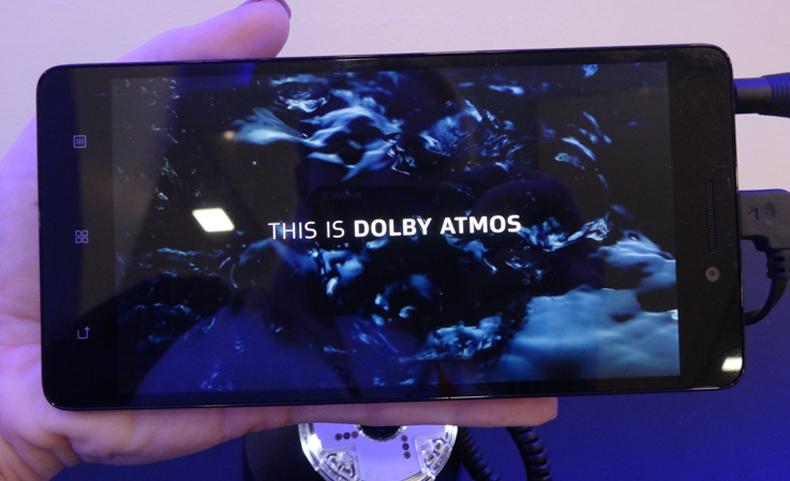
Dolby is bringing Atmos to your mobile device. Read on for what it is, how it works and how you can get it.
“Mobile audio has to improve”. That’s the message Dolby’s chief marketing officer Bob Borchers stressed in a recent blog post. “It’s no good having a razor-sharp image of Godzilla if his roar sounds like a mouse with a sore throat.”
He certainly has a point. With more people than ever consuming cinema blockbusters on tablets and phones, money has been piled into improving screen technology without giving the same level of consideration for audio.
In fact, Borchers quoted figures that suggest displays drive 45 per cent of the cost of a phone, with just 4 per cent awarded to the audio side of things – something Dolby is unsurprisingly keen to change.
It used MWC 2015 to show its commitment to bringing the Atmos experience to mobile devices. Read on for all you need to know.
Atmos on mobile devices works through a rather clever combination of binaural headphone rendering and object-based audio.
The former creates surround sound through headphones using something called head-related transfer functions, or HRTFs.
HRTFs have been around since surround sound processing first arrived in headphones, the basic idea behind them being that when you hear a sound, your head gets in the way of the soundwaves and changes them.
Your brain picks up on these changes, as well as the time difference between when a sound reaches one ear and the next, using all this information to determine where the sound is coming from.
By reverse engineering this process, sound experts have been able to develop virtual surround sound that can produce, from the single speakers on either side of your headphones, sound that seems to come from all around you.
To take this a step further and create a Dolby Atmos experience on the go, technicians combine this knowledge of HRTFs with object-based audio, the foundation of Atmos, to create a more all-encompassing sound.
This means that every object in the scene is packed with data that explains exactly where its sound should originate and where it should move to in a scene, placing it there with greater precision – even overhead.
To get Dolby Atmos on the go, you’ll need to have a tablet or phone that can support Dolby Atmos processing and any pair of headphones.
The number of devices with the tech on board is limited at the moment, but it is growing.
The Amazon Fire HDX 8.9 tablet was the first mobile device to launch with the technology in 2014, with Lenovo’s three new launches at MWC 2015 following suit.
These include the world’s first Atmos-enabled smartphone, the A7000, and two new tablets, the 8in TAB 2 A8 and the 10in TAB 2 A10-70, which will be available between April and June 2015.
Read more at http://www.whathifi.com/news/dolby-atmos-mobile-everything-you-need-to-know#xsV3Ix5Rmot6jcXw.99
Posted by Joe Redifer (Member # 3) on 03-17-2015, 01:43 AM:
Here's the cool thing about Dolby® Atmos Mobile™: The more people in the auditorium, the better the movie will sound. If each and every person has the Dolby Atmos app installed on their phone, the Atmos system will use GPS to determine where in the auditorium each phone is. Sound can move all throughout the auditorium. Imagine an 800 seat auditorium with 800 independently positioned speakers! Of course to work best the Atmos app will need to access your contacts, send you notifications and also be able to post on Facebook for you. So be sure to get all of your friends and family to download the Atmos app today!
Posted by Bobby Henderson (Member # 840) on 03-17-2015, 01:27 PM:
Don't forget the app gaining control of your phone's front facing camera so it can secretly take photos of you enjoying the movie and the app. Not enough light in the auditorium you say? Not a problem! So many phones will be in use all the ambient light from those displays will provide more than enough fill! The images will be immediately uploaded to the movie studio's marketing department regardless of your limited bandwidth allowance from the stingy cellphone carrier. Note: any images of you laughing at how ridiculously shitty the movie turns out to be will be taken completely out of context in the marketing. Your images will be proof you really enjoyed spending $50 to take your best girl to see that turd.
I still think Dolby ought to be calling this headphone-based sound technology something else, like maybe "Dolby Headphone 2.0" or something like that. IMHO the Atmos term is misleading. It's further trashing the Atmos product name, removing perceived value from the still very expensive professional cinema version. It's also adding confusion to the consumer electronics line. Home theater users will be scratching their heads trying to figure out the difference between Atmos in a phone or tablet versus what's on a Blu-ray disc and in a surround sound receiver.
quote: Terry Lynn-Stevens
I really don't know where Dolby is trying to go with their Atmos brand. They are going to completely ruin it.
Graphically speaking, I think the Dolby brand is losing its way. Dolby's executives chose to make big changes to the brand in 2008 and then make further changes in the past couple years. Nothing remarkable has been done in regards to the typography now in use. Worse than that, inconsistency is now present all across Dolby's product and visual identity.
Just where the hell is the Dolby "Double D" Icon with that "Dolby Atmos On-The-Go" Wall Sign? It's just plain lettering. It would be funny if another wall nearby had "Restrooms" on it in the same typeface. At least the Restrooms sign would probably have photographic icons of "man" and "woman" near the letters.
For more than 30 years the Dolby brand was pretty consistent in its use of iconography and typography. The Dolby "Double D" was always present. Eurostile and Helvetica were both used in different combinations; both typefaces had a visual harmony with the Double-D icon. Eurostile and Helvetica were strong and clean, which meant a lot for a company out to improve audio quality.
Several years ago Dolby Labs hired design firm Turner Duckworth to revamp Dolby's visual identity. They modified the Dolby Double D logo and adopted a newer, technical looking typeface, Morgan Sans. All the different product lock-ups had rule lines separating the Dolby brand from the technology being listed. Unfortunately those rule lines were often dropped and sub-head type repositioned -like in Dolby Digital logos on end credits of most movies the past several years.
With the arrival of Atmos the various Dolby logos were modified again, squeezing things like "Dolby" and "Digital" into two lines and hugging them up against the right end of the Double D icon. The treatment has allowed designers to shrink Dolby brands down to microscopic sizes on movie posters and other marketing items, if the brands were included at all.
Dolby recently shifted from using Morgan Sans to Gustan in its adverting. I'm not sure why the change was made other than Gustan has more weight variations than Morgan Sans. But Dolby doesn't bother using any of the bold to black weights of that type family. Both type families are available for web font use. One could argue Gustan is more readable than Morgan Sans. On the other hand Gustan looks like an offbeat, slightly techie version of Verdana. Some letters, like the uppercase "S" are drawn strangely, making lines of copy not appear to be optically aligned with the baseline.
Ultimately, neither Morgan Sans or Gustan has the enduring strength, cleanliness and neutrality of Helvetica. Eurostile isn't a neutral typeface, but it is a clean, strong and enduring design. Both type families are still very popular today. I guarantee in 20 years Eurostile and Helvetica will still be highly relevant. I can't say the same thing for Morgan Sans and Gustan.
The Coca Cola logo has gone on for well over a hundred years with nothing more than minor refinements applied to the trademark script. Something has to be said for the "if it ain't broke don't fix it" rule. But some companies, like American Airlines, JCPenny, The Gap and others just had to "refresh" their brands even if they didn't need refreshing.
Posted by Jonathan Goeldner (Member # 4854) on 04-07-2015, 09:35 PM:
two more Atmos blurays have been announced:
Jupiter Ascending
American Sniper
Posted by Terry Lynn-Stevens (Member # 7349) on 04-08-2015, 10:29 AM:
Lenovo, the Chinese electronics giant, has announced the launch of the A7000 in India.
Unveiled at the Mobile World Congress in Barcelona, the A7000 has been priced at Rs 8,999 and is the first smartphone to have Dolby Atmos sound technology on board.
Referred to as a mass market flagship smartphone, the A7000 has got a 5.5-inch HD IPS display with 1280×720 pixels resolution.
It is powered with a 1.5-GHz MediaTek MT6752m octa-core processor paired with 2 GB of RAM. It comes with an onboard storage of 8 GB and can be further expanded up to 32 GB. Running on Android 5.0 Lollipop operating system, the A7000 is a dual-SIM smartphone and comes equipped with an 8-MP auto-focus rear camera and a 5-MP fixed focus front camera.
This smartphone is 7.9 mm thin and weighs 140 gm.
Lenovo launches A7000, the first smartphone with Dolby Atmos
Sudhin Mathur, Director- Smartphones, Lenovo India, says, "The A7000 brings in flagship worthy features and performance at an incredible price, making it a perfect choice for consumers looking for a trendy and powerful phone loaded with future-proof features."
The Lenovo A7000 will be available exclusively through Flipkart via flash sales. The First flash sale is scheduled for April 15. web page
Posted by Mike Blakesley (Member # 26) on 04-08-2015, 11:47 AM:
What's a "flash sale?"
Posted by Terry Lynn-Stevens (Member # 7349) on 04-08-2015, 06:25 PM:
Maybe Atmos comes on a flash drive, you plug your flash drive in and whoa you've got Atmos.
Posted by Jonathan Goeldner (Member # 4854) on 04-08-2015, 11:26 PM:
a new Hong Kong import has Luc Besson's Lucy with it's Atmos mix.
Posted by Steve Guttag (Member # 268) on 03-27-2016, 09:31 AM:
Are there any Home A/V Preamps (or A/V receivers) that now support Atmos 24.1.10? In particular are there any that get beyond the systems that tend to top out at 7.2.4.
Posted by Harold Hallikainen (Member # 5405) on 03-27-2016, 10:40 AM:
On the headphone side, how can object positioning work without head tracking? Of course with a handheld screen, you also need screen tracking so the sound follows the image when you drop your phone.
Harold
Posted by Daniel Schulz (Member # 1881) on 03-27-2016, 11:42 AM:
quote: Steve Guttag
Are there any Home A/V Preamps (or A/V receivers) that now support Atmos 24.1.10? In particular are there any that get beyond the systems that tend to top out at 7.2.4.
There is only one, the extremely pricey Trinnov Altitude 32, which supports up to 32 channels of processing (so almost, but not quite, the full 24.1.10).
Every other processor on the market, even the expensive ones, max out at 11 channels of Atmos processing (7.1.4 or 9.1.2, or in the case of the Datasat RS20i an option to do 5.1.6 should you so choose). This is because the DSP chipsets being used by every single manufacturer so far only support 11 channels of Atmos processing. The Trinnov box is the only option that is not DSP-based, they are using a full-blown PC-style processor to do the decoding.
I am eagerly awaiting news about someone going to at least 9.1.6, which I feel is the sweet spot for a good implementation for home Atmos.
Posted by Jim Cassedy (Member # 4115) on 03-27-2016, 02:02 PM:
Dolby has a really great "Atmos Home Demonstration Room" set up
in their HQ here in San Francisco. It's mainly used to demonstrate
the technology to big clients, but I got to see it a while back.
Very impressive, although the demo room itself was designed to
be acoustically "perfect" even before the Atmos stuff was installed;
a luxury most home users have neither the physical luxury or financial
resources to attain. (I wouldn't be surprised if all the furniture & other
hardware in the room was selected based on its' resonant qualities,
just as they've done in their big screening room where even all the
lighting fixtures were selected to be acoustically inert)
But- - it rivaled the "professional" version quite well, to my ears.
Posted by Steve Guttag (Member # 268) on 03-28-2016, 12:31 AM:
I insist on having LC/RC speakers so none of the 7.x or 9.x systems cut it and no way would I spend $20K + for that esoteric thing. I'd rather have LC/RC before the first overhead speaker but if I'm doing overheads (and I am) it will be a minimum of 4 and more likely something like 6 or 8 (depends on the final dimensions of the theatre).
Posted by Daniel Schulz (Member # 1881) on 03-29-2016, 12:41 AM:
quote: Steve Guttag
I insist on having LC/RC speakers
I am curious as to why this is? No content mastered for home theaters uses LC/RC with the sole exception of Dolby Atmos, and even at that the LC/RC are not part of the channel beds, but used only for object pan-throughs.
If I was building an absolutely cost-no-object, no-holds-barred home theater I would include them, but they'd be much lower priority than overheads, an array of subs, and acoustic treatment in my budgeting priorities list.
Posted by Steve Guttag (Member # 268) on 03-29-2016, 06:44 AM:
A fair question.
Here are my answers...
1) I prefer soundtracks not mastered for home theatres but mastered for theatres. Most home theatre masterings presume a pathetic system, it would appear. Search on the "F" masterings. Ask Brad Miller if you need direction to them.
2) Call it personal preference but LC/RC are essential to providing a proper sound stage from the screen. Regardless if the sound source is dialog or music/effects. Inherently, a lot of stuff happens in the middle half of the screen and LC/C/RC are in the right places to covey that. L and R are too far outside and in the name of keeping a "stereo image" they can also ruin maintaining a believability in having the sound mate up with the picture.
3 or 2B) I'm a HUGE proponent of panned dialog. Panned dialog doesn't work with just 3-screen channels because the gaps, regardless of screen width/size are just too far apart. LC/RC effectively bridge those gaps and often eliminate the need for any phantom channels that will have phase issues.
4) In MY priority system of channels it goes: Center, Left/Right, LC/RC, Surround, Stereo Surrounds, Subwoofers, Left outside/Right outside, 4 channels of surrounds and somewhere way down there...ceiling speakers.
I've yet to hear ANY immersive system where the height channels added anything of great significance that helped the movie. Multiple subwoofer channels? Really? Every channel could be full-range and crossed over, if desired but there is a point where the sound is omnidirectional to the point of being just a waste of time to add more of them in a directional sense. I have had success in placing subwoofers in multiple points of a theatre, driving them less hard but having incredible coverage. But still, all one channel.
Going between a 7.1 mix and an immersive mix is such a minor change that I still question the value of adding ceiling speakers. The physics of them remain difficult when it comes to creating a sound field that is convincing to a species who's hearing is NOT based on height but on lateral directions.
My home theatre will have the ceiling speakers but LC/RC are also going to be there. I've even toyed with being able to generate their signal via the L/C/R mix...not a spread mix where everything is just about everywhere but steered to avoid the phantom channel. Those Atmos mixes that have stuff recorded for those channels will have them direct and those that don't will be upmixed for them. For me, the important sounds are those that mate up with the picture and the picture is on the screen...the effects in the auditorium are almost aways a fail...you can't match up the sound with your surroundings. If you are in a dessert and you want to have the wind blowing and such or to put one in a cockpit of a plane...okay...but if you are going to localize a sound effect in the auditorium...you get the "exit sign" effect. Which is, when you hear something and spin around...you find yourself seeing the exit sign to the theatre rather than what made the sound you heard. That applies to commercial cinemas as I don't plan on having exit signs in my home (though I suppose I could use a stage light to cast a red glow on the screen to give it the commercial feel).
So yeah...I demand LC/RC in my theatre and any Atmos theatre I would consult with I'll have them in the spec (why bother, otherwise?). Now you know what I think of height channels you can gather my opinions on other "immersive" systems too.
Posted by Daniel Schulz (Member # 1881) on 03-29-2016, 10:56 PM:
quote:
A fair question.
Here are my answers...
2) Call it personal preference but LC/RC are essential to providing a proper sound stage from the screen. Regardless if the sound source is dialog or music/effects. Inherently, a lot of stuff happens in the middle half of the screen and LC/C/RC are in the right places to covey that. L and R are too far outside and in the name of keeping a "stereo image" they can also ruin maintaining a believability in having the sound mate up with the picture.
3 or 2B) I'm a HUGE proponent of panned dialog. Panned dialog doesn't work with just 3-screen channels because the gaps, regardless of screen width/size are just too far apart. LC/RC effectively bridge those gaps and often eliminate the need for any phantom channels that will have phase issues.
I am not disagreeing with you that LC/RC mixes are desirable - but virtually *no* movies have been produced that way, and of those that were those mixes are not available for home video. None of the 70mm films with 5 screen channels are available with that mix on any home video format (and there aren't that many of them to begin with). Likewise, the couple of dozen or so movies that had SDDS-8 mixes are not available with that mix on home video. I just don't know what content you'll be watching that will use the LC/RC, unless you are running 35mm film prints with SDDS tracks or DTS 6-track 70mm prints.
quote: Steve Guttag
Multiple subwoofer channels? Really? Every channel could be full-range and crossed over, if desired but there is a point where the sound is omnidirectional to the point of being just a waste of time to add more of them in a directional sense. I have had success in placing subwoofers in multiple points of a theatre, driving them less hard but having incredible coverage. But still, all one channel.
I wasn't clear here. I didn't mean to imply multiple subwoofer channels, but rather that when budgeting for a home theater build I would plan on having multiple subwoofers (at least 4). As you say though, it would be all one channel, reproducing the LFE plus bass managing everything else.
In any event, I would not expect to see consumer-grade (and priced) processors supporting LC/RC anytime soon. I expect the next addition of channels to be supporting 9.1.6 (7.1 + Wides and 6 instead of 4 height channels). I do really wish the consumer AVR manufacturers would also support an additional pair of side surrounds with Atmos, for home theaters with multiple rows of seating, but that also seems to be low priority.
Posted by Steve Guttag (Member # 268) on 03-30-2016, 07:41 AM:
Oh...I dunno...I've had some titles where the home mix did have the full panned dialog treatment. As I said, I do intend to add in some steering logic to get from L/C/R to a 5-channel. Not ideal as a discrete mix but better than the holes. I'm still finalizing the screen size and it may be 16x9 or 2.39...if 2.39, LC/RC would be used for the narrower titles.
I'm curious...those Atmos mixes that do have LC/RC in mind for cinema...I hear the remix of Oklahoma! in Atmos did use LC/RC as the original Todd Ao mix...are you saying that a home Atmos version would NOT retain the Atmos mix used in theatres? If so, why? I thought the idea with Atmos is that once the speaker locations are known to the Atmos decoder, the sound fits within the system. There shouldn't be any justification for an alternate mix.
On the subwoofer front. I'll use enough subwoofer to sufficient handle the channel...always have. Likely two 18" subs. Even my "home stereo" system has used an 18" sub combined with 4-way Left/Right speakers (JBL L250s with the JBL B460 sub).
Posted by Daniel Schulz (Member # 1881) on 03-30-2016, 10:13 AM:
quote: Steve Guttag
I'm curious...those Atmos mixes that do have LC/RC in mind for cinema...I hear the remix of Oklahoma! in Atmos did use LC/RC as the original Todd Ao mix...are you saying that a home Atmos version would NOT retain the Atmos mix used in theatres? If so, why? I thought the idea with Atmos is that once the speaker locations are known to the Atmos decoder, the sound fits within the system.
There doesn't need to be an alternate mix, but you do have to re-encode the Atmos mix for the home theater version, which does not support as many simultaneous objects as the cinema version of Atmos (and also supports fewer independent speaker feeds).
I hadn't heard that Oklahoma retained the 5 screen channels for the Atmos DCP, that's really good to hear! Remember that Atmos doesn't have 5 screen channels per se (the channel beds for cinema Atmos are 9.1 - the usual 7.1 + the L/R Overhead arrays). But, the mixer could place a static object in the LC and RC, making them functionally the same as additional channels behind the screen.
It would be really interesting to hear that Atmos mix on Blu Ray to see how the LC/RC come out.
Posted by Steve Guttag (Member # 268) on 03-30-2016, 12:38 PM:
They totally screwed the Oklahoma! mix for DCP (can't speak to the Atmos version since I haven't heard it)...but there is the 5.1 version for DCP...which you would expect to play in "typical" theatres. There is the 7.1 mix where you have the SAME 5.1 mix but omit the rear surrounds (yup, tracks 11/12 are dead by design) and then if you wanted a proper 5-across mix...you'd have to get the Atmos version (I don't know what they did with the surrounds).
So theatres that are set up to play classic titles, like Oklahoma! for film, like the AFI/Silver, while they have all five screen channels and run the 6.0 versions of 70mm titles on DTS/Datasat...have to run a crappy 5.1 mix (or a non-7.1 mix). The fools that informed me of this decision are under the impression that there are more Atmos theatres than those that can handle 6.0. And while even that statement MAY be true...the odds a title like Oklahoma! ends up in a theatre that CAN handle 6.0 is FAR FAR higher than it will play in an Atmos theatre that is likely booked with the latest blockbuster. And FURTHERMORE...when you "restore" a title, you start with getting it back to day-1...you preserve the original experience and then branch off from there. Mind you, this is an Academy Award winning soundtrack. It is a good mix. Given that DCPs can have version files, there is no excuse for not offering a 5.1, 6.0 and if desired, an Atmos. The 7.1, particularly as delivered, was a complete waste of time. As you know, with DTS...there were multiple versions of the soundtracks, particularly on the classic 70mm titles to ensure there was a 5.1 AND the original channel configuration...you run what you are capable of. The AFI/Silver has a "DCP 6.0" preset on their sound processors...waiting. They have 5.1, 7.1 and 2.0 as well but the 6.0 could be used in two out of three screens if the studios would give the option of the original mix.
Posted by Bobby Henderson (Member # 840) on 03-30-2016, 01:53 PM:
I wasn't aware any Atmos version of Oklahoma had been made.
Atmos can re-create the five up front stage channel scheme of classic Todd-AO 70mm. However, the movie theater must have the speakers in place to support such a thing. Not every Atmos equipped theater is installing all the speakers and amplifiers they should be installing. It reminds me a little of the situation with SDDS; most of those theaters were 5.1 and only a minority had the full blown 8-channel setup.
Regular d-cinema LPCM audio, Auro and DTS' MDA all only support a basic LCR 3 stage channel setup. Atmos is the only one that can, through some trickery with beds and objects, support 5 stage channels. This is yet another reason why some technical people smarter than me need to figure out a way how to sync Atmos with 70mm. High end repertory screenings of classics in 70mm would be able to play audio more like the movie's original mix rather than the home theater styled mixes we have now.
Posted by Marcel Birgelen (Member # 6801) on 03-30-2016, 02:56 PM:
Why even bother with Atmos for Consumers? It's a flawed technology to start with. It's even worse than those so called Near Field mixes, it's the ultimate version of a downmix. Not only did they "rebalance" it or you, they decide what gets to stay a distinct object and what gets merged down to drown into someone else's bed. And the best of it: it's amost certainly done by the virtues of the ProTools automagic-merge-and-compress-plugin du jour.
What a great way to kill a premium brand too... Even IMAX did know it's not that a good idea to kill the goose with the golden eggs already, at least as long she can hold out as an expensive whore...
Furthermore, those beds in Atmos... what a missed opportunity. They should've gone with the concept of virtual speakers to begin with. Now, even to re-release a mix with 5 stage channels you need a hack to make it happen.
About a month ago, the first home devices supporting DTS:X showed up. Now I'm curious, is this DTS:X for plebs playing the same content as the theatrical releases or are they also merely peddling the homeopathic version?
Posted by Steve Guttag (Member # 268) on 03-30-2016, 04:05 PM:
Bobby...and that was the rub...5-screen channels has ALWAYS been in the LPCM DCP spec...since day-1. Originally designated as channels 7/8...they moved to 9/10 (hence 7.1 needed to use 11/12). The DCI naming for 5-screen channels is 7.1SDS (Dolby's Surround 7.1 is officially called 7.1DS)
And what was really stupid is that HI/VI got to consume a pair of full-range channels. There is no reason for that...they should have been on some auxiliary lower bandwidth channels...but alas...that horse has left.
Posted by Bobby Henderson (Member # 840) on 03-30-2016, 04:14 PM:
quote: Marcel Birgelen
Why even bother with Atmos for Consumers? It's a flawed technology to start with. It's even worse than those so called Near Field mixes, it's the ultimate version of a downmix. Not only did they "rebalance" it or you, they decide what gets to stay a distinct object and what gets merged down to drown into someone else's bed. And the best of it: it's amost certainly done by the virtues of the ProTools automagic-merge-and-compress-plugin du jour.
I think you're looking at "immersive audio" as if it is only being produced in perfect world terms.
Those beds you don't like in Atmos are there for two reasons. 1: backward compatibility with 5.1/7.1 audio and 2: no one creates any "immersive" mix comprised entirely of objects. No movie production is giving sound designers nearly enough time to tailor a 100% object based 3D sound mix. Such a thing will never happen either as long as the movie's sound mix continues to be treated no better than an after thought by producers and other decision makers.
It's fully possible for someone to build an entirely object-based Atmos mix. But the beds are there to allow for short cuts. Right now virtually every movie released in Atmos is mixed first in 5.1 or 7.1 and then enhanced with Atmos if they schedule any time to do it. A bunch of already pre-existing, down-mixed stuff gets used in the beds. Then they'll float a few objects in the 3D sound space if they feel like it.
If Atmos took a puritanical stance allowing only for objects no movie production would bother using it. It wouldn't be practical.
quote: Marcel Birgelen
About a month ago, the first home devices supporting DTS:X showed up. Now I'm curious, is this DTS:X for plebs playing the same content as the theatrical releases or are they also merely peddling the homeopathic version?
Who knows? The marketing is very unclear on every aspect of it. Some illustrations have suggested DTS:X use a speaker arrangement similar to that suggested by Auro, such a 2nd row of front stage speakers mounted above the L,C,R speakers for height and then basically doing the same thing in the surround field and then adding a voice of god speaker in the middle of the ceiling. Of course this arrangement is completely different from Atmos' arrangement which merely adds two or more speakers on the ceiling into an existing 7.1 layout.
Posted by Marcel Birgelen (Member # 6801) on 03-30-2016, 06:19 PM:
quote: Bobby Henderson
I think you're looking at "immersive audio" as if it is only being produced in perfect world terms.
We've had this discussion before and, no, I'm not.
The virtual speaker concept can do everything beds can do and more. It can make it "backward compatible" with not only 5.1, 6.1 or 7.1 but virtually all other speaker layouts there are and ever will be, even Auro 3D. The 5-stage-channel mixes are a great example of the shortcomings of the format itself. The format which should be the last format we ever needed...
The immsound format, one of the companies Dolby bought shortly before releasing Atmos, did have "virtual speakers". The difference between virtual speakers and object point sources is that speakers do have a virtual surface and objects (or "channels" if you will) can be mapped to a virtual speaker. A virtual speaker can therefore easily span more than one physical speaker in an auditorium. The first thngs that leaked trough regarding OpenMDA suggested a similar approach, but unfortunately, DTS kept their DTS:X documents behind expensive paywalls protected with obligatory NDAs.
Now, in order to simulate a classic 5-channel stage-channel mix, you need to put three channels in a bed and put two channels into an object which you position roughly at the location where the LC and RC speaker should've been. Besides being a huge, ugly hack, the beds will be rendered differently than those object point sources by the processor. I'm not even convinced the result will be all that stellar. It will probably be even better to define the other three channels as an object source too.
quote: Bobby Henderson
Who knows? The marketing is very unclear on every aspect of it. Some illustrations have suggested DTS:X use a speaker arrangement similar to that suggested by Auro, such a 2nd row of front stage speakers mounted above the L,C,R speakers for height and then basically doing the same thing in the surround field and then adding a voice of god speaker in the middle of the ceiling. Of course this arrangement is completely different from Atmos' arrangement which merely adds two or more speakers on the ceiling into an existing 7.1 layout.
As far as I know, DTS:X doesn't really enforce a fixed speaker setup, unlike Atmos, which clearly starts with a 7.1 setup as a kind of minimum requirement. (Unless your device is a phone or tablet.*)
Those suggested DTS:X setups all start from a 7.1 setup, to keep the setup itself compatible with "older" mixes. If the stuff we get at home is the real deal, the amount of speakers you're able to install should only be limited by the power of the DSPs in use and your budget, not by the format itself.
* Instead of installing expensive sound systems into our theaters, maybe we should just stream it directly to the patron's Atmos-enabled cellphones. Maybe also leave out the screen and save on the projector too. Let's stream both audio and video to their 4K Dolby Vision enabled tablets.
Posted by Daniel Schulz (Member # 1881) on 03-30-2016, 09:53 PM:
quote:
Why even bother with Atmos for Consumers? It's a flawed technology to start with...what a great way to kill a premium brand too...
I take your point about branding, and if I was a cinema owner I'd be upset - but speaking as a consumer and home theater enthusiast, Dolby Atmos kicks ass. It's not a flawed technology at all, it is an audible leap forward in home theater sound. I'm pretty happy to have it available (along with its competitors).
quote: Marcel Birgelen
About a month ago, the first home devices supporting DTS:X showed up. Now I'm curious, is this DTS:X for plebs playing the same content as the theatrical releases or are they also merely peddling the homeopathic version?
Much like Atmos, the DTS:X codec for home theatre is a bit restricted compared to the cinema deployment. These codecs need to work within the practical limits of hardware available to consumers.
Posted by Bobby Henderson (Member # 840) on 03-30-2016, 10:45 PM:
quote: Marcel Birgelen
The immsound format, one of the companies Dolby bought shortly before releasing Atmos, did have "virtual speakers". The difference between virtual speakers and object point sources is that speakers do have a virtual surface and objects (or "channels" if you will) can be mapped to a virtual speaker. A virtual speaker can therefore easily span more than one physical speaker in an auditorium.
Are you assuming Dolby Atmos has no phantom imaging capability between speakers? What do you think the Dolby CP-850 is doing when it renders object oriented audio to sound systems that vary in the number of speakers and amplifiers from one theater to the next?
Dolby at least has some recommended standards for movie theaters to follow in terms of speaker placement, number of speakers, amplifiers, etc. for given auditorium sizes. If a theater cuts corners on speakers and amps the system just isn't going to work as well. That goes for Atmos and it also goes for DTS:X too. You can't do immersive sound right without installing a shit-ton of amplifiers and speakers as well as sticking the speakers in the right places.
From the way it sounds DTS:X does none of that. The suggestion seems to be "install how ever many speakers and amps you want, stick 'em wherever you like and it'll stick work just as good even if you install hardly a damned thing at all."
By the way the imm sound format, "virtual speakers" notwithstanding, was a whole lot more elaborate and a whole lot more expensive to deploy than Atmos. The original concept suggested the use of hundreds of speakers and amplifiers. It went nowhere because it was cost prohibitive. Dolby took the idea and tried to tone it down to a more do-able reality. Unfortunately for movie theaters doing Atmos right appears to be too freaking much to handle as well.
Posted by Harold Hallikainen (Member # 5405) on 03-30-2016, 10:55 PM:
While there are hardware limits on home versions of immersive sound, another limitation is bandwidth. Atmos supports up to 128 objects or bed channels (add bed channels, lose objects). These are encoded as 48kHz with lossless compression of about 2:1. Of course, not every frame uses all 128, but for a frame that does, the medium (Blu Ray, stream, or whatever) needs to deliver 2,000 samples times 3 bytes per sample times 128 divided by 2 bytes. 384,000 bytes in one frame. Or 3Mb in one frame, or about 73Mbps.
DTS-X uses a similar bitrate. DTS-X does not do compression on the audio (it's all PCM), but they also do not record silence. Atmos allocates 128 channels some of which hold bed channel (used continuously through the composition) and then uses lossless compression to get rid of all those zeroes. MDA (DTS-X) does a more "packetized" audio. If a frame needs audio for a bed or object, it is recorded. If not, it is not recorded. For typical content, the Atmos and MDA bitrates are similar (I have notes on some measurements we did somewhere). But, as the number of simultaneous objects increases, the bitrate of MDA increases faster than that of Atmos due to the compression.
Though it's slow going, I do think SMPTE is finally making some progress on a bitstream that takes the best of Atmos and MDA. I keep pushing to make it as simple as possible, but not simpler.
Harold
Posted by Daniel Schulz (Member # 1881) on 03-30-2016, 10:56 PM:
quote: Bobby Henderson
From the way it sounds DTS:X does none of that. The suggestion seems to be "install how ever many speakers and amps you want, stick 'em wherever you like and it'll stick work just as good even if you install hardly a damned thing at all."
The "put your speakers anywhere" meme was definitely a big part of DTS' marketing copy, but out in the real world they seem to have come 'round to have some sort of recommendations to have a DTS:X certified theater. It's nowhere near as rigorous as the Dolby standards though, which is either a good thing (from the vantage point of a theater owner looking to save on costs) or a bad thing (from the vantage point of a filmmaker looking for a guarantee that her immersive mix sounds as good in the theater as it did on the dubbing stage).
What I found much more hilarious was DTS pretending that their consumer codec could be distermediated from any standardized speaker layout. That made no sense at all, because you have to incorporate the codec into consumer AVRs built around a 5.1/7.1 paradigm, not to mention you need to be able to play back all that existing Lt/Rt, 5.1 and 7.1 content in your home theater.
Posted by Marcel Birgelen (Member # 6801) on 03-31-2016, 01:14 AM:
quote: Daniel Schulz
I take your point about branding, and if I was a cinema owner I'd be upset - but speaking as a consumer and home theater enthusiast, Dolby Atmos kicks ass. It's not a flawed technology at all, it is an audible leap forward in home theater sound. I'm pretty happy to have it available (along with its competitors).
I'm not denying that it's a leap forward, but it isn't the leap forward it could've been in my opinion. First off all, it really should've been branded differently. If you're going to sell Atmos to consumers, it better be as good as the thing in the theater or just call it differently.
Within now and about a year or two/three, every top-of-the-line AVR with some beefy microprocessor will be capable of doing the whole theatrical Atmos thing, it's not like you need supercomputers to extract 128 PCM streams and apply some EQ magic on them and mix them into a bunch of output channels. So then, the same Atmos that's available in the theater could be available for premium home theaters. How do you call it then? Atmos Plus? And what's the thing we got in the theater? Just Atmos? As a theater owner, no I wouldn't be all that pleased indeed.
quote: Daniel Schulz
Much like Atmos, the DTS:X codec for home theatre is a bit restricted compared to the cinema deployment. These codecs need to work within the practical limits of hardware available to consumers.
You don't happen to know where one can find what those restrictions are, do you? ![[Smile]](smile.gif)
quote: Bobby Henderson
Are you assuming Dolby Atmos has no phantom imaging capability between speakers? What do you think the Dolby CP-850 is doing when it renders object oriented audio to sound systems that vary in the number of speakers and amplifiers from one theater to the next?
No, I'm not and I'm pretty sure you can make that up from the points I'm trying to make here although, I will try to do it again...
In order to simulate a 5 stage-channel soundtrack, Dolby Atmos has to revert to a ugly hack:
1. Put three channels into a bed and create two object sound sources. Since beds are rendered differently than objects, I'm not sure the end-result will be stellar.
2. Create five object sound sources and skip the beds entirely. Which would at least be a uniform solution, but still a bit cumbersome to implement.
For a supposedly one-size-fits-all future-proof format, this is already proving to work out backwards.
quote: Harold Hallikainen
Atmos allocates 128 channels some of which hold bed channel (used continuously through the composition) and then uses lossless compression to get rid of all those zeroes.
I'm not entirely sure here, but as far as I have seen the actually binary format of the consumer implementation, it seems only to include the zeros from the bed channels, which essentially are objects that are "always active", even if there is no sound. Obviously, that compresses quite well though.
Maybe, this is a major difference between the theatrical format and the consumer version, which is limited in the amount of simultaneously active objects anyway?
Posted by Bobby Henderson (Member # 840) on 03-31-2016, 10:01 AM:
quote: Harold Hallikainen
While there are hardware limits on home versions of immersive sound, another limitation is bandwidth. Atmos supports up to 128 objects or bed channels (add bed channels, lose objects). These are encoded as 48kHz with lossless compression of about 2:1. Of course, not every frame uses all 128, but for a frame that does, the medium (Blu Ray, stream, or whatever) needs to deliver 2,000 samples times 3 bytes per sample times 128 divided by 2 bytes. 384,000 bytes in one frame. Or 3Mb in one frame, or about 73Mbps.
In actual sound mixing practice it sounds like most movies with Atmos mixes are simply making a regular 5.1 or 7.1 mix and then sprinkling in a few objects here and there to let the viewer know those ceiling speakers actually work. The way it sounds to me there's not much out there that would push the home version of Atmos to its 64 object maximum. Add to this the limits in home theater hardware. The home version of Atmos is supposed to be able to support up to 32 speaker outputs. Most Atmos-equipped receivers support only a combination of a base 5.1 or 7.1 setup with 2 or 4 speakers added to the ceiling.
quote: Marcel Birgelen
In order to simulate a 5 stage-channel soundtrack, Dolby Atmos has to revert to a ugly hack:
1. Put three channels into a bed and create two object sound sources. Since beds are rendered differently than objects, I'm not sure the end-result will be stellar.
2. Create five object sound sources and skip the beds entirely. Which would at least be a uniform solution, but still a bit cumbersome to implement.
If you're going to create a sound design layout with tracking dialog on screen, like what Steve wants, you wouldn't waste time farting around with down-mixing dialog elements into beds and then repeating them as objects. The actor's dialog track would be an object that would render its position across the movie screen's stage speaker setup, whether it has 3 columns or 5 columns of speakers. You could have multiple dialog objects rendering on the stage in different positions on screen. The Left, Right and Center channel speakers are not limited to playing only channel-based beds. They can play objects too. The CP-850 can render those stage objects where ever they need to be positioned.
Of course this is all academic since virtually every modern movie keeps dialog confined to the center channel. Add to this the fact very few commercial movie theaters have 5 columns of stage speakers. Home theater is doing virtually nothing to support any 5 stage channel scheme either.
Posted by Marcel Birgelen (Member # 6801) on 03-31-2016, 03:12 PM:
quote: Bobby Henderson
If you're going to create a sound design layout with tracking dialog on screen, like what Steve wants, you wouldn't waste time farting around with down-mixing dialog elements into beds and then repeating them as objects. The actor's dialog track would be an object that would render its position across the movie screen's stage speaker setup, whether it has 3 columns or 5 columns of speakers. You could have multiple dialog objects rendering on the stage in different positions on screen. The Left, Right and Center channel speakers are not limited to playing only channel-based beds. They can play objects too. The CP-850 can render those stage objects where ever they need to be positioned.
I also DO want dialog to track the actors on screen. Very much please. Why can we have helicopters circling above our heads, have shrapnel of every explosion whirl around you, but all actors are still talking out of the center of the screen to you...
And nobody is proposing to downmix dialog elements into beds for any new content, what sense would that even make? This situation manifests purely for the already pre-existing 5-stage channel content out there, of which there is pretty few but it's there...
quote: Bobby Henderson
Of course this is all academic since virtually every modern movie keeps dialog confined to the center channel. Add to this the fact very few commercial movie theaters have 5 columns of stage speakers. Home theater is doing virtually nothing to support any 5 stage channel scheme either.
Practically all of the bigger Atmos installs do have 5 front stage channels. Yes, there are theaters cheaping out on it, but the fact is, there are now probably more theaters equipped with at least 5 stage channels than ever before.
Why are movies keeping dialog primarily confined to the center channel? Maybe it's laziness or lack off guts in the current iteration of sound mixers or some other stupid, unwritten rules. In any case, this absurdity has to stop and Atmos and DTS:X offer the perfect opportunity to make ordinary dialog sound more realistic.
Posted by Bobby Henderson (Member # 840) on 03-31-2016, 03:39 PM:
quote: Marcel Birgelen
And nobody is proposing to downmix dialog elements into beds for any new content, what sense would that even make?
It wouldn't make any sense at all. But I made my point about that since you called Atmos' 5-up-front implementation a cumbersome hack. It isn't really. From a sound design standpoint Atmos poses no challenges or difficulties at all in tracking or panning dialog-based objects at different points across the screen.
quote: Marcel Birgelen
Practically all of the bigger Atmos installs do have 5 front stage channels. Yes, there are theaters cheaping out on it, but the fact is, there are now probably more theaters equipped with at least 5 stage channels than ever before.
I would prefer big theaters equipped with Atmos to have 5 stage speaker systems, but I don't think there's any guarantee such a thing is going in with these installations.
I find it troubling that many sound system equipment suppliers, such as QSC, don't show any five up front speaker layouts in their product illustrations for immersive sound system packages. It's all geared to 3 stage channel setups. In the case of QSC's Q-Sys system they show a double layered stage setup that looks more like an Auro 11.1 design. Of course QSC isn't just in the business of selling stuff that works with Atmos. They want to equip Auro rooms. And their Q-Sys system can apparently render DTS' MDA format on its own. But does that forego the need of buying a dedicated cinema processor like the ones Atmos and Auro use?
quote: Marcel Birgelen
Why are movies keeping dialog primarily confined to the center channel? Maybe it's laziness or lack off guts in the current iteration of sound mixers or some other stupid, unwritten rules. In any case, this absurdity has to stop and Atmos and DTS:X offer the perfect opportunity to make ordinary dialog sound more realistic.
Movie dialog is imprisoned to the center channel for numerous reasons. The big one is respected industry convention. Confining dialog to the center channel is almost a biblical rule never to be violated. You're really asking for it if you have a dialog element go off to the left or right end of the screen and veer off into the surrounds.
The next problem is deadlines. Sound designers have to work fast. They're not given enough time to really do their best work with a movie's theatrical sound mix. Dumping the dialog into the center channel at an appropriate level saves a bunch of time. Maybe just throw the assets from the ADR stage into the mix as is! I think lack of time is a big reason why more home video titles got DD•EX and DTS-ES audio tracks. Now we're starting to see movies released on Blu-ray with Atmos tracks when the theatrical release was plain LPCM. Freaking Game of Thrones' latest Blu-ray has Atmos. The same thing is going on with DTS-X too.
People can debate about the sins of near-field, home theater oriented mixes. But it still looks like sound designers have considerably more time and luxury in editing sound mixes for a home video release.
Posted by Marcel Birgelen (Member # 6801) on 04-04-2016, 04:57 PM:
quote: Bobby Henderson
It wouldn't make any sense at all. But I made my point about that since you called Atmos' 5-up-front implementation a cumbersome hack. It isn't really. From a sound design standpoint Atmos poses no challenges or difficulties at all in tracking or panning dialog-based objects at different points across the screen.
No, I didn't call the implementation a hack, I called the way you need to bring a legacy 5 stage channel mix to the Atmos format a hack. In my opinion a totally unnecessary hack and a missed opportunity for the format itself.
quote: Bobby Henderson
I would prefer big theaters equipped with Atmos to have 5 stage speaker systems, but I don't think there's any guarantee such a thing is going in with these installations.
Atmos in itself is no seal of quality. The first Atmos installs were heavily supervised by Dolby, but that's passed now. They publish a set of guidelines and that's it.
We're going round in circles on this, but the exhibition industry really could use a "third party" seal of quality, the thing that THX once stood for, before you could have that on your mobile phone too.
quote: Bobby Henderson
And their Q-Sys system can apparently render DTS' MDA format on its own. But does that forego the need of buying a dedicated cinema processor like the ones Atmos and Auro use?
The Q-Sys Core systems currently still need external decoders to render MDA, whether it's Atmos or DTS:X. I'm not sure the current Q-Sys Core systems could handle full-spec MDA audio, but in the future it might just be an extra software module.
quote: Bobby Henderson
Movie dialog is imprisoned to the center channel for numerous reasons. The big one is respected industry convention. Confining dialog to the center channel is almost a biblical rule never to be violated. You're really asking for it if you have a dialog element go off to the left or right end of the screen and veer off into the surrounds.
Remember Gravity? That soundtrack was generally praised and even won an Oscar. It dared to challenge this biblical rule and people liked it.
quote: Bobby Henderson
The next problem is deadlines. Sound designers have to work fast. They're not given enough time to really do their best work with a movie's theatrical sound mix.
If that's really the excuse, then we should go back to silent movies, to give those overworked sound mixers a well-deserved break.
Yeah, I'm exaggerating, but given the budgets of many of those films, they should be the epitome of quality from start to finish and in every aspect possible.
Every self-respecting cinema those days has the capability to playback a sound track in at least the standard 5.1 configuration, it's about time we start using it to the full extend possible.
Powered by Infopop Corporation
UBB.classicTM
6.3.1.2