At least with 35mm film you can project it in ANY theater in the world and regardless of whether the equipment is 60 years old or brand spanking new, you've got a show. What would happen if the video projector broke down on a busy Saturday night. How far would a tech have to come from? Or better still, how expensive would the repairs be?
I'LL choose film any day over video.
It has been 1977 days since the last post.
quote:But we're happy to sell FILM too!
ORLANDO, FLORIDA, (October 22, 2004) - Eastman Kodak Company announced today at the annual ShowEast Conference that the company is taking a major step forward in its goal of making high-quality digital cinema available for motion picture exhibitors around the world. The company is demonstrating the Kodak Digital Cinema Solution for Feature Presentations, a bundled package of hardware, software, and support services.
Kodak CineServer
The core of the package is a unique Kodak CineServer, which includes proprietary color technology and image science to deliver high-quality images to the cinema screen. The full solution includes preparation and distribution of content and technical support.
"This is a significant step in our continuing commitment to help assure the evolution of digital cinema in ways that best serve the interests of exhibitors, studios, the creative community and the movie-going public," said Bill Doeren, general manager of Kodak Digital Cinema.
Doeren emphasized that Kodak sees digital cinema as a whole new process that involves the preparation, distribution, and display of movies in a new way.
"Our approach," said Doeren, "is to offer a menu of choices to help simplify complexity, to provide the solutions they need to 'go digital' when they're ready, and to assure them of the quality and attention they expect when working with Kodak."
Kodak services include preparation of the Digital Source Master files by LaserPacific, a Kodak company. LaserPacific provides complete digital postproduction services, including digital intermediates, encryption, compression, and encoding in digital cinema color space, all designed to enable audiences to experience movies they way the filmmakers intended.
The digital content is transferred to a hard disk drive or DVD-ROM, which are distributed to cinemas. The disks are loaded into the Kodak CineServer, which decrypts and decompresses the movie and sends it to a cinema-grade digital projector to play on the theatre screen.
Customers can choose the projector brand and quality level to best meet their current needs. The Kodak server is compatible with projectors up to and including those with 2K resolution.
"The Kodak CineServer supports MPEG2 encoded video today and we're committed to raising the quality bar by offering JPEG2000 tomorrow," Doeren said. "We intend to be compatible with all industry standards as they evolve."
All components can be connected to the Kodak network, which serves as a vital communications link and adds effectiveness and efficiency to the entire process.
Kodak's Digital Cinema Services uses the network to provide the security keys, which protect against movie piracy. Kodak also monitors the health and performance of system components, and verifies that all content has been received and plays as scheduled.
The in-cinema network includes a Kodak Content Manager which handles all scheduling via its interface to the ticketing system - so movies play on the screens where they're booked. The Kodak CineServers are networked to the theatre's automation system, which controls curtains, lighting, and projector start.
As part of Kodak's approach, the company also can handle all aspects of project management, including training staffs in their new capabilities.
Doeren emphasized that Kodak is making a long-term commitment to continued advancements in digital cinema.
![[Smile]](smile.gif)
![[Cool]](cool.gif)
![[Razz]](tongue.gif)
![[Wink]](wink.gif)
![[uhoh]](graemlins/uhoh.gif)
![[Mad]](mad.gif)
quote: Darryl Spicer
blue specks on the picture caused by dust
![[Confused]](confused.gif)
quote: Mattias OhlsonPublished source of that information, especially regarding the pricing?
Good deal in Europe?
XDC formed by the server manufacturer EVS is offering the four different packages. Prices from 500-1500 euro per month.
![[Roll Eyes]](rolleyes.gif) What distributors have actually agreed to this proposal? What theatres have actually leased systems?
What distributors have actually agreed to this proposal? What theatres have actually leased systems?quote: Mark J. MarshallWith an additive system, dust or a defect in the red, green, or blue channel will result in a colored defect on screen. For example, a "dead" blue pixel in the "on" position will show as a blue spot on screen.
How does dust cause blue specs and not black or any other color specs? Why blue?
![[puke]](graemlins/puke.gif)
quote: Mattias OhlsonSome of the folks promoting video projection are implying staff won't be necessary. They want to throw out that payroll savings, job cuts angle to sweeten the Return On Investment picture. Lots of narrow-minded MBAs absolutely love high tech things and also love to cut jobs. Easiest way to fake a good looking quarterly jump in earnings. Still, just like a lot of other schemes, the math doesn't add up right.
Why wouldn´t staff be necessary with dlp as it has been with film?
![[dlp]](graemlins/dlp.gif) system cost not much more than a state-of-the-art 35mm setup, it would still be way too pricy over the long run when you factor in the relatively high obsolescence rate of any computer-based system.
system cost not much more than a state-of-the-art 35mm setup, it would still be way too pricy over the long run when you factor in the relatively high obsolescence rate of any computer-based system.
quote: Mattias OhlsonYou can put together a 35mm projection setup (not counting the sound gear) for $20,000 to $30,000 depending on the models of equipment you buy.
What is the cost of a state of the art 35mm projector bought new with all the extras for smooth operation.
quote: Mattias OhlsonMattias, I gave you NEW costs, not used. Here's one specific price quote from American Cinema Equipment in Portland, OR: Kinoton PK60D Projector Kinoton PK60D Projector w/ man Turret D/A Reverse Scan: $8,995.00. I found a number of other Century and Simplex models that cost even less.
What does 35mm equipment cost new not used.
quote: Mattias OhlsonDon't hold your breath. The prices are going to remain quite high for the forseeable future. All digital projection setups are in essence an enterprise level computing setup. You're talking about highly proprietary and very expensive hardware.
I am sure the price of dlp systems can come down dramatically. The servers will likely be advanced fault tolerant linux boxes running shows as a "professional" grade htpc. Servers could be really cheap.
quote: Mattias OhlsonThis is a fundamental area where I believe digital projection is a very very bad idea. Commercial movie theaters and home theater equipment should NEVER feature the same hardware/components. It poses a marketing nightmare to theaters. If a home user has the exact same picture quality as the commercial movie theater, then why should the consumer spend upwards of $10 per ticket to go to a commercial movie theater? Commercial movie theaters must have exclusivity on being able to show something a home viewer cannot recreate in his living room. The theater must have not only a bigger picture, but a sharper and much higher resolution picture as well.
Selling million of dlp products to the homes will let them take a small hit on the cinema side such as replacing dmd´s that break down.
quote: Mattias OhlsonWhat you pose does not make any sense from a dollars/cost standpoint. Digital projection does not do any better job at all than 35mm film projection, but the hardware costs several times as much. Profit margins are very slim for movie theaters these days. The four "digital" screens you mention would cost upwards of $1 million to install. How in the world is the theater going to recoup that giant investment? How are they going to do that when the same D-Cinema fans wind up gloating about how their HDTV at home shows a picture of better quality? If a neighborhood multiplex is going to spend $1 million on something, they would be better off installing an IMAX system.
Why can´t dlp/digital and film coexist? You could have four film screens and one digital screen. The digital screen would allow you some subtitle/audio flexibility as well as alternative content.
quote: Mattias OhlsonNo, DLP and D-Cinema in general gets its attention because there's still enough people out there all too quick to be hoodwinked over that "DIGITAL" buzzword. There's still a lot of analog things that remain better.
It sound like the people running theaters don´t spend a dime if they don´t have to. That is why film is made to look sub standard sometimes. That is why dlp gets any attention.
quote: Mattias OhlsonThat won't be happening for quite some time. Most DLP systems are still of the puny 1024 X 768 pixel variety. Most CGI stuff and digital intermediate work is still completed at only 2K, just a minor step above 1080 HD resolution.
I see great promise in scanning the camera negative at 8k and storing at 4k. Then the whole process is done at 4k. Eventually the release print is printed at 4k and then projected.
quote: Mattias OhlsonCertainly a higher frame rate improves motion rendition, reduces strobing, and reduces granularity. We all know about Showscan, using 65mm camera negative at 60fps. MaxiVision 48 and Super Dimension 70mm come to mind for 48fps:
...shoot at 48fps and a have a short exposer to get a really sharp picture of moving content. Kodak seem to have developed very sensitive films so with half or so the exposer time of yesterday you still get as good a picture as you got some years ago with a longer exposer. The advantage could be very sharp action sequencies.
quote:http://www.maxivision48.com/
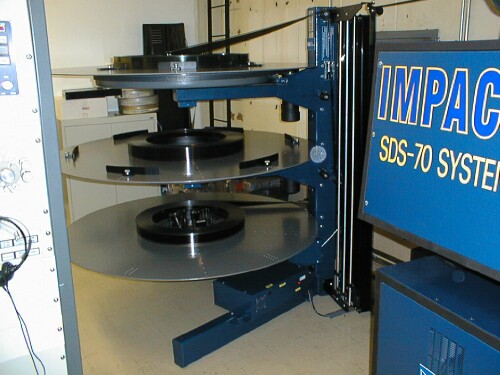
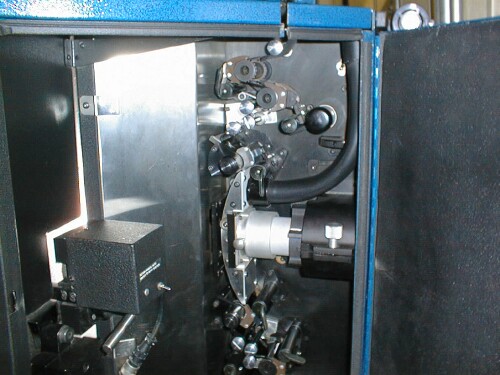
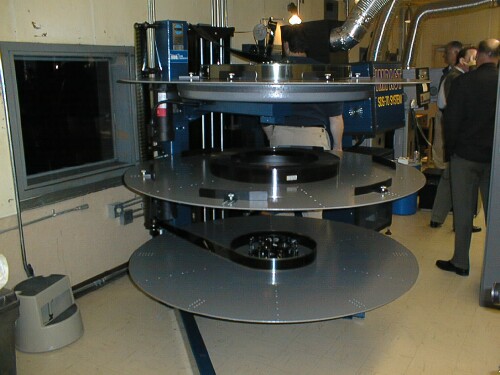
Super Vista Corp's Super Dimension-70™ (SDS-70™) is a patented theatrical film process that employs five perf. 70mm advanced film based technology.
The SDS-70™ process significantly "raises the bar" of theatrical film entertainment to an impressive level never before possible.
quote:While the significant quality improvements of recent films like Kodak VISION2 500T Color Negative Film make production at higher frame rates easier, the usual issue is the cost of production, since significantly more film is used.
MaxiVision Cinema Technology™ has invented a new way to see movies with a picture so enhanced that feature films made in MaxiVision48™ will set a new standard for a compelling visual experience. Just as the change to the widescreen format ensured that movies remained a unique entertainment experience in the face of competition from television, so will MaxiVision48™ give renewed excitement to the idea of going to the movies. This novel combination of patented technologies offers a visual adventure beyond anything ever seen in theatrical feature films.
quote: Mattias OhlsonThe technology "to advance film presentation" is already in place. It's just a matter if anyone is willing to pay more for it with higher framerates or a return to 70mm theatrical releases or even simple on-line film cleaners and more skilled projection personnel.
No daring movers of the about to advance film presentation any time soon?
quote: Mattias OhlsonDigital video has plenty of "baggage" to consider when it comes to upping frame rates. Lots of it.
Higher frame rate is more likely to happen with digital since there is less lagacy baggage to consider.
quote: Mattias OhlsonVery few archivists would ever rely on digital tape for long term storage.
On storage I noted that IBM think they will be able to deliver 100TB tapes to the market.
Even for a short-lived bulk distribution media, tape is at a significant disadvantage to disk media or film.
It depends on the market. And how it is marketed! ![[thumbsup]](graemlins/thumbsup.gif)