This is topic I'm curious to know why many on Film-Tech seem to be so negative on digital cinema in forum Digital Cinema Forum at Film-Tech Forum ARCHIVE.


To visit this topic, use this URL:
https://ft-forum.com/ft/cgi-bin/ubb/ultimatebb.cgi?ubb=get_topic;f=16;t=000240

Posted by Justin Hamaker (Member # 2165) on 07-25-2008, 02:28 PM:
 
I've seen a number of posts mocking digital cinema and the industry conversion and I'm just curious to know why.

I realize that d cinema isn't perfect. There is still plenty of room for equipment failure and we don't really know how well the distribution channels will perform when they are delivering many thousands of hard drives every week.

But as a manager and projectionist, I can help looking forward to the more hands-off aspect of digital cinema. I like the fact that I won't have to train kids to properly thread film and rely on them to get it right every time. I like the fact that the 200th showing should look just as good as the first showing. I like the fact that there should be greater flexibility in scheduling auditoriums. Plus I'm excited about the prospects of alternative content that just isn't possible/practical with 35mm.

I'm wondering if the negativity comes from losing the hands-on aspects of movie presentation or if it's more from the (perceived) limitations of digital cinema.

The one thing I do know is I saw a digital presentation of Cars at ShoWest 2006 and it was by far the most amazing presentation I have ever seen. And yes, I am aware that a studio presentation at theatre convention is not an accurate litmus test for the real world in a megaplex.
 
Posted by Charles Greenlee (Member # 3856) on 07-25-2008, 02:50 PM:
 
Because, this is FILM-tech, not Hard-drive-and-digital-projector-tech. :-p Don't mind me, I'm just being silly. :-D
 
Posted by Justin Hamaker (Member # 2165) on 07-25-2008, 02:58 PM:
 
Maybe you're being silly, but I can't help wondering if that's exactly the reason.
 
Posted by Aaron Mehocic (Member # 15) on 07-25-2008, 04:07 PM:
 
Let me first preface my remarks with the statement that I have never seen a DLP image, which may also be available in 35mm film, projected onto a screen.

Now with that being said . . .

It is my opinion that many pro-film members of Film-Tech see the dawning of the digital projection age as an end of an era, which, unquestionably, was cinema's golden age. Many respect the history, showmanship, and ambiance of film and those who have worked with film before them. Moreover, they see it as the only true medium in which the progenitors of this form of entertainment envisioned their final product for public consumption. The pro-film people here agree that this is the way it has been done for over 100 years and if it works just as good - if not better - now than it did then, why not stick with it. In short, if it ain't broke don't fix it. The only corallery in all of this is training the right people to handle the film.

The pro-digital elements on Film-Tech also respects what has been written above, but they believe for this form of entertainment to survive in the future, it must look like it belongs in the future. Dirty machines using oil or grease pulling a scratched piece of polyester along sprockets and rollers is not very 21st Century. They too realize the golden age of the cinema is no longer and today's customer wants options a standard whatever-plex can't always provide. For this group it can be as real as Ben Franklin's old statement: "join or die".

My advice in answering that question is to identify who are the pro-film and pro-digital proponents and opponents here on Film-Tech and examine what they say. In my opinion, Brad Miller is probably the most vocal pro-film member here, while Mark Gulbrandsen is the most vocal pro-digital.

The digital role out will encounter its fair share of problems. For one, the down turn in the economy probably put a slowdown on the big wave everybody thought was coming. Furthermore, as many techs I've talked with over the last year have commented, nothing in digital is standardized. Meaning: That soundhead I still use from 1939 still works - and works well. I doubt seriously if the Christie DLP unit manufactured this year will still be in use in 2077. Yet, with consumers demanding more choices and the entertainment market saturated with so many choices film could become irrelevant and a quaint antique from the 20th Century faster than we think. Only time will tell.
 
Posted by Mark Gulbrandsen (Member # 72) on 07-25-2008, 04:35 PM:
 
Jusin,
I feel that 90% of it is because people don't know anything about it(but they may think they do) and that makes them scared. Many exhibitors had the same attitude about new fangled film processes... like Cinemascope and Stereo Sound. Soon they learned that if they were to stay in buisness they had to have it. The same will soon hold true for digital as film is phased out. Personally, I will be glad to see film go away, its long overdue.

Mark
 
Posted by Jesse Skeen (Member # 586) on 07-25-2008, 06:09 PM:
 
If I still worked as a projectionist I'd be negative on digital just because it would reduce or eliminate my job. I think that's fair enough.

From a customer standpoint, seeing how badly a large percentage of theater personnel handle film, as well as the crappy quality of some film prints that even the best projectionist can't fix (particularly all the anti-piracy measures), I'd welcome digital if it solved all of those problems. The problem is, it doesn't, at least not at the moment. My biggest issue with DLP is the screen-door effect- the first DLP movie I saw had an obvious grid effect on the screen, especially noticeable with black objects against a white background. This is the sort of thing most people don't seem to notice, but it really looks bad. I was told this was an older DLP setup and the newer ones don't have this problem, but I'll believe it when I see it. The only other DLP show I've seen since then was animated and in 3-D so it was harder to look at it too closely, but the 2-D live-action trailers still had a video-like effect to them. If I want to watch video, I can do that at home.

If they can get DLP to equal film done right, more power to them, but if they can't get it absolutely PERFECT I'll see it as a step backwards.
 
Posted by Cameron Glendinning (Member # 3516) on 07-25-2008, 06:20 PM:
 
My opinion on 2k digital cinema is pretty simple,

Its expensive, and does the job no better than well presented 35mm. 3d excluded.

Digital presentation is the future and personally I think that it wont be too much longer until the standard of digital presentation will be vastly better than avalable today.

With home standard now having a 2,000,000 million pixel resolution through blu ray disc, 1080p with its grid 1920x 1080 compared with 2k D cinemas 2 000 000 plus pixels 2040 x 1080
grid.

At the same time cinema design has changed, most new cinemas feature huge screens that rarely allow the audience to get 2 screen hights away.

Personally I think that the best 35mm image is viewed from between 2-5 screen hights away from the screen. Therefore only the back few rows and the minority of seats have a truely great image!

Now many cinemas do not have 35mm done right and the switch to 2k digital for these cinemas should be done immediately. How long will it take for people to realise that there new high definition tv is better than their local cinema?.

This is the first time in the history of cinema that the home product comes close to matching the quality of cinema image. This is genuine compitition unseen before! Last time cinema was slightly similar in the 50's cinemas were forced to compete by introducing wide screens and multichannel sound.

Cinemas who currently do film properly, use filmguard etc probably will get the best bang for your dollar by waiting for the developing digital technology to improve with a higher resolution.
I look forward to the day that I can go to my local monster screen multiplex and see a movie with a standard of image that exceeds todays 35mm, sitting closer to the screen and enjoying the more immersive feel that the higher resolution will allow!
Anyone remembering 70mm knows that better than 35mm isn't new.

[ 07-26-2008, 04:54 PM: Message edited by: Cameron Glendinning ]
 
Posted by Gordon McLeod (Member # 33) on 07-25-2008, 07:46 PM:
 
The reason if if done properly film is still better presentation and cost far less to install and maintain
Many theatres will just have to close as the cost of installation upkeep and operational costs are just not profitable in digital yet were in 35mm
 
Posted by Louis Bornwasser (Member # 3063) on 07-25-2008, 08:24 PM:
 
Gordon is right! I have advised my customers to "keep their money in their pocket" until digital evolves a bit more; but then be ready to go when "assurances of non-obsolescense" are verifiably available.

I would assume that an insurance policy would be taken out.

Until then 35mm film RULES! Louis
 
Posted by Geoff Jones (Member # 3668) on 07-25-2008, 08:43 PM:
 
My thoughts as a movie-goer:

I don't like digital because the picture quality of the current tech isn't as good as film done right. The digitally projected movies I've watched looked bad to me. Contrast was poor. Jagged edges were visible. (I will grant that the image was rock-solid, but I saw Back to the Future in 35mm on Wednesday, and it was also rock-solid.)

4k seems like it will get close to the quality of 35mm, from what I've read, but it has big problems too.

Screen size is important to me. I want my dinosaurs to be life-size. I want to duck with starships fly over. With the 4k projectors only rated to 40' screens, that just won't cut it.

Also, my experience has shown me that most cinemas do a terrible job of accurately advertising their equipment. I have zero confidence in being able to figure out which theatres (much less which individual auditoriums) will be projecting 4k instead of 2k.

Finally, I worry about the financial risk of this transition. Will all those theatres that have paid tens (hundreds?) of thousands of dollars on 2k gear be able to afford to upgrade to 4k? To 8k? Will they be stuck with crappier-than-film 2k projectors for the forseeable future?

The whole thing seems so pointless to me. The cost of properly operating and maintaining 35mm equipment is a tiny fraction of the cost of a new digital projector. All it would take is a theatre that gives a damn. (And they are out there, and they do a fantastic job.)

And there are SO many problems at most theatres that digital doesn't begin to fix. Marks (or thrown food) on the screen. Talking patrons. Constant width masking. Improper volume. Annoying pre-show commericals and slides.

I just don't get it. The main purpose of digital projection seems to be to sell expensive new hardware (which is exactly how the electronics industry maintains its growth) and eliminate print costs.

That's my perpsective, anyway. I hope it answers your question.
Geoff
 
Posted by Bobby Henderson (Member # 840) on 07-25-2008, 11:13 PM:
 
quote: Justin Hamaker
I've seen a number of posts mocking digital cinema and the industry conversion and I'm just curious to know why.
Here's my long answer. Some long-time F-T members (such as myself) have had a belly full of spin and outright bullshit from various proponents of "digital cinema" since the gear first started arriving in theaters in 1999.

Some of the negative attitudes here are also a reaction against blind worship so many have been doing toward that "digital" buzzword.

The first generation of DLP product was mere 1280 X 1024 pixel based hardware running video content with uneven standards of data compression. Despite that, certain high profile people with vested interests in the technology proclaimed "digital" to be better than film.

Since then, all the costly 1280 X 1024 based systems have already been retired after just a handful of years. Just about anyplace showing movies in "digital" is projecting them in 2K using JPEG2000 files encoded to better and more consistent quality standards.

The new systems are better. But they still cost a lot more money than a good film projector and won't have nearly as long a useful lifespan as a properly maintained film projector. The upshot is lots of theaters are just leasing the equipment rather than buying it outright.

Factor in the other issue that we've been seeing the movie industry take steps backward in quality standards over the past few decades.

It's been nearly 40 years since the use of 65mm/70mm all but disappeared. After 1970 all but a few releases with 70mm prints were just blowups from 35mm. A 70mm Dolby SR mag print can provide better audio quality than a lossy digital track (not to mention throw a more steady, brighter image and work far better on giant screens) but it cost a lot more. After 1993 that 70mm blow up era was done -despite new stadium seated theaters with huge screens showing up in the late 1990s just begging for brighter 70mm projection.

The 1280 X 1024 D-cinema thing seemed to be a continuation of this stepping backwards trend. We're seeing the same potentially destructive trend taking place in IMAX theaters. Native IMAX photographed features have been overshadowed by mere "DMR" movie blow-ups from 35mm and HDTV resolution video. And now IMAX wants to replace ultra high resolution 15-perf 70mm projection systems with pairs of 2K digital projectors. They're counting on the "IMAX Digital" term being enough. And it might be enough for standard feature films. The DMR process wouldn't be necessary anymore. But at that point even IMAX itself would have a hard time justifying its existence anymore.

Digital intermediate has all but replaced the "analog" color timing process in Hollywood feature films. DI has a lot of precise advantages over the old chemical and color filter methods. Unfortunately most digital intermediates are still produced in 2K resolution, a level that doesn't capture all the detail in the original negative. It's also a quality bottleneck that works against film done right. If all the 35mm release prints were sourced from something produced in 2K digital intermediate then there's little if any way for a great 35mm projection setup to outdo a proper 2K digital projection rig.

The same problems have been going on in how movies are photographed. Again, there's more "digital" worship happening with lots of broad claims of "digital" being better than film. Shooting on video is a lot more convenient. But it does not yield a better quality image than something photographed well on 35mm. Hopefully some of these attitudes against film photography are being reversed now that at least a few more Hollywood productions are having their digital intermediate work processed at 4K quality levels rather than just the defacto 2K standard.

Digital projection has been a big improvement in a lot of average multiplex movie theaters where film done right has been practiced very rarely. I think if the folks "selling" everyone on "digital" had been more on the level about its advantages and disadvantages from the beginning they would have caught a lot less flak from fans of film. Instead, the "digital" proponents declared film as being unnecessary.

I'm impressed most by the conveniences digital cinema provides. If you're running a 12:01am show of some new summer epic you can load the movie on every digital projector without the need for extra prints or interlocking. You don't have to move prints around from one platter to another. Shows can be built up quickly. Trailers and other spots can be shuffled around with just a few clicks. You can even have the shows timed to start up automatically.

I still worry about the arguably narrow differences between 2K digital cinema and home formats like Blu-ray. As Blu-ray and 1080p HDTVs sell in greater numbers it could also translate to more people staying at home to watch their movies.

In forums like Blu-ray.com there's no shortage of people making claims that their home system is better than even theaters with digital projection. Such claims are ignorant of the technological advantages 2K JPEG2000 movies have over Blu-ray. These folks are just looking at the raw pixel counts instead of the other more subtle factors. In the end it still equals certain potential customers staying at home. That's the last thing any of us want, whether we're a purist film fan or fan of "digital."

My opinion is that any true movie fan at least makes some effort to see a few movies in commercial theaters. If we have no commercial movie theaters then we have no feature movie industry at all. TV will have completely taken over the market.
 
Posted by Mike Olpin (Member # 1115) on 07-25-2008, 11:14 PM:
 
I feel fortunate to be involved in the industry at a time where I have the opportunity to learn and master both.
 
Posted by Mark Gulbrandsen (Member # 72) on 07-26-2008, 09:27 AM:
 
quote: Mike Olpin
I feel fortunate to be involved in the industry at a time where I have the opportunity to learn and master both.
Right on Mike! Some of us will grow in more directions than the rest will.
 
Posted by Greg Anderson (Member # 235) on 07-26-2008, 10:58 AM:
 
It's probably not good for the credibility of this forum that it's derisively called "Straight to Video." You can make fun of Digital Cinema but it's here to stay and it will replace film. Certainly, the ability to present film-done-right is an art form and it's quickly being lost. Just as current-day cinematographers can't do 65mm as well as the ones who were doing it 40 years ago, the masters of film handling are increasingly rare. If you want to stay in the business, you'd better know how to do digital.

Any further technological breakthroughs in 35mm film will be very subtle. (It's too bad we don't have John Pytlak here to slap my hands but...) All of the research and development efforts are in the digital technology. All of the disadvantages of Digital Cinema will be fully addressed and very soon.

Long live the artists of Film Handling. But out here where they are so rare, the best, most consistent presentations are digital.
 
Posted by Randy Stankey (Member # 64) on 07-26-2008, 12:16 PM:
 
For multi-purpose venues like the one I work at, digital video is a good thing. Video is also good for material which changes frequently.

But I work hard to make good shows for people who pay good money to see them. I resent it when people try to tell me that video is "just as good" when it is not.

The truth is that people who push video are only doing it because they think they can get rid of the expense of labor and personnel management.

I think video system can be used in theaters to expand business into areas where it was not possible before. Concerts broadcast by satellite and teleconferencing are two things that come to mind.

We have begun running trailers on the video projector in my theater but still running the feature on film. I think that is a good blending of the two technologies for the better of all.

I still can't help feeling that the main reason people push the "video only" idea is because they are over optimistic about its capabilities and because they are ultimately lazy.
 
Posted by Demetris Thoupis (Member # 833) on 07-26-2008, 12:50 PM:
 
Digital basically offers nothing more than a good 35mm presentation. It costs more and it will mostly need factory assistance when troubleshooting. 35mm is simpler to maintain, HARDER to keep up a good presentation, minor issues and even major issues can be fixed in a matter of minutes with competent projectionists (and there are a lot out there) and offers better quality than Digital although customers don't see the difference.

Major aspect of course with Digital is the flawless presentation every time where it seems that the industry lacks with 35mm due to poorly operated theaters where sometimes everyone knows how to thread and start the projector!!

I really am pro 35mm because FILM RULES. The only reason I would push Digital cinema would be for something worth seeing as 3D experience which is better done by Digital rather than 35mm.

Demetris
 
Posted by Jason Burroughs (Member # 68) on 07-26-2008, 01:24 PM:
 
Part of the issue is that you take an industry that has been very technically stable.

Even with the evolution of digital audio, tried and true analog tracks are still included on all prints.

Now take an industry that has been stable for as long as the exhibition industry, and inject Moore's law. The DLP projectors introduce just 5 years ago, are obsolete.

With film media 50 years old (properly cared for) will play just fine on a projector 5 years old, and vice versa.

Another issue is who is bearing the cost, and who is reaping the benefits of the technology change.

Exhibitors have a high cost and relatively low benefit

Studios have a low cost and high benefit.
 
Posted by Andy Frodsham (Member # 4061) on 07-26-2008, 01:52 PM:
 
While I am not afraid of this new technology, I am afraid that this is going to be one more example of yet another product being hyped under the ever magical 'digital' umbrella.

I am hopeful and willing for this new technology to move forward to such a point that it does indeed look better than 35mm film! But, when I write this, I do indeed mean better in every way - not just a still picture comparison. I want to see a system that no only has high resolution (better than or equal to film) but also has the ability to cope with the subleties of colour rendering and contrast.

Finally, as if this were not enough, I want to see a system where the storage medium is up to the task (not dependant upon heavy, crude compression). I personally cannot see the point of super high resolution if the data produced is so large that it cannot be stored faithfully. The pressure must be on the distributors to keep the storage media small - who can imagine a situation where each new individual 'print' arrives in a box of five or six hard disk caddies!!

On a more personal basis, those of us working in reel to reel, changeover theatres, share a quite intimate relationship with the two projectors sitting in our projection box - like any pieces of machinery, with which one works day-in and day-out! Swapping all this for a server and humming electronic light emitting box will inevitably change the nature of the experience. I suppose it's like CDs versus vinyl, photographic film (and paper) versus a memory card - the relationship is somehow less tactile!
 
Posted by Randy Stankey (Member # 64) on 07-26-2008, 02:14 PM:
 
quote: "Demetris Thoupis"
Major aspect of course with Digital is the flawless presentation every time where it seems that the industry lacks with 35mm due to poorly operated theaters where sometimes everyone knows how to thread and start the projector!!
But that's not entirely true. A poorly maintained video projector will look just as bad as a poorly maintained film projector.

It takes nearly as much work to install a video projector as it does to install a film projector and they both work on similar sound systems.

If the projector is poorly installed, if the sound system is poorly set up or they are not well maintained after installation, it doesn't matter whether it's film or video. They'll both look and sound like crap.

The idea that video is better simply because it's digital is nothing but a sham.

There's a lot to be said for video's ability to present fast-changing content like concerts and special events. It's a good medium to show advertisements and trailers with before the feature. As you said, video opens up more possibilities for things like 3-D.

There's nothing wrong with video being an adjunct to film presentation in a theater.

The real reason for the promotion of video is, as I said, because of laziness and greed. I don't mock video as a medium for presentation. I mock the stupid, greedy, lazy people who try to push it on an unsuspecting public.
 
Posted by Darryl Spicer (Member # 711) on 07-26-2008, 02:26 PM:
 
one thing I have been noticing here lately is during fast pan camera movements of scenes where the camera pans wide areas the picture is real jerky. I noticed this on The incredible Hulk and The X-files 2. I wonder if that was caused by the use of digital intermediates. The two movies in question were on film. We didn't have digital copies of either to compare to.
 
Posted by Steve Guttag (Member # 268) on 07-26-2008, 03:20 PM:
 
I think Bobby hit most of the points pretty well.

But lets look at this interesting question and what the person statd:

quote: Justin Hamaker
But as a manager and projectionist, I can help looking forward to the more hands-off aspect of digital cinema. I like the fact that I won't have to train kids to properly thread film and rely on them to get it right every time.
Now if you look in another thread...this person can't seem to deal with reels that are tails out.

These things don't have anything to do with the presentation of the media (digital or film) but have everything to do with how one views the mechanics of presenting the media. That is...they don't want to be bothered with it. It is to the point of overlooking objective benefits or deficiencies. The bottom line I see in their posts is "why can't I stay at home and just get all the money I need/want?" Don't get me wrong...busy work for the sake of busy work is, for the most part, wasteful of one's time. Work that achieves improvement should not be viewed as a negative.

A constant I've seen with people is the more hands-off and "automated" things are made...the dumber they become...their brain's atrophy for they are not being worked. Conversely, tampering hands can definately bring about havoc too. The key is to strike a balance.

Now lets look at our LITTLE industry for that is what it is. The number of movie theatres/projectors is a very tiny industry that, on any given year, does not support large scale manufacturing.

The technology of film projection is EXTREMELY simple. You look at the earliest hand cranked projectors and look at today's mechanical projectors and they are virtually identical in the manner in which they show film (not that there has not been refinements that have resulted in improvements). Just about any machine shop could, if they wanted to, make a film projector...the market is too small to bother though.

Look at the predominate film projector manufacturers (pick any of them...which ever is your favorite)...look at the film side and chronical the changes since their first model to the current model...just how different is it? For some companies, you are talking about 50+ years, if not 75+ years. There hasn't needed to be too much R&D on film projectors in the last 50 years.

Christie, the relatively new kid on the block with film projectors (30-40 years) has changed very little on the film side and mostly changed the gear side to improve its reliability.

Kinoton (60-years) has advanced the film projector with their "E" series but again...the film side looks pretty close to the FP20 that goes back nearly 50 years.

quote: Greg Anderson
Any further technological breakthroughs in 35mm film will be very subtle.
Well, just last year in 2007, the E premiere line of Kinoton incresed film steadiness 4-5 times and increased light output by nearly 20%....not too subtle. In film itself...despite it being an "obsolete" technology, it too has been advanced with finer and finer grains, deeper contrast, wider color gamut. It has gotten so good it is often used as the reason Super-35 can outperform anamorphic photography of a short period ago! Or that 35mm of today can look better than 65mm of yesterday. Agree or not (I don't) but DPs seem to see much more than a subtle difference in the film development.

Other than film as a media, this industry is all but powerless to effect any technology changes...it is just too small.

No matter what smoke and mirrors some will put up...digital today costs more than film (for an exhibitor). Digital presentations will not and can not sell one extra ticket. Digital isn't the reason someone will decide to see a movie or not...it may affect their choice which cinema to go to however. From a business standpoint, it is just plain silly to install it in mass.

The stupidness of it all is waving right in front of everyone's face...VPF. The exhibition industry expects the studios to either buy or help buy THEIR equipment. That violates the "golden rule" of "he who has the gold, makes the rules." Where does that end? "Hey, I'm buidling my 20-plex...give me some of those free projectors!" It is just ludicrious.

Look in Boxoffice Magazine (July 2008)...the President of NATO threw a temper-tantrum over not getting his VPFs as planned. Grow up, if the business can't support the cost, it is a bad venture. Throwing money at a belief my be philanthrophic but it makes no business sense and will result in bankruptcy.

Access IT has been the biggest underwriter of the DCinema roll out. Wanna look at their numbers.... AcessIT Stock Would you invest in that company with THAT trend line?

BTW...note, I've yet to talk about the technology yet...just the $$$s of it all.

But lets look at that. There can be no question that DCinema is very primitive at this time. 2K resolution being then norm for now. It is, at best, 1/2 the resolution of film, its color space is smaller and it has less contrast.

Who makes DCinema projectors? It is a trick question...unless you want to bank on Sony's ledgendary technology and support in the Cinema industry, you have TI's DLP division. This industry is single sourcing THE technology that lets it all happen at the 2K level. Anyone in the semiconductor industry knows that single sourcing makes you VERY vunerable. While some choose to ignore the trend of DLP sales and focus only on their very small part of it, DLP sales are dopping progressively fast. The only industries that are hanging on to DLP are Cinema (and we are way too small to support it), large venue projection (also relatively small) and high-end home (also too small). Less expensive technologies have out sold it because those people are not so picky about image quality.

If TI shuts down DLP due to lack of profitability...what happens to DCinema? I know, one that has championed that TI has made improvements to the 1.2" chip as proof of long-term viability...but this is the same guy that was touting HD-DVDs and all the new features/benefits as proof that Toshiba wouldn't pull out. The reality is, the market will dictate what the company has to do...DLP is a shrinking market.

quote: Greg Anderson
All of the disadvantages of Digital Cinema will be fully addressed and very soon.
This sort of statement generates anger. Why? It is a "matter-of-fact" statement with nothing behind it. Lets just start with the resolution...why has 2K been a stopping point for DLP? Well, look above and see...the market is dying. The broadcast industry is stopping at 2K for now. As such, the largest user base will not need more than 2K and developing 4K would need to be done on the cheap because those markets are WAY too small to support the R&D of a full-scale design. Picture a world with all 2K digital projectors and then 4K DLP comes out...how many sales/year do you think TI could expect? 100s? 1000s? Still not enough...they are looking for millions and there are not enough screens in the world for that! There are enough consumers for that! But they are not looking for 4K (or not enough of them)...maybe after they get used to 2K they will desire more.

So where is this magical technology coming from? Do you have inside information about some break-through?

The one that actually anger's me the most are the virtual threats of lack of print availability. The "Buy DCinema or else."

If I have a film based cinema that is putting out superior shows to yours, why should I buy inferior equipment just because? If the reasoning is that "everyone is going digital, thus film will be dead." Then all you have created was a self-fufilling prophacy. Conversely, if exhibitors said "no" to digital at this time, DCinema would die for now.

I certainly DO believe digital will replace film for presentations but what is being offered at this time is a poor substitute.

While I have no fear of technology and have actually been putting in video for quite some time now, I want my quality of life to always be improving, not settleing for what mediocrity is offering at the time. This is why I will continue to champion 65/70 systems...they are the best for today and easily achievable at the theatre level. It isn't a film/digital thing for me. For me, the best always wins. Today, film wins. Bigger film, wins bigger!

As to film damage...it speaks to the exhibitor, not the media. Film can certainly play blemish free for the length of the run and archivially, exceeds digital for now. DCinema has actually opened a new market to get "born digital" elements on film for archiving!

Steve

PS...sorry for the spelling errors/typos...I didn't spell check...I just typed.
 
Posted by Bobby Henderson (Member # 840) on 07-26-2008, 03:25 PM:
 
quote: Darryl Spicer
one thing I have been noticing here lately is during fast pan camera movements of scenes where the camera pans wide areas the picture is real jerky. I noticed this on The incredible Hulk and The X-files 2.
Unless there's something wrong with a digital projector setup, such as failing hard discs or something of that sort, there should be no jerking or stuttering of action.

A movie encoded in Motion JPEG2000 is fundamentally similar to a 35mm film print in that both really contain many thousands of discrete, separate, still images. JPEG2000 doesn't allow for inter-frame compression.

This doesn't stop problems from happening in how the movie is filmed or shot on video. 35mm cinematography will record every frame discretely, whether it's badly under-exposed or over-exposed. I've seen digital-sourced footage in movies, such as The Lookout or Collateral smear and drag a little when the camera is pointed at some challenging material -like fast motion in dark environments. I don't know how The Incredible Hulk or X Files: I Want to Believe were photographed, but it wouldn't surprise me if some digital video HD cameras were used in a few spots.

quote:
Finally, as if this were not enough, I want to see a system where the storage medium is up to the task (not dependant upon heavy, crude compression). I personally cannot see the point of super high resolution if the data produced is so large that it cannot be stored faithfully. The pressure must be on the distributors to keep the storage media small - who can imagine a situation where each new individual 'print' arrives in a box of five or six hard disk caddies!!
I think that's one of the smallest problems right now. The 300GB hard discs that ship to digital-equipped theaters aren't any bigger than the Western Digital "My Book" external drive next to my notebook computer. External drives are growing in capacity and 1 terabyte drives are now pretty affordable.

Data throughput is a bigger issue. Commercial theaters and digital projection equipment suppliers really need to strive for the 4K standard. Right now 4K has a trade-off with 2K in that a higher level of data compression is required because of bandwidth limits. To do 4K at the same relatively mild compression levels seen in 2K theaters would receive movie files over 1TB in size. Data ingestion times would balloon. And the current servers in place may have issues pushing that many pixels. Nonetheless, that's the direction where "digital" needs to go. Development should not stop at 2K.
 
Posted by Tony Bandiera Jr (Member # 2365) on 07-26-2008, 03:27 PM:
 
quote: Randy Stankey
The real reason for the promotion of video is, as I said, because of laziness and greed. I don't mock video as a medium for presentation. I mock the stupid, greedy, lazy people who try to push it on an unsuspecting public.
That pretty much explains the motivations.

That, and the cost of ONE digital screen right now is roughly equal to 15-20 film screens when the projection equipment is ordered at one time. Piss-poor cost ratio IMHO.

When D-Cinema equipment gets to no more than 2x the cost of a comparable film machine, then it WILL take over very rapidly.

Overall in the current state of technology, I think digital as a production and post-production media is the greatest thing to happen to the industry.

But leave the exhibition on film!! It is a world-wide standard and well proven. As was said here before, if it ain't broke, don't fix it.
 
Posted by Darryl Spicer (Member # 711) on 07-26-2008, 03:48 PM:
 
quote: Bobby Henderson
Unless there's something wrong with a digital projector setup, such as failing hard discs or something of that sort, there should be no jerking or stuttering of action.

Bobby, The two films I listed were being projected with film. The pans didn't look smooth they were shaky.
 
Posted by Bobby Henderson (Member # 840) on 07-26-2008, 03:52 PM:
 
Maybe they were copying that Paul Greenglass "shaky cam" style/convention?
 
Posted by Ben Wales (Member # 92) on 07-26-2008, 04:27 PM:
 
Today I was in London and went on a "Comparison Mission", firstly I went to the Empire Cinema in the West End to see "Wall-E" in 2k, the Adverts and promo were in 35mm and "Wall-E" was in Digital.

In my opinion a Pixar Animation like "Wall-E" is the best example you can get to see in Digital and no doubt it will be better than a 35mm general print, however I did see several places in the picture with pixel artifacts which were quite clear to me.

However, in the back of my mind it was just like watching a HD TV picture, clear & Sharp, but lacked suttleness you find with film.

The next screening was the new Restoration 70mm print [thumbsup] of "Ryan's Daughter" at the National Film Theatre.

I have never seen this David Lean Film before and was "Stunned" in the Quality in the picture detail & crispness, and this was filmed over 40 years ago!.

Intersting I heard today that even the Odeon Cinema in Liecester Square is screening "Dark Knight" on 35mm, I asked why and the reply was "The Director wanted it that way".
 
Posted by Andy Frodsham (Member # 4061) on 07-26-2008, 04:40 PM:
 
quote: Bobby Henderson
I think that's one of the smallest problems right now. The 300GB hard discs that ship to digital-equipped theaters aren't any bigger than the Western Digital "My Book" external drive next to my notebook computer. External drives are growing in capacity and 1 terabyte drives are now pretty affordable.

Yes, but my initial point was that this will NOT be adequate as the demand for increased resolution (2K to 4k to 8k etc) requires more space for data storage. That potential increase in data throughput and storage can only be faithfully satisfied by minimally compressed raw data!
 
Posted by Steve Guttag (Member # 268) on 07-26-2008, 04:43 PM:
 
Tony...where did you get the 15-20 times number? I don't think the cheapest film projector against the most expensive DCinema projector comes close to 15 times the cost. Maybe used film versus new DCinema. When you add everything up, depending on the grade of film equipment you are used to, it is probably closer to 3 to 5 times at the moment.

Film systems don't tend to grow in price geometically as screen size grows. DCinema has certain plateaus that you cross. A film projector, aside from maybe water cooling, is the same projector for a little screen as a big one. With consoles, normally it is only the rectifier that is different and possibly the reflector.

One thing I left off my lengthy post above is the obvious ROE factor (return on investment). A film system, more often than not, lasts as long as the theatre. Most theatres tend to have about a 20-year life, depending on the market and there are obvious expections. The cost/year of film equipment pretty much comes down to "free." It may seem like a lot when you purchase it but cost/year over 10-years is pretty darn cheap and cost/year over 20-years is VERY low. Exhibitors could certainly use better equipment than they often purchase but who plans beyond the next quarterly report?

This is not the case with any emerging technology...which DCinema is...when a projector comes out, it is always using the latest and the best. How many different "grades" of projectors are there? There are different "sizes" but you wouldn't look at a particular model as inherently inferior (within a specific brand).

The cost per year of DCinema will remain high. What does an intermittent cost to replace? Now what does a light-engine or imager cost to replace? You are talking about factors of 10 difference! There is almost nothing cheap on a DCinema projector (at least not in the electronics) and it isn't likely to drop too far as there is relatively no economy of scale for them.

What is the life-cycle of a DCinema projector? If they follow the trend of other digital projectors...probably on the order of 7-10-years but that is certainly speculation. This means that the REAL cost difference between digital and film may be twice as large as you thought before, if you agree that complexes generally have a 20-year life.

Mind you, this isn't "negative" DCinema bashing...this is looking at this from a business perspective.

Steve
 
Posted by Justin Hamaker (Member # 2165) on 07-26-2008, 05:57 PM:
 
Steve, I take serious exception to your characterization of my work habits.

I am the general manager of a 5 screen theatre AND a single screen drive-in. During the summer months I work more than 60 hours a week every week. In addition to my duties as the primary projectionist for both businesses, I also have to do work schedules, show schedules, orders, inventory, payroll, and more. And I have to find time for all of this around the time I'm waiting on customers and supervising my staff. And when I need to train someone to run projectors, it takes even more of my time.

Yes, I do look forward to the ways digital cinema will make my life easier. I will no longer have to worry about the young people I train making sure they get the film in frame and in focus every single time, 25 times a day. I will no longer have to worry spending several weeks training these young people how to properly thread a projector only to see them leave 6 months later.

And as far as my work upstairs goes, I may not obsess over whether my film is emulsion up or emulsion down or running Film-Guard over every fourth showing. But I do spend time every week dealing with a variety of maintenance issues and when the need arises, I can repair almost anything on my projectors. Thursday night, I was actually at the theatre until 4:45 in the morning filing a new flat aperture plate for one of my auditoriums because I realize the existing plate was showing picture about 18" into the masking.

You mock my complaint about the heads and tails about a print I received last week, but I think you failed to read my post. I wasn't complaining about the print being tails out - I would have LOVED for the print to be tails out. I was complaining about every other reel being a different orientation which meant build-up required even more of my time than normal.

And I complained about the film depot's inability to properly assemble the split reels to the cores so that reels have to be taken apart and reassembled during break-down.

Don't get me wrong, I have no illusions about digital cinema eliminating maintenance. But how can I not look forward to no more scratched prints resulting for a single mistake. How can I not look forward to having to move around prints Thursday night/Friday morning - especially having to move prints to the drive-in. How can I not look forward to projectors that do not leak oil like a sieve. How can I not look forward to projectors that do not have hundreds of moving parts that could fail at any moment costing me time and lost shows to repair.

Ok, digital projectors still have bulbs, exhaust fans, power supplies, and other components that can fail. And many repairs will have to be done by a tech instead of me being able to fix them. But I happen to thing the operational upside is bigger than the down side.

I'm sure the complaints about picture quality are valid (I haven't seen enough to know), but I know 90% of the customers coming through the door won't know the difference. But they do know when can't play Hannah Montana in 3D because we don't have digital projectors.

And by the way, the purpose for this thread was to seriously understand why some people have a negative view of digital cinema. Because from my perspective, I see a whole lot of upside once it's ready for prime time.

Steve
You also point out the "silliness" of expecting someone else to pay for your equipment. While this is certainly a valid argument for new theatres opening with digital projectors, I think it misses a very major point for existing theatres.

For theatres that already have film projectors, who does it benefit for them to switch to digital projectors? Why the studio - to the tune of hundreds of millions of dollars a year not spent on 35mm film. Given that the studios - and not theatres are the ones who stand to save so much money, I don't think it's unreasonable to expect them to foot at least some of the bill for "upgrading" to digital cinema through virtual print fees. Especially since they don't make any money unless we're playing their movies.
 
Posted by Galen Murphy-Fahlgren (Member # 4535) on 07-26-2008, 06:37 PM:
 
For me, the issue is one of me having a job. I like 35mm presentation more, but the overriding factor in my dislike of digital is my like of getting paid. Frankly, based on my experience the one 2k system at my theater, I wouldn't be interested in heading an all digital booth, even if they were willing to give me the hours I get now.

From the actual owners' standpoint, the guaranteed obsolescence should be a concern. How long can you use that 2k system before it breaks or is incompatible with the other technologies that support it? Not as long as the trio of Simplex XLs in my booth, which I suspect are about 50 years old themselves, seeing as the casings were modified to accept a turret. Sure, film costs money, but as I understand it, the exhibitor isn't paying any less film rent on digital prints. My chain is starting to go digital, and I don't understand it at all. My presentation and the presentation at the other corporate theater I've been to are not perfect, but they certainly aren't bad enough to demand that film handlers be eliminated.
 
Posted by Bobby Henderson (Member # 840) on 07-26-2008, 07:14 PM:
 
quote: Steve Guttag
One thing I left off my lengthy post above is the obvious ROE factor (return on investment). A film system, more often than not, lasts as long as the theatre.
The movie distributors don't care about any of that. They only care about what they are having to pay to create thousands of 35mm film prints for every movie.

What does a 35mm film print cost now? I have doubts the old $1000 to $3000 figure for a 35mm print is accurate anymore with the price of plastics and other raw materials spiking like crazy. Many film prints are destroyed after only one theater booking. An average first run auditorium will show hundreds of film prints in a 10 year period. That cumulative cost would certainly outweigh the price of a digital projection system.

I stated numerous times that movie distributors are really the ones who will profit from digital projection. I think they should be the ones paying for the systems -and probably even the maintenance as well. They stand to save billions of dollars per year on print costs by going digital. A 300GB portable hard disc doesn't cost 1/10th the price of a film print -and it can be re-used numerous times.

Commercial movie theaters get next to nothing anymore for box office ticket sales. That's another good reason for the distributors to pay for the projection equipment instead of the theater. If the distributors want everything "digital" and they're going to take all the box office revenue, then it's only fair for them to be paying for the projection gear and its maintenance.

Judging from the downward trend on the AccessIT stock price it looks like the movie distributors are dragging their feet on paying their bills. And the movie theaters may be too broke to pay theirs.
 
Posted by Steve Guttag (Member # 268) on 07-26-2008, 09:36 PM:
 
Bobby,

No argument...however...the number I've heard on film prints is actually less than $1000 per. Another factor is that film prints are written off for tax benefits....those would not exist for digital prints.

The problem with expecting someone else to pay for your equipment is that it opens the door to who's equipment it is and just how will it be used. There is no way exhibitors wouldn't lose some control over what comes out of that projector if someone else is footing the bill.

and now to Justin

quote: Justin Hamaker
Steve, I take serious exception to your characterization of my work habits.
Sorry, your exception will have to stay with you...nothing in your most recent post has done anything but reinforce the perception, real or not.

Your description of your job is no more spectacular than most any GM or House Manager or whatever the title may be in your company, my wife included...except she puts in 60+ hours all year...not just the summer months.

Your main bitch seems to be that you don't have projectionists. I mean, if you were releived of the duties of the booth and only had to tend to the floor and management, would your dislike of the film system be reduced? Believe it or not, there was a time when there were people that made a living showing movies and it wasn't that long ago. What changed? It wasn't really the technology...platters and automations go back quite a ways...it was the attitude about showing the movie that has progressively eliminated the job. Believe it or not, I know of theatres to this day, little guys, that actually employ projectionists, show a profit and run very good shows.

Will digital make your life easier? I guess...it appears that you are not able to pay people well...that is a chief reason for high-turnover...it also tends to show up in the over theatre performance.

quote: Justin Hamaker
I will no longer have to worry about the young people I train making sure they get the film in frame and in focus every single time, 25 times a day.
This is a good one...do you find it THAT hard to train people and for them to get it in frame each time? I've only been doing that (like so many others) for about 30-years...many of the theatres I'm associated with also have multiple projectors on one screen (changeovers)...they seem to do it every reel. But again, it seems to be something more of YOUR predicament rather than some intrinsic problem with film.

quote: Justin Hamaker
And as far as my work upstairs goes, I may not obsess over whether my film is emulsion up or emulsion down or running Film-Guard over every fourth showing.
Okay...there we go. It isn't a matter of obsessing...its a matter of just doing things consistantly and doing them for a reason. Perhaps if you DID have your emulsion facing the same way every time and Film-Guard EVERY SHOW then you film shows would look stunning and it would be easier for you and for you to train others.

quote: Justin Hamaker
But I do spend time every week dealing with a variety of maintenance issues and when the need arises, I can repair almost anything on my projectors. Thursday night, I was actually at the theatre until 4:45 in the morning filing a new flat aperture plate for one of my auditoriums because I realize the existing plate was showing picture about 18" into the masking.
I don't know a manager that doesn't get in and try to keep things going. So, with film projectors, you can fix most anything...and with digital projectors? So your aperture plate work...which I really don't want to take away anything from your efforts to improve your show...did you use any sort of target film to determine what the opening should be?

quote: Justin Hamaker
You mock my complaint about the heads and tails about a print I received last week, but I think you failed to read my post.
Yes I did (as did others) and WE did read your post...so they alternated heads/tails...waaaaaaaa! How often do you get prints like this? So you had to rewind a few reels...big fat hairy deal.

quote: Justin Hamaker
Don't get me wrong, I have no illusions about digital cinema eliminating maintenance. But how can I not look forward to no more scratched prints resulting for a single mistake. How can I not look forward to having to move around prints Thursday night/Friday morning - especially having to move prints to the drive-in. How can I not look forward to projectors that do not leak oil like a sieve. How can I not look forward to projectors that do not have hundreds of moving parts that could fail at any moment costing me time and lost shows to repair.
The way you describe your operation, I guess you make a fair number of mistakes that result in scratched film...perhaps if you just got more consistant, those sorts of problems would go away. With most film equipment, you almost have to try to scratch film.

Yes, in a five plex it is tough moving prints around...then again with a plex that small, with digital you could load all of your servers with all of the titles at all times because moving electronic prints around a complex is not instant. For the Drive-In...invest in a Modular Platter reel...move the whole print and it is ready to go.

Projectors that leak like a sieve? I thought YOU did the repairing! Okay that was a jab but you opened yourself up to it. If you truly have projectors that leak that bad and you have gone through a reasonable amount of effort to stop/slow the leaks, then that projector/soundhead has many, many times the life that a DCinema machine will ever achieve.

If leaking machines are your big concern there are several machines out there to choose from that are guaranteed not to leak...they come from such brands as Christie, Cinemeccanica and Kinoton and ALL of them cost substantially less than a DCinema projector and will outlast a DCinema projector.

I'm almost aghast you put in that last line...you are wanting to trade hundreds of parts (most do not move) that you are able to fix with the most basic of tools for over 6.6 million jiggling mirrors plus a bazillion little semiconductor parts, any of which could fail and take you down and you can't repair, unless you happen to have the costly spare parts on hand. Your arguement just doesn't make sense.

quote: Justin Hamaker
I'm sure the complaints about picture quality are valid (I haven't seen enough to know), but I know 90% of the customers coming through the door won't know the difference. But they do know when can't play Hannah Montana in 3D because we don't have digital projectors.
Okay these are all valid points...however on the Hannah Montana...the Digital 3D thing isn't something intrinsic with digital, just the attitude of the industry at the moment...an attitude that you seem to be feeding into. Why doesn't NATO and other theatre groups demand film 3D? The theatre would only need to buy the screen and lens...far cheaper than the digital add-ons to the already more expensive digital equipment. And, as you stated, your customers won't know the difference.

quote: Justin Hamaker
And by the way, the purpose for this thread was to seriously understand why some people have a negative view of digital cinema. Because from my perspective, I see a whole lot of upside once it's ready for prime time.
Yes it was...Bobby and I did provide some of the reasons why.

But look at your response to my statements...they clearly had anger in them....mine did not.

You don't seem to get that a well operating film theatre isn't having the problems you seem to be having.

As for studios to pay for existing theatres to convert...why? They are not telling you to buy digital projectors or you are not going to get the title are they? I guess Hanna Montana was a case in point...it had more to do with the 3D aspect though. It also only did one-week's worth of business on about 700 screens. Imagine a 4000 screen roll out because EVERYONE had digital 3D...what would the per-screen average had been then? It was a limited release with a lot of hype.

I'm sorry you don't like my position on the matter. You are welcomed to yours.

Steve
 
Posted by David Stambaugh (Member # 1102) on 07-26-2008, 09:47 PM:
 
quote: Bobby Henderson
Commercial movie theaters get next to nothing anymore for box office ticket sales.
Now wait just a goddanged minute. [Razz] To any reasonable person, "Next to nothing" would be, like, say, 10%. Even if it's as low as 50%, that's hardly "next to nothing". It may only pay their operating expenses, but that's hardly nothing.

Or is it really much lower than 50%?
 
Posted by Lyle Romer (Member # 1266) on 07-26-2008, 10:08 PM:
 
quote:
Or is it really much lower than 50%?
It is a little lower than 50% when you take the year on average. The major "tent pole" releases end up somewhere in the 60/40 range in favor of the studio.

My concern with the digital stuff is going to be the upkeep expense. After the big rollout (whenever the agreements finally happen), when the subsidized period ends what happens when a projector needs a $10,000 light engine replaced? I guess that the manufacturers will end up offering extended warranties.

My biggest problem with digital is that it was rolled out way too soon. What should have happened is the studios should have said to manufacturers "we want a digital projection system that meets or exceeds every specification of the best possible 35mm release print". I'm sure within 5 years, a 6k system could have been designed that had the contrast, color and dynamic range of the best EK show prints. Digital could have been a way to drastically increase quality over run of the mill multiplex 35mm projection and especially the home.

Instead, they decided that 2k DLP projectors with not-too-great contrast were good enough becuase they are available now and can save print costs sooner. Then the DCI spec was designed with 4k being the highest possible quality (but running at the same maximum data rate as 2k).

The problem is not Digital Cinema, it is the quality level digital cinema that has been chosen (although some people will claim it looks as good as 35mm dailies). If 4k or 6k Digital Cinema with 10,000:1 real contrast (not the full field on/off bs) was available, then it would blow away 35mm film projection.

I guess the whole problem could be summed up simply as:
Digital technology should have been used to get the picture quality of regular theaters closer to IMAX instead of digital technology being used by IMAX to make IMAX closer to the quality of a regular theater.
 
Posted by Bobby Henderson (Member # 840) on 07-26-2008, 10:25 PM:
 
quote: Steve Guttag
The problem with expecting someone else to pay for your equipment is that it opens the door to who's equipment it is and just how will it be used. There is no way exhibitors wouldn't lose some control over what comes out of that projector if someone else is footing the bill.
In order for commercial movie theaters to be able to afford footing the bill on their own for digital projection equipment they would need to get a significantly better cut of the box office take. That would be a difficult task considering the movie distributors keep making noises that they now want a slice of the concessions sales too.

I think the distributors also hold the day and date release on video and theaters as an additional threat to make exhibitors take whatever table scraps the distributors feel like giving them.

It also seems like commercial movie theaters already have little control over what movies play on their sites. Only a handful of movie companies supply nearly all the content playing on the vast majority of American movie theater screens.

I think the movie theater industry as a whole needs to improve their negotiating skills in how they deal with distributors. It seems to me they're underestimating the clout they have in the movie business.

Movie theaters are what make a movie a real movie. They legitimize the show as a theatrical release and give it that higher profile venue to stand above all the made for TV stuff out there. I believe if movie theaters were to disappear much of the movie industry as we know it would vanish as well. Bye bye big budget epics. It's all lower budget made for TV stuff after that. The broadcast industry would suffer as well since they depend on rebroadcasting movies original made for theaters. TV networks have already long been suffering from audiences being dissected and reduced by growing numbers of channels, competition from the Internet, etc.
 
Posted by Steve Guttag (Member # 268) on 07-26-2008, 10:54 PM:
 
Lyle, you are close and I agree with much...except the notion that in 5 years that some mythical 6K or more projection technology would be developed. Who would develop it? For whom? The markets that feel they need that are VERY small. Aside from movies, who is trying to project high resolution motion pictures? The potential market is VERY small and once installed, the annual sales would plummit to just the number of replacement units or new builds. This presumes the rosy aspect of a single entity getting 100% of the potential pie...competitors would cut that small pie up a bit.

In order to get to higher than 2K, the technology would need to get through 2K. Since Broadcast and consumers are settling on 2K...that is a VERY logical plateau for the technology to attain. But those groups are not pushing for something beyond that, yet.

Extended warranties are available from some manufacturers now. But that means you get to pay up front...but it probably is a wise move with this expense and the desire to extend its useful life. Light engines can be much more than $10K.

The 2K contrast is not that bad and neither is the color. One thing that DCinema has over film is color consistency. You can set up a DLP and get a very uniform show without worry about how each reel will look.

DCI spec does NOT limit to 4K it stipulates that the lowest will be 2K and that 2K systems have to be able to play 4K files and 4K machines have to play 2K files. It does discuss backwards compatibility to these systems for higher resolution systems. It would be hard to write a document for a non-existant format (beyond 4K). The DCI spec is not a constitutional document...it doesn't take an act of congress to change it as the industry changes or as new technology becomes available.

And I agree with Bobby's take in his last post.

Steve
 
Posted by Demetris Thoupis (Member # 833) on 07-27-2008, 02:50 AM:
 
The only company which somehow "stopped" developing the 35mm projectors is Christie I think. It's sad that they even removed a projector they introduced for how long , 4-5 years!! (cine x35 or something like that).
Kinoton on the other hand keeps investing on 35mm and Digital.
Cinemeccanica has made vast improvements in a proven model the V5 and even introduced the new digital projector CMC4-D2 which is considered to be the brightest in the market I think.
Investing on new Kinoton or Cinemeccanica projectors is the way to go in regards to projectors. Investing in new Digital Only projectors won't make the experience any better. The only reason I would push Digital would be for 3D experience or something equivalent in the years to come but not just for video presentations. I am not really a Christie fan and I don't know how long they will keep the film projector line since they are indicating an all digital wold!.

Get good projectionists who care, train them well, do not be stiff about getting a reliable service engineer to make necessary fixes, alignment even rebuilds to maintain your booth, don't be scared to invest on new film equipment that will make your presentation stand out and you won't need Digital. When Digital reaches something like 20K resolution and costs less that a film projector perhaps you can think about it!
Demetris
 
Posted by Steve Guttag (Member # 268) on 07-27-2008, 06:28 AM:
 
Demetris...Christie has hardly stopped on their film projector. Its been less than a year since their last major upgrade. The difference is that most of Christie's refinements have been on the gear....er....pulley side...in fact it was the pullies that received that change...round-tooth, plastic-ish and such. The goal was reduced belt wear, and improved operation so the effects of belt plucking (or cogging) is reduced.

Though the soundhead didn't get a design change (it has, several time in the last 30 years...the biggest being with the Central Pivot), it got a massive boost in performance now that the film itself is be moved more smoothly.

Christie, like any company, is going to look at their sales and judge about the continuation of their products. They show no signs of retiring their entire film line and, as was just shown, have invested in improving it.

They did recently retire some of their VERY slow moving items. When you are only making a handfull of something a year, it takes time away from what is selling briskly to make those one-offs. It also means that you have to stock up parts to manufacture those items even though you can't predict in what time-frame they will actually sell. That is just money sitting on a shelf.

By a show of hands....how many of you, in the last 5-years, bought a new Christie SLH lamphouse (separate, none console), a MARS make up table (looks like a hand-truck).

Probably the only odd things that Christie discontinued were the Mini-Wind because you only get one when you NEED one but for Christie, the Mini-Wind shares too few parts with the standard Autowind, I guess and thus needed its own metal work at the ready. The other odd one was the Phoenix kit. Not that I don't doubt that they only sell a couple a year (it is for the CH series consoles) but that it essentially has the same parts as the current SLC console...with an extra flat panel for the controls, meter and status lights. But you know...they've had it for quite a long time and if you really wanted to upgrade your 40-year old console, you should have done it by now!

So, if Christie is really going to dump their film line then they are not giving any indication of it. They are letting both film and digital markets dictate what they each need. They also seem to be give EACH R&D as they each need. The difference is, DLP is more emerging and thus NEEDs more R&D and will likely show more changes. It isn't like film didn't go through the same thing, over time.

Steve
 
Posted by Mark J. Marshall (Member # 1409) on 07-27-2008, 08:15 AM:
 
quote: Ben Wales
In my opinion a Pixar Animation like "Wall-E" is the best example you can get to see in Digital and no doubt it will be better than a 35mm general print
In my opinion, this is incorrect, but it may be true of other CG animation from other studios. Pixar uses the more expensive Kodak high contrast film stock with all of their movies. With Toy Story 2 they even had some IB prints made. The color saturation and contrast on Pixar film based features looks far superior to that offered by a DLP presentation in my opinion.

Out of curiosity, does anyone know what resolution Pixar uses when they render their movies?
 
Posted by Lyle Romer (Member # 1266) on 07-27-2008, 09:57 AM:
 
From information I have seen, Pixar currently renders at full 2k resolution.

Toy story was done at 1536x922 according to an old article I found. That is a 1.66:1 aspect ratio. I think US prints were hard matt at 1.85:1.

Pixar should push the envelope and do their next release ("Up" I think) in 4k.
 
Posted by Richard Fowler (Member # 893) on 07-27-2008, 11:46 AM:
 
While at a SIGGRAPH conference I talked with the team for the Shrek series...they also render at 2K.
 
Posted by Bobby Henderson (Member # 840) on 07-27-2008, 01:24 PM:
 
quote: Mark J. Marshall
In my opinion, this is incorrect, but it may be true of other CG animation from other studios. Pixar uses the more expensive Kodak high contrast film stock with all of their movies. With Toy Story 2 they even had some IB prints made. The color saturation and contrast on Pixar film based features looks far superior to that offered by a DLP presentation in my opinion.
I think any quality differences between film projection and digital projection will be attributable to the setup and maintenance of the projection hardware, as well as the size and type of screen being used.

The notion that a film print will somehow show more detail, contrast or color depth of a 2K digital source than 2K digital projection could manage doesn't make a lot of sense to me. The original source file is already plagued with a number of limitations. This doesn't just go for CGI movies like Ratatouille or Shrek. It also applies to any movie put through a 2K digital intermediate - and that's pretty much most movies these days.

If there was more in the way of 4K level digital intermediates being used on movies, as well as CGI animated movies being done in 4K, I would choose a theater showing the movie in 35mm film projection. Unfortunately for me, the nearest theater to me doing 35mm well at all is the Harkins Bricktown 16 in downtown Oklahoma City. With gasoline and tolls, that's a good $60 just to get to and from the theater. The cost of actually seeing the show goes on top of that.
 
Posted by Tony Bandiera Jr (Member # 2365) on 07-27-2008, 03:34 PM:
 
quote: Steve Guttag
Tony...where did you get the 15-20 times number? I don't think the cheapest film projector against the most expensive DCinema projector comes close to 15 times the cost. Maybe used film versus new DCinema. When you add everything up, depending on the grade of film equipment you are used to, it is probably closer to 3 to 5 times at the moment.
Steve, that was the case last time I looked into the total cost of D-Cinema where the projector and server were priced in at around $180k.

My film pricing comes from the last 20-plex purchase order I saw, the projector/console/automation package was around $12k each, in the 20 unit quantity. That was for a very major theatre chain and I'm positive that with the building boom they were on at the time, they got the most killer deal on the equipment.

So I stand corrected, based on that info, I should have said 10 - 15 times the cost. [Smile]

Thinking back I do realize that was over 5 years ago, the cost factors have most likely changed since then. [Smile]

Even at current price comparisons, as others have pointed out, the maintenance issues, lack of reliability of servers, and the initial cost still makes D-Cinema a bad idea.

And not sure if anyone has mentioned it yet, but my experience so far has been that at EVERY theatre running D-Cinema I've ever been to, they're running a 35mm backup print delayed by 5-10 minutes. (Dowser and lamp off, but ready to switch over at a moment's notice.)

So now we're STILL running a print just to be safe.

And most of the threatres doing that have had to resort to that backup at least twice a weekend.

Insanity.

Edited to fix punctuation.
 
Posted by David Zylstra (Member # 4230) on 07-27-2008, 05:11 PM:
 
quote: Tony Bandiera Jr
And not sure if anyone has mentioned it yet, but my experience so far has been that at EVERY theatre running D-Cinema I've ever been to, they're running a 35mm backup print delayed by 5-10 minutes. (Dowser and lamp off, but ready to switch over at a moment's notice.)

We've been doing digital for over 2 1/2 years, we have not gotten a 35mm backup for over 2 of those years. Most companies using AccessIT have done a direct 35mm to digital swap(depending on the company there may be a few 35mm units kept for each building).

Knowing what my company paid for the original new 35mm equipment as well as pricing for doing digital on our next building I'd say the cost is only about 3 to 3.5 times.

Personally I'm positive on digital cinema . . . . . . it's coming regardless of its on screen shortcomings compared to film.
 
Posted by Mark Gulbrandsen (Member # 72) on 07-27-2008, 05:56 PM:
 
quote: Demetris Thoupis
Digital basically offers nothing more than a good 35mm presentation.
Exactly! But the other things it does offer is less expense at the distribution level as well as far less pollution to your planet earth. The production of film, the processing of film, the distribution of film, and the subsequent disposal of film are all very expensive, much of it highly polluting.

quote: Steve Guttag
Well, just last year in 2007, the E premiere line of Kinoton incresed film steadiness 4-5 times and increased light output by nearly 20%....not too subtle.
A really subtle improvement that few if any in the industry will even know about let alone notice or care. For the cost of those machines they should also wipe your ass!

quote: Steve Guttag
So, if Christie is really going to dump their film line then they are not giving any indication of it.
Yes, I have been given signals that it will happen slowly with key film people slowly moving into "Digital" positions. Assembly people as well as now utilized assembly areas will also slowly be moved over to doing assembly/repairs of a digital nature.

quote: Lyle Romer
My biggest problem with digital is that it was rolled out way too soon. What should have happened is the studios should have said to manufacturers "we want a digital projection system that meets or exceeds every specification of the best possible 35mm release print". I'm sure within 5 years, a 6k system could have been designed that had the contrast, color and dynamic range of the best EK show prints. Digital could have been a way to drastically increase quality over run of the mill multiplex 35mm projection and especially the home.

2K was chosen because it is practical today. 4k as it sits is hardly practical nor affordable. In 5 or 6 years we developed the equipment that took us to the moon and back... at enormous expense! Of course any type of system can be designed and built but it will be enormously expensive... like Steve's E Series Kinotons. Even 2K is way too expensive for exhibition as it sits.

quote: Lyle Romer
Instead, they decided that 2k DLP projectors with not-too-great contrast were good enough becuase they are available now and can save print costs sooner. Then the DCI spec was designed with 4k being the highest possible quality (but running at the same maximum data rate as 2k).

Actually Christies latest projectors with the high spec optical coatings have over 2000 to 1 contrast ratio capability which is a far improvement over early digital units like the older BARCO DP-100 are capable of. Lenses have also taken a step ahead with high contrast lenses that can maintain the inherent contrast ratio ability in the Christies. I doubt that very few mainstream cinemas could even display that range of contrast ratio. Ambient lighting which is way too high being the precluder to that. I have yet to see a 4K presentation that I thought looked as good as todays better 2K presentations look. Light levels and color are still not up to par on the Sony 4K projectors that I've seen content projected. An interesting thing happened at NAB where Sony was all set up to run a specially filmed 4K demo... and low and behold the projector wouldn't work(must have been their legendary technology at work). Christie also had their CP2000SB demo gear set up and Sony asked Christie to project it's content for them. No one at NAB knew it was projected in 2K instead of 4K. Everyone thought it was 4K!

Mark
 
Posted by Bobby Henderson (Member # 840) on 07-27-2008, 06:05 PM:
 
quote: David Zylstra
We've been doing digital for over 2 1/2 years, we have not gotten a 35mm backup for over 2 of those years. Most companies using AccessIT have done a direct 35mm to digital swap(depending on the company there may be a few 35mm units kept for each building).
Not sure how other theater chains handle it, but most Carmike first run locations with digital projection on all screens have digital as the only kind of projection available for most of the auditoriums on site.

The Carmike 8 here in Lawton has 8 Christie digital projectors. Two of the 8 auditoriums also have the original 35mm projectors intact. The other 6 have the 35mm units pulled out of service. Even on the booths that have both 35mm and digital there's never any 35mm backup print playing. About the only time our local Carmike 8 gets a 35mm print anymore is when a certain movie has no JPEG2000 version on hard disc. And that's almost never these days.
 
Posted by David Stambaugh (Member # 1102) on 07-27-2008, 07:04 PM:
 
The Regal 15 here (new-build in 2007) has just 1 digital screen (NEC 2K with Real-D). It's a dual setup with 35mm. They do not run 35mm as a backup to digital.

Cinemark 17 also has just 1 digital screen (also Real-D), and I'm pretty sure there's no 35mm at all.
 
Posted by Lyle Romer (Member # 1266) on 07-27-2008, 07:41 PM:
 
quote: Mark Gulbrandsen
I have yet to see a 4K presentation that I thought looked as good as todays better 2K presentations look. Light levels and color are still not up to par on the Sony 4K projectors that I've seen content projected.
That is an indictment of the 4k projectors that are out there not 4k as a resolution. I guarantee you that if TI put out a 4k version of the same DLP chips, the 4k would look significantly better than the 2k. The problem is that the only 4k out there is crappy LCOS stuff that has brightness, color and other issues. Unfortunately, DLP doesn't seem very scaleable so they can't just make a 2.4 inch or 1.96 inch, 4k DLP chip. If they could, it would look fantastic and be very light efficient since it would have 4x the surface area for reflection.
 
Posted by Mark Gulbrandsen (Member # 72) on 07-28-2008, 08:26 AM:
 
Lyle,

What you say is purely assumption just like another member's prediction of TI pulling the plug on DLP all together. He may be interested to know that many at TI laugh at his remarks here on F-T. There is certainly no data to back up your claim nor will TI in the near future be making any 4K dmd's. I will however agree that 4K as an origination format has some merit. Files I've played back that originated in 4K or were scanned at 4K actually look much better projected at 2K then the same file scanned and projected at 2K. Interestingly many large format films have been scanned at 8K! For now the 2K projection format is going to be the defacto standard mainly because it can be economically produced as can 4K sensors for origination equipment... 4K or some other possibly laser based projector will more then likely happen but probably not in any quantity in my lifetime.

Mark
 
Posted by Scott Norwood (Member # 30) on 07-28-2008, 08:43 AM:
 
Did anyone else get a good laugh out of the article in the latest issue of Boxoffice magazine that talked about how great 1.3k DLP is and how its use should be allowed under the DCI spec?

Points not yet mentioned in this thread (at last as far as I can see): there is no SMPTE spec for [dlp] yet and DCI is only an outline. Things may change. Also, when the current generation of DLP projectors and servers becomes obsolete, who will pay for the next generation of equipment? Will that be subsidized, too? Or will exhibitors be responsible for buying expensive equipment every 5-7 years?

Otherwise, I'm 100% with Steve on this issue: I'm not anti-digital because it's digital, but rather I'm anti-digital because it's more expensive than 35mm and because the quality of the current generation of equipment is demonstrably worse than what it is supposed to replace.

And I say this as one who only works in the motion-picture business as a hobby and who probably gets paid more to show HD and SD video (not even JPEG2000) at festivals than to show 35mm.
 
Posted by Mark J. Marshall (Member # 1409) on 07-28-2008, 08:53 AM:
 
quote: Bobby Henderson
The notion that a film print will somehow show more detail, contrast or color depth of a 2K digital source than 2K digital projection could manage doesn't make a lot of sense to me.
Are you suggesting that a DLP setup can achieve the blacker-than-black that's possible with Vision Premier film stock? Just because it's a 2K source doesn't mean a 2K digital projection setup is just as capable of reproducing that source as a film projection setup is and at the same quality level.
 
Posted by Lyle Romer (Member # 1266) on 07-28-2008, 10:43 AM:
 
quote: Mark Gulbrandsen
What you say is purely assumption just like another member's prediction of TI pulling the plug on DLP all together. He may be interested to know that many at TI laugh at his remarks here on F-T. There is certainly no data to back up your claim nor will TI in the near future be making any 4K dmd's.
It is not an assumption. It is scientific fact. There is a given distance in screen heights where the eye can not longer percieve individual pixels of a given resolution. I don't have the formula in front of me but I think for 2k it is about 3 screen heights. If you double the number of pixels across the screen, you half this distance. i.e. if closer than 3 screen heights the eye can percieve pixels at 2k resolution than at 4k resolution they eye won't percieve pixels until 1.5 screen heights.

That means that if all other factors are the same (as they would be if DLP was simply "scaled up") people sitting between 1.5 and 3 screen heights would see an improved picture.

And this analysis leaves out the fact that 2k must anti-alias things that 4k could display just fine. That holds for people sitting anywhere. No matter how far back you get from an NTSC TV, you can see something wrong when a "checkerboard pattern" suit jacket is aliasing and making all kinds of weird effects.

There are pros and cons of 2k DLP vs. Film. Niether is better than the other for all seats and all cases. But.... 35mm film projection of a movie that was processed optically or with a 4k or better DI, when projected on good, well-maintained equipment with a projectionist "doing film right" will always look better than 2k DLP under the same operational conditions.

Now 2k DLP will probably look better most of the time in a 30 plex with projectors run and maintained by high school kids.
 
Posted by Scott Jentsch (Member # 1681) on 07-28-2008, 12:00 PM:
 
I think upfront costs, long-term costs for maintenance and/or repair, labor, and maintenance issues (who is doing the maintenance) are all valid concerns, especially for the crowd that frequents Film-Tech. These are real issues that many here deal with on a regular basis.

However, the problem comes in when the fanatical/religious/extreme/emotional comments get made about either film or digital.

To hear some talk of film, it's like an old lover that they couldn't bear to be without, and nothing else will ever compare. To hear some talk of digital, it's like a hot new starlet that can't do anything wrong. The more level-headed can see advantages and disadvantages to both and be able to discuss the issues without letting emotion get in the way. But emotion is what drives every online forum, so it's unavoidable, I guess.

Since I'm not a projectionist nor a theater owner, but rather a publisher of a web site geared primarily to movie-goers, and a movie-goer myself, I take the stance of advocating for the people that walk in the doors of most of the people here. The people that pay for admissions ($13.50 for The Dark Knight in IMAX! [Eek!] ). The people that buy concessions for prices that make gasoline cheap by comparison. The people that, without which, movie theaters would not exist.

I think it's an important perspective to have, and recognizing the difference between the perspective of the movie-going public and the perspective of theater owners, techs, etc. is equally important.

Customers want to be excited about the product they are purchasing, because it helps them to feel that they are getting their money's worth. Movie-goers want an enjoyable experience, and they deserve the best possible presentation.

For those theaters that are delivering that with film, good for you!

The sad fact is that I hear many comments to the contrary, which is held up by my personal experiences as well.

If digital cinema can make it easier for a movie theater to deliver an excellent presentation, then it has to be worthy of consideration. I'm not talking about the difference between contrast ratios or even color space differences. Most theaters have their lights up so high so that people won't take a nose dive in a theater that's too dark, that contrast is a thing of the past -- film or digital. Color space is almost impossible for the untrained eye to spot, much like the difference between the digital sound formats.

The biggest thing that customers are going to notice are flaws. Scratches, dropouts, jump, weave, etc.

I am certain that a well-run movie theater with dedicated staff to make sure that every presentation is spot-on and that all the equipment is adjusted just perfectly on a regular basis. However, I think this is an ideal situation that doesn't match the reality of a majority of movie theaters. So that means that customers of a majority of movie theaters are not getting the presentation they paid for.

I do believe that film has the potential to blow digital out of the water when both are at their best. But in reality, I think that digital is going to provide the majority of movie-goers with a better presentation in a larger number of cases.

Many here tend to care about their jobs and always want to do better and provide the best product possible. But how many theaters are represented by the membership here? Maybe 200 out of thousands?

In some cases, it can be boiled down to something a lot simpler. Fear. Fear about what new technologies and new equipment means. Fear about losing your job. Fear about things costing more money and how that's going to impact business.

Fear is the emotion that drives the many of the comments the original poster is referring to.
 
Posted by Scott Norwood (Member # 30) on 07-28-2008, 12:33 PM:
 
Many of us here put on an above-average presentation and don't want our presentation quality to suffer in the name of "improving average presentation quality." Just because some venues don't know how to run film is not a good reason to say that film is no good and almost-as-good-as-35mm-film 2k DLP should take its place. Not that DLP doesn't have maintenance issues, too.
 
Posted by Galen Murphy-Fahlgren (Member # 4535) on 07-28-2008, 12:38 PM:
 
Scott, you are pretty much exactly correct. Each theater needs to look at their presentations, and ask the question: Will digital be an improvement, or will it drag us down? Of course, most theaters who need digital are not going to look at it this way, and most decision makers for larger companies aren't necessarily going to have the expertise to answer that question. Ask me how I know.

But when you do get into digital, you see that the manufacturers, at least the ones I'm dealing with, are proprietary and unhelpful. They came and installed this thing, told us how to press the "Play" button, and left. They haven't been back since, and several calls to their 24 hour support number about an exhaust issue went unanswered. I've had a few other issues too, all of which lead me to conclude that I and my customers are better served by film, but that isn't a decision I get to make.
 
Posted by Bobby Henderson (Member # 840) on 07-28-2008, 02:24 PM:
 
quote: Mark J. Marshall
Are you suggesting that a DLP setup can achieve the blacker-than-black that's possible with Vision Premier film stock?
No. I'm saying that film stock is only going to do so well on reproducing the overall digital sourced image, an image that's already starting out with some obvious limits.

Any 35mm release print is going at least be a high speed duplication of something printed out of a laser film recorder, which uses a subtractive-based color model in printing BTW. The actual release print may even be a dupe of a dupe. Generational loss is certainly a factor, and when the source image is only 2K, I think that's a bit troubling. A 2K digital projector isn't subject to the same issues of generational loss. Its biggest potential hangup is how well the JPEG2000 files are encoded.

A DLP projector may not be able to achieve the same black levels as a good film-based setup. However, being RGB-based, a digital projector boasts a significantly higher gamma range. It can show more brilliant levels of color. Film-source imagery usually doesn't demand that. But video certainly can, provided any of those "digital filmmakers" out there have the balls to allow the video they shoot to remain looking like video instead of pretentiously trashing it with film imitation filters or crude photo-chemical film printing steps.
 
Posted by Andy Frodsham (Member # 4061) on 07-28-2008, 03:00 PM:
 
I'm also worried by the adverse effect that digital intermediate work is having on standard 35mm print quality. I've noticed a definite decline in picture resolution over the last two years!

It's really re-assuring when we get the odd print which has obviously not been digitally 'nobbled'. It makes you realise what 35mm is capable of.

Also, I don't know if I am in the minority, but I am not over impressed with a lot of the so-called restorations coming our way! I thought the 'Wizard of OZ' restoration was awful! The colours may have been re-vitalised but the picture resolution was terrible. The details on anyone or anything in medium to long shot were barely discernable!

I blame a lot of this on the digital processes involved.
 
Posted by Mark J. Marshall (Member # 1409) on 07-28-2008, 04:27 PM:
 
quote: Bobby Henderson
I'm saying that film stock is only going to do so well on reproducing the overall digital sourced image, an image that's already starting out with some obvious limits.
Agreed, but I'm saying the film stock will do a much better job than a DLP projector will.
 
Posted by Mark Gulbrandsen (Member # 72) on 07-28-2008, 06:30 PM:
 
quote: Mark J. Marshall
Are you suggesting that a DLP setup can achieve the blacker-than-black that's possible with Vision Premier film stock? Just because it's a 2K source doesn't mean a 2K digital projection setup is just as capable of reproducing that source as a film projection setup is and at the same quality level.

Well in real life the available contrast ratio of most theaters is actually pretty dismal, mainly due to stray light. So yes the apparent visual contrast range of digital vs. film in the average theater will more than likely appear the same and measure much the same.

quote: Mark J. Marshall
Agreed, but I'm saying the film stock will do a much better job than a DLP projector will.

Its because the tilt range of the micro mirrors are limited... in other words they can't tilt far enough to completely cut off the light coming in to them. And then there are those many theaters that are over lamped and burn right through the blacks or as most prints these days appear... the blues or greens or reds of a film print that are supposed to be black so you get the same effect as if watching DLP... assumming a given theater can even display that much contrast range.

Mark
 
Posted by Mark J. Marshall (Member # 1409) on 07-28-2008, 08:12 PM:
 
True. And in real life, the stray light coming from the DLP projector itself adds to the problem. And you're right, some theaters are so piss poorly designed and maintained that they have all sorts of ambient light hitting the screen from all over the place which washes out the contrast of any image... But that is hardly an argument for starting with a system that has inherently LESS contrast to begin with. Especially when you know that your theater is going to make the picture worse.

Our theaters, by the way, do have pretty good contrast range. When the film switches from black 2383 leader to black 2393 leader, you'd think the projector just shut off.
 
Posted by Mark Gulbrandsen (Member # 72) on 07-28-2008, 10:08 PM:
 
quote: Mark J. Marshall
Our theaters, by the way, do have pretty good contrast range. When the film switches from black 2383 leader to black 2393 leader, you'd think the projector just shut off.

Not much different than closing the dowser really. Digital projectors can also do that.

Mark
 
Posted by Mark J. Marshall (Member # 1409) on 07-28-2008, 11:40 PM:
 
?

Uh... ok. Yeah. I'm not sure what your point is there.
 
Posted by Cameron Glendinning (Member # 3516) on 07-29-2008, 05:29 AM:
 
quote: Steve Guttag
...except the notion that in 5 years that some mythical 6K or more projection technology would be developed.
Predicting the future is not my strong point but several technologies are creating possibilities that are interesting, please bear with me as I speculate out loud.

I am curious to see how the digital still camera technology and cmos technology will continue to evolve, which over the past 5 years has efectivly killed the 35mm still film market. This still camera technology has morphed into the cinematography world in the relativly low cost RED 4k digital camera, now how hard would it be to align 4 x 2k DLP projectors quasi cinerama style? LED technology could present some interesting possibilities for fixed screens.

Imaxs directions into digital makes sense to them. Unfortunately the market for 2d travelogues seems to have dried up! 3d ones do great though but size is not the issue. First release does well but wasting all that quality 70mm film on a hollywoods blockbusters 2k upscale for a 6 week release? At least with an Imax venue you know you will get a truely big screen and an image in focus digital or film.

Here in Sydney, all sessions all day at imax are 3d. 2d simply no longer gets bums onto seats. I guess that when the market no longer tolerates 2k digital 3d Imax will have moved to a better technology.

As a child I never dreamed I would live in an era in which portable digital projectors are so small they can fit into your mobile phone! The next 5 years are really going to be hard to predict.

It really does depend on ultimatly the consumer decides. VHS greatly affected ticket sales, I wonder what Blu ray and downloads will have any effect on the industry.

[ 07-29-2008, 07:26 AM: Message edited by: Cameron Glendinning ]
 
Posted by Steve Guttag (Member # 268) on 07-29-2008, 06:57 AM:
 
Setting up 4 2K projectors into a 4K array is definitely doable from a technology standpoint. The cost is what would kill the idea for now in mainstream markets. In order to edge blend you would want oversized chips (beyond 1080 and 2048) to allow for the blending and retain all of the resolution.

From a capture technology...progressively higher digital resolutions will continue. People always want more detail...especially when they want to magnify things. The problem with projection technology is how many people want higher resolution projectors plus the cost of making those projectors.

So Mark....have you ever sold a Kinoton "E" series projector? Are you just making up the prices? Typically, the increase in price is on the order of less than $6K street price.

To say that light improvement on the order of 20% is not significant shows you don't pay a theatre's electric bill. Ask any exhibitor what their monthly electric bill is and what the return on investment would be if they could drop it (or at least the booth portion) by 20% would be. I guarantee that before the theatre closes, the savings in electric alone (not to mention the potential reduction in actual lamp size) would have more than paid for itself.

A 4-5 times steadiness improvement (from previous "E" versions) is also rather significant...we are not talking about 4-5% but 4 to 5 times! That is a benefit that even the layperson can see as it actually increases projectable resolution.

It is amazing how dismissive of the shortcomings of digital projection you are. It is one of the things that "angers" people, which I guess you know.

DLP doesn't come close to film contrast ratio? Never mind, says you, after all, theaters suck anyway so you won't be able to see the difference! The same goes for resolution.

Color is probably a more esoteric concept for many. In fact, lots of people prefer wrong colors! Then again, while film definity has a larger color space...DLP is more uniform from machine to machine since they may be easily calibrated. Film often changes from reel to reel...particularly in release prints. See...I have no problem acknowledging films short comings...it has them. Digital, for the moment, has more.

As for TI guys laughing....big deal...many more people laugh at your posts in the last few years and I bet it doesn't affect you one bit either. But just what are people who work for TI supposed to say or think? They have to think and believe that what they are doing is great and will continue to be so. You seriously ask the wrong people about things. They have a vested intrest in the success of DLP, they are the wrong source to find any truthful information on its status. How many people that go to traffic court "didn't do it?"

Did you look at TI's last quarterly report? Below expectations.

Steve
 
Posted by Mark Gulbrandsen (Member # 72) on 07-29-2008, 08:46 AM:
 
quote: Steve Guttag
To say that light improvement on the order of 20% is not significant shows you don't pay a theatre's electric bill. Ask any exhibitor what their monthly electric bill is and what the return on investment would be if they could drop it (or at least the booth portion) by 20% would be. I guarantee that before the theatre closes, the savings in electric alone (not to mention the potential reduction in actual lamp size) would have more than paid for itself.

A 4-5 times steadiness improvement (from previous "E" versions) is also rather significant...we are not talking about 4-5% but 4 to 5 times! That is a benefit that even the layperson can see as it actually increases projectable resolution.

Exactly! On the exhibition side the improvement is meaningless. Theater owners and especially the large chains don't give a hoot about it and today's typical release print doesn't justify the extra 4 to 5 times steadiness. Whats the point in the extra steadiness when 95% of the the prints are manufactured with so much unsteadiness and no more equivelent resolution then a DLP projector can muster out? Oh, I guess it's for those one or two good looking prints a year thet the labs can muster out, uually Disney stuff. Now for a screening room situation for critical viewing thats a fine machine but otherwise to most exhibitors its like throwing money in the campfire... and they could better use the money to make themselves money in other areas where they actually do make a profit. And hey, a P-35GP's image quality still exceeds almost all release prints manufactured today.. A Simplex might also still be able to do that. And what if you have a servo motor failure my friend... then you may as well be paying the equivelent of a new light engine for a DLP projector... oops, a new light engine is actually considerably less expesive according to a servo motor price Larry Shaw posted in these pages a few years back! So very defnately the Kinoton E series makes absolutely zero sense for daily exhibition. If you've sold some to theaters that use them daily I have to wonder what your customers think they are actually gaining [Roll Eyes] . The typical theater isn't going to gain anything by running shorter life 1600 watt lamps.

quote: Steve Guttag
But just what are people who work for TI supposed to say or think? They have to think and believe that what they are doing is great and will continue to be so. You seriously ask the wrong people about things.
I could cae less what the actual folks at TI thnk or say. Of course its going to be biased. However, the main person I am in touch with was an optical designer at TI but now works for a major optical manufacturer... not TI. In fact that major optical manufacturer is betting that DLP will be around for a long time and is investing millions in gettng new lens designs to market asap.

While I'm sure you laugh at my posts you very definately live in your own little lonely world... you'd be surprised how many on this site and in the industry look at you this same way.

To set the record straight I've never said that Digital or DLP is perfect nor doesn't have any shortcommings. I tend to look at the positive side of things in daily life including work and DLP in the long haul offers alot of positive aspect to mainstream exhibition. As it matures it's shortcommings will be delt with and it will improve just like film, sound, and many other aspects of film have over the last 100+ years. Personally I'm happy to be a part of DLP and look forword to deploying alot more of it in mainstream exhibition over the next few years as film begins to disappear.

Mark
 
Posted by Lyle Romer (Member # 1266) on 07-29-2008, 09:43 AM:
 
quote: Mark Gulbrandsen
As it matures it's shortcommings will be delt with and it will improve just like film, sound, and many other aspects of film have over the last 100+ years.
And there inlies my issue with Digital Cinema. The cost of the exhibitor enjoying these improvements. With sound there were incremental costs. With film improvements, the distributors footed the bill (except for 70mm where exhibitors needed the equipment). Let's say there is a 4k DLP available in 5 years. Who's going to pay for the light engine change out? It won't be an incremental cost, it'll be at least $15k-$20k per auditorium.

Exhibitors will be told that they should upgrade so they can provide 4 times the resolution available at home. My issue is that if the industry waited a little longer to do the changeover, 4k might have been viable for the initial rollout and then exhibitors could provide significantly more resolution from the get go.
 
Posted by Chris Slycord (Member # 4239) on 07-29-2008, 10:34 AM:
 
quote: Lyle Romer
My issue is that if the industry waited a little longer to do the changeover, 4k might have been viable for the initial rollout and then exhibitors could provide significantly more resolution from the get go.
Well then my issue with this kind of reasoning is that if we had waited for 4k you'd say "If we had waited a little longer, 6 or 8k might have been viable." And if you waited for 8, could've waited longer for them to design 10k.

And so on...
 
Posted by Steve Guttag (Member # 268) on 07-29-2008, 11:31 AM:
 
quote: Mark Gulbrandsen
Exactly! On the exhibition side the improvement is meaningless. Theater owners and especially the large chains don't give a hoot about it and today's typical release print doesn't justify the extra 4 to 5 times steadiness. Whats the point in the extra steadiness when 95% of the the prints are manufactured with so much unsteadiness and no more equivelent resolution then a DLP projector can muster out? Oh, I guess it's for those one or two good looking prints a year thet the labs can muster out, uually Disney stuff. Now for a screening room situation for critical viewing thats a fine machine but otherwise to most exhibitors its like throwing money in the campfire... and they could better use the money to make themselves money in other areas where they actually do make a profit. And hey, a P-35GP's image quality still exceeds almost all release prints manufactured today.. A Simplex might also still be able to do that. And what if you have a servo motor failure my friend... then you may as well be paying the equivelent of a new light engine for a DLP projector... oops, a new light engine is actually considerably less expesive according to a servo motor price Larry Shaw posted in these pages a few years back! So very defnately the Kinoton E series makes absolutely zero sense for daily exhibition. If you've sold some to theaters that use them daily I have to wonder what your customers think they are actually gaining . The typical theater isn't going to gain anything by running shorter life 1600 watt lamps.
Mark, you've lost it....you just don't know what you are talking about anymore...it is like DLP has just blinded you.

Power reduction is power reduction. Image improvement is image improvement. Most recently, we've replaced "Typical" cinema projectors with Kinoton E series and in the same theatre, the difference was night and day on the image quality. Can they make a poorly printed film look like an EK...of course not but they sure can get as much out of it as possible. There is no reason to just settle for the least common denominator.

Naturally, Europe seems to have embraced the "E" versions a bit more than in the US. The "E"s in the US seem to be more at screening rooms and studios.

I'm curious to the post you refer to by Larry. Pricing out an Kinoton intermittent motor versus a DLP light engine...there is nearly an 8-times price difference, depending on which light engine and which motor...with the DLP being on the pricey side of things. Oh...and the motor is repairable. Why must you just make things up? Again, this goes to the anger side of things that the thread speaks to. Let things sink or swim on their merits/failures...there is no need to just fabricate things.

Steve
 
Posted by Thomas M Howard (Member # 3912) on 07-29-2008, 11:42 AM:
 
Digital is convenient but not better than film in any way shape or form even at the current level of the technology. A properly shown 70mm or 35mm print will always look better than digital.
I work in a unique special venue situation where I need to have a reel of 70mm film last between 2500 to 3000 runs (thousand! ...not a typo) and the film had to look good for every one of those shows and even after all these runs it still looks better than digital. Additionaly, the theatre owner will have to pay to maintain the digital equipment and there is nothing cheap about anything connected to digital. I also operate a Christie 10Kansi-lumem projector and $5000 for a lamp with, at best, a 1000hour life is just the tip of the money tree to keep the thing running. Maybe digital doesn't scratch, fade, or wear out but compression formulas, compressed color subsampling, and simply turning the world into a fixed number of pixels doesn't really make any improvement over film. The only people who benefit from digital are the production companies and the distributors. Advancement in technologies is certain to improve digital to truly compete with and replace film but that level of technology today is not here (yet).
 
Posted by Lyle Romer (Member # 1266) on 07-29-2008, 11:51 AM:
 
quote: Chris Slycord
Well then my issue with this kind of reasoning is that if we had waited for 4k you'd say "If we had waited a little longer, 6 or 8k might have been viable." And if you waited for 8, could've waited longer for them to design 10k.

And so on...

You have a point but the problem is that 2k basically IS the home standard (give or take a few pixels). I don't think we should perpetually wait for utopia but we should have waited for a digital projection system that was able to be easily differentiated from home standards. 1920 vs. 2048 pixels isn't enough to get a "videophile" to want to go to a theater vs. his home theater with his own DLP projector. 1920 vs. 4096 pixels is a BIG difference for technophiles.
 
Posted by Scott Norwood (Member # 30) on 07-29-2008, 12:37 PM:
 
For me, the comparison to home systems is irrelevant. I just don't want a standard that is any worse than what can be achieved with the best 35mm EK print on the best projector with the best lenses. For all formats, silent through scope. This is a starting point (especially since film continues to improve). No one's presentation should have to suffer as a result of this transition.
 
Posted by Mark Gulbrandsen (Member # 72) on 07-29-2008, 04:18 PM:
 
quote: Steve Guttag
Naturally, Europe seems to have embraced the "E" versions a bit more than in the US. The "E"s in the US seem to be more at screening rooms and studios.

Duh! Europe still turns out pretty good release prints unlike the junk the US and Canadian labs turn out. So I would expect them to embrace such an improvement. Indeed they could see a difference. For you to say you can actually see an improvement in resolution on todays "printer bounce" type 5th generation prints simply puts your foot farther down your throat.

quote: Steve Guttag
I'm curious to the post you refer to by Larry. Pricing out an Kinoton intermittent motor versus a DLP light engine...there is nearly an 8-times price difference, depending on which light engine and which motor...with the DLP being on the pricey side of things. Oh...and the motor is repairable. Why must you just make things up? Again, this goes to the anger side of things that the thread speaks to. Let things sink or swim on their merits/failures...there is no need to just fabricate things.

I don't kow what motor that Larry posted about but it was in excess of 30K dollars. Thats considerably more $$ than a Christie 2000SB light engine... only a Barco with it's built in European cost factor could cost more. However I don't view Barco as a legitimate DLP contender. I also have to assume that you don't know that light engines are also repairable. Very few if any are actually discarded. I can certainly envision the Kinoton motors repairable and they probably will require frequent replacement of the precision bearings to maintain their accuracy.

Of course power reduction is power reduction but if one steps down to a shorter life lamp like a 1600 watter vs a 2000 watter because of the 20% gain in efficiency there is absolutely nothing to gain except higher lamp cost and more frequent lamp replacement. Looking at 1500 hours of lamp life vs. 2500 hours can be calcualted by your dog. With the higher wattage lamps one might see some savings but again that all depends on what lamp you are able to step down to.

Mark
 
Posted by Justin Hamaker (Member # 2165) on 07-29-2008, 05:43 PM:
 
One point that no one has mentioned with regard to price of digital cinema is the fact that the equipment will become less expensive as the technology matures and as production ramps up. One of the main reasons the technology is so expensive today is because a larger portion of the R&D dollars is factored into each unit. As more units are produced, economies of scale should start to kick in and the prices should come down.

While the market for theatre equipment is small compared to the market for consumer products, I don't think 38,000 screens is an insignificant amount. Plus the international markets that will eventually switch.
 
Posted by Mark Gulbrandsen (Member # 72) on 07-29-2008, 05:48 PM:
 
Justin,

We've already seen that to a small degree from "smart" manufacturers. But don't expect this type of gear to nosedive in price, although Dolby's recent sale on its 3-D system might almost be condsidered that. The fact will alwyas be that it's the type of gear made in small quantities. That sort of stuff always carries a higher price tag.

Mark

Mark
 
Posted by Carl Martin (Member # 1146) on 07-29-2008, 06:51 PM:
 
i project films and i watch films, a lot of them, so the job threat and image quality arguments have some relevance for me. but it's not that i fear the loss of income that would come from the elimination of my job. after all, the pay is hardly worth the hassle. no, handling film is one way that i engage with the medium and maintain a personal relationship with it. and image quality isn't just some linear measure, with film being "better" than video or vice versa. they are qualitatively different in how they constitute the image and in what sort of manipulations they allow.

film imagery is built from random grain and is most fittingly manipulated in a holistic way, whereas video permits manipulation at the level of its fixed pixel grid. thus film will, in a sense, give you a more coherent image, and one that has a more direct relationship to the photographed subject. the easy manipulability of video allows for more effects, but lessens its connection to what was photographed and its meaning. when i see the result of digital manipulation, instead of thinking "wow, look at that beautiful play of light", i find myself thinking "there they go twiddling knobs again". it's a different ethos.

all of this is very important for film (/video) as art, which is a perspective that's easily overlooked but matters a lot to me. and when it comes to presentation, i think it's important to respect the nature of the work. a classic film should be seen on film, because that's what it is. (and please, no more digital restorations!). the same can't be said of a recent work that has used a digital intermediate, and i can't object so strongly to digital projection in that case. but i also can't appreciate the work as much, unless it finds a really inspired way to justify its passage through the digital domain, rather than it being just a matter of convenience.

a tragedy of the sound film is that it more or less killed the silent film, as the color film has, over a much longer period, almost killed the black and white film. in both cases, the new technologies opened new avenues of expression, but were often used insipidly, while closing access to other well-developed avenues.

at least, even today, any cinema can play a black and white film with no extra effort, and a silent one with some moderate effort. the only real problem is getting people to show up. but a full-scale digital conversion will completely kill the film medium, and even if the conversion extends only to mainstream cinemas, it will set the film-based cinemas apart as oddballs, stacking the odds against them economically. i don't like to think of film in industrial terms, but it's true that film does require a certain amount of infrastructure to sustain itself. in addition to a man with a movie camera, you need a man with a lab, a man manufacturing filmstock, a man with a cinema, a man building projectors, etc.

digital cinema leaves me cold all around. on the other hand, i can watch a beat-up technicolor print and just swoon.
 
Posted by Steve Guttag (Member # 268) on 07-29-2008, 09:07 PM:
 
Mark,

I'm curious about this post of Larry's (seriously). $30K is an insane amount of money for the motor. Considering the whole projector, with the motor, sound...etc is less than that! Even with today's silly exchange rate!

The motor has a list price of around $7K....with street prices significantly less. Just to set the record straight.

Sure it isn't cheap but it also has that horrible US exchange rate in it...that is like a 57% or so mark up on everything...then again, I'm not finding that it needs much attention. I believe the first ones from the '80s are still going strong. I know our first installation (7-day a week venue) has been glitch free for about 10-years now. (and not a drop of an oil leak [Wink] )

As to the lamp difference versus electrical savings...the 2K to 1.6K drop does have the lamp life difference though you know as well as I that 1500 hours is not the typical 1600 watt lamp life. 1.6K also actually burn at about 1400-watts when at "rated current"...so you are dropping .6KW/H of juice each hour of operation. How many hours does the lamp have to operate before the electical savings over the 2K offset the cost/hour of the 2K?

But, as you know...that drop may be from a 4K to a 3K or a 3K to a 2K...all of which will yeild more hours, less electricity, less heat (which often yields improved focus by cutting down on the radient energy on the aperture.

Sorry for the digression.
 
Posted by Louis Bornwasser (Member # 3063) on 07-29-2008, 09:09 PM:
 
FACT: This is the first time ever that large amounts of money were spent (squandered) without a resultant increase in either productivitiy, reliability, or quality. Perhaps the future will change that, but that is the case for now.

The future still lies ahead. Louis
 
Posted by Steve Guttag (Member # 268) on 07-29-2008, 09:58 PM:
 
Louis....not to jump ship or anything....I think a convincing arguement that one's productivity could be increased with a DCinema complex.

The arguement on quality would be more of a "quality for the masses." That is, rather than a more hit and miss print quality combined with hit and miss presentation standards of the various theatres...for the moment, they, the masses, are getting a more unified level of quality.

Think about it...for the time being...every projector is, in effect, a "top of the line." They all have "digital sound" too. Leap forward a couple of decades and what do you see? A various state of run down equipment with everything from junk to phenominal.....you know...kinda like we have with film today!

BTW...I'm a bit curious...those of you that have DCinema machines running full-time....how often do you get a server freeze?
 
Posted by Mark Gulbrandsen (Member # 72) on 07-29-2008, 11:06 PM:
 
quote:
I'm curious about this post of Larry's (seriously). $30K is an insane amount of money for the motor. Considering the whole projector, with the motor, sound...etc is less than that! Even with today's silly exchange rate!

I don't know Steve that was several years ago. Larry might remember and he might not. I'm sure it was a thread about or relating to Kinoton E series stuff.

quote: Steve Guttag
How many hours does the lamp have to operate before the electical savings over the 2K offset the cost/hour of the 2K?

Well from my experience 1600 watt lamps just don't have the long life that 2kw lamps have exhibited. Sure you may even go several thousand hours on a 1600 watt if you want to risk that but many a 2K(Christie) safely make 20K hours(Not by my reccomendation!) and still exhibits stable operation. Even if you ran the 2kw for 4k to 5K hours you're still ahead in most areas over the power savings which vary greatly by state and or city. There isn't that much cost difference between a 1600 and a 2kw lamp. There may be a few cities that still have cheap power at least at certain times of the day that you actually could see a decent power savings.

Don't get me wrong... I'm certainly not against progress relating to film nor have I been blinded by D-Cinema. But the Kinoton just doesn't represent any practicality in the every day mpx. This has been prooved at the Cinemark in Park City. Heck the E series machines in this area are the most hated machines around as they quite tempremental. The Cinemark in Park City was talked into Kinoton because of Sundance and I've been told they absolutely hate the machines and would never go that route again. So yes, based on what I've seen and what Cinemark folks have told me I'd never consider them for daily use. When you stop to consider that the extra 6 grand for the new E series machine is the "normal" budget for most chains 35mm mechanisms its certainly going to be a hard thing to sell.

quote: Steve Guttag
BTW...I'm a bit curious...those of you that have DCinema machines running full-time....how often do you get a server freeze?

No, thats not an issue any longer. If the file you receive is good it'll playback just fine at least with Dolby or Doremi... The DTS Server which is still my favorite of the D-Cinema Servers and will hopefully be reintroduced at some point in time is also perfectly stable. With the Dolby and the Doremi if it does freeze or you have a power bump you simply reboot the system and the server simply begins playback at the point the power bump happened. I would say today if you have playback freeze that you very definately have a problem someplace in the chain... either projector, server... possibly the software version, or a bad/corrupt data file. None of the systems we've installed have had any problems at all excepting software upgrades which today happen much less frequently that even a year ago.

Mark
 
Posted by David Zylstra (Member # 4230) on 07-30-2008, 12:05 AM:
 
quote: Steve Guttag
BTW...I'm a bit curious...those of you that have DCinema machines running full-time....how often do you get a server freeze?

Out of our 46 machines at 3 different locations actual server freezes are very rare, there is occasional stuttering attributable to poor RAID performance (we have some of the oldes DoReMis in the field - when the stuttering happens the server gets replaced)

Some projectionists seem to think digital is "the finale" for their jobs, personally I think digital changes the booth job - instead of building prints and threading projectors you are ingesting films off HDs into the servers or TMS, setting up transfers to ensure the content gets copied into the correct screen servers, tracking down KDMs for new releases and holdovers, etc . . . . . there is also the proactive aspect of verifying every show looks and sounds good. Yes, many theatre owners believe the promises that they can run an operatorless booth - but most of these owners probably already do manager run booths so the result is less hassle for the manager on duty; those theatres that currently employ a dedicated projection staff **should** be smart enough to see the need and value in keeping the booth staff to take care of all the new digital duties as well as ensure quality presentations. Do I think that eventually we may see an operatorless booth? yes, **eventually** once everything has proven 100% reliable in terms of schedule polling from POS, automatic KDM request/delivery, show starts, etc . .. . BUT still nothing beats a trained eye or ear that can proactively fix issues before the general public notices.
 
Posted by Dustin Mitchell (Member # 372) on 07-30-2008, 06:53 AM:
 
I've never worked a 20 screen film theatre but from reading posts here a typical schedule for one would be an opening and closing projectionist with a midshift person providing overlap. At the very least digital projection would negate the need for that midshift person. Yes, things still need to be verified, but the tasks in a digital cinema location take far less time than their counterparts in a film location.
 
Posted by David Zylstra (Member # 4230) on 07-30-2008, 07:10 AM:
 
Yes, there is a reduction in labor for large complexes (I should have mentioned that) - i.e. we used to run 2 projectionists for the busy shifts on 18 screens, but now only 1 . . . . . just like platters and automations allowed 1 person to handle more projectors than with manual changeovers.
 
Posted by Steve Guttag (Member # 268) on 07-30-2008, 07:27 AM:
 
The reason I asked about the server freeze or the "power bump" as Mark called it...was I didn't even realize that it was as common as it was. I was talking with a tech that services far more DCinema systems than I and he mentioned how many had occurred over a weekend. And yes...he said it only required a reboot that took less than a minute. But I'm thinkin'....so the movie stops and people wait until someone complains? Just how often does this sort of thing occur for any reason?

Whereas I tend to cater to the screening room and small independent crowd, I'm never going to get a big enough slice of the main steam to evaluate the situation. I was actually surprised that it occurred at all, really (or maybe as a freak occurrence). It is an area that he said that Doremi was ahead of Dolby...in that it occurred less and was faster to get back going on the Doremi.
 
Posted by David Zylstra (Member # 4230) on 07-30-2008, 07:49 AM:
 
As I visit my locations I will make a point of asking about any freezes - usually they are good at alerting me to recurring issues like this, but you never know. Of course if I find out if our systems are freezing I'll be raising H**L with our service entity (as well as chastising my staff for not telling me).

Another issue that pops up every now and then is stuttering - for a few seconds the picture skips/repeats frames along with the sound . . . . . some cases this is corrupt content but others have been poor RAID performance (DoReMi is software RAID) - when this happens the server usually ends up getting replaced. For the few stuttering issues I've caught (last one was Zohan) no one has complained - I think the public has gotten used to cable/satellite digital issues that they just sit there and take it - NOT good press for digital cinema.

The freeze or stuttering issue is a perfect example of why there still needs to be someone in the booth for proactive repairs and FULL QC runs of all copies.
 
Posted by Mark Gulbrandsen (Member # 72) on 07-30-2008, 08:45 AM:
 
quote: David Zylstra
some cases this is corrupt content but others have been poor RAID performance (DoReMi is software RAID)
Hardware raid is really the only way to go. Software raid rarely even works reliably in home computers let alone in a high data rate situation like this. This is a very clear advantage of the Dolby unit and it's extra 3 grand cost over the Doremi where Dolby has always used hardware raid and a 4 drive raid instead of a three drive raid for extra capacity. The Dolby is clearly worth the extra $$!!

The new Doremis have a much faster raid than they used to, almost as fast as the 3-Ware board that Dolby uses but I doubt that the Doremi will have as good of data integrity. Now the Doremi's I've installed which are the very latest versions have not exhibited any tendencies towards stuttering or freezing. One thing that helps with software raid is not to have any more content loaded onto the raid than you immediately need. If the server has to search through alot of other files to get what its after that can slow down a software raid and cause stuttering problems. So try deleting all uneeded content and see if the stuttering goes away. Then with any raid either hardware or software there is the dreaded unreadable data block.... this is what causes the red drive light. The Dolby 3-Ware board is really sensitive to this... a simple raid rebuild usually takes care of the problem, its generally not a failed drive.

I think that when solid state hard drives get to be really large (at least 250GB) and are cost effective it will increase the reliability of raid dramatically, it'll also double the raid read speed. I don't think that time is very far off, perhaps just a year or two. They are half way there now.

Mark
 
Posted by Cameron Glendinning (Member # 3516) on 07-30-2008, 08:50 AM:
 
The major positive with D cinema is non compressed digital sound but how many cinemas are going to upgrade their speakers?
(we should note that blu ray also features it)

Freezing has been a (probably small) issue here in Australia, The first the cinema seems to know about it is when people are at the box office asking for their money back.
 
Posted by Mark Gulbrandsen (Member # 72) on 07-30-2008, 08:54 AM:
 
quote: Cameron Glendinning
The major positive with D cinema is non compressed digital sound but how many cinemas are going to upgrade their speakers?
(we should note that blu ray also features it)

If fairly modern speakers were properly installed in the first place it may only require some power amp upgrades, the systems we've installed over the last 10 years have't required any upgrades. I have seen some older E-V foam surrounds leave the planet within just several days of installing a D-Cinema system... but heck... E-V is crap for the most part anyway although the woofers are rebuildable.

Mark
 
Posted by Scott Norwood (Member # 30) on 07-30-2008, 10:09 AM:
 
There is nothing intrinsically wrong with software RAID and a software RAID-1 (mirrored) configuration will have significantly better read performance than a hardware RAID-5 (striped with parity) configuration, all other things being equal).

What RAID implementation does the Doremi box use? What about the Dolby box? And how hard is it to swap out a server? Is there any configuration, or is it just a matter of unplugging some stuff, plugging it back into the new unit, and re-loading the movie files into the new unit?

Would it be prudent for a theatre to have a spare server on hand? Is it possible to have two servers running simultaneously for important shows, either with automated failover or with easy manual failover? (I have occasionally done this for video shows, using two decks and two copies of the tape.) I get the impression that, at least for now, the servers are more failure-prone than the projectors. Is this accurate?

Edit: why does uncompressed digital sound require new speakers? I can point to lots of theatres that run uncompressed digital (non-sync CD player) through A7s and A4s.
 
Posted by Demetris Thoupis (Member # 833) on 07-30-2008, 02:41 PM:
 
Mark I have to dissagree with your opinion on the Kinoton E series. They do provide the most stable and brightest image in the market and no one can beat that. The electronics that go into this machine is simply amazing. More electronics of course means more chance for breakdown = DIGITAL CINEMA! That is why Film Rules and Film will Always Rule. I really had the priviledge to install 3 of these projectors in Cyprus in 2001 and they have been offering excellent results with minor issues. The one thing I do know though, is that projectors produced in USA have power issues in Europe and most projectors produced in Europe have power issues in USA do to the fact that most electronic parts are based on the European or USA power (230V vs 110V) which does create issues sometimes. Did you all know that the Christie Platter does not come in 230V!! From what I know though, both Kinoton and Cinemeccanica offer motors based on the countries' power rating thus reducing chances for breakdown.
Demetris
 
Posted by Mark Gulbrandsen (Member # 72) on 07-30-2008, 04:20 PM:
 
quote: Scott Norwood
There is nothing intrinsically wrong with software RAID and a software RAID-1 (mirrored) configuration will have significantly better read performance than a hardware RAID-5 (striped with parity) configuration, all other things being equal).

Scott,
You'll never find a motherboard in an important enterprise situation running software raid, IE IT rooms running Sun, Dell, IBM, HP or the like. I've run the gamut with motherboards with RAID 0 and 1 and settled on a hardware RAID 5 even in my home PC's. Software RAID always fails miserably and many time is un recoverable... you also have little to no communicatons with the hard drive bays and other nicities that are monitorable. You'll generally find hardware raid in important situations because its far more stable and easier to recover from a serious problem. All D-Cinema servers I work with run RAID 5 for the redundancy and greater capacity afforded. Dolby runs hardware RAID... 3-Ware Escalade which is a pretty high end board in itself. Doremi runs software raid of which I know little about in the Doremi. I wouldn't be too surprised to see some servers or at least LM's go to raid 6 in the near future for even greater capacity and more redundancy. The read speed of the present RAID 5's is quite good from all but the cheapo boards and the Dolby server actually does a check on read speed at each boot up... last one I installed could do in excess of 250 mbps... not too bad and way more than adaquate for D-Cinema. You could easily playback 4K files with that RAID speed with plenty of headroom to spare.
Write speed on RAID 5 is of course slower but we are reading 90% of the running time anyway. Interestingly the DTS server that was based on the Dell 2950 ran a RAID 1 for the OS and seperate a RAID 5 for the content. Almost all Dell servers have splie 2X3 backplanes for the hard drives and most of the Dell PERC cards can do two RAIDs at once and its a very nice feature.


quote: Scott Norwood
Would it be prudent for a theatre to have a spare server on hand? Is it possible to have two servers running simultaneously for important shows, either with automated failover or with easy manual failover? (I have occasionally done this for video shows, using two decks and two copies of the tape.) I get the impression that, at least for now, the servers are more failure-prone than the projectors. Is this accurate?
Sure... spare projectors too but if you swap one or the other out you need to get a new KDM in order for the file to play back. The KDM's are loosely based on the server and projector SN and any hash lines that one or the other may generate. I think early servers may have been prone to failure not because of bad hardware but because of software issues. Those days are past and to be honest both projector and server are extremely reliable, far more reliable than the typical booth monger that is running film these days.

quote: Scott Norwood
Edit: why does uncompressed digital sound require new speakers? I can point to lots of theatres that run uncompressed digital (non-sync CD player) through A7s and A4s.

It depends on the drvers installed and condition. You may not see them fail right away. Uncompressed digital certainly requires a gob more peak power if you're playing back at standard playback levels. I doubt those Altecs wolda survived Cloverfield [Big Grin] for very long. That mix had incredible dynamics in it and sustained low frequencies.

quote: Demetris Thoupis
Mark I have to dissagree with your opinion on the Kinoton E series. They do provide the most stable and brightest image in the market and no one can beat that.
Demetris, Show me where I stated that they didn't provide a better picture... All I was saying is that the average release print we get in the USA doesn't justify the expense nor warrant the extra quality of the E series projector. It is very likely that you see better quality European release prints.

One thing Kinoton certainly choose correctly was the E designation... E for EXTRA EXPENSIVE!

Another thing is becomming obvious... that you have yet to be exposed to a high quality digital presentation. An hour ago I finished service work on a Cinematographers personal movie theater in Montana. Recently he had been to a Carmike theater in Bozeman, MT. and had seen a movie there projected digitally and he was totally blown away by the quality. Nuff said!

Mark
 
Posted by Gordon McLeod (Member # 33) on 07-30-2008, 04:31 PM:
 
Kinoton has in my experience not been expensive to maintain and as for the issue of release prints well if a shaky print is on a shaky projector would just be worse
 
Posted by Cameron Glendinning (Member # 3516) on 07-30-2008, 04:38 PM:
 
quote: Scott Norwood
Edit: why does uncompressed digital sound require new speakers? I can point to lots of theatres that run uncompressed digital (non-sync CD player) through A7s and A4s.

Non compressed audio will provide the sound mixers and filmmakers with the ability to produce better more dynamic mixes with a more realistic sound.

Altec voice of the theater speakers are better designed and sound better (if well maintained)than the standard bass refex box designs now commonly found in cinemas (in my opinion).
 
Posted by Steve Guttag (Member # 268) on 07-30-2008, 09:28 PM:
 
[Roll Eyes] Oh please...uncompressed audio needing more power? Come now. It is all about dynamic range of the format, not the compression algorythms. 105dBc is 105dBc...whatever the source was...analog, compressed digital or uncompressed digital. Oh, any my A4 and A5 installations have yet to have a single problem with any digital audio thrown their way. Size the system according to the room volume and you aren't going to have a problem. Now if they decide the -20dBFS should correspond to 95dBc rather than 85dBc...then yes...there will be power issues around.

Whereas most theatres don't play their movies at reference as it is, this really won't be a problem.

Demetris, Kinoton's platter is only available in 230VAC so I guess Christie is entitled! Then again, the Kinoton platter will run on 208VAC (typical in the States when powered by a panel that offers 3-Phase power, as well).

Oddly enough, their make up tables are offered in various voltages...just not the platter itself.

One thing Kinoton does do for their projectors is provide an Autoformer to turn your Country's voltage to the needed 230VAC.

"E" stands for Excellent. In truth, the electricity saved based on 2008 electric prices in the States results in the return-on-investment at about 3-years, presuming a typically full schedule all year.

And if a Kinoton E projector is "expensive" then DCinema projectors are out of this world expensive! They are also cheaper to maintain. What do they need? Belts every few years (they don't blow through them as fast as others). One would think that DCinema machines would be cheap to service but some of those filter prices are out of this world!

I think the frequency of film projectors stuttering on the screen or freezing up are also less than their Digital counterparts. Generally speaking...when a film projector does have one of those situations...the operator had a hand in causing it. So I guess you either have people occasionally screwing up or machines randomly screwing up.

Steve
 
Posted by Scott Norwood (Member # 30) on 07-30-2008, 11:57 PM:
 
Ah, I forgot about the KDM messiness. So the keys are based on both the server and the projector, such that swapping either one requires a new key? Will distributors provide two keys for one screen which has two servers and/or projectors?

As for software RAID, I've set up dozens of Sun machines with software mirroring (Disksuite) in datacenter environments without difficulty. It's more reliable than RAID-5 and offers better read performance, with very little overhead. For many applications, this is preferable. Check out zfs, too.
 
Posted by Todd McCracken (Member # 4718) on 07-31-2008, 12:16 AM:
 
KDM's are associated with the player only. The only exception is the Sony 4k units as the player is built into the projector.
KDM use has nothing to do with the projector as far as the kdm being valid.
 
Posted by Dustin Mitchell (Member # 372) on 07-31-2008, 12:40 AM:
 
Currently we get KDM's for every screen in the complex. These no longer come on 'thumb drives' but are dropped directly into the LMS/players. We haven't had a KDM issue in months and have never had a lost show due to a KDM issue.
 
Posted by Mark Gulbrandsen (Member # 72) on 07-31-2008, 08:25 AM:
 
quote: Steve Guttag
Oh please...uncompressed audio needing more power? Come now. It is all about dynamic range of the format, not the compression algorythms. 105dBc is 105dBc...whatever the source was...analog, compressed digital or uncompressed digital. Oh, any my A4 and A5 installations have yet to have a single problem with any digital audio thrown their way. Size the system according to the room volume and you aren't going to have a problem. Now if they decide the -20dBFS should correspond to 95dBc rather than 85dBc...then yes...there will be power issues around.

Yep! If you check out many specs of different gear... not just D-Cinema 24 bit uncompressed playback you'll arrive at around 109db to 111 as I did for D to A playback. Hence most of our later installs have much higer headroom.

No argument on your Altecs at all nor was I inferring they couldn't. so I'm not sure what you're flying off the hook about here. I was referring to typical old Altecs....A5 and A7 and EV and JBL for that matter and so on that have been sitting behind screens for decades. Hence what I said about it depends on the drivers and condition and so on. Out here where it is bone dry even the better made accordion type paper surrounds dry out and fall apart.

Sorry, I just feel it irresponsable to worship something based on the Euro in this day and age... you can worship it all you want to though. The several hundred they may sell isn't going to help the world's electricity shortages at all, especially when xenon switchers are already as high in efficiency as they are... or are you still using old iron core stuff with your new E series installs?

quote: Steve Guttag
I think the frequency of film projectors stuttering on the screen or freezing up are also less than their Digital counterparts. Generally speaking...when a film projector does have one of those situations...the operator had a hand in causing it. So I guess you either have people occasionally screwing up or machines randomly screwing up.

We have people constantly screwing up out here as do most of the other "mainstream" areas in the country. The main problem is help... they don't stay around more than a few months at best for the most part.

Freezes out here especially in the Dolby equipped booths are basically an odd happening these days. If theaters you're servicing are experiencing lots of freeze/studdering problems why not offer to help them straighten it out and improve their persentation? Thats certainly what I'd be doing as its for the better of the good. As far as I'm concerned you're barking up the wrong tree in regards to what is now a pretty old issue and I think F-T Member Mike Renlund would agree. I definately know that he's less likely to see any digital related problem than he is film related problem, he maintains close to 50 D-Cinema Systems for Megaplex here in the SLC area... all Dolby based and is also Dolby D-Cinema Beta test site.

Mark
 
Posted by Bobby Henderson (Member # 840) on 07-31-2008, 09:42 AM:
 
quote: Mark Gulbrandsen
Yep! If you check out many specs of different gear... not just D-Cinema 24 bit uncompressed playback you'll arrive at around 109db to 111 as I did for D to A playback. Hence most of our later installs have much higer headroom.
Lossy Dolby Digital and SDDS could encode 20-bit and even 24-bit material. Some rather wild db claims were tossed about in the early 1990s.

On average, audio remains to be a really bad problem with lots of commercial movie theaters. Sound systems aren't adjusted and maintained like they should be. And digital cinema is doing very little to address that, regardless of the uncompressed LPCM 5.1 audio. Matters are made even worse by Hollywood's never changing, stupid habit of mixing movie trailers louder than the main feature. When a theater's sound system suffers blown speaker drivers I really have to wonder if the stupidly loud movie trailers are the culprit instead of the main feature.
 
Posted by Galen Murphy-Fahlgren (Member # 4535) on 07-31-2008, 10:04 AM:
 
Bobby, not to get off topic, but I have noticed lately that features are mixed just about as absurdly loud as trailers. It started with Iron Man, when I had to turn my CP650 in my biggest house down from 4.8 to 4.6 for the feature, and, with the exception of Wall-E, which was right back at 4.8, things have only gotten worse the past few months, leading me to the 4.3 fader setting I'm at now with Dark Knight.
 
Posted by Christian Appelt (Member # 1067) on 07-31-2008, 11:16 AM:
 
Mark Gulbrandsen wrote
quote: Mark Gulbrandsen
Duh! Europe still turns out pretty good release prints unlike the junk the US and Canadian labs turn out. So I would expect them to embrace such an improvement. Indeed they could see a difference.
Unfortunately, NO.

I have not seen an excellent 35mm release print of an American movie in years. Once or twice a year a decent print appears, and most releases are really bad.

I can speak for German releases only, but since mass prints come from the same few labs for many countries on the continent, I assume they are as bad as those I saw.

Printer weave, improper dupe printing to make mass production for worldwide day-and-date opening possible, bad DIs and extreme color fluctuations between the reels are trademarks of labs like Technicolor Rome or Rank in GB. Great films like LOTR or the Harry Potter series are released in grainy, out-of-focus, sub-16mm quality. The time issue is even more critical than with US releases because they need time to dub and mix the soundtracks for different language versions.

I am truly depressed about the low quality of cinema presentation in the last two decades, and I don't think I could stand it if I couldn't see good quality prints (vintage prints and sometimes studio prints) in cinematheque-type situations and special screenings like the annual Todd-AO festival at Karlsruhe.

Inferior print quality is death to film-based presentation because audiences do not longer expect better image quality from theatres than they can have at home. Sound - maybe, but no visual advantage.

Beginning in the 1980s (parallel to duping and release printing getting worse every year), the style of international cinematography has changed too. It served the purpose of TV, home video and DVD releases, (long lenses, flat depth of field, soft focus) but offered little or no special experience any more in the theatre (excepting of course visual effects).

To sum it up: Movies from all parts of the world tend to look more similiar, are less produced than post-produced and do not look better (except bigger) than their home releases.

Friends who regularly go to film festivals tell me that they always try to see pictures in EK prints before they get butchered in release printing...

I believe that technically digital cinema could look better than most of today's release prints. But I don't believe that people who try to save pennies (or c€nts) by squeezing the last hours from a dark, flickering xenon bulb will care the least bit about maintaining digital equipment. I expect to see any defects permanently on a certain screen unless it means cancelling the show. We will see what happens when the present brand-new installations get older than two or three years.
 
Posted by Justin Hamaker (Member # 2165) on 07-31-2008, 07:24 PM:
 
There are a lot of comments here about the deficiencies of digital cinema as compared to film presentation. Inferior color, contrast, resolution, etc. But most of these comments seem to pertain to optimal conditions using high quality prints projected by the best projection set-ups. I can appreciate that. However many of these optimal conditions do not exist in the average cinema.

But it also seems that digital cinema would offer the average movie goer in the average cinema a more consistent presentation. Whether it's because prints would no longer get dusty and scratch or the theatre would no longer be showing poorly produced release prints.

Setting aside preference based on the best case scenarios, do you think digital cinema is ready for the average cinema or do you still think film is the better choice in the average cinema.
 
Posted by Geoff Jones (Member # 3668) on 07-31-2008, 09:27 PM:
 
quote: Justin Hamaker
do you think digital cinema is ready for the average cinema or do you still think film is the better choice in the average cinema
What is the goal? Is the goal to improve an "average" presentation?

Ok, how much would it cost to buy and maintain a digital projector?

Now figure out how much it would cost to improve an "average" 35mm presentation.

What would be required? A little extra training for booth employees? A pay raise to retain them? An investment in better 35mm hardware? A bottle of Film-Guard? A new bulb to replace the dim one that should have been replaced months ago?

In my admittedly uninformed opinion, a theatre with an average presentation could easily be improved with very little cost.

One of biggest complaints I hear about is talking. How much would it cost to send an employee into the theatre at the start of the show to welcome the audience and remind them that they will be thrown out if they disrupt the movie? How much would it cost to send in an employee every 15 minutes to enforce that?

I don't hear a lot of complaints about scratches or dust. Most films aren't in theatres long enough for that to even be a problem.

If the goal isn't to improve the presentation from "average," but is rather to save money by cutting staff, then I dunno. Maybe digital is the way to go. In that case, I'll stay home and watch movies on MY digital projector. I'll be sad, but I'll also be damn sure that the bulb is plenty bright, there are no marks on the screen, the volume is adjusted correctly and no one is talking on their phone.

(None of this is meant as a direct comment on your operation, btw, just my perceptions of general presentation problems.)

Geoff
 
Posted by Gordon McLeod (Member # 33) on 07-31-2008, 09:45 PM:
 
A theatre is in business to make money
and most theatres I know many with well above par sound and pix have said they will just close leaving large territories without cinema entertainment as it is not viable to convert without giving up the control and business model that is currently profitable for them
Also on the contrast ratio issue and houselights no theatre I know will change there house light level for d cinema if they wouldn't for there film presentation
 
Posted by Lyle Romer (Member # 1266) on 07-31-2008, 10:51 PM:
 
The bottom line is that the digital revolution is being pushed by the distributors so they can (eventually, after the virtual print fee subsidies expire) save millions of dollars on each release in print cost.

If a print cost $1000 on average (I'm guessing here as to the distributor's actual cost), a "limited release" 2000 print run will cost $2,000,000. For the 4000 theater, 10,000 print releases, it's costing $10,000,000 per release or so (more if they do a simultaneous international release).

Suffice it to say that print cost is a bit more than "chump change" and that is what is driving the whole thing.

Although I am in agreement with Mark that 2k Digital Cinema raises the average presentation quality, I wish that the industry would have figured out a way to use this transition to save money for distributors AND raise the bar for best presentation quality. As it is, there are locations (albeit not that many) which will see a reduction in presentation quality.
 
Posted by Mark Gulbrandsen (Member # 72) on 08-01-2008, 08:31 AM:
 
quote: Geoff Jones
Now figure out how much it would cost to improve an "average" 35mm presentation.

Geoff,
You're at least a mile off. Perhaps you've never had employees to do payroll or Union benefits for.

Figure 45K per person payroll and then half that again to benefits per employee. Typically two projectionists per shift and one relief at times. You quickly see that the 90K cost of the Digital system is more than offset by the two projectionists... Union or not if you're paying a decent wage... in just one year. If you pay lousy unlivable wages then it's offset in say just two years. All of the places we've installed digital at have kept their present operators(or booth mongers) that they had and made no employee cutbacks. The biggest advantage of Digital aside form stabilizing the presentation on the good side is that there is nothing they can twiddle with without causing themselves lots of grief [Smile] [Cool] [thumbsup] .

Lyle,

You are 95%% correct. It somewhat does have to do with some labor savings at the exhibitor level as well. Print cost is also whats driving the large format Imax deal. With the average 3-D DMR print in the 60K range I doubt that many of the Imax theaters make any profit at all on those expensive prints they are buying. Print cost is partly what drove the Zion Canyon people to do the same thing... and since they were not Imax they had little to choose from to run. They now have almost as much if not more content available to run including the exact same Hollywod stuff everyone else is running on their Imax screens. And they don't pay Imax a dime.

Mark

Mark.
 
Posted by Geoff Jones (Member # 3668) on 08-01-2008, 09:17 AM:
 
quote: Mark Gulbrandsen
You're at least a mile off. Perhaps you've never had employees to do payroll or Union benefits for.
I haven't, admittedly! I barely know what I'm talking about most of the time, and folks should probably just skip over my posts.

I would have thought that the "average" 35mm presentations (which would be improved by switching to digital) were run by 17 year old kids making $8/hr ($16k/yr), and that the places with "good" 35mm presentations (which have no reason to go digital) were run by $45k projectionists.

I also suggested a list of several other ways that even smaller amounts of money might be spent to improve a 35mm presentation. Who knows, maybe I was wrong about those too.

I do know one thing after reading all of your posts about how bad 35mm is in your area - I'm sure glad I don't live there!

Cheers,
Geoff
 
Posted by Scott Norwood (Member # 30) on 08-01-2008, 09:20 AM:
 
Why would you need two operators per shift, and how would this improve presentation quality? I don't see the point, except maybe for something wacky like a mixed-format show (16/35, 35/70, film/video, etc.), mag interlock screening, or a show that requires a followspot or other special lighting or sound equipment.

I could see having a second person for theatres larger than ten screens or so, but even that may be unnecessary, assuming well-maintained automated equipment and a reasonable booth layout.
 
Posted by Geoff Jones (Member # 3668) on 08-01-2008, 09:32 AM:
 
That's true - I never actually suggested hiring additional staff, only that a little extra could be spent to better train or retain them. Oh well, I'm sure my actual suggestions were wrong anyway.
 
Posted by Mark Gulbrandsen (Member # 72) on 08-01-2008, 10:53 AM:
 
quote:
Why would you need two operators per shift,
No, One operator per shift and typically two shifts per day since most plex's run 12 hour days. Even at the 8 bucks an hour over say 5 years there is still offset.... Just about everyone I know thats really good at runnin film makes more than 8 bucks... more like 15+ bucks. Actual employment costs can add as much as 40% over the actual wage. Then some full time folks get benbefits and so on. Then Union folks also get retirement. From many different angles the payback on the expensive gear does indeed work out. Its the booth mongers job that will ultimately be eliminated and I'll cheer when that day comes. The capable folks will still be running the digital systems.

There are also substantial discounts for the quantity of equipment purchased in D-Cinema. So if you're outfitting a 12 or 14 screen complex the costs per screen could go down. Weather or not the dealer passes that extra discount along to his customer could certainly become an entire seperate thread.

Mark
 
Posted by Greg Anderson (Member # 235) on 08-01-2008, 11:26 AM:
 
I wonder if [speculation mode] part of the disdain for Digital Cinema is that we (meaning the Film-Tech types) really like complicated mechanical equipment. We like watching the movement of gears and platters and rollers and long strips of film running up and down and sideways. We like tweaking things. Digital Cinema promises to take away most of our enjoyment of the whole process. [/speculation mode]

I'm thinking of the thread about Turntables. Some of us scratch our heads when we hear people claim that their records sound better than CDs. But remember the qualifiers there. In order for your records to sound so great, you need a great turntable and the right cartridge and stylus, plus the right methods to store and clean the records properly and you hope that the pressing of your record was done well and...

...I'll just take my no-moving-parts iPod Nano and be done with it. It holds thousands of songs and the quality is just fine.

So my point is that the iPod Nano is a better idea than the turntable. The hybrid car is a better idea than a regular car. And Digital Cinema is a better idea than film. Yes, those ideas still have a ways to go but, right out of the box, they're pretty sweet! And the momentum for improvement is definitely with the newer technologies.

...but you don't get bragging rights when you can interlock 20 screens of a digital print, do you? No... our Rube Goldberg environment makes the booth more fun.
 
Posted by Tristan Lane (Member # 1169) on 08-01-2008, 12:00 PM:
 
quote: Greg Anderson
I wonder if [speculation mode] part of the disdain for Digital Cinema is that we (meaning the Film-Tech types) really like complicated mechanical equipment.
As I've watched this thread progress, I've started to wonder just how much of the statements made are speculation. I see many people making comments on the longevity factor of DLP, the cost of implementation, the economical cost, etc.... The thing I have noticed is most of these comments are based purely on speculation.
 
Posted by Mark Gulbrandsen (Member # 72) on 08-01-2008, 12:24 PM:
 
I agree! Alot of folks are speculating on the hows and whys of D-Cinema. The technical problems like the supposed freeze/studder problem are just some of the speculations as well as longevity and the overall cost. Several of our customers have spent alot of time calculating on the costs and payback time and so on and it IS very definately practical to implement if one looks at it over a 15 year period. The one thing definate about D-Cinema if it is implemented properly is that the consistancy in presentation can be there without very much input except the occasional service tech.

As regards the longevity factor... Dolby Says 15 years for theor server.. and DTS has easily made 15+ years with the 6D so I think the 15 year life span is going to be average for alot of the digital gear out there. Smaller "me too" companies that come and go... well that is a sure reason to buy from the companies that have a vested long term interest in this industry and those that have already been around for decades.

Mark

Mark
 
Posted by Steve Guttag (Member # 268) on 08-01-2008, 12:25 PM:
 
I can honestly say...for me...the best quality wins...regardless of media that is doing it. I don't like being forced into a lesser medium.

I have seen 2K and 4K digital (installed the 2K variety)...I even maintain a few 1.3K machines. I've installed and maintain 16, 35 and 70mm film projection systems...from down in the audience, on balance (because both systems have their issues), I take the film based systems. And 5/70...well as I said, the best wins with me and it currently is the best for me. Oddly enough, I've never been to overjoyed with the 15/70 systems...not that they are not tack sharp and rock steady...I just don't like the whole TALL screen thing. It is like Marty's "FlixFix (tm)" thing....they add "sky, sky, sky!!!!" There are some films where I guess it is a good thing but by and large, I like wide screen and 5/70 does that for me. Nothing digital has yet to show me 35mm quality, which I don't particularly think is great. 5/70 remains my format...unfortunately, nobody (or few) is shooting in it.

Speaking of DLP...I have to go and do a pitch for installing some now!

Steve
 
Posted by Ben Wales (Member # 92) on 08-01-2008, 02:38 PM:
 
quote: Steve Guttag
I like wide screen and 5/70 does that for me. Nothing digital has yet to show me 35mm quality, which I don't particularly think is great. 5/70 remains my format...unfortunately, nobody (or few) is shooting in it.
Steve: you should contact the guys at the 65/70mm Workshop that are currently working on Projects for 70mm Exhibition, your imput would be very much valued by them [Smile]

They have a page on the in70mm
 
Posted by Tristan Lane (Member # 1169) on 08-01-2008, 05:25 PM:
 
quote: Steve Guttag
I can honestly say...for me...the best quality wins...regardless of media that is doing it. I don't like being forced into a lesser medium.

Steve
I agree wholeheartedly with this. Unfortunatley, the quality of film is directly affected by the human element. Digital Cinema is also affected, but to a lesser degree. It's easy for many of us on this forum to say that "our" film presentation meets or exceeds the quality benchmark used against 2K, but we are a very small representation of the screens in the world, and we have no control over print quality or how the movie was filmed.
 
Posted by David Kilderry (Member # 142) on 08-02-2008, 04:41 AM:
 
When sound and colour films first appeared, they were revelations to the audience. So was scope, Todd-AO, Cinerama etc. Most audience members can't even pick digital from film presentation!

As a theatre owner paying hundreds of thousands of dollars to replace high quality film projection equipment (Phillips DP 70) with no savings operationally and increased maintenance costs you can hardly blame me for being sceptical.

Oh by the way, I have not always been out here in drive-in land, for the best part of a decade I was the National Technical Manager for one of the worlds largest exhibition companies and had plenty to do with digital.

One other major concern that has been pointed out several times here is that going digital takes away our point of difference.

The best format in my book is 65mm capture and 70mm projection for regular cinemas. IMAX is great........but so are the costs.

Digital is good, but is no break through to the audience and costs a hell of a lot without studio support in this neck of the woods in 2008.

David
 
Posted by Louis Bornwasser (Member # 3063) on 08-02-2008, 08:26 AM:
 
I can only say that locally (Louisville) the audience can't tell (I can't tell) any difference between video & 35mm film. The exception is daters which are dirty on film and grainy (and static) on video. Louis
 
Posted by Mark Gulbrandsen (Member # 72) on 08-02-2008, 09:26 AM:
 
quote: David Kilderry
Digital is good, but is no break through to the audience and costs a hell of a lot without studio support in this neck of the woods in 2008.

No argument on the 65/70mm thing. I miss it too!

Like those early sound and color movies all aspects of D-Cinema will improve over time. Actually the 3-D aspect of D-Cinema is very much a revelation! More people have now seen high quality 3-D than have ever before. If only Follywood could come up with something good to make in 3-D or perhaps when film is really dead and gone everything will be made in 3-D. The quality of the 3-D is amazing, as good or better then Imax 3-D and it will only get better when the new breed of 1.2" DMD's make their way into the market.

Mark
 
Posted by Demetris Thoupis (Member # 833) on 08-02-2008, 01:49 PM:
 
As to European releases, we have received no complains from clients. Some times though there are slight colour shifts between reel changes (coming back to mind Star Trek [not sure which one]), Payback and several others. The only film though that was really aweful in 35mm was Star Wars Episode 3. It seems as if they took the FILM negative, converted it into Digital, then reconverted it in another film negative and then repoduced it. Due to language all the intro and stuff had to be in Greek. Those specific prints lacked clariness and sharpness and were pretty dull on screen. When I watched the DVD release of that film I saw so much detail in background and foreground. Bottom line for Digital Cinema is that it might overcloud the Film in the USA but I doubt we will see it overshadowing Europe any time soon.
Demetris
 
Posted by Mark Gulbrandsen (Member # 72) on 08-02-2008, 03:34 PM:
 
quote: Demetris Thoupis
Payback and several others.
Payback was processed using the "Bleach Bypass" technique to gain a certain look which the Dp was after. I think he achieved the look he was after.
 
Posted by Darryl Spicer (Member # 711) on 08-02-2008, 03:39 PM:
 
quote: Mark Gulbrandsen
Payback was processed using the "Bleach Bypass" technique to gain a certain look which the Dp was after. I think he achieved the look he was after.

Although it wasn't what the director wanted. The directors cut on DVD is a big differance over the theatrical version with no bleach effect.
 
Posted by Mark Gulbrandsen (Member # 72) on 08-02-2008, 04:44 PM:
 
Darryl,

I have them both and prefer the original. The dreamy effect created by the bleach bypass is an entire missing aspect not in the D.C. version... I think you'll find that MEl did more of the decision making and directing on that film than Brian did.

Mark
 
Posted by Steve Guttag (Member # 268) on 08-02-2008, 05:17 PM:
 
quote:
Steve

I agree wholeheartedly with this. Unfortunately, the quality of film is directly affected by the human element. Digital Cinema is also affected, but to a lesser degree. It's easy for many of us on this forum to say that "our" film presentation meets or exceeds the quality benchmark used against 2K, but we are a very small representation of the screens in the world, and we have no control over print quality or how the movie was filmed.

Tristan, I do appreciate what you (and others, including Justin and maybe even Mark) are saying.

However, to put it in other words..."its okay to have a glass ceiling, so long as there is a cement floor." For me, this just is never good enough...not when I can constantly achieve a higher quality.

Yes there is a human factor...but see...I think humans should be a source of increased quality, not liability. It is just that many cinemas today do not use their humans as effectively as they should. This isn't limited to the cinema industry by any stretch.

There exists, ample means to have high quality film presentations that exceed digital for less money.

If you hire idiots or allow them to behave like idiots (and pay them like idiots) then it is no small wonder that you (figuratively) will have idiotic projection quality. When did it become acceptable to put on a crap show? It was not overnight...it has been erroding over decades. The solution remains to improve ones own standards. Some will say...well digital does that...not really...it is unreasonable to presume that digital projection will be maintained any more than film projection will be. One only need search these forums to get reports that the very same Carmike theatres that had bad film reputations before are having bad digital representations (wrong formats selected and such)....heck some installers will take the easy route and if they have a constant height screen...zoom the lens for scope and reduce the imager for 1.85...thereby giving something less than 2K for ALL images! Sloth knows no limits!

You are effectively asking me to lower my standards in order to accept those that should NOT be showing movies in the first place can continue with their wrong ways of careless projection because "that is the real world." With the token that at least these lackluster operators won't be damaging films and potentially improve their operation.

So long as there is a cost effective means to obtain a superior performance, that is the direction I intend to go and ecourage you and everyone else to do the same. I'm sick and tired of being told to settle for less quality (not even in the cinema industry...every freakin industry) because such and such is "cheaper" (due to slave wages or working conditions) or because it is "new" thus the old is antiquated (such a stupid rational...take the best of the old, combine it with the best of the new and then you have something). When I think of Digital I think of many things that have improved but I also think of many things that actually have gotten worse...including audio, photography...not that the digital versions of those two don't have their shining moments to be proud of...too many hacks in the quest of cheap thed to overwhelm the good. Heck, most of the "Digital" TVs I see are just plain hideous compared to CRT based ones...not that CRTs are not without faults (convergence, blooming...just the obvious ones that the layperson will pick off)...but the disgusting pixelated stretchy crap I see damn near everywhere is just depressing.

If I install film, I do my damndest to get as much out of it as humanly possible. Likewise with my digital projection...including the lowly LCD projectors all of the way up to my DCinemas...I don't like to settle for "good enough." The best wins. If all of the techs on Film-Tech took this approach, the film (and digital) installations would be far better than they are now. If all of the exhibitors that read Film-Tech would take this attitude, their shows would never have dropped to what many people here (myself included) perceive as a low projection quality problem. When was last time the president of NATO complained about print quality in the last 30 -years? It didn't just "get this way" it was allowed to happen.

I guess this is why I jumped over poor Justin...his particular circumstance (which is hardly unique) of having showing the movie dumped on him when he should be managing has skewed his peception of projection as a time consuming nusence. Digital provides a means to severely cut that out of his life and trade in some more traditional problems. I maintain, he shouldn't have had to deal with the booth at all...professional technicians that actually know what they are doing, that are properly trained and equipped should be servicing the booth...projectionists that are properly trained and equipped to show the movies (and pass this right along the food chain up through to the studios) and the problem also all but vanishes with a substantial improvement in perception to the movie industry as a result. Again, the problem didn't just happen...it was allowed to happen (not by Justin...his predecessors and the owners of theaters and circuits). There have been people asleep at the wheel for far too long. The solution is not to provide a bed but to wake them up. Digital is certainly easier but it is far more expensive and much more risky as a long term technology. And, for now, it doesn't have the quality we had 50 years ago. In 2008, it is a poor custodian for the future. I don't begrudge the fact it has to start somewhere though.

Steve
 
Posted by Geoff Jones (Member # 3668) on 08-02-2008, 06:45 PM:
 
Oh, come on Steve. Haven't you been reading this thread long enough to know that everything you are saying is wrong?

Digital is better. Human beings can't operate film properly. Film sucks. The audience doesn't care anymore anyway. Nobody can tell the difference. Employees cost too much. Movies aren't good any more anyway.

Honestly, what's the point?
 
Posted by Steve Guttag (Member # 268) on 08-02-2008, 10:26 PM:
 
Don't think I'm not as disgusted with the Hollywood side of things too! Come on 2K DIs? Just how far DO you have to lower the bar? Film prints for sure show these up. Thankfully, there does seem to be a trend towards the higher rez DIs, if DIs are so needed.

Then again, when did Super-35 become acceptable? Once again, the bar was lowered. So you justify 2K resolution by cutting the film resolution in half? Okay, so you don't want to use anamorphics...don't want the astigmatism or lens flare...I get it...we have something called 65mm...it will get you spherical lenses with your wide screen and it will look fantastic in 70mm, 35mm or digital. Even VistaVision (8/35) will get you spherical lenses without going DOWN in quality.

The prior generations strived for something better than the past...this crop seems to be content with settling on a least-common-denominator that doesn't live up to the present.

Steve
 
Posted by Mark J. Marshall (Member # 1409) on 08-02-2008, 11:59 PM:
 
It's ironic to me... In the 50s when people started staying home to watch TV, the studios did all sorts of creative things to make the theater experience BETTER than TV.

Today, as people start to install HDTVs in their houses and again start to threaten to stay home... the studios' answer is to start shooting movies with mediocre (compared to film) HDTV cameras and put what basically amounts to HDTV in the theaters. Never mind a bigger picture (even IMAX seems intent on self destructing), or any other ideas that may make the theater experience unique and better to what's available at home. Nope... just move the home theater experience (commercials and all it seems) into the theater.

It's almost like everyone in this industry who makes decisions has forgotten how to do this. And it's not that hard.
 
Posted by David Kilderry (Member # 142) on 08-03-2008, 05:23 AM:
 
Mark I take your point on digital 3D, but it is not as good as 15/70 IMAX 3D. If digital was the revolution the studios would have the public believe, then we would be 95% digital now.

Instead we will have a long slow changeover. Digital had the chance to dare to be different........and instead chose 2k!

3D is the unexpected knight in shining armour for the digital push, but 3D will only truely change our world when we can ditch the glasses.

David
 
Posted by Mark Gulbrandsen (Member # 72) on 08-03-2008, 07:31 AM:
 
quote: Mark J. Marshall
Today, as people start to install HDTVs in their houses and again start to threaten to stay home... the studios' answer is to start shooting movies with mediocre (compared to film) HDTV cameras and put what basically amounts to HDTV in the theaters. Never mind a bigger picture (even IMAX seems intent on self destructing), or any other ideas that may make the theater experience unique and better to what's available at home. Nope... just move the home theater experience (commercials and all it seems) into the theater.

Mark,

With the 150 million plus cost on the average negative I personally can't blame them for wanting to cut corners. A failure of any film with that cost can mean instant end of the road for any studio. On top of the negative costs the you have distribution, advertisiing, film storage, transport, etc. If you can come up with a more practical route I'm sure they might listen to you. So far no one else has had a better idea.

As much as we all appreciate and love 70mm, myself included, shooting films with 65mm gear and projecting on 70mm isn't going to happen nor is it going to help... today there are not enough cameras, labs, and projectors in theaters to make it practical nor matter one bit. 70mm prints overall actually didn't fare all too well back in the 80's. Most of the 70mm prints produced back then got trashed by those showing them, some within just a few days of opening dates.

I see all this whining by members here to bring 70mm back a far bigger waste of time than the existing 2K Digital system is. I say get the 2K systems out there and let the technology mature so we can get past this "low point" in exhibition! Somehow I can't imagine most of you on this site having lived through the early days of color and sound [Big Grin] [Eek!] [puke] .
Well those technologies matured and came of age pretty darn quickly and I believe that digital will also run a similar course. If progress dictates it the light engines and circuit boards used in the equipment are changable and not a permanent thing. For now we all will have to put up with the way it is like it or not in order for it to move along and mature.

Mark
 
Posted by Justin Hamaker (Member # 2165) on 08-03-2008, 07:50 AM:
 
Steve
I appreciate that you seem to understand my attitude about digital vs. film comes from the reality of my situation rather than laziness. As we all know, any real work on a projector has to be done either before or after opening and tacking that on to a 10-12 hour day can be difficult.

Maybe you have picked this up from posts in other threads and maybe not, but I do try my best to put on a good presentation within the constraints I have. As I mentioned in this thread, I was at the theatre until about 4:30am a week or so ago making a new flat aperture plate for one of my projectors (and yes I did use a target film). And part of the reason I've started following Film-Tech on a regular basis it so I can fix problems on the projectors I inherited when I took over the theatre 3 years ago.

When I'm training people to run projectors, I teach them that it needs to be right 100% of the time and I try to teach them why things need to be a certain way rather than just how to do it - for example why you set the intermittent at a specific point, how the frame of film relates to the projected image in flat and scope, etc. As you know, this is very time consuming and along with all my other duties, it's difficult to take the training much beyond proper threading and VERY basic maintenance. But one thing I do is when we have a problem, I try to have as many of my projection people as possible present so they can see what I do to solve the problem.

And for the record, salary is not the primary reason I have difficulty retaining people who are competent enough to run projectors. The main issue is that I live in a fairly small community where the kids want to leave as soon as they get done with high school (or community college if I'm lucky). And because of the size of the theatre and the market, we simply can't offer enough hours in the slow months to make it worth while for someone trying to support themselves.
 
Posted by Mark Gulbrandsen (Member # 72) on 08-03-2008, 11:59 AM:
 
quote: Justin Hamaker
And for the record, salary is not the primary reason I have difficulty retaining people who are competent enough to run projectors. The main issue is that I live in a fairly small community where the kids want to leave as soon as they get done with high school (or community college if I'm lucky). And because of the size of the theatre and the market, we simply can't offer enough hours in the slow months to make it worth while for someone trying to support themselves.

Justin,
In the first line you say you pay enough... in the last line above you say you can't give them enough hours. To me its one and the same thing... it all boils down to how much a person makes a month as to weather they stay at a job or not. Pay them enough per hour to make up the difference or give them normal 40 hour work week with decent pay and they'll generally stay around. I've seen it in many of the small towns I service... Its simple really, pay em poor wages or give barely enough hours with decent wages and they leave the dock... give them really good pay and a short week or decent pay and a 40 hour week and they stay. Simple really!

The only place I know of that doesn't work is in Wyoming becuase Halliburton hires many of the kids and pays them 80+grand a year to go out and drill gas wells.

Mark
 
Posted by Geoff Jones (Member # 3668) on 08-03-2008, 05:25 PM:
 
Here's a question - Does anyone think digital and film can co-exist happily well into the future?

Here's a scenario I'd like to see, even if I'm not confident it will happen:

All of the "average" theatres that can't seem to avoid scratching their prints would use digital projection on their 20-40' screens. Hollywood wouldn't have to pay $150m to have crap like The Mummy 3 on 4000 screens starting every half hour.*

But most communities would still have a few "above average" film auditoriums, hopefully with 60'+ screens. It would be sort of analagous to how The Dark Knight is playing in a superior format on a few larger screens right now.

This scenario would match the restaurant world. You can go to McDonalds and get an inferior (but consistent!) product, or you can go to a nice steak house. And folks can also stay home and cook themselves in their "home restaurant."

Would Hollywood pony up a few bucks to strike film prints for those "above average" theatres with Film Done Right? Would they show up anywhere outside of SoCal? Would folks like Christopher Nolan help make it happen?

* I wonder if the digital movement is related to the fact that Hollywood has realized the only way it recoup the costs of shit movies is to release 4000 prints and market them so heavily that they bring in a bundle on their opening weekends before the word gets out how lousy they are. But I digress.
 
Posted by Mark Gulbrandsen (Member # 72) on 08-03-2008, 06:58 PM:
 
quote: Geoff Jones
But most communities would still have a few "above average" film auditoriums, hopefully with 60'+ screens. It would be sort of analagous to how The Dark Knight is playing in a superior format on a few larger screens right now.

We have above average "digital" screens bigger then that here in SLC! I just got home from a showing of "The Dark Night" at Megaplex's Gateway Theater #3 and the quality there was superlative, so was the sound. It's a pretty decent THX approved room. In fact the image at 45 feet wide was sharp enough to easily see the grain in the negative in the 35mm lensed shots. It was also easy to tell what scenes were shot in Imax and which were not.

quote: Geoff Jones
This scenario would match the restaurant world. You can go to McDonalds and get an inferior (but consistent!) product, or you can go to a nice steak house.
Actually McDonalds fared better in healthy places to eat over TGIF, Ruby Tuesday and other steak type places. Not that I love MickeyD's but they have done more over the last several years to get the gunk out of their food than most other chain type restaurants. There was a recent article on Yahoo news that ranked the chain restaurants and McD came in better that you'd think.

Mark
 
Posted by Justin Hamaker (Member # 2165) on 08-03-2008, 08:02 PM:
 
quote: Mark Gulbrandsen
Pay them enough per hour to make up the difference or give them normal 40 hour work week with decent pay and they'll generally stay around.
If we had someone walk through the door who was already a qualified projectionist, we might consider this. But there is no way to justify paying a high wage to someone who is just learning and doesn't have the ability to fix most projection issues.

And from a corporate perspective, it would difficult to justify hiring such a person when they already have someone on salary who is qualified to handle many issues - specifically me. But of course that gets into the whole messy issue of corporate priorities which I prefer to stay out of.

[ 08-03-2008, 11:29 PM: Message edited by: Justin Hamaker ]
 
Posted by Mark Gulbrandsen (Member # 72) on 08-03-2008, 10:05 PM:
 
Justin,

That is exactly that corporate mentality that has ruined the cinema going experience. Weather you hire someone that is union or not is one story but for any plex not to have at least one qualified full time projectionist merely says that corporate doesn't really give a dam. You will very definately need someone with at least very basic IT experience when digital hits your screens!! Good luck finding anyone to work for you based on how your flow of customers goes up and down [Roll Eyes] .

Mark
 
Posted by Geoff Jones (Member # 3668) on 08-03-2008, 10:29 PM:
 
quote:
We have above average "digital" screens bigger then that [60 feet] here in SLC! I just got home from a showing of "The Dark Night" at Megaplex's Gateway Theater #3 and the quality there was superlative, so was the sound. It's a pretty decent THX approved room. In fact the image at 45 feet wide...
I'm sure that's a small anecdotal non-sequitur on your part, and you aren't actually suggesting that a 45 foot screen is bigger than a 60 foot screen. 'Cause that would just be silly!

Also, when I referred to a "nice steak house," I wasn't actually thinking of a place like Ruby Tuesday or TGIF. I was thinking of a place with tablecloths on the tables and menus that aren't laminated: a place that really isn't part of a "chain." I apologize for not being more clear and concise!

Cheers,
Geoff
 
Posted by Mark Gulbrandsen (Member # 72) on 08-03-2008, 11:04 PM:
 
No Jeff, Just stating that we do have screens digitally equipped that are larger then 60 feet. Also stating that I saw the Caped Crusader on a 40 something foot wide screen and it was a dam good presentation. Pretty simple english actually.

Steak houses.... you mean like my favorite one around here.. I ate a late lunch there on Thursday [thumbsup] !!

Maddox Ranch House Menu....

Great food at Maddox but in reality MickeyD's is probably not as bad for you as the steak dinner.

Bon Apetite!
 
Posted by Geoff Jones (Member # 3668) on 08-03-2008, 11:10 PM:
 
Now you're talking - Maddox looks awesome. For the first time, Marc & I can agree on something!

[Smile]
 
Posted by Mark J. Marshall (Member # 1409) on 08-04-2008, 12:54 PM:
 
quote:
I say get the 2K systems out there and let the technology mature so we can get past this "low point" in exhibition!
Yeah! So when everyone has 2K projectors installed, we can go back to square 1 and start ripping them out and installing 4K projectors! Someone will be busy.

quote: Mark Gulbrandsen
With the 150 million plus cost on the average negative I personally can't blame them for wanting to cut corners. A failure of any film with that cost can mean instant end of the road for any studio. On top of the negative costs the you have distribution, advertisiing, film storage, transport, etc. If you can come up with a more practical route I'm sure they might listen to you. So far no one else has had a better idea.
I was going to suggest that IMAX just show their movies in 5 perf 70mm, but the more I think about it... since normal 35mm theaters are downsizing to digital projection, maybe IMAX should just commit to showing all of their movies on 35mm. It would look bigger and better than an average digital movie theater's image if they did it right, and think of all of the money they would save on shipping costs. Imagine, you IMAX guys, you could build up your movies in no time at all because it would be six reels now instead of 482 reels. Just think... every theater in America would probably already have a handful of the new "35mm IMAX Experience" projectors on site. Think of all of the instant revenue they could generate on licensing fees alone!
 
Posted by Mark Gulbrandsen (Member # 72) on 08-05-2008, 11:45 AM:
 
Mark,

2K digital is really all we need. Batman was fantastic in 2K here in SLC!! Where we seem to at leastbe able to do digital right [Smile] .

quote:
Just think... every theater in America would probably already have a handful of the new "35mm IMAX Experience" projectors on site. Think of all of the instant revenue they could generate on licensing fees alone!

Nope... there are enough intelligent theater chain operators to be able to see right through Imax's schemes. And... the operators that were not intelligent certainly are now since they pulled their Imax's out.

Mark
 
Posted by Lyle Romer (Member # 1266) on 08-05-2008, 04:47 PM:
 
quote: Mark J. Marshall
maybe IMAX should just commit to showing all of their movies on 35mm. It would look bigger and better than an average digital movie theater's image if they did it right
I know you are joking but 35mm (even scope) can't properly light a real IMAX screen. Even just the width of an IMAX screen (at regular 35mm aspect ratios).

The one thing I will give digital over 35mm is that it seems to be able to properly light much bigger screens than 35mm. It might not have the resolution of 5/70mm but it can properly light a 60+ foot screen with the right projector. I guess while I'm giving digital some credit, it also wins when it comes to steadiness. No conventional film system has zero jump and weave.
 
Posted by Mark J. Marshall (Member # 1409) on 08-05-2008, 07:10 PM:
 
quote:
Batman was fantastic in 2K here in SLC!!
Batman was awesome in IMAX here in King of Prussia! I bet even you could tell the difference!

quote: Lyle Romer
I know you are joking but 35mm
Apparently Mark doesn't! [Razz] [Smile]

One of the causes of the brighter picture may be the same thing that causes the poorer contrast - nothing taking the place of the film blocking the light coming out of the projector. Until they figure out how to block light coming out of the projector so they can produce proper blacks, the contrast will always be lower than film. According to the late great Mr. Pytlak, Vision Premier film stock has the ability to only let through 1/100,000th of the light.

Another thing that probably causes the brighter picture is the lack of a shutter blocking the light 48 times a second.
 
Posted by Mark Gulbrandsen (Member # 72) on 08-05-2008, 08:07 PM:
 
Actually Mark I have seen it in Imax here in SLC at Jordon Commons Megaplex... which is also all Digital except the Imax screen which is GT equipped. All the empty screen acreage on the Imax screen leaves me wanting better treatment,DMR is a pretty stupid format overall. All in all I still prefered the digital treatment over at Gateway which is also owned by Megaplex, the sound was also superior. Theater #3 there is probably one of the best examples of "Digital Done Right" than most other digital locations around the country.

Its obvious you know little about how DLP works. The micro- mirrors are actually vibrating very fast... not unlike the 3 blade shutter in a projector however because they vibrate very fast you might compare its results to an 18 bladed (or more) shutter on a film projector.

Mark
 
Posted by Kenneth Wuepper (Member # 1174) on 08-06-2008, 06:27 AM:
 
Mark Gulbrandsen,

Why don't the DLP designers create a random pixel "shimmer" of say 2% over the entire chip? That would add the missing life to the image as well as minimize the effects of the edges on straight lines?

This would be the digital equivalent of the 'grain' in a film image.

Early digital musical instruments sounded 'too good' and it was necessary to add random artifacts to the sound to make it acceptable. I think this is what the all too perfect digital image needs to make it more realistic.

KEN
 
Posted by Mark Gulbrandsen (Member # 72) on 08-06-2008, 10:18 AM:
 
Hi Ken,
While film grain is usually clearly visible to me on most showings I agree that your shimmering idea could certainly be done however its more then likely that DCI won't allow it. There has to be some sort of solid standard ultimately nailed in place and then the final look of a film left up to the individual production team. I would imagine it could at the producers/directors disrcretion and be placed on the file for any film if he/she so wanted to do so.

I think there will also ultimately be a whole range of digital effects that can be done "in the projector" that we haven't seen yet and that haven't even been thought up. Its a new technology and I think in a few years time as production folks get a grip on what D-Cinema can and can't do that it will just get better and better.

Mark
 
Posted by Mark J. Marshall (Member # 1409) on 08-06-2008, 11:09 AM:
 
Mark, if you're talking about how the mirrors vibrate at different rates to produce different color intensities, that's not the same thing as changing the amount of light that hits the screen compared to the same color in a 35mm film presentation.

I'm thinking about how long it takes for the mechanical shutter in a film projector to block the entire frame (starting at one end of the frame and working its way all the way across to the other end) then open back up again (starting at one end of the frame and again working its way all the way across to the other end). The mirrors don't need nearly that much time to switch to the off position, and switch back on for the next frame. It should be almost instantaneous.

Maybe I'm wrong, but the amount of time that the light is not hitting the screen in between the frames should be greatly reduced, allowing the frames to stay on the screen for a longer period of time, which means more light hitting the screen, resulting in a brighter picture. Am I wrong?
 
Posted by Louis Bornwasser (Member # 3063) on 08-06-2008, 11:13 AM:
 
I don't believe we are still sending "frames." If we are, we could go to a subtractive system where the mirrors are "on" closed only when needed. Otherwise, we could well leave things on and only change the "difference." Louis
 
Posted by Mark Gulbrandsen (Member # 72) on 08-06-2008, 12:23 PM:
 
Mark... The mirrors could indeed be considered shutters! Just think of a scene where one second the image is pitch dark and the next its a super bright sunny sky. Millions of tiny shutters all working at the same time. They just move infinitely faster than a slow boat 1440 rpm projector shutter. Nor do they all have to all move the same amount!

Louis is exactly correct... we are not sending frames of an image. I don't know why people still think that. It's purely a data stream going over the HDSDI cables. 10 bits through one cable and 2 bits through the other.

Mark
 
Posted by Mark J. Marshall (Member # 1409) on 08-06-2008, 12:51 PM:
 
Firstly movies are still recorded in one fashion or another by capturing individual frames, then they are produced as individual frames, and the data stream is carrying data for those individual frames that make up the movie to the projector. What the projector does with it and how those frames hit the screen is what we're talking about here. More specifically, what happens BETWEEN the frames. Most likely, one of two things happens, and I admit I don't know which (if either of these) is correct. Either:

1) The mirrors all switch to off and then switch back on for the next frame, or
2) Nothing happens, and the mirrors just switch to the next frame.

If #1 happens (which is what I suggested in the beginning), then there is no reason to believe that it wouldn't be very very quick, almost instantaneous, and the amount of black on the screen in between the two frames would be nowhere near what it is with a film projector shutter blocking the image, which would lead to a brighter picture.

If #2 happens, which is what Louis is suggesting, then there would be absolutely NO black between the frames at all like there is with the shutter in the 35mm film projector, which would indicate even MORE light hitting the screen, which even further makes my point that the lack of the mechanical shutter in the DLP projector blocking the light 48 times in a second (like the one in a film projector) is one of the things that makes the DLP image brighter on the screen than the film image, even with in some cases a lower wattage bulb.

And I'm not talking about the difference between one scene and another for crying out loud.

Maybe I'm not explaining myself right or something... I don't know.
 
Posted by Ben Wales (Member # 92) on 08-06-2008, 03:06 PM:
 
quote: Mark Gulbrandsen
2K digital is really all we need. Batman was fantastic in 2K here in SLC!! Where we seem to at leastbe able to do digital right
Mark: We all by now know you are Film-Tech Mr Digital Cinema, but could you explain why the Director for "The Dark Knight"
Christopher Nolan would not and was not happy to see his Movie screened in 2K D-Cinema like in London's Premier Odeon Cinema at Leicester Square, where it is on good old 35mm Film [thumbsup]
 
Posted by Martin McCaffery (Member # 37) on 08-06-2008, 03:30 PM:
 
quote: Ben Wales
Director for "The Dark Knight"
Christopher Nolan would not and was not happy to see his Movie screened in 2K D-Cinema like in London's Premier Odeon Cinema at Leicester Square, where it is on good old 35mm Film

Just got back from seeing The Dark Knight in 2k and if Nolan saw anything like this, I can imagine how apppalled he would be.

As I previously commented after seeing Iron Man, the picture was under illuminated. This can be blamed on the theatre (same theatre as Iron Man, different screen). How much of the washed outedness of the whole film is the theatre and how much digital, I don't know, but I bet it looks much better in 35mm.

The red refraction around high contrast items was even more prominent in this film because of all of the white shirts people wear and the highly illuminated scenes (like the new batcave with the ceiling of flourescent lights, or the apartment with windows on all sides).

Particularly annoying is "digital drag" (for lack of a better phrase) in fast moving scenes with high contrast.

This is a movie with lots of parallel lines in all directions which cause obvious breakup when people or objects move in front of them.

And the whole thing looks like someone took Photoshop and "sharpened" the image.

Don't know what it looks like in perfect 2k, but out here in the real world it looked like crap. Which is a pity for a movie getting raves for its cinematography..

OT: anyone else thing Heath Leger was channeling Tom Waits (not the voice, but the speech patterns and movements)>
 
Posted by Mark Gulbrandsen (Member # 72) on 08-06-2008, 04:14 PM:
 
All I can say is that you're all invited to come here to see "Digital Done Right". The Rocky Mountain Show is being held here in SLC in September! I will personally take any of you over to either Megaplex Gateway... just 5 min from the show or even to the local Carmike about 15 min away. See of any of you see any of the problems you mention here... I really think you'd agree with me that what you'd see is dam good. I would hardly consider myself Mr. Film-Tech Digital... over 80% of my work is still in film which I also still like beter. I do like digital alot, mainly because of the stupid people mess it'll clean up as it happens around my area.

We are getting more digital screens here in SLC as I speak. 32 to be exact at last count. The Century 16 location and the Tinseltown in Layton just north of SLC both are Cinemark locations, it'll be interesting to see how those fare. We will be upto well over 100 digital screens in this area in just another week or so.

Speaking of the Director hating digital the Cinemtographer hates absolutely anything to do with anything digital!! Seems strange to me that he would be associated with a film that has a digital intermediate and an Imax DMR version. I guess folks will do anythng for the $$ though. It was interesting that when Speilberg, the die hard film guy, was shown clips of the last Indy film he agreed it looked good and gave his blessing for it to be shown digitally...

Edit:
quote: Mark J. Marshall
If #2 happens, which is what Louis is suggesting, then there would be absolutely NO black between the frames at all like there is with the shutter in the 35mm film projector, which would indicate even MORE light hitting the screen, which even further makes my point that the lack of the mechanical shutter in the DLP projector blocking the light 48 times in a second (like the one in a film projector) is one of the things that makes the DLP image brighter on the screen than the film image, even with in some cases a lower wattage bulb.

Actually Mark... DLP is supposed to be 14 foot lamberts so it is not necessarily brighter... certainly brighter than many cinemas though. It is also NOT more efficient! Too much brightness washes out the blacks. It is absolutely necessary to properly calibrate the light-loc on any projector that is so equipped, yea those wonderful BARCO's still have that as a 2 grand option so many BARCO's are not equipped with it! Lamp-Loc allows tracking of the current based on the lumens comming down the pipeline(literally) in the projector. This keeps the screen at a constant brightness through out the lamps life and will automatically raise the current to the maximum specified for a particuluar lamp. If when a lamp is changed the hours are not reset its certainly possible that a brand new lamp could run at too high of current producing too much light on the screen.

How does it work exactly....? Thats a good question that only T.I. actually knows. There is much of the science of DLP that they will not divulge. I think Louis's #2 touches on how it works but rememmber that the formats are compressed so there is much more to it then just the vibrating mirrors. However the vibrating mirrors are still from my point of view acting as tiny shutters themselves.

Mark

[ 08-06-2008, 07:21 PM: Message edited by: Mark Gulbrandsen ]
 
Posted by Justin Hamaker (Member # 2165) on 08-06-2008, 08:31 PM:
 
The main presentation of digital cinema that comes to my mind was Cars at ShoWest 2006. I don't know what type of system was used, but it was on a GIANT screen and it was absolutely the most gorgeous movie presentation I have ever seen.

I realize this is not a good example for real world situations and I know movies from digital sources are going to look better than live action digital. But it was an amazing example of what digital can be.
 
Posted by Martin McCaffery (Member # 37) on 08-06-2008, 08:42 PM:
 
quote: Mark Gulbrandsen
All I can say is that you're all invited to come here to see "Digital Done Right"
Thanks for the offer, if for some reason I'm ever out there I'll take you up on it, as I really would like to have a standard against which to judge. Though I find it hard to believe anything in a Carmike house is going to be "Done Right" ;>

Not sure how better projection will overcome the parallell lines problems or the Photoshop sharpening problems.

Ultimately it means those of us not luck enough to be situated in a place willing to do things right, are going to be stuck watching presentation as bad or worse as when these same places showed film.
 
Posted by Steve Guttag (Member # 268) on 08-06-2008, 09:05 PM:
 
Just for some clarification...film is still at 16fL but that is an averaged number. That is...if you stop the shutter and measure the light...it is going to be closer to 32fL...presuming a 50% nominal shutter efficiency (some are more and some are less). A properly calibrated light meter for cinema is supposed to average the light level. This is believe as to how our brains process the image too (take the average of the level that we can't decern as light or dark).

Note too, that a film presentation is always projecting though the film and that take a certain amount of light...even on the whitest whites so 16fL film and 14fL Digital should look similar...though I've heard some claim that it is closer to 12fL for film...then again that was back on the 1.3K DLPs and that is all they could do and still hold some semblance of black. So it might have been a bit of justification.

One thing is for sure...it isn't a simple matter of saying that film is 16fL and Digital is 14fL....you have to look at what you are doing with it.

As to the "jiggling" of the mirrors to break up the grid pattern....there is probably something to that. Think of digital audio...it would never have worked a 44.1K had there not have been "dither" It is the key making it work. I wonder if anyone has experimented with dithering a digital image.

Oh, and 2K is really NOT GOOD ENOUGH for professional cinema...even DIs are crappy at 2K. Anyone that believes that 2K is good enough is one that clearly is settling for what is available. 2K should be a stepping stone on the way to something better. 2K is good enough, for now, for the home, not cinemas. Think about it...the home is going from 480i to 1080i or 1080p, depending on the content. Cinema is going from 4K minimum, 16K (or better) maximum...down to 2K maximum or closer to 1.7ishK if "Scope."
 
Posted by Mark Gulbrandsen (Member # 72) on 08-06-2008, 10:03 PM:
 
I too believe that 2K is just a stop at a place for a while. As I've mentioned in several other posts the cards and light engines are easily replacable... meaning that its possible they could be swapped out for 4K equivelents at some later point in time. The light source in theory would not change.

Mark
 
Posted by Monte L Fullmer (Member # 2797) on 08-06-2008, 11:26 PM:
 
quote: Justin Hamaker
Cars at ShoWest 2006. I don't know what type of system was used, but it was on a GIANT screen and it was absolutely the most gorgeous movie presentation I have ever seen.


I fully agree - we sat up in the bleacher area, a bit to the right in the middle. Heard that the projection unit was a Christie, but don't quote me..

-Mark-

Those Cinemark (Ft.Union and Layton Hills Tinseltown .. did 33rd So and State already go digital?), do you know what kind of units they'll be putting in?

Carmike, do they use Christies for their digital units?

How do the NEC units look a the LHM locations and heard that his four locations are now fully digital - no more STRONG/Simplex equipment.

If a person was thinking on dig conversion, would one go ahead and do it now, or wait until 4k becomes a stable platform to sink money into?

-Monte
 
Posted by Bevan Wright (Member # 1884) on 08-07-2008, 12:00 AM:
 
Possible to upgrade a projector? Maybe, but certainly not practical or desirable. Lenses cannot resolve a significantly higher MTF. Engine and electronics have to change. And more than likely f# would change meaning all that would be usable would be the power supply and some sheet metal. The retrofit process would be highly undesirable and a significant compromise. Anyone telling you their projector is upgrade able (unless it is Sony telling you that you can retrofit a TI engine) is feeding you a line of.....
 
Posted by Darryl Spicer (Member # 711) on 08-07-2008, 03:57 AM:
 
quote: Monte L Fullmer
Those Cinemark (Ft.Union and Layton Hills Tinseltown
Barco DP2000's but from what I understand it is only 3-D installs at this time.
 
Posted by Geoff Jones (Member # 3668) on 08-07-2008, 08:04 PM:
 
quote:
I have seen it in Imax here in SLC at Jordon Commons Megaplex... which is also all Digital except the Imax screen which is GT equipped. All the empty screen acreage on the Imax screen leaves me wanting better treatment, DMR is a pretty stupid format overall.
I totally hear you! I used to have that same problem with DVDs on my TV at home. Then I discovered that you can sometimes find DVDs that are formatted so they fill your screen!

I think anyone who prefers TDK in 2k digital over 70MM IMAX is the most bad-ass maverick film-tech-er ever. Like if Chuck Norris was a projectionist!

[Smile]

Cheers,
Geoff

PS:
quote: Mark Gulbrandsen
All in all I still prefered the digital treatment over at Gateway which is also owned by Megaplex, the sound was also superior. Theater #3 there is probably one of the best examples of "Digital Done Right" than most other digital locations around the country.
This makes it sound like Digital isn't done right (or as right) at "most" locations. I thought one of the main reasons for digital was that you get the same level of quality everywhere?
 
Posted by Mark Gulbrandsen (Member # 72) on 08-08-2008, 07:58 AM:
 
quote:
Like if Chuck Norris was a projectionist!

No, More like Tommy Lee Jones... Honest but I'll also kick ass when necessary!

quote: Geoff Jones
This makes it sound like Digital isn't done right (or as right) at "most" locations.

Thats certainly the impression many Film-Techers give on the threads. Thats certainly not the impression you're left with after watching digital presentations around this town... If they were bad I wouldn't be going to them either.

Mark
 
Posted by Mark J. Marshall (Member # 1409) on 08-08-2008, 09:25 AM:
 
quote:
I totally hear you! I used to have that same problem with DVDs on my TV at home. Then I discovered that you can sometimes find DVDs that are formatted so they fill your screen!
Curious... what is the size & AR of your screen?
 
Posted by Brian Guckian (Member # 1678) on 10-02-2008, 05:30 PM:
 
I want to chime in here after seeing (some) of Tropic Thunder a few days ago in 2K DLP at a local multiplex.

They weren't advertising the show as being in digital so I wasn't "pre-biased", and when it started I made a real effort to watch the film totally neutrally.

What got me - and this is now the third time I've seen this with 2K DLP with DCI-grade material - is how the blacks just collapse in dark / night-time scenes. The technology simply cannot capture the tonal subtleties and one is left with giant golf ball-size digital "grain" in the blacks. And it is a "grain" obviously with a regular grid-based structure so it is very distracting and unnatural.

The daylight material was much better, but at times the skintones were flat and unnatural - again, a reflection of the inability presumably to sample the full tonal range.

(Regrettably, try as I might, I just couldn't sit through it, and left after half an hour - nothing to do with the film which was enjoyably OTT).

And it's not an issue with the nature or quality of the installations - I saw 2K DLP at another Dublin site with the same issues on different material off different equipment, and in a site in the UK earlier this year, and again with different material and equipment.

All sites have top-of-the-line DCI-compliant installs, and all were running film material mastered for 2K. We're not talking 1.3K etc.

What we're also now seeing is that digital projectors open a Pandora's Box as they act as gateways for low-grade image formats never designed for large-screen projection, like SD-DVD, etc. Anecdotally I recently learned how at one (non-commercial) location the projectionists and manager are now frequently forced to run DVDs for special shows, in lieu of 35mm prints, now they have a digital projector installed.

What seems to be happening is a genuine diminution of cinema presentation quality and it's very serious for people who care about the art and craft of cinema. This may explain the reluctance of some directors and cinematographers to endorse digital, as Mark has referred to above.

It's also disingenuous to claim that the general movie-going public "don't care". They should care!

Another easily-challenged contention is that 35mm release prints are "worse" than 2K DLP. They aren't - at least over here, where prints are struck in the UK. Over the summer I worked at a cinema where we must have run over 50 different titles; the only bad print we had was one of Lars and the Real Girl which had inherent jump (no replacement was made available). Across the board, print quality was superb.

BTW John Bailey ASC had a quite critical article on the topic of all things digital in the June 2008 issue of American Cinematographer - it's worth checking out.
 
Posted by Frank Angel (Member # 248) on 10-03-2008, 02:47 AM:
 
Very well put, Brian.

I think the pattern that we are seeing in this thread is that most people who have devoted their careers and passion to motion picture exhibition aren't negative about digital, but about what kind of digital. Way back when (first Jurassic Park II), when it was being shown in 1.3k digital, I was emphatic about how much it looked like dog turds....and even that minus any detail. If they had "rolled out" digital and it looked like 70mm, I KNOW I would have been praising the technology louder than Mark. But it didn't; it didn't even look like mediocre 35mm. In a word, it looked awful and anyone who tells you it looked better than film were either delusional or worked for TI and planned on making a bundle on it or Lucas, who was both. This planted the seed of our discontent.

Somewhere in these threads years ago I said, if they told me there was a technology that would let me present LAWRENCE OF ARABIA to my audiences the way I experienced it in 70mm when I was but a youth, and they said they could duplicate that experience, I wouldn't care if they did it with a contraption that used subzero nitrogen and super conductors; I would be thrilled and I would would embrace it. My love isn't the technology; it's the presentation --I have no allegiance to any particular technology. I want to use the one that achieves the objective the best (and I want to be able to afford it, which isn't a minor issue).

To those of us in the art house end of the exhibition especially, you can see how a technology that comes along which clearly can't deliver the quality that's gone before would be looked on with suspicion. ESPECIALLY if that technology isn't content simply coexisting along side the older systems that CAN recreate the experience for classic films, but rather seems hellbent on replacing and dismantling the older. It's quite possible that installing this level of digital quality could mean that very VERY few individuals in future generations will be able to see certain classic films with the impact that we experienced when we saw them. I think THAT is why there is negativity and resistance.....not to the concept of digital, but to the execution and how it is seems to be embraced by the industry while they ignore the shortcomings.

For those of us who know what 70mm and even EK Showprints looked like and to realize that from here on out, THIS lesser quality is what were are going to be stuck with and people are saying it's good enough for just because it's expedient to do so.....that's pretty troubling to say the least. We are not going to be locked into it 2K digital because digital can't be any better, but because once it's installed it will become too heavy a financial burden to replace it down the line should better versions be discovered. Exhibition won't be willing to buy into any newer technology, no matter how good it is, while they are still reeling from this conversion. They will be sick with roll-out fatague. A newer 8K digital, just as an example, would be seen as just another economic plank for the industry to walk. Exhibition will be finished with it after 2K.

Way back in the 1.3K days, big wigs in the industry were saying that 1.3K it was BETTER than film and film would be gone in 5 years or sooner. And my all my exhibitor and tech friends could say was, they are either blind or are going to make money on it. It was like Orwellian "NewSpeak" and DoubleThink, where you are looking at black and the mob is saying they see white -- the Emperor's new cloths syndrome. 1.3k looked like crap and anyone even marginally objective knew it. Yet the head of Disney, maybe at that time he was a VP or something, he was making defensive statements way back then once it was clear lots of clear-headed people were very disappointed in digital. You started hearing people saying that digital was nowhere near ready, but Cook was dismissing those opinions and saying that he thought digital was good enough "right now"....at 1.3K!! So from the get-go there was a lot of self-interest BS coming from those who had a vested interest in digital. And that kind of nonsense was transparant and got lots of us frustrated.

Imagine if we had gotten stuck with 1.3k in huge rollouts back then. THAT's the level of mediocrity we would be stuck with today. Same with 2K, I fear.

Much hasn't changed. Digital today isn't bringing us anything BETTER than film on the screen -- it brings convenience and reduced cost for the studios -- but the best it can do on the screen is matching 35mm. And those of us who would like to see a technology that would ADVANCE image quality, not have it stand still or go a few steps backward (certainly it's not beyond 70mm), know that the more 2K projectors get installed, the harder and harder it will be for us to move past that level.

I have nothing at all against digital, other than it may lock us into a level of presentation quality that is questionable AND which is being evaluated on equipment that for all intents an purposes, is new out of the box. How will the image quality fair after these components have been running for a decade...even less? No; it's not digital per se that generates the negatives, it's the fact that because of its economic model, it has the potential to just stagnate at this point, not with technology that goes beyond what film can do, but with technology that hovers around the "good enough" mark. No one stands up and cheers for "good enough" except the guys getting rich off the sales. Just like no one cheers handing over 700 BILLION dollars to bankrupt financial institutions except the guys who will be carting off money in wheel barrels to Swiss banks (sorry, couldn't resist).

[ 10-03-2008, 10:16 AM: Message edited by: Frank Angel ]
 
Posted by Geoff Jones (Member # 3668) on 10-03-2008, 09:56 AM:
 
Brian,

I hope you asked for your money back. And told them why.

Geoff
 
Posted by Brian Guckian (Member # 1678) on 10-03-2008, 12:08 PM:
 
That was certainly on my mind. However I decided against it on the following grounds;

a) I knew I would be told "We've had no complaints from anyone else"

b) If I'd launched into a detailed complaint about the break-up of the image in the blacks I knew this would have been met with blank looks

c) I'm known to the cinema management who know I'm no "ordinary punter" but rather an "insider" so my complaint would have cut no ice with them

So on it goes...all follow the pied piper!

(Next time I'll find out in advance if the show is film or [dlp] )
 
Posted by Martin McCaffery (Member # 37) on 10-03-2008, 01:13 PM:
 
quote: Frank Angel
In a word, it looked awful and anyone who tells you it looked better than film were either delusional or worked for TI and planned on making a bundle on it or Lucas, who was both. This planted the seed of our discontent.
Or lived away from major film centers where they could see film done right. The megaplexes of the world have been training people for almost 30 years to see film as dirty, out of focus and under lit. The training is beginning to pay off.
 
Posted by Mark Gulbrandsen (Member # 72) on 10-03-2008, 04:07 PM:
 
quote: Brian Guckian
What got me - and this is now the third time I've seen this with 2K DLP with DCI-grade material - is how the blacks just collapse in dark / night-time scenes. The technology simply cannot capture the tonal subtleties and one is left with giant golf ball-size digital "grain" in the blacks. And it is a "grain" obviously with a regular grid-based structure so it is very distracting and unnatural.

I feel that someone that goes and points the finger at the 2K projection system itself is off his rocker, sure it's not perfect but it's very definately not all that bad either. So I for one won't say "well put". I will say you certainly don't know a hoot about digital projection nor did you bother to explore why there was annoying grain and where it actually came from. If you happened to see the movie on a super sized screen and are refering to seeing individual pixels then that is different than grain and you need to properly state what it was you saw. One needs to know where the golf ball-size grain originated in the first place or why you're seeing it... having run many millions of feet of dailies printed right off camera negative I can say that in at least some cases it's the ultra high speed camera stock that is more commonly being used.

A major problem with viewing on film(at least here in the USA) more times than not is that the camera negative is so very far removed from the release print... sometimes as many as 6 steps away and at that that the golf ball-sized grain can no longer be as easily seen since resolution has gone to the dogs. Release Print steadiness is also usually an afterthought or not at all thought of period. Some 2K digital intermediates look horrible but thats not the fault of the projector. For a low budget film like you saw neither the studio nor distribution are not going to expend double or triple the money to do a 4K intermediate. Blame the 2K DC projection system if you like... but if you bother to investigate the reality in which you'll find that 2K DC doesn't add any noise of it's own to the image unless there is a serious malfunction of some sort. Want to get rid of that Golf Ball sized grain... then complain to the studio heads that opted to use high speed stock instead spending more money for the proper set lighting to allow the use of slower speed negative stock or the cheapo 2K intermediate to get the 10 cent special effects in place.

quote: Martin McCaffery
Or lived away from major film centers where they could see film done right. The megaplexes of the world have been training people for almost 30 years to see film as dirty, out of focus and under lit. The training is beginning to pay off.

Yes Martin... I do work on alot of small theaters in small towns that can and do expend the extra effort for great projection... Mike Blaksley's theater is one of the better examples where they really care but in reality it rarely pays off since the prints are fuzzy, not steady, and also many times so far off color balance in the blacks that one real looks blue and the next has a grean tint in the blacks.

In reality boys, With D-C OR Film what goes in is what comes out... no if's, ands, or buts.

Mark
 
Posted by Tristan Lane (Member # 1169) on 10-05-2008, 03:14 PM:
 
The size of a pixel on a 40ft screen would be around .4 inches square if no anamorph was used and the usable picture area was maximized. This isn't as noticeable in the auditorium, but when you look at it that way, that's a pretty large pixel.
 
Posted by Martin McCaffery (Member # 37) on 10-05-2008, 03:37 PM:
 
quote: Mark Gulbrandsen
Mike Blaksley's theater is one of the better examples where they really care but in reality it rarely pays off since the prints are fuzzy, not steady, and also many times so far off color balance in the blacks that one real looks blue and the next has a grean tint in the blacks.
But when it does pay off, people really notice. I'll also add that when when they know you are really trying, people are alot more forgiving when things go wrong.
 
Posted by Mark Gulbrandsen (Member # 72) on 10-05-2008, 03:44 PM:
 
What may surprise you Martin is that the best projection work at a large multiplex happens at a large AMC that's on my route.
 
Posted by Brian Guckian (Member # 1678) on 10-05-2008, 05:25 PM:
 
quote: Mark Gulbrandsen
I feel that someone that goes and points the finger at the 2K projection system itself is off his rocker, sure it's not perfect but it's very definately not all that bad either
It's understandable to take that view Mark - no problem. I should have clarified in the above post that I wasn't criticising the technology on its own terms, but rather was framing my observations in comparison to film.

I think the essence of my comments was that my viewings of 2K DCI-compliant material in the field and essentially at random have not measured up to what I see on 35mm.

quote: Mark Gulbrandsen
nor did you bother to explore why there was annoying grain and where it actually came from. If you happened to see the movie on a super sized screen and are refering to seeing individual pixels then that is different than grain and you need to properly state what it was you saw.
Remember I based my views on what I saw and formed an opinion from seeing the same phenomenon in 3 different cases. How can I make a conclusion from just 3 cases? The point is these were essentially random, in diverse locations, over a period of time and with different material, all shot on 35mm film. All installs being top-of-the-range, expertly installed and DCI-compliant. So I felt it was legit to make the comments I did.

I never said anything about pixels! If I had perceived a pixel structure / "screen door" effect (and I didn't) I certainly would have said so. I also put the term digital "grain" in inverted commas above, deliberately - to signal this was a term I was using in an attempt to describe best what I saw, and that it was not an official term (if there is one please enlighten me!).

As for screen size, I would have said that in two cases the screens were c. 45ft and in the other was c. 60ft. While I accept 60ft is "super-size", 45ft is surely "mid-size"?

quote: Mark Gulbrandsen
you'll find that 2K DC doesn't add any noise of it's own to the image unless there is a serious malfunction of some sort.
I know only too well that digital projection systems do not add any noise to the image - but one is comparing the overall digital process to the film process here. Where DIs are poor, they still don't exhibit the "grain" problem I saw, when transfered to film (at least from my most recent experience watching dozens of prints critically).

Again, all this is within the film v. digital context. In a way, it is most unfair to expect designers and manufacturers of high-resolution digital video systems to ever "match" the look of film. This is why I think the whole "let's get rid of 35mm and replace it with video" philosophy is a misguided folly of the highest order.

Film has a role, digital has a role...the two should be seen as complementary media, not competitors. "Horses for courses" as they say.
 
Posted by Frank Angel (Member # 248) on 10-09-2008, 02:30 PM:
 
Mark Gulbrandsen
quote:
I feel that someone that goes and points the finger at the 2K projection system itself is off his rocker, sure it's not perfect but it's very definately not all that bad either
Frank Angel
quote:
(digital) has the potential to just stagnate at this point, with technology that doesn't go beyond what film can do, but with technology that hovers around the "good enough" mark. No one stands up and cheers for "good enough" except the guys getting rich off the sales.
"good enough," "not that bad," same mindset.

Plus, you can say the same about someone who points the finger at film itself because there are theatre that don't know how to do film right or even because you can find prints that are made which fall short of the highest potential that the technology is capable of. You can say the same about some film presentation -- sure it's not perfect.

Seems you give a lot more leeway to imperfect digtial presentation than you give to imperfect film presentation. When someone points out flaws in a digital presentation, digital advocates are fast to give excuses why this didn't look right or that wasn't as it should be, they don't conclude that the technology is useless and should be thrown out. Well, likewise you can find imperfect film presentation, and there are reasons why that happens as well; the conclusion shouldn't be to throw out film technology either.

[ 10-10-2008, 02:22 AM: Message edited by: Frank Angel ]
 
Posted by Mark Gulbrandsen (Member # 72) on 10-10-2008, 10:32 AM:
 
Guys... what you are forgetting is that many theaters I deal with very definately do film right and it still looks like crap a good percentage of the time! Oh and by the way Frank... no one in this industry has gotten rich off any "digital sales". Nont the manufacturers, not the dealers, not the technicians.
 
Posted by Louis Bornwasser (Member # 3063) on 10-10-2008, 12:44 PM:
 
A few have gotten rich....I'd name names if I wouldn't be sued. (It's not anyone Mark listed above.) Louis
 
Posted by Demetris Thoupis (Member # 833) on 10-10-2008, 02:17 PM:
 
So I see it is common that both manufacturers and dealers really drop down prices just to actually persuade the exhibitors to go D-Cinema. Still, for the time being all cinemas need the 35mm backup for various reasons that are thoroughly defined throughout this forum. D-Cinema 2K offers a lot of benefits but film is the true cinema experience. One thing which really stuck into my head the other day is the fact that many people like using the "old film" technique when creating home videos (via PC embeding digitally scratches and dirt on film) which does create a really cossy feeling. Todays' exhibition though is to be perfect and scratch free and of course dirt free for the enjoyment of the public. I recall Planet Terror of Tarantino giving that grained scratched dirt look on the print. The only true advantage of D-Cinema is that you don't have the fear of print damage and also considerably a rock steady picture instead of non maintained 35mm equipment. A well maintained and set up 35mm will outperform any D-Cinema projector. Put any Kinoton projector next to a D-Cine projector and get the hammer ready to send the multi thousand dollar D-Cine projector to the recycling facility showing film and video side by side. D-Cinema also gives the advantage of easier 3D facility, a format almost lost to the lack of experienced projectionists and difficulty to set up via 35mm but magnified through D-Cinema. Do clients see the difference between D-Cinema image or 35mm? In a correct set-up environment they don't and that is why 2K is a standing point and probably might stand for long!
Demetris
 
Posted by Cameron Glendinning (Member # 3516) on 10-10-2008, 05:20 PM:
 
quote:
quote: Frank Angel
--------------------------------------------------------------------------------
In a word, it looked awful and anyone who tells you it looked better than film were either delusional or worked for TI and planned on making a bundle on it or Lucas, who was both. This planted the seed of our discontent.
--------------------------------------------------------------------------------

Or lived away from major film centers where they could see film done right. The megaplexes of the world have been training people for almost 30 years to see film as dirty, out of focus and under lit. The training is beginning to pay off.

Martin's point is pretty much on the money, as stated to me by Rick McCallum (producer of the last Star Wars trilogy)
I guess not many of us had a 40 minute "one on one" with one of the cheif instigators of 1.2k D cinema system. After that chat it is hard to see them as profiteers! Just pioneers of all things digital, mostly special effects technology.

For me it depressing that Brad Miller came up with a cheap answer to most of films problems "filmguard" and the industry pretty much ignored it.
 
Posted by Frank Angel (Member # 248) on 10-11-2008, 02:11 PM:
 
The motion picture exhibition industry, which I see as an interrelated but distinct industry from the motion picture production industry in the same way as Home Depot is a interrelated but separate industry from the lumber industry. They are symbiotic but don't necessarily have the same objectives. What is good for one is not necessarily good for the other (short theatrical to video windows, for example).

That said, exhibition for the most part has proven time after time that they are not nearly as interested in image quality on the screen as they are in the higher profit centers of their business -- concessions sales. It's all about where the profits are. If they WERE interested in imporved image quality, they would never have cut costs/salaries in the booth to such an extent that there is a glut of ill-trained splice monkies who are gettting paid less than a living wage and who routinely give us foder for the Hey You Suck thread, now topping a whopping 2 parter with hundreds of examples of the result of this trend.

And as Cameron says, it's depressing how they have not embraced simple, easily implimented solutions that would have significantly improve image quality -- like adopting a Film-Guard regime -- or hell, ANY cleaning system. Their actions over the course of decades seem to prove that they don't consider it to be in their economic interests to get clean images on the screen; we could all challenge this position, but in the end, it's what they practice that matters.

The fact that digital solves the dirt problem isn't why they have seemingly embraced it....they weren't concerned about dirt when it was on film prints -- they didn't all of sudden start wringing their hands saying, "if only we had a technology that would eliminate all that dirt and all that jitter;" they are embracing digital because it will allow them to reduce the booth personnel even more, probably not need anyone up there at all in an all-digital operation. It will allow them to automate even more....even more inexpensively, plus saving on print shipping costs.

It's always been about money, it's never been about what the audiences sees. If investing in a technology that lets them cut out a salary or two per theatre happens to give them the ability to crow about having the newest technology, no jitter, the last show is as good as the first, and all the rest of that press release hype, fine, but that's just icing on the cake for them, not the main reason they will go digital. They will bite the bullet on digital installation because they see it as a way to cut costs. NO businessman makes an investment not anticipating that it will somehow improve his profits. Even if it doesn't bring in more asses to seats, it reduces the exhibitor's house nut. No scratched prints....yah, that' nice, but even if digital came with scratches, if it saves money, they would still buy into it. Will it save them money in the long run, that still remains to be seen, but telling an exhibitor that he doen't need to hire anyone to move prints and make up and break down shows evidently makes his eyes glaze over and his mouth drool. Getting the benefits of FilmGuard only makes him yawn.
 
Posted by Julio Roberto (Member # 4976) on 10-24-2008, 08:56 PM:
 
We only have one customer that does theatrical releases. Luckily for them, they own all the theaters in town, so there are no competitors nearby.

They have recently expressed interest in digital, of course. We analyzed the situation together and concluded that they would inmediately move all 10 screens to digital if:

-Projectors were 4K. Not that 2K is not "good enough", it's only that consumers devices are also 2K (and even better and bigger within the next 5 years) and equipment this expensive is likely to be changed to 4K sooner rather than later anyway (like i.e. Sony)

-Whole cost was under 50K per screen (projector/servers/RAID). You can argue all you want, but it just doesn't pay off for a small operation. Not to mention that domestic equipment of similar quality for a smaller home enviroment (i.e. an almost 2k 65" TV or an almost 2k 2.000 lumen 1080p projector) is under $3000 nowadays, as it would be comparing pears to apples, right?

-There was more competition in the market (better parts supply, choices, etc). Sony entrance was a good start, but not all that brilliant, as their prices and quality are similar (in spite of the 4K over 2K theoretical advantage). With TI stronghold in the DMD market, there is very little difference in pricing etc with all three NEC, Christie, Barco.

Well, there ARE differences, of course, but they go from "not too impressive and expensive", to "even worse and not that cheaper", to "just as bad and more expensive still".

-There was a 3D system that didn't require royalties and which glasses were 35cent give aways. We would probably make a screen or two dual projection as it stands today, unless Dolby got their reusable glasses to under $6 each (too many glasses losses would be expected in our market).

Needless to say none of those goals are even close to current market conditions. As a result, my customers are not changing anytime soon (neither do I recommend they do) and they are only considering at most making a single screen digital 3D as late in the future as possible (thinking Xmas 2009 at the earliest) for the couple of 3D releases that might be of interest or an occasional digital-only release that might affect our market.

Otherwise, they clearly don't forsee switching to digital for another 5 years, at least.

So it's not that they are "resisting" to become digital, it's just that they feel they are being played by the industry with expensive, obsolete, uncompetitive choices that will lead them to great financial loss.

The industry wants a fast digital rollout? Come out with those 4K $30k projectors you are planning for the year 2011 and see how fast we all change.

Alternatively, have the distributors pay a virtual print fee to EVERYONE that they were previously willing to strike a film copy for all the time for the next 5 years no-questions asked, and see how fast we all change.

But paying through the nose so that a couple of manufacturers can make millions and a couple of distributors can save trillions at the theater's expenses, I don't think makes for a good enviroment to promote exhibitor's change to digital.
 
Posted by Louis Bornwasser (Member # 3063) on 10-26-2008, 10:35 AM:
 
Julio: Amen! Louis
 
Posted by Tim Reed (Member # 137) on 10-26-2008, 11:05 PM:
 
[sleep]
 
Posted by Lyle Romer (Member # 1266) on 10-30-2008, 07:45 AM:
 
I'm now much less negative about 2k digital cinema than I was before. We installed a Christie CP2000-ZX yesterday mainly for 3D. Since we won't be playing 3D until Bolt, we've got High School Musical in digital right next door to a Cinemeccanica V8 playing the same thing in 35mm on the exact same size screen (clone auditorium). Screen is about 30 feet.

Right now I can only speak for flat but I can say that the digital picture looked much better than the 35mm picture next door. Yes I know the 35mm is limited by the 2K DI that I'm sure they did. But....I will say that the picture certainly looked better to my eyes than any flat picture I've seen on that same screen (and I've seen 100's of them since the early 90's).

I sat in the very front row (which is well under 1 screen height) and I was not able to see the pixel grid clearly although screen perforations are easy to see at that distance.

I hope to see live action scope sometime but I think we're just going to have Madagascar 2 and then it will be 3D (at lower resolution) starting with Bolt and going for a while.
 
Posted by Mark Gulbrandsen (Member # 72) on 10-30-2008, 08:30 AM:
 
Wait till you see some (still rare) 4K material played back on your 2K system... it looks fantastic!

Mark
 
Posted by Darryl Spicer (Member # 711) on 10-30-2008, 11:46 AM:
 
Lyle, do you have your silver screen up yet? That will be the most annoying part of this set-up. You will see issues with the screen. It is not the fault of the digital projector. Will you have Real-D or Dolby 3-D? As stated before for the Dolby you will not have to have that silver screen just a higher 1.8 gain screen.
 
Posted by Lyle Romer (Member # 1266) on 10-30-2008, 11:49 AM:
 
We don't have the silver screen in yet (scheduled to arrive next week).

We're doing Real-D at this location. It will be interesting to see the image quality on the silver screen. We have the Z-screen mounted already. You can really see the amount of light it blocks just by looking at it.
 
Posted by John Hawkinson (Member # 1135) on 10-30-2008, 03:23 PM:
 
Remember that DC prefers flat to scope, so DC flat should look better than DC scope.

--jhawk
 
Posted by Mark Gulbrandsen (Member # 72) on 11-12-2008, 04:30 PM:
 
I can certainly tell you guys that single projector 3-D is more or less a waste of time! Just finishing up installing a dual CP-2000 3-D system at Zion Canyon N.P. with circular polarizers and it is easily as good of 3-D as the Imax film system is... certainly not as sharp though. But as 3-D digital goes dual projector is far and away the best there is... For single projection 3-D the Dolby 3-D system is easily superior to Real-D because it maintains excellent color at all viewing angles and the 3-D is viewable from any seat in any given room... even standing right in front of the screen.
I'll post some pics of this system later tonight.

Mark
 
Posted by Frank Bruno (Member # 1871) on 11-24-2008, 08:55 AM:
 
I don't know if anybody's seen this yet, but:

This Benjamin Button screening issue raises one of my digital anxieties; my favorite part:
quote:
"Film is not without the possibility of technical failure, but the digital cinema side has more opportunity for absolute failure," added Loren Nielsen, principal at Entertainment Technology Consultants.


Most lowly operators working for major exhibitors (counting myself in this number)are poorly trained for day-to-day booth operations, let alone quickly and properly addressing calamities. I'm not betting on AMC, Regal, or their ilk putting extensive training in place to deal woth the new digital equipment.

I haven't worked with any yet myself, but visited a sister location to check out their Christie digital projector setup. The guy working, who seemed film competent enough, explained that some click & drag was all that was expected of him. The projector actually had a "do not attempt to repair anything yourself" nastygram Scotch-taped to it in a few places.

I don't have a problem with Christie's techs, at least as far as their maintainence and repair of a DTDS advertising setup has gone. But with a full auditorium, there's no time to call a tech; there will need to be some kind of "heat of battle" training to make this work. I'd love it if that happened, I'm jsut skeptical that it does, at least until the wider digital rollout means more digital problems.

I would love it if there was, say exhibitor or manufacturer sponsored seminars anticipating the rollout, but I doubt that will be. Will maintainence contracts be bug enough that say, Christie doesn't want those of us in the trenches to have maintainence or repair training?

Side note: I still haven't seen an entire digital presentation. At the time of my visit, Hannah Montana was playing. I sat in a few mins and thought it looked OK in 2 and 3D, but not life-changingly good; only a little better than the "Spy Kids" type 3D (anaglyph, right? spelling?) I've never seen old 2-print 3D for that comparison.
 
Posted by Mark Gulbrandsen (Member # 72) on 11-24-2008, 10:00 AM:
 
Frank, I have yet to see this happen out of the blue here in my area where we have a huge congolomeration of digital screens. Screens have gone down because of lamp failure though... One location had a lightning bolt come right down the stack and take out alot more than the lamp! I'm sure there will be problems as the equipment ages and there more than likely HAVE been failures of the type that require house refunds... but it's not much different then a similar film system failure and I've seen it all happen there where a house has to be refunded... rectifier failure, platter system failure, film pileup causing stripped gear, lamp explosion, etc... you name it. From what I've seen so far Regal and Cinemark have done a great job training booth personel... and all their new builds are all digital. Now if they'd just pay enough to keep those people on board they'd actually have made some headway. They definately DON'T want booth personell servicing equipment! It takes alot of experience of having worked on alot of systems to get good at servicing digital... at least when there are real problems. A person that doesn't have alot of experience could possibly do more damage then good.

Mark
 
Posted by Tristan Lane (Member # 1169) on 11-24-2008, 11:29 AM:
 
quote: Frank Bruno
I'm not betting on AMC, Regal, or their ilk putting extensive training in place to deal woth the new digital equipment.

Regal started prepping it's technical staff for digital years ago. Networking courses were encouraged for all technicians. They have been sending their techs to the vendors for training of the past few years. Their certification program incorporates digital cinema.

In my experience, that particular company has always ensured that it's technicians gained the knowledge needed to do the job correctly and competently, before it was even needed.
 
Posted by Darryl Spicer (Member # 711) on 11-24-2008, 05:42 PM:
 
quote: Mark Gulbrandsen
Cinemark have done a great job training booth personel... and all their new builds are all digital.
I wish I could say that all Cinemark New builds are Digital. We just opened a new location in Richmond, Ky. Has all used 35mm equipment in it.
 
Posted by Mark Gulbrandsen (Member # 72) on 11-24-2008, 06:33 PM:
 
Donno Darryl, Perhaps thats a result of the Wall Street fiasco. All their new builds out here have been digital.

Mark
 
Posted by Ron Funderburg (Member # 4561) on 12-16-2008, 10:45 PM:
 
I don't know if I have posted on this topic before or not! I have been thinking on this a lot of late, why are so many in the industry not that crazy about digital. There are a lot of reasons for this I'm sure. I think about me and I have very mixed emotion on the seemingly unstoppable advance of D-Cinema.

I think that my objections are an accumulation of all the different changes I have seen in Cinema over my life time. I have seen film in theaters in the old 1.37:1 screen size then there is 1.66:1, 1.75:1 and lastly 1.85:1 screen dimensions. Then along comes CinemaScope (pre-1957 at 2.55:1, then 2.35:1 now they say 2.40:1), VistaVision, Cinerama, SuperScope, ToddAO (also known as Dimension 150), Cinemiracle, Kinopanorama, UltraPanavision, and SuperPanavision. Not to mention the various 70 by incarnations of which the most used is now IMAX.

We had good ole lousy mono optical sound a basic 2 channel optical stereo sound then there was magnetic sound 4 channel stereo for 35 MM film, 6 channel mag stereo for 70MM and then optical Dolby stereo, Dolby Digital, DTS, and SDDS. The best of the offerings for picture (the various and sundry 70MM film formats) in the end were too expensive for both the exhibition end and the studio end and went bye bye.

Now we have labs that run the film through at twice the speed they should to make the prints and much of the product looks like total dog turds fresh out of the lab. You add in poorly trained projection people and you end up with inferior product.

Having seen all the changes in my 50 plus years of life I worry that either the digital will go south in a fast way or the production values will fall to inferior. It seems if looks good and sounds great we see how much we can screw it up in this industry, at the lab and in the theater. Digital sound is one of the few improvements that have actually hung around and been good for the presentation (now we have the audio cap or crap).

I threaded my first piece of film in November 1972 and have been pretty much in love with film but I have watched as manufactures and exhibitors look for ways to eliminate the projectionist. I know that some see this push to digital as just another push for just that one less pay check. Perhaps it is but it is a very expensive way to get rid of a job.

I think others just think it isn't a movie without film. I don't know if digital will sweep the planet and destroy any and all film presentation ... time will tell. The industry has change a great deal since the old days when men cranked the projector in silent film days. For sure there will be more changes in the future. It will be interesting to watch as for digital I think we are moving there for better or worse and maybe at breakneck speed.
 
Posted by Mike Blakesley (Member # 26) on 12-16-2008, 11:00 PM:
 
quote: Ron Funderburg
I think others just think it isn't a movie without film.
Given the virus-like spread of home video, I don't think that bothers too many people.

I think what you meant is, it's not a cinema experience without film. To that I say, if they would eliminate all the digital-trumpeting crap that comes before the movie, the vast majority of people wouldn't know they weren't watching film. Hell, a lot of people who are watching film now think it's all a big video disk or something.
 
Posted by Ron Funderburg (Member # 4561) on 12-16-2008, 11:15 PM:
 
Mike I only was referring to those in the business but yes that is accurate. I think it really is a blessing that most of the paying public are so uneducated to the way things are! After all if they knew the sound was crappy or the picture wasn't suppose to look that way they might actually complain more than they do!

I have seen the best and the worst of it all and it is a pretty mixed bag now and even in the golden oldie days as well. I remember seeing Ice Station Zebra and Airport at the Cooper Theater in Colorado Springs in glorious 70MM with 6 channel sound and Star Wars at the Denver Cooper! I can also remember seeing scratched up and badly spliced films at drive-ins and indoors around the country that came that way and got worse by the showing.

I can remember having to add commericals or advertising before the film for the first time in 1982 or 1983 and thinking "This suck big donkey things, green ones in fact!" My opinion on that hasn't changed!
 
Posted by Mark Gulbrandsen (Member # 72) on 12-16-2008, 11:18 PM:
 
quote: Mike Blakesley
To that I say, if they would eliminate all the digital-trumpeting crap that comes before the movie, the vast majority of people wouldn't know they weren't watching film.
I absolutely agree! However the new T.I "Niagra Falls" tag(er what ever falls they are) shown in either 2-D or better yet in 3-D is literally spectacular, its a crowd attention getter, and worthy of a spot at the beginning of a show anad it allows your crowd a few seconds to settle in for the show. The Dolby Countdown especially in 3-D is also pretty nifty... Both of these tags show in about 10 seconds how good or bad your sound and picture really are. If played back at proper "sound mixer" levels they may even damage your B Chain!! There are also a couple of others that are interesting the first few times but wear out faster on the audiencce... Its really up to the theater to keep placing new ones in... or leave them out so the crowds don't get bored with them. The tags are not mandatory... except perhaps for the 3-D Disney Digital tag which is a piece of crap.

Mark
 
Posted by Ron Funderburg (Member # 4561) on 12-16-2008, 11:22 PM:
 
Mark are the tags free or do you have to pay an arm and leg for them as well?
 
Posted by Mark Gulbrandsen (Member # 72) on 12-16-2008, 11:28 PM:
 
The tags are free and come on many feature hard drives. Just ask distribution for a HD full of tags and previews so you can be properly equipped... they usually oblige. T.I. shipped DVD's to everyone I know that has DLP equipment. If you can't get any of the new T.I. tags I'd be happy to send you a copy. As for Doremi I don't know if they actually have any tags or not... don't think I've ever seen one.

Mark
 
Posted by Ron Funderburg (Member # 4561) on 12-17-2008, 11:18 AM:
 
We are still in the research stage but hopefully they will do this soon. If not then in the next 11 years or so. Although I doubt that I get to retire at age 65 and am not sure I want to retire every. People tend to die after they retire!
 
Posted by Scott Jentsch (Member # 1681) on 12-19-2008, 01:40 PM:
 
quote: Mike Blakesley
I think what you meant is, it's not a cinema experience without film. To that I say, if they would eliminate all the digital-trumpeting crap that comes before the movie, the vast majority of people wouldn't know they weren't watching film.
To me, the "cinema experience" should also include curtains and digital sound/THX/digital cinema tags, fresh/edible popcorn, as well as courtesy and some measure of enthusiasm from the staff, but I haven't seen the first in a very long time, the second hasn't been around for going on 10 years or more, and the rest is variable at best.

I think it's funny/strange when I hear people gripe about the movie-going experience just not being the same with digital cinema vs. film, but yet the erosion of all of the other aspects of showmanship and customer service continues.

Very few people are going to be able to tell the difference between film done right and digital done right, but many can tell when the ticket taker hates her job and the popcorn needs to be sent back because it's stale or for fear of breaking your teeth on unpopped kernels.

Jump and weave and scratches are the same as pops and clicks from vinyl records. If given the choice, most people would rather do without them, even though there's a segment of the population that insists that vinyl is the only way to listen to music, almost relishing the pops and clicks as part of the "experience."
 
Posted by Brian Guckian (Member # 1678) on 12-19-2008, 06:49 PM:
 
At the core of things really is this pervasive and destructive quest to save money, which is presumably coupled to short-term maximisation of profit for shareholders. That malaise has been under attack by good business commentators for some time, even more so now that such policies have been exposed as contributing to the emerging global recession.

So digital has been (mis)used as a tool in that project, and it's a shame because it's great for 3-D and digital animation, plus material that's been "born digital" too. But film still has a strong role to play in the poetic, expressive realms of drama. It should be both, rather than either / or.

The holy grail for quality exhibition is to somehow create a new economic model that allows the exhibitor to properly invest in staff and equipment whilst also keeping the studios happy.

A worthwhile goal to pursue, even if it sounds impossible [Wink]
 
Posted by Ron Funderburg (Member # 4561) on 12-19-2008, 10:38 PM:
 
Ah but the theaters I ran with Curtains, lavish auditoriums, over blown restrooms, and where kept like they were expensive had a lot less vandalism than the ones that are cut out of the molds today!

So what is saving money building cheap so the customer thinks nothing about tearing it up or going back to the mold of "Oh my God how much did all this cost!"
 
Posted by Mike Blakesley (Member # 26) on 12-20-2008, 12:48 AM:
 
quote: Ron Funderburg
where kept like they were expensive had a lot less vandalism
This is getting off topic, but we've found that if you fix any damage right away, less damage occurs. .
 
Posted by Lyle Romer (Member # 1266) on 12-20-2008, 08:33 AM:
 
quote: Mike Blakesley
This is getting off topic, but we've found that if you fix any damage right away, less damage occurs. .
Contributing further to the off-topic, the same goes for grafitti. If you remove it or paint over it as soon as it is discovered then whoever is doing it tends to stop doing it.

A theater I worked at years ago (mid 90's) had a huge local middle class white wanna be gang kid problem and they would graffiti the back and side of the building. We institued daily checks in the morning and once we started removing it right away, they stopped painting it.

To get this back on topic...as I think I already said somewhere in this thread, I was very skeptical of 2K digital cinema being good enough until I saw it up close and saw how good it looked. It didn't look any worse than film even from right up at the screen except you saw a little lack of resolution instead of film grain.

Home HDTV/Blue-Ray is not a valid comparison. I assume it is mostly due to the JPEG2000 compression but Digital Cinema looks much better to me than any Blue-ray on a 1080p TV I've ever seen.
 
Posted by Tony Bandiera Jr (Member # 2365) on 12-20-2008, 02:47 PM:
 
Even further to back on topic, one only needs to look at some of the most recent threads about D-Crapema's technical glitches, breakdowns, compatibility issues and other nonsense..oh yeah, the the MUCH higher cost to install D-Shitema and one can see why some people (not naming any names.. [Roll Eyes] ) harbor a huge hatred of it. [Big Grin]
 
Posted by Ron Funderburg (Member # 4561) on 12-20-2008, 03:35 PM:
 
I don't hate D-Cinema and think (for better or worse) it is the future. Film is inherently fragile the emulsion is laid on like layers of paint and easy to scratch. Then you add in bad projectionist, poor lab work, shoddy handling of film by transport and you can see why the quality could stay better in the digital domain.

What about home movies does anyone still shoot in 8 MM or super 8 MM film? If it is 8 MM it is probable video tape or digital. Now there has always been an group working in theaters that have expected the home stuff to be better than the theater, I could believe a theater owner coming to me and saying how wonderful my DTS sound was just as good as his home system. He said but “I'm with in driving distance of you and I don't like that you did that. If my customers don't hear it in a theater they wont know the difference!”

To me that was a suckie attitude to have.

The digital I have watched near me has never had an interruption of the film or break down. The picture was clear and crisp and certainly bright enough, though I haven't seen 3D in digital yet anywhere.
 
Posted by Tim Reed (Member # 137) on 12-21-2008, 12:00 PM:
 
Trailer nomenclature.

FWIW, "tags" are something that go at the end, and reference an element which preceded, like the end of a short program or preview: "Remember, this Program Starts Friday," "And now, it's Showtime," or "Also Selected Short Subjects".

A "header" begins or introduces an event, like: "Previews of Coming Attractions," or "It's Intermission Time".

Snipes, logos, policys (sic), and bumpers are... well, snipes, logos, policys, and bumpers.
 
Posted by Austin Pelnar (Member # 5043) on 12-24-2008, 12:22 AM:
 
My cent worth.
Where to start the crawl, interpolation, compression crash (my terms for certian artifacts). Kodak said it all in an ad many years ago "only one medium sees an image like you do".
Its another step in dumbing it down and pushing the limits of what people consider quality. Digital cell phones made people not mind VOIP long distance so much. Internet multimedia made people not mind MP3's so much. DVDs made people not mind CG features. Now that weve been force fed digital television ohh digital cinema isnt so bad. Maybe its for the best, CG has taken over and looks terrible might as well present it in format that looks terrible too. I use the word present loosely shown is a more appropriate term.
 
Posted by Chris Slycord (Member # 4239) on 12-24-2008, 01:51 AM:
 
quote: Ron Funderburg
I could believe a theater owner coming to me and saying how wonderful my DTS sound was just as good as his home system. He said but “I'm with in driving distance of you and I don't like that you did that. If my customers don't hear it in a theater they wont know the difference!”

To me that was a suckie attitude to have.

Since I don't understand your convoluted description:
Are you saying a theater owner came to you and said your theater has just as good sound as his home theater but didn't like that because his work theater has bad sound (and his customers don't know the difference?

Or are you saying something else? Not to be rude but I just can't follow it.
 
Posted by Mark Gulbrandsen (Member # 72) on 12-24-2008, 07:03 AM:
 
quote: Tim Reed
FWIW, "tags" are something that go at the end, and reference an element which preceded, like the end of a short program or preview: "Remember, this Program Starts Friday," "And now, it's Showtime," or "Also Selected Short Subjects".
Part of the meaning of the word "Tag" from Wikipedia...
"A tag is a non-hierarchical keyword or term assigned to a piece of information (such as an internet bookmark, digital image, or computer file)."

Ok Mr. Proper terminology! Then why are "previews" also called "trailers"? A "Tag" is nothing more than a label and FWIW "Tags" can typically go anywhere in the line up other than with in the body of the "feature". In fact I've heard the guys at Dolby refer to their's as "Dolby Tags".

What it is called may really depend more on where you live and the slang used in each locale than what the the proper terminology may or may not be. "Tag", "Snipe", or "Header". Hey, Isn't a "Headline" in a newspaper also called a "Header"?

Oh, and Tim... Those bits of film with the days of the week on them are called "daters"... not "Tags".

Mark

[ 12-24-2008, 08:29 AM: Message edited by: Mark Gulbrandsen ]
 
Posted by Richard Fowler (Member # 893) on 12-24-2008, 05:28 PM:
 
Trailers orginally where put on the "tail" of the feature....maybe they should have been called cabooses [Smile]
 
Posted by Mark Gulbrandsen (Member # 72) on 12-25-2008, 11:55 AM:
 
Richard,

I can remember at many of the big downtown Chicago theaters back in the 60's that they ran the trailers after the feature... or between the ususal double feature.... never before.

Mark
 
Posted by Ron Funderburg (Member # 4561) on 12-27-2008, 01:48 PM:
 
quote: Chris Slycord
Since I don't understand your convoluted description:
Are you saying a theater owner came to you and said your theater has just as good sound as his home theater but didn't like that because his work theater has bad sound (and his customers don't know the difference?

Or are you saying something else? Not to be rude but I just can't follow it.

Yes Chris that was what I was trying to say he was mad at me because his customers would like my sound better than his sound.

quote: Mark Gulbrandsen
I can remember at many of the big downtown Chicago theaters back in the 60's that they ran the trailers after the feature... or between the ususal double feature.... never before.
And since they are called trailers wouldn't that be the right place for them? I believe that was where they were originally though I wasn't around that long ago! Contrary to my employee's thinking I was around for the first talkie!
 
Posted by Frank Angel (Member # 248) on 12-27-2008, 03:24 PM:
 
I am no young pup and have been watching movies for a LONG time; I can say pretty emphatically that I have never ever seen coming attractions placed AFTER the feature. Even when there were double features in the day when such things existed, the attraction reel was run after the first feature yes, but before the second. Also in those days there was a curtain close after the first feature so that in reality, the perception was that the attractions were playing BEFORE the second feature and not after the first. It was, 1st feature end, curtain close, pause, curtain open, attractions, 2nd feature. The attractions were part of the second feature and played BEFORE it.

So even though the word trailer, at some MUCH earlier time in the cinema history may very well have come about because attractions or other program components may have been place after the feature, it has been so long since attractions were placed in that position in a program, that to say that's what it still means today is a real stretch. We can still call them trailers, eventhough today they are placed BEFORE the feature. No reason to get one's pantyhose in a knot because people still use the now seemingly contradictory word trailers. It gets its correctness "license" from colloquial and historic precident.
 
Posted by Ron Funderburg (Member # 4561) on 12-27-2008, 05:30 PM:
 
Frank they call them previews, trailers, befores I don't care! I was just saying that was where the origin was not they we should change the word!

At several drive-ins I have been associated with we used 20 minutes of trailers at the beginning and 20 minuets between to get them people in to the concession stand!

but it is all good!
 
Posted by Monte L Fullmer (Member # 2797) on 12-27-2008, 06:37 PM:
 
We did the cartoon first, then feature, snakbar ads with trailers, then to the 2nd feature at our DrIn

Speaking of cartoons: remember when projectionists would leave their signature and the theatre they worked at in those cartoon cans? Definitely a piece of history there...
 
Posted by Ron Funderburg (Member # 4561) on 12-27-2008, 07:44 PM:
 
By the time I was working in theaters (late 1972) the pre-show cartoon was history. I can remember one news reel when I was a kid but only one. I'm not really sure I remember it or not it could be a memory of just seeing news reels but I seem to remember one when I was little.
 
Posted by Geoff Jones (Member # 3668) on 12-27-2008, 08:16 PM:
 
I saw the 1979 Star Wars re-issue at a theatre in Birmingham. Al (a 4-plex on the hill above the Eastwood Mall). There were "previews" before the film started, but not the much advertised "special preview" of The Empire Strikes Back. I stayed all the way through the credits, and there it was, "trailing" the film.

I remember being confused about why Han Solo was having dinner with Darth Vader.
 
Posted by Jim Cassedy (Member # 4115) on 12-28-2008, 10:11 AM:
 
quote: Mark Gulbrandsen
I can remember at many of the big downtown Chicago theaters back in the 60's that they ran the trailers after the feature...
When I first started hanging around projection rooms in the late 1960's, I can remember 'helping out' at a grind-house somewhere on Long Island NY that ran the trailer reels between features.

They never stopped the show.

The lights would come up from the normal "show level" as people filed in & out of the theater with trailers running on screen.

There were several different reels of trailers used througout the day, and sometimes they'd throw in a cartoon before the evening show.
 
Posted by System Notices (Member # 2357) on 03-15-2010, 05:54 PM:
 

It has been 442 days since the last post.


Posted by Ramon Lamarca Marques (Member # 3621) on 03-15-2010, 05:54 PM:
 
I suppose this is the best place to write about my recent experience with digital. I was hoping to see a picture yesterday with 8 other friends. It was decided we would go to a one-screener that has only got digital. When we arrived we were told that the server was down and the screening had been cancelled. They returned our money and gave us a free ticket as compensation. We went for drinks and dinner and when we went back to our cars we saw the ticket office guy who told us all the screenings of the evening had had to be cancelled. What a fiasco. In all the years I have been going to the movies I do not recall ever having a show cancelled because of technical problems with the projector. Luckily we managed to save the evening but we were hugely disappointed by it. My dislike of digital only increased more.

Also, one question to you all techni-savvy. When 4k digital intermediates are the norm and 35mm prints are produced from them, what will look better a 35mm print from a 4k intermediate or a 2k file from the same intermediate?
 
Posted by Tony Bandiera Jr (Member # 2365) on 03-15-2010, 06:16 PM:
 
Ramon, Your experience is precisely why I despise D-Crapema so much. It is in terms of technical reliability and repair-ability a super-inferior method when compared to film. It will be the downfall of the exhibition industry. Only those smart enough to keep their film systems in operation (at the least as a back-up) will ultimately survive.

As for your question, that will depend on the time and quality taken in the transfer process. I have seen great 2k to film and crappy 2k to film, and crappy film-to-digital and digital-to digital transfers.

All other things being equal, my guess is the 4k to film should look better.
 
Posted by Chris Slycord (Member # 4239) on 03-15-2010, 06:27 PM:
 
quote: Ramon Lamarca Marques
In all the years I have been going to the movies I do not recall ever having a show cancelled because of technical problems with the projector.
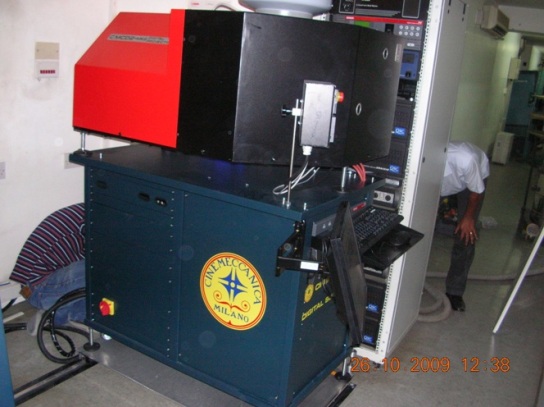
But those of us who've actually worked in theaters know that your experience isn't representative. Diodes fail, shutters sometimes break, etc. Although the most common cancellation I recall were the diodes.
 
Posted by Mike Blakesley (Member # 26) on 03-15-2010, 10:33 PM:
 
In my 30+ years here, we've had way more cancellations caused by film not showing up than by the projector breaking. Probably less than five projector-caused cancellations.
 
Posted by Monte L Fullmer (Member # 2797) on 03-16-2010, 01:24 AM:
 
Saw a booth in a plex that has the CHR CP2000 unit with the Dolby Digital Server running "Alice..." in Dolby Digital 3D (which I liked better than "Real Dumb" 3D - no dumb ghostbusting involved) and right next to it on a pallet jack, is a SLC-CineX 35 unit with platter close by.

So if the digital poops out, or can't get a digital print, they wheel the CP2000 back and push in the film unit that remains on the pallet jack for 35mm showing.

Pretty slick concept ...

-Monte
 
Posted by Joe Elliott (Member # 4006) on 03-16-2010, 02:03 AM:
 
Monte, we were just tossing around a similar idea at our theater. I was basing it on a concept that they used at the Heart Drive-in in KC. They flooded a lot, so all of their equipment were on wheels, including the projection equipment. To align the projector properly, they had drilled holes in the floor, and would drop rods from the projector base into the holes. I never got to see it, but I heard stories. I managed the I-70 down the road, long after the Heart was no longer open for movies, but still ran a swap and shop. I remember two times when the water was over the roof of the concession stand! It was a bad location, but they did the best they could with it.

Heart Drive-in info
 
Posted by Steve Guttag (Member # 268) on 03-16-2010, 08:09 AM:
 
While it is true there have been cancellations in film cinemas due to the odd failure of something...it is a VERY rare bird to cancel a day or evenings worth of shows. Most every thing in a film based system can be brought back on line within a show's time or less.

While this is true of DCinema as well...if you had the parts...the parts are SO expensive (and there are so many of them), few if anyone keeps spares either in the theatre or at the service agency.

Conversely, the common diode failure is quickly dealt with because the part is cheap enough that often the theatre itself has the spare on site. Normally, the most expensive part, the intermittent is on hand at the service agency as a loaner or repair/exchange. This is a great advantage of the film based systems mainly due to the fact that the projectors have not changed that much over the years. If you keep a Simplex, Century intermittent on the shelf, you've covered about 95% of your problems (in the States...in Europe, I would presume Cinemecanicca and Kinoton would be the movements to keep).

For soundheads, we keep an XL and SH-1000 gearbox and also an RCA (9030 and the like).

This isn't too much $$$$ to put on the shelf.

Now look at DCinema...what would it cost to keep a light engine handy? Or how about those TI boards? Got a server? Do you have the spares for that? The fact that this is still emerging technology means that if you DID stock them, your stock would be obsolete pretty fast. This is why when a DCinema theatre goes down, it often is 24-hours to restore it...one is waiting for the part to arrive, not that the repair was so god-awful-long. In fact, DCI requires that all repairs to be short, time wise (I forget the time but it is something like 2-hours or less). The Dolby DSS200 has got to be the easiest server to work on (if you have the part)...even the fans are plug in. I'd say the longest operation on it would be 30-minutes or less...depending on how much you fumbled with the cables/connectors changing the Cat 862...the rest of it is on the order of 5-minute repairs.

Steve
 
Posted by Sean McKinnon (Member # 612) on 03-16-2010, 01:12 PM:
 
I have heard of installations where they have the D-Cinema and 35mm systems on tracks and can slide one unit out and the other in and they lock into place to maintain good alignment.
 
Posted by Demetris Thoupis (Member # 833) on 03-16-2010, 03:21 PM:
 
You mean like these??? [Big Grin]

 -

 -

 -

[Big Grin] [Big Grin] [Big Grin]
 
Posted by Tony Bandiera Jr (Member # 2365) on 03-16-2010, 03:21 PM:
 
Sean, obviously signs of someone who was actually thinking for a change. [thumbsup]

Demetris, yep just like those. Very slick and shows forward thinking. Your doing? [thumbsup]

Steve hit it spot on...film systems can be brought back online quickly with a minimum investment in spares. D-Crapema with all the different (and horrendously expensive) failure modes makes a quick repair almost impossible.

The more digital screens that come online will only reinforce the folly of the "cost savings" that everyone was raving about. [Roll Eyes]
 
Posted by Demetris Thoupis (Member # 833) on 03-16-2010, 03:24 PM:
 
Yes Tony. My thinking. I do thing straight some times [Big Grin]
 
Posted by Tony Bandiera Jr (Member # 2365) on 03-16-2010, 03:27 PM:
 
I salute you sir. [beer]

Nice clean looking booth too.

(Anyone here who knows me well knows how big this is, I almost never say nice things about anybody.) [Big Grin]
 
Posted by Tony Ratcliff (Member # 1196) on 03-16-2010, 04:12 PM:
 
I echo what Steve says.

A 35mm projector is still just a bunch of mechanical and electrical parts working together.
If one part breaks, you can almost always jiffy-rig your way around it to get the show on the screen ( who hasn't had to spin a platter by hand to make it through a show! ).
And for the parts that you can't jiffy-rig, you can keep spares on hand.

I keep an entire spare projector head sitting in the booth, ready to change out if something breaks.
I don't think I'll be able to afford to keep and extra server on hand when digital finally gets down to me.
 
Posted by Ramon Lamarca Marques (Member # 3621) on 03-16-2010, 05:46 PM:
 
quote: Tony Bandiera Jr
As for your question, that will depend on the time and quality taken in the transfer process. I have seen great 2k to film and crappy 2k to film, and crappy film-to-digital and digital-to digital transfers.

All other things being equal, my guess is the 4k to film should look better.

This is very interesting, it could mean that an older technology -35mm- could look better than a newer technology -2K digital. Will 35mm prints from a 4K digital intermediate have more resolution than lie-max? If they look better than digital 2K, will film only cinemas promote that? So far, it has been proven that it was a lie that 3-D could only be done with digital, as many of us knew, it will also be proven that 3-D is not unique to theatres with the arrival very soon of 3-D home cinema, what when 35mm prints have got more resolution than 2K digital files, what are the digital advocates going to say to all those people who have invested in 2k digital projectors?
 
Posted by Tony Bandiera Jr (Member # 2365) on 03-17-2010, 02:35 PM:
 
quote: Ramon Lamarca Marques
....what are the digital advocates going to say to all those people who have invested in 2k digital projectors?
The same thing they say now, which is tough shit, you need to upgrade your projectors and we're not gonna pay for it. [Razz]

Any idea why I hate D-Crapema so much now?
 
Posted by Todd McCracken (Member # 4718) on 03-17-2010, 02:46 PM:
 
Well to me its all about seeing a pristine show after Ive paid my 11$ Around LA there aren't too many digital screens yet and I'm constantly disappointed with the quality of the prints I see at the local mega chain theaters.
I could go downtown and see 35mm done right, but I really dont want to travel that far to see a film (Unless its at a movie palace, Ill travel quite far for that)
Soon the AMC and Regal's here will be 100% digital and I cant wait. (hopefully Pacific will follow suit)

Bottom line is I don't like paying 11$ to see a trashed print only one week after release, and here that seems to be the norm.
 
Posted by Tony Bandiera Jr (Member # 2365) on 03-18-2010, 01:35 PM:
 
Well Todd, we'll see how you feel after you experience some of the infamous D-Cinema crashes and have to deal with the hassles of refunds and then having to go somewhere else to try to see the movie. [Big Grin]

If you're so concerned about perfect presentation, save your money and get the bluray or DVD when it comes out. Nowadays, it is cheaper to do that than go to a theatre... by the time you factor in ticket price, parking, concessions, etc. I just cannot justify traveling out, paying for all of the above, just to go watch a big TV set with a bunch of other people yakking, munching popcorn and nachos, and talking on their cell phones.

I agree that most of L.A.'s theatres have crappy film presentations, even ones who should know better. (The two chains you named are notorious for hiring button pushers who have no business anywhere near a projector in any event.) But I have rarely seen a truly trashed print, and if so it would still be more tolerable than the image artifacts and other issues with D-Cinema.

I am old school...and I have never been upset by a bit of dirt or minor scratches on film..it is to me part of what makes film special, it is organic and not so sterile and perfect.

Of course, I don't want the films I'm projecting to be anything but pristine, but my current engagements at the University tend to almost make a perfect print a no way in hell happening.

A flawless film print is a treat for sure though, I have had the pleasure of running some archival prints at UCI and they are magical.
 
Posted by Martin McCaffery (Member # 37) on 03-18-2010, 03:34 PM:
 
I'm working on some fundraising statements. All the other movie theatres in town have gone digital. Is it too obnoxious to say every theatre in town downgraded to digital?

At the very least, it may get donors attention [Wink]
 
Posted by Manny Montes (Member # 5639) on 03-18-2010, 07:57 PM:
 
my opinion on the matter may be a little newer as I've only been a projectionist for a short time relative to others here but, our art-form is great, creating "film done right" is an art form and it is something that takes time and skill. However my JOB and the industry is to make patrons happy, and digital has the ability to do that, I saw an Amazing sony 4k projector, on a nice screen and let me tell you, it has arrived. No annoying screen door image, it looks perfect every time.
My job is to project movies as best I can to make the customer happy, If I can ensure that the print will look as good 6 weeks down the line as it does during the first showing, I'm all for it.

Digital has a couple of issues to work out, but I feel like there are a lot of benefits to the customer that digital provides. I will say though that in about a year working with a digital projector i've seen no artifacts, no crashes, no anything but a perfect presentation. Maybe I'm lucky, but the worst that's ever happened was a 10 minute restart, which was fine as I could restart the movie from where it stopped.

I feel like a lot of people are afraid of change, especially tech people who dedicated their lives to film.
 
Posted by Tony Bandiera Jr (Member # 2365) on 03-19-2010, 12:21 AM:
 
quote: Manny Montes
.... Maybe I'm lucky, but the worst that's ever happened was a 10 minute restart, which was fine as I could restart the movie from where it stopped.
And that restart is ok in your book as a trade off? A film break would take an experienced projectionist no more than 2 minutes to fix and yes if you know what you're doing you can even restart before the break in that timeframe.

You have been very lucky so far..but your big D-Crapema crash is coming and you'll be wishing you had 35mm when it happens.

quote: Manny Montes
My job is to project movies as best I can to make the customer happy, If I can ensure that the print will look as good 6 weeks down the line as it does during the first showing, I'm all for it.
6 weeks? Try 6 months, as Brad will tell you it is possible to run 35mm for longer than a standard run with NO damage. Paying attention, keeping your projector clean and maintained and of course using Film-Guard and you can get longer than 6 weeks out of a print.

In my regular cinema days when I worked a multi, I had run some prints for over four months with minimal visible scratches/dirt (this was before Film-Guard) I'm wiling to bet there would have been NO visible scratches/dirt if I had F-G back then.

quote:
...and the industry is to make patrons happy,
The industry doesn't give a rat's ass about making anyone happy, least of all the patrons. They're out to make a buck and don't care what damage they cause in their chase for the mighty dollar. They sure as hell don't care about the exhibitors...

quote: Manny Montes
I feel like a lot of people are afraid of change, especially tech people who dedicated their lives to film.
I welcome change when it has tangible benefits without excessive cost. So far, D-Crapema costs 4-6 times what a 35mm setup costs, uses more electricity in many cases, has unproven reliability, high maintenance costs, built-in forced upgrade, and benefits no one except the studios. Film has served well for many years and can continue to do so if only the money wasted on D-Crapema was spent on training and hiring COMPETENT projectionists!!
 
Posted by Manny Montes (Member # 5639) on 03-19-2010, 12:51 AM:
 
I agree with you that if we had competent projectionists we'd be fine, but the industry and most companies are headed toward hiring no brained button pushers who have no purpose in booth (my company is one of those sadly). I haven't been able to see a movie that is older than 3 weeks without it having a scratch or being dirty (except if I see it at my theater).
The exhibitors are trending to hire less and less skilled people and while I rather have a great 35mm experience, it simply isn't happening at most locations, the easy (but expensive) remedy is digital, and yes while digital is still being worked out it is expensive, but it will drop. I cannot see digital just disappearing.

Also you make a good point about the 35mm equipment, I've been to theaters and I see perfectly good equipment side idle next to the new digital projector, its wasteful. I would love to have a 35mm back up just in case a digital goes down.

As many people have said here, I love the fact that any problem with a 35mm projector can be fixed easily, or at least rigged temporarily to work. The feeling you get when you can fix a problem without having to stop a show. I love it, and I will miss it. But mostly, I feel like the digital transition will be a good thing. Though i'm iffy about 100% digital houses right now, its too much of an investment, it needs to be slowly phased in.
 
Posted by Demetris Thoupis (Member # 833) on 03-19-2010, 01:25 AM:
 
With D-Cinema you need to take certain precautions at installation which most people do not. Balanced phases, clean power supply even a UPS can help! See the Christie how they found out that they do NEED a UPS on the electronics? This is not mainly fault of the equipment but fault of the electrical company. Power fluctuations are the main thing which leads to downshows on D-Cinema. Unfortunately if a card blows you need a new card. I would suggest having a spare hard drive in case the raid fails (although it will startup) but nothing more. I for once in the 8 months of digital installation thankfully have not encountered any lost show on any of the screens I did installation. Tony I take your approach and I embrace it as well although not that much while still the point remains. Hey folks. FILM RULES!
Demetris
 
Posted by Brian Guckian (Member # 1678) on 03-19-2010, 08:43 AM:
 
quote: Martin McCaffery
I'm working on some fundraising statements. All the other movie theatres in town have gone digital. Is it too obnoxious to say every theatre in town downgraded to digital?

No - it is merely telling the truth [Frown]
 
Posted by Geena Phillips (Member # 3726) on 04-06-2010, 03:45 PM:
 
Tony, why do you even come to this section of the forum? I mean, I don't go to vinyl-enthusiast forums and knock the 180-gram virgin-pressing records out their hands. Honestly.
 
Posted by Monte L Fullmer (Member # 2797) on 04-06-2010, 05:54 PM:
 
quote:
so if only the money wasted on D-Crapema was spent on training and hiring COMPETENT projectionists!!
.and this is the battle that has been going on for over 30 plus years when cinemas went either manager/operator or floor staff operated when the realization of the elimination of higher paid organized labor and evolve into a teamwork based operation and in doing so, you can pay less - but the big tradeoff is the output of quality and DCI is the "escape route" to regain the quality at any cost.

Best leave Tony B. alone for he's entitled to his opinion. Some of us on here are simple "purists" in the trade.

Just that he really cares .....

... and our "slip is showing" at certain times.

-Monte
 
Posted by Tony Bandiera Jr (Member # 2365) on 04-06-2010, 10:35 PM:
 
quote: Geena Phillips
Tony, why do you even come to this section of the forum? I mean, I don't go to vinyl-enthusiast forums and knock the 180-gram virgin-pressing records out their hands. Honestly.


Why? Because I can. [evil]

Seriously, as Monte said (thanks Monte, BTW) I am a purist of the trade and am absolutely disgusted by the "dumbing down" and quality degradation that I have seen in this industry in the last several years. I have been in the biz since 1982 and am glad I was at least able to enjoy the (very) tail end of cinema's good times.

You only have to look at the various threads on this site to read about all of the HUGE screw-ups which are common with [dlp] and unlike film breaks cannot be readily corrected by booth personnel. They can't even decide on a standard image for [dlp] for cryin out loud. Film has standard formats that have served well for many years, the problem is that there is NO talent for storytelling in H'wood anymore.

And I love vinyl LPs btw and have kept my collection despite many offers from people who want to buy it. [Big Grin]
 
Posted by Monte L Fullmer (Member # 2797) on 04-07-2010, 01:40 AM:
 
From one "purist" to another:

N/P, Tony - I know exactly where you're coming from and I've been in this business since 1969, thus I began to see the 'dumbing down' even in the early 70's ... so fire away..nobody is gonna talk smack about you..! Good Luck !

(..and I have over 4k vinyls with some 180 and 200grm pressings as well in this collection - and I need to unload all of this one of these days.....lol)

-Monte
 
Posted by Mark Gulbrandsen (Member # 72) on 04-07-2010, 08:01 AM:
 
Hey,

I'll make either one of yous guys a super deal on all my direct to disk recordings... they're all that I saved out of my vinyl collection!

As much as I like film I plan on continuing to work in this industry at least until all my hair turns gray! So that also means working with digital... Now that the new Generation 2 projectors are here I have no problem selling these to customers so I am in full swing with Digital again. I had an interesting meeting with a major industry executive yesterday who predicted that film will be out of general use in this country in 5 years... Longer for South America and way longer for Canada because Gord is so slow at installing the new gear [Smile]

Mark
 
Posted by Steve Guttag (Member # 268) on 04-07-2010, 09:09 AM:
 
quote: Tony Bandiera Jr
They can't even decide on a standard image for for cryin out loud. Film has standard formats that have served well for many years...
What are you babbling about? DCinema does indeed have standard image sizes and without having to allow for jump and weave.

Film has undergone about a bazillion image sizes...Scope has undergone a size change in the last decade or so too to settle in at 2.39:1.

As for series 2 causing one to cause one to be more pro DCinema....I would advise waiting at least a year before jumping in on them. They are definitely still getting the bugs out of them. All of the software incompatibilities are being worked out. This isn't a pick on DCinema but new versions in general...I prefer to be on that 2nd or 3rd wave and let the "others" be the beta testers.

My first Gen-2 system is now awaiting software updates for both the projector and the server! Ever look at the software update schedule from release to discontinuation...all of the updates are early on (or at least the frequency of them). On the Gen-1 TI software, we got up to 10 or ll on the 1.3K projectors. They only made it to 14 on the 2K versions with one version's primary purpose to get rid of a 3D license issue. And now we are back to square one again.

I also don't believe that film will be out in 5-years either and I'm sure that the Tech-3D has slowed down things a bit (but not entirely) as I await delivery on several Digital 3D systems for summer.

Steve
 
Posted by Chris Slycord (Member # 4239) on 04-07-2010, 12:29 PM:
 
quote: Steve Guttag
Film has undergone about a bazillion image sizes...Scope has undergone a size change in the last decade or so too to settle in at 2.39:1.
??

They settled at 2.39:1 in the early 70s. And AFAIK, the last time scope changed at all was 1993 when they made the width of the aperture the same as with flat. And 1993 is closer to 20 years ago than the past decade.
 
Posted by Steve Guttag (Member # 268) on 04-07-2010, 04:57 PM:
 
You may be right then...closer to 20 years on Scope. But before that it was .690x.839, .700x.839..yadda, yadda, yadda....715x.838 (and I'm not even getting into the mag versions of the format...just the "standard" ones that run on optical sound machines).

It has hardly been a set-and-forget situation with film.

Steve
 
Posted by Tim OBrien (Member # 5605) on 04-07-2010, 10:56 PM:
 
I've read this impossibly long thread with great interest. The technical aspects, the business aspects and the ramifications that D-cinema represents to distributors, exhibitors and the movie-going public can be debated ad infinitum - and by those much more learned than I.

But one need only watch the climatic ending of "Cinema Paradiso" to realize what will have been forever lost when cinema is reduced to mere pixels on a screen.
 
Posted by Tony Bandiera Jr (Member # 2365) on 04-08-2010, 03:25 PM:
 
quote: Steve Guttag
What are you babbling about? DCinema does indeed have standard image sizes and without having to allow for jump and weave.
Really? How about some of the other threads I've seen on this site, just from memory D-Crapema has:

That makes for 10 (ok 8 since Dolby and Real-D are processes rather than formats per se) incompatible formats and that's just from memory. IIRC there are still variations of the pixels used in each format too. And what the fuck is this "ghostbusted" and "non-ghostbusted" nonsense?
Call me whatever you want , a technical luddite if you wish, but D-Cinema is so FULL of [bs] it's no wonder it's taking forever for it to do it's planned takeover of film.

And let's not forget that movies have been released in multiple formats in D-Crapema too....
Very rare for a single film in 35mm (or 70mm for that matter) to have prints in flat and scope and 3d flat and 3d scope, etc.
Sheesh. [Roll Eyes]
 
Posted by Gordon McLeod (Member # 33) on 04-08-2010, 03:33 PM:
 
In the early days of cinemascope they shot flat and scope versions and 70mm was sometimes shot with a 35 and a 65mm camera side by side in the beginning
 
Posted by Tony Bandiera Jr (Member # 2365) on 04-08-2010, 03:37 PM:
 
Very true Gordon but that seemed to be the exception rather than the rule and it stopped happening quickly IIRC..

Either way the exhibition end wasn't being forced to take it up the bum like they are now...
 
Posted by Pietro Clarici (Member # 4937) on 04-08-2010, 04:26 PM:
 
quote:
(...) just from memory D-Crapema has: (...)
Actually, *as of now*, there's only 4: Flat and Scope, 2D and 3D.

The formats you listed (and some others, like reduced-res 3D Scope and Flat for EFIB projectors) were all used in the past, but not anymore.

Ghostbusting is a proprietary process used to reduce crosstalk (ghosting) afflicting Real D systems: every D-Cinema server does ghostbusting internally now, so pre-ghostbusted material won't be released anymore, as per DCI specs. Dolby 3D processing (color balancing between L and R channels) has *always* been done by the server.

The real problem with D-Cinema today is that *very few* people have actual experience with it. It takes time.
 
Posted by Chris Slycord (Member # 4239) on 04-08-2010, 04:35 PM:
 
quote:
Really? How about some of the other threads I've seen on this site, just from memory D-Crapema has:
Except none of those you listed are examples of them not deciding on a standard size. 3D flat is the same image size as 3D flat ghost-busted and still the same size between Dolby and Real-D.
 
Posted by Steve Guttag (Member # 268) on 04-08-2010, 07:55 PM:
 
The only variants on size were the older (EFIB board based) 1920 x1038 Flat and 1920 x 804 Scope for 3D only...again, all current projectors need not deal with that and the will become but a thing of the past to accommodate early systems. That said, 1920 based images are still current for HDTV so they are not too strange.

But as others have said...DCinema, currently comes down to 4 formats 2D/3D, Scope/Flat...not terribly many and from the projector standpoint there are really only two (Flat/Scope)...the 2D/3D has more to do with processing the images (left eye/right eye) than image size or pixel count.

Steve
 
Posted by Tony Bandiera Jr (Member # 2365) on 04-09-2010, 01:27 PM:
 
The installation and repair costs combined with the constant issues over late KDM's plus the constant stream of technical glitches and freezeups still means that D-Cinema = [sex] [bs] [Big Grin]
 
Posted by Edward Havens (Member # 4715) on 04-09-2010, 03:58 PM:
 
I've been working with D-Cinema now for four years, in three different locations for two different companies, each location using a different projector and a different server, and I have not encountered a single problem. No late KDMs, no technical glitches, no freezeups, no repairs needed, no nothing but a clean image and sound every single time.

Maybe the issues Tony references are either caused by operator error or deliberate sabotage. I can see how someone who go about making a new process look bad if they felt it threatened their job.
 
Posted by Jonathan Bodge (Member # 4072) on 04-09-2010, 09:11 PM:
 
I was having lunch with a theatre owner a few days ago (who wants to go D) but she said "I'm afraid, ultimately all this easy digital acquisition and projection might mean bad pictures." In other words, rather than taking the time to think about production (Wizard of Oz or any Hitchcock) they will just produce on the fly, which is why I personally don't go to movies anymore.
 
Posted by Mark Gulbrandsen (Member # 72) on 04-09-2010, 09:20 PM:
 
quote:
I had to admit that a church was wrong and believe me at my age it left me floating in a vast ocean with out a rudder or a sail. Now I'm at square one again trying to shift thru everything that's out there on religion.
I'm with Edward... More or less zero problems here too. One bad light engine and the usual hard drive issues everyone has had with Dolby... seems to have settled down now with the firmware upgrade. Other then these there have been zero problems. Lots more comming!

Mark
 
Posted by Joe Redifer (Member # 3) on 04-09-2010, 10:49 PM:
 
Wha??? Where did you grab THAT quote from and what does it have to do with anything?
 
Posted by Mike Blakesley (Member # 26) on 04-10-2010, 08:41 PM:
 
I'll bet he was on some other board and quoted that text, and then thought he had selected some Film-Tech text but the other text was still in his clipboard. That's happened to me a couple of times when I've cut-n-pasted in a hurry.
 
Posted by Ian Parfrey (Member # 5122) on 04-11-2010, 02:34 AM:
 
Who knows what evil lurks in the heart of one's computer? Only "The Clipboard" knows!
 
Posted by Mark Gulbrandsen (Member # 72) on 04-11-2010, 11:20 AM:
 
I was just making sure Joe was awake at the wheel!
 
Posted by Brad Miller (Member # 2) on 04-11-2010, 11:23 AM:
 
quote:
Who knows what evil lurks in the heart of one's computer? Only "The Clipboard" knows!
I wonder how many of the kiddos here will get that reference. [Razz]
 
Posted by Jonathan Smith (Member # 5609) on 04-17-2010, 02:34 PM:
 
For fun, I did the math the other day, and the only format that has *improved* due to 2K DIs is the S35 blowup to scope for movies that can't afford to shoot with anamorphic lenses and 4-perf. pulldowns.

Flat, native scope films all look worse because of 2K. In some cases, like with scope, quality has been cut in half since the contact printing days.

The only format where 2K DLPs, statistically, look better than 35mm films from 2K DIs (which are then copied three times) is with a FLAT film.

Scope movies, because of the anamorphic stretch, are actually HIGHER resolution output on film, even after copying them three times.

So that's why I hate D-cinema. It's improved low budget S35 blowup (Gladiator is the only one I ever saw that was any good)quality, and made the previously crystal-clear scope and very nice flat films look far far worse.

And because of the idiotic method of just cropping the chip on most 2K projectors, it makes scope movies look still WORSE on the big screen to watch them in DLP.

3D has been beaten to death so I won't even bother to talk about foot-lamberts and light loss. . .


Powered by Infopop Corporation
UBB.classicTM 6.3.1.2