This is topic GDC Masking Automation Hookup Question in forum Digital Cinema Forum at Film-Tech Forum ARCHIVE.


To visit this topic, use this URL:
https://ft-forum.com/ft/cgi-bin/ubb/ultimatebb.cgi?ubb=get_topic;f=16;t=000680

Posted by Jeremy Weigel (Member # 4208) on 11-03-2010, 04:04 PM:
 
We have H&H Specialty masking motor/controlers and have been experiencing occasional glitches and I want to be sure that "remote" hook ups are connected correctly to GDC automation.

There are 2 hots and a common coming in to the booth from the controller behind the screen. Depending on which setting the masking is in one "hot" will read 125v AC and the other "hot" will read 93v AC (these reading reverse when masking is changed). My question is: Is the GDC suppose to handle 125v?
 
Posted by Gordon McLeod (Member # 33) on 11-03-2010, 05:24 PM:
 
I would never hook mains voltage to any of the GPO of a server as most are optical isolators
 
Posted by Jeremy Weigel (Member # 4208) on 11-03-2010, 05:50 PM:
 
Its been set up this way for over a year, but on at least 4 occasions the GDC has continually pulsed the masking between flat and scope and the only way to get it to stop is to reboot the server.

This has led to the contacts in the limit switches to became "welded" and the motor doesn't shut off and wrecks the rigging (mainly by pulling the bottom track out of the floor). So far it hasn't done anything to the screen.

So then the question now would be: How would you go about hooking up the masking controller to the GDC automation? Does it need to be hooked up to relay that is activated by the GDC? Just for background, the previous automation was a Strong SPA-5A.
 
Posted by Mark Gulbrandsen (Member # 72) on 11-03-2010, 10:50 PM:
 
Who ever installed this shold be shot! They cut stupid corners in a fairly dangerous way. They did a very incorrct install as far as the masking and GPIO are concerned. You are at risk of damaging your server. You should be pulsing external low voltage coil relays with the GPIO outputs and then use them to drive the masking.

Preferably an automation like the Eprad eCNA-10 along with the Auditorium interface card both of which are extremely inexpensive could be easily retrofitted. The GDC has software settings integrated into it for many external automations including the eCNA. Then the Eprad or what ever model takes it's cues over the ethernet directly from the GDC macro or cue list. The eCNA-10 then controls the auditorium interface board and so on... very clean and very cheap!!
 
Posted by Tony Bandiera Jr (Member # 2365) on 11-03-2010, 10:57 PM:
 
quote: Mark Gulbrandsen
Who ever installed this shold be shot! They cut stupid corners in a fairly dangerous way.
I agree with one minor change:

Who ever installed this should be shot! They cut stupid corners in a VERY dangerous way.

Absolutely inexcusable...for lack of two $5 relays they placed your server and people's lives at risk!! I would be very surprised if the GDC outputs aren't permanently damaged.

As Mark said it is a relatively easy fix and one you should do immediately, or at the very least disconnect the masking control lines from the GDC, and tape or wirenut them to keep someone from getting bit.
 
Posted by Jeremy Weigel (Member # 4208) on 11-04-2010, 12:13 AM:
 
Yeah, this is something that has been bugging me since we never had any issues with the masking until the conversion. I'll go ahead and remove the control lines and hook them up to momentary push buttons and just change the masking manually for now.

Mark, what voltage relay should I get? 24v or less?
 
Posted by Steve Guttag (Member # 268) on 11-04-2010, 07:00 AM:
 
There are several solutions out there to get a DCinema player to have stronger fingers than mere I/O ports. Even the eCNA-5 would be a good-bang-for-the-buck way (has most all of the same functions as the eCNA-10 but without the display or assignable buttons).

That said, FEW of these automations are designed to switch masking at 120V...they normally have a 48V limit on the masking/curtain relays (typically small DIP or even SIP relays). The eCNA has 2 high voltage relays though that could do your flat/scope functions.

Note...it is also possible to repurpose many film automations into digital ones. The show essentially remains the same for digital...you just need your digital player to "pulse" out a cue like the foil/optical tab did on film to advance your film automation through its show. Most film automations are only looking for a low current 12-24V DC or AC pulse (depending on automation, naturally).

Steve
 
Posted by Mike Babb (Member # 1379) on 11-04-2010, 11:30 AM:
 
Odyssey makes a card now that does this for a Doremi, and should easily be adapted from DVI to 37 pin
 
Posted by Mark Gulbrandsen (Member # 72) on 11-15-2010, 04:01 PM:
 
Jeremy,

I reccomend getting an eCNA-10 or eCNA-5 in that order and you will need the basic auditorium interface card. There are at least a dozen possible ways to set this automation up but the easiest and most common way is to let the server spit out the cues over ethernet to the eCNA to execute them. It becomes more or less a stand alone unit that you can forget exists.. until it breaks.

You will all of a sudden have flexibility beyond what you ever thought was possible with simple equipment. You can use and build many other cues as well as use cue macros to accomplish many things at once in your server. I don't believe at this point in time that any other server/automation offers the level of automation performance that the GDC strapped onto an eCNA-10 does, especially at this price level.

Mark
 
Posted by Steve Guttag (Member # 268) on 11-15-2010, 04:23 PM:
 
The eCNA-5/10 is indeed a pretty good value. If you have an existing wall mount eCNA-anything except an eCNA-200, then swapping the head to an eCNA-10 (it will work with the legacy boards...you just can change the function of the relays)...make it instantly a DCinema automation. If you have an eCNA-200, it is a DCinema automation already. Jay at EPRAD is exceptional to work with too.

I've seen automations go two ways...they are either the "fingers" to the show player or they are indeed automations where the show player merely issues a generic "cue" to step it through the show just as with film. Both ways are successful. An advantage to the step-through version is the show takes on a very simple look without having to remember to put all of the little individual functions in. Then again, since this is a GDC server we are talking about...you can create macros within it to handle much of what a proper automation can do.

Steve
 
Posted by Jeremy Weigel (Member # 4208) on 11-15-2010, 08:58 PM:
 
For now I have disconnected the masking leads from the server and put them on momentary push buttons. The only other items connected directly to the server besides the projector, audio, and RealD are the Smart/Kneisley 3K Dimmers. Should I disconnect these as well?

They also couldn't figure out how to connect the server to our Simplex fire alarm panel so that it stops the show and brings up the lights when someone activates a fire pull. Would this be able to be done via the eCNA? The 35's were set up with a 24v DC relay that latched and acted as a remote stop when the alarm went off.
 
Posted by Mark Gulbrandsen (Member # 72) on 11-15-2010, 10:12 PM:
 
quote: Steve Guttag
Jay at EPRAD is exceptional to work with too.


You can say that again! The thing I like is that the eCNA-10 can emulate the Dolby NA-10 which I always liked to use to replace older electromechanical automation units. In the case of the eCNA units it goes way beyond what the NA-10 could do at about 1/3 the price. Another interesting thing I ran into last week was using the fire shut down on the GDC Server. The eCNA can also do fire shut down but it is far easier to do it with the GDC. It is a permanent non erasable function in the firmware and accessable through the GPIO. Although the fire stop macro is a permanent feature you can still build up a macro inside of it. The GDC will stop playing back by merely connecting the two GPIO terminals together and this makes fire interface super easy. So you can add things like screen and side lights full up, cleaning lights on, projector lamp off, exhaust blower off if required, call 911 (if you have an automated alarm system), flush toilets, rinse, spin, dry, etc. It's a really nifty feature!!

Oh, and building up cues is not an issue. Leave the start cues in a 5 second black at the beginning, the lights full down and doors close cues in the DLP snipe or something similar for 3-D, and put the end cue sequence in another 5 second black at the very end of the presentation. This way one only has to re do the credit cue when a filum or previews are changed or one might want to do a lights up full cue earlier on.

Mark
 
Posted by Jeremy Weigel (Member # 4208) on 11-16-2010, 01:09 AM:
 
quote: Mark Gulbrandsen
The GDC will stop playing back by merely connecting the two GPIO terminals together and this makes fire interface super easy.
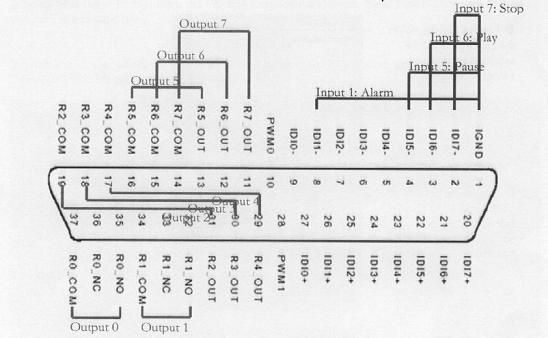
Here's a copy of the GPIO pinout that was sent to me. If I'm understanding it correctly, all I need to do is connect pins 1 & 8 to the NO terminals on the relay that was used as a remote stop on the 35mm?

 -

If all I need the GPIO to do is to pulse dimmers, audio from NS to ext. 6 channel and back, and masking flat/scope I don't see any real need for an eCNA IF I can do this with a couple of relays I already have laying dormant. I just need to know the voltage output of the GPIO.
 
Posted by Mark Gulbrandsen (Member # 72) on 11-16-2010, 08:28 AM:
 
The GPIO doesn't really provide the voltage... it provides contact closure and usually in the form of an opto isolator of some sort. The fire shut down pin is merely going to ground, not a high or V+.

When I attended the training at GDC we spent about a minute on the GPIO because almost no one uses it. I reccomend that you call their tech support to find out what sutible relay they reccomend that you use. Some sort of 5 volt DIP type relay is probably something that will work fine. I just don't know the voltage/current limitations of the GPIO itself.

Mark
 
Posted by Steve Guttag (Member # 268) on 11-16-2010, 09:57 AM:
 
I believe Odyssey Products has come out with an "automation" board for the Doremi and I suspect it won't be long before the same is true for the other "players." Basically, you give relays to the optos to deal with controlling things with voltage on them. It would be the cheapest form of automation for basic cinemas where you may only need lights or masking controlled by the "automation."

As to the eCNAs...I would say the eCNA-5 is the closest to a NA10 replacement...it has at least the same relays but with MUCH more control over them. Wither either Ethernet or RS232 control, it can give most any player whatever outside control it needs. The only thing it really lacks over the eCNA-10 is a useful display for the end user...which if you just need it to be "fingers" is nothing. And at less than $1000.00, regardless of how tricked out you get it...it is priced pretty attractive.

Steve
 
Posted by Steve Guttag (Member # 268) on 11-16-2010, 08:36 PM:
 
I almost forgot...
"Jay at EPRAD is exceptional to work with too."
 
Posted by System Notices (Member # 2357) on 01-29-2012, 04:43 PM:
 

It has been 438 days since the last post.

 
Posted by Simon Taylor (Member # 6029) on 01-29-2012, 04:43 PM:
 
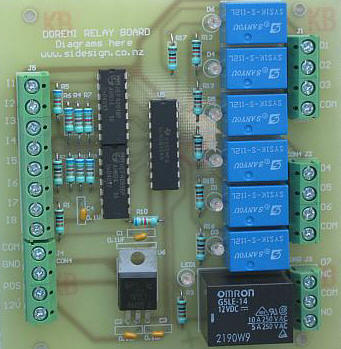
GPIO outputs are all open collector optocouplers. I too have had issues with interfacing severs to masking, lights etc when upgrading 35mm plants to DCI. I designed a small low cost relay interface board that has 6 low current pulsed relays and one latching 240v relay for controlling the masking. Installers in this part of the world are all using it. The design is free to download and can be made locally for less than $100. Or I can supply them.  -
 
Posted by Larry Zuverink (Member # 1483) on 01-29-2012, 08:47 PM:
 
Agreed Steve, Jay is one of the best guys in industry to work with. We had a very similar situation with our custom masking motors. We did it all with relays but if your not really familiar with this then automation is far better option and also gives you some added expatiation and versatility.


Powered by Infopop Corporation
UBB.classicTM 6.3.1.2