This is topic Mission Impossible 4 in wrong aspect ratio? And more... in forum Digital Cinema Forum at Film-Tech Forum ARCHIVE.
To visit this topic, use this URL:
https://ft-forum.com/ft/cgi-bin/ubb/ultimatebb.cgi?ubb=get_topic;f=16;t=001014
Posted by Matthew Prince (Member # 6739) on 02-01-2012, 12:56 PM:
Hello! Thanks for letting me on to the forum!
I wanted to ask this question but wasn’t sure which thread as I’m just a film goer.
I saw Mission Impossible: Ghost Protocol. It was at my local multiplex's "super screen" - the extra large screen than their standard ones.
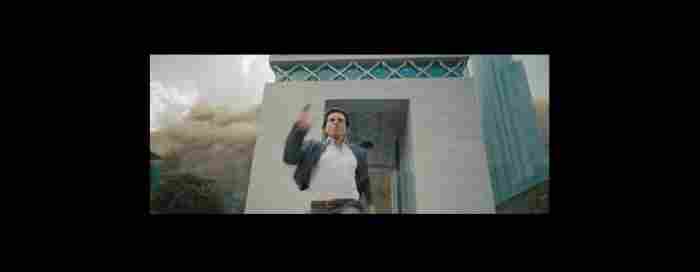
I was shocked to see after the trailers and adverts which are nearly always shown in Letterbox (1.85:1), the movie itself was showing WITHIN the Letterbox ratio, when it was clearly a Scope 2.35:1 picture!
The result was vertical bars each side of the image screen AND bars at the top & bottom to compress the picture to an approx 2.00:1 image. I estimated 60% of the screen was unused, I was astonished!
I complained to the manager, who said that since converting to Digital projectors, the movies arrive on hard drives with the picture and sound locked in place and they cannot manually adjust the picture to fill the screen! (B.S.??)
It was the same thing with Cowboys and Aliens last year, but the effect wasn't so drastic as it was on a smaller screen and the Scope 2.35:1 image took up the width of the screen leaving black bars top and bottom.
Cinema is expensive enough as it is, I don't go to see a movie that takes up 40-50% of the screen. When I think of the endless ads going on about piracy and the big screen experience, this is NOT it. Heck, I could watch the same movie on my plasma TV and would only lose 20% of the image.
Can you explain why this is happening?
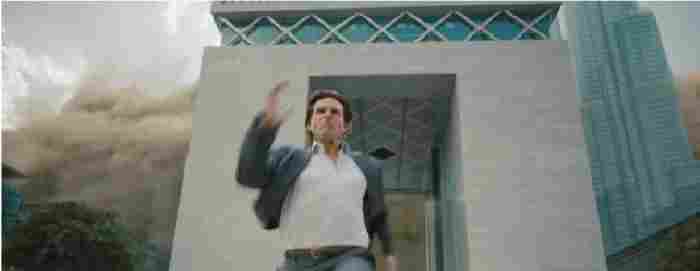
I have attached two pictures:
The 1st one is how I had to watch the film (even after I complained):
The 2nd is how I think it should have been:
If it happens again, what should I tell the cinema manager/technician to do?
Thanks, Matthew Prince
Posted by Elise Brandt (Member # 5552) on 02-01-2012, 01:13 PM:
Apparently get a new job.
What they told you is indeed BS, no movie and no hard drive can arrive and somehow override the projector settings ![[Big Grin]](biggrin.gif) they screwed up and showed the content on "flat" when it should havebeen "scope".
they screwed up and showed the content on "flat" when it should havebeen "scope".
And not the first time? Not the last either, I bet. Please direct the projectionists to this forum...
Posted by Justin Hamaker (Member # 2165) on 02-01-2012, 02:07 PM:
I have seen something similar on an NEC projector where the lens file didn't execute properly. In the case where I've seen this, it's an intermittent problem and may be related to the InVision lenses (intermittent meaning it might happed once every couple of weeks).
What we normally do to resolve the problem is open the DCC and manually execute the lens file. Some times it helps to "exercise" the lens by running out the zoom and focus to both extremes before executing the lens file.
If the picture always looks like this on the particular screen, then it's likely the screen files were not set up properly.
Posted by Matthew Prince (Member # 6739) on 02-01-2012, 03:33 PM:
@Elise Brandt - thank you! I asked the manager about this when I went to see "The Grey" and he said he and ALL of the usher/assistants fill the projectionist's role since they went all Digital. All the staff have basic training and he assured me next time if there is a problem and he is managing that day, he will instantly fix it.
Here's hoping... ![[Roll Eyes]](rolleyes.gif)
@Justin Hamaker - I appreciate what you say, but I think the technical info would be lost on the staff. I think only the original installers and repair staff would understand what you're saying.
The fact is: the cinema doesn't employ an experienced projectionist anymore...
Posted by Philip Jones (Member # 6677) on 02-01-2012, 04:03 PM:
sounds like the lens hadn't zoomed up to scope but the masking had opened (assuming there was masking) which would cause the "black bars" top and bottom and left and right.
and the cowboys and aliens thing the same thing but the masking hadn't opened so you'd only get the bars top and bottom.
whoever was supposed to be building up the shows probably didn't put the cue in for the format change.
it can happen easily with film as well though (with automation and no checking) so i wouldn't just blame digital.
on two occasions at my local odeon films came on in the wrong format - once it went to scope when it was a flat film and the other time it didn't go to scope when it should have.. both times were on a monday so i assume they'd been shown in the wrong formats for the whole weekend and no-one had bothered to say anything
Posted by Bruce Hansen (Member # 281) on 02-01-2012, 05:19 PM:
Just more crap that will push people away from theaters, but their getting away cheep (and putting themselves out of business). Greed is a negitive emotion. when you are using your emotions, you are not using your intelect.
Posted by Rick Raskin (Member # 1561) on 02-01-2012, 05:46 PM:
I can count on one hand the number of times I saw a projectionist change over to the wrong lens and aperture plate. And I can count in seconds the amount of time it took to fix it.
Posted by Manny Knowles (Member # 1171) on 02-01-2012, 05:48 PM:
Not sure how accurate the images are -- but the "smaller" image isn't cropped, it's just smaller -- if that's really what you saw then they weren't zoomed in to fill the screen.
The movie on the drive *can* be affected by projector settings. So, either: the manager was ignorant (on this issue) or else he lied to you. Either way, he communicated misinformation. That's a problem. ![[Frown]](frown.gif)
Posted by Mike Blakesley (Member # 26) on 02-01-2012, 07:36 PM:
This is yet another one of those issues that would literally take 10 seconds to fix, if only the person on duty knew what button to push. It's a scope movie being projected on the "flat" setting.
(For those still running film, in digital there is no horizontal "stretching" of the image like there is with a scope film....scope vs flat is simply picture shape, and the size is controlled by zooming the lens.)
Posted by Edward Havens (Member # 4715) on 02-01-2012, 07:55 PM:
You should go back to the theatre and ask for the manager you spoke with before. When you talk to him, tell him you asked a dozen of your closest projectionist friends around the world about your experience, and every single one of us thinks that manager is a freakin' moron who makes all of us look bad with his bullshit excuses and lies.
And then give him Film Tech's URL, and tell him if he and his team want to learn about the importance of a quality presentation, he's welcome to join us.
Posted by Mike Blakesley (Member # 26) on 02-01-2012, 11:08 PM:
Don't blame the manager though. He was probably told that line of crap by HIS boss. He's probably been told not to touch the expensive new digital projectors or risk losing his job.
Thing is, though, digital projectors aren't even as complicated to run as a typical desktop computer is. A competent owner (or whatever) would type up a fairly simple troubleshooting sheet and have it hanging next to the machine, where the manager could refer to it.
Something like this would take care of it: "Picture too small for screen: Press the button marked SCOPE. The screen may go dark for a couple of seconds while the lens changes position. If the problem persists, call technical support."
Posted by Chris Slycord (Member # 4239) on 02-02-2012, 12:28 AM:
Mike,
The problem is we can't assume the manager in question was being sincere and really believed the information he was giving. There are, in fact, managers who make something up so they don't admit that they did something incorrect.
Posted by Brad Miller (Member # 2) on 02-02-2012, 12:36 AM:
The fact most of these "premium eXperience auditoriums" fail to meet DCI specifications by ignoring the most simple thing in the world...proper masking...tells me the manager may not have even understood the picture SHOULD have been larger.
All most of these X auditoriums are doing is throwing up a huge sheet that is wall to wall (trying to get the initial "oooooooooh wow" from people walking in), only to DISAPPOINT when the picture DOES NOT FILL THE SCREEN! It doesn't fill it in flat, and it doesn't fill it in scope. It is false advertising, but who is to say just HOW big it is SUPPOSED to be? I don't necessarily fault the manager.
Side effects of a lack of masking are perceived by the human eyes as a lower contrast, less sharp and lower color saturation image too...yet the bean counters are ignoring this and intentionally putting on a lower quality show, bullshitting the customers as if it is a higher quality auditorium, and many are doing it to simply get out of spending the money for proper masking.
I'm sure there are people out there who will disagree with me on this, but that is presentation done wrong in my book. Why even have the DCI spec if the studios won't enforce it? At least they should refuse to pay a VPF for movies played in those auditoriums.
Posted by Joe Redifer (Member # 3) on 02-02-2012, 02:24 AM:
quote: Matthew Prince
Hmmmmm...

Posted by Monte L Fullmer (Member # 2797) on 02-02-2012, 03:51 AM:
I agree with Chris's comment - for that "suit" manager isn't going to expose himself in any mean or form.
What I've seen is just horrible training procedures on "how to show digital right" ... and afraid that it's going to get worse as more screens convert.
Posted by Jonathan Goeldner (Member # 4854) on 02-02-2012, 10:54 AM:
quote: Brad Miller
The fact most of these "premium eXperience auditoriums" fail to meet DCI specifications by ignoring the most simple thing in the world...proper masking...tells me the manager may not have even understood the picture SHOULD have been larger.
All most of these X auditoriums are doing is throwing up a huge sheet that is wall to wall (trying to get the initial "oooooooooh wow" from people walking in), only to DISAPPOINT when the picture DOES NOT FILL THE SCREEN! It doesn't fill it in flat, and it doesn't fill it in scope. It is false advertising, but who is to say just HOW big it is SUPPOSED to be? I don't necessarily fault the manager.
Side effects of a lack of masking are perceived by the human eyes as a lower contrast, less sharp and lower color saturation image too...yet the bean counters are ignoring this and intentionally putting on a lower quality show, bullshitting the customers as if it is a higher quality auditorium, and many are doing it to simply get out of spending the money for proper masking.
I'm sure there are people out there who will disagree with me on this, but that is presentation done wrong in my book. Why even have the DCI spec if the studios won't enforce it? At least they should refuse to pay a VPF for movies played in those auditoriums.
HAH! and now I know why I feel jipped when a 2.35 film doesn't fill an entire 4:3 15/70 IMAX screen
Posted by Mike Blakesley (Member # 26) on 02-02-2012, 07:42 PM:
Maybe things will get worse until top management realizes that digital equipment is NOT always idiot-proof, does NOT necessarily run all by itself and is NOT maintenance-free. At this point the bean-counters are in La-La Land thinking they've saved $ in booth labor. When things start to go horribly wrong they might start rethinking that strategy.
Posted by Monte L Fullmer (Member # 2797) on 02-03-2012, 12:52 AM:
quote: Mike Blakesley
scope vs flat is simply picture shape, and the size is controlled by zooming the lens.)
Makes you wonder if it's time to do a rename of the old 'scope standard since no anamorphic attachments are used in the majority of the cinemas...
...even though, the file image can be squeezed to where the squeezed image will be scaled up to fill the chip completely to make it a true HD image and thus, anamorphic attachments has to be used for a true 'CinemaScope' presentation.
...but that's too complex of an operation for simple DCinema installs..
-Monte
Posted by Brad Miller (Member # 2) on 02-03-2012, 02:57 AM:
Anamorphic attachments are THE way to go with digital cinema, but nobody wants to pay the extra $10k+ for them.
Posted by Jonathan Goeldner (Member # 4854) on 02-03-2012, 09:59 AM:
^ would that solve the problem with curved screens where the image edges bow inwards - it's so apparent and distracting on the Uptown screen.
Posted by Victor Liorentas (Member # 5272) on 02-03-2012, 10:20 AM:
I don't it would fix it but may reduce it a little.
Posted by Jonathan Goeldner (Member # 4854) on 02-03-2012, 10:40 AM:
it also doesn't help when the image from the dual Christie setup displays a slight double image during the trailers but not for the actual feature ![[Confused]](confused.gif) why AMC has decided to go this route for the Uptown or even their ETX screen over at Tysons and not install a Solaria projector (or a Barco for that matter) is beyond me, the light output for the latter is exceptional.
why AMC has decided to go this route for the Uptown or even their ETX screen over at Tysons and not install a Solaria projector (or a Barco for that matter) is beyond me, the light output for the latter is exceptional.
Posted by Mike Blakesley (Member # 26) on 02-03-2012, 01:54 PM:
quote: Brad Miller
Anamorphic attachments are THE way to go with digital cinema
I'm curious as to why this is. Can you explain it Brad?
Posted by Joe Redifer (Member # 3) on 02-03-2012, 02:25 PM:
More vertical resolution. Kind of like an anamorphic DVD vs a letterbox DVD. Do they even make anamorphic digital cinema content?
Posted by Victor Liorentas (Member # 5272) on 02-03-2012, 02:51 PM:
It gets rescaled to fit the aspect ratio of the chip,it ends up a bit stretched vertically which the anamorphic lens widens back out.
So like a scope film you use all of the frame(pixels)and all of your lamp output.
Posted by Matthew Prince (Member # 6739) on 02-03-2012, 04:11 PM:
Thanks for your overwhelming help!
Posted by Steve Guttag (Member # 268) on 02-03-2012, 04:47 PM:
Mike, let me speak just this once for Brad as I am the Anamorphic poster child for DCinema. IF (and only if) you have side movable masking such that Scope is WIDER than flat (as opposed to less-tall for scope), then using an anamorphic will NET you 23% more light for scope than merely zooming the lens. This will greatly close the gap between the light requirement between the two formats and often can allow one to move to a smaller lamp size since Scope requires so much more than Flat when scope is (properly) larger than Flat.
-Steve
Posted by Monte L Fullmer (Member # 2797) on 02-03-2012, 04:55 PM:
But true, anytime you zoom up light, you lose the brightness.
Try that with your tabletop digital projectors and you'll see that when you zoom up how much the luminance falls off.
Height would be the 1080 but the width be (using 1.33:1 as the width) 1435 of an anamorphic image on the chip prior going through the attachment.
Posted by Steve Guttag (Member # 268) on 02-03-2012, 06:16 PM:
What are you babbling about Monte? If an anamorphic is used in DCinema, then the whole chip is used 2048x1080 (or 4096x2160)...the anamorphic is only 1.25x (or 1.26, depending on the label you believe...but 1.26 yields a 2.39:1 final ratio).
-Steve
Posted by Monte L Fullmer (Member # 2797) on 02-03-2012, 06:28 PM:
My babbles is the full frame size image for 35mm ..
"whoops, my bad.." didn't think through on the chip size.
I'll get it yet...l.
Posted by Peter Castle (Member # 1997) on 02-03-2012, 10:19 PM:
Unfortunately the vertical resolution is not 1080, as the original source material (the file) is only 848. The server (or the projector) has to scale the vertical dimension by 1.25 before the anamorphic stretches the horizontal physically.
Of course if the files were anamorphic - in readiness for expansion horizontally - then we'd get that full vertical resolution (not likely). So we'd end up with 848 vertical spread over 1080 DLP pixels electronically, and 2048 horizontal pixels stretched by 1.25.
I agree you gain on brightness but you might lose out on sharpness - although many on this forum seem to think that this sharpness is a bad thing.
Posted by Dave Macaulay (Member # 813) on 02-03-2012, 10:28 PM:
1) OK Brad, we get it: you hate screens without masking. At least you've changed from "it reduces contrast" to "perceived by the human eyes as a lower contrast" which claims that even after the actual contrast difference was measured (with no difference - proving your old theory wrong), we nevertheless perceive less contrast... what reputable studies did you base this allegation on?
2) I haven't worked on (or even seen) a D-cinema system with an anamorphic adapter, but I've seen the lenses in brochures. Are digital scope movies made available in 2048x1090 anamorphic DCPs? no
Posted by Brad Miller (Member # 2) on 02-03-2012, 10:37 PM:
Yes Dave, I DO hate screens without masking. It is simply improper and for those that play by the book, against DCI spec. It is "digital done wrong". ALL ambient lighting (including screen reflected light) reduces contrast which affects the sharpness and color saturation. Pick the specific wording apart all you like, but the fact remains. Even John Pytlak has spoke of this in the past if you care to do your research.
I first noticed it in the early 90s. I was working at a theater where the two large auditoriums had different curtains and masking, but were otherwise identical. I always noticed #4 had a significantly better looking image than #5. Since they were the same, I flipped lenses one night thinking it was the lens and wanted to prove my theory correct. Nope, the image that had the "pop" to it remained in #4. So then I tried opening the port windows thinking it was that. Nope again. I wrote it off to lamphouses/reflectors.
A few years later new systems were installed there. Yet again magically even with different equipment, #4 looked noticeably better than #5! It wasn't the lamphouses or anything else, that AUDITORIUM was better. Must've been the screen surface, right?
Nope, they both got new screens after that and AGAIN #4 looked noticeably better than #5! That's when I put more attention on the curtains since that was the only difference. You see #4 for whatever reason had all black curtains up front, where #5 had colored curtains right up to about a foot surrounding the screen. I wrote it off to the curtains and ambient light.
My theory was proven correct a few years later when the auditoriums were re-done during a theater remodel. I had all of the auditoriums spec'd so the first 15-20 feet permitted nothing but black curtains. Once that was done, ALL of the auditoriums had that magic spectacular look!
After that I did some testing just looking at images with the curtains open and with curved screens. The contrast simply wasn't there. Neither was the sharpness or color saturation. I used the term "perceived" because I didn't want some snooty person coming in and making a big stink about how they could measure that it didn't make a difference to try and enforce the fact that all that matters is what the human customers see with their own eyes.
Also I have 2 systems using anamorphics. Yes they exist. No the files are not made "squeezed" like 35mm, but if you care to read what Victor and Steve posted above, you will find your answer.
Posted by Monte L Fullmer (Member # 2797) on 02-04-2012, 02:36 AM:
...as Victor mentions, (paraphrasing) " Image stretched to fit the chip.." ... just an elongated image and not squeezed..
Then, taking the "elongated" image, shooting it through the 1.25:1 anamorphic attachment to expand to a true 'scope image as the results.
Okey, learning more....thx.
Posted by Justin Hamaker (Member # 2165) on 02-04-2012, 04:13 AM:
One point I would add about the masking is that it results in a clean lines and a sharp frame around the picture. Whether this results in any measurable change to the picture, I don't know.
One way to illustrate this is comparing the difference between my indoor screens and the drive-in screen. Obviously the quality of the picture is different between the two, but it can be quite distracting how the flat picture does not fill the screen side to side at the drive-in. The effect is especially noticeable under a full moon when the sides are well lit. This is anecdotal, but it would tend to suggest the ambient light reflecting back from the unmasked portion of the screen does alter the perception of the image on the screen.
We also get complaints at the drive-in from customers who think they are not seeing the full picture because it doesn't fill the screen side to side. The scope picture fits the screen almost perfectly side to side, and leaves a very narrow unlit portion at the top of the screen. While the flat picture fits perfectly top to bottom, it obviously leaves a white letter box effect on the sides.
One interesting note since we went digital. In a couple cases we had to make the choice showing the full scope image and leaving some screen uncovered, or completely filling the screen and cropping the image. What I found is that because the digital picture has crisp edges, it doesn't seem to be distracting to have small amounts of the screen uncovered and unlit.
Posted by Dave Macaulay (Member # 813) on 02-04-2012, 08:13 AM:
Once again you're telling me what I see. Wrong, I don't.
I don't see any difference in contrast with or without masking. The unlit screen doesn't bother me. In the unmasked rooms I work at, nobody has complained - some have asked about the "missing" picture but when informed that this is normal, there's no problem. Just like with trailers for the other format.
A deeply curved screen will absolutely reduce contrast. The unlit part does not contribute to that, it just shows the black level achievable.
That's the only thing anyone will see on the unlit screen: the "absolute black" for that screen. True full black in the image area will be brighter from the projector (film or D-cinema) because of light still projected in "black" image areas and from contrast loss in the lens.
After reading a previous rant about this "problem" I measured actual image contrast "with" vs "without" masking. There is no measurable difference.
So you dislike it. I dislike Celine Dion "music". I don't invent snake-oil theories to convince other people that they are wrong to like it.
Posted by Steve Guttag (Member # 268) on 02-04-2012, 08:37 AM:
A straight multiplication sort of scaling (it is always done in the projector for DCinema) is the simplest, least intrusive sort of scaling. The actual resolution is NOT increased, of course. The light efficiency is what is gained. One is throwing away 23% of their light to merely zoom the lens. Another benefit is that if once ceases to zoom the lens (and refocus) and instead uses the anamorphic, the stability of the focus and positioning is greatly increased. I've yet to find any of the systems that will hold their focus settings (or position) over the course of a month...the creep is so small (except with NEC on InVision lenses), that most don't notice the drift. Put up a good focus target (Barco has the best and it can be loaded onto any DLP projector) and you will really see how far off it becomes over time.
Again, anamorphics only benefit those with movable side masking screens where scope is wider than flat.
-Steve
Posted by Sam D. Chavez (Member # 1841) on 02-04-2012, 10:11 AM:
To Dave's point about Celine, I wonder how anyone can stand her.
As to masking or not, I disagree. If nothing else, there is some light leakage and reflections within and around the lens which end up on the screen. Masking helps with this. The problem is not as bad as with film but it's there.
There are situations where bare screen is unavoidable, but I don't think we should encourage no making.
Posted by Brad Miller (Member # 2) on 02-04-2012, 11:06 AM:
Dave,
I predicted this. You are the technician for and possibly also had a hand in designing a masking-less theater, so that means there is nothing wrong with it. It is clear now.
"Nobody has complained". Clearly that means your theater did the job as best as possible and everything is just spectacular. After all "nobody has complained" should always be the benchmark for judging how well we all achieved a goal.
Let's face it, people are stupid. We all know this. That's why you can simply tell them "its supposed to be that way" and they go back to the herd. Its simple (and cheaper).
Bare unlit screen "doesn't bother you". I get where you are going with this. Clearly everyone else shouldn't be bothered with it either since you aren't. I guess since some people aren't bothered by people talking on their cell phone during a movie that means we shouldn't be bothered by it either...or does the "not bothered by" rule only apply to you?
Might I recommend you leave your house lights up during the movie? After all why bother spending money on that dimmer? Lights wouldn't affect the contrast anyway.
Masking in DCI spec is there for a reason. Just because one idiot somewhere designed an Xtreme screen auditorium wrong doesn't mean everybody else should.
Posted by Mike Blakesley (Member # 26) on 02-04-2012, 03:44 PM:
The question of masking is something I struggled with when we went to digital. Our screen is 15x30 and wall to wall, is slightly curved, and has fixed masking. With our film system, we had cropped the scope picture so it fit the screen exactly.
With digital, we decided to fit the whole picture onto the screen, which of course leaves about 15" un-lit at the top and bottom. It drives me nuts, and I agree the picture looks better when it's masked on all sides, but I really don't want to go back to cropping the picture again either. But, there's no way to install movable masking on our screen without ripping the whole front end out and redoing it (ask Gulbrandsen, he's seen it), so here we are.
The fact that "nobody complains" does carry a little bit of weight when you have a decision to make. Usually, if an owner is paying attention he knows what must be done without having to hear complaints. But there are also compromises that need to be made based on the amount of money you have available.
I would have loved to install movable masking (and a curtain!) when we put the digital in, but I have to make the business pay, too. I have a long "want list" of things I would like to improve, and movable masking and a stage curtain are definitely on that list.
Posted by Monte L Fullmer (Member # 2797) on 02-04-2012, 04:24 PM:
..unless you made your own moveable masking - course, it would be manual - with a roll of dubetene, 1/2" conduit pipe and a nylon pulley system for the upper masking, and just the conduit pipe and peg stops for the lower...
Posted by Brad Miller (Member # 2) on 02-04-2012, 04:27 PM:
Mike, have you considered moving the image in scope up to the top and bringing in something that sits in front of the screen to mask the bottom 30" off for scope movies?
When we do installs, we setup the projector for the largest possible image on an empty screen, then we leave the target pattern up and have the masking guys mask to the target. The result is flawless aspect ratios, and the masking crews we have worked with appreciate having the "line" to go by, as it keeps their work straight and makes it a no-brainer.
Posted by Steve Guttag (Member # 268) on 02-04-2012, 04:59 PM:
Oh Mike...this is so easily solved...go into the screen file, increase the anamorphic ratio until the height is filled...sure people will be tall/skinny but they are used to F@$%@ed up images on their televisions so you'll get "no complaints", fill your screen and yet crop nothing! ![[Wink]](wink.gif)
Posted by Scott Norwood (Member # 30) on 02-04-2012, 05:32 PM:
What if the screen masking gets both shorter _and_ wider for scope (vs. 1.85)? Is the anamorphic lens still a win for light output, or is it strictly for common-height screens?
As for the "no masking" argument. I have two words: "exit signs." Given how badly designed most theatres are, do you really want the unused screen area to have a red glow (usually brighter on one side of the picture) during the movie? As a patron, this would drive me nuts (more so than overbright exit signs already do).
Posted by Steve Guttag (Member # 268) on 02-04-2012, 05:42 PM:
The anamorphic benefit is directly corresponding to how much more screen area scope uses. If your theatre has both maskings and scope only gets a little bit bigger, then the light benefit will be proportionally less. The theoretical MAXIMUM benefit is 25-26% in light...actual practice shows it is closer to 23% (nothing is free in this world). This is a huge benefit in larger lamps and will go a long way to extending lamp life, improving brightness for scope, especially for 3D processes like Dolby.
-Steve
Posted by Dave Macaulay (Member # 813) on 02-04-2012, 05:52 PM:
Nope. I will work for whatever place will pay me, basically. I don't decide about masking.
I actually prefer to have movable masking, it looks more professional to me. But with digital, and sharp cutoff lines, it isn't much required for a decent looking picture.
I know techs who hate floating screen no-masking setups too: some predicted the management would be forced to install masking because of the flood of complaints. Nope.
I've read the DCI specs a few times and the only mention of masking refers to a required automation interface to allow controlling stuff like dimmers, curtains, masking etc. Please point me to where masking is required.
I have yet to see DCI police come checking on compliance with requirements that I do know of. So that seems moot anyway.
Realistically, with a sharp edged digital image and the savings from eliminating the screen hardware, rigging time, extra power and control wiring, and maintenance... movable masking is hard to sell on a new build.
And the screen size can be maximized for the room, you don't need to have stacking space for masking cloth. having the flat image full height with some pillarboxing & scope image full width with letterboxing obviously offends you but It's the way of the future I think. What I prefer is one thing, what the owners decide thay will pay for is quite another.
Sam, I don't see how a bit of white is reducing contrast. I understand what causes contrast loss, and theoretically having a white surface reflects light back to the window which reflects it back to the screen... but unless you painted the auditorium white the additional light on screen is trivial. Letting the audience see on a big unmasked space how bright your "black" is seems a mistake to me but I see a lot of rooms with LED stair lights that destroy the black level anyway and my advice to correct that is usually ignored, particularly by chains. Independents seem to care a lot more about the presentation.
Posted by Brad Miller (Member # 2) on 02-04-2012, 06:02 PM:
quote: Dave Macaulay
I have yet to see DCI police come checking on compliance with requirements that I do know of.
Bingo! That's the problem. The studios are getting everyone's panties in a wad over the DCI spec, and NOBODY is checking and NOBODY is getting penalized for not following it.
quote: DCI spec
8.3.3.3 Screen Characteristics
The screen is required to be non-specular and equally reflective over the entire visible spectrum. The screen is required to have variable black masking, adjustable to tightly frame the projected image. This is required to minimally include 1.85:1 or 2.39:1 image formats. Masking for other formats is optional.
The issue is some theater owners are "deciding" what a proper presentation is, cutting costs and providing a worse presentation while charging more with a silly X name to the auditorium. They are doing it because they know they can get away with it. All they have to do is create some silly branding and the public is so stupid they will continue to come like lemmings.
In fairness I totally understand the theater owner's point of view in respect to costs. After all they have just had digital forced down their throat, whether they wanted to switch or not and money is probably tight...but a new build is a new build. They are simply using the sharp edge of digital as an excuse to not design the auditorium properly.
Then again most people don't install baffle walls either, yet they brag about their big sound system (that kinda sucks without it).
And while they're at it, let's hang the projector from the ceiling and to hell with precise calibration since "nobody complains", right?
This isn't an attack at you Dave. Sadly this is the way the industry is heading...and it will be its death. Presentations will get worse and worse at the majority of the theaters. Fortunately I don't have to deal with this much, as our clients tend to be the ones that properly analyze what they are getting with a system and want to do the job right.
Your comment on led stair lighting is dead on target. It is SO EASY to fix it by mounting them on the walls with a proper light baffle to angle the light down and away from the screen...but they just don't listen.
Getting back to our original debate though, I don't know what you are using to measure contrast, but I can assure you the difference is plainly visible with my eyes. Want to know what else kills contrast? Those awful HB lenses Christie is sending out with their series 2 projectors! Compare one to a series 1 HC lens...it is night and day with respect to contrast. Color fringing is so awful on the short lenses it is impossible to precisely align the convergence. ![[puke]](graemlins/puke.gif)
Posted by Bobby Henderson (Member # 840) on 02-04-2012, 08:47 PM:
quote: Brad Miller
Then again most people don't install baffle walls either, yet they brag about their big sound system (that kinda sucks without it).
Baffle walls are one of the key features separating THX certified auditoriums from the premium priced ones with some bullshit wannabe THX acronym. But who gives a damn about THX anymore?
quote: Brad Miller
Presentations will get worse and worse at the majority of the theaters. Fortunately I don't have to deal with this much, as our clients tend to be the ones that properly analyze what they are getting with a system and want to do the job right.
One thing I don't understand is why the good theaters don't beat up on the shitty theaters in certain types of advertising.
If I was running a top notch theater I'd be a real obnoxious dick toward my competition, unless they were good enough to be worthy of respect. Most big theater chain auditoriums are not worthy of that respect. I wouldn't necessarily call the bad theaters out by name, but I would make a point of why my theater was better and even be specific about it. I would want the customers to feel like they made a very smart choice of visiting my theater and that it would be a very stupid move on their part to go elsewhere.
In other industries various competitors sling mud at each other on why they're better. I don't think I've ever seen a movie theater do that.
Posted by Monte L Fullmer (Member # 2797) on 02-04-2012, 09:48 PM:
quote: Bobby Henderson
competitors sling mud at each other on why they're better. I don't think I've ever seen a movie theater do that.
I've seen it, and it's actually funny to watch, yet you(and the public notices this as well..) lose respect for the owner(s) of the one who actually think that they are better than the competition down the road or across town.
These kind of operators fail to do the obvious: to compete within themselves but instead, they worry on being the better of the two cinemas in town....and find ways to hamper the operation of that other business...and it backfires from time to time.
Posted by Bobby Henderson (Member # 840) on 02-04-2012, 11:41 PM:
The problem, unfortunately, is the general public wouldn't ever figure out the difference between a truly good movie theater versus one that was pretending to be good unless the differences were spelled out to them in a very obvious manner.
Posted by Mike Blakesley (Member # 26) on 02-05-2012, 12:39 PM:
quote: Brad Miller
Mike, have you considered moving the image in scope up to the top and bringing in something that sits in front of the screen to mask the bottom 30" off for scope movies?
I hadn't thought about that but it's a great idea. Currently, the bottom of the screen is masked with 1x12 wood structure that is attached to the stage and is about 2" in front of the screen itself. Might be possible to attach something to that to extend the masking up higher. [Putting thinking cap on]
Posted by Monte L Fullmer (Member # 2797) on 02-05-2012, 01:45 PM:
Why I mentioned the fabric " Duvetyne " (misspelled the first entry..sorry on that..)- the flannel masking material where you prob want to have it removable when you do flat presentations.
Posted by Steve Guttag (Member # 268) on 02-05-2012, 03:05 PM:
Make a "flap" out of plywood and hinges. The flap has to be tall enough mask off for scope and not so tall that it can't fit when it is flapped down. The better systems I've seen are such that when the flap is in the up position it is effectively sitting on top of the lower masking board.
-Steve
Posted by Louis Bornwasser (Member # 3063) on 02-05-2012, 04:24 PM:
Anyone using "zoom" lenses on anything has no right to complain. Louis
Posted by Ron Curran (Member # 3631) on 02-07-2012, 07:46 PM:
What is everyone doing with The Artist?
Our manual masking was adjustable but when we installed the motorised set-up we hadn't seen other ratios for years. So we settled on 1.85 and 2.39.
Posted by Carsten Kurz (Member # 5396) on 02-09-2012, 05:08 PM:
We still have our side masking set for the three major ARs. If you are missing one close to Academy, you will have to live with the pillarbox bars. Depending on your 2D brightness and ambient lighting, this could be annoying or not.
- Carsten
Posted by Jock Blakley (Member # 6552) on 02-13-2012, 11:44 PM:
There's a huge difference between masked and un-masked screen even with digital's sharp "masking" (pixel-blanking). On our matte screen the digital picture's edges are a dull grey before the physical maskings are brought in, and it is a perceivable reduction in image contrast. I shudder to think what unmasked gain screen looks like.
Common-width screens turned me off the multiplexes long before I found my current employment with it's wonderful moveable-masked common-height screen.
Regarding THE ARTIST: said moveable masking is infinitely-positionable at the sides and bottom to give 2.80:1 right down to silent, let alone Academy... so we'll have no problems. Standard-in-1.85 is stupid though.
Powered by Infopop Corporation
UBB.classicTM
6.3.1.2