![[Smile]](smile.gif)
quote:Well, these are "genuine" cinema speakers, or at least they were purported to be when we bought them in the late '80s. The horns aren't "little," they are almost as wide as the main cabinets (they sit on top of them).
So you either need to spring for "genuine" cinema speakers,
quote: Mike BlakesleyTime for me to eat some humble pie; that description does indeed sound a long way from bar band boxes. I wasn't even aware that Peavey Archetectural did cinema stuff, but yes, they did, and still do, and some of it has the THX stamp of approval.
Well, these are "genuine" cinema speakers, or at least they were purported to be when we bought them in the late '80s. The horns aren't "little," they are almost as wide as the main cabinets (they sit on top of them).
quote: David BuckleyIt's not exactly GONE, it's just less than I feel like it should be. We watched "The Lorax" last night and had no problems hearing everything. But, even so the sound just didn't sound as "crisp" as it should, to me at least.
Thus I have no idea why your intelligability has gone.
quote: Mike BlakesleyThat changes things quite a bit; there are a lot more elements in the path, and thge chances of it being a horn problem are diminishing.
We are already bi-amped
quote: Mike BlakesleyThis is when you need a second opinion from another person and ask them how the movie sounds - clear, or muddy.
I'm still wondering if this problem isn't caused by my aging ears and not our aging speakers.
![[Wink]](wink.gif)
quote:Huge is a relative term, however it will make differences. The question is what ARE the differences?
Cameron wrote:
A baffle wall or even just some very solid wings added to the side of a speaker box can make a huge difference to the sound.
quote: Cameron GlendinningI would say instead that the dimensions of the radiating device determine its power response. The power response determines how the sound from a loudspeaker (or any source) couples to a room. If the power response varies with frequency then, among other things, the direct-to reverbrant ratio will vary with frequency. With loudspeakers this invariably means it decreases with frequency.
The wall controls the air so that the formation of the soundwave is far more accurite and realistic than when the wave is distorted as it wrapes around the box and then into the backstage areas.
quote: Cameron GlendinningThis will also have a frequency selective effect on the linearity of the loudspeaker's power response and thus frequency response This will depend on the above effects and the material's absorption characteristics. At frequencies above where the normal beamwith of the the loudspeaker goes below 180 degrees, the absorption will have little effect. At frequencies below it will have an effect but it will increase then decrease with frequency. This is not something I would do without modeling its effects (and they can be modeled) in combination with the wall or wing effects on the particular loudspeaker.
The use of fiberglass on the baffle wall also helps with seperation between channels.
quote: Monte L FullmerNot the same function. Loudspeakers in box already are bafffle as you describe. The THX wall, wings and similar have to do with the changing the radiation of a sound source into to a 2 Pi space, a 4 Pi space being omindirectional which is what LF drivers in boxes are at lower frequencies.
A baffle wall is like a car's rear speakers with the speakers mounted in the rear deck - isolating the sound from the rear of the speaker from "rolling around" to the front.
quote: Trevor AndersonThere's a wonderful story about this very thing happening at the Chinese theatre in Hollywood. The screen perf's had gotten clogged with popcorn grease and to compensate, over time, the HF was gradually cranked to the point where the HF drivers were destroyed. As the story goes, this was discovered after somebody "phoned THX" when "Godfather III" was being shown there.
Does the return air from your HVAC system suck through the screen, or generally pull air towards the screen end? If so this will lead to a more rapid build up of dust in screen perforations.
quote: Chuck McGregorOur screen is wall to wall...how does that effect a baffle design?
So to be effective to say 50 Hz the baffle/enclosure width must be about 10 feet centered around the loudspeaker.
![[evil]](graemlins/evil.gif)
quote: Mike BlakesleyThis would not surprise me, even if it were today. One of the things about loudspeaker systems that is a relatively unknown characteristic and certainly not specified is their resolution. Even some otherwise very good sounding loudspeaker systems can be fairly low resolution and that can mask subtler improvements that might be more readily apparent with a high resolution system.
I don't remember noticing a huge difference in the way things sounded after we put the blanket in
quote:As I mentioned, you can't just apply some absorption if you want to do it correctly. The frequency dependent behavior of what you're doing is what you have to figure out to avoid unintended consequences. This is not a trivial task and the patent, of course, doesn't say how.
The sound absorptive means is frequency dependent and has a high frequency absorption characteristic complementary to the high frequency reflection characteristic of the screen, whereby the absorption increase as the reflection increases with frequency.
![[beer]](graemlins/beer.gif)
![[Roll Eyes]](rolleyes.gif)
quote: Chuck McGregorI disagree, my real world experience says otherwise. In the early 90's having actually hired a large warehouse and experimented with a variety of different wings on the typical set of JBL twin 15" cinema speakers, all I can say is they make a dramatic improvement to the sound when added. The science is very easy to understand and pretty much any width did make a difference, bigger however were better! The only important point that has to be emphisied is that structual strength of the wings or the baffle wall must be extreme, think concrete or more simply put... would you jump up and down on this thing?
While the results may be well worth it, achieving optimum results, especially with just wings is not just a matter of installing wings and calling it a day. The "logic" behind it does matter in understanding the impact on the sound projection and therefore what to expect.
quote: Mike BlakesleyThe typical THX wall does go foor to ceiling, tripple layered gyprock on a strong steel frame in the cinema.
How tall does it need to be above the speakers? All the way to the ceiling
quote: Steven J HartThere was a wooden round frame to hang the 18's in that was embedded in the concrete.
I wonder if the front baffle where the drivers are mounted is concrete?
![[Razz]](tongue.gif)
![[thumbsup]](graemlins/thumbsup.gif)
quote:A box with a hole in it is a resonator. Excite the air in the box and it resonates. A big "selling point" for ported loudspeakers (more so some years ago) is that the cone movement is greatly reduced at the port tuning. Well, if the loudspeaker cone isn't moving very much it should be quite obvious the cone isn't "moving" much air, so where is all that low frequency energy coming from? Answer: a box with a hole in it that is resonating. It doesn't take much to get a resonant system going. That is not reproduction. Call it distortion or whatever and it may be sonically convincing but, again, it is not reproduction. It would be more accurate to call it something like a low Q organ pipe driven by a vibrating piston.
On my next generation of cinema loudspeakers I dropped the bass refex port and its inherant distortion.
Years ago Altecs had a THX aproved cinema speakers that were large sealed boxes, its a shame that the other manufactures did not take note...
quote: Eric RobinsonHorn loading tends to increase efficiency, whether its folded or straight they tend to be very big beasts. Ultimately its purpose is to recreate sub bass frequencies which if well designed and well built, will in my opinion out perform a smaller bass refex design in terms of realism.
What effect would a straight horn have on subwoofer sound?
quote: Paul StevensAs they are bi-amplified, are there "protection" capacitors in line (i.e. in series) with the HF driver on the amplifier outputs?
blasting past all limiting factors that keeps parts from flying through the screen.
It has been 406 days since the last post.
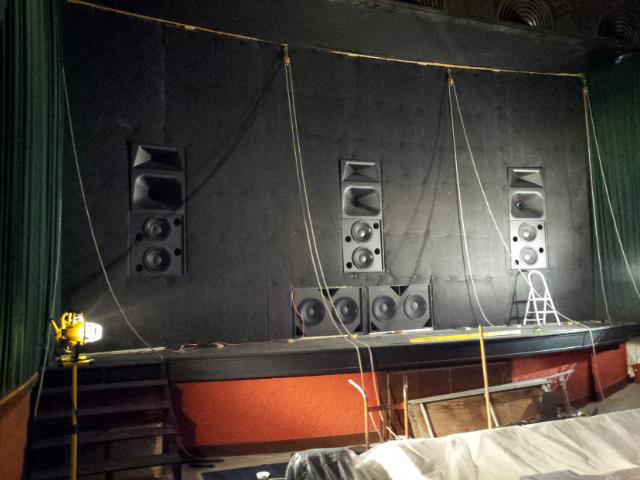
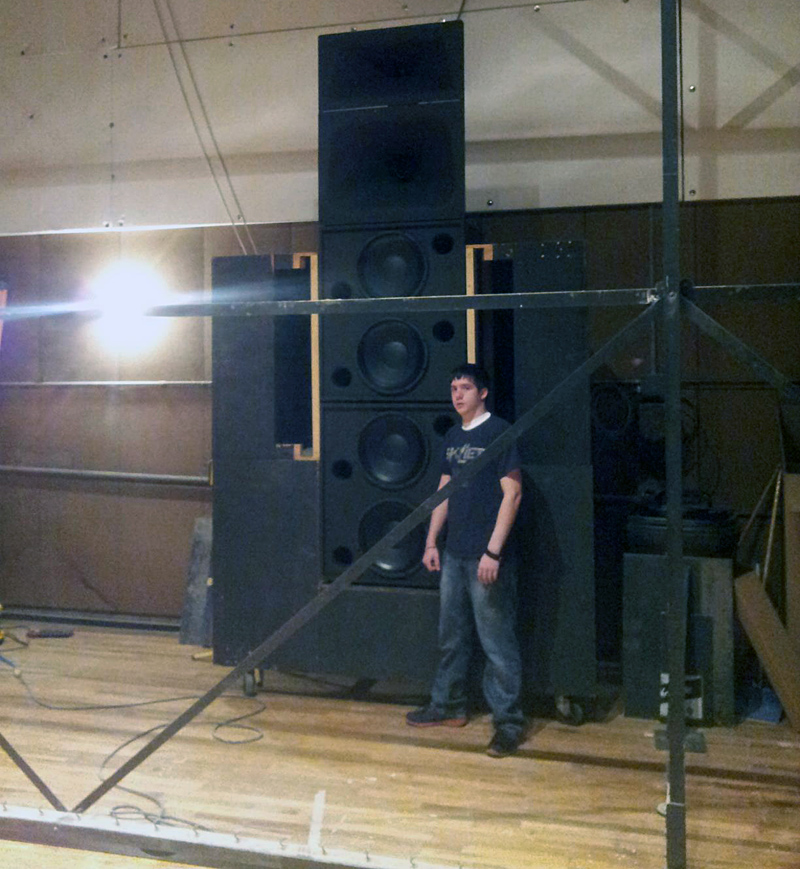
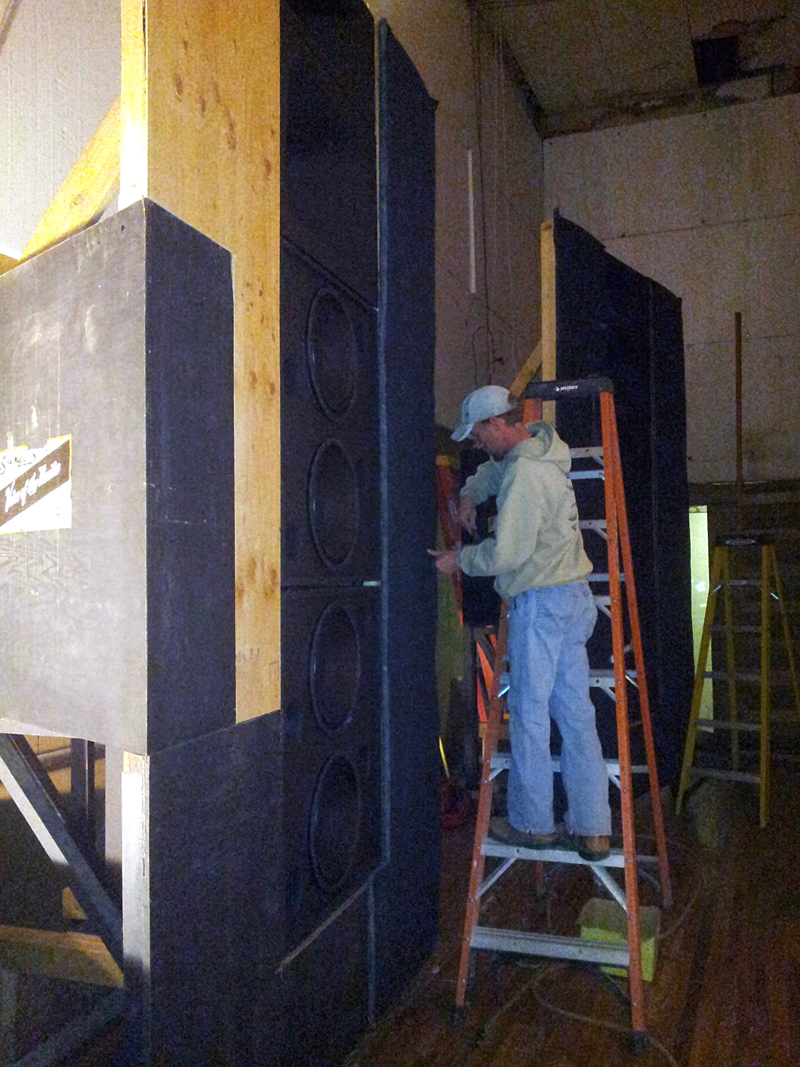
quote: Bob EzraYes, definitely a huge improvement. Plus the bass and directionality is improved with the baffle wall added. I love that we can play it nice and loud and people don't complain.
Mike- what model QSC screen speakers did you get and do you hear an improvement in dialogue?