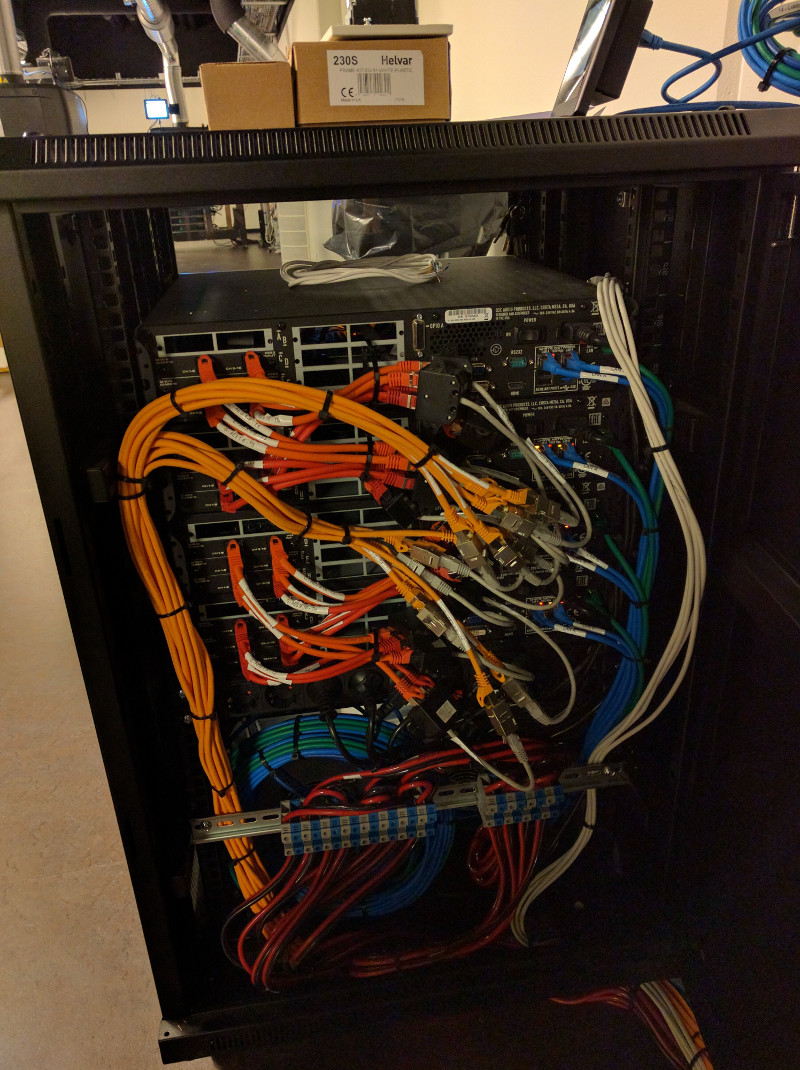
5 seconds according to QSC.
Yes, you're saving $50000 but if you then run 3 screens per core + redundant as in the example on this thread, then you'll need 6 cores (assuming one core does 4 screens) or 8.
My question is - I'm not really into prices - will 6 Core 500i (plus accessories) be cheaper than 10 Datasat AP10?
In this example we've seen 4 Core 500i replacing 6 standard sound processors. Again my question is: are 4 Core 500i (plus extra boards) cheaper than 6 Datasat AP20?
We should also consider the developing time to create and test the design.
Again, I want to point out that I am not questioning the QSYS system which I love ![[Smile]](smile.gif)
Posted by System Notices (Member # 2357) on 09-21-2017, 04:36 PM:
It has been 565 days since the last post.
Posted by Steve Guttag (Member # 268) on 09-21-2017, 04:36 PM:
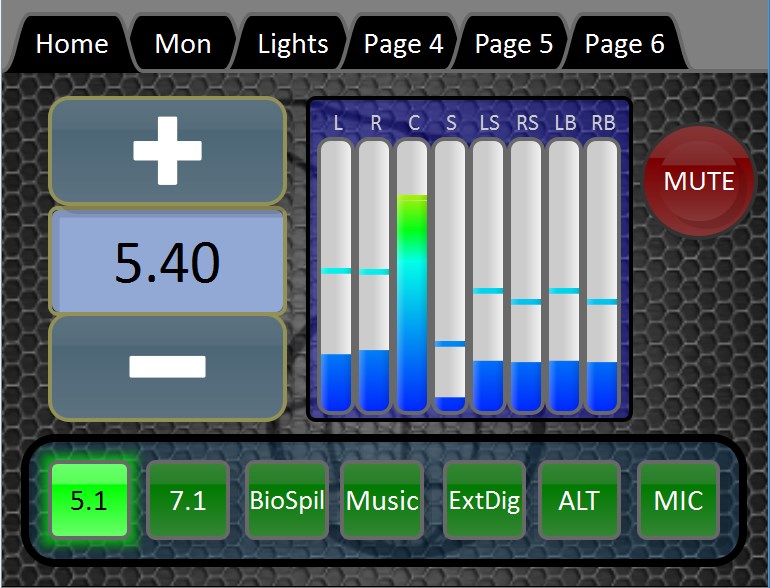
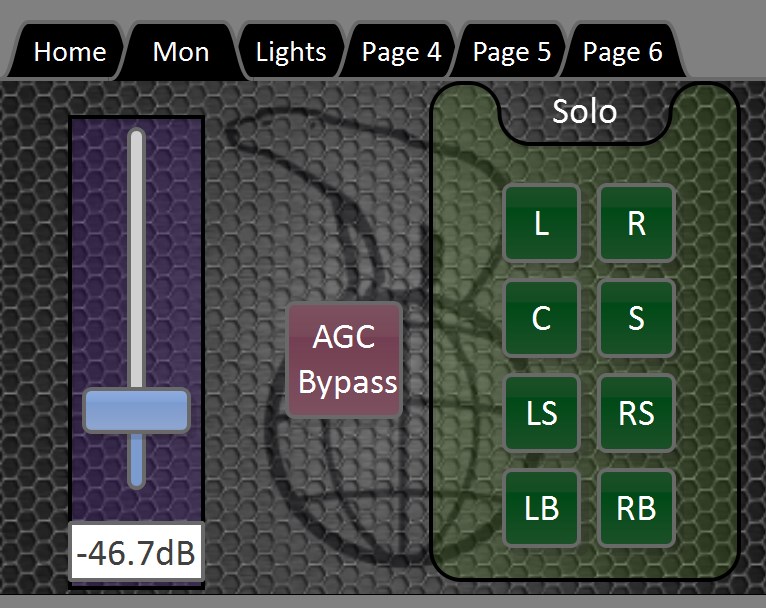
Bumping this one back up. The QSYS Pro Logic decoder is a reality. Plus I really like the UCIs that Anders made!
Posted by Stephan Shelley (Member # 8587) on 09-21-2017, 04:41 PM:
To the original subject the Dolby IMS 3000 Atmos audio processor and IMS together.
Posted by Marcel Birgelen (Member # 6801) on 09-21-2017, 05:28 PM:
Technically yes, but to get Atmos out of it you need "Atmos Connect" breakouts, either in the form of a DAC3202, their own multi-channel AMP.
Ah, and you need a license. A VERY expensive license.
It's like those cars you buy, where the seat heating is already there, but where you need to pay a few $K to have somebody flip the switch in the firmware.
Posted by Pete Naples (Member # 761) on 09-24-2017, 03:45 AM:
It's expensive.
The previous IMS 1000 and 2000 are not exactly shining beacons of reliability. The jury is still out on the CP850, so far so good but there aren't that many of them around in real terms.
As said you need to use external DACs unless you're using Atmos Link enabled amplifiers.
How do you get non-sync into the audio system? I asked this at Cine Europe. The reply was basically to invent some kind of relay switching direct to the amplifier inputs. With Dolby amplifiers you have no analogue inputs.... The only way I could see was to somehow embed non-sync into HDMI and distro it that way. Messy!
Same goes for 'legacy' film sound. How do you get that in?
Posted by Marcel Birgelen (Member # 6801) on 09-24-2017, 08:57 AM:
Besides the HDMI port, there is also an AUX AES port. This AUX AES port should be able to be used as a non-sync input. Obviously, you'd need to convert analog sources to AES first, but that's a solvable problem. It will also be limited to stereo only via this route.
I'm not sure what formats are supported over the HDMI port, can it properly process a Dolby TrueHD stream? What about the consumer version of Dolby Atmos? Does it support multiple (more than one) LPCM streams over HDMI?
It's clear that an IMS3000 + Atmost Connect solution is really only targeted at DCI-only operations. Analog formats are out of the question and multi-channel digital solutions probably too. So, if you're planning on doing 35mm or even 70mm in the same room, this is not your solution.
Posted by Carsten Kurz (Member # 5396) on 04-23-2018, 06:01 PM:
New QSC CMS-5000 answers many of these questions.
https://www.qsc.com/cinema/products/media-servers/cms-5000/
I am a bit surprised QSC develops a follow-up to the (USL) CMS-2200. Simply because the market for servers seems to be saturated in most areas of the world, and it must still be an enormous effort to develop a full IMS with that feature set and sell enough of them. The only incentive could be that the new open SMPTE standard for object-based audio needs new media blocks/many digital outputs (compared to the standard 16ch DCI), so, there may be a retrofit market. I liked the feature-set of the CMS-2200, but I can't imagine they sold too many of them?
Some here may like the Q-SYS interfacing, a natural way into Q-SYS core systems.
Also, this one has explicit digital audio inputs to accommodate NonSync, S/P-DIF, etc which ordinary cinema audio processors offer (with some adaption).
- Carsten
Posted by Mark Gulbrandsen (Member # 72) on 04-23-2018, 06:41 PM:
Those are cute hard drives they are using on the CMS-5000! I wonder how the life span on thewm is being solid state?
Mark
Posted by Carsten Kurz (Member # 5396) on 04-23-2018, 07:47 PM:
They seem to be 'M2 SSD', a smaller (and faster) form factor, often used on modern mainboards and in notebooks. However, 2TB, that's expensive...
The CMS-5000 offers 10G ethernet. Could mean extremely fast ingests. But I guess they need to be very fast, since the storage needs to support HFR/>500MBit/s DCP + the bandwidth needed for object based audio, and parallel ingests.
- Carsten
![[Razz]](tongue.gif)
![[Big Grin]](biggrin.gif)
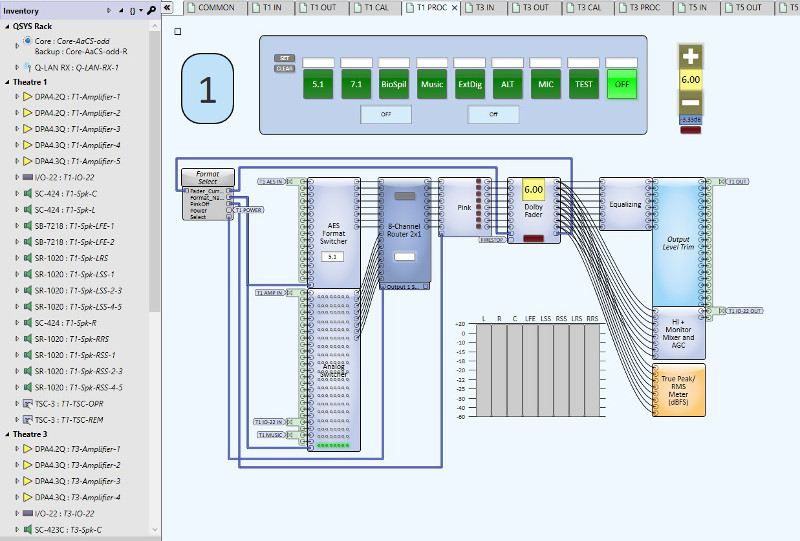
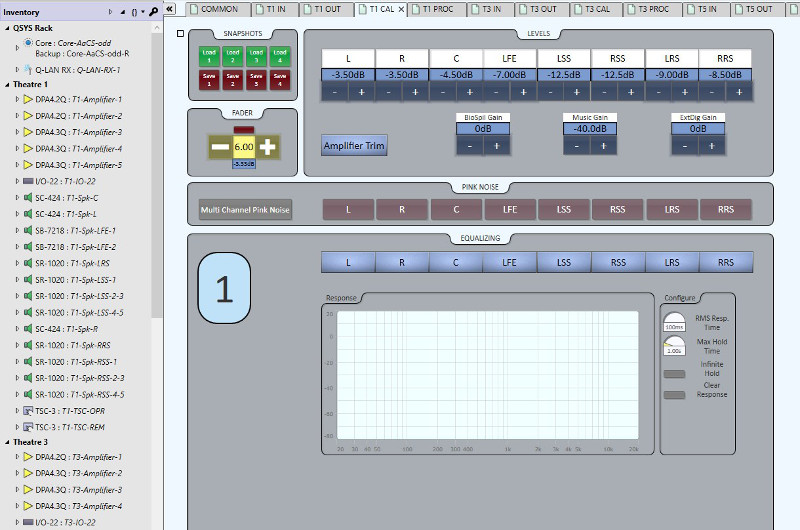
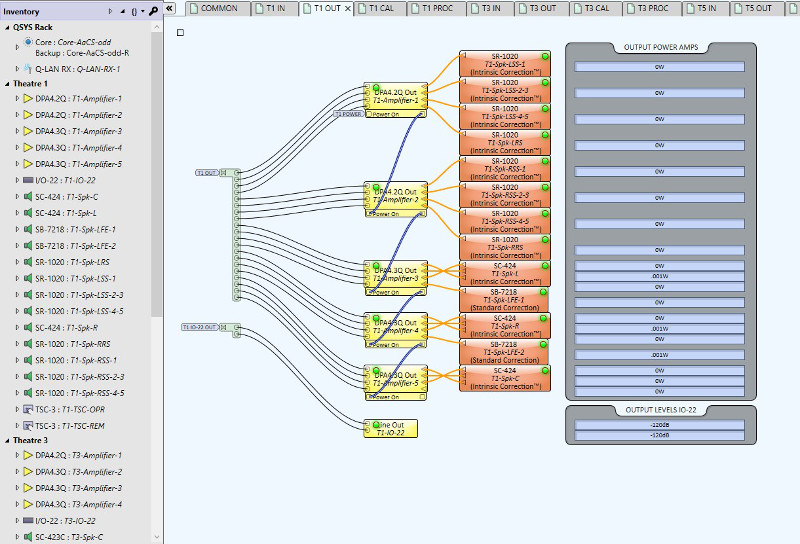
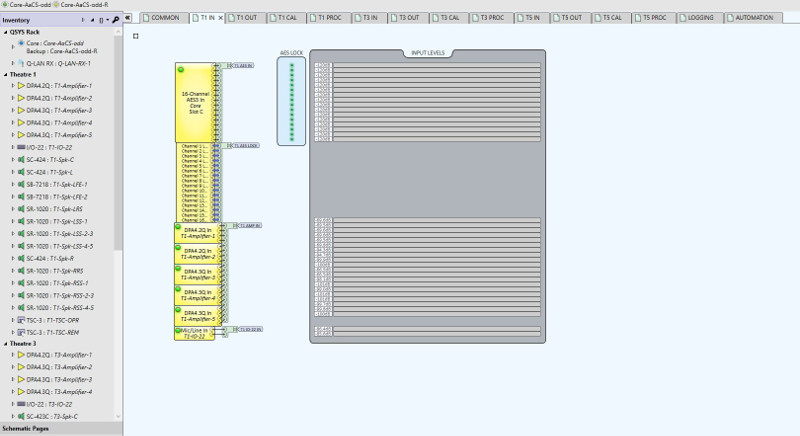
![[Wink]](wink.gif)