This is topic Sony SRX R 515 yellow spot on the screen in forum Digital Cinema Forum at Film-Tech Forum ARCHIVE.
To visit this topic, use this URL:
https://ft-forum.com/ft/cgi-bin/ubb/ultimatebb.cgi?ubb=get_topic;f=16;t=003588
Posted by Jerzy Gwizdz (Member # 8819) on 02-09-2019, 12:13 PM:
Hello.
In the pictures, my problem.
You have an idea how eliminate it ?
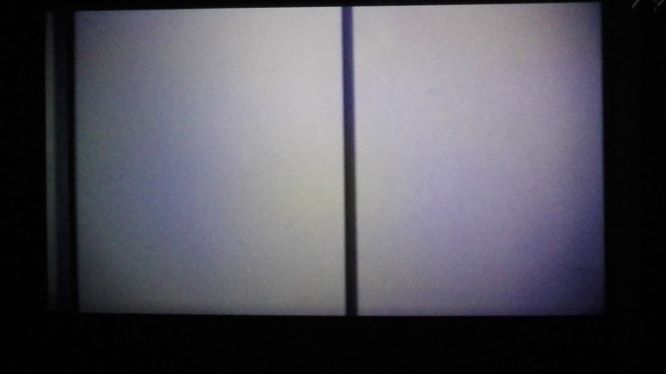
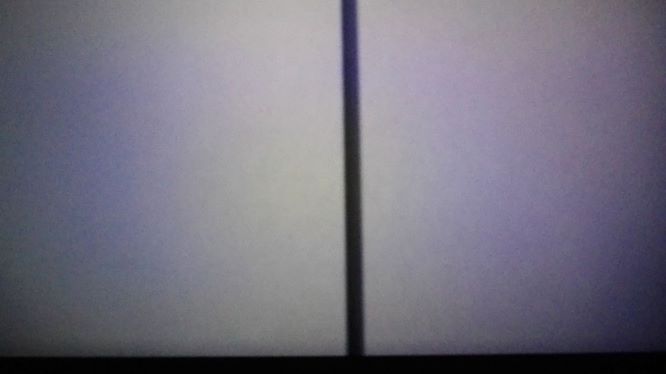
The stain is invisible on the 3D lens

The projector has worked 18,000 hours
All the best ![[Smile]](smile.gif)
Posted by Marcel Birgelen (Member # 6801) on 02-09-2019, 01:50 PM:
If your machine is clean, then this is most likely a gamma or uniformity issue.
Who is doing field service at your location? Ask them if they can do a gamma and uniformity calibration using the necessary equipment, like the PCAB-U and PCAB-G cameras. You can also buy those cameras yourself, but they're quite pricey.
Posted by Sascha F. Roll (Member # 9043) on 02-09-2019, 03:41 PM:
Marcel is mostly right, but I'd like to add:
In order to get the best possible result (especially in the darker parts, e.g. Grey2 etc) Cleaning of the Optical Block AND (very important) Adjustment of the Wavelengt filters (Black uniformity) is absolutely necessary prior to PCAB-G and -U. There are several bulletins on this issue, if Adjustment of wavelength filters has never been done the factory glue has to be removed.
Btw, your pictures are definitely lacking quality but I have the impression that the tech who installed your projector used to much lens shift, I see some severe Vignetting in the bottom right corner. Even if you have a silver screen >2.0 gain this is definitely not normal.
Posted by Marcel Birgelen (Member # 6801) on 02-09-2019, 07:45 PM:
The vignetting/hot-spotting is definitively pretty terrible. It almost looks like some kind of flash was used to take the picture. Now, it could look worse on the photo than in real life.
Posted by Jerzy Gwizdz (Member # 8819) on 02-10-2019, 11:28 AM:
Hey
You're right the pictures are bad, in the near future I'll show you from the test
Full Screen Gray-2,
Full Screen Gray-8,
Full Screen Gray-10 in better quality
I hope that my technician will fix the problem.
Greetings
Posted by Carsten Kurz (Member # 5396) on 02-10-2019, 11:56 AM:
Make sure he plans and is able to perform ALL the steps Sascha mentions above. After 18.000hrs, a full clean and adjustment of the light-engine + PCAB-G and -U run is necessary to get it back to specs.
- Carsten
Posted by Marco Giustini (Member # 4544) on 02-10-2019, 05:21 PM:
I'm curious to hear your experience on the quarter-wavelength filters on the engine. I was trained to do so but then never got to perform any so I do not know what kind of improvement you can achieve when doing that.
Does the engine really need that adjustment after a number of hours? What is your experience on that?
Posted by Carsten Kurz (Member # 5396) on 02-10-2019, 06:06 PM:
It's important to maintain black level and reduces color blotches. After a few years of operation, the effect of a re-adjustment is clearly visible. The hot-glue is applied after initial factory adjustment and is meant to secure it during transport to the installation location. Afterwards, it is no longer necessary to fix the adjustment levers that way.
It won't fix a toasted T-Core, but it can make the difference between toast and non-toast.
- Carsten
Posted by Marco Giustini (Member # 4544) on 02-11-2019, 03:39 PM:
Thanks.
I wonder what changes on the chips that affects polarisation. People may like that or not but I like the idea that those adjustments can be made on the field on a Sony. Yes, it gets dusty but yes you can clean it.
Posted by Carsten Kurz (Member # 5396) on 02-11-2019, 04:42 PM:
It's a mechanically adjustable element in front of the panels, so it suffers on/off, heat induced expansion and contraction. So, after some time of operation (and maybe earlier if you have many hours and/or all lamps active), it needs readjustment.
I guess on consumer devices, they are designed fixed and non-adjustable for cost reasons, so, after a while, the consumer beamer is beyond repair or can no longer be readjusted through color calibration alone.
- Carsten
Posted by Jerzy Gwizdz (Member # 8819) on 02-13-2019, 12:39 PM:
Hey
Promised photos in better quality ![[Wink]](wink.gif)
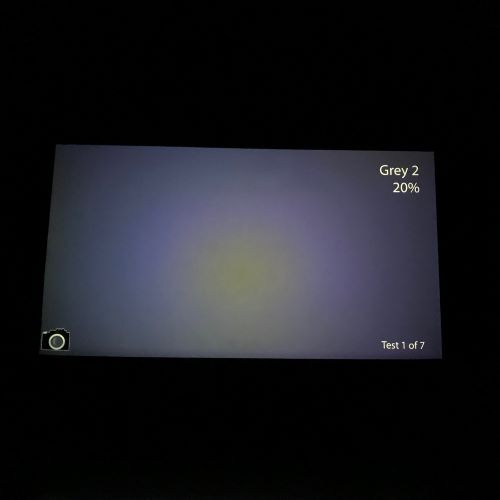
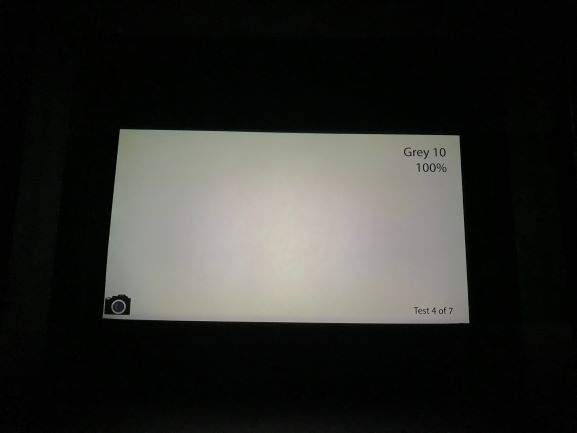
My technician confirmed sascha's steps
I hope he knows what is going on?
greetings
Posted by Marcel Birgelen (Member # 6801) on 02-14-2019, 06:17 PM:
Well, like mentioned above by Sascha, Carsten and me... it looks like a traditional gamma/uniformity issue. So get your tech in and ask him to:
- Clean all relevant parts of the machine
- Black uniformity adjustments, if necessary
- PCAB-G and PCAB-U runs
Usually, that should fix the problems. If it doesn't, it's getting more expensive, because then your T-Core is probably toasted. Unfortunately, that is a somewhat common issue with the 515.
Posted by Marco Giustini (Member # 4544) on 02-15-2019, 09:23 AM:
First picture shows a big yellow spot in the middle. I thing you will need a new T-Core.
Posted by Carsten Kurz (Member # 5396) on 02-15-2019, 10:25 AM:
Yes, quite possibly.
http://www.film-tech.com/ubb/f16/t002301.html
Jerzy - what software version is this 515 running, and do you know wether the cooling scheme has ever been adjusted? Is this a screen running many 3D shows, or with all 6 lamps on?
- Carsten
Posted by Jerzy Gwizdz (Member # 8819) on 02-18-2019, 08:42 AM:
Software version 2.51.1090
cooling has not changed yet
3D projections with 6 lamps about 30% of the total hours
2D projections with 4 lamps
The service arrives in the evening
Jerzy
Posted by Jerzy Gwizdz (Member # 8819) on 02-19-2019, 09:16 AM:
Trouble repaired
The stain visible only with the open douser, much better colors and brightness.
The question is how long ?
software 1.54 sorry for the mistake
Thank you all for your suggestions and help ![[beer]](graemlins/beer.gif)
Jerzy
Posted by Alan Gouger (Member # 543) on 02-19-2019, 12:00 PM:
Good news. Any chance you can provide an updated picture, thank you.
Posted by Marco Giustini (Member # 4544) on 02-19-2019, 12:49 PM:
‘Visible only with open dowser’?
You should have your projector serviced every 12 months and keep it in a clean environment. That’s a must with sony.
Posted by Marcel Birgelen (Member # 6801) on 02-19-2019, 04:03 PM:
I guess that the calibration helped to fix most of it. But either the calibration wasn't entirely successful or there is some T-Core damage already done.
Posted by Carsten Kurz (Member # 5396) on 02-19-2019, 04:42 PM:
I have setup a 'TCore Saver' Macro on our Sony to help reduce the panel aging. It is simple to do, and it also saves quite a bit of electrical power and lamp runtime. I would suggest you do that, too in order to give your light engine a bit more life time. It' so simple I'm wondering why Sony/techs do not implement it as an install default.
You should also talk to your tech about the cooling scheme. Although I guess, in PL, the standard scheme should be okay for you.
- Carsten
Posted by Marco Giustini (Member # 4544) on 02-20-2019, 12:02 AM:
What are the settings of that macro, Carsten?
Posted by Alan Gouger (Member # 543) on 02-20-2019, 02:52 AM:
quote: Marco Giustini
What are the settings of that macro, Carsten?
Would like to know as well. Are you running a full raster 40 or 50% IRE pattern for a few minutes?
Posted by Carsten Kurz (Member # 5396) on 02-20-2019, 05:33 AM:
Hi Alan,
no, it's not a 'burn out' scheme, I just reduce the light level into the T-Core as much as possible for as long as possible.
Does the 815 still have the two 'slide-in grills' between Light-Source and Light-Engine? I would assume they are no longer necessary for a laser light source?
They were built into the UHP 51x machines because initially the intention was to always run them with all lamps on (best uniformity), with lamp choice (450/330) and lamp current alone not being sufficient to control brightness levels as necessary. I assume the laser light source has a larger control range?
Will get back later.
- Carsten
Posted by Marco Giustini (Member # 4544) on 02-20-2019, 01:31 PM:
Do UHP lamps like to be turned up and down in power all the time?
Posted by Carsten Kurz (Member # 5396) on 02-20-2019, 01:58 PM:
They don't mind. The software limits lowest current to a reasonable value anyway. You get longer life out of UHP lamps at lower currents. When they age, they may start to flicker at low current settings, but, typically later than as if they had been operated at full current all the time. I get much longer life out of our 450W bulbs (and many more ignitions) since I apply that scheme.
But the reduced current is only half of the bill. The two light absorbing grills account for most of it. They act sort of like a dowser before the light enters the light engine. Whereas in most projectors (also DLP), the actual dowser is behind the light engine and doesn't protect it while closed.
Keep in mind, the audience never get's to see the reduced light in that mode. It is only active when no light is on screen. Not completely true for us, as we also show our preshow slides during admission through HDMI in that mode. Which accounts for a lot of the savings, as it is nearly one hour per day.
- Carsten
Posted by Marco Giustini (Member # 4544) on 02-21-2019, 02:18 PM:
Indeed the two dowsers must help. Interesting technique. Thanks.
Only small catch - if I really want to be fussy - is that those lamps will take some minutes to stabilise the colours once the brightness is changed. At least that was happening when I checked.
That said, nobody will likely notice and brightness changes anyway between formats.
Posted by Jerzy Gwizdz (Member # 8819) on 02-21-2019, 02:46 PM:
Hey
Alan: Photos soon
Marco: I will definitely repeat the calibration, I will be watching and I hope that the year will be ok.
Marcel: I think the calibration was successful, but the remains are damaged by the t-core. It's good that the viewer can not see it
Carsten: I think that this is a good idea especially for the brightness of the lamp, because after 2000 hours the brightness of the projection is very losing.
At the beginning are too bright in 2D
Greetings
Posted by Jerzy Gwizdz (Member # 8819) on 02-22-2019, 10:13 AM:
Hey
Unfortunately, after taking pictures, it's not as beautiful as it seemed to me.
It's better but not perfect
Here are the pictures:
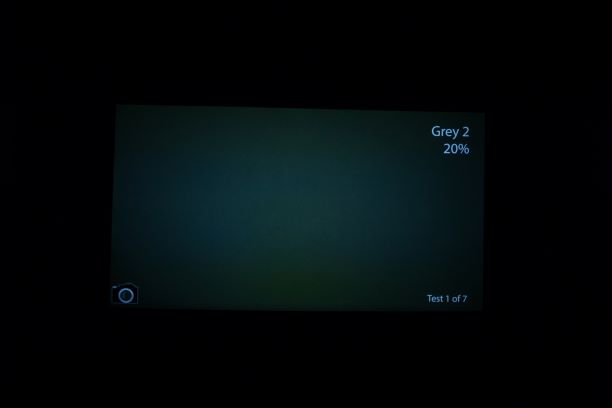
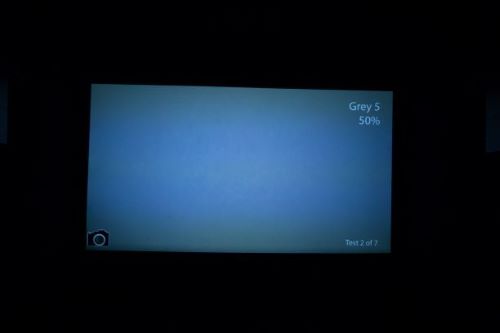
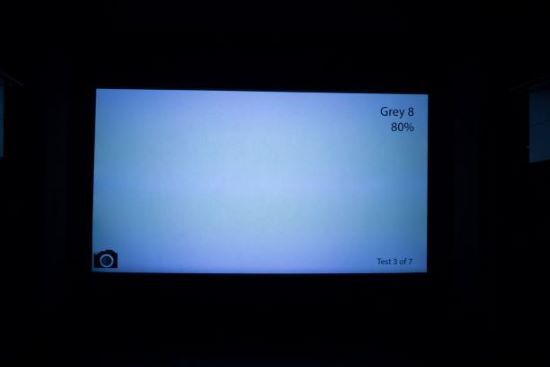
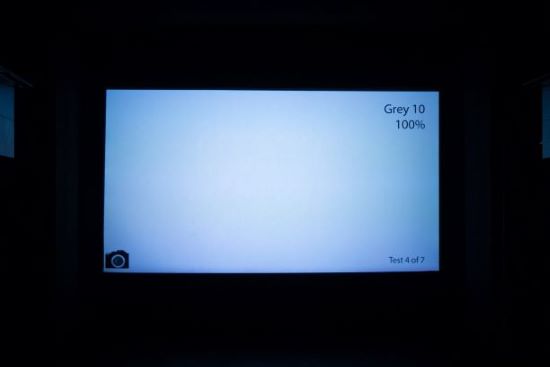
and open douser
Posted by Carsten Kurz (Member # 5396) on 02-22-2019, 10:56 AM:
It would be interesting to see the actual calibration pattern (there is a CSV file).
It's hard to say from the distance, but if the tech knew what he was doing, he might have done as much as possible, but your T-Core could sooner or later be up for a replacement. I know that Sony still sells extended warranties, but I don't know under which conditions. It might be possible that a later T-Core replacement could become a lot cheaper with one of these warranties. You need to talk to Sony or your distributor.
@Marco - yes, these lamps need to stabilise a bit, but of course, that goes much faster from reduced to full current than from initial power on. Also, in many systems, lamps are running with somewhat reduced current anyway to meet screen brightness (e.g. between flat or scope). It's up to the installers personal preference wether he uses lamp current, light grills, or both to meet brightness specs. The control range is similar for both, but, current of cause is continuous, while the grills have only two discrete steps.
In our case, every regular playlists starts with either a standard slide, or dark frame/dowser closed over something like 10-15 seconds, so, there is probably enough time for the bulbs to come to specs. We never start a feature immediately from the standby function, there is always something 'in-between'.
It depends on the scheduling habits of specific cinemas, but in general, projectors always run a considerable amount of time before, between, and after shows, and that can sum up to quite a bit of runtime where you can protect your light-engine. We also have rentals, alternative content, etc. where all the projector is doing is projecting a slide as a backdrop for multiple hours consecutively. Even with the auditorium lights up, the standby pattern applied to e.g. the HDMI input will still deliver enough punch, but without full light levels entering the T-Core. And, aside from the protection, it also saves electricy and lamp runtime/ignitions noticeably.
It's also nearly effortless. At show end, there are usually cues for audio, auditorium lights, masking, etc. , and one can also enter Protection-Macro within these cues. When you power up the projector the next day, the same macro will automatically be active without anyone having to think about it. So, for how long the machine will be running after power up, it will always run with protection macro until the first show starts, and will enter protection macro when the show finishes. I set this up on our system 2 years ago and there wasn't even a need to tell staff about it. It works without anyone taking special notice. All you need to do is e.g. copying the standard flat/preshow macro, rename it to 'StandBy' or whatever you like, adjust lamp current to 80%, activate both grills, save. Then add this macro to your show end cues.
I have one StandByDCI macro, and one StandByHDMI macro, the latter one can be used to show slides, long backdrops, etc. The StandByDCI macro also has the regular real dowser closed, as it is never meant to show actual DCI content.
DLPs/Xenons do not suffer as the Sonys do, but, from the standpoint of electricity saving and bulb runtime, one could even use the same for DLP UHPs and Xenons as well. They all benefit to a certain extent from reduced lamp current, at least if you don't overdo it.
Should also be very effective in systems with 3D run at max light power. It doesn't make sense to run them at full power before, between and after shows.
- Carsten
Posted by Alan Gouger (Member # 543) on 02-22-2019, 03:15 PM:
Do LCOS panels suffer image retention? Wondering if a cinema running primarily scope features or worse leaving the 3D lens in place full time would cause uneven wear that would show up down the road.
Posted by Carsten Kurz (Member # 5396) on 02-22-2019, 03:48 PM:
quote: Alan Gouger
Do LCOS panels suffer image retention? Wondering if a cinema running primarily scope features or worse leaving the 3D lens in place full time would cause uneven wear that would show up down the road.
I have never seen that flat vs. scope image retention, but, the typical cinema will usually play a mix still (though, I see clearly a lot more scope than flat features recently).
I did see a picture of a T-Core though, that was used exclusively for 3D with all 6 lamps full thrust for 5 years or so. You can clearly see a burn-in of the over/under frame pattern applied for the 3D lens. That is, you can see the separation line between upper and lower frame, which is always steered black for a 3D only system.
However, I am not sure wether what one sees on that picture is the actual 'panel', or a filter/splitter in front of the actual panel, or the actual nature of that 'burn-in'.
- Carsten
Powered by Infopop Corporation
UBB.classicTM
6.3.1.2