This is topic Replacing an aging digital projector....options in forum Digital Cinema Forum at Film-Tech Forum ARCHIVE.
To visit this topic, use this URL:
https://ft-forum.com/ft/cgi-bin/ubb/ultimatebb.cgi?ubb=get_topic;f=16;t=003593
Posted by Mike Blakesley (Member # 26) on 02-15-2019, 02:54 PM:
In June of 2020, our digital projector (NEC NC2000) will be 10 years old. Originally I'd always heard that this kind of stuff would have a 10-year lifespan. Around the 7-year mark, our technician (Mark Gulbrandsen) told me we should probably plan on getting around 15 years out of it. We just replaced all the fans in it last fall.
It's been working flawlessly all this time, except for a couple of update-related hiccups that were fixed easily remotely. There have been maybe three or four occasions where something strange would happen, I'd reboot and all would be well. So as far as a computer-related thing goes, it's been working better than the average piece of equipment. (Knocking on wood as I type this)
So, I'm trying to plan ahead a bit, and wondering what others are doing (or have done) with equipment that's this vintage? Are you replacing, and what are you planning to replace with? Or are you just going to keep running the current equipment until it gasps its last? What is a similar projector going for these days?
Posted by Marin Zorica (Member # 1716) on 02-15-2019, 05:44 PM:
Something like Barco 19B, Christie CP2220 is today's range if we look on xenon based, or similar models with laser phosphor. If you have money i would recomend to upgrade to something new, like from list above or even better like 4K or so (depending on money) and to sell that NEC or re used on other location, while is still ok and trouble free in operation.
Posted by Marco Giustini (Member # 4544) on 02-16-2019, 05:18 AM:
19B and 2220 are still supported but they are also machines which were introduced on the market in 2010-ish (someone can correct me with a more accurate date).
I would hate seeing you spending money on a 9y-old design for then getting a note of EOL from the manufacturer two years later. I'm not suggesting that this is going to happen and indeed those are the current machines available, particularly if you need a certain amount of light on screen.
Just food for thought.
Posted by Marcel Birgelen (Member # 6801) on 02-16-2019, 06:18 AM:
I'd say that 10 years is a sound and safe bet. Anything extra you get out of it, should probably be considered borrowed time.
If you want to stay with NEC and if you consider 2K to be sufficient and your screen is not much wider than 30ft, the NC1201L-A is a cheap entry option. It will probably be cheaper than your NC2000 was when you bought it, but you'll save on the lamp replacements.
Don't expect to get 15 years out of it, though. The expected life time of the machine is 20K hours, but I expect you'll see serious brightness degradation after roughly 7 years.
Nevertheless, the machine could be a suitable intermediate solution. I expect that within now and 10 years 4K will be the norm.
The NC2041L would be a great replacement if you want to go 4K, but it will be quite an investment. You don't have to worry about brightness though and you could use both "Laser" and "4K" as effective advertisement arguments. With the expected life time of 30K hours and sufficient "brightness budget" on the light engine, you should expect to get 10 years out of it.
Posted by Carsten Kurz (Member # 5396) on 02-16-2019, 06:58 AM:
It's a series2 and still being sold. For everything that is currently sold, NEC has to obey warranties, supply spare parts, etc. I wouldn't worry that much. There are still many series1 in operation, though some of them will get into trouble once replacement parts will actually be needed. These series2 are very modular, and you will probably find spare parts easily, no reason to expect a full unit death.
Also, I haven't seen any of the existing projector types exhibiting age related defects in numbers. Checking batteries and doing maintenance should keep them running for quite a few years.
Posted by Paul Finn (Member # 10726) on 02-16-2019, 11:34 AM:
This is an important and timely subject in the history of Digital Cinema. Has anyone any experience yet with the new Christie CP2315 and CP2320 as replacement or upgrade for S1/S2 2K projectors? Is it too early in their life cycle for critical evaluation and judgment now? Should only 4K projectors be considered at this time?
Posted by Carsten Kurz (Member # 5396) on 02-16-2019, 02:28 PM:
One should definitely think about replacing S1, but S2? No.
While we do have a 4k projector, and I clearly see the benefits, the trouble is that 4k in DLP goes with a price premium, and as such, is hard to justify economically, unless you have a very large screen that also need loads of light. Good 3P or 6P lasers still cost a fortune, and I am not yet sold on phosphor lasers. They may turn out as an expensive early adopter experiment sooner or later.
Exhibitors have in the past feared that having 2k projectors would exclude them from DCP delivery at some time due to presentation quality considerations of studios. Others thought that once 4k is there, 2k would simply be 'outdated' and also rejected by cinemagoers. However, that is not a realistic expectation. There had been rare restrictions in that sense for very specific programs, but, for the studios, acting that way limits the success of a specific release considerably, as most screens are still 2k. I don't think a 2k vs. 4k consideration will ever play a role in mainstream cinema. Also, many 2k systems can actually look better than 4k systems, resolution is not everything that makes a picture look good.
- Carsten
Posted by Sam D. Chavez (Member # 1841) on 02-16-2019, 05:47 PM:
Agree totally with Carsten. No compelling reason to update. Run it into the ground until it's not viable. Laser should drop in price in a couple of years. Perhaps the cost of screen shakers too which are needed for a decent presentation. My observation after installing a 6P is if you have good light you will notice speckle and it gets under my skin for sure. So close and yet so far.
Posted by Mike Blakesley (Member # 26) on 02-16-2019, 08:17 PM:
I guess I should have stated: We have a 30-foot screen with a 90-foot throw.
We run one show most evenings (usually two on Fri, Sat and Sun) so our machine doesn't get as much use as one in a big city theater would.
The one and only thing I haven't liked about the NEC is the contrast. (Or lack thereof!)
We're also still running a Dolby CP650 so we're going to need to replace that before the projector, I expect.
Posted by Marcel Birgelen (Member # 6801) on 02-17-2019, 10:44 AM:
quote: Sam D. Chavez
My observation after installing a 6P is if you have good light you will notice speckle and it gets under my skin for sure. So close and yet so far.
I have yet to notice speckle on the laser phosphor machines, even without screen shakers. A phosphor-laser based machine will not yield the same color gamut as a 6P machine, but in general have a far better contrast than comparable xenon machines.
The problem with laser light sources, is that currently nobody knows anything regarding their expected life time, other than some rather vague statistics provided by the manufacturers.
quote: Mike Blakesley
We're also still running a Dolby CP650 so we're going to need to replace that before the projector, I expect.
I used to be a fan of the Datasat AP20, now the AP25, but I'm no fan of Datasat anymore, since their support is almost close to non-existent, since they've been acquired by ATI.
You could go for a trusty CP750, but this march, will mark the 10th anniversary since the launch of the device. I'm pretty sure it will not stay around another 10 years.
For any non-MDA sound system right now, I would go the QSC Q-Sys route, as this will allow you almost unlimited flexibility and it will allow you to expand to an MDA system later. And if you now start with a basic setup, compatible with your current 7.1 setup, it will not be much more expensive than a new AP25.
Posted by Steve Guttag (Member # 268) on 02-17-2019, 11:36 AM:
I've noticed speckle in all RGB laser machines (mostly in red but I've seen it in green too).
As far as contrast go and LP increasing contrast...maybe 20% on a good day but for most, nope.
The color gamut on LP BARELY makes DCI and looks a bit phony to me (I prefer the color on a xenon machine to an LP). That said, I prefer the uniformity on an LP machine to a xenon. You pick your poisons.
On the CP750, I think all that would kill it off is a problem sourcing a semiconductor/chip. It fills a very valuable, profitable and high-quantity. That is, one that just wants a 5.1/7.1 system. I like it better than the JSD offerings for those applications, myself. If the JSD60 had been allowed to become the JSD60+ or whatever they were going to call it, perhaps that would have shifted. The JSD60 was so close, if it had 7.1 with HI/VI output and moved the matrix decoder to pair 1. I still prefer Dolby's approach of having one input button that can be set to decode different formats rather than having a "option" button that can only be configured one way at the expense of other ways.
I think the CP850 could be more in Jeopardy as the IMS3000 emerges as the only Dolby/IMS server. It is my prediction (no inside info) that when the IMS3000 is offered without a sound processor, there won't be a need for an IMS2000 and the IMS3000 for Atmos is already cheaper than the CP850 plus another server so it starts to lose its purpose. The CP850 doesn't handle multi-channel analog which, for us, excluded it from most installations. I suspect it hurt its sales to others as well.
Back to the OP.
I'd run it till it drops. But yes, plan on replacing it within 5 years. I think any year after 10 is a gift. It is a current production unit so it is bound to be supported for some time (same pricing)
Posted by Mark Gulbrandsen (Member # 72) on 02-17-2019, 02:09 PM:
Mike,
I would hold out till Laser is both affordable and practical before you upgrade. There ought to be a real reason to upgrade. Perhaps about 5 to 7 years off. Aside from fans that can fail the T.I. ICP has a rated 12 year lifespan because of the solder in battery that someone will figure out a way to change it out. Seperate power source to maintain the certificates and isolated tip soldering iron should work for doing that. They run about $2800 if they fail, and even if that fails its way cheaper to replace that than buy a new projector. I haven't had any fans fail on any NEC's yet which is quite remarkable. Jason has had the main lamphouse blower fail in two different NC-2000's, but thats about it. In NC-2000's it's only been the dam power switch and even that original switch has been discontinued and replaced by an up dated switch and I haven't had a call about one of those in several years now. On the GDC, as long as they extend the warranty, then keep it. Since the media block in the SX3000 is the same as the 2000AR it probably has a lot of life left. But once that goes ding then I'd replace the server.
On another note it is probably time to retire the CP-650 and install the Trinnov Processor. INstalling that would eliminate the external D to A as well. I am amazed the 650 power supply never went belly up, its the only one I know of that hasn't.... Shhhhhh, I didn't say that!
Mark
Posted by Marcel Birgelen (Member # 6801) on 02-17-2019, 04:16 PM:
quote: Steve Guttag
I've noticed speckle in all RGB laser machines (mostly in red but I've seen it in green too).
All "pure laser" machines seem to have noticeable speckle, although it's usually effectively eliminated with those pesky "screen shakers"... You'd expect the same speckle for the primary laser color on an "LP" machine as well, but I have yet to spot it.
quote: Steve Guttag
The color gamut on LP BARELY makes DCI and looks a bit phony to me (I prefer the color on a xenon machine to an LP). That said, I prefer the uniformity on an LP machine to a xenon. You pick your poisons.
It depends on the type of phosphor and laser combination they're using. Most models use extra color filters to better match the color gamut and there is a difference between individual machines of how good this matches up.
Personally, I have more problems with some of the "pure laser" implementations out there. Those projectors put an enormous peak at 3 or 6 wavelengths, but humans might not all be equally sensitive for those wavelengths. Especially in 3D mode, for me the colors between "left" and "right" often don't match up.
quote: Steve Guttag
On the CP750, I think all that would kill it off is a problem sourcing a semiconductor/chip. It fills a very valuable, profitable and high-quantity.
Isn't the CP750 the last processor where they actually designed both the chassis and the entire interior (minus the PSU) themselves?
I'd somehow expect them to replace both the CP750 and CP850 with a new "generic hardware" machine, that supports essentially the same features as the CP750 does now, but is license-upgradeable to Atmos. I think they will still need to provide an option for Atmos, even without Dolby providing the IMB. Quite a few CP850s went into premium rooms that are running on e.g. Alchemy. If they don't continue to provide Atmos to those setups, they might lose that market to e.g. Barco.
Posted by Steve Guttag (Member # 268) on 02-17-2019, 04:54 PM:
You might be onto something of a common processor. Any new standalone processor for Atmos would require another trip to the FIPS testing to be a trusted device.
What would they hope to achieve by replacing the CP750? What is out there to compete with it?
JSD60, JSD100, DPM100/300, DCP100-300 (all from QSC), Trinnov's Ovation and, to a lesser degree, the AP25.
One would think that the DCP100-300's days are numbered with the DPM series taking over those roles. Likewise, the JSD100 likely will find a smaller and smaller market share as the DPM100/300 will do most, if not all of what it can do. The JSD60 is cheaper than the CP750, so there is an appeal there, it has a dedicated Drive-In mode, which is nifty. It is also just 1U tall.
The Trinnov has a place though it requires an understanding that you are paying more for better sound...not a guarantee for cinema owners! Whereas it is double the CP750, it is the harder sell and it doesn't handle HDMI (at this point). If it handled HDMI with Dolby and DTS, it would help it, I would think.
Back to Dolby, even if they added an HDMI to a CP750esq product, it would be crippled with a missing DTS decoder for political reasons (like the CP850).
The CP750 is odd in that it wasn't brought out to showcase any Dolby technology. From the CP100, CP50, CP200, CP55, CP65, CP500, CP650...the products came out in a manner to primarily showcase Dolby technology or make it easier/cheaper to put in Dolby technology. The closest you could get to that would be that it has AES inputs to allow Dolby servers to have a sound interface without the now-defunct DMA8/Plus. The CP850 brought Atmos. But AES3 isn't Dolby technology. It is generic and doesn't require Dolby to achieve as good or better results.
So what justifies its replacement? How much extra market share do you get for the new piece? Perhaps if Dolby were to implement a good auto-tune like Trinnov (or even their CP850) that would be something. I would think that a new processor would almost need to coincide with a new technology.
Personally, I have no reservations putting in a CP750. I prefer faders with a 0-10 scale over a dB scale. (So points for Trinnov, Datasat, and former USL there). If you look at the link in my QSYS Corner, there a user also presents a 0-11 fader instead of dB because dB faders for end-users are silly. They're great inside for setting levels but for people that want things a little higher/lower, linear scales are the most proper.
Posted by Marcel Birgelen (Member # 6801) on 02-17-2019, 05:44 PM:
Let me start with that I'm trying to look from Dolby's perspective here. It's not necessarily the path I would choose.
I think you're pointing out a few reasons for a new, common processor yourself. The design of the CP750 is now older than a decade, there might be quite a few chances of parts running out. And while it should be entirely possible to replace them with new, more current parts, it will incur some re-engineering costs, all to keep a product floating that, after a decade, can't hardly be marketed as "new" anymore.
Also, you're pointing out a few shortcomings of the much more expensive CP850, now also running on a somewhat dated Supermicro OEM platform (circa 2010-2011).
We also know that the costs of the CP850 is barely in the hardware, but much more in the Atmos "licensing costs". The most expensive part of the CP850 is most likely in the analog inputs and outputs, which aren't standardized PC components.
So, what I expect from the proverbial CP950 (or whatever they may name it), is a newer generation OEM standard PC hardware (e.g. a newer Supermicro OEM platform), but with roughly the same I/O configuration as the CP750, so it can be used as a drop-in replacement.
It will also feature Dolby Atmos, but at an additional, expensive license and if you want additional analog breakouts, you have to go the same route as the IMS3000.
If they sell the box for roughly the same price as the CP750, then the added advantage would be simply that every theater that deploys the new box, now has an upgrade scenario to Atmos. Although, in practice it would require a lot more than just adding a license, it's a nice marketing argument. You're not ready yet for Atmos? Don't worry, you're not throwing away your current investment.
What would be the added benefit for Dolby?
They can further minimize their hardware offerings, possibly bringing down the costs even further and they could guarantee their supply chain for another e.g. 10 years. Also, they increase their stake in the ever so profitable business of selling expensive licenses for stuff that's technically already there.
And yes, something like auto-tuning/calibration like in the Trinnov and Datasat machines would also be a welcome extra. Not sure if Dolby will follow in this regards though. Dolby's professional hardware has always been targeted at techs that know what they're doing, even though a decent auto-tune is a good way to speed stuff up considerable, even for techs that know what they're doing.
Posted by Steve Guttag (Member # 268) on 02-17-2019, 06:11 PM:
The CP850/IMS3000 do a decent auto-tune and the timbre sweeps sort of prove it.
I'd think, from Dolby's perspective, their IMS3000 IS the new sound processor. It is just part of the server now. Dolby has always preferred if you bought everything from them and the IMS3000 will encourage you to do so.
I don't foresee Atmos ever being a significant percentage of theatres. Sure it will get a bunch of PLFs but not the bread and butter theatres. It has the upgradability feature you speak of.
QSC, with the CMS5000, if it proves to be a good/reliable server could present a real challenge since it can render on-board, just like the IMS3000. And, tied to QSYS is more flexible in the rest of the B-Chain.
GDC is also doing some rendering on board with the SX4000 (albeit too sparse to make it really worth the effort) I would presume that would expand on their future offerings if the market demands it.
One thing that standardization could potentially do is allow for non-Dolby products to effectively render the Dolby Atmos track and only lack the Atmos name for presentation or Dolby could license that too!
A problem for Barco is that their server only works in Barco projectors, which limits it to 1/4 of the projectors being offered. One also has to buy into their server as being as good as other stand alone servers (a topic for another discussion as they all have their ups and downs).
For Dolby, I really think it would be parts availability that drives them to move on the CP750 level processor. I'm thinking that they are thinking that the IMS3000 is going to do that. Don't forget, one can get an IMS3000 and their multi-channel amplifier and effectively wire the sound system in seconds and take up almost no rackspace doing it. They have a pretty tight package for the person that just wants 5.1/7.1 sound. Do those customers really need a box with a knob in a rack somewhere? Who is looking at the box or turning the knob? Can't they do that via the web interface, if need be? Note, Dolby as a USB dongle and app so if you are near the IMS3000, you effectively have a touchy-feely processor too.
Posted by Marcel Birgelen (Member # 6801) on 02-17-2019, 08:04 PM:
I totally agree that their IMS3000 with integrated sound processor and their integrated digital amplifier is their primary strategy going forward.
But they're still selling a lot of CP750s, including to those not buying into the full Dolby-only ecosystem. If they would drop that machine, they will lose a lot of sales and also up-sale opportunities.
Also, they can't expect all PLF concepts to switch to their own IMS, yet those are their primary Atmos customers.
So, something like a CP950, which would essentially be the audio-processor part of the IMS3000 in a separate box, would not only replace two ageing platforms, but will continue selling them to the existing potential CP750 customers, while offering them something "new" in the form of an upgrade promise.
It would require a new certification process, but I doubt that's the biggest hurdle for Dolby.
quote: Steve Guttag
I don't foresee Atmos ever being a significant percentage of theatres. Sure it will get a bunch of PLFs but not the bread and butter theatres. It has the upgradability feature you speak of.
I think that we should accept that Atmos is just a sound format, just like SRD and not a baseline quality label, although Dolby has tried to maintain it as such for now, it's hard to take it serious when you can buy "Atmos enabled" tablets or headphones. In that regard, a 7.1 configured theater could be equally qualified to playback an Atmos track as one with 64 discrete channels.
Posted by Sean McKinnon (Member # 612) on 02-19-2019, 12:32 PM:
I must have misread you Steve the CP-850 has two HDMI ports and can even do a poor mans atmos up-render off of them.
(EDIT) Never mind. I see your saying the 850 is missing the DTS decoding. Got it. ![[Roll Eyes]](rolleyes.gif)
Posted by Marcel Birgelen (Member # 6801) on 02-19-2019, 04:13 PM:
Yes. The missing DTS decoding capability and the lack of analog inputs is making the CP850 a hard sell for those who want to play e.g. Blu-Ray content.
Not all Blu-Ray releases do feature Dolby tracks, so you need to fall back to a 2-channel stereo PCM mix in such a case. Having your BR player render the soundtrack is also of no use, since the output will be a bunch of unbalanced analog outputs. And while you could convert those back to AES, it's not really making your solution any cheaper, simpler or better sounding by doing a D/A/D/A conversion...
So, the CP850 isn't always the best business case if you're facing an auditorium that plays a lot of alternative content.
Posted by Ron Curran (Member # 3631) on 02-21-2019, 09:10 PM:
Ours is a 2011 Barco DP2K-12C and the concern is light output. The projector came with a 2K xenon which was very bright. First lamp change we went with a 1.2K, with a contrast improvement. A few years later, the 1.2 needed full power for decent light. By that time 1.6 was available so we went to that it proved to be ideal. This last year, 1.6 is still giving 14 lumens on flat images at 1400W but Scope requires full power for 12 lumens.
We think we can buy time (maybe 18 months) with a return to 2K lamps next change but what then? A new light engine? A laser projector?
Posted by Justin Hamaker (Member # 2165) on 02-21-2019, 09:41 PM:
quote: Mike Blakesley
We run one show most evenings (usually two on Fri, Sat and Sun) so our machine doesn't get as much use as one in a big city theater would.
I have 5 NEC NC2000C at my location. Although there have been issues, they have been few and far between. Our oldest projector was installed around the same time as yours and it's in our main auditorium. The other 4 were installed about a year later. So far most of the issues we've had were relatively minor and any delays in fixing them were primarily due to not having a part on the shelf. I would say the frequency of issues has been about the same as what you would expect for diodes in a 5 screen with film projectors.
Today I did have a issue where the internal router failed a check at boot up. I had to boot it 3 times before the error went away. I don't have a router on the shelf, so I'm in the process of getting one ordered.
Posted by Marco Giustini (Member # 4544) on 02-22-2019, 01:36 AM:
quote: Ron Curran
We think we can buy time (maybe 18 months) with a return to 2K lamps next change but what then? A new light engine? A laser projector?
New reflector? Has the projector been cleaned regularly - lens end, prism end, integrator end? New porthole glass? New screen? Refurbished engine?
Posted by Steve Guttag (Member # 268) on 02-22-2019, 06:50 AM:
I think Marco has hit upon the likely issue. Your optics, despite filters, have collected dirt and/or have degraded. Dirt, particular when blown by air (and the 12C blows air more than most since it is air cooled) will find its way to everything.
You'd be amazed at what cleaning the lamp reflectors will do for you. I've found that one can get upwards of 18% of their light back by cleaning the reflectors, cold mirror and the inlet side of the light pipe.
But the light path doesn't stop there...you have the other end of the light pipe, condensing lenses, the fold mirror, and notch filter too. There is also the inlet/outlet of the prism as well as the lens itself (in/out).
Posted by Ron Curran (Member # 3631) on 02-22-2019, 04:08 PM:
The whole system is serviced regularly and that includes a thorough clean. We change the filters as indicated (we have a spare set). Port glass is cleaned at least weekly. Our screen is in good shape but we are thinking of renewing it with a slightly larger one.
I believe that lamp details on our monitor (lumens and Watts) are taken from the projector, not off the screen. Our picture is fine (now)- I just worry that we are running the lamp on maximum and changes will be necessary.
Posted by Carsten Kurz (Member # 5396) on 02-22-2019, 04:58 PM:
Well you definitely need to take brightness measurements off the screen.
I also think that 'normal' cleaning procedures are not enough to 'renew' a system of that age. You may need to negotiate that explicitly with a tech to make sure he really takes everything apart in the light path.
- Carsten
Posted by Monte L Fullmer (Member # 2797) on 02-22-2019, 05:10 PM:
Looks like the factor here is simply: operating hours.
How many hours are on that NEC2000 esp if Mike only runs not even 35 hrs a week on the unit.
It's like driving a new car bought in the same year as his install only 2600 miles a year.
I would safely calculate that the vehicle doesn't even have 35K miles on it, which makes his unit still having tonnage of life left on it until it can't operate anymore.
He'll prob be good for another 10 years before it hints of needing replacing.
Then, he can pay cash for a new unit, or even up to a self display screen.
-Monte
Posted by Mike Blakesley (Member # 26) on 02-22-2019, 06:38 PM:
Good points, I'll have to check the hours on it when I get a chance. There is some validity to the whole notion that the hardest thing a computer-type device does is power up and power down though, so in that sense it has the same amount of "time" on it as any other projector that's been in use for nearly 10 years.
Posted by Justin Hamaker (Member # 2165) on 02-22-2019, 06:56 PM:
I'm curious to hear where you are on total hours. Our projectors range from 30,200 to 25,800. There is about 13 months between the oldest and newest.
Posted by Steve Guttag (Member # 268) on 02-23-2019, 01:42 AM:
Some things, like the ICP certificate battery won't go more than 12 years or so.That will be an expensive repair.
I suspect that there are other things that will age regardless if powered or not.
Posted by Marcel Birgelen (Member # 6801) on 02-23-2019, 04:23 AM:
There is more than just hours to it. Parts availability is also an important issue. Right now, that's not a real problem for the NC2000, but the machine is closer to the end than to the start of its commercial availability cycle.
Like I and Steve mentioned earlier, you should expect your digital machines to have an economic life of roughly 10 years. That doesn't mean that you need to throw them out after 10 years if they're still operating as expected, but around that time, you need to be prepared to replace them integrally.
Some repairs, for example, might just not be worth it, because they're more expensive than the economic value of the machine.
So, in that regards, it's just good business practice to have both a budget and a plan ready to cover such a scenario, especially if you're running a small scale operation that can't afford to lose a screen for a prolonged time.
Posted by Mike Blakesley (Member # 26) on 02-23-2019, 08:44 PM:
quote: Marcel Birgelen
you're running a small scale operation that can't afford to lose a screen for a prolonged time
Yep, that's a pretty good description of me right there.
Don't worry, I've got a tentative plan, a savings account, and a banker.
Posted by Carsten Kurz (Member # 5396) on 03-28-2019, 09:48 PM:
Looks like Dolby indeed just announced a CP950. I haven't seen a full spec sheet, but it is obvious that they wanted to add features to the dull CP750. So it has a touch screen, an integrated booth monitor, web interface, etc. (ATMOS upgradable). Does anyone know more? Even an SRP?
- Carsten
Posted by Marcel Birgelen (Member # 6801) on 03-29-2019, 12:20 AM:
Not much known yet, but it will tickle down in the coming days and weeks. It will be interesting to see what i/o made it into it.
Pretty much what I predicted from the basic feature set though, essentially a merge of the CP750 and 850 for those that won't go for an IMS3000, where Atmos remains (most likely an expensive) upgrade... I didn't expect the integrated booth monitor though:
Making its debut at CinemaCon, the Dolby Cinema Processor CP950 offers the most innovative way of installing Dolby 5.1 and 7.1 surround and includes an expansion slot for future upgradability to Dolby Atmos. This feature-packed solution offers ease of installation and servicing, a built-in booth monitor, intuitive front-panel user interface, color touchscreen, crossover for bi-amplified or tri-amplified screen loudspeakers, and web interface for enhanced access and usability.
Click here for the source...
It remains to be seen if they put the CP750 and CP850 on end-of-sale now. They can't make it much more expensive than the CP750, or they'll price themselves out of the market, as there are sufficient competitive products for plain 7.1 out there. I expect the Atmos license to be about the same as the license for the IMS3000, which would also make some sense.
Posted by Mark Gulbrandsen (Member # 72) on 03-29-2019, 03:14 PM:
quote: Carsten Kurz
I haven't seen a full spec sheet, but it is obvious that they wanted to add features to the dull CP750.
Everyone else did that 7+ years ago! Sorry, but had a good laugh when I saw this... This company used to repease a new processor every 3 to 5 years.
Mark
Posted by Steve Guttag (Member # 268) on 03-29-2019, 05:20 PM:
CP50 had a run from about 1976 to 1985
CP200 had a run from 1980 till 1993.
The CP55 went from 1985 till 1992ish (The CP65 came with digital). Still, longer than a 3-5 year run.
The CP65 had a much longer than 3-5 year run. The CP500 was a relatively short run but it was both too far ahead of its time and also not far enough. They tried to give it CP200 traits before the technology was there...it was a bastard of analog and digital where the digital just wasn't there yet.
The CP650 had a long run to (better than 10 years).
In truth Dolby tried to maintain a Feature laden (CP100, CP200, CP500) processor and more economical (just SVA) type processor (CP50, 55, 65). It wasn't until the CP650 that those sort of combined but I recall the CP65 and CP650 coexisting because it was still cheaper than a CP650SR. I think it was ROHS that did in the CP65.
The CP45 just should never have been released and didn't really replace anything and was little more than an expensive sort-of knock off processor with fake SR.
The realities are that the CP750 was a home-run of a processor. It covered the intended use very well (5.1 audio) adapted well to 7.1 and had the right balance of features, size and price. Whatever you replace it with would need similar features. Heck, it even did better dealing with ADA than its contemporaries. It effectively became a 5xAES input device with 10 analog outputs.
Compare that to the likes of the JSD60...did you want 7.1 or ADA compliance? Do you want to decode 2.0? (hint, the CP750 can, and though you can on the JSD60...again, you have to give up something and then shift things around).
The CP850 was brought out for Atmos. I'm sure there are people that put it in without Atmos, perhaps for uniformity within a complex that has Atmos on one or more screens but I don't, personally, know of anyone that put it in just for 5.1/7.1 and no nod to Atmos. It doesn't even have a multi-channel analog input like the CP750 so you can't even call it feature laden! It, was brought out for a particular purpose. I wonder how many CP850 sales were blown over the glaring omission of no multi-channel analog.
I look forward to seeing the CP950 and hope they did it right though I see much of my future sound being more DSP based and less expensive pre-canned solutions.
What is the current cinema processor market?
JSD60 (still the lowest cost (and tiny) and reasonably flexible...if it only had 2-more channels)
JSD100 (does nothing for me)
DCP100-DCP300 (They certainly have their ups and downs...probably the most flexible for a canned solution in that there is an 8-channel analog, 6-channel analog inputs plus Cobranet plus 16-channels of AES on the 200 and 300)
DPM100/300 (I'm getting mixed reviews on them from the field and they are yet more canned)
QSYS (the most flexible)
All of the above are under the QSC banner now.
CP750 and CP850 from Dolby are discussed above
Trinnov's Ovation gets rave reviews for its sound quality though it is a pricey "canned" processor and lacks high-bandwidth DTS/Dolby decoding for alternate content.
Datasat's AP25...the other very flexible semi-canned solution with lots of I/O and HDMI decoding that handles both Dolby and DTS off of HDMI...but what is its support/longevity right now. The fact that they brought out the new version is encouraging.
Note, most of the cinema processors are from one company now (QSC).
Again, I'm looking forward to seeing the CP950 to see what they came up with and will reserve judgement until I see and hear it. The CP750 doesn't need to apologize to anyone. It had a great feature set for what it is/was. The CP850...well...
Posted by Leo Enticknap (Member # 534) on 03-29-2019, 05:31 PM:
quote: Steve Guttag
The CP850 was brought out for Atmos. I'm sure there are people that put it in without Atmos, perhaps for uniformity within a complex that has Atmos on one or more screens but I don't, personally, know of anyone that put it in just for 5.1/7.1 and no nod to Atmos.
I've seen several places that put it in because they thought that they might do Atmos one day, but in reality are very unlikely to. But agreed that it makes no sense for a theater that knows that it has no long term interest in Atmos.
The 750 was/is also very attractively priced for what it offers.
As an addendum to your list, the AP25 is now the only currently available new processor if analog 35mm audio playback capability is required (yes, I know, a Q-Sys based solution could be engineered, but that isn't off-the-shelf).
Posted by Carsten Kurz (Member # 5396) on 03-30-2019, 05:19 AM:
The AP25 is also the only one that allows interactive working, changes on the fly, etc. though it's touch screen and remotely throgh VNC. For us, it's the ideal processor for a multi-purpose venue with many different alternative content needs.
For screen 14 in a multiplex, a CP750 is certainly a good choice.
- Carsten
Posted by Marcel Birgelen (Member # 6801) on 03-30-2019, 05:29 AM:
The CP950 product sheet can be found with a little bit of creativity right here.
Noticeable things:
- Only two non-sync analog inputs.
- There are two HDMI 2.0 inputs and outputs. Seemingly no DTS support, so only limited use for Blu-Ray content playback.
- 16 analog output channels, can probably be expanded via Atmos Connect.
- Atmos seems to be an additional card, not just a license upgrade.
- Support for BLU link.
Posted by Steve Guttag (Member # 268) on 03-30-2019, 07:37 AM:
The way I read it, just one HDMI in/out but HDMI 2.0.
No DTS option so no Blu-ray. No multi-channel analog input is again a glaring omission on any processor boasting flexibility.
Thus far, disappointing.
Having the monitor built in could be nice and more CP100, QSC like. Hopefully fixing the speaker will be easy/ cheap. Wouldn't want to take the processor down over that.
We'll see but I don't know where a processor like that fits into my world.
Posted by Steve Kraus (Member # 476) on 03-30-2019, 07:52 AM:
Does going 4K DLP (xenon) come with a contrast penalty compared to 2K DLP?
Posted by Steve Guttag (Member # 268) on 03-30-2019, 09:15 AM:
Yes. They don't like to publish it but you are going to take a 100-200:1 hit for 4K.
Christie and Barco have High Contrast lenses available to kick it back up into the 2,600:1 range but at a high cost in light upwards of 40+%, depending on lens and projector.
Posted by Brad Miller (Member # 2) on 03-30-2019, 10:58 AM:
Regarding the link to the CP950, the product sheet states: quote:
The Dolby Cinema Processor [fluff, fluff, blah, blah].....is designed with more of the capabilities you want - and less of those you don't."
Meanwhile a primary reason I walked on the CP850 was the glaring omission of a 6 channel analog input...and here they have done it again!
To a lesser extent (but still important) is what Steve pointed out about no dts support for bluray.
No thanks Mr CP950. Go elsewhere.
Posted by Harold Hallikainen (Member # 5405) on 03-30-2019, 11:01 AM:
Thanks for posting the link to the CP950. The Atmos plugin is interesting. I guess that allows Atmos support to continue for those non-Dolby systems that do not do internal rendering. Also, I note that it has a 23 inch rack mount. This is a common size in telephone exchanges, but I don't think it's that common in theaters. Does your theater have a 23 inch rack?
Harold
Posted by Carsten Kurz (Member # 5396) on 03-30-2019, 01:01 PM:
No Harold, that 23" is the shipping box. The device is standard 19".
I could live with one HDMI, but without DTS, it's useless anyway. But, many Bluray players can now decode DTS HD and other formats to LPCM, and, other than through TOSLINK/S/P-DIF on the CP750, that can go into the CP950 through HDMI now uncompromised.
I guess the ATMOS module is just a DSP box, going with the existing AES67 connectivity.
At least it offers internal crossovers and 16 analog outputs to accommodate that option.
The marketing, of course, is smart, because they print ATMOS on a presumably rather cheap box, so cinemas may expect a low cost upgrade path to ATMOS. Quite important now that there will be more competition with the new SMPTE standard. The CP850 was available with a later upgrade path as well, but at a much higher initial price, and lacking loads of other general features.
- Carsten
Posted by Mark Gulbrandsen (Member # 72) on 03-30-2019, 01:04 PM:
I most certainly do not like relying the touch screen display and I happen to be a big fan of touch screens. The CP-500 Touch Screen issues did me in there. And I really dislike the built in booth monitor. I much prefer what USL did with theors and the buttons also serve to indicate a valid AES signal. I like that they made Atmos an option because I don't know a single soul that would want to install it in theor cinema. But 7.1 most definately! Any processors I replace are likely to be with the Trinnov. There are external Dolby/DTS decoders that will work fine with it, plus Dolby left DTS off theors. Its really pretty sad that by now Dolby hasn't hit the mark on the EQ system like Trinnov has. There is really no excuse except they are just no longer the innovator they used to be.
Mark
Posted by Sam D. Chavez (Member # 1841) on 03-30-2019, 01:16 PM:
I see the 19 inch rack mount spec. on top right side. I don't see anything about 23 inch except maybe the box. Wish it had a back view.
Posted by Mike Babb (Member # 1379) on 03-30-2019, 03:27 PM:
Trinnov unveils Ovation2 cinema processor at CinemaCon
Paris, France – March 30th, 2019
Born in 2003, the Trinnov Optimizer technology dramatically improved acoustics calibration and optimization in studios. Introduced in 2013, the Ovation cinema sound processor changed the way technicians calibrate cinemas, providing tremendous benefits in terms of sound quality and ease of implementation.
Trinnov will be unveiling the Ovation2 at CinemaCon 2019 in booth 2419a, in partnership with Moving Image Technologies. An active demonstration will also take place in Milano #1 suite theater, in partnership with Christie®.
The Ovation2 retains all the significant benefits of its predecessor while introducing further enhancements in terms of calibration, integration and operation.
Tactile Screens
We redesigned the front panel around 2 touch screens, offering cinema technicians and integrators much better ergonomy and a more modern user experience.
Digital & Analog Outputs
The new Ovation 16/16 version adds up to 16 channels AES outputs mirroring its analog outputs. With this feature, you are now able to use an amplifier with digital inputs as well as analog inputs.
Step by step «Wizard»
A new step by step wizard is now available allowing for much broader configuration choices over an intuitive guided process. Connection to the Ovation has been improved with a web interface as well as the VNC client, no external software needed.
Re-designed power supply
At the heart of Ovation2, is a brand new power supply designed with the highest requirements in mind to offer better overall performance and stability in compliance with the world’s most demanding specs and certifications.
Technical Specifications
• Up to 16 channel digital AES inputs on DB-25 / RJ-45
• 8 channel analog balanced audio inputs on DB-25
• Up to 16 channel digital AES outputs on DB-25
• Up to 24 channel analog balanced audio outputs on DB-25 • 5 SPDIF inputs on 2x BNC, 2x RCA & optical TosLink
• Featuring Trinnov mono, bi, tri, or quad amp and crossover optimization • Automation by network or RS232
• Optional: Dolby Digital decoder, DTS Digital decoder, and upmixer
• Rack: 19’’ / width: 482.6 mm / length: 440.0 mm / height: 88.9mm
Meet our team at the show
In attendance at the show will be Arnaud Laborie (CEO), Arnaud Destinay (Sales Director), Michael Babb (International Sales Manager), Joseph Chen (Sales Manager Asia) and Benoit Munoz (Marketing Manager).
Meet us in booth 2419a and experience the Optimizer technology in the Christie Milano theater.
About Trinnov Audio
TRINNOV Audio develops innovative solutions for a wide range of media, entertainment and research audio applications. The company is renowned for its state-of-the-art loudspeaker/room Optimizer, including the exclusive remapping technology and research work in the area of 3D Audio.
The French manufacturer has always been committed to producing high-performance and reliable products for its demanding customers across the professional, high-end and commercial audio markets. Prestigious customers include UGC, CGV, Goodrich Quality Theatres, National Amusements, Emagine, IPIC and many others.
Posted by Mark Gulbrandsen (Member # 72) on 03-30-2019, 03:29 PM:
Awesome! Can't ask for much more in a processor than that...
Mark
Posted by Steve Guttag (Member # 268) on 03-30-2019, 05:40 PM:
CP500 touchscreen? Never had one. The QSC DCP line has had touch screens and they have not been problematic.
I'm interested in the Ovation2. I'm curious if it has an HDMI input/output and can do the HBR Dolby and DTS audio.
Sure some or even most players can do a degree of decoding for Blu-ray but one must also realize that those systems may not be installed by the technician but by someone sent to Walmart to get something for a party or whatnot. I want it to be as plug and play as in a home environment where the end-user doesn't have to configure things just to get sound and you can run into that with Dolby and their Dolby or LPCM only attitude. We didn't do the licensing deals with DTS (or any other brand) but it is a fact of life we have to deal with. In the consumer world, the solution is everything supports everything. For that HDMI (or Coax or Toslink) spigot, the same really needs to be true in cinema too.
This sure is looking to be a very informative and new product laden CinemaCon.
Posted by Marcel Birgelen (Member # 6801) on 03-30-2019, 06:11 PM:
I agree with Steve and Brad that the lack of alternative content options on the CP950 as it now stands, is pretty underwhelming. In the current configuration, it cannot even function as a drop-in replacement for a CP750 in many cases.
Since the CP750 might soon become end-of-sale, the Ovation 2 looks like a more than worthy replacement, but the price of the device would need to match up too.
Posted by Stephan Shelley (Member # 8587) on 03-30-2019, 06:20 PM:
Mike look forward to seeing you at Cinemacon. I have the Ovation 1 at the Grand Lake and it is indeed a versatile unit. For film stuff my venerable CP200 interfaces well with the 8 channel input. The programmable channel maping works well. One thing they hopefully added was automatic Blu-ray/DVD decode. Having to setup 3 or 4 different presets for a Blu-ray is a pain to use.
Posted by Mark Gulbrandsen (Member # 72) on 03-30-2019, 06:33 PM:
quote: Steve Guttag
CP500 touchscreen? Never had one.
It had an LCD screen with numerous issues. Then all of a sudden they were NLA like so many Dolby things become. Since the Trinnov has other access options the LCD screen could even remain off to save it's back light.
Mark
Posted by Jarod Reddig (Member # 6363) on 04-03-2019, 07:26 PM:
Wow Dolby the CP950 is, in a word, LAME.
Posted by Mark Gulbrandsen (Member # 72) on 04-03-2019, 07:48 PM:
Dolby has become lame in general. They are no longer the innovators they once were. They only buy up other companies and slap their name on the product. Been that way since Ray passed on...
Posted by Mike Blakesley (Member # 26) on 04-03-2019, 08:25 PM:
So Mark, should I trade-up for this new Ovation 2 unit? I'm still waiting on a quote from Jason, I think he forgot, to be honest. I need to jog his memory I guess.
I do fear that one day our good ol' Dolby will just decide not to turn-on. It's just about to celebrate its lucky 13th birthday.
Posted by Jarod Reddig (Member # 6363) on 04-03-2019, 09:34 PM:
It appears to be so Mark. Is anything worth a damn left in this world lol. If I owned a cinema Id go QSYS, QSC speakers and amps too.
Posted by Steve Guttag (Member # 268) on 04-04-2019, 09:43 AM:
Jrod, what do you not like about the CP950?
Posted by Mark Gulbrandsen (Member # 72) on 04-04-2019, 10:15 AM:
quote: Mike Blakesley
So Mark, should I trade-up for this new Ovation 2 unit?
I'd absolutely do it now. They have all the extra bell & whistles pretty well covered now. I know that Tony still wants to do it as well. But I think he is waiting till next year since he just bought three new GDC's. I will let Jason know you are interested as I talk to him frequently. He'll be at Movieworks soon installing new QSC speakers, so he may be able to do it after that.
Jarod... Definately take a look at the new Ovation processor and then QSC for the rest of the system chain.Dolby should have done years ago what Ovation has been doing the last five years. Dolby should go crawl under a rock far as I'm concerned.
https://www.trinnov.com/ovation/
Mark
Posted by Dave Macaulay (Member # 813) on 04-04-2019, 11:02 AM:
I think this essentially a companion processor to the DMA amps, with digital output to eliminate the analog stages. And allow Atmos upgrades, digital multichannel output is required for that.
A triamped 7.1 system will just need the 950 and one DMA. Monitoring Atmos is a problem, the built-in monitor may cover that. The 850 has a monitor output but configuring it requires the webGUI ... maybe this can be done from the 950 panel? It is useful to be able to monitor different channels or combinations when troubleshooting.
I think the CP750 will still be a good choice for a system with normal amps.
I can understand why Dolby doesn't do DTS but I think they should. The 750 probably can't but the 850 and 950 must have enough DSP power to handle DTS decoding, they just need to license it from their competitor. Do DTS processors do DD and Tru-HD?
Posted by Jarod Reddig (Member # 6363) on 04-04-2019, 01:42 PM:
I dont like that fact that it lacks DTS as well as multi-channel inputs. And minimal HDMI. It seems a bit bare bones. Lack of DTS is not surprising tho but still.
Mark: Yes Ive had my eye on Trinnov for a few years now. They really seem to be on the cutting edge. Ive been considering the Altitude 16 for my home theater actually.
Posted by Gordon McLeod (Member # 33) on 04-04-2019, 03:58 PM:
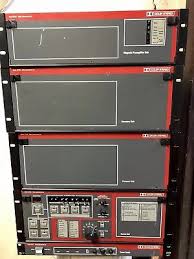
This is the processor
Posted by Marcel Birgelen (Member # 6801) on 04-04-2019, 04:13 PM:
quote: Dave Macaulay
Do DTS processors do DD and Tru-HD?
DTS hasn't produced an audio processor for years now, they're now just a licensing company. But their processor business ended up as Datasat Digital (which itself has changed owners at least once).
Datasat Digital produces the AP25, which does support most common DTS formats, but only supports Dolby AC3. At least it supports one of the many Dolby formats and there aren't many Blu-Rays out there that don't have at least one of the supported DTS formats available.
Interestingly though, the pro-consumer version of the same device, called the Datasat RS20i, supports almost all Dolby formats, including "Dolby Atmos for Consumers" aka Diet Atmos.
Posted by Steve Guttag (Member # 268) on 04-04-2019, 06:05 PM:
Dave, the CP950 has 16-channels of analog output so you do NOT need the DMA for the CP950. That is just one means of installing it. Since it can output AES67, you could feed it into a QSYS architecture too.
And I agree on the lack of multichannel analog in as well as lack of DTS support on the HDMI signal path.
Most configuration is done via the WEB-GUI. The touchpanel/knobs are pretty much just operational things.
Posted by Mike Babb (Member # 1379) on 04-06-2019, 03:05 PM:
Stephan, good seeing you and I will discuss with Paris. At the moment, because DTS and Dolby routing is different, we do set it up as you say. I will see how hard it would be to tie the stream detection to the channel mapping
Powered by Infopop Corporation
UBB.classicTM
6.3.1.2