
------------------
Jan Hackett
Theater Operations Manager
Extreme Screen Dynatheater
NM Museum of Natural History Foundation
Also, if applying FG to an old dirty print, don't expect instant results and start over applying FG when you still see dirt after the first application. Depending on how dirty the old print is, you may have to give it a few days to a week of normal FG use before you really start seeing the difference.
Oh, and I don't recommend using PTR's on a print that has been FilmGuarded. Or at all for that matter. The performance/maitenence ratio (maitenence being the cleaning that must occur between every use) is just to horrible to advocate the use of PTRs in any way, shape or form.
With normal levels of dirt on the film, they need to be cleaned between shows, which can be done quickly by "see-sawing" low stick adhesive tape to remove the dirt that they took off the film. Highly abraded or very dirty prints can "load up" the PTRs faster, requiring several passes to clean the print.
PTRs do not claim to lubricate the print, or act as a "wet gate" to hide scratches.
Kodak introduced PTR film cleaning in 1989. Kodak (FPC) and other vendors (e.g., Magnasonics, San Lab Systems, Kelmar, Speco) supply PTR film cleaning technology to thousands of satisfied users.
http://www.fpcfilm.com/US/en/motion/FPC/fpc/ptr_main.html
http://www.fpcfilm.com/US/en/motion/FPC/fpc/ptr_prod.html
------------------
John P. Pytlak, Senior Technical Specialist
Worldwide Technical Services, Entertainment Imaging
Research Labs, Building 69, Room 7525A
Rochester, New York, 14650-1922 USA
Tel: +1 585 477 5325 Cell: +1 585 781 4036 Fax: +1 585 722 7243
e-mail: john.pytlak@kodak.com
Web site: http://www.kodak.com/go/motion

(Just kidding Mr. P)
Used properly, PTRs are very effective in removing loose particulate dirt from film, and have such low risk of damaging film that they are routinely used on irreplaceable camera negatives. PTRs are a film CLEANER, plain and simple. They are not a film TREATMENT having additional properties like lubrication or scratch hiding.
------------------
John P. Pytlak, Senior Technical Specialist
Worldwide Technical Services, Entertainment Imaging
Research Labs, Building 69, Room 7525A
Rochester, New York, 14650-1922 USA
Tel: +1 585 477 5325 Cell: +1 585 781 4036 Fax: +1 585 722 7243
e-mail: john.pytlak@kodak.com
Web site: http://www.kodak.com/go/motion
The 3M film cleaner was the "grandaddy" of the Christie and Kelmar dry media cleaners. The woven media roll was driven by a separate motor, rather than geared down from a film-driven roller.
------------------
John P. Pytlak, Senior Technical Specialist
Worldwide Technical Services, Entertainment Imaging
Research Labs, Building 69, Room 7525A
Rochester, New York, 14650-1922 USA
Tel: +1 585 477 5325 Cell: +1 585 781 4036 Fax: +1 585 722 7243
e-mail: john.pytlak@kodak.com
Web site: http://www.kodak.com/go/motion

In our theatre tests of PTRs in 1989, just a few passes of the print got most of the dirt off, and then the PTRs were perfectly capable of keeping the print clean without the dirt particles transferring back to the film.
The bad experience cited by Joe in his review was related to the heavy level of projector abrasion/dusting his theatre was experiencing at that time.
------------------
John P. Pytlak, Senior Technical Specialist
Worldwide Technical Services, Entertainment Imaging
Research Labs, Building 69, Room 7525A
Rochester, New York, 14650-1922 USA
Tel: +1 585 477 5325 Cell: +1 585 781 4036 Fax: +1 585 722 7243
e-mail: john.pytlak@kodak.com
Web site: http://www.kodak.com/go/motion
quote:
The bad experience cited by Joe in his review was related to the heavy level of projector abrasion/dusting his theatre was experiencing at that time.
And that was solved by Filmguard!
John, do you have any links and/or pics for the cleaner Gordon mentions? I'd ask Gordon but you are the Human Search Engine! 
quote:
What I discovered about PTRs is this:
yes, they do transfer particles, from one part of a print to another part of a print.
John wrote:
quote:
The bad experience cited by Joe in his review was related to the heavy level of projector abrasion/dusting his theatre was experiencing at that time.
SPECO supply a special PTR assembly so that the PTR rollers can be changed whilst running film, which is useful on first runs or particularly dirty film.
------------------
John P. Pytlak, Senior Technical Specialist
Worldwide Technical Services, Entertainment Imaging
Research Labs, Building 69, Room 7525A
Rochester, New York, 14650-1922 USA
Tel: +1 585 477 5325 Cell: +1 585 781 4036 Fax: +1 585 722 7243
e-mail: john.pytlak@kodak.com
Web site: http://www.kodak.com/go/motion
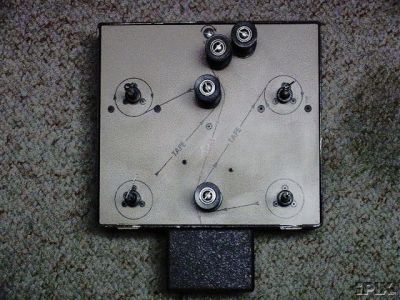
These show up on eBay once in a while. There have been others with more pictures, but this is the only one that has been recently listed.
Steven Gorsky
------------------
John P. Pytlak, Senior Technical Specialist
Worldwide Technical Services, Entertainment Imaging
Research Labs, Building 69, Room 7525A
Rochester, New York, 14650-1922 USA
Tel: +1 585 477 5325 Cell: +1 585 781 4036 Fax: +1 585 722 7243
e-mail: john.pytlak@kodak.com
Web site: http://www.kodak.com/go/motion
Steven Gorsky
------------------
John P. Pytlak, Senior Technical Specialist
Worldwide Technical Services, Entertainment Imaging
Research Labs, Building 69, Room 7525A
Rochester, New York, 14650-1922 USA
Tel: +1 585 477 5325 Cell: +1 585 781 4036 Fax: +1 585 722 7243
e-mail: john.pytlak@kodak.com
Web site: http://www.kodak.com/go/motion
------------------
John P. Pytlak, Senior Technical Specialist
Worldwide Technical Services, Entertainment Imaging
Research Labs, Building 69, Room 7525A
Rochester, New York, 14650-1922 USA
Tel: +1 585 477 5325 Cell: +1 585 781 4036 Fax: +1 585 722 7243
e-mail: john.pytlak@kodak.com
Web site: http://www.kodak.com/go/motion
PTR's rock in my opinion, and are cheaper too!
Darren
Speaking of which I need to order some more today.
Filmguard works better, however, as it does more than just remove dust from film--it also helps to hide scratches and appears to have some qualities that relax slightly warped prints. Unlike PTRs, it is also effective on very dirty or otherwise mishandled prints.
Your experience supports Kodak's initial testing of PTRs. Even when filled with abrasive dirt, PTRs have very low risk of scratching film. We actually tested this by scraping sandpaper grit onto the surface of PTRs and then cleaning camera negative film. Even after multiple passes over the dirt-laden surface of the PTR, the negative was unscratched because of the rolling contact and soft urethane PTR material. When the PTR surface is completely covered with dirt, it loses cleaning effectiveness, but will not damage film.
I have seen cases where dry media cleaners have scratched prints from head to tail when abrasive construction dirt was picked up from the print, literally turning the woven media into a piece of sandpaper.
For film cleaning "there are different horses for different courses". PTRs are ideally suited to situations where you do not want to apply chemicals or solvents to the film, and the dirt levels do not exceed the capacity of the PTRs between routine cleanings. With simple washing after each show (either in water or with "see-saw" of adhesive tape), they can clean millions of feet of film. PTRs are a simple and effective FILM CLEANER, they are not a FILM TREATMENT that changes the properties of the film itself.
------------------
John P. Pytlak, Senior Technical Specialist
Worldwide Technical Services, Entertainment Imaging
Research Labs, Building 69, Room 7525A
Rochester, New York, 14650-1922 USA
Tel: +1 585 477 5325 Cell: +1 585 781 4036 Fax: +1 585 722 7243
e-mail: john.pytlak@kodak.com
Web site: http://www.kodak.com/go/motion
Or you can consider it this way, every time you run PTRs part of the stickiness is wearing off. As such, every time you clean a print with PTRs the PTRs become less and less effective over the useful life of a print. With a media cleaner and FilmGuard, you get the "brand new" effect over and over and whether the test is done in a white glove type of environment or in a torture test (aka: construction dirt areas) FilmGuard is the clear winner everytime whether you are working in a flawlessly clean environment, or projecting with construction dirt.
BTW, the PTR "stickiness" is not from an adhesive or additive. It comes from the surface finish of the polyurethane that was chosen. Any loss of effectiveness with age is due to surface contamination (that can be washed off), physical wear, or improper storage (e.g., excessive temperature).
A quick way to test the effectiveness is to roll the PTR over a smooth dusty surface (e.g., the dusty top of a filing cabinet) and observe whether 95% of the dust particles are picked up.
------------------
John P. Pytlak, Senior Technical Specialist
Worldwide Technical Services, Entertainment Imaging
Research Labs, Building 69, Room 7525A
Rochester, New York, 14650-1922 USA
Tel: +1 585 477 5325 Cell: +1 585 781 4036 Fax: +1 585 722 7243
e-mail: john.pytlak@kodak.com
Web site: http://www.kodak.com/go/motion
------------------
John P. Pytlak, Senior Technical Specialist
Worldwide Technical Services, Entertainment Imaging
Research Labs, Building 69, Room 7525A
Rochester, New York, 14650-1922 USA
Tel: +1 585 477 5325 Cell: +1 585 781 4036 Fax: +1 585 722 7243
e-mail: john.pytlak@kodak.com
Web site: http://www.kodak.com/go/motion
------------------
John P. Pytlak, Senior Technical Specialist
Worldwide Technical Services, Entertainment Imaging
Research Labs, Building 69, Room 7525A
Rochester, New York, 14650-1922 USA
Tel: +1 585 477 5325 Cell: +1 585 781 4036 Fax: +1 585 722 7243
e-mail: john.pytlak@kodak.com
Web site: http://www.kodak.com/go/motion
quote:
"With simple washing after each show (either in water or with "see-saw" of adhesive tape), they can clean millions of feet of film."
quote:
"A theatre cleaning 5 shows per day is cleaning about 1.5 million feet of film per month."
So again, how is it that PTRs are less expensive than a FilmGuard/media cleaning setup? PTRs are far from $20 items. The answer: PTRs are more expensive and have less cleaning effect and no lubricating qualities.
PTRs have their place in laboratories and special venue situations such as IMAX. FilmGuard/media cleaners have their place in the common 35mm projection booth.
------------------
John P. Pytlak, Senior Technical Specialist
Worldwide Technical Services, Entertainment Imaging
Research Labs, Building 69, Room 7525A
Rochester, New York, 14650-1922 USA
Tel: +1 585 477 5325 Cell: +1 585 781 4036 Fax: +1 585 722 7243
e-mail: john.pytlak@kodak.com
Web site: http://www.kodak.com/go/motion
We can argue this point every day for the next year, but PTRs simply are not as effective a a FilmGuard/media cleaner combo in a multiplex. If you really want to continue to try and convince people that PTRs are more effective, then let's both of us perform a public "worst case senario" to see which system is more effective. We can head to the next theater under construction and run prints side-by-side with the two systems. I'll even let you stand there and change out and rewash your PTR rollers every 60 seconds on every show if you like while I sit back and watch the media cleaner run fully automated. Beware though, you WILL leave the demo embarassed. I've opened new theaters before with FilmGuard where dust would settle on the print thick enough that you could wipe a clean spot on the edge of the print by the end of the movie and NONE of the prints had a mark on them even with all of that dirt floating around. Try THAT with PTR rollers!
There are many applications where you don't want to, or need to, leave any foreign substance on the film. Proper lubrication of release prints is a legitimate recommendation, and is specified by SMPTE Recommended Practice RP 151.
------------------
John P. Pytlak, Senior Technical Specialist
Worldwide Technical Services, Entertainment Imaging
Research Labs, Building 69, Room 7525A
Rochester, New York, 14650-1922 USA
Tel: +1 585 477 5325 Cell: +1 585 781 4036 Fax: +1 585 722 7243
e-mail: john.pytlak@kodak.com
Web site: http://www.kodak.com/go/motion
Darren
P.S. Who else thinks Mr John Pytlak rules!!
Regarding your incorrect implications about how PTRs can be removed mid-show, bear in mind that not all PTR cleaner mounts are designed so that they are by-passable in mid show. Also, with a media cleaner (which is apparent that you have never used) the media cloth is constantly turning, presenting a fresh stretch of media.
Finally, I have an extensive collection of old film (basically trailers because I could get two brand new copies of each for comparison purposes) stored in a variety of conditions dating back about 13 years now. In all situations, regardless of how they were stored, and without exception, the FilmGuarded print is in better condition than the identical copy stored dry. The prints not FilmGuarded have dried out, become brittle, warped and cracked. Make sure you are speaking from experience whenever you speak about a product, or make sure you put your own disclaimer in there that "I have not tried this product, but that product works well for me"...or something to that nature.
So please answer the question, have you ever personally used FilmGuard? I'm pretty sure I know the answer, but I want to hear it from you.
And yes I agree with you that Cinemecannica projectors are incredibly gentle on film.
PTR's only CLEAN the film, they are not a FILM TREATMENT intended to change the properties of the film, such as providing lubrication or hiding scratches.
"Different horses for different courses".
------------------
John P. Pytlak, Senior Technical Specialist
Worldwide Technical Services, Entertainment Imaging
Research Labs, Building 69, Room 7525A
Rochester, New York, 14650-1922 USA
Tel: +1 585 477 5325 Cell: +1 585 781 4036 Fax: +1 585 722 7243
e-mail: john.pytlak@kodak.com
Web site: http://www.kodak.com/go/motion
Enough said. No hard feelings but...
Quote
'Regarding your incorrect implications about how PTRs can be removed mid-show, bear in mind that not all PTR cleaner mounts are designed so that they are by-passable in mid show.'
I said ....
Quote
'you can allways stop and swap PTR's mid rehersal.'
Sorted.
It's hard to say how much use my PTRs had on them because I never used them constantly except on a print of Titanic. Also City of Angels and Saving Private Ryan. From then on we'd use them off an on. Somehow the print of Titanic stayed fairly clean. Not spotless, though. It was a used print when we got it (I think the managers ordered a new print to replace our dirty print) so maybe it was a "P5'd" print (It was called 'P5' until we named it 'Filmguard') from one of Brad's test theaters and that's why it didn't shed as much. It did have some blotches in a few reels that obviously occured at the lab and I can see one of Brad's test theaters rejecting the print. But of course it was probably run with P5 until the new print arrived. Hey you never know!  But that print did give me a near-steady 0 error rate from our Dolby Digital basement readers. Actually I seem to remember Brad saying that none of his test theaters (besides Northpark) was running Titanic, so maybe the print was coated with a layer of magical power, because it definitely did not shed.
Even after they lost their "sticky" the PTRs did still gather dust and dirt, but not much. You couldn't tell the difference after running PTR's on a print for a day. The "sticky" just wasn't "sticky" enough. PTRs could increase their value if you could peel layers off to get a "like new" roller after the current layer had worn out. PTRs are great for camera negatives and stuff like that. Filmguard for your average movie theater and archival purposes.
Darren Briggs-
I had a print that was very old and broke every single time it was run. I put Filmguard on that and it stopped breaking. Filmguard really relaxes acetate prints. I believe that with my Filmguarding I have extended the overall life of that print considerably. Plus the print looked incredible after a couple of days of Filmguarding. This can also be verified by any one of the projectionists who work at my theater. Sorry if you don't feel that's a good thing.
There are private and public labs that can be hired to evaluate the effects of various film treatments and storage conditions on long term film stability:
http://www.rit.edu/~661www1/sub_pages/8contents.htm
Kodak has published numerous technical papers in the SMPTE Journal that discuss the properties of the various chemicals suitable for film cleaning, wet-gate printing, and film lubrication to aid vendors in formulating their film treatments. SMPTE Recommended Practice RP 151 specifies proper lubrication of release prints.
Many others in this thread and others have made positive comments about PTR film cleaning in their applications. Again, PTRs are an effective and low cost method of CLEANING film in many applications where the use of solvents and chemicals is not advised or practical.
------------------
John P. Pytlak, Senior Technical Specialist
Worldwide Technical Services, Entertainment Imaging
Research Labs, Building 69, Room 7525A
Rochester, New York, 14650-1922 USA
Tel: +1 585 477 5325 Cell: +1 585 781 4036 Fax: +1 585 722 7243
e-mail: john.pytlak@kodak.com
Web site: http://www.kodak.com/go/motion