This is topic Piracy in forum Ground Level at Film-Tech Forum ARCHIVE.
To visit this topic, use this URL:
https://ft-forum.com/ft/cgi-bin/ubb/ultimatebb.cgi?ubb=get_topic;f=5;t=001700
Posted by Justin Gorka (Member # 3727) on 05-20-2006, 06:11 PM:
I've just found a copy of the Da Vinci Code film on the net. It is such a good copy there is no way it came from a cinema. Isn't it about time the studios looked a little closer to home rather than blaming us?
Posted by Mike Blakesley (Member # 26) on 05-20-2006, 06:41 PM:
quote: Justin Gorka
I've just found a copy of the Da Vinci Code film on the net.
So you called the proper authorities, right?
Posted by Justin Gorka (Member # 3727) on 05-21-2006, 06:03 AM:
Contacted FACT in the Uk. No reply yet
Posted by John Koutsoumis (Member # 1855) on 05-21-2006, 07:55 PM:
Who knows where this copy came from but still many copies are taped off a screen as far as I know. I saw an article some time last year stating that pirate copies are getting harder to distinguish in some cases. Some copies now have multi-language tracks, subtitles, even a DTS track.
Some years back I was involved with filming a behind the scenes doco on a Theatre production. At the end of filming we decided to take in a movie. Instead of risking the camera case in the car (it was a Sony PD-150 DVCAM in a large case) where it could easily be seen we took it with us. Nobody said a thing to us walking in but on the way out of the auditorium (we satyed for the end credits) an usher asked us "you weren't filming that were you". We continued to walk out and left the usher dumbfounded. Before we proceeded down the stairs to the lobby another usher said "You need to open that case. What's in there?".
My good friend who was carrying the case said nothing. I said that we weren't filming and explain why we had the case with us. I didn't mention that there was a camera in there. I grabbed the arm of my friend pulled him along. Had we opened the case there would of been trouble even though it stayed shut throughout the movie. The usher was then trying to wave to security or management but we made it out (casually walking) before any one else approached us.
In any case they were just doing their job. I just didn't want to get held up. What we should of done was ask to leave it the box office but the cameraman didn't like the idea as they don't take responsiblity.
Actually we shouldn't have gone there at all. The movie and presentation sucked (i think it was Spiderman).
Anyhow if I was the usher I would have done the same thing.
Well that was the first and last time I go to a Theatre with someone carrying a large case ![[Eek!]](eek.gif)
Posted by Matthew Peters (Member # 1495) on 05-23-2006, 10:13 PM:
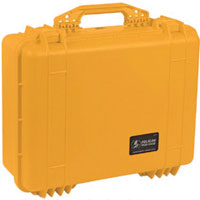
John, I have done the exact same thing, in fact it was also with a Sony PD-150, in a giant yellow case. To my surprise, I wasn't even questioned about its contents. I found this surprising as they usually check backpacks. I have carried it on the train once... people take one look at you and assume your about to blow up the train.
Posted by John Koutsoumis (Member # 1855) on 05-24-2006, 02:11 AM:
Matthew, ours was the same case but just black.
quote: Matthew Peters
I found this surprising as they usually check backpacks.
I've never seen ticket rippers or ushers check backpacks but I remember at the, now closed ![[Frown]](frown.gif) , Village City Center Bourke St cinemas where they actually employed security guards (to many junkies and dealers around there I suppose) that they would often check bags of all sorts. I used to go there every week and they would get know me well.
, Village City Center Bourke St cinemas where they actually employed security guards (to many junkies and dealers around there I suppose) that they would often check bags of all sorts. I used to go there every week and they would get know me well.
I find a lot of staff at the multi's here quite ignorant and clueless of what's going on.
Posted by John Pytlak (Member # 331) on 05-24-2006, 08:29 AM:
Aside from piracy, with the small but real threat of terrorist attacks on large gatherings of people, theatres would be prudent to exclude large packages, backpacks, or cases from the auditoriums.
Posted by Frank Angel (Member # 248) on 05-24-2006, 01:22 PM:
quote: John Pytlak
Aside from piracy, with the small but real threat of terrorist attacks on large gatherings of people, theatres would be prudent to exclude large packages, backpacks, or cases from the auditoriums.
We have started doing that. It's a hard balance between making your patrons feel comfortable yet assuring that you are taking precautions to avoid potential tragedy. It also happens to be a Front of House logistical nightmare in a 2500 seat house.
quote: John Koutsoumis
Who knows where this copy came from but still many copies are taped off a screen as far as I know.
Copies that are taped off the screen look like dog do. These are hardly the bootlegs that are real dangers to the studios. The real threat is the over-seas DVD market and even theatrical enagements of bootleg videos, and those foreigners demand master quality, not some low rez crap with people coughing throughout.
quote: John Koutsoumis
I saw an article some time last year stating that pirate copies are getting harder to distinguish in some cases. Some copies now have multi-language tracks, subtitles, even a DTS track.
Well, THOSE copies are not from the off the screen bootlegs. You don't get Dolby and DTS 5.1 sound off a movie screen.
Most of the really potentially damaging bootlegs happen at the post-production stage -- an AT&T study a few years ago showed that to be the case. The MPAA seems not to want to go after those who pay to keep it in business.
Posted by Phil Blake (Member # 2012) on 05-25-2006, 01:42 AM:
I seem to remember late last year 3 or 4 guys being apprehended for making illegal copies of a film on disc from an editing studio.
When Film is scanned onto computers for editing , this would just be all to easy to copy with premium quality picture and sound and most likey many weeks or months ahead of the planned release date.
Posted by John Koutsoumis (Member # 1855) on 05-25-2006, 08:13 PM:
quote: Frank Angel
Copies that are taped off the screen look like dog do. These are hardly the bootlegs that are real dangers to the studios. The real threat is the over-seas DVD market and even theatrical enagements of bootleg videos, and those foreigners demand master quality, not some low rez crap with people coughing throughout.
I know they look like crap but they still buy them in Singapore and places around there. These people don't care about quality. They just want picture and sound. Although some may have moved to DVD most are still on VCD. Don't know how people sit through that stuff.
At last years Melbourne International Film Festival, Hong Kong Director "Johnny To", as part of his introduction to his film "Election" prior to screening, said to the audience if they would please not copy/video tape the film.
For someone like him, who doesn't make so called "popular films", to say something like that may indicate the piracy does affect the industry a little more than some people care to acknowledge.
quote: John Pytlak
Aside from piracy, with the small but real threat of terrorist attacks on large gatherings of people, theatres would be prudent to exclude large packages, backpacks, or cases from the auditoriums.
I agree and I didn't the idea of my colleague taking the case into the theatre. Don't know about normal backpacks. They shoud just be checked.
Posted by Andy Muirhead (Member # 712) on 05-25-2006, 08:53 PM:
quote: John Pytlak
Aside from piracy, with the small but real threat of terrorist attacks on large gatherings of people, theatres would be prudent to exclude large packages, backpacks, or cases from the auditoriums.
Yes, that sounds like a great idea in theory. It is almost unworkable in practice. The threat (of such a package carrying a bomb or otherwise) is as tiny as be to be almost insignificant. Certainly many high profile/high traffic sites should be vigilant, otherwise i think common sense should be sufficient.
Posted by Carl Martin (Member # 1146) on 05-26-2006, 03:59 AM:
i always have a backpack with me, at movies too. that's where i keep my bottle of water, reading material, etc. let's not get paranoid, now.
Posted by Frank Angel (Member # 248) on 05-26-2006, 09:19 AM:
quote: Andy Muirhead
The threat (of such a package carrying a bomb or otherwise) is as tiny as be to be almost insignificant. Certainly many high profile/high traffic sites should be vigilant, otherwise i think common sense should be sufficient.
This is true Andy, but what General Manager wants to be the one who, if a bomb does go off in his facility under his watch, has to stand in front of the news cameras and tell everyone that he didn't have any sort of precautionary plan in place to watch for potential threats because in his judgement he didn't think his theatre was high profile enough for the effort or that any security in that direction was impractical.
Getting a balance between what would be considered a "reasonable" effort to thwart any kind of mishap be it a bomb in a napsack or any other safety issue, and what can be practical and workable in day-to-day operations is a very hard row to hoe. Usually after something terrible happens, what one thought was reasonable may be seen by the outside world as doing not nearly enough.
Posted by Paul J. Neuhaus (Member # 3205) on 05-28-2006, 02:55 PM:
Piracy is a major problem in the middle east.
When I was in Afghanistan and Iraq within 24-48 hours after a release you would see bootlegs go on sale in the Haji shops.
Some of these would look like crap but it was the gamble that you would play for 2 bucks. Some of the covers of these things would actually look identical to what the box set would look like when it actually went on sale..... Kinda makes ya scratch your head there.....STUDIOS!!!
Within 3 days some of these flics also had a 5.1 track as well....Sounds like the problem is closer to home then we want to admit!!!
Posted by Bobby Henderson (Member # 840) on 05-28-2006, 06:47 PM:
Any pirated movie on DVD featuring a 5.1 audio track is bound to come from a pre-release DVD screener disc or some other digital elements related to post-production. They do not come from any release prints.
Even if you could manage to record the digital data from theatrical Dolby Digital and DTS tracks they would NOT work in any consumer playback device. The theatrical DD format has features to it which require a theatrical DD playback device. The theatrical DTS format is encoded in an entirely different process from the home version.
The only alternative is gaining access to the projection booth and using some equipment to record the analog line outputs for each audio channel and then recomposing that into a 5.1 track. Oh, and you would have to make sure the audio synched properly with the movie as well. Even if everything could work the resulting audio quality would not be all that great. I strongly doubt any pirate is going to that kind of trouble just to get a somewhat decent 5.1 track. They're just going to do like most pirates do: get a DVD screener disc and dub the hell out of that.
Posted by David Stambaugh (Member # 1102) on 05-28-2006, 08:05 PM:
Regal instituted a "No backpacks or other large packages" policy right after 9/11, though I'm not sure they really enforce that policy here in Eugene.
Posted by Michael Gonzalez (Member # 593) on 05-28-2006, 11:51 PM:
I work at a mall location so it is pretty much impossible to enforce a similar policy cause a lot of customer carry their shopping bags into the theater with them. I do try to get them to take their leftover food back to their cars if they are coming back from having dinner at a restruant in the mall.
Posted by Carl Martin (Member # 1146) on 05-29-2006, 03:49 AM:
quote: Paul J. Neuhaus
Piracy is a major problem in the middle east.
When I was in Afghanistan and Iraq within 24-48 hours after a release you would see bootlegs go on sale in the Haji shops.
are there even movie theaters in afghanistan and iraq?
aside from iran, i'm not aware of any film culture to speak of in or from the hardcore islamic countries.
Posted by William Collins (Member # 3773) on 05-29-2006, 04:03 AM:
I think there are alot of rogue projectionists out there now. Its all to easy to take a camera into a booth and just plug it into the sound. Where I worked in the UK it would have been a piece of cake. No one ever bothered checking bags there, any member of staff could have walked upstairs and just plonked a camera on the ledge of the porthole, then all it would of taken is a line cable from the sound rack.
I did a bit of research into how else pirated films are made and I discovered than there are some projectionists who build a form of telesync equipment to pysically record the film and sound from the 35mm, and that it could be down while a film was playing, Though im not sure of the mechanics of this.
Posted by Paul J. Neuhaus (Member # 3205) on 05-29-2006, 03:17 PM:
Carl,
Perhaps you misunderstood. You could buy a movie on DVD with a digital track mere hours after it was released in theatres in the states.
To answer your question I don't think there are any theatres in to speak of.
The big question which I think has come up several times in this thread is where is a copy of such high quality coming from. There has to be some problems at the studio/distributor level
It's rather scary to think of how fast these pirates move. Here we are thousands of miles away from home and we didn't have to worry about missing a new release because in a day or two it would be for sale at the local Haji shop!!
Posted by Robert John Jeromson (Member # 2559) on 05-29-2006, 04:11 PM:
quote: William Collins
I think there are alot of rogue projectionists out there now
That seems to be the case as far as distributors are concerned, but I doubt very much that most of the people using this sight would have any time for such a practice.
The assumption that as soon as the print arrives on the door step that the projectionist is going to want to copy it has made life incredibly difficult for most of us, with split deliveries and false names.
I don't dispute the importance of security its the attitude that we are all secret pirates that winds me up. This job demands a high level of integrity, that means doing the right thing even when no-one is watching.
The actions of a small few, who have no business showing films, have pigeon-holed the rest of us.
Posted by Bobby Henderson (Member # 840) on 05-29-2006, 06:01 PM:
quote: Paul J. Neuhaus
You could buy a movie on DVD with a digital track mere hours after it was released in theatres in the states.
Actually, a great deal of pirated DVDs are becoming available BEFORE the movie is actually released. Pirated DVDs of The DaVinci Code and Mission: Impossible III were appearing on the streets of New York, store shelves in China and even combat zones in Iraq before the movies hit theaters.
China does a great deal of business with middle eastern nations. It's no trick at all for them to ship many thousands of pirated DVDs over into combat zones to sell to anyone with a little cash.
Really, the whole idea of just videotaping the screen to bootleg a movie is quite laughable. Remember, that Seinfeld episode that lampoons the practice is more than a decade old now. Such acts of piracy were plausible and worth fighting when everyone was using VHS tape players. Piracy is extremely different now with DVD. Most piracy comes from something else besides a 35mm film print.
The fact that Hollywood keeps throwing CRAP CODE onto release prints just shows they continue to not understand the nature of the problem. I saw that chicken pox garbage all over M:i:III and thought to myself, "I'll bet the Chinese pirated DVD versions don't have that stuff at all."
Basically anyone who wants to waste two hours of their life watching a low rez VCD dub of someone's camcorder footage of a movie screen deserves to get laughed at pretty hard. If they're into watching movies illegally it is quite a bit easier to obtain much better quality versions elsewhere. Many can be downloaded off the Internet in DVD format for little if anything at all.
One can try as hard as he can to make a pirated version of a movie from a 35mm release print and they'll end up with product that doesn't approach the level seen on mass produced pirated DVDs.
Trying to fight film piracy at the movie theater level is like trying to treat someone's cancer after they've already died of the disease. Get with it, MPAA! The piracy is happening elsewhere!
Posted by Paul J. Neuhaus (Member # 3205) on 05-29-2006, 06:43 PM:
You tell em Bobby!!! Amen
To anybody who has not seen that Seinfeld episode that Bobby was talking about it is a must see. Truly Hilarious!
Paul
Posted by William Collins (Member # 3773) on 05-30-2006, 01:13 AM:
When I was working in the UK I found out that most other cinemas used a company called the projectionist union, to hire projectionist, and I realise that this may have something to do with piracy now, my cinema just hire any one, and if they wanted to work upstairs they were just trained by the tech when ever possible and told to work whenever.
So the idea of having a 'Projectionists Union' seemed like a good one to weed out the people that were likely to be pirating films using the cam method.
DVD screener copies are out there, but they are far a few between from what I gather, and it appears to me that its mainly the ones with alot of CG in them aswell. Which would suggest that its coming from some one inside the companies that deal with the CG.
Posted by Bobby Henderson (Member # 840) on 05-30-2006, 08:58 AM:
I don't know about the UK, maybe film pirates haven't "modernized" there yet. Nearly all the cases of film piracy happening just about everywhere else is coming from digital-based elements, NOT bootlegged videotape footage of a movie screen.
Sure, you can find some Nigerian guys on certain parts of Broadway (in Manhattan) selling camcorder footage movies -but even many of them have moved to selling the DVDs since many are appearing before the movie is even released, thus increasing their potential value.
I just have to strongly disagree with the notion most film piracy occurs via camcorders smuggled into theaters. That is just flat out wrong.
Posted by Leo Enticknap (Member # 534) on 06-01-2006, 03:17 PM:
'Projectionists' Union' ?! Never heard of it.
All the projectionists I've ever come across who were members of a trade union belonged to BECTU.
Anyhow, if surreptitiously camcordering films at your local fleapit seems too boring, here's how to pirate an LP.
Posted by Ben Wales (Member # 92) on 06-01-2006, 04:05 PM:
It would be interesting to see how 2K Digital Cinema will combat this and stay ahead before someone cracks the security code of the Digial content?.
Posted by Mike Blakesley (Member # 26) on 06-01-2006, 05:48 PM:
quote: Ben Wales
someone cracks the security code of the Digial content?
What's the need? The pirates are already making their DVDs by stealing originals directly from the film companies before theatres even show a film, so it's a moot point.
Posted by Frank Angel (Member # 248) on 06-03-2006, 10:33 AM:
I went to Juniors in Brooklyn last night (famous for its incredible cheese cake). Outside the resturaunt a guy had about 80 DVD titles displayed on the sidewalk, proclaiming "Original DVD quality here....original DVD quality here -- first run movies." I asked what he meant by DVD quality. He said these were not off the screen copies but "original" DVDs. Obviously this guy knew the difference. I looked at the titles -- every top grossing film that was in current release was there. I said, "Even MI3 is original?", and he apolgized profusely saying, no, those were sold out; the one he was selling was a "screen copy," which he insisted was very good. He said he had run out of "original" MI3 DVDs but he would get a new supply tomorrow. Then get this. He said if I bought two of any of the original DVD titles he'd give me the MI3 screen copy. I asked if he would be there the next night. He didn't hesitate to tell his working hours -- 9pm to midnight. I asked if any police ever gave him any trouble. He said THE COPS ARE HIS BEST CUSTOMERS.
I love Bobby's analogy -- the MPAA is treating piracy like the doctor who treats a patient for cancer after he's already died.
As much as the studios have misguided their anti-piracy efforts, you can see how this delemma has really become one huge, semingly insermountable problem. Unfortunately, the studios seem to understand that if they can't plug the leeks at the post-production stage, then the throw up their hands and the only alternative they see is to get the commercial DVDs out to the public before they loose too much $$$ to the street vendors with their pirated high quality bootlegs....and THAT is very bad for exhibitors indeed.
Only solution is to plug the leaks in the post production stage where these bootlegs seem to eminate.
Posted by Justin Gorka (Member # 3727) on 06-06-2006, 07:51 PM:
Seems someone has a bug up their arse about UK projectionists. We are just as professional as the rest of you. I would never dream of copying a print. I was offered £500 to film King Kong last year, afraid I like my job too much to be so irresponsible.BECTU is the UK's Union and there is no central hiring area for projectionists, we all start from scratch and learn from the ground up. Maybe the New Zealander didn't have a very good time in the UK, beer too warm (or, more likely, too strong)?
Posted by Bobby Henderson (Member # 840) on 06-07-2006, 07:25 AM:
quote: Ben Wales
It would be interesting to see how 2K Digital Cinema will combat this and stay ahead before someone cracks the security code of the Digial content?.
I'm sure someone could figure out a way to make a DVD copy from it. However, it sure seems like it would be difficult.
First, you must have access to the booth and the data server system. Next, the would-be pirate must be familiar with the system and know some way how he can copy the movie data off the server. Third, the would-be pirate would need enough portable disc capacity to make a copy. I'm not even sure one of those new 2 Terabyte portable hard disc systems would be enough to hold one movie -that is if it is encoded in that 150Mb/s-250Mb/s bandwidth the DCI spec suggests.
Even if the pirate can get a perfect digital copy of the movie out of the theater and back home, he would need a hell of an expensive computer setup to properly deal with that high bandwidth video and be able to downsample it to something like DVD .VOB format.
In the end, it's just a lot easier for pirates to use those screener DVDs.
Posted by John Pytlak (Member # 331) on 06-08-2006, 09:18 AM:
quote: Justin Gorka
I was offered £500 to film King Kong last year, afraid I like my job too much to be so irresponsible.
Hopefully you reported that offer to the authorities? Someone offering £500 may not be a "big fish", but they could lead to the higher-ups financing some of these piracy operations.
http://mpaa.org/ReportPiracy.asp
http://www.fact-uk.org.uk/
http://www.fact-uk.org.uk/site/about/metpolice.htm
quote:
23rd February 2006
Dedicated Film Piracy Unit Launch
A new police unit dedicated to combating film piracy and the organised criminal networks sustaining the manufacture and distribution of counterfeit film product is launched today by the Met’s Economic and Specialist Crime Command, in partnership with the Federation Against Copyright Theft [FACT].
The Unit will investigate those individuals and organisations accruing sizeable criminal profits and leading affluent lifestyles from illegal activity in the area of film piracy. The Proceeds Of Crime Act 2002 will act as a powerful tool in this respect, providing officers with the necessary powers to take the cash out of this type of crime, and in turn preventing both the funding of further criminal activity and reducing the presence of criminal role models in local communities.
Posted by Justin Gorka (Member # 3727) on 06-09-2006, 08:01 PM:
Unfortunatly I soon as I gave him my views he did a runner. Left his drink too!
Posted by Leo Enticknap (Member # 534) on 06-20-2006, 07:49 AM:
quote: BBC News Online, 20 June 2006
A device that could foil movie pirates who covertly record films in cinemas has been developed in the US.
The prototype is able to locate the position of a digital camera, before overwhelming it with white light to render any recorded images useless.
The Georgia Institute of Technology team say the invention could also prevent clandestine photography. However, the device is unable to block conventional film or the SLR cameras, preferred by the paparazzi.
"We're at a point right now where the prototype we have developed could lead to products for markets that have a small, critical area to protect," said Professor Abowd of the Georgia Tech College of Computing.
In particular, his team are looking at ways to prevent photography in government buildings or at trade shows, where industrial espionage could be a problem. The team are also working with the motion picture industry to prevent illegal copying of films, which has become a particular problem in parts of Asia.
A study released by the Motion Picture Association (MPA) said that movie piracy in China cost the film industry $2.7bn (£1.5bn) in 2005.
The technology works by looking for the digital camera's image sensor known as a charge-coupled device (CCD). These silicon sensors are retroreflective, which means that they reflect light directly back to its origin, rather than scattering it.
The prototype uses two cameras, linked to a computer, to look for this reflected light from the camera's CCD. As the reflected light is travelling in a straight line from the CCD, it allows the computer system to accurately pinpoint the location of the camera. Once found, the system floods the CCD with white light from a projector to "blind" the camera.
"The biggest problem is making sure we don't get false positives from, say, a large shiny earring," said Jay Summet, a research assistant at Georgia Tech who helped build the device. "We need to make our system work well enough so that it can find a dot, then test to see if it's reflective, then see if it's retroreflective, and then test to see if it's the right shape."
In the future, the researchers believe the system could use infra-red lasers and photo-detecting transistors, rather than cameras to search for CCDs. They also believe that a real-world version would probably use a laser to overwhelm the image sensor with white light.
At the moment, the team are close to developing a commercial system that neutralises still cameras. Still cameras are easier to spot than camcorders because their CCD is closer to the lens and there is less interference with the reflected light. However their ultimate goal is to develop a system to combat film piracy.
The movie industry is particularly keen to clamp down on this because of the billions of dollars in lost revenue blamed on film piracy. At present, they mostly rely on the alertness of staff at cinemas to spot people filming. However, Disney took this one stage further in 2003 when it issued security staff with night vision goggles and metal detectors, ahead of screenings of the animated movie Finding Nemo.
Clever, but it ain't going to stop DVD screeners finding their way out of Hollywood...
Posted by Ron Keillor (Member # 1790) on 06-23-2006, 12:50 AM:
http://lawfuel.com/show-release.asp?ID=5996
Press Release - Thirtieth copyright conviction as part of Operation Copycat - Includes Film Critic Who Admitted to Selling Over 100 Movies For Illegal Distribution
Posted on Tuesday, June 20, 2006
LawFuel.com
Operation Has Yielded First Convictions in U.S. for Camcording in a Movie Theater and Uploading "Pre-Release" Movies on the Internet
SAN JOSE – LAWFUEL - Press Release Service - United States Attorney Kevin V. Ryan announced that as part of the ongoing prosecution arising out of Operation Copycat, two more individuals were convicted yesterday, bringing the total number of convictions to thirty. Since July 14, 2005, thirty-six individuals have been criminally charged as part of the ongoing investigation into online "warez" sites, and thirty of those individuals have been convicted since September 26, 2005.
Tom Leung, 53, of Cupertino, California, and Ray Morada, 32, of Washington, D.C., were each convicted today of conspiracy to commit criminal copyright infringement by electronic means, in violation of 18 U.S.C. § 371, and copyright infringement by electronic means and aiding and abetting, in violation of 17 U.S.C. § 506(a)(1)(B), 18 U.S.C. §§ 2, 2319(c)(1). Both defendants also agreed to forfeit their interest in computer and other equipment used to violate the criminal copyright laws.
On May 22, 2006, Paul Sherman, a film critic, of Malden, Massachusetts, pleaded guilty to aiding and abetting criminal copyright infringement by distributing a copyrighted work on a computer network. Sherman admitted that between May 2002 and June 2005, he sold over one hundred movies to a known warez supplier.
"Operation Copycat has yielded the conviction of a film critic who sold approximately 117 movies for illegal distribution. In addition, the case has yielded several notable firsts including the first convictions for recording a movie in a theater and uploading a pre-released movie on the Internet. The success of this investigation shows that individuals cannot hide behind advanced technology and the Internet to reproduce and distribute copyrighted works," U.S. Attorney Kevin V. Ryan stated. "I thank the FBI and the prosecution team for their outstanding work on this case."
Description of Warez Sites:
The charges stem from the undercover investigation targeting online "warez" groups illegally distributing newly-released movies, games, software and music. Warez groups are the "first-providers" of copyrighted works to the warez underground - the so-called "release" groups that operate as the original sources for a majority of the pirated works distributed and downloaded via the Internet. Once a warez release group prepares a stolen work for distribution, the material is distributed in minutes to secure, top-level warez servers throughout the world. From there the pirated works are distributed globally within a matter of hours, filtering down to peer-to-peer and other public file sharing networks accessible to anyone with Internet access.
Higher level members of the warez groups, known as site operators or "SiteOps," administered and maintained the site and controlled access to the site by use of security measures such as usernames and passwords. Others serve as "equipment suppliers" (providing hardware, such as hard drives, computer parts, and computer servers to the warez site), "encoders" or "crackers" (those defeating copy protection devices); "scripters" (creating, programming, and helping build the warez site); "brokers" (who found groups to participate on the warez site). Lower level members included "suppliers" (providing an unauthorized copyrighted movie, game or software), "cammers" (those making unauthorized camcorder recordings in movie theaters), and "couriers" (those who gather the copyrighted material and upload it to the warez site).
Forfeitures
A substantial amount of equipment used in the copyright violations is being forfeited to the government. As part of each plea agreement, each defendant has agreed to forfeit any right, title and interest they have in computer and other equipment that was seized during the federal search warrants executed on June 29, 2005. The Forfeiture Section of the U.S. Attorney’s Office has assisted on the forfeiture of the following materials to date:
162 computers;
16 laptops;
5,448 infringed CDs and DVDs;
414 VHS tapes and floppies;
29 key boards and monitors;
5 digital cameras;
40 PlayStation and Xbox consoles;
15 i-Pods;
7 computer towers; and
a Plasma TV, cell phones, speakers, an MP3 player.
30 Guilty Pleas To Date:
Since September 26, 2005, the following thirty individuals have been convicted as part of Operation Copycat. The convictions have included the first under two new copyright statutes, including a new "camming" statute (unauthorized recording of motion pictures in a motion picture exhibition facility) and a new statute for uploading pre-releases on the Internet (criminal copyright infringement by distributing a copyrighted work on a computer network).
Two persons have been convicted for violating the Digital Millennium Copyright Act, which focuses on circumventing copy and access security measures (in contrast to infringement or the reproduction and distribution of copyrighted works):
February 27, 2006: David M. Fish, 24, of Watertown, Connecticut, a site operator and scripter, equipment supplier, broker, leech, and encoder for the warez sites, pleaded guilty to two violations of the Digital Millennium Copyright Act, including distribution of technology primarily designed to circumvent encryption technology protecting a right of a copyright owner; and circumventing a technological measure that protects a copyright work, in addition to other copyright charges.
May 22, 2006: Kevin Smith, of Columbia, Missouri, pleaded guilty to circumventing a technological measure that protects a copyright work
Two persons have been convicted under the new "camming" statute (unauthorized recording of motion pictures in a movie theater), including the first conviction in the country under the April 2005 statute:
September 26, 2005: Curtis Salisbury, 19, of St. Charles, Missouri, pleaded guilty to two charges under the recently enacted "Family Entertainment and Copyright Act of 2005." He will be the first person convicted in the country under new statutes concerning the use of recording equipment in movie theaters and making a commercially distributed movie available for public consumption on a computer network. Investigators located Salisbury after analyzing the "dots" used on movies to designate the specific theater where the film was released. Salisbury admitted that, as an employee at the Des Peres Cinema 14 Theater Complex in St. Louis, Missouri, he used a camcorder to make and transmit copies of the movies. After the theater had closed to the public, he connected the camcorder equipment directly to the projector sound board while recording films in the theater. He also used a mini-disc recorder to capture the film sound that he later synchronized with the video using his computer to enhance the sound quality. His goal was to sell these unauthorized recordings by uploading them to the warez site. The movies included "The Perfect Man," which he uploaded on June 21, 2005, and "Bewitched," which he uploaded on June 28, 2005.
April 17, 2006: Susan Rempe, 55, formerly of Salinas, California (presently Bloomfield, New Mexico), pleaded guilty to "camming" or unauthorized recording of motion pictures in a movie theater. She admitted serving as a "cammer" by using audiovisual equipment to make and transmit unauthorized copies of movies, and portions thereof including sound, which were then uploaded to a warez site. She was employed at the Century Park 7 Theaters in Salinas, California. Some of the infringed movies included "A Lot Like Love," which she uploaded on May 20, 2005, and "Madagascar," which she uploaded on June 5, 2005 to the same warez server.
Three persons have been convicted under the new statute for uploading pre-releases on the Internet (criminal copyright infringement by distributing a copyrighted work on a computer network), including:
September 26, 2005: Curtis Salisbury, 19, of St. Charles, Missouri, noted above (first conviction in the country under new statute)
March 13, 2006: Matthew Fong, 19, of Miami, Florida , pleaded guilty to criminal copyright infringement by distributing a copyrighted work on a computer network, in addition to other copyright charges
May 22, 2006: Paul Sherman, of Malden, Massachusetts, a film critic, pleaded guilty to aiding and abetting criminal copyright infringement by distributing a copyrighted work on a computer network. Sherman admitted that between May 2002 and June 2005, he sold approximately 117 movies to a known warez supplier.
The following persons have pleaded guilty to conspiring to commit criminal copyright infringement and to violating the NET Act and aiding and abetting with the date of conviction noted:
May 8, 2006: Phillip Templeton, 24, of Kingsport, Tennessee
April 10, 2006: Johnny Russell, 34, of Spring, Texas
April 10, 2006: David Siloac, 27, of Clinton Township, Michigan
April 10, 2006: Ali Ghani, 28, of Irvine, California
April 3, 2006: Donovan Kargenian, 31, of El Cajon, California
April 3, 2006: David Siloac, 27, of Denver, Colorado, and formerly of Clinton Township, Michigan
April 3, 2006: Matthew Thompson, 22, of Lubbock, Texas
March 13, 2006: Eric Rolfe, 22, of Columbia, Missouri
March 13, 2006: Stephen Brown, 36, of Indianapolis, Indiana
March 13, 2006: Moises Nunez, 33, of Glendale, California
February 27, 2006: Deston Evans, 21, of Galax, Virginia
February 27, 2006: Oscar Martinez, 25, of San Diego, California .
January 9, 2006: Paul Aleman, 25, of Menafee, California
November 30, 2005: Nathaniel Lovell, 22, of Boulder, Colorado, an equipment supplier for the warez sites
November 14, 2005: Chirayu Patel, 23, of Fremont, California, and one of the site operators for the warez site
October 11, 2005: William Veyna, 34, of Chatworth, California, another site operator
The following persons have pleaded guilty to violating the NET Act and aiding and abetting with the date of conviction noted:
January 9, 2006: Philip Kang, 22, of Wayne, New Jersey
December 12, 2005: Jonathan Stanley Golenbock, 22, of Ithaca, New York
November 14, 2005: Daniel Van Horn, 32, of Wantagh, New York
October 3, 2005: Ryan Zeman, 23, of Rohnert Park, California
The following person has been convicted of conspiracy to commit copyright infringement:
May 22, 2006: Shon Peterman, 33, of Wichita, Kansas
The maximum penalties for conspiring to violated federal copyright law, in violation of 18 U.S.C. § 371, are five years in prison and three years of supervised release. The maximum penalties for violating the NET Act, in violation of 17 U.S.C. § 506(a)(1)(B), and 18 U.S.C. § 2319(c)(1), are three years in prison and two years of supervised release. A maximum fine of $250,000 applies to each offense, and a mandatory special assessment of $100 applies for each conviction. However, any sentence following conviction would be imposed by the court after consideration of the U.S. Sentencing Guidelines and the federal statute governing the imposition of a sentence, 18 U.S.C. § 3553. An indictment only contains allegations and these defendants, as with all defendants, must be presumed innocent unless and until convicted.
Mark L. Krotoski is the Assistant U.S. Attorney from the Computer Hacking and Intellectual Property (CHIP) Unit who is prosecuting the case, with the support of Legal Assistants Mimi Lam and Lauri Gomez. Assistant U.S. Attorney Stephanie M. Hinds and paralegal Alicia Chin are overseeing the asset forfeiture matters on the case.
Further Information:
More information on Operation Copycat may be found at:
http://www.usdoj.gov/usao/can/press/html/2005_07_14_copycat_indictment.html.
More information on Operation Site Down may be found at:
http://www.usdoj.gov/criminal/cybercrime/OperationSiteDown.htm
A copy of this press release and related court filings may be found on the U.S. Attorney’s Office’s website at www.usdoj.gov/usao/can.
Electronic court filings and further procedural and docket information are available at https://ecf.cand.uscourts.gov/cgi-bin/login.plhttps://ecf.cand.uscourts.gov/.
Judges’ calendars with schedules for upcoming court hearings can be viewed on the court’s website at www.cand.uscourts.gov.
All press inquiries to the U.S. Attorney's Office should be directed to Luke Macaulay at (415) 436-6757 or by email at Luke.Macaulay@usdoj.gov
Posted by Frank Angel (Member # 248) on 06-23-2006, 12:23 PM:
I guess it must have been that off-the-screen cam copy of BEWITCHED that the Feds caught that caused it to loose all the money! Had nothing to do with the fact that it was a piece of ![[bs]](graemlins/bs.gif) Millions of people must have been watching it on their laptops and ipods instead of going to the theatre.
Millions of people must have been watching it on their laptops and ipods instead of going to the theatre. ![[Confused]](confused.gif)
Wow....can you imagine going to jail because you made a bootleg copy of BEWITCHED? How humiliating. ![[Embarrassed]](redface.gif)
I wonder what it cost in terms of undercover work, time and manpower of both the FBI and the prosecutors' office to do this sting. But I guess it's a prosecutor's dream to be the first one to get convictions on all those spanking new laws that the industry was able to ram through Congress. And it sure is good to know that in this day and age of terrorists and stealth cells who are hell-bent on blowing up our buildings with us in them, that our first line of defense is spending its resources and manpower being the private police force for the huge Hollwood conglomerates, in order to stop two-bit jerks from doing what everyone knows is not where the real economiclly threatening booklegs originate.
I also wonder who gets to keep the plasma tv they confiscated. ![[Big Grin]](biggrin.gif)
Posted by Richard Hamilton (Member # 321) on 06-23-2006, 02:56 PM:
I am in China now. Any good movies in the theaters now? I have a question: If I buy a DVD here and bring it back to the states with the only purpouse of adding it to my DVD collection, am I breaking any laws? It is not against the law to buy or sell them here. They actually burn them, print the covers and package them in the shops. I asked for a certain movie once, and they told me to come back the next day. The next day they had it, and more copies of it sitting on the shelf! About 6 months ago there was an article in the Wall Street Journal about one of the big studios releasing a movie on DVD in China on the same day the movie opened in theaters. That way they could make a little money off their product that they know is being copied and sold anyway.
I had a copy of the last Star Wars film the day it opened in the States. It was a copy from the studios as it had the time code for editing running on the top of the picture. It also had all the language selections already added to it. Every DVD here can be watched with all of the language, and subtitle options.
By the way, I haven't paid to see a movie in a theater for over 20 years, nor would I buy or rent these movies when they come out on DVD in the states, so the film studios are not losing any money in this situation.
Believe it or not, these movies are actually a learning tool for my girlfriend. We watch them in english with Chinese subtitles. She can read something if she doesn't understand what they say. And she can ask me to explain it.
Rick
Posted by Frank Angel (Member # 248) on 06-23-2006, 07:05 PM:
quote: Richard Hamilton
If I buy a DVD here and bring it back to the states with the only purpouse of adding it to my DVD collection, am I breaking any laws?
Rick, if there is nothing in the copyright law right as this moment that would make what you are doing a capital crime, not to worry....the studios will just send a small army of their minions into Congress with tons of money stuffed in suitcases, free tickets to lush vacations in Tahiti and slutty hookers (and/or muscle boy hustlers) in tow, just to be sure the law gets re-written to include you and your nefarious infringing activity. And believe me, if they could implant a chip in your brain that would wi-fi a count of every time you THOUGHT about their copyrighted storyline, believe me....the &#$(*&@ers would so they could bill you for using their "intellectual" property. AND they would throw your ass in jail for fifty years. Oh yah, they probably would work forced castration into the law just for you too. ![[Mad]](mad.gif)
Posted by Ron Keillor (Member # 1790) on 06-24-2006, 09:30 PM:
Richard: Make sure you are getting a Zone 1 or all-zone copy, or buy an all-zone player to bring back with you. Chinese DVD's are usually zone 3.
Posted by Carl Martin (Member # 1146) on 06-25-2006, 02:55 AM:
even their pirated dvd's are region-coded? is that so they don't cut into the profits of pirates in other parts of the world? i would never buy a pirated dvd if it couldn't be played in all regions.
Posted by Frank Angel (Member # 248) on 06-25-2006, 07:22 AM:
Likewise, I would never buy a COMMERCIAL DVD if I couldn't rip the damn Region Code and any of their other effed up "protection" schemes so that I can play it through whatever home playback system I choose to set up. And come the HD-DVDs....they better play without my having to connect to the internet or a telephone line or any other external crap, because I will tell you right now, I will go out and buy bootleg DVDs before I ever subscribe to THAT rip-off nonsense.
Posted by Bobby Henderson (Member # 840) on 06-25-2006, 12:44 PM:
I've never bothered to download any pirated DVD movies off the Internet. I just buy the retail ones in stores or off the Internet.
Why? My time is more valuable to me. It takes a lot less time and trouble to simply buy a DVD than potentially waste hours trying to get "something for free" off the Internet and successfully burn it to a blank DVD (or a kind of expensive dual layer DVD). When you add up all the effort it takes to make that pirated DVD dub you end up costing yourself money.
Posted by Richard Hamilton (Member # 321) on 06-25-2006, 02:31 PM:
Bobby, my situation is different. I can walk a block away from my apartment to a DVD store and buy the latest copy of any movie. Or CD for that matter. I buy them and watch them here in China, but of course I take them back to the states! If they don't work, (99% of them do), then it's cost me an extra buck. The cost of a DVD here is about 1 dollar. I do the same thing as you, walk in and buy them off the shelf.
Posted by Bobby Henderson (Member # 840) on 06-25-2006, 04:44 PM:
This is why the RIAA and various Hollywood studios need to focus nearly all of their efforts on controlling pre-release screener DVDs. They're chasing after the wrong people by concentrating on watermarking film prints and threatening individuals who simply download from the Internet. They need to go to the source of the problem: the pre-release DVD screeners.
Most mass-produced DVDs made in China are created from those pre-release screeners. Most people who want pirated DVDs of Hollywood films usually get DVDs sourced from those screener discs. It's a lot easier to just get one of those things than wasting a bunch of effort on BitTorrent to get something of equal or less quality.
I don't know very many people who download pirated DVD movies off the Internet, and the ones who do are usually just downloading porn.
Frankly, if I were running a Hollywood movie studio I would completely ban the production of those pre-release DVD screeners, and institute much more stringent measures of security on the circulation of digital data. Hollywood has lots of private screening rooms where actors and critics too good to see a movie in a regular theater can watch a film print. The studios lose too much by affording extra convenience to a few people with hyper-inflated egos.
Posted by Phil Blake (Member # 2012) on 06-29-2006, 02:31 AM:
I think Bobby has hit the nail on the head with his comments.
The quality of these pirate dvds are good for off the screen camcorder stuff .
I have noticed that pirates of the caribbean 2 is already on the "net" for download , so that did not get camcrodered off any cinema screen.
A large portion of illegal DVDs come into australia from Bali, If I understand correctly , a pirate DVD is as good as stolen property , illegal goods, the question I ask is why don't governments start getting respective Customs departments to confiscate and destroy these items as they are brought back into the country as they would with any other illegal goods. or heavier still prosecute those bringing in the dvds.
There are far too many doors open, making the sale and disributions of these goods all too easy.
Posted by Ron Curran (Member # 3631) on 06-29-2006, 07:31 AM:
"Following persistent submissions over 12 months by the Australian Federation Against Copyright Theft [AFACT] and the Australian Visual Software Distributors Asociation [AVSDA], Australian Customs Services [Customs] have agreed to adopt messaging to the public to "actively discourage the importation of counterfeit and pirated goods". "
... every little bit helps.
Posted by John Pytlak (Member # 331) on 07-05-2006, 11:37 AM:
Looks like some pirates using camcorders at prescreenings have been arrested:
http://www.foxnews.com/story/0,2933,201380,00.html
quote:
Official: FBI Busts International Movie-Piracy Rings
Wednesday, June 28, 2006
STORIES
•
NEW YORK — The FBI dropped the curtain Wednesday on two movie piracy rings that specialized in sneaking digital camcorders into theaters and shooting hit films like "Ocean's Twelve" and "The Passion of the Christ," then duplicating and distributing millions of bootlegs worldwide.
Agents arrested 13 people in raids across the city, including some who were about to pirate the potential summer blockbuster "Superman Returns," which opened Wednesday...
Because counterfeiters sometimes bribe their way into advance screenings, their work can hit the black market before the movies are released in theaters — part of a broader scheme that the movie industry says robbed it of an estimated $18 billion (euro14 billion) in global revenue in 2005...
Court papers said the FBI learned the cammers often used assistants, known as blockers, who "would sit in strategic positions surrounding the cammers so as to camouflage and conceal their filming activities" and "prevent people from blocking the view of the video camera."
The video shooters were paid several hundred dollars per film by manufacturers who would duplicate and package fake DVDs in counterfeit labels for distribution to street peddlers, the court papers said. The bootlegs sell for up to $19 (euro15) a piece.
The suspects were awaiting arraignment in federal court in Manhattan. Each could face up to five years in prison if convicted of conspiracy, copyright infringement and trafficking in counterfeit goods.
Posted by Caleb Johnstone-Cowan (Member # 3710) on 07-05-2006, 02:23 PM:
Have already been offered Superman Returns on the street here, supposedly had DTS.
Powered by Infopop Corporation
UBB.classicTM
6.3.1.2