This is topic Theatres that you'd go again but have now closed in forum Ground Level at Film-Tech Forum ARCHIVE.
To visit this topic, use this URL:
https://ft-forum.com/ft/cgi-bin/ubb/ultimatebb.cgi?ubb=get_topic;f=5;t=003181
Posted by Michael Brown (Member # 890) on 05-04-2019, 06:20 PM:
Are there any theatres/cinemas you used to go to...remember Fondly but can't go again because they are now closed or have remodeled significantly.
The first would be my childhood cinema...The Tower cinema in the seaside town of Skegness (my home town).
Still open but not with the original auditorium as below:
I wend back about 10 years ago, it's now sub-divided into 2 screens and it just wasn't the same experience. ![[Frown]](frown.gif)
------------------------------------------------
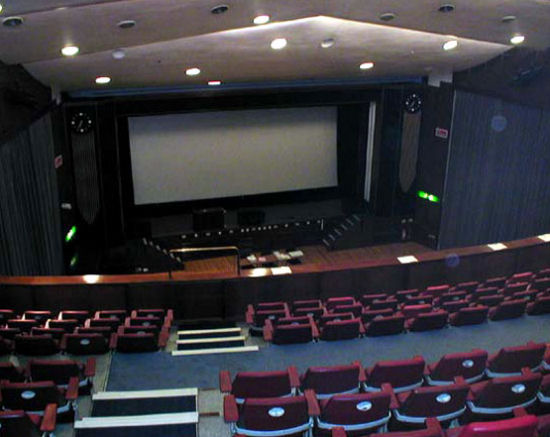
Manchester Cornerhouse, closed about 3 years ago to make way for a new art-house cinema in the city. Main Auditorium pictured below:
Also in Manchester the old Odeon on Oxford Street, was a bit of a dive but enjoyed the place for the 2 times I managed to visit.
--------------------------------------------------------
And the old original Odeon in Liverpool was quite cool.
Main Auditorium:
---------------------------------------------------------
On the subject of Odeon's...Leeds The Headrow...only Made it once to see Jurassic Park 3. The main auditorium was great...and had one hell of a nice sound system:
It's now a Primark clothes store......the bastards ![[Mad]](mad.gif)
![[puke]](graemlins/puke.gif)
---------------------------------------------------
And I guess the first cinema I ever worked in...good old Bradford Student Cinema. In my day 35mm with the biggest student cinema screen in the UK..now they operate showing blu-ray in a small lecture theatre.
Posted by Mike Blakesley (Member # 26) on 05-04-2019, 11:34 PM:
The Fox Theatre, in Billings Montana was a great place. It had 1400+ seats. I don't know how big the screen was but it was definitely big. I saw several movies there as a teenager.
It first became a victim of the "mall theater" craze and finally closed around 1980 or so. The company that owned it, Carisch Theatres, planned to renovate it into a tri-plex, but the community rallied to "save" it from that fate. They raised several million dollars in donations and grants, redesigned the lobby area and much of the auditorium, and by 1987 it had been remodeled and reopened as the Alberta Bair Theater for the Performing Arts. (Alberta Bair was a local philathropist who donated $600,000 toward the project.) So I still get to see shows there occasionally, they're just "live" shows now. We saw comedian Brian Regan there most recently.
A few weeks ago, it closed for $12 million worth of improvements (financed partly by another $1.5 million from the Bair family) and will reopen in the fall of 2020, still as a performing arts house, of course. I'm excited to see what they're going to do, even though I'll always remember my experiences watching movies there.
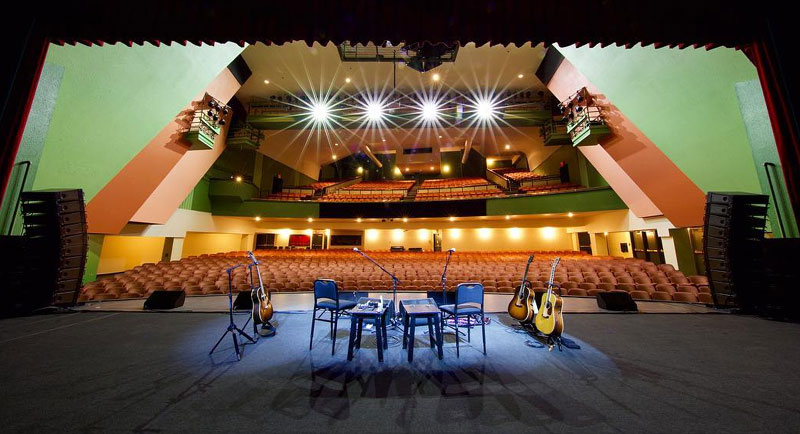
Here's a cool photo from the stage, not sure who the photographer was, but it is from Lyle Lovett's Facebook page after he performed there recently.
Posted by Sam Graham (Member # 2889) on 05-05-2019, 10:02 AM:
Cinema International, Grand Forks, ND.
A great late 60’s 70mm wide screen palace that seated something like 1,000. I lived two blocks from it in the 1980’s. They opened all the major releases there before shuffling films to one of the other screens in town (two twins, a four-plex, and a downtown palace), and I could just walk over. I saw Star Trek IV there four times.
They shut it and most of the others down when they (Midco) built a ten-plex nearby around 1990 which, shockingly, is still the newest theatre in town. Midco was sold to Carmike, so now of course it’s an AMC Classic.
The building today is WDAZ-TV. From an exterior standpoint, it looks exactly the same.
Posted by Michael Brown (Member # 890) on 05-05-2019, 11:33 AM:
....and lets talk about the travesty that recently happened in London's west end.
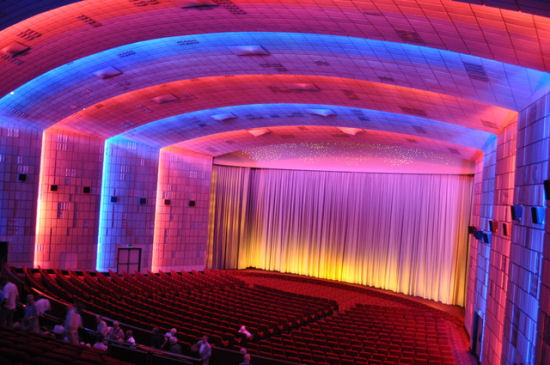
Empire Leicester Square Main Auditorium pictured below in the early 2000's. One of the biggest cinemas in London, around 1300 seats
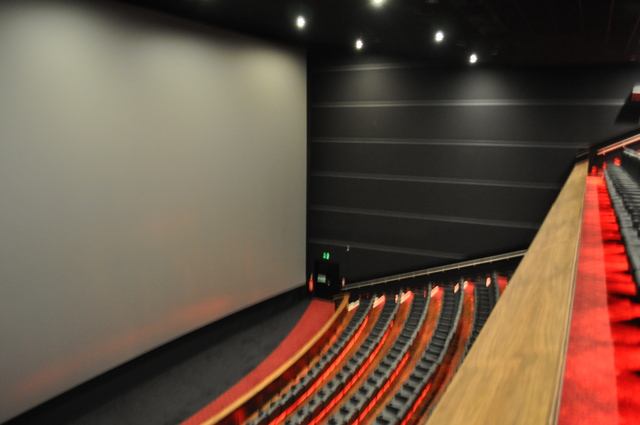
Sold by Empire to the cineworld cinema chain, it was sub-divided and converted into a nice big..cold..sterile IMAX and another large screen called the "Super Screen":
Posted by Martin Brooks (Member # 1269) on 05-06-2019, 10:16 PM:
Many. In NYC, the Ziegfeld, the original Loews Orpheum and the Loews Astor Plaza, all gone. The Ziegfeld is becoming a ballroom, the original Loews Orpheum was torn town years ago and replaced by a new basement set of boring theaters (although one screen was THX certified at one time) and the Astor Plaza is now a concert hall.
From when I was a kid, the Loews Paradise in the Bronx, which was one of the five Loew's "Wonder Theaters" with statuary and projected clouds and a star ceiling. It was partially restored some years ago and is now a church. And many of the long-gone midtown Manhattan theaters like the Loews State, the Criterion, the Loews Capitol/Cinerama, Warner Cinerama and the Rivoli. None of those buildings still exist.
Unfortunately, the age of large theaters is over, which I personally think is a huge mistake as these tiny theaters with 50 lounge seats aren't much better (and frequently worse) than a living or media room.
Especially in this age of popcorn movies, there's a big difference between seeing a movie with 30 other people and seeing a film with 1000 other people.
Posted by William Kucharski (Member # 7246) on 05-22-2019, 06:25 AM:
- Century 21 and 23 in San Jose, CA.
- Cinema 150 in Santa Clara, CA.
- Town and Country in San Jose, CA.
- Century 21 in Denver, CO.
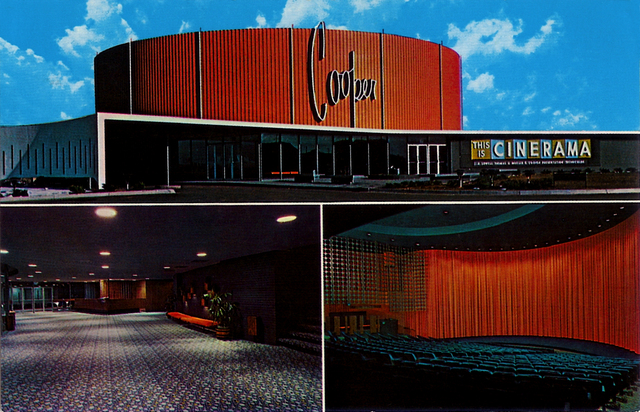
- Cooper in Denver, CO.
- Southgate Theatre in Milwaukee, WI.
- Strand in Milwaukee, WI.
- Mayfair Theatre in Wauwatosa, WI.
- Cinema Westlane in West Allis, WI.
- Southtown in West Allis, WI.
Of note is that most if not all of these theaters were capable of showing 70mm, and the Southtown and Mayfair Theatre were both equipped with Sensurround.
Denver Cooper:
Posted by Bobby Henderson (Member # 840) on 05-22-2019, 12:03 PM:
I, too, mourn the loss of New York City's last single screen houses (the Ziegfeld, Astor Plaza, etc). Even when I lived there at the end of the 1980's and early 1990's there was a feeling much had already been lost from other giant sized houses that had closed years or decades before. The concept of the multiplex theater with lots of smaller screens was doing its damage.
Everyone that has been on this forum for any significant time knows how I feel about the General Cinemas Northpark 1-2 theater in Dallas. The theater didn't look like much from the outside. I certainly had that impression on my first visit. But when I walked into that #1 auditorium I was surprised at just how big it was. The scale was like that of any huge New York City theater. And then the sound system just blew me away. I had to go back as often as I could, which I could do only so much living 200 miles away. It really sucks how that theater was closed and how General Cinemas went out of business.
Posted by Bill Brandenstein (Member # 7758) on 05-22-2019, 01:19 PM:
It was only in my final year as a Philadelphia resident that I discovered the Mark I theater under the center-city Holiday Inn. I can remember it quickly becoming my go-to preference for first-rate presentation quality, including 70mm screenings of the then-new restoration of "Lawrence," and first-run movies such as "Willow." Shocking now to realize that such a going concern closed only 2 months after I moved away. I disavow any culpability for its demise!
The CinemaTreasures page is nicely written, and it's hard for me to imagine that the huge space that formerly housed one of the area's best cinemas has been closed off now for decades, and presumably forgotten.
Posted by Ed Gordon (Member # 10866) on 05-22-2019, 06:48 PM:
Martin Cinerama, Seattle (1963)
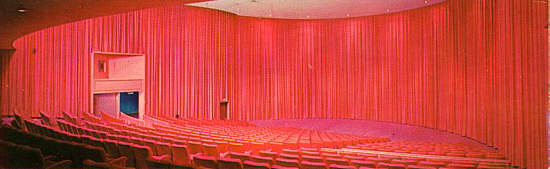
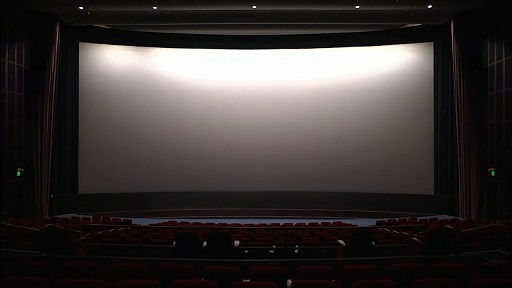
Seattle Cinerama (2014)
The post from William Kucharski which included the picture of the Cooper Cinerama in Denver, reminded me of the time in 1969 I went to the Cooper to see Krakatoa: East of Java. The incorrect title (Krakatoa is west of Java) was not the only thing they got wrong in this film, but the use of the Super Panavision 70 and Todd-AO process on the huge Cinerama screen certainly helped it. To be fair to Krakatoa, I should mention that I had seen 2001: A Space Odyssey at Martin Cinerama which also used the Super Panavision 70 / Todd-AO process the year before.
You will find a brief history of the Seattle Cinerama at https://cinerama.com/History.aspx. I count five significant phases for this theater. The last phase, thanks to the late Paul Allen, was another remodel in 2014, rather than the wrecking ball. The picture of the screen above is how the auditorium looks today. However, behind today's screen is this:
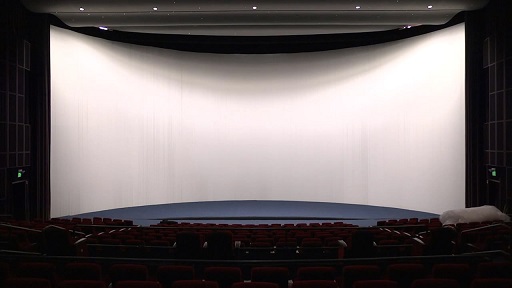
This is not the magic of masking. It takes a full day to tear down the "little" screen and travel back to 1963. You will find a time lapsed video of the conversion process at: https://www.youtube.com/watch?v=LPfRD4eTBGI
Paul Allen was fond of How the West Was Won (1962) and re-equipped his theater to show films done in the original 3 projector process. Now that Paul Allen is gone, I don't know if they plan to present any more 3 strip Cinerama films. Because of the Seattle Cinerama's location in downtown Seattle close to Amazon's HQ, I would not be surprised if this theater is replaced by an apartment building in the near future. I hope I am wrong.
-Ed
Posted by Mark Ogden (Member # 43) on 05-22-2019, 07:12 PM:
Did I see that correctly? They just literally rip the front screen down whenever they want to show Cinerama on the louvered screen? Or were they going to replace the screen anyway?
Posted by Ed Gordon (Member # 10866) on 05-23-2019, 04:06 PM:
RE: Screen tear down at Seattle Cinerama
I suspect the regular wide screen was torn down because the video was done the same year (2014) as the last major remodel. I have read elsewhere on this forum that there is not much of a market for used screens. This theater does not have the usual stage with a high ceiling to allow raising and lowering screens, etc.
I did find this mention:
quote:
But Cinerama has more than one screen. The one you see for most movies hides a second screen behind it, a deeply curved, two-thousand strip louvered Cinerama screen.
“We last brought it out in 2013,” Caldwell said. “It’s quite the undertaking actually. We have to tear down the existing screen, tear down the sound wall, and then erect the three panels of the 146-degree curved screen. And the sound wall for that curved screen.”
You will find the entire article and a 26 minute podcast, "Film to digital: Tech behind Cinerama" here: Podcast
-Ed
Powered by Infopop Corporation
UBB.classicTM
6.3.1.2