This is topic A good digital photo camera? in forum Film-Yak at Film-Tech Forum ARCHIVE.


To visit this topic, use this URL:
https://ft-forum.com/ft/cgi-bin/ubb/ultimatebb.cgi?ubb=get_topic;f=8;t=001394

Posted by Michael Schaffer (Member # 1204) on 10-30-2002, 11:59 AM:
 
As I am planning to travel around California, I will finally buy a camera. I was thinkig about a mid-price digital camera. I am not an experienced photographer, so I thought that with a digital camera I could fire away and then delete all the bad pictures.
I don`t care for gadgets such as short movie clips or voice recording. Image quality and hardware reliability is what I look for.
Any recommendations?
 
Posted by Daniel Boisson (Member # 1027) on 10-30-2002, 02:02 PM:
 
I just got the Olympus D380 for my birthday and I love it. It isnt too expensive, under 200, and it has loads a features. Tkaes great pictures too, 2.0 megapixel if that means anything to you.
 
Posted by John Pytlak (Member # 331) on 10-30-2002, 02:17 PM:
 
Here are links to the Kodak digital cameras:
here Kodak Digital Cameras
here Kodak Easy Share System

------------------
John P. Pytlak, Senior Technical Specialist
Worldwide Technical Services, Entertainment Imaging
Research Labs, Building 69, Room 7525A
Rochester, New York, 14650-1922 USA
Tel: +1 585 477 5325 Cell: +1 585 781 4036 Fax: +1 585 722 7243
e-mail: john.pytlak@kodak.com
Web site: http://www.kodak.com/go/motion


Posted by David Stambaugh (Member # 1102) on 10-30-2002, 02:46 PM:
 
My Kodak DC280, which is now over 2 yrs old, has been a great little camera. The color rendition & image clarity is excellent. I've been unable to come up with a justification for getting something better.

Some snapshots taken with the Kodak DC-280 during a trip to LA back in May this year: here


Posted by John Pytlak (Member # 331) on 10-30-2002, 02:49 PM:
 
Nice photos, Dave. Good tour of LA.

------------------
John P. Pytlak, Senior Technical Specialist
Worldwide Technical Services, Entertainment Imaging
Research Labs, Building 69, Room 7525A
Rochester, New York, 14650-1922 USA
Tel: +1 585 477 5325 Cell: +1 585 781 4036 Fax: +1 585 722 7243
e-mail: john.pytlak@kodak.com
Web site: http://www.kodak.com/go/motion


Posted by Scott Norwood (Member # 30) on 10-30-2002, 02:54 PM:
 
A co-worker of mine was really happy with one of the mid-level Nikon consumer models. I don't remember the model number, but it was in the $500 range and had lots of manual control options in addition to an "auto-everything" mode. I don't think that there is anything in that price range which takes a wide range of interchangeable lenses, however.
 
Posted by Adam Fraser (Member # 1074) on 10-30-2002, 03:46 PM:
 
I have a Kodak digital camera also and have been very pleased with the results. My model is a DC3200 which was a little over $200 about a year ago, but now I think they go for about $100. A friend of mine has a model that is one better (has a zoom lens) and he really seems to like his also.
 
Posted by Dennis Atkinson (Member # 345) on 10-30-2002, 03:51 PM:
 
I got an Olympus C-4000, 4 megapixel camera a few months ago.
$400 new. Very nice and easy to use.
 
Posted by Michael Schaffer (Member # 1204) on 10-30-2002, 04:00 PM:
 
David`s pictures are very nice and show me that 2 megapixel is defintely enough for me. I might go for a Kodak since there are so many positive comments about them here. Also, I could complain to Mr Pytlak if it doesn`t work I checked the information on the Kodak website and I like the easyshare concept with that station that will send the pictures to the computer and also recharge the batteries. Obviously, I would have to get an adapter to use the station in the US (we have 230V here). How long do the batteries usually last in the camera? Is it better to turn the camera off when I am not shooting for a few minutes? Or will the camera use more power to reboot than in standby mode?
What other features should a rookie like myself look for? What manual features should a beginner`s-but-fast-learner`s camera have in addition to all those automatic point-and-shoot features?
Mr Pytlak, would I get an extra large software package if I say in the shop that I know you (or that I know you at least digitally)?


Posted by John Pytlak (Member # 331) on 10-30-2002, 04:38 PM:
 
Most of your questions should be answered on the Kodak website:
here
Kodak Easy Share System Tour
here Free Kodak Easy Share Software Download

You could always go for the 14-megapixel Kodak DCS Pro 14n camera! :
here Kodak DCS Pro 14n

I believe many of the Kodak digital cameras can use either standard AA size Ni-MH rechargeable batteries, or lithium batteries.

------------------
John P. Pytlak, Senior Technical Specialist
Worldwide Technical Services, Entertainment Imaging
Research Labs, Building 69, Room 7525A
Rochester, New York, 14650-1922 USA
Tel: +1 585 477 5325 Cell: +1 585 781 4036 Fax: +1 585 722 7243
e-mail: john.pytlak@kodak.com
Web site: http://www.kodak.com/go/motion


Posted by David Stambaugh (Member # 1102) on 10-30-2002, 04:48 PM:
 
The DC280 goes through alkaline batteries so fast it'll make your head spin. I bought a set of Ni-MH batteries with a charger, and they last MUCH MUCH longer than alkaline. The ones I bought are MAHA, from Thomas Distributing, here. I had never heard of MAHA but they were highly rated and I've been using the same set over and over for 2 years and they still work like new. I bought a package deal with 4 AA batteries and the smart charger, which came with a car adapter as well as an AC adapter.

I confess I almost never use any of the manual exposure override features of my camera. As long as there's reasonably good light, the DC-280 seems to get the exposure right most of the time. Of course fast action shots will tend to be blurry and there isn't much you can do about that with such a basic camera. But static snapshots almost always turn out good. For only having 2 megapixels, the photos look surprisingly good on a computer monitor, and are certainly more than OK for web pages or sending as jpg's to friends or whatever.


Posted by John Pytlak (Member # 331) on 10-30-2002, 05:16 PM:
 
I agree, the rechargeable Ni-MH batteries are great for photographic applications.
here Kodak Batteries
here Kodak Ni-MH Rechargeables
here Kodak Digital Camera Batteries

------------------
John P. Pytlak, Senior Technical Specialist
Worldwide Technical Services, Entertainment Imaging
Research Labs, Building 69, Room 7525A
Rochester, New York, 14650-1922 USA
Tel: +1 585 477 5325 Cell: +1 585 781 4036 Fax: +1 585 722 7243
e-mail: john.pytlak@kodak.com
Web site: http://www.kodak.com/go/motion


Posted by Daryl C. W. O'Shea (Member # 1303) on 10-30-2002, 05:20 PM:
 
Both my Kodak DX3900 (3.1MP) and my Kodak DX4900 (4.0MP) digital cameras will accept an assortment of extra lenses. They both use CRV3 Lithium batteries and can take about 250 pictures on average with a single battery. (They also use the Ni-MH rechargeables.)

I once tried some Duracell Ultra AA batteries in the DX3900 and it could only take about three pictures before it started complaining the batteries were almost dead.

Either way I think that both are excellent cameras. Price wise I'm sure that you could get the DX3900 for under $500 in the US. I'm not sure about the DX4900 though.

Oh yeah, the Easy Share System is real easy to use, but so is a USB cable and mouse. I guess it's like having a scanner with a scan button on it.


Posted by Steve Kraus (Member # 476) on 10-30-2002, 06:06 PM:
 
Shopping for a digital camera is the one thing you can do online and actually see the end product (sample pictures). A couple of good sites for comparisons are Steve's Digicams (click here and the Digital Camera Resource Page (click here

I've had an Olympus C2020Z (2.1 megapixel) for almost 3 years and have been very happy with it.


Posted by Claude S. Ayakawa (Member # 1401) on 10-30-2002, 08:01 PM:
 
An excellent camera that originally sold for almost a thousand dollars
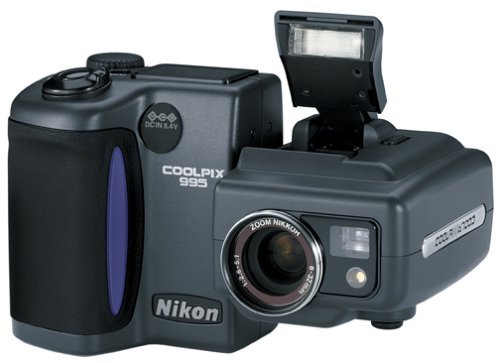
was available for about $600.00 not too long ago. It is the Nikon Coolpix 995 and there might still be some available at some Nikon camera dealers. One of the dealers that might still carry it is B & H Camera in New York City. They are one of the largest camera dealers in the country and I have bought cameras and lenses from them. The can be reached at (800) 947-9923. The Nikon Coolpix was once their top of the line camera in the semi pro market and have already been replaced with other models. I do not know anything about their current semi pro cameras but the 995 is excellent because I once owned one but it was stolen. The only digital camera I have is the one I use professionally and is the Fuji S-1 Fine Pix Pro that had cost me about $2,500.00. The image of the couple on my homepage at my website was photographed with this camera with a Tamron 28-105mm f 2.8 lens. If you use a Nikon SLR camera and have various Nikon AF lenses, you might want to consider the new S-2. By the way, the Coolpix 995 is a 3.34 megapixel camera and you can easlily make 8 X 10 prints from the files with no problem.

-Claude


Posted by Aldo Baez (Member # 790) on 10-31-2002, 03:24 AM:
 
I bought my Canon S30 for 375$ and it takes great pictures.
Pictures of europe are here: here

I know canon just released the s45 which is supposed to be awesome and they have released the s230 which is a 3 megapixel s200. Probably the best tiniest camera you can buy. I'm thinking of trading my s30 for an s230 so nice and small and great pictures.


Posted by Aaron Haney (Member # 747) on 10-31-2002, 05:16 AM:
 
DP Review (found here) is by far the best digital camera review site I've found. There is a lot of in-depth information in each review, complete with shots of resolution and color charts. Definitely check out their review of any camera you plan to buy.


Posted by Paul Konen (Member # 41) on 10-31-2002, 08:57 AM:
 
I too have a Kodak DC3600 - 2.1 MP. It is able to take video too if you want.

I also got a 128MB Flash memory that allows me to store up to 180 photos before having to dump it to computer.

If you get the easy share, the Lithium battery that comes with it last a good long time, rechargeable NiMH don't last as long and forget about akaline, it eats those as a snack.

Paul


Posted by Michael Schaffer (Member # 1204) on 12-23-2002, 03:42 AM:
 
I forgot to say thanks for all the good suggestions. In the end I bought a Pentax Optio 330 GS for 299 Euro (practically the same in Dollars). It has 3.2 Megapixels and a lot of very nice features. Shooting with the automatic settings gives quite good results and there are a lot of manual options. I treated myself to a 256MB memory card and that lasts for a lot of pictures!
BTW, Aldo, I looked at your galleries and loved the way all pictures are simply called "europe...". It reinforces a common European prejudice that American people can`t tell all the countries here apart... [Wink] Didn`t you go to the top of the Eiffel Tower?

The artefacts around the rigging come from the resizing of the picture. The original is 1200x1600. I resized this with ACDSee, maybe a full blown picture editor does this better, but I haven`t gained much experience yet with picture editors.


 -

 -

This a very peculiar sign. What does it mean? "Caution, Wild Families Crossing"?

 -
 
Posted by Mark Gulbrandsen (Member # 72) on 12-23-2002, 09:05 AM:
 
I heard on a talk show yesterday that professional digital cameras are going to take a major price drop sometime in the forst quarter of next year. Those 5,000.00 cameras are supposed to become very reasonably priced. Nikon also has a digital body out that one can buy for about 1700.00 that will allow the full use of all of ones Nikon lenses and accessories.
Mark
 
Posted by Paul G. Thompson (Member # 655) on 12-23-2002, 12:01 PM:
 
Michael, Those are beautiful pictures.

As a passing thought, Don't use Microsoft's Paintbrush (any version) to convert JPG's to BMP's or vice-versa. You'll lose alot of resolution. Microsoft's Paintbrush is also horrible for resizing the pictures.

Use a program like Adobe Photoshop 6.0. It really kicks butt! Best I have seen. It'll costs money, but if you do lot of photo work, it is the way to go. it is well worth the investment.

I am not sure what kind of a digi-cam Brad has, but we have all seen pictures from his camera. When my Olympussy dies, I will purcase the type Brad has.
 
Posted by Aldo Baez (Member # 790) on 12-23-2002, 12:20 PM:
 
Michael I apologize. When I loaded my pics onto my pc it automatically named them all Europe.001, .002 I wanted them to be viewable really fast so I just uploaded them. I will take the time to change the names now as I never got around to do it.
 
Posted by Matthew Bailey (Member # 601) on 12-23-2002, 12:23 PM:
 
I found a cheap Vivitar digital camera at Wal-Mart in the high 40.00
renge. It stores 70 some odd pics unlike my Ansco DigiPix which stores no more than 16 pics. [bs] [fu] [thumbsdown]
 
Posted by Michael Schaffer (Member # 1204) on 12-23-2002, 12:25 PM:
 
 -
 
Posted by System Notices (Member # 2357) on 12-24-2005, 11:02 AM:
 

It has been 1096 days since the last post.

 
Posted by Greg Anderson (Member # 235) on 12-24-2005, 11:02 AM:
 
I decided to revive this topic because, alas, I have looked at my poor, neglected, 20-year-old 35mm SLR and considered the hassles involved with film processing (and the increasing difficulty in finding a good lab that won't charge an arm-and-a-leg) and, yes, I want a good digital camera now... something around the $500 range would be nice. (And, no, this isn't for Christmas so there's no incredible rush to make a choice.) I don't really want another SLR but I like the idea of something with a 10x optical zoom and stuff like that rather than the 3x point-and-shoot cameras. Any suggestions?
 
Posted by Jason Black (Member # 684) on 12-24-2005, 06:51 PM:
 
I'd recommend spending some time researching at www.stevesdigicams.com
 
Posted by Adam Wilbert (Member # 1184) on 12-24-2005, 06:59 PM:
 
I'll second the vote for the nikon coolpix 995 (from three years ago!). I've had mine for a couple of years and love it. The best part is the swiveling body, which allows you to take pictures from knee level or overhead (or even pointing at your own face) and still be able to see the view screen. I haven't seen that design in any of the new cameras and I wouldn't be without it. Taking pictures of little kids without squatting down, or over the tops of crowds without shooting and hoping you're pointing the right direction is a godsend. Can be full manual or full auto, and I'll verify that it can take being dropped onto concrete more than a few times!

 -

I just bought my girlfriend a 7.0mp casio exilim for christmas. She'll be returning from France tonight with it, so we'll see how the pictures came out.
 
Posted by Mark Lensenmayer (Member # 134) on 12-24-2005, 08:44 PM:
 
Does anyone have any experience with Panasonic digital cameras? I need a camera that has a large optical zoom and image stabilization. I need to take pictures in some dark environments (auditorium presentations, award ceremonies, etc) and also athletic events (basketball games where flash is not allowed, track meets, football games, etc.). Panasonic, Canon and Kodak offer these features in various models, but the Panasonic gets excellent reviews and is significantly cheaper. I will check out the web reference above for more info, but personal comments are appreciated.
 
Posted by Jason Black (Member # 684) on 12-24-2005, 10:13 PM:
 
I've got a Sony DSC F707 that is, essentially, a HUGE lens attached to teh body of a camera. It's 5 mp, but takes GREat shots.

I also have a 4.1mp DSC S60 that I got for free ninety nine (Thanks again Fox rewards!) that takes pretty good still shots.
 
Posted by Louis Bornwasser (Member # 3063) on 12-25-2005, 07:02 AM:
 
After examining John Pytlak's Kodak camera, my wife bought a Kodak Z-7590. Standard lens is a Schneider. Best digital camera I have found. Louis
 
Posted by Mark Gulbrandsen (Member # 72) on 12-25-2005, 10:21 AM:
 
I agree Louis... Kodak's stuff us pretty good. They have a long histry of using really good glass on their cameras too. The old Ektars were great and also used on the 3-strip Cinerama Cameras. I believe that Kodak also makes theor own CCD imagers. I also happen to like the Nikon cameras as well... However.......

Those that purchase digital cameras should also have at least the following software......

Photoshop, Forget the cheesball photo programs that are included with all digital cameras.... Any of the last two or three Photoshop editions are really good. Its very expensive costing more than most digital cameras do but its easily worth twice its price. The latest editions run a tad over $600.00 but ruumor has it that it's also posted on some internet BB sites so you can get it for free......

Panorama Factory, The best of the best panorama software. This is an amazing program and mind blowing photos from even small digital cameras are possible with this software. This software even automatically corrects for perspective distortion if you want it to. This panoramic software does things that other software cannot even begin to approach. $69.95 for the latest edition. Link

Mark
 
Posted by Leo Enticknap (Member # 534) on 12-26-2005, 09:45 AM:
 
I recently gave up on digital cameras and went back to film. About 18 months ago my Minolta 35mm SLR developed an electronic fault which would have cost more to get fixed than buying something new, so I bought a Nikon 4300 digital. I found the camera fiddly to use, the range of accessories available was small and they were hellish expensive (£60 for a polarising filter, for example). What really put me off it was taking a load of pictures and accidentally deleting them while attempting to transfer them to my PC while tired and not concentrating properly. You can't make that mistake with a film.

A couple of months later a big chain of high street electronic stores decided to discontinue film cameras and sold off their existing stock very cheaply. As a result I got a Nikon F75 with 28-70 and 80-300 lenses all for £200 - an astonishing bargain, given that that package originally sold for £430 - and a film scanner.

What I now do is to take pictures on film, usually b/w or E6 reversal, process them using a changing bag and tank in the kitchen and then scan them. I find this to be the perfect solution - it gives you the superior tonal range and proven storage longevity of film, plus the versatility of digital (small files for email, or high quality inkjet home printing). Interestingly, the girl at my local photography shop recently told me that film, chemical kits and lab processing sales had more than doubled during 2005, suggesting that lots of serious amateur photographers had tried digital, didn't like it and had gone back to film for origination. Inkjet paper and cartrige sales had continued to grow, while photochemical printing consumable sales had collapsed, she said.
 
Posted by Steve Guttag (Member # 268) on 12-26-2005, 12:08 PM:
 
Oh, I dunno about that...many a back door has been opened before rewinding...or the more insideous one...you didn't get the tongue properly on the take up spool and the film doesn't advance...sure both of those problems can be cured with the same thing...turn back on the rewind crank to ensure you have properly threaded or to ensure you have rewound the film.

I have also had a Nikon "AI" lens not properly engage the photomic head so the light meter readings were bogus. With digital, you have an instant verification if the shot was good...with film you have to wait until after processing.

All that being said...I can see the distinct advantage of shooting on film, regardless of the final distribution media due to the superior source material.

However, for just point-n-shoot work that used to be the domain of the Kodak "Instamatic" cameras...digital is all one really needs to remember the times of their lives.

Steve
 
Posted by Leo Enticknap (Member # 534) on 12-26-2005, 03:31 PM:
 
Point taken - I've had a film disaster, too. On a family holiday to the Scottish island of Jura while a teenager, I wanted to see the Corryvreckan (whirlpool) and the house which George Orwell rented while he wrote 1984. It's a five mile walk from the end of the last paved road. Knowing that I'd almost certainly never get a chance to see Barnhill (Orwell's house) again, I started off in darkening skies and with a roll of Ilford HP5 loaded in the camera, which I thought would be ideal (high contrast, a bit grainy and atmospheric) for the subject.

About half way through the outward walk the heavens opened, and they stayed open the rest of the way there and all the way back. On the basis of that afternoon I'm not at all surprised that Orwell died of tuberculosis at around my age! Anyhow, I took what I thought would be some foggy and atmospheric photos. Back at the hotel when I opened the camera, I found ripped perfs in the tongue of the roll - no film had ever been pulled out of its cassette after I'd loaded it.

Still, I guess the archivist's instinct in me feels more comfortable with film because, whatever its faults (e.g. you can't see if anything went wrong until after you've processed it), we know that it'll last a very long time if stored cool and dry. For obvious reasons digital origination has pretty much sewn up the snapshot market, but I still like the differing visual properties of different film types (take FP5 if you're going somewhere rainy and atmospheric, or Kodachrome 64 if you're off to the tropics); and the sharpness of the lenses which came with this new Nikon are fantastic.
 
Posted by Mark Gulbrandsen (Member # 72) on 12-26-2005, 04:56 PM:
 
quote: Leo Enticknap
Point taken - I've had a film disaster, too.
Yea, or you're 130 feet down in Lake Superior on a nice shipwreck and you go to look through the speedfinder and see a line across the image....... The camera housing is half flooded [Mad] ! Expensive repairs even though I worked for Canon USA at the time and could do the repairs myself... the parts were not cheap even to employees! On the other hand digital shines here... About 8 years ago I was in a Kayak going down the Colorado River with a very early Kodak low-rez digital camera in my pocket.... I hit some rapids and wiped out...... man the water felt great on that 105 degree day! Then I remembered the camera in my pocket....the camera was literally soaking wet but back at the room I took it apart and low and behold the lens-ccd section was sealed together and no water got in between the two. Dried out the camera with the gorlfriends hair dryer and it continued to work just fine when dry. The pictures in the memory all came out fine too!! I've always carried a cheapo digital camera with me where ever I go ever since that incident.

Mark
 
Posted by William Hooper (Member # 71) on 12-28-2005, 07:12 AM:
 
I shoot a *lot* of film, & have enlargements made, & the only disadvantage was scanning photos for email or to put online.

Kodak has a service at
http://www.kodakgallery.com
by which they provide you with mailers, you send in the film, they develop it & scan the negs, then return your negs. Ostensibly, you are then supposed to be able to order prints online from the site, but they only scan 35mm film at 1536x1024, which the site notes is acceptable only for sizes up to 8x10. It's aggravating because they sell bigger, up to poster size enlargements, but if you want one from Kodak's site, you can't shoot film, you must shoot with a digital camera of higher resolution than 1536x1024 (which almost all are now).

Enlargements from film, since more labs are shutting down, means sending the negs off again to Kodak via some retailer like Target, & again risking about counter help losing negatives, bending prints, etc.

It's really a shame that Kodak's services pretty much care less & offer lower-featured services for film customers than for those who upload files from digital cameras. As a matter of fact, their scanning is even lower resolution than the photo CD's from the storefront Ritz Photo place where I drop the Fuji 1600 I shoot for insurance.

The 4 mp digital camera I got for Christmas will probably replace the Polaroid as my funky impromptu camera. Which is sort of a shame, since a lot of what I do with the Polaroid is impromptu pictures I give out, & folks are delighted on the spot to get a picture. With the digital camera, it folds back down to the questions I get asked when I'm taking photos with the film camera: "Can I get a copy?" (No, not right here right now.) "Are you going to put these online; I'd like to see them!" Answer A: I dunno. Answer B: Maybe, write this down: http backslash backslash dub dub dub some long tortured url that you've got to spell out, you don't have a pen or anything to write on, this is taking way too long, you won't remember anyway, & you're losing interest now.)
 
Posted by Leo Enticknap (Member # 534) on 12-28-2005, 07:28 AM:
 
quote: William Hooper
...the only disadvantage was scanning photos for email or to put online.
The cost and quality of film scanners is now such that I don't see this as a problem. I usually develop the negative or reversal film, and then make 1,800dpi uncompressed TIF scans using a Nikon LS50. This generates a 10mb file, so the output from a 36-frame roll will easily go on a CD. Using Photoshop Elements (which came bundled with the scanner) I can then down-res to a 50k JPEG file for emailing, or use the TIF to print. The scanner will give me up to 4k DPI should I need a very high res scan of a dense, low grain film (Kodachrome 64 for example), too. The only drawback is the scanning time - it takes around a minute per frame. I don't get through enough film for this to be a problem - I can just leave it scanning stuff while I'm doing something else. But if you get through serious quantities, I can see that this would be a drawback for some people.
 
Posted by Scott Jentsch (Member # 1681) on 12-28-2005, 03:18 PM:
 
For me, using a digital camera has solved the constant request I used to get for reprints.

Now, I just E-Mail them the original for them to print out or have processed. We've also made them available on Shutterfly, which has produced very good photos for us.

It's nice not to have to be buying reprints for everyone else, and convenience of digital over film has relegated our film camera usage to those disposable ones you buy at the grocery store when the need arises.

I've become a big fan of Canon. I have a G2 which is a couple of years old now, my mother-in-law has an A85 that we bought for her birthday, my brother-in-law got an A520 for his wedding, another brother-in-law has a Digital Rebel, and my parents just bought an A610 to replace a G4 that needs to go in for repair.

The A610 is definitely point-and-shoot and not up to the same level as an SLR, but it's not intended to be. It's very fast, and has the cool flip screen that my G2 has. The Digital Rebel is a digital camera in an SLR's clothing. If it weren't for the viewscreen on the back and the label, no one would know it wasn't a 35mm Rebel.

It feels great and can take every EF lens made for Canon SLR's. I would imagine the new Digital Rebel XT builds on the original's success. If I were in the market for a digital SLR, it would be at the top of the list.

I would second the referral to dpreview.com as it's a great site with very thorough reviews and the forums there are pretty good for information and a high signal-to-noise ratio.
 
Posted by Greg Mueller (Member # 17) on 12-28-2005, 04:05 PM:
 
For a pocket camera I use an Olympus C-4000 (4 meg) it's pretty cheap but takes good photos. For more serious stuff I use the Canon 20D SLR. It takes good fotos and is even being used for astrophotography.
 
Posted by Rachel Gilardi (Member # 1016) on 12-28-2005, 08:54 PM:
 
I love my little Kodak CX7430 / 4.0 MegaPixels. Just took this a couple weeks ago, not a great pic but you can see how clear it is.

 -
 
Posted by John Pytlak (Member # 331) on 12-29-2005, 10:23 AM:
 
Here is the full line of Kodak consumer digital cameras:

http://www.kodak.com/eknec/PageQuerier.jhtml?pq-path=19&pq-locale=en_US

quote:

Digital Cameras
EASYSHARE-ONE
Point and Shoot Series
High Zoom Series
Pocket Series
Performance Series
Digital Photo Solutions
Compare Cameras
Reconditioned Digital Cameras
Owner's Support Center
KODAK EASYSHARE System

Upload your digital images to The Kodak EasyShare Gallery for saving, printing, and special services:

http://www.kodakgallery.com/HelpPrice.jsp?

quote:
At Kodak EasyShare Gallery and KODAK Mobile Service, it's free to create an account, store photos, share albums online, add photo borders and effects, and edit images.
I'm sharing my daughter's wedding photos with relatives and friends using the Kodak EasyShare Gallery.

quote: William Hooper
Enlargements from film, since more labs are shutting down, means sending the negs off again to Kodak via some retailer like Target, & again risking about counter help losing negatives, bending prints, etc.

Retail outlets like WalMart and Target rarely offer professional photo lab services. Most cities have professional photo labs that can make large high quality prints from film or digital images. Today, the film original is usually scanned to make the large print:

http://www.kodak.com/global/en/professional/products/prodSupportIndex.jhtml

quote:
Whether your lab prints optically, utilizes an optical/digital hybrid approach, or is fully digital, Kodak offers a broad range of workflow products and solutions for the lab industry.


Posted by Mark Gulbrandsen (Member # 72) on 12-29-2005, 10:55 AM:
 
John,

Does Kodak make the ccd's that are used in their cameras? I am aware thet Kodak does make ccd's but I was curious if they are also used in the consumer cameras?

Thanks!
Mark
 
Posted by John Pytlak (Member # 331) on 12-29-2005, 11:05 AM:
 
Kodak makes a full line of digital image sensors, right up to the latest 39 megapixel sensor for professional camera backs:

Kodak Image Sensors

quote:
Kodak's broad portfolio of available sensor products addresses all segments of the digital photography market. From high-end studio cameras for the professional photographer to consumer products, manufacturers can choose from full-frame, interline, linear and CMOS sensors based on the requirements of the application.
Kodak High Resolution Sensors

quote:
Already the world’s leading supplier of image sensors for medium-format professional
photography, Kodak is expanding its product line with the introduction of the world’s highestresolution
sensors for professional photography. The KODAK KAF-39000 Image Sensor,
featuring 39 million pixels, and the KODAK KAF-31600 Image Sensor, with 31.6 million pixels,
offer professional camera and camera back manufacturers resolution and image detail that was
once unimaginable for digital cameras, allowing photographers to experience a new level of image
quality for portrait, wedding, landscape, fashion, studio and commercial photography.


Posted by Bobby Henderson (Member # 840) on 12-29-2005, 12:44 PM:
 
quote: Mark Gulbrandsen
Photoshop, Forget the cheesball photo programs that are included with all digital cameras.... Any of the last two or three Photoshop editions are really good. Its very expensive costing more than most digital cameras do but its easily worth twice its price. The latest editions run a tad over $600.00 but ruumor has it that it's also posted on some internet BB sites so you can get it for free......
Instead of considering warez, casual users should probably just get a copy of Photoshop Elements. It has many basic features from Photoshop -enough that many hobbyists won't need the full blown version. Adobe is also going to start providing monthly security and program improvement updates for its Creative Suite 2 applications.

Adobe Photoshop is really tailored for professional use. It doesn't have (and should never adopt) a cutesy more consumer ended interface. Lots of non-professionals do love to use Photoshop because the interface is laid out in a productive, straight-forward manner -on top of having the huge amount of raster image editing capability. I've tried other programs like Paint Shop Pro and just got angry. I can get the same work done a lot faster and with better results in Photoshop.

The only image editing program that comes close to Photoshop is Corel Painter (formerly Fractal Design Painter). It has a lot of natural media painting capability, a great deal more than Photoshop. But it serves a particular niche and is not meant to replace Photoshop.

Apple's new Aperture program was wrongfully characterized by some in the computing industry press as a "Photoshop killer" but at best it is only a competitor to Adobe's Bridge application. It specializes in processing Camera RAW photos from higher end digital cameras. Early adopters have complained about lots of bugs in Aperture. Mac users should probably wait for a couple point release updates before considering that program.
 
Posted by William Hooper (Member # 71) on 12-30-2005, 01:21 AM:
 
quote:
Retail outlets like WalMart and Target rarely offer professional photo lab services. Most cities have professional photo labs that can make large high quality prints from film or digital images. Today, the film original is usually scanned to make the large print:
Target (& Walgreen's) send enlargements off to a regional Kodak lab for enlargements - around here it's one somewhere in TX. I looked into the Kodak Gallery after the Target photo counter guy lost several rolls of film that were supposed to go to the Kodak lab but never made it. Just gone, like a vapor, never received by the Kodak lab, which can track orders by the numbers on the little stubs of the envelopes ya put yer film in to drop off to go to the Kodak lab.

Independent photo labs are disappearing. Many were part of camera stores, & the last real camera store w/photo lab in Mobile closed last month. Standalone photo labs disappeared even faster with the combination of the proliferation of consumer digital cameras & services offered at drugstore/superstore/Ritz etc. The one remaining place I could take film for push processing decided it wasn't worth patching up & re-opening a couple of storms ago. Of course, none of the other places know what you're talking about when you want a roll pushed, not that they could do it anyway with their equipment & employee training.

That leaves Ritz, which is Fuji, & I prefer Kodak paper & processing (except for the few rolls I shoot of Fuji 1600 I shoot for insurance). Ritz doesn't really qualify as a 'photo lab' any more than Target, Walgreens, or Wal-Mart, since they send off to another lab anything other than 1-hour & 15-ishx15-ish CD scans.

This is pretty much the case across the coast. The only other thing I've considered is some folks like wedding photography studios, etc., who (at least a few years ago) did their own processing & printing. It really doesn't seem like a workable, everyday solution, though, because these would have to be worked in when possible, & likely not to generate interest in small, piddly, never-ending streams of additional work for a person running a studio.

The thing that galls me about the Kodak Gallery is not so much that the services available for film are inferior to the services for uploads from digital cameras, but the fact that, to the Kodak Gallery, film *is* inferior to digital because it's lower resolution. To the Kodak Gallery, digital photos are 4 mp, 5 mp, 9 mp, etc.; but all film is 1536x1024.

quote: John Pytlak
Kodak High Resolution Sensors
Well then why, for the love of all that just might possibly accidentally make sense, don't they have them in the film scanners at the Kodak Gallery?
 
Posted by Greg Anderson (Member # 235) on 01-02-2006, 03:33 PM:
 
My biggest question has to do with resizing photos. I have some old software which can do a good job of color correction and some effects and stuff but it does a horrible job of resizing (shrinking) pictures so that I can post them to web sites or email them or whatever. Is Photoshop Elements good at that? Are all new programs good at that?
 
Posted by Bob Maar (Member # 763) on 01-02-2006, 05:00 PM:
 
I just bought the Kodak EasyShare Z740 Digital Camera and it is terrific. [beer]
 
Posted by Bobby Henderson (Member # 840) on 01-02-2006, 09:09 PM:
 
Photoshop Elements can resize your photos to whatever pixel dimensions you like. You can use the Image Size command to set the picture to specific pixel dimensions. I think the crop tool in Photoshop Elements has a lot of the same capability as the full blown version, letting you crop to specific pixel sizes.

I'm sure if Photoshop Elements has the Canvas Size function, which can allow you to crop or expand the space in the image without resampling it.
 
Posted by Dave Macaulay (Member # 813) on 01-04-2006, 03:44 PM:
 
You can try GIMP (graphic image manipulation program?).
It's an open source alternative to Photoshop if you're not interested in $$$ or trying piracy. The interface is odd but it works pretty well. There is a shell available that gives you a more Photoshop-like look.
 
Posted by Scott Jentsch (Member # 1681) on 01-06-2006, 04:02 PM:
 
quote: Greg Anderson
My biggest question has to do with resizing photos. I have some old software which can do a good job of color correction and some effects and stuff but it does a horrible job of resizing (shrinking) pictures so that I can post them to web sites or email them or whatever. Is Photoshop Elements good at that? Are all new programs good at that?
If all you're looking to do is resize images, then check out a free program called IrfanView:

http://www.irfanview.com/

It does a very good job at batch processing, and while there are a few things I wish it did (like renaming files to be compatible with certain OS's), it's very good at what it does.

I especially like it for the fact that it retains the EXIF and IPTC data, if you tell it to. I do this specifically to retain the copyright and description data that is contained in movie stills that I receive from studios. ImageReady (contained within Photoshop) actions (if I recall correctly) would not retain that data.

As far as image cataloging goes, I really like Photoshop Album 2.0. The image correction functions leave a little to be desired, but the program is getting old, and Photoshop Elements 4.0 has replaced it and probably does a much better job at doing color correction, red-eye removal, etc. Exporting 4 megapixel photos at a lower resolution is so easy that you would never go back to the old way of doing things.

For anyone with a digital camera, a program like Photoshop Album / Elements is a must-have. Photoshop Album 3.0 is a freebie that's worth trying to see what features it has.
 
Posted by Leo Enticknap (Member # 534) on 01-12-2006, 11:13 AM:
 
Nikon has announced that it's discontinuing all but one of its line of film cameras - story here. Glad I got my F75 while they were still around...
 
Posted by Bobby Henderson (Member # 840) on 01-12-2006, 12:53 PM:
 
I read on Tom's Hardware web site a couple days ago they were reducing their film camera line to two models, with the F6 35mm camera being the only mainstream model left. Nikon has also stated they will offer support for quite a few of their film cameras years into the future.

But, yeah, the cliched writing is on the wall. Everything is going to eventually go digital. Hasselblad is introducing a 39 megapixel digital back for its large format view cameras (the H2D-39). The unit may rely on Kodak's KAF39000 CCD sensor, launched just recently. The digital back is yours for $40,000. Hasselblad view camera and lenses not included. Perhaps in just a few years 40 megapixel D-SLRs might be pretty affordable.

Nikon and Canon are both punching it out in the semi-pro and pro D-SLR market. Nikon's D50, D70 and D200 are squared off against Canon's EOS Rebel offerings. Then Nikon's 12 megapixel D2X is pitted against Canon's 16-megapixel EOS 1D Mark IIn. Perhaps Nikon's thinking is if they don't have so many resources tied up in film camera development and support they can concentrate on the digital end of things further. Right now they keep getting one-upped by Canon's offerings at the high end. And then its just a wild west show in the more affordable areas.
 
Posted by John Pytlak (Member # 331) on 01-12-2006, 10:57 PM:
 
Here's the Kodak 39 megapixel sensor:

Kodak 39 Megapixel Sensor

quote:
The KAF-39000 is a dual output, high performance color array CCD (charge coupled device) image sensor with 7216(H) x 5412(V) photoactive pixels designed for a wide range of color image sensing applications including digital imaging. Each pixel contains anti-blooming protection by means of a lateral overflow drain thereby preventing image corruption during high light level conditions.

Each of the 6.8µm square pixels are selectively covered with red, green or blue pigmented filters for color separation. The photoactive pixels are surrounded by a border of buffer and light shielded pixels. Total chip size is 50.7 mm x 39.0 mm and is housed in a 64 pin, 2.347” x 2.000” DIL ceramic package with 0.070” pin spacing.

Even 8+ megapixel consumer cameras are hitting the marketplace. The Kodak Easyshare P880 has a street price under $600:

Kodak P880

quote:
Fast f/2.8 24–140 mm wide-angle lens
8.0 MP sensor for prints up to 30 × 40 in. (75 × 100 cm)
Advanced video features
Hot shoe flash connector and PC flash sync
Program, aperture priority, shutter priority, manual, custom modes
Proprietary RAW* file format
Histogram technology with highlight and shadow clipping


Posted by Mark Gulbrandsen (Member # 72) on 01-12-2006, 11:14 PM:
 
The 39 megapixel semsor is amazing but the pro backs that use them are commandng prices anyplace from 12K to 20K! A bit more than I would spend. Hopefully Kodak is working aon a sensor to function on the Linhof Technorama 6X17 camera... that would be some sensor!

Mark
 
Posted by Ron Curran (Member # 3631) on 08-27-2006, 12:28 AM:
 
My wife is a graphic designer and she needed a new digital camera.

After some research, she decided on a Sony DSLR-A100 digital camera. It surprised me to hear that this division of Sony is now operated by Samsung, a company that has excellent after-sales service in my experience. So that is a good thing.

The camera has a Zeiss lens and seems to be an excellent unit. I might change my opinion about electronics companies making cameras.

Does anybody on this forum have experience with this unit?
 
Posted by Paul Trimboli (Member # 1509) on 08-27-2006, 02:09 AM:
 
Ron its actually not Samsung but Konica Minolta. Konica Minolta was in trouble as they kept making crap camera and sales sliped. So they sold off their photographics divison to Sony who is using their technology. That Sony DSLR is very similar to the Konica Minolta 5D. Being a camera technician I can tell you that later model Minoltas and then Konica Minoltas were rubish, poorly built and they broke down alot. I still have nightmares just thinking of the Minolta 300L APS cameras, I am sure glad APS never really took off because I might of had to fix more of thoses 300ls!!!

One more thing about Sony- they made MOST of the CCDs that are fitted to various brands of cameras, including the Light Measuring CCDs in the Nikons D70 (flashing green light of death) and the AF sensor in the Nikon F55. These Sony sensors have caused massive problems and Sony has had to pay for the repairs to thousands of these unit. The problem is that the fine wires that conect the pins on the outside of the IC to the actually CCD just break.
 
Posted by Bobby Henderson (Member # 840) on 08-27-2006, 07:50 PM:
 
Canon is due to release a new 10.2 megapixel version of their EOS Rebel-X D-SLR camera sometime late in September. The camera will reportedly have a significantly larger LCD preview on the back. It also will have a built in ultrasonic cleaner to vibrate dust particles off elements in front of the CMOS imager. Any dust particles left in the way can be detected by the camera and digitally removed from captured images. This camera could be a big seller and could be a sign of things to come in their higher end D-SLR cameras.
 
Posted by Ron Curran (Member # 3631) on 08-28-2006, 12:55 AM:
 
Yes Bobby, my wife tells me that the Sony SLR has that vibrator feature. Another item that tickles her fancy is the viewer’s diopter adjustment. I have not had time to play with it yet. It will take a lot to wean me off the Blad, Pentax and Nikon.
 
Posted by John Pytlak (Member # 331) on 08-28-2006, 10:37 AM:
 
Really long link

quote:
Kodak Ranked Highest in J.D. Power and Associates 2006 Digital Camera Satisfaction Study for 3rd Straight Year

KODAK EASYSHARE ranked highest brand in the $200-$399 range; price segment represents nearly 50 percent of the U.S. digital camera market *

ROCHESTER, N.Y., Aug. 25, 2006 -- For the third consecutive year, KODAK EASYSHARE digital cameras in the $200-$399 price range have ranked highest in customer satisfaction in the J.D. Power and Associates 2006 Digital Camera Satisfaction StudySM. Since the J.D. Power and Associates Digital Camera Study was introduced in 2004, Kodak is the only brand to rank highest in a single category for three straight years.

“We’re very pleased with this ranking, since it’s based on customer experience and further solidifies our reputation for quality and ease of use,” said Phil Faraci, president, Consumer Digital Imaging Group, and a Kodak senior vice president. “Kodak invented the digital camera in 1975 and we have been a leading digital innovator ever since. Our innovation has always focused on providing products and services that create a great user experience, and this ranking confirms that we continue to deliver on that promise.”

The J.D. Power and Associates 2006 Digital Camera Satisfaction StudySM evaluates customer satisfaction within a price segment of consumer digital cameras. Twenty-one KODAK EASYSHARE digital cameras were evaluated as part of the $200 to $399 segment. These include easy-to-use C-series models, a performance-oriented 12X optical zoom camera (the KODAK EASYSHARE P850), the high-zoom Z-series, EASYSHARE One, the world’s first WiFi-enabled digital camera, and ultra-compact V530, V550, V603, and V570 models.

The EASYSHARE V570 is the world’s first dual-lens digital camera, offering an ultra-wide and standard-zoom lens system in a compact, style-oriented design.

“This is an important market segment for Kodak,” said Faraci. “The $200 to $399 price range accounts for nearly half of all digital camera sales in the U.S. Consumers often buy cameras in this price range when upgrading or adding a second digital camera for their families.”...


[ 08-28-2006, 06:24 PM: Message edited by: Adam Martin ]
 
Posted by Bill Gabel (Member # 1105) on 08-29-2006, 09:31 AM:
 
quote:
KODAK EASYSHARE ranked highest brand in the $200-$399 range ; price segment
The other price segment rankings from J.D. Power were:

I have the Nikon D200 camera.

[ 09-08-2006, 12:11 PM: Message edited by: Bill Gabel ]
 
Posted by Mark Gulbrandsen (Member # 72) on 08-31-2006, 07:34 AM:
 
Have owned 5 digital cameras... 2 Kodaks, one Konica, one Canon and now a Nikon.... and the Nikon I presently use has produced the best pictures and has been most durable of the lot.

Mark


Powered by Infopop Corporation
UBB.classicTM 6.3.1.2