This is topic Abandoned Theaters in forum Film-Yak at Film-Tech Forum ARCHIVE.
To visit this topic, use this URL:
https://ft-forum.com/ft/cgi-bin/ubb/ultimatebb.cgi?ubb=get_topic;f=8;t=003485
Posted by Jeff Stuckey (Member # 1718) on 08-16-2004, 03:32 PM:
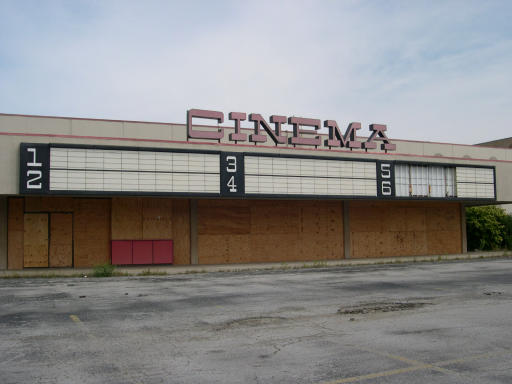
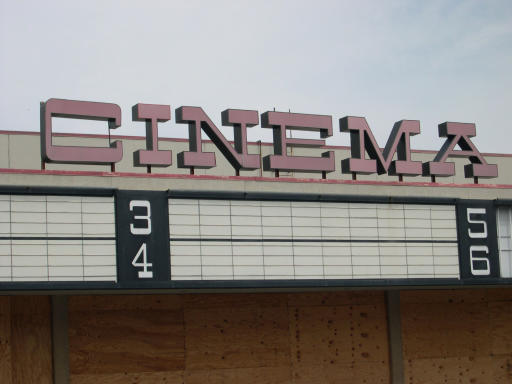
Hello everyone. I am originally from Tulsa, and recently went back to take some more pictures of old theater locations in town. I am such a geek for the old GCC theaters, and there is still one left standing in it's original form...Woodland Hills 6. It still has the C I N E M A over the marquee, so I went to take a few pictures. I noticed something very interesting when doing it. The side emergency exit door was wide open. Which means, I probably could have gone inside to poke around. However, I am too much of a whimp when it comes to dark rooms. Too many vampire movies.
Has anyone ever had any similar experience with an abandoned theater? If so, did you go inside and what did you find? I am kicking myself today for not going in and seeing what might be in there. Wallace was the last to own it, and they hadn't stripped any of their theaters in Tulsa. In fact, two of their old theaters have opened with new owners practically just having to turn the key.
If you live near Tulsa and have a feeling you wouldn't get busted by the police, it might be worth a look. The door is on the right side toward the front of the alley. It would be next to the bathrooms as you used to come out of theater 5. There are three theaters on one side, and three on the other. I am just rather curious about the whole thing now.
Thanks for any input. Take care!
Posted by Robert L. Fischer (Member # 2424) on 08-16-2004, 04:39 PM:
I wish I could find a theater like that; I would walk right in. I've been caught in similar situations and it's pretty easy to talk your way out of them. You just have to be calm about it if the police do show up.
Posted by Eric Hooper (Member # 1730) on 08-16-2004, 05:32 PM:
Umm, your answer would be: "Hey, the door was open."
Posted by William Hooper (Member # 71) on 08-17-2004, 12:47 AM:
You'll need more to clinch it, try "And my cat ran in."
"Cerberus! Cerberus! Here boy!"
Remember, we're the people who nail it down & know it will run.
Posted by Nate Lehrke (Member # 1460) on 08-17-2004, 01:05 AM:
I once got into the Cina 5 in West St. Paul MN before it was demolished/converted into a Good Will. It was very creepy being 2AM. Everything had been removed; there wasn't even carpet on the floors anymore! I was sufficiently creeped out by some sounds in the auditorium to cut my tour short.
Posted by Brandon Willis (Member # 2345) on 08-17-2004, 07:45 PM:
Here's 2 of my favorite abandoned theatres where I live, both closed down by Regal during their financial troubles of 2000/2001:
Willow Lawn 4: Never been inside, but have been up to the front of the building. Could have seen inside had the windows not been painted over. It used to be a gigantic single screen 70mm house with a balcony before Cineplex Odeon chopped it up into a 4 plex. Regal took over in the mid 90s. The theatre is currently being gutted so the adjacent Kroger supermarket can be expanded.
Cloverleaf 8: Walked around the perimiter of the building. Didn't go inside as it just didn't feel safe. This theatre was in a dying mall in a bad part of town. All of the front doors are boarded up with plywood. Where the marquee used to be, you can see where it used to say "Regal" in Regal font and then "Cinemas" in Cineplex Odeon font.
Here's a link to a site with pictures of these 2, and some pictures of the greatest multiplex this city has ever seen, the now-demolished Ridge Cinemas 7:
Abandoned Theaters
Posted by Mark Gulbrandsen (Member # 72) on 08-17-2004, 07:57 PM:
Will never forget my venture into the old Lamar Theatre in Oak Park, Il before it was demolished. It was raining outside (and inside) and the first 4 or 5 steps to the booth were missing and had disentegrated from rot, so I had to climb up a ways to get to the first step. When I got to the booth it was pouring rain inside and the U bases were sold rust. The parts cabinet on the wall was stocked full of brand new W.E. parts though and I still have that cabimet and alot of the parts to this day.
Mark @ CLACO
Posted by Dan Lyons (Member # 1454) on 08-18-2004, 02:07 AM:
If the door is open, chances are vagrants are inside. Not too safe to go in alone. Bring some strong friends next time, and the toolkit in case the booth is intact. ![[Wink]](wink.gif)
danny
Posted by Brandon Willis (Member # 2345) on 08-18-2004, 06:30 AM:
Mark-
When you were in IL, did you ever go to Dixie Square Mall? It is the mall that the Blues Brothers drove their cars through. From what I've read, it is still standing after being closed for 20+ years. It's at the top of my list of things to visit if I ever go to Chicago. Do you know if there was a theatre there?
As for another abandoned theatre, if it hadn't been torn down, I'd love to have seen the old Broad Street twin cinemas here in Richmond. It opened in 1970 and was owned by GCI cinemas before it became a Cineplex Odeon house in the 80s and was closed in 1990 after the Willow Lawn was renovated.
Posted by Scott Norwood (Member # 30) on 08-18-2004, 09:00 AM:
On the topic of Richmond-area theatres, is anything going on with the Henrico Theatre? I love the exterior architecture, but I never got a chance to see the inside. Is it nice? Or at least salvageable? Too bad the location is crappy (but convenient to the airport!).
Posted by Mark Gulbrandsen (Member # 72) on 08-18-2004, 09:13 AM:
"When you were in IL, did you ever go to Dixie Square Mall? It is the mall that the Blues Brothers drove their cars through. From what I've read, it is still standing after being closed for 20+ years. It's at the top of my list of things to visit if I ever go to Chicago. Do you know if there was a theatre there?"
____________________________________________________
Brandon,
Steve K lives very close to that mall. Donno if its still standing but I'm sure he might know. They sure left it and many other locations a mess when the filmed that movie!!
Mark
Posted by Bill Enos (Member # 440) on 08-18-2004, 05:35 PM:
Scott, the Henrico was (still is) a modest art deco house of 400 to 500 seats built in 1938. Cove lighting onto a flat ceiling with a pattern I don't remember. There are, I believe glass fan shaped up lights on the walls, seats bottoms were brown leatherette with brown fabric backs. There is a large upstairs lounge in a rather plain style. No balcony. Booth had a Century and a Brenkert supplied by a single platter. The sound rack was Dolby, I don't remember what. When I saw it last the roof was little more than a strainer. Henrico county bought it about 4 years ago and immediately replaced the roof and cleaned the place up. All the movie equipment was sold by the former owner. County plans ar uncertain, but indications are that it may be used for meetings, Board of Supervisors meetings, whatever. At least it is now stable and dry. There appeared to be little or no damage to other than seats.
The Borad Street Cinema had what was probably the biggest screen in town in the mains autitorium---wall to wall and nearly floor to ceiling. The upstairs theatre was about 30 feet long and had an aisle down the middle with 2 seats on each side, the screen was small even for the room. The main house was very wide and fairly short. Decor was very plain. Projection was all Cinemechanica. Projection into the small theatre was originally across two mirrors, later modifications were made to shoot directly onto the screen. The main booth had an almost completely glass wall into the theatre. A friend who worked there complained that he had to keep his pants on due to that.
Posted by Roger Katz (Member # 1625) on 08-18-2004, 09:17 PM:
I have been in the Plaza Theater in Windsor, CT about 5 years after it closed. The side door was unlocked so I invited myself in. The theatre was basically just closed and left to sit there. I could not get to the projection booth since it required using a different entrance which was locked. You can see my photos of the auditorium and lobby by clicking on the link provided.
I also got into the Newington Theatre in Newington, CT via an unlocked front door on the day demolition began. The theatre had already been stripped, but I did salvage a few things I found such as a Coming Soon sign, rolls of tickets, the theatre permit, and a trailer for the movie Congo. Click on the link to see photos of the abandoned theatre.
Posted by Brandon Willis (Member # 2345) on 08-18-2004, 11:10 PM:
Bill, did the Broad Street start out as a twin, or was it a single that got twinned later on?
Posted by Bill Enos (Member # 440) on 08-19-2004, 12:07 AM:
Brandon, The Broad Street opened as a twin, The first theatre with more than one screen in the Richmond area. The small auditorium was above the small lobby which was decorated in metallic wallpaper with stripes. It was an NEI theatre when it closed.
Posted by Scott D. Neff (Member # 185) on 08-19-2004, 01:36 AM:
While I wish I had the guts to go into abandoned theatres with bad latching doors, I do not.
So many times during a Cinematour trip I'll pull a door and it'll open and I freak out... what do I say to the cops should they arrive? I've figured out one thing that might work, especially if it's the front door that's not latched properly.
"I was just driving by and noticed the theatre was closed, the door was unlocked so I figured the landlord must be in here somewhere. I wanted to talk to him about the theatre." It makes good sense, and I wouldn't be lying.
But Danny is right, a lot of old theatres do provide housing for bums/the old projectionists. If a back door looks like it's been forced open, I refuse to go inside.
Posted by Carl Martin (Member # 1146) on 08-19-2004, 02:22 AM:
the guts award goes to roger for sneaking into a theater on the day of demolition. ![[Eek!]](eek.gif)
carl
Posted by Dan Lyons (Member # 1454) on 08-19-2004, 06:42 AM:
quote: Scott D. Neff
a lot of old theatres do provide housing for bums/the old projectionists.
that's a good one. ![[thumbsup]](graemlins/thumbsup.gif)
Posted by William Hooper (Member # 71) on 08-19-2004, 07:21 AM:
quote: Carl Martin
the guts award goes to roger for sneaking into a theater on the day of demolition.
Too many theatre organ & theater souvenir geeks have done that to pay for all those trophies! Dick Loderhose pulling out as many pieces of the NYC Roxy organ as he could while the building was being demolished is the first one that comes to mind.
Posted by Jeff Stuckey (Member # 1718) on 08-19-2004, 11:11 AM:
Thanks for all your great responses. I would agree that it's quite possible people were living inside the Woodland 6, especially since the door was wide open. Guess they would need a way in an out. I am still just rather curious since it's a theater I know extremely well. One thing I probably forgot to mention in my original post...the front glass part of the theatre was boarded shut. Meaning someone would have to have a flashlight and a set of brass you-know-whats to attempt this one.
I am going to try and attach a couple of my pictures from the visit on this message. I didn't take a picture of the open door, but it is on the right side in the alley. Here goes...
Posted by Brandon Willis (Member # 2345) on 08-20-2004, 12:38 AM:
Here's a nice looking abandoned theatre in Petersburg. The Crater Cinemas 8. Opened by Neighborhood Theatres in the 80s, closed by Regal in 2001. I've never been there. This picture is from the Morton G. Thalhimer real estate website.
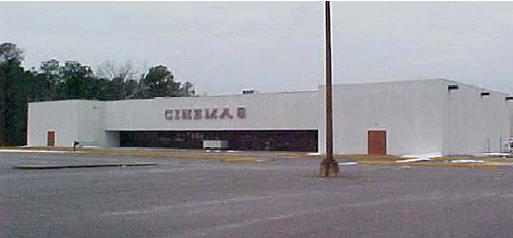
Does anyone have a theatre in their area that is commonly believed to be the "ghetto theatre?" Any stories?
Posted by Daryl C. W. O'Shea (Member # 1303) on 08-20-2004, 12:40 AM:
That is one ugly theatre building exterior!
Posted by Scott D. Neff (Member # 185) on 08-20-2004, 12:58 PM:
Man I love those old CINEMA signs.
I would love to operate/manage an old theatre with one of those signs. Just because it means it was built at the time where architects said "Yup... 4 walls and 800 seats, that's all ya need!"
As far as ghetto theatres, I used to manage the one here in Petaluma, but it went out of business and was demolished a few years back. Now that my world has grown to the greater San Francisco Bay Area, if I had to pick the WORST theatre to see a movie in, it would be Landmark's Opera Plaza in San Francisco... they're nice people who work there, but OMG the auditoriums are rediculously small, and the ceilings are low.
I could go on and on about a few other silly theatres, but I have to go to work now.
Posted by Dan Lyons (Member # 1454) on 08-20-2004, 01:09 PM:
quote: Scott D. Neff
Man I love those old CINEMA signs.
I would love to operate/manage an old theatre with one of those signs
Me too!
Move down here and re-open the CINEMA 1,2!! ![[Big Grin]](biggrin.gif)
danny
Posted by Brandon Willis (Member # 2345) on 08-20-2004, 03:26 PM:
My theatre is the ghetto theatre of Richmond.
[ 08-21-2004, 02:20 PM: Message edited by: Brandon Willis ]
Posted by JC Cowles (Member # 914) on 08-20-2004, 07:01 PM:
I think the old Burnsville General Cinema 8 has been lying dormant since about 1995. I haven't gone in there, but my old GCC manager who used to run the place said they riped out everything that had any value and trashed the rest of it. And I mean trashed as in on purpose--like sledge hammers to the concession stands. Its the only remaining General Cinema labeled theatre that I'm aware of anymore.
Theatre property is so hard to sell. Demo costs are outrageous, its much cheaper to buy or lease an empty lot. And the buildings aren't good for anything but theatres with their large concrete walls and sloped floors.
Posted by Brandon Willis (Member # 2345) on 08-21-2004, 11:30 AM:
Quite a few closed theatres in my area are churches now. Like the Midlothian 6 and the Westover. I've also heard of colleges buying or leasing them to use as lecture rooms.
While not entirely related to theatres, here is a cool website about empty or almost empty malls:
Dead Malls.com
[ 08-21-2004, 02:21 PM: Message edited by: Brandon Willis ]
Posted by Richard C. Wolfe (Member # 431) on 08-21-2004, 03:47 PM:
I guess I'm surely showing my age by this post, but I always have to laugh to myself when I see you folks talking about OLD theatres from the 70s, 80s or even 90s.
I never think of any theatre as being old unless it was built in the pre TV days. All the really great theatres were built during the 20s & 30s, a few decent ones during the 40s and early 50s, but by the mid 50s theatre construction due to TV virtually came to a hault. It wasn't until the mid 60s that theatre constuction resumed at a rapid pace once again and those were still single screens, usually with 800 to 1200 seats on one floor. They generally had large screens with curtains, magnetic stereo sound and some were even 70mm. However, beyound being large and comfortable and having a good presentation, there was nothing else memorable or pleasing about them. They were sterile, boxy, and architecturally unattractive, often with painted concrete block walls. The theatres that came after them, the twins and triplets of the early 70s were even worse, just as ugly but with much smaller auditoriums usually with one isle down the center, and no curtains. Throughout the late 70s, the 80s, and the early 90s nothing got better, except for Dolby stereo sound, as only the number of auditoriums increased. By the mid 90s the stadium theatres started to return (yes they had built stadium theatres in both the 20s and the 40s) and things started to improve.
Today there are once again many well designed and attractive multiplex theatres, but they are seldem maintained after their opening, poorly managed and often have terrible projection and sound presentation. That's sad because that is due only to a lack of caring on the part of the owners or staff.
When I mentioned the theatres of the 60s having 800 to 1000 seats I'm sure many of you though that they were quite large. Compared to today they were, but I remember working in one as an usher and people coming in and often remarking about how small it was. It was the only new theatre in town at that time and all the other first run downtown theatres had from 1800 to 3000 seats.
As to the topic at hand, I have been in probably somewhere between 50 to 75 abandoned theatres. All old single screens. I wouldn't waste my time going into a closed multuplex as there wouldn't be anything worth seeing. I might as well go into closed K-marts as they wouldn't look much different.
I have always found it's best to go well dressed, take a camera, my membership cards to both the Theatre Historical Society, and The League of Historic American Theatres. Sure I might get some good clothes a little dirty, but I don't look like a scavenger, rather someone who looks as though they have a reason to be there.
Posted by Mike Heenan (Member # 392) on 08-21-2004, 04:24 PM:
I think it's highly unlikely there's alot of abandoned theaters from the 20s and 30s still standing, that haven't been converted to something else. I think people are talking more about the theaters of the 60s though the 80s, etc, because they are still around and still standing empty.
Posted by Dan Lyons (Member # 1454) on 08-21-2004, 05:43 PM:
quote: Richard C. Wolfe
It wasn't until the mid 60s that theatre constuction resumed at a rapid pace once again and those were still single screens, usually with 800 to 1200 seats on one floor. They generally had large screens with curtains, magnetic stereo sound and some were even 70mm. However, beyound being large and comfortable and having a good presentation, there was nothing else memorable or pleasing about them. They were sterile, boxy, and architecturally unattractive, often with painted concrete block walls
Sounds like you've never experienced a CINEDOME! I really miss the one around here; last thing i saw was EVITA on opening day, great sound! HERE was the place..
danny
Posted by Scott D. Neff (Member # 185) on 08-22-2004, 12:45 PM:
Danny -- come up to visit sometime, we have 12 big Century Domes and numerous multi-plex Cinedome complexes in the bay area.
It'd be like a walk down memory lane for ya.
Posted by Eric Hooper (Member # 1730) on 08-24-2004, 11:23 AM:
Yes, tons of Domes still left here in The Bay Area. But for how long??....that is the question.
Posted by Brandon Willis (Member # 2345) on 03-15-2005, 07:25 PM:
Update on the Richmond area abandoned theatres. I went to some of them again today. I went to the Regal Cloverleaf 8, closed since 2001. There's a label scar on the front that reads "Cinemas" and there's a couple of boarded up windows but for the most part you can see right inside. I even saw a sign reading "no smoking in cinema auditoriums." There was an ADT guy there and we asked if he'd let us inside but he said he didn't have the authority to.
Also went to the UA Midlothian 6, closed since 2000. I had a heck of a time finding the place. It is now a church but there's still signs on the parking lot lamp posts that say "Theater Parking Only." The outside looks really clean compared to the Cloverleaf which is filthy. This was an old Litchfield house.
Finally, I tried to go see the Trans Lux twin cine. It is located in the parking lot of a completely empty strip mall. The whole lot was fenced off so I couldn't get in, but I could see the building and the marquee, which still had the "1" and "2" on it.
I've got some pictures as well as some from the "dead" Cloverleaf Mall. Anyone seen any other good abandoned theatres lately?
Posted by Timothy Ervin (Member # 733) on 03-15-2005, 11:34 PM:
I thought I was the only theatre person that loved getting inside and exploring old abandon theatres. I have been in several and have found some nice mementos (old tickets, box office reports, old film). The coolest one I have been in, has to be the Roxy in Muskogee, Oklahoma. It was in the mid 80's and I was just a kid. The theatre had sat abandon for years. The theatre was one of the oldies, with a balcony. A neon sign that read "Sweet Shop" hung over the concession area, There were old one sheets everywhere, one of the one sheets was "Pippi Longstocking", I found rolls of old tickets, film reports and a box of 3-D glasses! The projection room still had the projectors and there were pieces of old film everywhere! I took a roll of tickets and a few of the 3-D glasses. Looking back now , I wish I would have taken a few more souviners.
The scariest theatre adventure I had was in Oklahoma City, inside the old Continental. The windows in the front had been knocked out so access was easy. The theatre was stripped, but I did find a ticket stub for "Moonraker" and a flyer for "Oklahoma" presented in 'Cinemascope'. While I was looking around in the auditorium I heard someone running and seen a man running down from what I presumed was the booth and out the door. I later found out that the theatre had been home to gang members. I went back a few weeks later, this time with a friend. We ventured up into the booth and seen where the gang members had spray painted graffiti crap all over the place. there were also peep holes made in the walls so they could see who was coming and going. We also found several loose gun shells and decided to get the hell out of dodge.
But, that did not stop me from exploring old theatres and drive ins. I still do it from time to time and wish I had another theatre buddy to explore these wonderful buildings with. Whenever I start finding myself burned out, I usually pack my back pack, grab the camera and hit the road in search of an old theatre waiting to be explored.
The last theatre I explored was one in a small town in the Texas panhandle. the building was in such bad shape that the back wall of the theatre had collapsed. the wooden chairs were still there and only a small piece of white screen was left hanging on a wooden beam. The projection equipment was still there as were old pieces of film and paperwork. It was in the summer and was incredibly hot so I did not get to explore as much as I wanted to.
If you are going to hit the road in search of old theatres to explore, better take a back pack with your supplies (bottled water. gloves, cameras, notebooks and a cell phone). I have found exploring old theatres is very exciting and fun!
Posted by Brandon Willis (Member # 2345) on 03-16-2005, 01:19 PM:
I like checking out abandoned suburban business structures, especially empty or almost empty shopping malls. As for theatres, I like checking out abandoned multiplexes, of which Richmond has a few. They're disappearing fast, though. I would expect to see the Cloverleaf torn down by this time next year, along with the rest of the mall. I also forgot to mention that yesterday I drove by the Southside Plaza drive in theatre, which is now an auto auction yard.
Posted by Wayne Keyser (Member # 2420) on 03-16-2005, 05:16 PM:
Willis: abandoned multiplexes? You young whippersnapper!
When I was at University of Richmond (and for a few years after) I saw inside a few theaters - the good old one-screen kind.
A college friend was managing the (oh, drat, memory is failing ... bad day for the brain) the big 70mm house (now closed) at a then-upscale mall. He took a few of us over after hours - ran a reel of something, but the real treasure was the projectionist's "private" reel of "shocking" goodies, highlighted by a trailer for the schlock classic ORGY OF THE DEAD. What I remember most was driving up to the place at 2am or so - the headlights scattering rats the size of small dogs.
I'd spend half-hours at a time chatting with the aging manager of the Loew's (now an "arts center") downtown ... he'd show me the silent-era projector that put stars and moving clouds on the simulated-sky ceiling.
And, in a naive fantasy of running my own place (the established chains would have squashed me like a bug) I had a realtor show me the long-closed Booker T theater - pretty busted up (not from vandalism, apparently, but from neglect at the end of its days serving a poor neighborhood) - but the projectors still worked.
Posted by Richard C. Wolfe (Member # 431) on 03-17-2005, 11:09 PM:
Wayne,
It's been about 10 years since I was last in Richmond, but it seems to me that the Booker-T had been completely restored on the inside, and was being used as a playhouse. The small theatre next door called the Little, and at one time the Maggie Walker, had been incorporated into the complex by using it's entrance, marquee and lobby as the entrance for the former Booker-T. The Littles auditorium was being used as a black box theatre.
It must have been some years earlier that you had looked at the Booker-T before the restoration... OR, am I confused and have this mistaken for another theatre?
Also while on the topic of Richmond theatres, what is the statis of the Westhampton? That was a really nice single screen theatre in colonial style. Another theatre I saw sitting closed back then was the Capitol, not too far from the Byrd. What ever happened to that one?
Someone had made a comment earlier about the fact that there can't be very many abandoned old theatres from the 20s and 30s still around. On the contrary, there are lots of them all throughout Pennsylvania, and I'm sure the rest of the country can't be all that different. I've found dozens of them rotting away throughout Philadelphia, but most of them are scattered throughout the state in smaller communities.
Posted by Wayne Keyser (Member # 2420) on 03-18-2005, 10:48 PM:
Richard - It was definitely the Booker T - I'm talking about 1971 or 72, so it was WAY before any restoration.
I dunno about the current status of houses in Richmond - hsven't been back in years. The Westhampton was a pleasant, nice-size theater - the closest to campus (walkable), but always showing VASTLY extended runs of roadshows like DOCTOR ZHIVAGO and the like. But it was easy to bus downtown to the several downtown houses for dollar matinees.
And then there was the Byrd (still running, I understand) with Eddie Whatsisname at the organ for pre-show singalongs nightly - talk about showmanship, with his white brocade tux jacket, the blindingly bright white spotlight on the organ as it rose from the pit, the many effects (harp over there, piano over here, drums and bird-whistle who knows where) and the follow-the-bouncing-ball lyrics ... how can you beat it? Ha! Take THAT, Imax! Die, Showscan! ... (oh, that's right, Showscan already died).
Posted by Richard C. Wolfe (Member # 431) on 03-19-2005, 12:16 AM:
The Byrd organist was Eddie Weaver. Many many... many years ago, my wife and I spent our honeymoon in Virginia. Remember the state slogan... "Virginia is for lovers"? Well we took it to heart and spent a week throughout mostly the tidewater area of the state. One evening we went into Richmond just to visit the Byrd theatre. We had no interest in what was playing, only to see the theatre and hear the organ. We went early enough to watch Eddie play it before both the 7 PM and 9 PM shows. Eddie originally came from Catasauqua, Pa. which touches the southside of Northampton, Pa. where I live and have my theatre.
Posted by Bill Enos (Member # 440) on 03-21-2005, 08:53 AM:
Old Richmond Theatres. The Booker T opened in 1915 as the Strand. It was a vaudeville house with movies, seated 1050. It has two balconies th upper which is small and very steep and is no longer in use. It closed in 1927 after a fire and reopened in 1934 as the Booker T. The facade of the building is much altered but the interior is pretty much restored. It is now owned and operated by a local theater group, Theater Four. Next to it is the Regent which opened in 1936 as a movie house, it seats 330. The lobbies of the Regent and Empire are now connected.
The Westhampton is now a Regal house and is the primary outlet for foreign and art films in the area. Built with a small screen even for the period, when scope and 70mm began the entire front of the auditorium was cut off and rebuilt to accommodate wide screen. The project was done so well that the change is undetectable inside. Outside the area where the building was cut is quite noticable, It is very well preserved much to the credit of the original owners and Regal.
The Loews, now the Carpenter Center For the Performing Arts was painter red and white thru out in the '70s by the Loews company. It was repainted in the middle '80s in a rather hideous attempt to restore the interior. It was done in a brownish cream and then sponge painted with nasty greens and maroons then the whole mess was gloss coated---VERY glossy, the whole auditorium shines. The interior decor was done by an architect, not a decorator. Typical I guess of what to expect when an engineer does decorating. He thinks he did it perfectly. The theatre is now closed undergoing yet another renovation. The building is being cut off at the proscenium to double the size of the stage and fly space and storage. It is scheduled to reopen in 18 to 24 months.
Eddie Weaver had a long career in Richmond. He started at the Loews in 1937 and moved to the Byrd in 1960 where he continued until 1983 when gave up playing 6 nights a week after nearly 50 years. He attended the Eastman School of Music originally to study violin. He switched to organ and the rest is history. Eddie died in February of 2002 at 92. He played piano with his daughter Jodie (quite a pianist too) in a small event in early December '99.
The 70mm house was probably the Broad Street Cinema. It had a huge screen, nearly floor to ceiling and wall to wall. Really spectacular. It had Cinnemechanicca 35/70s. The build is now gone for about 12 years.
Posted by Jim Spohn (Member # 1547) on 03-21-2005, 11:47 AM:
Ten years ago I found an old abandon theatre that the roof to the projection booth had burned off twenty years earlier. What equipment was still in the booth had been sitting in the rain, wind, hot sun, and pigeon droppings for twenty years!! I contacted the building owner and he said that I could have the booth equipment for free. I took it home and sandblasted, painted and put a lot of work into that stuff. If you want to see what the stuff looks like after I restored it, goto the PICTURES section, look under single screen theatres and go the the Granada Theatre Bakersfield. The film bench with rewind and the base and lamphouse on the second 35mm machine came from that abandon theatre.... Jim Spohn
Posted by William Hooper (Member # 71) on 03-22-2005, 03:16 AM:
quote: Bill Enos
The Booker T opened in 1915 as the Strand. It was a vaudeville house with movies, seated 1050. It has two balconies th upper which is small and very steep and is no longer in use.
You'll probably find that it was the "Colored Gallery" & had its own, separate entrance from the street. Awful as segregated seating was, the neglect is what makes that section the one to check out: you'll often find the most original material up there: carpet, seats, etc. because they never had enough consideration for the black patrons to maintain or renovate the area of the auditorium where they sat.
A "Colored Gallery" is a very 'teens & before design of segregated seating, although some later theaters that were of old-fashioned design had them. Afterwards, it was usually just a design of the balcony to make traffic between the upper balcony "colored section" & lower balcony. In large cities with very large black populations, there would sometimes be a full-size 3rd balcony that was exclusively the "colored section".
Segregated audiences, Colored Sections & Colored Entrances were pretty much fixtures all over the US, not just in the south: all over there were theaters where black people weren't allowed ("They don't come over this side of xxxxx street"), & segregated entrances & seating in the northeast, midwest (Klan country too, in OK, MO, etc), & west (someone not too long ago mentioned the now-unused Colored Balcony at the Palace Theatre in Los Angeles). You'll easily find them in older, larger houses (often the segregated entrances are converted to additional exits or closed up because they were non-code-conforming: 3-to-4 floor closed, nonstop deathtrap stairwells); & small postwar houses had them too (small balconies with a separate entrance, you recognize that door off the main entrance very quickly on the storefront theaters).
I've always been very interested in that theatre segregation outside of the US states - how could it work, anyway?. In the SE before the Civil Rights Act, racial segregation was the law: regulations required that if a place of public assembly admitted black people, that they must have a separate, non-communicating seating area (& later a separate entrance, & more & more tacked on through the years as lawmakers found additional ways to segregate). But I've never really been able to get a handle on Jim Crow: where there were no racial segregation laws, why couldn't black folks just walk up to the ticket booth, say "Give me a ticket down front", then take them to court if they didn't get one? Was the problem that it was all handled locally, the local judge would just say "Well, they've got a separate entrance, you have to use that." With no basis in law? No appeals?
quote: Bill Enos
The Loews, now the Carpenter Center For the Performing Arts was painter red and white thru out in the '70s by the Loews company. It was repainted in the middle '80s in a rather hideous attempt to restore the interior. It was done in a brownish cream and then sponge painted with nasty greens and maroons then the whole mess was gloss coated---VERY glossy, the whole auditorium shines.
Since you're at the Byrd, you'll quickly understand one of my pet peeves about some meticulous restorations: they'll have folks come in, chemically analyze layers of the original paints to get the original colors, paint everything back, open the house & say "Here it is, it looks exactly like it did when it opened!" And of course it doesn't by a long shot, because they've changed the colored lighting to all white & so the colors are all wrong. Any set designer or high school science teacher will tell you that something's color is not determined by just its pigmentation, but also by the color of the light on it. Together they determine the color of light reflected to the eye. The original lighting systems never were all white, & red paint with blue or yellow light on it is not the color of the red paint, etc. Nobody ever made 20s movie palace interiors to be seen the way they usually are now; they're skeletons of the original colors in white light.
quote: Bill Enos
The theatre is now closed undergoing yet another renovation. The building is being cut off at the proscenium to double the size of the stage and fly space and storage.
That's become quite a fashion, demolishing the stage house (i.e., everything behind the proscenium, includes stage, fly tower, dressing rooms, some mechanical, etc.) & building a newer, larger one. As a functional renovation, it doesn't bother me much. Large houses turned PAC's typically need to accommodate large shows, which are larger than they were in the 20s. There's less to catastrophically screw up technically by an architect messing around with theaters renovating there than on the other side of the proscenium, too. Still, I really do enjoy crawling around old stage houses.
Posted by Wayne Keyser (Member # 2420) on 03-22-2005, 09:59 PM:
quote: William Hooper
But I've never really been able to get a handle on Jim Crow: where there were no racial segregation laws, why couldn't black folks just walk up to the ticket booth, say "Give me a ticket down front", then take them to court if they didn't get one? Was the problem that it was all handled locally, the local judge would just say "Well, they've got a separate entrance, you have to use that." With no basis in law? No appeals?
[Putting on my best Southern accent and spouting arguments remembered from - really - not all that long ago]
And you are from the South? Jeeez! Maybe you're one of those folks who just got here from "up North" and come down here wanting to stir up a little trouble.
Now look here, mister ... I got no problem with your average colored, I work around 'em every day. But that doesn't mean I got to have 'em over at my house to dinner, or sittin' down in the main part of the movie where they don't belong. And they know better than to come where they aren't wanted. Any one of 'em tried a thing like that, there wouldn't be a white man in the audience wouldn't set 'em straight, and if anybody called the cops ... well, the Sheriff is a good old boy and he knows a few ways to talk sense to these outside agitators. And the report would show that he had a knife and was just asking for a little "plain talk" from the upstanding men of the town.
But we don't have problems like that here ... didn't nobody pay good money to come to the picture show just to raise a ruckus. They have their place and we have ours and we all get along just fine. Now if you know what's good for you, you won't let people hear you stirrin' up trouble.
---------------
The arguments were powerful when, after a hard day at work, everybody just wanted to see a movie and go home.
Posted by Bill Enos (Member # 440) on 03-22-2005, 10:57 PM:
As it originally operated the Strand did not admit "persons of color" at all which pretty much the policy at all the whites only theatres in Richmond. Blacks who attenpted to buy tickets at the Byrd were given cab fare to the blacks only theatre of their choice as well as the admission price. The upper balcony of the Strand was rarely used. When it reopened as a blacks only house it was never used again. The Booker T s internal structure is wood and unsubstantiated stories say that after the fire the top balcony was deemed unsafe for other than storage.
After the '80s renovation the ex Loews had its lighting changed to all clear bulbs and the ceiling originally painted a very dark atmospheric blue was painted a light turquoise, thus eliminating Eberson's night sky effect. The present re-restoration plans call for all auditorium and lobby paint to be taken back to the original 1928 colors. They have engaged the services of a company that specializes in that type of work. Maybe the outcome will be better this time. The correct colored bulbs will go back too.
Posted by William Hooper (Member # 71) on 03-23-2005, 04:00 AM:
quote: Wayne Keyser
Putting on my best Southern accent and spouting arguments remembered from - really - not all that long ago]
Well, I meant my baffling problem was Jim Crow laws outside the south (where segregation was institutionalized at the state level). Jim Crow laws originally just gave the proprietors of places of public accommodation the legal right to exclude people by race. "Jim Crow" just was a broad categorical description of laws that were based from that. Jim Crow laws were scattered all over the US, but they were very localized. Most perplexing are segregated theaters where it would seem no Jim Crow laws existed, but folks followed the signs, anyway.
quote: Bill Enos
As it originally operated the Strand did not admit "persons of color" at all which pretty much the policy at all the whites only theatres in Richmond. Blacks who attenpted to buy tickets at the Byrd were given cab fare to the blacks only theatre of their choice as well as the admission price
That would adhere to the twisted but wildly inaccurate sort of idea of "separate but equal" accommodation that after Plessy v. Ferguson was a requirement for legal racial segregation in places of public accommodation. The idea that probably was put forth is that a movie is a movie, a theatre is a theatre, a seat is a seat.
There's an interesting book by Janna Jones, _The Southern Movie Palace: Rise, Fall, and Resurrection_, which bites off a lot about a big subject. To avoid being too superficial since the topics are so broad, she just focuses on 4 or so theaters: the Carolina in Durham, the Tampa in Tampa, The Alabama in Birmingham, & the Fox in Atlanta. It's a sort of social history & a contemporary social examination of current operations & remodels/restorations at those theaters. The restoration parts are a little gronky: she mentions in a chapter about a theater doing what it can with limited resources that old photos of the theater are in black & white, requiring some leeway & supposition in color selection, after a previous section about experts coming in to analyze the layers of paint & determine the correct colors in another theater, etc. There's a lot of interesting information about segregation practices, effects, attitudes, etc. at those theaters, & one of the *most* interesting parts is a description of some events at a meeting Robert Kennedy called of theatre owners to end segregation in theatres.
quote: Bill Enos
The present re-restoration plans call for all auditorium and lobby paint to be taken back to the original 1928 colors. They have engaged the services of a company that specializes in that type of work. Maybe the outcome will be better this time. The correct colored bulbs will go back too.
WHAT? Why didn't they get the folks running the Mobile Saenger to paint it white for them?
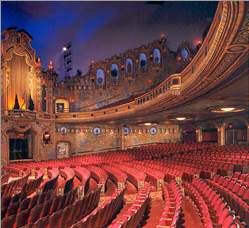
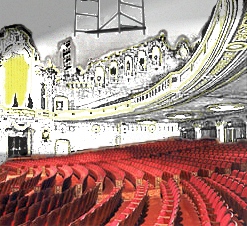
The original architect couldn't have had as much taste as the people who remodeled the Mobile Saenger! And you get two upside-down painter's scaffolds hung from the ceiling, too!
Posted by Wayne Keyser (Member # 2420) on 03-23-2005, 08:25 AM:
AAAAARGH! MY EYES!
Were these people on drugs? [*Sigh*]
By the way, I was just surfing around - Googling "abandoned theater" and the like - looked up the old, familiar porn house in Richmond, the Lee Art - discovered that it is now home to Virginia Commonwealth University's dance department.
I haven't yet quite stopped laughing ... from grainy, splice-ridden grindhouse porn flicks to (now) lithe teenage girls writhing about in skin-tight leotards ... sounds like a deal to me, where do I buy a season ticket, and will the same old overcoat meet the current dress code?
By the way, the 70mm house I referred to above was the old Willow Lawn.
[ 03-23-2005, 04:33 PM: Message edited by: Wayne Keyser ]
Powered by Infopop Corporation
UBB.classicTM
6.3.1.2