This is topic SLR Photography Question About Lenses in forum Film-Yak at Film-Tech Forum ARCHIVE.


To visit this topic, use this URL:
https://ft-forum.com/ft/cgi-bin/ubb/ultimatebb.cgi?ubb=get_topic;f=8;t=003983

Posted by Christopher Duvall (Member # 284) on 03-28-2005, 03:35 AM:
 
Next year, I will be in a situation where I will be doing press style and paparazzi photography. The room(s) I will be in will not be too large and I will have good access to the subjects so I will not not need anything major.

I just want to know what lens would be a good workhorse and very versatile for me. I currently have an 18mm-55mm lens and a 70mm-300mm zoom lens and I am using the Digital Rebel (and will be buying the XT version soon) but I do not want to constantly have to change lenses out. Also, should I consider the IS or L series lens or should I save my money stick to the standard lenses?

I am relatively new to this so any help would be awesome.

I am thinking something like a 28mm-135mm range zoom lens to cover the wide/standard and portrait area.
 
Posted by Stephen Brown (Member # 292) on 03-28-2005, 06:47 AM:
 
Tamron have released a new lens that should fill the bill for you.

Its an 18-200mm lens that will fit on the canon-D range.

Here is the link to the product page

Tamron 18-200 Lens

quote:
Product Overview
Di II: Lenses are designed for exclusive use on digital cameras with smaller-size imagers and inherit all of the benefits of our Di products. These lenses are not designed for 35mm film cameras and digital cameras with image sensors larger than 24mm x 16mm.

At Tamron, our quest has always been to make the ideal zoom lens. As a result of this ongoing challenge, we have introduced the concept of our high-power zoom lens in the new AF18-200mm XR Di II for exclusive use with digital SLRs. Tamron's original development of proprietary core technologies such as Aspherical element production, Multiple Cam Mechanism and Integrated Focus Cam design lend to the creation of the world's lightest, most compact 11.1X zoom lens made for digital SLR cameras.

The 18-200mm (28-300 when converted to 35mm) provides the digital photographer with the versatility of a true wide to ultra tele zoom in an amazingly easy to use design.

Hope this helps.

Steve Brown
 
Posted by Scott Norwood (Member # 30) on 03-28-2005, 07:47 AM:
 
The longer-range zoom lenses are almost never very sharp. An 18-200 sounds nice on paper, but is probably going to be very heavy and large and less sharp than primes or shorter zooms. If you want to get this, try to use it in a store or buy from somewhere with a liberal return policy before you commit to it.

You'll probably have to figure out what focal lengths work best for you. For 35mm, I use 24mm, 50mm, 200mm, and a 35-105 zoom. I'm happy with this mix (and would like to get a 20mm and 35mm), but it may not work at all for you (and you'll need to convert the focal lengths to ones appropriate for the smaller sensor size for digital cameras).
 
Posted by Gordon McLeod (Member # 33) on 03-28-2005, 09:49 AM:
 
For 35mm 8 perf I use a 90mm lens the most especially for portrature It has almost the same convergance of lines of perspective as the human eye so it gives images a natural perpective
 
Posted by Larry Myers (Member # 738) on 03-28-2005, 10:14 AM:
 
Well most normal lenses for 35mm have a focal length around 52mm. This gives a 5x7 print with the correct perspective at 10 inches of view distance. With older SLR cameras, the same combo will give a 1:1 same size image when one eye is looking through the view finder and the other eye is looking at the subject. This doesn't work with newer cameras as the viewfinder itself is visually smaller due to the optics in the view finder.

Zoom lenses generally are about 1/2 to 1/3 the resolution of prime lenses. This will show up in larger film prints but might not show up at all in digital. This is mainly due to built in image sharping software in digital cameras.

Larry
 
Posted by Gordon McLeod (Member # 33) on 03-28-2005, 10:22 AM:
 
Larry said "Well most normal lenses for 35mm have a focal length around 52mm. This gives a 5x7 print with the correct perspective at 10 inches of view distance."
It will give the same coverage angle but not the same convergance of lines of perspective to the vanishing points
 
Posted by Larry Myers (Member # 738) on 03-28-2005, 03:02 PM:
 
It should. In other words, if you made a 5x7 transparancy from a 35mm negative using a 52mm camera lens, the vanishing points should line up with the original scene at 10 inches of view distance. It's more or less how depth of field tables are calculated and what is ment by a normal lens all with this 10 inch view distance in mind. A 90mm lens would never be considered normal with a 35mm camera but would be close to normal with a 6x9 folder. Actually the calculation would be 2.2x or 2.2 times 35mm equals 6x9 and 2.2 times 52mm is 114mm. So that 90mm lens would be slightly wide for a 6x9 camera.

Larry
 
Posted by Mark Gulbrandsen (Member # 72) on 03-28-2005, 07:32 PM:
 
Actually I would go with a Nikon F and 28 to 85mm Nikor zoom lens. Nikon made a dynamyte small zoom that is sharp as a tack, keep plenty of Tri-X on hand and push it to ASA 2000 for those grainy award winning shots you will be taking. That Rebel is for weenies! The main reason for the F is so you have something substantial to hit back with and then just pick it back up and keep shooting away! Award winning shots often happen this way [thumbsup] .

Mark

P.S. I used to work for Canon factory service and would never own anything they make....... at least todays products. They suck big time. The old Canon stuff was great though....... When the Canon Autofocus(otherwise known in the shop as outafocus)appeard that was the beginning of the decline for expecting anything good from Canon.
 
Posted by Will Kutler (Member # 770) on 03-28-2005, 11:39 PM:
 
Mark and I are in agreement about Nikon! For many years, Nikon and other quality 35mm SLR cameras/equipment were really holding their prices. It had been a while since I had gone to a camera show or looked around for stuff, but my jaw dropped to the floor when I saw how the prices have fallen, thanks to digital cameras! Look around for Nikon equipment, as your bound to find quality stuff at reasonable prices.

The Nkion F4 will suit both digital and 35mm film photography. I remember when that camera first came out, and it's price. The military was one of the first customers. I saw many operations in the early 1990's where a photo was taken with an F4 and was at the Pentagon via computer download in a matter of minutes! I have lately seen these cameras reasonably priced.

Nikon F series equipment is quality, rugged dependable and reliable!

Cheers

K.
 
Posted by Christopher Duvall (Member # 284) on 03-29-2005, 03:05 AM:
 
Thanks guys. You gave me some ideas. If anybody else has anything...keep it coming.
 
Posted by Stephen Brown (Member # 292) on 03-29-2005, 06:37 AM:
 
I shoot with a Nikon D70 DSLR (yes digital I know, I can hear the groans but it has its advantages) and use a Tamron 70-300mm lens as well as a 28-80 Nikor. The Tamron actually is quite light and quite quick to use. Even out on the end of the lens it produces nice sharp results. The new Tamron 18-200 looks like a good universal lens for shooting where you need to have a wide range of focal lengths.

I'll certainly be getting one.

I'll upload a picture from the camera in the random pictures 2 thread.

Steve Brown
 
Posted by William Hooper (Member # 71) on 03-29-2005, 06:51 AM:
 
I don't know much 'bout them devilish digital cameras; yours may have anti-shake, autofocus, etc., & you may be specifically needing to use a digital camera for speedy export not requiring scanning, taking a bunch of pictures many of which you may want to throw away, etc.

Longer lenses have a problem with exacerbating lens shake. As light levels get lower, any blurring from longer exposures piles on top of lens shake to make things worse.

A flash is always irritating to subjects & other folks in the room.

If you want these long lenses in these small rooms so that you can pick out 1 or 2 faces from the back of the room, a flash won't help anyway.

If you get a faster lens (most longer zooms are slower, & much more expensive if faster), you start having depth of field problems & have to constantly ride focus. This may be less of an issue with autofocus cameras if you devise a technique that makes the autofocuser happy & always point where it wants to focus.

Zoom lenses with huge ranges (like 28-210) are always mch mushier-looking than primes. It's less of an issue with smaller zoom ranges (28-50, 110-250, whatever).

If they're small rooms & you want paparazzi-style photos of 1 or 2 individuals in the crowd, I think you don't need a wide lens like a 28mm or less, unless you're right up on them. With a f2.5 lens around 35-70mm & a bit of distance, if the light is decent, you won't need a flash. You will need to be steady, but that's a given with anything, & not as big a problem with longer lenses.

If it's got to be digital, I'd say a 35-70mm lens about f2.5 & a high resolution camera (4 megapixels, I dunno from megapixels), & crop out what you don't want.

You'll have problems if you get further back, have to stand on chairs, etc. to shoot over a crowd, etc.

If lighting gets low, then you'll need a flash, so you'll have to get still further back to keep from bugging folks, & so need a longer lens & a more powerful flash.

--
My pictures are different, & I'm primarily interested in wide spectacle shots in theaters with & without crowds. I'm have only been taking the Nikon FG out for a long while, & I've bought another.

[john] :
http://mir.com.my/rb/photography/hardwares/classics/emfgfg20/fg/index.htm

They're the lightest, smallest Nikon made, use Nikon AIs lenses, & don't call attention to themselves. I do get some wandering through crowds shots, & the size makes pitcher-taking non-distracting or even unobserved. They're stupidly inexpensive, because they don't look like the dadgum space shuttle camera, but have TTL flash, excellent metering & autoexposure modes. There's something a little different about the center-weighted metering on the FG, but it adapts well for the big auditorium shots I do where the hot spots are scattered away from the center. You'll often find people selling them because they mistakenly think they're broken: the AE readout doesn't work until the frame counter is advanced to 1 (no freebie AE shots before frame 1).

Light, rugged; I have no straps on mine (except wrist straps) & instead have one of those spring-loaded belt loop clips like you put on huge keyrings. EASY for going up ladders & through crowds!
 
Posted by Gordon McLeod (Member # 33) on 03-29-2005, 09:25 AM:
 
I still use my old trusty exacta 1953 model SLR with a set of matched zies lens
noisy heavy but very reliable
 
Posted by John Pytlak (Member # 331) on 03-29-2005, 09:50 AM:
 
quote:
Next year, I will be in a situation where I will be doing press style and paparazzi photography. The room(s) I will be in will not be too large and I will have good access to the subjects so I will not not need anything major.

If you are not using a flash, you may not be able to hold the camera steady enough for a really long lens, even with fast film. For a 35mm SLR, most people need to use a shutter speed faster than the reciprical of the lens focal length in millimeters.

So at 50mm, most can get steady images at 1/50 second or faster, but a 250mm lens would usually require 1/250 second to reliably avoid motion blur from a hand-held camera.

Consider a monopod or even a tripod if you have to use long lenses in photojournalism shoots.

A really fast film can help alot, and the granularity is quite acceptable for moderate blow-up:

Kodak Portra 800 Film

Kodak T-Max P-3200 Film
 
Posted by Larry Myers (Member # 738) on 03-29-2005, 11:55 AM:
 
Yes, that is why a 21mm lens is a real natural for existing indoor light photography down to about 5 ft candles. With this lens and 1/15 of a second, you don't need a flash even with ASA 100 film. It also works great with high reso Ektar 25 film although you still might need to support the camera with this type of film.

Larry
 
Posted by Brad Miller (Member # 2) on 03-29-2005, 06:01 PM:
 
I just bought a Nikon D100 and have been quite pleased with it so far. Here is the first picture I shot with it, on "full auto" (scaled down of course, as the original camera file was 4.5 megs).
 
Posted by Mark Gulbrandsen (Member # 72) on 03-29-2005, 08:16 PM:
 
When I was building my VistaVision camera I bought up Nikkor lenses to use on it. 18mm through 85mm set, 6 total. They are not color matched or properly calibrated in T stops but they work beautifully. The 18mm is by far my favorite as its distortion free. I coulda spent bukoo bucks on Zeiss glass and probably not have had any better picture quality, just faster lenses. Now if I just had time to take the dam thing out and shoot film.....Ditto for my 4X5 stuff!

Mark
 
Posted by Tao Yue (Member # 836) on 03-30-2005, 12:41 AM:
 
One issue of Cinefex quoted an ILM effects supervisor as saying that they preferred certain Nikon lenses to the cine equivalents because the Nikons were better. Not certain, but might've been the Temple of Doom issue.
 
Posted by William Hooper (Member # 71) on 03-30-2005, 01:16 AM:
 
In a small room, trying for shots of 1 or 2 faces in a crowd, I don't thing something 28mm or wider is going to get much unless you're up in their faces. Also, at that width, you may be showing more of how small the room is. And I don't think you'll get much out of 100mm & longer lenses that you couldn't get better from cropping.

I didn't think about it, but you may have to use flash. If this room is lighted with fluorescents, the light will be ugly. I mean Alien Autopsy ugly. If it's lighted entirely by incandescents, the yellowish color may also be objectionable (it's flattering to faces, but white shirts, tables, etc. make the room look dingy).

The first option is to use a filter on the lens; you'll lose some light. But the filter is going to be for a specific color temperature, & especially for fluorescents (which wander around in color) & rooms with a mix of fluorescents, incandescents, halogen, etc., the filter is not going to provide uniform correction.

So you're at bringing your own light, & that's usually a flash, to blast out the existing light. The flash flattens stuff, & not only are rooms that look like painted backdrops uninteresting, it's uninteresting to see faces with no cheekbones, frontal bones, & chins. I think most of these steamrollered pictures are a result of a flash that's too powerful - you just need enough to light their faces enough for exposure & not just drop the bomb on the whole room.

It's a social situation, & with a flash, you become the jerk with the camera. You don't get pictures of happy, relaxed people when they're irritated by the flash & steeling for the next one. It's a small room, use a small flash, go by the theatrical lighting store & get some small scraps of gel like neutral density & bastard amber & keep putting them over the flash to knock it down to get only as much as you need to get over the ugly color light in the room. Flashes will be less objectionable if they're lower in intensity.

If this small room you're referencing is always the same one & the proprietor is engaging you to take photos for him, you might arrange a few things to get better pictures. Table lamps here & there will get some light coming from below for fill get some definition in faces, reducing the toplighted room look & frontal-flash blast. If the person running the show WANTS a flashbulb-popping exciting press party environment, you might ask if you can add as part of the "decoration" a couple of cheap Radio Shack party strobes here & there dialed down to a pop every several seconds. The people in the room will be quickly acclimated to the flashes as part of the environment, & will not have such pronounced negative reactions to flash photography.

There's another possibility for getting around the negative social effects of photographic flash - I was with a group taking interior photos in a VERY dark interior, several were taking stills, a couple making video, & one still guy who did not know how to take pictures in the absence of light asked one of the video guys do shine his video light for a moment on an area he wanted to photograph. Those little battery-operated video lights put out a lot of light, you could consider using one, & even gelling it to knock its output down & making it a little less blue. It would likely be less socially objectionable than flash; people don't seem to start & scowl at people shooting video with them like they do at flash photographers. How well it would work over the period of time you need to take your pictures would be interesting to discover: people may get a feeling after a while from that light prowling around that one of those space ships from War of The Worlds is after them.

For maximum entertainment value, you could check eBay & get a Sylvania Sun Gun or old 4-photoflood light bar & enjoy roaming around causing 3rd degree burns, fake plants to bloom, paint to blister & peel, trailing an orange extension cord & chanting "Don't trip on the cord, whoops, lookout, it's bright, isn't it?"

Pictures would be flat, but it's all about how much fun you have at the party, isn't it?

quote: Brad Miller
Here is the first picture I shot with it, on "full auto"
Cool picture. Is that your screening room? To get some other pictures for variety, you might try one with a light coming from out of the frame like DS left or right raking across the seats at some diagonal. I find that architectural stuff with lots of edges & shapes, especially repeating ones (like seats, drapes, plaster frou-frou on the walls, etc.) often get cool effects with just one light raking across an area of them at some odd angle, pulling out contours to different degrees as the light falls off, the same shapes are positioned differently in the cone of light, etc. A separate, isolated, directional light source also makes the depth pop more. In an auditorium, I usually find an old lighting instrument, hide it behind something, throw a slash diagonally up a wall, across some seats or the stage (wherever there's a sizeable dark area to isolate it) & adjust the output & try a couple of different color gels to find a cool one. Sometimes it's a color that goes with the room, sometimes an oddball color; I'm no designer, just a critic.
 
Posted by Ron Yost (Member # 1850) on 03-30-2005, 12:35 PM:
 
You're right, Tao. I remember seeing a photograph of one of ILM's 'early' motion-control rigs and, if I remember correctly, they had a Micro-Nikkor f3.5 55mm on the camera. I've owned one for years (the lens, not the m.c. rig).

Back to the subject of this thread: I'd advise you get a Canon 28-135mm IS lens, put it on your DRebel, and you'll be all set! A very useful, relatively sharp lens, for the $$. Even for use in low light. [thumbsup]

Ron Yost .. former Nikon-F user, now largely gone over to the dark-side of Canon digital. Still have my F's and lenses, tho. [Big Grin]
 
Posted by Mark Gulbrandsen (Member # 72) on 03-30-2005, 07:55 PM:
 
Ron,
Its unfortnate that its dark over there with the Canon, I bet its brighter over by your Nikon though. Things were beginning to get just slightly dim when I left Canon right after the intro of the Autofocus and that was long ago so I guess it has probably gotten dark there by now..... [Wink]

Mark
 
Posted by Martin Brooks (Member # 1269) on 04-02-2005, 10:06 PM:
 
I’m also now shooting with a Nikon D70 digital (and I also have the N80 film body, but don’t use it much anymore.)

With the film body, I used to shoot with the 70-300 f4.5-5.6 and the 28-105mm 3.5-4.5 lenses. They were great lenses, but I always got frustrated with the slow speed, even when using flash, especially when shooting concerts from a distance. If you buy the Nikon D70 as a kit with the lens, it comes with a 18-70mm 3.5-4.5 (acts as a 27-105mm) on the digital body.

So even though they’re expensive and even though on the digital, you can crank up the ASA to 1600, I went with the 70-200mm f2.8 and the 28-70mm f2.8 AF-S series lenses. I find that I mainly use the 70-200 (which acts as a 105-300mm on the digital body, since the digital imager is smaller than 35mm.) The lens is very large and heavy, but I love that lens. It’s very sharp, focuses very quickly and is easy to switch to manual mode. Only downside is that because the lens is so large, it’s not a good lens to use when you don’t want to be obvious. (I was shooting in a club and management told me that they permit amateur photographers, but not pros. Luckily, I was on the band’s VIP list that night, so they still let me shoot.)

If you’re going to shoot with flash, get a bracket for the camera and flash, like the Statos1035. That will get the Flash higher, reducing shadows, and is also better if you’re indoors and want to bounce the flash. You need a special Nikon cable to use the bracket.

One other note: get filters to protect the lenses and don’t cheap out. People spend hundreds or even thousands of dollars for lenses and then put a $10 filter on it…ridiculous.
 
Posted by Mark Gulbrandsen (Member # 72) on 04-03-2005, 09:15 PM:
 
Yes, I am in the digital thing too. Was out hiking todaynear Farmington, UT and caught this overgrown barn with my small Nikon 2200 thats almost always in my pocket....
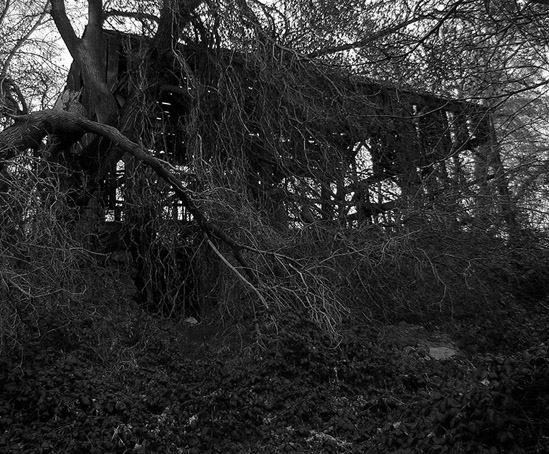
 -
 
Posted by Tracy Bellar (Member # 3049) on 04-06-2005, 01:47 AM:
 
I use a Nikon F3 lenses are all fixed length. I got rid of my zooms. I carry a Nikkor 28mm 2.8, Nikon series E 50mm 1.8, Nikkor 105mm 2.5, and a Nikkor ED 180mm 2.8. If you are doing jornalism work in tight around 28mm-35mm is good. Portrait between 55mm-135mm. I love the 180mm. When you need it it comes in handy and nothing else will do. 180 is a very useful lens in jornalism. I did some fashion work with medium length lenses. Landscapes and really good fashion or portrait and landscape should be medium format or 4x5 and plus.
 
Posted by Tracy Bellar (Member # 3049) on 04-06-2005, 08:55 PM:
 
Tamron or vivitar had a lens with a locking zoom I think it was a 28-210mm. I do miss the locking zoom after I sold it. Came in nice when you wanted to set your zoom and then it gave more ease to focusing and working other stuff without worrying about the zoom moving.
 
Posted by System Notices (Member # 2357) on 08-05-2007, 02:22 AM:
 

It has been 850 days since the last post.


Posted by Allison Parsons (Member # 2728) on 08-05-2007, 02:22 AM:
 
Not really a lens question but...

So I dusted off my old Minolta SRT 200 SLR camera this week. To make a long story short, I've used this camera once (I've used my Dad's old Pentax 1000's of times) so I don't know too much about this one.

This camers has a 'stop down' button on it. What is it for, and am I going to need to use it everytime I take a picture?
 
Posted by Paul Mayer (Member # 355) on 08-05-2007, 02:36 AM:
 
A "stop down" button allows you to preview the depth of field prior to taking the shot. Normally the iris is wide open, regardless of the f-stop selected on the lens, in order to give you the brightest viewfinder image. When you fire the shutter, the iris stops down to whatever is set on the lens. Using the stop down button allows you to see beforehand what will be in focus at the aperture setting you've set.
 
Posted by Allison Parsons (Member # 2728) on 08-05-2007, 02:41 AM:
 
thanks paul! Do you get more artsy-fartsy pictures if you hold down the button while taking a picture? [Big Grin] I'm going to try this beast out tomorrow. Hopefully my manual camera knowhow will come back to me quickly.
 
Posted by Stephen Brown (Member # 292) on 08-05-2007, 07:07 AM:
 
Allison,

When you hit the shutter button the iris closes to the setting that is on the lens, the step down is just for previewing the depth of field (by closing the iris to the lens setting) through the viewfinder before taking the picture.


Powered by Infopop Corporation
UBB.classicTM 6.3.1.2