This is topic Antique Radio Restoration Help Needed! in forum Film-Yak at Film-Tech Forum ARCHIVE.
To visit this topic, use this URL:
https://ft-forum.com/ft/cgi-bin/ubb/ultimatebb.cgi?ubb=get_topic;f=8;t=004175
Posted by Will Kutler (Member # 770) on 07-26-2005, 02:24 PM:
In the words of the great icon MONTY PYTHON: "And NOW FOR SOMETHING COMPLETELY STUPID!"
Well, I have begun the restoration of my 1938 RCA 816K AM and short-wave radio.
All of the original chassis wiring is either cloth, or real rubber insulation. And it all needs to be replaced!
Well, I never thought I'd see the day when I would walk into several electronics supply stores and NOT FIND WIRE with standard striped color codes! Thats Tucson, I suppose!
I'm going to check some of the Hot Rod Shops to see if they carry bulk wiring. The closest I've come is Painless Wiring, which has most of what I need, at $20.00 per 25 ft roll! And thats a little expensive seeing as I only need less than 10 ft of 13 different colors!
Maybe one of ya, like Mark G. or Phil can lend a hand!
Cheers
K.
Posted by Roger Manning Jr (Member # 1560) on 07-26-2005, 02:43 PM:
Will did you try http://tubesandmore.com/
Roger
Posted by Bruce McGee (Member # 131) on 07-26-2005, 05:28 PM:
Is all the wiring really rotton?
I've got a 1932 Atwater-Kent model 84 cathedral that has all of its original wiring, except for what runs over to the under-chassis mounted electrolytics that I installed. Plus a new power cord.
Also have an RCA that had alot of damage done by mice. When I got it, it was actually playing! I'm still amazed that it didn't release smoke. Good luck with the rebuild. I love this old stuff. ![[bruce]](graemlins/bruce.gif)
Posted by Phil Hill (Member # 371) on 07-26-2005, 05:39 PM:
I think Belden still sells a 10-color 25ft roll kit of "chassis hook-up" wire. It's like #22 AWG solid conductor with pvc insulation in the standard solid "resistor" colors.
You might try Mouser Electronics or Newark or (that OTHER PLACE that I just now forgot the name of the joint!)
Also, I think Radio Shack had a similar kit.
BTW: If you're looking for "Fuchsia" and "Magenta", you're outta luck... ![[Razz]](tongue.gif)
Posted by Will Kutler (Member # 770) on 07-26-2005, 07:25 PM:
Thanks for the help, everyone.
I guess 14 gage wiring should be heavy enough, unless 'yall think I should use something heavier?
I already contacted some of the antique radio parts suppliers (including Antique Electronic Supply--Tubes and More). Nothing doin.
Some of the cloth covered wire is available reproduction, but colors are limited. From my understanding, underneath the cloth is modern insulation.
Radio Shack, which used to have all kinds of neat stuff, now has squat.
This set has been worked on before, and the previous repairs could have been much neater. Luckily I have the original RCA schematics and books via Rider Publications. The nice thing is that these books also show the correct placement of all the components, including wiring.
All the insulation on the original wiring (both real rubber and cloth) is just falling apart. The best thing would be fo me to rewire the set using correct color codes w/modern hi-temp insulation.
Painless Wiring, who makes hot-rod and performance auto wiring products, has most of the color codes I need. Their wire is a stranded real copper core w/cross-linked polyethylene insulation for superior abrasion resistance. Withstands 275 degrees F @ 600 volts. Problem is that their bulk wire is a little expensive @ $20.00 for a 25ft roll. Needless to say I do not need 25 ft rolls, so I am trying to see if I can obtain some short scraps, as they are the direct manufacturer.
The RCA 816K is really a neat radio. It has been written up in the October 1990 issues of Antique Radio Classified by author Chuck Dachis. After I read the article, I thought it would be a neat unit to have. And I did have the opportunity to examine and listen to one, prior to obtaining mine. It sounded very nice!
It is a "16 tube (including the "Magic Tuning Eye" 7 band am and short wave console of 1938 vintage. It covers shortwave from 1.9 to 22 MHz in two general coverage bands, as well as 49, 31, 25 and 19 meters in four ""band spreads"". Each band spread has its own dial scale segment individually lighted as it is selected."
"Its hi-fi audio section uses a pair of 6L6's in push-pull with a 6F6 as a driver, and is capabable of 30 Watts output. There are 3 IF stages, an AFC circuit, and a couple of stages of tuned RF. It also has motorized tuning with memory presets, the ""Sonic Arc Magic Voice (12 in) speaker, and the ""Magic Brain circuitry" that RCA heavily advertised".
A seperate factory option was a remote control. And it also has a phonograph terminal. Another version had a different style cabinet that included a phonograph.
The radio was $300.00 or $400.00 new I believe, and was the most expensive RCA unit at that time.
Cheers
K
Posted by Mark Gulbrandsen (Member # 72) on 07-26-2005, 07:46 PM:
Will,
Don't waste your time here! You need to go over and regester at the Antique radio Forums. Its a really great site with alot of old time technicians hanging out there. The Flm-Tech of radios and TV's!
Antique Radio Forum
Those guys over there have saved my neck a few times when I needed odd parts to restore my post war RCA TV's. The interesting thing is that there is a place in Pennsylvania that stocls NOS parts for old TVs and radios.
Rodger,
Antique Electronic Supply USED to be a great place. But it was sold a few years back and has steadily declined. The previous owner noew sells small tube amplifier kits that Aaron would just love.
Mark
Posted by Louis Bornwasser (Member # 3063) on 07-26-2005, 07:54 PM:
For wire (if you don't mind modern cable, plastic) I would suggest you just buy a section of 9-15 conductor Belden cable and strip off the insulation. You are assured many colors and really good cable. The beauty of this is that short lengths are commonly available as scrap....I may even have some myself.
Louis
Posted by Phil Hill (Member # 371) on 07-26-2005, 07:59 PM:
quote: Louis Bornwasser
The beauty of this is that short lengths are commonly available as scrap....
Great suggestion, Louis. I forgot about multi-conductor "stranded" cables...
I have got many free 10ft cables by asking for a "sample."
Posted by Ron Yost (Member # 1850) on 07-26-2005, 08:11 PM:
Digikey? ![[Smile]](smile.gif)
The rubber insulation in all of the old cotton-covered wiring I've encountered has long since turned hard and brittle. Not good! It may look ok, but it's not. The braided cotton covering disguises its true state. If it's not cracked already, it -will- crack and/or disintegrate if disturbed. A very real fire and shock hazard! Like Will, I think it's best to replace all of it, too. ![[beer]](graemlins/beer.gif)
Ron Yost ... who just replaced the AC wiring in an old Hammond BC organ. Not an especially simple task. Every inch of it was just as I've described, and there were signs of overheating and slight burn marks in the cotton covering.
Posted by Phil Hill (Member # 371) on 07-26-2005, 08:28 PM:
quote: Ron Yost
Digikey?
Yeah Ron, that was it! Thanks!
(Thank God the mind is the 1st thing to go.... ) ![[thumbsup]](graemlins/thumbsup.gif)
Posted by Bruce Hansen (Member # 281) on 07-26-2005, 08:29 PM:
Will,
I have some 15 conductor 24 guage stranded cable with lots of colors. If you would like a few feet, email me your address.
If you need very small guage colored wire. try ribbon cable.
Posted by Matthew Bailey (Member # 601) on 07-26-2005, 09:07 PM:
I have a Philco model 46-1209 chassis in which I want to replace all the resistors & capacitors except for the variable caps in it. It's AM/shotwave with provisions for phono. I had to write down the resistor & cap values from the schematics & by looking at the chassis. You can fix the Philco bakelite block caps by heating it,removing the original insides & replacing them with orange drop caps.
Posted by William Hooper (Member # 71) on 07-27-2005, 01:21 AM:
Your hot rod shop mention made me remember that a lot of companies which sell parts for antique auto restoration sell spools of repro cotton-covered wire with modern PVC insulation beneath. If you're going for the retro look, you could check listings in Hemmings Motor News, etc.
Posted by Will Kutler (Member # 770) on 07-27-2005, 01:44 AM:
Hi William
Some of the antique radio parts stores stock this,but are limited on color code selection.
Thanks for the suggestion, though
K
Posted by Mark Gulbrandsen (Member # 72) on 07-28-2005, 04:59 AM:
Be sure to use wore rated at a high temperature because even modern PVC will be come brittle in the heat of a tube radio in just a decade or so. I've been lucky on the last two RCA post war televisions that I restoreed as the original cloth covered wore was in excellent shape.... even though it was the same crap RCA used in its theatre amps!!
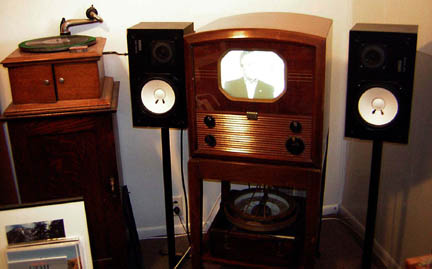
Everyone should own a home entertainment system! Thats an 1947 RCA 721TS TV set on its original matching RCA stand. Al original finish too.
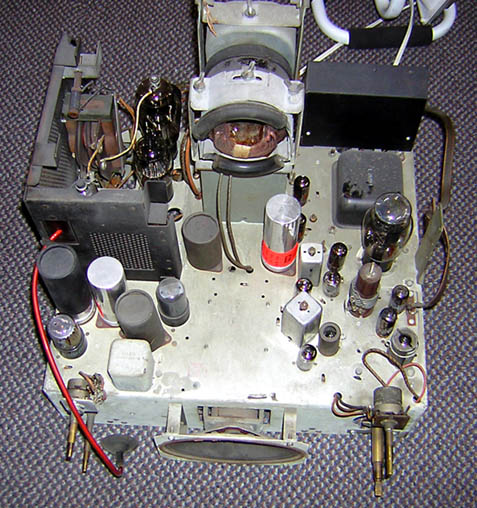
The chassis for the set in the top photo. The HV and horizontal sweep section is in the upper left.
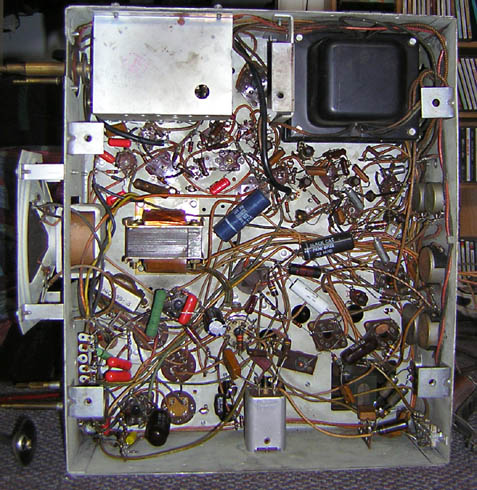
This is the bottom of the same chassis. No dry rotted wire in there....
The chassis from my 1946 RCA 630TS set all restored. This was the first widely available TV set that was sold after WW-2. It cost close to $500.00 back then! The cabinet is still in progress and is a "this comming winter" project to finish up. This is an amazing set with no less than 4 video IF stages and true DC restoration in the video amp to do a proper true "black level". Clearly this circuitry can do real blacks and is light years ahead of whats in a DLP! It also has a completely seperate 3 stage sound if section. Yes, its 35 tubes including the CRT which is original to the set! The wiring was still in excellent condition.

Interestingly neither of these sets had any type of line fuse in them. Apparently UL hadn't started up yet back then. They are fused now.
Posted by Jeff Stricker (Member # 224) on 07-28-2005, 06:52 AM:
Hi Mark,
Excellent restoration! Not nearly as many TV restorers as old radio folks out there! I just took a tour of the Indiana Historical Radio Museum in Ligoneer, Indiana. Really neat stuff. My restoration work is confined to vintage amateur radio gear/and communications receivers (old Collins, National, Hammarlund stuff, and some esoteric motion picture gear now and then! ![[Wink]](wink.gif) )
)
I used to work with a guy from the Indianapolis area that was a big collector and restorer of vintage TV's. (his name was Jeff *something*) He had one with the vertical CRT and mirror in the sloping lid, also a color wheel (CBS system) TV.
I remember our first family TV in 1949. It was an RCA with doors in front of the picture tube. That thing had a horizontal oscillator that wasn't worth a crap! It had an inscripion on the back where the RCA chief engineer attested it would produce the sound of the "golden throat". It did have pretty good audio, with that 12" speaker.
Posted by Louis Bornwasser (Member # 3063) on 07-28-2005, 09:32 AM:
Nark; beautiful work on the old TV's. (Note use of stereo with b&w set.) Impressive.
Louis
Posted by Mark Gulbrandsen (Member # 72) on 07-28-2005, 10:50 AM:
Thanks Louis! The neat thing is the amp feeding those speakers is based on a Pass Labs design and is 10 watts per channel single ended class A....... The amp runs almost as hot as he TV does.
Mark
Posted by Will Kutler (Member # 770) on 07-31-2005, 01:48 AM:
Very nice work, Mark!
My 816K chassis is heavy sheetmetal box construction like your piece. I used a variety of products to break down the dirt and shine up the parts (metal-mechanical) w/o getting on the electrical components. It took some careful disassembly, patience and elbow-grease, but the effects are worth it!
I used a gel-like metal polish to break down the surface dirt. Lots of Never-Dull and mineral spirits. Some carburator clearner around the all metal tuning condensor cleaned that up. All products carefully used to prevent unwanted damage to electrical components, and this cleaning was for the chassis top, front and sides ONLY! I'll use electronics cleaner and mineral spirits on the underside. But need to becareful not to remove color-coded component markings.
As for wiring harnesses. You know how underhood wiring harnesses on 1960's cars were wrapped with the non-adhesive friction stype electrical tape? This tape is available through National Parts Depot www.npdlink.com and is relatively inexpensive.
Mark, or anyone else, can you help me out with a couple of needed parts? I am in need top-mounted, canister style, wet electrolytic capacitors. 25Mfd (2ea), 16Mfd (2ea). Will take bad caps, just so I can aesthetically restore my radio. I have the original RCA books, but cap voltages are not listed.
Cheers
K.
Posted by Mark Gulbrandsen (Member # 72) on 07-31-2005, 03:12 AM:
quote: Will Kutler
I used a variety of products to break down the dirt and shine up the parts
Oh no ![[uhoh]](graemlins/uhoh.gif) , you took the patina off the chassis..... not necessarily a good idea. That patina is part of what makes an old radio old. You may have just lost half its value. All my chassis are kept as found as much as is possible. Sometimes on a really bad wood case though you don't have any choice but to re-finish it. This is all what contributes tot he value of an old piece like that. The 630 cjassis is a bit rough but the 721 is pretty nice. I was worried when I ultrasonically cleaned the tuner in the 721 becuase it came out shiny and like new but the guys say that part is ok and was typically removed and sent out for rebuilding anyway. Eventually it will dull again and look like the rest of the chassis does.
, you took the patina off the chassis..... not necessarily a good idea. That patina is part of what makes an old radio old. You may have just lost half its value. All my chassis are kept as found as much as is possible. Sometimes on a really bad wood case though you don't have any choice but to re-finish it. This is all what contributes tot he value of an old piece like that. The 630 cjassis is a bit rough but the 721 is pretty nice. I was worried when I ultrasonically cleaned the tuner in the 721 becuase it came out shiny and like new but the guys say that part is ok and was typically removed and sent out for rebuilding anyway. Eventually it will dull again and look like the rest of the chassis does.
For the electrolytics you should really go to that forum that I pointed you to earlier in this thread. Those guys can lead you to them. Also, leep in mind that the majority of electrolytics can be re-formed and still work like new. My 721 chasis is an excellent example of that in which I only had to replace one FP type multisection cap that 2 sections in it would not re-form out of 7 in the set. I always replace all the coupling/bypass caps though and in RCA equipment its also VERY common for mica caps to fail.
There are instructions at this site on how to re-stuff the original electrolytic cans on a radio/TV.
Posted by Will Kutler (Member # 770) on 07-31-2005, 06:24 AM:
Hi Mark
On the metal chassis, I don't know if I got rid of any patina...more than getting rid of all the dirt that tends to create problems for both electric and mechanical components. I did not sand or hard polish the chassis to a mirror finish...just got rid of all the dirt and crap.
Mark, I registered for the Antique Radio Forum as per your suggestion, and have yet to get any replies for the parts I need.
There is a place in Tucson called Elliots Electronics. They used to have all these electrolytic caps, and repacked them as you described. According to them, they advertised and had no buyers. About 1 1/2 years ago they cleaned house and dumped all of those caps in the trash!
Mark, what say you about automotive wiring? Ford actually uses much of the colors that I need. If I found needed color codes in salvage yards, will the insulation hold up?
Cheers,
K.
Posted by Mark Gulbrandsen (Member # 72) on 07-31-2005, 08:34 AM:
HEllo there Will,
It should hold up as well as it holds up in any auto but why use automotive wiring? You have antique electronic supply a stones throw away from where you live.....
Mark
Posted by Will Kutler (Member # 770) on 07-31-2005, 01:58 PM:
Hi Mark
The wiring I need is:
Black w/ brown stripe
Black w/red stripe
black w/red tr
Blue w/yellow stripe
green w/yellow stripe
red w/yellow stripe
red w/green stripe
black solid
blue solid
brown solid
green
red
yellow
blue shielded
I am finding it very difficult to find the striped wire. The solid colors are not a problem. I would prefer wire with the modern rated hi temp insulation. 18-20 gage has been recommended for radio restoration. Automotive wiring still uses a lot of the color-coded striping.
Antique Electronic Supply batted "0". Yes, cloth covered wire is being reproduced. Basically, it is the modern rated insulation with the cloth overcoat. But colors are very limited.
I suppose I could always use solid wire and wrap some colored electrical tape around it to simulate the striping?
Cheers
K.
Posted by Paul Mayer (Member # 355) on 07-31-2005, 02:37 PM:
Maybe things have changed, but I thought striped wire was a custom order kind of thing. At least it used to be. When I worked on the wiring of the sets for the Jubilee show at Bally's years ago, the head electrician told me they had to custom order anything that wasn't solid color. The size of that construction project made those custom orders possible.
If that's still true, you'll be better off looking in places that offer cable and wire remnants and leftovers rather than buying new unless you want to pay for some minimum order.
Posted by Mark Gulbrandsen (Member # 72) on 07-31-2005, 04:19 PM:
Hello there Will,
You might want to get a big piece of large multi condictor wire of the proper gauge as alot of that has striped coding in it. Other than that Automotive stuff should work fin but be sure the insylation is rated high enough for the HV found in radios.... it may not have that high a voltage rating
Mark
Posted by Will Kutler (Member # 770) on 07-31-2005, 04:28 PM:
Hi Paul, Mark
I remember the days when I could walk into Radio Shack, ACE Hardware or some local electronics/electrical supply houses and pick up this wire pretty easily. But no more!
Yes Paul, I can still custom order this wire, at a min order of several thousand feet and plenty of $$.
Cheers
K.
Posted by Bruce McGee (Member # 131) on 07-31-2005, 06:55 PM:
Mark: I registered over there, too!
Will: Best of luck to you. I'm restoring a 1961 RCA color TV. Gettin ready for the fun cap replacement, and trying to find a new flyback for it.
I think that Radio Shack's days are numbered.
Posted by Will Kutler (Member # 770) on 07-31-2005, 09:11 PM:
Hi Mark
Well, I guess I can always turn my own cans on a lathe, making the lid with a double thread so that it screws into the can and fastens to the chassis w/a nut. Then I can pack them as per the web-site you referred me to!
One question for you, though. What is the cambric cloth that they used to wrap the caps, and where do you purchase it at? I have never heard of cambric cloth.
Cheers
Kutler
Posted by Louis Bornwasser (Member # 3063) on 07-31-2005, 10:03 PM:
The usual capacitor replacement is to boil out the old guts from the electrolytics. When clean put a modern capacitor inside and fill with Epoxy. Looks original, works well.
Louis
Posted by Will Kutler (Member # 770) on 07-31-2005, 11:22 PM:
Hi Louis
Thanks for the info. Problem is I am having trouble finding any of the old style cans. Someone removed and discsarded the ones off my radio.
K.
Posted by Mark Gulbrandsen (Member # 72) on 08-01-2005, 12:15 AM:
Will,
Are these the cans with the big nut in the bottom to lock it to the chassis, or just the plain old FP type multi section caps that lock with tabs to the chassis? The nut type are very hard to find if thats the style you're lookin for. What you may have to do is install what ever caps and wire you can get ahold of and then over time aquire the exact parts as you find them or aquire another old chassis of the same model# to use for parts to restore the complete one you have. Alot of radios and TV's get restored this way and then sections that were temporary are re-done the correct way over time as original parts are located. You could also just get it going and sell it to get another thats in more complete shape. These things are not something that can necessarily be completed in a short time..... Its taken me almost 5 years to get the 621 chassis to the point that its at... and now for the case.... parts for 621's are hard to find but were also used in other model RCA post war chassis and thats how I got the correct parts for mine. The flyback tranny in my 721 died a couple of years after I had gotten it runing again but an Emerson set from the same time period and that came fomr a local yard sale also used the identical RCA tranny and thats where the replacement721 flyback came from. Other TV manufacturers like Emerson had to liscense things from RCA because of all the patents and they were obviously even supplied RCA parts in some cases.
Mark
Posted by Will Kutler (Member # 770) on 08-01-2005, 01:18 AM:
Hi Mark
Actually, I am not sure exactly what chassis caps were on the unit. RCA part numbers are listed in the Rider/RCA book.
But at least I can make something that has the simbalance of a correct look?
Cheers
K.
Posted by Louis Bornwasser (Member # 3063) on 08-01-2005, 08:33 PM:
All old Motiograph amplifiers used the capacitors with the nut. Maybe you know where there are still 40-50 of these??
Louis
Posted by Will Kutler (Member # 770) on 08-04-2005, 11:18 PM:
Well,
I found the caps and a couple of other needed parts from a person with a parts radio.
Thanks Mark, for pointing me out to The Antique Radio Forum!!!!!!
There is a company on the east coast called RIWIRE (Rhode Island Wire). The specialize in reproducing wiring harnesses for antique/vintage vehicles.
RIWIRE gets their striped wire from a wire manufacturer, but unfortunately it is only low temp, low voltage automotive wire.
However, RIWIRE does have looming machines and reproduces the color coded cloth/lacquered braiding.
Only problem is that RI is only interested in automotive reproductions. Apparently they get quite a few inquiries regarding antique electronics and vintage airctraft. They are clearly NOT INTERESTED in expanding into these other fields.
But they will loom customer supplired wire at a minimum footage/cost.
Cheers
K.
Posted by Mark Gulbrandsen (Member # 72) on 08-05-2005, 03:04 AM:
Clearly Will, there's not enough room in Rhode Island for them to expand into other buisness aspects !
Mark
Posted by John Pytlak (Member # 331) on 08-05-2005, 01:01 PM:
The Antique Wireless Association is located near Rochester, in Stafford NY:
http://www.antiquewireless.org
http://www.antiquewireless.org/museum/museum.htm
quote:
Our Museum is one of the few devoted to research, preservation and documentation of the history of wireless communications. There is a complete range of historical communications equipment on exhibit. Some of which, can be associated with famous people like Guglielmo Marconi, Lee De Forest, Edwin Armstrong, Thomas Edison and other famous pioneers. Members of the Antique Wireless AssociationTM, a world-wide group, have collected these exhibits from around the world - much of which are still in working order....The Museum is also a member of the American Association of Museums, and the Upstate History Alliance, which is affiliated with the New York State Education Department/Office of Cultural Education. The building pictured above is the home of the Antique Wireless Association, Radio Communication Museum and the Bloomfield, New York Historical Society. The building is one hundred and fifty years old and a celebrated landmark of the Finger Lakes Region.
Posted by Mark Gulbrandsen (Member # 72) on 08-07-2005, 08:38 AM:
quote: Jeff Stricker
I used to work with a guy from the Indianapolis area that was a big collector and restorer of vintage TV's. (his name was Jeff *something*) He had one with the vertical CRT and mirror in the sloping lid, also a color wheel (CBS system) TV.
Jeff, I don't know how I missed your post.... There are still quite a few of those mirrored TV's around but there were never many CBS color sets around. The Early Television Foundation in Hilliard, Ohio has the only operating CBS colorwheel set that I know of. One of the museum people actually built an NTSC to CBS standards converter to allow these setr to once more become operable. Link From what I gather the color on those was really good since it was additive like the Technicolor process was. MAny of the colorwheel sets were built from the RCA 630TS chassis that I posted in a previous picture. The 630 chassis was built like a tank and with minor mods could run CRT's as large as 30"!
Bruce, Best of luck rebuilding your RCA color set... They can be a real pain to do.
Mark
Posted by Bruce McGee (Member # 131) on 08-07-2005, 09:54 AM:
Mark,
Thanks to the antique radio site that you mentioned here, I have in my hands: One brand new (1970) flyback tranny for my CTC-10C color TV chassis! I also bought 5 new electrolytics to replace the 2 multi-caps that are leaking. This might get rid of the slight hum bar problem that I have always had in the vertical section. Hope so, anyway. It's a beginning. The flyback that is in the set does not run hot, but it has dripped wax in the past in its previous chassis... used when I got it.
Will, Please post pics of your chassis when you get it together somewhat. I've never seen a radio that used 6L6 outputs.
Posted by Will Kutler (Member # 770) on 08-07-2005, 10:18 PM:
Hi Bruce...
If you look at www.hallicraftercollector.com , Chuck Dachis has a color photo of the RCA 816K posted. Also posted is the original 1990 Antique Radio Classified article, including chassis pics.
But I will attempt to post pics of mine in the near future.
In the meantime, I have given up on trying to find striped wire. So, I guess I will go with 18 gage 600 volt 275 degree F solid colors and code the wire with 3M colored electrical tape.
Another "helpful hint" Anyone familiar with wiring harness used on 1960s Ford cars? Harnesses were wrapped with an adhesiveless electrical tape. This is available through National Parts Depot and is relatively inexpensive.
Bruce...when it comes to electrolytic cap restoration, look at that link Mark posted earlier.
Cheers
K.
Posted by Will Kutler (Member # 770) on 08-09-2005, 02:50 PM:
Mark,
Do you have any info on Zentith color televisions from the mid-late 1960's? I'd like to find info on the set my parents had for years. I forgot the model number, but it was a very large screen with a dark wood cabinet that stood on four legs. Color, contrast and vertical hold adjustments were on the bottom of the screen. Tuner handle and volume were on the viewer right.
Cheers
K
Posted by Will Kutler (Member # 770) on 12-07-2005, 11:22 PM:
Restoration on the 816K is commin along as I have time.
After cleaning the chassis with metal polish, Never Dull and the like, it seems that the original cadmium plating has been compromised as a little corrosion did start from my fingerprints.
So, I guess I'll completely disassemble the chassis and send it out for electroless nickel plating. Origional cadmium can still be done, but cadmium is a toxic material. It was originally used because of its excellent corrosion resistance and solderability. But electroless nickel is also an excellent barrier to corrosion and the electroless is solderable. But the plating shop offered to do a test piece to double check solderability. The electroless nickel, while not original, will look very nice, and provide an very durable coating that is very corrosion resistant.
Cheers
K
btw, Mark...you never did answer my question form my previous post ![[Confused]](confused.gif)
Posted by Louis Bornwasser (Member # 3063) on 12-08-2005, 07:05 AM:
Will; don't worry about the solerability. Just buss all of the ground points together. Louis
Posted by Will Kutler (Member # 770) on 12-08-2005, 02:26 PM:
Thanks for the suggestion, Louis.
Your suggestion is not practical on the RCA 816K chassis. This is a restoration, and modifying the sheetmetal is not an option. I really don't want to nickel plate, but this is the best preservation option for this application.
K
Posted by Mark Gulbrandsen (Member # 72) on 12-08-2005, 09:46 PM:
quote: Will Kutler
Do you have any info on Zentith color televisions from the mid-late 1960's? I'd like to find info on the set my parents had for years. I forgot the model number, but it was a very large screen with a dark wood cabinet that stood on four legs. Color, contrast and vertical hold adjustments were on the bottom of the screen. Tuner handle and volume were on the viewer right.
Hi Will,
Sorry didn't see that question before. Am not that familiar with early Zenith stuff much. Started repairing Zenith sets when I worked at a local dealer back in 1968 when I was in high school. I am more familiar with those sets... I started back when Chromacolor and plug in replacement modules were just starting to appear. Sets were still hybrid back then too... solid state up to the horizontal output and high voltage section. Am more familiar with early RCA color sets than any other although its interesting to note that Westinghouse was the first manufacturer to actually market a color set back in the 50's.... They beat RCA by just a month or so even tough the CRT's in the Westinghouse sets came fomr RCA... as did everyone elses the first few years of color production. If you ever run into an color sets that are say from the first 5 years of color TV production latch onto them as they are quite valualable... especially the sets that have the 15GP22 CRT in them.... that was the forst production color crt built. Not may operable 15GP's survive today because they used a metal funnel bonded to a glass faceplate and neck. Most of them have slowly lost vacuum of the years but several do survive that still operate. There is a small group of people that have been on a several year trek to getting new glass neck parts made and then to rebuild some of those forst 15" color tubes. They are very close to sucess at this point in time....
Will, you might find this article on restoring a prewar Marconiphone 702 TV inspiring.....
Mark
Posted by Phil Hill (Member # 371) on 12-09-2005, 12:00 AM:
quote: Will Kutler
Your suggestion is not practical on the RCA 816K chassis...
I agree, Will. I guess some people don't "get" what ***restoration*** means and is about.
It's a cool radio!
quote: Mark Gulbrandsen
...Am not that familiar with early Zenith stuff much. Started repairing Zenith sets when I worked at a local dealer back in 1968...
Blah Blah Blah.
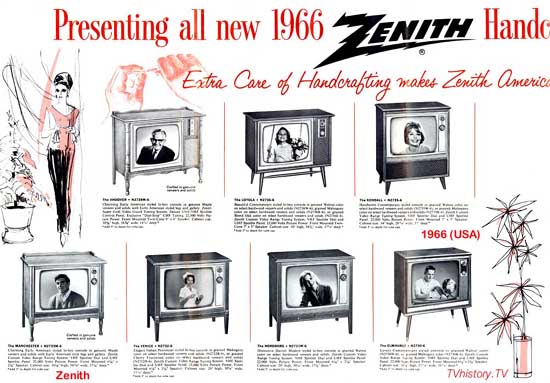
Are any of these similiar to what your thinking of, Will?
Posted by Will Kutler (Member # 770) on 12-09-2005, 12:41 AM:
Hi Phil and Mark
My parents were married in '67. The set looks something like the bottom row second from the left. The top dial was for standard broadcast stations and the bottom dial actually had two knobs: one for UHF stations if I remember, and the outer part was for picture adjustment. The cabinet "boarder" below the screen was actually a door that opened where all kinds of picture adjustment (color adjustment knobs) and the like were. The picture tube had finally worn out and was too expensive to replace. So to the trash it went. But that cabinet was quality wood. I wonder what that set is worth today?
The 816K article link you posted is the actual article that got me hooked on this radio. I was a subscriber to ARC back then, and still have the original issue. I kept it vowing that I would one day have that set...but it was one of those back-burner type projects that took me 15 years to get around to. Chuck Dachis influenced many people with this article. Restored, market value is around $1000.00 - $1200.00, but you can occasionally find them dirt cheap at ye ole junk-garage sale. They have an excellent sound and that electronic tuning works beautifully. If you can find it, there was also a arm-chair remot controll accessory. It also has phonograph and external antennea hook ups.
Cheers
K
Posted by Will Kutler (Member # 770) on 01-17-2006, 06:39 PM:
I came up with wire for my RCA 816K restoration, and this source might be useful for some of you.
Pacer Electronics in Tempe, AZ (480) 544-9000. Ask for Bob
Their usual minimum order is 100 ft lengths, but they were kind enough to do 25 ft lengths for me.
All wire that I purchased was 18 AWG UL 1015 (600V/105 degrees C) rated insulation, and the UL specs are printed on the wire. Wire is tin coated copper stranded.
Solid colors were about $3.00/25 ft or about $0.10/ft
They also do custome color code striping on site. So, a 25ft roll w/custom striping was $8.00.
I now have all the correct wire to complete my restoration.
Cheers
K
[ 01-18-2006, 03:11 PM: Message edited by: Will Kutler ]
Posted by Mark Gulbrandsen (Member # 72) on 01-17-2006, 07:35 PM:
quote: Will Kutler
I wonder what that set is worth today?
Nothing or less than nothing. In reality it should be a freebee if you ever run across one. The only B&W TV's that have any real worth are most of those made before 1948, The Zenith Porthole B&W sets of the late 40's to early 50's, or some of the 1960's Philco sets. Pre WW-2 B&W sets generally go for 5K and up. The Marconi Phone TV at the link on the previous page is easily a 10K set in working condition. An RCA CT-100 color set is also around 5K in not working condition but with a good CRT.... which is extremely rare. Most of those CRT's have gone to gas.
Thanks for the info on the wire, that may help me out in re-doing an RCS 621TS!!
Mark
Posted by Will Kutler (Member # 770) on 06-17-2006, 01:16 PM:
A question for both Phil and Mark G.
The RCA 816K that I am STILL working on has numerous mica caps, some of which are temperature-stabalizing.
I would like to identify which of these caps are temp-stabalizing.
I do have the original RCA 816K service manual and schematics. The parts listing just has the original RCA part # and the Mmfd value. Unfortuantely, I have not been able to cross-reference or find any info regarding the original RCA part numbers. Furthermore, the schematics do not specify the temp-stabalized caps, either.
What is stated in the 816K service manual is that:
"The antenna and first-detector coils are constructed with a special type of winding ("qumulative") to provide increased sensitivity on the "Standard Broadcast" band. Special capacitors shunting the spread-band oscillator coils change in capacity with temperature variations to reduce oscillator frequency drift."
"Spread-band tuning is accomplished electrically by shunting the low-capacity section of the oscillator variable capacitor with relatively large temperature-stabalized fixed capacitors for tuning the oscillator coil on the "19M", "25M", "31M" and "49M" bands. Antenna and first-detector coils are designed to be sufficiently broad-tuned to require no variable tuning over the narrow frequency range of the spread-bands."
"The 100 mmfd. molded Lucite capacitors which connect in parallel with the bandspread oscillator tuning condensor for short-wave operation are specially designed to have a negative thermal coefficient of capacity to compensate for variations in other parts of the oscillator circuit with temperature changes. These capacitors are therefore not inter-changeable with ordinary types and replacements should always be of the particular RCA stock number specified in the Replacement Parts List. Care must be exercised in replacing these parts, to avoid twisting the leads excessively and allowing too much heat to be applied when soldering."
There is also mention that these caps are marked 1A, 2A and 3A. I found caps marked 1A and 3A, but not 2A.
From what I have been told, it is usually not necessary to replace mica caps, as they generally do not go bad. However, I do wish to at least inspect them, as some may be suspect. How do you inspect the temp-stabalizing characteristics of these caps.
Mark and Phil, if I sent you coppies of the service literature, could you identify these caps and possibly recommend a proper replacement should mine be bad?
Regards
Kutler
Posted by Phil Hill (Member # 371) on 06-17-2006, 05:59 PM:
Will, email me the stuff...I'll see if I can help.
quote: Will Kutler
From what I have been told, it is usually not necessary to replace mica caps, as they generally do not go bad.
That's not necessarily true. While the mica itself doesn't change value, the encasement package material can become porous over the years and absorb moisture which then changes the reactance, and thus the in-circuit value of the cap.
Also, back then they were called condensers, HA!
Posted by Will Kutler (Member # 770) on 06-17-2006, 06:24 PM:
Hi Phil
Can you give me your snail-mail address. I don't know if I have access to a scanner...but I'll see.
You hit the nail on the head. Many of the caps have bad encasing material...that is why I think they might be compromised.
There are no dot-codes on my caps. Most are of two different sizes... black bakelite, retangular about 1 1/2 inch long, 1/2 inch wide and 1/2 inch thick with chamfered corners. The others are about 1/2 the size of these. They have numbers on them like "T#", "V#", "M#". The ones marked "1A" and "3A" are encased in a clear plastic material.
From what I understand, both temp-compensating and temp-stabalizing mica caps do two different things. The manual only mentions tem-stabalizing, but I am wondering if both are used?
Thanks Phil
K
Posted by Phil Hill (Member # 371) on 06-17-2006, 06:40 PM:
Let me know if you can find a scanner, else I'll PM you my address.
I've seen old mica caps that actually cracked open from the absorbed moisture and then froze because they were left out in a garage during Michigan winters.
Temp-stabalizing is a function/method. Temp-compensating is a part type/characteristic.
Posted by Mark Gulbrandsen (Member # 72) on 06-17-2006, 07:20 PM:
Phil is rignt about the Micas! I'd replace them all with the newer silver mica caps... the dark red/purple jobs that alot of parts stores sell. Those are alot more stable and less failure prone over the years than the old micarts cased versions. I've actually had several of the old style caps fail in my antique RCA tv sets. One of them was right across the power switch... it failed on its own... I came home from work one night and the tv was on... and the on-off was off! Ever since that episode I replace them all, ya don't want to burn the house down. I'm not the sort of person that perfers to have the set's chassis look EXACTLY as it did when it left the factory... I would much rather have it perfrom even better than it did when new of it can... I even so a sweep alignment with a modern synthesized sweep /RF generator and spectrum analyzer of the tuner and IF strips to get things as good as they can be. Old TV shop gear doesn't cut it compared to the results you get with new test gear.
BTW: If you get 5% tolerance silver micas as per the values in the schematic... 5% is quite common... they will be very temperature stable without having to seek out special temp stable caps impractially made from umobtanium....
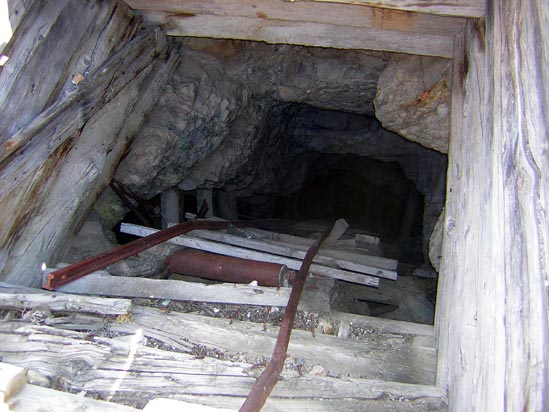
BTW#2: Ha! Unobtanium comes from about 960'down this unobtanium mine shaft..... the last date that RCA's unobtanium miners went down there couldn't be obtained. If there needs to be a new supply of unobtanium then you can go down there and get it yourself! I ain't a goin! I'd settle for those 5% silver micas from the local parts store... The silver to make those is very obtainable even today... locally here in fact
Mark
Posted by Will Kutler (Member # 770) on 06-17-2006, 07:22 PM:
Hi Phil and Mark
I found Riders on-line. It looks alsmost like an exact reprint of the original RCA 816K manual.
http://www.nostalgiaair.org/Resources/155/M0015155.htm
I am also with you on your restoation philosophy, Mark. I want a radio that I can reliabily enjoy on a daily basis. I would like to put her back together via the correct chassis layout using correctly colorcoded wire, etc. To me using components of proper values such as caps and resistors is the most important thing. To me using newer style more reliable components like these is most important. However I will keep and store the original components that I replace. Some restorers are into opening up origninal paper caps and stuffing them with new components, etc. to maintain original appearance. And there are a few companys out specializing in the reproduction of original style paper caps.
Thanks
K
[ 06-17-2006, 08:33 PM: Message edited by: Will Kutler ]
Posted by Mark Gulbrandsen (Member # 72) on 06-17-2006, 10:29 PM:
Yea, there are fanatical restorers out there thats for sure... to me getting the best performance out of an old piece AND not burning your house down are the two most important things. You can't tell from the outside that there might be Sprague Orange Drop caps on the inside! My RCA 639 was factory wired with all light brown wire... makes it kinda easy. I had to relace alot of it too... RCA is famous for dry rot.
Mark
Posted by Will Kutler (Member # 770) on 06-17-2006, 10:47 PM:
Mark
From everything I have read and been told about antique radio restoration:
Micas rarely need replacing and good luck cross referencing the original RCA part numbers (finding their values and referencing them to new parts).
But what concerns me is that the Bakelite and Lucite casings on my caps have seen better days, and I am concerned that the caps might be affected.
So, is it possible to measure each individual mica cap and determine if it is temp-compensating or temp-stabalizing? Or can this be determined by an exerienced electronics designer by looking at the schematics and guesstimating? Are these type caps necessary, or will the 5% silver micas be a good generic substitute?
Cheers
Kutler
Posted by Mark Gulbrandsen (Member # 72) on 06-17-2006, 11:25 PM:
In my expereince with antique TV's the 5% silver micas work very well and they are ALOT better than the original parts that were used. If you are unsure about the actual value of the cap or caps then using a capacitance decade box helps in getting the exact right value in place in a live circuit. Also subbing in slightly differnt values till the curcuit tunes or works correctly is another way.
You can aso get a capacitance meter and measure the dang things at different temperatures to see whats going on with the originals... or the new replacements... the old ones may actually be just fine but in my opinion are still a hazard in an every day used antique piece of electronics.
Mark
Posted by Louis Bornwasser (Member # 3063) on 06-18-2006, 07:04 PM:
I am totally in agreement with Mark on the primary side of the transformer. On the other side, I try to make some judgement based on reliability or possible failure mode.Sometimes "high voltage" (over 80 volts) is just not that reliable unsupervised. Louis
Posted by Will Kutler (Member # 770) on 06-21-2006, 10:09 PM:
Hi Phil
I sent you a pm with the requested info several days ago. Do you recieve it?
Thanks
K
Posted by Phil Hill (Member # 371) on 06-22-2006, 02:42 AM:
haven't got it...
Did you send it to my PM addr as listed in my ID bio? Do NOT use the FT mail system.
Posted by Will Kutler (Member # 770) on 06-22-2006, 01:57 PM:
Hi Phil
I sent you a F-T PM. But if you look a few posts up, you'll see that I posted a link to the Riders Manual that has all the schematics and tech info (free downloads). http://www.nostalgiaair.org/Resources/155/M0015155.htm
That link is missing the original RCA service maual pages that the following info is on:
What is stated in the 816K service manual is that:
"The antenna and first-detector coils are constructed with a special type of winding ("qumulative") to provide increased sensitivity on the "Standard Broadcast" band. Special capacitors shunting the spread-band oscillator coils change in capacity with temperature variations to reduce oscillator frequency drift."
"Spread-band tuning is accomplished electrically by shunting the low-capacity section of the oscillator variable capacitor with relatively large temperature-stabalized fixed capacitors for tuning the oscillator coil on the "19M", "25M", "31M" and "49M" bands. Antenna and first-detector coils are designed to be sufficiently broad-tuned to require no variable tuning over the narrow frequency range of the spread-bands."
"The 100 mmfd. molded Lucite capacitors which connect in parallel with the bandspread oscillator tuning condensor for short-wave operation are specially designed to have a negative thermal coefficient of capacity to compensate for variations in other parts of the oscillator circuit with temperature changes. These capacitors are therefore not inter-changeable with ordinary types and replacements should always be of the particular RCA stock number specified in the Replacement Parts List. Care must be exercised in replacing these parts, to avoid twisting the leads excessively and allowing too much heat to be applied when soldering."
There is also mention that these caps are marked 1A, 2A and 3A. I found caps marked 1A and 3A, but not 2A.
Thanks
Kutler
Powered by Infopop Corporation
UBB.classicTM
6.3.1.2