This is topic Vinyl record sales increase in forum Film-Yak at Film-Tech Forum ARCHIVE.
To visit this topic, use this URL:
https://ft-forum.com/ft/cgi-bin/ubb/ultimatebb.cgi?ubb=get_topic;f=8;t=005494
Posted by John Walsh (Member # 168) on 06-10-2008, 09:22 AM:
Retailers giving vinyl records another spin
Copyright 2008 The Associated Press. All rights reserved 1:11 a.m. EDT, Tue June 10, 2008
PORTLAND, Oregon (AP) -- It was a fortuitous typo for the Fred Meyer retail chain.
The best-seller so far at Fred Meyer is The Beatles album "Abbey Road."
This spring, an employee intending to order a special CD-DVD edition of R.E.M.'s latest release "Accelerate" inadvertently entered the "LP" code instead. Soon boxes of the big, vinyl discs showed up at several stores.
Some sent them back. But a handful put them on the shelves, and 20 LPs sold the first day.
The Portland-based company, owned by The Kroger Co., realized the error might not be so bad after all. Fred Meyer is now testing vinyl sales at 60 of its stores in Oregon, Washington and Alaska. The company says, based on the response so far, it plans to roll out vinyl in July in all its stores that sell music.
Other mainstream retailers are giving vinyl a spin too. Best Buy is testing sales at some stores. And online music giant Amazon.com, which has sold vinyl for most of the 13 years it has been in business online, created a special vinyl-only section last fall.
The best-seller so far at Fred Meyer is The Beatles album "Abbey Road." But musicians from the White Stripes and the Foo Fighters to Metallica and Pink Floyd are selling well, the company says.
"It's not just a nostalgia thing," said Melinda Merrill, spokeswoman for Fred Meyer. "The response from customers has just been that they like it, they feel like it has a better sound."
According to the Recording Industry Association of America, manufacturers' shipments of LPs jumped more than 36 percent from 2006 to 2007 to more than 1.3 million. Shipments of CDs dropped more than 17 percent during the same period to 511 million, as they lost some ground to digital formats.
The resurgence of vinyl centers on a long-standing debate over analog versus digital sound. Digital recordings capture samples of sound and place them very close together as a complete package that sounds nearly identical to continuous sound to many people.
Analog recordings on most LPs are continuous, which produces a truer sound -- though, paradoxically, some new LP releases are being recorded and mixed digitally but delivered analog.
Some purists also argue that the compression required to allow loudness in some digital formats weakens the quality as well.
But it's not just about the sound. Audiophiles say they also want the format's overall experience -- the sensory experience of putting the needle on the record, the feeling of side A and side B and the joy of lingering over the liner notes.
"I think music products should be more than just music," said Isaac Hudson, a 28-year-old vinyl fan standing outside one of Portland's larger independent music stores.
The interest seems to be catching on. Turntable sales are picking up, and the few remaining record pressers say business is booming.
But the LP isn't going to muscle out CDs or iPod soon.
Nearly 450 million CDs were sold last year, versus just under 1 million LPs, according to Nielsen SoundScan. Based on the first three months of this year, Nielsen says vinyl album sales could reach 1.6 million in 2008.
"I don't think vinyl is for everyone; it's for the die-hard music consumer," said Jay Millar, director of marketing at United Record Pressing, a Nashville based company that is the nation's largest record pressing plant.
Many major artists -- Elvis Costello, the Raconteurs and others -- are issuing LPs and encouraging fans to check out their albums on vinyl. On Amazon.com, one of the best-selling LPs is Madonna's latest album, "Hard Candy".
Some artists package vinyl and digital versions of their music together, including offers for free digital downloads along with the record.
"We've definitely had some talks with the major retailers about exclusives on the manufacturing end," Millar said of United Record Pressing, which focuses primarily on independent recordings.
An avid music fan himself, Millar says he has moved to vinyl in recent years.
"Once I got my first iPod ... I'm looking at my wall of CDs and trying to justify it," Millar said. "The things I like -- the artwork, the liner notes, the sound quality -- it dawns on me, those are things I like better on vinyl." He welcomed back the pops and clicks, even some of the scratches.
"I like that fact that it's imperfect in a lot of ways, live music is imperfect too," Millar said.
Independent music stores, which have been the primary source of LPs in recent years, say many fans never left the medium.
"People have been buying vinyl all along," said Cathy Hagen, manager at 2nd Avenue Records in Portland. "There was a fairly good supply from independent labels on vinyl all these years. As far as a resurgence, the major labels are just pressing more now."
In this game, big retailers aren't necessarily competing head to head with independent sellers' regular clientele of nostalgic baby boomers, independent label fans and turntable DJs.
"I cannot see that Best Buy or Fred Meyer would order the same things we would," Hagen said. "They aren't going to be ordering the reggae, funk, punk or industrial music."
Posted by Leo Enticknap (Member # 534) on 06-10-2008, 10:22 AM:
As a die hard vinyl (and shellac) collector I've noticed that not only are more new records being pressed (even of the classical and jazz titles I tend to go for), but the price of decent second-hand stuff is shooting up. Five years ago LPs in almost new condition were virtually being given away by second-hand shops: similar titles go for a fiver or more now. Part of this is the eBay phenomenon (in particular, places like charity shops are now looking at what records go for on the site and then pricing theirs accordingly), but a lot of it is that people are finally realising that the CD (and successor digital file formats) wasn't designed for sound quality: it was designed for convenience. Playing a record is more of a faff, but a well mastered and pressed LP played on a decent turntable and cartridge quite simply sounds better. Some of the recently reissued Blue Note titles on 12" 45rpm vinyl are fantastic (though at $50 a pop, not cheap), and even classical labels which had previously abandoned vinyl completely such as Deutsche Grammophon and EMI have brought a few titles back into their catalogues.
This must be about the first example of a consumer media technology which became almost totally obsolete and was then resurrected, if only to a limited extent.
Posted by Damien Taylor (Member # 4255) on 06-10-2008, 10:39 AM:
Tell me about it Leo. I'm only 21 now, but if I hadn't started collecting at 15 I would never be able to do it now. I remember when I started people used to leave boxes of the things on the verge for bulk refuse. I now jokingly refer to those times as the golden era of collecting, when records were treated as a burden rather than an asset.
The charity shop markups are just crazy, the way they price it, they just have no idea. Collecting used to be fun because it was so cheap. I don't think I want to be part of a world where Mrs. Mills is worth $3. (No offense to the honky-tonk piano fans, before you all come out of the woodwork)
One thing i'm pretty sure that will remain constant is the 78's. You can't pay people to take a lot of the 78's out there.
Posted by David Stambaugh (Member # 1102) on 06-10-2008, 11:13 AM:
The "Turntable Junkies" thread on the Afterlife forum has this info about Fred Meyer posted.
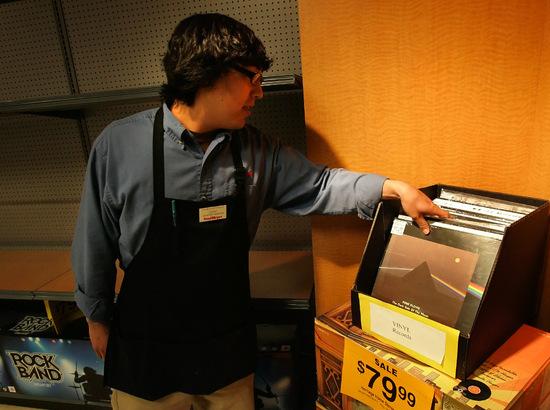
Last week I went to the Fred Meyer in west Eugene to check it out. In the electronics section, where they have racks and racks of CDs and DVDs on display, if you look really hard, way over in a corner, there's a single cardboard box of records sitting on a shelf. There's a plain white sheet of paper taped to the front of the box with the words "VINYL RECORDS" printed on it in big block letters. I guess that's is in case nobody knows what they are.
I went nuts and bought albums by R.E.M., Foo Fighters, and Metallica. At the checkout stand, the cashier looked at me like they used to do in the early days of DVDs when I'd buy a widescreen version, when most people bought fullscreen, like "Are you sure you really want to buy these?"
There's something satisfying about taking a vinyl record, every one of which is flawed in some way, and extracting good listenable sound from it. ![[beer]](graemlins/beer.gif)
Posted by Monte L Fullmer (Member # 2797) on 06-10-2008, 01:21 PM:
quote: Damien Taylor
The charity shop markups are just crazy, the way they price it, they just have no idea
I can agree here. A few years ago, the majority of all the thrift stores in this area would charge a quarter to a dollar for their vinyl.
Now, half of them are shooting the price up to a discount $2.49 to almost $6.95 level - levels when vinyl was being sold as new in record stores back in the '60s.
This really makes it hard to find cheap vinyl and good bargains, esp when the store DO markup vinyl that has been used as "Fido Frisbees" since they, as above, don't know what they are doing, or really know what they got. They just go by what eBay is doing on their auctions and by word of mouth.
Posted by Mike Blakesley (Member # 26) on 06-10-2008, 01:32 PM:
I am tempted to buy the vinyl version of some great album, just for the fun of opening the plastic and cracking the gatefold for the first time again. I don't really know why that was such a cool experience EVERY time, but the kids today are missing out. ![[Cool]](cool.gif)
Posted by Bill Enos (Member # 440) on 06-10-2008, 01:38 PM:
I didn't like CDs when the first came out, then I realized that they had bottom end and high end and clarity than vinyl is not capable of. Not to mention noise after the second or third play. Only good thing I can say about LPs is that the cardboard jackets are more durable than jewel cases and there is more room for pics an information.
Posted by John Walsh (Member # 168) on 06-10-2008, 02:32 PM:
I tend to agree with Bill; while I do like LP's, the low cost but high quality of CD's is hard to deny. You need a lot more money to get that warm LP sound.
Sorry about posting a topic already covered! There's getting to be so much info on FT, it's hard to keep track of.
Posted by Tim Reed (Member # 137) on 06-10-2008, 03:44 PM:
Wow, I thought they stopped pressing discs years ago!
Posted by Joe Redifer (Member # 3) on 06-10-2008, 04:38 PM:
quote: Mike Blakesley
I am tempted to buy the vinyl version of some great album, just for the fun of opening the plastic and cracking the gatefold for the first time again. I don't really know why that was such a cool experience EVERY time, but the kids today are missing out.
Bullshit! How can that even compare with peeling off shrinkwrap, then attempting to peel off those seals and then those magnetic "security devices" from the inside of the jewel case?
Posted by Allison Parsons (Member # 2728) on 06-10-2008, 05:33 PM:
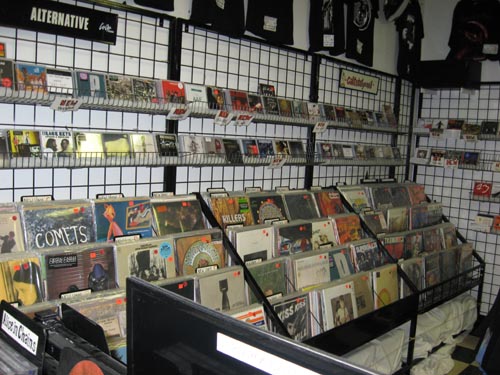
Here's a picture of most of our new LP's at the store I work at. We have close to 600. That doesn't include the used stuff. We have everything from The Monkee's reissues to the 300 soundtrack. It's amazing whats all on new vinyl anymore. I just got the Mulholland Drive soundtrack on vinyl!
Posted by Dick Vaughan (Member # 540) on 06-10-2008, 05:54 PM:
Monkees reissues on vinyl !! ![[Eek!]](eek.gif)
Now at last I can replace my 40 year old Monkees Headquarters and More of The Monkees ![[Big Grin]](biggrin.gif)
Posted by Allison Parsons (Member # 2728) on 06-10-2008, 06:13 PM:
Piscies... and More are the two we have in. All on Sundazed vinyl. Not sure if they've released the others yet.
If for some reason anyone is hunting for anything special, let me know and I can send you a link to our Ebay store. Everything we have in here is up on ebay. Not sure if the mods will let me post a link to it or not.
Posted by Mike Blakesley (Member # 26) on 06-10-2008, 06:43 PM:
So Allison, do you find that vinyl buyers typically have good turntables or are they more into the big cool packaging?
Posted by Claude S. Ayakawa (Member # 1401) on 06-10-2008, 06:55 PM:
I have been collecting Lp's since I was in high school and have invested a lot of money collecting them until cd's took over. Most of my vinyl records are classical. I still have most of my collection which include about 45 complete operas and among them is my favorite , Georg Solti's recording of the complete DER RING DES NIBELUGEN by Richard Wagner. The collection also include every piece of music Ludwig Van Beethoven wrote in a collection released by Deutche Grammophon Gellellschaft (DGG). Another favorite in my collection is a set of Beethoven Symphonies recorded by Arturo Toscanini and the NBC Symphony on the original RCA Victor Red Seal label released when the maestro was still alive and recording music in the mid fifties. I bought this set along with many others with school lunch money I had saved. It's no wonder I was a very skinny kid when I used food money for music. I never told my mother I was doing this.
Since I am very busy now with my work and listen to music only on my iPod Touch, I have not listened to any of the music in my Lp library since the early days of cds. I still have my Thorns turn table with a Shure SME arm with a V15 cartridge and hope I can sit down one day and listen to some of my favorite vinyl records
-Claude
Posted by Allison Parsons (Member # 2728) on 06-10-2008, 07:13 PM:
Mike,
Both. The majority of our store LP sales are under the age of 25. Most have either found a cheap turntable at a garage sale, or got their parents. I don't know too many that are in for the sound quality, but there are some. There is definatly a 'cool' factor when it comes to the youngin's owning vinyl. You can hold up a iPod and claim that you have 10,000 songs, but it's much cooler to show your friends your LP collection ![[Smile]](smile.gif)
The older customers are the audiophiles. There are a few that are uber annoying and are pickest damn people ever. All of us here just enjoy music, we don't want to be pestered over someone chatting our ears off about his/her high-end stereo equipment. I love it when the older crowd that have never been in here before, venture over to the vinyl and say "I didn't even know they made vinyl anymore!" Then they start talking to you about what they use to own, that's fun to hear.
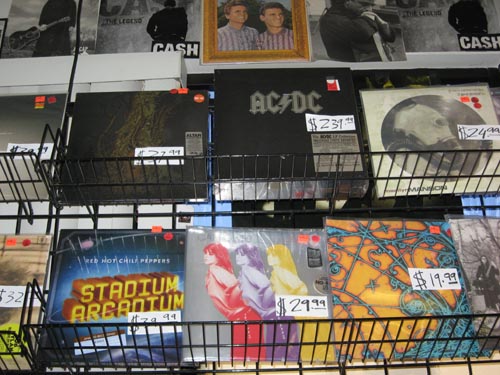
We just got this in last month. It's the AC/DC box set on vinyl. Only set you back $230.00
Posted by Bruce Hansen (Member # 281) on 06-10-2008, 07:43 PM:
I wonder if vinyl is being recorded properly? In recent years CDs have been recorded hotter and hotter, because every producer wants their stuff to sound the loudest on the radio. The problem is that in digital recording, "0" is a brick wall. If anything tries to go beyond "0" it gets clipped, and causes distortion. If vinyl is being recorded at the correct level, then it would sound much better then a CD. If that is the case, you could buy the vinyl record, record it to a CD, and have a CD that sounds much better than the CD you could buy in the store.
Posted by Joe Redifer (Member # 3) on 06-10-2008, 07:53 PM:
I used to like AC/DC and even had most of their stuff on vinyl, but I don't think I've ever liked them to the tune of $239.00. I did go to one of their concerts when I was 7 or 8, though.
Also it doesn't matter how loud you record/mix your music, it'll all sound the same (re: compressed to hell) on the radio anyway. They pass everything through a compression filter for that reason. But I agree, recordings over the last 10-20 years have been too loud and distorted.
Posted by Brad Miller (Member # 2) on 06-10-2008, 08:24 PM:
Case in point, I purchased a Goldfrapp album on CD and later found out Dan Lyons had purchased it on vinyl. (I didn't even know it was available on vinyl.) His transfer to CD on a side by side comparison sounded better.
Allison, feel free to post a link.
Posted by Allison Parsons (Member # 2728) on 06-10-2008, 08:59 PM:
Thanks Brad. By the way, we had her newest LP, but we sold 2 copies in like a day and haven't had a chance to get it back in. I don't think we ever sold one of her (Goldfrapp's) CD's!
Here is our eBay store Everything is listed in categories, and then subcategories.
And yes, I know my cropping of some of those pictures sucks. After puttin up about 20-30 LP's a week, you start not to care as much as you did before haha.
Posted by Steve Guttag (Member # 268) on 06-10-2008, 09:20 PM:
Yeah...it certainly isn't a simple matter of CD versus vinyl. It really is a question of mastering of each. CDs seem to be getting louder and more compressed, as others have noted. I have no idea how current vinyl masters are done or the quality of the pressings.
I know some of my older vinyl sounds better than the current CD offering of the same title.
Now much of my vinyl is half-speed mastered (some mobile fidelity but also by other labels....my Pink Floyd - The Wall is a Japanese import, half-speed, virgin vinyl...it was/is notably quieter/better than the mass-produced versions that were flying off the shelves in the late '70s. Somewhere I also have a CD version of The Wall...The vinyl stands toe-to-toe with it. Little Feet - Waiting For Columbus, MoFi "original master recording" absolutely is a superior product than its CD counterpart.
I think CD's get a bit of a pass because they are much more hassle free (no cleaning rituals like there were/are for LPs with disc cleaning, and stylus cleaning) and there is an inherent cleaness to them. Unilke Bill though...while I have rarely had problems with the Bass on CDs...I've often had problems with the treble on CDs...often sounding very harsh and unnatural. Early CDs were notably bad in this respect.
Is it me or have CDs really gone down in quality (mastering)? It seems like they didn't know how to master CDs originally so they make poor CDs when they first came out....then they figured out how to master them...and now they seem to think "autolevel" works for everything so you get a compressed piece of crap master.
Steve
Posted by Mike Blakesley (Member # 26) on 06-10-2008, 09:48 PM:
I think probably the coolest vinyl item I have is "Lotus," by Santana. It's a 3-record set, recorded live, never released on vinyl in the U.S. that I know of. It was originally a Japanese release, which is where my copy is from. When completely unfolded, the packaging covers about 4 x 5 feet of space. It's available on CD, with the foldouts sort-of reproduced, but the effect is just gone with the smaller size.
quote: Steve Guttag
Is it me or have CDs really gone down in quality (mastering)?
It's not you. Mastering engineers have gone nuts with volume. They had to use restraint in the good old LP days or the stylus would jump out of the groove. (Of course back then they sometimes used TOO much limitation.)
Posted by Steve Guttag (Member # 268) on 06-10-2008, 09:54 PM:
quote: Mike Blakesley
They had to use restraint in the good old LP days or the stylus would jump out of the groove.
Perhaps I should introduce you to my Telarc Digital mastering of the 1812 Overture (on Vinyl)...the groove looks almost like a zig/zag when the cannons are fired! I have that pressing on both conventional Telarc but also on a UHQR.
Steve
Posted by Jon Miller (Member # 163) on 06-10-2008, 10:01 PM:
quote: Bruce Hansen
In recent years CDs have been recorded hotter and hotter, because every producer wants their stuff to sound the loudest on the radio.
This YouTube video graphically illustrates the "loudness war" issue in a very good way, showing what disappears from the waveform when compression is used. It suggests one more way the recording industry is shooting itself in the foot, producing CDs that sound no better than MP3 recordings.
If the same compressed masters are being used for limited-edition vinyl releases as well as for CDs, it's bordering on fraudulent. I would expect much more for something relatively harder to find (vinyl) than the still-somewhat-commonplace CD.
quote: Steve Guttag
Perhaps I should introduce you to my Telarc Digital mastering of the 1812 Overture (on Vinyl)...the groove looks almost like a zig/zag when the cannons are fired!
Like this?
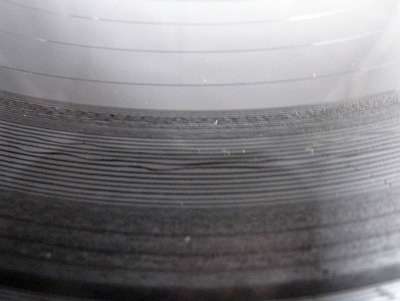
The Telarc guys sure created quite a turntable torture test. Some turntables just can't handle that dogleg groove.
Posted by Joe Redifer (Member # 3) on 06-11-2008, 12:05 AM:
quote: Jon Miller
...showing what disappears from the waveform when compression is used. It suggests one more way the recording industry is shooting itself in the foot, producing CDs that sound no better than MP3 recordings.
MP3s do not compress the waveform, they compress (and discard some of) the data used to recreate that waveform. MP3s will still sound worse than CDs even when the CDs are mastered like complete ass.
Posted by Leo Enticknap (Member # 534) on 06-11-2008, 01:08 AM:
quote: Claude S. Ayakawa
Most of my vinyl records are classical. I still have most of my collection which include about 45 complete operas and among them is my favorite , Georg Solti's recording of the complete DER RING DES NIBELUGEN by Richard Wagner.
A copy of that described as in 'moderate to poor' condition went for over £300 on eBay about a month ago! The early RCA Living Stereo releases (non-Dynagroove US pressings) regularly fetch insane prices, too. I've got a couple (Also Sprach Zarathustra with the Chicago SO and Fritz Reiner, and Walton's first symphony with the LSO and Andre Previn) which I found for a quid or two at second-hand shops in the mid-90s. Ironically, I'd started buying second-hand LPs around that time because I couldn't really afford new releases on CD! A copy of the Strauss went for £80 on eBay last year.
Posted by Monte L Fullmer (Member # 2797) on 06-11-2008, 04:53 AM:
A record site that Bernie Grundman began contains new vinyl from session master tapes - in popular and the classical.
I have a few of these Classic pressings in both 180g and the 200g varieties and it's amazing on the quality that was put into these vinyls.
One used to order vinyls from Classics directly until a couple of years ago when Classics stopped selling direct and now go through dealers to sell their vinyls.
Posted by Charles Greenlee (Member # 3856) on 06-11-2008, 05:00 AM:
I love my vinyl. Even if mathematically, the quality is somewhat less than a CD. For some reason, the coloring of the sound and the other qualities make it sound better. My opinion. I'm young enough I had people in High School with me ask what an LP, record, or any other term referring to a phonographic recording, was. But it's still important to me to have a good turntable, and buy whatever I can on vinyl. Yes, cd's are good because they don't degrade, but well cared for vinyl, maybe with something like gruv-glide or the like, can play top notch for quite a long time. I do have a weakness for picture discs. Yes, inferior to the audiophile, due to often inferior materials used, but unique and interesting. They're more something to collect than play, though I will often run them once as a check. I'm not sure exactly why clear and colored vinyls are supposed to be inferior to standard black, or I should say I don't remember. I actually had researched it at some point. I really have to get back to my laser turntable project, just ran out of time, money, materials, and lost my workspace. All the associated junk is now sitting in a box. ![[Frown]](frown.gif)
Posted by Damien Taylor (Member # 4255) on 06-11-2008, 05:55 AM:
I remember reading picture discs were inferior because they lack the carbon black added to regular discs to give them strength... or something.
quote: Leo Enticknap
A copy of that described as in 'moderate to poor' condition went for over £300 on eBay about a month ago! The early RCA Living Stereo releases (non-Dynagroove US pressings)
The Living Stereos sound really nice. On the other hand the much loathed Dynagrooves are simply awful.
Posted by Kenneth Wuepper (Member # 1174) on 06-11-2008, 06:51 AM:
Vinyl:
The coloring of the material also hardens the surface of the disc. Clear vinyl is quite soft and pliable while the black additives make the vinyl very hard. The old "picture discs" were also quite flexible while the black filled vinyl was brittle and would shatter if dropped.
DIRECT TO DISC:
This technique was used on a George Wright organ recording where the master of each complete side of the disc was done in one continuous take. The advantage of this system was the total elimination of the magnetic tape intermediate stages of the record making process. These discs had very transparent sound and the only "processing" of the signal was a peak limiter just for safety in keeping the grooves from touching on the loudest sounds.
Columbia Variable Area Discs
I have several old Columbia classical records where they employed a computer to calculate the excursions of the grooves and make adjustments to the pitch of the feed for the cutting lathe. In order for this to work, they sampled the sound for the upcoming groove and then adjusted the space between the grooves so they were not too close. The only problem with this system was that you could quietly hear the upcoming loud passage in the groove preceding its actual playing. It sounds somewhat like the transfer that occurs in magnetic tape when it is stored improperly and there is a print through from adjacent layers of the tape on the reel.
Aliasing
This term is used to describe the beat interference that occurs when high frequency audio signals beat against the sampling rate of the digital audio system. In the Analog to digital conversion as well the succeeding Digital to Analog conversion, this aliasing occurs. Filtering can be introduced to reduce the beat products but that also filters out some of the wanted information. A skilled listener will be aware of something not right but may not know this is what is wrong. Early CD players did not have very good Digital to Analog conversion so those discs sounded less good. They will sound better when played on a modern playback machine with improved Digital to Analog conversion. Anti-Aliasing circuitry is incorporated in all high end digital music instrument products made today.
Hope this is helpful
KEN
Posted by Scott Norwood (Member # 30) on 06-11-2008, 08:01 AM:
Regardless of one's preferred format, pretty much anyone who is serious about collecting recorded music will eventually need to get a turntable. Many releases have never been made available on CD and many that have were done poorly and sound demonstrably inferior to the LP release. Even different LP pressings of the same recording can sound remarkably different.
Part of the reason why CDs became popular is that a cheap CD player will sound better than a cheap turntable. A good turntable, arm, cartridge, and preamp can really make records sound great, but neither is cheap if you want quality. A $99 CD player will sound pretty good on a typical home stereo, but a $99 turntable is junk.
I've been collecting LPs (new and used) since the early 1990s (when it was quite unfashionable to like the format), but I also like CDs. I don't have a high-end setup for either, but sometimes one format sounds better than the other. It just depends on the release and how it was mastered. CD reissues of older recordings are all over the place in terms of sound quality. Unfortunately, it is difficult to know what format and release to buy until one has already bought it.
For me, the attraction of vinyl (in addition to availability of material not on CD) is partly about sound quality and partly about the larger cover and inserts, as others have mentioned. And, at least until recently, used LPs could be had in good condition and at very reasonable prices.
The music format that most deserved to die (and, thankfully, is mostly dead) is the cassette. As much as I don't like MP3 and other lossy compression schemes for music, they usually sound better and are way more convenient and reliable than cassettes ever were.
Posted by Leo Enticknap (Member # 534) on 06-11-2008, 09:27 AM:
quote: Scott Norwood
The music format that most deserved to die (and, thankfully, is mostly dead) is the cassette.
It was never intended to be a music format in the first place, but rather a replacement for the wax cylinder and magnetic wire for speech recordings (e.g. dictaphone and answering machines). David L. Morton's excellent book Off the Record has a chapter on the development and initial marketing of the cassette. One of the big car manufacturers saw the cassette as the ideal way to get recorded music into cars (for which, for obvious reasons, records wouldn't work). One format war with the 8-track cartridge later, it was commercially established as a format for selling pre-recorded music - and, the industry's worst nightmare, pirating it.
Posted by Charles Greenlee (Member # 3856) on 06-11-2008, 02:37 PM:
quote: Leo Enticknap
One of the big car manufacturers saw the cassette as the ideal way to get recorded music into cars (for which, for obvious reasons, records wouldn't work).
I've seen pics of rare car based turntables. The one I saw had a bracing bar that locked down over the tone arm preventing it from jumping up in a bump, and hopefully keeping it in the groove. Don't know how well it stoppped lateral G's, but its definately interesting. My father was also telling me about an old relative's cadillac that had one that folded out of the back of the front passenger's seat, like of like a tray does on an airplane. He did comment that that made it hard for the driver to play a disc for himself and try to drive. That is why I guess you keep someone in the back seat. I'm not sure if that one had a retention mechanism of some sort, never saw it for myself. Odd inventions, but I like odd stuff like that.
Posted by Andy Frodsham (Member # 4061) on 06-11-2008, 03:09 PM:
There is a 'sweetness' and musicality to a good vinyl recording (played on a decent deck) which CD/digital cannot approach.
I suspect, along similiar lines, in 20 years we will be hunting out 35mm film prints (and the relevant projectors) and realising how much we threw away when we went digital!!
Posted by Phil Hill (Member # 371) on 06-11-2008, 03:10 PM:
quote: Our Grand-Poopie-BAH
I purchased a Goldfrapp album on CD and later found out Dan Lyons had purchased it on vinyl. (I didn't even know it was available on vinyl.) His transfer to CD on a side by side comparison sounded better.
I agree Brad, having both the LP and the CD of her "Black Cherry" album, I agree the LP is soooo much better than the CD. (My favorite cut is "Strict Machine"!)
I have a Technics SL-1210MK2BLK turntable with a Shure V15VxMR cartridge feeding (via a "Master-Control" RIAA phono preamp) a MacIntosh MC-240. ORGASM CITY! Hubba Hubba!
Posted by Leo Enticknap (Member # 534) on 06-11-2008, 04:13 PM:
quote: Charles Greenlee
I've seen pics of rare car based turntables. The one I saw had a bracing bar that locked down over the tone arm preventing it from jumping up in a bump, and hopefully keeping it in the groove.
The tracking force needed for one of those must have been measured in kilos rather than grammes!
Posted by Kenneth Wuepper (Member # 1174) on 06-11-2008, 04:43 PM:
The "bracing bar" was actually a screw feeding the pickup across the disc. This is the playback equivalent to the recording lathe that cut the master in the beginning.
Although it helped to keep the inertia of a tone arm out of the equation, it was totally incapable of tracking the variable pitch (variable groove spacing) discs.
Another problem that all discs encounter in the automobile is the great range of temperatures present. This is especially true of equipment located in the trunk of a parked in the sun car where summer temperatures over 160 degrees F are not uncommon.
KEN
Posted by David Stambaugh (Member # 1102) on 06-11-2008, 05:09 PM:
Well the business section of today's Register-Guard (local newspaper) picked up on the Fred Meyer story, and interviewed a couple other local vinyl retailers to get their perspective. The story was accompanied by this photo of the magnificent cardboard display box described earlier. I almost bought a copy of Dark Side of the Moon there just because it's pressed in freaking Holland, but I already have DSOTM on minty-fresh vinyl as well as CD.
Brian Davies/The Register-Guard
Jaime Grimaldo, an assistant manager at the Fred Meyer store on West 11th Avenue in Eugene, looks over a small collection of vinyl records the chain is now selling in several of its stores.
Enough with all the bits and bytes. Fred Meyer is easing itself back into the groove.
Following a serendipitous ordering blunder, the Portland-based retail chain has begun a small-scale experiment — reintroducing vinyl record albums at 60 of its stores, including the West 11th Avenue outlet in Eugene.
“I don’t listen to vinyl myself, but I’ve had friends tell me it’s a warmer sound with analog (recordings) that you don’t get with digital,” said Jaime Grimaldo, assistant manager of the West 11th store’s home electronics department.
“It just seems like more of an intimate process, listening (to records),” Grimaldo said. “You’ve got to take it out and get it on the turntable. It’s not like just popping in your iPod.”
Fred Meyer began dabbling in vinyl at several of its stores earlier this spring, after an employee intending to order a special CD/DVD edition of R.E.M.’s latest release “Accelerate” accidentally entered the “LP” code instead. Some stores returned the vinyl records when they arrived, but a handful of others put them on display. Twenty sold in the first day.
The chain picked several of its stores in Oregon, Idaho, Washington and Alaska to continue the experiment, which remains very small-scale. The West Eugene store, for instance, stocks a total of 30 to 40 albums by a variety of artists that range from Pink Floyd to Michael Jackson to the current “Juno” soundtrack.
“It would be nice to expand a little bit and get a permanent spot (to display the LPs),” Grimaldo said Tuesday. “But it is still a test, I understand that.”
At Eugene’s House of Records, at 258 E. 13th Ave., the only question is if — or when — vinyl recordings will reclaim the dominant spot that compact discs have held for the past couple of decades. Greg Sutherland, a buyer for Eugene’s longest-running retail music shop, said vinyl records now make up at least a third of the House of Records inventory and account for between 20 percent and 25 percent of sales.
“We never gave up on vinyl, and the truth is that it never actually went away,” Sutherland said. “The (record) labels did their best to kill it off, and introduce a new format and everything — the CD — but that didn’t happen. It didn’t truly happen.”
He admits there were the “dark years” in the 1990s when compact discs were truly dominant and vinyl records accounted for perhaps 10 percent of the store’s sales. But CDs never became as entrenched as vinyl records once were — thanks in part to competition from digital alternatives such as MP3 players and iPods — and young customers have been flocking back to vinyl for the past several years.
“The resurgence of vinyl has been happening — the strong resurgence — for the last five years,” Sutherland said. “I get the feeling that kids have heard it all now, in terms of technology. But then they hear a vinyl record and they say, ‘Wow, that sounds really good.’
“If all you’ve been hearing is MP3s and iPods … you’re not hearing everything that’s supposed to be there in the recording,” he said. “That’s because of the weakness of the recording.”
Other music stores also are ramping up their inventories of LP albums in response to consumer demand. Corvallis-based CD World, which has a Eugene outlet just a stone’s throw from the West 11th Fred Meyer, has a vinyl collection that rivals that of House of Records.
Best Buy is testing vinyl record sales at some of its stores, and online book and music retailer Amazon.com created a special, vinyl-only section last fall.
“It’s not just a nostalgia thing,” said Melinda Merrill, a spokeswoman for the Fred Meyer chain. “The response from customers has just been that they like it, they feel like it has a better sound.”
The Recording Industry Association of America reported that manufacturers’ shipments of LPs increased by more than 36 percent from 2006 to 2007, to more than 1.3 million. Shipments of CDs dropped during the same period by more than 17 percent, to 511 million.
The debate over analog versus digital music has to do with the technologies involved. Digital recordings capture samples of sound and place them very close together so that they sound nearly the same as continuous sound to many people, while analog recordings are continuous — with the exception of some new releases that are recorded and mixed digitally, then converted to analog.
At House of Records, Sutherland compared the audiophile’s preference for vinyl to a wine connoisseur’s preference of a fuller-tasting vintage.
“Frankly, there are a lot of people out there who can’t tell the difference,” he said. “But it’s like wine tasting. You can hear the difference. It’s really there.
“I don’t hate CDs, and I’m not pulling for the demise of the CD,” Sutherland said. “But I’d say right now, vinyl is waxing and CDs are waning.”
Posted by Allison Parsons (Member # 2728) on 06-11-2008, 05:57 PM:
quote: David Stambaugh
I almost bought a copy of Dark Side of the Moon there just because it's pressed in freaking Holland
Thats the only way it's pressed anymore, I do believe. It comes with a poster too.
Metallica's Master Of Puppets is being reissued on LP next week. ![[thumbsup]](graemlins/thumbsup.gif) I think on the 1/2speed remastered, and the 180g versions, just like the last two albums.
I think on the 1/2speed remastered, and the 180g versions, just like the last two albums.
Posted by Joe Redifer (Member # 3) on 06-11-2008, 07:54 PM:
What is all of this 180g and 200g nonsense? Is that how many grams of cocaine the artists snorted during each song? Why don't they make 1/100th speed 1000g (or would it be 0g) vinyls? Surely they would be MUCH better.
Posted by Bill Enos (Member # 440) on 06-11-2008, 09:04 PM:
Reason those LPs are so smooooooooooooth is that there's nothing on 'em but the mid range. Play a CD with the bass and treble turned almost all the way down and it sounds like an LP
Posted by Steve Guttag (Member # 268) on 06-11-2008, 09:35 PM:
Speak for yourself Bill...I can certainly disprove that statement...in fact, I've got vinyl that definately has better high end than CD and they also go very low.
There are a wide range of pressings out there (historically). Much of the mass-produced crap was just that. A good pressing from a good master is going to give you a really good playback on good equipment.
Steve
Posted by David Stambaugh (Member # 1102) on 06-11-2008, 09:47 PM:
quote: Bill Enos
Reason those LPs are so smooooooooooooth is that there's nothing on 'em but the mid range
No offense Bill but that is just not true unless you're speaking of specific examples. Like Steve said there's bad vinyl as well as bad CDs and it's all about the care exercised in the mastering, as well as the quality of the playback equipment. Records can do most anything CDs can do in terms of frequency response.
Posted by Martin Brooks (Member # 1269) on 06-11-2008, 10:36 PM:
Vinyl Sales are increasing because vinyl sales are so small, any increase is going to seem large.
I love vinyl and still have a high-quality working turntable and over 600 albums in my living room, but I'm also a realist and while there will always be a tiny niche market for vinyl (just as some people collect 78s or Edison Cylinders), the market is so small, it basically doesn't exist.
In 2006, vinyl albums comprised 1/4 of 1% of long-form unit sales and .19% (that's not 19%, it's point 19%) of dollars based upon list price.
Even if it increases 500%, it's still nothing.
And as for used-vinyl, look on eBay. 98% of the stuff listed doesn't get a single bid.
Posted by Brad Miller (Member # 2) on 06-12-2008, 12:08 AM:
quote: Bill Enos
Reason those LPs are so smooooooooooooth is that there's nothing on 'em but the mid range
Dare I even ask what you are playing the records back on Bill? If you have good equipment, that is soooooo incorrect.
Posted by Tony Bandiera Jr (Member # 2365) on 06-12-2008, 12:14 AM:
From this thread. looks like it's time to dig out my old turntable and fire that puppy up again. (Pioneer PL-200 direct drive with Sure V15-[forgot the rest] cartridge.)
I have a fair collection of vinyl (a lot of movie soundtracks) and also about 75 Laserdiscs.
Posted by Steve Guttag (Member # 268) on 06-12-2008, 05:57 AM:
Martin, I don't think any of the articles poited to having vinyl to coming back to previous levels. It is more of an amazement that there are any sales...let alone on the order of 1.3 million! And a 36% increase in sales in any market is significant...even a small market. The numbers also show that the trend line is definately going UP. It is just plain odd.
However 1.3 million versus 511 million (CD sales) shows just where LPs are in terms of percentage...even with the upward trend. It is only .25% of CDs. So small that even when one wants to see a comparison of LP to CD sales (adding LPs into total sales) it is still a mere .25%
Then again...I think a market that has to cater to 511 million sales probably has less time and care for the quality of each unit versus one that knows that each unit will be evaluated more more closely. Come on...back when LPs were the norm...who was making records with gram ratings? Sure there was the odd UHQR and such but they were just the niche market...now that LP is entirely a niche market I guess they can keep the quality high. I don't know as I have not bought a new LP in probably better than a decade if not two. When I was buying LPs, most of mine would be in an "audiophile" grade as back then I realized that the typical mass-produced LPs were often lacking in quality.
Steve
Posted by John Walsh (Member # 168) on 06-12-2008, 10:29 AM:
Also, how many times 'back in the day' did you play a new LP, and found the quality was poor. I usually had to fight with the sales people at EJ Korvetts (in Port Chester, NY, who actually had a pretty good record dept for a deparment store) who couldn't beleive a brand new record could be bad. ABC Dunhill records were the worst (Steppenwolf.) I think they actually came with skips.
Posted by David Stambaugh (Member # 1102) on 06-12-2008, 10:58 AM:
In general the recent pressings I've bought have been of very high quality. Not perfect, but mostly very good. One exception is a reissue of Elvis Costello's My Aim Is True which was horrible, full of crackles and pops. I returned it for another copy, and it had the same problem. Clearly it was either a bad master or a bad production run or I had incredibly bad luck. That's the only total dud I've seen recently.
Another recent disappointment is the remastered Creedence Clearwater Revival LPs. While the disc mastering and pressing is exceptionally good, there's a low-level background "hum" in them, from the leadin groove to the runout. It's not the master tapes either -- The hum was definitely introduced by the mastering process, like there was a bad ground somewhere. That hum is not present in other older copies. They're listenable but that hum is inexcusable in what should be the definitive remastering job.
Posted by Andy Frodsham (Member # 4061) on 06-12-2008, 11:44 AM:
I remember in the mid eighties (having bought my first CD deck) going out and buying a CD of an album I originally owned on vinyl. I'd foolishly swallowed all the 'hype' and thought the CD would sound 'better'. What a shock! The original vinyl recording was far more involving! It had those nebulous qualities of 'breath' and excitement.
Posted by Monte L Fullmer (Member # 2797) on 06-12-2008, 01:10 PM:
quote: Bill Enos
is that there's nothing on 'em but the mid range
..due to the RIAA curve that has to be done in vinyl mastering - why your preamp reverses the curve to make the signal back to amp full bandwidth.
The grooves can't do full bandwidth on vinyl since the tracking properties becomes impossible for the needle, thus the RIAA curve flattens out the bass and enhances the highs so the actual cuts on the vinyl is minimual and easy to track. Then, the preamp reverses these properties back to full bandwidth.
True, if you do play a vinyl through a source that isn't RIAA compatible you do have gawdy midrange reproduction.
..............................................................
Hey Bill - look what I found the other day in a thrift store:
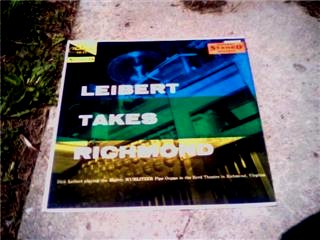
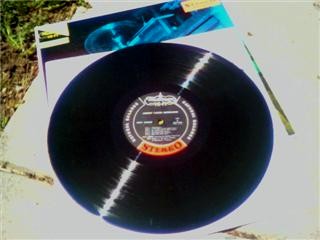
That's a great sounding organ you have in your theatre there in Richmond (cover in great condition in as well as the vinyl-outside of a few tics here and there ....)
-Monte
[ 06-12-2008, 02:29 PM: Message edited by: Monte L Fullmer ]
Posted by Leo Enticknap (Member # 534) on 06-12-2008, 05:15 PM:
OK - here's one of my recent acquisitions. I hereby nominate it for the most politically incorrect LP cover in history award:
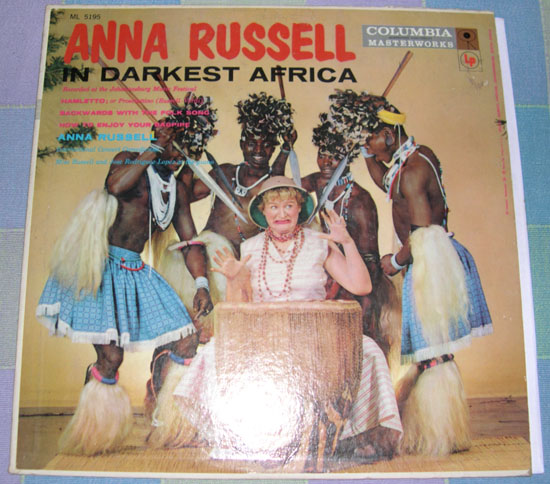
To be honest I find her opera spoofs a bit tedious. Her p**-take of Wagner's ring is hilarious (Claude might enjoy it!), but when she tried to get several more albums out of basically doing the same thing with other material, the joke wears a bit thin. But I simply had to have this one for the sleeve picture alone.
quote: Monte L Fullmer
True, if you do play a vinyl through a source that isn't RIAA compatible you do have gawdy midrange reproduction.
And if you try to play a non-RIAA balanced record (all shellac and some very early vinyl), most of the HF disappears. That's why I do tend to listen to digital transfers of my 78s rather than play the real thing (plus the fact that replacement styli for my Shure M78 cartridge are £50 a pop, and they're only good for around 250-300 sides). I transfer them by connecting the turntable to the mike input of my PC's sound card (the mike preamp doesn't apply RIAA equalisation, whereas all but the most staggeringly expensive phono preamps do, whether you want them to or not) and then applying a Blumlein or Westrex curve using Adobe Audition.
Posted by Joe Redifer (Member # 3) on 06-12-2008, 05:25 PM:
So I take it that nobody can answer my question about the 180g 200g thing?
Posted by Phil Hill (Member # 371) on 06-12-2008, 05:28 PM:
The RIAA curve:
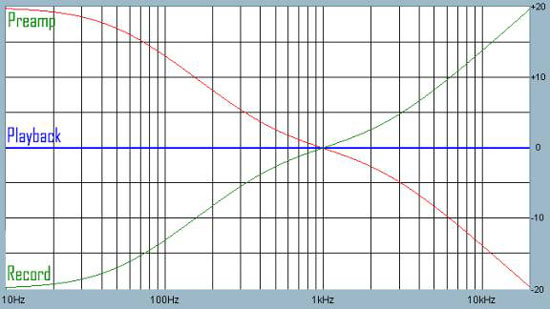
Keep in mind the IEC JERKS revised the the RIAA curve to something else at the low end sometime (I think) in the early 70's.
Posted by Leo Enticknap (Member # 534) on 06-12-2008, 05:47 PM:
quote: Joe Redifer
So I take it that nobody can answer my question about the 180g 200g thing?
Sorry - thought that was a sarcastic comment rather than a serious question.
The figure describes the weight to volume ratio (i.e. thickness) of the vinyl as grams per square metre. Your bogstandard LP from the days when they were mass produced is in the low to mid hundreds (and probably below 100 in the case of the shitty RCA Dynaflex pressings*). The thicker pressings were (and still are) made for audio buffs to play on higher end turntables. The main advantage of 180 g/m2 or thicker is that the groove can be stamped deeper into the vinyl, making the record more resistant to wear and tear over repeated playbacks and enabling the stylus to sit deeper in the groove, thereby reducing surface noise. It's also better able to withstand the higher tracking forces required by some very high end moving coil cartridges (but unless you're as seriously rich as to be able to spend a five-figure sum on your turntable and cartridge, tracking almost certainly won't be an issue). The thicker vinyl makes the record less susceptible to warping in heat or poor storage conditions. But this isn't really an issue for serious LP geeks, who take care to store and handle the things properly.
* Did RCA ever press any LPs with both Dynagroove and Dynaflex? If so. listening to one of those must have been truly an ordeal!
Posted by Monte L Fullmer (Member # 2797) on 06-12-2008, 06:03 PM:
quote:
Did RCA ever press any LPs with both Dynagroove and Dynaflex? If so. listening to one of those must have been truly an ordeal!
Yes, I've got quite the few of RCA (Indianapolis) pressings of DynaGroove pressings that were pressed on 80grm floppy "Dynaflex" vinyls along with the original Dynagroove (shaded dog/white dog) 130grm releases and "yea, quite the difference in tembre and quality..
..Those floppy Dynaflex vinyls - you can almost bend the edges around to touch each other.
Posted by Mike Blakesley (Member # 26) on 06-12-2008, 07:11 PM:
I remember when we started getting those RCA Dyna albums in at the store -- when I first pulled them out of the box I thought we'd been sent empty jackets, the things were so light!
Posted by David Stambaugh (Member # 1102) on 06-12-2008, 08:33 PM:
Another supposed advantage of heavier pressings is a reduction in stylus-induced resonances.
How's this for a thin record:
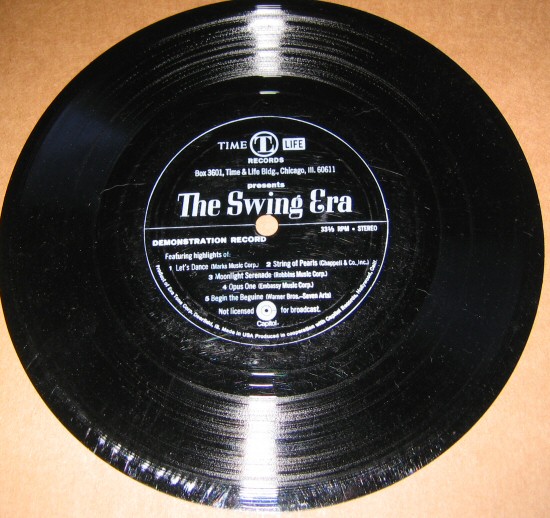
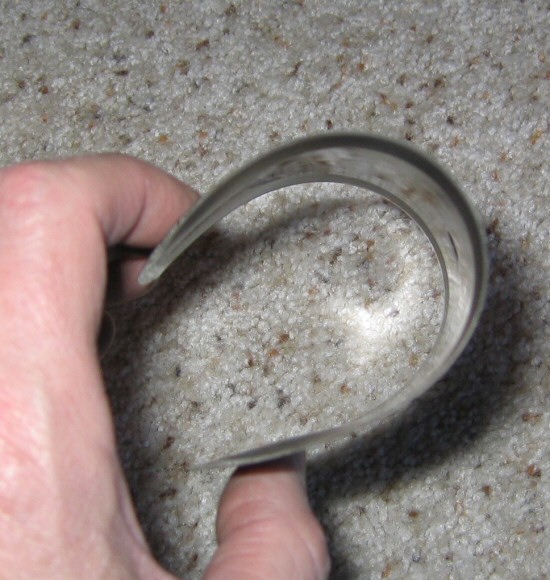
Time-Life sent these single-sided demo "records" out in mass-mailings. They might have been distributed as magazine inserts too, not positive though. They were made for Time-Life by Eva Tone Corp. of Deerfield, IN (now called Evatone; note image in lower-right corner). These things were in stereo and they actually sound pretty good. I have another one of these with classical music.
Posted by Brad Miller (Member # 2) on 06-12-2008, 09:22 PM:
Oh wow, I am 99% sure I have that exact same floppy record! That was the first time I heard "String of Pearls" (or rather a snippet of it).
Posted by Mike Blakesley (Member # 26) on 06-12-2008, 09:45 PM:
I had that thing too. "Eva-Tone Sound Sheets," they were called. They were bound into magazines by the millions. Usually they were square; the Swing Era was one of the few that was trimmed like a real record. I think my grandfather got one in a mass mailing and gave it to me.
I still have a "demonstration" soundsheet from from Eva-Tone that came bound into Billboard. It contained a lot of comedy done by some advertising agency, to demonstrate the various ways that you could use sound to make your advertising "grab'em by the ears." It was hilarious! I digitized the thing several years ago and made a CD of it (along with a lot of other offbeat comedy crap I've collected over the years).
Posted by Charles Greenlee (Member # 3856) on 06-12-2008, 09:54 PM:
I think I have a few from mags like Reader's Digest and some others floating around here somwhere. I also should have a few of their cardboard counterparts as well.
Posted by Monte L Fullmer (Member # 2797) on 06-12-2008, 10:00 PM:
Like "the Archies" 7 inch cardboard records that you cut off the back of POST Sugar Crisp cereal boxes in the early 70's - there was a set of 4 of these records that could be had.
Of the Eva-Tone "soundsheets" - as they were called - I have a collector with the magazine: the Jan 1965 Nat'l Geographic Magazine on the tribute of Churchill's funeral with historical recordings, presented and narrated by David Brinkley from NBC.
Posted by Phil Hill (Member # 371) on 06-13-2008, 12:54 AM:
Somewhere I have a 1960's Mad magazine with the floppy record "She Got A Nose Job"
(Disregard the dorky lip-sync video!) HA!
Posted by Joe Redifer (Member # 3) on 06-13-2008, 02:29 AM:
Thanks for the explanation on the g thing.
I've had some small, floppy records. I can't remember what they were, but they were colored, one-sided and had the same stiffness as your average sheet of printer paper. They played! Since I was a kid and not yet an audiophile, I didn't give a rat's ass how it sounded.
I still think they should make a slot-loading turntable for your car for those who want to enjoy better sound than shitty-ass CDs on the road. Also, turntable walkman's & iPods! This is the reason SACD and DVD-A never caught on... no portability. You were forced to listen on your ass sitting at your main sound setup.
Posted by Damien Taylor (Member # 4255) on 06-13-2008, 03:05 AM:
They was a short lived run of ghetto blasters with turntables in them, obviously the high tracking force required made short work of the records. Although judging by the era they were released the album in it was probably one of the Street Sounds Electros, which weren't top shelf quality... the music on them on the other hand.
I think I have an NME flexidisc for some band, The Faces I think.
Posted by Brad Miller (Member # 2) on 06-13-2008, 03:38 AM:
It's already been done Joe, and back in 1933 too!
Link without Google video frame
[ 06-13-2008, 09:12 AM: Message edited by: Adam Martin ]
Posted by Joe Redifer (Member # 3) on 06-13-2008, 04:00 AM:
That's so awesome! I'd love to see Laurel and Hardy work in a projection booth. Just imagine them moving a print.
Posted by Monte L Fullmer (Member # 2797) on 06-13-2008, 04:44 AM:
(Buster Keaton did a similar film as a theatre projectionist - ol' "Stone Face" himself. Course, we have to remember Peter Sellers as Mr. Quill as the projectionist at the Bijou Kinema in "Smallest Show on Earth.")
My friend back in my home town manage to find, through a mail order catalog, a portable '45rpm slot load player that used the 12v from the lighter. More of a novelty item, but just barely feasable and practical - let alone not being the kindest to vinyl.
Posted by Mike Blakesley (Member # 26) on 06-13-2008, 11:11 AM:
quote: Joe Redifer
I still think they should make a slot-loading turntable for your car for those who want to enjoy better sound than shitty-ass CDs on the road.
There's no reason that couldn't be done, actually. Technics used to make a turntable (I think the model # was SL-1) that had the stylus built into a lid that would close onto the record. There was no traditional tone arm; the stylus was on a very short, straight arm that moved straight across the record via a tiny motor. You could play that thing in any position - hang it on the wall, even. You could pick it up and turn it on its side while playing and it still wouldn't skip. And this with a tracking force of about 2 grams.
I'd bet there were some scientific types at Technics who tried to figure out a way to cram that thing into a car at some point. If it hadn't been for cassettes -- which were sounding pretty good by that time -- it might have actually happened.
Posted by Jack Ondracek (Member # 1466) on 06-13-2008, 12:55 PM:
quote: Joe Redifer
I still think they should make a slot-loading turntable for your car for those who want to enjoy better sound than shitty-ass CDs on the road.
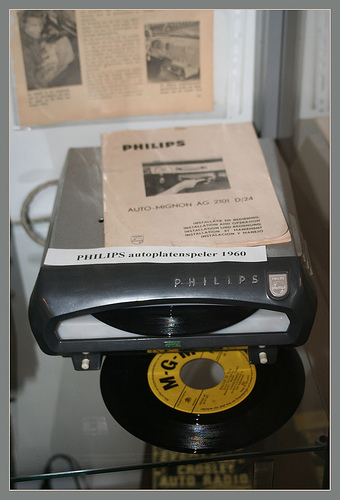
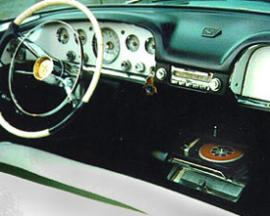
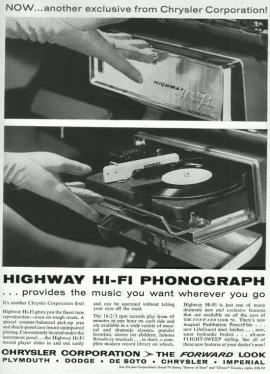
Chrysler/DeSoto in-car player
Posted by Leo Enticknap (Member # 534) on 06-13-2008, 02:24 PM:
So there really were such things as 16rpm records, and the way they got round the vibration problem was to use a slow speed, tiny stylus radius and relatively high tracking force. Interesting.
Posted by Joe Redifer (Member # 3) on 06-13-2008, 05:03 PM:
Awesome, but it needs to be slot-loading and play full-size records. Also it needs to be able to withstand my awesome subwoofer so when I play da hip hopz da needlez dey wont skip homey word 2 ur muther.
Posted by Todd McCracken (Member # 4718) on 06-13-2008, 05:11 PM:
Guess its time to break out my near complete collection of Burbank Studio's loss leader alblums
Ablum List
Posted by Damien Taylor (Member # 4255) on 06-13-2008, 07:19 PM:
16 rpm was for spoken word albums, mainly educational where fidelity was not a priority.
quote: Mike Blakesley
Technics used to make a turntable (I think the model # was SL-1) that had the stylus built into a lid that would close onto the record.
I got given one of these, a SL-J3 I think, i've never bothered to get the stylus replaced, but it was awesome in principle. You could even program tracks, as it had an 'eye' that could see the tracks. You could go track 1,3,4,1 and even repeat a favorite track ad infinitum, the only thing it didn't have was a remote
I was going to bring it up earlier, but since people have already started, why don't we post our most rare/obscure records. And.... wait for it. NOT start a new thread
Posted by Monte L Fullmer (Member # 2797) on 06-13-2008, 10:16 PM:
there were also 7inch 8rpm's as well, but also in the spoken word end of the spectrum, but not too popular and died pretty quick.
Remember those 16inch,33rpm transcription discs that the radio stations used (where the groove started by the label and worked to the outside of the disc...) before wire and tape was invented?
Good ol' Loss Leaders - garbage and demo tapes from up and coming artists that Warner produced in the 70's and dirt cheap, but had to order them for 2 to 3 bucks apiece - the price of pressing the vinyls. Now, somewhat of a collector item if in a NM condition. I've got a few of these "Loss Leader" albums
[ 06-13-2008, 11:29 PM: Message edited by: Monte L Fullmer ]
Posted by Leo Enticknap (Member # 534) on 06-14-2008, 06:34 AM:
quote: Monte L Fullmer
Remember those 16inch,33rpm transcription discs that the radio stations used (where the groove started by the label and worked to the outside of the disc...) before wire and tape was invented?
Vitaphone sound-on-disc worked exactly the same way, only the shellac was about triple the thickness of a consumer record, of a much higher grade and the grooves were a lot wider. On a visit to the UCLA Film and Television Archive a few years ago I was shown a set of release discs that shipped with a print of The Jazz Singer. They were almost as thick as a dinner plate! There was an 'x' marked in the run-in groove at the centre where the projectionist positioned the stylus. You then ran the film down to the start mark on the leader and then engaged a mechanical interlock between the projector mechanism and turntable. After that if you inched the projector a few frames, the turntable would rotate. The records weren't good for that many playings (can't remember the exact number - think it could have been 15). You ticked off a box on the label for each playing and were supposed to replace the record after all the boxes were ticked.
Even with the massive wooden shipping boxes, the wastage rate of those shellac records being smashed in transit must have been phenomenal.
Posted by Greg Anderson (Member # 235) on 06-14-2008, 10:34 AM:
http://www.theonion.com/content/amvo/cd_sales_down_lp_sales_up
"If there's a better format for listening to hissing, popping, and crackling than on a cumbersome yet fragile 12-inch piece of vinyl, I'd love to hear it."
Posted by Leo Enticknap (Member # 534) on 06-14-2008, 03:31 PM:
"I think at this point people are just fucking with the record industry as a whole."
It would be interesting to know what's been happening to sales figures for turntables recently. Popped into my local Richer Sounds (a chain of discount hifi and TV stores) this afternoon, and noted that they had three or four models on display, from a shitty, £50 USB 'digitise your old LPs' job to the very decent Cambridge Audio TT50 (which I'd have been tempted by some time ago if it wasn't for the fact that I need something that can do 78 and take a universal headshell mount for easy swapping of cartridges).
The last time I went into a mainstream consumer electronics store (as distinct from one which sells only to audio buffs) there was no vinyl equipment in sight.
Posted by Damien Taylor (Member # 4255) on 06-14-2008, 08:49 PM:
It would be interesting to see the sales curve Leo, the graph almost bottoming out then kicking up a little. I would like to know how close Matsushita have come to stopping production of the SL-1200, or for that matter how long they will continue.(hopefully a long time!) As I understand it, production has been continuous, albeit lower at times since the mid 70's.
Posted by Leo Enticknap (Member # 534) on 06-15-2008, 06:13 AM:
Agreed. At a rough guess, I'd speculate that the bottom of the curve would have been likely to be in the early to mid-90s. This was around the time vinyl had completely disappeared from high street record stores, prices of CD players were plummeting (I bought my first one in 1991) and the range of music on CD was expanding massively, including reissues of back catalogue material. Furthermore, people who were sticking with LPs probably had equipment they'd bought relatively recently, and therefore wouldn't have been looking to replace or upgrade.
It was in the mid '90s that I noticed that you could buy very good quality second-hand records for virtually nothing - as low as 50p a disc in some cases. Most of the LPs in my collection were bought between around 1995 and 2003. I'm not sure how turntable sales were doing then, as I was using a Goldring Lenco GL78 I inherited all through the '90s until two years ago, when a gas man who was replacing a pipe in my flat accidentally stepped on it. He managed to bend the tonearm to around 45 degrees and crush the motor housing, so it really wasn't worth trying to restore. The need for 78rpm capability and easily interchangable cartridges seriously limited my options for replacing it when the insurance money came through. I couldn't find a decent Lenco around anywhere, and so I eventually went for a Vestax BDT-2500. Being designed for DJs rather than home users I wondered how it would deal with the classical and jazz LPs I tend to prefer, but I was actually very pleased with it. The cartridge they throw in has a surprisingly good HF response for an entry level job, too, and replacement styli are cheap and easy to get hold of.
Posted by Charles Greenlee (Member # 3856) on 06-15-2008, 11:29 AM:
ooh, that's too rich for my blood. Mine's a simply Sony. And I had to fix a problem with it myself. The tone arm would suddenly lift off and return to rest, just as if it reached the center of the record, but it'd do it well before then. Dismantleing it, and installing a thin paper washer, like you put under your computer motherboards, under one of the screws supporting the tone arm. Basically I leveled it. But anyhow, no problems since.
Posted by Stephen Furley (Member # 1277) on 06-15-2008, 01:29 PM:
It's not the only old technology to be making a comeback. The little Adana 8x5 inch plattern printing press has been out of production for some years. Adana was bought, I think by Caslon, and they actually considered re-starting production, but found that he cost of new castings was prohibitive. However, they have assembled a number of new machines from spare parts which were still in stock, and have also been refurbishing used machines, down to sand-blasting the castings, and re-building from that point up. Secondhand machines have also been fetching good prices on Ebay. One of our graphic design students recently bought one, and was recommended to come to me to learn how to compose type and make up a forme. I haven't done a great deal of letterpress printing, and what I have done was getting on for thirty years ago, but it seems that I've done more than anybody else still around has.
Not only has traditional photography not died out, but the older 'Alternative processes' are making something of a comeback. There are a number of shops in London which sell materials for some of the processes, and courses in wet-plate photography, invented in 1851, just about died out by the late 1880s, are fully booked.
Posted by Leo Enticknap (Member # 534) on 06-15-2008, 03:23 PM:
quote: Charles Greenlee
ooh, that's too rich for my blood.
The only reason it wasn't for mine was because the trashed Lenco was a model that isn't being made any more. So, after doing a bit of Googling, I made a case to the insurance company for the Vestax being the only model in current production which has the multi-speed and standard headshell mount capabilities of the GL78, not really thinking that I'd get away with it. But they coughed up. The one thing I did manage to salvage from the Lenco was the Goldring G800 cartridge. It's got a kind of softer sound with more emphasis on the mid-range. It's kinder to records with slight wear and scratching, but doesn't have anything like the HF response of the Vestax cartridge that came with the turntable, or the slightly better Audio-Technica I'd previously used with the Lenco. The Goldring cartridge is perfect for listening to 1950s mono LPs, though.
quote: Stephen Furley
Not only has traditional photography not died out, but the older 'Alternative processes' are making something of a comeback. There are a number of shops in London which sell materials for some of the processes, and courses in wet-plate photography, invented in 1851, just about died out by the late 1880s, are fully booked.
Please let this philosophy extend to film productions before too long, so that we can start teaching our students how to make real films rather than just Mini DV!
Posted by Bruce Hansen (Member # 281) on 06-15-2008, 04:55 PM:
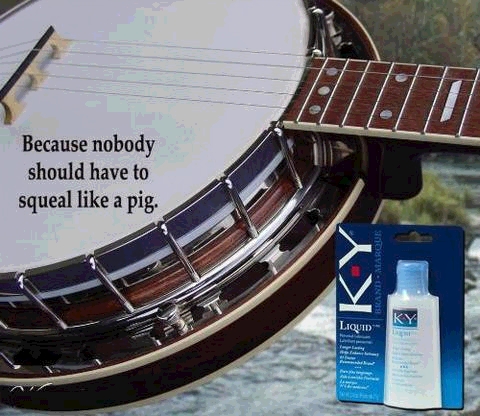
Here is a little something from "The Vent" in todays Atlanta, Georgia paper that kind-of fits in here:
One good thing about living in a redneck community, you can get real good buys on classical music.
Posted by Charles Greenlee (Member # 3856) on 06-15-2008, 05:41 PM:
quote: Bruce Hansen
One good thing about living in a redneck community, you can get real good buys on classical music.
When you hear the banjoes playing, it's already too late.
Posted by Monte L Fullmer (Member # 2797) on 06-16-2008, 12:25 PM:
Oh great - 1972: "Dueling Banjos" and "Deliverance" all over again..but, what a great buddy movie!
Posted by Phil Hill (Member # 371) on 06-16-2008, 03:54 PM:
quote: Bruce Hansen
One good thing about living in a redneck community, you can get real good buys on classical music.
That's hilarious! ...and soooo true!
Posted by Bruce McGee (Member # 131) on 06-16-2008, 06:30 PM:
And I DO get good deals on classical albums!
I got an unplayed copy of Bizet's Carmen with Leontyne Price from RCA on its Soria Series label for $1 this weekend. It WAS in the original shrinkwrap.
I have a worn out copy of this recording. I've played the new one once to get a copy of it on reel to reel.
The CD release of this album is shrill-sounding, for lack of a better term.
Found this on the net:
Posted by Bill Enos (Member # 440) on 06-17-2008, 11:11 AM:
Back whenever they were current I bought a bunch of Mercury "Living Presence" classical records and thought they really sounded fantastic until I found several of the same recordings also labeled Living Presence on 7.5 IPS tape. The difference was incredible...I never played the LPs again and recently transferred the tapes to CD. Along a similar line, the recording Monte mentioned on page 4 of the Liebert Takes Richmond was widely distributed on a LP that sounded fairly good for a pre stereo mono disc. A local man found on Ebay a 15 IPS tape of the same recording, again really high fidelity the equal of any recording made today compared to the muffled sound of the LP. We have a CD copy of the 15 inch tape.
Interestingly, all the subsequent releases by Liebert on the Byrd organ were recorded in the same two week period as was the Ann Leaf recording and all but the Liebert Takes Richmond records sound quite good. The Graham Jackson record was originated in mono. He arrived two days later than he was scheduled to and the recording equipment was almost completely loaded out. The engineers got permission from their office and set up one mike and a recorder and told Jackson he had two hours and to have at it.
If any of you theatre organ buffs would like a CD of the 15 inch tape email me.
Posted by Monte L Fullmer (Member # 2797) on 06-18-2008, 02:03 AM:
quote: Bruce McGee
Bizet's Carmen with Leontyne Price from RCA on its Soria Series label for $1 this weekend
Dang! that Soria/Carmen is on Harry Pearson's TAS list!
That would have drawn a pretty penny on eBone if it would have stayed sealed.
quote: Bill Enos
of the Liebert Takes Richmond
..and you notice that Charles(Chuck)Gearhardt produced this album -whom later was, with Wilkerson, did the RCA/Reader's Digest releases when he joined RCA.
Still a good find though....-Monte
Posted by Brad Miller (Member # 2) on 08-21-2008, 01:27 AM:
World's largest record collection
Posted by Leo Enticknap (Member # 534) on 08-21-2008, 03:32 AM:
I'm not surprised he hasn't had many private buyers. Three million records is such a physically huge collection that any buyer would probably have to spend another $3m building a building to house them in. His best bet is probably to approach a well endowed university with a big music department or which does research in that area.
Posted by Monte L Fullmer (Member # 2797) on 08-21-2008, 03:38 AM:
And it's rather interesting that in small droves, the interest in vinyl is returning.
..just glad my vinyl collection aint that huge, but it shows the love of the medium to one individual.
-Monte
Posted by Scott Norwood (Member # 30) on 08-21-2008, 08:21 AM:
As Leo said above, the issue isn't that no one cares about the collection or that no one likes physical media. Lots of people like music, but very few have $3m and an empty warehouse lying around.
He really needs to break up the collection and sell to individuals or dealers. A library or university collection would also be a good home for this material, assuming that it would actually be made available to the public and not just locked away forever.
Posted by Leo Enticknap (Member # 534) on 08-21-2008, 11:40 AM:
Somewhere like the Institute of Sound Recording at the University of Surrey would be interested in a collection like that, I'd guess. I'm sure there are similar research centres in the US.
Posted by Bill Enos (Member # 440) on 08-21-2008, 12:15 PM:
With the record collection, there are some rare records in there to be sure, but the vast majority of it is crap. He should have the valuable stuff culled and sold to the the highest bidders and give away or sell the rest for recycling.
Who affixed the $50 million value? Vinyl around here is going for $.25 to $1.00 each in the second hand stores and in the couple of collector shops for $3 to $6 for interesting stuff. They all have stacks and stacks of them and dumpster them after a month or so on the shelf. Fifty mil? In whose dream?
[ 08-21-2008, 04:29 PM: Message edited by: Bill Enos ]
Posted by Robert E. Allen (Member # 1351) on 08-21-2008, 05:02 PM:
One of the saddest things I ever had to do was leave behind in Iowa nearly 400 records I had been collecting since the 60s. Most of them were Gospel but I had a number or big band and Time-Life albums I had picked up from a collector for 25 cents an album. All were "air-worthy" (as we used to say when I was in broadcasting) in other words not a scratch on them. I also left a 1962 Zenith stereo console I'd stack up against any of today's component units. Boy, that thing could rattle windows! And the sound was rich and full. Well, maybe I'll get a chance to start over.
Posted by Chad Souder (Member # 343) on 08-21-2008, 09:32 PM:
I was listening to a radio interview a few years back and the guest was talking about how the reason records have that rich, warm, full, whatever-you-want-to-call-it sound was because of groove echo. Basically because the needle sits in the groove it echos around and makes it sound different. His point was that although many prefer the sound, it was not the artist's original intent to have that added echo. CDs, by comparison, have a much more accurrate duplication of the sound with a greater frequency range, but their problem is that transferring a sound wave to digital takes what normally would be a nice, smooth, rounded sound wave and squares it off a little when it becomes 0s and 1s. Some players then have the ability to round off and smooth out these squared off waves making it close to the original wave again.
So assuming their is a quality production process in place and quality playback components, this guests general view was that CD technology is capable of producing a tone much closer to what the artist/producer originally intended, but because of this groove echo, many would think a record sounded better because side-by-side, the CD would seem like it was missing something.
This is a very paraphrased version of what was being discussed, as I heard this radio program probably 10 years ago, but can anyone either support or defeat this claim? I have very little exposure to vinyl and I've always been interested by the passionate preference of it's collectors.
Posted by Monte L Fullmer (Member # 2797) on 08-21-2008, 09:47 PM:
quote: Robert E. Allen
Well, maybe I'll get a chance to start over.
Very true. Never say die..never. Yes, time gets away from us when we get so involved with other important things and we then forget what was great to have around for entertainment purposes.
I bet when you can find (or build) yourself again a nice component system, or a onepiece cabinet set like your Zenith, (my father had a huge Philco unit that had sound to behold, just that the tonearm had a crystal cartridge instead of magnetic..) and once again, to enjoy the vinyl world again.
quote: Chad Souder
the guest was talking about how the reason records have that rich, warm, full, whatever-you-want-to-call-it sound was because of groove echo. Basically because the needle sits in the groove it echos around and makes it sound different
...Wonder if this guest knew what he was talking about, for the basis of "Groove Echo" was the results from a phenoneom from open reel recordings called "Print Through".
Then, the labs would take these production reels that were infected with this print through would make the lacquers for the printing stampers for the finished product.
Print Through is when the magnetic medium on a length of tape would actually bleed to the next layer on the reel, esp if the mil thickness of the tape was thin enough. Why studios used the most thickest mil - the 1.5mil thickness - for their studio mastering and duplication tapes..to minimize this dreaded print thorugh.
Fairchild then had a wonderful process using magnetic 35mm film film stock which definitely eliminated print through since the film stock thickness is the same as we use today in our projectors.
Later Mercury releases before Philips bought out Mercury, would use the 35mm process, along with Enoch Light and his Command Classics releases.
-Monte
Posted by Leo Enticknap (Member # 534) on 08-22-2008, 03:23 PM:
Given recent events, this record (bought in a second-hand shop in Amsterdam a few months ago) is a tad, erm, unfortunate:
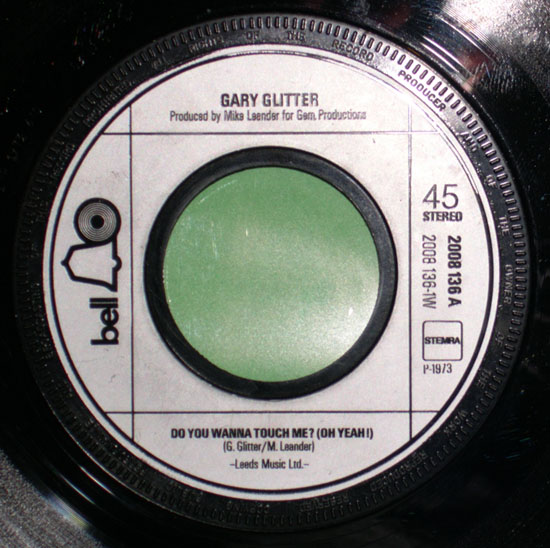
The lyrics are even worse. The chorus goes 'Do you wanna touch me? Do you wanna touch me? Do you wanna touch me? Where? There! YEAH!' ![[puke]](graemlins/puke.gif)
Posted by Bobby Henderson (Member # 840) on 08-22-2008, 03:39 PM:
Didn't Joan Jett & the Blackhearts do a cover of that song?
Posted by Anslem Rayburn (Member # 1267) on 08-22-2008, 03:58 PM:
Yes they did, and it's fantastic: Joan Jett - Do You Wanna Touch Me
Posted by Brad Miller (Member # 2) on 09-27-2008, 12:15 PM:
One of a kind record
Posted by Tim Reed (Member # 137) on 09-27-2008, 07:06 PM:
Brad! LOL!
Even though that somehow looks staged, and a wax cylinder certainly is not one of a kind, the guy's reaction was funny as hell. ![[rofl]](graemlins/rofl.gif)
Posted by Stephen Furley (Member # 1277) on 09-28-2008, 06:06 AM:
quote: Tim Reed
a wax cylinder certainly is not one of a kind
Some are, as some disks are. There were plenty of direct-to disk one-off recordings made. Most, but not all were in pre-tape days, but the BBC still had disk recording facilities for many years; I had a couple recorded there, though these were copied from tape, in the early '70s I think it was.
Does anybody remember the booths in places like shopping centres and railway stations where you could record your voice? I think they were mainly used to send greetings to friends and family. From memory, I think they were smaller than the standard 7", and the quality was terrible. I wonder in one of those machines has been preserved in a museum somewhere?
How were the mass-produced cylinder recordings made? If you used a two-part mould then you'd get two clicks per revolution, as the impression of the joins passed under the needle. How would you make a two-part mould anyway? Recording a one-part mould directly, like internal screwcutting on a lathe sounds like a non-starter. It would be difficult to record directly onto hard metal, there was no electrical recording in those days, it was a purely mechanical process, cutting ridges would be more difficult that cutting grooves, a bit of swarf getting caught up under the cutter could easily damage the recording, a 'boring bar' long enough to reach the far end would have to be quite thick, i.e. heavy, about the last thing you wan in a mechanical recording system. My best guess would be that they recorded a 'wax' master cylinder, Made a mould by plating metal onto it, not so different to the way that disks are made today, but then melted out the wax, leaving the metal mould, and that the contraction of the cylinders as they cooled was enough to release them from the one-piece mould.
Of course, there's a problem with this, if anything went wrong with the plating process and a defective mould was produced, then you've lost your original recording, so you can't make another attempt. At best the artist would have left the studio long before the problem was found, and at worst it might have been a recording of a non-repeatable event. I suppose it's not that different to the risk that film stock could be defective, or could be damaged during processing.
Posted by Bernard Tonks (Member # 809) on 09-28-2008, 10:01 AM:
quote: Stephen Furley
Does anybody remember the booths in places like shopping centres and railway stations where you could record your voice? I think they were mainly used to send greetings to friends and family. From memory, I think they were smaller than the standard 7", and the quality was terrible. I wonder in one of those machines has been preserved in a museum somewhere?
I seem to remember hearing of them. One was featured on one of the two Brighton piers in the 1947 film "Brighton Rock" starring Richard Attenborough. The disc did appear to be smaller than 7".
http://us.imdb.com/title/tt0039220/
The beautiful restored B+W print from the nitrate negative released on DVD is worth seeing. Three pictures follow.
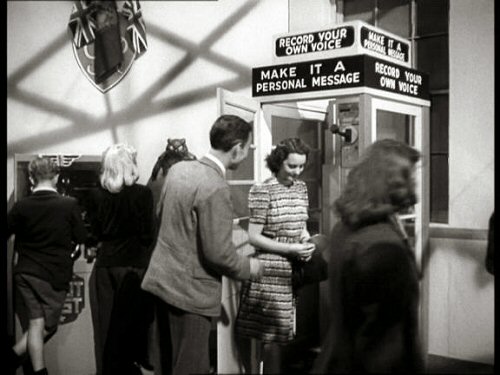
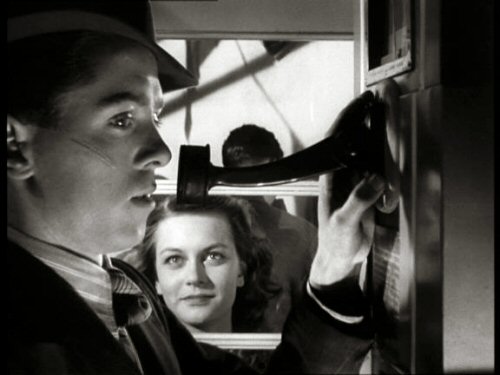
Posted by Stephen Furley (Member # 1277) on 09-28-2008, 11:05 AM:
Bernard, that's similar to the ones that I saw, but obviously older, I was -10 years old at that time.
I saw the more modern ones in several places, but I can only remember where one of them was. It was when my mother was working at he Elephant and Castle, which would make it about 1970, and there was one in the shopping centre there. I saw it several times, and wanted to try it, but on the day that I went to it it was out of order, and the next time I went there it had gone.
Powered by Infopop Corporation
UBB.classicTM
6.3.1.2