This is topic 'Digital' - the magic word in forum Film-Yak at Film-Tech Forum ARCHIVE.
To visit this topic, use this URL:
https://ft-forum.com/ft/cgi-bin/ubb/ultimatebb.cgi?ubb=get_topic;f=8;t=005506
Posted by Andy Frodsham (Member # 4061) on 06-19-2008, 10:32 AM:
How come the word 'digital' is now invested with such seemingly magical properties? Lift up a magazine or newspaper, turn on the TV and everything is 'digital'.
The latest gadget I saw being advertised was a device to provide 'digital pain relief' - basically a TENS machine with a digital display! For those who don't know, TENS is a system which provides small electrical stimulation (via stick-on electrodes) to various muscle groups. It can prove beneficial as a means of pain relief (and used in childbirth etc).
I understand that most neuro-scientists and psychologists now conclude that human and animal brains involve a system of on/off electrochemical switching to store information. Does this mean that I can now describe myself as 'super digital'? If so, I must have one hell of a good feckin sampling rate!
Posted by Steve Guttag (Member # 268) on 06-19-2008, 05:27 PM:
Go back 30 or so years and look up "Solid State."
Steve
Posted by Bill Enos (Member # 440) on 06-19-2008, 08:42 PM:
I saw digital hand cleaner a couple weeks ago, not an inaccurate description. Digital definition from a dictionary from the mid
'70s or earlier will generally describe things pertaining to the hands or fingers.
Posted by Randy Stankey (Member # 64) on 06-19-2008, 10:09 PM:
Hey! Look! It's a digital word processor!
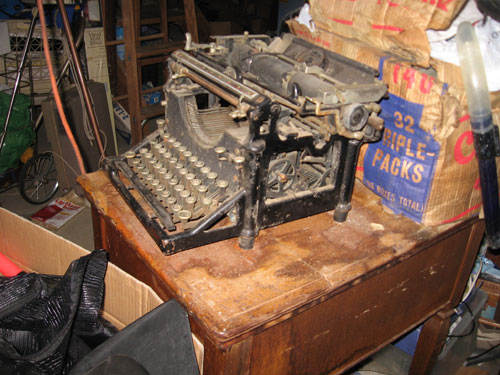
Basically the word "digital" has been lowered to nothing more than a buzzword anymore.
You could put a pile of dog doo in a box and slap a label that says, "Digital!" on it. People would still buy it and think they got a bargain for it at twice the price.
But... but... It's DIGITAL Doo-Doo!
![[Big Grin]](biggrin.gif)
Posted by Andy Frodsham (Member # 4061) on 06-20-2008, 01:30 AM:
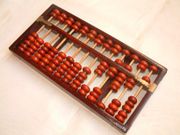
Digital calculator!
Just noticed that Hornby model railways are now digital!
Apparently, you now apply constant voltage to the track and each locomotive has an individual I.D which can be called-up from the controller and subsequently addressed. Gone are the days of nice big chunky transformers.
Now, when I was a boy!!!
Posted by Barry Floyd (Member # 385) on 06-20-2008, 11:15 AM:
When we bought our house... our realtor made the point by stating that the new water heater was "all digital". ![[Roll Eyes]](rolleyes.gif)
How a water heater could be digital is beyong me. It just heats water.
Posted by Andy Frodsham (Member # 4061) on 06-21-2008, 05:12 PM:
Came across a 'digital food mixer' in a catalogue the other day! Actually, it had a LED display of the speed settings!!
Posted by Mike Blakesley (Member # 26) on 06-21-2008, 05:36 PM:
quote: Andy Frodsham
Just noticed that Hornby model railways are now digital!
Apparently, you now apply constant voltage to the track and each locomotive has an individual I.D which can be called-up from the controller and subsequently addressed. Gone are the days of nice big chunky transformers.
I'm not sure if that system debuted on HO model trains first or not, but Lionel introduced it for the O gauge market in the mid '90s. It's very cool.
Posted by Charles Greenlee (Member # 3856) on 06-21-2008, 09:36 PM:
My friend has an HO model railroad that run DCC. It's pretty cool. Multiple engine on the same ciruit of track can be controlled seperately. I designed a circuit to take the switching track signals to allow the system to control a roundhouse turntable. The system will allow a loco to roll on to the turntable, stop, will rotate the table to the proper bay, and then the loco will back into it's stall. The design uses the DCC's ability to automate track switching and trafficing of the locos. The acutal turnable circuitry is simple. I'll see if I can find the electronics workbench file I made it on.
Posted by Tristan Lane (Member # 1169) on 06-22-2008, 04:47 AM:
Y'know, I remember seeing a ton of old electronics that had the words "Solid State" on them. What exactly makes something solid state? Vacuum Tubes could be considered solid state by today's standards due to the fact that they don't have moving electronic components.
One of these devices was a TV. How do you not make a TV solid state? Before solid state tv's were there crank models, or were motors involved in making the picture?
Is digital the new "Solid State". Does every consumer device now have to be labeled digital in order to be appealing to the masses? ![[Wink]](wink.gif)
Posted by Robert Minichino (Member # 3495) on 06-22-2008, 09:38 AM:
Solid state electronics use only fixed, solid materials (metals and semiconductors) that electrons flow through with the various properties required to create circuits. A vacuum tube uses thermionic emission to propel electrons through a vacuum and relays use electromagnets and moving switch contacts, so they're not solid state.
Posted by Mark Gulbrandsen (Member # 72) on 06-22-2008, 10:18 AM:
quote: Tristan Lane
How do you not make a TV solid state?
Trstian,
My 1946 RCA 721TS has 34 vaccum toobes in it. All of them including the CRT rely on thermionic emission. This emission nor the toobes could hardly be considered "solid state" as the emission doesn't last for ever. The emission eventually declines with use and then drops below a usable level causing the toobe to stop functioning. On the other hand solid state devices do not exhibit this gradual drop off of function. Also, a semiconductor is essentially a "solid" piece of silicon thats been doped a certain way to make it conduct in a certain manner.
Mark
Posted by Mike Blakesley (Member # 26) on 06-22-2008, 10:46 AM:
When I was selling electronics, to the consumer "solid state" basically just meant it had no tubes in it. The big advantage was you didn't have to wait for it to "warm up" - a radio would come on instantly.
Seems kind of funny that now people think waiting for a high def DVD to "load" for a minute or more is no big deal. People in the '70s would never have put up with that!
Posted by Chris Slycord (Member # 4239) on 06-22-2008, 11:06 AM:
People will sing a different tune when players are out there that have no load time.
Though I think your assessment is slightly off... a guy I hung out with in college told a story to me about how his dad helped build some bank company's first centralized network back in the 70's. They were getting the peculiar result that pretty much every time someone checked a user's balance, they'd do it again 2 or 3 times. He coded in a 3 second delay for all requests... and people stopped checking the balance. Apparently, if it answered too quickly they'd say to themselves "It COULDN'T have done it THAT fast!"
Posted by Michael Gonzalez (Member # 593) on 06-22-2008, 04:52 PM:
BRING BACK FILM-TECH DIGITAL!!!
Posted by Andy Frodsham (Member # 4061) on 06-23-2008, 06:35 AM:
There are tons of people over here in the UK who think they've got a digital radio receiver (i.e a device for receiving commercial digital broadcasts from the BBC etc). In reality, they have analogue receivers with digital tuner displays.
On that subject, it wasn't long ago that the BBC admitted that their standard analogue FM broadcasts usually sounded better than their digital counterparts.
Like a lot of digital output, it seems that quantity has won-out over quality!
[ 06-23-2008, 08:08 AM: Message edited by: Andy Frodsham ]
Posted by Kenneth Wuepper (Member # 1174) on 06-23-2008, 09:02 AM:
The magic of digital! Most of the lights in my home are controlled by digital means. The wall switches are either on or off, 1 or 0.
Some of the lights have analog controls called dimmers. A continuous slider controls the brightness of the light by switching on for a specific part of each power cycle.
Of course you can dim the lights with the digital (wall switch) control by simply working the 1's & 0's very fast. If you can't do it manually very well, you can add more digital circuitry to do the switching for you.
KEN
Posted by Evans A Criswell (Member # 381) on 06-23-2008, 01:34 PM:
The problem with the word "digital" is that if any aspect of a device is digital, the word is used to describe the whole product. A good example is a digital readout of something rather than an analog dial. I remember many Mitsubishi VHS VCRs in the late 1980s having "twin digital" on them. Maybe the tracking was done digitally, or they had a frame buffer (probably a low-resolution one) for showing still frames, but still, everything about the recording and playback was analog.
Everyone associates the word "digital" with "new" or "high-quality", not realizing that it takes a certain bandwidth to surpass the analog quality they're used to. YouTube videos are digital, but analog VHS looks like high-definition in comparison to them.
Another word that is starting to really get misused is "high-definition". Cruddy computer videos, once they are good enough to capture all of the quality in a VHS or normal 4.2 MHz broadcast, will probably be called "high-definiton".
Posted by Mark Hajducki (Member # 1732) on 06-24-2008, 06:32 PM:
Just to lower the tone of this thread, I think it is neccesary to mention this (Ig Nobal) award winning piece of research.
"Termination of intractable hiccups with digital rectal massage" in Annals of Emergency Medicine (vol 17, p 872).
quote:
Ig Nobel prizes hail 'digital rectal massage'
* 00:30 06 October 2006
* NewScientist.com news service
* Jeff Hecht
"I have always hoped to win a real Nobel prize for medicine," Francis Fesmire of the University of Tennessee College of Medicine told New Scientist. Nevertheless, he settled for the Ig Nobel prize in medicine instead, handed out along with nine other Ig Nobel prizes in a Thursday evening ceremony at Harvard University in Massachusetts, US.
It might be some consolation to note that a real Nobel prize winner was pushing a broom on stage to sweep away the paper airplanes traditionally thrown by the audience. The Annals of Improbable Research, which produces the Ig Nobel ceremony, points out that the 10 years that Harvard physicist Roy Glauber has spent sweeping the stage did not affect his selection as a physics laureate in 2005.
Fesmire, a specialist in emergency medicine and cardiology, probably did not have a real Nobel in mind when he published "Termination of intractable hiccups with digital rectal massage" in Annals of Emergency Medicine (vol 17, p 872). He was, it transpires, attempting to help a man who walked into the emergency room after hiccuping for 72 hours at up to 30 times a minute.
quote from New Scientist
Posted by Bill Enos (Member # 440) on 06-24-2008, 06:38 PM:
A Digital prostate examination does not involve a computer or any other electronics.
Powered by Infopop Corporation
UBB.classicTM
6.3.1.2