This is topic In an iTunes age, do we need the record store? in forum Film-Yak at Film-Tech Forum ARCHIVE.
To visit this topic, use this URL:
https://ft-forum.com/ft/cgi-bin/ubb/ultimatebb.cgi?ubb=get_topic;f=8;t=006567
Posted by Tom Petrov (Member # 1534) on 11-26-2011, 09:31 AM:
In an iTunes age, do we need the record store?
As CD sales plummet and famed shops close, brave entrepreneurs are trying to reinvent the model. Is it too late?
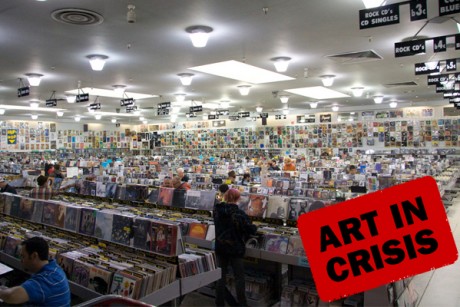
On Wednesday night, hundreds of people passed through the doors of Other Music, one of New York City’s last remaining record stores. Yes, there was free booze. But the young, plugged-in crowd came to celebrate, not necessarily to buy. “The World’s First Perfect Zine,” a new print publication from the author of a well-known blog devoted to reviews of album reviews, was holding a release party. Along with a contribution by the novelist Tao Lin, the zine includes writing by members of the groups Vampire Weekend, Das Racist and jj, among others.
In what could be an intriguing — or depressing — glimpse into the future of record stores, all those extra bodies in the room didn’t necessarily translate into extra business. “There was a remarkably low number of kids who came in there and said, ‘I haven’t seen this, I’ll pick it up,’” observed Other Music co-owner Josh Madell, a day after the event. The zine’s editor, pseudonymous Pitchfork Reviews Reviews blogger David Shapiro, didn’t dispute the point. “Part of the reason was that the store was so packed that browsing for CDs and records wasn’t really physically possible,” he explained, in an email response to questions. “But beyond that, of course, people don’t really buy records that much anymore — especially people in a small, hyper-Internet-savvy subset of young New Yorkers.”
The episode neatly illustrates a fundamental paradox facing record store owners in 2011. Many music fans romanticize the record store as a source of both hard-to-find culture and local community. “It was a library and a clubhouse,” as director Cameron Crowe, one of the ultimate nostalgists, told the authors of the 2009 book “Record Store Days.” At the same time, however, record stores are just that — stores — and ever-fewer consumers are choosing to buy the little pieces of plastic they sell. For record stores overall, then, the outlook appears bleak. “As an institution, it had its function,” said Alexander Weheliye, a professor of English and African-American studies at Northwestern University. But the survivors aren’t going away. They’re simply changing their tune, becoming smaller and more focused. Time will tell whether that’s enough — for some, continued existence may require a whole new arrangement.
“A record store nowadays can’t just sell records. That’s the first step to failure,” said Ben Blackwell, a longtime record collector who handles manufacture and distribution of vinyl at Jack White’s label, Third Man Records. “Record stores need to put on events. They need to host live shows. They need to do listening parties. You have to have an active way with which to communicate to your buyers. You need a mailing list, you need a Twitter account, you need Facebook pages. All this stuff that wasn’t around 10 years ago when record stores were seemingly doing fine is what you need to employ to stay in the race.” But what happens when, like at Other Music, even cool events aren’t enough?
Of course, the demise of the American record store is a sad song that has become all too familiar. O.G. stalwart Tower Records closed in 2006, follow by another big chain, Virgin Megastore, in 2009. Over the past eight years, at least 3,700 stores that sell recorded music have shut their doors, leaving about 12,400 across the country, according to market research firm Almighty Music Marketing — and that number includes big-box retailers like Wal-Mart and Target. In the first half of this year, even as overall album sales rose for the first time since 2004, physical album sales continued to decline, a recent Nielsen SoundScan report shows. The music industry’s collapse, the rise of illegal file-sharing along with legal digital downloads, and the ongoing economic slowdown have each played their part.
The digital space, in particular, is one where brick-and-mortar stores probably don’t stand much of a chance. New services such as Google Music and Spotify keep springing up all the time, adding to the competition from old foes like Amazon’s MP3 — which often sells new albums for as little as $3.99 — and Apple’s iTunes. Mega-selling artists such as Lady Gaga, Kanye West and Jay-Z are striking exclusive deals with digital stores like Amazon and iTunes, leaving physical retailers out in the cold. While Other Music, for one, sells digital downloads, results elsewhere aren’t encouraging: The Coalition of Independent Music Stores, a 29-member consortium representing 59 U.S. locations, recently shut down its Think Indie digital store after less than two years, citing lack of business.
Still, all isn’t lost. Independent record store closures have been on the decline since 2008, according to Almighty. Amoeba Records, a three-location California independent record store chain that celebrated its 20th anniversary about a year ago, was founded as a “comprehensive, one-stop music destination for everybody,” co-owner Marc Weinstein has said. But that’s an exception. More often, today’s best record stores are carefully curated, niche-oriented establishments, selling new and used vinyl to a specialized market — which tends to be found in critical mass near large cities or universities.
One example is Grimey’s, an independent record store in Nashville, Tenn. Since opening in 1999, the Music City retailer has seen its sales rise every year except 2008, co-owner Doyle Davis says. Grimey’s offers a carefully selected inventory of records in a town known for supporting music, and it makes an effort to be involved in the community. In-store performances at Grimey’s have ranged from recent breakthrough bands like Phoenix and the Black Keys to heavy rock superstars Metallica. The store also does ticket giveaways and donates gift certificates to local causes. What it doesn’t do is sell much other than music, Doyle says, calling the store “fairly purist.”
The much-heralded resurgence of interest in vinyl records has been a boon to independent record stores, including Grimey’s. Vinyl album sales rose 41 percent in the first six months of 2011 alone, after increasing 14.2 percent throughout 2010, according to Nielsen SoundScan data. Vince Sluzarz, owner of the Cleveland vinyl-pressing plant Gotta Groove Records, recently told the New York Times Magazine that SoundScan figures only account for roughly 15 percent of vinyl sales; when you factor in the many small-scale releases distributed without a bar code, though, it’s unclear how to verify such claims.
Record Store Day, an event founded in 2007 and now taking place at more than 700 independent record stores across the country, certainly hasn’t hurt, drawing customers in with exclusive, limited-edition vinyl releases. Stores celebrate Record Store Day on the third Saturday in April, but this year organizers are holding an additional event on the day after Thanksgiving — Black Friday — with another set of exclusive titles. “A lot of people look at it as a traffic driver,” Doyle says of Record Store Day. “I look at it as a way to increase sales. We had our best day ever this past Record Store Day, by 72 percent over the previous best day we’d ever had. And people camped out!”
So against all odds, is there reason for optimism? Hopeful music lovers do keep opening stores. Excluding mass merchants like Wal-Mart and Target, the number of record store openings has increased each of the past three years, including 62 new independent record stores so far this year, according to Almighty. After Louisville, Ky., indie ear X-tacy closed this fall, Matador Records — the label that’s home to Pavement, Yo La Tengo and the New Pornographers — pointed out in a blog post that the death of the record store has been exaggerated, and used Steady Sounds, in Richmond, Va.; Cyklopx, in Forest Park, Ill.; All Day Records, in Carrboro, N.C.; Co Op 87, in Brooklyn, N.Y.; and Saki, in Chicago as examples.
Sone existing stores are actually expanding. In Austin, Texas, End of an Ear recently added an 180-square-foot space next-door, co-owner Dan Plunkett said. In Oklahoma City, Guestroom Records is in the midst of opening a third store, located on the ground floor of a music school. In an email, co-owners Tarvis Searle and Justin Sowers pointed to their independently released offerings: “You’re not going to find many Best Buys that have big Tune-Yards, Dum Dum Girls or Oh Sees displays,” they wrote. Chicago’s Permanent Records recently opened up a second location in Los Angeles.
Permanent moved to the West Coast because co-owners Lance Barresi and Liz Tooley wanted warmer weather, Barresi said. Another believer in curated, smaller-scale stores, he warned that the snobbish attitude immortalized in the movie “High Fidelity” no longer cuts it. But he also acknowledged that owning a record store isn’t exactly a get-rich-quick scheme. “You’re hand-selling unique items to a unique set of people, and that’s the beauty of it,” he explained. “And you’re working for yourself. That’s the extent of the benefits. I don’t have health insurance. I am not high on the income total.”
What’s more, nobody can say for sure how long vinyl sales will continue to increase. And they still represent only a tiny fraction of the overall music market — 1.2 percent of physical album sales last year, according to SoundScan. Athens, Ga., music store Wuxtry, where Michael Stipe famously met his now-former R.E.M. bandmate Peter Buck, has survived — even though another local store, Schoolkids, recently closed. Two new record shops, however, quickly sprung up in its place. Mike Turner, a Wuxtry store manager, said the trick for a record store to survive is knowing its community, noting that sales in recent years keep looking up. But he also raised an interesting question: What if college kids stop thinking it’s cool to buy vinyl — or “vinyls,” as they often put it? “That’s the one scary thing, because vinyl is such a huge help in keeping stores going,” Turner observed.
Whatever happens with vinyl sales in the long term, record stores can probably safely bet on the cult of diehard record collectors for whom an album is a fetish object as much as a source of music. Indie labels, in fact, are already targeting this audience with various deluxe vinyl editions. As one example, the band Okkervil River made its 2011 album “I Am Very Far” as a special box set, encased in wood and accompanied by an individually signed letter from singer-songwriter Will Sheff. “In the age of everybody aiming their music down to the lowest common denominator, record stores can serve as a beacon of audiophilia, and a beacon of beautiful artwork,” Sheff said on the phone from Paris, where Okkervil River recently played a gig. “People who care about music are willing to pay more.”
To be sure, not all record stores that have closed in recent years have done so because they couldn’t afford to stay open. In some cases, store owners just looked at whether or not to renew their lease and decided it was time. That said, the abrupt closure late last month of Louisville, Ky., institution ear X-tacy comes as a bad omen. Honored as one of the best independent record stores across the country by Rolling Stone, SPIN and GQ, owner John Timmons’ store appeared to be doing so many things right, offering plenty of in-stores and a vast vinyl selection in a city that prides itself on being local and weird. The ear X-tacy closing took place just as Criminal Records in Atlanta — another top-15 store nationally — said it might also be forced to close.
Singer-songwriter Jim James of the Louisville band My Morning Jacket, a former clerk at ear X-tacy, posted an eloquent eulogy for the store on his group’s site. More recently, in an email interview, he expressed hope for a new, more community-based store that might sell coffee, jeans, an old stereo or a vintage guitar as well as vinyl — stores that create a need for people to come out and visit them. “The mp3 has done a fantastic job of killing the traditional idea of what a record store used to be … ” he said, with his capitalization and punctuation intact. “but as the cliche goes, and when you think about this subject in broader terms, what doesn’t kill you makes you stronger … and i think in a bigger sense we are going to see a new generation of locally based stores and communities pop up in the real world that are stronger and better than ever. it’s just going to take some time.”
James might have been thinking of a store in nearby Lexington, Ky., called Pops Resale, which targets a single demographic with multiple categories of products. According to owner Dan “Pop” Schorr, vinyl is the store’s best-selling department and takes up about half of its 600-square-foot space. Its next-seller is vintage clothing, followed by vintage video games and systems; the store also sells old-school audio gear, vintage toys and other items. “I still have a hard time understanding in smaller cities how some record stores that are just record stores continue to do it,” Schorr said. “What we’ve tried to do is find niches that nobody else bothers with.”
Plenty of record stores carry audio equipment, but according to singer-songwriter John Vanderslice, they could be selling more. There are certainly downsides, ranging from handling returns to dealing with a new set of suppliers, but Vanderslice sees the products as a natural fit, like pipes at a medical marijuana dispensary. “If I were to open a record store, it would be vinyl-only, and it would be paired up with a very cool and working-class-priced audio equipment store, where you’re selling all-in-one devices,” he said. “If I’m intimidated walking into a stereo store, and I own like $700,000 worth of audio equipment, then there’s something wrong with the culture of audio equipment — if it’s paired up with a record, then all of the sudden it’s everyday shit.” Another advantage: The specifics of buying a turntable — determining whether it has the right connections, and so on — makes it one of the few purchases that’s still more easily conducted in person.
Stores with a strong reputation and the right set of circumstances can expand into still other potential revenue sources. Other Music also does music supervision types of work for various brands or businesses, and the store has generated money and publicity by holding live events at the SXSW music conference in Austin the past several years, according to Madell, the co-owner. Still, while those projects came about as a result of running a record store, doing them doesn’t exactly require paying rent on a record store. “It’s hard to envision a turnaround in the way the industry is going that would be in our favor,” he acknowledged.
Shapiro, “The World’s First Perfect Zine” editor, aptly summed up the conundrum. ”The way I feel about patronizing record stores,” he wrote in an email, “is probably the way everyone feels about things they know they should be doing but don’t actually do enough: heading to Occupy Wall Street after work, doing the pile of dishes in the sink and sparing their roommates, leftists not shopping at liberal-seeming megachains (Urban Outfitters, Whole Foods) whose owners hold beliefs and donate money to politicians that are inimical to leftism. I’m glad there are people who do these things, and if I had the constitution to do what I believed in 100 percent of the time I would buy all of my music at record stores, but alas … ” Unfortunately for record-store enthusiasts, it’s not a perfect world.
do we need a record store
SOME OF THE COMMENTS
1. That's part of the point, though, right? You trade relative inconvenience for materiality. You take pride in the object itself. You can see it on a shelf; it reminds you on sight of its existence. And being able to have 160 GB of words or music leads to a different relationship with the artform itself. No more liner notes for albums, no thought of fonts for ebooks. Nobody sits and listens to albums anymore, and you can't smell the paper of a new ebook. Just because a high quality mp3 doesn't sound any different than pristine vinyl doesn't mean that those two listening experiences are the same.
2. The practical reality, though, is that iTunes files will be 196 Kb/s or 320 Kb/s, which are highly compressed. Pandora is even worse, at 128 Kb/s, which is what the various satellite services give you.
All of this might sound great, until you hear something you have on CD and compare the WAV file to what you just heard streaming.
It worries me that I'll no longer be able to get WAV files. The loss if vinyl was bad enough, but what's coming is even worse.
3. It's sad, but the fact is even the best record stores rarely have the particular CD I'm looking for. The internet does. Furthermore, digitized my collection a few years ago after running out of space for all my CDs. I don't want physical CDs.
4. Of course I get what people say about the superior sound quality of tape or vinyl.
Analog will always sound better, because you get that sweet tape compression and great range and all. Digital media from CDs to MP3s cant compare dynamically.
However, really unless you are in the market for jazz records, its a nonissue that really only audiophiles care about.
I have my milk crates of old records and a few reals of tape, but really for most of my music these days its all binary. It's just more easy, convenient, and cheap. They dont get scratches or fall behind the counter. They dont take up an entire wall where I need a dewey decimal system to find a song.
And if I'm listening to anything recorded in the last 10 years, it's probably tracked, mixed, and mastered digitally anyway.
5. I have only anecdotal evidence on this, but I think people (like me) who buy and listen to classical music prefer to have a physical CD. Properly produced digital sound is far superior to analog and most downloaded music. The wide sound level range is an asset, along with absence of noise. The other thing is most CDs come with program notes, which I think is essential.
If you have the CD, you can always transfer the music to other listening devices. The problem is for brick & mortar retailers: keeping a relatively large inventory of merchandise that doesn't sell nearly the volume that pop stuff does.
This article should have at least mentioned classical music.
Posted by Scott Norwood (Member # 30) on 11-26-2011, 10:10 AM:
With the exception of a couple of recordings that I have been unable to find in any other form, the download services are useless to me. I am not interested in spending money on lossily compressed recordings and I buy recorded music to last decades (the expected lifetime of a record or commercially manufactured CD), not just a few years.
I will stoop to this level if I can find no other way of purchasing a particular recording, but I prefer to own recorded music on a physical medium with the highest possible quality.
I might reconsider this position of any of the major download services allowed downloading of WAV files or losslessly compressed versions thereof, but I am not interested in MP3s.
Posted by Tom Petrov (Member # 1534) on 11-26-2011, 10:14 AM:
quote: Scott Norwood
With the exception of a couple of recordings that I have been unable to find in any other form, the download services are useless to me.
It is interesting that you mention this, there have been two soundtracks that I tried to buy on iTunes, I could not find them. Had to buy the rare CD off ebay...it was the soundtrack for the movie "revenge"
Posted by Brad Miller (Member # 2) on 11-26-2011, 12:09 PM:
I'm with Scott. I will not pay money for a compressed song or album. I would be fine with online purchasing IF I could download a wav, but I don't see that happening.
Posted by Chris Slycord (Member # 4239) on 11-26-2011, 01:29 PM:
Doesn't itunes offer at least some albums with Apple's lossless compression (ALAC I believe it is called)?
Posted by Mark J. Marshall (Member # 1409) on 11-26-2011, 02:24 PM:
Where do you guys go to find lossless recordings?
Posted by Robert E. Allen (Member # 1351) on 11-26-2011, 02:25 PM:
There will always be a "record store" somewhere as there are still people who play LPs (that's a 33 1/3 12 inch black vinyl disc for those of you too young to know). I don't and will not use downloading (either pirated or paid for) as I imagine the vast majority of music offered is of no interest to me and for reasons mentioned above.
Posted by Monte L Fullmer (Member # 2797) on 11-26-2011, 02:48 PM:
..and I still have some shellac '78's in as well as a ton of vinyl... I miss buying open reel, prerecorded tapes also.
Don't think that the normal young adult cares about quality - just something to shove into their "personal" devices to listen though their earbuds, or patch into their car audio-why the "iTunes" downloading fad.
Definitely: there will always be a record store for those audiophiles who want quality.
Posted by Tom Petrov (Member # 1534) on 11-26-2011, 03:34 PM:
quote: Monte L Fullmer
Don't think that the normal young adult cares about quality - just something to shove into their "personal" devices to listen though their earbuds, or patch into their car audio-why the "iTunes" downloading fad.
to really hear the quality, you are going to need a good elaborate set-up. Most young people don't care.
I do have to say that I downloaded "Unforgiven" soundtrack from iTunes, I burned it to a CD and it sounded pretty damn good. I figure Unforgiven would be pretty hard to find on CD these days.
Posted by Victor Liorentas (Member # 5272) on 11-26-2011, 04:01 PM:
I have 5 grand invested in my turntable alone! Linn Sondek LP12.
It sound's unreal not just good.
It still has about 10 grand in upgrades to go before it's top spec.
Posted by Tom Petrov (Member # 1534) on 11-26-2011, 04:24 PM:
quote:
I have 5 grand invested in my turntable alone!
5k, thats impressive. How much do you have invested overall?
Posted by Victor Liorentas (Member # 5272) on 11-26-2011, 04:30 PM:
About 35 thousand for my complete system including DLP video projection and surround 7.1 setup.
The projector was about 4500,so it's mostly sound stuff.
Since I bought some equipment used it only cost me about 25000.
Posted by Mark Ogden (Member # 43) on 11-26-2011, 04:49 PM:
quote: Victor Liorentas
Linn Sondek LP12
Wow. Classic 'table. As a testament, I don't think the design has really changed in the last thirty years, nor has it had to. I had a SOTA with the vacuum-hold down once, but I thought the Linn actually sounded better, so I sold it. That was 20 years ago, I still haven't replaced it.
I don't think you really need record stores anymore. In the last few years, the NYC area has lost Tower, HMV, Virgin, and many independents. Tower, especially, was huge. When they had their big store on Broadway and 68th, the yellow shopping bags were called "west side briefcases" because they were so ubiquitous . Now they are gone, and I miss them, but few others seem to.
I'm still a music purchaser though. If I am replacing a favorite LP with a CD, or it's music that I know I will want to keep with me for years, I buy a disk from Amazon or an on-line source, or take my chances with the local Barnes and Noble's ever-shrinking music section. If I am just curious about an artist and want a taste of their music, I download. The sound is certainly not expensive turntable/moving-coil cartridge/tube phono stage/Red Book CD quality, but it rarely bothers me.
Posted by Tom Petrov (Member # 1534) on 11-26-2011, 05:20 PM:
quote: Mark Ogden
If I am replacing a favorite LP with a CD, or it's music that I know I will want to keep with me for years
I know that you can now record on computer directly from a new LP player. My lp player does it but I have not given it a shot yet.
Posted by Mike Blakesley (Member # 26) on 11-26-2011, 08:37 PM:
quote: Monte L Fullmer
there will always be a record store for those audiophiles who want quality
I seriously doubt this. There already isn't enough business in physical media to keep most stores going, unless that store has carved itself a niche. Eventually all the hold-outs who like physical media (and I am one of them) will have either died, or bought all the LPs or CDs they want.
I used to buy several new CDs a month; I've probably bought four or five so far this year, at most. It's just because I've already got about everything I really want on disk now. I've even got the "special" editions of some of my major favorites.
We still sell CDs in our store, but most of our sales now are to people age 30 and older. We do a fair amount of business in special orders, but our biggest sellers are "Greatest Hits" type collections by older artists. I have sold exactly zero copies of the new "Lady Gaga" disk even though it was #1 on the charts a few months ago.
I agree the young people "don't know what they're missing" when they give up the physical product, but the bottom line is they don't care about that...especially when the majority of the music on their devices is stolen anyway.
Posted by Mark Gulbrandsen (Member # 72) on 11-26-2011, 09:58 PM:
Tom... Can you condense that down to a couple of sentences... I don't have two hours to spare to read your post...
Posted by Mike Blakesley (Member # 26) on 11-26-2011, 10:16 PM:
Condensation:
People are buying lots of music on iTunes and the like. Lots of stores are closing.
Posted by Tom Petrov (Member # 1534) on 11-26-2011, 11:10 PM:
quote: Mike Blakesley
People are buying lots of music on iTunes and the like. Lots of stores are closing.
Exactly what Mike just said, and do we need record stores anymore.
Posted by Monte L Fullmer (Member # 2797) on 11-26-2011, 11:37 PM:
quote: Mike Blakesley
Lots of stores are closing
"eBone" and online sites are now where to find collectable vinyls...but, I managed to strike "veins of gold" in thrift stores also.
quote: Tom Petrov
now record on computer directly from a new LP player
..on a side note on this: When copying mono vinyl to computer and not using those USB turntables, from your turntable, take the left RCA plug and put a "Y" RCA female with two males adapter on that one plug.
Connect the male ends from that "Y" and plug them into the L/R inputs of your capture device and you can record true mono sound since this arrangement is only using the left coil of the cartridge.
Thus, with transforming a stereo cartridge into a mono cartridge, gives you great mono captures from vinyl.
Posted by Joe Redifer (Member # 3) on 11-27-2011, 12:37 AM:
How is the music industry doing as a whole? I know that the RIAA (and the MPAA) are going all out with their evil new SOPA bill that will censor the internet. Believe me, it would not be a good thing if that thing were to pass. But are things really that bad? I know that most pop music is a lot shittier these days (which is saying a lot) and that actual good music isn't marketable unless the "artist" him/herself directly is. How are sales now compared to, say, 1980 or 1970? Or even 1990? Adjusted for inflation, of course.
However I do like the idea of buying only the songs I want (though I want to listen to more than a minute of it to determine if I like it). I do NOT want to buy compressed versions of those songs. If I want an MP3 version for my iPod, I will create that MP3 myself from my uncompressed version. Often I will put uncompressed songs on my iPOD. I'm glad I don't have to type in a damn code and connect to the internet to do that like you do with "digital copies" of movies.
Posted by Robert E. Allen (Member # 1351) on 11-27-2011, 01:03 AM:
quote: Mike Blakesley
We still sell CDs in our store, but most of our sales now are to people age 30 and older. We do a fair amount of business in special orders, but our biggest sellers are "Greatest Hits" type collections by older artists.
Gee, could that be because the older artists were actually making MUSIC as opposed to the noise that's being described as music today.
Posted by Mark J. Marshall (Member # 1409) on 11-27-2011, 08:37 AM:
quote: Tom Petrov
In an iTunes age, do we need the record store?
Nope. And in the not too distant future we won't need movie theaters either.
Posted by Tom Petrov (Member # 1534) on 11-27-2011, 08:40 AM:
quote: Mark J. Marshall
Nope. And in the not too distant future we won't need movie theaters either.
Thats not true, thats like saying in the future we will not have any music concerts. People actually still like the big screen experience with packed crowds and popcorn.
Posted by Mitchell Dvoskin (Member # 751) on 11-27-2011, 11:29 AM:
I have an older Linn Sondek LP12 turntable, and with a good vinyl pressing it sounds incredible. I traded a friend a DAT recorder for it back in the late 1980's, and have never been sorry. The fact that Linn is still in business and still supports these is a double plus. It means I can get official belts and upgrades for it. In fact, it was just a few month ago that I finally bought the 45rpm pulley adapter for it. The newer ones have a speed switch, the older ones required a motor pulley adapter.
> thats like saying in the future we will not have any music concerts. People actually still like the big screen experience with packed crowds and popcorn.
One, people like live concerts, not necessarily concert halls. Yes, I agree that movie theatres will not disappear, but I really believe that there will be a lot less of them in the future. Streaming is the future.
Posted by Mike Blakesley (Member # 26) on 11-27-2011, 11:49 AM:
quote: Robert E. Allen
the older artists were actually making MUSIC as opposed to the noise that's being described as music today.
I would say that there was just as much crap released in the 50s, 50s and 70s as there is today. Each generation likes its own sound. The teenagers of today will think all the music from the 2040s is crap and will be saying "Remember in 2011 when Lady Gaga was making REAL music?"
quote: Joe Redifer
How are sales now compared to, say, 1980 or 1970? Or even 1990?
I don't know actual figures but I can tell you for sure that sales (both in numbers and in dollars) are down a lot from the 70s and 80s "heyday." The mid 70s thru the 80s were the best years for sales. The 70s was when the "album" took hold as the major art form for music, and then in the 80s the introduction of the CD led to not only sales of current artists, but people replacing their favorite LPs on CD as well.
Today, downloading is eroding album sales, and people now have all their favorites on CD. Hence declining sales. It really doesn't have that much to do with how good or shitty the music is. Popular is still popular. It's consumption that's changing.
Posted by Mark J. Marshall (Member # 1409) on 11-27-2011, 01:01 PM:
quote: Tom Petrov
Thats not true, thats like saying in the future we will not have any music concerts.
Not the same thing. People don't have music concerts in their house. Also, what Mitchell said.
quote: Tom Petrov
People actually still like the big screen experience with packed crowds and popcorn.
Some do. But fewer and fewer like dealing with those loud obnoxious crowds and their crying kids and ringing cell phones.
Time will tell, I suppose. But I think Mitchell is right. We aren't going to need tons of google-plexes for much longer.
Posted by Tom Petrov (Member # 1534) on 11-27-2011, 05:25 PM:
quote: Mark J. Marshall
Not the same thing. People don't have music concerts in their house. Also, what Mitchell said.
Mark-when I say they are similar, there is something about watching a musician in stadium or a movie in a theatre with an audience that just cannot replicated at home.
There will always be movie theatres in my opinion.
quote: Mark J. Marshall
But fewer and fewer like dealing with those loud obnoxious crowds and their crying kids and ringing cell phones.
For the most part, audiences are pretty good. Or maybe I have been lucky? I have no complaints about people in the audience in well over 3 years. Maybe I am lucky
Posted by Joe Redifer (Member # 3) on 11-27-2011, 06:04 PM:
Remember, Tom Petrov, you live in Canada where people are generally a bit more polite and a touch less self-centered (exceptions apply).
Posted by Frank Angel (Member # 248) on 11-27-2011, 06:12 PM:
You are lucky!
Thing is about concerts, they don't open new ones every weekend. They are "events" and that's a big difference. How many concerts does the average family go to every year...every two years? If that's as many times as they get out to see a movie, it would be all over for brick and mortar cinemas. And since someone will go to a concert perhaps once a year or less, whatever annoyances they endure, well, that's part of the deal and they know it and they don't complain because after all, they only have to endure so infrequently. But people certainly complain loudly about the annoyances and inconveniences and unpleasantness of going to the multiplex. I know many many of my friends who proudly proclaim that they will NEVER go to see a movie in a theatre, and not because they don't enjoy the big (sometimes) screen and the great (sometimes) sound, but all the other things that they don't like about the "cinema" experience, i.e., the babbling patrons, the ringing cell phones, those bright texting screens, etc.
As for seeing that old cliché about how wonderful it is seeing a movie with an audience -- let's call it what it is....a bunch of strangers -- that's not all that it's cracked up to be. As my friend says who has a really big 57in HD flat panel LG and an impressive 7.1 sound system, "If I want that "audience feel" in my home theatre, I just invite my friends over. Nice thing about that -- I get to choose who sits next to me and I don't have to worry about body odor, bedbugs and/or lice."
The fact that the studios have made it so easy for the public to hold out for the video release in whatever form and cheaper than a night out at the movies, the number of people who "have to see" a film 1st run will shrink to the point were even the godzillaplexes may find it hard to sustain all the screens they've built.
BTW, DCinema won't change any of that.
Posted by Tom Petrov (Member # 1534) on 11-27-2011, 06:29 PM:
quote: Frank Angel
As for seeing that old cliché about how wonderful it is seeing a movie with an audience -- let's call it what it is....a bunch of strangers -- that's not all that it's cracked up to be. As my friend says who has a really big 57in HD flat panel LG and an impressive 7.1 sound system, "If I want that "audience feel" in my home theatre, I just invite my friends over. Nice thing about that -- I get to choose who sits next to me and I don't have to worry about body odor, bedbugs and/or lice."
Frank, for the most part you and I agree, but I cannot disagree more here. There is something really amazing about watching a movie in a packed house with strangers, with a giant screen etc etc. Same thing with seeing a artist and a band in a stadium.
People will spend the money to go if the product is there and the venue is there which creates an experience. When I worked in the cinema, people would boycott my cinema for the huge movies (Matrix 3, Twilight, Star Wars etc) for the megaplex with the massive screen, stadium seating and the whole bunch.
When I moved on from the cinema, I used to manage a bunch young adults (not exactly teens) ranging in age from 18-25, they would frequently make it an "outing" to see certain movies on opening weekend when the movie was released with their friends. I always asked "what theatre?" and they would always say they would be going to the cinema that is the hot spot at the time. No way would they go to the sloped seating, smaller screen bargain cinema.
I think there is a bit of a dis-connect between the experience for those who still work in the industry and those who do not. I don't work anymore at the theatre, and I love going to the movies and I will not say this for all movies but watching "Breaking Dawn" with all the comments, giggles, laughs, cinema doors opening/closing and the clapping at the conclusion is just simply part of the fun...
Posted by Jesse Skeen (Member # 586) on 11-27-2011, 07:20 PM:
The main thing that killed CD sales was the ever-rising prices. When I started buying CDs in 1985, The Wherehouse stores had ALL their CDs priced at $11.99. A few years later, they started pricing everything at list price, and then list prices started going up. Most current albums are list-priced at $18.99, which is absolutely ridiculous. The first years CDs were out, record companies even said that prices would go DOWN when discs became cheaper to manufacture, but instead they went up. Prices on home video on the other hand have been going down. Many times I've looked up the soundtrack of a movie I recently bought on DVD or Blu-Ray only to find that it would cost me MORE than what I paid for the actual movie!
Another big problem is that a lot of current music is mixed with the dynamic range all messed up- it's called the "loudness war" and everything is mixed to sound as loud as possible. What's funny is I've seen examples of current albums where the LP will be mixed correctly, but the CD will have the crappy mix, and recording the LP to CD will produce a better-sounding disc than the retail CD.
Record companies have been digging their own grave for a long time, and I hate to see record stores die before they do. I've suggested many time that if the "kids" are going to illegally download stuff for free, they need to start catering to the people who really CARE about sound quality- meaning those who actually sit down and listen to entire albums on a BIG sound system, not those who think earbuds are good enough. They seem to be doing that with LPs, but CDs really are the better format when they're done right. Super Audio CDs are great too, but there really hasn't been a lot of great material released on that format.
Most of today's popular music is crap, too. I have an open mind about music, but so many current 'rock' songs I've heard on the radio sound the same, and R&B sounds cheap compared to the older stuff- crappy drum machines instead of full orchestrations. Rap is just a joke- it just amounts to someone taking an old recording, cutting it up and talking over it and calling that a new 'song'. I've heard SOME new music that I really liked, but it doesn't seem to get played on the radio very much. (The current state of radio sure isn't helping music sales either, neither is MTV's abandonment of music.) Pet Shop Boys still do great stuff, but everything they've put out over the past 20 years has gotten ZERO airplay. I bought their "Nightlife" album a couple years after it was issued, not having heard anything off of it, and after playing it for the first time I asked "How the hell weren't some of these songs all over the radio? This should have been HUGE!"
Posted by Mike Blakesley (Member # 26) on 11-27-2011, 08:11 PM:
Well maybe you guys who think most of today's music is crap should ask the people it's aimed at....the teens and 20s. The music industry doesn't give two shits about what a bunch of old people who don't BUY new music think of today's pop artists.
One reason old artists don't get much airplay -- even when they release great music -- is becauuse they don't have marketing money behind them like they used to, and also because when an artist is OLD their coolness factor is zero, hence they don't get new listeners, hence ad sales don't happen, etc.
Posted by Monte L Fullmer (Member # 2797) on 11-27-2011, 08:19 PM:
True, Mike - seems that movies these days are aimed at the same generation.
Why we think these movies today are so retarded and this targeted generation think they are great.
Posted by Tom Petrov (Member # 1534) on 11-27-2011, 08:21 PM:
quote: Mike Blakesley
One reason old artists don't get much airplay -- even when they release great music -- is becauuse they don't have marketing money behind them like they used to, and also because when an artist is OLD their coolness factor is zero, hence they don't get new listeners, hence ad sales don't happen, etc.
Also, sometimes they are no longer relevant or any good. I can't remember the last time I heard Lef Leppard's latest stuff, or even Bruce Springsteen recent music for that matter.
Posted by Joe Redifer (Member # 3) on 11-27-2011, 09:52 PM:
The funny thing is that when we're old, the kids today will think the new music of the time is crap (if freedom of thought isn't illegal by then) and will get on the MeshNet and post things like "Damn kids don't appreciate REAL music like Dubstep, Nickleback and Justin Beiber. Remember those days when music was so great?" It's what they grew up with. They don't know any better. Just like really REALLY old people don't like Boston, Led Zepplin and crap like that because it didn't sound like an accordion or whatever the hell kind of music they listened to back in the 20's. It's just as bad as dubstep sounds to us. But some of you old folks grew up with that ancient stuff and you liked it because you didn't know any better. My generation grew up with old farts like Michael Jackson, AC/DC and of course the ever-so-popular "Lef Leppard".
Posted by Tom Petrov (Member # 1534) on 11-27-2011, 10:23 PM:
quote:
meaning those who actually sit down and listen to entire albums on a BIG sound system,
I don't think that is a factor at all.
People have been listening to music on those little earbuds since way back in the late 70s when the Walkman came to market.
Music has been on the radio airwaves for how many years?
Posted by James Westbrook (Member # 3690) on 11-27-2011, 11:15 PM:
I recall a few years ago ABC Radio networks changed the format of their satellite to radio station service "Stardust" to some adult contemporary classics which emphasized the 70s and 80s light rock because the audience who was listening to the likes of Frank Sinatra and Dean Martin were dying off. Literally.
Oldies formatted stations now call themselves "Classic Hits" and concentrate on 70s and 80s hits, bypassing the 50s and 60s because their target audience are the younger ones who grew up in the 80s. The formatted "Classic Hits" station in Lubbock won the ratings book last year. KLUV in Dallas won the Metroplex book at the same time.
I sense that in 20 years, "Classic Rock" or whatever it is called then will have the artists most of us do not care to listen to now, that Led Zepplin will be considered "too old" and the real rock and rollers of our generation will not be programmed because "the old farts are dying off and not spending money." Assuming there is any terrestrial radio left.
I just wish the Classic Rock formatted station in Lubbock would play more than the 200 or less songs that I keep hearing over and over again. I might be overestimating their library.
Their version of Steve Miller's Jet Airliner has the "funky sheet going down in the city" edit.
Rant over.
Posted by Mike Blakesley (Member # 26) on 11-27-2011, 11:27 PM:
quote: Tom Petrov
sometimes they are no longer relevant or any good
Well something being good or not has almost nothing to do with sales.
I haven't heard anything by "Lef Leppard" lately either (ever, actually) but for you '70s-music fans, new albums by the Doobie Brothers, the Cars, and even Glen Campbell were all released in the past few months and were all very good (especially the Cars one).
Posted by Jesse Skeen (Member # 586) on 11-28-2011, 02:46 AM:
A BIG problem I have with radio nowadays is so many stations focusing only on older music- it's funny how radio tends to cater to the 'older' people when the record industry wants younger people to buy their stuff. Stations that only play oldies are a waste of airspace- you could conceivably buy every song that they're ever going to play, and have no need for that station anymore. I have Steve Miller's Greatest Hits CD (and 8-track too!) so I don't need to hear any of those songs more than once every few months on the radio, while tons of new music doesn't get played at all. We have a "classic rock" station that's been around more than 20 years now- funny thing was that when it started I said it didn't deserve to live more than a few months. The attitude at these stations is "Anything made in the current decade couldn't possibly be any good, so we're not going to play it." I've noticed they've added some 80s stuff now like U2, which they wouldn't have played before, and anyone listening exclusively to that station wouldn't have heard of.
Another big problem I've had with radio is that most stations only play songs released as a single- so when a new album comes out they'll just play ONE song off it over and over, then a few weeks later maybe play one other song off it. (I'm not sure how they do this now since 45s and CD singles are extinct.) Radio SHOULD be something where you hear stuff that is new and interesting (and like so much that you go buy the album.) I do most of my radio-listening passively in the car, there should be something compelling enough to make me want to tune in on my main sound system in the living room, sit down and actually LISTEN to it for hours on end. (The non-profit station KDVS at UC Davis comes close, though they often get weird just for weirdness' sake. I had a show on there briefly back in 1991 and was discouraged from playing anything that was on a major label at all, even if it was something that didn't get played on other radio stations.)
And a lot of current music IS crap, no matter how old you are. I didn't like rap even when I was younger, and I didn't like a lot of stuff that was popular at the time. I'd still rather listen to Journey than Eminem right now- their songs were cheesy, but at least they were SONGS.
Posted by Joe Redifer (Member # 3) on 11-28-2011, 03:27 AM:
I've heard Eminem a few times. Dude sounds like a mouse. I find that hilarious because he's cussing and trying to act all tough.
Posted by Kurt Zupin (Member # 2751) on 11-28-2011, 05:49 AM:
quote: Robert E. Allen
Gee, could that be because the older artists were actually making MUSIC as opposed to the noise that's being described as music today.
Many others have already called out how ignorant this remark by you is Robert but this has been your fall back for anything that isn't like it was "back in the day" We understand you don't like movies today, and you don't like TV today and music and what not and everyone should look threw rose colored glasses at the 50's.
Being someone who's in his late 20's I was raised on everything from Bing Crosby, Hank Williams to AC/DC and Garth Brooks. You'll find that any person who truly loves music loves all generations and can find great stuff from artists from every ERA.
Bruce Springsteen is still packing sold out arenas when he tours and his last studio album "Working on a Dream" is one of his best. There's a reason bands like the Stones and guys like ZZ Top can still tour, people want to see them and they enjoy their music. They might not sound like they did in their prime but you still love the hits. Listen to John Fogerty's live album he did a few years ago called "The Long Road Home in Concert" He doesn't sound like he did when he was with CCR but its still great stuff.
Posted by Mark J. Marshall (Member # 1409) on 11-28-2011, 06:49 AM:
Are people still recording rap music? Every time I hear it blaring from a car it's always the same song. It must be a really good one because everyone has been playing it around here for about the last five years.
Posted by Damien Taylor (Member # 4255) on 11-28-2011, 07:17 AM:
Down in Australia, the term record exclusively refers to a phonograph disc. I would be very sad if the few remaining record stores here were to close. Although they all seem to do good business. I always see people in there and I spend heaps there myself.
Posted by Tom Petrov (Member # 1534) on 11-28-2011, 07:48 AM:
quote: Mike Blakesley
I haven't heard anything by "Lef Leppard" lately either (ever, actually)
Well they have released stuff in 2002, 2006, 2008 and just 2011. The latest is available only at Walmart if I remember...
Posted by Leo Enticknap (Member # 534) on 11-28-2011, 08:17 AM:
quote: Monte L. Fullmer
..and I still have some shellac '78's in as well as a ton of vinyl... I miss buying open reel, prerecorded tapes also.
+1 on shellac and vinyl, though I've never owned or listened to pre-recorded 1/4 inch tapes.
As someone who listens mainly to classical and jazz, audio quality is obviously a major issue, but there's something subjective about it. I have bought a few CD reissues of the early stereo LPs I really enjoy (e.g. Van Cliburn paying Brahms's piano concerto #2, RCA LSC-2581; Bernstein conducting Nielsen's symphony #3 in 1965, Columbia MS 6769; John Coletrain's Blue Train or Oscar Peterson's Very Tall), but the main problem is that the noise reduction applied to remove the original tape hiss is so aggressive that it takes away most of the high frequency detail in the music. Also, that tape hiss is part of the sonic experience of the original LPs, and, weird as this sounds, I miss it when I don't hear it!
However, I think that's more a problem with the way these albums have been remastered for digital presentation rather than the digital medium itself. I have a few CD transfers I've made myself of albums that were bought used and are a bit dirty and scratched (and therefore I don't want to risk stylus damage from repeated plays), and I don't have the same problem listening to them as I do with commercial reissues of albums from that period.
On the subject of vinyl, I recently had an email from Amazon announcing the launch of their "vinyl store". The range of stuff on offer is impressive - most of the boutique labels currently pressing new vinyl seem to be represented, with similar prices to those you'd find in specialist shops. I hope that isn't another nail in the coffin of the specialist shops.
Posted by Melanie Loggins (Member # 6454) on 11-28-2011, 09:11 AM:
So, this has nothing to do with lp vs. tape vs. cd vs. digital, but I'm with Mike here: pop music is for kids, and there is still lots of great pop music on the radio. You know why you love the stuff from when you were a kid? Because it was the soundtrack to all that emotional sturm und drang, the time when you were literally becoming who you are. It's part of what defines who you are now. When a seventeen year-old girl gets dumped this Friday night for someone hotter, she will hear Selena Gomez on the radio as she cries into her smartphone, and when she's 40, Selena Gomez will still resonate with her. (And the new chick on the radio will not.) People love to pick a random year and declare that there's been no good music since, and I always assume that's the year they became an adult and forgot what it was like to be a kid.
Posted by Frank Angel (Member # 248) on 11-28-2011, 11:39 AM:
Great analysis, Melanie....not that our tastes don't grow with us as we age. I certainly love music from every era as I experiece it, and even some music will have emotional ties to certain life experiences later in life which will make that music have more importance to me, but all-in-all, the music of our youth remains an emotional anchor that is extremely powerful and it certainly colors our evaluation and preferences.
On the other hand, rap, isn't music. Period. And for those who say it "poetry," H E L L O...it isn't poetry either.
Question -- Why is anyone even releasing CDs? Why doesn't the DVD, or better yet the BluRay format become the single generic standard for all things requiring optical storage? DVDs would be able to hold much more information -- ALL audio recording could be SACD or TrueHD or whatever super high sample rate they want with as many channels that they would like because there is THAT much room on a DVD and especially a BluRay. Is stamping out a DVD any more expensive than stamping a CD? If they put everything on DVD, they could have so much more room for all the "cover art" that everyone misses as well. I just don't see why we need to retain the older CD formats. And to boot, all DVD players will play CDs as well, no?
Question 2: I seem to recall that originally when CDs came out, they claimed the format had the ability to include video stills along with the music. Was this functionality ever used? And how would you get the video out? Or is my memory incorrect on this?
Posted by Bobby Henderson (Member # 840) on 11-28-2011, 11:39 AM:
Regarding compressed music, why buy it at all?
I can listen to just about any popular song in lossy compressed format for free. Go to YouTube or Vevo and watch the music video along with the tune (sometimes in 1080p HD). I have the Pandora app loaded on my Android phone and visit the Pandora site on my computer. I can hard wire my laptop to my home theater system via HDMI cable. Boom. Music and video for nothing.
If I'm actually going to buy a piece of music, I want it uncompressed. I prefer it on CD since it's already a physical "backup". I dub the disc to an external hard drive containing the rest of my music collection. From there I can stream it, make MP3 files from it, etc.
I am willing to download uncompresssed or lossless compressed songs or albums. Unfortunately most popular online music stores (iTunes, Amazon, etc.) do not offer lossless compressed versions of music. It's all heavily lossy compressed, either in AAC format (iTunes) or MP3 (Amazon). At least in the case of Amazon's MP3 tunes you can copy/move them around how ever you like without an app like iTunes standing in the way like some kind of gatekeeper. Usually the only way I find anything available for download in uncompressed/lossless formats is when it is posted by the artist on his respective web site. Sometimes you can download it for free. Trent Reznor has done this from time to time in recent years, even offering files people can remix in applications like Garage Band or Pro Tools. Very few music acts do this.
With the way modern music is being mastered (clipped and dynamically compressed to hell to make it louder) I find it difficult to even bother buying the CD. It's really hilarious to import a modern CD track into Adobe Audition and check out what's left of the wave form.
quote: Mike Blakesley
One reason old artists don't get much airplay -- even when they release great music -- is becauuse they don't have marketing money behind them like they used to, and also because when an artist is OLD their coolness factor is zero, hence they don't get new listeners, hence ad sales don't happen, etc.
Actually I hear a LOT of really old music on the radio. It just depends on the music format of that radio station. Most of the mainstream pop and rock stations around here play a great deal of music 10, 20 or 30 years old, or even older than that. A great deal of people in their teens and 20's like listening to classic rock or 1980's pop or alternative tunes. Today's generation of young people are actually far more in touch with "classic" music than any of us were when we were teenagers. To some degree that is indeed a judgment of how much today's music sucks compared to that of previous decades.
The main radio airplay formats that play only new music are R&B stations and country stations, or rather what passes for country music these days. Both of those music genres have a far more derivative and cynical "machine" in place for manfacturing music.
Regarding live music concerts and seeing movies in theaters, yes some people still love either or both. But here's the critical thing: These venues require a minimum number of customers to remain profitable. If too many people just stay at home and watch the movie or concert on TV those venues will go out of business.
There is a certain magic involved with seeing a band play live or seeing a good movie with an audience in a good movie theater. However, there's lots of negative aspects with both too.
It's often crazy expensive to see a very popular band play live today. This isn't going to matter much if it's a modern act like Lady Gaga or a "dinosaur" band like U2 or Eagles. Your wallet is going to get a lot lighter for the ticket as well as any merchandise you might buy. I remember when AC/DC played the War Memorial in Syracuse, NY during their Back in Black tour in 1980. Tickets were $8.
When I was younger I was more willing to put up with being jammed in throngs of other people to see a band like Judas Priest. Some dude vomited on my jacket during an Iron Maiden concert. A few years ago I watched Slipknot, System of a Down and Rammstein play live in Oklahoma City. The smell of pot was so heavy in the air I thought I was going to get a contact high. I get random piss tested at my work place. During Fear Factory's set at Ozzfest '99 in Dallas, I spent much of the time holding my friend Jennifer up so she wouldn't fall down and get trampled in the swaying elbow to elbow crowd.
It doesn't cost nearly so much to see a movie in a theater. But when you stack up all the crowd control problems in so many theaters with the relatively low cost of the movie on Blu-ray it gets more and more difficult to make any effort to go to the theater.
I have been watching quite a few more movies lately since I started dating my girlfriend a couple months ago. But we have only been to the theater together once so far (we watched Contagion). We have rented at least a dozen or so movies on Blu-ray to watch at home.
Posted by Mike Blakesley (Member # 26) on 11-28-2011, 11:51 AM:
quote: Bobby Henderson
Actually I hear a LOT of really old music on the radio.
You missed my point. I was saying that NEW music by an older artist never gets played on the radio. Finding old music is easy.
I'd like to see a station that plays classic artists and songs, but mixes in the newer music that the "classic" demographic would like. Such a station WOULD play the new Doobie Brothers album...which contains a song "Chateau" that's just as good as many of their classic hits. Or you might hear "Blue Tip" from the new Cars album, which stands with any of their greatest songs. Or maybe Elton John's "Tinderbox" from a recent album of his, rather than the 10-millionth playing of "Crocodile Rock." The list could go on and on.
But no --- classic rock stations always lock themselves into the same format, playing "You Ain't Seen Nothin' Yet" by BTO over and over and over when there are about 100 other great BTO songs that never see any airtime.
Also to answer Tom Petrov's last post: I know all about those recent albums ...but apparently YOU don't know that the band's name is Def Leppard, not "Lef Leppard." My comment was a joke, in other words. Try to keep up.
Posted by Frank Angel (Member # 248) on 11-28-2011, 12:18 PM:
Mr. John borrowed a bit in Crocodile Rock....
Crocodile Rock: http://www.youtube.com/watch?v=vlSh_6xqUAE
20 years earlier -- Little Darlin / Diamonds: http://youtu.be/boi9TrTS8Vw
Posted by Bobby Henderson (Member # 840) on 11-28-2011, 02:02 PM:
quote: Mike Blakesley
You missed my point. I was saying that NEW music by an older artist never gets played on the radio. Finding old music is easy.
That's true, but there are exceptions. Our local rock station, Z94 has been playing new music from Rush, The Cars and some other "dinosaur" bands. I didn't even know The Cars had re-formed until I heard one of their new tunes playing on Z94. Ultimately it just depends on how many people want to near an old band's newest stuff. For instance, I like Collective Soul but haven't bought any of their last few albums because they just haven't been as good as the stuff they put out in the 1990s.
Posted by Martin McCaffery (Member # 37) on 11-28-2011, 02:18 PM:
When the DJ's turned into "Radio Personalities" and lost any say in what was being played and when conglomerates were allowed to buy up unlimited number of radio stations, that's when radio went to hell. I admit to being spoiled by free-form radio when I was growing up (WHFS, Bethesda, MD), but at least I was exposed to quirky selections not tied to a advertising manufactured play list.
I saw the horrific future of radio in 1975 when I interned at a radio station in Milwaukee. In the back room there was a giant reel-to-reel tape machine with 3 tapes on it. One had year old songs, one had 3 year old songs and the other 5 year old songs. They were programmed to play in a certain order and the DJ's would just pre-record the announcements.
Now all of music radio is essentially a variation on the same thing. They buy prefab programming that limits itself to about 600 songs from some tiny sliverof music from a tiny sliver of a demographic. Then they sell that sliver to the advertisers in even tinier slivers of listening times.
There is almost nothing new or interesting or creative in commercial radio. Putting your iPod on shuffle produces better radio than you can hear now.
For a depressing history of how things got to here, check out the book Something In The Air.
Posted by Scott Norwood (Member # 30) on 11-28-2011, 05:26 PM:
What Martin said.
I do think that crappy radio programming is partially responsible for the decline in record (tape, CD, MP3, etc.) sales. Radio, at its best, provides a way to introduce people to different types of music, both new and old. When people no longer have an easily accessible way to hear music that they may not have heard before, they have less reason to risk their money by buying recordings of music that they may not be familiar with.
Even classical radio stations have gotten bad. Our local classical station (WCRB-FM) recently moved to a less-powerful frequency (to be replaced with--of all things--a country station) and now limits the music that it plays to a very small playlist. It has become sort of the classical variant of "greatest hits" programming. It makes for good background music for doctors' offices, but becomes very repetitive for regular listeners.
I agree that the fix for this is to hire disc jockeys who actually know something about music and who want to introduce their listeners to new music as well as play some favorite songs that they already know. Sadly, the current trend seems to be toward automation and away from people who know music. Too bad.
The other trend around here seems to be talk stations' moving to FM. We now have two FM sports-talk stations in the Boston market, up from zero two years ago. One of these (WEEI-FM) is a simulcast of an AM station and one (WBZ-FM) is a new station. I don't see the point of the simulcast thing, personally, as it seems like a waste of spectrum that could be used to provide something different rather than duplicate something that already exists. There is also an FM talk station (WTKK-FM) with a political focus. That one has been around for years (it was formerly a jazz station).
Most of my radio listening is in the car, and I mostly listen to news. We have two good NPR stations in town, as well as an all-news AM station. Growing up, I listened mostly to music, and I think that age is a factor here.
Posted by Joe Redifer (Member # 3) on 11-28-2011, 05:40 PM:
quote: Tom Petrov
quote: Mike Blakesley
I haven't heard anything by "Lef Leppard" lately either (ever, actually)
Well they have released stuff in 2002, 2006, 2008 and just 2011. The latest is available only at Walmart if I remember...
Just got back from visiting 3 different Wal*Marts. None of them had anything by "Lef Leppard". Looked online. Couldn't find any proof that this band ever existed. It's too bad, too. They sound like they'd probably be awesome and relevant! Were they responsible for that cantaloupe outbreak song called "Listeria" way back when?
Posted by Tom Petrov (Member # 1534) on 11-28-2011, 10:46 PM:
2011 U.S. Album Sales Still Strong After Three Quarters
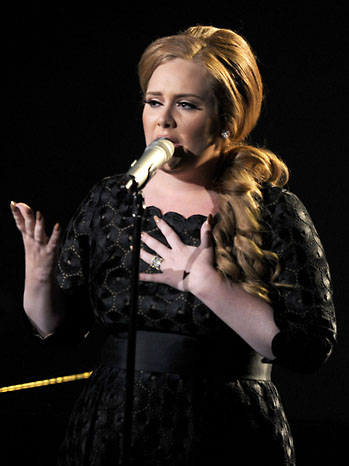
Artists including Adele and Eminem contributed to a 3.3% increase over the corresponding period of 2010.
s the year heads into its home stretch, things are looking up for the U.S. music industry -- sales are on track to increase over the previous year, something that hasn't happened since 2004.
With nine months of 2011 down, album sales stand at 228.5 million, according to Nielsen SoundScan -- up 3.3% from the 221.1 million albums sold in the corresponding period of 2010. Overall U.S. unit sales, meanwhile, are up 7.2% to 1.18 billion, from 1.1 billion last year. And when albums including track equivalents are taken into account -- whereby 10 song downloads count as one album unit - albums have jumped 5.4%, to 323.7 million from 307.1 million.
The positive showing for album sales can primarily be attributed to the digital format, where the configuration's scans are up 19.7% to 74.1 million units, compared to 61.9 million units in 2010's first nine months.
But it's not only digital numbers that are encouraging. Though physical sales are down from last year, the dip isn't nearly as drastic as music executives had long grown used to. CD sales have decreased only 3.6% this year, after experiencing declines ranging between 18%-20% in each of the five previous years.
A banner year from Adele has helped across the board. Her album 21 has moved nearly 3.8 million units, while the best-selling title at the corresponding time last year -- Eminem's Recovery
With 1.3 million units sold digitally, 21 is the best-selling album in the digital format since SoundScan began tracking such sales in 2003. Adele's song "Rolling In The Deep," with 5.2 million paid downloads, is likewise the best-selling title in the digital format.
Where market share is concerned, Universal Music Group has finally pulled away from Sony Music Entertainment, which had been nipping close at its heels for the first six months of 2011. At the end of the nine-month period, UMG's market share tallied 30.3%, while Sony's stood at 28.9%. Meanwhile, the Warner Music Group's market share totaled 18.7% and EMI's came in at 9%. Independent labels' market share, as determined by distribution ownership, totaled 12.6%.
Billboard will present a more comprehensive article on third-quarter stats, including market share by label ownership, in the coming days.
SOME INTERESTING HIGHLIGHTS:
-CD sales have decreased only 3.6% this year, after experiencing declines ranging between 18%-20% in each of the five previous years.
quote: Joe Redifer
Just got back from visiting 3 different Wal*Marts. None of them had anything by "Lef Leppard". Looked online. Couldn't find any proof that this band ever existed. It's too bad, too. They sound like they'd probably be awesome and relevant! Were they responsible for that cantaloupe outbreak song called "Listeria" way back when?
You can get it on iTunes for $7.99
quote:
So, this has nothing to do with lp vs. tape vs. cd vs. digital, but I'm with Mike here: pop music is for kids, and there is still lots of great pop music on the radio. You know why you love the stuff from when you were a kid? Because it was the soundtrack to all that emotional sturm und drang, the time when you were literally becoming who you are. It's part of what defines who you are now. When a seventeen year-old girl gets dumped this Friday night for someone hotter, she will hear Selena Gomez on the radio as she cries into her smartphone, and when she's 40, Selena Gomez will still resonate with her. (And the new chick on the radio will not.) People love to pick a random year and declare that there's been no good music since, and I always assume that's the year they became an adult and forgot what it was like to be a kid.
Great way to put it Melanie ![[Smile]](smile.gif)
Posted by Frank Angel (Member # 248) on 11-29-2011, 01:41 AM:
Hey, since we have classical music fans here and vinyl fans as well, I have quite a few unopened Philips LPs of Gershwin's Porgy and Bess with Simon Estes and Roberta Alexander with the Rundfunk-Sinfonicorchester of Berlin under Leonard Slatkin. We stocked a bunch to sell in concessions when he was on our program a number of years ago. This recording is not a spectacular definative recording and it's only excepts, but it IS unopened vinyl and that's a plus, not to mention the price is right -- you just pay the postage and I will ship it out.
I also have the a bunch of albums that I personally engineered in Enthraphonic Sound (trademark for matrixed Quadraphonic Sound -- the 70's version of surround sound, later stolen by Mr. Dolby to put into the Cat 150's) of an Original Cast recording of the musical Rubber Nickels - also virgin vinyl for your listening pleasure. Again, yours for the asking. Let me know via email.
Posted by Monte L Fullmer (Member # 2797) on 11-29-2011, 03:09 AM:
quote: Tom Petrov was the last to post
Eminem
.. prob got his name from the colon treatment he receives daily - why he sounds the way he does with his 'effen' rap crap.
"Vinyl Rules!"
Posted by Joe Redifer (Member # 3) on 11-29-2011, 04:12 AM:
quote: Tom Petrov
You can get it on iTunes for $7.99
I'll be dog gone all to hell, there's no Lef Leppard anywhere on iTunes, either!
Posted by James Westbrook (Member # 3690) on 11-29-2011, 10:54 AM:
In reference to Elton John and his inspiration (or Bernie Taupin's inspiration) for Crocodile Rock, I recently encountered a song that Steve Miller borrowed freely from. Hint: Some people call him a space cowboy. http://www.youtube.com/watch?v=OIuUmyNL1iE
I can't find Lef Leopard, either. I did find Leif Garrett, teen idol of the late 70s. (He's on Tru TV's World's Dumbest.)
Posted by Mark J. Marshall (Member # 1409) on 11-29-2011, 11:04 AM:
quote: James Westbrook
I can't find Lef Leopard, either.
Must be a Canadian thing.
Posted by Robert E. Allen (Member # 1351) on 11-29-2011, 11:22 AM:
I'm no fan but isn't it Def Leopard?
Posted by Monte L Fullmer (Member # 2797) on 11-29-2011, 11:23 AM:
Not "Leopard", but "Def Leppard" .... ![[Wink]](wink.gif)
"Hysteria", being one of their greatest albums for 1987...
Posted by Mike Blakesley (Member # 26) on 11-29-2011, 12:21 PM:
quote:
I'll be dog gone all to hell, there's no Lef Leppard anywhere on iTunes, either!
There are a lot of good Los Lobos tunes though.
Monte has it right. The name of the band was a sort of tribute to Led Zeppelin.
That news article is all "positive" and such but sales of music is still WAY down from its hey-day. I guess these days, even if you just slow the bleeding, that's great news.
Posted by Tom Petrov (Member # 1534) on 11-30-2011, 10:36 PM:
quote: Monte L Fullmer
"Hysteria", being one of their greatest albums for 1987...
The "Hysteria" album was indeed a tremendous success, Def Leppard sold 20 millions albums. Spice Girls also sold 20 million and "Dirty Dancing" sold 42 million albums.
Posted by John Wilson (Member # 269) on 11-30-2011, 10:46 PM:
Maybe it's Lef Deppard?
Posted by Tom Petrov (Member # 1534) on 11-30-2011, 11:12 PM:
quote: Bobby Henderson
If I'm actually going to buy a piece of music, I want it uncompressed.
Bobby- Any thoughts on why iTunes does not offer a HD download of music or something like it?
Posted by Joe Redifer (Member # 3) on 12-01-2011, 12:35 AM:
quote: Robert E. Allen
I'm no fan but isn't it Def Leopard?
Def Leppard. Despite continuously reposting Tom's original misspelling, he just wasn't conscious enough or was completely unable to catch it due to a lack or reading comprehension skills. But Lef Leppard's Listeria album is one of their bigger successes.
Posted by Chris Slycord (Member # 4239) on 12-01-2011, 09:51 AM:
The reason itunes doesn't offer "HD downloads" is that:
1) They're already making lots of money without it (indicating that most users don't care much)
2) Having the larger download will perhaps not be worth the extra storage. Per song, it seems like not much difference but when you start having a lossless version of damn-near their entire catalog (or only the new songs added to it) will take a significant amount of space. And it might not add enough to their bottom line to make it worth it...
Posted by Bobby Henderson (Member # 840) on 12-01-2011, 10:12 AM:
quote: Tom Petrov
Bobby- Any thoughts on why iTunes does not offer a HD download of music or something like it?
My guess is fears over music piracy.
A couple or so years ago I heard some rumors the iTunes store was going to start offering songs in Apple Lossless format. That never came to pass, at least not on any sort of widespread basis. At best, iTunes customers are just getting 256kbps variable bit rate encoded AAC files. It's better than the previous 128kbps standard, but it still really isn't CD quality. The situation is no better at the Amazon music store either. If you download any tunes there you'll get 256kbps vbr music files in MP3 format.
Another guess on why online music stores have no lossless options: maybe the music industry executives believe every iTunes customer only listens to music via little white ear buds connected to some kind of iPod or iPhone.
A lot of home stereo equipment has iPod specific inputs. Lots of car stereo systems have iPod inputs too. Some support music input via both USB and iPod style connections. It's not too difficult to tell the difference between a lossless compressed piece of music versus something that's been lossy compressed.
Along with lossless options, another thing being totally ignored by online music stores is high resolution options. If you want to have music in resolutions like 24-bit 96kHz or 24-bit 192kHz you almost always must buy it on disc, either in SACD or Blu-ray format. Very few popular music acts are offering their music in this way. Most high-res music releases are in the classical or jazz genres or remasters of classic rock albums -like the new box set release of Pink Floyd's Dark Side of the Moon; one of the discs is a Blu-ray audio disc with 24/96 LPCM audio in 4.0 and 5.1 channel layouts.
The tyranny of iTunes popularity is actually causing progress on audio quality to go nowhere, despite the fact modern computing technology and modern home stereo equipment can handle playback of that kind of audio very easily.
Posted by Tom Petrov (Member # 1534) on 12-01-2011, 07:56 PM:
quote: Bobby Henderson
A lot of home stereo equipment has iPod specific inputs. Lots of car stereo systems have iPod inputs too. Some support music input via both USB and iPod style connections. It's not too difficult to tell the difference between a lossless compressed piece of music versus something that's been lossy compressed.
Great response...I agree with you Bobby, and I also don't agree with you. While it is easy to tell the difference, we did have super audio cd and we also had DTS music for a while there in the late 90s. While super audio cd did ok and still is offered I believe (maybe you can confirm?) the dts music cds were a flop.
Plus it is just too expensive for most people to get into the equipment to tell the difference.
quote:
The tyranny of iTunes popularity is actually causing progress on audio quality to go nowhere,
I don't listen to too much music on itunes, but I sure do listen to a hell of a lot of podcasts via itunes.
Posted by Joe Redifer (Member # 3) on 12-01-2011, 09:14 PM:
quote: Chris Slycord
Per song, it seems like not much difference but when you start having a lossless version of damn-near their entire catalog (or only the new songs added to it) will take a significant amount of space.
With people uploading terabytes of information to Youtube each hour, I doubt space is much of an issue these days. It's not like they need to have an individual copy for each time some asshat downloads a song like they need physical items in a record store. If they want to pay for the space, charge 25 cents more per song for uncompressed.
Posted by Chris Slycord (Member # 4239) on 12-01-2011, 10:18 PM:
quote: Joe Redifer
With people uploading terabytes of information to Youtube each hour, I doubt space is much of an issue these days. It's not like they need to have an individual copy for each time some asshat downloads a song like they need physical items in a record store. If they want to pay for the space, charge 25 cents more per song for uncompressed.
I highly doubt that Apple devotes anywhere near the amount of server space for their songs as google does for youtube.
And the charge for the extra space only comes into play if someone actually buys it. Most people won't understand or hear the difference and will get the cheaper one because it's cheaper and smaller.
Posted by Joe Redifer (Member # 3) on 12-01-2011, 11:18 PM:
quote: Chris Slycord
I highly doubt that Apple devotes anywhere near the amount of server space for their songs as google does for youtube.
Not my problem. My point is that they CAN devote a fraction of the space and have uncompressed stuff available with little effort or cost. Maybe they can put ads in their store if they are too poor to pay for it.
Posted by Bobby Henderson (Member # 840) on 12-02-2011, 12:13 AM:
quote: Tom Petrov
I agree with you Bobby, and I also don't agree with you. While it is easy to tell the difference, we did have super audio cd and we also had DTS music for a while there in the late 90s. While super audio cd did ok and still is offered I believe (maybe you can confirm?) the dts music cds were a flop.
You're talking about consumer buying trends rather than what is technical fact: lossy compressed music sucks compared to uncompressed or lossless compressed music.
It's pretty damned contradictory how Hollywood movie studios can't release anything on Blu-ray without offering a lossless or uncompressed audio track. Lots of music concert discs feature 5.1 channel 24/96 high resolution audio encoded in DTS-HD Master Audio, Dolby True HD or uncompressed Linear PCM. The studios would have preferred to just keep using lossy Dolby Digital but the high end consumers who drive home theater technology and improvements in home theater technology had a major shit fit and forced those studios to deliver something better.
Audiophiles have also driven trends with improving how music is recorded and then reproduced in the home. The tyranny of iTunes and lo-fi engineered shit has basically amounted to a giant "fuck you" to all music audiophiles. In return, many audiophiles have shouted "fuck you" back to the music industry by refusing to buy much of any new mainstream music.
It is widely known music sales are far below what they were in earlier decades, particularly the 1980s. Illegal downloads are only one part of the problem, not all of the problem as the RIAA keeps insisting us to believe. Today's music isn't as interesting as it was in previous decades. People have a lot more entertainment choices now than in previous decades. The shitty economy is forcing people to choose between buying a new movie disc or video game or music album instead of having the money to buy them all. Audiophiles traditionally buy a lot more music than the average person. The music industry of today has basically told those cream of the crop customers to get lost.
Regarding DTS music CDs, those things were not a failure. They were fairly popular when they were the best thing available in terms of 5.1 surround music only discs. I have a few DTS music CDs in my collection. The only thing that happened with DTS music CDs is better technology came along in the form of DVD Audio and Super Audio CD. That made DTS CDs irrelevant. Now the DVD-A and SACD formats are arguably irrelevant now that Blu-ray can deliver the same high resolution audio to a far larger install base. Far more people have Blu-ray players than the combined install base for both DVD-A and SACD put together. Additionally, Blu-ray can support 7.1 channel high resolution audio. DVD-A and SACD could not. As technology improves to things like HDMI, It may become possible for Blu-ray to support 5.1 or 7.1 audio in 24-bit 192kHz resolution.
Posted by Leo Enticknap (Member # 534) on 12-02-2011, 01:42 AM:
quote: Bobby Henderson
My guess is fears over music piracy.
Plus also, the fact that high end consumer playback equipment and published music recordings is a small market that is already saturated. The iCrap stuff is a mainstream, mass-market product line.
quote: Bobby Henderson
Audiophiles have also driven trends with improving how music is recorded and then reproduced in the home. The tyranny of iTunes and lo-fi engineered shit has basically amounted to a giant "fuck you" to all music audiophiles. In return, many audiophiles have shouted "fuck you" back to the music industry by refusing to buy much of any new mainstream music.
But the way they've driven them has typically been to demand improvements to technologies that were designed fundamentally for mainstream consumers who weren't bothered about quality: hence the Orthophonic Victrola in the 1920s (raising the bar on existing disc technology), stereo LPs, hifi cassette decks to improve a system that was never originally designed for better than dictaphone quality, etc. etc.
What appears to have changed this time is that consumers who are prepared to spend serious money on high quality consumer audio reproduction never really took up digital files to begin with, and have stuck with vinyl and, to a limited extent, high end optical disc systems. If I was whoever has taken over from Steve Jobs, I'd be saying to myself that the cost of trying to launch an audiophile version of iTunes simply isn't worth it, given how crowded the market is already and its limited inherent size. Furthermore, the global economic recession has probably shrunk the size of that market even further, with fewer people around who are willing and able to pay five figures for their hi-fi gear and $30-50 for an album.
Posted by Bobby Henderson (Member # 840) on 12-02-2011, 10:52 AM:
There's little if any reason why "audiophile" quality music would have to cost much more, if anymore at all, than standard music releases. This is especially true when you consider the cost of a bare bones Red Book CD format disc in music stores, often between $18 and $20. I have a hard time trying to stomach that kind of cost for a plain CD, but might be willing to pay $20 for a Blu-ray audio disc.
Modern music recording hardware and "DAW" software has enormous capabilities. Hardware and software costs have come down significantly. Lots of musicians have their own home recording studios since the technology is so much more accessible. I can do a hell of a lot with audio just using Adobe Audition, including editing 24/96 or 24/192 resolution tracks and mixing them for stereo or 5.1.
It shouldn't be very difficult at all for any popular music group to make a high resolution version of a new album. Much of that material is originally recorded in a high resolution state and then compressed and reduced down for music CD and then further compressed for the iTunes crowd.
The listener still needs to have a pretty decent stereo system. However it doesn't take bleeding edge high end speakers and amplifiers to expose the difference between lossy compressed and lossless compressed music. It's easy enough to tell the difference on more affordable "mid fi" gear. With high resolution audio playback high quality amps and speakers will pay off with respects to showing off the most subtle differences and being better able to handle the increased dynamic range.
Like Joe said, I'm not convinced either that Apple, Amazon or whoever would find it difficult or impossible to offer lossless compressed real CD quality songs or even provide high res quality versions. YouTube, Vimeo and other sites are letting people upload 1080p HD video to their servers. HD video consumes quite a bit more space than CD quality audio or even 24/96 lossless audio for that matter.
The refusal of online music providers to offer lossless versions of songs is definitely not a technical matter. The reasons lie elsewhere. Music piracy paranoia is the most likely culprit.
Posted by Chris Slycord (Member # 4239) on 12-02-2011, 11:10 AM:
quote: Joe Redifer
My point is that they CAN devote a fraction of the space and have uncompressed stuff available with little effort or cost.
My point is they won't do it because it'll likely not result in higher profits for them.
Posted by Bobby Henderson (Member # 840) on 12-02-2011, 11:24 AM:
It might result in them attracting more customers. Right now they're acting like a certain segment of the market doesn't exist.
At least a few of the people who participating in this very thread have expressed their distaste for buying lossy compressed music iTunes style. We can't be the only ones in America who feel this way.
Posted by Mike Blakesley (Member # 26) on 12-02-2011, 12:11 PM:
quote: Bobby Henderson
a bare bones Red Book CD format disc in music stores, often between $18 and $20.
I sure wish you would quit beating that dead horse. I've said it before and it bears repeating: Nobody ever needs to pay $18 to $20 for a plain old CD. Sure, if you shop in the mall stores you'll pay list price, but $11.50 to $15.49 is far more the norm in stores, and if you buy online and/or don't mind waiting for used copies, you can pretty much name your own price. So nobody should be griping about the cost of CDs any more.
As to the lack of "audiophile" versions of downloads, the problem is very simple: Not enough of an audience. The reason is, back in the earlier days of hi-fidelity home stereo equipment, the difference between a $99 Woolworth's "phonograph" and a $1500 "sound system" was huge! You could hear it even if you were a deaf old lady.
These days, even with the "lossy compressed formats," the crappy compressed files still sound very good in comparison. Couple that with the fact that MOST people (the vast majority, that is) do NOT have golden ears; they listen in the background, or on cheap earbuds, or in cars with highway noise, etc etc. Then add in the bum economy, the increased other entertainment options (games and so forth) and it's easy to see why people don't want to drop a bundle on a high-end sound system.
Not everyone is like "us film-techers." It used to be that the majority of music customers wanted a nice stereo system in their house and car. Nowadays those customers are in the minority.
With most people, as long as they have a big enough TV screen and can hear the sound, they're happy. It's pretty easy to see why there isn't much of a market for "audiophile anything" these days.
Posted by Bobby Henderson (Member # 840) on 12-02-2011, 01:08 PM:
If hardly anyone really cared about audio quality the lossy Dolby Digital format would be the only audio choice on Blu-ray movie discs. The really strange thing is movie audio is considerably more crude and lower in quality level than music -or at least that was traditionally the case until compressed dynamics and iTunes tyranny took over.
Regarding the economy, yeah that kind of hampers new sound system purchases. However, millions of Americans already own very good quality sound systems worthy of lossless or high resolution music playback.
This notion of "there's not enough customers" is a real non-starter with me. The online music vendors HAVE NEVER TRIED selling lossless or high resolution music to download. So basically they don't know. And no one else has any real valid data to back up any claims that it's not worth trying.
About music CD prices, that $17.99 - $19.99 price range is found in more places than just the music stores in malls. I see quite a few CDs priced in that range, and sometimes even higher in our local Hastings store. That's not a mall location. It's a standalone store selling books, music and video. The only CDs I buy at Hastings are ones that are on sale, typically old titles at clearance prices.
The only retail outfits in my area selling music CDs for less (like $9 to $15) is the two Wal-Mart SuperCenters and Sam's Club. The obvious downsides to buying music at Wally World: limited selection of music and many titles have dirty words or adult content edited.
In the end I get pushed to ordering music from Amazon.
Posted by Mike Blakesley (Member # 26) on 12-02-2011, 01:34 PM:
Instead of "mall" I should have said "chains." Chain music stores have always been notorious for high prices. Just before Musicland crashed and burned, they were selling CDs for a dollar above the list price. No wonder nobody shopped there.
Posted by Chris Slycord (Member # 4239) on 12-02-2011, 02:30 PM:
And it depends on which "chain" you're talking about. Like I just quickly checked best buy's online listing and a recent album that listed for $18.98 was available for $9.99
quote: Bobby Henderson
It might result in them attracting more customers. Right now they're acting like a certain segment of the market doesn't exist.
While I'd appreciate the service, I doubt the influx of customers would really lead to long-term usage of that portion of the service. This is only my guess, but I would expect any significant change to be temporary at best.
Posted by Bobby Henderson (Member # 840) on 12-02-2011, 02:42 PM:
Central Mall here in Lawton had Sam Goody and fye locations come and go over that nonsense. I'd go in there for a good laugh from time to time. Suncoast didn't last long there either. Their DVD prices were ridiculous.
At least in Hastings' case they do have some aggressive sales from time to time. But you have to be there at the right place and right time.
quote: Chris Slycord
While I'd appreciate the service, I doubt the influx of customers would really lead to long-term usage of that portion of the service.
The lack of true CD quality music in lossless or uncompressed form is one of the primary reasons why I have specifically avoided the whole iTunes food chain. I also don't like how the software tries to take ownership of all the music files on one's computer system.
Posted by Connor Wilson (Member # 6088) on 12-02-2011, 03:27 PM:
quote: Bobby Henderson
The online music vendors HAVE NEVER TRIED selling lossless or high resolution music to download.
Wrong. There is one that I know of. It is called HDtracks. They sell all sorts of lossless downloads there, all up to 24/192 flac (depending on the product). You can register for free and get a free sampler in 24/96 flac. It's damn awesome, but I have yet to actually purchase from there.
Oh, and because we are in the iTunes age, I think the record store is more important than ever. There's nothing like opening up a CD or vinyl from their shrink wraps, placing the disc into your player, and playing it. Furthermore, there's nothing like reading CD booklets or staring into that twelve-inch album art while listening to a vinyl, with all the gatefolds and sleeves containing liner notes, lyrics, and more artwork. Oh, and it's not just the physical aspect of it. CDs' and vinyls' sound indefinitely better than their compressed MP3 or AAC counterparts being sold by Amazon and Apple, the stakes being raised much, much higher when directly comparing digital downloads to a vinyl record (but that's another story).
What does the iTunes store offer you at most when buying an album? iTunes LP, hmm. Looks like a DVD menu with lyrics, liner notes and artwork. It might be a novelty to own a digital 12" gatefold with flashing letters and 5-frames-per-second animations, but that does not compensate for the compressed AAC 256kbps files iTunes gives you. I've heard stories that iTunes might offer higher-resolution downloads in the future, but why would I pay $10 for a compressed album when I can buy an uncompressed album for the same price by lifting my @$$ off and going to the store? Granted, most of the time CDs' ARE more expensive than downloads, but the extra two dollars can't hurt even in this economy and are well worth it if you have a dedicated sound system.
Despite my rantings, I use iTunes and Songbird as my music managers. The former for universality, and the latter for higher fidelity. I rip most of my CDs' in Apple Lossless and while they sound great, they lose some detail from the actual CD.
I am a budding audiophile. In the barriers of my limitations, I seek for the best sonic experience I can afford. This ends my two cents on the subject.
P.S., Support your local record shop if you have one! Visit this site for help:
Record Store Day
Posted by Keith Paynter (Member # 6532) on 12-02-2011, 04:11 PM:
As a live audio tech, there are a handful of CD's that I use uncompressed for critical PA equalization setup (I don't use white/pink noise generators - I trust my knowledge of the album and what it should sound like, even under impractical room conditions, and I have yet to encounter someone who tells me my mixing sounds like 'poop').
When the selection in local B&M stores (and actual B&M stores for that matter) became more and more sparse, I pretty much relied on Amazon for additions to my music collection. I bought an iPad2 this summer, primarily for apps that could remote control my console, or provide inexpensive (but reliable) SPL software, but I've been cataloguing my regular CD's to iTunes 320Kb, and investing in a handful of iTunes back-catalogue albums that I've never been able to get on CD.
I think iTunes (and digital media players in general) is a convenience...one that affects the online sales of physical media, as well as the B&M model. Not since the days of the homemade "mix tape" have we been given an opportunity to carry around a diverse library of our favorite tunes in such a small package. I encounter more and more techs who are carrying iPads as their weapon of choice for setups, break music and band lead-ins, and I use a laptop in place of a CD player when such physical media is required. When songs are mastered well and converted effectively, the general public doesn't have a clue and won't know the difference. On the other hand, audiophiles like us can recognize a crap rip a mile away.
Consider it a step in the evolution (or for fans of Mark Mothersbaugh, "de-evolution") of music. The medium is the message, indeed. Thanks for that, Marshall McLuhan.
Posted by Joe Redifer (Member # 3) on 12-02-2011, 04:38 PM:
All physical CDs should cost less than $10. You get 2 hours or more worth of HD video and lossless audio on a Blu-ray for about $20 but a CD only offers up to 80 minutes of yesterday's uncompressed standard audio in a wimpy jewel case or often just a cardboard sleeve. Online albums should not be $10. That's overcharging.
I almost feel a moral obligation to pirate music just to piss the RIAA off for creating the evil SOPA. The legit customers always get treated worse (by dealing with intrusive DRM, tons of unwanted menus and previews on video discs and similar things) so why be a legit customer? But there really isn't anything worth pirating anyway.
Trent Reznor released his score from Girl with the Tramp Stamp for free online yesterday.
Posted by Tom Petrov (Member # 1534) on 12-02-2011, 09:18 PM:
quote: Keith Paynter
I think iTunes (and digital media players in general) is a convenience...one that affects the online sales of physical media, as well as the B&M model. Not since the days of the homemade "mix tape" have we been given an opportunity to carry around a diverse library of our favorite tunes in such a small package. I encounter more and more techs who are carrying iPads as their weapon of choice for setups, break music and band lead-ins, and I use a laptop in place of a CD player when such physical media is required. When songs are mastered well and converted effectively, the general public doesn't have a clue and won't know the difference. On the other hand, audiophiles like us can recognize a crap rip a mile away.
You make a really great point here. Its the convenience and the ease of use that make it so easy.
I think an important that nobody has mentioned is that with iTunes or other online sites, you are not forced to purchase the entire album, you can get your favorite song and move on to the next artist.
quote: Connor Wilson
There's nothing like opening up a CD or vinyl from their shrink wraps, placing the disc into your player, and playing it. Furthermore, there's nothing like reading CD booklets or staring into that twelve-inch album art while listening to a vinyl, with all the gatefolds and sleeves containing liner notes, lyrics, and more artwork.
A little bit of a cliche here and a bit of truth.
On the other hand, its nice to take your little iPod or Mp3 player with you where ever you go....no need to change cds, carry them or fumble with a portable cd player.
Posted by Greg Anderson (Member # 235) on 12-03-2011, 08:13 AM:
quote: Bobby Henderson
The tyranny of iTunes popularity...
Um, riiiiiiiiight. Kind of like saying Bob Dylan would have sold more albums in 1975 if not for the tyranny of the Captain and Tennille. ![[Roll Eyes]](rolleyes.gif)
iTunes is for the mass market and it has raised the quality standard for the vast majority of consumers. Imagine the disaster it would have been to start selling lossless files back when the iTunes store began and most people were using dial-up Internet service in their homes. Imagine how pathetic the song capacity of an iPod Nano would seem if it were loaded with uncompressed 96k/24bit music. The people at Apple weren't stupid. After being well-known for always catering to elitist snobs, they finally figured out how to make popular products in the 21st Century (not to mention the miracle of convincing the record companies to reconsider their stubborn resolve to stick to their unworkable business model in the age of Napster).
Don't blame the Ford Escort if BMW sales are down.
Posted by Bobby Henderson (Member # 840) on 12-03-2011, 11:42 AM:
quote: Connor Wilson
There is one that I know of. It is called HDtracks.
Thanks for letting me know about that site, Connor. I'll have to look into it further to see what exactly they sell, as compared to what's offered by iTunes and Amazon.
quote: Connor Wilson
There's nothing like opening up a CD or vinyl from their shrink wraps, placing the disc into your player, and playing it. Furthermore, there's nothing like reading CD booklets or staring into that twelve-inch album art while listening to a vinyl, with all the gatefolds and sleeves containing liner notes, lyrics, and more artwork.
I've rarely ever been impressed with the artwork included in a CD release. One notable exception is the 10,000 Days CD from Tool (it featured a fold-out booklet featuring 3D photo-illustrations and attached 3D glasses). The 12" vinyl LP format allows for detailed cover illustrations, lyrics printed on the vinyl sleeve and even posters or other goodies included with the platter.
Nevertheless, you don't get all those kinds of goodies with any digital download.
quote: Keith Paynter
I encounter more and more techs who are carrying iPads as their weapon of choice for setups, break music and band lead-ins, and I use a laptop in place of a CD player when such physical media is required.
With the capacity boasted by external hard disc drives, there's little reason for anyone to have to shuffle music CDs. A pocket sized, bus powered 500GB external hard disc drive can store more than 700 music CDs in full Linear PCM .WAV format.
The iPad has some serious limitations as opposed to using a notebook computer. But you can overcome that by using hard discs as network attached storage.
quote: Greg Anderson
Um, riiiiiiiiight. Kind of like saying Bob Dylan would have sold more albums in 1975 if not for the tyranny of the Captain and Tennille.
Um, Greg, your insulting analogy doesn't make one damned bit of sense. Tone your anger down a notch or two so you can come up with a better metaphor.
quote: Greg Anderson
iTunes is for the mass market and it has raised the quality standard for the vast majority of consumers.
Wrong. It has NOT. The only thing iTunes has done is raised the standard of convenience. And they've done so by wrapping it in fashionable Apple-branded packaging.
quote: Greg Anderson
Imagine the disaster it would have been to start selling lossless files back when the iTunes store began and most people were using dial-up Internet service in their homes. Imagine how pathetic the song capacity of an iPod Nano would seem if it were loaded with uncompressed 96k/24bit music.
Greg, did anyone here ever say iTunes should have started selling lossless CD quality music from the start? No. The rumor mill about iTunes offering lossless music (just CD quality, not high res 24/96 stuff) began buzzing just a few years ago.
BTW, most people have not been using dial-up Internet connections for quite some time. I had a DSL connection and was able to download LPCM .WAV files without much problem at all before the iTunes store was ever established. Here near the end of 2011 DSL technology is a very old, dying connection standard. Many neighborhoods, even mine here in bumblefuck Lawton, Oklahoma, are getting connected with fiber optic cable. That's making the whole notion of needing everything lossy compressed more and more irrelevant every day.
Posted by Edward Havens (Member # 4715) on 12-03-2011, 12:58 PM:
In the end, it all comes down to personal choice. For me, even in this iTunes age, there is an absolute need for a record store. Where else am I going to get my fill of over-tattooed and over-pierced thrift store-clothed hipsters? ![[Big Grin]](biggrin.gif)
But seriously, a good locally owned and operated record store is essential for me, as I continue to search for Blue Note LPs from the 1940s, 1950s and 1960s that I don't already have in my collection, and learn about new music I might not otherwise hear because I don't listen to the radio anymore (even alternative radio).
Posted by James Westbrook (Member # 3690) on 12-03-2011, 01:52 PM:
I recall reading some computer "expert" claiming that the mp3 format was just as good as WAV but had the advantage of using less space on one's hard drive.
That expert must have had a friend who worked at the local then-owned-by Clear Channel stations as they received songs from their providers via mp3 e-mail attachment. Yet the manufacturers of the radio automation computer software recommended using WAV files imported from cds. (At least the software companies I have checked online.)
Yet in my home set-up, having my desk top computer hooked up to the tape jacks on the back of my Onkyo receiver through my baby Advent speakers I can tell the difference between a WAV file imported from a cd vs an mp3 imported from same cd, and can also tell the difference between WAV and the format used by iTunes.
So it wasn't "just in my head" after all.
Posted by Greg Anderson (Member # 235) on 12-03-2011, 07:40 PM:
quote: Bobby Henderson
Tone your anger down a notch or two...
Um, riiiiiight. I'm so angry.
Meanwhile, someone around here, in just this one discussion, has already used all kinds of colorful language to complain about iTunes, Amazon, online music retailers in general, modern music mastering, what passes for Country music today, "today's music" in general, movie theatre crowds, "dinosaur" rock bands, the price of concerts today, the economy in general, prices at Hastings and Suncoast, WalMart's music policies, artwork on CD packaging, and the backwards nature of his own hometown.
But, no, I'm the one who's too angry to be a part of this discussion. My opinions must therefor be irrational and I am totally discredited.
Posted by Robert E. Allen (Member # 1351) on 12-04-2011, 12:40 AM:
Don't sweat it Greg. I may not have used the colorful language but I don't think much of today's music or it's delivery systems. I'm still morning the demise of LPs. And I'm really annoyed (the most polite word I could think of) that the film distributors are trying to kill off DVDs with this stupid thing called Bluray. I still have about 300 VHS tapes and a player.
Posted by Bobby Henderson (Member # 840) on 12-04-2011, 10:37 AM:
quote: Greg Anderson
Um, riiiiiight. I'm so angry.
Yes you are, Greg. Because you're turning it into a personal insult pissing match against me instead staying focused on the topic.
Posted by Chris Slycord (Member # 4239) on 12-04-2011, 12:56 PM:
quote: Robert E. Allen
I'm still morning the demise of LPs.
As opposed to evening them?
Posted by Tom Petrov (Member # 1534) on 12-04-2011, 01:43 PM:
quote: Greg Anderson
iTunes is for the mass market and it has raised the quality standard for the vast majority of consumers.
Hey Greg, I do have to agree with you that iTunes (or downloading) has raised the quality standard for a lot of consumers. Quality cannot just be measures with how high def the source is or how many bits and bytes the data has.
You could argue that quality can be measured by convenience as well. iTunes has opened the door to the accessibility of music that many consumers would not of heard or purchased in the past. It is nice that you can buy just one song or two from and album and build your own tracklist with just the simple click of a button.
Also, the availablity of podcasts and shows which were once unheard of are a great feature iTunes and listening to them on your portable device is a good feature.
Also, it is nice that you can import your Cds to your iTunes and then listen to them on your portable device and the gym, while walking or out on a bike.
For most people, iTunes and downloading is not a replacement for listening to music on expensive sound system with high grade speakers and such, iTunes is used for portable music, in the car, while at the gym etc etc.
Posted by Aaron Garman (Member # 1653) on 12-04-2011, 02:58 PM:
We'll never see lossless adoption across the board for music until cell carriers/ISPs improve their bandwith and make it easier to download large files. The business model behind iTunes and its imitators is convenience convenience convenience. Just the other day I was in my car after the Muppets, humming We Built this City by Starship, and really wanted the song. So I got on my iPhone and paid $.99 for the impulse. I was able to rock out to it all the way home, with relatively good fidelity. For this sort of service, I love iTunes.
Of course, there is other music I want to listen critically to, like John Williams' upcoming score to War Horse, which I plan to purchase on CD. Even if it was a lossless download, I'm willing to pay more for a CD so I have a nice backup copy once I rip it to my library in Apple Lossless.
AJG
Posted by Tom Petrov (Member # 1534) on 12-04-2011, 04:03 PM:
quote: Aaron Garman
We'll never see lossless adoption across the board for music until cell carriers/ISPs improve their bandwith and make it easier to download large files.
We don't need lossless across the board if the majority of people who download music listens to their the way you listened to "We built this city"
quote: Aaron Garman
Of course, there is other music I want to listen critically to, like John Williams' upcoming score to War Horse, which I plan to purchase on CD.
This will always been a small market and it will always will be.
I am curious, when you do listen to your music critically, what is your set up?
Posted by Aaron Garman (Member # 1653) on 12-04-2011, 04:29 PM:
You can still have impulse buying plus lossless to please all parts of the market: but there isn't going to be a push for it until bandwith increases (both through ISP and the devices themselves). It took us until Blu-ray to get lossless audio at home again (LaserDiscs had LPCM).
Critical listening is done on my home theater system, so not ideal for audio but it will do: Onkyo receiver, Klipsch reference series towers, and a JBL sub. When I do two-channel music though I prefer to skip all processing and send full range to the main channels. Sources include a Sony Blu-ray deck and AppleTV via HDMI with lots of my audio encoded in Apple Lossless. I also have a 80s vintage Yamaha turntable and Pioneer DVD-Audio/SACD player but they aren't hooked up right now.
I can never consider the car a critical listening space, but the system in my Jetta is rather good. I have a 6 disc changer in there plug connectivity for an iPod and Bluetooth for the iPhone.
I did finally upgrade my Beatles songs in iTunes to lossless, but I blame the increase on quality more on the remastering rather than the compression used. My Beatles stuff prior to lossless was all encdoed in 320kbps MP3.
AJG
Posted by Joe Redifer (Member # 3) on 12-04-2011, 08:06 PM:
quote: Aaron Garmin
I was in my car after the Muppets, humming We Built this City by Starship, and really wanted the song. So I got on my iPhone and paid $.99 for the impulse.
Wow, and people thought driving and texting is dangerous. I guess it's OK to drive and browse/purchase in iTunes. That's not dangerous or inconsiderate of other people's lives at all.
Posted by Mike Blakesley (Member # 26) on 12-04-2011, 08:58 PM:
He could have made the purchase while parked or at a stoplight. The troubling part is, he thinks "We Built This City" is a good song. (But then he redeems himself by being a John Williams fan, so it balances out I guess.)
Posted by Mark Lensenmayer (Member # 134) on 12-04-2011, 09:48 PM:
In 2004, USA Today declared WE BUILT THIS CITY to be the worst record ever.
The complete list was:
1. We Built This City Starship 1985
2. Achy Breaky Heart Billy Ray Cyrus 1992
3. Everybody Have Fun Tonight Wang Chung 1986
4. Rollin' Limpbizkit 2000
5. Ice Ice Baby Vanilla Ice 1990
6. The Heart of Rock & Roll Huey Lewis & The News 1984
7. Don't Worry, Be Happy Bobby McFerrin 1988
8. Party All the Time Eddie Murphy 1985
9. American Life Madonna 2003
10. Ebony and Ivory Paul McCartney, Stevie Wonder 1982
Posted by Victor Liorentas (Member # 5272) on 12-04-2011, 10:03 PM:
I think We Built This City is a good song melody and the production end of it sounds good in a new at that time digital thinness sort of way.
If the lyrics were about something else and the group was not a thin imitation of Jefferson Starship,I don't think the song would be so maligned.
I like the song Sarah from that album a whole lot.
Posted by Joe Redifer (Member # 3) on 12-04-2011, 11:19 PM:
I don't understand the whole "Jefferson" and "Starship" thing. Wasn't there a Jefferson Airplane or some such thing? Are they the same band? Is there a Starship band without the "Jefferson" in front of it? Same band? What the hell? Are there other Jefferson bands named after different types of vehicles that have not been mentioned here?
As for "We Built This City", I have not heard it since I was a kid. Yet I remember everything about it. No need to buy it if I want to listen to it, I can play it back on command inside my head. I even remember their video with crappy green screen. Every single pixel of the video is stored in my brain, yet I have only seen it a handful of times when I was a kid. Stupid, infectious thing.
Posted by Mike Blakesley (Member # 26) on 12-05-2011, 12:39 AM:
Joe: Jefferson Airplane became Jefferson Starship and then finally just Starship. Then later, Jefferson Airplane reformed briefly again for one album and a tour. All due to various people owning rights to the band name. I would go into more detail except for two reasons: 1. I don't know all the facts without looking it up, and 2. I know you don't give a shit about the details anyway.
Posted by Joe Redifer (Member # 3) on 12-05-2011, 01:10 AM:
That's detailed enough. But it would have been better if each album was under a different Jefferson vehicle unless Jefferson died or something. None of the names they ever chose were any good.
Posted by Mike Blakesley (Member # 26) on 12-05-2011, 01:12 AM:
Yeah, they could have had the Jefferson Twin Prop, the Jefferson 747 and the Jefferson Concorde (among others) in between the Airplane and the Starship.
Posted by Frank Angel (Member # 248) on 12-05-2011, 01:28 AM:
I really liked We Built This City and so did most of my friends, many of whom were hard rockers. I programmed it into at least three or four of our "Preshow Stereo Rock Concert" intermission tapes.
Like Victor, I thought the melody was particularly catchy and the instrumentation pretty robust with two unique hooks to keep you listening. I can name a dozen songs from that era that were REAL dogs. So how did it garner the "worse song" moniker and who has the authority (and audacity) to make such a subjective claim? The cut got plenty of airplay and although I don't have the Billboard charts in front of me, I can't imagine that it didn't get up into the single digits and hold for quite a few weeks. Then again, around that time it was also cool to bash ABBA who wound up being bigger world-wide than the Beatles.
And Mike is right - the name variants were all about freakin trademark or copyright issues and they had to keep ahead of the damn lawyers. But it was all the same band.
Posted by Chris Slycord (Member # 4239) on 12-05-2011, 09:50 AM:
With that list of songs... I like Heart of Rock and Roll...
Posted by Edward Havens (Member # 4715) on 12-05-2011, 11:06 AM:
We Built This City isn't even the worst Starship hit song, let alone the worst song of all time. Nothing's Gonna Stop Us Now is far worse.
Posted by Mike Blakesley (Member # 26) on 12-05-2011, 02:48 PM:
Of course that poll was one of those 'not scientific' things that mean nothing except for novelty value.
I agree "City" isn't the worst song of all time. Given some of the great material Airplane/Starship produced, it's not exactly their best achievement ever, but it WAS probably their biggest hit record. It's just that it was SO overplayed at the time. Radio stations were served copies without the narration in the middle, so they could overdub their own DJs -- which resulted in it getting even more airplay than it might have otherwise. In short, everybody got sick of it.
Posted by Bobby Henderson (Member # 840) on 12-05-2011, 03:39 PM:
I thought one of the funniest scenes in The Cable Guy was when Jim Carrey sang a karaoke tune of "Somebody to Love." He mocked Grace Slick's vocal style, featuring a vibrato similar to a sheep baaing.
Posted by Frank Angel (Member # 248) on 12-05-2011, 10:09 PM:
On that same note (no pun intended) the scene in DOGMA at the very end where God appears, and it's Alanis Morissette parodying herself -- I was bowled over by that gag. She is noted for her obnoxiously screechy vocal style which I found so annoying that I would dive for the station button anytime one of her whiney, screachy, male-bashing songs would come on. At the end of the film she does this ear splitting, prolonged screeeeeeeach. Very funny, and pretty big of her to make fun of her own voice.
BTW, I disliked her voice so much that I nicknamed her Alanis Marmiset.
Posted by Joe Redifer (Member # 3) on 12-06-2011, 04:30 AM:
That movie won't age well. Barely anyone even remembers who that person even is. Hell, I barely even knew when she was relevant.
Posted by Damien Taylor (Member # 4255) on 12-06-2011, 04:55 AM:
lol wut, she had a massive selling album and dated Uncle Joey all in the same decade. She's got another 3-6 months of pop culture relevance left in her yet.
Posted by Mike Blakesley (Member # 26) on 12-06-2011, 11:44 AM:
Yep, the days when a musical artist's new work would sell just on name alone are long gone. I remember Alanis Morisette's first CD coming out of left field and selling a ton; when the next one came out we barely sold any of it. The kidz had moved on.
Of course the fact that it was several years between CDs for her didn't help. In the glory days of acts like the Beatles, they would release a new album every few months. Into the 70s, for a major act to go more than a year between records was unusual.
Posted by Bobby Henderson (Member # 840) on 12-06-2011, 12:35 PM:
Another thing which hurt "Lilith Fair" style performers like Alanis Morissette: the arrival of teen sex objects acts like Britney Spears. Once that wave of pop music arrived it help cause the popularity level of certain smart girl/feminist singers like Sarah McLachlan, Tori Amos and P.J. Harvey to decline.
Posted by Aaron Garman (Member # 1653) on 12-06-2011, 12:41 PM:
quote: Joe Redifer
Wow, and people thought driving and texting is dangerous. I guess it's OK to drive and browse/purchase in iTunes. That's not dangerous or inconsiderate of other people's lives at all.
I purchased it when I sat in my car after the movie before even driving away. It's funny, because legally I could buy it while driving, as Indiana's law only bans texting and emailing while driving. I could theoretically web surf legally too, but I don't.
With all this talk about Starship, what about Cobra Starship?
AJG
Posted by Jonathan M. Crist (Member # 413) on 12-06-2011, 02:43 PM:
CDS =RIP 2012?
2012: The End of Music Compact Discs (From the Website: Digital Film Tree)
Are you ready for a format refresh?
Well, ready or not, new reports have surfaced that the music compact discs will be a thing of the past, come 2012.
It’s been a foregone conclusion for some time that all optical media is going to fade away within the next few years. Formats such as CD, DVD and Blu Ray have taken a beating from online download and cloud-based initiatives.
Now, it is the turn of music CD to die. The reports say that major labels will do away with music CDs come the end of 2012. And that any music CDs published after that point would be special editions, sold through outlets such as Amazon.
Posted by Chris Slycord (Member # 4239) on 12-06-2011, 03:51 PM:
^^^ AFAIK, CDS died in the early 1990's. ![[Razz]](tongue.gif)
Posted by Mike Blakesley (Member # 26) on 12-06-2011, 05:16 PM:
quote: Jonathan M. Crist
The reports say that major labels will do away with music CDs come the end of 2012.
Notice how the "reports" have no source. That's because this is utter bullshit.
According to the latest Billboard which I have here in front of me, over 180 million physical albums (that means CDs and vinyl combined) have been sold this year so far. As a format, CDs are down about 4% from last year but they still account for all but about 2.5 million of the total (the rest being vinyl).
If you want to know what that means in dollars, just take the numbers and multiply them by about $10 to $13 per CD, which is what stores pay for them.
Any "expert" who thinks the music industry is going to throw that kind of money into the toilet is smoking the wrong kinda cigarettes.
Posted by Bobby Henderson (Member # 840) on 12-06-2011, 06:04 PM:
I'm not sure why these "physical media is dead" articles keep appearing.
Maybe the writers of such articles want to appear like they're discovering a new trend before everyone else, regardless of the fact these kinds of stupid articles have been vomiting onto the web for over a decade. Maybe the writers have a vested interest in some new cloud-based start-up or have a bias from some other direction.
I have more than 200 DVDs and more than 70 Blu-ray discs in my movie collection. Number of movies I have purchased in download form: zero. I have more than 400 compact discs in my music collection. Number of albums I have bought in download, lossy form: zero.
From my own perspective, physical media will still be a better deal as long as download/streaming services offer inferior audio/video quality. No movie streaming/download service has quality levels that come anywhere near Blu-ray. Music CD offers superior quality over lossy formats used by download services.
The only area where I could stomach the streaming model is with movie rentals. If the product is something I am buying to keep, I want a physical disc.
Posted by Brad Miller (Member # 2) on 12-06-2011, 06:33 PM:
I've no problem buying CDs through Amazon, but I'm not paying for anything lossy.
Posted by Joe Redifer (Member # 3) on 12-07-2011, 02:21 AM:
quote: Bobby Henderson
I'm not sure why these "physical media is dead" articles keep appearing.
It's sensationalism. The media is trolling you. It's supposed to be shocking and make everyone freak out or angry. Like Mike says, there's no source for this kind of BS and it's all speculation at best.
Posted by Edward Havens (Member # 4715) on 12-07-2011, 02:41 AM:
My best friend's sister's boyfriend's brother's girlfriend heard from this guy who knows this kid who's going with the girl who saw Simon Cowell say "CDs are dead" at 31 Flavors last night. I guess it's pretty serious.
Posted by Tom Petrov (Member # 1534) on 12-14-2011, 11:26 PM:
10 Things that sucked about music industry...
1....
2....
3. The (Almost) Death of the CD
All indications tell us that 2011 will be the last year in which CD sales outperform digital ones. In fact, many industry insiders predict that by this time next year, most record labels won't even bother making them anymore. So long liner notes... so long those annoying sticky labels we never, ever thought we'd miss. It was nice while it lasted.
4....
5....
Posted by Joe Redifer (Member # 3) on 12-15-2011, 12:00 AM:
Shit. Guess it's 100% true, then. I'm sure glad I believe everything I read.
Posted by Mike Blakesley (Member # 26) on 12-16-2011, 03:23 PM:
Tom's article is actually called "10 things that sucked about MUSIC in 2011," not the "music industry." Even so, the article is stupid on many levels. The thing on CDs is flawed because it falls back on the ever-popular "many industry insiders" but never quotes any real sources.
#5 and #8, I agree with. So the article has 20% validity.
Posted by Tom Petrov (Member # 1534) on 12-16-2011, 05:14 PM:
Here is another good article.
Labels Like 2011's CD Numbers...Except The One On The Bottom Line
By Ed Christman, New York
Label executives may gnash their teeth about the razor-thin profit margins they derive from the $5 CD being sold in corrugated fixtures and at speed tables in Walmart and Best Buy. But they like the sales bump that this year's new popular consumer item is giving the industry.
Indeed, some label sales and distribution executives credit the $5 CD with reclaiming floor space previously lost to other product lines in big-box stores. Some even predict the $5 CD will help extend the life of CDs at such retailers.
While budget CDs and cut-out titles have long sold for $5 and less, Walmart's expanding rollout of $5 CDs beginning in January proved key to revitalizing sales. In the last five years, CD sales have declined 18%-20% annually, and in first-quarter 2011, CD sales were down 12.8%, according to Nielsen SoundScan. Since the end of the first quarter, CD sales are down only 1.9%, for an overall decline of 5.1% for the format year to date.
On the negative side, sources speculate that even though all album sales are up 2% this year, dollar volume is almost certainly down.
Titles placed in the $5 bucket range from deep catalog albums to hit releases nearing the end of their initial run. With the latter titles, labels are using the $5 price point as a liquidating strategy to avoid returns when sales slow.
Along with the location provided by the high-profile bins, one sales executive says the program with Walmart is succeeding because it provides "an impulse purchase based on the surprise of seeing well-known titles at a low price."
After Walmart started finding success with the $5 CD, Best Buy jumped in with its Treasure Bin, and sources say Target is considering getting into the $5 CD market. "It's getting stores to carry titles that they normally wouldn't have in stock," the head of sales for an East Coast-based major label says. "You see a title that normally will sell 20 copies a week jumping to 400 copies."
The head of sales for a West Coast-based major adds that consumers are clearly embracing the lower pricing. "That has given all of us optimism about the physical format," he says. "It shows that we still have a physical business, even though the mainstream press seems delighted to report the CD is done."
The West Coast executive says his label's sales are about 55% digital, 45% physical. But digital sales aren't eclipsing physical sales with the same speed the CD enjoyed when it topped the cassette, or even as quickly as the cassette did when it supplanted vinyl, he adds.
The downside is the reduced margin. "It still costs as much to make a $5 CD as it does to make a new one," the executive says.
Indeed, one major-label distribution executive says he's not a fan of the $5 CD because of the slim margin. "We do it with titles that make sense but are getting pressure to do it more," he says. "We are all supporting a bad initiative that is not helping the industry." He argues that the increased floor space is actually a false triumph, and that the $5 CD is eating into overall music space in big boxes, leaving manufacturers with "less space devoted to music where we can make money," he says. "I personally think it is bad news, because it is a race to the bottom. None of the suppliers win in that kind of race."
However, the growth of simultaneously released deluxe editions with higher price points, complete-catalog boxed sets and extravagantly packaged reissues of classic albums are helping the industry counterbalance the low margins on $5 CDs as well as the overall downward pressure that the CD has experienced in the last five years.
As a result of the increased demand for both budget and deluxe product, the industry came into the holiday selling season facing a problem it hasn't had to deal with in years: CD manufacturing is at maximum capacity.
"With everyone at capacity because of the $5 CD," the distribution executive says, "we can't get the titles we make money on manufactured."
Labels Like 2011's CD Numbers
Posted by Joe Redifer (Member # 3) on 12-16-2011, 05:20 PM:
I've got an idea. Let's revisit this thread at the end of 2012 and see who was right. I'm sure sales will go down, but completely eliminating or nearly eliminating CDs? Not gonna happen in 1 year's time.
Posted by Tom Petrov (Member # 1534) on 12-16-2011, 05:25 PM:
I dunno joe.
Laserdiscs were decreasing year after year when DVD was introduced...then all of sudden everyone stopped making them.
I could see it happening
Posted by Mike Blakesley (Member # 26) on 12-16-2011, 05:46 PM:
Laserdisks were never more than a niche market. CDs are bought by millions of people who don't want to, or can't, or won't, download their music.
There are millions upon millins of CD players being used today, not to mention the additional millions of computer CD-ROM drives that can read CDs. Laserdisks never had a prayer of getting to that kind of market penetration.
Posted by Joe Redifer (Member # 3) on 12-16-2011, 06:10 PM:
Anyone care to place a friendly wager? Tom?
Posted by Mike Blakesley (Member # 26) on 12-16-2011, 08:23 PM:
Something else to consider: If the music biz suddenly stopped making CDs, most current CD buyers would stop buying "albums" and cherry-pick their favorites -- or not buy music at all. The industry's revenue would shrink to about 25% of its current size, if that.
The industry had an incentive to dump Laserdisk: DVD. There is no such incentive with CD. In the digital world sales will be less, not more. (Although I will admit there are probably some 30-year-old "suits" who don't get that.)
Posted by Tom Petrov (Member # 1534) on 12-16-2011, 11:27 PM:
quote: Mike Blakesley
most current CD buyers would stop buying "albums" and cherry-pick their favorites -- or not buy music at all.
I don't agree with you. I think music lovers will find a way to get their music online, they just won't give up on music. At the end of the day, I don't think anyone really knows when, or what will happen if or when CDs are done.
And yet here is another article, looks like everyone is trying to write about this topic. This one is the best to date IMO.
The disc versus the download: is the CD really set to disappear?
You can download a huge music library without ever leaving home, but reports of the compact disc’s demise have been greatly exaggerated, writes BRIAN BOYD
IT WAS INEVITABLE. The report went like this. By the end of next year the major record labels are planning to have abandoned the CD and replaced it with downloads and streams through iTunes and similar music services. That’s because the CD is an anachronism from a pre-online era, according to the online music magazine Side-Line. CDs won’t disappear completely, the report continued, but the format will occupy as small a niche as vinyl does now. Its end not only makes economic sense, as downloads are cheaper than a physical product to provide, but is also in tune with how we consume music in these days of the smartphone and the tablet.
The story was widely blogged and tweeted, and almost everyone accepted that technological progress had lapped the physical CD and that we were going to live our cultural life happily ever after in the cloud.
There’s just one problem with the Side-Line story: it’s wrong. At first it looked solid: more and more people are opting for downloads, and CDs have the drawback, when they don’t sell as well as expected, of leaving retailers and record labels with return and storage costs. Downloads, on the other hand, incur no packaging, transport or storage costs and minimal distribution costs.
Music stores have been giving CDs less and less floor space in recent years, as video games are now the big sellers on the high street. More people are getting their music from iTunes and other digital services, and a whole generation of music consumers each own hundreds of albums but have never touched a CD.
After Side-Line published its story, people started to wonder about magazines, books and films. Surely, the argument ran, if it’s cheaper, easier and more convenient to acquire music, books and films online, we’re looking at the end not only of the CD but also of physical copies of books and films as well.
BUT WHAT IF THE END is not nigh for the CD? And what if that means our cultural future will not be entirely digital? Side-Line contacted three major labels – Universal, EMI and Sony – about its story, but all declined to comment. That probably fuelled a grassy-knoll theory that the majors had privately decided to kill off the CD next year but didn’t want the news to be reported too soon.
This week, at least, it was easy to find music-industry people who will talk about the future of the compact disc. The International Federation of the Phonographic Industry represents the interests of the recording industry worldwide, and CD sales are its lifeblood. “This story was first written back in October, and as far as I can see it hasn’t gained any credibility at all,” says Adrian Strain, the federation’s director of communications. “CDs still account for more than 60 per cent of industry revenues globally – more than 70 per cent in some markets, such as Germany – and there is still healthy consumer demand for the physical product. This is despite the rapid growth we have seen in the industry’s digital revenues.”
Gennaro Castlado, a spokesman for HMV, says, “I don’t think we should write off the CD just yet, as there are still a huge number of people who like the idea of owning and collecting music in physical formats, especially when they can make their own digital copies to get the best of both worlds. There will be a viable market for CDs for quite a while to come.”
Universal, the world’s biggest record label, says it has no intention of stopping production of CDs, pointing out that discs have made up 72 per cent of album sales in the UK and Ireland this year. If you look at last week’s Irish album chart, you will find that the number-one album, Christmas by Michael Bublé, sold 10,610 copies, of which only 654 were digital copies.
DOMINO RECORDS, HOME to artists such as Arctic Monkeys and King Creosote, is one of the biggest independent labels. Its director, John Dyer, says, “I’ve just been looking at the digital sales for Susan Boyle. They amount to 0.5 per cent of her total sales. The other 99.5 per cent is for CD sales. What you get with a lot of these stories about new technology killing off old formats is an incredibly American- and UK-centric view of the world. I know of certain European territories where the people are just culturally averse to using their credit card online to buy a download. Spain, to take just one example, doesn’t really go for the digital format.”
Susan Boyle illustrates where the story about the supposed demise of the CD was right. The people who buy her music tend not to use smartphones or iTunes. The same is broadly true for classical recordings and for country music and rock’n’roll, all of which appeal to an older, CD-buying audience.
With more contemporary genres, the gap between digital and physical sales is narrowing. Over the next few years, CDs will become less important in sales of pop, hip hop, urban, and r’n’b, as teenage music fans are already used to the one-click model of getting music.
Age alone isn’t the defining factor. Certain types of consumers demand the physical album, book or film. They enjoy the tactile sensation, the artwork and the way the objects are presented. People also like to look at and organise their collections, not just move them around a desktop with a mouse.
The CD-is-dead theory also assumes that people can afford high-speed broadband or that they can easily spend €500 on new devices. The drift to digital will continue because of its convenience and its generally more competitive prices. But the CD is safe for now. A large section of us, for whatever reason – economic, social or personal taste – will always prefer the tangible product.
Why CDs still rock
They look great Granted, they are made of unlovely plastic, but they are shiny and, even after three decades, look futuristic. And the music they hold is read by lasers. Which is still very Tomorrow’s World.
The sonic experience Yes, audiophile anoraks might think music should be listened to only on a beach at midnight surrounded by scented candles and only on vinyl. But, for the rest of us, the CD does the job just fine.
You can freeze them Apparently, if you put your CDs into a freezer for a few days the result is superior sound quality. It can also remove scratches.
The album sleeves Never as big as with vinyl, but with a CD at least there’s a bit of art to it. Downloads have made the album cover almost invisible.
Arts and crafts You can make sculptures from them. I once made a beautiful shiny fish from a Westlife CD.
Disc versus the Download
Posted by Joe Redifer (Member # 3) on 12-17-2011, 12:28 AM:
Will you please stop posting articles? They don't make a difference one way or another. It's all speculation. Did you know that the future is, in fact, in the future?
Posted by Tom Petrov (Member # 1534) on 12-17-2011, 09:21 AM:
No problem Joe
Posted by Jesse Skeen (Member # 586) on 12-17-2011, 07:08 PM:
$5 CDs are a good start- I've seen those dump bins in stores but the way they're (dis)organized I'm not patient enough to look through them, unless something I want is on the top (like those stupid DVD bins Wal-Mart has had for a while.) Figures record company people would already be whining about those, shows they still need to be taught a few more lessons. Don't know if I mentioned it before, but all the record stores in my area that priced CDs at list are no longer in business! I kind of miss going into Musicland at the mall and being disgusted at their prices
Posted by Robert E. Allen (Member # 1351) on 12-17-2011, 07:36 PM:
Jesse, did you know WalMart is the largest music retailer in the world?
Posted by Mike Blakesley (Member # 26) on 12-17-2011, 08:05 PM:
The most recent Tom Petrov article shows that he doesn't even read the stuff he's posting, since it argues that the CD is NOT, in fact, about to disappear.
Posted by Tom Petrov (Member # 1534) on 12-17-2011, 10:52 PM:
Mike- I will post both sides of the argument if it came be found.
Posted by Mike Blakesley (Member # 26) on 12-18-2011, 12:46 PM:
You HAVE both sides of the argument right here in this thread. Apparently you don't believe the word of real people with hands-on experience as much as you believe random writers from the internet.
Posted by Jesse Skeen (Member # 586) on 12-18-2011, 10:38 PM:
quote: Robert E. Allen
Jesse, did you know WalMart is the largest music retailer in the world?
Yes, and that's pretty sad given that they only have about one aisle of CDs right now, and they carry censored versions of many albums. (You can argue that there's no talent in those type of albums anyways, but if they're going to carry them at all they shouldn't demand that they be censored.) If I were going on a record-shopping trip Wal-Mart would be the last place I'd think of stopping at.
Posted by Joe Redifer (Member # 3) on 12-18-2011, 10:59 PM:
I'm always afraid to buy movies at Wal*Mart because they might be censored. Wal*Mart is run by pussies.
Posted by Monte L Fullmer (Member # 2797) on 12-19-2011, 12:16 AM:
the Chinese loves Wal-Mart being that Sam Walton got the Chinese to manufacture products cheaper than the competition..and sell them at his stores..
Posted by Bobby Henderson (Member # 840) on 12-19-2011, 01:31 AM:
Remember when Wal-Mart wrapped itself in the American flag and rah rah patriotism all while importing lots and lots of goods from China? The hypocrisy made me sick. There were times where I badly wanted to paint the communist hammer and sickle symbol or the Red China flag on one of their stores. At least Wal-Mart backed away from that whole stars and stripes image.
Wal-Mart doesn't exactly have a great selection of music or movies. They're helping put enough regular music and video stores out of business to drive anyone wanting variety to online outlets like Amazon. I would probably buy at least some music at Wal-Mart or Sam's Club if I knew the big Arkansas company didn't have somebody morally tamper with it.
Posted by Frank Angel (Member # 248) on 12-19-2011, 03:41 AM:
quote: Joe Redifer
Wal*Mart is run by pussies.
Yah....antiAmerican worker, proChinese, fascist pussies.
Posted by Jonathan M. Crist (Member # 413) on 12-19-2011, 11:29 AM:
For those that may be interested the Pennsylvania Keystone Record Collectors has a monthly Expo where there are always thousands of records for sale.
The monthly event is held at the Continental Inn just east of and nextdoor to Dutch Wonderland on Route 30 in Lancaster PA.
The dates for 2012 are found here:
Keystone Record Collectors 2012 Flyer
Posted by Tom Petrov (Member # 1534) on 12-19-2011, 06:21 PM:
quote: Jesse Skeen
If I were going on a record-shopping trip Wal-Mart would be the last place I'd think of stopping at.
Agreed, but it is pretty tempting for the musicians, producers, distributors, and everyone else to have the newest release on the aisles of your local Wal-Mart superstore. I mean, why make a trip to the record store where as you can pick up the latest cd along with your produce, goods, etc etc.
I don't know many people who would pay $5-$10 extra for cd just because it was bought in a record store.
I was always amazed that a "movie" store like Blockbuster would charge $36.99 for a blu-ray on opening day of a release while Wal-Mart was charging $24.99 the same day.
Nickelback $17 CD Universe
Nickelback $11 Wal-Mart
Posted by Chris Slycord (Member # 4239) on 12-19-2011, 06:34 PM:
I still chuckle remembering that refused to carry an album by Nirvana with the song "Rape Me" but were fine with it as soon as the label said "Waif Me" instead (but the disk itself inside was still labeled and sung as originally). lol
Posted by Tom Petrov (Member # 1534) on 12-19-2011, 07:42 PM:
quote: Chris Slycord
I still chuckle remembering that refused to carry an album by Nirvana
Did they have ratings on albums at that time? Do they have them now?
Posted by Chris Slycord (Member # 4239) on 12-19-2011, 08:38 PM:
There's no such thing as music ratings here, other than a parental advisory that it contains explicit content. And I have no idea whether the album (In Utero) or the single that Rape Me was on were labeled as such.
But I do know that Walmart and Kmart refused to sell the album because they felt customers would be offended by the cover and the song titled "Rape Me." So all they did was change the packaging, change the title on the packaging alone, and the chains went along wit it.
Posted by Tom Petrov (Member # 1534) on 12-19-2011, 08:47 PM:
quote: Chris Slycord
they felt customers would be offended by the cover and the song titled "Rape Me."
Fair enough
Posted by Jake Spell (Member # 5294) on 12-19-2011, 09:22 PM:
It makes sense that in a store filled with families and small children that album/DVD/ and video games would be censored for content.
As far as the need for a record store goes...
Iv never set foot in one, dont really know why. Guess I just never herd anything that I liked long enough to go buy the CD. I now usually listen to Pandora radio. It has tons of variety, no commercials, and I listen to what I want for $3 a month.
Posted by Tom Petrov (Member # 1534) on 12-19-2011, 09:51 PM:
quote: Jake Spell
I now usually listen to Pandora radio.
Pandora is a pretty good idea. I listen to Tunein Radio on my cell all the time. Sometimes in the car on AUX plug as well. I used to burn CDs for the car, now its just iTunes podcasting or Tunein radio.
It works well!
Posted by Frank Angel (Member # 248) on 12-20-2011, 12:11 AM:
Pandora started off as a very cool idea, but like all things that have the potential to make money, GREED has started to permeate the operation. In the beginning their "commercials" were like every 10 or so songs and they were very short, 15 second spots with just an announcer. Now they are up to 1 per 3 songs -- more than some OTA radio stations -- and they are full commercials with obnoxious jingles and "comedic scenarios" which are as unfunny as they are stupid.
Worse, now they have gotten really Nazi about you turning off a song. They used to let you nix a dozen or so songs before they would force you to play the songs thru; now it's something like "YOU VILL LISTEN TO ZE SONG!" After 5 songs, they block the ability to stop the play and go to the next selection. So when their "smart" AI picks a song that I really dislike, I am forced to play it thru, or mute it. I used to be able to get around that by just clicking out of the site and then clicking back in, but now they have gone fascist about that too -- if you come back on, they play the same song from where it stopped. Look, if I tell them I HATE this dumb song their unintelligent artificial intelligence picked, why do they insist I HAVE to listen to it in order to move on to the next song? Do they think maybe I will change my mind by forcing me to play it thru....that somehow in a station that I've created for 60s and 70s classics, I somehow will want to hear jazz or Hip effin Hop?
And not for nuthin, but they REALLY need to go back to the drawing board with their AI software. I have clicked on that I don't like some genre of songs but they pop up over and over, no matter how many times I nix them. And in the middle of the summer they were poping up Christmas music -- and worse, Christmas music that wasn't even traditional and which I couldn't have listened to on Christmas Day!
Then up pops four songs in a row that were totally out of the styles I have been teaching it that I liked for about a year now and they pick another Hip Hop. And so happened it was past my grace period and I couldn't nix it. That's when I realized this was rubbing me the wrong way in too many directions all at once. Haven't turned it on since; I'm done with them. Oh yah, and not to mention now they want you to buy their PREMIUM crap. I guess the idea was, keep making it more and more annoying so that they will just give up and hand over the 9 bucks. Not this lad.
Posted by Joe Redifer (Member # 3) on 12-20-2011, 04:20 AM:
I don't understand why Pandora prohibits the skipping of songs. That's just stupid. For that reason alone I never, ever use Pandora.
Posted by Edward Havens (Member # 4715) on 12-20-2011, 09:30 AM:
If I were a Nickelback fan... and thank every deity out there I am not... I would gladly spend $6 more to buy it at a locally owned and operated record store if it meant not supporting a place like Walmart. It's more important to me to save someone's livelihood than it is to save a couple dollars.
Anyway, only an idiot would buy a CD at full price from CD Warehouse.
Posted by Mike Blakesley (Member # 26) on 12-20-2011, 12:59 PM:
I totally agree with Edward. Too bad there aren't about 50 million more like you out there.
It's also very possible that the Wal Mart version is less-nicely packaged. I've seen that a few times.
What's goofy about Wal Mart is they won't sell CDs that are "parental advisory" stickered, but they have no problem with R-rated movies which are probably far more "dangerous" to the kids than the occasional f-bomb on a barely-intelligible rap CD.
I don't use Pandora and after reading the few comments about it above, I don't think I ever will.
Posted by Monte L Fullmer (Member # 2797) on 12-20-2011, 03:10 PM:
try www.sky.fm .. and www.last.fm
..plus tonnage of streaming audio stations through shoutcast.
Posted by Tom Petrov (Member # 1534) on 12-21-2011, 07:21 PM:
quote: Monte L Fullmer
plus tonnage of streaming audio stations through shoutcast.
I stream TuneIN radio in my car via my unlimited data on my blackberry. Works wonders and I can listen to any station in the world while I am driving.
Posted by Bruce Hansen (Member # 281) on 12-21-2011, 07:56 PM:
Compression SUCKS!
Posted by Tom Petrov (Member # 1534) on 12-21-2011, 08:19 PM:
quote:
Compression SUCKS!
Changing, burning, inserting, taking out CDs sucks even more.
Posted by Mike Blakesley (Member # 26) on 12-21-2011, 10:17 PM:
quote: Tom Petrov
I can listen to any station in the world while I am driving.
I've got ten bucks here that says I can name a station you can't listen to.
Posted by Joe Redifer (Member # 3) on 12-22-2011, 01:54 AM:
quote: Tom Petrov
Changing, burning, inserting, taking out CDs sucks even more.
Mmmm... no I'm going to go with compression as the greater evil in that scenario. Also, why would you need to burn a disc that you bought at a store?
Posted by Bobby Henderson (Member # 840) on 12-22-2011, 07:34 AM:
quote: Tom Petrov
Changing, burning, inserting, taking out CDs sucks even more.
I rip the CD audio to a hard disc in uncompressed quality. That takes care of the problem of switching discs while preserving their biggest strength: superior audio quality.
Posted by Chris Slycord (Member # 4239) on 12-22-2011, 08:43 AM:
Why not store them in FLAC, instead? That way it'll take up less space and be identical to the WAV in terms of quality.
Posted by Bobby Henderson (Member # 840) on 12-22-2011, 10:07 AM:
WAV files are compatible with more devices. For instance, I don't think a Playstation 3 will play audio files stored in FLAC lossless format.
Posted by Tom Petrov (Member # 1534) on 12-22-2011, 04:49 PM:
quote: Bobby Henderson
I rip the CD audio to a hard disc in uncompressed quality. That takes care of the problem of switching discs while preserving their biggest strength: superior audio quality.
Bobby, do you take your hard drive into the car with you?
Posted by Bobby Henderson (Member # 840) on 12-22-2011, 05:26 PM:
No. However, my truck's stereo system has a CD player. It doesn't have inputs for MP3 players or Apple-branded toys. Nevertheless, it's pretty easy to batch convert a bunch of WAV files into whatever lossy format I like for portable music players if such a thing is even necessary. I copy WAV files to the Sansa Clip+ I use during workouts, bike rides, etc.
Posted by Tom Petrov (Member # 1534) on 12-22-2011, 05:36 PM:
You really hear the difference while working out or bike riding?
Posted by Joe Redifer (Member # 3) on 12-22-2011, 05:43 PM:
You're trying really hard to justify compression there, Tom.
Posted by Bruce McGee (Member # 131) on 12-22-2011, 06:02 PM:
All my vehicles have a cassette player on them. Remember those? I record stuff from the collection for use in the cars.
I have about 3000 LP's, around 1000 45's for an eventual juke box, and around 700 78's.
My best turntable is a Miracord 50H built in 1968. It's been rebuilt by me about 5 years ago, and sounds great.
I've got plenty of extra stylus' for the turntable, and have plenty for the 78's too.
I've never been happy with what I hear downloaded on a computer. I'm another one that has no real use for paying for music schemes.
Posted by Tom Petrov (Member # 1534) on 12-22-2011, 06:21 PM:
quote: Bruce McGee
All my vehicles have a cassette player on them. Remember those?
My 2003 truck has one of those ![[beer]](graemlins/beer.gif)
Posted by Bobby Henderson (Member # 840) on 12-22-2011, 09:03 PM:
quote: Tom Petrov
You really hear the difference while working out or bike riding?
Yes. It's not all that difficult to tell the difference if you have some decent head phones and listen objectively.
The LPCM-based .WAV music files typically have a more full bodied sound. I can compress copies of the music file into various constant bit rate or variable bit rate settings. The end result doesn't have the same punch to it and there's a noticeable level of detail missing.
In Adobe Audition I can visibly see differences when comparing LPCM music file to a copy of it in MP3 at various settings. The wave form will have show some differences. When you bring up the Spectral Frequency Display the differences are even more obvious. A great deal of subtle details are erased particularly at the top end.
Here's a couple partial screen shots from Adobe Audition:
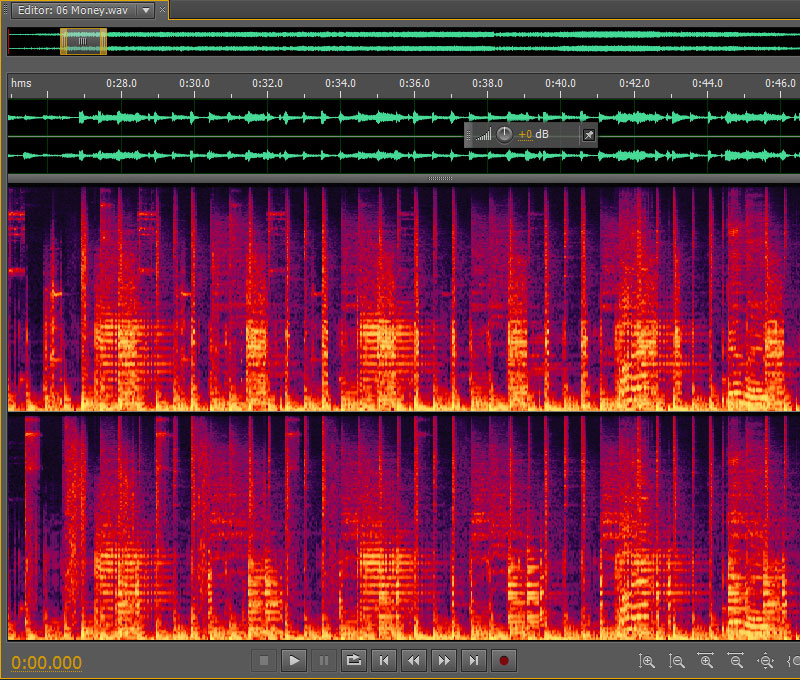
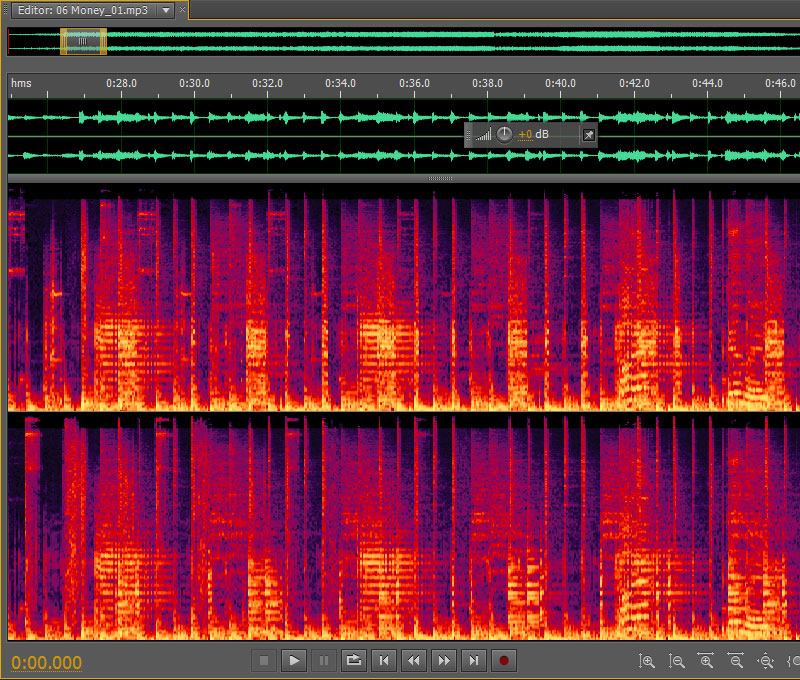
The screen shot examples I posted use the song Money by Pink Floyd. One image is from the original .WAV. The other is from a MP3 copy compressed at 256kbps, a common quality level for lossy compressed music sold online. Even with the window shrunk to fit this forum's 800 pixel limit (and significantly JPEG compressed) the visual differences between the two are obvious. You can see a lot more of what's missing in the compressed version when zooming in closely using a 1920 X 1080 pixel monitor. The original WAV file has more audio "meat" in it.
Posted by Frank Angel (Member # 248) on 12-22-2011, 09:33 PM:
In the days when audiophiles would fret over ever last decimal place of every last spec in the audio chain, there was an expression used when a product had all the right specs but lacked a certain quality which was hard to quantify -- but you knew it when you heard it (or better put, when you didn't hear it). We would say that a speaker system or an amp or cartridge, etc. caused "listening fatigue." Such a system would sound good initially, but if you were listening SERIOUSLY to the music -- like sitting down with the lights soft or off and NO DISTRACTIONS and you were listening to a Beethoven symphony or any other real piece of music that actually had dynamic range -- it would sound great at first, but listen for awhile and you would experience what could best be called listening fatigue. The ear strains to hear things it knows should be there but that the system just can't deliver -- all those subtle nuances which you want to hear but don't. All the crap that comes over the internet and the MP3 format and out of what Bobby so rightly calls them -- Apple TOYS -- they all cause NOTHING BUT listening fatigue. And you don't have to listen for half an hour or an hour like we did sometime with those wanting system; with this stuff, you get it within minutes.
This is why I get disgusted with the classical OTA FM stations that think it makes them oh so cool to stream serious music over the internet....and they have the audacity to brag about it. The phase distortion can get so bad with WQRX (NY's only classical station) that it sounds like the music is going thru a phasing WaWa effects peddle. Audiophiles back then would save up every penny to buy the best phase-lock loop (PLL) FM tuner -- today we listen to this stuff on the internet and laugh. It's a joke.
Posted by Bobby Henderson (Member # 840) on 12-22-2011, 09:51 PM:
"HD Digital Radio" was a big insult to the intelligence of the listening public -as if 64kbps or 96kbps compression was "HD" or befitting the broadcast of material like classical music or jazz. Here in Lawton Cameron University's radio station is doing just that.
One more thing I wanted to say about the Adobe Audition screen shots I posted, the MP3 version not only has a considerable amount of top end clipped, but a good amount of dither/noise was added. It's artificial looking. The fall-off at the top in the WAV file is more even and natural.
Posted by Monte L Fullmer (Member # 2797) on 12-23-2011, 12:29 AM:
Yes, even in the lower resolution in those screen samples that Bobby placed above, I can see the lesser signal strength in the Mp3 file against the original WAV, esp in the mid-range sections.
Then, what bites is when you take those downloaded MP3 files and 'explode' them back into a WAV file for audio CD burn and playback..
..like hearing a playback from a cassette dupe that came from a cassette source.
There was once a method of duping audio for archival purposes and that was: to dupe analog audio to VHS tape in VCR's that were "HiFi" units since this was an FM based audio process. Also, since some of the early "HiFi" VCR's (Panasonic units and units made by Panasonic for other manufacturers) actually had separate audio record/playback capabilities.
The process would turn off the video section of the spinning head and just used the audio heads on the head drum.
Playback was close to CD quality in dB being that CD was over 100dB and VHS "HiFi" audio was in the 90dB range. It didn't matter what speed the tape was in-from SP to SLP mode....and it was still pure analog sound being FM based. Also, in this units, was the "add-on" in the circuit called "dBX sound expander", where the analog signal was compressed, then expanded during playback - an early form of signal compression.
Thus, duping a cassette to VHS greatly enhanced the quality playback with the tape playing back through the VHS VCR, against the source tape due to the high dB range.
Sadly, not too many knew about this process, were the main market for "HiFi' was mainly for VHS playback, thus this above option faded away quickly in manufacturing VCR units.
Posted by Chris Slycord (Member # 4239) on 12-23-2011, 01:32 AM:
quote: Bobby Henderson
WAV files are compatible with more devices. For instance, I don't think a Playstation 3 will play audio files stored in FLAC lossless format.
That's why you store on the PC in FLAC then convert to something more commonly used for your portable devices or something like a Playstation 3.
Posted by Bobby Henderson (Member # 840) on 12-23-2011, 08:23 AM:
The Playstation 3 is not a portable device. It's hooked up to my home theater system (often used for playing Blu-ray movies). All the more reason to feed it uncompressed LPCM .WAV files instead of lossy formats.
Posted by Chris Slycord (Member # 4239) on 12-23-2011, 12:09 PM:
I never said it was. I said you'd convert for "portable devices or something like a playstation 3." I mentioned portable devices because those are the things people use most often that don't do stuff like FLAC.
Posted by Anslem Rayburn (Member # 1267) on 12-23-2011, 02:52 PM:
If you want to really compare the two images Bobby posted, right click on each one and choose "Open in new tab". Then you can click the tabs back and forth and really compare the images.
Posted by Jesse Skeen (Member # 586) on 12-23-2011, 03:58 PM:
The "HD" in HD Radio stands for Hybrid Digital, not High Definition. At least the main HD radio stations (not sure about the sub-channels) are a mixture of the analog signal with added digital portions.
Seems like this could be good at least for getting more stations on the air, but hardware support so far has been pitiful. You have to look really hard to find anything that can actually tune it in. Same was true for AM stereo which is just about dead now.
Posted by Chris Slycord (Member # 4239) on 12-23-2011, 07:13 PM:
Actually, the HD in HD Radio stands for nothing anymore.
Posted by Tom Petrov (Member # 1534) on 12-23-2011, 07:16 PM:
quote: Chris Slycord was the last to post
the HD in HD Radio stands for
Heavy Duty Radio...
Posted by Chris Slycord (Member # 4239) on 12-23-2011, 10:35 PM:
BTW, I wasn't being facetious. The HD literally stands for nothing whatsoever. It originally was short for hybrid digital, as most stations used the digital signal on the same channel as their analog signal, but now it's not an acronym at all...
Posted by Michael Barry (Member # 237) on 12-23-2011, 10:52 PM:
I hope I'm not too late to the table here.
I'm definitely a CD guy. Even though I use iTunes (the software) for playback, I love being able to import using a lossless codec, and having the original CD in case the ingested file becomes corrupt. To me, this is the best of both worlds.
In all cases when the CD is available and it's also available on iTunes (the music store), I'll order the CD, even though it can take weeks to arrive here (I'm in Australia) and even if it costs double or more. I'm prepared to pay and I'm prepared to wait.
Posted by Joe Redifer (Member # 3) on 12-23-2011, 11:24 PM:
quote: Michael Barry
I'm in Australia
I fixed your avatar for you:
Posted by Michael Barry (Member # 237) on 12-25-2011, 06:18 AM:
Hehe!!! Too funny!
Powered by Infopop Corporation
UBB.classicTM
6.3.1.2