This is topic Wife wants an airplane in forum Film-Yak at Film-Tech Forum ARCHIVE.
To visit this topic, use this URL:
https://ft-forum.com/ft/cgi-bin/ubb/ultimatebb.cgi?ubb=get_topic;f=8;t=006749
Posted by Randy Stankey (Member # 64) on 10-10-2012, 10:54 PM:
My wife got a wild hare up her butt this evening. She asked me what it would take to buy an airplane.
It's probably just a passing fancy but here's the back story:
Her brother lives in South Carolina. She likes to go visit him but commercial air travel is, to put it nicely, cumbersome. She hates car travel so she's thinking what it would take to fly herself.
This evening, as we were watching TV, she up and asked me what it would cost to buy an airplane.
For sake of discussion, let's say she has the money.
Just off the top of my head, I figure she could get a used, late model Cessna 172 for around $250,000.
A Cessna's range is about 600 nm. and the distance, as the crow flies, to South Carolina is around 450 nm. With pilot, passenger and luggage, that's within range with enough left over for contingencies.
I estimate it would take about six months of steady training to learn how to fly the plane. Figure another six months to a year to become proficient enough to fly long distance, cross country by yourself.
I got a student pilot's license when I was in high school. I soloed and passed my ground school but I never took the exams or the flight test. (Financial issues.) I'm certainly pretty rusty and I'm just going on my memory but, just off the top of my head, I think this is doable if she really wants to.
Remember, our house is literally a stone's throw away from the airport. (ERI - Erie International/Tom Ridge Field.) We can watch airplanes take off and land from our kitchen window.
Here's what I'm going to suggest: I'll call the flight school where I used to take lessons and set my wife up with an airplane ride. I'll tell them what she wants to do and, after the laughter dies down, I'll tip the guy a few extra bucks and tell him to give her the "full treatment." ![[Wink]](wink.gif)
When she gets her feet back on terra firma, I'll ask her if she still wants to go through with it. If she hasn't been scared out of her wits, we'll take the next step.
Question to the pilots on this forum: What do you think?
Is this just a hair brained scheme or do you think she can really pull this off?
Posted by Manny Knowles (Member # 1171) on 10-10-2012, 11:28 PM:
Don't put your wife in danger just to avoid having an awkward discussion.
I'm not a pilot, but I worked for Pan Am -- and that counts for somethin' dammit!
Just do the math -- cost of lessons, buying a plane, keeping it somewhere, all the required maintenance, insurance, etc -- and THEN add the cost of each trip.
It might just be cheaper to drive.
Posted by Joe Redifer (Member # 3) on 10-10-2012, 11:36 PM:
Might? I know gas prices are high, but...
Posted by Manny Knowles (Member # 1171) on 10-11-2012, 12:05 AM:
It's a colloquialism -- "cheaper" as in "less headache."
Posted by Randy Stankey (Member # 64) on 10-11-2012, 12:13 AM:
I don't know about danger but, I agree, this is not a decision to be taken lightly.
That's why I want to schedule her for an airplane ride. If she comes back and is still serious about it, we can go forward from there but, until then, I consider this a passing fancy.
The cost of aviation fuel is over $6.00/gal. The fuel tanks hold approx. 50 gal. The cost of one fill-up would be over $300. That will take you for 600 nautical miles. That's 12 mi./gal. and, according to Cessna's specs, costs about $1.00 per mile to fly. Maintenance, service, hangar fees and all that other stuff come extra. I know this ain't a cheap date.
On top of that, I'm guessing it would take a year or more of serious flying lessons just to do anything more than to go up and fly around for a while before coming home. Solo cross country is a whole different animal.
I'm 95% sure this is just a passing fancy. Those serious questions about money, training, logistics and safety will come with time. With those questions, I'm sure the shine will fade off this idea but, until then, I'm just humoring her.
I'm going to bet you, by the time she gets through with her airplane ride, she'll forget about this whole thing.
Posted by Brad Miller (Member # 2) on 10-11-2012, 01:06 AM:
So Randy, is your wife doing ok? I mean I could understand a wild hair up her butt, but a rabbit? Ouch. ![[Razz]](tongue.gif)
Posted by Monte L Fullmer (Member # 2797) on 10-11-2012, 03:24 AM:
I've been around airplanes all my life since my father built and owned many of them (Cessnas, Mooney's and his last one, an Aircoupe) and worked for and retired from the FAA being a tower operator. He had to get his 'wings clipped' this last year due to issues of light vertigo, but can still fly a plane, but have to have someone in the other pilot seat as a co-pilot.
It's an expensive hobby - with costly liability insurances, yearly major physical exams, major inspections and routine and white glove maintenance, since the motors are good up to 2000 hours before a major mandatory overhaul along with the FAA yearly inspections, and different grade of license.
You really have to know and study weather, learn how to do instrument landings, not visual landings, learn how read all of the gauges, learn how to use the radio and the codes involved, learn how to fill out a flight plan since the FAA wants to know the reason why you're up in the air along with the tower needing to know...and more of the extras ..
You read of air accidents where people are either killed or seriously injured, and the majority of these situation is caused by pilot error-thinking that they're 'bulletproof' and 'invincible', but when you are off the ground, you're at the mercy of the elements of the weather and your own common sense.
No second guessing since nobody wins being in second place. You have to be at the finish line at first place to be a good aircraft owner and pilot.
Hope it's a passing fancy for her, but good luck to her if she really wants to persue her dream. She'll enjoy the ride all right, maybe even get a chance to handle the controls on the side, but she'll still be that passenger and that's not the same as getting in the left seat as the pilot-a major reality awakening, esp. when you go solo to pass your flight test.
-Monte
Posted by Jeff Stricker (Member # 224) on 10-11-2012, 06:08 AM:
Many times a crash will occur because a pilot needs to return from a weekend trip to be back at his job come Monday. However the weather has other ideas, and he takes a chance on trying to make it back when he should lay over and wait out the storm. Light aircraft can't fly above these systems and you're stuck flying down in them with all the associated consequences.
Posted by Randy Stankey (Member # 64) on 10-11-2012, 07:40 AM:
We talked this morning. We agreed that, next time we have a sunny weekend, we'll take an airplane ride. After that, she can decide if she really wants to go through with this.
Maybe she could just take lessons and put off the buying decision till later.
Posted by Martin McCaffery (Member # 37) on 10-11-2012, 07:45 AM:
How often does she really expect to visit SC? Considering all of the costs, it is probably cheaper just to rent a corporate jet for each trip.
If she wants to take lessons, good for her. Actually owning a plane is borderline insane.
Posted by Mitchell Dvoskin (Member # 751) on 10-11-2012, 09:25 AM:
If you have your pilots license, you can rent those small single engine planes as needed. Saves the cost of purchase and ownership. It does not make sense to buy unless you are going to use the plane weekly.
Back when I was in College in the 1970's, one of my friends has his license and every now and again, we would split the cost of renting a small Cessna to fly from Ohio to New Jersey, and back between semesters. It wasn't any cheaper (for each) than flying commercially, nor was it nearly as fast, but it was a lot more fun.
Posted by Jack Ondracek (Member # 1466) on 10-11-2012, 11:39 AM:
I'm a pilot. I own my own plane. I've been flying since '79. Louis is also active, so he can chime in on this if he's inclined to.
Some, but not all of what's being suggested here rings true. Some of this concern is barely warranted.
Yes, you need to become proficient at flying, but a diligent student does not need a year to do a cross-country flight. It's actually part of your initial training. Legally, you need 15 logged hours to solo, 40 hours total (plus a written) to license... that's if you can get past your instructor and a flight examiner. It's like driving a car... for some, it takes longer than for others, but 40 is the bare minimum. Last I heard, a reasonable average was somewhere around 60 hours. That pretty much takes you to the same point you were when you got your drivers license... you can get from here to there, but longer trips are a progression and you need to get in the air as often as you can to gain experience.
You do need to know how to deal with, and evaluate the weather conditions in the areas where you plan to fly. You do NOT need to have a instrument rating to do a cross-country flight. The FAA rules (as a catch-all) state that you need to know "everything" that revolves around your flight. This includes such things as weather, runway conditions, weight & balance, your plane's performance and capabilities, fuel management and... not the least of all... your personal capabilities and current flight-readiness. Some of this stuff is math. Some is a matter of personal maturity and judgment. In the end, as pilot-in-command, you're responsible for pretty much everything.
You have to have a realistic view of your capabilities. For most, this means getting up in the air as often as possible, both to maintain skills and to progress to new ones.
Aviation insurance is not extraorinarily expensive. I pay about $600 per year for good coverage and hull insurance for my plane. Depending on where you live, hangar costs may run between $200 & $400/mo for a 172-sized plane (mine is a Cherokee... about the same size). In most places, you can save on hangar costs by choosing to tie down your plane outside. This wouldn't be my choice, mainly because if your plane is locked up, you know who the last one to touch it was. Also, my mechanic once suggested that you can spend pretty much the same money on hangar costs or corrosion removal... your choice.
No, gas is not cheap. Figure somewhere around 15 miles per gallon for a 172-sized plane.
Depending on your age, you'l need to get a physical every 2 or 3 years. Figure $125 - $200 for that. Every other year, you have to go up with an instructor so you can prove you really know how to manage basic maneuvers (aka: the 'biannual'). $40 or $50 for that, plus your plane costs.
There's the "annual"... a yearly checkup that's done by an FAA-blessed mechanic. They'll take care of the basics... oil & filter changes, engine & landing gear inspections, etc. There's a list of FAA-issued "must-do's" and "should-do's" for any model plane, and a good mechanic will track your plane's history, as applies to that list. If you're plane is in good shape, that'll run you $600 - $1,000 per year for the general inspection, plus any required maintenance items that are specific to your plane. The plane is legally grounded if you don't get this done.
For most, you can look at owning an airplane much like owning a motor home or boat. If you buy a plane, you just purchased your Winnebago. It's a gift that keeps on giving, but requires daily feeding. Being proficient and properly maintaining your own aircraft is almost a lifestyle though, so if this is just a passing fancy, renting a plane for a few hours will probably burn through that.
BTW... $250,000 will buy a damn nice 172. In this economy, you can likely find a very good one for less than half that. If you don't burn out the budget on the initial purchase, you might have something left over for outfitting the plane with avionics and accessories that reflect the kind of flying you want to do.
I bought my plane from the family I grew up working for, so it was well known to me. The original owner was a daytime-only, fair weather pilot. He took very good care of his plane... always maintained and hangared, but never upgraded the radios (still had tubes in them). I wanted a plane I could train and eventually get my instrument rating in. So over 4 years, we purchased the plane, replaced the engine (which was 1,000 hours past due), then replaced the avionics panel with a bunch of new stuff, including GPS, backup radio, intercom and auto-pilot. It's now instrument-certified and will handle everything I've imagined I'd want to do as a pilot... though we've paid for the thing 3 times now.
Posted by Lance C. McFetridge (Member # 95) on 10-11-2012, 01:17 PM:
Randy,
I echo everything that Jack has said with the following. Don't pay for any extras when it comes to your wife's introductory flight. If you scare her, it won't stop with her "wild hair". I have been into KERI many times, even used it as one leg of my long cross country prior to getting my private license. My advise is for you to locate a local flying club. You will be able to take lessons there and you will be able to rent an aircraft for these long cross country trips that you would like to take. Imagine no TSA to deal with! Jack is also very correct that you will not need to spend anywhere near that amount of money if and when you decide to purchase a plane. I started out learning in a Cessna 150 and have transitioned into a Cirrus SR20. None of which I own. I can rent the Cirrus for $160 per tach hour wet. You can't own a plane for that unless you travel for business. Many clubs offer a "Discovery Flight" which will cost you less than $150. My pilot license was probably one of the hardest but most rewarding things I have ever done. But nothing like being in Bar Harbor in 3 hours from Upstate NY or New Orleans in 6. I am based at KPEO and our club is the second oldest east of the Mississippi..
Lance
Posted by Mike Blakesley (Member # 26) on 10-11-2012, 01:47 PM:
My brother in law and former partner in the theatre, Tom, used to own a plane. I'm not sure why he got rid of it but he still rents or borrows planes and flies occasionally.
One of my favorite "family stories" was the time Tom and I flew to a theater convention in Whitefish, MT. We were in the air on the way to the convention and I asked him, "What happens if the engine just quits on you?"
He said, "When you're flying, you just train yourself to always have in mind a place for an emergency landing -- you're always sort of keeping an eye out for a field, or a level road, or whatever. It's just a habit to always be looking for a spot but hope you don't ever need it." Sounded good to me.
Then an hour or two later we were over the mountains of western Montana. Not a farm, field or road in sight. I could see Tom was looking around and seeming kind of nervous, so I said "what's the matter?" He said "You know what? If the engine was to quit right now...we're fucked."
Posted by Randy Stankey (Member # 64) on 10-11-2012, 01:59 PM:
I wouldn't ever try to freighten my wife in an airplane.
What I meant to convey was, instead of the standard airplane ride where you just get to fly over your house, she gets to go out to the practice area and maybe fly the plane for a few minutes.
I took lessons at that business, many years ago. While I don't remember all the people who worked there, personally, I certainly know the business and the kind of people who run it. They're good people. If I explain what I want, ask nicely and tip the guy a few bucks, they'll certainly do that.
If my wife ever got wind of the fact that I paid the guy off to give her a rough ride, she'd divorce my ass for sure!
Posted by Monte L Fullmer (Member # 2797) on 10-11-2012, 10:52 PM:
Looks like the bottom line is a simple answer: If that what she really wants to do, then she accepts all responsibilities and risks involved....like all aircraft owners faces each day when they go to their respective airplanes.
...be the same as wanting a motorcycle (in which I'm a biker and licensed as one..): accept all responsibilities and risks involved.
Posted by Leo Enticknap (Member # 534) on 10-12-2012, 02:41 AM:
quote: Mike Blakesley
Then an hour or two later we were over the mountains of western Montana. Not a farm, field or road in sight. I could see Tom was looking around and seeming kind of nervous, so I said "what's the matter?" He said "You know what? If the engine was to quit right now...we're fucked."
Reminds me of the joke about the Irish jumbo jet, en route across the Atlantic. About halfway over the ocean, one of the engines breaks down. The captain gets on the PA: "Ladies and gentlemen, this is your captain speaking. You may have noticed that one of our engines stopped working just now. That's a bit annoying, but it's nothing to worry about - after all, we have another three. But it does mean that we've slowed down a bit, and will be a little late in to New York'. Unconcerned, the passengers continued knocking back their Guinness and Black Bush, and the flight continued. But a few hundred miles further on, another engine broke down. "This is Captain O'Muckerty again. I'm really sorry about this, but we've lost another engine. There's nothing to be alarmed about, but I'm afraid that the delay will be quite a serious one." A little while later, out goes engine no. 3. Captain: "The other one had better not stop, or else we'll be stuck up here all bloody day!".
Posted by Rick Raskin (Member # 1561) on 10-12-2012, 07:38 AM:
Marx Brothers "A Night at the Opera": As aviators, Chico says they almost got to New York, maybe 3 feet and then they ran out of gas and had to go back.
Posted by Jack Ondracek (Member # 1466) on 10-12-2012, 09:14 AM:
quote:
I wouldn't ever try to freighten my wife in an airplane.
What I meant to convey was, instead of the standard airplane ride where you just get to fly over your house, she gets to go out to the practice area and maybe fly the plane for a few minutes.
I took lessons at that business, many years ago. While I don't remember all the people who worked there, personally, I certainly know the business and the kind of people who run it. They're good people. If I explain what I want, ask nicely and tip the guy a few bucks, they'll certainly do that.
If my wife ever got wind of the fact that I paid the guy off to give her a rough ride, she'd divorce my ass for sure!
Two things would come to my mind. In the first place, anyone who would act like a jackass on an introductory flight would not be someone I'd want to fly with at all. Every year, I participate in 4 or 5 events that give kids their first airplane rides (Young Eagles). For a lot of these kids, the only thing that gets them in the plane is peer pressure and their first impression of you as their short-term guardian. In a lot of ways, it's no different for adults. What responsible person would risk scaring someone away from flying for the sake of a couple of stupid maneuvers?
On your comment regarding your wife getting to "fly" the plane: That's fairly common on introductory flights, if the pilot senses your wife is open to it. Once you're in the air, flying is really simple. In many planes, two fingers on the "wheel" is all it takes to keep it straight & level. A couple of minutes "in control" is all it takes for a lot of people to look forward to their next flight.
quote: Mike Blakesley
I could see Tom was looking around and seeming kind of nervous, so I said "what's the matter?" He said "You know what? If the engine was to quit right now...we're fucked."
Yah... The hard-nosed pilot would probably point to that as a lack of planning, if your brother in-law was truly nervous about the situation. Over here, we're between a couple of mountain ranges. Some are comfortable, flying right over the top of them. For me, with a single-engine plane, I prefer to fly through the passes. For one, the altitude requirements are different. Also, there's a 4-lane freeway under me, if something bad was to happen. My flight isn't such a straight line in a case like this, but each pilot has to judge what's the safest way to fly, and for me, that's it.
Posted by Scott Norwood (Member # 30) on 10-12-2012, 11:42 AM:
quote: Jack Ondracek
In many planes, two fingers on the "wheel" is all it takes to keep it straight & level.
Does this only apply to light planes?
I ask this because I once had a chance to "fly" a DC-9 simulator (in the early '90s, as a teenager, at the Northwest Airlines training facility...long story). Anyway, it was a fun experience...sort of the greatest video game ever designed...and I got to take off, circle the airport, and land, while being guided by a real pilot. For me, flying straight and level was the hardest part, mostly because there is a delay between the control inputs and their actual effect on the aircraft's position. The takeoff and landing, by contrast, were fairly straightforward (mostly because there was a pilot right behind me to tell me what to do). The autopilot did a good job of flying straight-and-level, but that's all that it does in a DC-9; the landing and navigation still need to be done manually. Newer planes have more automation.
I'm guessing that a Piper or Cessna is a bit easier to fly than a full-size commercial jet, but now I'm curious. I think that the smallest plane that I have been in as a passenger is a 20-odd-seater twin-engine turboprop.
Posted by Don Furr (Member # 1469) on 10-12-2012, 01:09 PM:
I soloed 49 years ago at age 16. I've been flying most of my life and have owned 5 different airplanes. I have a private pilot's license with instrument and multi-engine ratings.
The COST is what drove me to quit flying back in 1998. My last plane, a D50-C Twin Bonanza was costing (besides normal cost of fuel, insurance, tie-down) over $2,000 annually for the required inspection. I could handle that ok until the FAA came out with an Air Worthiness Directive (commonly called an AD) that required inspections of my 3 bladed McCauley propellers and to make a long story short required replacements were going to cost upwards of $20,000 for both props.
That's when I decided to get out of the aviation business.
A single engine experience isn't going to cost that much but get ready to spend some bucks. It ain't a cheap hobby. Reminds me of boating. Both are money pits.
End of rant.
Posted by Jack Ondracek (Member # 1466) on 10-12-2012, 01:11 PM:
quote: Scott Norwood
Does this only apply to light planes?
Good question. Sorry, but I don't know. I tried the shuttle simulator at the space museum in McMinnville, OR, and never did get it down successfully. There was a lot of delay, and I don't know if it was real or something about the software.
If you have to anticipate too far ahead, then I'd have a lot of admiration for the guys who fly airliners into those airports with strong crosswinds. Some of those youtube videos are downright scary.
Posted by Paul Mayer (Member # 355) on 10-12-2012, 03:03 PM:
Regarding Scott's Q and control forces, most single-engine light planes have pretty light control forces. Like Jack says, two fingers on the yoke is plenty of control. In rough air you'll probably fly it with a more firm grip on the yolk, or stick, for those lucky enough to fly an aircraft that uses one.
I flew Twin-Otters for a while (12,500 lbs gross weight in the US, 14,500 lbs gross weight in Canada, manual controls). Although they can easily be flown one-handed, sometimes one will resort to two-hands on the yolk during rapid maneuvering. But normally, it's one hand on the yolk, and one hand on the power levers, if necessary. Like most smaller aircraft, the Twin-Otter uses cable linkages between the controls and the control surfaces - no hydraulics. The captains I flew with likened flying the "Twotter" to driving a dumptruck. ![[Smile]](smile.gif) I used to fly a Piper Seminole (light twin - max gross weight 3800 lbs.) to keep night current, since almost all of my Twin Otter flying was during the day. Flying the Seminole after a day in the Twotter WAS a two-fingers-on-the-yolk affair.
I used to fly a Piper Seminole (light twin - max gross weight 3800 lbs.) to keep night current, since almost all of my Twin Otter flying was during the day. Flying the Seminole after a day in the Twotter WAS a two-fingers-on-the-yolk affair.
Back to Randy's thread - I too gave up flying after 17 years because I just couldn't continue to justify the expense - it had become a very expensive hobby rather than an investment in my professional future. But Randy and his wife seem to have a good handle on the pros and cons of personal flying. I'd say go ahead and try it in the way its being discussed here. If the magic happens, looking at owning vs. renting then becomes the next step.
When I soloed 80 octane avgas was about 80 cents a gallon. By the time I quit, low-lead 100 octane avgas was pushing $2.00 USD a gallon. These days avgas here is around $6.00 USD per gallon. It used to be that about 200 hours a year was the minimum usage needed to justify ownership. I have no idea what that number is today.
Posted by Don Furr (Member # 1469) on 10-12-2012, 05:08 PM:
Lol Paul, we use to call the Seminole "Semen Hole". One flight school near Atlanta used those for multi-engine training but during the HOT summers around here practicing engine out on takeoffs proved to be impossible. The airplane wouldn't maintain altitude, let alone climb with one engine feathered. This was back in the mid 90's and I suppose Piper might have increased the HP of the engines since then.....don't know. Of course the Seminole isn't the only light twin that has a "poor" single engine performance!
Posted by Randy Stankey (Member # 64) on 10-12-2012, 05:41 PM:
Getting back to flying airplanes is one of those things I have always wanted to do. I soloed and passed ground school but never took the exam or the flight test. My wife, Melanie's, idea has just sort of brought that dream back into focus a little more.
If she really wants an airplane and really wants to learn to fly it, I'm all for it.
However, the reason I stopped was because of money. If I had a good reason to fly, I'm sure I could have found the money but I was having a tough time in life at the time so flying had to fall by the wayside.
As it is, now, if I HAD TO fly a plane because my life depended on it (if the pilot got conked out, for instance) I'm sure I could get the plane down in one piece.
The skill of flying really isn't that hard to learn. It's a very detail oriented thing that has many little gotchas but, unless you are an aerobatic or a military pilot, I'd say that most able-bodied people of normal intelligence could learn to do it, PROVIDED they took the time and put the right amount of effort into it.
I certainly think Melanie could do it if she really wanted to. I, myself, would love to have a chance to get back into the pilot's seat.
It would be something neat for us to do together. It would add a new dimension to the idea of going on a trip for the weekend!
Just to be clear, we're not going to run out and buy a plane next week but it's something for us to think about. Maybe we will. Maybe we won't.
Some time during the next few weekends, when the weather is clear, we'll go over to the airport where I used to take lessons and set up an airplane ride. Okay, when I said I'd tip the guy off to give Melanie the "full treatment," I was being a little silly. I meant it more like "tell me everything."
When I was a kid, my father had a few buddies who were pilots. On a couple of occasions, my brother and I were outside playing in the yard when my dad and his buddies flew over in an airplane. They would come in low with the power off and throw beer cans at us. Times were crazy back then!
Posted by David M. Leugers (Member # 2968) on 10-14-2012, 12:38 AM:
A boat, an RV, an airplane are next to impossible to honestly justify owning one. So don't do it, justify buying one that is. If it is what you want to do and can afford it, go ahead. When you are old laying in your bed waiting for the grim reaper to show up, you won't be thinking you should have saved your money. You will have wonderful memories to keep you company if you followed your dreams. One word about flying: They used to advertise "if you can drive a car you can fly a plane". Believing that can get you killed. Flying is not for every one.
It seems Piper didn't make much progress from their Apache with the newer Seminole. They used to say that when you lost an engine in an Apache, you used the remaining engine to take you to the crash site...
Posted by Randy Stankey (Member # 64) on 10-14-2012, 09:06 AM:
quote:
One word about flying: They used to advertise One word about flying: They used to advertise "if you can drive a car you can fly a plane". Believing that can get you killed. Flying is not for every one.. Believing that can get you killed. Flying is not for every one.
If you can drive a car you can LEARN TO fly an airplane!
"If you can drive a car you can fly a plane," implies passivity. That you can simply kick the tire, light the fire and take off into the Wild Blue Yonder.
"LEARN to fly" implies activity. You must put forth some amount of effort to do it and to do it right.
You are right. Too many people don't put forth the proper amount of effort and get themselves in over their heads.
Melanie's father was in the Army Air Corps during WWII.
He was a private pilot when she was a kid. Don't know how often she flew with him. Probably only a few times.
But she's not a TOTAL neophyte.
Posted by Louis Bornwasser (Member # 3063) on 10-14-2012, 10:54 AM:
Boy, you guys covered the subject very well; I would only add a couple of things:
1. She is probably smart enough, if she underatands risk management.
2. Money is a personal issue.
3. Her first contact should be "The Ninety-Nines" I know for certain that they have membership in Erie, Pa. Flying is initially, a perception issue. I know this is hard to grasp, but most women need a different kind of encouragement than men do. The 99's are an or4ganization of women pilots. They can answer all questions that she might have, including partnerships, flying clubs, and might be something social she may enjoy.
No, their advice won't be "First marry a rich guy." Louis
Posted by Jack Ondracek (Member # 1466) on 10-14-2012, 11:22 AM:
quote: David M. Leugers
It seems Piper didn't make much progress from their Apache with the newer Seminole. They used to say that when you lost an engine in an Apache, you used the remaining engine to take you to the crash site...
That was certainly true of the early Apaches. They had the same engine a Cherokee 140 came with... certainly not enough to keep the thing in the air.
Later versions came with more horsepower, and were a bit more manageable in engine-out situations.
quote: Don Furr
I could handle that ok until the FAA came out with an Air Worthiness Directive (commonly called an AD) that required inspections of my 3 bladed McCauley propellers and to make a long story short required replacements were going to cost upwards of $20,000 for both props.
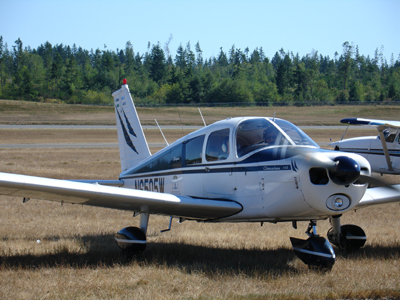
My Cherokee was the first of its model on which a constant speed prop was fitted. The STA was written on that plane, and it looks a lot like what you would have seen on an early Apache. That was back in '69. This year, the FAA decided there was a concern that my type of (Hartzell) prop hub might be in the very early stages of developing a hairline crack. The fix is an $8,000 hub plus another $2k or so for the labor work. With screen renovations and 3 screens worth of big, new Barco machines in the works right now, that's effectively put my plane in the hangar for a few months.
Sux!
Posted by Randy Stankey (Member # 64) on 10-14-2012, 12:55 PM:
quote: Louis Bornwasser
Her first contact should be "The Ninety-Nines" I know for certain that they have membership in Erie, Pa.
Capital idea! I'll get right on it! ![[thumbsup]](graemlins/thumbsup.gif)
Posted by Paul Mayer (Member # 355) on 10-14-2012, 05:38 PM:
Heh heh, my first experience in light twins progressed thusly: Piper PA-23 Apache, Piper PA-34-200 Seneca I (what I took my check ride in), Piper PA-34-200T Seneca II, Piper PA-44-180 Seminole, Beech 95 Travel Air, Beech 76 Duchess, then later on the Cessna 402B and the Piper PA-601 Aerostar. All of these Part 23 planes (possibly excepting the Seneca II and the bigger twins) pretty much fit the ol' "other engine gets you to the crash site" description. Part 23 does not require that a twin-engine aircraft demonstrate single-engine climb capability in order to be certified. Just as in a single, you fly those with an eye towards where you'd put it down if one engine quits, especially if you're in "hot and high" conditions.
'Vegas is 2200' above sea level and of course most everyone knows what our summer temperatures are like. IIRC the single-engine service ceiling on the Seneca I and the Seminole was around 4000' - most days in 'Vegas the density altitude is well above that. Losing an engine on takeoff means staying on, or coming right back down onto, the runway even if you end up rolling off the end and into the dirt.
One of the pleasures of checking out in the Twin-Otter was the power you had available with it's PT-6 turbine engines (about 700hp per side)! Instead of the rapid "identify, verify, feather" engine-out routine of a light twin, the drill is "don't touch anything until you reach 1000' above the ground", then run the engine failure checklist. Much more refreshing. Much less exciting!
I'm sorry... back to Randy's thread. "Resume normal navigation."
Posted by David M. Leugers (Member # 2968) on 10-15-2012, 12:48 AM:
Randy I hope you understand I was not inferring anything about your wife. I'm betting she will be a good safe PILOT, not just someone who can operate the controls of a plane. I have known people who killed themselves in planes thinking because they could fly, they were real pilots. Three such individuals I predicted they would crash. Two died in stall/spin accidents on approach during clear VFR weather, the other was seriously injured crashing short of the runway while practicing instrument approaches. They had no problems driving a car... you are correct in that it takes effort and a proper mindset to be a good pilot. Like riding a motorcycle, flying can be a lot of fun and very rewarding. Good luck and happy flying!
Paul, very good evaluation about most light twins. When I was just starting to go for multi-engine training before the money ran out, I was treated to flying an Apache with the left engine feathered on a summer day. No way I could maintain 2,000 ASL
and stay above single engine control speed. Quite a sobering eye-opener. My instructor friend stayed within the pattern of the private airport in case the engine wouldn't restart.
Posted by Randy Stankey (Member # 64) on 10-15-2012, 01:55 AM:
No worries. I understand what you were talking about and I agree.
A few years ago, I watched a salvage crew tow the wreckage of a twin engine Beechcraft off the end of the runway. The guy piled it in before he even made it over the fence. Two aboard killed.
Melanie's father gave up his pilot's license because two of his buddies bought the farm. One, the engine conked out and he couldn't put it down in time. On the other, the prop self-destructed on takeoff. Her father decided that he was getting too old to fly, anyway. Best not to take chances.
I keep a radio scanner on the shelf near my computer. I figure, living so close to the airport (250 yards from runway 24) we might need to know if something is going on.
There have been two incidents (besides the crashed Beechcraft) in the ten years that we have lived here. Both were passenger airliners.
One couldn't get his noseweel down and locked. Turned out the landing gear was locked. Somehow, the "gear down" indicator had failed.
The other couldn't get his wing flaps fully extended. He had to land it hot. I watched him come in. He ended up greasing it but there was a bit of "Woah, camel!" at the end.
Both planes came in safely but there was a lot of commotion from the emergency response teams. They roll the airport trucks and two local fire stations. Plus nearly every "blue light" in the county.
It's fun to listen in on the air traffic controllers. Sometimes, I go outside to watch and listen to planes take off and land.
Yeah, we know about the risks in flying.
Powered by Infopop Corporation
UBB.classicTM
6.3.1.2