This is topic How to achieve this level of JPEG? in forum Film-Yak at Film-Tech Forum ARCHIVE.
To visit this topic, use this URL:
https://ft-forum.com/ft/cgi-bin/ubb/ultimatebb.cgi?ubb=get_topic;f=8;t=007381
Posted by Joe Redifer (Member # 3) on 02-17-2016, 10:42 PM:
There's a hell of a lot of JPEG going on in this picture:
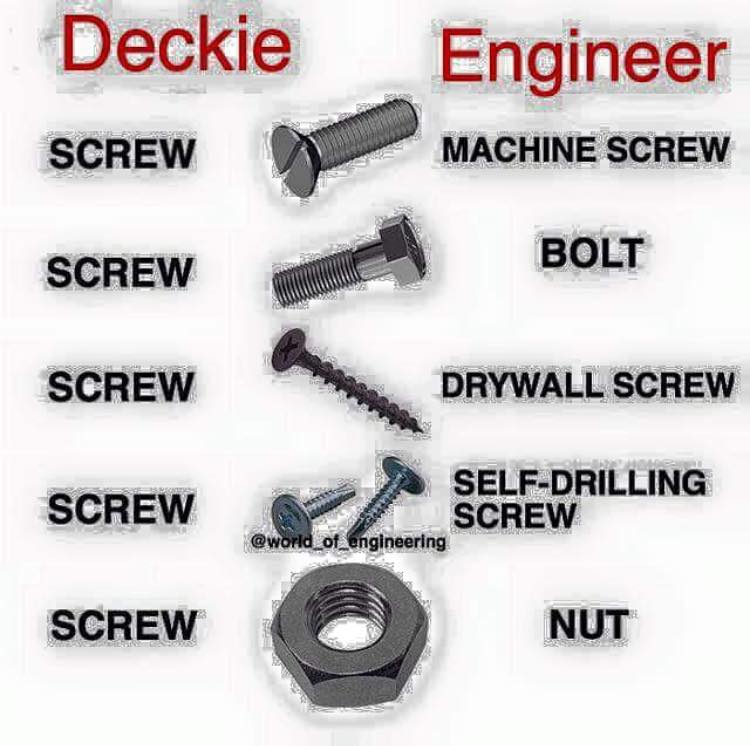
How is this possible, especially on a black and white image? I've tried saving the same image over and over and over and over and over and over and over at the lowest quality JPEG settings and I cannot achieve this ridiculous amount of JPEG. I see this a lot on Facebook. Facebook is a great site which has a cool replacement for this forum started by Mark Gulbrandsen that you should all visit. It's way easier to search and archive information there. LOL just kidding it's not. Anyway the Facebook pictures like this always seem to have maximum JPEG like this. I never see just minimum JPEG or moderate JPEG. I demand to know how this is accomplished.
Posted by Buck Wilson (Member # 5885) on 02-18-2016, 12:05 AM:
Download and repost times infinity? Or just pumping it through an NEC?
Posted by Scott Norwood (Member # 30) on 02-18-2016, 12:31 AM:
Start with this:
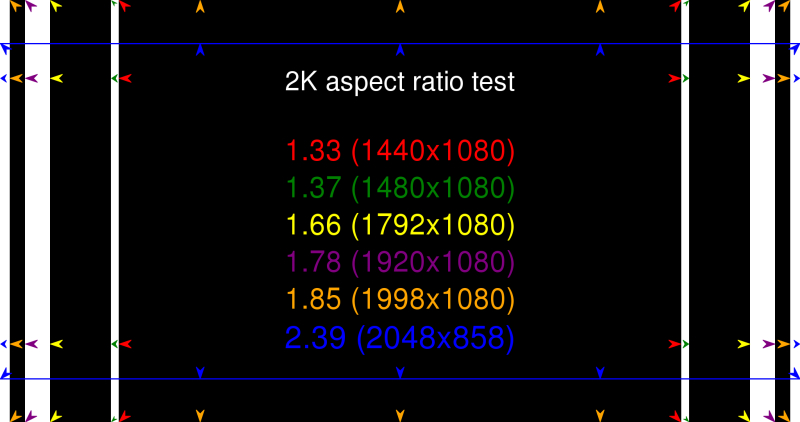
Compress to hell using Imagemagick or similar tools:
convert -quality 1 good-jpeg.jpg bad-jpeg.jpg
Get this result:
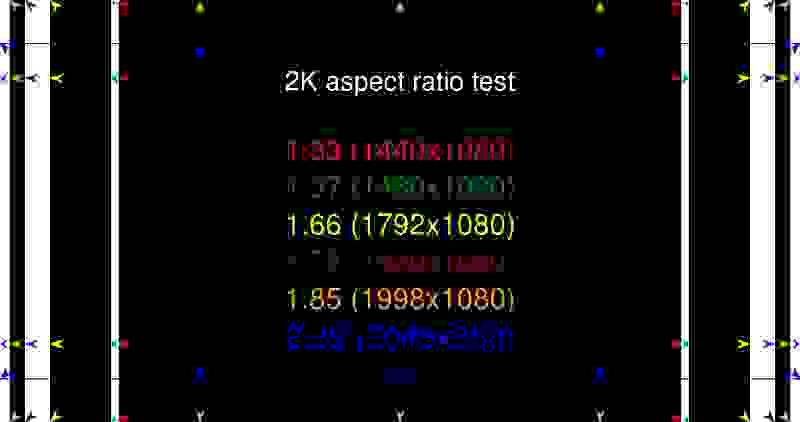
Seriously, though, someone at Facebook presumably decided to make a high level of compression the default. Don't they have a size limit on uploaded image files, too?
Posted by Joe Redifer (Member # 3) on 02-18-2016, 02:28 AM:
Interesting. Your text is barely even readable any more. But the image I posted the text IS readable, it's just the outside of the objects that are riddled with artifacts.
Maybe Photoshop (which I use exclusively) does not allow me to make JPEGs that bad. I don't think there are any unreasonable size limits for images on Facebook. They will recompress and resize if too big (well, they ALWAYS recompress). At least I assume they do. I'm not sure why they would recompress if the file size and pixel dimensions are already sufficient. I can understand them converting a 20,567 x 18,576 layered TIFF into a JPEG, but JPEG to JPEG seems pointless if it already matches the criteria.
Posted by Randy Stankey (Member # 64) on 02-18-2016, 04:11 AM:
It looks like artifact on top of artifact.
The original background was probably erased, poorly, then the picture was put through multiple resizings and resamplings.
Most people just don't get it. Do they? ![[Frown]](frown.gif)
Posted by Carsten Kurz (Member # 5396) on 02-18-2016, 06:00 AM:
I think it's easy to turn up JPEG artifacts when adding contrast to images compressed at low levels. Every JPEG Image contains these artifacts, but usually only on a level that is barely visible. Downscale it, increase the contrast, and these artifacts come out loud.
- Carsten
Posted by Steve Guttag (Member # 268) on 02-18-2016, 06:21 AM:
See now...as someone that actually did have to through ENES 101 (that is that first engineering class where things like drafting used to be taught and probably CAD is taught now)...I focused on what the idiot called a "bolt"...a proper engineer would call that a screw too (stop giggling)...a properly trained engineer knows that a "bolt" is a screw with the nut together.
But I guess you guys focused on the crappy jpeg compression.
Posted by Steve Kraus (Member # 476) on 02-18-2016, 08:59 AM:
If you want some fun try putting unrelated images into each color channel.
Posted by Sean Weitzel (Member # 244) on 02-18-2016, 11:05 AM:
The facebook group was created by Jack Theakston. Mark is an admin and arguably the most prolific contributor.
Posted by Buck Wilson (Member # 5885) on 02-18-2016, 02:26 PM:
What's the group??
Posted by Sean Weitzel (Member # 244) on 02-18-2016, 03:57 PM:
I'm pretty sure Joe was referencing "Motion Picture Technology"
Posted by Bill Brandenstein (Member # 7758) on 02-18-2016, 08:59 PM:
Joe, I'd agree with you that the software used to make the jpg will make a big difference, although in Photoshop if you turn the quality level down to "1," you ought to be able to get close. Especially if you do a slight resize, then do it again. Garbage like that happens on Facebook all the time - not only do they have to lower the jpg quality, but there's also a relatively low pixel count there as well. For example, the other day I posted an 8MB, 3456 x 5186 photo to FB, which now comes back as just 137KB and 1365 x 2048. That's pretty low compression quality!
Posted by Joe Redifer (Member # 3) on 02-19-2016, 03:17 AM:
I set the JPEG quality to ZERO in Photoshop and while it came back looking unacceptable, it was still about a trillion times better than Scott's example above. Even after multiple passes at level 0. I was using Scott's good image and recompressing it.
I'm also wondering how they only get the outsides of things to get artifacts. Maybe they are applying a sharpening filter as well? Then over time the halo that generates get artifacts. That's my best guess.
Posted by Bobby Henderson (Member # 840) on 02-19-2016, 09:23 AM:
quote: Joe Redifer
How is this possible, especially on a black and white image?
Really severe lossy JPEG compression would never yield an image like this in just one pass. That's impossible. The image degradation from lossy compression would take place on a global basis, affecting everything in the image fairly equally.
The image above is the combination of a low quality background image with higher quality type and objects laid on top of it. The look of this image might have been done on purpose. Some people like creating grungy looking artwork, but normally the "stressed" textures come from more natural looking sources.
You could take a layered Photoshop image with the objects and words floated above a background with the glowy effects. Export that background as separate image, resize it pretty small and lossy compress the living hell out of it. Re-open the image and resize it back up to its original size, but using "nearest neighbor" for the re-sampling mode to make the pixels huge like an Atari 2600 game console. Then re-save the JPEG image a couple more times to bake even more lossy compression pollution into the image. Re-open the image and copy/paste it into a layer of your original Photoshop file. You'll have clean looking objects floating above a really shitty looking layer. Export the whole thing as a badly compressed JPEG image.
Posted by Joe Redifer (Member # 3) on 02-20-2016, 12:41 PM:
quote: Steve Guttag
I focused on what the idiot called a "bolt"...a proper engineer would call that a screw too
Your entire education is wrong. A screw is loosened/tightened with a tool that penetrates it. Something that slides or pokes into it. A bolt is loosened/tightened with a wrench. How does it feel to be so wrong? That's a legitimate question, as I've never been wrong.
Posted by Ari Leedsw (Member # 9336) on 02-20-2016, 01:03 PM:
It's amazing how many "film" projectionists know more about JPEG2000s than the basics of how film works or is printed.
I guess the industry going digital was good, for people like you.
I laugh when I get in a 150GB hard drive with a "film" on it.
It should be terabytes. When I see a 2K "film" of Star Wars, which apparently wasted a lot of money, for no reason, shooting on 35mm film.
Not as bad as this, but the same shitty principle of trying to charge $15/ticket to see consumer-grade garbage.
Posted by Joe Redifer (Member # 3) on 02-20-2016, 06:50 PM:
OK.
Posted by Bobby Henderson (Member # 840) on 02-21-2016, 11:58 AM:
quote: Ari Leedsw
It's amazing how many "film" projectionists know more about JPEG2000s than the basics of how film works or is printed.
I guess the industry going digital was good, for people like you.
Since you're new here you might not know some of the participants in this forum, including the guy who runs this site, are expert film projectionists. We have participants here with lots of experience running 35mm, 70mm and even 15/70 IMAX. Their knowledge about showing film and maintaining the film projection equipment is matched by very few people.
Others in this forum, such as myself, are not projectionists but are avid film fans. I do computer graphics work for a living, so I do know a good bit about JPEG and JPEG 2000 too. And in this particular thread we're just talking about plain old JPEG.
quote: Ari Leedsw
I laugh when I get in a 150GB hard drive with a "film" on it.
It should be terabytes. When I see a 2K "film" of Star Wars, which apparently wasted a lot of money, for no reason, shooting on 35mm film.
Even though this is getting off topic, how much do you really know about computer graphics and digital video? I have plenty of criticism for the current, limited standards of d-cinema. But I understand why some of the limitations are there.
Original uncompressed or lossless compressed masters of movies do measure in the terabytes in file size, even for a mere 2K resolution movie. But no studio is going to risk duplicating those things for regular movie theater use. They have their security concerns. Then there's the matter of practicality. It would take a lot more time for a d-cinema server to ingest a master-grade movie rather than one compressed to about 1/10th of its original size.
The latest Star Wars movie went out only in 2K due to 3D. Most d-cinema installations cannot play 3D movies in 4K resolution.
There's more than just resolution to consider when it comes to shooting movies on film. The film medium has an aesthetic quality video cameras have struggled to mimic.
quote: Ari Leedsw
Not as bad as this, but the same shitty principle of trying to charge $15/ticket to see consumer-grade garbage.
Even though d-cinema has certain suck-tastic qualities to it, like its horrible implementation of 'scope, it's not consumer-grade garbage. As good as Blu-ray is for home viewing it is definitely on a quality bar below d-cinema -and Blu-ray is the best consumer video format. Lots of people are watching much lower quality video via Netflix.
Posted by Dave Macaulay (Member # 813) on 02-21-2016, 02:19 PM:
Rare to find someone who knows the difference between bolts and screws.
One fastener can be both: a bolt if used with a nut, and a machine screw if installed in a tapped hole.
Posted by Joe Redifer (Member # 3) on 02-23-2016, 02:25 PM:
quote: Bobby Henderson
It would take a lot more time for a d-cinema server to ingest a master-grade movie rather than one compressed to about 1/10th of its original size.
To say nothing about the practicality of playing it back. I can imagine more than a few dropped frames would be commonplace for each movie played. SSDs are still in their infancy and spinning disks still use the same ancient technology they've been using since... they've been using it. Each theater would need multiple RAID 2 arrays.
Posted by Monte L Fullmer (Member # 2797) on 02-23-2016, 04:22 PM:
quote: Dave Macaulay
the difference between bolts and screws.
And I have to teach the difference between a wood/sheet metal screw and a machine screw, for some doesn't know about that difference.
If I'm using a fastener to join to work pieces together, I call it a "nut and bolt" fastener.
quote: Joe Redifer
To say nothing about the practicality of playing it back.
..let alone on how horrible it would look on a 65' screen....
Posted by Steve Guttag (Member # 268) on 02-24-2016, 06:25 AM:
Technically, you doubled your need. A Nut and a Bolt would yield a screw and two nuts (sounds dirty, I know). It is like when I hear "Throw Distance"...they have the same effective meaning. It is sufficient to say that the throw is 75-feet...the word distance is superfluous. A bolt, by definition, has a nut as part of the fastener.
Posted by Ari Leedsw (Member # 9336) on 02-24-2016, 11:00 AM:
"..let alone on how horrible it would look on a 65' screen...."
-Well said sir! LOL at blowing compressed 2K up, at half that width! What a joke!
Posted by Marcel Birgelen (Member # 6801) on 02-24-2016, 02:48 PM:
quote: Bobby Henderson
The image above is the combination of a low quality background image with higher quality type and objects laid on top of it. The look of this image might have been done on purpose. Some people like creating grungy looking artwork, but normally the "stressed" textures come from more natural looking sources.
Yeah, let's call it art. ART-i-facts... Can't wait until the first museum of Modern ART-i-facts opens.
But this is indeed most likely the result of compounding interest of multiple JPEG compression cycles, including at least one in between gone especially wrong.
Someone who likes to save intermediate results in JPEG and is scratching his/her head why stuff looks progressively worse. He/she probably attributes it to bitrot. ![[Wink]](wink.gif)
quote: Steve Guttag
A Nut and a Bolt would yield a screw and two nuts (sounds dirty, I know).
This one got me thinking real hard and I still don't get it. I've tried to write it down as a chemical formula:
N + B -> S + 2N
Something is multiplying nuts. So either this has to be the solution for perpetual motion or I definitely feel screwed...
Posted by Steve Guttag (Member # 268) on 02-24-2016, 03:42 PM:
Really? To steal from Trevor Noah...where how does Pounds abbreviate to lbs? None of those letters are in pounds! And you are worried about how bolts, screws and nuts add up? I live in a country where we work in base-whatever-the-fu#$-we-want is used. We don't use decimals...we use "/" so we can be "precise" with our 1/4-20 or 7/16 or 1/64...etc.
The rest of the world uses Grams (or Kilograms)...I'll wager that majority of "MeriKins" don't know our "equivalent" unit..."slugs"...they think it is the aforementioned "lbs." Which is slugs with the force of gravity mixed in...grams doesn't have gravity in it so it is the same on the Earth, Moon...wherever.
Posted by Ari Leedsw (Member # 9336) on 02-24-2016, 05:52 PM:
Steve, not only is that statement ignorant of actual use, there is an explanation for lb (lbs is wrong), although it's a joke and it's generally rude to pedantically over-analyze something designed to make people laugh ![[Cool]](cool.gif)
Lb is an abbreviation for the Latin "libra." In fact, in Spanish, pounds are referred to as una libra (a pound) and libras (pounds). However, getting back to lbs being wrong, Spanish only retains Latin's accusative case, making it a very active language, LOL, always to and for everything.
Anyway, the [nominative] plural in Latin is librae, not libras, hence lb for singular and for plural. Doesn't make sense in English, makes perfect sense in Latin, see also the GBP sign which is a stylized abbreviation of the "L" in libra.
Speaking of England, they use pounds (lb) for weight too, as does Canada, as do many English-speaking Carribean countries. The notion that only the US still uses pounds is incorrect pro-metric propaganda that was implemented in the '70s to push America to metricate.
Watch the Canadian Football League in the summer, or the NHL. Those statistics, height and weight in Imperial aren't done for teh benefit of American viewers. . .
Also, the pound is also a unit of mass. Before you make fun of "Merkins" again, perhaps you should look at the history of the metric system, which had similar systems in which the kilogram was a weight, not a mass.
It was originally defined as a weight, and a scale has to be used to determine the mass of the kilogram artifact, by way of the Earth's gravity.
There are a lot of sports, disciplines that use feet, pounds, inches worldwide. Those 65" screens are marketed as such even in France, the home of the metric system. Curling uses pounds, discus uses pounds, weight classes in boxing and wrestling are based on pounds. The PSI is used in Mexico.
Sorry, that's a particular pet pieve of mine, "US, Liberia, and Myanmar" shaming the United States. Clearly a piece of propaganda by someone who has never driven a car in the United Kingdom or Jamaica, for starters, or watched a game of Canadian football.
Don't even get me started on film lengths in meters. The 35mm sprocket hole pitch is based on 3/16" (0.1875") shortened to 0.187 and 0.1866 for print and neg. film, respectively. Film thickness is measured in thousandths of an inch. Coated in feet. Processed by the foot. Temperatures for processing designed and engineered in Fahrenheit.
Posted by Steve Guttag (Member # 268) on 02-25-2016, 02:17 AM:
I don't doubt that there are people that value your posts, I am not one of them. Whatever points you may make seem to be shrouded in style of writing that has a degree of hostility.
As for my knowledge of units of measure....I'll just say that I've been formally educated on the matter. If you were taking my pokes at the imperial system in a personal manner, I'm sorry it is a sensitive area for you. To me, you have to be able to laugh at oneself before you can laugh at others. I've grown up with the imperial systems and it is ingrained in me as much as anyone else that uses it. There is a reason the scientific community uses SI units...it is more efficient but yes, we still will do conversions due to legacy.
The film industry has historically measured its width in millimeters but it's length in feet. Even in video they speak of footage in terms of how much they shot and have to edit. I don't deny the imperial measurement system nor its history. I do find it past its prime and doesn't offer benefits over the "metric system" other than comfort for those that use it. Even in the SMPTE, we no longer use the "M" on documents to signify metric...SI units are the standard and the English measure are they accommodated ones.
In any event...post whatever you like (and the moderators will put up with) but I don't intend to respond/acknowlege your posts until such time as you develop some tact (in general, I couldn't care less what you have to say to me), If others want to indulge you, that is their business.
Posted by Mark J. Marshall (Member # 1409) on 02-25-2016, 08:44 AM:
I thought you guys were working on a "block" feature here on FT a few years ago.
What ever happened to that?
Posted by Marcel Birgelen (Member # 6801) on 02-25-2016, 12:21 PM:
quote: Steve Guttag
Really? To steal from Trevor Noah...where how does Pounds abbreviate to lbs? None of those letters are in pounds! And you are worried about how bolts, screws and nuts add up? I live in a country where we work in base-whatever-the-fu#$-we-want is used. We don't use decimals...we use "/" so we can be "precise" with our 1/4-20 or 7/16 or 1/64...etc.
Well, it's really quite funny to see all those minor differences in interpretations... It's almost like a local Belgian phenomenon called Frituur or Frietkot, where you can order exactly the same item on the menu and never know what the local interpretation turns out to be (or what animal it was made from). For example, if you would like one of the signature items of this Frietkot "cuisine", which is generally known as "frikandel", you would have to simply order a "frikandel" in place A, order a "curryworst" in place B or a "hamburger" in place C. Which makes ordering a frikandel and a hamburger (as in the thing with a patty between two buns) in place C a delicate business.
For me, a screw is something that by definition comes without a bolt and usually isn't even suitable for a bolt. It's usually a self-fastening thing, with an helix at an angle and a wider pitch than a bolt.
A bolt usually requires something like a nut to be fastened, but if I would order a bunch of bolts, I would also automatically order the same amount of nuts. So, for me, a bolt always used to be the bolt minus the nut. ![[Smile]](smile.gif)
quote: Ari Leedsw
It was originally defined as a weight, and a scale has to be used to determine the mass of the kilogram artifact, by way of the Earth's gravity.
The gram is still defined by THE kilogram artifact, although they seem to be close to a consensus for a redefinition. The fact that gravity is most often being used for measurement of mass in grams (because it's easier than e.g. counting atoms or molecules...) doesn't imply gravity is also part of its definition.
quote: Steve Guttag
I don't doubt that there are people that value your posts, I am not one of them. Whatever points you may make seem to be shrouded in style of writing that has a degree of hostility.
For me it reads more like some misplaced feeling of superiority. A forum is a place to discuss things, it's not necessary for all of us to agree on something, but the problems usually start when one or more actors start to try to push others in a corner labeled inferior.
Posted by Steve Guttag (Member # 268) on 02-25-2016, 01:05 PM:
On the bolt versus screw thing...it really was in an engineering class where I had the distinction made.
The distinction you seem to be making on the screws is the difference between a "machine screw" where the threads are not aggressive but are designed to go into well defined threads of tapped hole of some type versus say a drywall screw which may have one of several more aggressive threads that will either partially or totally make its own receiving threads.
Honestly...it doesn't make two nits to me...even in class the prof noted that one would be wasting their breath at a hardware store that would call a hex-head screw a bolt. It is a definition who's value had diminished to point of near meaningless distinction except for a relatively few.
Posted by Bobby Henderson (Member # 840) on 02-25-2016, 02:15 PM:
quote: Marcel Birgelen
For me it reads more like some misplaced feeling of superiority. A forum is a place to discuss things, it's not necessary for all of us to agree on something, but the problems usually start when one or more actors start to try to push others in a corner labeled inferior.
Regardless of how the posts read, many are definitely rude and insulting in tone. Even more flabbergasting: the guy just joined the forum yet wants to shove around people who have been participating here for 5 years, 10 years or longer.
Posted by Marcel Birgelen (Member # 6801) on 02-25-2016, 03:26 PM:
I can understand why someone would take up an argument when one has a strong opinion that others don't necessarily agree with. But apparently, plenty of people never outgrow their adolescence and think they need to show the world their superiority by picking on supposedly easy targets.
quote: Steve Guttag
Honestly...it doesn't make two nits to me...even in class the prof noted that one would be wasting their breath at a hardware store that would call a hex-head screw a bolt. It is a definition who's value had diminished to point of near meaningless distinction except for a relatively few.
The only time when it helps to know how widget X or gizmo Y is actually officially named is when you're at said hardware store and don't have a picture or a sample and can simply say: One of these please.
Posted by Mike Blakesley (Member # 26) on 02-25-2016, 03:31 PM:
I never knew that a "bolt" was the true term for screw + nut. We sell a ton of fasteners here at the store, mostly hex head cap screws + nuts, but I don't think I've ever had a customer ask me for a "cap screw." Other than just "bolts," they'll ask for "hex bolts."
Posted by Steve Guttag (Member # 268) on 02-25-2016, 04:17 PM:
For me it is yet more trivial information that is likely denying valuable memory space to something I have forgotten that I wish I had remembered or should have remembered in the future!
If you are interested in the definition as done by popular opinion, here is the link:
https://en.wikipedia.org/wiki/Bolt_(fastener)
Powered by Infopop Corporation
UBB.classicTM
6.3.1.2