This is topic Movie theaters are 'strangling the movie business in forum Film-Yak at Film-Tech Forum ARCHIVE.
To visit this topic, use this URL:
https://ft-forum.com/ft/cgi-bin/ubb/ultimatebb.cgi?ubb=get_topic;f=8;t=007441
Posted by Frank Cox (Member # 6258) on 10-07-2016, 04:55 PM:
Netflix CEO: Movie theaters are 'strangling the movie business'
quote:
Netflix CEO Reed Hastings thinks the state of film is a "real tragedy" and that movie theaters are "strangling the movie business," he said at The New Yorker's TechFest on Friday.
Netflix has long faced off against the giants of the movie theater business, who have largely refused to show Netflix's original films in theaters because of Netflix's commitment to making them available to stream on the same day they appear on the big screen.
That could be changing — but only a little bit.
Netflix recently came to a deal with iPic Entertainment, a luxury theater company, to screen 10 of its films as they become available online. Ted Sarandos, Netflix's head of content, characterized this as a “substantial” portion of Netflix’s original movies for the year, according to The Wall Street Journal. That's good news for Netflix, but the company's relationship with the powers that be in the movie industry has been generally ice cold.
On Friday, Hastings came down hard on these theater owners, saying there had been no innovation in the movie theater business in recent years, even as TV has been shaped by the rise of cable and internet networks. "Money" and "innovation" has flooded to the TV industry, Hastings said. Not so with film.
The movie theater business has seen flatline revenue, Hastings said. Part of the problem is that small movies, such as many Netflix has snagged from places like Sundance, would be better distributed both at home and in theaters.
That's a convenient position for Netflix to take, but Hastings said the movie studios feel the same way. Each movie studio would like to "break the oligopoly" of the theaters, but "they don't know how," he continued. If they collude to face the theaters, it's anti-trust, but if they are the ones to take the first step, their films will get killed. That means they just go along with the status quo.
"It's a bad dynamic," Hastings said.
Posted by Monte L Fullmer (Member # 2797) on 10-07-2016, 05:32 PM:
Funny for a comment like this from a company that is closing down their stores left and right...Hastings.
Posted by Scott Norwood (Member # 30) on 10-07-2016, 06:25 PM:
I don't get it. He either sees value in the way that theatrical exhibition legitimizes a movie, or he doesn't. If the former, then why is he surprised that theatre owners see value in having exclusivity on that title for the first X days/weeks/months/years of its release? No one is forcing him to release Netflix titles to cinemas. And no theatre owner will play a title that doesn't at least have a chance of making a profit.
Posted by Justin Hamaker (Member # 2165) on 10-07-2016, 07:57 PM:
It's as if everyone outside of the exhibition industry thinks demand for content will disappear after the theatrical release. The reality is quality product will continue to be demanded long after the relatively short window where it's showing in theatres. But this day and date crap just marginalizes movie theatres, especially when the content is available for no additional charge. Why in the world would I pay $10 to watch something in a movie theatre when I can see it at home at my leisure for nothing.
Posted by Randy Stankey (Member # 64) on 10-07-2016, 10:41 PM:
Just random thinking...
Why couldn't Netflix release the first episode of a new series exclusively to theaters, say a month in advance but, then, release subsequent episodes with a shorter window?
That would hopefully drive interest for new shows but still give theaters their gravy, so to speak.
More pivotal episodes, such as season finales/openers could be released with a longer window and run of the mill episodes can have a shorter window.
That way, everybody gets something they want.
Just thinking...
Posted by Bobby Henderson (Member # 840) on 10-08-2016, 12:56 AM:
This is just more stupid bluster coming from someone trying to boost the stock price of his company. Surely Reed Hastings can't be stupid enough to miss the dynamics of how the theatrical release platform makes movies into real movies.
If the movie doesn't play in a movie theater it just isn't a real movie. If it gets released on TV it's just a made for TV movie. That's just how it goes. It doesn't matter if the movie gets played first on a cable TV network like Lifetime or even HBO. It's made for TV. And made for TV movies simply do not get the kinds of production budgets and marketing budgets bestowed upon real movies that get released in movie theaters.
If the movie just gets released "straight to DVD," that basically means it wasn't good enough to appear in movie theaters or on a damned cable network. I suppose you could add streaming services too since Netflix and Amazon are supporting a few made for TV movie releases. In the end none of those projects had the appeal necessary to make it onto the big screen in a real movie theater.
The average consumer is a selfish son of a bitch with his money. If there is a cheaper option available he absolutely will gravitate to it, "no sales tax!? Hell yeah I'll order that online! Screw buying local and supporting the local economy! The very same thing applies with movie theaters. If the movie is available on Netflix, Blu-ray or cable at the same time it is playing in theaters next to nobody will pay extra to see the movie in a commercial theater.
Reed Hastings fails to understand this fact: if there are no movie theaters there will be no movie industry. It will just be TV. That's all. And if it's just that then who gives two shits about it?
Not only would the movie industry be pretty much imploded, but a big part of the consumer electronics industry would suffer badly. Movies are a big part of what sells huge TV sets and surround sound systems. Movies affect popular culture in a big way. Without the movie industry other industries such as the music industry and fashion industry would suffer.
This disaster I'm imagining might not be a worldwide phenomenon however. Basically Americans would torpedo their own movie industry and all the other businesses tied to it in some degree. Other countries, such as China, might be able to take over control of that business.
quote: Monte L Fullmer
Funny for a comment like this from a company that is closing down their stores left and right...Hastings
It's just a coincidence Reed Hastings' last name is the same as the music-books-video-games retail store chain that is currently under liquidation. I'm sure all the Hastings employees losing their jobs and the towns losing the sales tax revenue from those stores don't see much humor in the situation.
Posted by Mike Blakesley (Member # 26) on 10-08-2016, 10:51 AM:
I don't understand why the movie studios can't just take five minutes and google "What happened to the music industry?" and read one of the million article that will pop up... then ask themselves if they want to reduce their own industry to a shadow of its former self. Because that's what will happen as soon as they go day and date.
Posted by Marcel Birgelen (Member # 6801) on 10-08-2016, 02:44 PM:
I guess most of the movie industry did their homework and that's the reason why it didn't happen already.
When it comes to Amazon and Netflix, they're both the New Kids on the Block. But why don't you think Netflix doesn't pour $100M in a single feature? Because they know they will never make up for it with their current business model.
For the exhibition industry and the movie industry at large, it remains important to remember the fact that a big part of the value of content is determined by the way it's being presented. On the other hand, the exhibition industry should notice that there is real need to keep their standards high, since the quality of presentations at home are steadily increasing with each new iteration.
Posted by Mike Blakesley (Member # 26) on 10-08-2016, 04:13 PM:
NATO Chief Sounds Alarm Over Netflix Deal With iPic
Senior Film and Media Reporter
Brent Lang
The National Association of Theatre Owners (NATO) is sounding the alarm over a recent deal between Netflix and iPic, in which the luxury-theater chain will screen 10 movies simultaneously with their release on the streaming service.
The lobbying organization represents the country’s theater chains and has been a staunch defender of traditional release windows that keep films exclusively on screens for roughly 90 days before they debut on home entertainment platforms. In a statement, NATO chief John Fithian warned that while iPic was free to make its own decisions, “We all should tread lightly and be mindful that over the years, the film industry’s success is a direct result of a highly successful collaboration between film makers, distributors and exhibitors.”
Netflix has a different model than most major studios. It is primarily interested in releasing its films online and is willing to forgo a theatrical release. The pact with iPic gives the company a theatrical foothold on 15 U.S. locations. That will be particularly important for Netflix films that need some kind of theatrical run to qualify for awards. IPic will release the war thriller “The Siege of Jadotville,” starring Jamie Dornan (“Fifty Shades of Grey”), on Oct. 7. That will be followed by Christopher Guest’s mockumentary “Mascots” on Oct. 13. This summer, iPic first tested showings of Netflix’s “The Little Prince.”
Fithian goes on to note that theatrical distributors such as Roadside Attractions have flirted with day-and-date releases on films such as “Arbitrage” and “Margin Call,” only to move away from the model when they determined that there was more value to releasing a film exclusively in theaters.
“Simultaneous release, in practice, has reduced both theatrical and home revenues when it has been tried,” Fithian said in a statement. “Just as Netflix and its customers put a value on exclusivity, theater owners and their customers do too.”
Fithian and NATO have been on the defensive over windowing in recent weeks. Last month, he reproached Fox CEO James Murdoch for suggesting that theater owners were being inflexible about the length of time between a theatrical debut and its home entertainment premiere. He noted that exhibitors and studios, including Fox, have worked together on altering release patterns. The organization and its members have also had to contend with Screening Room, a startup backed by Facebook guru Sean Parker and entrepreneur Prem Akkaraju, that wants to release major studio films in the home on the same day they open across the country.
Variety article
(Mike again)
The whole, "Theatre industry is stuck in the past" crap is wearing thin, too. Uh, let's see...digital projection, digital satellite distribution (which saves the studios a ton of money), 7.1 and Atmos type sound, ever-cushier seats, ever bigger screens, online ticket purchasing, in-theater dining, 3-D, D-Box, descriptive audio and subtitles, sensory-friendly showings, etc etc etc, most of which has happened in the last 10 years or so. What the hell else are we as an industry supposed to do? Outside of give up the biggest thing WE PAY BIG DOLLARS FOR, which is exclusive access to product for 90 whole days.
The line in the article that I bolded is the relevant line. Netflix is so transparently self-serving. They just want the theaters to promote their stupid movies so they'll have more of a high profile. They have obviously now realized that they make more money on movies from other studios that have a built-in audience by the time they debut on Netflix. They've realized that, without the theatrical run, their movie has no chance of developing that audience. So now they've managed to talk iPic into giving them the theatrical run, but it's not going to work because it's no different than the theater showing a football game or "Game of Thrones" on the big screen.
The other thing that irritates me about articles like this is, the headlines always paint theater owners as whining little brats. "Theater owners upset about..." or "Theater owners complaining about..." or whatever. Why don't they make it, "Netflix CEO threatening to destroy movie industry"? It also drives me crazy that NATO doesn't use stronger language against this kind of crap, but on the other hand whenever THAT happens, then the news paints NATO as the whiners.
Looking at the comments on the online versions of some of these articles is the most telling. There are a lot of supporters of theaters, but also a lot of theater naysayers, many of whom have incredibly wrong information. One guy posted that "Most of the theaters are bankrupt anyway, so why is there a long wait for the BluRay?"
Posted by Marcel Birgelen (Member # 6801) on 10-08-2016, 04:50 PM:
quote: Mike Blakesley
They've realized that, without the theatrical run, their movie has no chance of developing that audience. So now they've managed to talk iPic into giving them the theatrical run, but it's not going to work because it's no different than the theater showing a football game or "Game of Thrones" on the big screen.
Their main competitor, Amazon, which isn't actually all that cash-strapped, realized this already. That's why they decided to give their own high profile "Amazon Studios" content a theatrical exclusive release...
quote: Mike Blakesley
Looking at the comments on the online versions of some of these articles is the most telling. There are a lot of supporters of theaters, but also a lot of theater naysayers, many of whom have incredibly wrong information. One guy posted that "Most of the theaters are bankrupt anyway, so why is there a long wait for the BluRay?"
Most of those naysayers don't have a clue how the system works and how those big budget Hollywood productions are actually paid for, neither would they care anyway.
The biggest trap the move industry could fall into, is trying to cater to the will of those people. It's exactly those kind of people who want it now, don't mind what quality it is delivered in as long as it's cheap or even free. The market is huge in absolute numbers, but there's almost no value in that market and the only content that's worthy for that market is either the stuff that's (almost) free to produce or content that has been milked dry to the bone already.
Posted by Leo Enticknap (Member # 534) on 10-09-2016, 01:28 AM:
quote: Mike Blakesley
I don't understand why the movie studios can't just take five minutes and google "What happened to the music industry?" and read one of the million article that will pop up... then ask themselves if they want to reduce their own industry to a shadow of its former self.
Ironically, the music industry has been forced to turn to the live theatrical event as a way of making money, after consumer resistance to the way it's trying to sell recorded music (streaming/micropayment/subscription model rather than one-time purchase of offline media with an in perpetuity license for personal listening) resulted in slumping sales.
The extreme example is U2, which literally gave the recorded version of its last album away (not only that, but forced it on people who didn't want it, through the deal with Apple to push it to iGadgets), but charges several hundred bucks a ticket if you want to go see Bono deliver a political rant and then shatter several limbs while attempting his latest circus act.
About the only sector of recorded music that appears to be experiencing real sales growth right now is deluxe edition vinyl LPs, mainly of rereleases of iconic albums from the '60s through the '80s, marketed at the wealthy middle aged, and appealing either to geekery or nostalgia.
So yes, the lesson for the movie industry to learn from that is that if you try to downgrade or eliminate the theatrical element of the distribution cycle, the consumer will smell a rat.
Posted by Justin Hamaker (Member # 2165) on 10-09-2016, 05:34 AM:
One of the things I think drives the perceptions of the general public is they perceive movie theatres are "ripping them off" because we charge $10 per ticket (give or take depending on the market). They don't seem to appreciate that they are paying for more than just the image on the screen - or what it costs just to put that image on the screen.
A couple weeks ago when I was at the bank I had someone at the next window say "you guys are a rip off". Then went on about how he has to "take out a second mortgage to see a movie". I countered with "You have no idea how expensive it is to operate the theatre - for example, our electric bill is about $8,000 per month". I didn't stick around to chat further, but I know the teller practically choked when I said that.
I just don't know what we can do to break through that wall to get people to understand the value of watching a movie on the big screen. Especially those people who are perfectly happy watching content on palm sized screens.
Posted by Dennis Benjamin (Member # 1137) on 10-09-2016, 08:13 AM:
I saw this article and have several comments:
iPic is ran by Hamid Hashemi. I used to work for him. He is a great Real Estate guy, but he doesn't know how to run movie theatres. Just look what happened to Muvico Theaters.
Then there is this quote:
"there had been no innovation in the movie theater business in recent years"
Anyone on this forum knows that this is not true. Luxury seating, recliners seats, gourmet foods, expanded menus, digital projection etc. etc.
I have been doing this for 27 years. The entire time the media has been saying that it is a "dying business". Don't know where they get their info from. But it's a business that's thrived the entire time.
The only reason he wants to get the Netflix stuff in theatres is so they can be nominated for Oscars....period..
Posted by Martin McCaffery (Member # 37) on 10-09-2016, 10:18 AM:
To expand on what Dennis just said, Netflix only wants its films in theaters for an Oscar qualifying run. Once that has been done, Netflix model has been to pull the film from circulation so they can promote it as an Oscar contender available only on Netflix.
Why do I suspect Netflix and other cable content providers are lobbying the Academy to change the theatrical exhibition rule, at least for Docs?
Want to start a pool on when that rule change goes into effect?
Posted by Jim Cassedy (Member # 4115) on 10-09-2016, 03:10 PM:
quote: Martin McCaffery
Netflix only wants its films in theaters for an Oscar qualifying run
I think you're right. Also, in the past two weeks, I've done a disturbing
number of NETFLIX "Academy Screenings". They're pushing several of
their titles really hard for Oscar consideration.
Posted by Scott Norwood (Member # 30) on 10-09-2016, 03:23 PM:
So, why don't they just four-wall a theatre in NYC and/or LA for a week for the Academy qualification and then call it a day? Wouldn't that be easier than making a stink about how much better the movie business would be if there weren't any movie theatres?
Posted by Sean McKinnon (Member # 612) on 10-09-2016, 03:39 PM:
I met Hamid when he toured the Loews Boston Common as a courtesy (not sure why he was in the area) he seemed nice enough but we didn't really get into too much business talk when I showed him around.
Posted by Martin McCaffery (Member # 37) on 10-09-2016, 04:25 PM:
Scott: I don't think you are allowed to four wall an Academy run, but I could be wrong. Rules are also different for Docs, which Netflix seem to mostly do.
Posted by Mark Ogden (Member # 43) on 10-09-2016, 05:23 PM:
^^Interesting question. The (surprisingly specific) rules don't mention four-walling, which I suppose means it's OK:
All eligible motion pictures, unless otherwise noted (see Paragraph 9, below), must be:
a. feature length (defined as over 40 minutes),
b. publicly exhibited by means of 35mm or 70mm film, or in a 24- or 48-frame progressive scan Digital Cinema format with a minimum projector resolution of 2048 by 1080 pixels, source image format conforming to ST 428-1:2006 D-Cinema Distribution Master – Image Characteristics; image compression (if used) conforming to ISO/IEC 15444-1 (JPEG 2000); and image and sound file formats suitable for exhibition in commercial Digital Cinema sites. (Blu-ray format does not meet Digital Cinema requirements.)
The audio in a Digital Cinema Package (DCP) is typically 5.1 or 7.1 channels of discrete audio. The minimum for a non-mono configuration of the audio shall be three channels as Left, Center, Right (a Left/Right configuration is not acceptable in a theatrical environment). The audio data shall be formatted in conformance with ST 428-2:2006 D-Cinema Distribution Master – Audio Characteristics and ST 428-3:2006 D-Cinema Distribution Master – Audio Channel Mapping and Channel Labeling,
c. for paid admission in a commercial motion picture theater in Los Angeles County,
d. for a qualifying run of at least seven consecutive days, during which period screenings must occur at least three times daily, with at least one screening beginning between 6 p.m. and 10 p.m. daily,
e. advertised and exploited during their Los Angeles County qualifying run in a manner normal and customary to theatrical feature distribution practices.
Posted by Martin McCaffery (Member # 37) on 10-09-2016, 06:15 PM:
quote: Mark Ogden
e. advertised and exploited during their Los Angeles County qualifying run in a manner normal and customary to theatrical feature distribution practices.
I guess it depends on how this clause is interpreted.
Posted by Jim Cassedy (Member # 4115) on 10-11-2016, 09:04 PM:
Apparently not only is Netflix encroaching into the cinema
world, but I've also recently been screening stuff from Amazon:
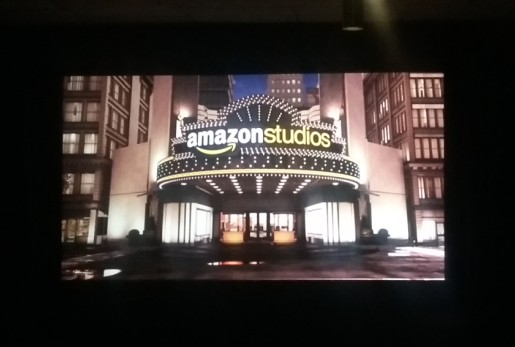
(Amazon Studio Logo On Screen)
Posted by Martin Brooks (Member # 1269) on 11-04-2016, 10:05 PM:
While I completely agree that theatrical windows are too short, that a film must play in a theater to be "real" and that Hastings is full of crap, the problems with the theatrical business are mostly different than the music business.
The music business is in trouble because first they didn't respond to consumers and their desire for digital music which opened the door to illegal downloads. But once they started licensing to Apple's iTunes and other such sites, the problem became that the industry changed from an album market back to a singles market. In the pre-Beatles 60's, the singles market worked because an act would go into the studio and record 3 tracks in a session and the 45 would hit the market two weeks later. But today, acts spend months on a song recording and mastering in different studios, different producers, etc.
And then there were other factors such as the decline of music radio and the consolidation of the music industry to just three majors (in the U.S.).
The problem with letting music be distributed by everybody everywhere, frequently for nothing is that it devalues the music. The average person no longer thinks music is worth paying for. If you send movies down similar distribution routes and have them available on every single $8 a month streaming service, then major movies don't really seem any different than some minor clone movie.
While there has been a revival of the LP market, it's mostly hype. In 2015, just 16.9 million LPs were sold in the U.S. In the first six months of 2016, just 8.4 million LPs were sold.
Adjusted for inflation, the U.S. music industry is now just a third of its former peak. That includes downloading, streaming and licensing.
Posted by Bobby Henderson (Member # 840) on 11-05-2016, 11:12 PM:
I think the music industry is a disaster and I think the movie industry is heading in that direction.
The music industry is a disaster for several reasons, the biggest one being lack of healthy innovation. When music labels were smaller, more independent, etc., they were more adventurous and took greater chances with the kinds of music they would produce and distribute. There was much greater levels of risk and reward to the music labels in taking that approach. But customers benefited greatly from it. Look back at any period from the 1950's through the early 1990's and it will be easy to spot the huge shifts in music styles and the performers tied to those periods.
For the past 20 or so years the music industry has been in a very bland, predictable, boring rut. We can thank the giant media companies who own all the significant music labels for that. These companies figured they could get away not innovating by monopolizing the industry and taking away choice from consumers. They assumed customers would still keep buying just as much music or even foolishly believing customers would buy even more of it, now that their professional decision makers were now making music the right way.
Compound this with the bland situation on radio. Just like music labels, very few radio stations are independent. Their play lists are tightly controlled. Listener requests? Screw all that. Oh, better yet, let's have fake listener requests. Some radio stations actually do this. "Payola" may be illegal, but the record companies and radio stations found a way around that by paying middle man consultant operations who then pay the radio station companies. That helps keep anything radically new, especially anything independently produced, from hitting the airwaves.
Let's not forget the effect music video had on the music industry. Videos made it just as important for a performer to look great as well as sound great. Genuine artists with average looks were no longer acceptable. It's better to have a performer who can be visually marketed as a sex symbol and even better yet to have a bunch of anonymous people behind the scenes writing all their music.
The Internet seems to get all the blame for what's wrong with the music industry. The decline in innovation and gaming the playlists of radio stations were both problems before things like Napster and iTunes were factors.
These days music has largely become commoditized or even devalued, thanks to the continuing string of great ideas from big media companies. There are several streaming services in addition to iTunes, Google Music, etc. Retail music stores were the best showcase for selling music, but such stores have been failing in droves since they can't compete with Amazon (and no sales tax) not to mention Walmart, Target, etc.
Lots of people have their own big music collections in addition to all the Internet based options that are available. And they have lots of choices from those by-gone eras where popular music seemed so much better. So even if a new music act has a genuinely great new album it's actually pretty tough to sell. It's so easy to pull up a free listen of it on YouTube.
I have a pretty big collection of movies on DVD and Blu-ray. But my buying habits in recent years have falling off drastically. A movie has to be really good and have lots of repeat viewing potential for me to put a copy of it on my shelf.
Posted by Mike Blakesley (Member # 26) on 11-05-2016, 11:35 PM:
As a music-biz veteran (about 40 years worth), I agree with most of what's been said in the above two posts. However, one thing that must be said....innovation and responding to consumer needs and wants are great, but nothing can compete with "free." Even if iTunes and the iTunes Store had come along at the beginning of the internet, and had gotten in front of the whole download craze at a buck (or even a quarter) a song, the minute somebody figured out how to download music for free, the results would have been the same as we have today.
Interestingly, streaming is finally beginning to show somewhat of a profit for the major labels (according to Billboard), but it's a fraction of the profits they enjoyed back in the peak years because most people are either downloading music illegally, or listening for free on YouTube or no-cost streaming services; and when they DO pay, selling "songs" is far less profitable than selling "albums."
Posted by Harold Hallikainen (Member # 5405) on 11-06-2016, 12:02 AM:
The retail record store appears to be live and well here. This store outlasted all the chains.
http://booboorecords.com/in-stores/
Harold
Posted by Scott Norwood (Member # 30) on 11-06-2016, 06:28 AM:
Another aspect of the record industry's woes that seems to be conveniently forgotten now is that a good chunk of sales in the boom years of the early '90s was due to selling CDs to the same people who had previously owned LPs of the same material. This was a one-time event that artificially inflated profits during that time.
Posted by Martin McCaffery (Member # 37) on 11-06-2016, 09:26 AM:
^^^ Well it was a one time event for the big bulge, but it has been refined. The same album can be repackaged and resold six ways from Monday and there always seems to be a fan base to buy the definitive re-issue with improved liner notes and the newly discovered demo tracks with bonus sound check from the legendary 1993 concert at the Empire. ![[evil]](graemlins/evil.gif)
Posted by Brad Miller (Member # 2) on 11-06-2016, 10:55 AM:
quote: Bobby Henderson
For the past 20 or so years the music industry has been in a very bland, predictable, boring rut.
That sure sounds like the movie industry! Swing by a theater where you have a friend managing and ask him to randomly pick 10 trailers (just make sure they are all for different movies since these days there can be 80 versions of the same trailer). Then sit down and watch them...it's the same crap over and over.
quote: Scott Norwood
Another aspect of the record industry's woes that seems to be conveniently forgotten now is that a good chunk of sales in the boom years of the early '90s was due to selling CDs to the same people who had previously owned LPs of the same material. This was a one-time event that artificially inflated profits during that time.
The movie industry enjoyed that as well with DVD and then bluray. The problem is they didn't properly master many blurays and to make it worse they keep destroying the audio mixes with this idiotic need to create 7.1 tracks and near-field remixing. I believe they will find that little double dipping scenario won't work with 4K bluray or whatever the next big home video format to catch on will be.
Posted by Bobby Henderson (Member # 840) on 11-06-2016, 05:33 PM:
In the last few years the movie studios have been taking a giant shit on physical media, be it DVD, Blu-ray or Ultra-HD Blu-ray. Aside from the questionable practices in mastering audio and video the damned discs are often very bare bones affairs: hardly any extras, trailers, printed material, bland packaging, etc. There's little in the way of value added stuff to make it worth it to buy a physical copy of the movie and allow it to take up space on your entertainment shelf. Compare that to the year 2000 era when movie studios were putting a shit-ton of work into their DVD special editions of movies.
On top of that the studios are now releasing the physical discs weeks after or even more than a month after the "HD Digital" download is available to buy. The download version of movies are coming out in as little as 8 weeks after the theatrical release. Some are released even earlier. By the way, these "HD Digital" versions are basically the freaking version anyone would see on Netflix, Amazon Prime, Hulu, etc.
Somehow the bean counters think they're going to make more money for the movie studios and parent media companies by getting rid of physical discs, retail channels, etc. In the end they're really going to be making even less. I have yet to buy a virtual copy of a movie. With release windows being so narrow it's pretty easy to wait for the movie to show up on Netflix or HBO.
I used to be really critical of streaming movie services since the video quality sucked. Internet connections in many places, even over cellular networks, have been improving in big leaps. That has allowed streaming services to close much of the gap on video quality with physical discs.
One would think Ultra HD Blu-ray would propel physical media way out ahead of what streaming services can do. But the Ultra HD Blu-ray format has, so far, been one hell of a joke. The overwhelming majority of UHD Blu-rays are not really UHD at all. They're blown up from 2K source material. So it's largely a fake UHD format. I think electronics companies and movie studios could be in for some trouble once enough home theater fans finally get wise to this bullshit. It could be the final nail in the coffin for physical media. But maybe that's what the movie studios really want.
Posted by Steve Kraus (Member # 476) on 11-06-2016, 11:36 PM:
I don't think it's that important for them to change the qualifying rules. As I recall the movie only needs to play a week in LA during the year in question. How tough can that be? Make a theatre a deal they can't refuse for a week? That's pretty simple. Or 4-wall a theatre for a week.
Posted by Jesse Skeen (Member # 586) on 12-01-2016, 03:37 AM:
As someone who has pretty much given up on movie theaters in favor of watching at home, I have an odd opinion about that "legitimacy" a theatrical release gives something. Even at home, I still regard something made for theaters more of a "movie" than something made directly for home video release, TV, cable or internet. What's most apparent, having watched several TV productions on laserdisc when that was "the" quality format and then DVD, is that even with a great technical presentation, stuff made for TV generally just doesn't have the level of production values that a real movie does- sure, there are a few exceptions, but for the most part I think that's fair to say.
At least when I see a good movie at home, I can picture how good it must have looked and sounded at a quality theater, even though I don't have any of those near me. Of course I think the switch from film to digital has blurred the lines a bit, and given me even less reason to go to a theater now. (I review Blu-Rays and DVDs for a website, and for movies released on film I judge the discs by how closely they resemble the original film prints.)
Posted by Mike Blakesley (Member # 26) on 12-01-2016, 04:00 PM:
Here we go again.... this time it's Warners.
I guess I don't understand why the chains and NATO don't just say, "Look, studios... you're going to destroy our business AND YOURS if you keep up this craziness. Here's the deal: There is a good long theatrical window, or we don't play your movies. PERIOD." and then stick to that. Instead there's all this crap of "we're looking to work with our exhibition partners to grow the pie for everyone"..... BULLSHIT, they want to grow the pie for themselves and that's all. They don't give two poops about exhibition, unless we don't pay film rent on time.
Studios Said to Want Films in Homes Two Weeks After Cinema Debut
by Anousha Sakoui
December 1, 2016 — 5:00 AM EST
Hollywood studios, looking to spark stagnant movie viewing, are considering offering fans high-priced home rentals of new films as little as two weeks after they debut in theaters, according to people familiar with the deliberations.
The studios are looking at rental prices ranging from $25 to $50 per film, said the people, who asked not to be identified because the matter isn’t settled. That’s in line with a pair of tickets at theaters in cities like New York and Los Angeles. Kevin Tsujihara, head of Time Warner Inc.’s Warner Bros. unit, said at an investor conference Tuesday he’s held “constructive” talks with exhibitors about a premium home-video offering and is prepared to move ahead.
“We’re working with them to try and create a new window,” Tsujihara said. “But regardless of whether it happens or not -- whether we are able to reach that agreement with them, we have to offer consumers more choices earlier.”
Such a plan could still trigger a fight with exhibitors. Regal Entertainment Group and Cinemark Holdings Inc., two of the largest U.S. chains, have resisted Hollywood’s efforts to cut into the exclusivity they enjoy with new movies. Last year, the companies boycotted Paramount Pictures films that were released on home video seven weeks after their debut in cinemas. Theaters still produce a major share of Hollywood’s film revenue.
Cinemark, the nation’s third-largest theatrical circuit, acknowledged in early November it held preliminary talks with various studios about a premium video-on-demand window, without disclosing details. The company, based in Plano, Texas, declined to comment further. Regal and AMC Entertainment Holdings Inc. didn’t respond to requests for comment.
Early home-video releases of new movies would upend a long-standing industry tradition that predates pay TV, streaming and video recorders. Chains including Cinemark used to enjoy as much as six months of exclusive rights to new releases. In recent years, that has shrunk to about 90 days, according to the National Association of Theatre Owners. And by the third quarter of 2016, some new movies were available for online purchase two months and 26 days after their cinematic release.
But stagnant home-video sales are pressuring studios to ditch or alter that old arrangement. U.S. home entertainment revenue grew 1 percent to just over $18 billion last year, with DVD sales falling 12 percent, according to industry-backed researcher DEG. Domestic box-office revenue grew 2.1 percent to $10.7 billion in 2015.
James Murdoch, CEO of 21st Century Fox Inc., raised the issue in September at an investor conference. He questioned “crazy holdbacks that the theater owners put in place in terms of these blackout periods, that really make a lot of problems for movies.”
“Our business rules are of no interest to families who just want to see the movie,” Murdoch said.
Studios and exhibitors still have a lot to work out. While some executives have discussed releasing movies for home viewing after two weeks in theaters, others have said it could be as long as four weeks. Cinemark described its talks as preliminary.
That suggests studios may pursue different strategies. They’ll also have to decide whether to market films directly to consumers or through third parties like Apple Inc.’s iTunes or pay-TV operators.
In past discussions about earlier home-video releases, theater owners have said they need to be compensated for the risk that would pose to attendance.
Also, the fees that cable networks and services like Netflix Inc. pay for movies are based on box-office sales. Anything that reduces ticket revenue could have fallout for studios in their home-video businesses.
“It is a very difficult knot to unravel,” said Barton Crockett, an analyst at FBR & Co. “Everyone understands consumer tastes are changing and there is pressure to innovate.” But revamping the system has been difficult and means there’s likely to be “a lot of talk and very little changing.”
Bloomberg article
Posted by Bobby Henderson (Member # 840) on 12-01-2016, 05:40 PM:
quote: Bloomberg news article
But stagnant home-video sales are pressuring studios to ditch or alter that old arrangement. U.S. home entertainment revenue grew 1 percent to just over $18 billion last year, with DVD sales falling 12 percent, according to industry-backed researcher DEG. Domestic box-office revenue grew 2.1 percent to $10.7 billion in 2015.
So, let me get this straight. According to this news report, movie studio executives believe declining DVD sales and sluggish home entertainment revenue growth is the fault of movie release windows in commercial theaters? If that's true then they obviously have not been keeping up with current events in their own industry. There's all kinds of reasons why DVD sales are plummeting and overall growth is stagnant. But the theatrical release window is not a factor in it at all. I'll give one obvious observation: when home video sales and theatrical sales were at their peak we still had a pretty substantial theatrical release window.
I believe the main reason why home video industry sales are crappy is because of the gentrified, derivative movies Hollywood has been making. We're getting even more sequels, remakes, etc. Audiences might be willing to watch some of those movies in the theater. But it's another thing to expect those same audiences to buy lots of copies on DVD to just gather dust on their entertainment shelves.
I think the growing number of choices how people can watch movies at home is doing more to cannibalize sales rather than grow them. When a movie plays on Netflix or Amazon Prime it's almost like watching the movie for free. It's not much different than watching a movie on HBO, except the viewer watches the movie when he wants to watch it and is actually paying a little less for the subscription.
The ever shrinking release windows make it even more easy to just wait past a theatrical release for the DVD and even wait til the movie shows up for next to nothing on a streaming service.
I also think physical disc sales are being hurt by various retail stores closing. Lots of home video rental stores have gone out of business. Lots of regular music, book and video stores have closed. Those types of stores are put at an extreme disadvantage to online retailers who charge no sales tax, free shipping and lower overall prices.
Posted by Mike Blakesley (Member # 26) on 12-01-2016, 07:30 PM:
Agreed. THere's also the sheer number of things to watch. A new movie gets forgotten fast when it shows up on one streaming service amongst hundreds of other choices, not to mention all the other channels and services, plus websites, social networks, and actual people all clamoring for your attention. I have a couple dozen TV shows set up to record on my Tivo and I hardly ever watch any of them.
You're right too about today's movies not being "must-haves." I liked Sully and will probably buy that, but that's the first new movie in a long time I've wanted to own.
Posted by Buck Wilson (Member # 5885) on 12-01-2016, 08:20 PM:
quote:
But stagnant home-video sales are pressuring studios to ditch or alter that old arrangement. U.S. home entertainment revenue grew 1 percent to just over $18 billion last year, with DVD sales falling 12 percent, according to industry-backed researcher DEG. Domestic box-office revenue grew 2.1 percent to $10.7 billion in 2015.
So because home sales are declining, they're going to make them available sooner; and because theater grosses are increasing, they're going to decrease the amount of time movies spend in theaters.
Makes perfect sense to me.
Posted by Bobby Henderson (Member # 840) on 12-01-2016, 08:36 PM:
quote: Mike Blakesley
Agreed. THere's also the sheer number of things to watch. A new movie gets forgotten fast when it shows up on one streaming service amongst hundreds of other choices, not to mention all the other channels and services, plus websites, social networks, and actual people all clamoring for your attention. I have a couple dozen TV shows set up to record on my Tivo and I hardly ever watch any of them.
Yeah, I forgot to mention that factor. It's one thing for someone to watch a Hollywood movie release on Netflix when that particular movie was in theaters not even a year ago. But it's another thing for studios to even expect viewers to watch said movie on Netflix when there's a shit-ton of different series to watch. It is a very very crowded field. Netflix, Amazon and Hulu are frequently cycling in/out content.
I've been hearing friends talk about Marvel's Luke Cage, but I can't watch that until I get caught up with Daredevil and Jessica Jones. There's several other series I can't find time to play catch up. Some big budget yet marginal Hollywood movie is going to fall by the wayside with all that viewing work to do.
The same thing is going on with premium cable channels. These days I very rarely ever watch a movie on HBO. I only have that set of channels (and HBO GO) for the original series like Game of Thrones or Westworld. I also like some of their news/documentary programs (some of which win Oscars). Last Week Tonight with John Oliver is often a laugh riot.
We have one video rental store left in Lawton. It's clear on the west side of town, making it a chore to go rent a movie on Blu-ray. I can't remember the last movie I bought on Blu-ray at regular price (I bought a few older movies at drastically marked down prices when Hastings liquidated their inventory). Usually by the time a movie I wanted to see comes on HBO I either already saw it at the theater or rented it on Blu-ray. But I'm not really doing either of those very often these days.
Posted by Rex Oliver (Member # 7593) on 12-03-2016, 01:49 AM:
New movies just aren't worth watching whether at a theater or at home.Hollywood folks are going to have to put on their thinking caps and come up with movies worth watching.Folks are getting tired of apocalypse movies,super hero movies and so on.and not to mention CRAPPY remakes.If a movie was good to begin with----PLEASE-PLEASE -,LEAVE IT ALONE!!!!!Right now I am Star Wars burned out----at this point TOO MUCH promotion of the shows-don't want to watch it whether on IMAX,70MM or whatever.Leave it alone already-I liked Star Wars shows earlier-but now tired of it!Same with Star Trek!LETS COME UP WITH SOMETHING NEW,ALREADY!!!!
Posted by Martin McCaffery (Member # 37) on 12-03-2016, 08:50 AM:
Two comments for Rex:
1) People have been saying Hollywood is out of ideas since before there was Hollywood.
2)There's as whole world of movies not made by Hollywood. Enjoy some
Posted by Martin McCaffery (Member # 37) on 12-05-2016, 08:27 PM:
As a followup to above, from 1911:
quote:
February 18,1911
The Nickelodeon
THE PASSING OF THE WESTERN SUBJECT.
THERE seems to be prevalent a sentiment that the Western photoplay has outrun its course of usefulness and is slated for an early demise. The old thrills are exhausted and people want something new. It is just simply the case of a gold mine that has been worked to the limit and can give no more desirable ore. Apparently all the old Western expedients are frayed to a frazzle and audiences have become familiar with them to the point of contempt. Given the first one hundred feet of a reel and any photoplaygoer of average sophistication can predict the rest. Western melodramas have lost their ability to create suspense, and minus this quality they have small excuse for being. All that remains is the scenery, and even that has lost its novelty, though always holding interest, if well chosen.
This goes on for quite awhile. It's especially interesting since The West of The Western still existed (The Wild Bunch takes places in 1913; Wyatt Earp came to Hollywood in the late 1920's), and movie manufacturers were just beginning to sniff around Hollywoodland.
Anyway, everything old is new again.
Posted by Rex Oliver (Member # 7593) on 12-06-2016, 03:19 AM:
Marten-I try to find other "movies" to watch-even if its sending in to companies for their "free" DVD videos of their products-these can be MORE entertaining than the shows from "Hollywood"!If they don't have DVD videos-just watch on YouTube.There are probably thousands of such videos out there about products-and from websites that have training and promotional films about older things.
Posted by Mike Blakesley (Member # 26) on 12-06-2016, 01:20 PM:
quote: Rex Oliver
Right now I am Star Wars burned out----at this point TOO MUCH promotion of the shows-don't want to watch it whether on IMAX,70MM or whatever.Leave it alone already-I liked Star Wars shows earlier-but now tired of it!
How can you be burned out? There has been ONE Star Wars movie in the past 15 years and now there's one more that only has a minor connection to the first series....I wouldn't call that overload. If they did one every four months you'd have a valid complaint. Of course they're going to promote it, so you're going to hear about it, but if you don't wanna see it then just don't. I don't mind them making more movies if they're good movies.
I'm with you on the superhero movies though. There are too many and they all have the same features. Superhero movies are the "Who Wants to Be a Millionaire" of the movie business.
Posted by Frank Cox (Member # 6258) on 12-06-2016, 03:40 PM:
A group of young men came in last night and one of them said, "You should bring in more superhero movies. We want to see superhero movies." ![[Smile]](smile.gif)
Posted by Jesse Skeen (Member # 586) on 12-07-2016, 01:49 AM:
I've heard that since Disney bought Star Wars, they want to put a new Star Wars-related movie out every YEAR. That's bound to get old sooner or later, and one of them will bomb and kill the franchise for a few years.
Posted by Scott Jentsch (Member # 1681) on 12-07-2016, 01:54 PM:
As long as the stories are interesting, I don't think it matters how often they brought them out. Of course, that means that they can't tread over the same ground over and over again, which would be challenging, but just look at the possibilities for origin stories, universe expansion, etc.
It just can't be the same thing over and over again. The story has to have a soul to strike a chord with audiences, because people see through CGI-generated empty shells with nothing interesting to say. Some movies wear out their "reason for being" within their own running time, much less multiple franchise installments.
Posted by Mike Blakesley (Member # 26) on 12-07-2016, 02:04 PM:
I'm just glad it is Disney who bought Star Wars. They have the money and the talent to do good stories, rather than just pumping out meaningless sequels. (CoughSonycough)
Posted by Martin McCaffery (Member # 37) on 03-18-2017, 09:31 AM:
Here's Back:
Variety
quote:
Netflix CEO Reed Hastings: Movie Theaters Haven’t Innovated Beyond Popcorn
Senior Silicon Valley Correspondent
Janko Roettgers
Senior Silicon Valley Correspondent
MARCH 17, 2017 | 10:41AM PT
Asked about his company’s relationship with major theater chains, Netflix CEO Reed Hastings didn’t pull any punches on Thursday. “How did distribution innovate in the movie business in the last 30 years? Well, the popcorn tastes better, but that’s about it,” he quipped.
Hastings made these remarks during a Q&A session with reporters at the company’s headquarters in Los Gatos, Calif., where he suggested that new distribution models could do for movies what cable networks and online services have done for TV shows.
“What Netflix wants to do is to unleash film,” he said. “It’s fundamentally about growing the movie business.”
Netflix has come under fire from major theater chains as well as organizations like the National Association of Theatre Owners for not sticking to the traditional release window model, which lets movies debut in theaters months before they transition to home video.
On Thursday, Hastings pushed back against the notion that the company aims to bypass theaters. “We are not anti-theater,” he said. “We just want things to come out at the same time.”
Shunned by major theater chains, Netflix last fall struck a deal with iPic Entertainment, a small chain with 15 theaters. Under that deal, iPic will show 10 Netflix movies day-and-date with their online releases. This won’t give Netflix movies a huge theater audience, but the deal does allow the company to qualify its titles for the Academy Awards.
Hastings also used the Q&A to comment on a wide range of other issues, including net neutrality. He didn’t seem too concerned about policy changes in this area, despite the new administration’s intent to repeal rules that require internet service providers to treat Netflix’s traffic equal to that of other streaming services. “The culture around net neutrality is very strong,” Hastings said, arguing that consumers would still expect equal access.
Asked once again why Netflix doesn’t release any ratings for its shows, Hastings joked that withholding data would give his company “mystery and intrigue.” He added: “We haven’t released ratings in 10 years, and it hasn’t held us back.”
Posted by Mike Blakesley (Member # 26) on 03-18-2017, 12:55 PM:
I hate it when people who are not in our business think they know all about it.
quote:
“We just want things to come out at the same time.”
He forgot to add "on Netflix" to that sentence. If movies came out in theaters, cable, Netflix, Hulu, HBO Now, Amazon Prime, iTunes, and all the rest, he would be less excited about the idea. He can't understand why the theaters want exclusivity when he wants it himself.
Posted by Bobby Henderson (Member # 840) on 03-18-2017, 01:48 PM:
Reed Hastings is only pushing this day and date bullshit to keep the gravy train rolling on Netflix stock prices (currently trading at an all time high of 145.11 per share as of March 17). He is only looking at the movie business through the very narrow prism of his streaming business interests.
quote: Netflix Propaganda
“What Netflix wants to do is to unleash film,” he said. “It’s fundamentally about growing the movie business.”
In my opinion, I think the streaming services have largely hit their peak. I think the streaming industry is due for some kind of shake-up. Adding Hollywood movies, day and date released, into the Netflix lineup or playlists of rival streaming services probably won't grow anything. It certainly will not put more money into the pockets of movie studios and will only steal greatly from the theater business. Considering how badly home video sales of movies have been doing in recent years I would think the movie studios would try to do more to grow the theatrical side of the movie business.
Here's the main reason why this "golden age of TV" has peaked: there's already too much stuff to watch on TV. I don't have nearly enough free time to watch even 10% of the TV series and movies Netflix puts on its service. Every time I turn around there's yet some new series with 10-14 episodes per season to watch. It's a chore just keeping up with all the Marvel stuff. "Iron Fist? I just finally got finished with Luke Cage! There's a series called The Defenders coming out this Summer? What the fuck!?" There are only so many hours in the day people can spend watching TV.
Movies aren't going to do any better on streaming services, even if they're released day and date. There might be some initial curiosity and excitement from the public. But that will decline back into the ho-hum attitude present now. As it stands a lot of Hollywood movies get lost in the clutter of the app interfaces of these streaming services. As movie theaters die off almost entirely in a day and date release model, viewer interest in those "movies" would decline even further since they would only be 2 hour TV shows then.
Netflix' user interface sucks. It's a pain in the ass to discover interesting movies there unless you already have your mind made up on a specific movie title and know it's available to watch. You can't find a full list of everything that's on Netflix, much less know when it was added and when it will be pulled. There are so many TV series and other TV shows, stand up comedy specials, etc. that they literally bury a lot of movie titles. I can't say the user interfaces of Amazon Prime and Hulu are any better.
Cable/satellite TV is horribly over-priced, so all the cord-cutting is going to continue. It may accelerate as certain cable TV series like Game of Thrones draw to an end over the next couple years. The much lower priced streaming services will continue to be an attractive alternative, especially with residential Internet speeds in many areas now improving to speeds fast enough to stream 1080p HD on a fairly reliable basis.
It will be interesting to see what happens when the stock prices of Netflix and Amazon come down from current all-time high trends. People have been saying Netflix has been over-valued for years. A correction will happen eventually. Will Reed Hastings be banging the drum even harder for day and date movie releases? Will he increase subscription prices? Will Hollywood studios increase their fees to Netflix, Amazon, etc.? I would mention Hulu in this, but all of its stock is privately held.
Posted by Mike Blakesley (Member # 26) on 03-18-2017, 02:39 PM:
What I don't understand is why the theater big shots aren't screaming "Netflix wants to strangle the theater business" instead of trying to figure out ways to jump in bed with them.
I think it's because the theatre execs don't want to admit that day and date would kill their (and our) business model.
I still suspect, though, that once the theaters are out of the way, studios will be more than happy to stop producing $200 million "blockbusters" and switch over to producing 30 minute TV epidsodes, which are much cheaper to make and just as easy to sell to Netflix and their ilk. The major loss will be an artistic one... the two hour movie will be a lost art form, the same way the 40 minute record album is headed.
Posted by Buck Wilson (Member # 5885) on 03-18-2017, 02:54 PM:
quote: Mike Blakesley
What I don't understand is why the theater big shots aren't screaming "Netflix wants to strangle the theater business" instead of trying to figure out ways to jump in bed with them.
I think it's because the theatre execs don't want to admit that day and date would kill their (and our) business model.
They may truly be so naive that they haven't even considered the implications. As has been mentioned now, most of these big-wigs were plucked from outside of the industry and thus, they don't have a very deep understanding of why things are the way they are, nor are they very passionate about the industry.
Posted by Mike Blakesley (Member # 26) on 03-18-2017, 03:37 PM:
I think Netflix is already trying wean people off of the two-hour movie; just look at what they feature on their streaming service. It's bloated with TV shows and bad standup comedy, and like Bobby said it's impossible to see a "list" of what they have, or to search out a movie you actually want to watch.
Posted by Harold Hallikainen (Member # 5405) on 03-18-2017, 11:38 PM:
We don't have much problem finding stuff on Netflix. They recommend stuff based on what we've watched, and the recommendations are normally pretty good. We will often hear about a movie we want to see and find the search engine on Netflix works well.
But, it's always preferable to see a movie in a theater! We spent the afternoon and evening at the EFPALOOZA Film Festival at the Bug Theater in Denver. Not everything was great, but several of the films were.
Harold
Posted by Dave Bird (Member # 490) on 03-19-2017, 09:53 AM:
I understand entities like Netflix asking the question, but have always been curious to know why Exhibition hasn't gone ahead and produced any content of its own, even as a kind of "warning shot" across the bow of the traditional studios. It's not like there's anything proprietary about buying a story, hiring a director and some actors and shooting it.
Posted by Martin McCaffery (Member # 37) on 03-19-2017, 12:03 PM:
Well, in the US you run into the Paramount consent decree, which prohibits vertical integration. I doubt it would be enforced these days, and actually there have been erosions. Disney owns at least a few theaters. Regal and AMC own Open Road Films. There are other small distribs that own theaters, and may even dabble in art films (the Biograph and Key in DC many, many years ago, were big financial backers of John Waters; and KB made at least one blaxploitation film). God knows porn theaters invested in porn movies back in the day.
Basically, mass producing films is a huge capital investment. Any movie chain with that kind of capital is busy buying up other movie chains. Financial a handful of indie films a year may be within AMC/Regal's budget, but even they won't be able to load up a multiplex.
I'm sure the day will come when some studio will buy a big chain or vice-versa, but it will take a lot of blood letting to get it through, and still won't provide any security for other exhibitors.
Posted by Paul Linfesty (Member # 214) on 03-19-2017, 06:25 PM:
quote: Martin McCaffery
Well, in the US you run into the Paramount consent decree, which prohibits vertical integration.
But weren't those modified (eliminated?) during the 80's? Paramount and WB co-owned Cinemerica Theatres (mostly Mann Theatres) and Sony Pictures owned Sony Theaters (Cineplex and Loews) before the marketplace had been proven to change against such an arrangement. Of course, the market has changed again, so...
Posted by Jay Glaus (Member # 6011) on 03-20-2017, 12:13 AM:
Isn't Showcase the parent company of Paramount/Viacom?
Posted by Mark Ogden (Member # 43) on 03-20-2017, 05:52 AM:
^ National Amusements is the parent company, so to speak, of both Showcase Cinemas and Viacom, which in turn owns Paramount. It's the company owned by the Redstone family, who are controlling shareholders, but Showcase and Viacom are separate corporate entities.
Posted by Martin McCaffery (Member # 37) on 03-20-2017, 07:54 AM:
quote: Paul Linfesty
But weren't those modified (eliminated?) during the 80's?
I think "ignored" is the appropriate description.
I vaguely remember some entity arguing that the Paramount decree did not apply to them because they did not exist in 1948 and therefore were not covered by the decree. Don't remember how it turned out.
Posted by Mike Blakesley (Member # 26) on 03-20-2017, 11:52 AM:
NATO just came out with their video windows analysis, which covers releases from 2012 thru 2016. While it's impossible to summarize all the details on one post here, one fact stood out to me like a beacon:
The studio with the longest windows consistently: Disney. In fact, while their average window is shorter this year than it was last year, Disney's window today is still averaging 4% LONGER than it did in 2012. Their average window is just under four months.
And: The studio with the highest grosses: Disney.
That right there should tell the studios something. None of Disney's films had a window under 90 days, streaming or physical.
Posted by Dave Bird (Member # 490) on 03-20-2017, 01:44 PM:
I think Disney has probably put more thought into these windows than anyone. They're the ones who've figured out how to open and close them (putting video "back in the vault", and "re-releasing" decades-old content). I have almost zero issues with Disney, their films do very well with us. Occasionally they seem to want 3 week runs, which is tough for our "still single" drive-in to commit to. Once our 2nd screen is up, no worries.
Posted by Martin McCaffery (Member # 37) on 03-20-2017, 06:19 PM:
And now, a rebuttal:
IndieWire
quote:
Tim League Refutes Netflix’s Reed Hastings On Movie Theater Innovation
The founder of the Alamo Drafthouse has some issues with Netflix's Hastings saying that the movie business hasn't innovated in the last 30 years.
Tim League
The following editorial is written by Tim League, co-founder and CEO of the Alamo Drafthouse Cinemas.
Netflix. It seems like every other interview I give asks me about the “threat” of Netflix. I’ll be blunt. Netflix doesn’t concern me, and I think it is obvious after last week that the cinema industry is of no concern to Netflix either.
We are in very different businesses.
Let me define those businesses.
Netflix is in the business of growing a global customer base by being the best value proposition subscription content platform.
And they are doing a great job. Their portal is stable, intuitive, cheap and delivers plenty of great, new content every month. They also provide a fantastic financial opportunity for both emerging and veteran storytellers. I stand in awe of the audience they have built and the wealth they have amassed in such a short time.
But here’s my business: Cinema. Cinemas are in the business of offering an incredible, immersive experience that you simply cannot duplicate at home. Our job is to put on a show and provide a great value proposition for getting out of the house, turning off your phone and enjoying great stories in the best possible environment. At our best, cinemas should also be local community centers with a real, tangible relationship to their surrounding neighborhood.
Last week, Reed Hastings once again dumped on my industry. He summarized the innovation of cinema in the past 30 years by saying, “Well, the popcorn tastes better, but that’s about it.” While our industry has not shown the vision and truly game-changing innovation of Netflix, Hastings’ antagonistic approach to cinema inadvertently exposes an underlying disrespect to the creators and auteurs that drive this entire machine.
Our best and most talented, passionate filmmakers vehemently do not want their films to be viewed first and foremost on a phone, on the train to work, while checking email, while chopping vegetables for the evening meal, on mute with subtitles while rocking a baby to sleep, or while dozing off before bed. The reality is, most Netflix content is being “consumed” in a less-than-ideal environment.
Great filmmakers create content to share their fully realized creations in a cinema with full, rich sound; bright, crisp picture and a respectful audience whose full attention is on the screen. And because of that, when courting filmmakers young and old to create content for their platform, I wish Netflix would consider the relationship with cinemas built by Amazon, Hulu, HBO, Showtime and Epix.
They all believe in cinemas as meaningful partners. They also respect those filmmakers who want meaningful theatrical engagements for their films. They believe in the promotional partnership that successful theatrical engagements can give to word of mouth, awards consideration, brand loyalty and ultimately maximized financial returns.
Amazon, for example, will be at CinemaCon next week building and strengthening their relationship with cinemas instead of tearing it down the week before.
I got into this business because I love movies. I hold the cinematic experience to be sacred, wonderful and these days even therapeutic. I love the shared communal experience and the charged conversations I have after watching a movie in a cinema. I want to forge relationships with companies who truly love movies, too.
I do not believe that cinemas are owed or grandfathered into an exclusive window before movies are offered ostensibly for free on platforms such as Netflix. I contend that cinemas have earned, and must continue to earn, an exclusive window by providing the experience that directors desire as well as providing a significant financial benefit to producers and financiers.
To close, I’ll offer my flippant counter, as I was asked specifically to respond to Hastings’ remarks of last week. Until a meaningful relationship is forged with cinemas, Netflix is not making “movies.” They are instead funding exclusive-access commodities that help grow their subscriber base.
In “Lost in America,” Albert Brooks told his wife, after she lost their entire savings at the roulette wheel in Vegas, that she no longer had the right to use the term nest egg.
“Do me a favor,” he said. “Don’t use the word ‘nest egg’. You may not use that word. It’s off limits to you! Only those in this house who understand nest egg may use it! And don’t use any part of it, either. Don’t use ‘nest.’ Don’t use ‘egg.’ You’re out in the forest you can point, ‘The bird lives in a round stick.’ And you have ‘things’ over easy with toast!”
I, for one, would welcome the dialogue to forge a meaningful partnership for theatrical exhibition and promotion of select Netflix productions, but until we have that, I consider the term “movie” to be their “nest egg.”
But even as I pen this probably unjustifiably snarky retort, I will acknowledge some underlying truth to Reed Hastings’ words. We do, as an industry, need to invest in innovation. Cinema’s primary threat today is not Netflix; it is ourselves. We must continue to maintain high exhibition standards, invest in new sound and picture technology, improve the digital experience for our guests, develop innovative ways to delight our guests and ensure that we live up to our one job – make going to the cinema an amazing experience.
If we do that, we should be able to look back on another thirty years of limited innovation to our core product and say, “Job well done, we didn’t screw up what has always been and remains great about the cinema: the show itself.”
Powered by Infopop Corporation
UBB.classicTM
6.3.1.2