This is topic AMC shares plunge 25% after pre-announcing ‘shocking’ quarterly loss in forum Film-Yak at Film-Tech Forum ARCHIVE.
To visit this topic, use this URL:
https://ft-forum.com/ft/cgi-bin/ubb/ultimatebb.cgi?ubb=get_topic;f=8;t=007527
Posted by David Stambaugh (Member # 1102) on 08-02-2017, 02:32 PM:
https://www.cnbc.com/2017/08/02/amc-shares-plunge-after-pre-announcing-shocking-quarterly-loss.html
Shares of AMC Entertainment are diving by 25 percent Wednesday after the company revealed it expects a dramatic second-quarter loss, and believes the third quarter will be equally unrelenting.
AMC said the expected loss reflects "industry box office trends." American box offices declined 4.4 percent in the second-quarter compared with the same period last year, according to AMC.
Against this tide of declining moviegoing, the second-largest movie theater chain in the U.S. is attempting to curtail costs by cutting back on both its staff and operating hours, as well as through a new pricing strategy. But the cost reduction initiatives have yet to bear fruit this year.
"We were caught by surprise when AMC pre-announced second-quarter results over 30 days after the close of the quarter, and were further surprised by the magnitude of the top and bottom line miss," Wedbush Securities' Michael Pachter wrote in a note, along with a team of analysts.
AMC's adjusted projection for earnings before interest, taxes, depreciation and amortization "shocked" Pachter, who anticipated adjusted EBITDA of more than $200 million. Instead, AMC expects adjusted EBITDA to come in between $134 million and $136 million – or about $65 million short of Wedbush expectations.
With AMC's second-quarter report still to come, Pachter said "something doesn't sound right" before speculating that the company's expenses may be to blame.
"We can only surmise that the company had some unusual expenses during the quarter that it plans to eliminate in the next six months," Pachter said.
Wedbush is maintaining an outperform rating on AMC's stock, while the firm "anxiously awaits a more detailed explanation from management."
Eric Handler, media analyst at MKM Partners, told CNBC's "Power Lunch" on Wednesday that he does not see "a massive issue long term" for the movie theater chain and declared "the industry as a whole is healthy."
"People love to say the industry is dying if they have one or two bad quarters in a row. The year is still tracking flat, and when you look at the last two years, you've had record years," Handler said. "I think you're going to see another record year in 2018."
AMC's stock is down more than 53 percent this year, when it began near its 52-week high of $35.65. The company is expected to formally report second-quarter earnings Monday after the market close.
Correction: This story has been updated to reflect that it is solely about AMC Entertainment.
Posted by Mark Ogden (Member # 43) on 08-02-2017, 03:03 PM:
It’s not just AMC, it’s also Dalian Wanda, the Chinese company that owns them. There was a recent report in the financial media to the effect that everything they have touched has turned to crap, including their hotels and amusement parks. The company, it seems, is mired in debt and bad management.
I personally dread going into AMC theaters, but here in northern New Jersey they are pretty much the only player in first-run movies. Their concession prices this summer took a big jump, the smallest soda is now $6.15, the smallest popcorn is over $8.00. I used to sometimes get the snack-size combo, but that’s gone. They are typically down to one assistant manager/ticket seller during matinee hours, they want you to purchase your ticket from these disgusting, fingerprint smeared ticketing machines which are frequently out of paper or otherwise non-functional.
The single most infuriating thing to me, though, is their “Stubs” frequent customer program, which allows members to jump the ticketing and concession lines. I typically don’t join such programs, and never do when they are not for free. At the local AMC, you can be in a line of thirty people waiting for snacks, but as long as a Stubs member is in their separate line, they wait on them first, turning you into a second-class customer. The last time I went on a busy night, the concession line for the non-member riff-raff like me didn’t move at all because the Stubs line stayed occupied. I wonder how much in concession sales was lost from the mere mortals who walked away. It’s pretty damned infuriating, I can tell you.
How I long for an Arclight or an Alamo to show up within a reasonable driving distance.
Posted by Bobby Henderson (Member # 840) on 08-02-2017, 03:25 PM:
I'm not at all surprised to see AMC in this situation.
Clearly the take-over of Carmike Cinemas has to be affecting AMC's balance sheets. The 3rd quarter earnings reports of most movie theater chains may be lousy, thanks in part to a lackluster summer movie season.
It's interesting AMC is talking about cutting staff. I don't know how they're going to cut staff any further at many Carmike locations; those theaters had been running on bare minimum staff for many years already. I have seen AMC playing around with pricing and booking strategy here in Lawton at both former Carmike locations. The AMC Classic 8, which used to be the Carmike 8 location I visited many years, was showing only bargain/2nd run content. Now half the screens are running 1st run content, but at prices $3 to $4 cheaper than the newer Patriot 13 theater nearby. Both theaters are running some of the same movies, which completely blows my mind considering the previous clearance situation between the Carmike 8 and UA Cache 8 theater years ago. We watched War for the Planet of the Apes this past weekend on one of the former Carmike 8 theater's former THX screens for what seemed like a bargain.
I think we're going to see more worrisome earnings reports from movie theaters in the months ahead. All sorts of factors are contributing to this. The short release window and growing popularity of streaming services are both factors. I think the broader down-turn in brick and mortar retail is having a big effect. The restaurant industry overall is in a down-turn as well. This can't just be coincidental. The growing migration to online shopping is affecting "main street" badly.
Amazon CEO Jeff Bezos is now (technically) the world's richest man. The media is in love with that news and still posts articles about the online situation as only a positive thing, rather than something that may eliminate tens of millions of jobs. Just this morning I saw an article on Bloomberg, saying Amazon might be a "greater good" since it turns out women are spending less time shopping in stores and more time at home with the kids. Uh, yeah, having one's face buried in the computer browsing for bargains and surfing social media isn't what I would call spending time with the kids. The true "greater good" is having as many citizens gainfully employed as possible. Decimating the physical retail landscape is not going to be good for anyone, even the executives at online businesses like Amazon -after all even their customers can't buy shit if they don't have a job.
Posted by Mitchell Dvoskin (Member # 751) on 08-02-2017, 03:25 PM:
> The single most infuriating thing to me, though, is their “Stubs” frequent customer program, which allows members to jump the ticketing and concession lines.
I went to see Dunkirk at the AMC Garden State Plaza last week. This happened to me on the concession line. I just walked away without buying anything. There is nothing I want bad enough to be treated rudely.
This was my first, and probably last trip to AMC for a while. Even though I understand the forces that drive the pricing, as a consumer I don't feel I am getting value for my money at either the boxoffice or the concession stand.
Unrelated, in the same Garden State Plaza mall, is a physical Amazon store...
Posted by Leo Enticknap (Member # 534) on 08-02-2017, 04:25 PM:
Loyalty programs only really make business sense in situations where the customer doesn't have a lot of choice, especially if they are perceived to penalize customers who choose not to join them.
For example, for about at 10-year period in my life, I was making 2-3 transatlantic journeys a year, starting from a small airport that was only served by one airline (KLM). It therefore made sense for me to join their frequent flyer program, because it wasn't as if I had a choice of airlines. I was buying all my plane tickets from them anyways, so I might as well have the points.
But in contrast, why would I bother shopping at Vons now (which basically requires you to join their card program or pay noncompetitive prices for groceries), when Stater Bros. and Trader Joe's are nearby, both of which have a business model that rejects loyalty cards in favor of reasonable turn-up-and-buy prices? However, if Vons was the only supermarket a sane distance from my home, I'd probably join their program.
Likewise, AMC making non-members stand in line for ages for concessions is probably hurting them at every site where alternative theaters playing the same movies are within a reasonable drive. At locations where they're the only theater in town, they're probably getting a lot of members, though out of necessity rather than actual loyalty.
Posted by Harold Hallikainen (Member # 5405) on 08-02-2017, 04:49 PM:
Why is a profit of $134-136 million a loss? Apparently the profit was below someone's expectation, but it appears to not have been a loss. The article cites overall industry revenue compared to the same quarter in the previous year, but does not mention AMC's revenue or profit compared to the same quarter last year.
What loss?
Harold
Posted by David Stambaugh (Member # 1102) on 08-02-2017, 04:59 PM:
EBITDA is messy. Sometimes it's used as an accounting trick (not saying AMC is doing anything like that). It's only part of a larger snapshot of a company's financial health.
http://www.investopedia.com/terms/e/ebitda.asp
EBITDA - Earnings Before Interest, Taxes, Depreciation and Amortization
"A common misconception is that EBITDA represents cash earnings. EBITDA is a good metric to evaluate profitability but not cash flow. EBITDA also leaves out the cash required to fund working capital and the replacement of old equipment, which can be significant. Consequently, EBITDA is often used as an accounting gimmick to dress up a company's earnings. When using this metric, it is key that investors also focus on other performance measures to make sure the company is not trying to hide something with EBITDA."
Posted by Travis Cape (Member # 466) on 08-02-2017, 05:07 PM:
Sorry, I absolutely love the reserved seating and being able to jump ahead of nearly everyone in the concession line.
It's a mere $15 a year to do that. I would pay many times over that to bypass customers that often have no idea what they want. I only jump into the "magic" line when there's a mass of clueless people and I am close to showtime.
They could remove that perk and I would still pay the $15 to get the rewards, the free up size and the rebate of the on-line ticket surcharge.
Posted by Harold Hallikainen (Member # 5405) on 08-02-2017, 05:08 PM:
True. It's net income with interest, taxes, depreciation and amortization added back. Adding back interest is interesting since the "interest" would be considered profit if the funds were from stockholders instead of lenders. But, the funds DID come from lenders, so the interest has to be paid! I assume the Taxes part is tax on profit, so I can see excluding that from a profit calculation. Depreciation and amortization, however, are real costs. Depreciation is supposed to cover the replacement of assets as they age. This should not be neglected. I notice this sort of thing all the time where only a capital expense is considered when purchasing something with nothing budgeted for maintenance and depreciation.
Still, the article headline appears to indicate there was a loss, but nothing in the article shows one...
Thanks!
Harold
Posted by David Stambaugh (Member # 1102) on 08-02-2017, 05:11 PM:
Here's another analysis by CNBC.
https://www.cnbc.com/2017/08/01/amc-entertainment-shares-fall-27-percent-after-hours-on-earnings-warning.html
Shares of AMC Entertainment plummeted after the company previewed a dramatic quarterly loss, unveiled a cost reduction plan and forecast a "very challenging third quarter."
Here's what the company projects for its second quarter, compared to Wall Street projections, according to Thomson Reuters consensus estimates:
* Loss per share: $1.34 to $1.36, vs. 1 cent expected
* Revenue: $1.200 billion to $1.204 billion, vs. $1.249 billion expected.
In the year-ago quarter, the company reported earnings of 24 cents a share on $764 million in revenue.
Posted by Harold Hallikainen (Member # 5405) on 08-02-2017, 05:37 PM:
Much more detailed article. Thanks! And, it DOES show a loss. It looks like revenue is 97% to 99% of expected. I have no idea what the margins are, but either they are very tight or expenses are way up for a 1% to 3% change in revenue to result in turning a profit to a loss.
Thanks for posting the link!
Harold
Posted by Bobby Henderson (Member # 840) on 08-02-2017, 07:28 PM:
quote: Leo Enticknap
Loyalty programs only really make business sense in situations where the customer doesn't have a lot of choice, especially if they are perceived to penalize customers who choose not to join them.
I'm not sure how many movie-goers participate in AMC's Stubs Premiere thing. I signed up for it a few weeks ago, somewhat reluctantly. It's $15 per year. If you're a Stubs Premiere member you can order tickets online without being charged any convenience fees. When I was ordering tickets to see Spiderman: Homecoming at a Dolby Cinema @ AMC theater in Oklahoma City they were going to charge me over $4 in convenience fees for 2 tickets. That's what prompted to me spend the $15 on a membership.
Both the decent theaters here in town on Lawton's West side are now AMC-branded. So I'll probably make enough use of the Stub Premiere program to make it more than pay for itself pretty quick. Stubs Premiere members get free size upgrades on drinks and popcorn. Ticket and concessions purchases add up points on your account that you can redeem for discounts or even free movie tickets.
I didn't know about the concession line-skipping feature with Stubs Premiere until a staffer pointed it out to me at OKC's Quail Springs Mall theater. That theater at least had a cash register set up at the far left to cater to Stubs Premiere members without screwing up the traffic at all the other registers. It wasn't very busy, but then we were at a matinee show. I forgot about the perk when we visited the Patriot 13 theater here in Lawton; all the ticket & concession sales are going through the same line.
Whether you have a premium membership or not, if you order tickets online you can get a QR Code emailed or texted to your phone. The code lets you skip the ticket counter and go directly to the staff member tearing tickets at the theater entrance. That can at least let you get some good seats in the theater before going back to the snack counter. More theaters are going to reserved seating, which makes it more necessary to order tickets online to reserve good seats in advance. Stubs Premiere isn't free, but if you visit the theater on any sort of frequent basis (and are watching movies together with your significant other) it really cuts down on the convenience fee bloat.
quote: Harold Hallikainen
Why is a profit of $134-136 million a loss? Apparently the profit was below someone's expectation, but it appears to not have been a loss.
Once a company's stock becomes a publicly traded commodity it is never enough for the company to merely be profitable. It must be even more profitable from one quarter to the next. Any scheme to inflate those stock prices, no matter how stupid for the long term health of the company, is worth it to investors. Movie studios and their parent media companies are victims of the same greedy hysteria.
Posted by Monte L Fullmer (Member # 2797) on 08-03-2017, 02:20 AM:
If you check out money dot cnn dot com and plug in the names of AMC, REG and Cinemark, you can see that REG and Cinemark are taking a 4.5% hit in the stocks, where AMC does show the 25% drop in the stock count.
Yet, the actual drop for AMC was 4.4%
Still though: having these almost 5 percent drops can hurt a business.
Posted by Buck Wilson (Member # 5885) on 08-03-2017, 04:03 PM:
quote: Bobby Henderson
If you're a Stubs Premiere member you can order tickets online without being charged any convenience fees. When I was ordering tickets to see Spiderman: Homecoming at a Dolby Cinema @ AMC theater in Oklahoma City they were going to charge me over $4 in convenience fees for 2 tickets.
Are we not going to talk about what a GD racket it is to even have the "convenience fee"?? It's one thing using a 3rd party website like Fandango, but when you're using AMC's own website, and you're enabling them to cut box office staff by using it, why in the actual fuck am I being charged an extra $2!??! If anything, it should be LESS!
Posted by Jason McMillan (Member # 5542) on 08-03-2017, 04:14 PM:
quote: Mitchell Dvoskin was the last to post
The single most infuriating thing to me, though, is their “Stubs” frequent customer program, which allows members to jump the ticketing and concession lines.
I agree with this, but thankfully, at the AMC I occasionally visit they let you order your food online when you purchase your tickets and will bring the order to your seat so you can skip the concession line all together. That's pretty handy.
Posted by Frank Cox (Member # 6258) on 08-03-2017, 05:50 PM:
I occasionally (but not often) run a bit short on popcorn, especially now that I have the drinks in bottles rather than fountain so the concession line moves faster. I try not to make a huge amount of popcorn at once since customers like to see popcorn popping. But if the popcorn runs short and I'm making a batch that hasn't popped yet, and it's showtime I'll just tell the customer that he can go in to the auditorium so he won't miss anything and I'll bring his popcorn to his seat as soon as it's ready. He just has to tell me how much salt and butter he wants on his popcorn (if any).
Some people are quite shocked when I tell them that I will do that, but it's not a difficult thing to do and I don't want a customer missing part of the movie he's paid for, so why not?
Posted by Bill Brandenstein (Member # 7758) on 08-03-2017, 06:51 PM:
Frank, YOU the man!
Seriously, I wish you weren't so far away. Would love to give you my business.
Posted by Marcel Birgelen (Member # 6801) on 08-03-2017, 07:01 PM:
Obviously, the logistics of a "modern, cost-optimized" multiplex with a gazillion screens are a bit different than those of a single screen operation. ![[Wink]](wink.gif)
Then again, can't expect any service for a measly 8 bucks for a bucket of popped corn...
Regarding AMC... With this Summer of Bummer still in the making, I'm afraid their Q3 investor's call won't be any better than their Q2 report.
You know, it's easy to blame it all on the Kong-sized gorilla in the room, but with the constant stream of dire crap Hollywood is churning out, it's hard to convince people to buy sugary bubble water at 6 bucks a can.
quote: Travis Cape
It's a mere $15 a year to do that. I would pay many times over that to bypass customers that often have no idea what they want. I only jump into the "magic" line when there's a mass of clueless people and I am close to showtime.
It's a lousy way of doing business. First of all you want me to commit my soul to your company, by playing to my ego. Secondly, once you actually managed to sell everybody your magic VIP pass, we just pay $15 a year extra for standing in the same line?
Posted by Paul Linfesty (Member # 214) on 08-03-2017, 07:42 PM:
And it's reasons like this that make me think movie theatre going is dead (or will soon be). I know I have lost the draw of going to the movies. It no longer feels special. It could be age, but it also could be the lack of experience. In Bakersfield, AMC was the chain that introduced crappy theatres to Bakersfield in 1974 (after about two years, they made larger scope screens by just cropping off the sides to 2 to 1.) It was also the first first-run theatre in town that only had mono sound. They did hang on for around 25 years (the last few as a discount house. Then just about a year and a half ago, they re-entered the Bakersfield market on the same street a few blocks away in an old UA sixplex (circa 1979)when they acquired Starplex. At the time I predicted they would either (a) close the theatre or b) upscale it. They chose the latter and the results will be unveiled within the next couple of weeks or so. I find it hard to believe the paper's claims that this cost $4 million. They will face some competition shortly from the new to Bakersfield Studio Movie Grill.
There was a time when I would go to each new theatre opening. These concepts seems to me to be gimmicks born of desperation. The theatre experience as I knew it is gone. I still attend, but I just get more and more bored.
Posted by William Kucharski (Member # 7246) on 08-03-2017, 08:19 PM:
As a long-time Stubs member, I appreciate being able to jump long concessions lines, believe me; it's one of the perks that convinced me to stay with the program when they started charging for it.
quote: Marcel Birgelen
It's a lousy way of doing business. First of all you want me to commit my soul to your company, by playing to my ego. Secondly, once you actually managed to sell everybody your magic VIP pass, we just pay $15 a year extra for standing in the same line?
Every AMC I have been to has a separate queue for paid Stubs members, and employees are told to serve them first.
The problem is "cut staff?" There's already only one person working behind the counter for concessions even at the busiest times (thus the long lines) and now that more are offering regular food options, the situation is getting worse.
AMC Feature Fare
Do most people have the time to wait before showtime for their flatbread pizza to cook? Oh, and heaven forbid you need to find a staff member to point out a presentation issue…
Around me AMC is also spending a lot of money converting theaters to reclining seats and "Dolby Cinema" theaters but the resulting product is horrific - a "Dolby Cinema" premium presentation space where both lower corners of the screen glow bright red throughout the movie from the reflected stair lighting. Managers who replace lamps in projectors but don't recalibrate black levels so your average meeting room projector has better contrast. Theater volume levels that are almost universally set way too low. Really they're all about the "get the masses through for the latest two week blockbuster run" audience.
About five years ago I loved AMC, but they're now my chain of last resort.
Fun fact: Their latest move - they eliminated small, medium and large on popcorn, and made the smallest popcorn the former medium and the new large is their former XL, and prices were modified accordingly. I still have a few "Free Small Popcorn" coupons which are now discounts off the price of a "Regular."
Also, don't give Alamo too much of a thumbs up; every single time I go, they get my food order wrong. Every time. Including no matter how much I beg and plead otherwise, they bring room temperature popcorn, bleah.
Posted by Mark Ogden (Member # 43) on 08-03-2017, 09:33 PM:
That's one of the other things that's starting to piss me off about AMC. On two separate occasions recently at the Garden State Plaza 16 I have caught them selling $7.00 upcharge tickets to their "Dolby Cinema" screen #3, and then clearly NOT actually running the Dolby Vision graded/Dolby Atmos deliverable, if they even had one to show. It stood right out last year on Rogue One: A Star Wars Story, where there was a noticeable decease in contrast between the Dolby Vision fanfare and the actual feature itself, and if there was Atmos sound going, I sure as hell didn't pick up on it. They have recently mitigated, somewhat, the red ambient light on the screen. But I wonder how many people are paying the upcharge for the screen and then sitting there fat, dumb and happy watching the same file as the regular screen next door is seeing, albeit with a little more (but not $7.00 more) punch to it.
Posted by Alexandre Pereira (Member # 9295) on 08-03-2017, 10:18 PM:
Frank - you are a super dude! Exactly what I do - take the popcorn to the customers in the theatre - I did that at the Eglinton Cinema in the 90's - I do it now in the future at the Kingsway Theatre...
Posted by Dave Bird (Member # 490) on 08-04-2017, 05:32 PM:
That's great service Frank (& Alex). All our kids know that they are encouraged to come up with any and all solutions and ideas to make a customer's night great. All they need do is tell us about it later and we discuss what was good about it. We get a lot of great comments and web postings over things that quite honestly are just human things to do and which rarely cost us a dime.
Posted by Mike Blakesley (Member # 26) on 08-04-2017, 07:18 PM:
We've carried popcorn to a patron on occasion, or once we had run out of Milk Duds, and the new candy shipment had JUST arrived like 20 minutes before we opened for that night, and the Duds were in the shipment but not unpacked yet...when one of our regulars mentioned she sure wished we had Milk Duds, we waited until the rush was over, found the Duds in the shipment and delivered them to her in her seat.
quote:
Are we not going to talk about what a GD racket it is to even have the "convenience fee"?? It's one thing using a 3rd party website like Fandango, but when you're using AMC's own website, and you're enabling them to cut box office staff by using it, why in the actual fuck am I being charged an extra $2!??! If anything, it should be LESS!
Convenience fees are a pox on the entertainment industry. The big concert/sports arena near us is charging $19.25 PER TICKET in convenience fees. On top of that they add a $2.00 "internet fee" for buying online. That's in addition to the already sky-high concert prices ($89.50 for the one I just looked at). And that's to sit in small, shitty, worn-out seats with flattened padding and no legroom. If you make a gripe about that on their Facebook, they say you can save those fees by buying in person. Which is tough when you live a hundred or more miles away, which at least a third of their patrons do. Any movie theater is a virtual paradise by comparison.
Posted by Bobby Henderson (Member # 840) on 08-04-2017, 08:19 PM:
I despise how "convenience" fees and other surcharges have gotten out of hand with big concerts. The only concerts I tend to watch these days are in smaller venues where the viewer's wallet isn't getting raped so badly. Overall the music industry's business is way down.
Concert revenue has shown some growth, but I have to wonder if that "growth" is merely the high inflation of ticket prices and surcharges. I feel like that industry is just asking for a serious consumer backlash.
I'm not too happy about signing up for AMC's Stubs Premiere program. But it seemed like the lesser of two evils, especially when I'm often buying movie tickets for two people instead of just one. The convenience fees add up very fast there.
IMHO, the movie chains shouldn't be charging convenience fees for online ticket purchases. They should be treating the service as a loss leader. Make it easier for the customer to buy tickets and get to his/her seat in the theater faster. They'll sell more tickets that way. But, no, they gotta ding the customer with one charge here and another charge there.
So many physical brick and mortar businesses are at a competitive disadvantage with online merchants offering similar products or services. The numbers of people signing up for services like Netflix are growing. And they're mainly doing that over COST. Traditional cable TV services have been price gouging the shit out of customers and now they're dealing with serious consequences. Movie theaters can wind up in the same trouble.
Posted by Dave Bird (Member # 490) on 08-04-2017, 10:23 PM:
Those "convenience" fees are tough on the little guy. We'd never charge it, not sure the customer would let us get away with it, but it seems they will from the big guys. It's really just another way to put out the PERCEPTION of a "lower price" that doesn't exist once all the taxes/fees/shipping and handling is added. I read where Amazon recently got called out by a small supplier for doubling the "MSRP" on "Prime Day" to make people think they were getting a great deal....sad. Not sure how you counter the perception, I just don't think people are paying enough attention when you say "we don't charge the $23.75 in combined fees and surcharges that Brand X does"....
Posted by Mike Blakesley (Member # 26) on 08-05-2017, 12:08 AM:
Movie ticket prices have risen below inflation rates -- it's just too bad the studios have ruined the value of their product by allowing it to be sold for a buck or less after just a few weeks on the market. If movies were still "special" events, people wouldn't feel so ripped off.
Posted by Bobby Henderson (Member # 840) on 08-05-2017, 04:44 PM:
The price of "standard" movie theater tickets hasn't risen all that much. On the other hand surcharges for all sorts of extras can add a whole lot more to the ticket price.
I think theaters are doing their best to shift customers to those premium priced screens in various ways, either by booking the big new movie only on that higher priced screen or by making the standard priced houses kind of suck. All the ones around here present the LPCM 5.1/7.1 audio in the glory of low volume TV speaker dynamics. I gotta pay extra if I want digital sound that seems at least a little like 5.1 digital sound back when it was a new thing in movie theaters.
"Lie-MAX" ain't cheap; the one here in Lawton currently charges $14.79 per ticket for 2D evening shows. Add another $3-$4 if the show is in 3D. Dolby Cinema @ AMC carries a similar high price. Other competing premium digital concepts (XD, RPX, etc.) might cost a buck or two less depending on the theater location.
There are all sorts of luxury concepts that can make a movie ticket really expensive. Warren Theaters had their Director's Suite screening rooms. The rooms boasted huge, plush recliner seats and were open only to people age 21 and up. But you would blow something like $22 per ticket to see a show there. You could get served food and adult drinks there, but the prices were not cheap. I don't know how Regal has altered that since they took over all the existing Warren locations. Warren Theaters also made their premium balconies in their grand auditoriums off limits to anyone under 21, but tickets for the balcony also carried a significant premium.
I paid $18 per ticket for an afternoon show of Dunkirk because a 5-perf 70mm print was shown. Plus I paid $3 dollars in convenience fees ordering two reserved seat tickets in advance online. $39 is a bit steep for an afternoon matinee. 70mm is a special thing. However, back in the 80's and early 90's I didn't pay anything extra for things like 70mm Dolby Mag shows or THX.
Inflation or not, it's pretty easy for me to blow over $50 on a trip to the movies with my girlfriend. That's a lot of money. I'm paying a lot more than I would to just buy a copy of the Blu-ray a few weeks later. Compound that cost with eating out at a restaurant beforehand. Maybe people in Hollywood can afford to blow well over $100 per couple just for dinner and a movie. Here in "fly over" country we can't really afford to use $20 bills as toilet paper.
I'm still trying to support the movie theater industry by seeing as many movies as I can afford to see in theaters here in my town or on trips to OKC and Dallas for special occasions. But it gets hard with so much derivative content. There is good and bad with aggregate score web sites like Rotten Tomatoes, but with what it costs to go to the movies I'm not going to blow a lot of good money on a movie with mixed reviews.
Posted by Dave Bird (Member # 490) on 08-05-2017, 05:36 PM:
We're starting to see some of the best discretionary cash extractors of all time (Major League Baseball & Disney even) realize the power of not cheap but value-for-money pricing and options that basically get as many people through the gates as possible. Of course, those entities control both the product and the food. Still, those same principles could be used if smarter ideas prevailed. Studios could cap their rental in the 40-50% range in exchange for agreed lower ticket pricing. Concessions likewise could top out at that "Disney-like okay it's pricier than a restaurant, but not so outrageous that we won't buy it here because it's fresh" price level. Both sides would make out like bandits on the volume..... Or they wouldn't, but at least they tried something other than what they do now and might learn something.
Posted by Leo Enticknap (Member # 534) on 08-05-2017, 10:03 PM:
quote: Bobby Henderson
Maybe people in Hollywood can afford to blow well over $100 per couple just for dinner and a movie.
Believe it or not, you'd have to be careful to stay within a $100 budget. In the outer 'burbs of the LA Metro (where I live) that would get you a nice meal for two, plus a movie in a decent 'plex, with concessions, but you still wouldn't come away with much change. In downtown LA or Hollywood, however, you'd only avoid busting into three figures by eating at Chipotle or Five Guys. In the Hollywood tourist district, $20 could disappear on parking alone.
The movie industry has fundamentally changed from when I was growing up in the '70s and '80s: at that time, it offered a leisure activity for people who wanted to go out for the evening, but were unable or unwilling to spend the sort of money that live performing arts or sports events cost. Many movie theaters are now in direct competition with the lower end of those markets.
I'm not sure how and when this shift really got started here, but in the UK (where I grew up and lived before emigrating here in 2013), it was the late '90s. I was out of this business between 2001-14, but the last company I worked for until 2001 ran mainstream/arthouse crossover theaters that aggressively went after a customer demographic that was not the traditional one: middle-class, above average education, high disposable income, and wanted a higher end experience than the high street 3-plex or out-of-town mall multiplex typically offered. They put in bars and restaurants, comfy seating, decent projection and sound, and played a combination of Hollywood stuff that had gotten good reviews from the highbrow critics, and European arthouse movies. They also managed to land a lot of grant and public sector development type money for their new builds, because they were going into city centers that had lost most or all of their theaters to home video and the out-of-town multiplexes between around 1970-1990.
They also charged much higher ticket prices than was typical at the time. Their target customer was not a teenage or 20-something couple making a spur of the moment decision to go see, say, Pretty Woman or Terminator 2, but rather people in their 30s up who planned an evening out, booked a babysitter, had a high end meal as part of the trip, and saw a heritage drama pic or a new French movie that had been raved about in Sight and Sound. They probably also had recently bought a DVD player for their house, and needed a powerful incentive not to use it that evening.
Over the last two decades, that trend seems to have followed through into the mainstream, too.
Posted by Bobby Henderson (Member # 840) on 08-06-2017, 12:26 AM:
quote: Leo Enticknap
Believe it or not, you'd have to be careful to stay within a $100 budget. In the outer 'burbs of the LA Metro (where I live) that would get you a nice meal for two, plus a movie in a decent 'plex, with concessions, but you still wouldn't come away with much change. In downtown LA or Hollywood, however, you'd only avoid busting into three figures by eating at Chipotle or Five Guys. In the Hollywood tourist district, $20 could disappear on parking alone.
In the end, a lot of American couples and families can't afford blowing $100, $200 or more just to eat out at a restaurant and go to a movie on any sort of regular basis. Not everyone is making $200,000 per year or more. For a lot of people getting out of the house for dinner and a movie a rare treat. And, again, that's just dinner and a movie, nothing all that special. The high price of these fairly ordinary activities encourages lower and middle income people to just eat at home and watch movies at home more often. It's easy for the staying at home thing to turn into a habit. Advances in technology have both improved the quality of watching movies at home and greatly increased the convenience level. That's making staying at home even more alluring.
The movie industry can't survive on only the revenue of rich people. The same goes for the restaurant industry. Both industries overall are in a down-turn. I think some of the down-turn is a direct response to the higher prices. People in middle and lower income brackets have seen very little in the way of income growth. Wages are stagnant. So many people are increasingly squeezed and they're looking for any areas of relief. Just look how scared cable and satellite companies are these days with all the cord cutting.
Posted by Jack Ondracek (Member # 1466) on 08-06-2017, 02:03 PM:
Our drive-in is located in the shadow of Seattle. We have 3 screens, so we're unaffected by the holdover and percentage challenges single-screeners face.
Long ago, we came to the conclusion that expecting regular, repeat attendance conflicted with how Hollywood sells its product to us. To keep prices down to where we were barely making a dime at the boxoffice in order to provide what the customers considered "value", we were being held to sub-run product. Even worse, the old "carload" concept was bringing in a class of patrons who had no respect for the property.
Some 25 years ago, we moved to what we consider an "event" mode. Our screens usually cover the top 8 mainstream pictures. We charge what I consider to be a fair price at the boxoffice... maybe a buck or so below the chains, and we do a "cook-to-order" concessions that is not, by any means, cheap. That provides an income that is relatively well-balanced between boxoffice and concessions. In other words, we're not dependng on popcorn sales for our survival.
This year, we replaced our main playground and added a second. On a night when we have family pictures, they look like ant farms.
We don't get hung up over people who bring in their McD's cheap food. So long as the lines are out the door and I couldn't handle the added business that the practice might give me, I see no reason to get excited about it. We don't charge a "food permit" fee for the same reason, though I understand some other owners are passionate about the practice.
So, for us, positioning as an "event" works. Many people wouldn't come here every weekend for what we charge, but that's OK. They look forward to when they can come. For a drive-in, they get about the best technical presentation they can get and, given the lines, they seem to be pleased with our menu. Best of all, they respect the place and take good care of it. Vandalism has all-but disappeared and it takes far less time to clean up than it did when we were "giving it away".
Posted by Justin Hamaker (Member # 2165) on 08-06-2017, 02:51 PM:
One of the things I think has hurt our industry is the push for 3D over the last 5 years. Although it's not really an issue any longer, I think we turned off some customers because they would come to a showing and find out it was only available at that time in 3D with the more expensive ticket.
Whatever it is that's hurting us this year is not just about too many sequels and franchises. Although that has certainly been an issue, there have been quite a few very well reviewed films that just aren't bring out the crowds. I actually wonder if there is more consumer uncertainty about the economy than is being reported, and that is cause people to put off luxury spending like the movie theatre.
Posted by Steve Guttag (Member # 268) on 08-06-2017, 03:36 PM:
Perception is a tough one to overcome. Movies, like it or not, debate it or not, are perceived, by the masses, as price gouging on both the ticket and food. They don't care that a business has to have a certain level of profit in order to be in business (and stable).
There is also the rampant practice of current release movies available (illegally) for download on torrent sites. I know one exhibitor that JUST walked away (within the past month or so). He told me straight up, it is impossible to compete with free. The kids in his small down can see the same movies he is showing via illegal streaming but the kids don't see it as illegal (nor do their parents) any more than the napster generation cared that stealing music was just that, stealing. There is this misperception that if you don't take a physical thing, you aren't really stealing.
So you have that aspect.
You definitely have a problem with the void of ideas from Hollywood. They keep dipping into the same well and get surprised when it comes up dry. We need new movies with new ideas/stories and not reboots, sequels, prequels, part 29...etc. Sure, there are exceptions to the rule and some franchises are built around the notion different adventures with the same character (e.g. James Bond) but we REALLY need NEW and DIFFERENT ideas out there.
And then there is the high cost of exhibition now compared to prior years. Naturally, I'm most familiar with the projection side of things. Projectors used to be 50-year items and, comparatively, not very expensive. Except for 70mm systems, a typical 35mm system would cost quite a bit less than even the cheapest DCinema system. The biggest expense to projection, historically, was probably the projectionist(s) and exhibition did their damndest to get rid of them. But even in the auditoriums too...we went from sloped floor theatres to stadium seating to now luxury seating and with each change, it costing progressively more to build/maintain and fewer seats to sell.
But there is no mistaking it, regardless of the house nut to operate, if there isn't a sellable product (the movie), there is no business.
Posted by Justin Hamaker (Member # 2165) on 08-06-2017, 04:06 PM:
quote: Steve Guttag
Perception is a tough one to overcome. Movies, like it or not, debate it or not, are perceived, by the masses, as price gouging on both the ticket and food.
Whenever I have a conversation with someone about the cost of going to see a movie, I ask them if they remember what minimum wage was at the time they are referencing. If you go back over the past 50 years or so, the average price of a movie ticket has more or less tracked with the minimum wage. Today it's still as true was it was when I was a teenager that about an hours work at minimum wage would pay for a movie ticket.
There have been more than a few cases where I've had this discussion and it completely flipped the person's perception about how expensive a movie was. Granted my theatre is just a regular first run theatre with regular seating.
Posted by James Wyrembelski (Member # 9037) on 08-06-2017, 05:18 PM:
Even in our small little town I hear talk of streaming movies currently in theaters. I'm not up to date at all on the latest tech so I had assumed it was mainly a small problem and not well known. How wrong I am.
The squeeze on the lower/middle income families is sure taking its toll on the restaurant/movie biz. There's a small theater I somewhat frequent near here that has pretty low prices. If I remember correctly 5 of us went to see the opening of a film and after spending 25 dollars on tickets and only about 25 dollars on concessions that we almost needed a pack mule for we were amazed at what a deal we had. I definitely understood why the 400 seat auditorium was a near sell out. But, I wonder how their books looked at the same time.
The locals all love the great price and cleanliness and sing praises even though its quite a dated theatre and really needs some upgrades. I rarely hear any more complaints than "seats are a bit dated". Take the multiplex 40 minutes away with better sound and seating and I hear nothing but complaints about price, price, price. Tickets there are only 8.25. Concessions are considerably much more. What can you do?
As far as our restaurant we are not doing nearly the same business that we were 3-4 years ago. Weekend numbers seem to be stagnant and these are our best months in preparation for winter. 15 years ago both restaurants downtown had a line out the door all weekend. Been a looooooong time since I've seen that happen.
Posted by Buck Wilson (Member # 5885) on 08-06-2017, 05:18 PM:
I work at about the most average theater there is, a 13 year old 10-plex, basic worn out seating, basic small common height screened, stadium auditoriums, in a city of 75,000. Tickets are $11.52 compared to a $7.70 minimum wage. Even a matinee or child/senior ticket is pushing $10.
Posted by Dave Bird (Member # 490) on 08-06-2017, 06:28 PM:
Very true Justin, they remember the Nominal amount, but the money is worth so much less. Tonight, we bump things up a buck for a triple feature to $13 (Canadian), but that includes 13% tax, so it's really a shade over $11 for 3 movies.
We've admired the business model such as Jack describes and have done our best along those lines. And though our concession prices are certainly still less than the multiplexes (our city patrons can't get over how "cheap" we are), most people always want to bring up the big indoor pricing and for the most part, I defend it. I understand why they can't afford to go as often as they'd like, but just look at these big, beautiful, new buildings, empty most of the day, heat, a/c, and Hollywood taking 60%. We have no roof, our customers provide the seating and no HVAC. I completely get why they have to charge it.
Posted by Justin Hamaker (Member # 2165) on 08-06-2017, 06:58 PM:
quote: Buck Wilson
Tickets are $11.52 compared to a $7.70 minimum wage. Even a matinee or child/senior ticket is pushing $10.
Living in California I sometimes forget some states are still at the pathetically low federal minimum wage.
Posted by Leo Enticknap (Member # 534) on 08-06-2017, 08:08 PM:
California has the third highest cost of living out of all the states, and is 45 out of 51 (the states plus DC) for overall taxation level (where 51 is the highest). So it's not really surprising that the minimum wage, and the price of theater tickets, are higher, either.
Posted by Dave Bird (Member # 490) on 08-06-2017, 08:15 PM:
Following that link, I see a combined state/local sales tax of 11% and income tax of 4.29% on 50k. Is Fed Income tax additional to that?
Sounds like heaven to a Canadian!
Posted by Leo Enticknap (Member # 534) on 08-06-2017, 11:03 PM:
Yes, federal income tax is on top of that. The tax on gas is also nearly the highest (if not the highest) in the country. Depending on county and city taxes it's around 60-70 cents a gallon in total, putting the average price of a gallon in SoCal at around $3 (though with big local variations: between around $2.50 and $4, depending on where you buy it) currently.
By United States standards, taxation in California is extremely high, but not by European ones (sales tax at 20% throughout the European Union, income tax typically at 20-40%, $6-7 for a US gallon of gas, etc.). There again, like movie theater tickets, local incomes tend to reflect the local cost of living, so it's horses for courses. I visited Denmark about a decade ago, and flicking through the local paper in the hotel bar over breakfast, was astonished to see jobs that only required high school graduate level skills (secretary, administrative assistant, that sort of thing) being advertised with salaries of €60-70k. Then, when the bill came and I found myself paying €9 for the cup of coffee I'd just finished, it became a lot easier to understand why!
Posted by Bobby Henderson (Member # 840) on 08-07-2017, 12:44 AM:
On the off-topic topic of gasoline taxes, most Americans are getting an extreme bargain on that front. Here in Oklahoma the fuel tax hasn't been raised since 1993. But the cost of building and maintaining highways has roughly quadrupled since then. It costs an insane fortune to build a highway or any other big infrastructure item anymore in the United States. We are literally pricing ourselves out of being able to build any big things. We haven't built a major airport in more than 20 years. The Atlanta Falcons new Mercedez Benz stadium cost $1.7 billion, which is over 7 times what the now demolished Georgia Dome cost when it opened 25 years ago. I'm pretty sure the average wage has not increased 7-fold in that same span of time. Not only is the United States literally pricing itself out of being able to build big infrastructure projects, its legal system is totally suffocating such efforts and causing the cost of such projects to skyrocket even worse. To put it in one perspective: if our Interstate Highway System did not already exist and America was going to try to build out the original 40,000 mile network today the effort would be absolutely, laughably, hopelessly impossible.
quote: Jack Ondracek
Some 25 years ago, we moved to what we consider an "event" mode. Our screens usually cover the top 8 mainstream pictures. We charge what I consider to be a fair price at the boxoffice... maybe a buck or so below the chains, and we do a "cook-to-order" concessions that is not, by any means, cheap. That provides an income that is relatively well-balanced between boxoffice and concessions. In other words, we're not depending on popcorn sales for our survival.
I think the limited programming is one thing that is hurting mainstream multiplex theaters. But I don't know. Booking is a double-edged sword. A theater operator would like to give his customer base a good variety of content. But there's the old saying, "you can lead a horse to water, but you can't make him drink." I've sat in theater auditoriums alone or nearly alone on numerous occasions watching movies that are now considered classics, such as The Usual Suspects. I know people who watched that movie on DVD and then popped off the ignorant comment, "it's a shame Lawton's theaters don't get movies like this." And that invited my response, "the movie actually played here; it's not the theater's fault you weren't up on movies." But, then again, the damned movie studios really only advertise the biggest, fast food releases with any sort of effort.
Still, one of the biggest selling points of digital projection was allowing theaters to show a much greater variety of programming thanks to no more expensive film prints. Well, here we are some 10 years after the widespread conversion. From my observations nothing in terms of bookings has really changed. It's still the same limited number of movies playing at the multiplex. No greater variety at all.
quote: Justin Hamaker
One of the things I think has hurt our industry is the push for 3D over the last 5 years. Although it's not really an issue any longer, I think we turned off some customers because they would come to a showing and find out it was only available at that time in 3D with the more expensive ticket.
It's not just 3D that's hurting the situation. It's basically anything in the theater that is perceived as being good. If you want to see the movie on a big screen then please fork over $3-$4 more for that bullet point. If you want surround sound that actually sounds like surround sound and not some lame, wimpy, low volume, TV speakers bullshit then please fork over some more money for that as well. Things like big recliner seats or eating at your theater seat can also add more money to the bill.
Like I said before, I'm a bit put off by this stuff. I'm willing to pay a premium to watch a movie shot on 65mm film negative shown on a 70mm print. That's actually a pretty big deal to me. But all the other shit most certainly is NOT.
To repeat things I've already said here and in other posts, I didn't have to pay a premium to watch a movie in 3D back in the 80's or 90's when it was on film. Digital started the price gouging on that front when it really wasn't necessary. Now the popularity of 3D is in the toilet, 100% thanks to that price gouging. 30 years ago the film-based 3D, at least to my eyes, was every bit as good as the high priced digital stuff is now. But it did not cost anything extra. I can't be the only person who is aware of that giant difference.
I watched a lot of movies on 70mm film prints during my high school and college days. None of those shows carried an extra price premium for the bigger film strip, even in world premiere venues like the Ziegfield Theater in Manhattan. 35mm and 70mm shows were the same damned price. Most people weren't aware of the difference and merely chose the show time most convenient to them.
I didn't have to pay a huge price premium for either 70mm mag sound or 5.1 digital sound with dynamics that would punch the shit out of the air in my chest. There's hardly any theaters anywhere that deliver sound like that anymore regardless of the price. It could be a freaking $50 per ticket price and still sound like the wimpy TV speakers at home. That's one of the things I miss most about the old GCC Northpark 1-2 theater. That #1 THX screen had a sound system that could really startle the hell out of you, especially if you weren't expecting the dynamics of it. That room had all the punch of any Lie-MAX venue yet beat any Lie-MAX venue hands sound on the overall sound quality. Music sounded awesome in that 1000+ seat room and big action epics sounded awesome in there too. But it didn't cost anything extra to visit that theater. You could visit other more ordinary theaters in DFW and pay the same price to watch a show.
So, yeah, I think the big price (and quality) difference between "standard" priced screens and "premium" screens is a problem. And it's an even bigger problem when the higher priced auditoriums are NOT delivering the goods. If I'm going to pay an extra surcharge to see a movie in a certain auditorium there had better be some measurable justification for it.
Posted by Lyle Romer (Member # 1266) on 08-07-2017, 06:24 AM:
quote: Bobby Henderson
So, yeah, I think the big price (and quality) difference between "standard" priced screens and "premium" screens is a problem. And it's an even bigger problem when the higher priced auditoriums are NOT delivering the goods. If I'm going to pay an extra surcharge to see a movie in a certain auditorium there had better be some measurable justification for it.
Another problem along these lines are theatres (like AMC Disney Springs 24) that have a mix of regular and "dine in" auditoriums. If the convenient show is in one of the "dine in" auditoriums, it is a several dollar premium for the privilege of sitting in a 1980s design AMC sloped auditorium in a not all that much more comfortable recliner seat.
The current situation with box office grosses has 2 major factors. The most significant is the quality of the product is terrible. My wife and I like to get out and see movies but there have been many recent weeks where there is nothing we have a remote interest in seeing even if it was for free.
The second problem is easy, free piracy. I used to understand the old VHS and DVD pirates that videotaped the screen and then sold bootleg copies for a profit. I don't understand the motivation of pirates to get current releases out on torrent or illegal streaming sites for free.
The problem is that the hacked fire sticks and similar devices have made it easy for non-tech people to watch pirated content for free. This ease of theft continues the devaluing of the product that started when Redbox introduced the $1 DVD rental. It also raises the threshold necessary to get somebody to actually pay for a movie.
The studios think (or convince themselves) that the solution is shorter home video windows or day-and-date home release. That is definitely not the solution. It would be interesting to compare similar movies from now and 10 years ago and compare the total home release revenue. I'd be pretty sure that it is down as much as, if not more than, the box office grosses.
A drop in home video revenue would indicate the same issues; quality of movies and illegal piracy.
It is somewhat easy to make better movies. Stopping at least the "plug and play" piracy will take a pretty big technical effort although discontinuing screener DVDs would be a good start.
Posted by Terry Monohan (Member # 8285) on 08-07-2017, 11:16 AM:
Our 2 AMC multi's in SF don't advertise in the paper like CineMark/Century and Landmark does. AMC has only one person selling tickets mostly and one person selling hi price refreshments with all the other box office windows and drink/popcorn spaces closed. They even have closed their second food counters or taken them out all together. On a crowded day I have seen people leave the ticket area after waiting to buy a ticket. AMC has put in these ticket machines to buy tickets to save help. The older people won't use them. They want to pay cash and purchase a ticket from a live person. Many movie people in SF run late and don't want to stand in a long line to buy way over priced snacks they just go see the movie and not waste the time in a long line. AMC in SF has spent a ton of money with recliners but they skimp on the help. Now that they are loosing money they will cut back even more. AMC needs to bring in some of the new Chinese owners $$ and get things going again to make more money with more help. AMC will blame It on bad summer movies, this is not the case, It is how they run the their theatres.
Posted by Jack Ondracek (Member # 1466) on 08-07-2017, 11:41 AM:
quote: Dave Bird
I understand why they can't afford to go as often as they'd like, but just look at these big, beautiful, new buildings, empty most of the day, heat, a/c, and Hollywood taking 60%. We have no roof, our customers provide the seating and no HVAC. I completely get why they have to charge it.
That's a common observation, Dave, but keep in mind that drive-ins have a very short business day. If you have a larger one, you likely have more payroll per-capita than a comparable indoor house. In my theatre, with a capacity of around 900 cars, I commonly have 17 - 20 people in the snackbar, boxoffices and fields. They're not here the whole night, but it takes that kind of manpower to herd everyone in, keep an eye on blankets, matresses, speeders, hatchbacks, lights, pot smokers, kids in the playgrounds, and getting the lines through the snack bar.
I'd say you're doing a lot more mowing and outside maintenance than the average indoor. If you're not paying someone else, there's a value you should be attaching to your own time.
Finally, there's the matter of that equipment we all had to purchase recently. We watched the process for 10 years and planned accordingly. When the time came for us to buy, we were ready. I know of only a handful of drive-ins that planned it out that way. Many of the rest turned to crowd funding, used equipment leasing, hand-wringing or simply closed. In other words, they were run like hobbies, with little-to-no planning for a new roof, maybe a replacement screen and.... a new projector.
There's also the fact that a lot of these places are closed for 4 - 6 months out of the year. You have to cover a years worth of expenses with the time you have, running only one show per night. Around here, our foot is always to the floor.
The obvious cost of a building may be high, but running a seasonal drive-in isn't necessarily as inexpensive as some might assume.
If taken seriously, drive-ins can still be be attractive mom-n-pop operations, but they don't fit the corporate "cookie-cutter" model and, I think, are no longer well-understood by the larger companies. Too bad, really... Given how our community supports us, I think they still have a place in the bigger picture.
Oh... Hollywood takes the same percentages from me. If you run the movie when the indoor houses do, you're aggregate outgo isn't that much different, if at all... at least around here in the Northwest. The only difference would be what you need to do to to squeeze a co-feature in there. That's what makes it hard to understand why so many of us discount the product we offer. Taken in its totality, it's a different experience, not necessarily one of substantially lower quality.
Posted by Steve Guttag (Member # 268) on 08-07-2017, 12:53 PM:
Riddle me this, Jack. If a new screen system were developed for the Drive-In such that it would be a direct-view image (think billboard signs) such that you could run any hour of the day/night you wanted, how would that affect your business model?
Do you think patrons would start to seek out Drive-Ins during the day if that were available or would it be too strange because nobody has done it?
Naturally, the cost of such screens would need to come down in price to the point where it would be economically viable as well. I just see the direct-view screen for both drive-in and hardtop as the "end-game" in movie presentation.
Posted by Mitchell Dvoskin (Member # 751) on 08-07-2017, 01:15 PM:
> Do you think patrons would start to seek out Drive-Ins during the day if that were available
I would tend to think that this would not be successful. From a customer perspective, there would be too many surrounding distractions, making the presentation not enjoyable.
Posted by Dave Bird (Member # 490) on 08-07-2017, 01:40 PM:
All fair points for sure Jack. There are certainly services and "non-general operating" labor my wife and I provide that won't show up. And if not for the short season, we'd be laughing. It's almost a thing that really can't be done by a large corporation anymore. Our capacity is only about 350, and hoping to bump that to about 500. I tend to put myself here on the busiest nights as a "floater" to deal with any and all things that occur or an extra hand. My usual work is daytime stuff (love those "double 8 hour + shifts) on our continual upgrades. I do staff fully and pay our young managers very well as a kind of fail-safe to ensure that this place really could run and still be profitable without us if need be. We'll save a few hours here and there by sending kids home and closing up ourselves here and there. We can operate a busy to sell-out evening with 6 staff, though we surely pass up some sales with a limited menu (we do cook to order and speed of service is never a problem, but we're limited on hot food offering). I'm hoping we'll be able to expand that a bit once our kitchen is expanded this fall and we add some new equipment. Minimum wage is being proposed to jump as much as 40% within 2 years, we'll be adding things like a commercial dishwasher and an attached-to-the-snack-bar box office (the layout of the land once 2 screens are here lends itself anyway) so that we can save a few hours here and there and apply them hopefully to expanded offering. But you're right, there are just so many factors and line items in there.
Posted by Justin Hamaker (Member # 2165) on 08-07-2017, 04:37 PM:
quote: Steve Guttag
Riddle me this, Jack. If a new screen system were developed for the Drive-In such that it would be a direct-view image (think billboard signs) such that you could run any hour of the day/night you wanted, how would that affect your business model?
One of the most obvious problems with this is sitting out in your metal box for 4-5 yours in the hot sun is not exactly what most people would be interested in doing. I could see where it might make sense to run an A-B-A program where the first movie starts an hour or two before sun set once it's started to cool down, but I don't see it being an all day operation. Maybe it would be viable in Washington and other areas further north, but I don't see it working in California.
Posted by Martin McCaffery (Member # 37) on 08-07-2017, 04:43 PM:
quote: Justin Hamaker
One of the most obvious problems with this is sitting out in your metal box for 4-5 yours
Maybe we can revert to the old days of Airdomes. Have an outdoor set up with fans and tents for the daytime, and revert to Drive-in for the evening show.
Of course, here in Alabama it is too miserable to go outside between May and October, so it still wouldn't work.
Posted by Jack Ondracek (Member # 1466) on 08-07-2017, 06:05 PM:
Cindy and I talked about this, just after I returned from the NAB convention in Vegas. I'd never seen "HD" billboards that are all over the place there, but could see someone talking about the notion they could be used at a drive-in.
All other issues aside, it wouldn't surprise me that it's technically possible. We see it whenever we watch a local baseball game from Safeco Field in Seattle. According to Google, their video board is 1080p x 3840 and 201.5 feet wide. In broad daylight, it still looks very good.
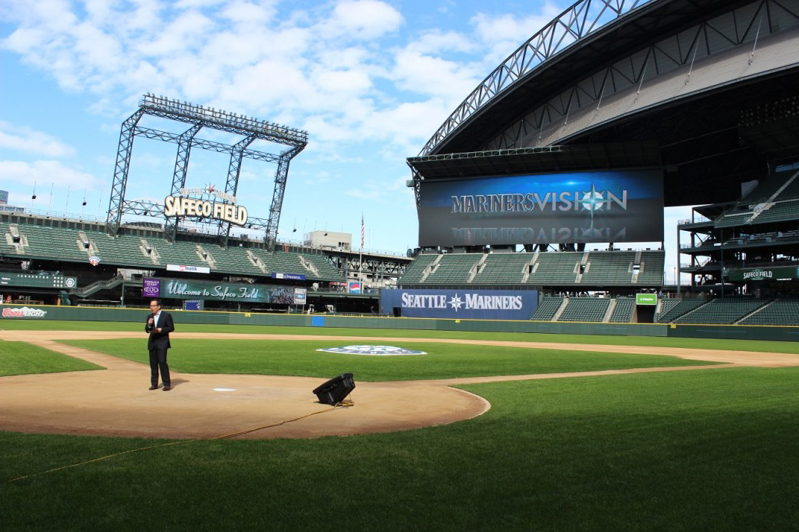
For us however, I don't think the idea would work... for a multitude of reasons. The climate issue, brought up by Justin, is certainly valid, and only serves to lower what would already be a small base of installed screens.
Many of us are still smarting from the cost of digital conversion. You'd need a very compelling reason to travel that road again. I don't think this is it.
Yes, you could start your show 3 hours (or more) before dark. That's something you might think would be welcomed by an industry that's not positively impacted by daylight savings time. Still, I just don't see it as a happening thing.
I put a lot of effort into avoiding "traditional thinking", as applies to drive-ins, but it seems that attempting to move our customers away from the image of us being a night-time event would be a challenge for me, if not for the customers as well. I don't see a positive offset to what would likely be a years-long retraining effort. It took about 5 years to get past the backlash we caused when we dropped carload pricing and went 1st run.
There's the way many of us look. Intended or not, few of us look like Safeco Field during the day. Even if our places are manicured, some were built with paint schemes that look great at night, but are a bit on the garish side in the light of day. Years ago, one of the owners in our state seemed more intent on making it look like there was a circus on his properties than an outdoor theatre.
Then, there's the likelihood, at least at my place, that we might be considering the damage caused by the occasional lobbed rock or swatted golf ball. My corrugated roof metal holds up pretty well against that onslaught, while the big money equipment sits in secure, well-filtered, air conditioned comfort. I'm not sure I could budget for the cost of physical repairs to 3 electronic screens, not to mention the emotional effect on my normally docile personality! ![[Mad]](mad.gif)
![[evil]](graemlins/evil.gif)
So... aside from maybe getting your trailers on the screen a little early... there's not much I can see here.
Posted by Justin Hamaker (Member # 2165) on 08-07-2017, 06:23 PM:
quote: Jack Ondracek
I put a lot of effort into avoiding "traditional thinking", as applies to drive-ins, but it seems that attempting to move our customers away from the image of us being a night-time event would be a challenge for me, if not for the customers as well.
I don't know how much the changing sunset hours impacts you during the summer, but it always seems to be an issue for us as it starts getting dark earlier. From about mid June through late July (about 6 weeks) we start at 9:15 as the sunset time hardly moves during that period. Then we get into August and it's getting earlier every week. The first few weeks it seems like people are stuck on the 9:15 time and don't really bother to notice what time it's getting dark.
Although we are closed before it becomes an issue, I wonder what would be the earliest we could actually get away with starting before it was too early for people. By the time we get to the end of the season we're usually starting about 7:15, but I have a hunch anything earlier than 7:00 would probably start impacting attendance, especially Friday nights.
Posted by Jack Ondracek (Member # 1466) on 08-07-2017, 06:29 PM:
It's a valid point that comes up now and then, Justin.
Lucky you... Your 9:15 is our 10pm up here. If we were so inclined (not), triple features in July are be nearly impossible to consider, as daylight approaches and the seagulls are flying through the picture, well before it's done.
I've always been amazed that our busiest months are when we start the latest. I hear very little complaining about it... certainly not enough that I'd ever think a video board would make sense.
All else aside, it seems to boil down to weather and content at our place.
I agree on the early start time. We open early enough in the year that we could start somewhere between 6 and 6:30. That seems to mess too much with people getting themselves reset after school, work and dinner. Perhaps it's a nod toward the 7pm reasoning that a lot of our indoor neighbors go by, but it's turned out to be the best time for us as well.
Still, it is odd to open up after dark and wait until a specific clock time to start a drive-in show...
Powered by Infopop Corporation
UBB.classicTM
6.3.1.2